



Abstract
Our study investigates the role of teen dating violence (TDV) victimization experiences as precursors to engagement in substance use and recklessness in adolescents. We shed light on the nuance of TDV operationalizations as important in understanding risky behaviors. Using the Youth Risk Behavior Survey, a nationally representative sample of United States adolescents, this cross-sectional study explores the relationships between TDV, measured using physical (PDV) and sexual dating violence (SDV) indicators, and risky behaviors (substance use and recklessness). Using Poisson regressions, we examine the relationships between 3- (no TDV, PDV or SDV, PDV and SDV) and 4-level (no TDV, PDV only, SDV only, PDV and SDV) victimization measurements and risky behaviors. Relative to no TDV, experiencing both PDV and SDV significantly increases the risk of both outcomes, and the strength of the relationships was stronger for PDV than SDV. However, we find that there are no statistical differences between the 3-and 4-level measurements. These findings identify the relationship between TDV victimization and substance use and reckless behaviors. Additionally, it demonstrates that measurement decisions in TDV victimization should stem from substantive considerations. These findings have direct impact on our understanding of teen involvement in risky behaviors such as substance use and recklessness.
Keywords
Introduction
Teen dating violence (TDV), defined as emotional, physical, and sexual violence or abuse that occurs specifically between teens involved in dating relationships (O’Keefe, 2005), is a damaging and prevalent issue in the United States, with prevalence rates of 1 in 12 for both physical and sexual dating violence (PDV and SDV, respectively; Centers for Disease Control and Prevention [CDC], 2025). PDV encompasses acts of physical aggression against a relationship partner (e.g., pushing, hitting, punching, shoving) while SDV refers to sexual aggression toward a partner, including forcing a partner to have sex against their will and non-consensual sexual touching (CDC, 2025). Other scholars argue that both phenomena might be more common, with PDV affecting 1 in 5 teens and SDV affecting 1 in 10 (Wincentak et al., 2017). Outcomes associated with TDV victimization can be long-term and/or short-term in nature and include, among others, psychiatric diagnoses and suicide attempts (Danielson et al., 2006; Pusch, 2022; Wincentak et al., 2017).
Risky behaviors are another prevalent phenomenon among adolescents that is studied as both a precursor to and outcome of TDV victimization (Champion et al., 2004; DuRant et al., 2000; Espelage et al., 2018; Van Ouytsel et al., 2017; Windle, 1994). This cross-sectional study uses variables with time-ordered recall periods to investigate adolescent substance use and reckless behaviors as outcomes of two distinct operationalizations of TDV victimization in the United States. By incorporating measures of reckless behaviors (e.g., weapon carrying, drinking and driving, texting and driving) commonly measured in psychology and public health fields (Basile et al., 2020; McDonald et al., 2014; Mukherjee et al., 2022), we contribute an update to a body of criminological literature that has traditionally limited its definition of risky behavior to substance use (e.g., alcohol use; Champion et al., 2004; Thompson et al., 2011; Vannucci et al., 2021) or sexually risky behaviors (e.g., not using a condom; Champion et al., 2004; Vannucci et al., 2020). By integrating perspectives from criminology, developmental psychology, and public health, such an endeavor contributes to an understanding of how types of TDV victimization relate to coping mechanisms such as risky and reckless behaviors.
Teen Dating Violence
TDV victimization is associated with a slew of negative outcomes including depressive and post-traumatic stress symptoms (Banyard & Cross, 2008; Piolanti et al., 2023), suicidality (Baiden et al., 2021; Banyard & Cross, 2008), sexually transmitted infections (STIs; Reed et al., 2014), substance use (Ackard et al., 2003; Campo-Tena et al., 2024), and risky behaviors (Piolanti et al., 2023). Further, experiencing TDV (perpetration or victimization) is linked to engagement in additional problem behaviors including substance use and sexually risky behaviors (O’Keefe, 2005; Silverman et al., 2001; Spencer et al., 2021). These negative outcomes can follow victims of TDV through adolescence and into adulthood (Cheung & Huang, 2023). These patterns shape our expectations that TDV victimization will be highly associated with outcomes of risky behaviors, including substance use and reckless behaviors.
Operationalizing TDV
Operationalizations of TDV victimization vary throughout research. As scholars come to better understand TDV, they argue the need for nuanced approaches to measuring TDV because there are unique differences between the type of TDV victimization and the amount of TDV experienced (Campo-Tena et al., 2024; Eshelman & Levendosky, 2012). The CDC’s Youth Risk Behavior Survey (YRBS), the data source for the current study, incorporates two frequency-based questions about TDV, one each for PDV and SDV. In prior work using these data, TDV has been measured as both a 4-level measurement (PDV, SDV, both, none) and a 2-level measurement (any TDV, no TDV), with both measurements in a single model (Vagi et al., 2015; Vivolo-Kantor, 2016). In the present study, we utilize the same 4-level measurement and strengthen the 2-level measurement into a 3-level measure (any TDV, both PDV and SDV, no TDV). This 3-level measurement allows us to conduct analyses that compare the differences between people who experience any TDV and those who experience both types of TDV. Decisions about how to measure victimization, specifically how and/or if to include multiple victimization experiences, are a decision that victimization scholars grapple within their work (Hamby & Turner, 2013). This difficulty is exacerbated by competing ideas of polyvictimization, repeat victimization (Finkelhor et al., 2009), and the difficulty in measuring TDV (Hamby & Turner, 2013). There are evident substantive differences in the measurement decisions when it comes to operationalizing TDV victimization, but what is less clear, and what we explore in the present study, is whether there are also statistical differences in estimates of effect sizes between operationalizations. The results of the present study hold implications for researchers seeking to balance substantive and statistical significances when designing TDV research projects and models.
Adolescent Development and Coping Mechanisms
Understanding risky behavior in adolescence necessitates an appreciation of normative adolescent development. Adolescence is a time of physical, cognitive, and emotional development that results in limited decision-making abilities and heightened reward-orientation and sensation-seeking (Cauffman et al., 2016; Steinberg, 2008). Dual systems theory suggests that as the socioemotional and cognitive-control systems mature, they contribute to increases in rationality and decreased impulsivity (Cauffman et al., 2016). The cognitive-control system develops separately from the socioemotional system, tempering the latter and improving adolescent capacity for self-regulation over time (Hakun & Findeison, 2020; Knoch & Fehr, 2007). Thus, adolescents are at increased risk of engaging in risky behaviors, including TDV, simply due to the developmental stage of their cognitive-control system, as they lack the ability to consider the weight of long-term and damaging consequences of behavior (Cauffman et al., 2016).
Furthermore, due to the nature of their development adolescents may not be biologically equipped to cope with stressors in effective ways (Patterson & McCubbin, 1987). Coping has long been recognized as cognitive and behavioral efforts to manage demands or threats that are taxing to an individual (Lazarus, 1966). The theoretical concept of coping is evident across disciplines such as criminology, as evidenced in General Strain Theory (Agnew, 2013), and psychology, as evidenced in the Stress-Vulnerability model (Sinha, 2001; Starcke & Brand, 2012). These theories posit that exposure to stressors may alter how an individual responds both behaviorally and cognitively (Agnew, 2013; Patterson & McCubbin, 1987). Researchers argue there are by and large three categories of coping strategies: problem-focused coping, emotion-focused coping, and avoidance coping (Billings & Moos, 1981; Endler & Parker, 1994; Inguglia et al., 2022; Skinner et al., 2003).
Substance use (e.g., smoking or drinking) is commonly understood as avoidance coping, that is, engaging in behaviors to avoid confronting a stressor (Brady & Donenberg, 2006). However, some scholars propose that risky behaviors co-occur with avoidant coping behaviors and may explain youth engagement in risky behaviors beyond substance use (Donohew et al., 2000; Wagner, 2001). Sensation seeking, an underlying trait, may explain how risky behaviors and substance use behaviors cluster in adolescence and a preference toward risky coping behaviors (Charnigo et al., 2013). Moreover, there is evidence to suggest that health risk behaviors and substance use are both motivated through coping to escape and sensation seeking (Brady & Donenberg, 2006). Thus, we expect that coping motivations and sensation seeking can explain recklessness and substance use behaviors. Clearly, coping is a multidimensional construct that necessitates teasing apart to better understand how stress and coping varies across coping mechanisms (Dariotis & Chen, 2022). Understanding the ways in which different negative experiences, such as PDV and SDV, are related to specific coping mechanisms (e.g., substance use versus reckless behavior) is valuable to this line of inquiry.
In early studies of risky behavior, Jessor (1991) emphasizes the importance of understanding the etiology of risky behavior. Jessor (1991) hypothesizes that risky behaviors manifest in response to lived experiences, similarly to a coping mechanism. This argument aligns with suggestions that risky behaviors may function as coping mechanisms, motivated by sensation seeking or a need to escape, for violence exposure (Brady & Donenberg, 2006). After all, both substance use and risky behavior have been identified in prior work as avoidance coping strategies (Brady & Donenberg, 2006; Dariotis & Chen, 2022). Similarly, research shows that exposure to violence (DuRant et al., 2000; Goodrum et al., 2020), prior victimization (DuRant et al., 2000; Goodrum et al., 2020), and depressive symptoms (Stewart et al., 2018) are risk factors for engaging in risky behaviors such as substance use, delinquency, sexual risk-taking, and self-injury (Danielson et al., 2006; Goodrum et al., 2020).
In contrast to this perspective, the majority of research on risky behavior to date views these behaviors as independent variables (Espelage et al., 2018; Van Ouytsel et al., 2017). For example, research suggests substance use is a risk factor for TDV victimization (Espelage et al., 2018), such as by escalating minor conflicts and exacerbating feelings of anger (Rothman et al., 2016), though less attention has been paid to the influence of recklessness on TDV victimization. Research conceptualizing risky behaviors as an outcome of or mechanism for coping to TDV victimization is more limited in scope. TDV victimization has been found to be associated with increased risk of substance use, sexually risky behaviors, and suicidality (Campo-Tena et al., 2024; Silverman et al., 2001). Longitudinal research finds that TDV is associated with substance use, suicidality, and IPV victimization into adulthood (Exner-Cortens et al., 2013). Additionally, a meta-analysis of dating violence research found mixed results on the relationship between TDV victimization and various risky behaviors (e.g., substance use, suicidality) for both boys and girls, though TDV victimization was predictive of negative self-rated health and revictimization (Campo-Tena et al., 2024). We add to this limited body of research by considering risky behaviors as outcomes of TDV victimization and extend perspectives of coping as a multidimensional trait (Dariotis & Chen, 2022) by employing relatively unique measures of risky behavior (substance use and recklessness).
Risky Behaviors
Jessor (1991) views risky behaviors as putting an individual “at-risk” for “health and life-compromising outcomes” (p. 603). For example, actions such as driving drunk and using illicit substances are immediately dangerous in and of themselves and are associated with future harms such as continued substance use, contracting an STI, injuries, and justice involvement (Danielson et al., 2006; Jacobs et al., 2021; Thompson et al., 2011). Commonly, outcomes of risky behaviors are conditioned on the type of risky behavior (e.g., sex-related, substance use, delinquency), though risky behaviors tend to co-occur in adolescents (Danielson et al., 2006; Jacobs et al., 2021; Meader et al., 2016). The concept of continuity in behaviors suggests that behaviors in adolescence likely continue on into adulthood, necessitating concern for engagement in long-term, damaging, and dangerous behaviors in adolescence (Thompson et al., 2011; Zych et al., 2020).
Research on risky behaviors most commonly focuses on substance use and sexually risky behaviors. Substance use measures often include marijuana and tobacco use (Haynie et al., 2013), as well as drinking and binge drinking (Afifi et al., 2020). Sexually risky behaviors often include the contraction of STIs (Reed et al., 2014), the lack of condom use (Champion et al., 2004; Reed et al., 2014), and early sexual initiation (Lormand et al., 2013). These behaviors meet the definition of risky behaviors posited by Jessor (1991) by being presently dangerous and negative behaviors that also jeopardize an adolescent’s future. The present study extends these common measurements by incorporating indicators of recklessness (e.g., getting in a car with someone who had been drinking, drinking and driving, texting while driving, carrying a gun) discussed in public health and psychology fields in relation to adolescent development and decision-making. For example, reckless driving behaviors have been linked to adolescent negative mental health (McDonald et al., 2014) and weapon carrying has been found to be associated with fear of victimization (Mukherjee et al., 2022).
Our study recognizes that adolescence is a period in which relationships and decisions are shaped by biological and peer influences above and beyond an individual’s preference (Cauffman et al., 2016; Shorey et al., 2018). We thus consider the importance of coping and biological factors in our exploration of TDV victimization and its influence on engagement in risky behaviors, both substance use and recklessness. In this way, we expand our understanding of TDV victimization, mechanisms of coping with this victimization, and risky behaviors. Specifically, we emphasize the need to utilize interdisciplinary measures of risky behaviors. We do this by assessing reckless behaviors that are not traditionally incorporating in measurements of risky behaviors, such as texting and driving, weapon carrying, and not wearing a seatbelt.
The Present Study
The current study utilizes a cross-sectional nationally representative sample of adolescents in the United States to assess how TDV victimization, using two distinct operationalizations, is related to engagement in risky behaviors. To address the cross-sectional nature of the data, we use independent and dependent variables with time-ordered recall periods (i.e., the recall period for TDV victimization is longer than that for risky behaviors). We aspire to gain insight into the associations between experiencing any TDV victimization, certain types of victimization, or multiple types of victimization and substance use and reckless behavior. This work extends our understanding of how adolescence, as a period of development, interacts with negative experiences to shape coping strategies. This is accomplished by integrating interdisciplinary perspectives on coping with a developmental understanding of adolescence. We explore unique considerations of risky behaviors by including behaviors that offer the potential for lasting damage and health endangerment in our measure of reckless behaviors. Further, we explore the role of co-occurring risky behaviors by measuring substance use and recklessness in a combined risky behavior scale. We ask the following research questions:
RQ1: How is TDV victimization related to the risk of engagement in substance use and recklessness among youth?
RQ2: How are alternative operationalizations of TDV victimization (4-level and 3-level) associated with varying magnitudes of effects across engagement in substance use and recklessness?
Methods
Sample
Our sample comes from the 2021 YRBS survey, a national survey conducted every other year by the CDC. 1 Using a three-stage cluster sampling method to obtain a nationally representative sample from all 50 U.S. states, YRBS samples public and private high school students in grades 9 through 12, ranging in age from under 12 to over 18 (Mpofu et al., 2023). First, respondents are clustered at the county (or counties if smaller counties) level, then schools, and finally, individual classes are selected within schools. Sample weights were applied based on sex, race, and school grade to account for the oversampling of Black and Hispanic youth (Mpofu et al., 2023). The survey includes questions about student demographics, health behaviors, substance use, and various experiences such as TDV. The 2021 YRBS data collection effort yielded a 72.9% response rate at the school-level and a 79.1% response rate for students (Mpofu et al., 2023), for a total response rate of 57.5%. The response rate was lower than previous survey years, which may be associated with difficulty in conducting school-based studies during the COVID-19 pandemic (Mpofu et al., 2023). We draw data for this study from the 2021 sampling cycle, which includes data from 17,232 youth. Respondents who indicated they “did not date or go out with anyone in the past 12 months” (N = 6,841) were removed from the sample, resulting in a final analytic sample of 10,391 youth. Since we use an analytic sample of those who indicated in the survey that they date, our variable missingness is different from previous reports that identify missingness in the full sample (Clayton et al., 2023).
Measures
TDV Victimization
Respondents were asked one question about their experiences with SDV victimization: “During the past 12 months, how many times did someone you were dating or going out with force you to do sexual things that you did not want to do?” They were also asked a similar question about their PDV experience: “During the past 12 months, how many times did someone you were dating or going out with physically hurt you on purpose?” Responses were reported on a Likert-type scale ranging from 0 (0 times) to 4 (6 or more times) and recoded into two binary measures to determine whether the respondent ever experienced SDV or PDV (1 = Yes).
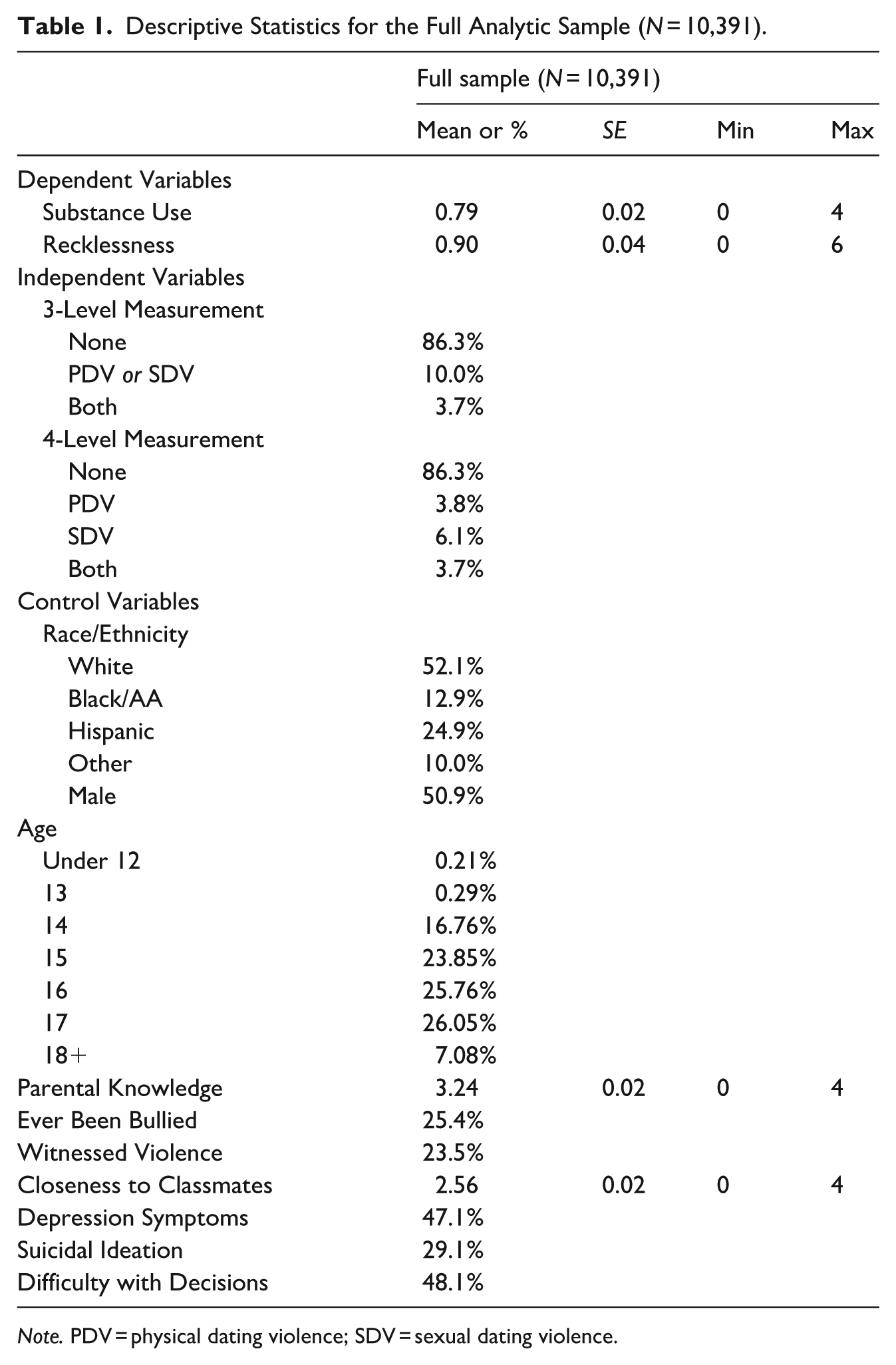
The current study utilizes two measures of TDV: a 3-level and a 4-level measurement. The 3-level measurement classifies TDV experiences into groups of non-victims (0; reference category), victims of one type of TDV (PDV or SDV; 1), and victims of both types of TDV (PDV and SDV; 2). The 4-level measurement creates groups of non-victims (0; reference category), victims of PDV (1), victims of SDV (2), and victims of both PDV and SDV (3). 86.3% of the sample reported no TDV victimization, 10.0% reported experiencing one type of TDV victimization, and 3.7% reported both PDV and SDV. Of those who experienced one type of TDV, SDV (6.1%) was more common than PDV (3.8%).
Risky Behaviors
We use two risky behavior scales as the outcome variables for this study: substance use and reckless behaviors. All outcomes were measured as count variables (i.e., variety scales) to measure the number of risky behaviors a youth engaged in.
Substance Use
Respondents were asked how often in the past 30 days, on a Likert-type scale (1 = 0 Days; 7 = 30 Days), they used 6 substances: cigarettes; vapes; tobacco; cigar, cigarillos, or little cigars; alcohol; marijuana; and prescription painkillers. These measures reflect other YRBS approaches to substance use (Curran et al., 2018; McKinnon et al., 2024). Responses to each question were recoded into binary indicators (0 = Never; 1 = Ever), and responses for cigarettes, cigars and cigarillos, chewing tobacco, and vapes were combined into one binary tobacco use indicator. The final variety scale represents tobacco, marijuana, alcohol, and prescription pain killers, with scores ranging from 0 to 4 (McKinnon et al., 2024). The sample mean substance use score was 0.79, meaning on average, youth reported using less than one substance type in the previous 30 days.
Recklessness
Respondents were asked how often in the past 30 days, on a Likert-type scale (1 = Never; 5 = Always), they: wore a seatbelt when other people drove; got in a car with someone who had been drinking; drank and drove; texted while driving; took a weapon to school; and carried a gun. The seatbelt question was reverse coded to represent how often in the past 30 days the respondents did not wear a seatbelt (1 = Always; 5 = Never). Responses were binarily coded (1 = Never) and totaled to create a variety scale of reckless behaviors ranging from 0 to 6. The average reckless behavior score was 0.90, indicating that youth reported engaging in less than one reckless behavior in the previous 30 days.
Control Variables
Adolescent Experiences
Previous research has found that parental knowledge (Dittus et al., 2023), bullying victimization and exposure to violence (Harper et al., 2023; Smalley et al., 2017; Wood & Graham, 2020), and peer group association are associated with engaging in substance use and risky behaviors (Guggenheim et al., 2020; Henneberger et al., 2021) and increase risk of TDV victimization (Spencer et al., 2021; Vagi et al., 2015). Thus, we include these measures as control variables to reduce confounding effects on the outcomes. Parental knowledge was measured with one question reporting how often the respondent’s parents know where they are and with whom they are with, reported on a Likert-type scale (0 = Never; 4 = Always). The average score for parental knowledge is 3.24. Bullying victimization was measured with two binary questions, one measuring at-school bullying, and one measuring cyberbullying. Responses were combined into one dichotomous indicator of bullying victimization (1 = Ever), with 25.4% of youth having had experienced bullying. Witnessing violence was measured with self-reports of whether the respondent ever saw someone get physically attacked, beaten, stabbed, or shot in their neighborhood (1 = Yes). Of all the youth, 23.5% reported witnessing violence. Finally, closeness to classmates was measured as how strongly the adolescents agree or disagree that they are close to their classmates, measured on a Likert-type scale (1 = Strongly Disagree; 5 = Strongly Agree), with an average score of 3.56.
Mental Health
Mental health has been continuously linked to substance use, recklessness, and TDV victimization, thus, we include a variety of mental health measures as control variables in the models (Jacobs et al., 2023; Spencer et al., 2021; Tervo-Clemmens et al., 2024). History of depression symptoms was measured with one question asking respondents if in the last 12 months, for at least 2 weeks, they felt so down that they stopped doing their normal activities (1 = Yes). Suicidal ideation reports if in the past 12 months the respondent ever seriously considered suicide (1 = Yes). Finally, difficulty with decisions asks if “Because of a physical, mental, or emotional problem, do you have serious difficulty concentrating, remembering, or making decisions?” (1 = Yes). In the sample, 47.1% reported depression symptoms, 29.1% reported suicidal ideation and 48.1% reported having difficulties making decisions.
Demographics
Respondents were asked to select their race/ethnicity from the following categories and were allowed to choose more than one: American Indian/Alaska Native, Asian, Black or African American, Native Hawaiian/Pacific Islander, White, and Hispanic. Based on the sample size of each category, race/ethnicity was recoded into four groups: White Non-Hispanic (52.1%), Black/African American Non-Hispanic (12.9%), Hispanic (of any race; 24.9%), and “Other” race or ethnicity (10.0%), which includes those who reported their race/ethnicity as Hawaiian/Pacific Islander (0.5%), multiracial non-Hispanic (6.0%), and Asian (3.3%). The multiracial groups were included in the “Other” category because it was not feasible to include them in the larger, simplified groupings. Sex was measured using a binary self-report indicator (1 = Male) and the sample was evenly split (50.9% male). Age was measured as a categorical variable, ranging from 1 (12 and under) to 7 (18 or older) with a mean of 4.81 (roughly 16 years of age; Table 1).
Descriptive Statistics for the Full Analytic Sample (N = 10,391).
Note. PDV = physical dating violence; SDV = sexual dating violence.
Analytic Approach
Before proceeding with analysis, missing data were assessed. The variables with the highest missing data were difficulty making decisions, parental knowledge, and closeness to classmates, missing in 44.6%, 44.3%, and 42.8% of cases respectively. Due to the potential loss of information and power and the introduction of bias, listwise deletion or case-complete analysis is not recommended (Zhang, 2016). However, higher proportions of missingness increases the likelihood that the missing at random assumption has been violated, thus a test of missing at random is necessary. Little’s MCAR test indicated that the data were not missing completely at random (χ2 = 2,558.14, df = 1,111, p = .000). However, whether the data is missing at random or not at random cannot be determined, and analysis must proceed with the assumption that the missing data is not ignorable (Little et al., 2014). As multiple imputation is found to perform well even with the proportion missing being over 50% (Johnson & Young, 2011), we multiply imputed the data with 20 datasets. We impute on all of our independent and control variables, but do not impute our dependent variable as there was no missingness on these variables. Analyses were completed using the full analytic, post-imputation pooled sample of 20 datasets (N = 10,391). Throughout all analyses, we use the recommended YRBS weighting structure to account for the complex sample design.
First, we present weighted descriptive statistics. Second, we present results from Poisson regression analyses exploring the relationships between the two measurements of TDV victimization and two forms of risky behaviors (substance use behaviors and reckless behaviors). Poisson regression models were employed in the substance use and reckless behaviors models because the data are not overdispersed on either variable (substance use: m = 0.76, variance = 1.07; recklessness: m = 0.87, variance = 1.01). Those who reported never experiencing TDV victimization were the reference category across analyses. Third, we employ seemingly unrelated estimation (SUEST), a statistical method that can be used to compare predictions or effects across models (Weesie, 1999) and is considered a preferable alternative to informal tests of differences in statistical significance between models (Mize et al., 2019). We employ this method to determine if the 4-level and 3-level operationalizations of TDV victimization are statistically different in estimating the effect sizes associated with engagement in both measures of risky behaviors. The results reflect the findings for the imputed, weighted sample.
Results
Regression Analyses
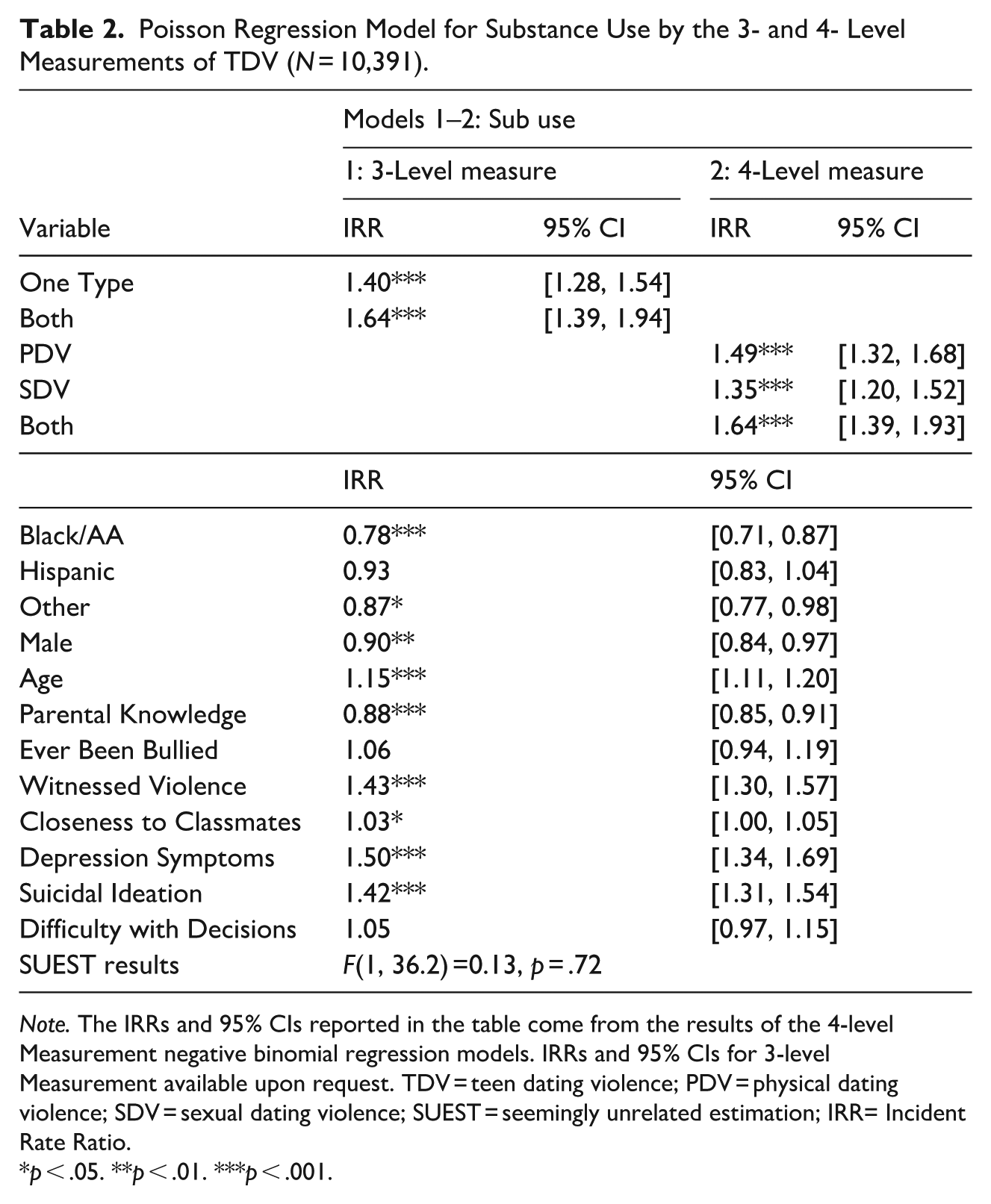
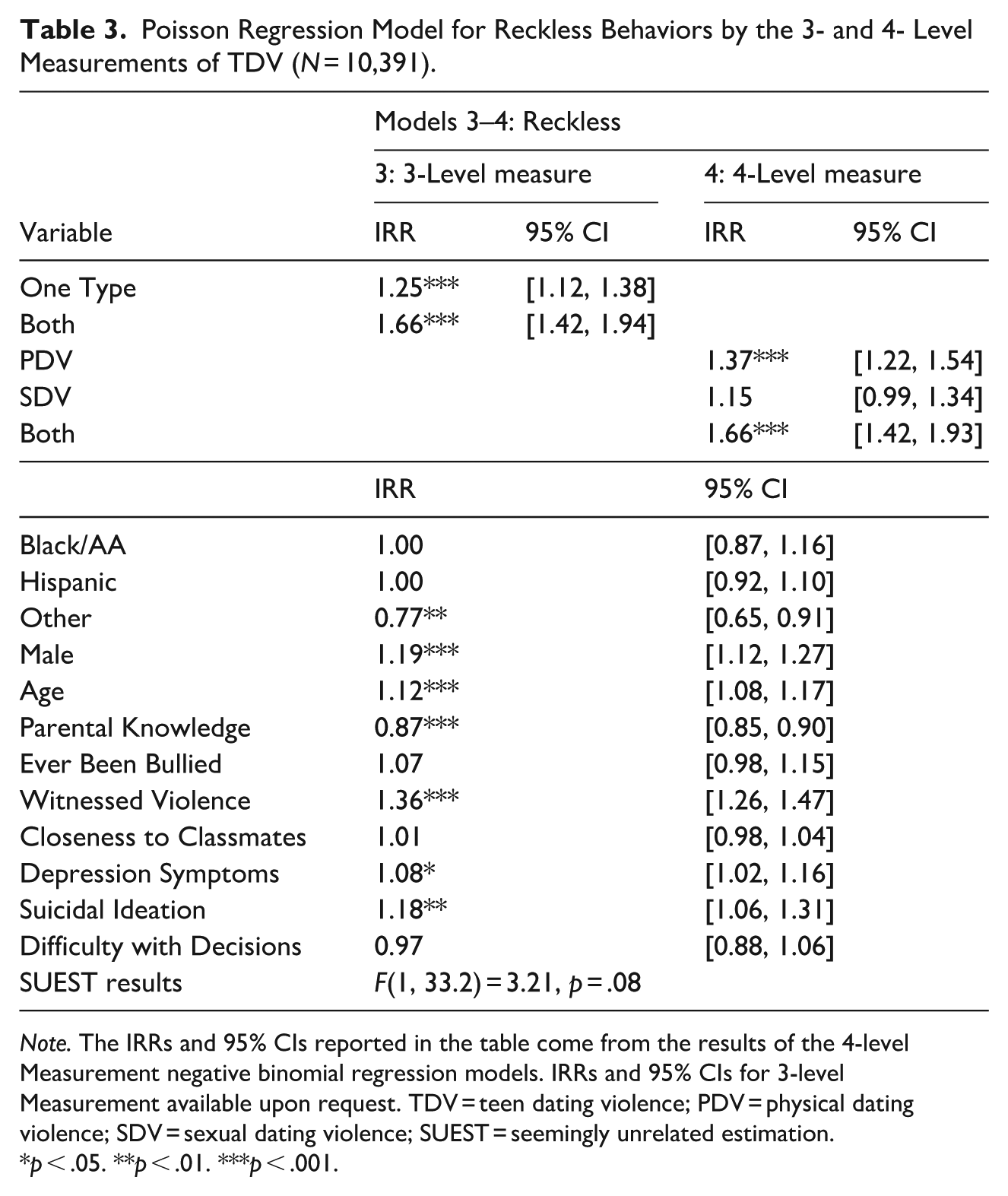
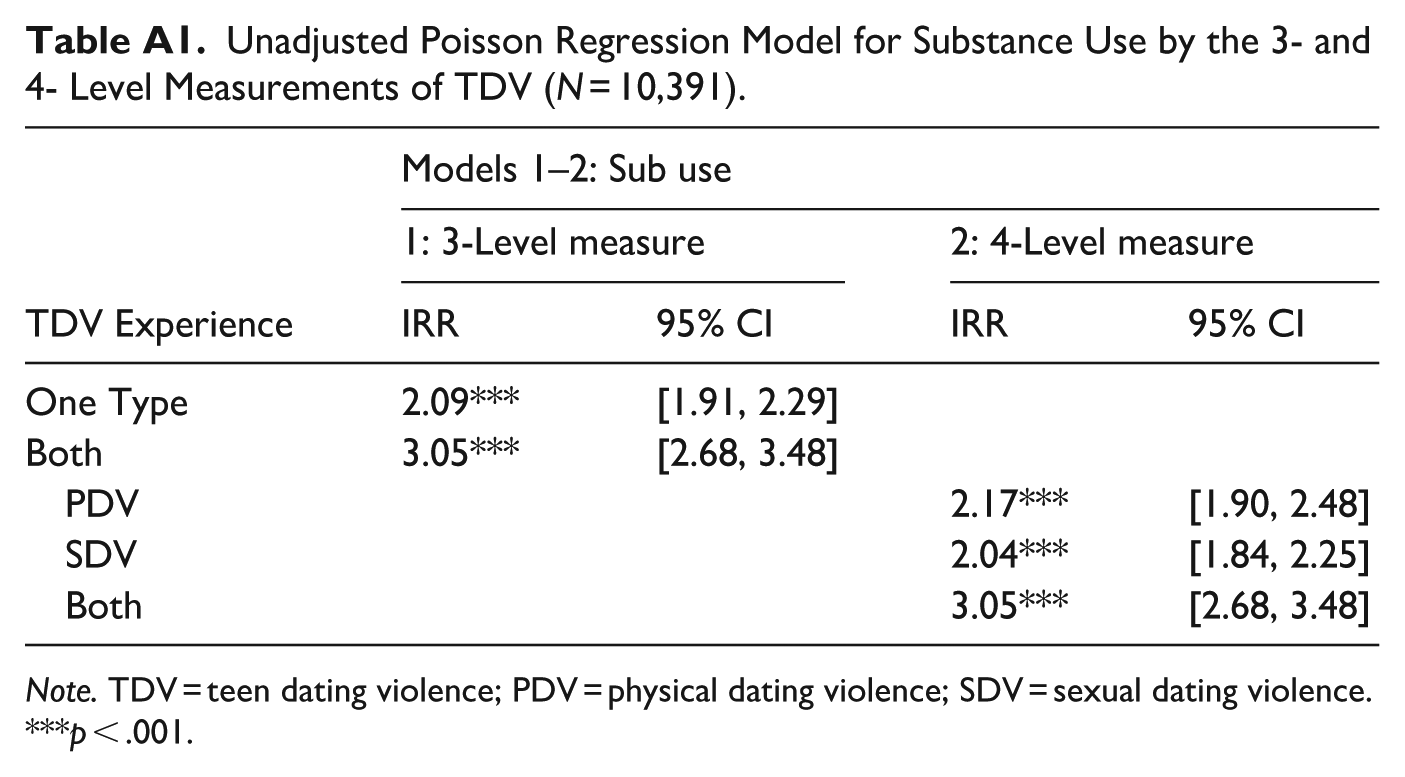
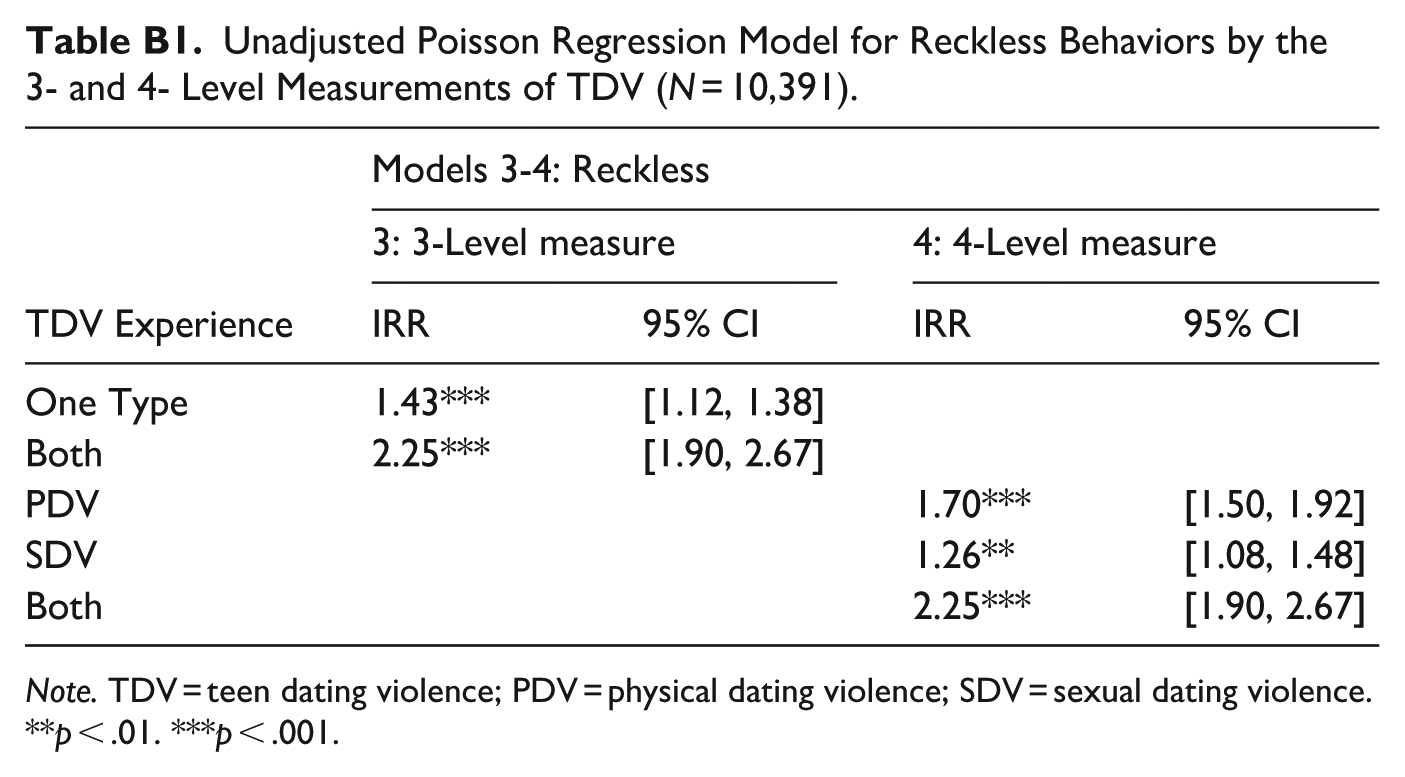
Tables 2 and 3 present the results from the Poisson regressions. Table 2 includes the results for substance use, Table 3 for recklessness. Taken together, the results from Tables 2 and 3 show the overall effects of TDV victimization on substance use and reckless behavior, respectively, to address the first research question. The first model in each table (Models 1 and 3) presents the 3-level measurement results, in which TDV victimization is measured as either one or both types, relative to no TDV. The second model in each table (Models 2 and 4) presents the 4-level measurement results, in which TDV is distinguished by type (PDV, SDV, or both), relative to no TDV. By comparing the results of the two models within each table using SUEST tests, we address the second research question, how the two alternative operationalizations yield different magnitudes of effect on substance use and recklessness. In these tables, we present the results for the control variables from the 3-level model, though there are no differences in the control variable effects between the 3- and 4-level measurements. Unadjusted results yield similar patterns as the adjusted models and can be found in Tables A1 and B1 in Appendixes A and B.
Poisson Regression Model for Substance Use by the 3- and 4- Level Measurements of TDV (N = 10,391).
Note. The IRRs and 95% CIs reported in the table come from the results of the 4-level Measurement negative binomial regression models. IRRs and 95% CIs for 3-level Measurement available upon request. TDV = teen dating violence; PDV = physical dating violence; SDV = sexual dating violence; SUEST = seemingly unrelated estimation; IRR= Incident Rate Ratio.
p < .05. **p < .01. ***p < .001.
Poisson Regression Model for Reckless Behaviors by the 3- and 4- Level Measurements of TDV (N = 10,391).
Note. The IRRs and 95% CIs reported in the table come from the results of the 4-level Measurement negative binomial regression models. IRRs and 95% CIs for 3-level Measurement available upon request. TDV = teen dating violence; PDV = physical dating violence; SDV = sexual dating violence; SUEST = seemingly unrelated estimation.
p < .05. **p < .01. ***p < .001.
Substance Use
The results from Table 2, Model 1 indicate that, controlling for all other variables, those who experience one type of TDV have a higher rate of engaging in substance use behaviors than those who experienced no TDV (IRR = 1.40, 95% CI [1.28, 1.54]). Models 1 and 2 show that those who experienced both types of TDV engage in substance use behaviors at a higher rate than those who experienced no TDV (IRR = 1.64, [1.39, 1.94]). Comparatively, Model 2 suggests that relative to non-victims, both those who experience only PDV (IRR = 1.49, [1.32, 1.68]) and those who experience only SDV (IRR = 1.35, [1.20, 1.52]) have higher rates of engaging in substance use behaviors. A SUEST test comparing the 3-level and 4-level measurements finds no statistical difference in the effect size estimates [F(1, 36.2) = 0.13, p = .72].
Recklessness
The results from the recklessness models are similar to those from the substance use models (see Table 3). Model 3 suggests that those who experience one type of TDV have a higher rate of engaging in reckless behavior relative to non-victims (IRR = 1.25, 95% CI [1.12, 1.38]). Both Models 3 and 4 find that experiencing both types of TDV relative to non-victims (IRR = 1.66, [1.42, 1.94]) is associated with an increase in the expected rate of reckless behaviors. Model 4 further specifies that those who experience PDV (IRR = 1.37, [1.22, 1.54]) engage in reckless behaviors at rates that are higher than non-victims, though the engagement risk is higher for victims of PDV. However, there does not appear to be a significant difference between those who have experienced SDV relative to non-victims (IRR = 1.15, [0.99, 1.34]). The SUEST test finds that the 3-level and 4-level measurements do not yield statistically different effect size estimates [F(1, 33.2) = 3.21, p = .08].
Our model control variables exhibit interesting findings. Relative to White adolescents, adolescents of Black and other races/ethnicities engaged in significantly less substance use while only youth of other races/ethnicities engage in less reckless behaviors. Males, relative to females, engaged in less substance use but more reckless behaviors. Closeness to classmates was associated with a slight increase in substance use behaviors. Across both measures of behaviors, being older, witnessing violence, depression symptoms, and suicidal ideation are associated with increased rates of behaviors, whereas increased parental knowledge is associated with decreased behaviors in all models.
Robustness Check
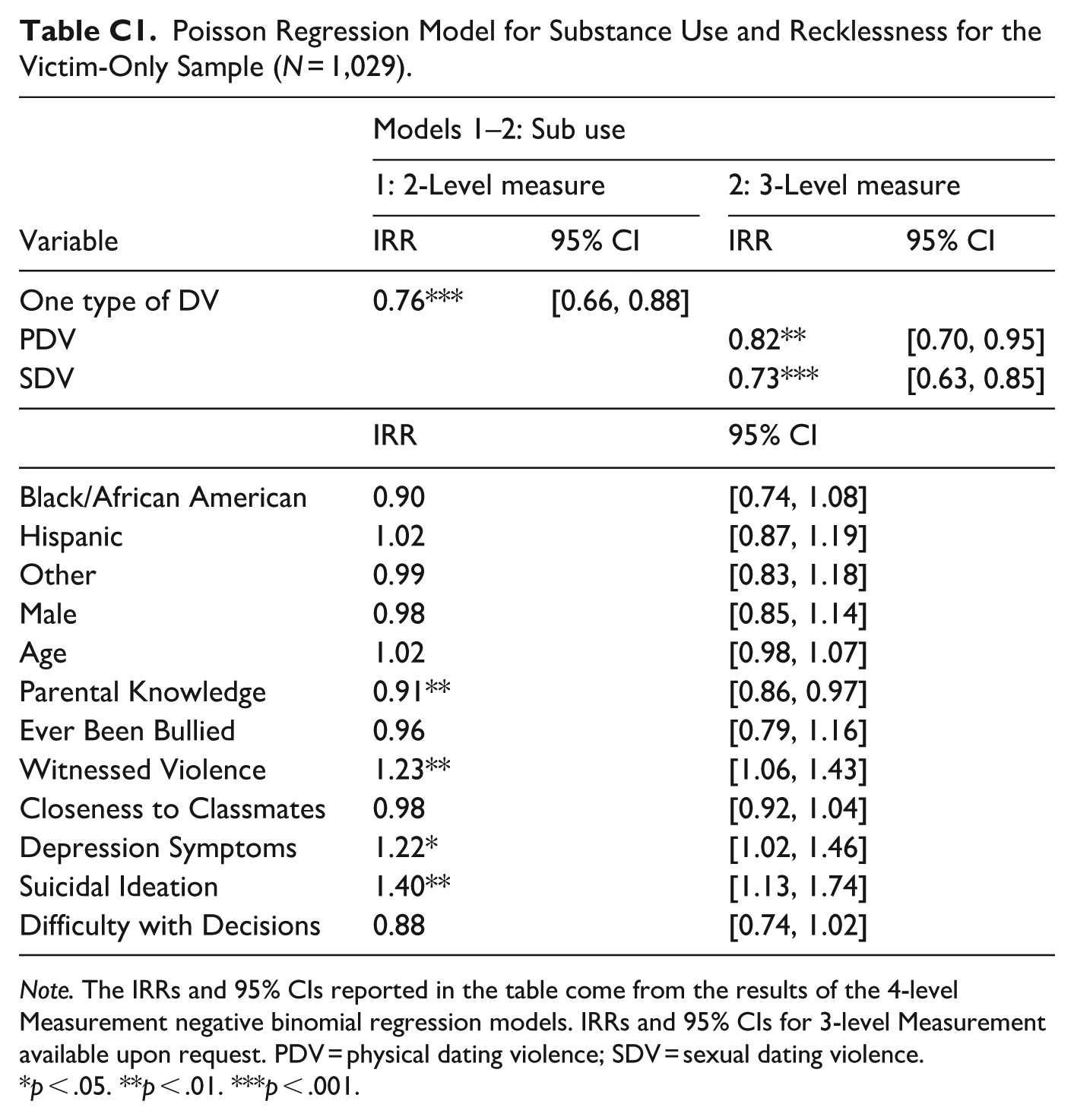
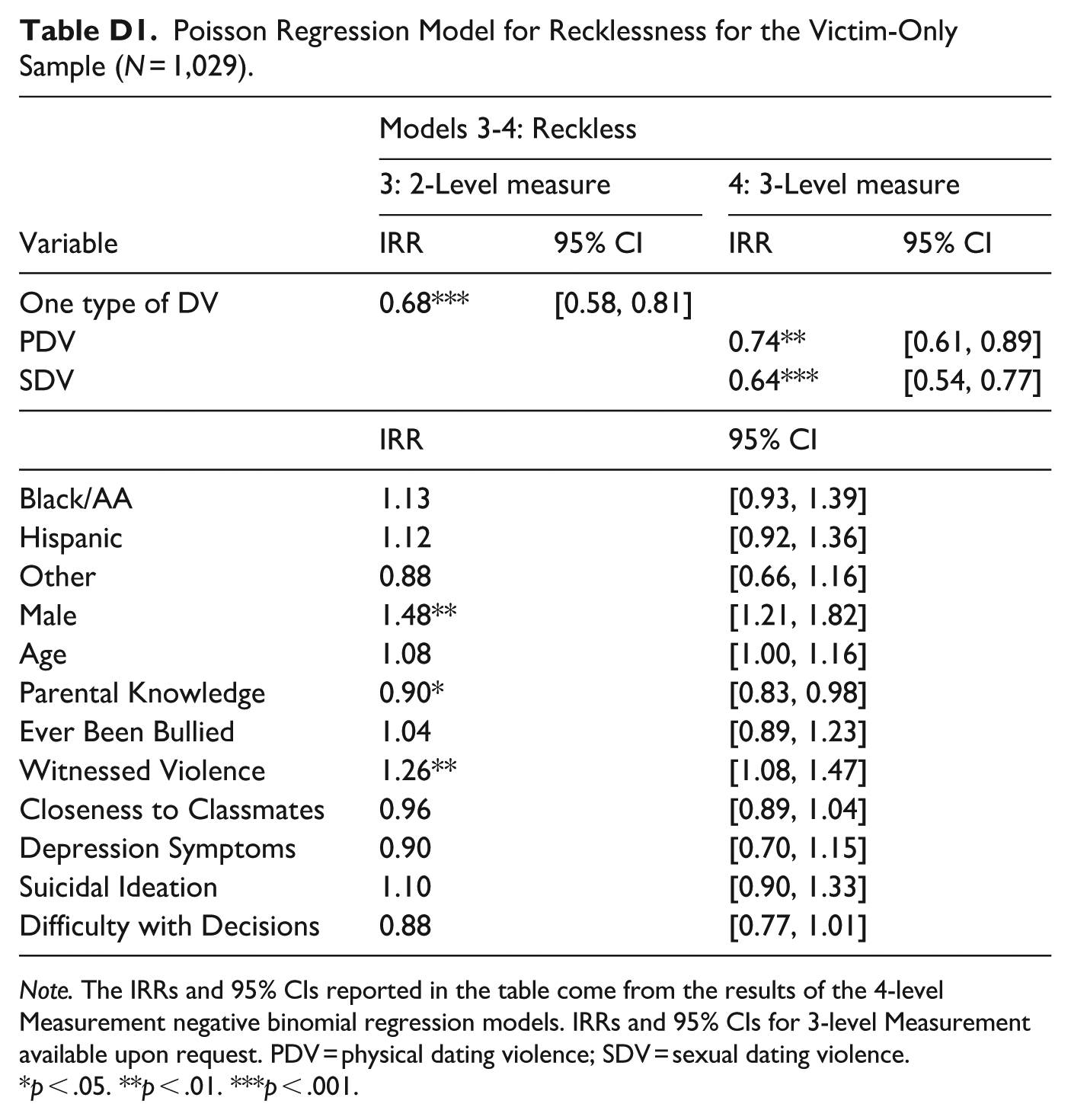
Because in the full sample the victimized group was substantially smaller than the group of non-victims (13.7% and 86.3% respectively), we created an imputed, weighted subsample of only those who reported experiencing at least one type of TDV (N = 1,029) as a robustness check to confirm that even among a more stringent sample the aforementioned patterns would hold. We call this group the “victim-only” group in our tables to differentiate from analyses that include victims and non-victims. However, we do not suggest that the members of this subsample are not also “offenders” because we do not have the data to confirm this. We then repeat the Poisson regression models to determine how the outcomes vary by 3-level and 2-level TDV victimization operationalizations (previously 4-level and 3-level with the “none” category removed) among only those who have experienced TDV. We set the “both” category as the reference category so that conclusions can be made across models and across measures of number and type of TDV experiences. Our first set of models measure how the IRRs of risky behavior scales for those who experienced one type of TDV relative to those who experienced both. The second set of models measure how the IRRs of risky behavior scales differ between those who experience PDV relative to victims of both types of TDV and victims of SDV relative to those who experienced both types of TDV.
The results from this robustness check (presented in Tables C1 and D1 in Appendixes C and D) are similar to the results seen in our full analytic sample: experiencing either PDV or SDV was associated with less substance use and reckless behaviors than experiencing both types. Altogether, experiencing both types of TDV remained the most strongly associated with both risky behavior scales: substance use and recklessness. Patterns among the significance of control variables vary between the full and victim-only sample, yet the directionality remains the same.
Discussion
Rooted in a philosophical contention regarding the role of risky behaviors and the importance of identifying the precipitating factors (Jessor, 1991), the results of our study, though cross-sectional, shed light on the relationships between particular forms of TDV victimization (PDV and SDV) and particular forms of risky behaviors (substance use and recklessness). In the context of TDV, we conceptualize risky behavior as inherently linked with adolescent development (e.g., sensation-seeking) and coping (Brady & Donenberg, 2006); not only might adolescents lack the physiological development necessary to employ appropriate coping mechanisms, but their developmental stage may explain how teens are drawn to risky coping strategies (Cauffman et al., 2016). In line with prior research (Campo-Tena et al., 2024) and consistent with hypothesis 1, our results suggest that experiencing TDV victimization, particularly both PDV and SDV victimization, is associated with a significant increase in the number of substance use and reckless behaviors one engages in. Overall, these findings are consistent with our theoretical conceptualization of risky behavior and point to the utilization of avoidance coping strategies by victims of TDV (Brady & Donenberg, 2006; Dariotis & Chen, 2022), or at the very least, the clustering of problem behaviors such as TDV victimization, substance use, and recklessness (Jessor, 1991). Our second research question considers whether different operationalizations of TDV (3-level and 4-level measures) provide more or less sensitive results connecting TDV victimization to substance use and reckless behaviors. Overall, we find that experiencing any type of TDV significantly increased the risk of engaging in risky behavior across all types relative to those who experienced no TDV. More specifically, the strength of the relationships between victimization and substance use and reckless behaviors relative to non-victims, appears to be stronger for PDV victimization than SDV victimization, but strongest among those who experienced both types of victimization. This expands research by including a measure of SDV, thus far limited in TDV research (Campo-Tena et al., 2024) and is consistent with work on the role of poly-victimization and increased risk of negative consequences (Turner et al., 2010). With our 4-level measurement, we are able to glean knowledge about the variation in risky behaviors between victims of PDV and SDV. This variation seen in our 4-level measurement provides unique insight into coping mechanisms and outcomes of TDV victimization experiences. However, using SUEST tests, we find that the 3- and 4-level measurements do not differ statistically in their estimations of the effects on substance use and reckless. The lack of statistical difference between the 3- and 4-level measurements is contrary to our expectations laid out in hypothesis 2.
It remains pertinent to consider the theoretical significance of our measures even though our results overall do not demonstrate statistical significance. For example, while the 3- and 4-level measures do not differ statistically in estimating substance use and recklessness, there are substantively important differences between the measures; when PDV and SDV are combined, as in our 3-level measure, it is unclear if there is variation in substance use by the type of TDV victimization experienced. Our results nonetheless suggest that sexual and physical TDV may have distinct relationships with the outcomes and thus should be measured as unique phenomenon and separate indicators, though this difference appears to be more theoretical and substantive than statistical.
Our findings also support the inclusion of reckless behaviors as a measure of risky behavior, as we find that TDV victimization is significantly associated with reckless behaviors. In fact, the separate recklessness scale sheds light on patterns of coping with TDV victimization in an important way: the type of coping strategy used may vary by the type of victimization experienced. Relative to non-victims, the associations with reckless behaviors were stronger for victims of only PDV and both PDV and SDV than for victims of SDV. Thus, engagement in recklessness appears to be more specific to the type of TDV victimization experienced, whereas substance use associations are strong across the board. This pattern could be related to prior work which has linked the type of victimization to analogous outcomes (Eshelman & Levendosky, 2012). For example, sexual victimization is associated with engaging in sexually risky behaviors post-victimization (Danielson et al., 2006). Perhaps the physical nature of reckless behaviors is a physical reaction to PDV victimization.
Our results yield interesting conclusions about other risk factors for risky behaviors. We find that Black youth and youth of other races are less likely than white youth to engage in substance use. However, Black youth are no less likely than white youth to engage in recklessness. Perhaps unsurprisingly, males engage in less substance use but more reckless behaviors compared to females, a finding consistent with previous research suggesting girls use substances as part of their internalizing processes whereas boys engage in externalizing behaviors (Troop-Gordon & Ladd, 2005). Consistent with research relating developmental changes in self-regulation to increasing substance use and recklessness with age (Cauffman et al., 2016; Steinberg, 2008), age is consistently and positively related to all outcomes. Parental knowledge is negatively associated with all behaviors, indicating that parental knowledge may be an effective tool in limiting substance use and recklessness (Dittus et al., 2023), whereas witnessing violence unsurprisingly appears to be a risk factor for all outcomes (Harper et al., 2023). In line with literature suggesting that alcohol use and externalizing behaviors are coping mechanisms to alleviate pains of mental health issues (Maniglio, 2017; Turanovic & Pratt, 2013), depression and suicide attempts were also related to all outcomes. Finally, closeness to classmates was positively related to substance use only, which could be related to literature on peer influence and delinquency (Osgood et al., 1996).
Strengths and Limitations
The current study not only provides support for the associations between TDV and risky behavior but also highlights the importance of specific operationalizations of TDV. We find that, when compared to non-victims, the relationship between PDV and substance use and recklessness was stronger than for those who experienced SDV. Much work that uses risky behaviors focuses on behaviors such as substance use (Haynie et al., 2013) but our study includes measures of reckless behaviors that pose serious health concerns. In doing so, we capture a broader understanding of the effects of TDV on understudied aspects of risky behaviors. Our study is also strengthened by post hoc analyses that further support our original findings.
While our study provides meaningful additions to literature on the outcomes of TDV victimization and the role of risky behaviors as a coping mechanism, it falls victim to many of the same issues as previous research on the topic. Though we attempt to use temporally ordered variables so that the dependent variables have a lesser recall period than the independent variables (past 30 days and 12 months, respectively), the variables still stem from cross-sectional data collection replicated yearly with new students. The ordering of our variables of interest necessitates the ordering of variables that we use in our study, though it is still possible the risky behaviors predate TDV victimization. Additionally, we are unable to control for prior victimization experiences and for prior engagement in risky behaviors. The absence of these control variables makes it difficult to determine whether the reported risky behavior is new or part of a continued pattern (Thompson et al., 2011). Importantly, psychological TDV victimization and TDV perpetration were not asked of the respondents and therefore not included in analyses, despite their importance in understanding TDV experiences (Haynie et al., 2013). Additionally, while we originally set out to include a scale of sexually risky behaviors in line with prior literature (Champion et al., 2004; Lormand et al., 2013; Reed et al., 2014), the questions had a lifetime recall period and did not fit into the time ordering of our models. Our TDV measures are also comprised of single-item measures of physical and sexual TDV, respectively. Respondents may not identify their experiences as TDV which may inhibit accurate reporting of TDV victimization. While this measure is not ideal, we do have both physical and sexual measures of TDV victimization, which allows us to identify the unique effects of each type of TDV victimization.
Importantly, our study uses measurements of substance use and reckless behavior that are ultimately variety scores. While frequency measures allow researchers to understand multiple involvement instances in a single behavior, they are often skewed and extremely sensitive to high frequency items (Sweeten, 2012). On the other hand, variety scales are less sensitive and less skewed than other methods and scholars recognize that given the correlation between theta and variety scales, variety scales successfully reflect criminality (Sweeten, 2012). Despite these limitations, the present study finds that TDV is closely associated with increased risky behaviors, a finding that is salient for understanding risky behaviors and for addressing the public health issue of TDV. Further, our findings offer promising and useful insight into the importance of TDV operationalizations that are able to relate different types of TDV to the relevant outcomes.
Implications and Conclusions
While TDV in and of itself is a public health issue (CDC, 2025), our research shows that TDV gives way to additional concerning outcomes. These risky behaviors are linked to long-term consequences that vary from lower educational attainment, justice involvement, and continued drug use (Banyard & Cross, 2008; Danielson et al., 2006; Thompson et al., 2011). Thus, TDV victimization may lend itself to future negative consequences above and beyond immediate risky behaviors. As Jessor (1991) points out, risky behaviors are simply behaviors that stem from prior experiences. Our study adds to prior literature by operationalizing risky behaviors as outcomes of TDV victimization (Campo-Tena et al., 2024; Exner-Cortens et al., 2013; Silverman, 2001) and conceptualizing such behaviors as coping mechanisms. Future research should expand on this perspective and assess risky behaviors as mediating the role between victimization and repeat victimization. Alternatively, research could consider and test the bidirectionality of TDV and risky behaviors.
Our 3- and 4-level approaches to operationalizing TDV victimization also offers direction for future research. We find that using different measures does not yield significantly different estimates of substance use and recklessness. While there may not be statistical differences, we caution against research relying solely on statistical significance at the expense of considering substantive significance (Mize et al., 2019). In breaking TDV victimization down by type of victimization (PDV, SDV, both, none), a 4-level measurement offers a more specific understanding of how type of victimization can influence risky behavior. Further, we find that using a measure of reckless behavior can supplement our understanding of the outcomes associated with TDV victimization. Where substance use has been notably recognized as an outcome of TDV victimization (Campo-Tena et al., 2024), we should consider non-delinquent outcomes as well. Accordingly, future researchers should continue to not only disaggregate measures of TDV, but also measures of risky behavior. Doing so allows for more informed conclusions regarding the relationships observed, including whether the type of risky behavior one engages in is conditioned on the type of TDV experienced. The current study includes only two types of TDV (PDV, SDV) and two types of risky behavior (recklessness and substance use), but further research would benefit from including additional indicators. For example, including SDV and sexual risky behaviors would bolster conclusions regarding similarities between TDV type and risky behavior type.
Underlying this approach is our belief that while risky behaviors are notably associated with negative outcomes, addressing the root of these behaviors, such as by identifying antecedents of risky behavior (Jessor, 1991), allows for targeted and proactive intervention. From a tertiary prevention perspective, knowing that adolescents may engage in risky behaviors after being victimized implies that parents and others who regularly interact with “reckless” adolescents should consider addressing such behavior by attending to each adolescent’s specific history and needs. Similarly, treatment professionals should not only provide treatment for immediate traumas and mental health issues stemming from TDV victimization, but also other coping mechanisms and behavioral outcomes that may be equally as harmful, such as substance use and recklessness. Finally, our study yields important implications for policy-oriented primary prevention, such as programs that prevent negative coping mechanisms and risky behavior by first preventing TDV. One promising option is Dating Matters: Strategies to Promote Healthy Teen Relationships (DM), a TDV prevention program aimed at middle schoolers in grades 6–8 (Niolon et al., 2024). In a randomized control experiment, Niolon et al. (2024) find that students who received DM programming in school had a 24% reduction in TDV victimization risk and a 7% reduction in use of negative conflict strategies. Another promising TDV prevention program is Fourth R, a classroom-based curriculum designed to reduce TDV perpetration, bullying perpetration, and substance misuse among middle-schoolers (Temple et al., 2021). Using a cluster randomized control trial, Temple et al. (2021) find that Fourth R was successful at reducing TDV 1 year later but had no effect on substance use. Nonetheless, both DM and Fourth R are viable prevention efforts that can reduce TDV and TDV victimization among adolescents, which our findings suggest may also reduce risky behaviors among victims.
Footnotes
Appendix A
Unadjusted Poisson Regression Model for Substance Use by the 3- and 4- Level Measurements of TDV (N = 10,391).
| Models 1–2: Sub use | ||||
|---|---|---|---|---|
| 1: 3-Level measure | 2: 4-Level measure | |||
| TDV Experience | IRR | 95% CI | IRR | 95% CI |
| One Type | 2.09*** | [1.91, 2.29] | ||
| Both | 3.05*** | [2.68, 3.48] | ||
| PDV | 2.17*** | [1.90, 2.48] | ||
| SDV | 2.04*** | [1.84, 2.25] | ||
| Both | 3.05*** | [2.68, 3.48] | ||
Note. TDV = teen dating violence; PDV = physical dating violence; SDV = sexual dating violence.
p < .001.
Appendix B
Unadjusted Poisson Regression Model for Reckless Behaviors by the 3- and 4- Level Measurements of TDV (N = 10,391).
| Models 3-4: Reckless | ||||
|---|---|---|---|---|
| 3: 3-Level measure | 4: 4-Level measure | |||
| TDV Experience | IRR | 95% CI | IRR | 95% CI |
| One Type | 1.43*** | [1.12, 1.38] | ||
| Both | 2.25*** | [1.90, 2.67] | ||
| PDV | 1.70*** | [1.50, 1.92] | ||
| SDV | 1.26** | [1.08, 1.48] | ||
| Both | 2.25*** | [1.90, 2.67] | ||
Note. TDV = teen dating violence; PDV = physical dating violence; SDV = sexual dating violence.
p < .01. ***p < .001.
Appendix C
Poisson Regression Model for Substance Use and Recklessness for the Victim-Only Sample (N = 1,029).
| Models 1–2: Sub use | ||||
|---|---|---|---|---|
| 1: 2-Level measure | 2: 3-Level measure | |||
| Variable | IRR | 95% CI | IRR | 95% CI |
| One type of DV | 0.76*** | [0.66, 0.88] | ||
| PDV | 0.82** | [0.70, 0.95] | ||
| SDV | 0.73*** | [0.63, 0.85] | ||
| IRR | 95% CI | |||
| Black/African American | 0.90 | [0.74, 1.08] | ||
| Hispanic | 1.02 | [0.87, 1.19] | ||
| Other | 0.99 | [0.83, 1.18] | ||
| Male | 0.98 | [0.85, 1.14] | ||
| Age | 1.02 | [0.98, 1.07] | ||
| Parental Knowledge | 0.91** | [0.86, 0.97] | ||
| Ever Been Bullied | 0.96 | [0.79, 1.16] | ||
| Witnessed Violence | 1.23** | [1.06, 1.43] | ||
| Closeness to Classmates | 0.98 | [0.92, 1.04] | ||
| Depression Symptoms | 1.22* | [1.02, 1.46] | ||
| Suicidal Ideation | 1.40** | [1.13, 1.74] | ||
| Difficulty with Decisions | 0.88 | [0.74, 1.02] | ||
Note. The IRRs and 95% CIs reported in the table come from the results of the 4-level Measurement negative binomial regression models. IRRs and 95% CIs for 3-level Measurement available upon request. PDV = physical dating violence; SDV = sexual dating violence.
p < .05. **p < .01. ***p < .001.
Appendix D
Poisson Regression Model for Recklessness for the Victim-Only Sample (N = 1,029).
| Models 3-4: Reckless | ||||
|---|---|---|---|---|
| 3: 2-Level measure | 4: 3-Level measure | |||
| Variable | IRR | 95% CI | IRR | 95% CI |
| One type of DV | 0.68*** | [0.58, 0.81] | ||
| PDV | 0.74** | [0.61, 0.89] | ||
| SDV | 0.64*** | [0.54, 0.77] | ||
| IRR | 95% CI | |||
| Black/AA | 1.13 | [0.93, 1.39] | ||
| Hispanic | 1.12 | [0.92, 1.36] | ||
| Other | 0.88 | [0.66, 1.16] | ||
| Male | 1.48** | [1.21, 1.82] | ||
| Age | 1.08 | [1.00, 1.16] | ||
| Parental Knowledge | 0.90* | [0.83, 0.98] | ||
| Ever Been Bullied | 1.04 | [0.89, 1.23] | ||
| Witnessed Violence | 1.26** | [1.08, 1.47] | ||
| Closeness to Classmates | 0.96 | [0.89, 1.04] | ||
| Depression Symptoms | 0.90 | [0.70, 1.15] | ||
| Suicidal Ideation | 1.10 | [0.90, 1.33] | ||
| Difficulty with Decisions | 0.88 | [0.77, 1.01] | ||
Note. The IRRs and 95% CIs reported in the table come from the results of the 4-level Measurement negative binomial regression models. IRRs and 95% CIs for 3-level Measurement available upon request. PDV = physical dating violence; SDV = sexual dating violence.
p < .05. **p < .01. ***p < .001.

Ethical Considerations
Institutional review boards at CDC and ICF, the survey contractor, approved the protocol for YRBS. Data collection was conducted consistent with applicable Federal law and CDC policy.
Author Contributions
Camille I. Figueroa conceived of the study, participated in its design and coordination and drafted the manuscript; participated in the interpretation and statistical analysis of the data; and drafted the full manuscript; Alyssa LaBerge helped with major revision and editing throughout; guided and aided with methodological and modeling decisions. All authors read and approved the final manuscript.
Funding
The authors received no financial support for the research and/or authorship of this article.
Declaration of Conflicting Interests
The authors declared no potential conflicts of interests with respect to the authorship and/or publication of this article.