




Abstract
Intimate partner violence (IPV) is multifaceted and concerning, particularly among postsecondary students. However, more subtle forms of IPV involving name calling, insults and/or belittling to undermine and/or manipulate one’s partner may be minimized, and underexplored in the literature. In a cross-sectional study, data extracted from the National College Health Assessment-III (NCHA-III) survey administered to students at a large Atlantic Canadian university (N = 1,694; Mage = 26.6 years) were used to explore whether academic, mental health, relationship, and social support outcomes statistically vary by verbal IPV. Overall, verbal IPV was reported by 11.3% of the entire student sample, with two-factor Chi-square tests indicating no significant prevalence differences in sex, citizenship, and undergraduate/graduate status. However, relative to students not reporting verbal IPV, two-factor Chi-square tests indicated that academic problems, poorer mental health, loneliness/isolation, family/peer relationship challenges, and bullying/cyberbullying were significantly more likely among students reporting verbal IPV, regardless of student sex. Subsequent independent t-tests revealed significantly lower ‘social integration’ and ‘reassurance of worth’ subdomain levels among those reporting verbal IPV. Moreover, separate hierarchical regressions featuring female and male students reporting verbal IPV revealed that university belongingness, and social isolation were significant predictors of psychological distress among females, while age, university belongingness, and ‘reassurance of worth’ were significant predictors of psychological distress among males. These findings underscore the substantial and specific impact of verbal IPV on students’ scholarly, psychological, and social/relationship functioning, and highlight the need for increased awareness, prevention, and trauma-informed support services within university settings. Implication of findings are considered.
Keywords
Introduction
Although intimate partner violence (IPV) can range markedly in form (e.g. from non-physical, verbal/emotional maltreatment to physical/sexual violence) (Sutton & Dawson, 2018; Sylaska & Edwards, 2013), and intensity/frequency (Amar & Gennaro, 2005; Klencakova et al., 2023), its primary intent is to gain control over, humiliate, and/or instill fear (Dardis et al., 2015; Kernsmith, 2005). Developmentally, research contends that IPV experienced during adolescence/young adulthood presents a particular risk of individuals becoming embedded in a cycle of violence and abuse which may perpetuate victimization (Klencakova et al., 2023; Smith et al., 2003; Voth Schrag et al., 2019), and longer-term, deleterious outcomes (McCloud & Abdullah, 2024). Moreover, given the significant preservative role education can play in mitigating IPV (e.g. Klencakova et al., 2023), it is highly concerning among postsecondary students (e.g. Wood & Stichman, 2018), especially for female and gender-diverse individuals (Smith et al., 2003; Wood & Stichman, 2018).
However, gaining an in-depth understanding of IPV in postsecondary settings can be obscured by the fact that students will likely encounter substantial strain adapting to university life, such as novel routines and greater financial and academic burden (e.g. Pozos-Radillo et al., 2014). As a population, college students are also susceptible to various mental health issues (e.g. Wyatt et al., 2017; Linden & Stuart, 2020), including anxiety, depression, and suicidal ideation (e.g. Ibrahim et al., 2013; Pellicane & Ciesla, 2023). Given that a variety of antecedents may predict student mental health difficulties, and therefore culminate to negatively impact student life, from academic success to integration into campus culture (e.g. Wood & Stichman, 2018), it is imperative that students experiencing IPV be assessed relative to those who report not experiencing IPV, but are otherwise socio-demographically comparable.
IPV, Mental Health and Academics
Postsecondary IPV studies consistently reveal various mental health correlates, including depression, posttraumatic stress disorder (Amar & Gennaro, 2005; Brewer et al., 2018; Jordan et al., 2014; Klencakova et al., 2023; Wood et al., 2018), anxiety (Amar & Gennaro, 2005; Banyard et al., 2017; Brewer et al., 2018; Wood et al., 2018), and suicidality (Brewer et al., 2018). Furthermore, polyvictimization (i.e. experiencing multiple forms of IPV) can further exacerbate the likelihood and impact of poor mental health, including depression severity (e.g. Banyard et al., 2017).
Academically, studies suggest that mental health difficulties tend to result in negative outcomes (Klencakova et al., 2023; Mengo & Black, 2016; Wood et al., 2018), with IPV exacerbating problems with focus, motivation, and overall performance (e.g. Wyatt et al., 2017). Further, students who experience IPV often report coursework struggles (Banyard et al., 2017; Brewer et al., 2018; Jordan et al., 2014; Voth Schrag et al., 2019), difficulties maintaining desired grade point averages (GPAs), and heightened academic stress (Banyard et al., 2017). Research also suggests potential disengagement problems in that students who experience IPV are more likely to miss classes and/or withdraw from extracurricular activities, which may increase drop-out risk, and intensify problems completing degrees (Klencakova et al., 2023; Mengo & Black, 2016; Voth Schrag & Edmond, 2017; Voth Schrag et al., 2019). Since choices to persist or withdraw from postsecondary education depend on engagement with an institution’s academic and social environments, factors believed to shape educational goals and institutional connectedness, positive scholarly and campus experiences are essential to optimize postsecondary perseverance and social integration (Braxton, 2019; Munro, 1981; Napoli & Wortman, 1998; Rasco et al., 2020).
Social Consequences of IPV
IPV studies clearly reveal a potential impact on relationships in terms of diminished social support and sense of social isolation (e.g. Mahlstedt & Keeny, 1993; Sylaska & Edwards, 2013). As a fundamental health determinant, social support is widely assessed for its ability to promote physical and mental well-being (Lakey & Cohen, 2000; Umberson & Karas, 2010) by moderating the influence of daily stressors (e.g. Karren et al., 2014), and/or mental illness symptomology (e.g. Fowler et al., 2013). In the realm of IPV research, although social support has been observed as an important salutary predictor of physical and psychological health (e.g. Coker et al., 2003; Mahlstedt & Keeny, 1993; Sylaska & Edwards, 2013), it is typically something that individuals experiencing maltreatment in relationships lack (e.g. Coker et al., 2002).
In terms of IPV and relationship dynamics, individuals may struggle to maintain friendships and family connections due to concomitant emotional distress, secrecy, and/or avoidance of social situations (e.g. Chronister et al., 2014). Indeed, it can be very difficult for individuals to disclose partner maltreatment for fear of victim blaming or other negative reactions (Edwards et al., 2012; Kernsmith, 2005; Mahlstedt & Keeny, 1993). Friends and peers may also distance themselves if they feel ill-equipped to provide positive support (Mahlstedt & Keeny, 1993). Moreover, efforts by perpetrators to insulate partners from friends and family, perhaps to conceal maltreatment may further weaken social ties and peer support, exacerbate psychological distress (Lanier & Maume, 2009), impede the pursuit of resources that could help victims escape abusive relationships (Coker et al., 2002), and actually instill a sense of dependency on the abuser (Barnes et al., 2022; Klencakova et al., 2023)
In a postsecondary context, it is also salient to note that interpersonal relationships tend to be precarious (e.g. Darling et al., 2007), with consistent access to coping resources such as social support potentially weakened as students transition to campus life (e.g. Feeney & Collins, 2015; Wood et al., 2018). Therefore, student IPV may be particularly concerning given its deleterious influence on student self-worth (e.g. Cañete-Lairla & Gil-Lacruz, 2017; Cherrier et al., 2023), which may further fuel reluctance to engage with peers and participate in social and academic activities, and intensify a sense of loneliness/isolation (Goodman & Epstein, 2020).
University Student Verbal IPV—The Current Study
Among various forms of IPV, commentary aimed at demeaning a partner may be particularly damaging in exerting power and control (e.g. Cañete-Lairla & Gil-Lacruz, 2017; Swan et al., 2020). For instance, casually dismissing another’s achievements or goals (e.g. ‘Your grades don’t matter. You’re not going to make it in that program anyway’) can substantially erode confidence, scholarly resolve, and reinforce a sense of dependency (e.g. Voth Schrag & Edmonton, 2017, 2019). In general, researchers note that verbal aggression is a specific element of IPV that requires further in-depth investigation (e.g. Fair & Vanyur, 2011).
Additionally, due to a normalization of constant partner accessibility, actions to track and control thoughts and actions have become routine, unsettling characteristics of contemporary relationships (e.g. Deans & Bhogal, 2019). This phenomenon, commonly referred to as Cyber Dating Abuse (CDA), includes a broad scope of monitoring and harassing behaviour facilitated through technology (Basting et al., 2023; Branson & March, 2021; Taccini & Mannarini, 2024), which has reformulated the limits of intimate partner relationships, providing more opportunities to verbally assault and degrade partners regardless of time or location (Branson & March, 2021; Deans & Bhogal, 2019).
In postsecondary investigations into IPV, various student outcomes have been considered based on different conceptualizations of partner maltreatment (e.g. Jordan et al., 2014; Wood et al., 2018). For the current study, however, the primary objective was simply to explore various academic, mental health, and social/relationship outcomes associated only with student reports of verbal IPV occurring within the previous 12 months (i.e. ‘A partner called me names, insulted me, or put me down to make me feel bad’ – See “Methods” section).
Accordingly, following the identification of students reporting verbal IPV and establishment of an overall prevalence, two-factor Chi-square tests were conducted to determine whether verbal IPV rates statistically varied by student sex, undergraduate/graduate status, and citizenship. Secondly, two factor Chi-square tests were conducted to explore whether academic and faculty problems/challenges, university belongingness/engagement, mental health and well-being, bullying/cyberbullying, a sense of companionship/loneliness/isolation, problems/challenges with peer, family, and intimate relationships statistically varied between students reporting and not reporting verbal IPV, and between female and male reporting verbal IPV. Thirdly, using an age, sex, and frequency-matched random sample of students not reporting verbal IPV, independent t-tests assessed whether levels of Social Provision Scale – 10 Item (SPS-10) subdomains (See “Method” section) differed between the students reporting verbal IPV and the matched control non-verbal IPV sample. Finally, separate hierarchical regressions were conducted for female and male students reporting verbal IPV to determine whether, and extent to which academic performance/challenges, university belongingness, problems with family and peers, loneliness/isolation, and social support (Social Provisions Scale – 10 Item, SPS-10) subdomains accounted for psychological distress.
Method
Data Collection & Participants
Data for the current study were extracted from the NCHA – Third Revision (NCHA-III) designed to explore a variety of student demographic, academic, behavioural, health and wellness factors (Lederer & Hoban, 2021). The NCHA-III Survey was distributed to every student enrolled at a large Atlantic Canadian university during the 2023 spring/summer semester. To incentivize participation, students were given an opportunity to have their name selected to win a laptop, or campus parking permit. Based on a potential sample frame of 10,382 participants, 1,694 returned completed questionnaires, a 16.3% response rate (Mage = 26.6 years; SD = 7.55), with 64.4% (1,071) identifying as female. Ethics approval was obtained from the Newfoundland and Labrador Health Research Ethics Board.
Study Measures
Verbal IPV
In the NCHA survey, student IPV was assessed by means of a series of five questions illustrating different forms. Each item was prefaced with the probe, ‘Within the last 12 months, did you experience any of the following in an intimate (coupled/partnered) relationship?’ and included ‘A partner. . .’ (a) ‘called me names, insulted me, or put me down to make me feel bad’, (b) ‘often insisted on knowing who I was with and where I was or tried to limit my contact with family or friends’, (c) ‘pushed, grabbed, shoved, slapped, kicked, bit, choked, or hit me without my consent’, (d) ‘forced me into unwanted sexual contact by holding me down or hurting me in some way’, and (e) ‘pressured me into unwanted sexual contact by threatening me, coercing me, or using alcohol or other drugs’ with potential responses being 1 – ‘No’ or 2 – ‘Yes’. For the present study, students experiencing verbal IPV were identified by agreement only with Item one (i.e. ‘A partner called me names, insulted me, or put me down to make me feel bad’) and disagreement with the remaining four IPV items. As a result, 174 respondents (or 11.3% of the total sample) were identified as experiencing verbal IPV only.
Sex
Respondent sex was coded via three distinct classifications; 1 – ‘female’, 2 – ‘male’, and 3 – ‘non-binary’. Since the number indicating a ‘non-binary’ classification was < 30 (roughly 1.8%of the sample) for the entire NCHA-III survey, a binary categorization for sex (i.e. female/male) was utilized.
Citizenship – To categorize international student citizenship, respondents were asked their citizen status as either a 1 – ‘Canadian’, or 2 – ‘Study permit holder’ (i.e. non-Canadian resident).
Undergraduate/Graduate Status
Undergraduate/graduate student status was derived from a ‘year in school’ variable with respondents reporting between 1 and 5 years being classified as 1 – ‘undergraduate student’, and those indicating either masters or PhD enrolment being classified as 2 – ‘graduate student’.
Kessler 6 Item – Psychological Distress (K6)
Psychological distress was gauged by means of the Kessler 6 psychological distress (K6) scale (Kessler et al., 2010). The K6 contains six items prefaced by the question ‘During the past month, how often did you feel’ followed by (a) ‘Nervous?’, (b) ‘Hopeless?’, (c) ‘Restless or fidgety?’, (d) ‘So sad that nothing could cheer you up?’, (e) ‘That everything was an effort?’, and (f) ‘Worthless?’ Each response is provided on a 5-item scale that ranges between 0 – ‘none of the time’ and 4 – ‘all of the time’. Total scores may sum as high as 24, with greater values signifying greater psychological distress. Further, K6 total totals equal to, or greater than 13 indicate ‘serious’ psychological distress, while totals between 8 and 12 signify ‘moderate distress’ (Kessler et al., 2010). For the current sample, the K6 Cronbach’s alpha coefficient was calculated at .900, indicating strong internal consistency and reliability.
The SBQ-R
Participant suicidality was measured using the Suicide Behaviours Questionnaire – Revised (SBQ-R) (Osman et al., 2001). Specifically, the first item asks, (a) ‘Have you ever thought about or attempted to kill yourself?’, with potential responses being 1 – ‘Never’, 2 – ‘It was just a brief passing thought’, 3a – ‘I have had a plan at least once to kill myself but did not try to do it’, 3b – ‘I have had a plan at least once to kill myself and really wanted to die’, 4a – ‘I have attempted to kill myself, but did not want to die’, and 4b – ‘I have attempted to kill myself and really hoped to die’. Following items include, (b) ‘How often have you thought about killing yourself in the past year?’ (1 – ‘Never’, 2 – ‘Rarely’, 3 – ‘Sometimes’, 4 – ‘Often’, 5 – ‘Very often’), (c) ‘Have you ever told someone that you were going to kill yourself, or that you might do it?’ (1 – ‘No’, 2a – ‘Yes, at one time, but did not really want to die’, 2b – ‘Yes, at one time, and really wanted to die,’ 3a – ‘Yes, more than once, but did not want to do it,’ 3b – ‘Yes, more than once, and really wanted to do it’), and (d) ‘How likely is it that you will attempt suicide someday?’ (0 – ‘Never’, 1 – ‘No chance at all’, 2 – ‘Rather unlikely’, 3 – ‘Unlikely’, 4 – ‘Likely’, 5 – ‘Rather likely’, and 6 –’Very likely’. Total scores may range between 3 and 18, with values equal to or greater than seven (7) signifying a ‘positive’ screen for suicidality. For the current sample, the SBQ-R Cronbach’s alpha coefficient was calculated at 0.801 indicating acceptable internal consistency and reliability.
Mental Health Continuum Short Form
To establish whether students were categorized as ‘flourishing’ or ‘languishing’ the Mental Health Continuum Short Form (MHC-SF) scale (Keyes, 2009) was used. The MHC-SF scale is comprised of 14 items, six adapted from Ryff’s (1989) model of ‘eudaimonic psychological well-being’ (e.g. ‘confident to think or express your own ideas and opinions’), five from Keyes’ (1998) model of ‘eudaimonic social well-being’ (e.g. ‘that you belonged to a community’), and three from Keyes’ (1998) model ‘hedonic subjective/emotional well-being’ (e.g. ‘satisfied with life’). Each question asks, ‘During the past month, how often did you feel. . .’, with potential replies ranging on a six-point scale, i.e. 0 – ‘Never’, 1 – ‘Once or Twice’, 2 – ‘About once a week’, 3 – ‘About 2 or 3 times a week’, 4 – ‘Almost every day’, or 5 – ‘Every day’. A total PMH score is calculated by the summation of item responses ranging between 0 and 70, with higher totals indicative of greater PMH, and ‘flourishing’ established by one or more of the three hedonic signs, and six or more of the 11 eudaimonic signs (combined social and psychological subscales) reported to be ‘every day’ or ‘almost every day’ (Lamers, 2012). For the current sample, an excellent Cronbach’s alpha of .941 was derived indicating excellent internal consistency and reliability.
UCLA Loneliness Scale (3 item)
The UCLA Loneliness Scale (Hughes et al., 2004) captures features of ‘relational connectedness’, ‘social connectedness’, and ‘self-perceived isolation’ by means of three items, that is, (a) ‘How often do you feel that you lack companionship?’, (b) ‘How often do you feel left out?’, and (c) ‘How often do you feel isolated from others?’ Responses for each are coded as 1 – ‘hardly ever’, 2 – ‘some of the time’, and 3 – ‘often’. Total scores may range between three and nine, with values greater than five signifying a ‘positive’ loneliness screen. For the current sample, the derived Cronbach’s alpha coefficient was .830 indicating strong internal consistency and reliability.
Sense of University Belongingness
To assess perceptions of university belongingness, respondents were asked to report their levels of agreement (i.e. 1 – ‘strongly disagree’ 2 – ‘disagree’, 3 – ‘somewhat disagree’, 4 – ‘somewhat agree’, 5 – ‘agree’, and 6 – ‘strongly agree’) with the statement, ‘I feel that I belong at my college/university’.
Approximate GPA
As a measure of academic performance, respondents were asked to provide their ‘approximate grade point average (GPA)’, with five alternatives ranging between 1 – ‘A’ and 5 – ‘F’.
Problems/Challenges With Academics and Faculty
To explore potential problems/challenges with academics and faculty, students were asked, ‘Within the last 12 months have you had problems or challenges with. . .Academics?, Faculty?’ with responses being either 1 – ‘No’ or 2 – ‘Yes’.
Problems/Challenges With Family, Intimate Relationships, Peers, Bullying, and Cyberbullying
To assess the existence of problems/challenges with various types of social relations/conditions, students were asked ‘Within the last 12 months have you had problems or challenges with. . .’ ‘Family?’, ‘Intimate Relationships?’, ‘Peers?’, ‘Bullying (i.e. threats, rumors, physical or verbal attacks, or being excluded from a group)?’, and ‘Cyberbullying (i.e. technology was used to harass, threaten, embarrass, or target me)?’ with 1 – ‘No’ or 2 – ‘Yes’ alternatives.
Social Provisions Scale – 10 Item
Adapted from Cutrona and Russel (1987), the SPS-10 scale was used to assess overall perceived social support, and five discrete subtypes; that is, ‘attachment’ (i.e. ‘emotional closeness from which one derives a sense of security’); ‘guidance’ (i.e. ‘advice or information’); ‘reliable alliance’ (i.e. ‘assurance that others can be counted on for tangible assistance’); ‘social integration’ (i.e. ‘a sense of belonging to a group that shares similar interests, concerns, and recreational activities’); and ‘reassurance of worth’ (i.e. ‘recognition of one’s competence, skills, and value by others’). Respondents evaluate 10 items between 1 – ‘strongly agree’ and 4 – ‘strongly disagree’, with a total SPS-10 score calculated by the summation of reversed scores, toward a maximum of 40 (indicating higher social support) (Caron, 2013). For the current sample, the SPS-10 Cronbach’s alpha coefficient was .937 indicating excellent internal consistency and reliability.
Data Analyses
All data analyses were performed using SPSS (Statistical Package for the Social Sciences) software version 29.0. Following the identification and prevalence rate establishment of students reporting only verbal IPV, two-factor chi-square tests were carried out to determine whether respondent sex, citizenship (i.e. international vs. Canadian), undergraduate/graduate status statistically varied.
Subsequent two-factor chi-square tests assessing sense of university belongingness, approximate GPA, problems/challenges with academics and faculty, psychological distress, suicidality, well-being, and problems/challenges with family, intimate relationships, peers, bullying, and cyberbullying were conducted relative to the entire NCHA-III student sample not reporting verbal IPV.
Independent sample t-tests were then performed to compare social support (SPS-10) subdomains (i.e. ‘attachment’, ‘guidance’, ‘reliable alliance’, ‘social integration’, and ‘reassurance of worth’) between students reporting verbal IPV and a matched control sample created by running an age and sex crosstabs of students reporting verbal IPV, and based on this, randomly sampling respondents from the entire NCHA-III not reporting verbal IPV to equal the frequency falling within each age X gender cell.
Finally, separate hierarchical regressions were carried out for females and males reporting verbal IPV to examine whether/extent to which (a) GPA, and problems/challenges with academics (in block 2); (b) university belongingness, problems/challenges with family and peers, and UCLA Loneliness scale categories (in block 3), and (c) five social support (SPS-10) subdomains (in block 4) accounted for psychological distress after controlling for student age (in block 1). For the regression analyses, the results of a multicollinearity assessment revealed all variables to have acceptably low variance inflation factors (VIF) with each below 1.0 (e.g. Akinwande et al., 2015).
Results
Of the entire NCHA-III student sample, 174 students (approximately 11.3%) indicated they had experienced verbal IPV in the previous 12 months. Given that 64.4% of the sample was female and 35.6% male, while the frequency of students reporting IPV differed (i.e. 112 vs. 62 respectively), the actual percentages reporting IPV were virtually identical (i.e. 11.3% vs. 11.3%), χ2(1) = 0.000, p = .999, V = 0.000. Moreover, there was no significant dependency in terms of citizenship (34.7% vs. 37.4% respectively), χ2(1) = 0.269, p = .655, V = 0.028, or undergraduate/graduate student status (48.9% vs. 52.0%, respectively), χ2(1) = 0.316, p = .574, V = 0.031.
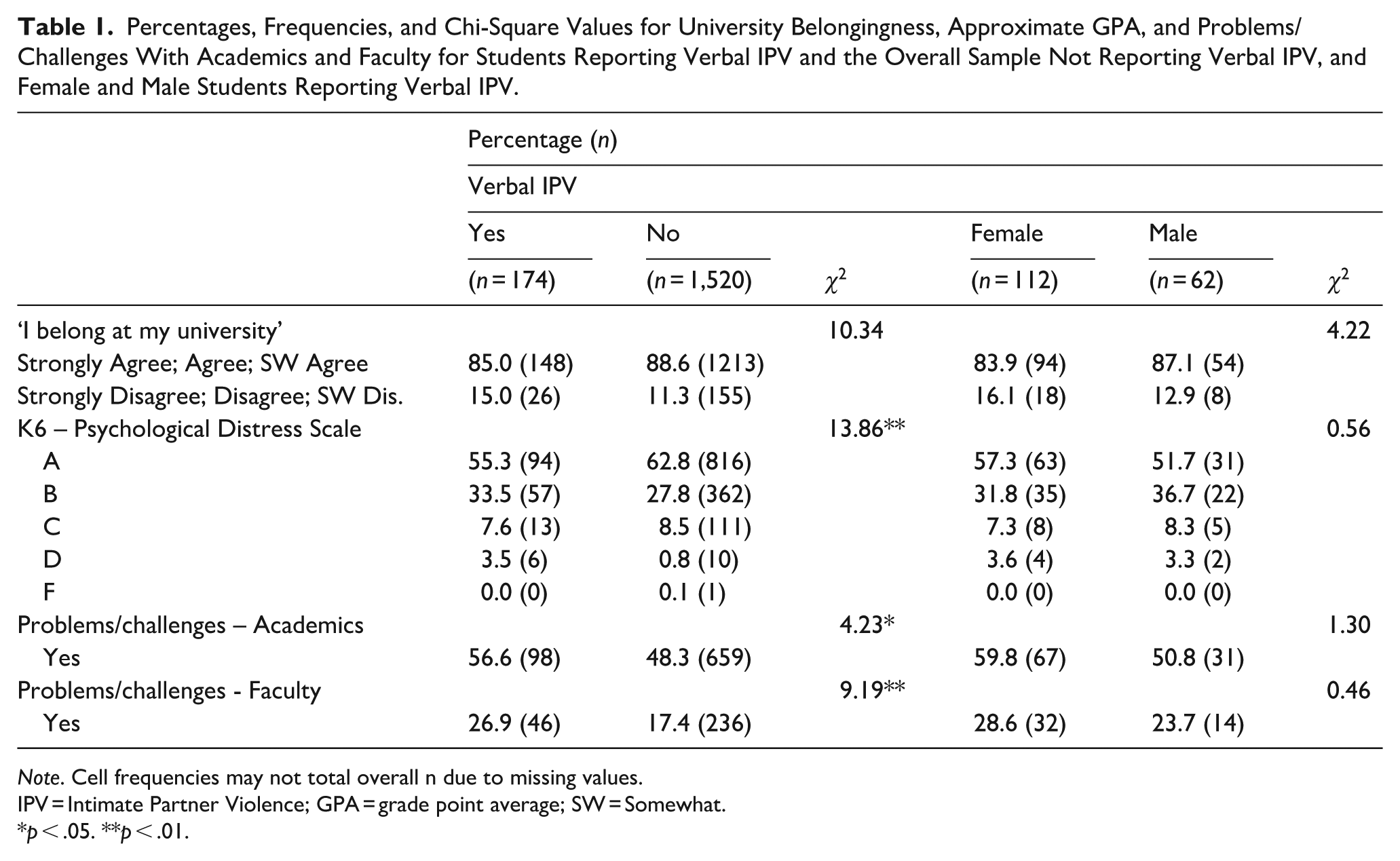
Table 1 presents percentages, frequencies, and Chi-square values for university belongingness, approximate GPA, and problems/challenges with academics and faculty between (a) students reporting verbal IPV and remainder of the students not reporting verbal IPV, and (b) between female and male students reporting verbal IPV. Although a lower proportion of students reporting verbal IPV agreed that they belonged at their university, the Chi-square test was not significant (p = .066). However, the proportion of students reporting problems/challenges with academics and faculty was higher among those reporting verbal IPV, χ²(1) = 4.23, p = .040, V = 0.052 and χ²(1) = 9.19, p = .002, V = 0.077, respectively. Moreover, students reporting verbal IPV were significantly less likely to report an ‘A’ GPA, and more likely to report a ‘B’ and ‘D’ GPA, χ²(4) = 13.86, p = .008, V = 0.097. Table 1 also reveals that variable prevalence rates in terms of university belongingness, approximate GPA, and problems/challenges with academics and faculty did not significantly vary between female and male students reporting verbal IPV (p > .05).
Percentages, Frequencies, and Chi-Square Values for University Belongingness, Approximate GPA, and Problems/Challenges With Academics and Faculty for Students Reporting Verbal IPV and the Overall Sample Not Reporting Verbal IPV, and Female and Male Students Reporting Verbal IPV.
Note. Cell frequencies may not total overall n due to missing values.
IPV = Intimate Partner Violence; GPA = grade point average; SW = Somewhat.
p < .05. **p < .01.
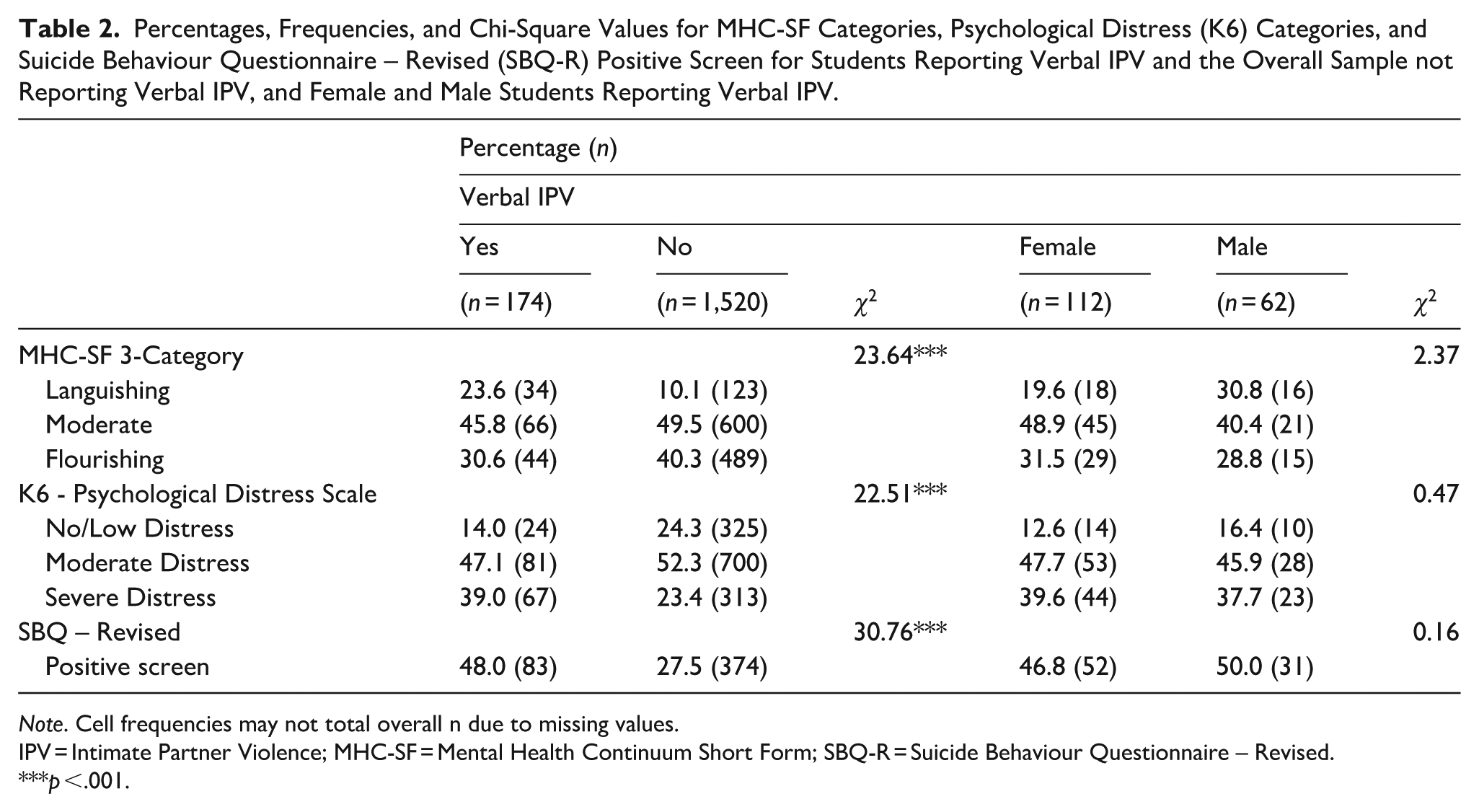
Table 2 provides percentages, frequencies, and Chi-square values for the MHC-SF scale, Psychological Distress Scale (K6), and Suicide Behaviour Questionnaire – Revised (SBQ-R) categories. As the table shows, students reporting verbal IPV were more likely to be categorized as ‘languishing’ and less likely to be classified as ‘flourishing’, χ²(2) = 23.64, p < .001, V = 0.123. Similarly, a significant association with psychological distress (K6) was also revealed, χ²(2) = 22.51, p < .001, V = 0.122, with ‘severe’ psychological distress more likely among those indicating verbal IPV. The table also indicates a significant association with suicidality risk, with students reporting verbal IPV significantly more likely to screen positive, χ²(1) = 30.76, p < .001, V = 0.142. In terms of student sex and verbal IPV, Table 2 indicates that MHC-SF and K6 category prevalence rates, and likelihood of a SBQ-R positive screen did not significantly vary between female and male students (p > .05).
Percentages, Frequencies, and Chi-Square Values for MHC-SF Categories, Psychological Distress (K6) Categories, and Suicide Behaviour Questionnaire – Revised (SBQ-R) Positive Screen for Students Reporting Verbal IPV and the Overall Sample not Reporting Verbal IPV, and Female and Male Students Reporting Verbal IPV.
Note. Cell frequencies may not total overall n due to missing values.
IPV = Intimate Partner Violence; MHC-SF = Mental Health Continuum Short Form; SBQ-R = Suicide Behaviour Questionnaire – Revised.
p <.001.
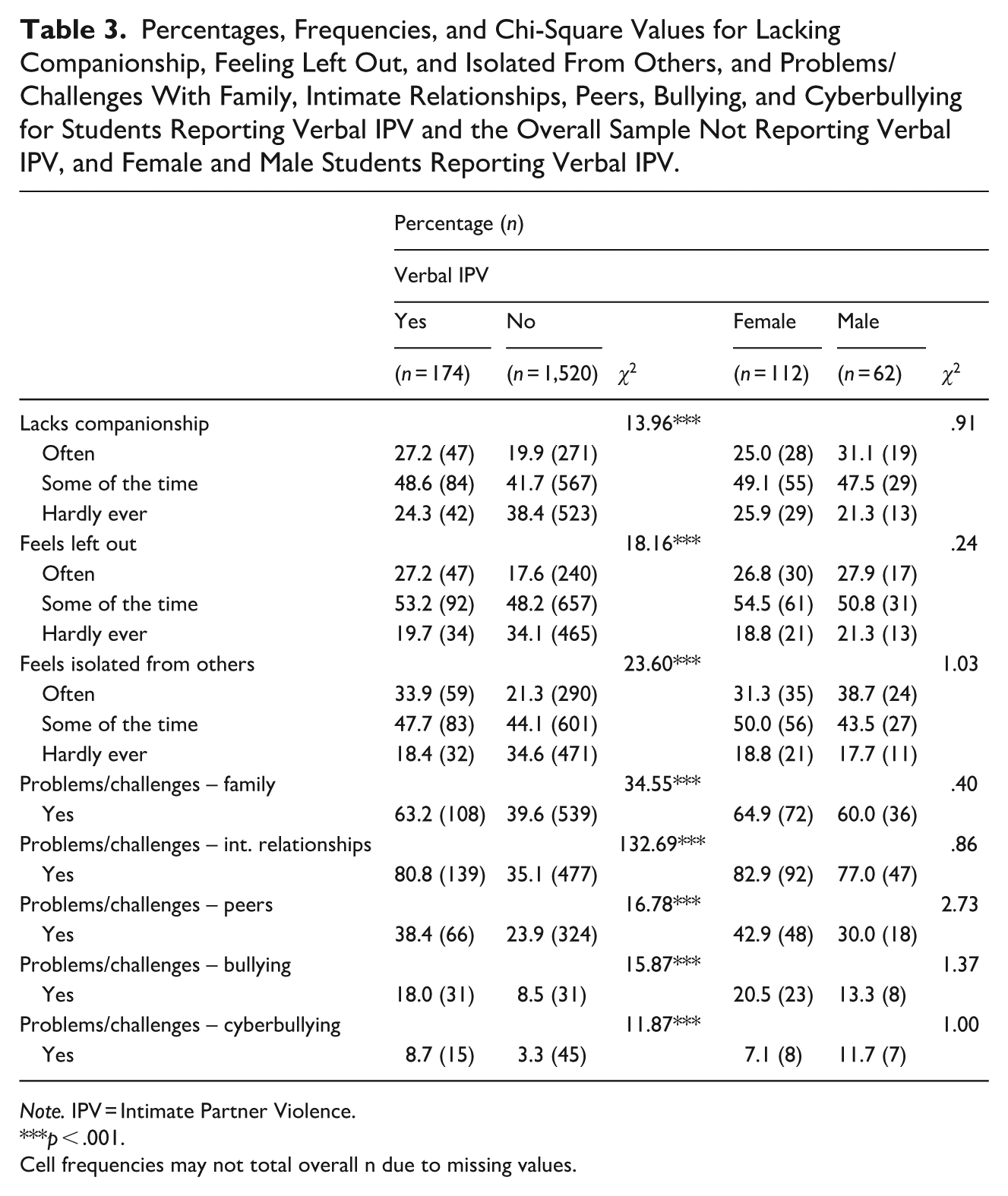
Table 3 provides percentages, frequencies and Chi-square values for student responses of lacking companionship, feeling left out, and isolated from others, as well as problems/challenges with family, intimate relationships, peers, bullying, and cyberbullying. According to the table, reports of ‘often’ lacking companionship were significantly dependent on verbal IPV, χ²(2) = 13.76, p < .001, V = 0.095, as were reports of verbal IPV and ‘often’ feeling left out, χ²(2) = 18.16, p < .001, V = 0.109, and isolated from others, χ²(2) = 23.60, p < .001, V = 0.124. A significant relationship was also observe between student verbal IPV and reported problems/challenges with family, χ²(1) = 34.55, p < .001, V = 0.150, intimate relationships, χ²(1) = 132.69, p < .001, V = 0.294, peers, χ²(1) = 16.78, p < .001, V = 0.105, bullying, χ²(1) = 15.87, p < .001, V = 0.102, and cyberbullying, χ²(1) = 11.87, p < .001, V = 0.088. The table also shows that there were no significant prevalence differences between female and male students reporting verbal IPV with respect to companionship, feeling left out, being isolated from others, and problems/challenges with family, intimate relationships, peers, bullying, and cyberbullying (p > .05).
Percentages, Frequencies, and Chi-Square Values for Lacking Companionship, Feeling Left Out, and Isolated From Others, and Problems/Challenges With Family, Intimate Relationships, Peers, Bullying, and Cyberbullying for Students Reporting Verbal IPV and the Overall Sample Not Reporting Verbal IPV, and Female and Male Students Reporting Verbal IPV.
Note. IPV = Intimate Partner Violence.
p < .001.
Cell frequencies may not total overall n due to missing values.
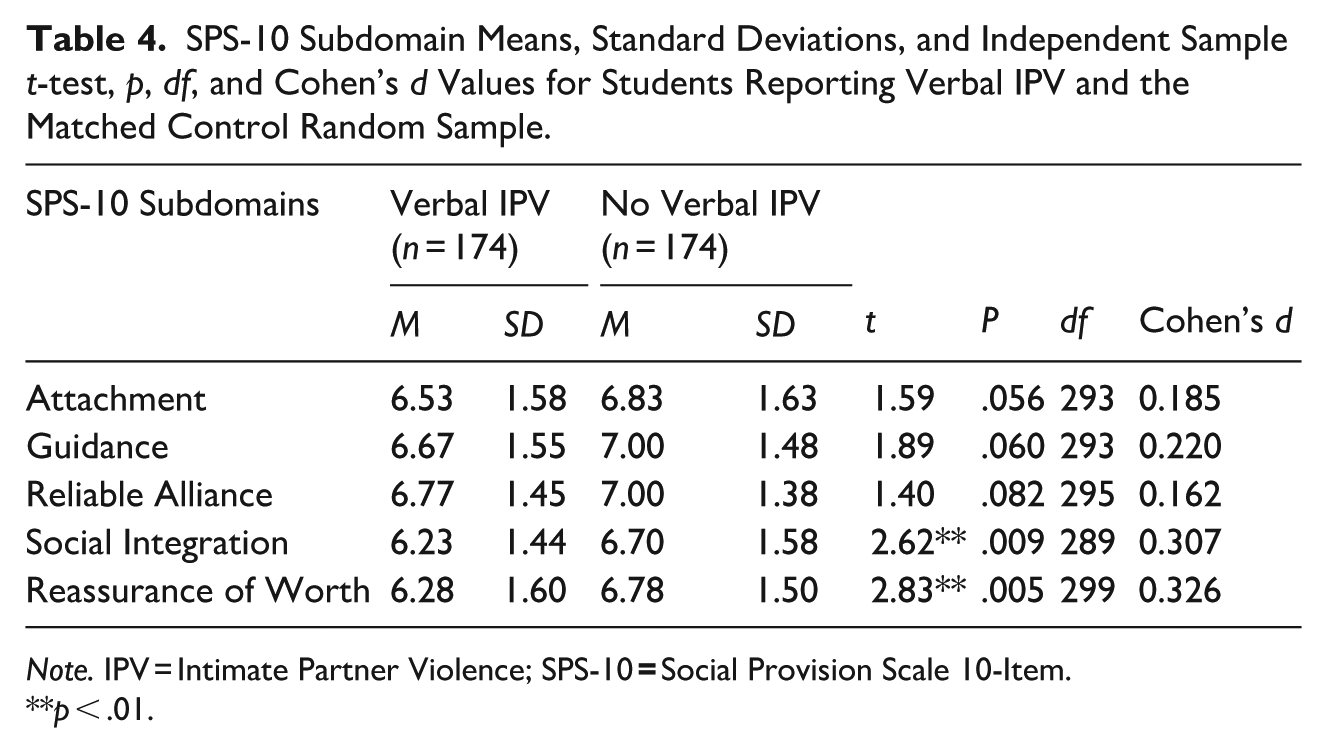
Table 4 presents means and standard deviations associated with the five SPS-10 subdomains for those reporting verbal IPV and the age, sex, and frequency-matched random control group of students not reporting verbal IPV. According to the table, students reporting verbal IPV were significantly lower in ‘social integration’, t(293) = 2.618, p = .009, d = 0.307, and ‘reassurance of worth’, t(299) = 2.829, p = .005, d = 0.326.
SPS-10 Subdomain Means, Standard Deviations, and Independent Sample t-test, p, df, and Cohen’s d Values for Students Reporting Verbal IPV and the Matched Control Random Sample.
Note. IPV = Intimate Partner Violence; SPS-10
p < .01.
For female students reporting verbal IPV, a hierarchical regression analysis was carried out to determine whether/extent to which GPA, and academic problems/challenges (in block 2), lacking companionship, feeling left out, isolated from others, and problems/challenges with family and peers, and university belongingness (in block 3), and SPS-10 social support subdomains (in block 4) accounted for psychological distress (K6) variance after controlling for age (in block 1). As shown in Table 5, neither student age in block 1 nor GPA and problems/challenges with academics in block 2 significantly predicted psychological distress among female students reporting verbal IPV (p > .05). However, in block 3, higher social isolation and a lower sense of university belongingness significantly predicted higher psychological distress, accounting 24.1% of the variance (F(9, 58) = 4.101, p = .005). In block 4, while social isolation remained inversely predictive of psychological distress, no SPS-10 subdomains emerged as significant predictors of psychological distress, (p > .05).
Summary of Hierarchical Regression Analysis for Variables Predicting Psychological Distress (K6) in Female Students Reporting Verbal IPV.
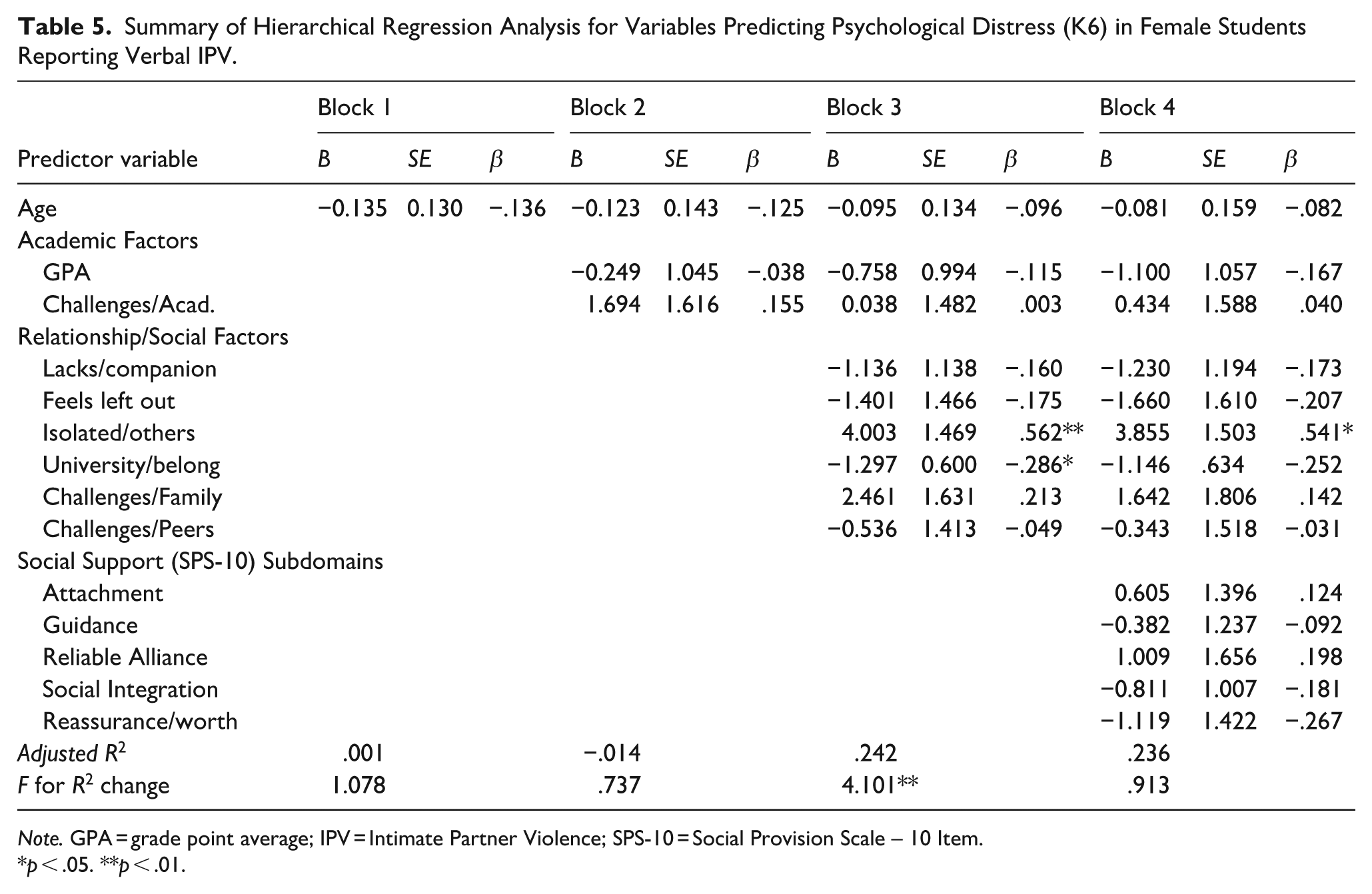
Note. GPA = grade point average; IPV = Intimate Partner Violence; SPS-10 = Social Provision Scale – 10 Item.
p < .05. **p < .01.
For male students reporting verbal IPV, the regression analysis revealed that in block 1, age and psychological distress were significantly and inversely associated (F(1, 30) = 5.057, p = .032), accounting for 11.9% of the variance (See Table 6). Although block 2 was observed to be significant (F(9, 58) = 4.101, p = .005), no individual predictors emerged. However, in block 3, a lower sense of university belongingness significantly predicted higher psychological distress, accounting 13.1% of the variance (F(9, 30) = 2.918, p = .021). Finally, in block 4, it was revealed that a weaker sense of university belongingness and lower levels of ‘reassurance of worth’ were predictive of higher psychological distress (F(14, 30) = 3.366, p = .011), accounting for an additional 16.0% of the variance.
Summary of Hierarchical Regression Analysis for Variables Predicting Psychological Distress (K6) in Male Students Reporting Verbal IPV.
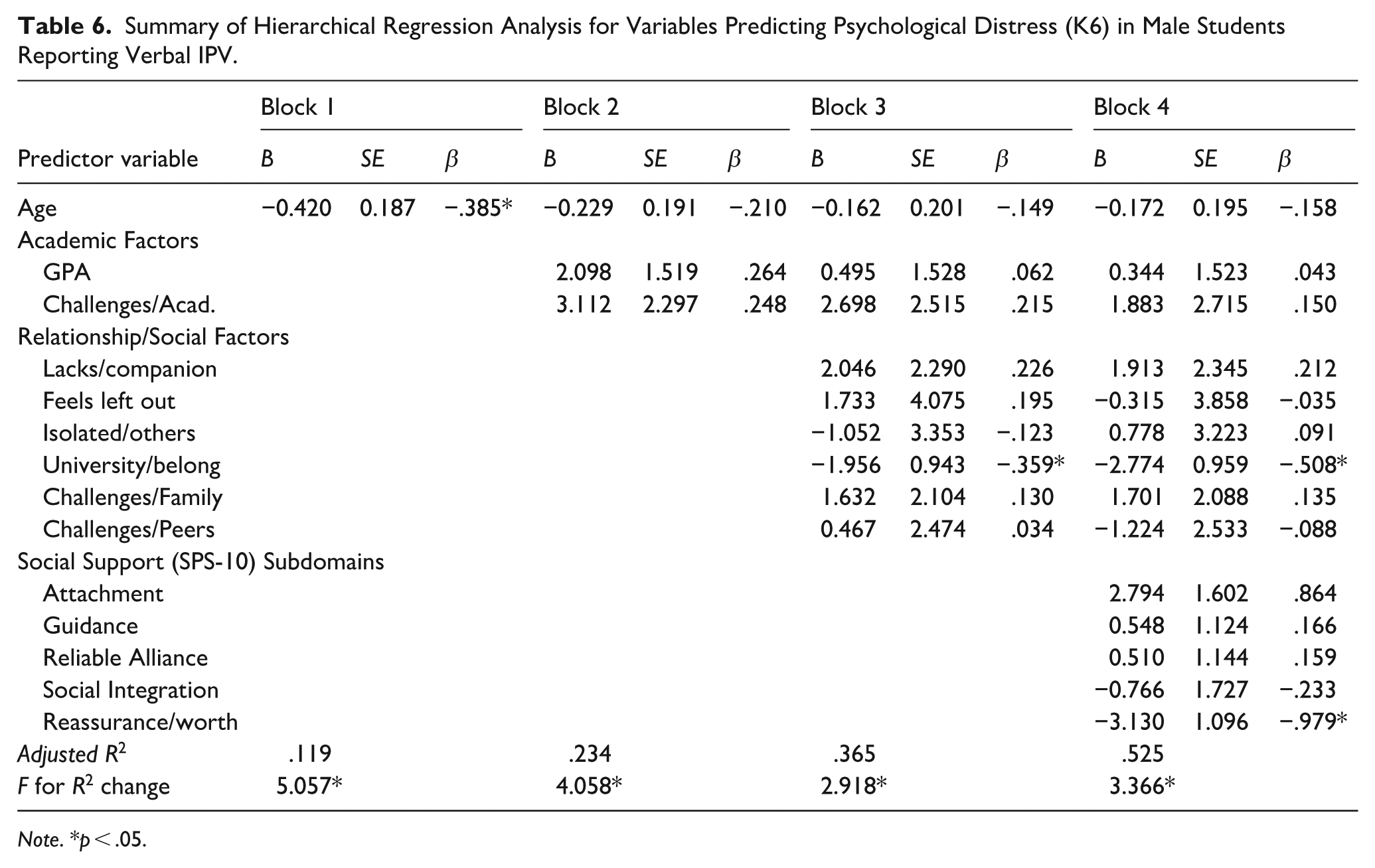
Note. *p < .05.
Discussion
The primary aim of the current research was to investigate whether academic, mental health, relationship, and social support student outcomes statistically vary with reported verbal IPV (i.e. name calling, insults, and/or belittling conveyed to undermine/manipulate one’s partner), with an intent to unveil the potential risks of actions that may be construed as inconsequential (e.g. McCarry, 2007; Sundaram, 2013).
Assessment of Verbal IPV Prevalence by Student Sex, and Domestic/International and Graduate/Undergraduate Status
Previous research assessing romantic relationships suggests that the incidence of verbal aggression tends to be mixed, with some studies reporting rates as high as 90% among intimate couples (e.g. Muñoz-Rivas et al., 2007; Stockdale et al. 2013). In the current study however, while reported verbal IPV was indicated by 11.3% of the entire student sample, there was no way to determine the how many respondents in overall sample were actually in an intimate relationship. Hence, we were not able to determine the proportion of intimate relationships experiencing verbal IPV. Nonetheless, it is notable that roughly 11% of the student body may be affected by verbal IPV, so on-going research is certainly warranted to establish its potential impact (Stockdale et al. 2013).
Although research contends that women are at higher risk of more severe forms of IPV compared with men (e.g. Coker et al., 2002; Banyard et al., 2017; Klencakova et al., 2023), this study found no prevalence difference in verbal IPV, and may raise questions about the true impact of more subtle forms of IPV between female and male students (e.g. Scott-Storey et al., 2022), especially within university settings (e.g. Saewyc et al., 2009). Relative to more severe IPV forms, perhaps verbal maltreatment may be perceived as relatively minor behaviour, particularly by male students, and hence easier to disclose. Moreover, it may be that male students experience different manifestations of verbal IPV, or that changing social norms are influencing greater acknowledgment and reporting among men. While such queries are beyond the scope of the current study, potential sex differences in verbal IPV outcomes were important to examine in the present study (See below for discussion).
The current research also observed that verbal IPV did not significantly vary as a function of undergraduate/graduate student status, a finding that may question the assumption that age/life experience may facilitate more effective recognition and management of harmful relationships (e.g. Ocampo Bernasconi et al., 2024). While studies on IPV among more mature or graduate students is somewhat limited, existing research does suggest that IPV can affect individuals across various age groups and educational levels (e.g. Johnson et al., 2015).
Although certain cultural norms may influence how IPV is defined, expressed, and/or revealed among international students (e.g. Gillum, 2008), verbal IPV was observed to be equally likely relative to domestic students. As noted above, given technology’s unlimited capacity to disseminate dominating and harassing content (e.g. Basting et al., 2023; Taccini & Mannarini, 2024), regardless of geographic location (Branson & March, 2021; Deans & Bhogal, 2019), perhaps citizenship has become less pertinent. Indeed, although students may leave countries bound for international campuses, there may still be no reprieve for those engaged in relationships characterized by verbal IPV. Coupled with cultural adjustment, international students are at comparable risk of verbal IPV; hence awareness and intervention efforts should be culturally inclusive (Gillum, 2008).
Assessment of Academic, Mental Health, Relationship, and Social Support Factors for Students Reporting and not Reporting Verbal IPV
Academically, students reporting verbal IPV were more likely to indicate problems/challenges with academics and faculty, as well as poorer GPAs, findings that align with literature associating IPV with diminished academic concentration, motivation, performance, and stress (Brewer et al., 2018; Banyard et al., 2017; Jordan et al., 2014; Klencakova et al., 2023; Mengo & Black, 2016; Voth Schrag & Edmonton, 2017; Voth Schrag et al., 2019; Wood et al., 2018). Such observations may also suggest that students reporting verbal IPV experience both subjective perceptions of academic struggles and objective academic performance outcomes. Perhaps it may be that the self-esteem cost of verbal IPV (e.g. Cañete-Lairla & Gil-Lacruz, 2017) may lead students to set lower academic expectations for themselves (Coker et al., 2002), or perhaps, as students become preoccupied with precarious social relationships and/or poor mental health, they remain oblivious of the fact that they might benefit from academic support (Banyard et al., 2017). Moreover, our near-significant finding (p = .066) indicating weaker university belongingness among students experiencing verbal IPV suggests a tendency toward feelings of institutional disengagement which is consistent with other IPV studies (Klencakova et al., 2023; Mengo and Black, 2016; Voth Schrag et al., 2019).
Congruent with previous research, students who reported verbal IPV were significantly more likely to indicate heightened psychological distress (Amar & Gennaro, 2005; Banyard et al., 2017; Brewer et al., 2018; Coker et al., 2002; Jordan et al., 2014; Klencakova et al., 2023; Wood et al., 2018), and higher levels of suicidality (Brewer et al., 2018; Musa et al., 2021). Such findings suggest that instances of verbal maltreatment may significantly impact student psychopathology, perhaps a collective function of negative self-perceptions and low self-esteem (Cañete-Lairla & Gil-Lacruz, 2017), academic struggles (e.g. Klencakova et al., 2023), and diminished social support (e.g. Coker et al., 2002). Also consistent with previous studies (e.g. Lhaksampa et al., 2024), students reporting verbal IPV were also less likely to ‘flourish’ and more likely to ‘languish’ (Keyes, 2009). Given that flourishing is a multidimensional construct characterized by positive emotions, personal growth, and strong social engagement (e.g. Keyes, 2009), this finding implies that the psychosocial burden of verbal IPV extends beyond episodic psychological distress, therefore impeding student capacity to maintain overall, holistic well-being.
The current study also observed that students reporting verbal IPV were more likely to report problems/challenges with bullying, a finding that may partly be suggestive of research implicating early experiences of IPV presenting a risk of individuals becoming embedded in a cycle of abuse which may perpetuate victimization (Klencakova et al., 2023; Smith et al., 2003; Voth Schrag et al., 2019), not only perpetrated by intimate partners, but perhaps others in one’s social network. Similarly, students reporting verbal IPV were more likely to report problems/challenges with cyberbullying, perhaps an indication of the CDA whereby technology has redefined the boundaries of intimate partner relationships, yielding novel opportunities to verbally assault and degrade partners regardless of time or location (Branson & March, 2021; Deans & Bhogal, 2019. However, for this variable, the NCHA-III item was generally worded ‘I was cyberbullied (i.e. technology was used to harass, threaten, embarrass, or target me)’ and unfortunately, it is unclear whether agreement meant that respondents might have considered their partner’s behaviour in providing an answer, and/or whether such actions were private or public. Delineating this could provide some important insight into whether students experiencing abusive commentary via technology actually conceive of messages from intimate partners different from those delivered by others.
In terms of problems/challenges with intimate relationships, it is not surprising that students reporting verbal IPV were also significantly more likely to indicate agreement with this item. Moreover, congruent with previous studies indicating a social cost of IPV (e.g. Mahlstedt & Keeny, 1993; Sylaska & Edwards, 2013), reports of verbal IPV were also associated with diminished feelings of companionship, and higher levels of perceived social isolation/loneliness. Similarly, students reporting verbal IPV reported significantly greater problems/challenges with peers (Kernsmith, 2005; Mahlstedt & Keeny, 1993), and family (Chung et al., 2021; Stoff et al., 2021). Implications of such findings are concerning in that a lack of stable sources of support may serve to exacerbate loneliness/isolation, particularly if partner disapproval is also acknowledged, which can leave individuals feeling judged or alienated (Barnes et al., 2022).
An assessment of SPS-10 social support subdomains revealed that students indicating verbal IPV reported significantly lower levels of ‘social integration’ (i.e. ‘a sense of belonging to a group that shares similar interests, concerns, and recreational activities’), corroborating a general sense of isolation/loneliness and relationship problems/challenges also observed in this study, and potential social disengagement revealed in the IPV literature (e.g. Mahlstedt & Keeny, 1993; Sylaska & Edwards, 2013). Students reporting verbal IPV were also significantly lower in ‘reassurance of worth’ social support (i.e. ‘recognition of one’s competence, skills, and value by others’), a noteworthy finding also consistent with the IPV literature that underscores the self-worth cost of verbal IPV (e.g. Cañete-Lairla & Gil-Lacruz, 2017; Cherrier et al., 2023). Interestingly, although there were no significant differences between the verbal IVP and matched control sample in terms of SPS-10 subdomains of ‘attachment’ (i.e. emotional affiliation), ‘guidance’ (i.e. provision of advice), and ‘reliable alliance’ (i.e. provision of tangible/material assistance), these social support subdomains, combined with acknowledged loneliness/isolation and relationship problems/challenges could indicate a degree of relationship dependency (e.g. Kural & Kovacs, 2022) whereby one is prosaically yet emotionally tethered despite an imbalanced power dynamic (Barnes et al., 2022; Klencakova et al., 2023; Kural & Kovacs, 2022). While beyond the scope of the current study, such may form the basis of important future studies.
Predictors of Psychological Distress Among Female and Male Students Reporting Verbal IPV
Although research assessing perpetuator sex and hostility in intimate relationships is mixed (e.g. Stockdale et al., 2013), researchers have reported that women and men display no significant differences in their use of relational aggression in intimate relationships (e.g. Bagner et al., 2007), a finding congruent with the present study which observed no prevalence difference in the reporting of verbal IPV. In addition, the current study also observed that female and male students reporting verbal IPV were statistically equivalent in terms of university belongingness, GPA, challenges with academics and faculty, psychological distress, suicidality, and well-being, and challenges with family, intimate relationships, peers, bullying, and cyberbullying.
To further examine potential sex differences in verbal IPV in terms of the prediction of the mental health (i.e. psychological distress), hierarchical regressions revealed that higher social isolation was significantly associated with higher psychological distress among female students, while lower levels of ‘reassurance of worth’ were associated with higher psychological distress among male students. Given these findings, further studies could assess whether addressing these idiosyncratic characteristics in females and males contending with verbal IPV may render improvements in mental health.
The hierarchical regressions also found that, for male students, higher psychological distress was inversely associated with student age. Perhaps among university students, research proposing that age/life experience may facilitate more effective recognition and management of harmful relationships (e.g. Ocampo Bernasconi et al., 2024) may be particularly true for male students. Yet another finding worthy of further investigation.
Finally, for both female and male students reporting verbal IPV, it was revealed that a lower sense of university belongingness significantly predicted higher psychological distress. Since choices to persist with postsecondary education depend on engagement with an institution’s academic and social environments, positive scholarly and campus experiences are essential to optimize postsecondary perseverance and social integration (Braxton, 2019; Munro, 1981; Napoli & Wortman, 1998; Rasco et al., 2020). Within universities, this may be achieved through the establishment of a supportive, caring, and sympathetic environments that foster positive student/faculty relationships, provide a well resourced and accessible counselling centre, and develop a climate of acceptance and faculty/staff approachability (O’Keeffe, 2013). Future studies could hone in on sense of university belongingness, and its capacity to engage and support students indicating the experience (and distress) of verbal IPV.
Limitations
Several limitations of this study are acknowledged. Firstly, while all enrolled students were encouraged to participate in the NCHA-III (2023) survey, systematic variations may still exist between those who responded and non-respondents resulting in a potential sampling bias. Secondly, since survey items were self-reported, bias in recall and/or misinterpretation of survey items may have influence participant accuracy/reliability. Thirdly, given the cross-sectional, non-experimental nature of the current study, we acknowledge that assumptions of causality and directionality among variables cannot be established or indorsed, and any commentary seeming to imply such is entirely unintentional.
Conclusion
Although research suggests that verbal IPV may often be considered trivial, not as severe as other forms of IPV, and sometimes be justified (McCarry, 2007; Sundaram, 2013), the findings of this study indicate that IPV based solely on verbal behaviour/commentary can have significant academic, mental health, and social/relationship consequences. Moreover, such stereotypes of verbal IPV can delay or impede recognition and intervention, thus allowing patterns of abuse to persist, harmful relationships to endure, and the lack of broader societal awareness about the impacts of verbal IPV can result in reduced validation and support for survivors (e.g. Sundaram, 2013). Further, verbal IPV can escalate to other forms of IPV such as physical or sexual violations.
Given the potential, widespread impact of verbal IPV, it is critical that institutions take proactive steps to increase awareness and provide meaningful support by implementing campus-wide awareness/education initiatives that clearly define verbal IPV, its potential consequences, and equip students with the insight and language to identify and name such abusive actions. Institutions should also ensure that support services are trauma-informed, inclusive, and accessible. Further, mental health providers, on-campus physicians, faculty, and student leaders should receive training on how IPV can manifest, so those affected are met with validation and appropriate support/resources. Peer support networks and culturally sensitive programming can also help students rebuild a sense of campus connection and belonging, particularly important for those who have experienced isolation or strained relationships due to verbal IPV.
Footnotes

Funding
The authors received no financial support for the research and/or authorship of this article.
Declaration of Conflicting Interests
The authors declared no potential conflicts of interests with respect to the authorship and/or publication of this article.