




Abstract
Teen dating violence (TDV) is a prevalent and injurious public health threat affecting adolescent populations across the globe. In response, a plethora of interventions have been developed and implemented with various effects emerging from evaluation studies of these prevention initiatives. The purpose of this study was to investigate whether attitudes toward sexting, gender-based norms toward violence, and constructive conflict resolution skills mediate the main effects of a TDV intervention. Specifically, this study leverages data from the original efficacy trial of the Me & You intervention to examine its causal effects on TDV outcomes among adolescents. Results indicate that intervention-induced changes in attitudes toward sexting significantly mediated the relationship between program participation and TDV perpetration. However, gender-based norms toward violence and conflict resolution skills did not emerge as significant mediators. Notably, the intervention significantly influenced all examined psychosocial mediators in the hypothesized direction. Overall, these findings provide a deeper understanding of the underlying psychosocial mechanisms through which the Me & You intervention exerts its influence and underscores the importance of addressing sexting attitudes in future TDV prevention efforts.
Introduction
In the United States, many young people are affected by teen dating violence (TDV), a significant public health issue. TDV is a prevalent problem associated with several negative physical, mental, social, and behavioral health problems. A meta-analysis estimated that approximately 20% of adolescents have been a victim or perpetrator of physical TDV (i.e., the use of physical force to injure a dating partner) and a smaller, but significant, proportion (9%) of adolescents have experienced sexual TDV (i.e., forcing or coercing a sexual dating partner to engage in sexual intercourse unwillingly) (Wincentak et al., 2017). In addition, a systematic review published in 2017 found high rates of emotional or psychological TDV victimization and perpetration (i.e., the use of verbal and non-verbal communication with the intent to harm a partner mentally or emotionally and exert control over a partner) among adolescents and young adults (Rubio-Garay et al., 2017). Using a liberal definition of psychological abuse, this review also reported the prevalence of emotional victimization and perpetration as high as 95% (Rubio-Garay et al., 2017). Overall, recent findings from a comprehensive umbrella review of systematic reviews and meta-analyses published between 2012 and 2019 indicate “a high burden of dependent variable (DV) among young populations” to be addressed through widespread prevention efforts employed at the population level (Hossain et al., 2024).
Disparities in the prevalence of TDV across different segments of the population in the United States indicate that this issue does not impact all groups equally. In a study investigating TDV victimization across genders, Krause et al. (2023) determined that ~13% of female students recounted experiencing sexual dating violence, while ~8% of girls reported being physically victimized in dating relationships (Krause et al., 2023). In contrast, ~2% of male students relayed being sexually victimized in their relationships, while 5% said they suffered physical victimization (Krause et al., 2023). Another study provided evidence that male adolescents are less likely to be perpetrators of physical TDV, whereas female adolescents are more likely to be victims of sexual TDV (Wincentak et al., 2017). Epidemiological research has revealed racial and ethnic disparities in TDV. A recent study found that TDV was particularly prevalent among Native American and Indigenous, Multiracial, and Native Hawaiian, and Other Pacific Islander youth (Fix et al., 2022); however, other research indicates that these ethnoracial disparities vary depending on the type of TDV being examined (Clayton, 2023). For example, one study found that Latine and non-White adolescents reported higher rates of physical and sexual TDV relative to their counterparts (Gattamorta et al., 2019), and another study found that Black and Latine female adolescents reported surviving sexual TDV relative to their White peers (Boothe et al., 2014). To be clear, race and ethnicity are not risk factors for TDV; instead, it is likely that the increased personal and systemic racism and discrimination experienced by people of color increase their risk for victimization and perpetration.
In addition to gender and race/ethnicity, researchers have identified a suite of modifiable risk factors associated with involvement in TDV, including attitudes toward violence (Temple, Shorey, Tortolero, et al., 2013), exposure to aggressive media (Friedlander et al., 2013), substance misuse (Temple, Shorey, Fite, et al., 2013), social norms endorsing dating violence (Mennicke et al., 2021), exposure to parental marital conflict (Stocker & Richmond, 2007), family violence (Karlsson et al., 2016), inadequate conflict resolution skills (Fernet et al., 2016), and several other peer-related factors (Garthe et al., 2017). Together, these findings emphasize the multifaceted and disparate nature of TDV as well as the need for a multi-layered and targeted approach to its prevention.
A variety of interventions have been developed to address TDV. These programs range from psychoeducational curricula implemented in school-based settings to community-based programs implemented in healthcare settings (Lee & Wong, 2020). Evaluations of these programs have produced inconsistent evidence of their effectiveness, with some studies finding substantial long-term benefits while others suggesting little to no long-lasting effects on dating violence outcomes (Lee & Wong, 2020; Leen et al., 2013). A more recently published systematic review and meta-analysis found that some TDV prevention programs may be effective in preventing physical forms of dating violence among adolescents, but evidence to support the effects on sexual dating violence is lacking (Piolanti & Foran, 2022). Several mediation analyses have been conducted to investigate more granular causal mechanisms operating within TDV prevention interventions. For instance, previous research on the Safe Dates program has indicated that reductions in psychological, physical, and sexual dating violence occurred via intervention-induced alterations in normative beliefs surrounding dating violence, less endorsement of traditional gender roles, and heightened recognition and awareness of TDV-related community services (Foshee et al., 2005). Bush et al. (2021) discovered that the positive effects of their program on TDV outcomes were largely driven by mediated changes in attitudes toward violence and bystander behaviors among a sample of adolescents recruited from 26 schools across Kentucky (Bush et al., 2021). An evaluation of the Green Dot program by Mennicke et al. (2021) empirically attributed its success in reducing TDV to a decrease in adolescents’ acceptance of rape myths and acceptance of dating violence, which were psychosocial constructs positively modified by participation in the program (Mennicke et al., 2021). These types of analyses have started to offer program planners valuable perspectives into the causal pathways linking program exposure to changes in dating violence outcomes among youth. However, there has been a lack of studies investigating the intervention-mediated psychosocial mechanisms contributing to the prevention of TDV among early adolescent youth (i.e., 11–14 years old) specifically.
Previously, the Me & You program successfully reduced TDV among early adolescent middle school students. Specifically, after one year, the odds of DV perpetration were lower among the intervention students than among control students (Peskin et al., 2019). Significant effects were observed for physical DV perpetration, psychological DV perpetration, threatening DV perpetration and victimization, and sexual DV victimization.
In contrast to assessments of other leading TDV prevention programs, the precise mechanisms driving the behavioral effects of the Me & You curriculum have yet to be elucidated. While the original evaluation assessed various theoretically grounded psychosocial constructs associated with TDV (e.g., self-efficacy to resolve conflict, belief in need for help, and coping skills), we now focus on three key psychosocial factors as potential mediators in the link between exposure to the intervention and TDV outcomes: attitudes toward sexting, gender-based norms toward violence, and conflict resolution skills. More specifically, we evaluated whether changes in these hypothesized psychosocial factors completely or partially mediated the effects between exposure to the Me & You program and TDV perpetration and victimization among a sample of ethnically diverse early adolescents.
Theoretical Considerations
Ultimately, the selection of these three factors as mediating variables was informed by prior research demonstrating significant intervention-related changes in these domains among participating youth (Peskin et al., 2019). Beyond these empirical findings, there are also strong theoretical and conceptual justifications for examining these psychosocial constructs as mediators within the current study.
First, a substantial body of social psychological literature underscores the central role of attitudinal beliefs in shaping human behavior (Ajzen et al., 2018). In the context of TDV, attitudes toward sexting may capture broader beliefs about control, consent, and relational expectations that contribute to the development or reinforcement of unhealthy relationship dynamics and is important to consider as a mediating variable influencing TDV outcomes. Indeed, prior research has established a direct association between sexting behaviors and TDV outcomes among adolescents (Huntington & Rhoades, 2023), suggesting a potential interconnection between these two maladaptive relationship behaviors. More specifically, empirical evidence has indicated that adolescents who maintain favorable attitudes toward sexting—particularly within coercive or exploitative contexts—may endorse beliefs that normalize boundary-transgressing behaviors and thereby increase vulnerability to both perpetration and victimization of TDV (Bianchi et al., 2021). Further, gender differences have been observed in adolescents’ sexting attitudes: one study conducted with a Spanish sample of adolescents found that boys tended to express more support toward sexting behavior, whereas girls tended to report heightened risk awareness concerning receiving sexts (Rodriguez-Castro et al., 2017).
Additionally, gender-based normative beliefs toward violence have also been consistently identified as salient determinants of TDV. Consistent with Social Role Theory (Eagly & Wood, 2012), the internalization of gendered norms may influence TDV outcomes through multifaceted psychosocial processes, thereby contributing to the gender disparities consistently observed among adolescent populations. For instance, Reidy et al. (2015) found that adolescent boys who perceived themselves as less masculine than their peers—and experienced associated stress—were significantly more likely to report perpetrating dating violence. Furthermore, mixed-methods research has revealed nuanced gender differences in normative beliefs about dating violence (Reeves & Orpinas, 2012). For example, quantitative results from this study identified a significant association between TDV-supportive norms and physical aggression among boys but not girls; at the same time, however, findings from their focus groups with adolescents found that while most adolescents generally reject physical violence in dating contexts, those who do did endorse it oftentimes expressed greater acceptance of female-to-male aggression than the reverse. This asymmetry appears to be shaped, in part, by peer-enforced norms that discourage boys from hitting girls, and the authors wrote that this phenomenon “. . . may be better understood as a proscription against physical violence perpetrated by boys rather than support for physical violence perpetrated by girls.” Overall, these findings may suggest that pressure to meet traditional masculine norms can lead to psychological distress and harmful behaviors in dating relationships, which may help explain gendered differences in TDV outcomes.
Finally, conflict resolution skills were further evaluated in this study, given prior evidence demonstrating that dating violence prevention interventions can significantly enhance adolescents’ self-efficacy and conflict management abilities (Antle et al., 2011; Niolon et al., 2019; Wolfe et al., 2003). The inclusion of this construct in the present analysis is theoretically grounded in behavioral science frameworks such as Social Cognitive Theory (Bandura, 2001), which underscore the central role of self-efficacy and skill acquisition in facilitating behavior change. Similar to the aforementioned constructs, research has also identified gender-based differences in the ways adolescents approach conflict resolution. For instance, some evidence indicates that adolescent girls are more likely to engage in relational conflicts and utilize strategies aimed at de-escalation, whereas boys more often describe their conflicts as being related to issues of popularity and dominance within their peer interactions (Noakes & Rinaldi, 2006).
Present Study
Grounded in behavioral science theory and the extant empirical evidence, the objective of this study was to examine whether three theoretically-grounded psychosocial constructs—(a) attitudes toward sexting, (b) gender-based normative beliefs about violence, and (c) conflict resolution skills—mediated the relationship between intervention exposure and TDV outcomes. This investigation was conducted among a racially and ethnically diverse sample of 709 early adolescents (11–15 years). Ultimately, we hypothesize that each construct will serve as a direct mediator of the relationship between intervention participation and TDV-related behaviors among study participants.
Methods
Intervention: Me & You … Building Healthy Relationships
The Me & You program is a multi-component intervention to promote healthy relationships and prevent TDV that was developed using the Intervention Mapping protocol (Peskin et al., 2018). Guided by the key concepts from the socioecological model of human development (Bronfenbrenner & Morris, 2007) and Social Cognitive Theory (Bandura, 1989), the Me & You program employs specific components targeting key actors within the adolescent social ecology, including parents/caregivers and teachers. This approach aligns with the understanding that multilevel prevention strategies are essential for affecting complex health behaviors. The student portion of the program included 13 lessons, each roughly 25 min in length. Trained facilitators directly administered some of the lessons, whereas other lessons were delivered through a computer-based platform. Details on the specific behavior change techniques employed in the program can be found elsewhere (Peskin et al., 2018).
Study Design, Procedures, and Participants
Me & You was evaluated in a group-randomized controlled trial from 2014 to 2015 in a large urban school district in Southeast Texas (Peskin et al., 2019). Ten middle schools were randomly assigned to the intervention or comparison condition using a multi-attribute randomization protocol (Graham et al., 1984), accounting for school type (e.g., magnet), geographic region, race/ethnicity, enrollment of sixth-graders, percentage of economically disadvantaged students, and students “at-risk” for drop-out. Intervention schools received Me & You and comparison schools received their regular health education from the state-approved textbook. All sixth graders who were enrolled in a health or physical education course, spoke English, and not participating in special education were eligible to participate in the study. Students completed baseline and two follow-up surveys (immediately after the intervention and about 1-year after baseline). The cohort of students followed over one year comprised 709 students (n = 438 intervention, n = 271 comparison). Participants received $5 gift cards for returning the parent consent form and finishing the baseline and first follow-up survey (post-intervention), as well as a $10 gift card for completing the final 12-month follow-up.
Measures
Outcome: TDV Perpetration and Victimization
We used the Conflict in Adolescent Dating Relationships Inventory (CADRI) to assess multiple domains of dating violence (Wolfe et al., 2001) among youth who reported ever having a boyfriend or girlfriend. Participants were asked to report their lifetime involvement (yes/no) in TDV (at baseline) and in the past year (at the second follow-up). In terms of specific TDV domains, this instrument assessed psychological (13 items; e.g., “I insulted him/her with put-downs”), physical (4 items; e.g., “I threw something at him/her”), threatening (4 items; e.g., “I threatened to hit him/her or throw something at him/her”), and sexual (1 item: “I kissed him/her when he/she did not want me to”) dating violence. For this measure, we presented students with each item twice: once framed in terms of perpetration and once framed in terms of victimization. Our analysis focuses on both TDV victimization and perpetration. However, we only included specific subtypes of TDV that showed significant changes in the parent efficacy study (Peskin et al., 2019).
A systematic review revealed that the psychometric properties of the CADRI demonstrated robust psychometric properties, including adequate to superb content validity, structural validity, internal consistency, and reliability (Tarriño-Concejero et al., 2023). In the present analysis, all subscales of the CADRI demonstrated adequate internal consistency (Cronbach’s α > .70) with the exception of the threatening dating violence perpetration subscale (α = .65). As with previous studies, students who did not report ever having a boyfriend or girlfriend were coded as never having experienced dating violence (Wolfe et al., 2009).
Psychosocial Construct: Attitudes Toward Sexting
We examined attitudes toward sexting as a potential psychosocial mediator of intervention outcomes. Students’ perspectives on the acceptability of sexting were evaluated using a single item asking about their “feelings about sending sexually explicit cell phone pictures.” Response options included: (1) “Always wrong to send or forward such pictures”; (2) “It is okay to send such pictures of yourself but not of other people”; (3) “It is okay to forward pictures you receive, but not to send the first picture”; and (4) “Sending, receiving, or forwarding such pictures is okay.” This item was adapted from a previous study (Strassberg et al., 2013). Higher scores indicated higher endorsement of acceptability of sexting behaviors.
Psychosocial Construct: Gender-Based Norms Toward Violence
Gender-based norms toward violence have been identified as a key variable influencing intervention-mediated impacts on TDV (Meiksin et al., 2024; Reyes et al., 2016). Gender-based norms toward violence refer to social expectations surrounding the acceptance, justification, or perpetration of gender-based violence. Several items were employed to assess two different types of gender-based norms. In particular, four items were employed to assess norms toward violence for girls against boys (e.g., Boys sometimes deserve to be hit by the girls they date) and six items to assess norms toward violence for boys against girls (e.g., It is OK for a boy to hit his girlfriend if she did something to make him mad). Responses were captured using 4-point Likert scales spanning from strongly agree (0) to strongly disagree (3). Higher scores reflect more favorable norms toward violence. The internal consistency (Cronbach’s α) for these two subscales ranged from .77 to .83.
Psychosocial Construct: Conflict Resolution Skills
Conflict resolution skills, encompassing adolescents’ abilities to actively solve problems and de-escalate disagreements in productive ways, were also investigated as a potential psychosocial mediator of intervention efficacy. Constructive conflict resolution skills were assessed using seven items adapted from Foshee et al. (2001, 2004). Responses were captured using 4-point Likert scales spanning from never (0) to very often (4). Higher scores reflect more positive conflict resolution skills. The internal consistency between items in the scale was good (Cronbach’s α = .87).
Assumed Causal Model and Effects of Interest
The primary goal of the analyses was to evaluate the degree to which the psychosocial constructs (i.e., attitudes toward sexting, gender-based norms toward violence, and conflict resolution skills) mediated the intervention effect. Figure 1 illustrates the hypothesized mediation model used to test the indirect effect of the intervention on TDV victimization and perpetration through the mediators (i.e., attitudes about sexting, gender-based norms, conflict resolution skills). Path C denotes the total effect of intervention exposure on TDV. The total effect can be decomposed into the direct effect, C’, and the indirect effect AB, which is carried through the mediator. In the present analysis, exposure to intervention was operationalized as a binary variable, with intervention participants coded as 1 and control participants coded as 0.
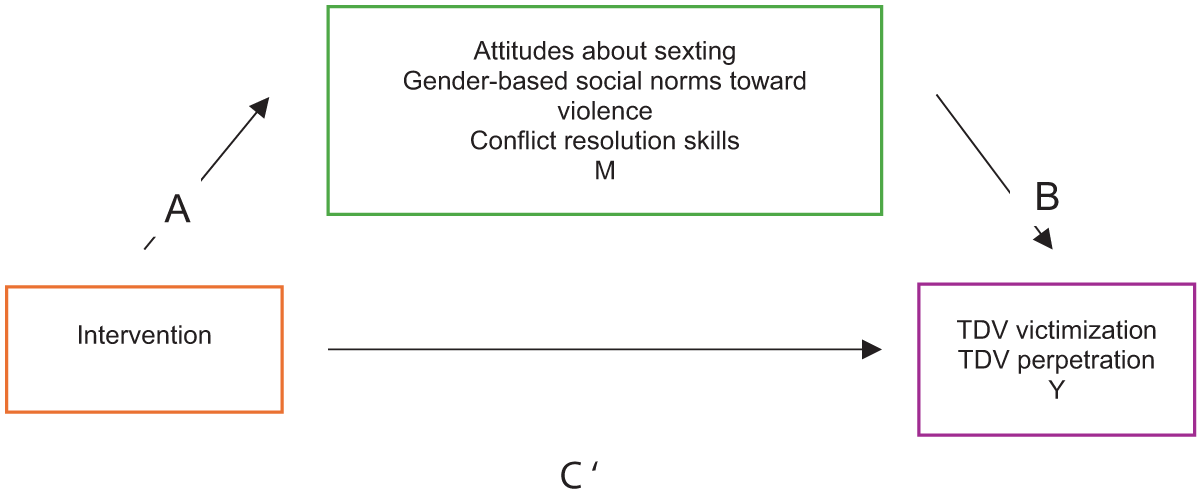
Hypothesized mediation model.
Statistical Analysis
We used multilevel regression models to adjust for the intraclass correlation resulting from the clustered sampling design, where students were sampled within schools. For multilevel regression models and regression models for categorical outcomes, AB does not equal C – C′ (MacKinnon, 2012); however, for large samples such as this, the difference is usually small. Additionally, for logistic regression, where the scales of the various mediation regression equations are different, standardization of estimates minimizes the difference between AB and C – C′ and allows for estimation of standard errors of the mediated effect. The estimated mediated effect or indirect effect in this study was estimated using AB rather than C – C′. Path A (intervention effect on the mediator) was estimated using a multilevel linear regression model with a DV (psychosocial mediator) and an independent variable (intervention exposure). Path B (mediator’s effect on the outcome) was estimated using a multilevel logistic regression model with a (DV perpetration/victimization) and an independent variable (psychosocial mediator), adjusting for intervention exposure. Path C’ (program’s effect on the outcome, adjusting for the mediator) was estimated using a multilevel logistic regression model with the DV (perpetration/victimization), and independent variables (intervention exposure and psychosocial mediator). All models were adjusted for age, gender, race and ethnicity, time between assessments, and the baseline values of the outcome under investigation. The mediation model was tested by calculating the significance and size of the A and B effect estimates using Wald tests and the significance and size of the mediated effect estimated by AB using the Sobel test (Hayes, 2009; MacKinnon, 2012; Sobel, 1982). Similar to the main outcomes paper, and because the intent of the program was also to promote positive norms associated with not having a dating partner in the sixth grade, models were conducted for the entire sample comprising of both daters and non-daters.
Results
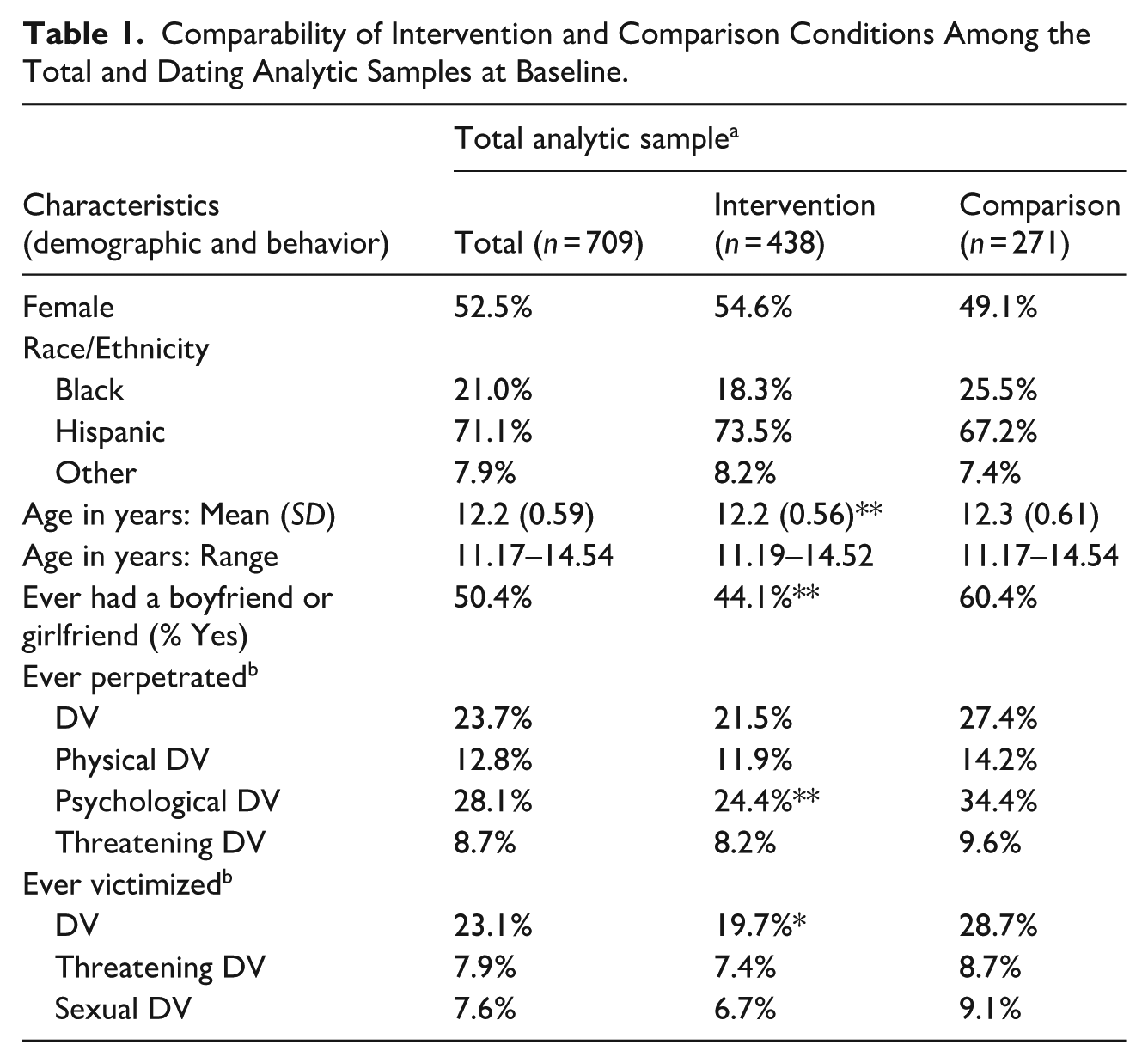
As shown in Table 1, 52.5% of the 709 students identified as female. The sample was racially and ethnically diverse, with youth identifying as Hispanic/Latine (71.1%), followed by Black/African American (21.0%), and other (7.9%). The age of middle school youth in the sample ranged from 11 to 15 years old. Half of students (50.4%) reported ever having a boyfriend or girlfriend. Age, dating experience, psychological DV perpetration, DV victimization, and attitudes about sexting were significantly different between the intervention and comparison groups.
Comparability of Intervention and Comparison Conditions Among the Total and Dating Analytic Samples at Baseline.
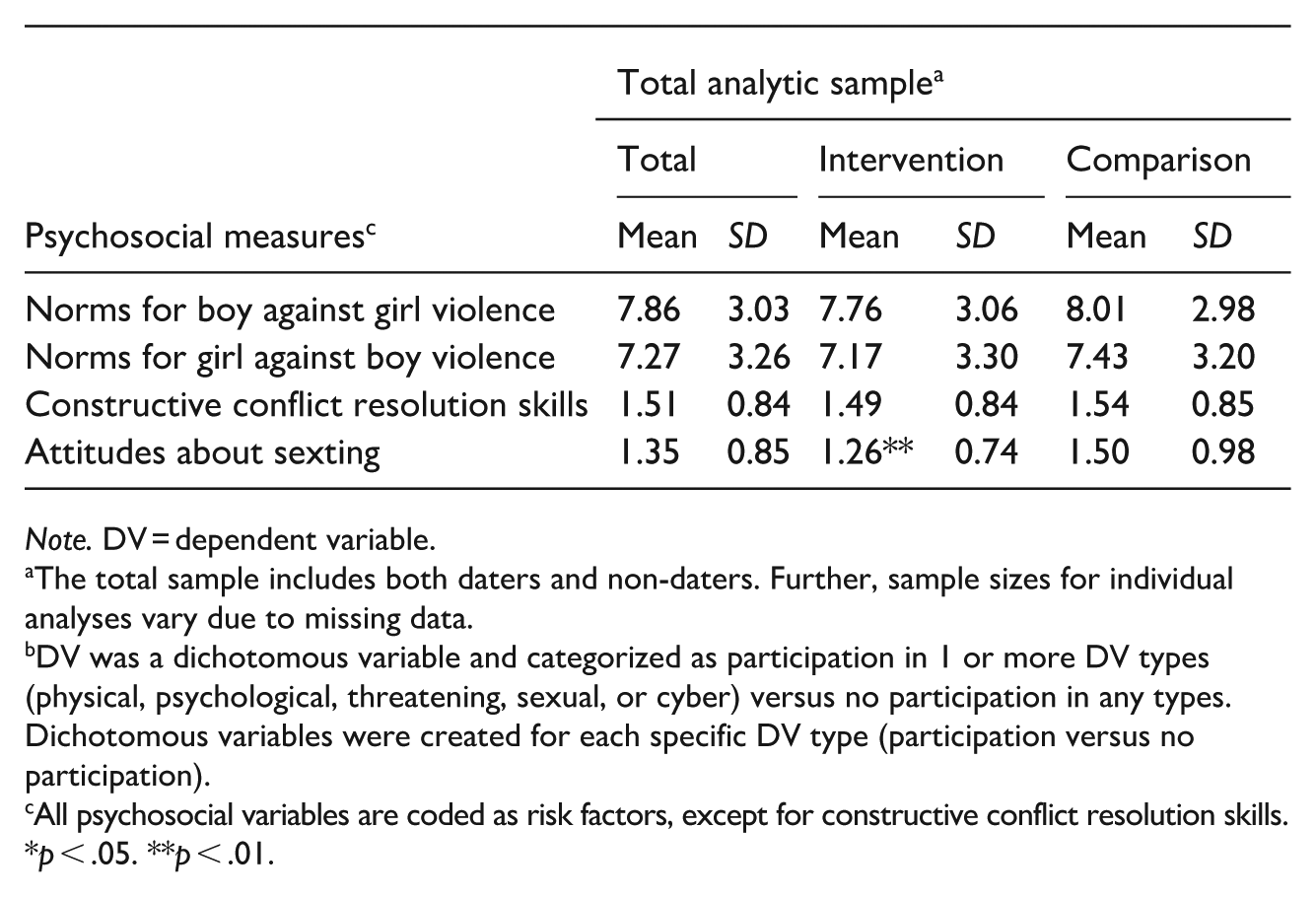
Note. DV = dependent variable.
The total sample includes both daters and non-daters. Further, sample sizes for individual analyses vary due to missing data.
DV was a dichotomous variable and categorized as participation in 1 or more DV types (physical, psychological, threatening, sexual, or cyber) versus no participation in any types. Dichotomous variables were created for each specific DV type (participation versus no participation).
All psychosocial variables are coded as risk factors, except for constructive conflict resolution skills.
p < .05. **p < .01.
Table 2 provides the estimated standardized A, B, and C’ effects and corresponding standard errors from the multilevel regression models and the estimated proportion of the effect that is mediated.
Mediated Effects by Outcome.
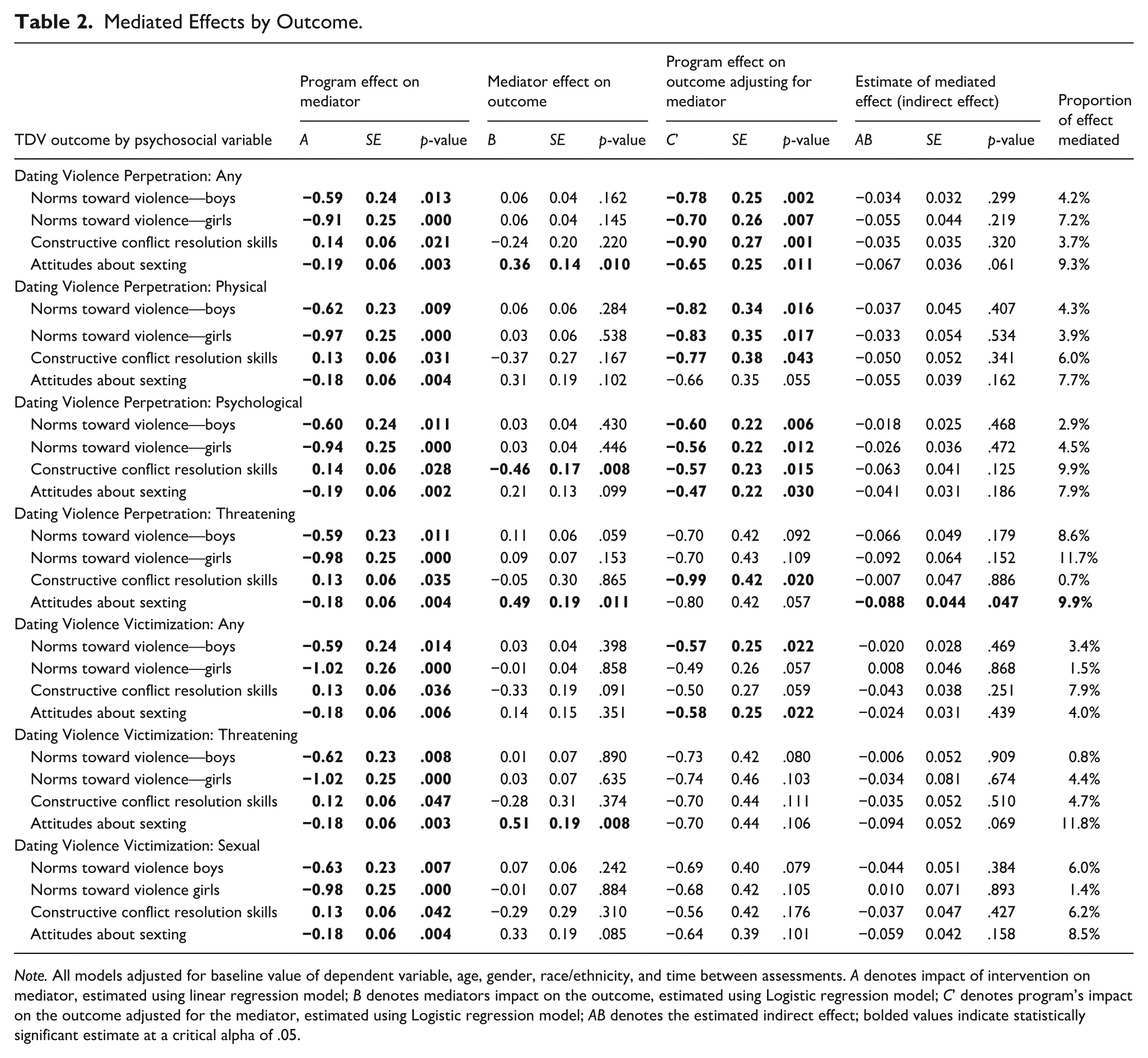
Note. All models adjusted for baseline value of dependent variable, age, gender, race/ethnicity, and time between assessments. A denotes impact of intervention on mediator, estimated using linear regression model; B denotes mediators impact on the outcome, estimated using Logistic regression model; C’ denotes program’s impact on the outcome adjusted for the mediator, estimated using Logistic regression model; AB denotes the estimated indirect effect; bolded values indicate statistically significant estimate at a critical alpha of .05.
As shown by path A, the intervention had a significant effect on each of the proposed psychosocial mediators—norms for gender-based violence, constructive conflict resolution skills, and attitudes about sexting (p < .05). Two of the tested mediators were significantly associated with the outcomes (path B): constructive conflict resolution skills were inversely associated with perpetration of psychological DV (−0.46 p = .008), and more favorable attitudes about sexting were significantly associated with any DV perpetration (0.36, p = .010), threatening DV perpetration (0.49, p = .011), and threatening DV victimization (0.51, p = .008).
Path C’ provides the estimated program effects on each outcome, adjusting for each mediator. After adjusting for each of the four mediators, the intervention showed a significant association with any DV perpetration, physical DV perpetration, and psychological DV perpetration (p < .05). A significant difference did not emerge between attitudes about sexting and physical DV perpetration (−0.66, p = .055). Intervention impact was also observed for threatening DV perpetration after adjusting for constructive conflict resolution skills, and for any DV victimization after adjusting for norms toward violence for boys and attitudes about sexting. Attitudes about sexting was the only significant indirect effect showing significant mediation of the relationship between intervention exposure and threatening DV perpetration (−0.09, p = .044), with an estimated mediation of 9.9% of the intervention impact on this outcome.
Discussion
This analysis aimed to evaluate the theory of change behind the evidence-based TDV prevention program, Me & You. Specifically, the objective was to examine whether exposure to the intervention influenced TDV outcomes via mediated changes in three psychosocial factors within program participants: (a) attitudes toward sexting, (b) gender-based norms toward violence, and (c) conflict resolution skills. Findings indicated that the intervention directly reduced TDV perpetration (Peskin et al., 2019). However, this mediation analysis revealed nuanced insight into the potential underlying causal mechanisms and psychosocial processes involved in producing this preventive effect.
Interestingly, we found that changes in attitudes about sexting behaviors were the only significant indirect mediating effect to emerge from the data. This factor accounted for about 10% of the intervention’s impact on the prevention of TDV threatening perpetration. This mediated effect via attitudes surrounding sexting has not been previously identified with other TDV interventions (Reyes et al., 2021), thus highlighting a unique contribution of the Me & You program. This result is promising, especially considering a recent meta-analysis by Madigan et al. (2018) indicating that sexting among adolescents is prevalent and on the rise (Madigan et al., 2018). Additionally, previous research has found links between sexting motivations and sexting behaviors on TDV (Bianchi et al., 2021; Van Ouytsel et al., 2021). Going forward, the evidence suggests that addressing sexting—and its related determinants—should be a key priority for program planners aiming at preventing dating violence perpetration among youth. Indeed, sexting was directly addressed in the Me & You program.
Consistent with prior studies, findings also revealed that changes in constructive conflict resolution skills were associated with lower levels of psychological TDV perpetration among young adolescents. A South African study found that youth with poorer conflict resolution abilities were more likely to report psychological dating violence perpetration compared to their counterparts (Russell et al., 2014). Although the present analysis determined that the intervention was related to improved conflict resolution and these skills were associated with lower TDV perpetration, conflict resolution did not emerge as a significant mediator of intervention efficacy. Similarly, prior studies have implicated shifts in gender norms as a critical psychosocial factor explaining interventions’ influence on TDV outcomes (Foshee et al., 2005; Reyes et al., 2021). However, like constructive conflict resolution skills, changes in gender norms toward violence did not significantly mediate the association between exposure to Me & You and TDV behaviors.
One potential explanation for the absence of significant mediation effects in this context—aside from the effects observed via attitudes toward sexting—is that the third variable influences of gender-based norms toward dating and constructive conflict resolution skills on TDV outcomes may be more complex than captured in the current model. More specifically, these psychosocial variables may be interacting synergistically with each other and with other potential psychosocial factors not included in the present analysis to collectively affect TDV among adolescent participants. In other words, the full mediating impact of these variables may only become apparent when considering their interplay within a broader constellation of relevant psychosocial influences.
As evidenced by significant p-values for all “a” paths in the analysis, program participation was related to all psychosocial constructs in the hypothesized directions. While encouraging, this outcome was somewhat expected given the invocation of the Intervention Mapping protocol (Fernandez et al., 2019; Kok et al., 2016) to develop the Me & You program. The Intervention Mapping framework requires program planners to carefully consider a substantial number of behavioral and environmental factors—either theoretically or empirically associated with the health issue—to articulate a specific logic model of change, a hypothesized causal model of intervention-induced effect. Given that exposure to the intervention generated psychosocial effects, anticipated by program planners a priori, findings from this analysis suggest the Me & You program is functioning as originally intended. Ultimately, these results provide further evidence reinforcing the utility of adopting the theoretically- and empirically-informed Intervention Mapping protocol as a systematic framework when designing behavior change interventions.
While this analysis offers important insights into the theory of change underlying the Me & You program, some limitations should be acknowledged. First, the reliance on self-report data may have introduced social desirability bias, especially given the sensitive topics about which youth were asked. Additionally, we did not account for the experiences of sexual and gender minority youth who may hold distinct attitudes and normative beliefs related to gender roles (Martin-Storey et al., 2021) and who also report relatively high rates of TDV involvement (Martin-Storey, 2015). Additional contextual factors, such as socioeconomic status and cultural norms, may also function as important moderators or mediators in these associations but were not included in the current analysis. Future research that incorporates these intersecting identities and cultural facets would offer a more nuanced understanding of how the intervention functions across different youth populations and enhance the generalizability of the findings. Finally, the reliance on a single-item measure to assess attitudes toward sexting may have introduced measurement error. To date, multi-item instruments developed to evaluate attitudes toward sexting, such as the Sexting Attitudes Scale (Ferguson, 2011) or Sextpectancies Scale (Dir et al., 2013), have not, to our knowledge, been psychometrically validated for middle school-aged populations. Given the increasing prevalence and salience of TDV among early adolescents, it is then imperative that future research rigorously examine the measurement invariance of these instruments within younger cohorts. Overall, future researchers should utilize developmentally appropriate and psychometrically sound measures to facilitate a more precise identification of the nuanced mediational mechanisms linking this attitudinal construct to TDV-related behaviors in middle school-aged youth.
Conclusion
The Me & You program, focused on the promotion of healthy adolescent relationships, has shown significant direct effects on the prevention of TDV perpetration. The present study further elucidates the intervention’s impact on these outcomes via the mediating role of certain psychosocial factors among a sample of ethnically diverse early adolescents. Notably, attitudes toward sexting emerged as a key mediating psychosocial factor, which partially explains the previous relationships uncovered between exposure to the intervention and reductions in TDV perpetration. While the intervention positively impacted several other psychosocial factors among youth (i.e., conflict resolution skills and gender-based norms surrounding violence), these constructs ultimately did not mediate the overall effects of the intervention. Subsequent investigations should continue to delve deeper into the mediating influences in prevention efforts to amplify the specificity of interventions and ultimately ensuring safer and more positive outcomes for youth engaged in dating relationships.
Footnotes

Ethics Considerations
All procedures performed followed ethical standards of human subjects research. The study protocol were approved by the University of Texas Health Science Center at Houston’s Committee for the Protection of Human Subjects and the school district’s Research and Accountability Office.
Consent to Participate
Informed consent and parental assent were obtained for each student participant prior to data collection.
Declaration of Conflicting Interests
The authors declared no potential conflicts of interests with respect to the authorship and/or publication of this article.
Funding
The authors disclosed receipt of the following financial support for the research and/or authorship of this article: Funding for this study was provided by the Centers for Disease Control and Prevention (1R01CE002135).
Data Availability Statement
The data that support the findings of this study are available from the corresponding author upon reasonable request.