




Abstract
Cyber dating abuse involves intrusive electronic behaviors toward a romantic partner. While past research has treated cyber dating abuse as a single phenomenon, we examined cyber dating abuse as multifaceted, distinguishing between psychological and relational cyber dating abuse. This paper explored the roles of paranoia and digital jealousy in the perpetration of cyber dating abuse (N = 517 men and women in a nonclinical population). Data were collated via Qualtrics on social media platforms and the departmental research participation scheme. Persecution (paranoia, β = .321, p < .001) and digital jealousy (β = .350, p < .001) significantly predicted psychological cyber dating abuse, with persecution (β = .369, p < .001) and sex (β = −.106, p = .013) predicting relational cyber dating abuse. These findings are the first to collectively highlight the roles of digital jealousy, paranoia, and sex in cyber dating abuse, with implications for clinical and public health interventions aimed at reducing cyber dating abuse.
Cyber dating abuse involves using technology to monitor a romantic partner’s activities (Caridade et al., 2019). Such behaviors may include tracking a partner’s location and social interactions, often leaving victims feeling isolated (Reed et al., 2015). Unlike offline violence, cyber dating abuse is difficult to evade as it can occur anytime (Van-Ouytsel et al., 2017). Cyber dating abuse has a lasting negative impact, including mental health issues, suicidal thoughts, and substance misuse (Van-Ouytsel et al., 2016; Zweig et al., 2013). Given these detrimental effects, it is crucial to examine the factors underlying its perpetration. Research has linked cyber dating abuse perpetration to romantic jealousy (Lucero et al., 2014), attachment anxiety (Bhogal & Howman, 2019; Reed et al., 2015), gender (Deans & Bhogal, 2019), and evolutionary factors such as mate value and intrasexual rivalry (Bhogal & Taylor, 2024; Bhogal et al., 2022). However, the potential role of paranoia in driving cyber dating abuse remains unexplored.
Nonclinical paranoia involves delusions of persecution, characterized by hostility and suspicion (Sperry, 1996). Individuals experiencing paranoia, especially persecution, often attribute misfortunes to others’ betrayal (Millon, 1981). This mistrust can damage both relationships and well-being (Freeman et al., 2021). While social reference reflects a belief that neutral situations hold personal relevance, persecution implies an unwarranted expectation of harm from others (Freeman & Garety, 2000). Paranoia exists on a continuum (Bebbington et al., 2013; Freeman, 2016), where nonclinical populations may experience anything from mild suspicion to intense paranoid delusions (Raihani & Bell, 2019). Minor interpersonal worries can escalate into severe paranoia, leading individuals to interpret others’ actions as potential threats (Bebbington et al., 2013; Freeman et al., 2005).
In romantic relationships, paranoia can drive individuals to gather information on a partner’s potential intent to harm, particularly concerning emotional and physical infidelity. These information-gathering behaviors resemble the monitoring associated with cyber dating abuse, where a partner’s online activity is scrutinized for signs of infidelity (Marr et al., 2012). Research indicates that individuals experiencing paranoia are more likely to seek cues related to a partner’s romantic infidelity and engage in vigilant information gathering (Marr et al., 2012). From an evolutionary perspective, nonclinical paranoia may provide survival benefits by enhancing alertness to threats, analyzing potential dangers, and triggering defensive responses, thereby increasing fitness and selection for paranoia (Raihani & Bell, 2019; Boissy, 1995). Responses to threats vary based on the type of threat and contextual factors (Raihani & Bell, 2019). Organisms often weigh the costs and benefits of their behaviors; for instance, using mate retention tactics may help prevent partner loss, though at the expense of potentially damaging relationship dynamics through controlling behaviors (Bhogal et al., 2022). Paranoia may have evolved as a mechanism to detect social threats, reducing the risk of fitness-harming behaviors such as mate poaching (Green & Phillips, 2004; Haselton & Nettle, 2006). Suspicious individuals tend to gather data and search for cues to gauge possible threats (Ickes et al., 2003; Marr et al., 2012). However, no research has yet examined whether individuals experiencing paranoia also perpetrate cyber dating abuse.
Research on attachment styles and cyber dating abuse suggests that individuals high in attachment anxiety perpetrate cyber dating abuse frequently (Reed et al., 2015). Attachment styles develop from early caregiver relationships (Bowlby, 1969) and influence adult romantic relationships (Hazan & Shaver, 1987). Those with an anxious attachment style often feel insecure, seek constant reassurance, and fear abandonment (Li & Chan, 2012). They also exhibit higher romantic jealousy and are more likely to overinterpret infidelity cues than securely attached individuals (Campbell et al., 2005). This heightened insecurity can drive the search for signs of infidelity, leading to behaviors that may inadvertently harm their relationships (Adams et al., 2018; Fox & Tokunaga, 2015). Conversely, avoidant individuals often avoid intimacy and dependence (Reed et al., 2015), making it challenging to study cyber dating abuse among this group, as they may avoid committed relationships (Simpson & Rhodes, 2017). According to Reed et al. (2015), anxious individuals may perpetrate cyber dating abuse through a “Cycle of Anxiety”: a social media cue triggers anxiety, which prompts intrusive online behaviors to alleviate that anxiety.
Jealousy is a well-established predictor of cyber dating abuse perpetration toward romantic partners (Bhogal et al., 2025; Branson & March, 2021; Reed et al., 2021). Conflicts from jealousy can lead to monitoring behaviors online, making jealousy a significant driver of cyber dating abuse (Angel & Barraza, 2015). While previous research has examined multidimensional romantic jealousy in relation to cyber dating abuse, the role of digital jealousy has not yet been explored.
Digital jealousy involves jealousy arising from a partner’s interactions with others through digital devices, social media, and other communication technologies (Gubler et al., 2023). Since social media sites publicly display aspects of one’s life, cues such as likes and comments can fuel jealousy (Van-Ouytsel et al., 2019). Jealousy arises from perceived or actual threats to a romantic relationship, including minor cues such as Instagram likes (Branson & March, 2021; Quiroz et al., 2024). Social media provides a space for individuals to observe and engage in their partner’s digital world, where likes and comments may be interpreted as signs of infidelity, increasing romantic jealousy (Martinez-León et al., 2017; Van-Ouytsel et al., 2019), and leading to electronic surveillance behaviors. Quiroz et al. (2024) found that jealousy and subsequent cyber dating abuse behaviors increased when a partner liked a post from someone of the same sex, suggesting that social media can evoke fears of a same-sex romantic rival or mate poacher. Mate poachers, romantic rivals aiming to “poach” a partner, pose a threat to reproductive success by reducing one’s reproductive fitness (Erik & Bhogal, 2016). Given this, jealousy has likely evolved as an adaptive response to threats to reproductive success posed by mate poachers and potential infidelity (Schmitt & Buss, 2001).
Branson and March (2021) found jealousy to be a strong predictor of cyber dating abuse perpetration, particularly cognitive jealousy. Cognitive jealousy, which includes uncertainty about a romantic relationship, may lead to behavioral jealousy (Ramírez-Carrasco et al., 2023). This form of jealousy is associated with mistrust and suspicion toward a partner, potentially leading to intimate partner violence (Dokkedahl & Elklit, 2019). Cyber dating abuse is correlated with romantic jealousy, especially behavioral jealousy (Deans & Bhogal, 2019; Toplu-Demirtaş et al., 2022). Another explanation for jealousy’s influence in cyber dating abuse is the belief in romantic myths, where jealousy is equated with love, potentially framing cyber dating abuse as an expression of affection (Caridade et al., 2019). The findings outlined above provide a rationale for further exploring jealousy’s role in cyber dating abuse perpetration, especially since jealousy is often cited as a justification for offline intimate partner violence (Pence & Paymar, 1993).
No research to date has examined the combined roles of digital jealousy and paranoia in relation to psychological and relational cyber dating abuse. Psychological cyber dating abuse involves controlling and manipulative behaviors through technology, including monitoring, harassment, and coercion (Melander, 2010), whereas relational cyber dating abuse entails controlling a partner’s social and personal relationships, often by spreading rumors or damaging their reputation within their social network (Zweig et al., 2013). Given the wide range of behaviors that cyber dating abuse encompasses, we, along with other researchers, support examining it as a multifaceted phenomenon (Brown & Hegarty, 2018).
While both psychological and relational cyber dating abuse involve the use of technology to exert control, they are theoretically distinct in their focus and mode of harm. Psychological cyber dating abuse refers to direct, manipulative, and emotionally coercive behaviors aimed at the partner, including surveillance, threats, and harassment (Melander, 2010). In contrast, relational cyber dating abuse targets the victim’s social context, aiming to harm their interpersonal relationships, such as by spreading false rumors, isolating them from others, or damaging their public image (Zweig et al., 2013). Although both are correlated, these forms of abuse operate through different social mechanisms and may stem from distinct psychological motivations. Therefore, we examined them separately, in line with recent calls to treat cyber dating abuse as a multifaceted construct (Brown and Hegarty, 2018). This distinction is also supported by the Cyber Dating Abuse Scale used in this study (Morelli et al., 2017), which separately measures psychological and relational abuse, reflecting their conceptual and empirical distinction.
Given the limited literature on paranoia, digital jealousy, cyber dating abuse, and related demographic and lifestyle factors, we also examined the roles of age, relationship length, whether a partner lived with their current partner, and weekly internet use in the perpetration of cyber dating abuse. Specifically, we investigated whether time spent online is associated with cyber dating abuse perpetration. Online technologies facilitate closer connections with romantic partners via instant messaging and social media (Van-Ouytsel, 2017b). Furthermore, prior studies indicate a positive relationship between social media use and online abuse (Monteiro et al., 2023; Van-Ouytsel et al., 2017).
Accordingly, This Study Included Several Hypotheses
A Priori Hypothesis 1: Attachment anxiety would positively predict the perpetration of psychological and relational cyber dating abuse.
Exploratory Hypothesis 2: Paranoia (social reference and persecution) would be related to the perpetration of psychological and relational cyber dating abuse.
A Priori Hypothesis 3: Digital jealousy would positively predict the perpetration of psychological and relational cyber dating abuse.
Method
Design
We employed a cross-sectional design with digital jealousy, attachment style (anxious and avoidant), and paranoia (social reference and persecution) as predictor variables. We also included the participants’ age, sex, relationship length, living status, and weekly internet use into the model. The outcome variables were the perpetration of psychological and relational cyber dating abuse.
Participants
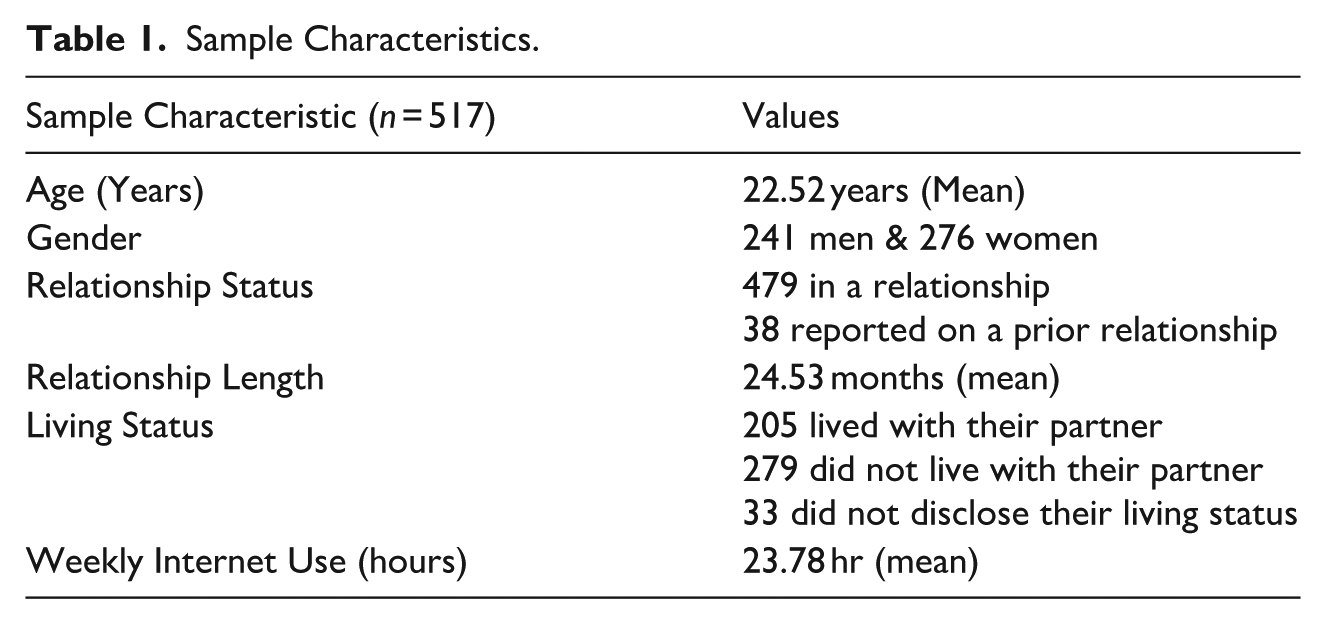
The sample consisted of 517 participants aged 18 to 27 from the United Kingdom (241 men, 276 women, Mage = 22.52 years, SD = 2.07) recruited via opportunity sampling. Data were collated using Qualtrics. Survey links were shared on social media platforms and through the departmental research participation scheme. Participants were required to be in a current romantic relationship at the time of taking part (Mrelationship length = 24.53 months, SD = 18.44). Of these, 479 were currently dating and 38 reported on a past relationship within the last 12 months. Two hundred and five participants lived with their romantic partner, 279 did not, and 33 preferred not to disclose their living status. Participants reported their weekly internet use (in hours), indicating hours on a typical weekday and weekend. Weekday hours were multiplied by five and added to weekend hours, consistent with Reed et al. (2015; Minternet use = 23.78 hr, SD = 14.83). See Table 1 for an outline of sample characteristics.
Sample Characteristics.
Materials
Participants provided their age, sex, relationship length, living status, and weekly internet use. They then completed the scales outlined below to assess their relationship with cyber dating abuse. Cronbach’s alpha was used to measure the reliability of the scales used. Alpha values are reported in the following section.
Attachment Style
Attachment was assessed using the 12-item Experiences in Close Relationships Scale–Short Form (Wei et al., 2007), rated on a 7-point Likert scale (1 = Strongly Disagree to 7 = Strongly Agree). An example item from the anxious subscale is “I need a lot of reassurance that I am loved by my partner,” and from the avoidance subscale is “I want to get close to my partner, but I keep pulling back.” This scale demonstrated good reliability in our sample (avoidance α = .80, anxiety α = .75). High scores on the anxiety subscale reflected a high anxious attachment style, and high scores on the avoidance subscale reflected a high avoidant attachment style.
Paranoia
Paranoia was assessed using the Paranoid Thoughts Scale (Green et al., 2008), which includes two 16-item subscales rated on a 5-point Likert scale (1 = not at all to 5 = totally). These subscales measure two aspects of paranoid thinking: social reference (e.g., “I often heard people referring to me”) and persecution (e.g., “People have intended me harm”). The scale demonstrated high reliability in our sample (social reference, α = .92, persecution, α = .95). High scores on the social reference subscale reflect high levels of paranoia related to social reference, and high scores on the persecution subscale reflect high levels of thoughts relating to persecution from others.
Cyber Dating Abuse
To measure cyber dating abuse perpetration, we used a scale that assesses both psychological and relational forms. Cyber dating abuse perpetration (11 items) was measured with the Cyber Dating Abuse Scale by Morelli et al. (2017), which captures distinct categories of relational and psychological cyber dating abuse measured on a 4-point Likert scale (0 = never to 3 = 6 times or more). An example relational item is “I publicly ridiculed him/her on social media/instant messaging,” and an example psychological item is “I wrote something on social media/instant messaging to make him/her feel jealous.” The scale showed good reliability in our sample (psychological cyber dating abuse, α = .84; relational cyber dating abuse, α = .89). High scores on both perpetration of psychological and digital cyber dating abuse reflect high levels of perpetration of these behaviors.
Digital Jealousy
Participants’ digital jealousy was measured using the Digital Jealousy Scale (Gubler et al., 2023), which consists of nine items assessing digital jealousy in romantic relationships. Responses were recorded on a 6-point Likert scale (1 = strongly disagree to 6 = strongly agree). An example item is “I look over my partner’s shoulder when I know they are texting with someone else.” The scale demonstrated high reliability in our sample (α = .91). High scores on the digital jealousy scale reflect high levels of digital jealousy.
Procedure
After providing informed consent online, participants completed a demographics form, including their age, time spent on the internet, living status, and the length of their current relationship, followed by the scales outlined in the materials section. Upon completion of the scales, participants were debriefed online via a debrief sheet. Ethical approval for this study was obtained from the Psychology Department at the host university.
Data Analysis
All analyses were conducted using IBM SPSS. The dataset was first screened for missing data and outliers. Cases with substantial missing data, such as not including age or completing any of the scales, were removed. We used the “exclude cases pairwise” option when conducting our analyses.
Descriptive statistics and Pearson’s correlations were calculated for all study variables. Multiple regression was conducted to examine whether age, sex, living status, relationship length, weekly internet use, paranoia (persecution and social reference), attachment style (anxious and avoidant), and digital jealousy significantly predicted cyber dating abuse perpetration.
All variables were entered into the model in their original, unstandardized form. However, standardized beta coefficients (β) are reported to facilitate the interpretation and comparison of effect sizes across predictors. All variables (apart from sex and living status) were treated as continuous, based on summed scores from a validated scale. Cyber dating abuse was not categorized into low, medium, or high abuse, and instead, remained continuous in line with previous work in the field (See Bhogal et al. 2022).
Results
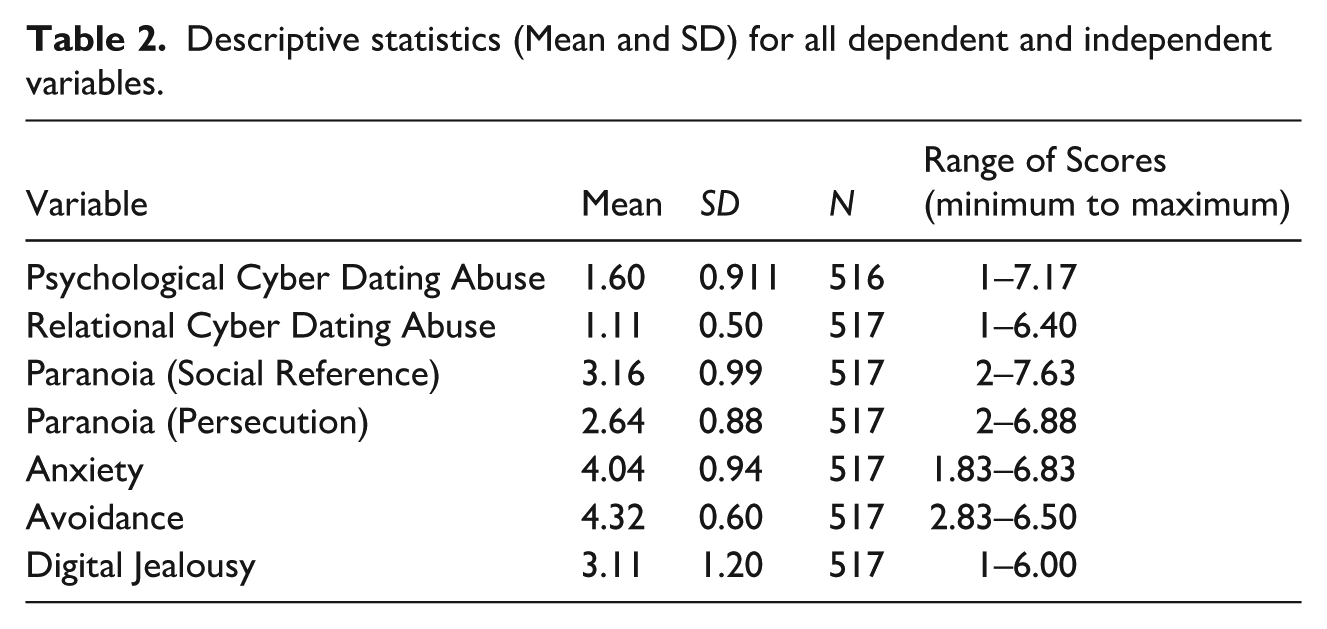
Descriptive statistics are presented in Table 2. Two multiple regression analyses were conducted to predict (a) psychological cyber dating abuse and (b) relational cyber dating abuse. Tolerance and Variance Inflation Factors indicated no multicollinearity in either model to be of statistical concern. All variables were treated as continuous in the analyses.
Descriptive statistics (Mean and SD) for all dependent and independent variables.
Correlation Coefficients
Psychological Cyber Dating Abuse
Pearson’s correlation coefficients were calculated to examine associations between cyber dating abuse perpetration (psychological and relational), paranoia, anxiety, attachment styles, digital jealousy, internet use, relationship length, and age. Bivariate Pearson’s correlations between all variables are shown in Table 3.
Correlation coefficients between independent and dependent variables.
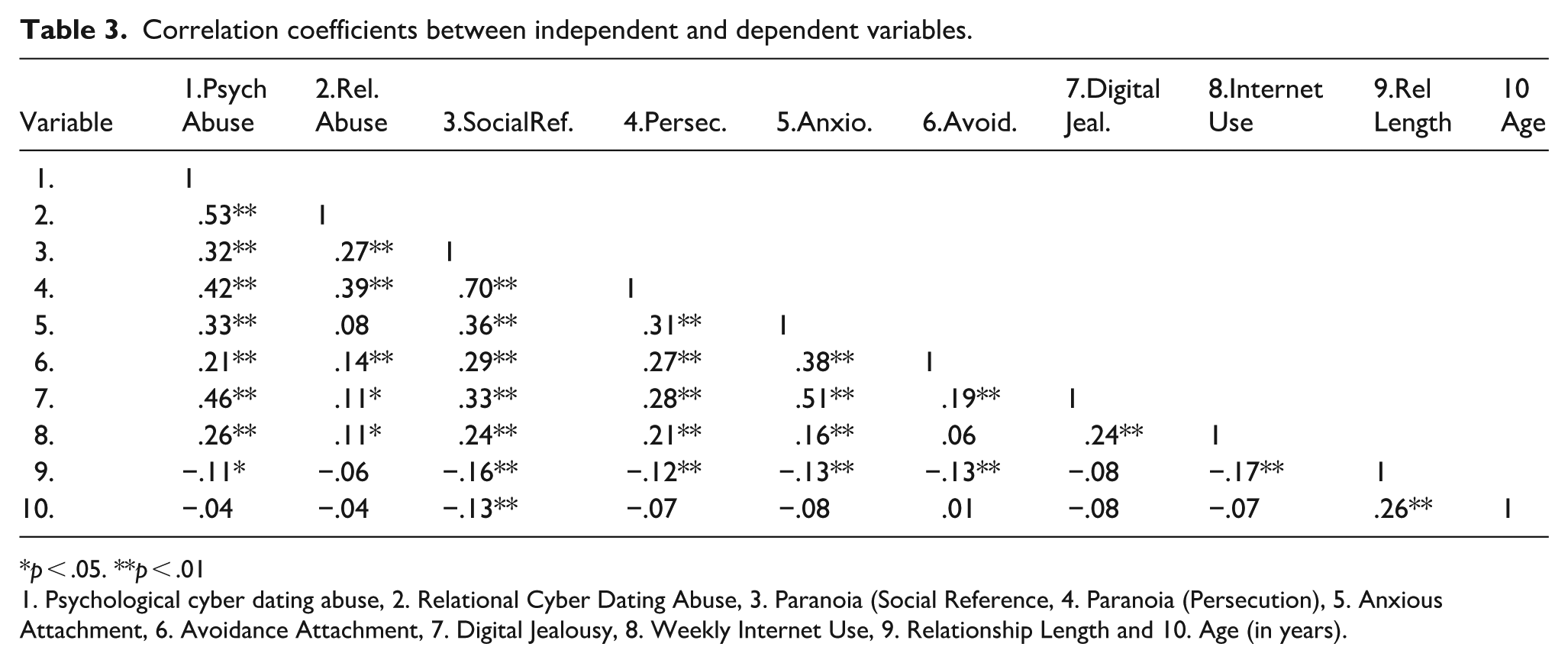
p < .05. **p < .01
Psychological cyber dating abuse, 2. Relational Cyber Dating Abuse, 3. Paranoia (Social Reference, 4. Paranoia (Persecution), 5. Anxious Attachment, 6. Avoidance Attachment, 7. Digital Jealousy, 8. Weekly Internet Use, 9. Relationship Length and 10. Age (in years).
Psychological cyber dating abuse perpetration was significantly positively correlated with relational cyber dating abuse perpetration (r = .53, p < .01), indicating that individuals who reported higher levels of psychological cyber dating abuse also tended to engage more in relational forms of cyber dating abuse. Psychological cyber dating abuse was also positively associated with paranoia (social reference; r = .32, p < .01) and persecution (r = .42, p < .01), suggesting that greater paranoid thinking is linked to more frequent use of psychologically cyber dating abuse perpetration. Positive associations were also found with anxiety (r = .33, p < .01), avoidant attachment (r = .21, p < .01), digital jealousy (r = .46, p < .01), and weekly internet use (r = .26, p < .01), indicating that individuals with higher anxiety, more avoidant attachment tendencies, and greater jealousy and internet use were more likely to report psychological cyber dating abuse perpetration. A small but significant negative correlation was observed with relationship length (r = −.11, p < .05), suggesting that those in shorter relationships were more likely to engage in psychological cyber dating abuse perpetration.
Relational Cyber Dating Abuse
Relational cyber dating abuse perpetration showed a similar pattern, with positive correlations with paranoia (social reference: r = .27, p < .01; persecution: r = .39, p < .01), avoidant attachment (r = .14, p < .01), digital jealousy (r = .11, p < .05), and internet use (r = .11, p < .05), indicating that these psychological and behavioral factors are linked to a greater likelihood of engaging in relational cyber dating abuse.
Paranoia
Paranoia subscales were strongly correlated with each other (r = .70, p < .01) and positively associated with anxiety (rs = .36 and .31, ps < .01), avoidant attachment (rs = .29 and .27, ps < .01), digital jealousy (rs = .33 and .28, ps < .01), and internet use (rs = .24 and .21, ps < .01), suggesting that more severe paranoid ideation is related to higher anxiety, greater relational avoidance, more jealousy in the digital context, and heavier internet use. Both subscales were negatively correlated with relationship length (rs = −.16 and −.12, ps < .01) and age (social reference: r = −.13, p < .01), suggesting that younger individuals and those in shorter relationships experienced higher levels of paranoia.
Attachment Style
Anxiety was positively correlated with avoidant attachment (r = .38, p < .01), digital jealousy (r = .51, p < .01), and internet use (r = .16, p < .01), and negatively associated with relationship length (r = −.13, p < .01), indicating that individuals with higher anxiety also tended to be more avoidant, more jealous online, used the internet more, and were in shorter relationships. Avoidant attachment was positively associated with digital jealousy (r = .19, p < .01) and negatively with relationship length (r = −.13, p < .01), suggesting that individuals who are more avoidant also report higher levels of jealousy and are more likely to be in shorter relationships.
Digital Jealousy
Digital jealousy was positively related to internet use (r = .24, p < .01), suggesting that individuals who are more digitally jealous spend more time online. Weekly internet use was negatively associated with relationship length (r = −.17, p < .01), suggesting that individuals in shorter relationships tend to use the internet more frequently. Finally, relationship length was positively correlated with age (r = .26, p < .01), indicating that older participants tended to be in longer relationships.
Multiple Regression: Perpetrating Psychological Cyber Dating Abuse
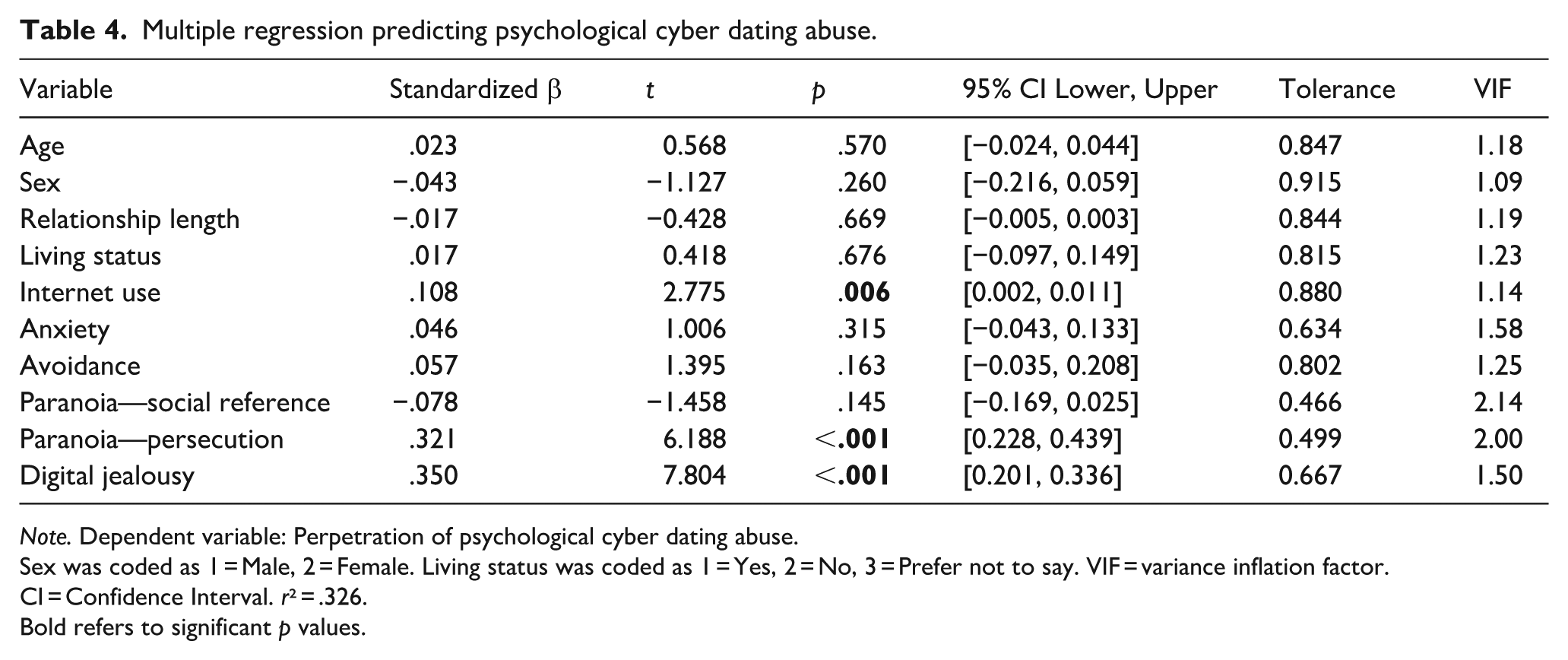
Multiple regression was conducted to predict the perpetration of psychological cyber dating abuse from paranoia (social reference and persecution), attachment style (anxiety and avoidance), digital jealousy, relationship length, age, living status, weekly internet use, and sex. See Table 4 for regression statistics. The model was statistically significant and explained a total of 31.2% (Adjusted r² = .312) of the variance in psychological cyber dating abuse, F(10, 502) = 24.24, p < .001, Cohen’s f² = .48 (medium to large effect size according to Cohen, 1998 guidelines), Durbin-Watson = 1.83.
Multiple regression predicting psychological cyber dating abuse.
Note. Dependent variable: Perpetration of psychological cyber dating abuse.
Sex was coded as 1 = Male, 2 = Female. Living status was coded as 1 = Yes, 2 = No, 3 = Prefer not to say. VIF = variance inflation factor. CI = Confidence Interval. r² = .326.
Bold refers to significant p values.
Weekly internet use was a positive, significant predictor of psychological cyber dating abuse perpetration, such that those who reported higher internet usage during the week also reported greater levels of psychological cyber dating abuse. Digital jealousy and persecution (paranoia) were the strongest positive predictors of psychological cyber dating abuse. All other predictors were non-significant predictors of psychological cyber dating abuse perpetration.
Multiple Regression: Relational Psychological Cyber Dating Abuse
Multiple regression was conducted to predict the perpetration of relational cyber dating abuse from paranoia (social reference and persecution), attachment style (anxiety and avoidance), digital jealousy, relationship length, age, living status, weekly internet use, and gender. See Table 5 for regression statistics. The model was statistically significant and explained 14.9% (Adjusted r² = .149) of the variance in relational cyber dating abuse, F(10, 502) = 9.95, p < .001, Cohen’s f² = 0.20 (small to medium effect size according to Cohen’s, 1998 guidelines), Durbin-Watson = 2.01. Persecution (paranoia) and sex were significant positive predictors of relational cyber dating abuse.
Multiple regression analysis predicting perpetration of relational cyber dating abuse.
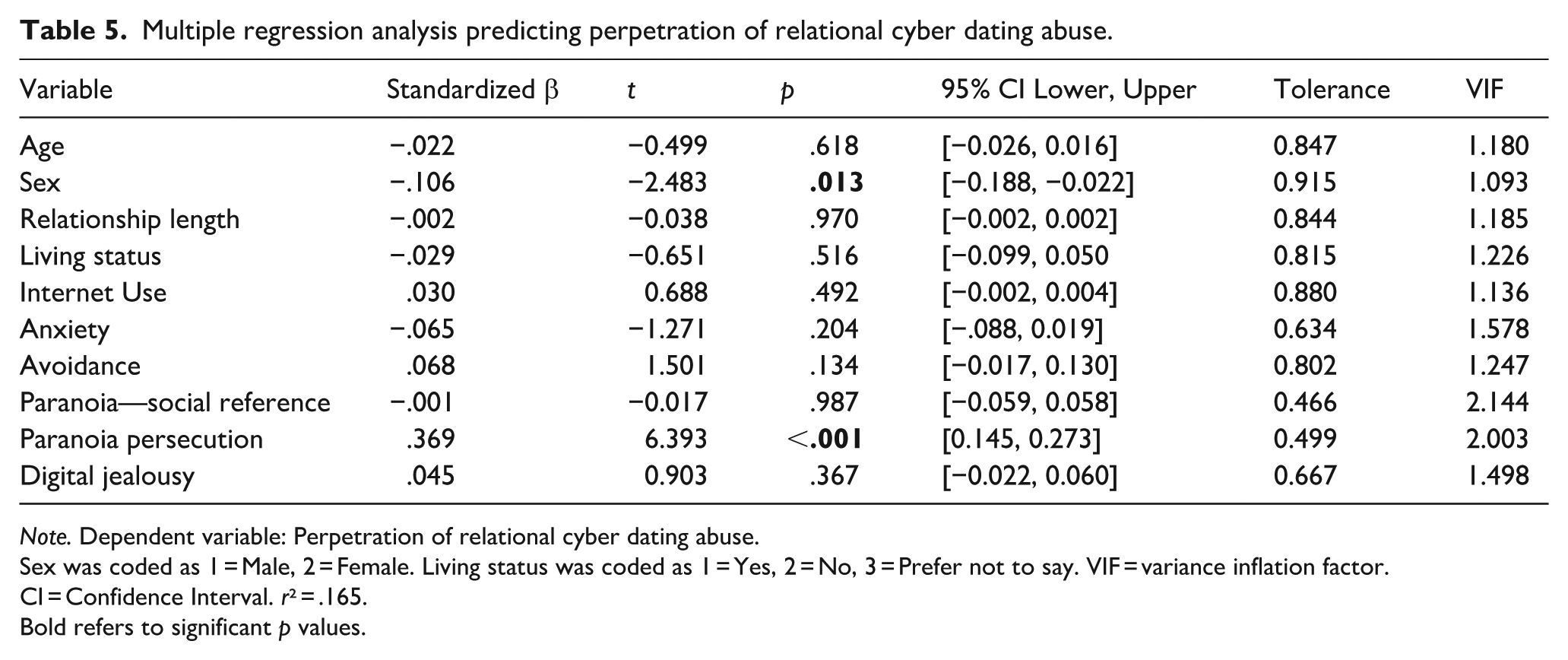
Note. Dependent variable: Perpetration of relational cyber dating abuse.
Sex was coded as 1 = Male, 2 = Female. Living status was coded as 1 = Yes, 2 = No, 3 = Prefer not to say. VIF = variance inflation factor. CI = Confidence Interval. r² = .165.
Bold refers to significant p values.
Discussion
This paper explored the roles of paranoia, attachment, and digital jealousy in the perpetration of cyber dating abuse. To our knowledge, this is the first study to find that paranoia (specifically persecution) and digital jealousy are strongly related to cyber dating abuse perpetration, a novel contribution to the field. There is partial support for our hypotheses. Hypothesis 1 was unsupported; surprisingly, attachment styles (anxious and avoidant) were not significant predictors of cyber dating abuse. Hypothesis 2 received partial support, as only persecution emerged as a significant predictor of psychological and relational cyber dating abuse. Hypothesis 3 was also partially supported, with digital jealousy identified as a significant predictor of psychological cyber dating abuse, not relational cyber dating abuse.
The data indicate that certain demographic/lifestyle factors are predictors of cyber dating abuse. Weekly internet use was a positive predictor of psychological cyber dating abuse. This aligns with previous research showing that social media use is positively related to online abuse perpetration (Monteiro et al., 2023; Van-Ouytsel et al., 2017). Online technologies create the perception of closeness with a romantic partner through instant messaging and social media (Van-Ouytsel et al., 2017). In addition, the findings of this study are consistent with Morelli et al. (2017), who found that participants reported higher levels of psychological compared to relational cyber dating abuse perpetration.
Our findings align with the literature demonstrating a strong association between romantic jealousy and the perpetration of cyber dating abuse (Branson & March, 2021; Deans & Bhogal, 2019). This research expands upon previous studies by exploring the role of digital jealousy in cyber dating abuse perpetration. This finding may be rooted in the idea that jealousy elicited through technological communication significantly influences the use of technology to perpetrate abuse against a romantic partner. Partners experiencing elevated levels of digital jealousy may be more likely to interpret situations as threats, leading to cyber dating abuse perpetration.
The findings regarding paranoia (persecution) predicting both psychological and relational cyber dating abuse may be explained by evolutionary theory. Feelings of persecution could have evolved as a psychological mechanism for detecting threats to romantic relationships, resulting in heightened levels of paranoia. Although speculative at this point, our findings could give some indication that paranoia serves an adaptive purpose in human psychology. However, this explanation requires further exploration, particularly regarding how evolutionary mechanisms and cognitive biases relate to paranoia and threat detection (Raihani & Bell, 2019). Individuals who experience digital jealousy, often stemming from insecurity about their partner’s interactions with others, may engage in psychological cyber dating abuse, utilizing technology to control their partner (Reed et al., 2015). Individuals engage in online controlling behaviors to alleviate perceived threats to their romantic relationships (Elphinston & Noller, 2011; Marganski & Melander, 2015).
Individuals with feelings of persecution may experience heightened sensitivity to perceived threats when observing their partner’s online interactions. Misinterpretations of a partner’s interactions with others may be wrongly attributed to infidelity, leading to feelings of betrayal (Freeman, 2007). For instance, seeing a partner comment on a romantic rival’s social media post could trigger increased sensitivity, which may be perceived as a betrayal. As psychological cyber dating abuse involves controlling and harassing a partner, individuals experiencing feelings of paranoia may exhibit increased defensive aggression (Bentall et al., 2001). When individuals observe their partner’s digital behavior, feelings of jealousy combined with paranoia can lead to abusive actions as a form of retaliationleading to cyber dating abuse perpetration.
Cognitive biases may help explain the effect of paranoia on cyber dating abuse perpetration and warrant further investigation. Research indicates that individuals reporting feelings of persecution often have cognitive biases that influence their perceptions of reality (Moutoussis et al., 2007). For instance, studies examining delusional thinking in general population samples have identified cognitive biases, such as jumping to conclusions (e.g., Freeman et al., 2008) and evidence integration biases, including a bias against disconfirmatory evidence (Bronstein & Cannon, 2017). This bias leads individuals to disregard evidence inconsistent with their views (Gawęda & Prochwicz, 2015). As a result, ambiguous situations may be interpreted through the lens of these cognitive biases, potentially exacerbating delusional ideas. In this study, it is possible that cognitive biases amplify feelings of romantic jealousy and perceptions of persecution triggered by a partner’s digital interactions, leading to distorted interpretations of their partner’s online behavior and, subsequently, psychological cyber dating abuse.
No support was found for the role of attachment styles in the perpetration of cyber dating abuse. This is particularly surprising given that previous research has shown that individuals with anxious attachment styles perpetrate higher levels of cyber dating abuse (Bhogal & Howman, 2019; Reed et al., 2015). A potential explanation for this discrepancy may be that previous studies have examined cyber dating abuse as a single construct, while, to the researchers’ knowledge, this study is the first to explore the relationship between attachment styles and the perpetration of both psychological and relational cyber dating abuse. Paranoia and digital jealousy emerged as more influential predictors of psychological cyber dating abuse, despite persecution also predicting relational cyber dating abuse. This is evident in the significant positive correlation between psychological cyber dating abuse and both attachment styles, particularly anxious attachment, which aligns with previous literature. However, attachment styles were not significant predictors in the regression models. Relational cyber dating abuse was significantly and positively correlated with avoidant attachment.
Previous research on cyber dating abuse has predominantly focused on female samples, with researchers recognizing the need to include balanced samples of men and women in such studies (Bhogal et al., 2022). We ensured sufficient representation of both men and women to allow for meaningful examination of sex differences, which strengthens the interpretability of our findings. Sex was a significant predictor of relational cyber dating abuse perpetration, with men perpetrating relational cyber dating abuse to a greater degree than women. However, there was no effect of sex on psychological cyber dating abuse perpetration. This finding adds to the inconclusive nature of the role of sex on cyber dating abuse perpetration. Future research with larger samples may help clarify the role of sex in digital abuse dynamics. Some studies suggest that men perpetrate more than women (Deans & Bhogal, 2019), while others indicate that women may perpetrate more than men (Zweig et al., 2013). In addition, some studies report similar rates of perpetration among men and women (Bhogal et al., 2019; Bhogal et al., 2022). A recent meta-analysis found that most studies in this area suggest that men and women perpetrate cyber dating abuse at comparable rates (Martínez-Soto & Ibabe, 2024), challenging the traditional view of patriarchy in the perpetration of cyber dating abuse.
The importance of exploring digital jealousy and cyber dating abuse in a young adult sample cannot be overstated, particularly as paranoia often emerges in adolescence and is most prominent in young adults (Kessler et al., 2007). Moreover, dating violence among young people is a predictor of intimate partner violence in future relationships (Cui et al., 2013). Our findings are relevant for public health practitioners and health professionals, as digital jealousy and paranoia predicted cyber dating abuse perpetration. Psychological and relational control are two critical areas that can cause significant harm to an individual’s well-being. The moderate correlation (r = .53) between psychological and relational cyber dating abuse suggests shared but distinct underlying processes, supporting our decision to treat these as separate constructs.
There are clinical implications arising from our work. Therapeutic services should address paranoia alongside jealousy when clients present with experiences of cyber dating abuse perpetration. Specifically, person-focused and cognitive-behavioral therapies can challenge clients’ thoughts (paranoia), feelings (digital jealousy/threat), and behaviors (psychological cyber dating abuse) when seeking support for such behaviors. A client at risk of perpetrating cyber dating abuse may benefit from a formulation of their issues that considers the roles of paranoia and digital jealousy in maintaining unhealthy relational patterns. This formulation could effectively modify individuals' thoughts of persecution and cognitive biases (Garety et al., 2008), helping clients recognize the negative links between their perceptions, thoughts, behaviors, and emotional consequences. Since paranoia often stems from a lack of trust and effective alliances, therapists should focus their relationship counseling on building trust between partners and implementing effective communication strategies (Noller, 2006). Educational institutions could also benefit from our findings by integrating this research into educational programs that promote healthy digital behaviors among romantic couples and address the role of personality and nonclinical psychological constructs like paranoia (Tokunaga, 2011).
Interventions for dating violence have primarily focused on the needs of female victims (Martínez-Soto & Ibabe, 2024), often neglecting female perpetrators who seek to understand and alter their behavior. Interventions should support individuals regardless of gender in recognizing and addressing abusive behaviors in romantic relationships. Moreover, much research on cyber dating abuse tends to prioritize offline abuse rather than addressing specific issues related to online behaviors (Li et al., 2023). The lack of targeted interventions and practical solutions for preventing cyber dating abuse may contribute to its increasing prevalence. To date, only one systematic review has examined the effectiveness of interventions to prevent cyber dating abuse, including just four studies, highlighting the scarcity of such initiatives (Galende et al., 2020). There is a danger that, despite the growing body of research on cyber dating abuse, policy responses are lagging, leading to inaction (Ramírez-Carrasco et al., 2023) and further escalation of the underlying causal factors.
Raising awareness is critical in addressing cyber dating abuse. Given the increasing use of technology among adolescents, educational resources in schools should inform students about the dangers associated with technology, such as password sharing and privacy concerns, while also highlighting factors related to cyber dating abuse. This education would equip individuals with knowledge of the signs of dating violence (Martínez-Soto & Ibabe, 2024). There is a clear need to develop interventions that enhance individuals’ understanding of their cognitive processes and interaction behaviors to improve interpersonal relationships of all kinds.
Future research exploring paranoia and cyber dating abuse should investigate the role of childhood trauma in the relationship between paranoia and cyber dating abuse perpetration. This is particularly relevant given that previous studies have shown a connection between paranoia, childhood trauma, and abuse (Bentall et al., 2012). Researchers have emphasized the importance of examining life history factors when investigating paranoia and deviant behaviors, especially considering factors such as substance misuse and childhood trauma (Swanson et al., 2006).
While this research has strengths, it also has notable limitations. First, we did not examine cultural diversity concerning the variables explored. Although this work focused on cyber dating abuse in the United Kingdom, the country is multicultural and diverse, meaning our findings are primarily applicable to WEIRD samples (Henrich et al., 2010). Second, our findings are correlational, and thus, causal inferences cannot be made. Third, consistent with Bhogal et al. (2022), our reporting of cyber dating abuse relies on retrospective self-report data, which may not be as accurate as research employing journals or longitudinal designs. Third, although the majority of participants were in a relationship at the time of participation and reported on their current relationship, one of the inclusion criteria permitted participants to report on their most recent relationship, provided it occurred within the past 12 months. This represents a limitation, as the 38 participants who reflected on a previous relationship may have introduced variability due to recall bias and potential differences in relationship dynamics.
Conclusion
In conclusion, this study is the first to demonstrate that paranoia and digital jealousy predict cyber dating abuse perpetration. While previous research has consistently identified a strong association between jealousy and online abuse, the current findings extend this by showing that digital jealousy predicts cyber dating abuse. These results have important implications for clinical practice and policy. Interventions aimed at reducing cyber dating abuse may benefit from addressing underlying paranoid ideation, particularly in individuals exhibiting high levels of digital jealousy. In addition, these findings could inform policy initiatives aimed at identifying psychological risk factors for perpetration in the digital context.
Footnotes

Ethical Considerations
Ethical approval was granted by the psychology ethics committee at the host institution.
Funding
The authors received no financial support for the research and/or authorship of this article.
Declaration of Conflicting Interests
The authors declared no potential conflicts of interests with respect to the authorship and/or publication of this article.
Data Availability Statement
Data are available upon request.