




Abstract
Identity-based bullying, also known as bias-based and stigma-based bullying, is bullying that occurs due to a real or perceived social identity. Youth from equity-deserving communities, such as transgender and gender diverse youth, are more likely to experience both general bullying victimization and identity-based bullying victimization. The current study used nationally representative Canadian data from the 2022 Health Behaviours in School-Aged Children (HBSC) study to examine (a) the prevalence of different forms of bullying victimization, including identity-based bullying, among students of diverse gender identities in two grade cohorts (grades 6–8 and grades 9–10); and (b) the association between these victimization experiences and psychological complaints. Participants consisted of 26,571 youth in grades 6 to 10 from across Canada, including transgender girls (n = 108), transgender boys (n = 298), and gender diverse youth (n = 1,169) who completed self-report measures in school. Factor analyses demonstrated that general and sex/gender identity-based victimization were unique. In general, transgender and gender diverse youth experienced higher levels of both types of victimization relative to their cisgender peers. Multigroup structural equation modeling indicated that sex/gender identity-based bullying was positively associated with psychological complaints for transgender and gender diverse youth only. Findings suggest that approximately one in two transgender and gender diverse youth experience bullying victimization regularly. This victimization is highly pervasive, tends to target their gender and/or sexual orientation, and is associated with poor mental health. Results underscore the importance of including specific components on identity-based bullying, bias, prejudice, and discrimination in bullying prevention and intervention efforts.
Introduction
Bullying constitutes repeated acts of peer aggression that occur in the context of a power imbalance (Gladden et al., 2014). Identity-based bullying, also referred to as bias-based bullying and stigma-based bullying, is bullying that occurs due to a real or perceived social identity (Poteat et al., 2011) and is motivated by bias and prejudice (Allwood et al., 2021; Garnett et al., 2014). Examples of identity-based bullying include homophobic name-calling, weight-based social exclusion, and/or physically hurting someone because of their perceived race or gender. Identity-based bullying is rooted in larger power structures created in society that give some groups power while oppressing others (e.g., racism, transphobia, homophobia, xenophobia; Gower et al., 2018; Sapouna et al., 2023). Students from equity-deserving groups (e.g., 2SLGBTQIA+ students, racial minorities, newcomers, students with disabilities) are at a higher risk of experiencing both identity-based and general bullying victimization (Galán et al., 2021; Gower et al., 2018; Kiekens et al., 2024; Sapouna et al., 2023). Large, nationally representative samples are needed to better understand identity-based bullying victimization among transgender and gender diverse students. Using a national sample of Canadian adolescents, we examined (a) the prevalence of different forms of bullying victimization, including identity-based, among students of diverse gender identities in two grade cohorts (grades 6–8 and grades 9–10); and (b) the association between these victimization experiences and psychological complaints.
Multiple Forms of Victimization
Bullying victimization can take many forms, including physical, verbal, social, and cyber bullying victimization (Bradshaw et al., 2015; Wang et al., 2010). Evidence suggests that most adolescents experience multiple forms of victimization as opposed to experiencing only one form. For example, Wang et al. (2010) found that of individuals experiencing victimization, 50.3% reported being victimized by all four forms. This research, however, has not considered the overlap between general and identity-based victimization.
Identity-based bullying allows for examining additional nuances in overlapping experiences of victimization. Minority stress theory (Brooks, 1981; Frost & Meyer, 2023; Meyer, 2003) provides a framework for understanding why identity-based bullying may reflect a unique form of victimization for transgender and gender diverse youth. Minority stress theory posits that these youth experience unique and chronic stressors, both proximally and distally, due to their stigmatized identities. For example, identity-based bullying due to sexual orientation and/or gender identity may be experienced as more harmful than general bullying because it targets a core aspect of a person’s self-concept, which may lead to internalized stigma (Frost & Meyer, 2023). Identity-based bullying may also be more likely to reinforce feelings of marginalization and to be perceived as inescapable given “everyday” experiences of microaggression (Frost & Meyer, 2023). Moreover, the power differential in identity-based bullying may be heightened relative to general bullying, given roots in larger power structures that oppress transgender and gender diverse youth. Of the few studies that compare general and identity-based bullying, findings suggest identity-based victimization is associated with more negative adjustment for youth (Esposito et al., 2021; Mulvey et al., 2018; Russell et al., 2012). For example, Mulvey et al. (2018) found that youth who experience identity-based bullying victimization report more school avoidance than those who experience general victimization. Similarly, Esposito et al. (2021) found that homophobic victimization uniquely contributed to the frequency of non-suicidal self-injury (NSSI), even after accounting for general bullying victimization. Taken together, these findings underscore the importance of distinguishing identity-based bullying from general forms of bullying victimization.
Prevalence of Identity-Based Bullying Victimization
Prevalence estimates for identity-based bullying victimization are quite variable depending on context and measurement. First, considering general bullying victimization among youth with diverse sexual orientations, findings from the 2021 United States Youth Risk Behavior Surveillance survey indicated these students were disproportionately impacted by bullying victimization: 26.4% to 41.0% of lesbian, gay, bisexual, and questioning students reported bullying victimization in the last year relative to 17.9% of heterosexual students (Clayton et al., 2023). Similarly, national data from the Netherlands indicate that gender diverse adolescents report higher rates of general bullying victimization relative to their cisgender peers (Kiekens et al., 2024). Second, examining identity-based bullying victimization specifically, a national sample of U.S. adolescents (12–18 years old), found that 40.3% to 45% of youth reporting bullying victimization believed they were bullied because of their race, religion, ethnic origin, disability, gender, sexual orientation, or physical appearance (Joo et al., 2023). Indeed, U.S. research suggests that transgender youth are over two times more likely to experience victimization due to their gender identity and/or sexual orientation relative to their cisgender peers (Day et al., 2018). Additional Canadian research, using large nationally representative datasets, is needed to replicate and extend these findings with a focus on identity-based victimization experiences specifically.
Canada maintains a legal framework that generally supports the rights of transgender and gender diverse youth, broadly emphasizing protection from discrimination and access to gender-affirming care. For example, the Canadian Human Rights Act (1985) prohibits discrimination based on gender identity or sexual orientation, helping to ensure that all Canadians have the right to freely express themselves. Canadian provinces, however, differ in terms of age restrictions on gender-affirming policies and care, as both healthcare and education are provincially mandated. In Alberta and New Brunswick, for example, legislation requires students under the age of 16 to obtain parental consent to have their chosen names and pronouns recognized by school staff. Gender-affirming care (e.g., hormone therapy) for youth is publicly funded within the Canadian healthcare system, but access, availability, and parental consent laws vary by jurisdiction. International findings may not generalize to a Canadian context, further emphasizing the need for more research.
Developmental Differences
For most youth, bullying victimization decreases during the transition to high school, which typically occurs in grade 9 in Canada (Vaillancourt et al., 2023). For some youth, however, bullying victimization does not “get better” over time. An estimated 11.4% of youth experience stable levels of victimization throughout high school (Vaillancourt et al., 2023). Transgender and gender diverse youth may be disproportionately likely to continue experiencing bullying victimization as they develop. Given that adolescence is hallmarked by sexual development (Tolman & McClelland, 2011), this suggests that certain types of bullying victimization (e.g., making sexual jokes, being victimized because of one’s perceived sexual orientation or gender identity) may be especially likely to remain prevalent during the transition to high school. Students who do not subscribe to heteronormativity or traditional gender roles may be especially likely to experience bullying victimization during this time.
Bullying Victimization and Mental Health Problems
Diathesis-stress models propose that for students with pre-existing vulnerabilities, bullying involvement can lead to psychopathology (Swearer & Hymel, 2015). Experiencing bullying during childhood is a risk factor for a wide variety of mental and physical health problems well into adulthood (Moore et al., 2017). More specifically, links between bullying victimization and internalizing problems are well established, with meta-analytic results indicating that bullying victimization is both an antecedent and consequence of such psychopathology (Christina et al., 2021; Reijntjes et al., 2010).
Similar results have been found for identity-based bullying, as it is positively associated with suicidal ideation and NSSI (Galán et al., 2021), depressive symptoms (Price et al., 2019), and disordered eating (Lawrence et al., 2024) among equity-deserving students. One study with Italian adolescents measured both traditional and sexual orientation identity-based bullying victimization (e.g., being bullied due to being considered gay, lesbian, or bisexual) and found that identity-based victimization predicted the frequency of NSSI over and above traditional victimization (Esposito et al., 2021). This research, however, did not examine students’ gender identities. Not only are transgender and gender diverse youth likely experiencing higher rates of general bullying victimization (Gower et al., 2018), but they are also likely being bullied because of their perceived social identity (Day et al., 2018; Gower et al., 2018), which may elicit stronger experiences of shame and heighten the risk for poor mental health (Pachankis et al., 2023). All of these bullying victimization experiences also occur in a societal context that condones other forms of violence against transgender and gender diverse individuals (Gower et al., 2018), further increasing the risk for mental health issues in this population (Watson et al., 2024).
Current Study
The current study uses nationally representative Canadian data from the 2022 Health Behaviours in School-Aged Children (HBSC) survey. The HBSC is conducted every 4 years in collaboration with the World Health Organization to monitor the health and well-being of young people. The 2022 iteration of the Canadian HBSC survey assessed participants’ sex assigned at birth and gender identity, thereby allowing the examination of bullying victimization in transgender and gender diverse youth for the first time in Canada. Our initial research objective was to document the prevalence of bullying victimization (any victimization and types of victimization) among transgender and gender diverse youth using a nationally representative sample. We also examined developmental differences between students in grades 6–8 and grades 9–10, representing the transition to high school in Canada, as well as associations between bullying victimization and psychological complaints. Hypotheses were as follows:
H1. Bullying victimization (any type) will be most prevalent among transgender and gender diverse youth relative to their cisgender peers. The prevalence of identity-based bullying based on gender identity and sexual orientation will be especially high among transgender and gender diverse youth.
H2. The prevalence of bullying victimization will be lower among students in grades 9 to 10 versus grades 6 to 8. Developmental trends in sex/gender-based victimization will be examined as an exploratory research question.
H3. Sex/gender identity-based bullying will be positively associated with poor mental health over and above traditional bullying victimization among transgender and gender diverse youth only.
Method
Study Design
The HBSC is a cross-sectional study conducted every 4 years using a standard international research protocol that is developed by its International Assembly of Principal Investigators (Inchley et al., 2021/2022), in collaboration with the World Health Organization. The study examines the health and health behaviours of youth aged 11 to 15 across 52 countries and regions across Europe, North America, and the Middle East. As a cross-national research study, the survey aims to understand young people’s health through their social and environmental contexts. Nine provinces and two territories participated in the 2022 cycle of the HBSC in Canada. Sampling weights are used to ensure each participating province/territory is proportionally represented by grade. Eligible school classrooms across Canada were selected at random and invited to participate in the study (79% response rate), with students nested within schools. Participating students completed questionnaires in school during one 45- to 70-min class during the 2021–2022 and 2022–2023 school years. Schools could choose to have students complete the questionnaire using an online web-based methodology or with paper booklets. Fifty-four percent of the questionnaires were completed using the online methodology. Depending on the school board requirements, active or passive consent was obtained. Researchers were granted ethical clearance from the university and federal government research ethics boards.
Participants
Participants consisted of 26,571 youth in grades 6 to 10 from across Canada (weighted n = 26,071). Students in grades 6–8 consisted of 65.7% of the sample (Mage = 13.19, SE = 0.02), with 34.3% of the sample in grades 9 to 10 (Mage = 15.28, SE = 0.01). The sample consisted of 47.2% cisgender boys, 47.2% cisgender girls, 4.2% gender diverse youth, 1.0% transgender boys, and 0.4% transgender girls. Most cisgender participants 1 described their sexual orientation as heterosexual (77.5%–77.7%), whereas transgender and gender diverse participants reported a variety of sexual orientations (see Supplemental Table 1). Sample demographics for the weighted sample are reported in Table 1.
Description of the Study Sample (Weighted n = 26,071).
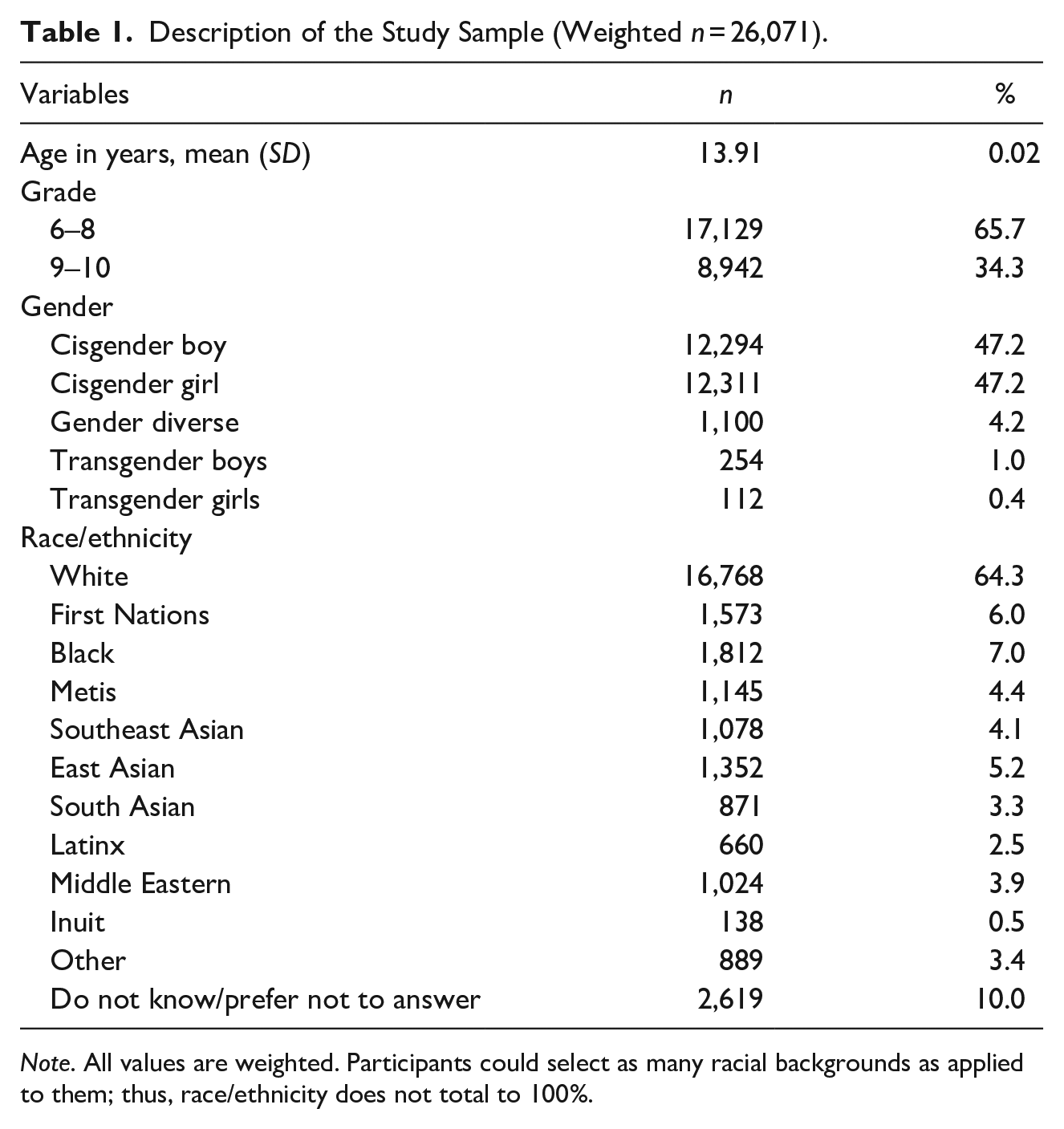
Note. All values are weighted. Participants could select as many racial backgrounds as applied to them; thus, race/ethnicity does not total to 100%.
Measures
Gender Identity
Participants reported on their sex assigned at birth (female or male) and their gender identity (girl, boy, neither boy nor girl, open-ended “other”). These variables were used to create gender identity groups: Cisgender girls (n = 11,933), cisgender boys (n = 12,475), transgender girls (n = 108), transgender boys (n = 298), and gender diverse (n = 1,169; which includes participants who reported their gender was neither boy nor girl [n = 630] and those who self-described their gender using the “other” option [n = 539], regardless of their sex assigned at birth). Gender diverse students who opted to self-describe their gender identified in a variety of ways, the most common of which included gender fluid (22.7%), she/they (8.9%), bigender (8.7%), demigirl (8.2%), unsure (8.2%), all (7.7%), other (7.7%), non-binary (7.5%), and they/them (4.6%).
Grade
Participants reported on their current grade in school. Grades 6–8 were categorized together, reflecting a middle school context in the Canadian school system. Grades 9–10 were categorized together, which typically reflects the transition to high school in Canada.
Bullying Victimization
Participants completed a modified version of the Olweus Bully/Victim Questionnaire (Solberg & Olweus, 2003). The six general bullying items have good psychometric properties in previous research (Craig et al., 2009), with five items added to assess identity-based bullying. Participants were provided with a definition of bullying and asked to report the frequency with which they experienced 11 types of bullying victimization over the past couple of months. Participants responded on a 1 to 5 scale (I have not been bullied in this way in the past couple of months—several times a week). Given the skewed nature of bullying data, items were dichotomized using a cut-off score of 3+ (victimization occurring “2 or 3 times a month” or more). This scoring approach is commonly used to document bullying prevalence (Craig et al., 2009) and captures the repetitive nature of bullying.
Psychological Complaints
The psychological complaints subscale of the HBSC symptom checklist was used as an index of poor mental health. Participants reported the extent to which they experienced 4 psychological complaints (feeling low [depressed], irritability or bad temper, feeling nervous, sleep difficulties) over the past 6 months on a 1 to 5 scale (Rarely or never—About every day). Previous research has demonstrated the reliability and validity of this scale within school-aged children across many countries (Gariepy et al., 2016), including as an index of internalizing problems (Brons et al., 2024). A single factor structure was also fit well in the current data, x2(2) = 88.57, Comparative Fit Index (CFI) = 0.997, Tucker-Lewis Index (TLI) = 0.990, root mean squared error of approximation (RMSEA) = 0.048, standardized root mean squared residual (SRMR) = 0.009, and the items demonstrated good internal consistency, α = .83.
Data Analyses
Data analyses were conducted using R Statistical Software (v4.4.0; R Core Team, 2024) using the following packages: lavaan (Rosseel, 2012) and srvyr (Freedman & Schneider, 2023). Prior to hypothesis testing, the factor structure of the bullying victimization scale was examined. The data were randomly divided into two subsamples to conduct exploratory factor analysis (EFA) on the first subsample (n = 13,285), with the identified factor structure then confirmed in the second subsample using confirmatory factor analysis (CFA; n = 13,286), which was also used for invariance testing. See Supplemental Materials for analytic details for factor analyses and invariance testing.
Prevalence estimates were examined for each gender identity group (H1) and by grade group (H2). We specifically examined differences in (a) the prevalence of any victimization (any item score 3+) versus none and (b) the prevalence of each type of bullying victimization, at both the item level and the factor level. Sampling weights were used when analyzing prevalence data (Schnohr et al., 2015). Lastly, we examined the link between bullying victimization and psychological complaints (H3) using multilevel, multigroup structural equation modeling (SEM) among cisgender boys, cisgender girls, and transgender and gender diverse youth. Separate models were used for students in grades 6–8 and grades 9–10. Continuous data were used to model all latent variables. The clustered nature of the data (students nested within schools) was accounted for by including students’ schools as a cluster variable. Missing data 2 were accounted for using full-information maximum likelihood estimation. Model fit for the unconstrained model (all paths free to vary by gender identity group) and constrained (all paths constrained to be equal) were compared. Given that the chi-square test is overly sensitive in large samples (Cheung & Rensvold, 2002), alternative fit indices (CFI, RMSEA, SRMR) were examined (Putnick & Bornstein, 2016).
Results
Factor Analysis
The factor structure of the bullying victimization scale was examined first using EFA and then using CFA. As described in the supplemental results, a three-factor model best fit the data, x2(41) = 800.04, CFI = 0.961, TLI = 0.948, RMSEA = 0.065, SRMR = 0.038. The factors were labeled as general bullying victimization (seven items), race/religion identity-based victimization (two items), and sex/gender identity-based victimization (two items). Factor loadings and factor correlations are presented in Table 2. The model was invariant across gender identity groups (Supplemental Table 2).
Standardized Factor Loadings and Factor Correlations for the Three-Factor Solution of Bullying Victimization.
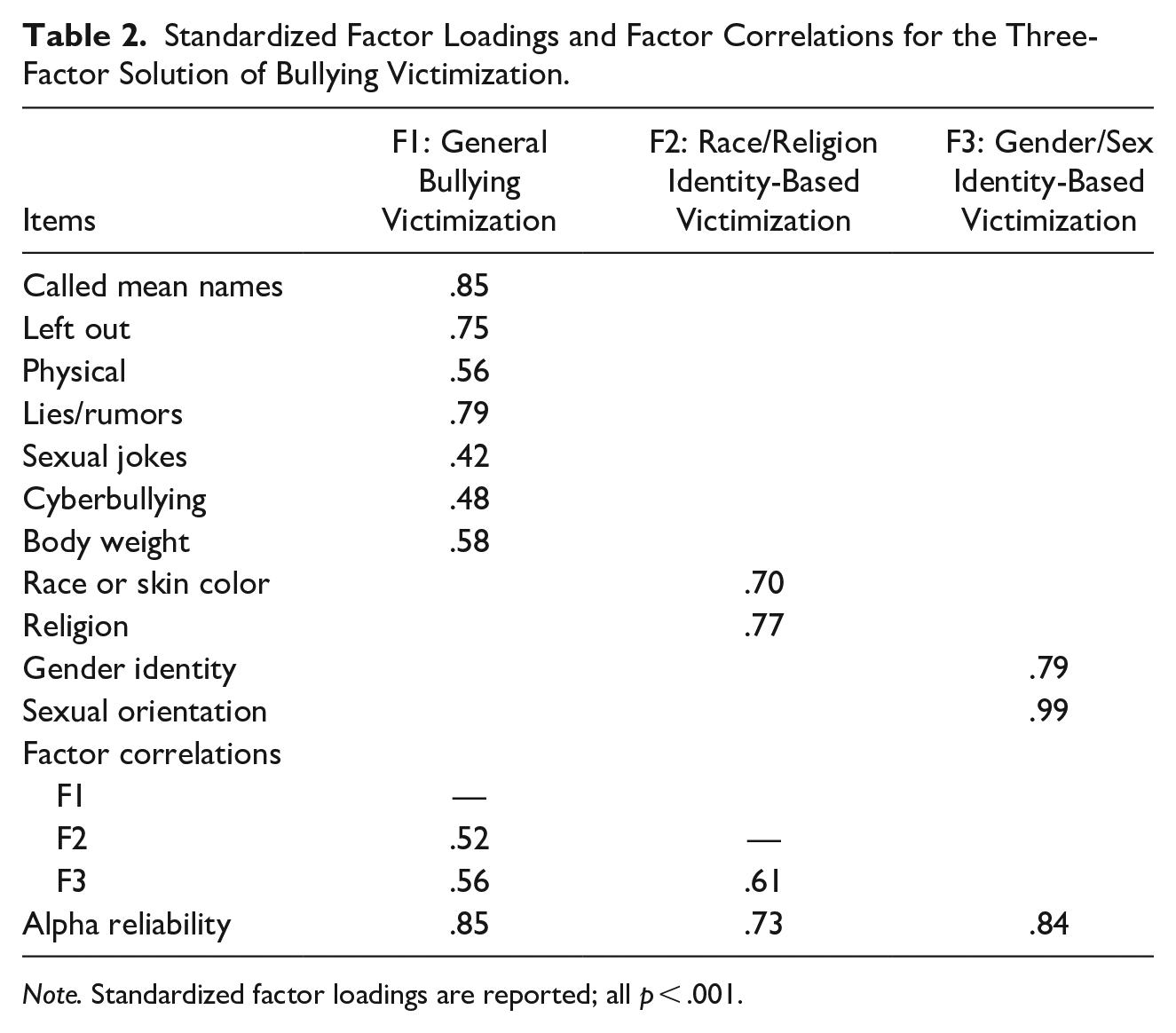
Note. Standardized factor loadings are reported; all p < .001.
Prevalence of Bullying Victimization
Any Victimization
We first examined the prevalence of any victimization (any item score 3+). For both grade groups, the prevalence of any victimization significantly differed across gender identity groups (grades 6–8 x2 = 20.67, p < .001; grades 9–10 x2 = 14.30, p < .001). In grades 6 to 8, 60.3% of transgender boys, 38.3% of transgender girls, 58.0% of gender diverse youth experienced at least one form of bullying victimization 2 to 3 times/month relative to 38.0% of cisgender girls and 31.2% of cisgender boys. 3 In grades 9 to 10, 55.7% of transgender boys, 48.6% of transgender girls, 48.8% of gender diverse youth experienced at least one form bullying victimization 2 to 3 times/month relative to 35.6% of cisgender girls, and 27.8% of cisgender boys. 4 The overall prevalence of experiencing any victimization did not significantly vary by grade except for cisgender boys, in which the overall prevalence of experiencing any victimization was significantly lower in grades 9–10 relative to grades 6–8, p = .02.
Type of Victimization (Item Level)
The prevalence of each type of bullying victimization is presented in Supplemental Table 3 for students in grades 6–8 and Supplemental Table 4 for students in grades 9–10. Prevalence estimates significantly varied by gender identity group for most items. For example, the rate of bullying victimization due to gender identity (grades 6–8 x2 = 108.47, p < .001; grades 9–10 x2 = 114.06, p < .001) and sexual orientation (grades 6–8 x2 = 96.14, p < .001; grades 9–10 x2 = 45.86, p < .001) varied significantly by gender identity group. Almost all pairwise comparisons demonstrated that the prevalence of bullying victimization due to gender identity and/or sexual orientation was significantly higher among transgender and gender diverse youth relative to their cisgender peers (see Supplemental Tables 2 and 3).
Figure 1 demonstrates the total number of types (summed) of bullying victimization experienced by each gender identity group. Experiencing multiple forms of bullying victimization was especially prevalent for transgender boys and gender diverse youth. In grades 6–8, 30% of transgender boys and 27% of gender diverse youth experienced four or more types of bullying victimization, relative to 9% of cisgender boys, 11% of cisgender girls, and 5% of transgender girls. A similar pattern was found in grades 9–10; however, the prevalence of experiencing four or more types of victimization among transgender girls was higher at 19%.
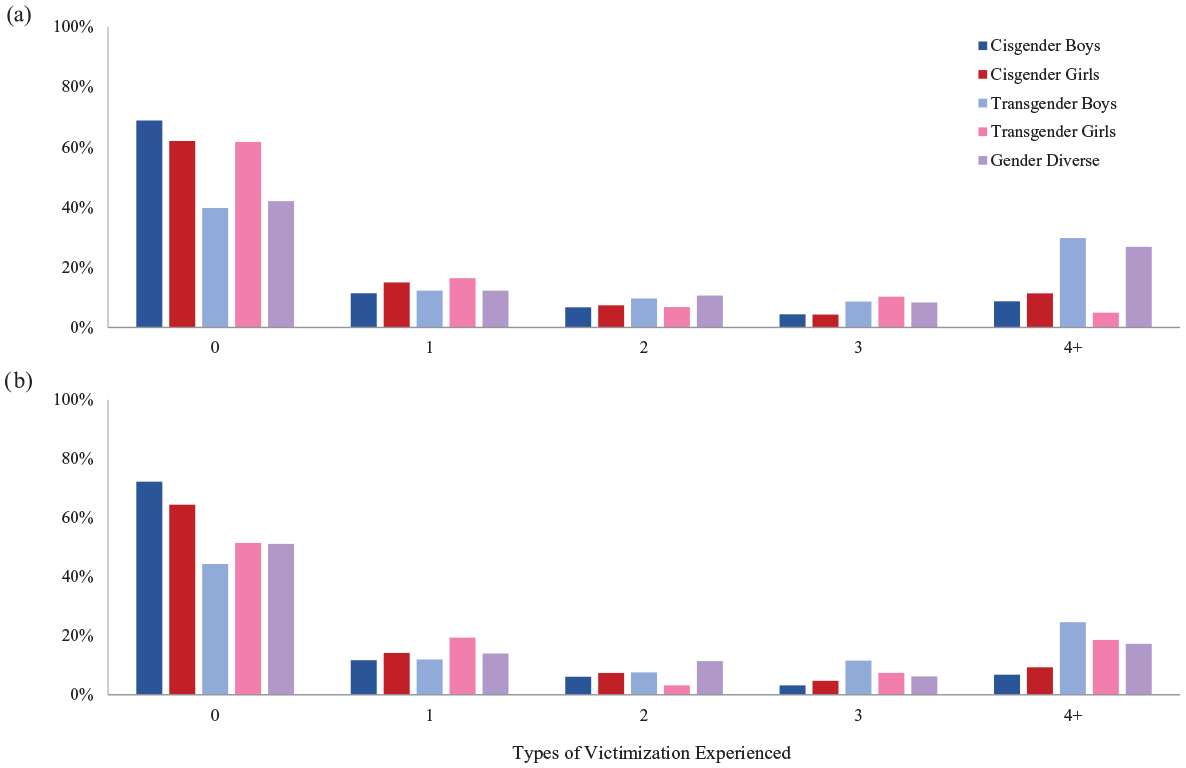
Prevalence of experiencing multiple types of bullying victimization, by gender identity in (a) grades 6–8 and (b) grades 9–10.
Within each gender identity group, chi-square tests were used to compare the prevalence estimates of each type of bullying victimization between grade group (grades 6–8 vs. grades 9–10; see Supplemental Table 5). For cisgender boys and cisgender girls, the prevalence of verbal, relational, and physical bullying victimization was significantly lower in grades 9–10 relative to grades 6–8. A similar pattern was observed for gender diverse students, in which the prevalence of several types of general victimization was significantly lower in grades 9–10 relative to grades 6–8. For transgender boys, the prevalence of each type of bullying victimization did not vary by grade. For transgender girls, the only significant difference was sexuality-based victimization, which was significantly higher amongst students in grades 9–10 relative to grades 6–8.
Type of Victimization (Factor Level)
We then examined the prevalence of any victimization within the identified factors of general victimization, race/religion identity-based victimization, and sex/gender identity-based victimization across gender identity groups. As shown in Figure 2, transgender and gender diverse youth experienced significantly higher levels of sex/gender identity-based victimization relative to their cisgender peers and tended to experience higher levels of general bullying victimization, especially in grades 6–8. The prevalence of race/religion-based victimization did not significantly differ across groups.
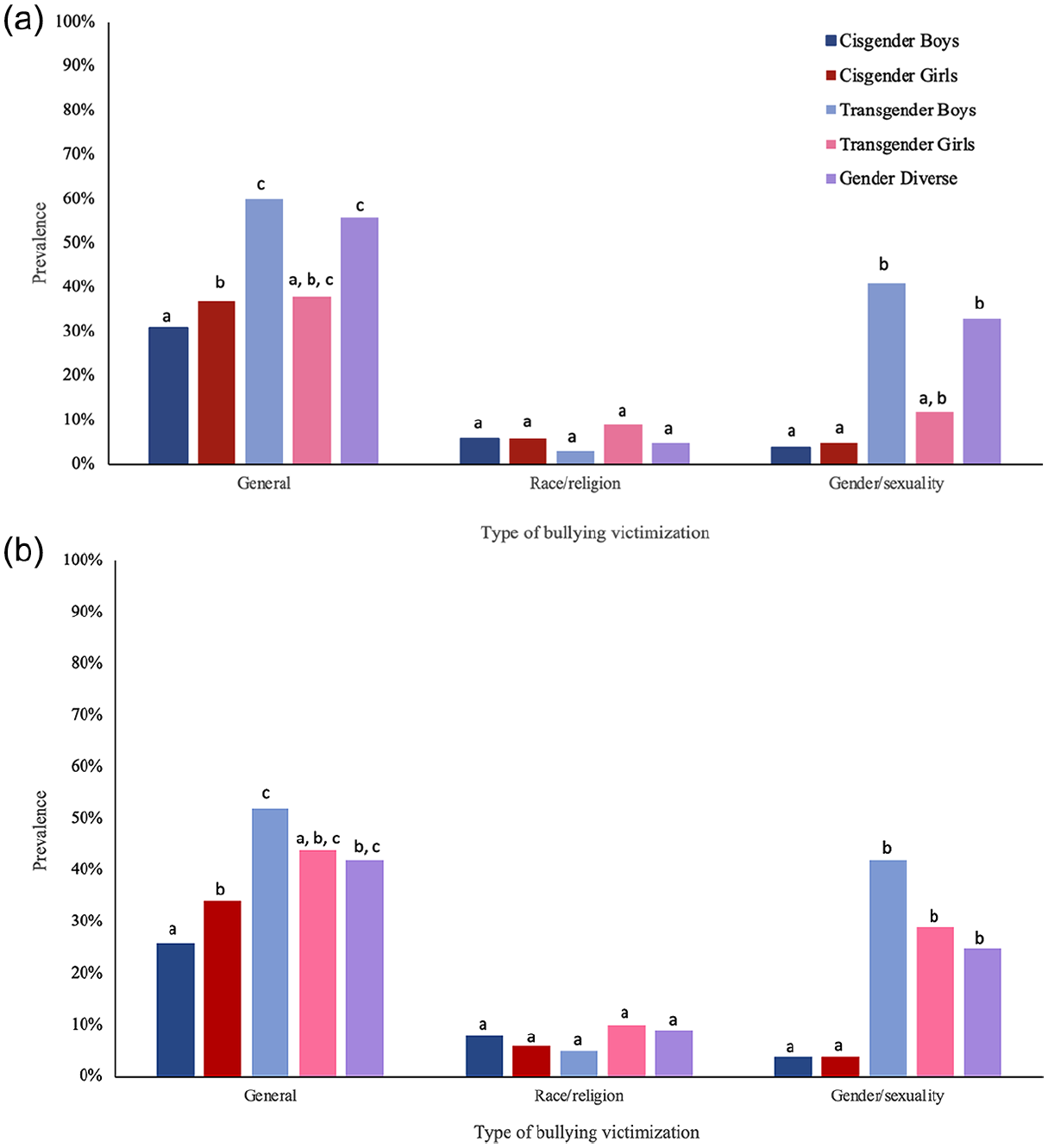
Prevalence of each type of bullying victimization, by gender identity in (a) grades 6–8 and (b) grades 9–10.
Multigroup SEM: Associations With Mental Health
Multilevel, multigroup SEM was used to examine whether sex/gender identity-based victimization was associated with psychological complaints over and above general bullying victimization in each gender identity group. Separate models were examined for younger (grades 6–8) and older (grades 9–10) youth.
Among the younger students, the unconstrained model, x2(186) = 2,075.61, CFI = 0.958, RMSEA = 0.058, SRMR = 0.038, fit the data significantly better than the model where paths were constrained to be equal x2(232) = 3,112.39, CFI = 0.937, RMSEA = 0.063, SRMR = 0.059. As shown in Figure 3, general bullying victimization was positively associated with psychological complaints for all youth. For transgender and gender diverse youth only, sex/gender identity-based victimization was also positively associated with psychological complaints. In addition, the correlation between general and sex/gender identity-based victimization was notably higher for transgender and gender diverse youth relative to their cisgender peers (Figure 3). The model accounted for 22.5% of the variance in psychological complaints for cisgender boys, 29.0% for cisgender girls, and 19.1% for transgender and gender diverse youth.
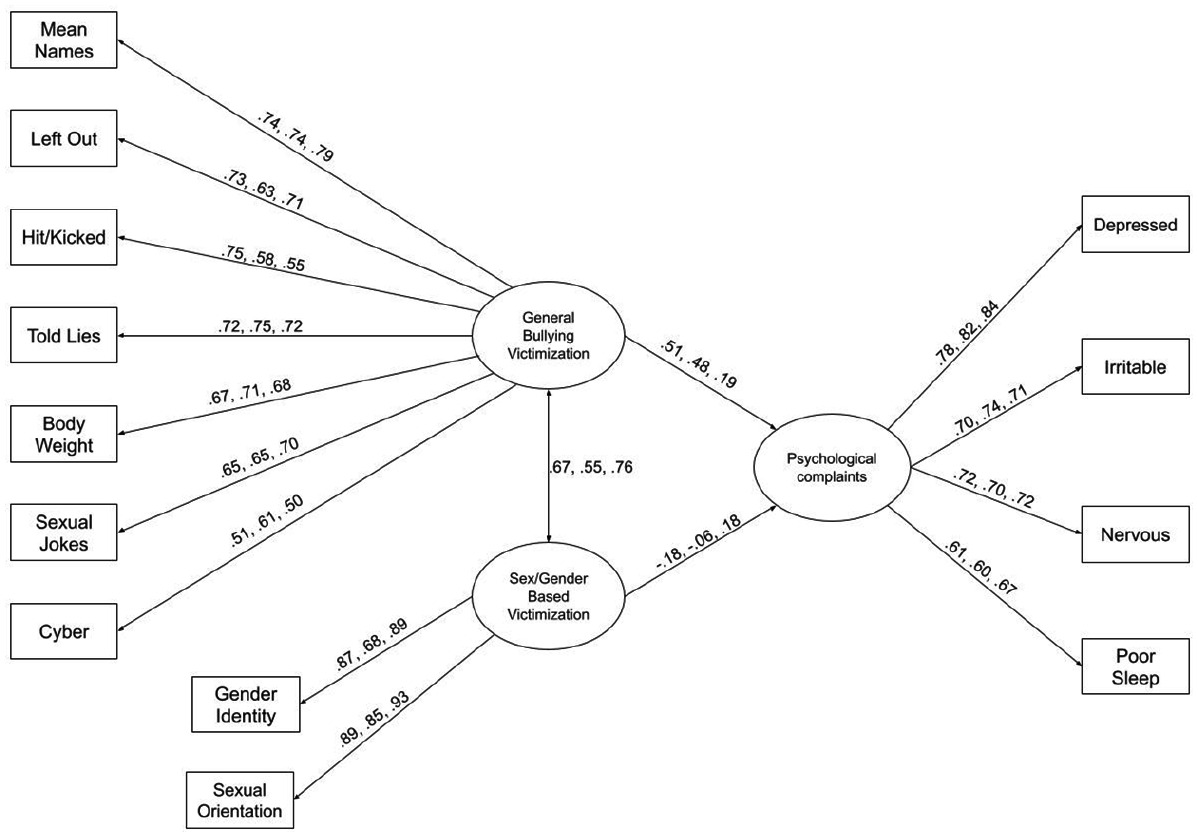
Path model demonstrating links between bullying victimization and psychological complaints among students in grades 6 to 8.
A similar pattern of results was found for older youth. The unconstrained model, x2(186) = 1,057.16, CFI = 0.966, RMSEA = 0.052, SRMR = 0.032, fit the data significantly better than the model where paths were constrained to be equal x2(232) = 1,942.36, CFI = 0.932, RMSEA = 0.066, SRMR = 0.080. As shown in Supplemental Figure 1, for cisgender boys and cisgender girls, only general bullying victimization was positively associated with psychological complaints. For transgender and gender diverse youth, however, the opposite pattern of results was found, such that only sex/gender identity-based victimization was significantly associated with psychological complaints. The model accounted for 17.0% of the variance in psychological complaints for cisgender boys, 20.2% for cisgender girls, and 12.2% for transgender and gender diverse youth.
Discussion
Bullying victimization is a form of interpersonal violence that disproportionately impacts youth from equity-deserving groups, including transgender and gender diverse youth. The current study used a nationally representative sample of Canadian youth in grades 6 to 10 to examine the prevalence and mental health correlates of general and identity-based bullying victimization among students of diverse gender identities. Our findings replicate previous research (Day et al., 2018; Gower et al., 2018; Kiekens et al., 2024) indicating that transgender and gender diverse youth are more likely to experience school bullying relative to their cisgender peers, which is, in turn, associated with poorer psychological well-being.
Specifically, our results indicate that approximately one in two transgender and gender diverse youth in Canada experience bullying victimization on a regular basis (i.e., at least 2–3 times a month). Bullying victimization among transgender and gender diverse youth is also highly pervasive—results indicate approximately 30% of these youth experienced 4+ types of victimization regularly. In support of our first hypothesis, transgender and gender diverse youth were significantly more likely to have been victimized relative to their cisgender peers in both grades 6–8 and grades 9–10. The one exception to this pattern was found among transgender girls, where the prevalence of bullying victimization was only significantly higher than their cisgender peers in grades 9–10. This effect was primarily driven by a higher rate of sexuality-based victimization among transgender girls in the older grade group, suggesting that the nature of their victimization may become more sexualized with development. Otherwise, and consistent with hypotheses, there was a stark contrast in the prevalence estimate of sex/gender identity-based victimization between cisgender and transgender/gender diverse youth.
In partial support of our second hypothesis, the prevalence of any bullying victimization was significantly lower in grades 9–10 relative to grades 6–8 for cisgender boys only. Looking at specific types of victimization, the prevalence of verbal, relational, and physical bullying was significantly lower among younger cisgender boys and cisgender girls in grades 9–10 relative to grades 6–8. A similar pattern was observed for gender diverse students. Taken together, these results are consistent with previous research (Vaillancourt et al., 2023) showing that general bullying is less prevalent in high school for most youth. Importantly, however, this trend may not generalize to identity-based bullying. We did not observe any significant differences in the prevalence of victimization due to body weight, race, religion, gender identity, or sexual orientation for any youth across the two cohorts. As stated above, the one exception to this stability was the higher rate of sexuality-based victimization among transgender girls in grades 9–10 relative to grades 6–8. The increase in sexuality-based victimization in high school may be linked to the onset of dating experiences, as bullying is considered a precursor to dating violence (Espelage et al., 2022). Supporting this connection, research also shows that gender non-binary youth experience elevated rates of adolescent dating violence (Exner-Cortens et al., 2021). The pervasiveness and chronicity of identity-based victimization may help us to understand why we see higher rates of mental health difficulties (Watson et al., 2024) and school absenteeism (Pampati et al., 2020) among equity-deserving groups.
In support of our third hypothesis, sex and gender identity-based victimization were positively associated with psychological complaints over and above general victimization for transgender and gender diverse youth. This result is consistent with previous research highlighting the harmful effects of identity-based victimization (Esposito et al., 2021; Galán et al., 2021; Lawrence et al., 2024; Price et al., 2019) and underscores the unique risk of this type of bullying victimization. It is possible that experiencing sex/gender identity-based victimization confers unique risk for psychological complaints because youth internalize prejudiced and discriminatory beliefs about themselves (e.g., internalized homophobia; Yolaç & Meriç, 2021), experience high levels of post-traumatic cognitions (e.g., I am worthless because I am transgender; Jeon et al., 2024); as well as heightened levels of shame (Pachankis et al., 2023). These experiences may be particularly harmful during adolescence, when youth are developing their social identity and sense of self. Additional longitudinal research is needed to better understand the mechanisms explaining the links between identity-based bullying and mental health outcomes across development.
In addition, for all youth, there was a positive association between general bullying victimization and psychological complaints. This effect, however, was stronger for cisgender boys and cisgender girls relative to their transgender and gender diverse peers. Given that bullying victimization is generally less common among cisgender youth, it is possible that when someone is victimized, they experience this as more isolating event relative to the youth in the gender diverse community, as social isolation is known to predict poor mental health (Christiansen et al., 2021). In addition, there was an unexpected negative link between sex/gender identity-based victimization and psychological complaints among cisgender youth, an opposite pattern to their transgender and gender diverse peers. This finding underscores how sex/gender identity-based victimization may be uniquely harmful for transgender and gender diverse youth. This finding should be interpreted with some caution, however, given the low prevalence of sex/gender identity-based victimization in cisgender youth.
Finally, findings from our factor analysis provide preliminary evidence to suggest that identity-based bullying is unique from general forms of bullying victimization, lending additional support for theory (e.g., minority stress theory; Brooks, 1981; Frost & Meyer, 2023; Meyer, 2003) and empirical research (Esposito et al., 2021; Mulvey et al., 2018; Russell et al., 2012). It is important to note, however, that the general and identity-based items are not mutually exclusive. For example, “I was called mean names” could also capture an identity-based experience (e.g., transphobic name-calling). Indeed, there was a high correlation between general victimization and sex/gender identity-based bullying victimization for transgender and gender diverse youth, suggesting that these experiences often overlap. Future research is encouraged to better differentiate identity-based bullying from general bullying victimization experiences in their measurement. More nuanced data regarding youths’ experiences of identity-based victimization may be best captured qualitatively.
Limitations
While the current study adds to the literature on identity-based bullying victimization among gender diverse youth, it is not without limitations. The cross-sectional design limits inferences about causal links between identity-based bullying victimization and psychological complaints, and the cohort design limits understanding of the developmental trajectories in the prevalence of bullying victimization. In addition, the current research focused on transgender and gender diverse youth and did not consider the intersectionality of other diverse identities that may also be targeted by bullying victimization. For example, some youth may experience bullying victimization based on multiple, intersecting identities that further heighten their risk for adverse outcomes (Watson et al., 2024). Some of the gender groups (e.g., transgender girls) had relatively small cell sizes, which may have limited statistical power for group comparisons. Future research should recruit larger samples of transgender youth (potentially by partnering with relevant organizations that serve these youth) to enhance the robustness and generalizability of findings. Results from the current research may be limited by self-report bullying victimization data, that is, subject biases such as social desirability. Self- and peer-reported bullying victimization are only moderately correlated, with self-reported victimization demonstrating stronger links with internalizing symptoms than peer-reported (Bouman et al., 2012). In addition, this study did not examine rates of bullying perpetration or witnessing identity-based bullying, which precludes an understanding of how gender diverse youth may be disproportionately impacted by other bullying experiences. Lastly, one of the items that was theorized to reflect identity-based bullying (I was bullied because of my weight) loaded onto the general victimization factor. This form of bullying victimization is the most common “identity-based” experience among cisgender youth and thus may have been loaded onto the general victimization factor due to frequency. Additional research is needed to understand youths’ experiences of weight-based bullying and whether it is best conceptualized as a form of identity-based bullying victimization.
Implications
Results from the current research underscore the importance of including specific components on identity-based bullying, bias, prejudice, and discrimination in bullying prevention and intervention efforts. For example, PREVNet, Canada’s bullying prevention hub, has freely accessible resources on identity-based bullying for educators to use with their students. 5 Bystander intervention programs should include specific components on intervening against identity-based bullying and consider how shared identity with the person being victimized may impact one’s ability to intervene safely. Specific training in identity-based bullying may be particularly important for diverse communities, as bullying prevention programs tend to be less effective in racially diverse areas (Evans et al., 2014). In addition, when identity-based bullying does occur, schools and educators should be trained in culturally responsive and affirmative ways to support transgender and gender diverse students. Teachers play a critical role in intervening against bullying, yet recent research demonstrates that teachers take less responsibility for intervening against gender and sexual orientation-based victimization relative to other forms of identity-based victimization (Khanolainen et al., 2025). Together, these results suggest that schools and educators need more resources and training to effectively address identity-based victimization.
In accordance with social-ecological models (Swearer & Hymel, 2015), and whole-school approaches to bullying prevention (Gaffney et al., 2021), future research is encouraged to explore the individual, peer, family, school, and community factors that may reduce the likelihood of identity-bullying and buffer associations with poor mental health. For example, when youth attend schools with Gay-Straight alliances (Lessard et al., 2020) and live in areas with gender-affirming policies (Watson et al., 2021), they are less likely to experience identity-based bullying. Indeed, as outlined in minority stress theory (Brooks, 1981; Frost & Meyer, 2023; Meyer, 2003), such prevention and intervention efforts must address the systemic barriers and persistent stigma faced by transgender and gender diverse youth. At the structural level, school policies must be reviewed to clearly name and define identity-based bullying, including specific plans and procedures for intervention. Research by Hatzenbuehler and Keyes (2013) indicates that when school anti-bullying policies are inclusive of sexual orientation, there is a lower risk of suicide attempts among lesbian and gay youth. Such findings suggest inclusive school policies may also be protective for transgender and gender diverse youth. Structural interventions, however, must also go beyond the school system to reduce stigma through improved laws and gender-affirming policies for transgender and gender diverse youth (Hatzenbuehler & Pachankis, 2016; Watson et al., 2021).
Conclusions
Using a nationally representative sample of Canadian students in grades 6 to 10, we documented the prevalence of general and identity-based bullying victimization among cisgender, transgender, and gender diverse youth. Transgender and gender diverse youth are more likely to experience all forms of bullying victimization, as well as to be victimized because of sexual orientation and/or gender identity. In turn, these experiences are positively associated with psychological complaints. By reducing rates of identity-based bullying, we may be able to better support the mental wellness of vulnerable youth.
Supplemental Material
sj-docx-1-jiv-10.1177_08862605251363627 – Supplemental material for Identity-Based Bullying Victimization Among Canadian Adolescents: Experiences of Transgender and Gender Diverse Youth
Supplemental material, sj-docx-1-jiv-10.1177_08862605251363627 for Identity-Based Bullying Victimization Among Canadian Adolescents: Experiences of Transgender and Gender Diverse Youth by Laura J. Lambe, Ann H. Farrell and Wendy Craig in Journal of Interpersonal Violence
Footnotes
Acknowledgements
The authors thank Julia Byron, Anna MacGillivray, and Kaden Barrett for their research assistance.
Data Availability Statement
The data are not publicly available due to ethical and legal restrictions.
Declaration of Conflicting Interests
The author(s) declared no potential conflicts of interests with respect to the authorship and/or publication of this article.
Funding
The author(s) disclosed receipt of the following financial support for the research and/or authorship of this article: The Health Behaviour in School Aged Children (HBSC) is funded by Public Health Agency of Canada (6D016-204692), awarded to Drs. Wendy Craig and William Pickett.
Ethical Approval and Informed Consent
Researchers were granted ethical clearance from university (21-314-CRAIG and GMISC-062-13) and federal government research ethics boards (Public Health Agency of Canada REB 2013-022P). Depending on the school board requirements, active or passive consent was obtained.

Supplemental Material
Supplemental material for this article is available online.
Notes
Author Biographies
References
Supplementary Material
Please find the following supplemental material available below.
For Open Access articles published under a Creative Commons License, all supplemental material carries the same license as the article it is associated with.
For non-Open Access articles published, all supplemental material carries a non-exclusive license, and permission requests for re-use of supplemental material or any part of supplemental material shall be sent directly to the copyright owner as specified in the copyright notice associated with the article.
