




Abstract
In Sri Lanka, intimate partner violence (IPV) remains a major concern, particularly for married women. Women’s education and empowerment are significant contributors to IPV. Despite this, there have been no recent studies exploring the complex relationship between education and multidimensions of empowerment in relation to IPV in Sri Lanka. Therefore, this research addresses this gap by exploring the complex pathways connecting married women’s education and multidimensional empowerment to IPV. Using data from the 2019 Sri Lankan Women’s Wellbeing Survey, this study included 1,165 married women. A path analysis based on structural equation modeling (SEM) was used to examine the complex interplay between distinct empowerment domains and IPV. The SEM results revealed both direct and indirect effects of women’s education and empowerment on IPV experiences. Education is positively linked to age at marriage, employment status, and husbands’ educational level, while inversely associated with accepting attitudes toward violence. Age at marriage plays a major role as a mediator, mediating the relationship between women’s education and their involvement in decision-making, and the relationship between husbands’ education and women’s IPV experience. Moreover, the relationship between women’s age at marriage and their IPV experiences was fully mediated by their decision-making ability, highlighting the importance of empowerment in decision-making. These findings underscore the need for targeted interventions that address the interconnected factors affecting IPV risk among married women in Sri Lanka, particularly focusing on education, empowerment, and marriage timing.
Keywords
Introduction
Intimate partner violence (IPV) stands out as one of the prevalent manifestations of violence against women and constitutes a substantial public health concern on a global scale (Osorio, 2023; World Health Organization, 2021). IPV is defined as any act or behavior committed by an intimate partner that causes physical, sexual, or psychological harm to the victim (Krug et al., 2002). Women are particularly vulnerable to this type of violence, with one in three reporting experiencing it, regardless of whether they live in a developing or developed country (World Health Organization, 2021). Globally, IPV prevalence is approximately 30% (Bhowmik & Biswas, 2022), with rates being higher in low- and middle-income countries (LMICs) (Coll et al., 2020; Tran et al., 2016). The high prevalence of IPV poses a serious threat, not only to women but also to their families, children, and communities (Coll et al., 2020; Friborg et al., 2015; World Health Organization, 2012). A number of psychological and physical consequences are caused by IPV for women, including suicide, post-traumatic stress disorder, depression, anxiety, drug or alcohol addiction, severe injuries, and unplanned pregnancies (Devries et al., 2011; Fleming & Resick, 2016; Gezinski et al., 2021; Giacci et al., 2022; Gunarathne et al., 2023; Leight et al., 2020; Sabri et al., 2014; Sagar & Hans, 2018). The relatively high prevalence of IPV, along with its psychological and societal sequelae, continues to negatively impact efforts to improve women’s rights and to achieve the Sustainable Development Goal 5.2, which aims to eliminate all forms of violence against women and girls (Bhowmik & Biswas, 2022) by 2030.
Several factors have been identified that contribute to IPV, including lower educational attainment, lower socioeconomic status, early marriage, childhood abuse exposure, and mental health problems (Bhowmik & Biswas, 2022; Gunarathne et al., 2023; John et al., 2022; Memiah et al., 2021; Miller et al., 2022). The results of a comprehensive systematic review involving married women in low-income countries suggest that factors such as residential settings, extramarital relationships, increased numbers of children, societal norms supporting violence acceptability, and a lack of decision-making autonomy correlate with higher IPV prevalence in low-income countries (Gunarathne et al., 2023). Among these numerous contributing factors, women’s education and empowerment have appeared as crucial factors significantly associated with IPV, particularly in South Asian LMICs (Ali et al., 2014; Bhowmik & Biswas, 2022; Coll et al., 2020; Ghoshal et al., 2022).
Like many other countries, IPV poses a significant challenge to the well-being and rights of women in Sri Lanka. Although in recent times Sri Lanka achieved high levels of human development in education, health, and women empowerment (Human Development Index: 0.78 in 2021), it has reported various forms of violence against women in many parts of the country. Particularly, married women in Sri Lanka are at greater risk of being subjected to IPV, with one in five ever-married women having experienced IPV compared to all other women over the age of 15 years (Department of Census and Statistics, 2020). The potential contribution of women’s empowerment and education to the prevalence of IPV has been acknowledged in research on IPV in South Asian LMICs including Sri Lanka, but this issue remains relatively unexplored. Therefore, it is important to understand how women’s education and empowerment status are linked to their vulnerability to IPV specifically within the Sri Lankan context.
The status of women’s education and empowerment has been recognized as significant factors in a number of health and social behaviors as well as outcomes, including IPV, poverty reduction, economic growth, and fertility (Shimamoto & Gipson, 2019). Empowerment of women is defined as the ability of women to make decisions related to their health and well-being based on their social position (Shimamoto & Gipson, 2019). However, there is no standard method for measuring empowerment, resulting in a lack of consistency across study settings (Malhotra & Schuler, 2002). Most of the studies use summative measures instead of multiple empowerment dimensions, resulting in an inability to deconstruct the distinct influence of each empowerment dimension. Therefore, the purpose of this study is to develop and evaluate a comprehensive conceptual framework for understanding the impact of women’s multidimensional empowerment and education on IPV in the context of married women in Sri Lanka using 2019 Women’s Wellbeing Survey (WWS) (Department of Census and Statistics, 2020). The research contributes to the broader global initiative to accomplish the Sustainable Development Goal 5.2 by 2030, emphasizing the importance of understanding the complex interplay between education, empowerment, and IPV. Furthermore, the study is intended to provide useful insights for the development of targeted interventions, policies, and strategies designed to break the cycle of violence and empower women to live without fear or abuse.
Conceptual Framework
Among the various theories used to analyze the determinants of IPV, this study adopts a socioecological perspective, recognizing that IPV is influenced by multiple interconnected factors at different levels (Heise, 1998). According to Heise (1998), IPV is influenced by contextual issues, household and individual factors, and individual autonomy, as well as their interactions. At the individual level, women’s educational status, which includes both formal education and being aware of their rights, is the most important determinant of empowerment (Kabeer, 1999; Yilmaz, 2018). As women acquire knowledge and skills, their decision-making agency increases, and their socioeconomic prospects improve, potentially reducing their vulnerability to IPV (Fageeh, 2014). Beyond the examination of individual factors, our study explores societal and community factors that may affect women’s empowerment and IPV, including attitudes that shape the acceptability of violence (Weitzman, 2018). For the purpose of the current study, empowerment was conceptualized as a comprehensive construct that included decision-making ability and attitude toward IPV dimensions based on previous research (Ballon, 2018; Osorio, 2023; Shimamoto & Gipson, 2019). Figure 1 illustrates the complex relationship between women’s educational status, empowerment, and IPV within the unique sociocultural and economic environment of Sri Lanka. Based on this initial conceptual framework, we aim to shed light on the complex dynamics shaping women’s empowerment and education in relation to IPV using a structural equation modeling (SEM) approach.
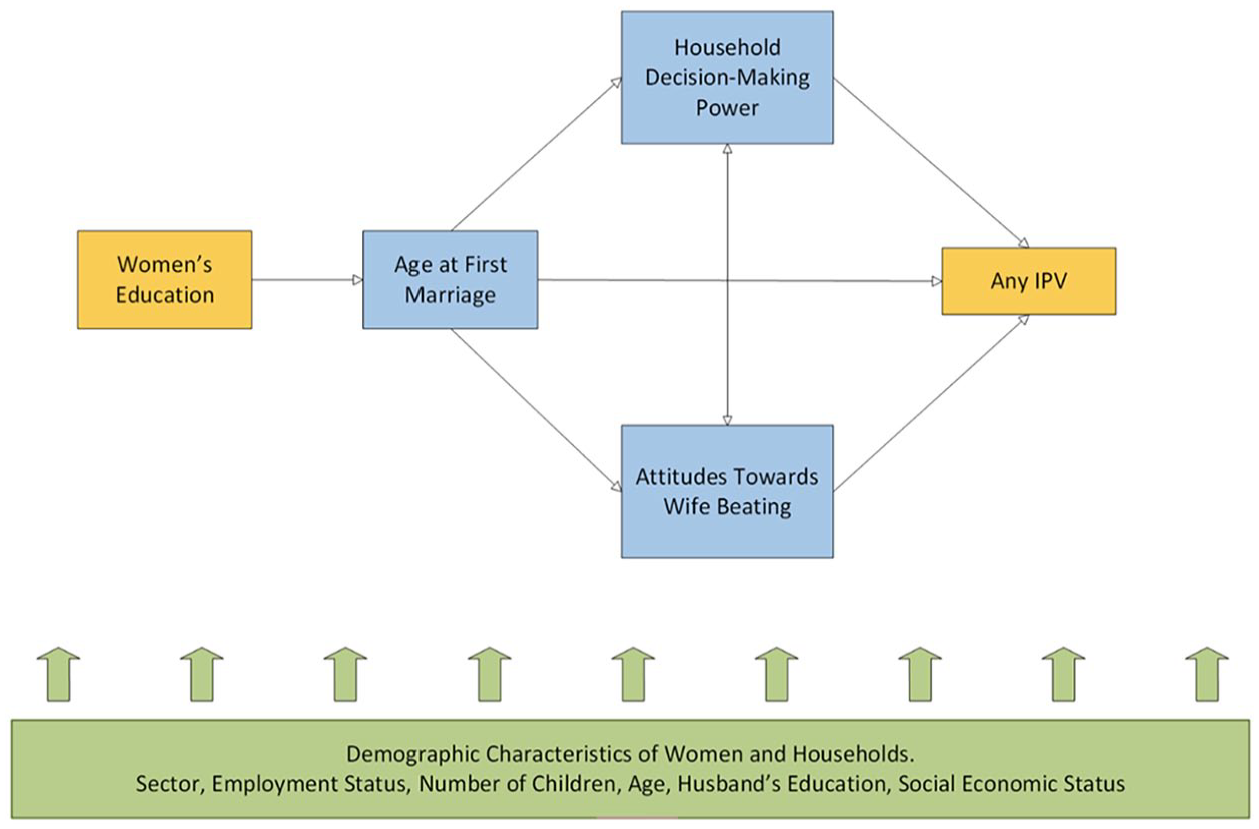
An integrated conceptual framework to predict the influences of women’s education status and multidimensional empowerment on IPV.
Method
Study Design and Data Source
A cross-sectional, nationally representative sample of data from the 2019 Sri Lankan WWS used as a data source for this study. This survey was designed with a multistage stratified random sampling approach, incorporating sector-based stratification, specifically urban, rural, and estate sectors (Department of Census and Statistics, 2020). The process of collecting data for WWS consisted of several steps. A total of 252 census blocks were initially selected as primary sampling units (PSUs). In each stratum, these PSUs were sampled using the probability proportional to size technique, ensuring that the selection probability of each PSU was proportional to the number of housing units in the census blocks. The next stage of the survey involved systematic random sampling, which selected 10 households from each PSU to form secondary sampling units. Following this, one eligible female member (women and girls aged 15 years and above who usually lived in the household or had been staying there for at least 1 month) of each household was selected at random for participation in the interview, facilitated by a simple random sampling procedure without replacement. Finally, face-to-face interviews were conducted to collect data from the selected households. In this WWS, 2,100 married women were interviewed with a response rate of 98.0% (Department of Census and Statistics, 2020). The sampled married women were over the age of 18. The current study included a total of 1,165 married women who were eligible for analysis.
Variables
A set of endogenous and exogenous variables were examined in this study to understand the complex dynamics surrounding IPV among married women in Sri Lanka. There were several endogenous variables examined, including experience of any form of IPV, household decision-making power, and attitudes toward wife beating, which had been previously identified in relevant literature (Uthman et al., 2011; Weitzman, 2018; Yilmaz, 2018). The exogenous variables included women’s education levels, their age at first marriage, and a range of demographic characteristics related to women and their households, which were selected based on previous research (Abdel Rahman, 2021; Msuya et al., 2014; Weitzman, 2018).
IPV experience was determined by the combination of physical, sexual, and psychological violence. Based on earlier similar studies, we used a well-established method in which married women provided binary responses to describe their experiences of physical violence (such as slapping, kicking), sexual violence (such as forced sexual contact), or psychological violence (such as insults, belittlement). Respondents who answered “yes” to any question about physical, sexual, or psychological violence were recorded as having experienced IPV. Those who did not answer “yes” to any of these questions were marked as “no” (Shinwari et al., 2022).
Women’s empowerment was measured by two latent constructs: household decision-making power and attitudes toward wife beating (Shimamoto & Gipson, 2019). We examined household decision-making power by conceptualizing it as a latent construct, combining responses to four key questions: “Ability to make decisions regarding contact with family of birth,” “Ability to make decisions regarding speaking to another man,” “Ability to make decisions regarding health care for oneself,” and “Ability to make decisions regarding household expenditures.” These questions were dichotomized, with “1” representing the ability to make decisions and “0” representing the inability. Furthermore, attitude toward wife beating was considered as an endogenous variable. This was represented as a latent construct based on responses to four pivotal questions including “Is a husband beating justified if the wife does not complete household work?,” “Is a husband’s beating justified if his wife disobeys him?,” “Is a husband’s beating justified if the wife refuses to have a sexual relationship with the husband?,” and “Is a husband’s beating justified if the wife finds out that the wife has been unfaithful to him?” Each question was coded binary, with 1 standing for agreement and 0 for disagreement. This approach allowed us to gain a more nuanced understanding of women’s empowerment within the context of the household.
In addition, our SEM examined several demographic variables selected based on earlier research, to assess their potential impact on IPV (Abdel Rahman, 2021; Msuya et al., 2014). These variables included the area of residence (urban, rural), educational levels of both women and their husbands (primary, secondary, higher), current employment status (working, not working), the number of children (categorized as 0 or 1 child, 2 children, 3 children, 4 or more children), socioeconomic status (classified as low, medium, high), age, and age at marriage.
Statistical Analysis
Missing data, which comprised less than 5% across all key variables, were excluded in a list-wise manner, under the assumption that they were absent at random (Bhowmik et al., 2020; Gamage et al., 2022). This approach was deemed appropriate given the minimal amount of missing data and the large sample size (n = 1,165). Additionally, to assess the adequacy of the model, a receiver operating characteristic (ROC) curve was fitted. After initial descriptive analysis, a bivariate analysis was conducted where Experience of any IPV was tabulated across considered variables including area of residence, both women and their husband’s education, current employment status, number of children, socioeconomic status, age, and age at marriage. These unweighted associations were tested using Pearson chi-square test and independent sample t-test. In SEM, linear relationships between measured and latent variables are described, allowing simultaneous testing of several interrelationships, including mediation effects (Adelson, 2011). Therefore, using mediation analysis as a guiding framework, we employed SEM to analyze the complex relationships between education, empowerment, and IPV among married women in Sri Lanka. Prior to the fitting of the SEM, a confirmatory factor analysis (CFA) was conducted to figure out the number of factors and latent constructs associated with empowerment, enhancing its robustness. A two-factor CFA was used to examine the measurement part of our SEM, and fit statistics were used to confirm the appropriateness and generalizability of our constructs.
The selection of pathways, inclusion, and exclusion of variables were guided by earlier research and were refined iteratively following inspection of standardized residuals and modification indices during the model development process. The model fit was assessed using recommended indices, including a root-mean-square error of approximation (RMSEA) below 0.07 and a comparative fit index (CFI) or Tucker–Lewis index greater than 0.95 (Hu & Bentler, 1999). Finally, the significance of the mediation effect was assessed based on a bootstrap analysis of 5,000 samples. Data preparation and statistical analysis were carried out using R (version 4.2.0): The R Foundation for Statistical Computing, AMOS (version 29), and SPSS (version 29): IBM Corporation.
Results
The study examined the data of 1,165 currently married women, with the majority (85.8%) living in rural areas. The women included in the study had an average age of 47.7 years (SD = 13.05), and their average age at marriage was 23.26 years (SD = 4.84). A significant percentage of the women (56.9%) completed secondary education, while only 13.2% completed primary education. Among the sampled married women, 25.4% reported experiencing IPV. A comprehensive breakdown of sociodemographic factors can be found in the Supplemental Material.
Table 1 shows the unweighted bivariate association between married women’s experience of IPV and selected sociodemographic factors. Results indicate that married women’s experiences of IPV are significantly influenced by several variables, including the level of education of both married women and their husbands, the current working status of married women, and the age of their marriage (p < .05). Based on Cramer’s V and Cohen’s d values, the most important factors associated with married women’s IPV experiences were their education level and marriage age (Table 1).
Bi-Variate Association (Unweighted) Between Experience of IPV and Sociodemographic Factors for Currently Married Women (N = 1,165).
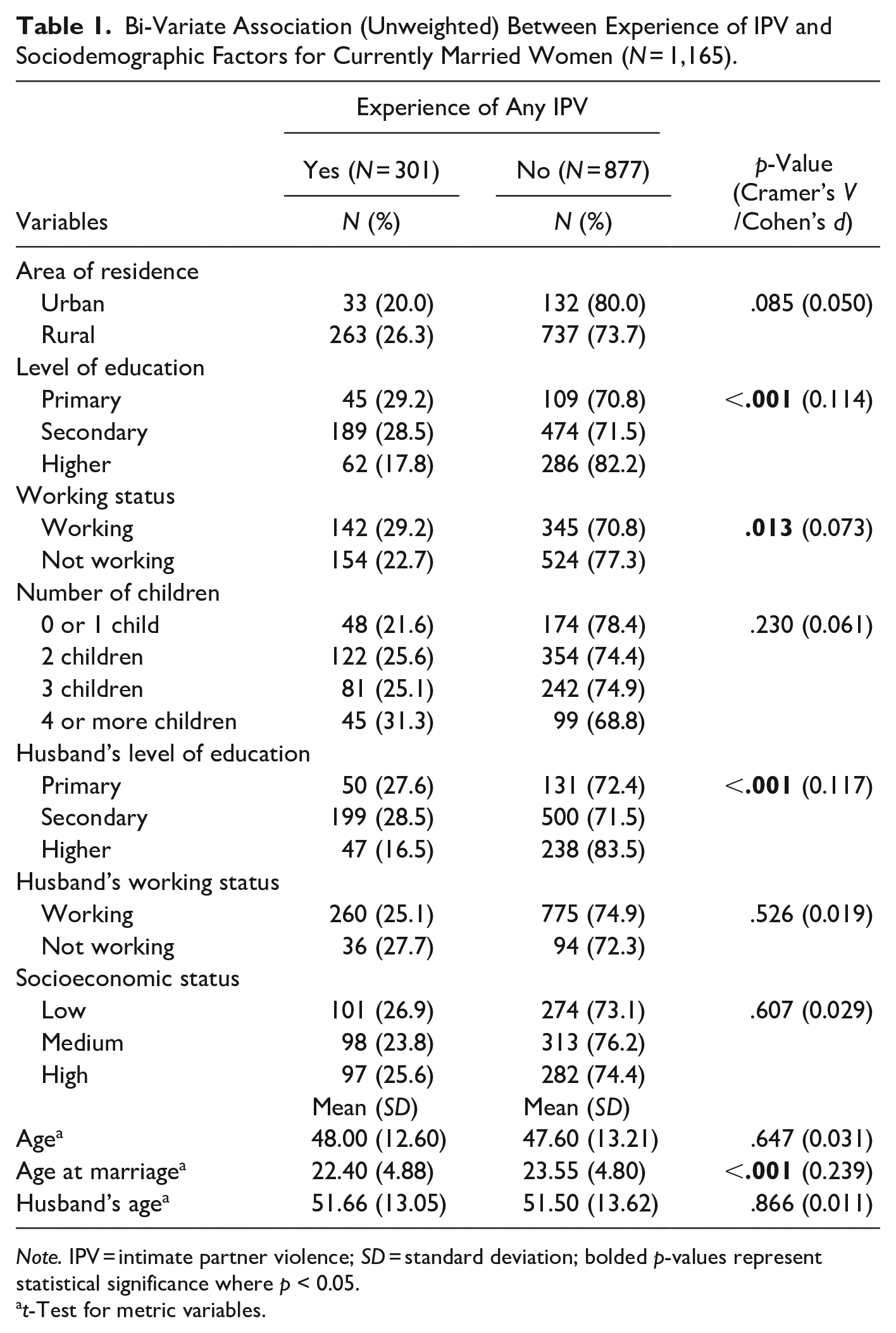
Note. IPV = intimate partner violence; SD = standard deviation; bolded p-values represent statistical significance where p < 0.05.
t-Test for metric variables.
The results of a CFA highlight the clear distinction between the two latent constructs: attitudes toward wife beating and involvement in decision-making (Table 2). The correlation between these two factors is not significant, which suggests that these factors are independent. Results of the CFA for the two factors, including fit statistics, indicate that the measurement component is appropriate within the SEM (RMSEA = 0.038, CFI = 0.98, TLI = 0.97, SRMR = 0.026). The factor loadings are summarized in Table 2 are statistically significant (p < .001), ranging from .43 to .70, which indicates good construct validity. Additionally, the internal consistency reliability of the latent construct was assessed, with Cronbach’s alpha values of .72 for the “Attitudes toward wife beating” and .63 for the “Involvement in decision-making.” While the alpha for the decision-making construct is slightly below the .7 threshold, it is still considered acceptable, given the small number of items and the complex nature of the construct (Taber, 2018).
Factor Loadings Derived from Factor Analysis for Empowerment Indicators.
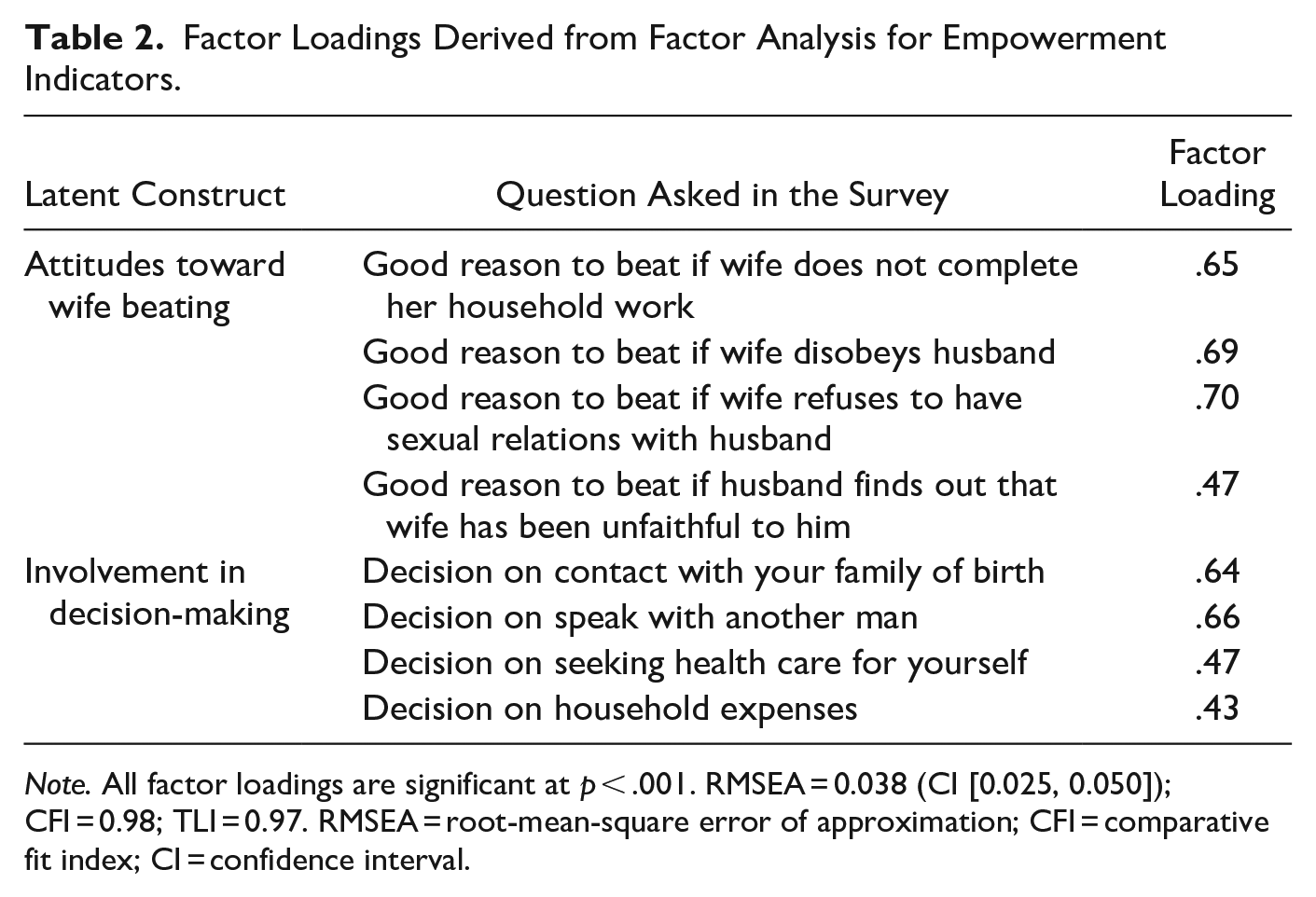
Note. All factor loadings are significant at p < .001. RMSEA = 0.038 (CI [0.025, 0.050]); CFI = 0.98; TLI = 0.97. RMSEA = root-mean-square error of approximation; CFI = comparative fit index; CI = confidence interval.
Sociodemographic factors, such as employment status, marriage age, and husband’s educational level, have been integrated as mediators in the SEM, with pathways outlined in line with earlier research and the initial conceptual framework (Figure 1). The model excluded variables that were not associated with IPV experience such as age, number of children, and socioeconomic status. Figure 2 shows the path diagram of the final adjusted fitted SEM including standardized path coefficients. The main predictor in our model is education, which influences the outcome variable, IPV, through several mediating variables: employment status, age at marriage, husband’s education, F1: Involvement in decision-making, and F2: Attitudes toward wife beating. Notably, the model fit statistics (RMSEA = 0.023, CFI = 0.99, TLI = 0.98, SRMR = 0.025) show a good fit to the data. Table 3 provides a comprehensive summary of the final adjusted fitted SEM, including path coefficients and p-values.
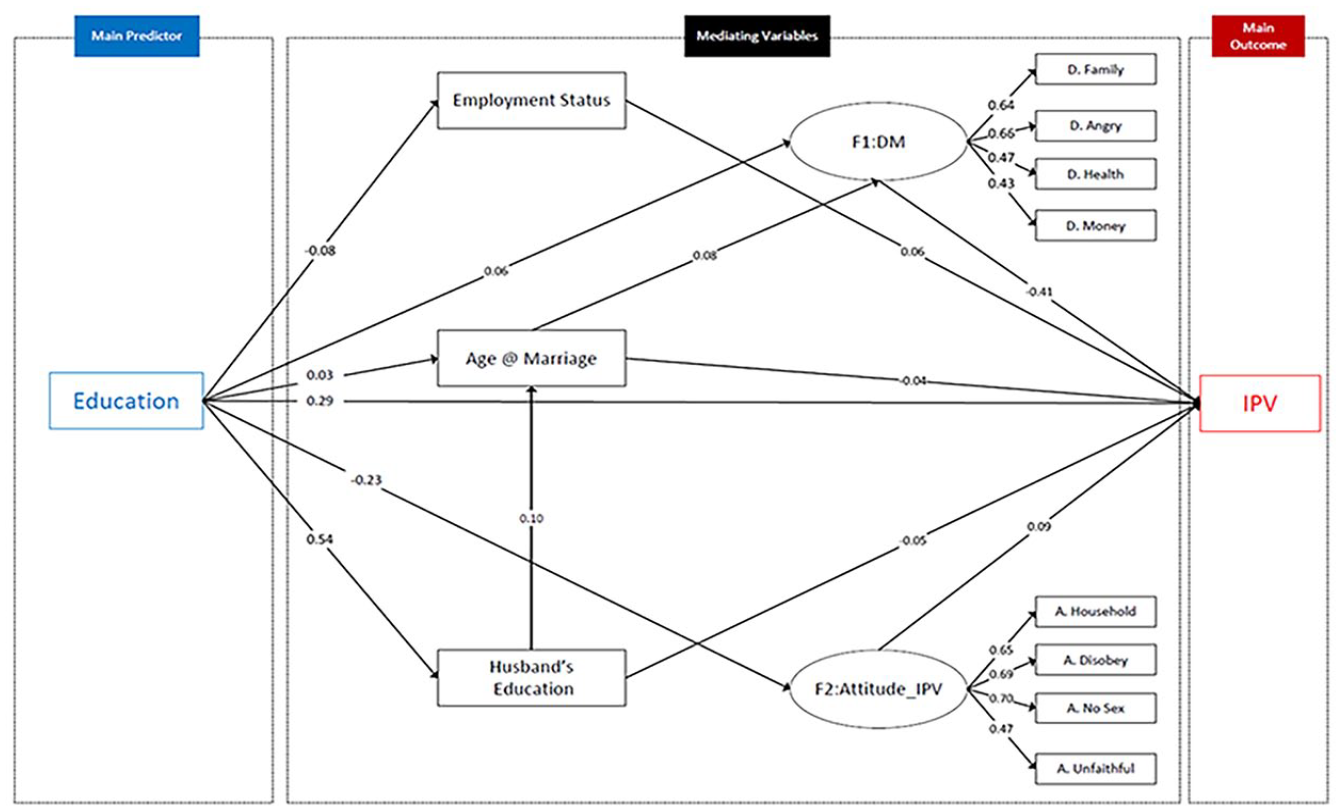
Final fitted SEM model on married women’s education status and empowerment to experience of IPV use with two latent variables: F1:DM—Involvement in Decision-making and F2: Attitude_IPV—Attitudes toward wife beating.
Path Coefficients in the Final SEM Model.
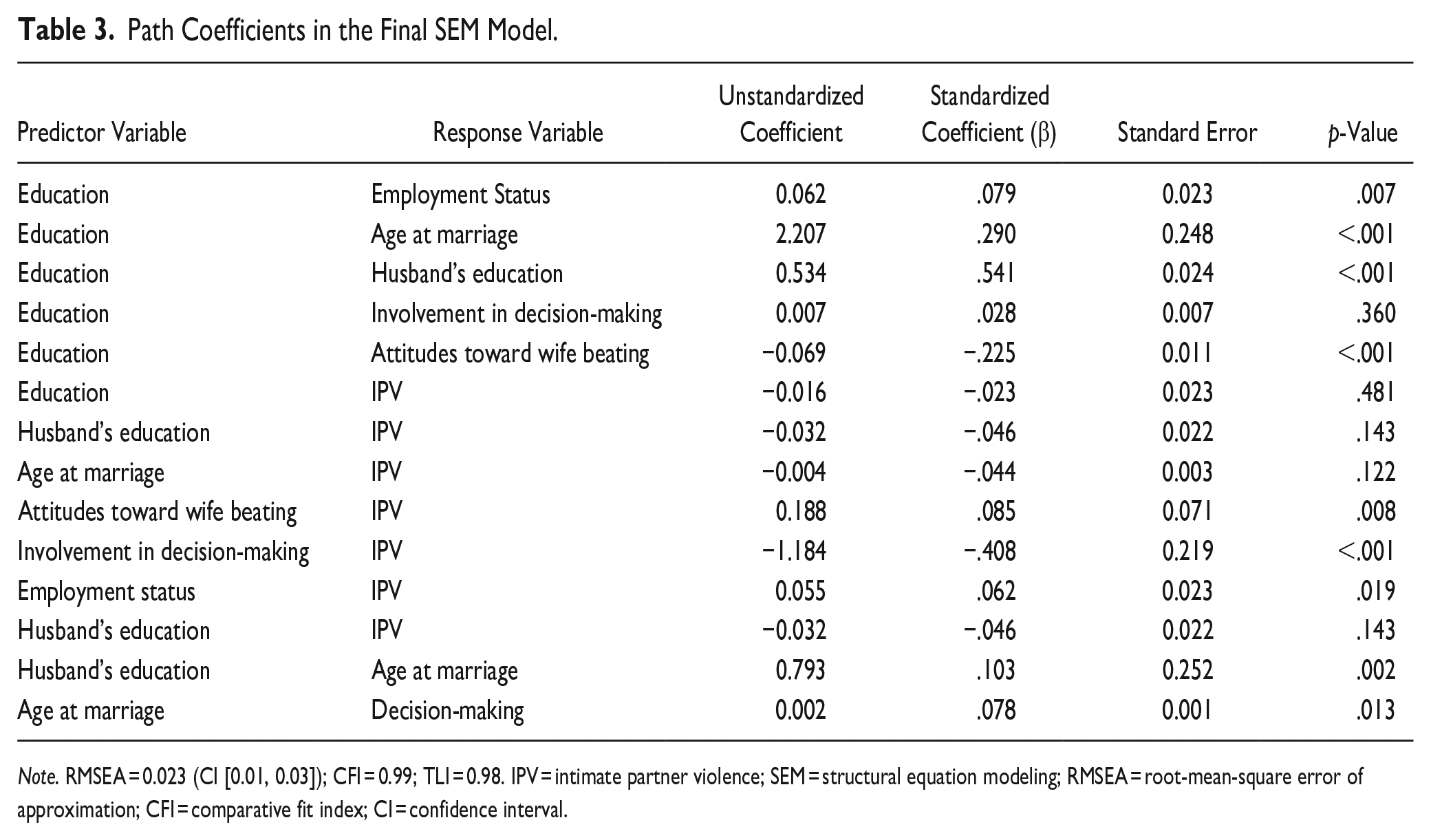
Note. RMSEA = 0.023 (CI [0.01, 0.03]); CFI = 0.99; TLI = 0.98. IPV = intimate partner violence; SEM = structural equation modeling; RMSEA = root-mean-square error of approximation; CFI = comparative fit index; CI = confidence interval.
The findings show that employment status (β = .062) and attitudes toward husbands beating their wives (β = .085) are positively associated with married women’s IPV experiences, indicating that employed women and those with accepting attitudes toward violence are more likely to experience IPV. However, women’s involvement in decision-making (β = −.408) is negatively related to IPV experience. Education shows a positive relationship with age at marriage (β = .290), suggesting that women’s higher education levels are associated with delayed marriage. Furthermore, the husband’s education status (β = .103) was found to be positively associated with women’s age at marriage, indicating that women tend to marry later when their husbands have higher education levels. Education is positively associated with married women’s employment status (β = .079), and their husband’s education level (β = .541), reflecting that higher education is linked to an increased likelihood of women being employed and having husbands with higher educational attainment. Conversely, education is negatively associated with married women’s attitudes toward accepting husband’s beating (β = −.225), implying that higher educated women are less likely to accept their husband’s beating. Additionally, women’s age at marriage (β = .078) is positively related to their involvement in decision-making, indicating that women who marry at an older age are more likely to be involved in decision-making processes within the family.
As shown in Table 4, the final SEM model contains significant indirect effects based on bootstrapping analysis. Figure 2 illustrates several partial and full mediations between married women’s education and their experience of IPV. It is noteworthy that the relationship between women’s education and IPV experience is fully mediated through their age at marriage and attitudes toward husbands beating their wives, as well as partially through their involvement in decision-making. Additionally, women’s age at marriage plays a crucial role in mediating the relationship between their education and their involvement in decision-making, as well as the relationship between their husbands’ education and their IPV experience. Involvement in decision-making fully mediates the relationship between women’s age at marriage and their IPV experiences (Table 4 and Figure 2).
Test for Mediation Using a Bootstrap Analysis with 95% Confidence Interval.
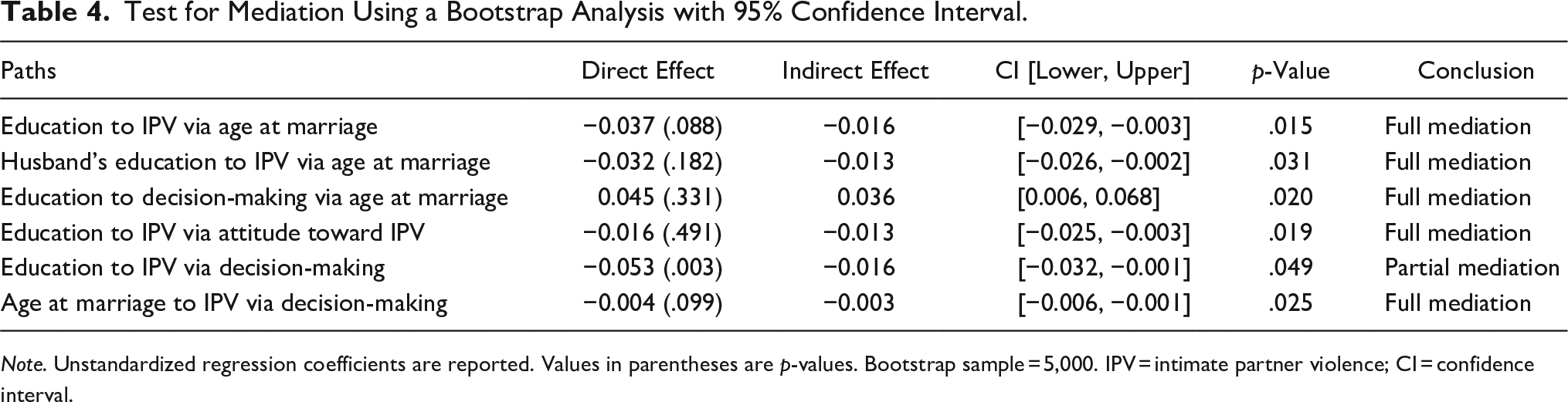
Note. Unstandardized regression coefficients are reported. Values in parentheses are p-values. Bootstrap sample = 5,000. IPV = intimate partner violence; CI = confidence interval.
The area under the ROC curve for the model was 0.73 (95% CI [0.69, 0.77]), indicating a good model fit (Mandrekar, 2010).
Discussion
This study investigates the complex interplay between married women’s education and multidimensional empowerment on their IPV experiences in Sri Lanka by using the latest national representative WWS 2019. The SEM results shed light on the profound impact of education on IPV experiences, providing significant direct and indirect pathways through multidimensional empowerment, including attitudes toward husbands’ beating and age at marriage. This study also highlights the influence of other sociodemographic factors on IPV experiences, revealing direct, indirect, and mediating effects through the complex interplay of various dimensions of empowerment.
This research illuminates the dynamics of IPV, revealing a direct and significant impact of attitudes on violence justification and women’s employment status on women’s experiences with IPV. Corresponding with prior research, our study aligns with women’s vulnerability to IPV when they justify partner violence, which is highly prevalent in LMICs, such as those in South Asia (Memiah et al., 2021; Smith et al., 2021). It has been suggested that a lack of awareness of legal rights, coupled with cultural attitudes that undervalue women, contributes to a cycle of abuse, which hinders women’s empowerment and their ability to challenge and end abusive relationships (Waltermaurer, 2012). It is possible that the positive association between women’s working status and IPV experiences may be the result of power imbalances within traditional gender roles and a degree of financial dependence that are prevalent in societies such as Sri Lanka (Gunarathne et al., 2023; Owoo, 2020; Zafar et al., 2022). The nature of women’s employment further influences vulnerability, with those in lower-paid jobs experiencing more IPV due to economic stress and household power dynamics (Biswas & Thampi, 2021). Furthermore, in line with existing evidence, women’s involvement in decision-making showed a significant negative direct effect on their IPV experiences (Coll et al., 2020; Semahegn & Mengistie, 2015). Women who are empowered because of their strong decision-making roles are less likely to experience IPV, as they gain independence in their choices and the ability to develop and maintain important social networks (Shwartz et al., 2022; Tenkorang, 2018). Recognizing the importance of these social networks is crucial in the ongoing effort to reduce violence against women.
The importance of education in diminishing women’s vulnerability to IPV is well established (Klencakova et al., 2021). Education plays a vital role by providing knowledge about rights and guidance for a better life for women (Khan, 2011). The multifaceted impact of education becomes evident as it becomes a favorable factor in shaping the changing roles of women through various channels (Khan, 2011). The present study found an indirect impact of women’s education on their involvement in decision-making, revealing that the delay in marriage, influenced by education, plays a mediating role in shaping the pathway to increased women participation in decision-making processes, which is consistent with past literature (Carpena & Jensenius, 2021; Chen & Zhao, 2022). This complex interplay between education, marriage timing, and decision-making highlights the nuanced ways in which education contributes to the empowerment and transformation of women’s roles in society. Educated women and those whose spouses are educated show a lower incidence of IPV than their counterparts without an educational background or whose spouses are uneducated (Ahinkorah et al., 2018; Miller et al., 2022; Sanni et al., 2021). The results of our study indicate that education has a notable indirect effect on the experience of IPV, and this effect is fully mediated by the age at marriage. These findings are consistent with previous studies, which suggest that higher levels of education are associated with a delay in marriage, which in turn reduces women’s vulnerability to IPV (Ghislandi et al., 2020; Weitzman, 2018). This delay in marriage, often due to extended education, allows women to simultaneously pursue more effective career paths and develop significant personal growth, leading to increased self-confidence, a greater sense of maturity, and ultimately resulting in greater independence from their spouses (Engida, 2021; Weitzman, 2018). Furthermore, it enhances their ability to express new ideas and access information about women’s rights in relation to IPV (Uthman et al., 2009; Yount et al., 2018). In this way, education, and the subsequent delay in marriage, empowers women and enables them to easily escape abusive relationships, thus disrupting the cycle of violence.
This study revealed that the level of education of a woman’s spouse also indirectly influences her experience of IPV, which is fully mediated through her age at first marriage. This aligns with past literature suggesting that women with more highly educated spouses tend to delay marriage, thereby protecting them from IPV (Ghislandi et al., 2020). This could be the fact that a higher level of education is often accompanied by skills and knowledge that challenge cultural and gender norms, thereby creating more equitable relationships between men and women (Boyle et al., 2009). Consequently, educated husbands may share a mutual understanding with their wives about the importance of education and career development. In addition, they may be open to challenging traditional cultural norms that often dictate early marriage, leading to a supportive stance on delaying marriage as well. In turn, this delay allows for women’s personal growth and aspirations, thereby reducing IPV likelihood (Engida, 2021). Considering this, the timing of marriage, influenced by the education level of a woman’s spouse, plays a crucial role in reducing the risk of IPV.
In the present study, as we discussed earlier, the age at which women marry plays an important role in mediating diverse pathways leading to the experience of IPV. Furthermore, this study highlights the nuanced nature of the relationship between women’s age at marriage and their experience of IPV, by showing that the impact of age at marriage on women’s IPV experiences is fully influenced by their participation in decision-making processes. The findings of this study are in line with those of other studies concluding that women who delay marriage are more likely to be able to make informed decisions, thereby reducing their risk of being abused by their partners (Coll et al., 2023; Omidakhsh & Heymann, 2020). As previously discussed, a significant contributor to this may be the extended marriage timeline. It provides women with opportunities to accumulate material resources and increase their education, which implicitly enables them to participate in decision-making processes, thereby enhancing their empowerment (Ghislandi et al., 2020; Hayes & van Baak, 2022). This indirect effect underscores the potential role of women’s age at marriage and their active involvement in decision-making in the prevention of IPV.
In the context of women’s empowerment, the ability to make decisions is identified as a crucial component (Shimamoto & Gipson, 2019). Therefore, empowering women through enhanced decision-making plays a key role in reducing violence against them. The findings of our study align with prior research, indicating that education positively influences the reduction of IPV through its impact on decision-making capacities (Osorio, 2023; Weitzman, 2018). The reason for this association may be that women have access to both financial and nonfinancial resources through their education (Ghislandi et al., 2020; Osorio, 2023). This includes expanding employment opportunities and fostering social networks, which contribute to overall empowerment (Ghislandi et al., 2020; Khan, 2011). The development of empowerment, which involves greater control and decision-making authority over one’s life, is linked to a significant reduction in IPV (Oluwagbemiga et al., 2023; Osorio, 2023). Therefore, by promoting women’s decision-making abilities through education and empowering them to shape their lives, it results in a significant reduction in the prevalence of IPV.
Further, our findings show that the impact of education on vulnerability to IPV is mediated by attitudes toward IPV, which is consistent with existing literature suggesting that attitudes toward IPV influence the impact of education on vulnerability to IPV (Tran et al., 2016; Uthman et al., 2009). It has been argued that cultural attitudes that devalue women’s personalities and social status, combined with a lack of understanding of their legal rights, may contribute to the acceptance of violence among women (Waltermaurer, 2012; Yilmaz, 2018). It was also advocated that education plays a pivotal role in challenging traditional gender roles and reducing IPV, by offering women the opportunity to acquire information, fostering a positive self-view and self-efficacy (Wang, 2016; Yilmaz, 2018). Conversely, women who accept violence because of their low education levels are more likely to become victims of IPV (Gunarathne et al., 2023; Tran et al., 2016). The reason for this heightened vulnerability is that they are limited in their ability to empower themselves, which, in turn, prevents them from challenging or ending abusive relationships (Waltermaurer, 2012). A clear understanding of these complex association between the education of married women and multidimensional empowerment in relation to their IPV experiences is crucial when designing effective interventions to reduce married women’s vulnerability to IPV.
A key strength of this study lies in its use of an advanced statistical model, the SEM, for creating a comprehensive understanding of complex relationships by testing mediation effects of sociodemographic factors. However, it is important to acknowledge certain limitations. The first limitation is the cross-sectional nature of the study, which limits our ability to observe changes over time. Therefore, the study could only provide information about the association between the factors, not the causal relationship. Second, our study relies on self-reported data, which may be subject to recall bias and social desirability bias. Participants may underreport experiences of IPV due to fear, shame, or cultural norms, potentially leading to an underestimation of IPV prevalence. Third, while our study considered several sociodemographic factors, it may not have captured all relevant contextual factors that influence IPV, such as community-level norms due to the unavailability of these data in the survey. Fourth, the study was limited to data collected from married women, so generalizations to a wider population should be made with caution. Fifth, it is worthwhile to note that the measurement of empowerment relied on specific items from the WWS rather than combining them into a single rating. Finally, as a quantitative study, our research does not capture the nuanced, lived experiences of women facing IPV, which could provide valuable context to our findings.
Conclusion
The findings of this study provide valuable insights into the complex dynamics influencing the experiences of IPV among married women. Moreover, the highlighted indirect effects demonstrate how education, decision-making, attitudes, and age at marriage are interconnected, shaping the landscape of IPV experiences. It is evident that education plays a vital role in mitigating IPV by influencing important factors such as marriage age, empowerment, and the prevalence of IPV. As education has far-reaching effects, interventions should focus on expanding educational opportunities for both women and their spouses. Developing strategies tailored to prevent and address IPV can be achieved by understanding the complex interaction between these critical factors, resulting in a safer and healthier environment for married women. Future research should prioritize longitudinal and mixed-methods studies to examine how relationships between education, empowerment, and IPV evolve over time in Sri Lanka. Intervention studies testing targeted educational programs and empowerment initiatives, particularly those focusing on decision-making skills and challenging attitudes toward violence, would be valuable. It is important that policymakers and practitioners take these multifaceted interactions of the sociodemographic factors into account when designing interventions. By expanding educational opportunities, promoting women’s decision-making abilities, and addressing cultural attitudes, significant progress can be made in reducing IPV prevalence. As a result, this contributes significantly to the achievement of Sustainable Development Goal 5.2 by 2030, which aims to eradicate all forms of violence against women and girls.
Supplemental Material
sj-docx-1-jiv-10.1177_08862605241279980 – Supplemental material for Investigating Pathways Linking of Women’s Education Status and Empowerment to Intimate Partner Violence Among Married Women in Sri Lanka: A Structural Equation Modeling Approach
Supplemental material, sj-docx-1-jiv-10.1177_08862605241279980 for Investigating Pathways Linking of Women’s Education Status and Empowerment to Intimate Partner Violence Among Married Women in Sri Lanka: A Structural Equation Modeling Approach by Lakma Gunarathne, Pragalathan Apputhurai, Maja Nedeljkovic and Jahar Bhowmik in Journal of Interpersonal Violence
Footnotes
Acknowledgements
We conducted this study as part of a PhD program at Swinburne University of Technology in Australia, and we would like to thank the university for awarding a Tuition Fee Scholarship (TFS). It is our pleasure to acknowledge the Department of Census and Statistics in Sri Lanka for providing the data for the Women’s Wellbeing Survey 2019.
Author Contributions
This study was conceptualized by LG. The study design was developed by LG, while the screening and analysis of the data were performed by LG, PA, and JB. The initial draft of the manuscript was prepared by LG. MN, PA, and JB reviewed the draft manuscript and provided their feedback. The final manuscript was read and approved by all the authors.
Data Availability Statement

Declaration of Conflicting Interests
The author(s) declared no potential conflicts of interests with respect to the authorship and/or publication of this article.
Funding
The author(s) disclosed receipt of the following financial support for the research and/or authorship of this article: This study was conducted as a part of PhD study supported by a Tuition Fee Scholarship (TFS) from Swinburne University of Technology.
Ethical Clarence
De-identified publicly available secondary data from Women’s Wellbeing Survey were provided by the Department of Census and Statistics (DCS) in Sri Lanka on request. The authors obtained permission from DCS to use WWS data. In addition, the data were accessed and analyzed with ethical approval from the appropriate Human Research Ethics Committee (approval number: 20226572-10707).
Supplemental Material
Supplemental material for this article is available online.
Author Biographies
References
Supplementary Material
Please find the following supplemental material available below.
For Open Access articles published under a Creative Commons License, all supplemental material carries the same license as the article it is associated with.
For non-Open Access articles published, all supplemental material carries a non-exclusive license, and permission requests for re-use of supplemental material or any part of supplemental material shall be sent directly to the copyright owner as specified in the copyright notice associated with the article.
