



Abstract
Despite extant literature on individual-level risk factors for sex trafficking among children and adolescents, little is known about the impact of social and ecological contexts on risk of human trafficking victimization. The purpose of this study was to examine the correlates signaling risk of human trafficking victimization at the individual, family, social, and community levels utilizing a sample of 40,531 justice-involved male and female youth, a small fraction of whom were suspected or verified victims of human trafficking between 2011 and 2015 (N = 801, including 699 female and 102 male youth). Using this sample, we examined differences across individual, family, social, and community characteristics of youth involved in the juvenile justice system who have a history of trafficking victimization and youth without such histories. Series of logistic regression analyses were conducted using varying control groups, created through exact matching and randomized matching groups to address sample imbalances. These analyses indicate that, at the individual level, youth who had experienced childhood adversities were more likely to report human trafficking victimization. Sex differences were found regarding risk factors pertaining to the family and broader socio-ecological contexts. Female youth who had witnessed family violence had an antisocial partner or antisocial friends, or resided in a community with a greater proportion of the population being foreign-born or speaking English less than very well were at heightened risk for human trafficking victimization. Little evidence was found for community-level risk factors of victimization in this specific sample of justice-involved youth. These findings encourage more research to unpack the multilevel correlates of victimizations at the individual, family, social, and community levels, recognizing potential differences between female and male youth regarding the factors that put them at heightened risk for juvenile sex trafficking victimizations. Practice and policy should direct awareness and prevention measures to social and ecological contexts.
Introduction
Juvenile human trafficking victimization results in lasting and complex trauma (Ottisova et al., 2018; Perry et al., 2022; Zimmerman & Pocock, 2013). Human trafficking is federally criminalized as the recruitment and exploitation of people in the sex industry, labor, or services by means of force, fraud, and coercion (Trafficking Victims Protection Act (TVPA), 2000, P.L. 106-386). Minors are entitled to additional legal protections: The TVPA considers them as victims, regardless of evidence of force, fraud, and coercion. Recent amendments to the TVPA have broadened the definition of sex trafficking of minors to include varying sex acts such as pornography or sex tourism (see the Justice for Victims of Trafficking Act, JVTA, 2015, amending 18 U.S.C. 1591[a][1]).
While combating human trafficking, especially sex trafficking of minors is a national and international priority, and the responsibility of child welfare providers and other youth-serving professionals has increased in recent years (de Vries et al., 2020; Kafafian et al., 2021; Reid et al., 2019), prevention and intervention continue to be hampered by knowledge gaps regarding the factors that put young people at risk to human trafficking victimization. Previous research has primarily documented individual-level risk factors, with most studies suggesting that childhood adversities such as experiencing (sexual) abuse and neglect and certain behaviors such as running away and substance abuse increase risk of human trafficking victimization (Choi, 2015; de Vries & Goggin, 2020; Franchino-Olsen, 2021; Laird et al., 2020; Reid et al., 2017). These individual-level risk factors dominate the screening and assessment instruments commonly used by practitioners to identify (vulnerability to) sex trafficking victimizations among minors and young adults (see for a review of these instruments, Appendix A in de Vries et al., 2020), thereby influencing who is most likely to be identified for being at risk of sex trafficking victimizations and more likely to receive victim services.
However, individual-level factors may be insufficient to identify human trafficking amongst certain groups of young people for three main reasons. First, many of these factors not only increase risk of juvenile human trafficking but are associated with a general risk of victimization (see, e.g., Assink et al., 2019; Austin et al., 2020; Stith et al., 2009). Second, the extant literature excludes risk profiles not aligning with the current scholarly narrative that centralizes—and prioritizes—the more egregious circumstances (Srikantiah, 2007), and recent work has begun to challenge this risk narrative. For example, a recent study about juvenile human trafficking among youth involved in the juvenile justice system in Florida identified six distinctive risk profiles for juvenile human trafficking, three of which were characterized by less extensive histories of individual-level child maltreatment, drug use, or running away (Reid et al., 2019). In other words, maintaining the focus on a common risk profile for sex trafficking based on individual-level risk factors would fail to identify a presumably large group of system-involved youth who are (at risk of) being trafficked. Third, recent work suggests that factors related to youth’s social environments may be more important risk factors (see also Chohaney, 2016; de Vries et al., 2020; Fedina et al., 2019; Reed et al., 2019).
Few quantitative studies have examined risk factors of sex trafficking that concern the broader socio-ecological environments of young people, which aligns with the general literature on victimization being more skewed toward individual-level risk factors (see, for a systematic review, Turanovic, 2022). However, support for the notion that the socio-ecological environments of young people may be conducive to (or prevent) victimization can be found in the extant literature on child development and child maltreatment, which has increasingly acknowledged that the context in which young people live is critical for their development and resilience (Belsky, 1980; Luthar, 2005; Yoon et al., 2021). This, in turn, is based on the Ecological Systems Theory, which posits that individuals are embedded in larger social contexts that shape their behaviors and experiences (Bronfenbrenner, 1979, 1986).
In view of these contextual effects, recent work has begun to extend explanations for child maltreatment or other forms of victimization from individual-level risk factors to also include risk factors related to multiple ecological levels, including the (a) microsystem, which is comprised of the immediate context of social relationships that are conducive to abuse or in which abuse takes place (e.g., family separation, domestic violence, or family incarceration); (b) exosystem, which is comprised of the institutions and social structures around the microsystem such as social networks, neighborhoods, schools, and work (e.g., neighborhood-level disadvantage or having delinquent peers), and (c) macrosystem, which represents the public or political climate through which violence may persist or be prevented (e.g., tolerance toward certain forms of violence or updates in child labor laws) (Belsky, 1980; Heise, 1998; Moylan & Javorka, 2020).
The relevance of these multilayered risk factors may be assumed for other victimization types that children and young adults encounter, yet a scarce body of literature has begun to empirically unpack how the socio-ecological framework may also affect risk of human trafficking victimization. Among these studies, household dynamics and caregiver settings, which comprise the microsystem, have received most attention in studies related to child sex trafficking. These studies suggest that increased risk of human trafficking victimization may stem from dysfunctional family dynamics such as family violence, substance use by a family member, family separation, family incarceration, or other dynamics that may increase strains on caregivers and have harmful impacts on youth (see, for systematic reviews, Choi, 2015; Franchino-Olsen, 2021).
The exosystem has received notably less attention in empirical research on human trafficking risks. In particular, few studies have examined the role of social networks in spite of extant theory and empirical literature indicating that certain social networks may increase exposure to violence and victimization (Austin et al., 2020; Stith et al., 2009; Turanovic, 2022). Besides greater risk of engaging in delinquency themselves, young people whose social networks include delinquent peers may have an increased risk of victimization due to being entrapped in contexts where violence occurs (Schreck & Fisher, 2004; Schreck et al., 2004; Turanovic & Young, 2016). This delinquent peer-victimization link has also been found in the context of gendered violence, with females having greater odds of experiencing sexual victimization when they are more centrally embedded in delinquent peer groups (Stogner et al., 2014). Although there is some recent work alluding to the importance of social contexts in explanations for sex trafficking risks (see also Chohaney, 2016; de Vries et al., 2020; Fedina et al., 2019; Reed et al., 2019), little is known about the extent to which exposure to peer delinquency affects risk of human trafficking victimization.
Moreover, little is known about how risk of sex trafficking victimization is affected by certain neighborhood dynamics despite common knowledge that the neighborhood context can create—or constrain—opportunities for individuals, families, and peers. In addition, there is a long history of research linking neighborhood factors such as structural inequality, concentrated disadvantage, and residential mobility to increased crime rates (Bruinsma & Johnson, 2018; Sampson, 2006; Shaw & McKay, 1942, 1969), yet contextual research has been much more focused on explaining crime and criminality rather than victimization (see for a review, Turanovic, 2022). Although there is some recent work linking neighborhood-level factors to the placement of potential human trafficking venues (e.g., de Vries, 2022; see also Cockbain et al., 2022) and few studies demonstrating that risks of human trafficking victimization are higher in certain geographic contexts (e.g., in metropolitan areas versus rural areas, see Branscum & Richards, 2023), the literature has remained silent on neighborhood-level risk factors for human trafficking victimization.
Given the paucity of research identifying risk of sex trafficking at multiple ecological levels, our study primarily aimed to identify how the socio-ecological context relates to increased risk of human trafficking victimization among young people involved in the juvenile justice system, specifically by identifying risk factors related to the individual, family, peers, and neighborhoods.
A secondary aim was to understand whether these risk factors may differ by gender: Previous work has suggested that contextual effects may differ by social group, with the literature underscoring the particular importance of accounting for gender differences in effects on offending and victimization (Fagan & Wright, 2012; Vannucci et al., 2021). The few studies that have compared individual risk factors for human trafficking using mixed samples of girls and boys have concluded that the individual risk factors are similar across male and female youth, although the prevalence and severity of the impact of certain risk factors may differ across male and female youth (Reid et al., 2017, 2019; Reid & Piquero, 2014a). For example, Reid et al. (2017) found that the odds of human trafficking victimization were 2.52 times greater for girls who experienced sexual abuse, while risk was 8.21 times greater risk for boys who had histories of sexual abuse. Identifying such differences between genders in risk factors is required to improve identification and prevention of juvenile human trafficking and effective treatment of resultant trauma.
We leverage data from the Florida Department of Juvenile Justice (FDJJ) to examine potential correlates for human trafficking victimization at the individual, family, social, and community levels among a group of young people with a history of arrest who were screened for potential human trafficking victimization. Examining these correlates within a sample of justice-involved youth is policy relevant, because these youth are observed to be at increased likelihood of having experienced both trafficking victimization (Chohaney, 2016; Franchino-Olsen, 2021) but also abuse, neglect, household dysfunctions, and associated trauma which have been linked to human trafficking victimization risk (Baglivio et al., 2014; Reid et al., 2017, 2019). We further describe our data and methods in the next section, followed by a section in which we highlight our findings on the multilayered correlates for human trafficking victimization. In a final discussion section, we interpret these findings against the background of the previous literature and provide several recommendations for research, policy, and practice.
Data and Methods
We use the most comprehensive dataset available for trafficked youth in Florida, involving youth with a history of a delinquency referral (equivalent to an adult arrest) in the period of 2011 through 2015 and who were administered the Full Community Positive Achievement Change Tool (C-PACT) risk/needs assessment upon arrest. The FDJJ maintains demographic, offense history, justice system placement, and risk/needs assessment (C-PACT) information on all youth arrested in Florida. The C-PACT is administered by juvenile probation officers or provider staff to gather data on, among others, demographics, childhood adversities, and supportive or antisocial relationships of young people (see Baglivio, 2009; Baglivio et al., 2014; Reid et al., 2017, 2019). which used the same original dataset to answer different research questions but did not consider information about the social networks and neighborhoods of youth, which this study includes).
For context, the C-PACT is a semi-structured interview protocol conducted by trained bachelors-level staff that has demonstrated predictive validity among FDJJ youth across different samples collectively in excess of 130,000 youth, including across race/ethnicity and gender as well as disposition/placement type (Baglivio, 2009; Baglivio & Jackowski, 2013; Baird et al., 2013; Winokur-Early et al., 2012). Additionally, the reliability of the assessment, as administered in Florida, was assessed by the National Council on Crime and Delinquency, who reported an intra-class correlation coefficient of .83 for the C-PACT overall risk level among over 50 FDJJ raters provided with the same case information (Baird et al., 2013). Results demonstrated only 4% of items with less than 75% agreement among the raters (Baird et al., 2013). Importantly, the criminal history items of the C-PACT are automated from the FDJJ information system, eliminating the need for respondent recall or assessor ability to appropriately count and classify prior offending and justice system placements.
The C-PACT has both a prescreen and a full assessment version, with only the full assessment possessing all the requisite items leveraged in the current study. Including only youth who were assessed using the full assessment oversamples youth seen as having a higher risk to offend, with prior work demonstrating that this sampling procedure results in a sample that is approximately 33% of the entire population of youth arrested in Florida that is higher proportion male, higher proportion Black, and slightly lower proportion Hispanic (Baglivio et al., 2014; Craig et al., 2017).
While the original sample involved 44,285 youth, we only included youth whose residence location, at the census tract level, was known and within Florida (N = 43,975). After listwise deletion due to missing data on key variables (discussed below), our analytical sample size involves 40,531 youth (i.e., 5.4% of the observations were deleted due to missing information). Using the census tract identifiers of each residence location, we matched the FDJJ data to tract-level census data from the American Census Bureau to examine potential indices of vulnerability at the community level. These data were obtained from the National Historical Geographic Information System (Manson et al., 2018) and included two separate datasets with the 5-year estimates for the periods 2009 to 2013 and 2014 to 2018, which were matched to the FDJJ data using the year of the C-PACT assessment.
Measures
Our outcome measure concerns whether youth had a call to the child welfare statewide hotline accepted for investigation of the youth being a victim of juvenile human trafficking (1 = “yes”), which could be sex or labor trafficking (available data do not allow for differentiating between the two types), which was the case for 801 youth (1.98%) within the full sample, 699 youth (7.35%) within the female sample, and 102 youth (0.33%) within the male sample.
We examined several correlates for investigated human trafficking victimization (see Table 1) within several ecological layers, including the individual/ontological, microsystem, and exosystem. First, demographic characteristics included being female (1 = “yes”), race and ethnicity (as a series of dichotomous variables representing Black, Hispanic, and other race/ethnicities compared to White), whether youth were 12 or younger at their first delinquency referral (1 = “yes”), and the judicial circuit that processed the intake.
Descriptive Statistics.
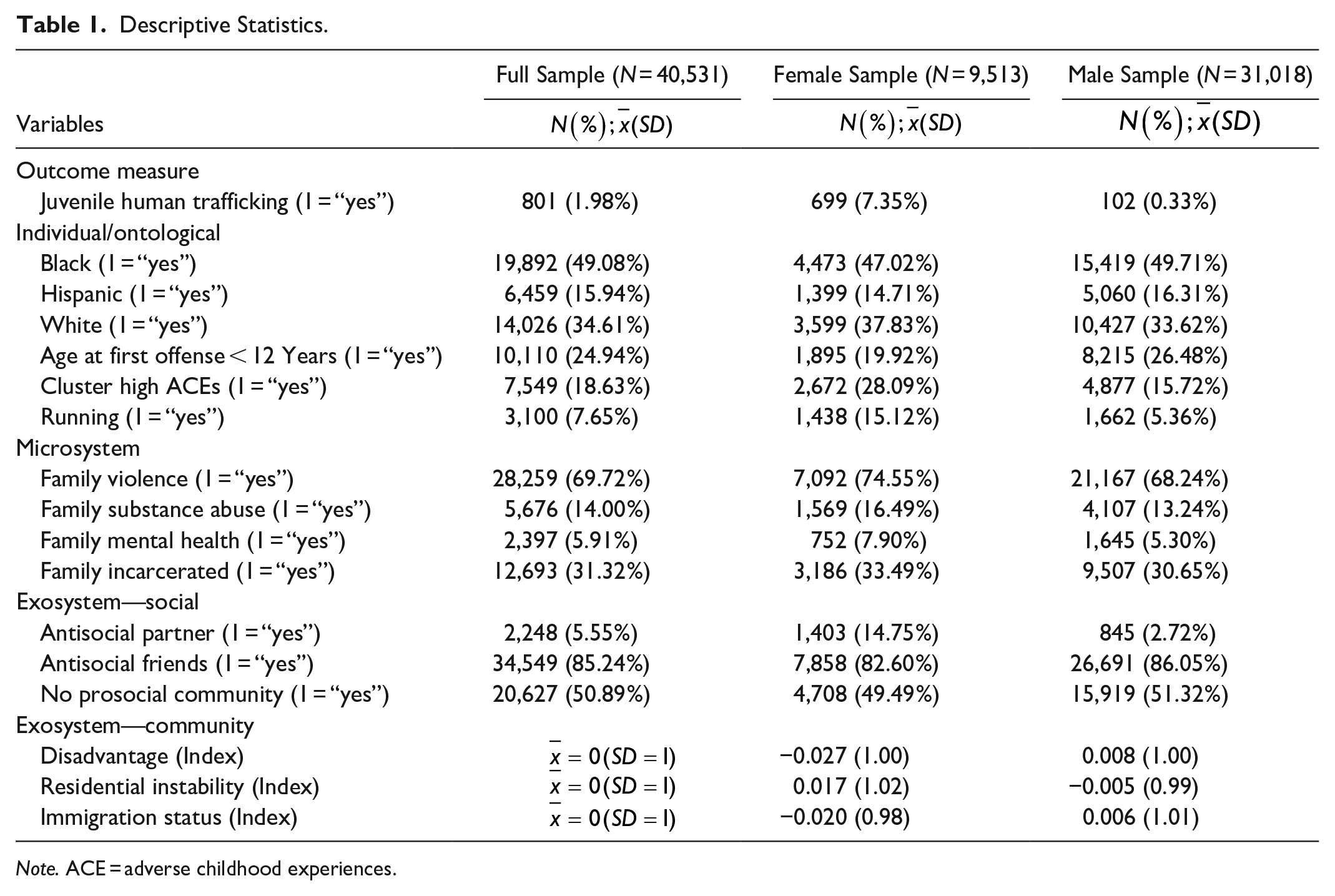
Note. ACE = adverse childhood experiences.
Additionally, youth were grouped into two clusters representing whether they had experienced childhood adversities, including emotional abuse, emotional neglect, physical abuse, physical neglect, sexual abuse, and a general history of violence. We preferred adverse childhood experience (ACE) clusters instead of separate ACE covariates because including the latter would introduce bias due to correlating variables and an unnecessary reduction of the degrees of freedom. A K-Means clustering algorithm, which identifies similarities between sample observations instead of variables like other dimensionality reduction techniques such as factor analyses do (James et al., 2013), was used to group youth into clusters that had strong within-group similarity and strong between-group dissimilarity. Two clusters most optimally represented the variance within the data (57.6 %), indicating the extent to which youth experienced ACEs. A variable named “Cluster High ACEs” indicates if a youth falls into a cluster of youth who had experienced ACEs to a relatively high degree (1 = “Yes”; see Table 2). In addition, we controlled for whether or not a youth had run away five or more times (1 = “Yes”) because of extant literature indicating the importance of running away as a risk factor for juvenile human trafficking (e.g., Franchino-Olsen, 2021). Substance use could either be a risk factor or a consequence of juvenile human trafficking (see, for overviews, Choi, 2015; Franchino-Olsen, 2021; Reid & Piquero, 2014b). Therefore, alcohol and drug use were excluded as potential risk factors because the study data did not provide information on the timing of youth substance use relative to their exploitation in human trafficking.
Results from a K-Means Clustering Algorithm: Proportion of Youths with Individual-Level ACEs within Each Cluster.
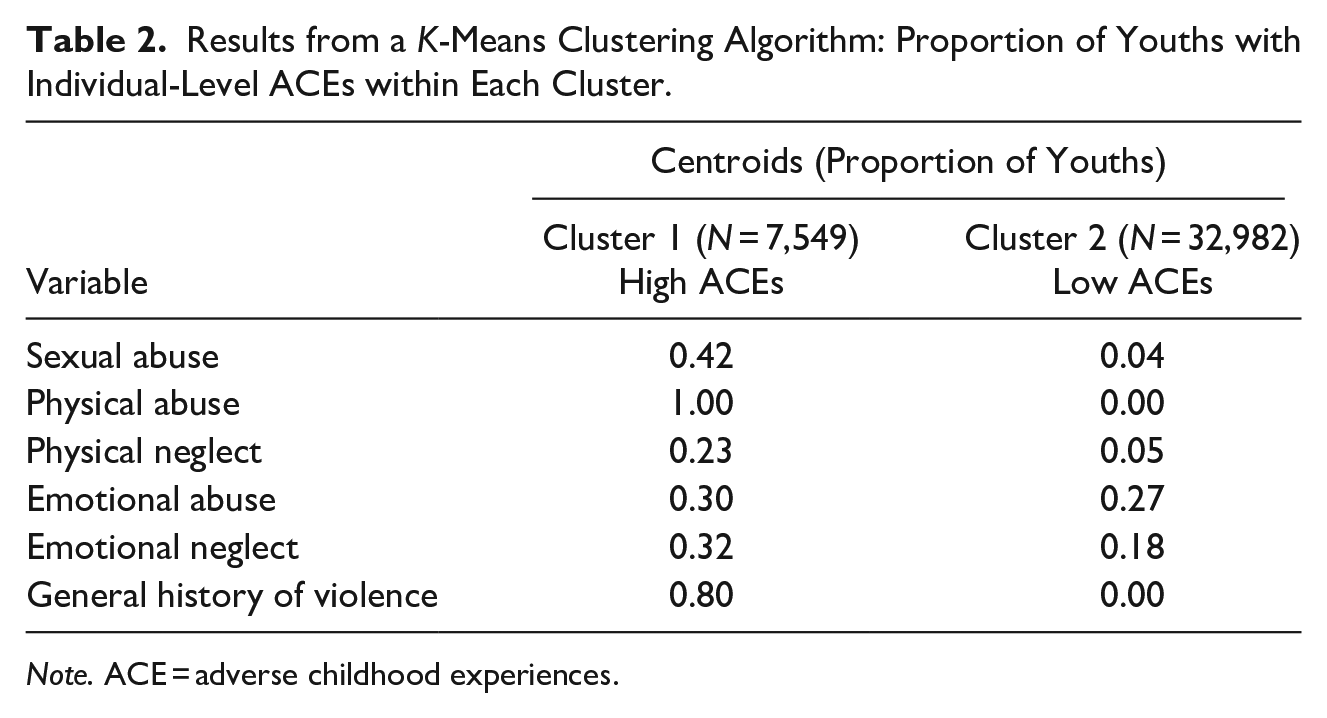
Note. ACE = adverse childhood experiences.
Second, we assessed childhood adversities concerning the family context (i.e., the microsystem): History of family violence (1 = “Yes”); History of substance abuse within the household (1 = “Yes”); History of mental health concerns within the household (1 = “Yes”); and History of incarcerated family member (1 = “Yes”).
Third, we included four novel variables representing relationships that may expose youth to human trafficking risk within their social networks (i.e., the exosystem). These variables measure whether (1 = “Yes”) youth had (a) a romantic relationship with an antisocial partner; (b) at least some antisocial friends such as gang affiliates or friends involved in delinquency; and (c) no prosocial community ties or no positive adult relationships.
Fourth, we examined community-level socioeconomic vulnerabilities using three indices commonly used in contextual research on crime and victimization (Sampson et al., 1997; Turanovic, 2022): (a) Concentrated Disadvantage, based on the proportions of the population with an income below the poverty line, being unemployed, without a high school diploma, with public assistance, in addition to median family income (reversed and logged) and female-headed households (as a percentage of all households) (Cronbach’s alpha = .824; 95% CI [0.820, 0.828]); (b) Residential Instability, based on the proportion of the population with a different house in the U.S. one year ago and proportion renter-occupied housing (Cronbach’s alpha = .676; 95% CI [0.669, 0.683]; and (c) Immigrant Status, based on the proportions of the population being foreign-born and speaking English “Less than very well” (Cronbach’s alpha = .954; 95% CI [0.953, 0.956]). The three indices were created via principal component analysis with orthogonal rotation.
Statistical Analysis
To examine the relevance of risk factors, we applied logistic regression analyses. We conducted these analyses in two different ways to address the imbalance between a marginal proportion of youth with investigations of juvenile human trafficking victimization versus many youth without human trafficking victimization. First, we used exact matching techniques through the MatchIt package in R (Ho et al., 2011) to match every person with reported juvenile human trafficking victimization to two people without human trafficking victimization reports but with the same sex, race/ethnicity, age at first delinquency referral, judicial circuit and reporting year (see also Reid et al., 2019). This resulted in a total sample of 2,403 youth. Logistic regression analyses were performed using the full matched sample and for female and male youth separately to examine risk factor differences by sex. An alternative method of including interactions with each covariate and sex was not preferred because youth were matched by sex, and it would challenge identifying how covariates operate differently by sex (see for a similar strategy Lauritsen & Carbone-Lopez, 2011). Standard errors were clustered by census tracts where youth resided. Multilevel analyses were not preferred because tracts often only had a few youths, causing too little between-tract variance to justify multilevel analyses.
Second, sensitivity analyses examined covariates—including demographic variables—for juvenile human trafficking using multiple randomized and equally-sized control groups. We matched the 801 youth with investigations of juvenile human trafficking victimization to 50 randomly constructed control groups of youth without human trafficking victimization. To assess whether results hold for all control groups, we ran 50 separate logistic regression analyses for each control group using specification curve analyses with the specr package in R (Masur & Scharkow, 2019). We conducted these analyses by sex. Multicollinearity was not an issue in any of the above models with overall Variance Inflation Factor (VIF) scores lower than two.
Results
Analyses Using a Matched Control Group
Table 3 presents the results from our main analyses using a matched control group for trafficked youth. Adjusted Odds Ratios were interpreted as the change in odds of human trafficking victimization associated with a one-unit change in the independent variable, holding other factors constant. In line with previous literature, youth who experienced ACEs to a relatively high degree were nearly 1.5 times more likely to have been the subject of a juvenile human trafficking victimization investigation than youth who experienced fewer ACEs (b = 0.34; p < .01; aOR = 1.40), although the effect was stronger for male youth (b = 0.99; p < .01; aOR = 2.69) than for female youth (b = 0.26; p < .05; aOR = 1.30). Furthermore, running away frequently was a strong risk factor for both males and females, increasing the odds of human trafficking victimization by at least four times (b = 1.47; p < .001; aOR = 4.36). Among the family-level factors, having experienced or witnessed family violence significantly increased the risk of human trafficking compared to youth for whom this was not the case, but only among female youth (b = 0.47; p < .01; aOR = 1.60).
Results from Logistic Regression Analyses (Matched Control Group).
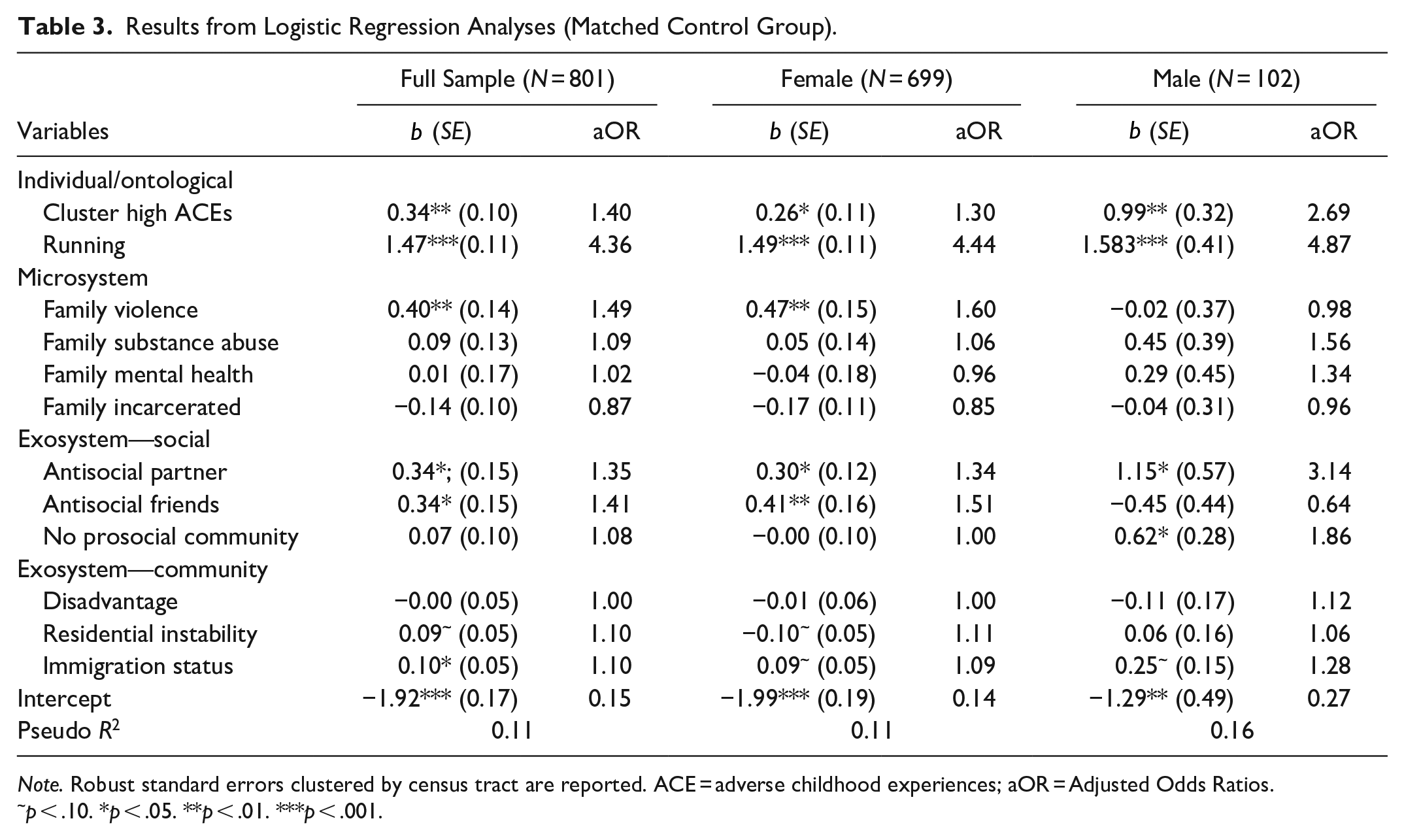
Note. Robust standard errors clustered by census tract are reported. ACE = adverse childhood experiences; aOR = Adjusted Odds Ratios.
p < .10. *p < .05. **p < .01. ***p < .001.
Our findings move beyond the previous literature by illuminating new correlates within the exosystem: Several factors were associated with an increased risk of human trafficking victimization. Youth in antisocial romantic relationships were at least 1.3 times more likely to have been the subject of a juvenile human trafficking victimization investigation compared to youth without an antisocial partner (b = 0.34; p < .05; aOR = 1.35), although sensitivity analyses (discussed below) suggest having an antisocial partner was a risk factor for female youth only. For female youth, having antisocial friends was an additional significant risk factor, which increased their odds of human trafficking victimization by 1.5 times (b = 0.41; p < .05; aOR = 1.51). For male youth, not having a prosocial community increased their risk of human trafficking victimization by 1.9 times (b = 0.62; p < .05; aOR = 1.86), although this finding is not supported by our sensitivity analyses (discussed below). Our analyses show little evidence of community-level risk factors, apart from a potential vulnerability effect from residing within a community where a greater proportion of the population is foreign-born and speaks English less than very well.
Sensitivity Analyses Using Multiple Randomized Control Groups
Sensitivity curve analyses were used to examine whether the results hold when using randomized control groups. The curve plots in Figure 1 demonstrate the coefficient estimates (y-axis) and the associated confidence intervals from the logistic regression analyses using each sample with a different control group as input data (x-axis). Table 4 presents the findings from the models with the best goodness of fit indices, here the lowest Akaike Information Criteria. Consistent with the main analyses, these analyses confirm that an increased risk of sexual exploitation was associated with experiencing ACEs (especially among male youth), running away frequently, witnessing family violence (only for female youth), being in an antisocial romantic relationship, and having antisocial friends (only for female youth). However, in contrast with the main analyses, these analyses do not support the absence of a prosocial community as a risk factor for male youth and added a significant association between tracts with a greater number of people with a potential immigration status and having a human trafficking victimization report for female youth.
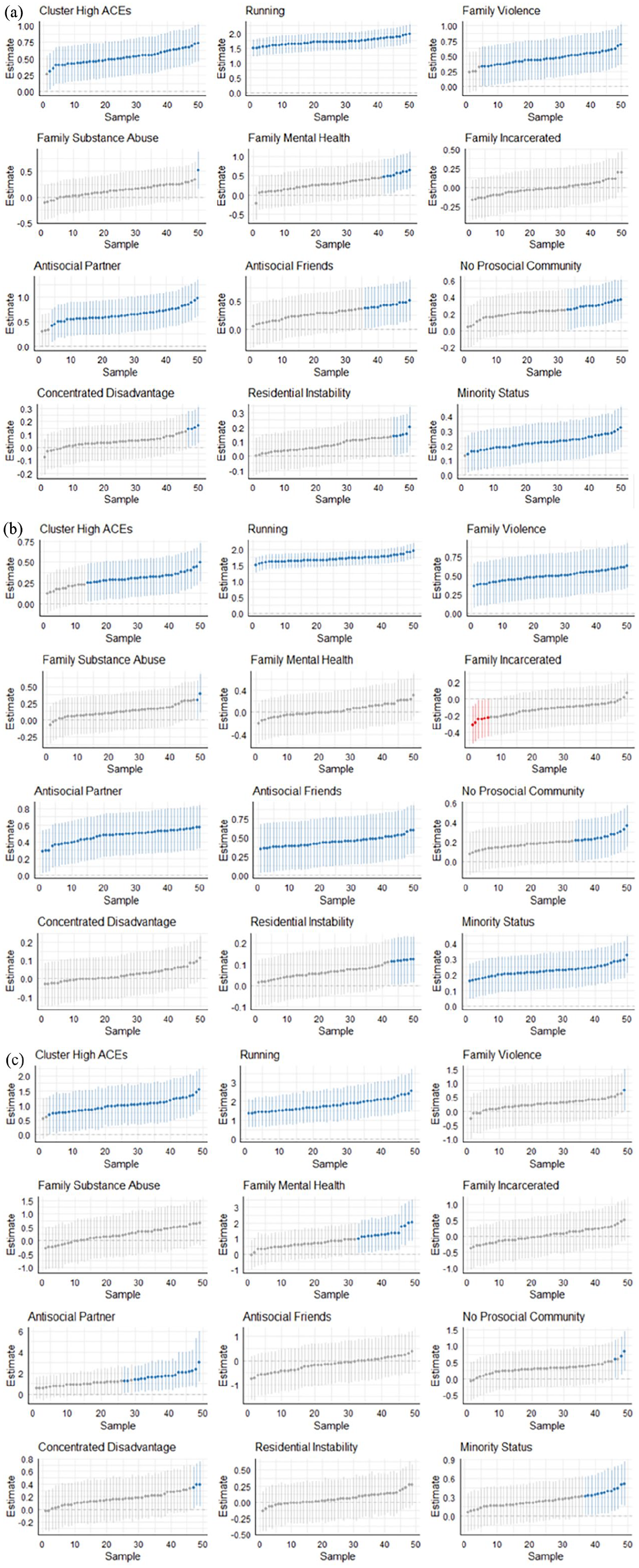
(a) Results from specification curve analyses (full sample). (b) Results from specification curve analyses (female sample). (c) Results from Specification Curve Analyses (Male Sample).
Results from Specification Curve Analyses Model with Optimal Goodness-of-Fit-Indices.
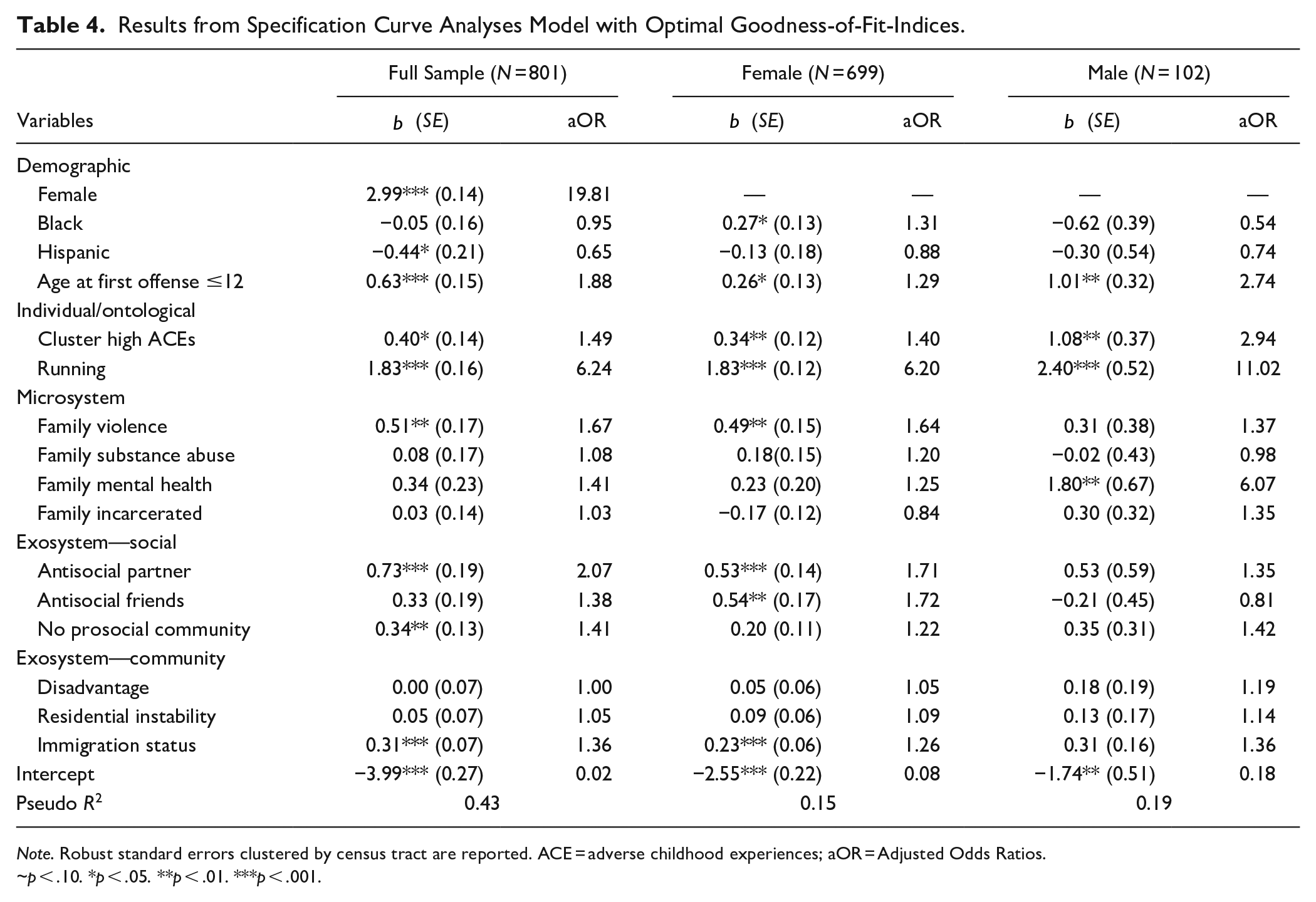
Note. Robust standard errors clustered by census tract are reported. ACE = adverse childhood experiences; aOR = Adjusted Odds Ratios.
~p < .10. *p < .05. **p < .01. ***p < .001.
Discussion
Our findings demonstrate important individual and contextual risk factors of human trafficking victimization and highlight differences in observed risk for female and male youth. In line with the extant literature on human trafficking victimization, heightened ACE exposures and frequent running away increased risk of juvenile human trafficking. These factors may increase victimization risk through reduced resiliency or continued exposure to unsafe settings (Chohaney, 2016; Choi, 2015; de Vries & Goggin, 2020; Fedina et al., 2019; Franchino-Olsen, 2021; Laird et al., 2020). As also noted by Reid et al. (2017), our findings demonstrate that these individual-level risk characteristics are particularly important for male youth. Alternatively, the stronger effect among males may be explained by heightened ACE exposures of a greater proportion of all females entering the juvenile justice system, not only those with human trafficking victimization (Baglivio et al., 2014).
A key finding of our study concerns the risk of human trafficking victimization due to the micro- and exosystems around youth, as our findings suggest that especially female youth may be at heightened risk to juvenile human trafficking due to exposure to violence and delinquency within their social networks. More specifically, female youth who had witnessed family violence had an antisocial partner or had antisocial friends were more likely to be trafficked than system-involved youth without these types of connections. The importance of witnessing or experiencing family violence is in line with previous literature on human trafficking victimization, suggesting that these and other family dysfunctions may create unstable settings for young people, decreasing their resiliency to future victimization or increasing their likelihood to engage in potentially harmful contexts outside of the family setting (see, for systematic reviews, Choi, 2015; Franchino-Olsen, 2021). Although not previously examined in quantitative work on juvenile human trafficking, previous victimization studies demonstrate that having delinquent peers can increase victimization risk, especially when a person is embedded in a network with many delinquent youth (see, for a literature review, Turanovic, 2022). Delinquent peer groups can entrap individuals in unsafe settings where violent behaviors may be targeted at them (Schreck & Fisher, 2004; Schreck et al., 2004; Turanovic, 2022), which has also been found for gendered types of violence, such as sexual victimization (Stogner et al., 2014).
Surprisingly, we did not find a social network effect for male youth. The broader literature on crime offers conflicting guidance for how the social context differentially matters for male versus female youth. For example, previous literature has suggested that romantic relationships with others who engage in crime increased the risk of offending for both males and females, but the influence was greater on females (e.g., Simons et al., 2002). While it is important to stress that offending versus victimization can have different risk factors, the observed influence of antisocial relationships on offending among female youth may also explain this study’s finding regarding a greater risk of human trafficking victimization compared to female youth who were not involved in these types of relationships. However, this contradicts other literature suggesting that peer relations with offenders exert a greater influence on male offending (Griffin & Armstrong, 2003). A plausible explanation for the importance of antisocial relationships among trafficked female youth may be found in the literature calling attention to recruitment and grooming practices between female trafficked youth (e.g., Reed et al., 2019), specifically suggesting that connections with peers who were trafficked before can be the impetus for recruitment into trafficking. Future research should consider how victimization risk spreads through social networks (e.g., because victims recruit each other or because they have the same trafficker) and which types of relationships matter (e.g., peers involved in general crime versus peers involved in commercial sex).
While our study exposes risk of juvenile human trafficking within the social domain, a few limitations may temper the conclusions resulting from the findings. First, risk of human trafficking among male youth is still poorly understood as we did not find convincing social network or neighborhood effects explaining their pathways into victimization. Further research on the vulnerability among males is needed. Importantly, research specific to LGBTQ+ youth (about whom we did not have any information given that gender identities were unknown for our sample) is needed to advance more comprehensive understanding of victimization risks.
Second, it remains largely unclear which structural neighborhood factors are associated with human trafficking victimization. Although our analyses do not support neighborhood-level factors such as concentrated disadvantage to be important risk factors of juvenile human trafficking, the general literature within criminology broadly agrees that neighborhood characteristics affect offending opportunities and motivations (Sampson, 2006, 2012) and can constitute structural antecedents for victimization (see Turanovic, 2022). More generally, neighborhood safety and supporting community environments contribute to youth development and resilience (Sattler & Font, 2018; Yoon et al., 2021).
The overall absence of significant risk factors pertaining to neighborhoods in our study may need to be interpreted against the background of the particularities of our sample, which concerns justice-involved youth who disproportionately resided in marginalized areas with fewer resources, regardless of whether they had human trafficking reports. In other words, for this specific sample, neighborhood contexts do not seem to differentiate between youth with and without human trafficking reports.
Third, it is important to note that we did not examine correlates for human trafficking victimization within the final layer of the socio-ecological model, the macrosystem. Doing so would require different data on factors that comprise this system, such as public attitudes or changes in human trafficking laws and policy. Moreover, linking macro-level factors to individual-level victimization risks is a notably challenging task due to many factors that may be at play at macro level and the difficulty to link these to individual-level victimization risks. Doing so would require extreme caution even in the most rigorous research designs.
Notwithstanding the limitations and avenues for further research, our results advance on previous understandings of risk of human trafficking victimization by considering the role of the socio-ecological context in increasing risk of human trafficking victimization among young people, specifically highlighting family violence and delinquent peer associations as important risk factors. As has been extensively described in previous literature, identifying which factors increase risk of juvenile human trafficking is crucial for targeted and effective prevention, identification, and treatment programs that recognize previous trauma and social context. To prevent, identify, and respond to juvenile human trafficking, our work encourages engaging social relationships in awareness, identification, and reintegration programs, especially for child health professionals and others who regularly interact with young people.
Footnotes
Acknowledgements
The authors are grateful for comments received by the audience at the yearly conference of the American Society of Criminology in November 2022.
Declaration of Conflicting Interests
The author(s) declared no potential conflicts of interests with respect to the authorship and/or publication of this article.
Funding
The author(s) received no financial support for the research and/or authorship of this article.
