




Abstract
Policing domestic violence (DV) poses significant challenges in China due to cultural, legal, and organizational complexities. Policing DV in China favors mediation over assertive interventions, complicating law enforcement’s role. While previous research has focused on coercive interventions by Chinese police, there is limited information on non-coercive, supportive approaches. This study investigates the relationship between police officers’ knowledge and training regarding the Anti-DV law and their willingness to provide supportive services to DV victims in China. It also considers various individual and organizational factors. The data used in this study are derived from the Policing DV in China project, with a sample of 1,353 respondents who had experience dealing with DV cases within the past 3 years. The study focuses on three dependent variables representing supportive approaches to DV cases: Referral, Counseling, and Protection orders. Independent variables include officers’ knowledge of the Anti-DV law and agency training. Control variables include the use of body-worn cameras (BWC) and attitudes toward Violence Tolerance, Male Dominance, and Gender Equality. Additionally, demographic variables, working environment, length of service, and police rank are considered. The analytical approach involves a three-step strategy, incorporating descriptive, bivariate analyses, and regression analyses. The results are interpreted using odds ratios and average marginal effects, and statistical software such as SPSS by IBM and R by Open-Source Model is utilized for data analysis. Key findings indicate that more than half of the officers referred intimate partner violence survivors to shelters and assisted victims in filing protection orders. Counseling practices varied across provinces and between male and female officers. Agency training and the use of BWC were positively associated with non-coercive and supportive approaches, while knowledge of the DV Act, male dominance score, and gender equality score did not predict the use of such approaches. Demographic characteristics, including police rank, length of service, and province of employment, influenced the utilization of non-coercive and supportive approaches. This study examines the challenges faced by Chinese police officers when responding to DV cases and their willingness to provide supportive interventions. The study highlights the complexities surrounding the initiation of protection orders due to officers’ legal knowledge and discretion. The study emphasizes the importance of police support in addressing DV in China and the role of agency training in promoting non-coercive responses. It highlights regional variations in police support and underscores the need for addressing disparities in service provision across different provinces.
Keywords
Introduction
In recent years, domestic violence (DV) in China has received significant public attention, largely driven by the exposure of previously hidden partner abuse through social media channels (Allen, 2019; Li, Liu et al., 2021; Liu et al., 2018; Xue et al., 2018). The highly publicized case of Lhamo, a vlogger who was set on fire and killed by her ex-husband during a live stream in 2020, ignited public outrage against DV, the underlying hegemonic masculinity, and raised questions about the perceived effectiveness of Chinese police (Zhou, 2020). Despite Lhamo having reported incidents of bone fractures inflicted by her husband to the police, no preventive actions were taken, raising concerns about the adequacy of the police response. This subpar police response stands in stark contrast to the government’s official stance against DV, exemplified by the passage of anti-DV legislation in 2015 (Sun et al., 2022). While this new legislation offers promise for improved protection of victims’ rights and safety (Wang, 2017), scholars remain skeptical about its efficacy, partly due to the enduring influence of traditional patriarchal values that emphasize male dominance and control over female partners, coupled with limited government and police responsiveness (Jiang, 2019; Lin et al., 2021; Michelson, 2019).
Policing DV in China presents a complex challenge, influenced by a multitude of legal, cultural, and organizational factors that extend beyond the state’s intentions to combat violence. Traditional Chinese culture places a high emphasis on mediation as the preferred approach over more assertive interventions, such as making arrests, when dealing with DV cases (Sun et al., 2011). Regrettably, the police seldom prioritize these incidents (Zhao et al., 2018). Mediation processes that involve family members, friends, neighbors, and locally organized community-based committees have long been the preferred means of resolving DV issues and continue to hold a central position as a “preventative” measure within the new anti-DV legislation (Palmer, 2017). Even when the police are called to the scene and encounter an injured victim, they are frequently instructed by their superiors to facilitate the mediation of “disputes” among family members instead of opting for arrests (Han, 2017). While the new anti-DV law provides a foundation for addressing DV, specific police practices, such as the use of BWC and non-coercive measures, may vary across regions and are influenced by local policies and discretion.
While previous studies have extensively explored the coercive interventions employed by Chinese police in DV cases, such as arrest, detention, and issuing written warnings (Lin et al., 2021; Sun et al., 2022; Wang et al., 2019; Zhao et al., 2018), there has been a noticeable gap in research concerning non-coercive or supportive interventions, particularly in terms of the emotional and psychological support offered by officers to DV victims, with the aim of enhancing their compliance and satisfaction. Given the general reluctance of Chinese law enforcement to arrest DV offenders and the prevailing preference within Chinese society to keep DV incidents private (Lin et al., 2016), discreet yet supportive services such as counseling, referral programs, and protection orders take on critical importance. Referral to support services, such as shelters or women’s federations is viewed as a supportive mechanism to empower victims to make informed choices about their future while ensuring their safety (Hu, Xue, Wang et al., 2020; Hu, Xue, Lin et al., 2020). In the context of Chinese culture, where seeking emotional support can be stigmatized, counseling provides an essential avenue for individuals to address their psychological well-being (Hu, Xue, Wang et al., 2020; Hu, Xue, Lin et al., 2020; Xue, Fang et al., 2019). It empowers survivors by helping them cope with trauma and develop strategies for managing stress and anxiety. In the Chinese context, protection orders are considered supportive measures as police officers do not have unilateral authority to issue protection orders and they facilitate the process by connecting victims with the legal system. It is the victim’s choice to seek this legal remedy with the assistance of police officers. These interventions play a pivotal role in bolstering police legitimacy and enhancing the well-being of DV victims, as they can effectively alleviate the suffering caused by DV without necessitating immediate and sweeping cultural changes within both the police force and the broader public. However, the existing body of literature on supportive police services for DV victims is limited in scope and predominantly focused on Western countries (Goodson et al., 2020; Stalans & Finn, 1995, 2000). Consequently, there is an imperative need for further research aimed at exploring the pertinent factors that influence police officers’ attitudes toward providing supportive services to DV victims.
The primary objective of this study is to delve into a relatively unexplored area within the existing DV literature, which is the willingness of Chinese police officers to offer support to DV victims. Our focus is on evaluating officers’ attitudes toward services such as counseling, referral programs, and protection order services, which are in alignment with the Chinese police’s preference for employing informal or less coercive approaches to mediate interpersonal conflicts. Furthermore, we seek to investigate the relationship between officers’ knowledge and training regarding China’s Anti-DV Law and their willingness to provide supportive services to DV victims. Recent studies have uncovered a weak connection between officers’ knowledge and training in the law and their engagement in coercive
(1) What is the extent of officers’ willingness to engage in services such as counseling, referral programs, and protection order services for DV victims?
(2) Is there a relationship between officers’ knowledge and training in the Anti-DV law and their inclination to provide support to DV victims?
Our findings not only shed light on the correlation between police knowledge and training and the adoption of non-coercive strategies in managing DV cases but also carry significant implications for policy development in this domain.
Literature Review
Domestic Violence in China
DV is a prevalent social issue in China, akin to many developed Western nations. National survey data suggests that the lifetime prevalence of DV within the general population in China varies, with reported rates ranging from 17.4% to 24.5% for psychological violence, 2.5% to 5.5% for physical violence, and 0.3% to 1.7% for sexual violence (Xue, Cui et al., 2019; Yang et al., 2019). Several well-established risk factors for DV identified in Western literature, such as social and economic strains, substance use, and gender role ideology, have also been shown to be significant predictors of a higher risk of both perpetration and victimization of DV in China (e.g., Chan et al., 2008; Lin et al., 2018; Tu & Lou, 2017; Xu et al., 2005).
In particular, deeply ingrained cultural norms emphasizing male superiority and dominance, rooted in China’s imperial history, exert a particularly pernicious influence on DV. Historically, violence against both women and children found a troubling legitimacy in ancient China due to the markedly inferior position ascribed to women and children within the highly patriarchal structure of imperial Chinese society (Tang et al., 2002). Numerous studies conducted in China and around the world have consistently affirmed that the endorsement of male dominance and the perpetuation of inequitable gender roles are closely linked to men’s perpetration of intimate partner violence (IPV) and women’s experiences of such violence, particularly physical and sexual abuse (Abramsky et al., 2011; Ali et al., 2011; Allen & Devitt, 2012; Fanslow et al., 2010; Fulu et al., 2013; Hu et al., 2019; Nabors & Jasinski, 2009; Nagae & Dancy, 2010; Shen et al., 2012; Xu et al., 2005; Yick, 2000). This endorsement of male dominance and gender inequality tends to heighten men’s inclination and readiness to accept various rape myths, thereby increasing the likelihood of perpetrating physical and sexual violence against women (Adams-Curtis & Forbes, 2004; Eckhardt et al., 2012; Forbes & Adams-Curtis, 2001; Golden et al., 2013; Lee et al., 2005, 2010; Xue & Lin, 2022; Schwartz et al., 2012).
Previous research has also highlighted that the acceptance of male dominance and gender inequality significantly contributes to women’s willingness to endure violence, irrespective of demographic and geographic factors(Allen & Devitt, 2012; García-Moreno et al., 2005; Nguyen et al., 2013). This includes the perception of DV incidents as private matters (Ali et al., 2011). Comparative studies, such as those conducted by Lin et al. (2016) and Sun et al. (2011), have further revealed that traditional gender roles and male dominance ideologies are more widely embraced and exert a more central influence on shaping pro-violence attitudes in China compared to their impact in Western contexts. The ideology of male dominance predicts beliefs that rationalize DV against women (Li et al., 2017) and fosters attitudes that favor nonintervention by the police (Sun et al., 2011). Consequently, an officer’s endorsement of traditional gender ideology may play a pivotal role in determining whether and how they choose to intervene in cases of DV.
Policing DV in China
Policing DV in China diverges notably from practices in Western countries, where forceful police interventions are more prevalent (Sun et al., 2020). Traditionally, DV incidents in China have been addressed through informal mediation, involving family members, employers, and quasi-governmental organizations like the All Women’s Federation, village councils, and neighborhood committees. In contrast, Western nations commonly rely on legislative measures and punitive actions when dealing with DV offenders. For instance, in the United States, all 50 states have laws that empower police officers to make warrantless arrests when probable cause is present (Zeoli et al., 2011). Between 2006 and 2015, U.S. police arrested offenders during their initial response in 23% of nonfatal DV victimizations (Reaves, 2017). Similarly, the United Kingdom exhibits a high rate of punitive actions against DV, with an arrest rate of 45 arrests per 100 domestic abuse-related offenses in England and Wales in the 12 months leading up to June 30th, 2017 (HMICFRS, 2019). During the period from April 2017 to March 2018, a suspect was charged in 70.3% of domestic abuse cases (Elkin, 2018).
In response to the increasing demand for more effective interventions to protect victims and hold perpetrators accountable, China’s National People’s Congress enacted the Anti-DV Law in December 2015. This significant legislation officially came into effect on March 1, 2016, marking the inception of China’s first legal definition of DV. Under the provisions of the Anti-DV Law, police officers are granted the authority to take appropriate measures in response to reported DV incidents. While the law encompasses a spectrum of police interventions, ranging from less punitive approaches like mediation and separation to the issuance of written warnings and the application of criminal sanctions (Sun et al., 2022), it does not mandate the automatic arrest of perpetrators. Consequently, police officers often continue to rely on less punitive measures, including verbal and written warnings, in their responses to DV cases.
The preference among Chinese police officers for less punitive and reactive interventions when addressing DV cannot be attributed to a lack of legal authority or mandates. In fact, Chinese police possess the legal authority to administer administrative sanctions for minor offenses, including DV, in the form of short-term detentions of up to 15 days, without requiring judicial review. Despite having the power to impose administrative sanctions, Chinese law enforcement agencies infrequently resort to public disorder penalties and criminal charges against DV perpetrators. For example, in the city of Shenzhen, between April 2016 and January 2018, the police handled 8,990 cases of DV. Among these cases, only 3.1% of offenders received written warnings, 0.5% were subjected to public disorder sanctions, and a mere 0.3% faced criminal charges (Chen et al., 2018). Despite the enactment of the Anti-DV Law in 2015, mediation remains a predominant approach to resolving DV incidents for Chinese police, accounting for 43.6% (n = 3,919) of all DV cases handled by the Shenzhen police (Chen et al., 2018).
Despite the implementation of the Anti-DV Law, recent studies suggest that there has been little to no discernible change in Chinese police officers’ attitudes and behaviors regarding DV intervention. Rather than adopting a more proactive stance, officers continue to exhibit a predominantly passive approach to law enforcement interventions following the enactment of this legislation. Findings from studies conducted after the law’s implementation indicate that officers are still inclined to rely on verbal or written warnings instead of opting for arrests in hypothetical scenarios (Lin et al., 2021; Sun et al., 2022; Wang et al., 2019; Zhao et al., 2018). Furthermore, a study conducted on Chinese police cadets revealed no significant correlation was found between their knowledge of the Anti-DV Law and their attitudes toward dating violence (Qu et al., 2018).
While the passive approach of Chinese police in handling DV has faced criticism for potentially endangering DV victims (Jiang, 2019), it is worth noting that the overly aggressive approach of arresting and incarcerating DV offenders in countries like the U.S. and the U.K. has also drawn widespread criticism (e.g., Hoyle & Sanders, 2000; Sherman, 2018). Critics argue that there is limited evidence to suggest that arrest effectively deters DV recidivism, and in fact, the life expectancy of women whose husbands were arrested for DV has been reported to be lower than that of those whose abusive husbands were not arrested (Sherman, 2018). In other words, arrest does not necessarily contribute to the long-term well-being of the victim. Therefore, it is imperative to explore other dimensions of DV policing beyond formal sanctions, such as arrest and warning, to gain a comprehensive understanding of the effectiveness of police involvement. In China, the comparatively less punitive approach to DV theoretically leaves room for less aggressive DV interventions that could provide more support to DV victims. However, it remains an empirical question whether this is the case in the actual policing of DV in China.
Knowledge, Training, and Police DV Interventions
Numerous studies have delved into the multitude of individual, situational, and organizational factors that shape how police officers respond to DV cases. In this study, we place a particular focus on investigating the influence of two specific factors on Chinese officers’ responses to DV: their familiarity with the knowledge and training in the Anti-DV Law. One effective means of enhancing officers’ comprehension of DV-related policies and legislation is through their participation in academy and in-service training programs. Drawing upon Bandura’s (1971) social learning theory, we recognize that officers can acquire knowledge and skills by observing, modeling, and emulating the attitudes and behaviors of their peers, supervisors, and colleagues. Training opportunities serve as invaluable platforms for equipping officers with the requisite knowledge and skills about the management of DV incidents, thereby potentially increasing their willingness to employ a spectrum of both control and supportive interventions.
Research conducted in the United States has demonstrated a positive correlation between DV training and the rate of DV calls resulting in arrests across various law enforcement agencies (Johnson, 2010; Johnson & Dai, 2016). Similarly, in India, training has proven effective in enhancing the knowledge and dispute-resolution techniques of female police officers, particularly in the context of family conflicts (Natarajan, 2006). In China, where the legal mandate for the mandatory arrest of DV offenders is not unequivocally established, the discretion of individual officers and the organizational characteristics of their units may wield significant influence over the police response to DV incidents. Given the paramilitary structure of the Chinese police and the historically centralized leadership structure (Sun & Wu, 2010), training may play an even more pronounced role in shaping officers’ attitudes and behaviors. However, earlier research in China has suggested that officers who have received more training in mediation and DV were more inclined to employ control actions, such as making arrests, in DV cases (Sun, 2007).
Supportive Services in Policing DV
Referring DV victims to social work and mental health services has become an integral component of police work in many Western countries, including the United States, where it has been a standard police response since the 1980s (Maxwell et al., 2020). However, research indicates that, in practice, the referral of DV victims to various social services by the police remains relatively infrequent. For instance, Kernic and Bonomi (2007) found that less than one-fifth of police requests were made for crisis intervention services. In another study, it was revealed that only about two-fifths of police officers had contacted local shelters (Jones & Belknap, 1999). Nevertheless, a more recent study involving officers from an urban police department (Goodson et al., 2020) indicated that officers are relatively more familiar with available services and are more likely to provide service referrals, indicating some improvement as compared to the past situation.
Numerous studies have undertaken investigations into the various factors that influence police officers’ decisions to make service referrals in DV cases. For instance, research has explored whether factors such as officer gender, experience, and situational factors play a role in their likelihood of making service referrals (Stalans & Finn, 1995, 2000). These studies have revealed several key findings, including that female officers were significantly more inclined to provide information about shelter referrals. Additionally, the presence of victim injuries increased the probability of referral. Female officers with at least 1 year of experience in handling DV cases were also more likely to offer shelter referrals when compared to their male counterparts in similar situations. Furthermore, a recent study conducted in the United States, which surveyed officers from an urban police department, demonstrated that knowledge of available services and positive perceptions of victim advocates contributed to an increased frequency of service referrals to victims (Goodson et al., 2020). However, it is important to note that the existing literature on police referral of DV victims is limited and, in many cases, outdated. This underscores the need for further research in this area to gain a more comprehensive understanding of the factors influencing police referrals in contemporary contexts.
Police officers possess the capacity to provide a broad spectrum of services to DV victims that extend well beyond the act of referring them to social services. Specifically, individuals from marginalized communities, including low-income individuals, immigrants, and those residing in rural areas, may find themselves in need of guidance when it comes to navigating the intricate bureaucratic paperwork and comprehending their legal rights within the framework of the criminal justice system (Hawkins, 2010; Logan & Walker, 2011). Despite ongoing efforts aimed at streamlining the bureaucratic procedures through technology (National Center for State Courts, 2011), women who have limited educational backgrounds and those hailing from immigrant backgrounds may still encounter formidable obstacles. These hurdles often arise from the complex legal terminology used in the processes and their limited familiarity with modern technology. In instances such as these, police officers can assume an indispensable role in mitigating these multifaceted challenges. They can act as facilitators in the intricate journey of obtaining protective orders for DV victims.
The Current Study
This study aims to investigate the relationship between Chinese police officers’ knowledge and training of the Anti-DV Law and their attitudes toward providing supportive services to DV victims. While research on police supportive actions for DV victims is limited, existing studies have largely focused on Western countries. There is a dearth of research on the supportive services provided by police to DV victims in non-Western developing countries, such as China. Therefore, this study fills a significant gap in the literature by examining the factors that influence Chinese police officers’ provision of supportive services to DV victims, including organizational and situational factors. The study tests two hypotheses:
H1: There is a positive relationship between officers’ knowledge of the Anti-DV Law and their willingness to make referrals, render counseling, and help victims with protection order applications.
H2: There is a positive relationship between officers’ training in DV and their preference for making referrals, rendering counseling, and helping victims with protection order applications.
Methodology
Data
For this study, we used survey data from the 2019 Policing DV in China project. This multi-province study aimed to investigate Chinese police officers’ attitudes toward providing supportive services when dealing with DV cases. The project was initiated by researchers from Canada, China, and the United States. The survey instrument comprised 70 questions designed to evaluate officers’ knowledge and training of the Anti-DV Law, their experience, and attitudes toward law enforcement interventions in DV. Demographic characteristics were also collected. The data used in this study were collected from the Chinese provinces of Jiangsu, Henan, Hubei, and Hunan, during the period from June to October 2019. These provinces were selected as research sites due to their geographical and economic differences, as well as their reputation for being more progressive in police responses to DV (Sun et al., 2022). The research team had established relationships with local officials in these provinces who assisted with data collection and served as on-site coordinators. To ensure high participation rates and obtain reliable data, the research team used a traditional paper-and-pencil approach for data collection, resulting in a response rate of 90%. This method was selected as police officers may be distrustful of online surveys from individuals they do not personally know, leading to lower response rates and potentially biased data.
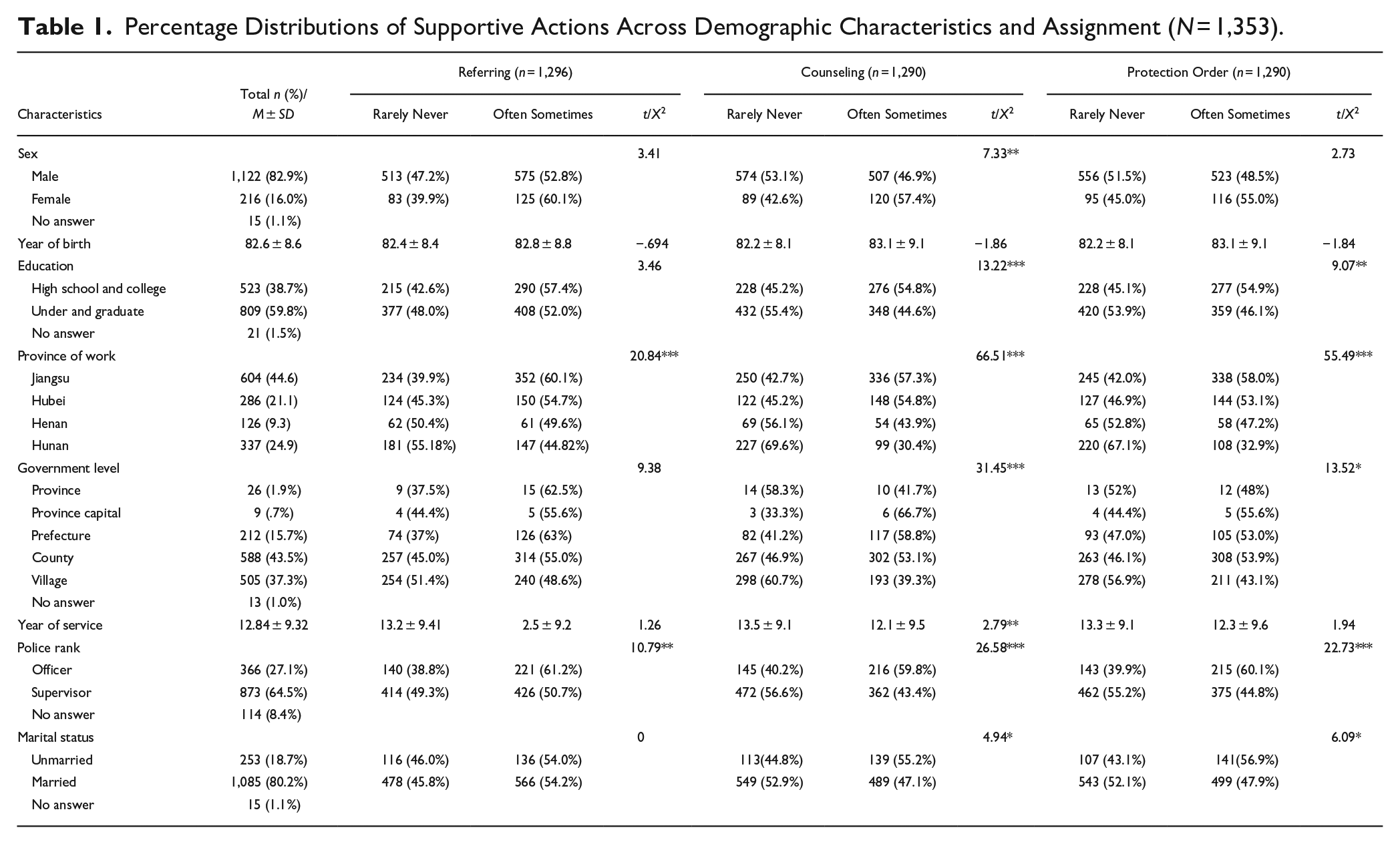
The sample for this study comprised 1,353 respondents who had been involved in DV cases over the past 3 years, categorized as “Very Often,” “Sometime,” “Rarely,” or “Never.” Within this sample, 82.9% were male officers, with an average age of 37.4 years. Approximately 60% of the participants held a bachelor’s degree or higher, and nearly 45% of them were from Jiangsu province. A quarter of the officers were employed in Hunan, followed by 21.1% in Hubei, and 9.3% in Henan. In terms of their police department affiliation, the majority of participants worked in county-level departments (43.5%) or village-level departments (37.3%), while 16% were stationed in prefecture-level cities. On average, the participants had served in the police force for 12.84 years. Front-line police officers constituted 27.1% of the participants, whereas 64.5% held supervisory positions at various ranks. The majority of respondents (80.2%) were married. For a comprehensive overview of the demographic characteristics of the respondents, please refer to Table 1.
Percentage Distributions of Supportive Actions Across Demographic Characteristics and Assignment (N = 1,353).
Dependent Variables
The dependent variables in this study were three ordinal measures that represented commonly used police supportive approaches when dealing with DV cases. These measures were:
(1) Referral (i.e., “I refer battered women 1 to battered women shelters, All Women’s Federation or DV service centers.”)
(2) Counseling (i.e., “I refer offenders who batter to counseling.”)
(3) Protection orders (i.e., “I assist victims in filing protection orders.”).
Participants were asked to rate the frequency of their use of these noncoercive approaches on a scale ranging from “never” (coded as 1) to “rarely” (coded as 2), “sometime” (coded as 3), and “very often” (coded as 4). For analysis purposes, each of the three dependent variables was recoded into dummy variables, where “never” and “rarely” were recoded as 0, and “sometime” and “very often” were recoded as 1.
The fourth dependent variable was an overall or global scale of supportive approaches, constructed by adding and averaging three ordinal dependent variables of Referral, Counseling, and Protection orders. Exploratory Factor Analysis using Principal Component Analysis and varimax rotation revealed that these three types of approaches loaded on one factor with 80% of variance explained and an eigenvalue of 2.4.
Independent Variables
Knowledge of the Anti-DV Law
We asked participants about their level of knowledge regarding the Anti-DV Law. Response options ranged from “Never heard about it” (coded as 1) to “Know it very well” (coded as 4).
Agency Training
Officers were asked about whether they had received any training related to the Anti-DV Law in the past 3 years. The response categories included 0 (indicating “Never”), “1–4 hours of training,” “5–8 hours training,” “1–3 days training,” and “more than 3 days training.”
Control Variables
Body-worn Cameras
Participants were asked about how frequently they used BWC when dealing with DV cases. The original responses included “often (coded as 1),” “sometimes (coded as 2),” “rarely (coded as 3),” and “never (coded as 4).” These responses were recoded into dummy variables: “never” and “rarely” were recoded as 0, while “some time” and “very often” were recoded as 1.
Attitudinal Variables
The survey instrument included several attitudinal variables reflecting the attitudes of police officers, including Violence Tolerance, Male Dominance, and Gender Equality.
(1) Violence Tolerance was constructed as an additive scale, indicating participants’ degree of agreement with six statements. Responses were rated on a scale from “strongly disagree” (coded as 1) to “disagree” (coded as 2), “agree” (coded as 3), and “strongly agree” (coded as 4). The Cronbach’s alpha reliability coefficient was .801. A higher score on this scale represents a greater tolerance for violence. The six items in this scale included statements (a) Violence is justified if a partner insults, (b) Battering is not grounds for a divorce, (c) Violence is justified if a partner cheats/commits adultery physically or psychologically, (d) Society should expect couples occasionally have minor physical fights, (e) A husband may beat his wife if she is unreasonable and starts the argument/fight first, (f) Abused women tend to be those who fail to fulfill a wife’s responsibilities.
(2) Male Dominance was a four-item scale that reflected participants’ attitudes toward statements related to male dominance. Responses were rated on a scale from “strongly disagree” (coded as 1) to “disagree” (coded as 2), “agree” (coded as 3), and “strongly agree” (coded as 4). The Cronbach’s alpha reliability coefficient for this scale was .697. A higher value indicates greater support for male dominance. The items in this scale included statements: (a) A father should have more authority than a mother when bringing up children, (b) There are many jobs in which men should be given preference over women, (c) A woman should not expect to go to the same places or have the same freedom as a man, (d) Sons in a family should be encouraged more than daughters to go to college.
(3) Gender Equality was constructed based on three statements related to gender equality. Responses were rated on a scale from “strongly disagree” (coded as 1) to “disagree” (coded as 2), “agree” (coded as 3), and “strongly agree” (coded as 4). The Cronbach’s alpha reliability coefficient was .737. Higher scores on this scale indicate stronger agreement with statements promoting gender equality. The items in this scale included statements: (a) Discrimination against women is no longer a problem in China, (b) Society has reached the point where women and men have equal opportunities for achievement, (c) It is difficult to understand why women’s groups are still concerned about societal limitations of women’s opportunities.
Demographic Variables
Gender, education attainment, and marital status were coded as dummy variables, with one representing female, college-educated officers, and married officers.
Working environment variables include two variables, Province and Unit levels (Police Department Levels). A series of dummy variables were constructed to represent the four provinces, Jiangsu, Hubei, Henan, and Hunan, with Jiangsu as the reference group in regression analysis. Similarly, five dummy variables were measured to represent the five different levels of police department: provincial police department, provincial capital department, prefecture-level cities department, counties police department, and village police department. The first group, the provincial police department, served as the reference group for regression analysis.
The Length of Service and Police Rank Variables
The length of service is measured in years, representing the number of years an officer has served in the police force. Police rank is represented as a dummy variable, with 0 indicating supervisors and 1 indicating officers.
Analytic Strategy
The analytical strategy for this study involved three main steps: A descriptive analysis was conducted to provide an overview of the percentage distributions of all supportive actions and sample characteristics. This included calculating measures such as mean and standard deviation for the relevant variables. The results of this descriptive analysis were summarized in Table 1.
Bivariate analyses were performed to explore the relationships between each of the sample characteristics and the three types of noncoercive/supportive approaches (Referral, Counseling, and Protection order). Additionally, the multicollinearity of the variables was checked. Multicollinearity refers to the condition in which two or more independent variables in a regression analysis are highly correlated, making it difficult to isolate the individual effects of each variable. Chi-square tests and t-tests were used to identify any significant correlations between these characteristics and the supportive approaches. The significant findings from these analyses were also reported in Table 1.
Regression analyses included a binary logistic regression analysis that examined the adjusted associations between the predictor variables and the dependent variables of Referral, Counseling, and Protection order; and a logistic regression analysis that examined the effects of the combined supportive action scale on knowledge and training while controlling for other predictors. This analysis allowed for a deeper understanding of how the overall supportive actions of police officers were related to their knowledge and training regarding the Anti-DV Law.
The interpretation of the results in this study involved the use of adjusted odds ratio and average marginal effect (AME). These measures help in understanding the relationships between independent and dependent variables in logistic regression analysis. The adjusted odds ratio is a statistic that quantifies the strength and direction of the association between an independent variable and the odds of an outcome occurring. An odds ratio greater than 1.00 indicates a positive association, meaning that an increase in the independent variable is associated with an increase in the odds of the dependent variable (Xue, Cui et al., 2019). The AME is a measure that predicts the percentage point difference in the outcome with other predictors or covariates averaged across the population (Chai & Maroto, 2019). For instance, if the AME for the combined supportive action scale is calculated as +5%, it means that, on average, an increase in the level of supportive actions is associated with a 5% increase in the probability of having better knowledge and training outcomes, considering the effects of other variables in the model. For statistical analysis, we used SPSS 16.0 by IBM and Software R version 3.6.1. by Open-Source Model.
Results
Attitudes and Behaviors of Police Officers Regarding Supportive Services in DV Cases
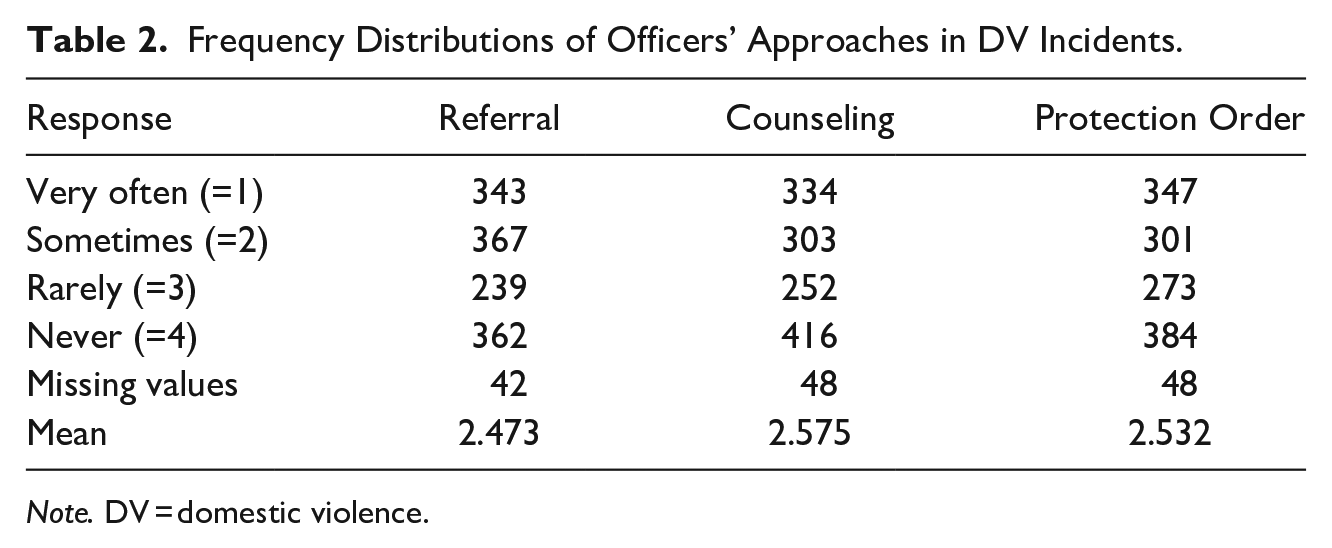
Table 2 showed the frequency distributions of police officers’ attitudes toward three types of supportive services when dealing with DV. Approximately 52.48% of the sampled police officers reported that they “sometimes” or “very often” referred survivors of IPV to shelters, All Women’s Federation, or DV service centers. For the aspect of referring offenders who perpetrate DV to counseling services, approximately 47.08% of the participants reported that they “sometimes” or “very often” engaged in this supportive action. Approximately 47.89% of the participants stated that they often or sometimes assisted victims in filing protection orders against the perpetrators.
Frequency Distributions of Officers’ Approaches in DV Incidents.
Note. DV = domestic violence.
Variations in Supportive Services Among Police Officers Across Demographic Groups and Geographic Regions
The study found significant differences in the referral practices of police officers across four provinces (Jiangsu, Hubei, Henan, and Hunan) in relation to three types of noncoercive and supportive counseling approaches. The study revealed that there were variations in the frequency of police officers referring victims to shelters based on their geographical location (province). Specifically, over half of the police officers in Jiangsu and Hubei reported frequently referring victims to shelters. Additionally, the study found that there were significant differences in referral practices based on the rank of police officers. Low-rank officers were more likely to refer victims to shelters compared to their supervisor counterparts. This difference in behavior was statistically significant (p < .001).
We identified several statistically significant differences in the frequency distribution of counseling practices and assistance with filing protection orders among different demographic groups of police officers, including gender differences, education level, regional differences, and rank and marital status. Female officers reported higher rates of referring offenders to counseling compared to male officers (46.9% vs. 57.4%, χ2 = 7.33, p < .01). Respondents with a bachelor’s degree or higher reported lower rates of referring offenders to counseling compared to those with an education level lower than college (p < .001). Similarly, individuals with a bachelor’s degree or higher reported lower rates of assisting victims with filing protection orders compared to those with an education level lower than college (Protection Order, p < .01). More than half of the police officers in Jiangsu and Hubei frequently referred offenders to counseling. Police officers working in provincial capitals, prefecture-level cities, and counties were more likely to refer offenders to counseling (p < .001). More than half of the police officers in Jiangsu and Hubei frequently referred offenders to counseling. Officers working in provincial capitals, prefecture-level cities, and counties were more likely to refer offenders to counseling (p < .001). More police officers in Jiangsu and Hubei frequently assisted victims in filing protection orders, whereas fewer officers in Henan and Hunan provided such assistance (p < .001). Police officers working in provincial capitals, prefecture-level cities, and counties were more likely to assist victims in filing protection orders (p < .001). Low-ranking officers were more inclined to refer offenders to counseling compared to supervisors (p < .001). Respondents who were married reported lower rates of counseling compared to single police officers (p < .05). Low-ranking officers were also more likely to assist victims in filing protection orders compared to supervisors (p < .001). Respondents who were married reported a lower rate of assisting victims in filing protection orders (p < .05).
Regression Results: Factors Influencing Referral, Counseling, and Protection Orders in DV Cases Among Police Officers
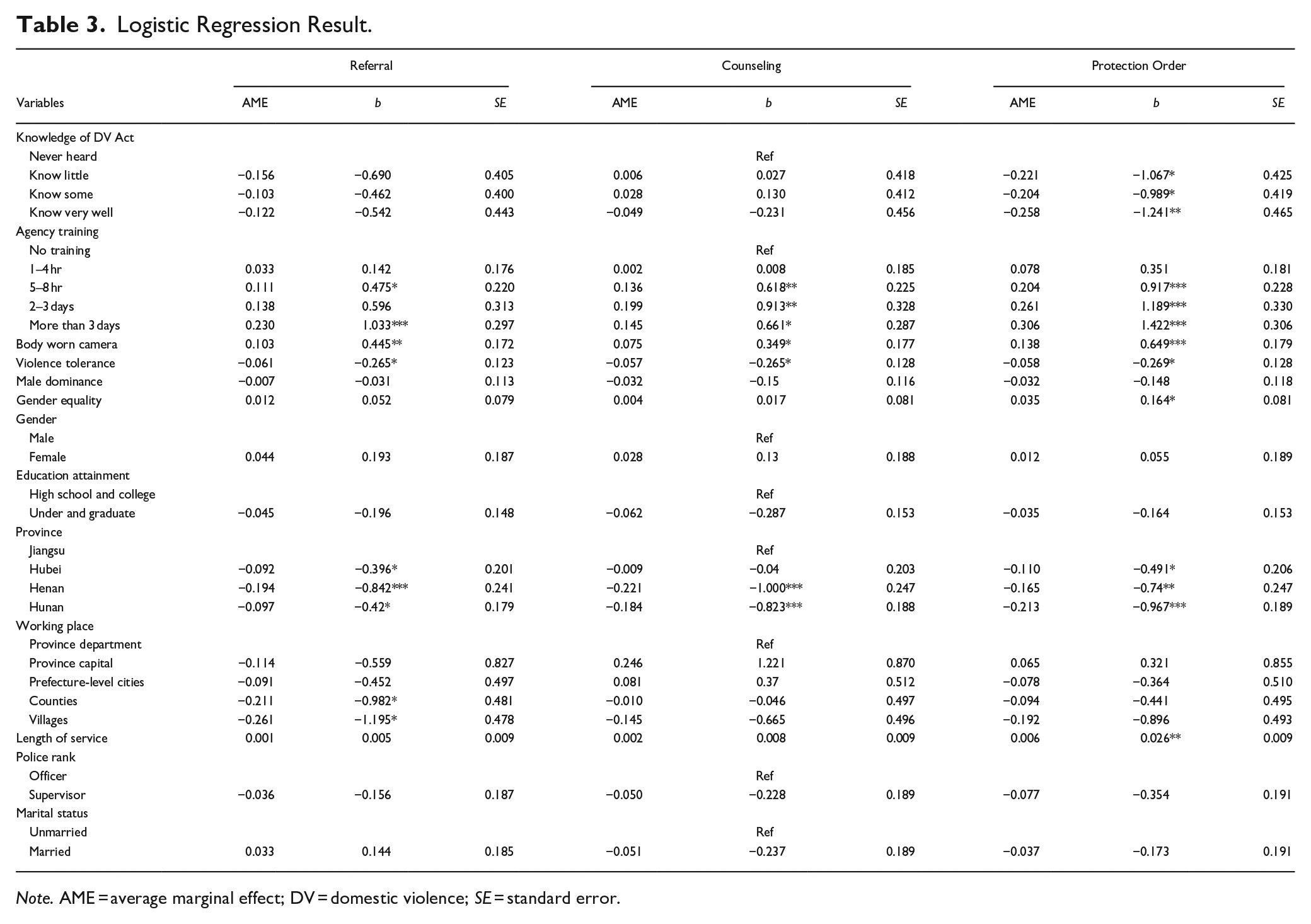
The regression results for the three identical regression models on referral, counseling, and protection orders were reported in Table 3. We found key findings from the referral model. Knowledge of the DV Act was not found to be significantly related to whether or not police officers referred victims of DV to shelters (Referral). Agency training had a significant effect on Referral. Specifically, receiving 5 to 8 hr of agency training increased the probability of Referral by 11.1% (p < .05), and receiving over 3 days of agency training increased the probability of Referral by 23.0% (p < .001). However, receiving 1–4 hr of training or 2 to 3 days of training did not have a significant effect on Referral. Officers who frequently used BWC were 10.3% more likely to refer victims to shelters (p < .01). An additional one point in the Violence Tolerance Score decreased the probability of Referral by 6.3 percentage points. Male Dominance Score and Gender Equality Score were not found to be related to Referral. Compared to Jiangsu Police, Hubei police, Henan police, and Hunan police were 9.2% (p < .05), 19.4% (p < .001), and 9.7% (p < .05) less likely to refer victims to shelters, respectively. Compared to provincial department police, officers working in counties and villages were 21.1% and 26.1% less likely to refer victims to shelters compared to provincial department police (p < .05). Demographic factors such as gender, education attainment, length of service, police rank, and marital status were not found to be significantly related to referral practices in this model.
Logistic Regression Result.
Note. AME = average marginal effect; DV = domestic violence; SE = standard error.
From the counseling model, knowledge of the DV Act was not statistically associated with counseling practices. Agency training had a significant impact on Counseling. Specifically, controlling for all other variables, receiving 5 to 8 hr of agency training significantly increased the probability of Counseling by 13.6% (p < .01). Receiving 2 to 3 days of agency training significantly increased the probability of Counseling by 19.9% (p < .01). Receiving over 3 days of agency training significantly increased the probability of Counseling by 14.5% (p < .05). Receiving 1 to 4 hr of training did not have a significant effect on Counseling. Officers who frequently used BWC were 7.5% more likely to engage in counseling (p < .05). A one-unit increase in the Violence Tolerance Score decreased the probability of counseling by 5.7 percentage points. Male Dominance Score and Gender Equality Score were found to have little impact on Counseling. Officers working in Henan and Hunan were 22.1% (p < .001) and 18.4% (p < .001) less likely to refer offenders to counseling, respectively, compared to Jiangsu Police. Gender, length of service, police rank, and marital status were not found to be significantly related to counseling practices in this model.
In the protection orders model, knowledge of the DV Act was negatively related to police officers assisting victims with protection orders. Police who had some knowledge or knew very well about the DV Act were less likely to help victims apply for protection orders. Specifically, police who knew little about the DV Act were 22.1% less likely to assist victims with protection orders. Police who had some knowledge of the DV Act were 20.4% less likely to assist victims with protection orders. Police who knew very well about the DV Act were 25.8% less likely to assist victims with protection orders compared to those who had never heard about the DV Act. Agency training had a positive impact on Protection Orders. Controlling for all other variables, receiving 5 to 8 hr of agency training significantly increased the probability of Protection Orders by 20.4% (p < .001). Receiving 2 to 3 days of agency training significantly increased the probability of Protection Orders by 26.1% (p < .001). Receiving over 3 days of agency training significantly increased the probability of Protection Orders by 30.6% (p < .001). Police officers who frequently used BWC were 13.8% more likely to assist victims with Protection Orders (p < .001). A one-unit increase in the Violence Tolerance Score decreased the probability of Protection Orders by 5.8 percentage points (p < .05). A one-unit increase in the Gender Equality Score increased the probability of Protection Orders by 3.5 percentage points. Compared to Jiangsu Police, officers working in Hubei, Henan, and Hunan are 11.0 (p < .05), 16.5 (p < .01) and 21.3 (p < .001) percent points less likely to assist victims with Protection Orders. An additional service year increased the probability of the Protection Order by 6 percentage points (p < .01). Demographic factors such as gender, police rank, and marital status were not found to be significantly related to protection order assistance practices in this model.
Factors Affecting the Use of Overall Noncoercive/Supportive Approaches by Police Officers
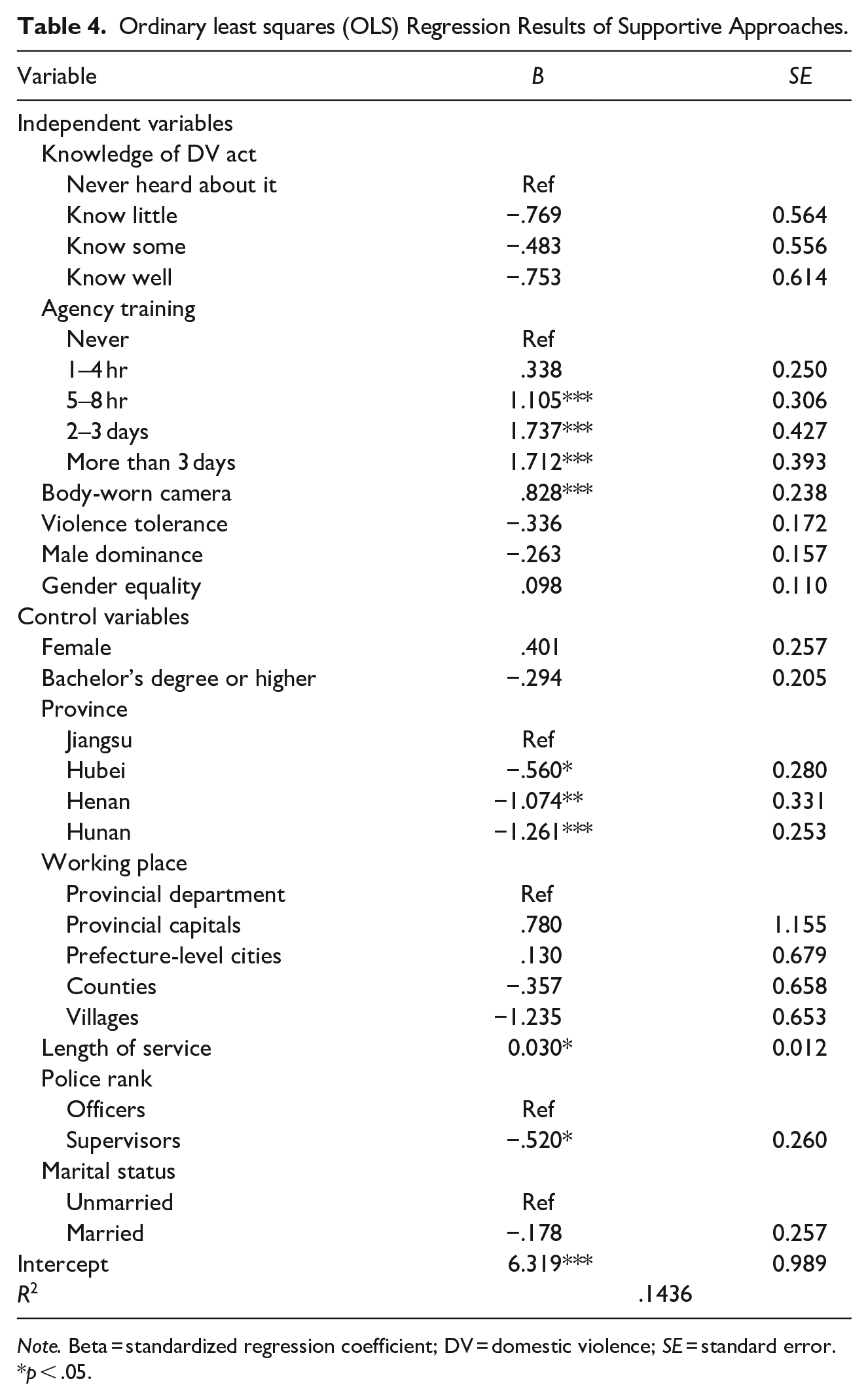
Shown in Table 4, the results from the multivariate linear regression analysis for the dependent variable “overall noncoercive or supportive approaches” reveal the following findings. Overall, agency training and the use of body-worn digital cameras are significant factors positively associated with the use of noncoercive and/or supportive approaches by Chinese police officers when dealing with DV cases. Agency training is significantly associated with a higher frequency of using noncoercive and/or supportive approaches when dealing with DV cases. Compared to police officers without any agency training in the DV Act, those who received 5 to 8 hr (B = 1.105, p < .001), 2 to 3 days (B = 1.737, p < .001) and more than 3 days (B = 1.712, p < .001) of agency training were more likely to use noncoercive and/or supportive approaches. Officers who frequently used body-worn digital cameras were 0.828 times more likely to use noncoercive and/or supportive approaches (p < .001). While the Violence Tolerance Score was significant in predicting Referral, Counseling, and Protection Order at the 5% level, it appears to be insignificant in predicting the use of noncoercive and/or supportive approaches (p = .0505), which is slightly greater than .05. However, the authors suggest that this insignificance may be due to the small size of the dataset and data deviation. Knowledge of the DV Act, male dominance score, and gender equality score did not show a significant impact on this aspect of police response.
Ordinary least squares (OLS) Regression Results of Supportive Approaches.
Note. Beta = standardized regression coefficient; DV = domestic violence; SE = standard error.
p < .05.
Regarding the demographic characteristics’ impact on supportive approaches, police officers working in Hubei (B = −0.560, p < .05), Henan (B = −1.074, p < .01), and Hunan (B = −1.261, p < .001) are less likely to use supportive approaches compared to those in Jiangsu when dealing with DV cases. High-rank supervisors were less likely to use supportive approaches compared to low-rank officers (B = −0.520, p < .05). Longer length of service was positively associated with a slightly higher frequency of using supportive approaches (B = 0.030, p < .05).
Discussion
The study findings provide valuable insights into the challenges and complexities faced by Chinese police officers when responding to DV cases and their willingness to provide supportive interventions. Specifically, this study examines three distinct supportive measures that police officers can take when responding to DV cases in China. These measures include referring abused women to support services (e.g., shelters, women’s federations, or DV assistance centers) which are essential for helping victims escape abusive situations. Additionally, the study explores the practice of referring DV abusers to psychological counseling, which is another important component of addressing DV. Lastly, the research assesses the role of police officers in assisting DV victims in filing for protection orders, a legal measure aimed at safeguarding victims from further abuse. To provide a comprehensive understanding, the study also examines the overall supportive approaches by aggregating and averaging these three measures. We have found several key factors influencing police officers’ willingness to take these different measures, including Knowledge of the anti-DV law, agency training, BWC, regional variations, police rank, and length of service.
Complexities in Police Assistance with Protection Orders: The Impact of Legal Knowledge and Implementation Challenges
The complexities surrounding police assistance with protection orders in DV cases are noteworthy, particularly regarding the impact of legal knowledge and implementation challenges. It is important to highlight that this phenomenon does not extend to supportive intervention referral and counseling, or the overall non-coercive approaches. The inverse relationship between officers’ familiarity with the Anti-DV Law and their inclination to assist victims in filing for protection orders highlights the intricate nature of DV cases and the discretion left to officers. In essence, the more knowledgeable officers become about the Anti-DV Law, the less likely they are to actively facilitate the application for a protection order. Although this finding appears to run counter to our initial hypothesis, it can be ascribed to the ambiguous nature of the law’s stipulations concerning an officer’s obligation to initiate protection orders and the high standard of proof entailed in seeking such an order (Han, 2017; Jiang, 2019).
This discretionary aspect creates ambiguity, as officers may interpret the law differently, and there may not be clear guidelines on when and how to file a protection order. In China, the Anti-DV Law refrains from imposing a mandatory requirement on the police to instigate protection orders and allows police officers to determine whether or not to initiate a protection order based on their discretion. It affords officers the option to do so as a means of assisting individuals with specific needs, such as those categorized as “without or with limited capacity for civil conduct” (including minors) or individuals unable to apply for a personal safety protection order due to coercion, intimidation (instigated by the abuser), or other related factors (as delineated by the Anti-DV Law of the People’s Republic of China, n.d.). This lack of explicit guidance can lead to hesitancy among officers, particularly those who are well-versed in the law and acutely aware of the rigorous prerequisites for filing a protection order. Consequently, the decision to initiate a protection order in practice remains firmly within the purview of individual officers and does not constitute a binding legal mandate. Given the absence of a statutory obligation, officers may opt to forgo the additional administrative intricacies associated with the initiation of a protection order, aiming to conserve time and effort in addressing the pressing issue of DV.
Furthermore, the process of applying for a protection order introduces intricate complexities into police work, as highlighted by previous research (Han, 2017; Jiang, 2019; Zhou, 2022). Victims often grapple with uncertainties when considering the pursuit of a protection order, and their requests may lack clarity, which in turn contributes to officers’ reluctance to offer assistance, as noted in prior studies (Han, 2017). Additionally, officers frequently encounter the arduous task of identifying and gathering admissible evidence that substantiates the occurrence of DV or establishes that the victim is genuinely “at actual risk of DV,” as mandated by the law (Gao, 2024). This responsibility necessitates additional efforts on the part of the police, including the need to educate and persuade the victim to initiate the process of obtaining a protection order, a challenge underscored by prior research (Han, 2017; Jiang, 2019; Zhou, 2022).
Furthermore, the enforcement of protection orders has long been recognized as a formidable challenge, primarily due to the limited resources available to local courts for executing such orders (Han, 2017). Consequently, the police frequently find themselves compelled to provide supplementary support in the implementation of these orders, bolstering the enforcement capabilities of the judiciary, as articulated in prior research (Jiang, 2019). When juxtaposed with a comprehensive understanding of the Anti-DV Law, these multifaceted implementation challenges may lead officers to exercise caution and deliberation in pursuing protection orders on behalf of victims.
Recent legal developments have taken significant strides in addressing the stringent standard of proof required for DV victims. In the year 2022, the Chinese Supreme Court issued a series of legal documents with the primary objective of providing clarity regarding the prerequisites for obtaining a protection order, with the overarching goal of reducing the evidentiary threshold (Zhou, 2022). These legal documents have effectively lowered the standard of proof necessary for establishing both the occurrence of DV and the level of “actual risk” faced by victims. Presently, evidence that indicates a “greater likelihood” of DV taking place or that demonstrates the “actual risk” experienced by victims is considered sufficient grounds for the issuance of a protection order (Zhou, 2022, p. 163). This alteration in legal standards is expected to lead to an increase in the number of protection orders granted by the courts and may potentially streamline the process for police officers in assisting DV victims in obtaining these orders. To gage the impact of these legal changes on the willingness of officers to assist victims in securing protection orders, future research endeavors should explore whether these recent legal modifications have influenced officers’ disposition toward aiding victims in obtaining protection orders that can provide valuable insights into the evolving dynamics of DV intervention by law enforcement agencies in China.
The Positive Influence of Agency Training on Police Supportive Approaches to DV
In alignment with Hypothesis 2, our findings underscore the positive impact of agency training on the Anti-DV Law regarding the three distinct police-supportive approaches to DV. These results hold both when examining each approach individually and when considering them collectively. The Anti-DV Law in China places a significant emphasis on a range of extralegal measures aimed at diversifying assistance for DV victims. These include collaborative government initiatives to provide shelters for injured victims in shelters or relief and welfare institutions, as well as offering psychological counseling for offenders (Anti-DV Law of the People’s Republic of China, n.d.).The agency’s training on the Anti-DV Law plays a pivotal role in increasing officers’ awareness of the critical importance of shelter referrals, psychological counseling, and the filing of protection orders as effective measures to aid DV victims. These approaches might not have been foremost in officers’ minds prior to receiving this training. Consequently, this educational component serves to reduce officers’ reliance on punitive measures when addressing DV issues, consistent with prior research findings (Sun et al., 2022). It is worth noting that agency trainings typically take place at the local level. This localized aspect enables the inclusion of relevant and essential contact information for shelter services and psychological counseling resources, thus streamlining officers’ ability to employ supportive measures effectively when dealing with DV cases.
Factors Influencing Police Supportive Interventions in DV Cases
Several variables were found to play a significant role in shaping police-supportive interventions in DV cases. The activation of BWC, officers’ tolerance for DV, their perception of gender equality, the characteristics of their police workplace, and the length of their service all had noteworthy effects. It is worth noting that police officers serve as representatives of the government, and the utilization of BWC may lead officers to exhibit a more compassionate and protective image when dealing with families impacted by DV. This could potentially account for the observed rise in supportive police actions in these situations.
DV Tolerance and Gender Equality
It is reasonable to anticipate that officers with a higher tolerance for DV may be less inclined to engage in the three supportive measures for DV, while those officers who strongly value gender equality may be more motivated to assist in filing a protection order for the victim. This alignment with our findings is consistent with the understanding that DV exacerbates the vulnerability of victims, which is rooted in gender inequality (Li, Liu et al., 2021; Li, Sun et al., 2021). Officers who acknowledge that abused women should have equal rights and access to resources as their male counterparts may recognize the need for external assistance and legal support to counterbalance this inequality and empower women trapped in abusive relationships. A protection order, recognized by courts as evidence of DV, can result in a divorce ruling that aids victims in escaping the abuser and reclaiming their freedom (Han, 2017; Jiang, 2019). Therefore, officers who prioritize gender equality may perceive a protection order as a crucial means of support for victims, thereby increasing their willingness to assist in obtaining such orders. Our study aligns with previous literature that has identified the detrimental effects of DV tolerance and perceptions of gender equality on police attitudes and interventions in DV cases (Lin et al., 2021; Sun et al., 2022; Wu et al., 2020). In conjunction with prior research, our findings underscore the importance of addressing officers’ tolerance for DV and their perceptions of gender equality to promote police service-oriented interventions in DV cases. Future police reforms could incorporate a curriculum aimed at changing officers’ attitudes toward DV, effectively reducing their tolerance for DV and increasing their awareness of gender issues. This approach can lead to improvements in both legal and supportive police interventions in DV situations.
Working Environment Disparities
The disparities in the working environment are a notable aspect examined in this study, with a focus on both the province and unit levels (police department levels). Officers stationed in counties and villages were less likely to refer victims to supportive services compared to their counterparts in provincial departments, primarily because counties and villages often lack adequate shelter facilities and relief institutions, along with the financial and professional resources needed to establish such victim-assisting services. Consequently, officers in county and village areas face greater challenges when it comes to referring victims to shelter services due to limited resources. Additionally, officers’ longer service tenure may contribute to their ability to successfully assist victims in filing protection orders, potentially through the development of local networks within the criminal justice system, which they have nurtured over the years.
Significant regional disparities were evident in the provision of police-supportive measures for DV. Officers in Jiangsu, a province located on the southeast coast, demonstrated a higher likelihood of providing services such as referral, counseling, and assistance in filing for protection orders compared to their counterparts in Hunan, Hubei, and Henan, which are three inland provinces. Notably, Jiangsu enjoys a wealth of DV support resources, including shelter services and relief institutions, and boasts a stronger economy compared to the other three provinces, which are located inland and have fewer resources dedicated to DV support (Li, Liu et al., 2021; Li, Sun et al., 2021). This regional variation in assisting DV victims underscores the necessity of providing additional training and resources to provinces with less robust police-supportive responses to DV, including Hunan, Hubei, and Henan.
Limitations
The study has certain limitations. Firstly, we lacked detailed information about the content and quality of the agency’s training, which may have influenced police responses to DV. While our study revealed that the duration of agency training on the Anti-DV law can increase the likelihood of police providing supportive and non-coercive responses in DV incidents, we did not assess how the curriculum and content of this training might vary across different regions in China and their specific effects on police responses to DV. Prior research has documented significant disparities in local requirements for enforcing the Anti-DV law (Han, 2017; Li, Liu et al., 2021; Li, Sun et al., 2021). Some provinces may provide comprehensive training to police officers, including information on local shelter services, counseling clinics, and court contacts for filing protection orders, while others may focus primarily on legal responses like arrests and written warnings, omitting such critical training for frontline officers. Unfortunately, our data did not capture these qualitative differences in police training.
Secondly, officers’ knowledge of the Anti-DV law was measured based on their self-perception, rather than through an objective assessment. This reliance on self-perception leaves room for officers to potentially overestimate or misunderstand their own understanding of the law. Consequently, the study may not have accurately reflected the true extent of officers’ legal knowledge. Future research could incorporate more objective measures to ensure a precise evaluation of officers’ legal knowledge.
Lastly, the data used in this study were limited in terms of regional scope. Although we identified regional variations in police supportive responses to DV, it remains unclear how these regional differences play out on a larger scale across China. The provision of service-based support by the police may depend on the availability of local service clinics, which tend to be more prevalent in affluent and east-coastal provinces compared to those in the west and inland provinces. Therefore, caution is warranted when generalizing our findings to other regions and provinces of China. Future studies could explore the content of agency training and its impact on the police, which may help elucidate the regional variations in police provision of support-based services.
Conclusion
In conclusion, this study underscores the crucial role played by the police in offering supportive and service-oriented interventions to address DV in China. Police responses are often the first point of contact for those affected by DV, providing them with access to social and medical services. Ineffective police support can hinder DV victims and abusers from receiving timely professional assistance for their physical safety and well-being. As frontline responders, police officers often juggle multiple roles in assisting DV victims, including stopping the offense, providing emergency care for injuries, offering emotional support, and educating individuals about DV laws and legal responses. Referring those involved in DV to supportive and therapeutic services can potentially increase satisfaction with police responses, both for victims and offenders.
This study highlights the significant impact of training provided by local agencies on enhancing police supportive and non-coercive approaches to DV. It also emphasizes the importance of addressing regional disparities in police-supportive interventions for DV. The provision of these services allows the Chinese legal system to shift away from traditional methods like mediation when resolving DV cases. This transition aligns with the cultural and political objective of “family unity and social harmony” that the Anti-DV Law ultimately seeks to achieve.
Footnotes
Declaration of Conflicting Interests
The author(s) declared no potential conflicts of interests with respect to the authorship and/or publication of this article.
Funding
The author(s) received no financial support for the research and/or authorship of this article.
