




Abstract
Sexual harassment in universities harms the physical and psychological health and development of students. Although Chinese universities are required to implement sexual harassment interventions, few studies have estimated how well interventions are perceived by students and the association with their perceptions and attitudes toward sexual harassment. This study aims to examine the perceptions and attitudes toward sexual harassment and perceived sexual harassment interventions among university students. Further, it evaluated the association between sexual harassment interventions and sexual harassment perceptions and attitudes among university students and explored potential gender differences in the observed associations. We categorized sexual harassment interventions into three types of strategies (informal education activities, prevention mechanisms, and multiformat publicity) and designed an 8-item scale for sexual harassment perception and a 10-item scale for sexual harassment attitude. A total of 872 students were recruited from six universities in Beijing, China. Association between intervention strategies and sexual harassment perceptions and attitudes was analyzed using multiple linear regression. The results showed that 78.56% of the university students recognized all sexual harassment behaviors, and 11.58% felt angry about all sexual harassment behaviors. Male students felt angrier at same-sex harassment than female students (p < .001). Overall, the students were aware of approximately 3 of the 13 sexual harassment interventions. None of the three intervention strategies was significantly associated with perceptions of sexual harassment (p > .050). The attitude toward sexual harassment was positively associated with informal education activities (coeff = 0.055, p = .015) and multiformat publicity (coeff = 0.077, p = .030) among female students, and negatively associated with prevention mechanisms (coeff = −0.123, p = .033) among male students. Our findings imply that sexual harassment interventions are not well known among university students. Universities should develop and propagate more sexual harassment informal education activities and multiformat publicity intervention strategies and pay more attention to gender differences in intervention strategies.
Introduction
In recent years, due to the efforts of social movements aimed at highlighting the issue of sexual harassment, such as #MeToo, sexual harassment has attracted worldwide attention. In China, various incidents of female student harassment by prominent male professors have come to light, putting sexual harassment in universities at the forefront of society’s attention (P. Li et al., 2021). Sexual harassment is an “epidemic” in the global higher education system, with 49% of women and 15% of men experiencing sexual harassment (Bondestam & Lundqvist, 2020). With its large population of university students, China faces prominent sexual harassment in universities, with approximately 70% of university students reported to experience sexual harassment (Wei, 2017).
Several studies have indicated that long-term sexual harassment in universities leads to various physical, psychological, and academic developmental problems among students (Lay, 2019; McLaughlin et al., 2017; NASEM, 2018; Rosenthal et al., 2016). This issue highlights the need for the implementation of policies and interventions against sexual harassment in universities (Esen et al., 2021). The Chinese government has published various reports and laws to eliminate and prevent sexual harassment (X. Li et al., 2023). For example, the Outlines for Women’s Development in China (2021–2030) encourages universities to set up courses and establish and improve mechanisms to prevent sexual harassment. The Civil Code of the People’s Republic of China has added content to prevent sexual harassment (Jin, 2020). Although these regulations have pushed universities to take action to prevent sexual harassment, the actual approach toward preventing sexual harassment and addressing its possible effects remains unclear.
Perceiving sexual harassment is the first step toward preventing sexual harassment in universities (Moyer & Nath, 1998). Attitudes toward sexual harassment can directly affect the likelihood of sexual harassment and response strategies (i.e., keeping silent or reporting it). Thus, applying preventive interventions among university students to improve their perceptions of and attitudes toward sexual harassment is at the core of preventing sexual harassment in universities. Video training, group-based education, and bystander intervention are common preventive interventions used in universities. Various studies have shown that these interventions can effectively improve students’ knowledge of and attitudes toward sexual harassment (Bonar et al., 2019; Chen et al., 2022; Newlands & O’Donohue, 2016), especially for women and young students (Jozkowski et al., 2015). However, other studies have found that sexual harassment education and training do not affect attitudes toward sexual harassment (Crittenden, 2009; Perry et al., 1998). These inconsistent findings indicate that more research is needed to explore the impact of sexual harassment interventions on the development of well-rounded and comprehensive intervention strategies (Crittenden et al., 2021).
Literature Review
Perceptions and Attitudes Toward Sexual Harassment
MacKinnon (1979) defined sexual harassment as “the unwanted imposition of sexual requirement in the context of a relationship of unequal power.” Till (1980) defined sexual harassment in colleges and academic institutions as “the use of authority to emphasize the sexuality or sexual identity of a student in a manner which prevents or impairs that student’s full enjoyment of educational benefits, climate, or opportunities.” In this study, following China’s Sexual Harassment Prevention Guide, we defined sexual harassment as “an unwelcome infringement with sexual content by means of words, texts, images, physical behavior, etc. against the will of another person, which offends, coerces, humiliates the person and leads to adverse psychological feelings or a hostile, unfriendly working (learning) environment.”
The difficulty in defining sexual harassment lies in determining “unwanted” or “unwelcome,” which usually depends on an individual’s perception of sexual harassment. University students’ perceptions of sexual harassment are complex, multidimensional, repeated, and interactive. University students generally perceive serious physical contact as sexual harassment, while comments or jokes related to sex, for example, do not fall into the category of sexual harassment (Vohlídalová, 2011). Different factors, including gender, age, ethnicity, social class, sexual orientation, educational status, prior experiences, marital status, family background, self-esteem, and beliefs about sexuality, can influence the perception of sexual harassment (Blumenthal, 1998; Magley et al., 1999; McCabe & Hardman, 2005; Terpstra & Baker, 1986).
An individual’s attitude toward sexual harassment, a key variable in campus circumstances, influences the likelihood of committing sexual harassment as well as an individual’s response strategies in the event of sexual harassment. Gender is the most important factor in predicting students’ attitudes toward sexual harassment (Kara & Toygar, 2019; Kenig & Ryan, 1986). Women are usually less tolerant of sexual harassment than men. Based on social categorization theory (Hogg & Terry, 2000), males are more likely to have positive attitudes toward their ingroup member, the male harasser, because most sexual harassment situations involve a male aggressor acting on a female target (Bowes-Sperry & O’Leary-Kelly, 2005).
Sexual Harassment Intervention Strategy
Sexual harassment interventions include primary, secondary, and tertiary approaches. Primary interventions attempt to address the root causes of the problem and prevent it from arising. Primary interventions include the development and communication of sexual harassment policies and the provision of sexual harassment awareness education and training. Secondary interventions address how organizations respond to sexual harassment once it occurs. Tertiary interventions address the lasting consequences of sexual harassment and support victims after sexual harassment has occurred (NASEM, 2021). Employing multiple interventions is the most effective strategy (Nation et al., 2003).
Several studies have shown that sexual harassment interventions improve participants’ knowledge and sensitivity in recognizing sexual harassment (Jozkowski & Ekbia, 2015; Roehling & Huang, 2018). Bondestam and Lundqvist (2020) also reported the observable positive short-term effects of training on participants’ attitudes toward sexual harassment. There is no clear consensus on gender differences in the effectiveness of sexual harassment intervention strategies (Magley et al.,1999; Walsh et al., 2013). Some researchers have indicated that training significantly increases the perceptual expertise of sexual harassment for males but not for females (Moyer & Nath, 1998). Bingham and Scherer (2001) found that some sexual harassment programs for university staff led to adverse reactions in males.
Current Study
The current study examined the association between perceived sexual harassment intervention strategies, sexual harassment perceptions, and attitudes among university students. Previous studies have focused on analyzing gender differences in the effectiveness of sexual harassment interventions (Tredinnick, 2022). To date, few studies have focused on students’ awareness of sexual harassment intervention strategies and evaluated their association with perceptions and attitudes toward sexual harassment (DeLong et al., 2018). Although universities have implemented courses and training to prevent sexual harassment, only some university students are aware of these interventions (Tang, 2019; Wei, 2017). To some extent, awareness of sexual harassment interventions may reflect how well a university’s interventions are in place. It is an interesting question whether this may affect perceptions and attitudes toward sexual harassment among university students. Answering such a question would help administrators assess and track the effectiveness of interventions and improve their current efforts. Gender differences in sexual harassment have been extensively studied. Given the prevalence of same-sex harassment, it is worth exploring whether gender differences exist in attitudes toward same-sex harassment. Our study focuses on these matters and attempts to provide new ideas for the governance of campus sexual harassment.
Therefore, in this study, we empirically analyzed students from six universities in Beijing to answer the following research questions: (a) What are students’ perceptions and attitudes toward sexual harassment and student-perceived sexual harassment intervention strategies in universities? (b) Are sexual harassment intervention strategies associated with the perceptions of and attitudes toward sexual harassment among university students? (4) Is there a gender difference in the association between sexual harassment intervention strategies and perceptions and attitudes toward sexual harassment among university students?
Methods
Sampling and Data Collection
We conducted a cross-sectional survey of university students in Beijing, China, from March to May 2019. This survey used a multistage stratified whole-group random sampling method to select the subjects for our analysis. The sampling process for the student sample was as follows: a stratified sample was drawn from each university by grade, with one class randomly selected from each fresher, sophomore, junior, senior, and postgraduate class. All students in the selected class were included as the study sample. After excluding 128 students who did not complete the questionnaires, 872 students were included in the study. This study strictly adhered to the principles of research ethics and was approved by the Academic Ethics Committee of the Renmin University of China. All subjects signed an informed consent form before participating in the survey.
The questionnaire comprised three parts. The first part sought information concerning subjects’ characteristics, such as gender, age, household registration, marital status, education level, major, and past experience of sexual harassment. The second part sought information from subjects derived from one scale concerning perceptions of sexual harassment and one scale concerning attitudes toward sexual harassment. We invited six authoritative experts to measure the content validity and sent them a content validation form via email. For each item in the two scales, experts were required to assess whether the component was “not relevant,” “somewhat relevant,” “quite relevant,” or “highly relevant” to the measured domain. The content validity index was calculated using the method described by Davis (1992). Cronbach’s alpha and the content validity index for the perception scale of sexual harassment reached 0.802 and 0.972, and 0.768 and 0.967 for the attitude scale of sexual harassment, respectively, which were deemed acceptable. The third part concerned the strategies taken by the universities to prevent sexual harassment as perceived by students. Sexual harassment interventions at the institutional level include guidelines and authorities, structured complaints and reporting procedures, formal training options, leadership strategies, and so on. Following previous studies (Jin, 2020), we divided these interventions into three types: informal education activities, prevention mechanisms, and multiformat publicity.
Variables and Measures
The key dependent variables in this study were the perception and attitude toward sexual harassment of university students in Beijing, China. The perception of sexual harassment was measured by a subjective consideration of an act as sexual harassment. Based on the Sexual Experience Questionnaires (Fitzgerald et al., 1995) and the 10-item Scale of Sexual Harassment Behaviors (Popovich et al., 1986), we excluded several items and added 2 according to China’s Sexual Harassment Prevention Guide in line with the Chinese cultural environment. Finally, we designed an eight-item scale of sexual harassment behavior in Chinese to estimate subjects’ perceptions of sexual harassment, including verbal, visual, and physical sexual harassment. If the university students considered a specific behavior as sexual harassment, the answer “Yes” was scored “1”; otherwise, the answer “No” was scored “0.” The sum scores of perceptions ranged from 0 to 8 and then were converted into a percentage index as a dependent variable. A higher index indicated a higher perception of sexual harassment.
The attitude toward sexual harassment was measured by the extent to which sexual harassment was acceptable and tolerated. The Sexual Harassment Definitions Questionnaire (Foulis & McCabe, 1997) involves 16 sexual harassment incidents in which the harasser and recipient alternate, and was not entirely suitable for our subjects. Following this questionnaire, we selected five incidents of possible campus sexual harassment with same-sex and opposite-sex harassers and designed a 10-item sexual harassment attitude scale in Chinese. Subjects could choose one of the three attitudes (flattered, indifferent, or angry) for each incident. Three options were assigned scores of 1 to 3. The scores of attitudes toward sexual harassment ranging from 10 to 30 were also converted into a percentage index as a dependent variable. A higher index indicated less tolerant attitudes toward sexual harassment.
The independent variables included informal education activities, prevention mechanisms, and multiformat publicity. Education activities were measured in terms of the informal sexual education activities that students were aware of in their universities, including sex education courses, lectures, micro-video competitions, and drama activities. Prevention mechanisms were measured in terms of the rules and regulations regarding sexual harassment that students were aware of, including the agency to deal with sexual harassment, procedures for reporting sexual harassment, penalties for harassers, assistance for the harassed, and formal courses on sexual harassment. Multiformat publicity was measured in terms of the form of sexual harassment publicity adopted by the universities that students were aware of, including the publication of telephone numbers and email addresses for complaints, inclusion of sexual harassment education in fresher education, inclusion of sexual harassment rules and regulations in the student handbook, and inclusion of sexual harassment in faculty training. Any one of the forms used was scored “1,” and the total score was transferred into a percentage index as the independent variable. The higher the index, the more measures were being taken for sexual harassment by the universities as perceived by the students. The formula for calculating the percentage index was as follows: (total score-minimum)/(maximum-minimum) × 100.
Based on previous studies, we include various control variables in our analyses: gender (male = 0, female = 1), age, household registration 1 (rural = 0, urban = 1); marital status (single or other = 0, married = 1); education level (undergraduate = 0, postgraduate = 1), major (engineering sciences = 0, medical sciences = 1, social sciences = 2, arts or sports = 3, other = 4); and past experience of sexual harassment 2 (no = 0, yes = 1).
Statistical Analysis
Microsoft Excel 2019 was used to create the database and enter the data, and STATA version 15.1 (StataCorp, College Station, TX, USA) was used to analyze the data. First, the characteristics of the sample were presented as frequencies and percentages. Second, a chi-square test was used to compare the differences in perceptions of and attitudes toward sexual harassment between males and females. An independent sample t-test was used to compare gender differences in the sexual harassment intervention strategies implemented by the universities. Finally, the association between sexual harassment intervention strategies and sexual harassment perceptions and attitudes was analyzed using multiple linear regression models. We also conducted a Durbin–Watson test and calculated the variance inflation factor before the regression. All statistical tests were two sided, and p-values less than 0.05 were considered statistically significant.
Results
Descriptive Statistics
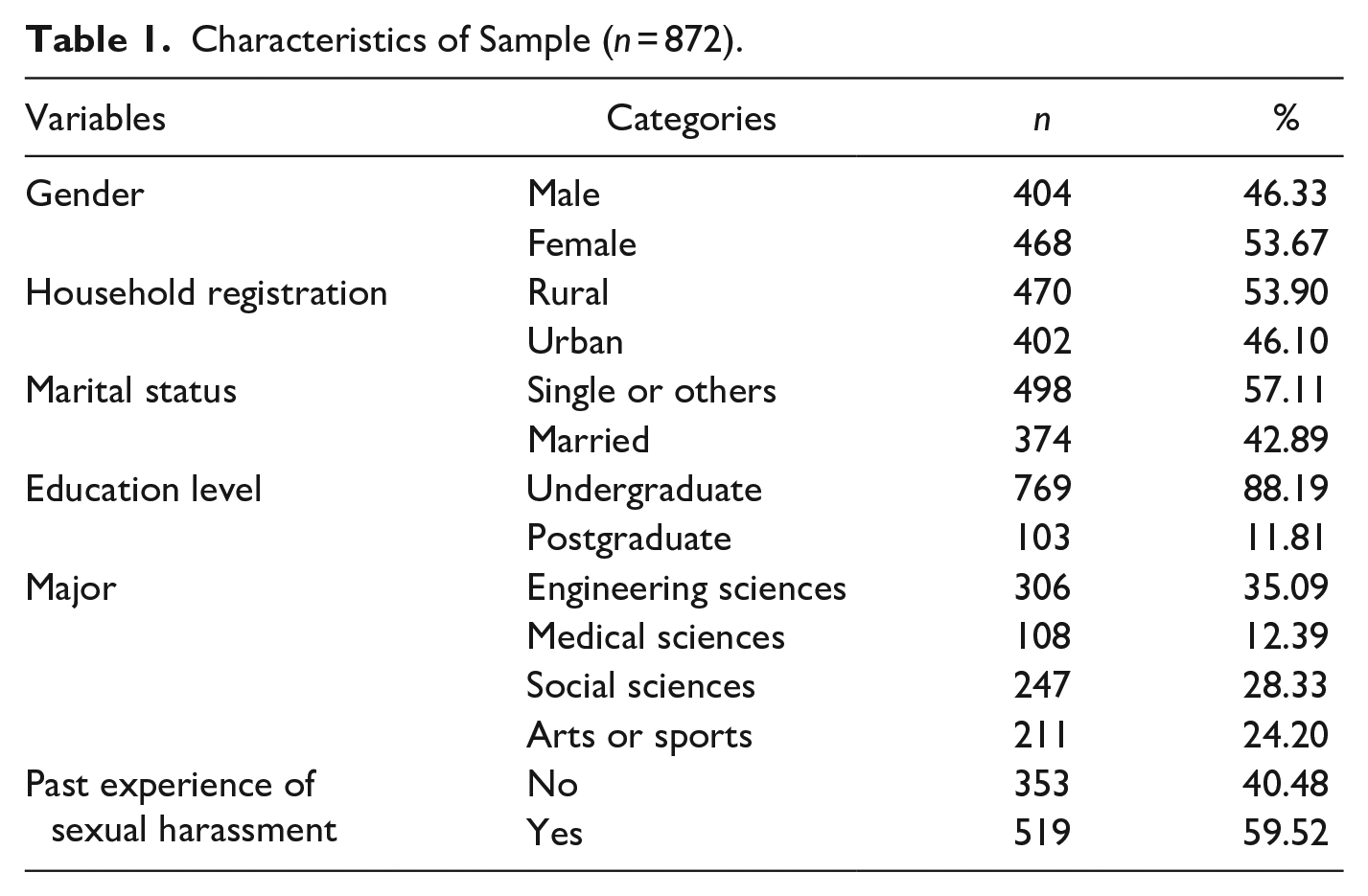
Table 1 summarizes the characteristics of each sample. A valid sample of 872 students was analyzed in this study, comprising 404 (46.33%) males and 468 (53.67%) females. The age of the students ranged from 17 to 30 years, with a mean age of 22.07 ± 2.33 years. Approximately 54% of the students were born in urban areas. A total of 306 (35.09%) students were majoring in engineering sciences, and 247 (28.33%) were majoring in social sciences. Married students accounted for 42.89% of the subjects. Regarding educational level, 769 undergraduates (88.19%) and 103 postgraduates (11.81%) were surveyed. Three out of five students (59.52%) reported experiencing sexual harassment.
Characteristics of Sample (n = 872).
Perceptions and Attitudes Toward Sexual Harassment
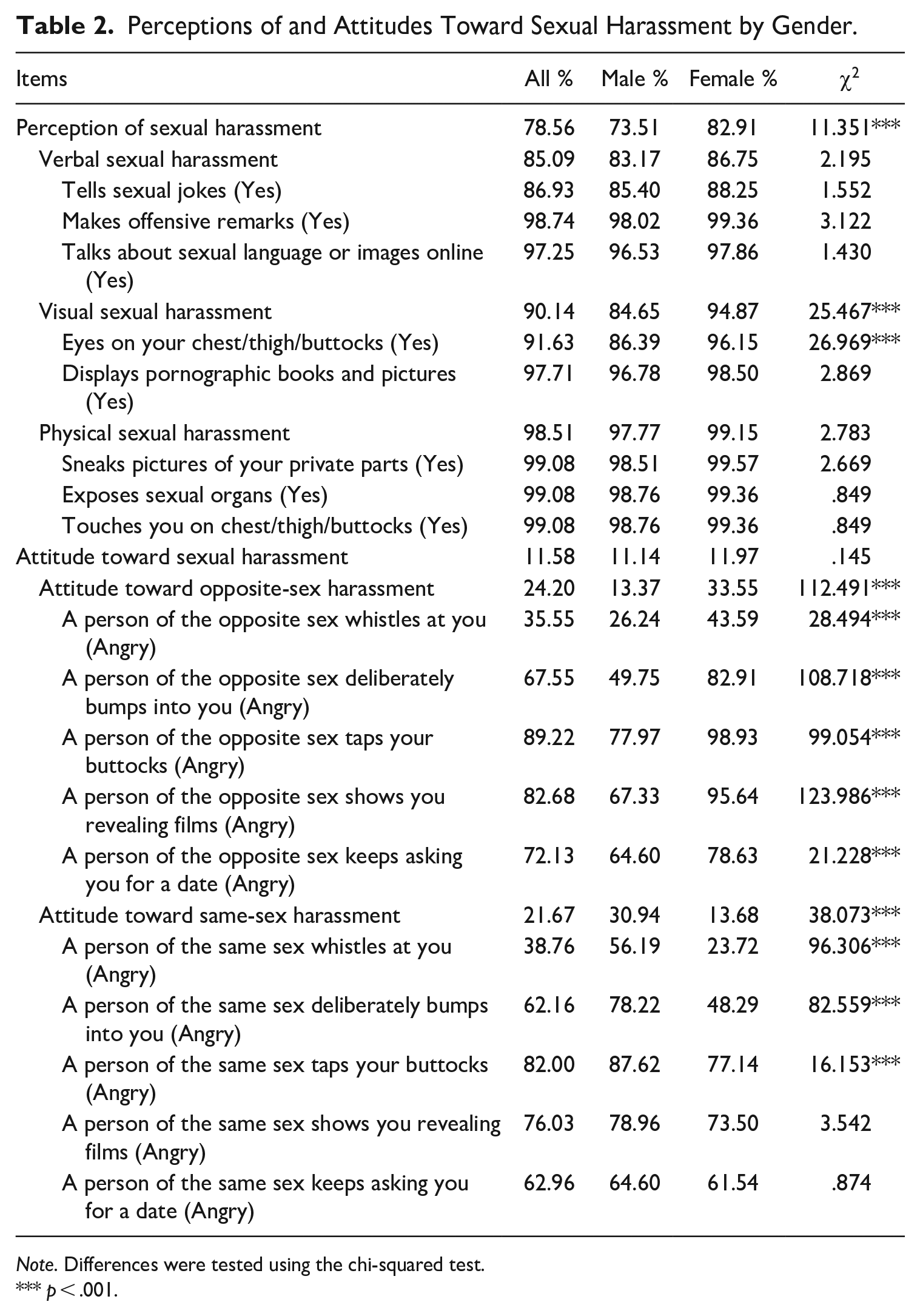
Of the university students, 78.56% recognized all eight sexual harassment behaviors (see Table 2). The students were more likely to recognize physical (98.51%) and visual sexual harassment (90.14%) than verbal sexual harassment (85.09%). “Tells sexual jokes” and “Eyes on your chest/thigh/buttocks” had the lowest perception rates, at 86.93% and 91.63%, respectively, among students considering this sexual harassment behavior. Females had a significantly higher perception of sexual harassment than males (χ2 = 11.351, p < .001). A total of 82.91% of female students and 73.56% of male students recognized all sexual harassment.
Perceptions of and Attitudes Toward Sexual Harassment by Gender.
Note. Differences were tested using the chi-squared test.
p < .001.
Table 2 also shows attitudes toward sexual harassment among university students and gender differences. In general, 11.58% of the students would be “angry” toward all 10 sexual harassment acts. There were no significant gender differences in attitudes toward sexual harassment (χ2 = .145, p = .703). After considering the gender of the harasser, there were significant gender differences in attitudes toward both opposite-sex and same-sex sexual harassment. A total of 33.55% of female students would be “angry” toward all opposite-sex sexual harassment, while only 11.14% of male students would be “angry” (χ2 = 112.491, p < .001). When the harasser was of the same sex, 13.68% of female students and 30.94% of male students would be “angry” toward all sexual harassment (χ2 = 82.559, p < .001).
Sexual Harassment Intervention Strategies
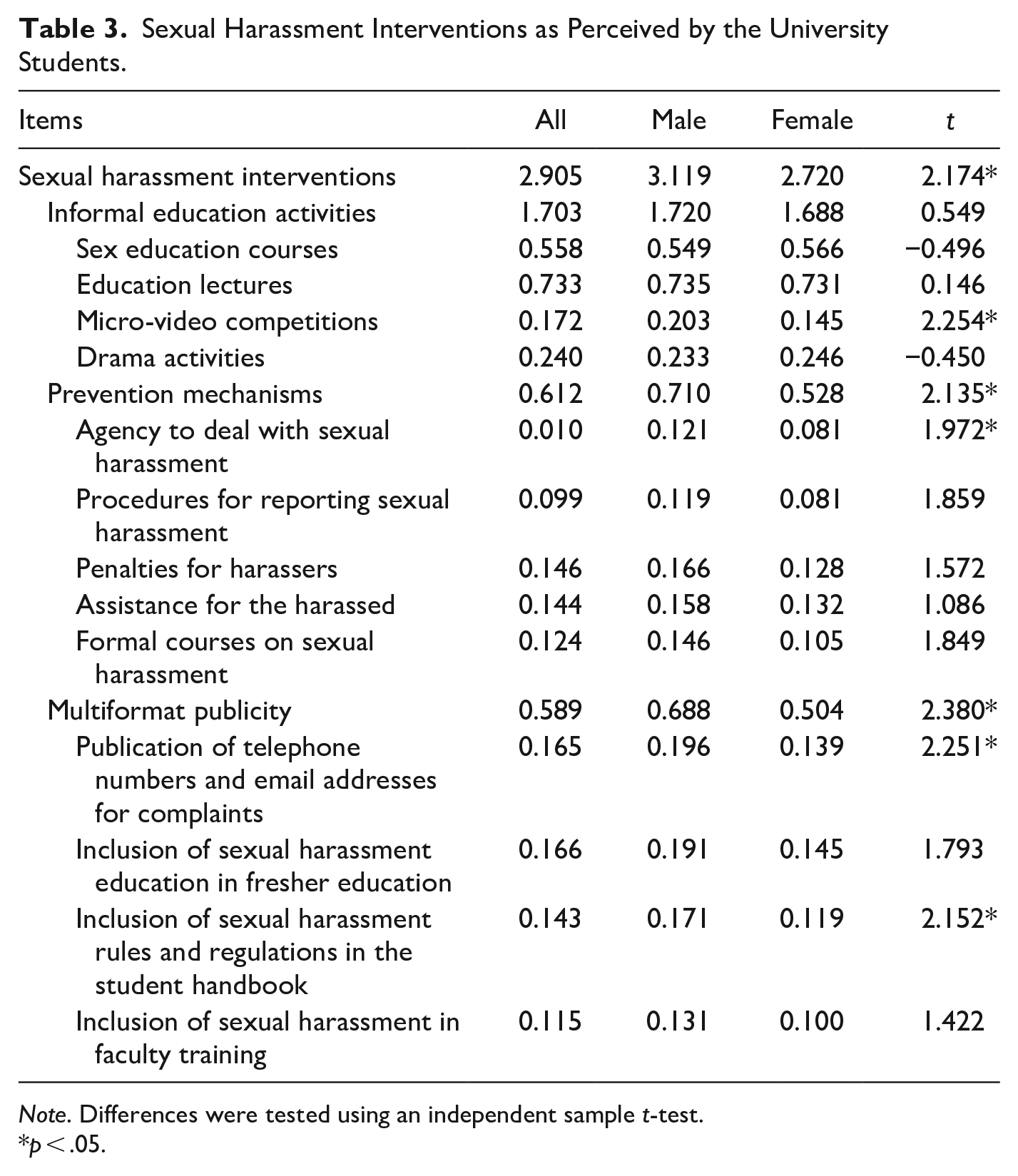
Table 3 reports the sexual harassment intervention strategies implemented by the university as perceived by the university students. An average of approximately 2.9 interventions against sexual harassment were reported by university students, with approximately 1.7 kinds of informal education activities and 0.6 kinds of prevention mechanisms and multiformat publicity. There was a significant gender difference in the awareness of sexual harassment interventions. Male students perceived an average of 3.1 kinds of sexual harassment interventions, while female students perceived an average of 2.7 kinds of interventions (t = 2.174, p = .030). Specifically, this gender difference existed in terms of “micro-video competitions” (t = 2.254, p = .024), “agency to deal with sexual harassment” (t = 1.972, p = .049), “publication of telephone numbers and email addresses for complaints” (t = 2.251, p = .025), and “inclusion of sexual harassment rules and regulations in the student handbook” (t = 2.152, p = .032).
Sexual Harassment Interventions as Perceived by the University Students.
Note. Differences were tested using an independent sample t-test.
p < .05.
Correlations
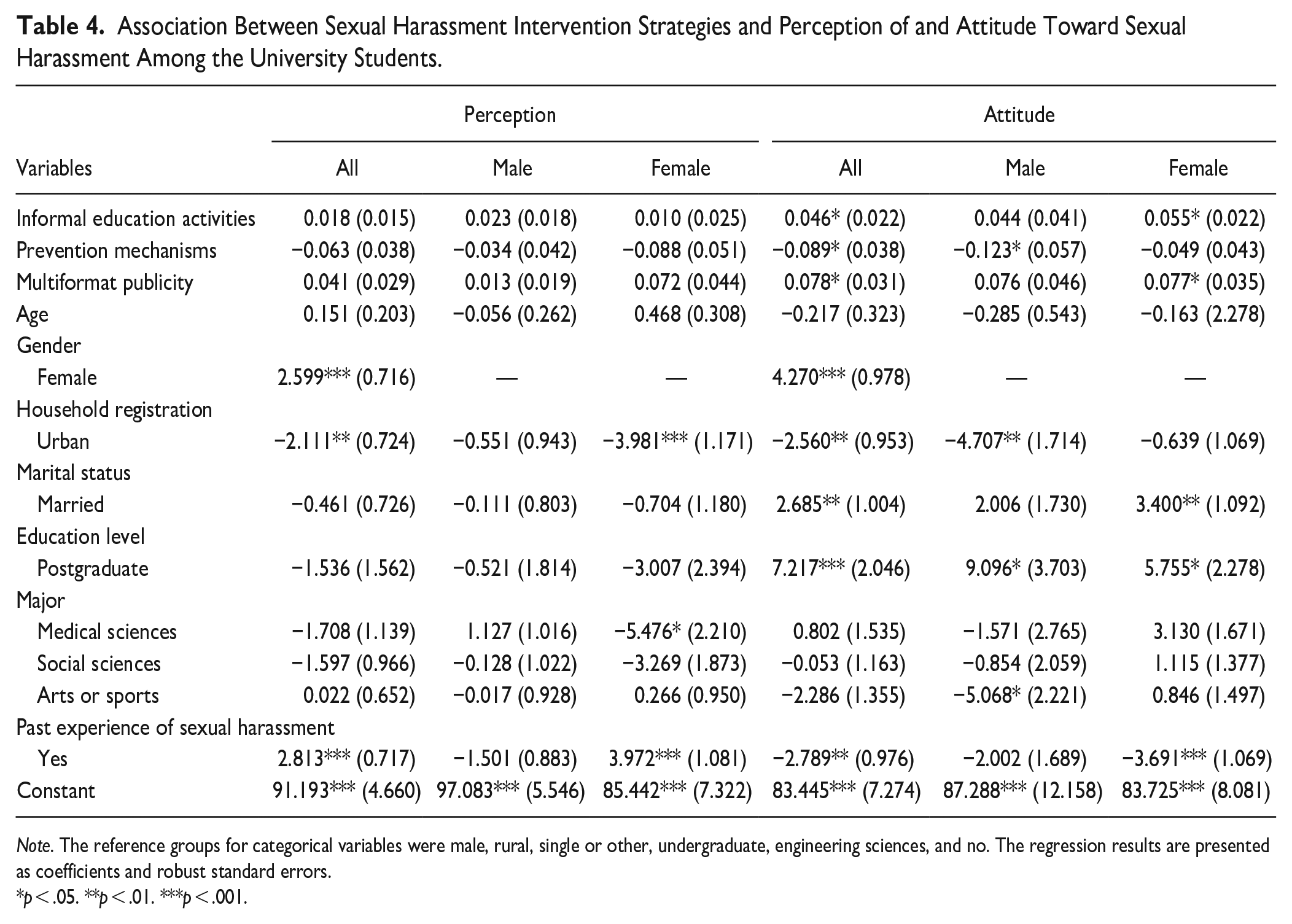
The three sexual harassment intervention strategies were not significantly associated with the perception of sexual harassment among the students generally, nor among males and females separately (Table 4). Attitude toward sexual harassment was significantly correlated with informal education activities, prevention mechanisms, and multiformat publicity. After controlling for all other variables, sexual harassment became less tolerant when the students were aware of the availability of more informal education activities (coeff = 0.046, p = .040) and more multiformat publicity (coeff = 0.078, p = .011). Sexual harassment became more tolerant when they were aware of more prevention mechanisms (coeff = −0.089, p = .020).
Association Between Sexual Harassment Intervention Strategies and Perception of and Attitude Toward Sexual Harassment Among the University Students.
Note. The reference groups for categorical variables were male, rural, single or other, undergraduate, engineering sciences, and no. The regression results are presented as coefficients and robust standard errors.
p < .05. **p < .01. ***p < .001.
For male students, only prevention mechanisms were significantly related to attitude toward sexual harassment. Controlling for all other variables, sexual harassment tended to be more tolerant when male students were more aware of prevention mechanisms (coeff = −0.123, p = .033). For female students, both education activities and multiformat publicity were significantly associated with their attitude toward sexual harassment. Controlling for all other variables, sexual harassment was less tolerant when female students were more aware of education activities (coeff = 0.055, p = .015) and multiformat publicity (coeff = 0.077, p = .030).
Discussion
Based on samples from six universities in Beijing, China, the current study revealed that 78.56% of university students recognized all sexual harassment behaviors. Gender differences were observed in perceptions of sexual harassment, specifically in the perception of visual sexual harassment. Only 11.58% of the university students felt angry about all the sexual harassment behaviors. Male students felt relatively less angry at opposite-sex harassment and felt angrier at same-sex harassment. Although not significantly associated with the perception of sexual harassment, the three sexual harassment prevention strategies were significantly associated with attitudes toward sexual harassment. Education activity and multiformat publicity were positively related to female students’ intolerant attitudes, whereas prevention mechanisms were negatively associated with male students’ intolerant attitudes.
Consistent with the results of previous studies (X. Li et al., 2023; Pan, 2020), we found that Chinese university students perceived physical sexual harassment (98.51%) more than verbal sexual harassment (85.09%). University students are usually aware of more serious sexual harassment, such as sexual contact and assault, and pay little attention to sexual remarks, comments, and jokes (Clancy et al., 2020). Additionally, this study’s findings support the conclusions of previous studies that males and females have significant differences in their perceptions of sexual harassment (Blumenthal, 1998; Sivertsen et al., 2019; Tyler & Boxer, 1996). Nevertheless, this gender difference was found only in the perception of visual sexual harassment among university students. It would appear that males usually have a higher threshold for labeling behavior as sexual harassment than females. It may be that a moderate perception of visual sexual harassment gives male students more space to set a threshold higher than that of female students.
This study is the first to explore differences in attitudes toward opposite-sex and same-sex harassment among university students in China. We found that female students felt angrier at opposite-sex sexual harassment than male students. Conversely, male students were more bothered by same-sex sexual harassment than female students. This finding indicates that both male and female students tended to perceive the harasser as male and male students were more sensitive to same-sex harassment. According to Dubois et al. (1998), as males are more often in positions of power, targets regardless of their gender have a higher probability of being harassed by males. Females experience sexual harassment more frequently and negatively than men in cases involving cross-sex harassment (Yee et al., 2015), whereas the opposite is true in cases involving same-sex sexual harassment. Males who had been harassed by males reported feeling annoyed, offended, disturbed, embarrassed, and upset more than those who had been harassed by females (Castillo et al., 2011). Gender is also a significant predictor of homophobia (Gormley & Lopez, 2010). Males are likely more homophobic or aggressive toward outgroups than females, combined with their avoidance of seeing different others (Gormley & Lopez, 2010; Haslam & Levy, 2006), which contributes to a heightened sensitivity in their attitudes toward same-sex harassment.
Notably, of the 13 interventions listed, the university students, on average, were only aware that their universities conducted fewer than 3 of them. This finding indicates that some universities in China have not developed sexual harassment interventions in accordance with requirements. After searching the official websites of 42 universities in China, Wang et al. (2019) found that 17 universities had not issued documents or regulations on sexual harassment, and only 6 universities had made their complaints and reporting channels public. In this study, the students perceived more types of informal education activities than prevention mechanisms or multiformat publicity. Informal education activities are generally organized by student groups or societies rather than officially undertaken by universities. This situation reflects inadequacies in the sexual harassment intervention strategies of universities. However, the low perception rate of sexual harassment interventions is due more to the poor implementation and advocacy of sexual harassment prevention strategies in universities. Currently, acting to prevent sexual harassment in Chinese universities is not a legal obligation. With universities more reliant on the looser constraints of common morality, sexual harassment prevention strategies seem to exist only on article and their content is not detailed. Universities lack the motivation to implement sexual harassment intervention strategies. The limited advocacy of sexual harassment prevention strategies has resulted in few students becoming aware of them (Wang et al., 2019). One survey in China showed that only 2% of students reported that their university had strategies to prevent sexual harassment (Tang, 2019). Similar evidence shows that only 5.4% of university students in China feel that universities offer courses or training to prevent sexual harassment (Wei, 2017).
This study showed that the three sexual harassment intervention strategies were not significantly associated with the perception of sexual harassment among university students. Nearly 80% of the students can recognize all forms of sexual harassment, which may have led to a ceiling effect on our findings. Moreover, the gap between individual and legal definitions of sexual harassment is considered an important reason for the failure of anti-harassment strategies (Vohlídalová, 2011). The definition of sexual harassment in Chinese university documents remains unclear. Most of the training content concerns sexual health and sexual psychology and is of limited help in improving students’ perceptions of sexual harassment. Inconsistent definitions or understandings of sexual harassment between universities and students are likely responsible for not enhancing students’ perceptions of sexual harassment.
Education, training, and publicity programs are key to addressing the issue of sexual harassment on campuses (Cleary et al.,1994; de Lijster et al., 2016; Erinosho et al., 2021). Positive associations between informal education activities, multiformat publicity, and female students’ intolerant attitudes toward sexual harassment were also observed in this study. However, prevention mechanisms were negatively associated with intolerant attitudes toward sexual harassment. Informal education activities and multiformat publicity appear to be positive strategies. There may be some problems with the design, operation, or other aspects of sexual harassment prevention mechanisms that contribute to the negative impact on students’ attitudes toward sexual harassment. This would appear to be partly explicable in terms of futility in university prevention mechanisms. To protect their reputations, some universities remain silent, refuse to inform the public about the process and outcomes, and punish harassers too lightly (Lay, 2019; Lichty et al., 2008; Robertson et al., 1988). Furthermore, students may tolerate minor and ambiguous sexual harassment behaviors as regular social interactions because of the unclear definitions of sexual harassment in prevention mechanisms. Although female students perceived fewer sexual harassment interventions than male students in this study, positive associations between intolerant attitudes and sexual harassment interventions were observed among female students, and negative associations were observed among male students. As sexual harassment is more prevalent among females, the positive effects of intervention strategies may be more apparent among female students. Concerning males, the lack of same-sex harassment prevention mechanisms results in male students’ fear of experiencing mistrust and attribution, increasing their tolerance for sexual harassment (Kumar & Verma, 2020; Shechory-Bitton & Zvi, 2020).
This study enriches the empirical research on sexual harassment and offers the following suggestions for preventing sexual harassment in universities. First, universities should extend and intensify their sexual harassment intervention strategies and communicate them more effectively to their students. As university students tend to self-reveal and gain knowledge from their peers and the Internet, educators could consider distributing intervention information through their social networks and the Internet (Chen et al., 2022; Lichty et al., 2008). Additionally, universities should fully engage with positive strategies that can help create an institutional climate where sexual harassment is not tolerated. For example, using informal education activities and multiformat publicity results in increased campus-wide awareness of sexual harassment. Finally, targeted intervention strategies should be implemented based on gender equality. The study’s results showed that important gender differences in attitude toward sexual harassment based on the harasser’s gender. Gender stereotypic education is necessary to decrease stereotypical attitudes toward sexual harassment in students and consequently reduce their acceptance of sexual harassment. Foulis and McCabe (1997) suggest that this type of education may be of greater use to students rather than office workers. Educating students on gender stereotypes and showing them their rights and responsibilities are essential because it can significantly enhance the self-esteem and self-confidence of vulnerable groups, especially certain male students (García-Hernández et al., 2020).
This study has several strengths. First, we measured sexual harassment interventions implemented by certain universities as perceived by the students. This approach provides a new perspective for exploring important issues in sexual harassment interventions. Second, considering that male–male sexual harassment is common (Waldo et al., 1998), we designed a questionnaire to consider university students’ attitudes toward same-sex and opposite-sex harassment. Third, we considered gender differences in all analyses in this study. This approach helps narrow gaps in understanding the different impacts of sexual harassment interventions on female and male university students and facilitates the improvement of university sexual harassment prevention strategies.
This study has several limitations. First, the sample did not include community or technical colleges, as their organizational structure differs from that of universities. The generalizability of the results must be interpreted within the context of the location and culture of the institution in which the study was conducted. Second, only six undergraduate universities in Beijing were surveyed owing to limited resources. However, we ensured the representativeness of the sample using stratified whole-group sampling methods, and the results provide an initial foundation for research in this field. Third, this study evaluated the association between intervention strategies and attitudes toward sexual harassment rather than determining causality statistically. As 94% of the students in this study gained knowledge about sexual harassment from the Internet and 55% from friends/classmates, it was not possible to determine the predictive effects of university interventions on the perception of and attitude toward sexual harassment because of media exposure and peer influence. Future longitudinal research and intervention studies that assess causal inference are likely to extend the understanding of how improvements in sexual harassment intervention strategies affect the perception of and attitude toward sexual harassment. Finally, the correlations between the intervention strategies and perception of sexual harassment did not show statistical significance, which may be due to a ceiling effect. Further research using different definitions of sexual harassment is necessary to confirm our findings.
Conclusions
The university students’ perceptions of visual sexual harassment and attitudes toward sexual harassment were generally not favorable and showed significant gender differences. Informal education activities and multiformat publicity positively promoted intolerant attitudes toward sexual harassment among female students, whereas prevention mechanisms were negatively associated with male students’ intolerant attitudes. We suggest that universities should take full advantage of the strengths of informal education activities and multiformat publicity and seek to address the gaps in prevention mechanisms to maximize the potential influence of intervention strategies. Gender equality is a fundamental principle when implementing intervention strategies to eliminate gender differences and in helping ensure the effectiveness of sexual harassment interventions.
Footnotes
Declaration of Conflicting Interests
The author(s) declared no potential conflicts of interests with respect to the authorship and/or publication of this article.
Funding
The author(s) disclosed receipt of the following financial support for the research and/or authorship of this article: This study was supported by the Fundamental Research Funds for the Central Universities, and the Research Funds of Renmin University of China [grant number 23XNL013] to Hong He.
