




Abstract
Bystander intervention programs have established efficacy to increase bystander behaviors to prevent interpersonal violence (IPV). Little research has investigated intervention efficacy among latent risk classes among high school students. Data from a five-year randomized control trial were used to conduct multigroup path analyses to assess the association between type of training received and bystander outcomes moderated by risk groups identified via latent profile analysis (LPA). LPA was used to identify risk based on six indicators related to violence exposure, association with aggressive friends, and alcohol use. Bystander training received was the primary independent variable characterized as: no training, overview speech alone, or skills training. Outcomes included (a) observed bystander behaviors; (b) reactive bystander behaviors; or (c) proactive bystander behaviors. Three risk groups were identified via LPA: low risk, moderate risk witnesses of IPV, and highest risk victims and perpetrators. Of the bystander trainings received, overview speeches only increased reactive bystander behaviors among low risk students. The skills training was effective at increasing most bystander outcomes among all risk groups, with the largest effect sizes observed among the highest risk victims and perpetrators profile. Findings suggest that tailoring or modifying bystander training based on the risk profiles of youth may lead to greater potential to increase bystander behaviors to reduce risk of violence. Specifically, overview speech trainings should be targeted to low risk youth, while skills training primarily delivered to higher risk youth. These skills trainings could incorporate content related to trauma-informed care as well as associations with alcohol use, which may enhance their effectiveness further.
Individuals who witness concerning situations are considered bystanders, and their presence in these situations gives them a range of opportunities to intervene (McMahon & Barnyard, 2012). Bystander behavior is defined as the action a bystander takes in reaction to witnessing a potentially harm-inducing situation (Banyard, 2015). Physically removing an individual from a harmful or potentially harmful situation and supporting the victim after the concerning situation are two examples of bystander behaviors (Banyard & Moynihan, 2011). Bystander intervention programs are designed to train bystanders to use behaviors that reduce or prevent violence victimization and perpetration (Basile et al., 2016). Theoretically, a bystander training program would increase an individual’s use of bystander behaviors, which in turn would reduce the prevalence of violence within the community as they use those bystander behaviors when they witness concerning situations (Burn, 2009). Bystander intervention programs aimed at increasing bystander behaviors are shown to be effective at reducing violence that frequently occurs in the presence of others (Coker et al., 2017; Hahn et al., 2007).
The bystander approach often utilizes a universal prevention approach that provides generalized education to the majority of members within a community (Institute of Medicine, 1994). While this approach seems to increase bystander behaviors and reduce violence in some domains of harm (Kettrey & Marx, 2019; Kettrey & Marx, 2021; Mujal et al., 2022), it is unclear whether this approach is effective at reducing violence among individuals who are most at risk of experiencing or perpetrating violence. Preliminary research has begun to explore this question, finding that one bystander program, Green Dot, was more successful at reducing violent outcomes (victimization and perpetration) among the high-risk group of high school youth who had previously witnessed parental intimate partner violence compared to lower risk youth (Mennicke et al., 2021, 2022). However, more research is needed to understand the mechanics and processes that explain this greater reduction in violence among higher risk youth. For example, it is possible that receiving bystander intervention training is associated with an increase in bystander behaviors for higher risk youth, which then contributes to decreases in violence among those higher risk youth. Alternatively, it is possible that bystander training increases the bystander behaviors of lower risk youth, who then use those behaviors when witnessing victimization and perpetration among higher risk peers. While we know the end result yields lower violence among higher risk youth, and we know that the change is occurring through an increase in bystander behaviors and violence acceptance (Bush et al., 2019), it remains unclear whether the increase in bystander behaviors is universal (observed across all students) or specific to certain risk groups. The purpose of this research is to investigate whether latent risk profiles of high school youth moderate the relationship between type of bystander training received and use of bystander behaviors.
Bystander Intervention Programs
Bystander intervention programs have proliferated over the past several decades (Kettrey & Marx, 2021), with programs being developed, implemented, and evaluated in middle schools, high schools, and colleges across the country. Systematic reviews indicate that bystander intervention programs are effective at improving bystander self-efficacy, bystander intentions, and bystander behavior among youth and young adults (Kettrey & Marx, 2019; Kettrey & Marx, 2021; Mujal et al., 2022). Common program names include Bringing In The Bystander, Mentors in Violence Prevention, The Men’s Program, and Green Dot. Training methods within these programs are diverse, but often contain presentations, discussions, and active learning exercises (Mujal et al., 2022). Green Dot, which is the focus of this investigation, has two core components: an overview speech delivered to as many people as possible and a skills training delivered to popular opinion leaders (Coker et al., 2011). The overview speech is a 50-min persuasive speech delivered to the majority of students in a school environment. The skills training is a more intensive and interactive 5-hr training that targets popular opinion leaders within the schools. These trainings are theorized to work complementarily to change norms related to violence prevention, increase skills and utilization of bystander behaviors, and ultimately reduce violence in the community. Notably, Green Dot is one of the few bystander intervention programs that has demonstrated effects on violence perpetration outcomes using an randomized control trial (RCT) design among high school students (Coker et al., 2017).
Bystander Outcomes
Bystander behaviors can be categorized in two ways—proactive and reactive (McMahon & Banyard, 2012). Proactive behaviors include preventive actions that a person uses that reinforce norms that violence is not tolerated. Reactive bystander behaviors include actions in response to a concerning situation. Because opportunities for bystander intervention often happen within social settings (Haikalis et al., 2018; Taylor et al., 2019), it is possible that a concerning situation is observed by an individual, but they do not act because someone else in the situation takes action instead. Therefore, it is also useful to measure observed bystander behaviors.
Factors That Might Influence the Use of Bystander Behaviors
Research into factors that influence the use of bystander behaviors is burgeoning. Investigations typically examine static factors such as age, gender, race, or sexual identity (e.g., Brown et al., 2014; Diamond-Welch et al., 2016; Hoxmeier, Mennicke et al., 2020). Others have investigated more dynamic factors such as the association between violent experiences, association with aggressive friends, and alcohol use on bystander behaviors (Ham et al., 2021; Leone & Parrott, 2018; Woods et al., 2020).
Violent Experiences and Mental Health Symptoms
Research indicates that prior experiences with violence are associated with the use of bystander behaviors (Woods et al., 2020). Individuals with personal histories of dating violence victimization, sexual assault victimization, or childhood victimization are more likely to use bystander behaviors in response to witnessing violent situations (Christy & Voight, 1994; Woods et al., 2016, 2020). In the related domain of bullying, researchers have found an association between perpetration of bullying and negative bystander behaviors (Evans et al., 2019; Oh & Hazler, 2009). Relatedly, experiencing mental health symptoms that are frequently associated with victimization (e.g., depression) are associated with more frequent use of bystander behaviors (Wu et al., 2016).
Association with Aggressive Friends
Group norms appear to be an important predictor of bystander behaviors. For example, settings with high misogynistic peer norms were associated with lower likelihoods of using bystander behaviors (Leone & Parrott, 2018). On the flip side, having peers who are supportive of bystander norms is related to use of bystander behaviors (Hoxmeier et al., 2018). In fact, Banyard et al. (2021) found a positive association between an individual’s and their peers’ use of reactive bystander behaviors. Friend groups tend to have similar norms and behaviors (Mumford et al., 2017). Therefore, a person who has friends who engage in aggressive behaviors (e.g., physical or sexual aggression) is likely to have more opportunities to use bystander behavior, yet may be less inclined to use them because of group norms discouraging intervention. Researchers have not yet examined the relationship between having association with aggressive friends and use of bystander behaviors, but this alternative evidence indicates it may be influential to the opportunity for and use of bystander behaviors.
Alcohol Use
Alcohol use appears to influence opportunity for and use of bystander behaviors. Those who drink alcohol have more opportunities to intervene because they are more frequently in risky situations (Waterman et al., 2019; Zozula et al., 2021). However, the effects of alcohol intoxication, explained through Alcohol Myopia Theory, may inhibit some steps of the situational model of bystander intervention while heightening others (Leone et al., 2018). Evidence indicates that alcohol intoxication inhibits a person’s ability to notice problematic situations and interpret them as concerning (Ham et al., 2019, 2021). Additionally, research has found that alcohol use is associated with lower rates of prosocial bystander attitudes (Orchowski et al., 2016), while increasing an intoxicated person’s self-efficacy to intervene (Leone et al., 2022). However, it does appear that people who are intoxicated or are frequent heavy drinkers intervene less frequently (Fleming et al., 2015; Leone et al., 2019; Orchoswki et al., 2018). Overall, it appears that alcohol use is an important element to consider in understanding bystander opportunities and actions.
Purpose
Studies looking at the association between violent experiences, association with aggressive peers, and alcohol use typically examine the direct influence of these factors on bystander behaviors; however, these factors often overlap and interconnect in unique ways that may more accurately be captured by identifying latent profiles of risk among high school youth. For example, exposure to family violence is associated with having risky peers (McCloskey & Stuewig, 2001), later victimization and perpetration (Braga et al., 2018), mental health distress (Evans et al., 2008), and alcohol use (Grest et al., 2020). These are likely not solitary risk characteristics, but instead behaviors, experiences, and consequences that can more accurately be described using latent profiles of risk. As such, a latent profile approach is statistically superior because it provides a basis for estimating measurement error (Lanza et al., 2013). Because these experiences often co-occur, capturing their collective influence on bystander outcomes is crucial to designing effective interventions. The aim of this investigation is to answer the following research question:
(1) Is the effectiveness of a bystander intervention program (as measured by observed bystander behaviors, reactive bystander behaviors, and proactive bystander behaviors) modified by latent profiles of risk (indicated by violent experiences, association with aggressive friends, and alcohol use).
Specifically, we regressed each outcome (observed bystander behaviors, reactive bystander behaviors, and proactive bystander behaviors) on type of training received (overview speech alone or overview speech plus skills training). We assessed for moderation by latent profiles of risk using a multigroup path analysis. It was hypothesized that the overview speech alone and overview speech plus skills training would be positively associated with three outcomes: observed bystander behaviors, reactive bystander behaviors, and proactive bystander behaviors. Furthermore, it was hypothesized that the strength of these relationships would be moderated by latent profiles of risk. Bystander outcomes were adjusted for known confounders, including gender, meal status, grade, sexual orientation, and race (Brown et al., 2014; Clear et al., 2014; Diamond-Welch et al., 2016; Fisher et al., 2014; Hoxmeier, Mennicke et al., 2020).
Method
Data
Data came from student surveys collected over a 5-year period in a parent cluster RCT that was implemented in 26 high schools in Kentucky (Coker et al., 2017). In the parent study, 26 Kentucky high schools were randomized to the intervention (13 schools) or waitlist control condition (13 schools). Baseline surveying was conducted in all schools in spring 2010. A passive parental consent protocol was utilized. All the parents of students received a letter describing the study and were asked to notify research staff if they did not want their child to participate. Assent was obtained directly from students. The same survey was administered by research staff each spring through 2014. Data for this study were limited to student surveys from intervention schools.
Procedure
In the parent RCT, data were collected by inviting all students to complete an anonymous in-person survey from 2010 through 2014. Parents could have their children opt out of the survey. Assent was gathered from the student before passing out the survey. The survey was a 99-item paper and pencil questionnaire which took 20 to 45 min to complete.
Intervention Description
The intervention consisted of two types of training: overview speeches and skills training. The overview training is a 50-min persuasive speech, provided annually, which introduces students to the concept of bystander behaviors, challenges myths related to interpersonal violence (IPV), and creates a shared sense of community. Skills trainings were 5-hr intensive experiential trainings. Skills trainings focused on raising awareness of red flags for violence and breaking down barriers to inaction by focusing on the “three D’s” of bystander intervention: delegate, distract, or directly intervene. Both trainings were delivered by educators from local rape crisis centers. More details about the intervention components can be found in Coker et al. (2011). Because prior research using these data has established a high number of helpful bystander behaviors during Year 2 and 3 of the study timeline (Bush et al., 2019), the current analyses were limited to just Years 2 and 3. During this time, schools provided the overview speech to more than 50% of students, and some schools began implementing the skills training. Therefore, students could have received no training, just the overview speech, or the overview speech and the skills training.
Participants
Participants in the parent study were high school youth between the ages of 14 to 18. A total of 89,707 surveys were returned from students across the study period, but because the surveys were anonymous and the intervention was implemented at the school-level, individual students are not linked across years. Surveys were excluded if they contained mischievous responses (see Coker et al., 2017 for details). A total of 16,826 surveys were analyzed from Years 2 and 3 from intervention schools. From this subsample, 56% of survey responses identified as girls, 30% were in the 9th grade, 80% were White, 43% received a free or reduced-price lunch, 86% indicated their sexual identity as exclusively heterosexual, and 79% indicated they had been in a relationship in the past 12 months (see Table 1 for details).
Descriptive Statistics for All Variables of Interest (N = 16,809).
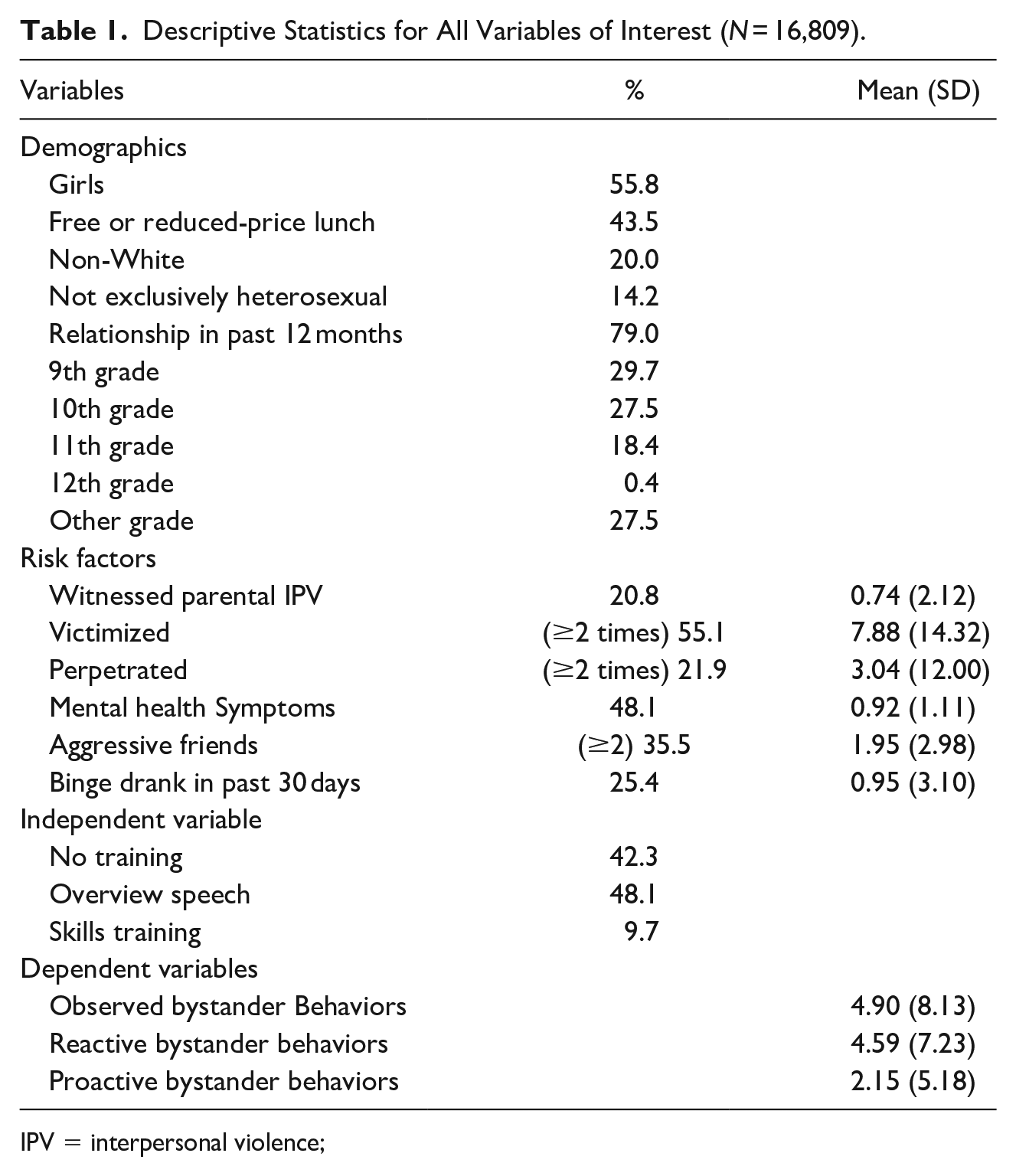
IPV = interpersonal violence;
Measures
Detailed information about the materials used can be found in Cook-Craig et al. (2014). All data were self-reported. All measures demonstrated acceptable reliability statistics Cook-Craig et al. (2014).
Indicators of Risk Used to Create Latent Profiles
Based on the literature on factors that are theoretically or empirically associated with a youth’s use of helpful bystander behaviors, six indicators were used to identify latent profiles of risk: witnessed parental IPV, violence victimization, violence perpetration, mental health symptoms, association with aggressive friends, and alcohol use. While many other factors may be influential in understanding bystander behaviors (e.g., self-control), because this was a secondary analysis, we were limited to the variables from the original data set.
Witnessed Parental IPV
This was assessed by asking participants to indicate if they saw or heard a parent or guardian being hit, slapped, punched, shoved, kicked, or otherwise physically hurt by their spouse or partner. Response options included never, 1 time, 2 to 5 times, 6 to 10 times, and more than 10 times. The lower value of the response categories was used to create a continuous variable (0, 1, 2, 6, 10).
Violence Victimization or Perpetration
Victimization and perpetration were assessed for using domains of psychological dating violence, physical dating violence, sexual violence, sexual harassment, and stalking. With the exception of physical dating violence (which used one item) each domain used three items to assess for frequency of victimization or perpetration. Response options for each item included 0 times, 1 to 2 times, 3 to 5 times, and 6 to 9 times, or 10 or more times. The lower value of each item was used (0, 1, 3, 6, 10) to create a summed score of the number of victimization or perpetration behaviors for each student, for a possible range of 0 to 130.
Mental Health Symptoms
Three items were used to determine the presence of mental health symptoms (i.e., depression and post-traumatic stress disorder (PTSD)). This included whether a student felt so sad or hopeless almost every day for the past 2 weeks or more in a row that they stopped doing some usual activities; whether they had experienced something so frightening, horrible, or upsetting in the past month that they had nightmares or thought about it when they didn’t want to; or tried hard not to think about it or went out of their way to avoid situations that reminded them of it. Responses options were yes/no. Yesses across items were summed to create a score with a possible range of 0 to 3.
Aggressive Friends
Three items were used to identify a person’s association with aggressive friends: number of friends who have forced someone to have sexual activity; number of friends who have used physical force with boyfriend/girlfriend; number of friends who insult boyfriend/girlfriend. Response options included: 0, 1 to 2, 3 to 5, or 6 or more. The lower value of each category was utilized to create a summed score, with a possible range of 0 to 18.
Alcohol Use
One item assessed for the number of days in the past month that a student had four (for girls) or five (for boys) or more drinks of alcohol in a row within a couple of hours. Response options included: I never drink, 0 days, 1 or 2 days, 3 to 9 days, 10 to 19 days, and 20 to 31 days. The lower value of each category was used to create a continuous score, with a possible range of 0 to 20. Different drink amounts were used for boys and girls to align with federal definitions of binge drinking (NIAAA, 2023).
Independent Variable
Training Received
Three levels of this variable were created: 0 = no training received, 1 = received overview speech only, or 2 = received overview speech and skills training. This variable was dummy coded for use in the path analysis, with no training received used as the reference group.
Covariates
Demographic variables included gender (boy/girl), receiving a free or reduced-price meal (yes/no, as a proxy for income), grade (freshman, sophomore, junior, senior, other), sexual identity (exclusively heterosexual/not exclusively heterosexual), and race (white/student of color) based on prior associations between the characteristics and violence exposure and/or bystander outcomes (Brown et al., 2014; Clear et al., 2014; Diamond-Welch et al., 2016; Fisher et al., 2014; Hoxmeier, Mennicke et al., 2020).
Outcome Variables
Three variables were used to capture a range of bystander behaviors, including observed bystander behaviors, reactive bystander behaviors, and proactive bystander behaviors.
Observed Bystander Behaviors
A summed variable capturing the number of observed bystander behaviors was created using the following seven items: number of times you saw or heard someone tell others to stop harassing someone else; number of times you saw or heard someone speak up when someone said that someone else who was forced to have sex was to blame; number of times you saw or heard someone talk to a friend who was physically hurt by a boyfriend/girlfriend; number of times you saw or heard someone ask someone else that looked upset at a party if they were ok; number of times you saw or heard someone ask someone else if they needed a ride if they looked upset; number of times you saw or heard someone speak up to someone who was bragging for forcing someone to have sex with them; and number of times you saw or heard someone get help for a friend because they had been forced to have sex. Response options for individual items included: 0 times, 1 to 2 times, 3 to 5 times, 6 to 9 times, 10 or more times, or didn’t see or hear someone doing this. “Didn’t see or hear someone doing this” was coded as 0 for these analyses. For each item, the lower number was counted (0, 1, 3, 6, 10) and these values were summed across items to yield a potential range of 0 to 70. These items performed reliably in this sample, with an alpha of .79.
Reactive Bystander Behaviors
A variable was created to assess the number of reactive bystander behaviors a person used. A summed score was created from seven items: number of times you told someone to stop talking down to someone else; number of times you spoke up when you heard someone was forced to have sex; number of times you spoke up to someone bragging about forcing someone else to have sex; number of times you talked to a friend who was physically hurt by a boyfriend/girlfriend; number of times you asked someone that looked upset if they were ok; number of times you asked someone that looked upset if they needed a ride; number of times you got help for a friend who had been forced to have sex. Response options for the individual items included 0 times, 1 to 2 times, 3 to 5 times, 6 to 9 times, 10 or more times, or didn’t see or hear this. “Didn’t see or hear this” was coded as 0. For each item, the lower number was counted (0, 1, 3, 6, 10) and these values were summed across items to yield a potential range of 0 to 70. These items performed reliably in this sample, with an alpha of .73.
Proactive Bystander Behaviors
A variable was created summing responses from five items. These included: number of times someone talked to you about what you can do to stop dating violence; number of times you and your friends talk about activities to help prevent dating violence or unwanted sex; number of times you and friends used technology to discuss activities to stop dating violence or unwanted sex; number of times you talked with your friends about keeping yourself or others safe from dating violence or unwanted sex; and number of times you talked with your friends about being safe in dating relationships. Response options for individual items included: 0 times, 1 to 2 times, 3 to 5 times, 6 to 9 times, 10 or more times, or no opportunity. No opportunity was counted as 0. The lower number was counted (0, 1, 3, 6, 10) and these values were summed across items to yield a potential range of 0 to 50. These items performed reliably in this sample, with an alpha of .96.
Analytic Plan
Latent profile analysis (LPA) was performed to identify risk groups using the following six indicators: witnessed parental IPV, violence victimization, violence perpetration, mental health symptoms, aggressive friends, and alcohol use. Models with two, three, four, five, and six latent profiles were compared to identify the number of profiles that provides the optimal balance of fit and parsimony. Chi-square tests were used with information criteria (Akaike information criterion [AIC]/Schwarz’s Bayesian information criterion[BIC]) to identify the number of profiles and best fitting solution. For each latent profile, the profile-specific means and overall prevalence of membership in the profile are reported.
The sample is described overall and by resulting LPA profiles. Profiles are used to examine bivariate associations with demographics, risk factors, and the independent and dependent variables. Using the resulting risk profiles, a multigroup path analysis estimated the association between type of training received on each bystander outcomes. A longitudinal approach was not utilized because for the parent study (Coker et al., 2017) the school was the unit of analysis, so individual-level data were not linked over time. Because this analysis is focused on understanding how amount of training (an individual-level variable) influences use of bystander behaviors (at the individual-level), the individual was the unit of analysis. Models were examined for fit by evaluating the AIC and BIC (values closer to 1 are better) and standardized root mean squared residual (SRMR) and root mean square error approximation (RMSEA) (values closer to 0 are better). The χ2 test was not used as an evaluation for overall model fit because it is sensitive to large sample sizes.
The proposed model was first tested among the full sample (all latent profiles combined) to see if it was an acceptable fit. Then, a multigroup model was explored using the LPA profiles as the grouping variable. A multigroup approach simultaneously tests the path models among each group and produced group-specific path estimates. The multigroup model was retained if the χ2 difference test was significant. Path analysis results are presented in a table with standardized regression coefficients, corresponding p-values, and 95% confidence intervals (CI) of the standardized beta. A two-sided significance level of .01 was used for all statistical tests because of the large sample size.
While current best practices for using LPA profiles to predict distal outcomes recommends a three-step approach that includes Bolck-Croon-Hagenaars (BCH) weights (Bakk & Vermunt, 2016), current software limitations preclude the ability to include BCH weights for a path model. Missing data was accounted for using listwise deletion. Demographic variables were included as potential covariates because of their theoretical and observed association with bystander outcomes (Diamond-Welch et al., 2016; Hoxmeier, Acock et al., 2020).
Results
Descriptive Information
Students reported witnessing an average of 0.74 (SD = 2.12) instances of parental IPV, had an average victimization score of 7.88 (SD = 14.32), perpetrating 3.04 instances of violence (SD = 12.00), experiencing 0.92 (SD = 1.11) mental health symptoms, associating with 1.95 (SD = 2.98) aggressive friends, and binge drinking an average of 0.95 (SD = 3.10) days (Table 1). Regarding training, 42% of the sample received no training, 48% received an overview speech, and 10% participated in skills training. Students observed an average of 4.9 (SD = 8.1) bystander behaviors, and reported using 4.6 (SD = 7.2) reactive bystander behaviors and an average of 2.2 (SD = 2.2) proactive bystander behaviors.
Latent Profile Analysis
Results from the LPA suggested that three profiles were needed. The log likelihood value, parameters, AIC, and BIC for each model appear in Table 2. Profile-specific means suggest the following interpretational labels for the three latent profiles: low risk, moderate risk witnesses of IPV, and highest risk victims and perpetrators. Notably, there were other characteristics associated with members of these profiles; however, these labels highlight the distinguishing features between profiles. Low risk youth had the lowest rates of all indicators. Moderate risk witnesses of IPV had moderate levels off all indicators, with the exception of the highest rates of witnessing parental IPV. Members of the highest risk victims and perpetrators had the highest rates off all indicators except for witnessing parental IPV. This group had particularly high rates of being victimized by violence, perpetrating violence, and binge drinking in the last 30 days. Low risk was the most common latent profile (n = 15,707, 94%) followed by high risk non-drinkers (n = 884, 5%) and high risk problem drinkers (n = 159, 1%).
Profile-Specific Means, Prevalence of Latent Status.
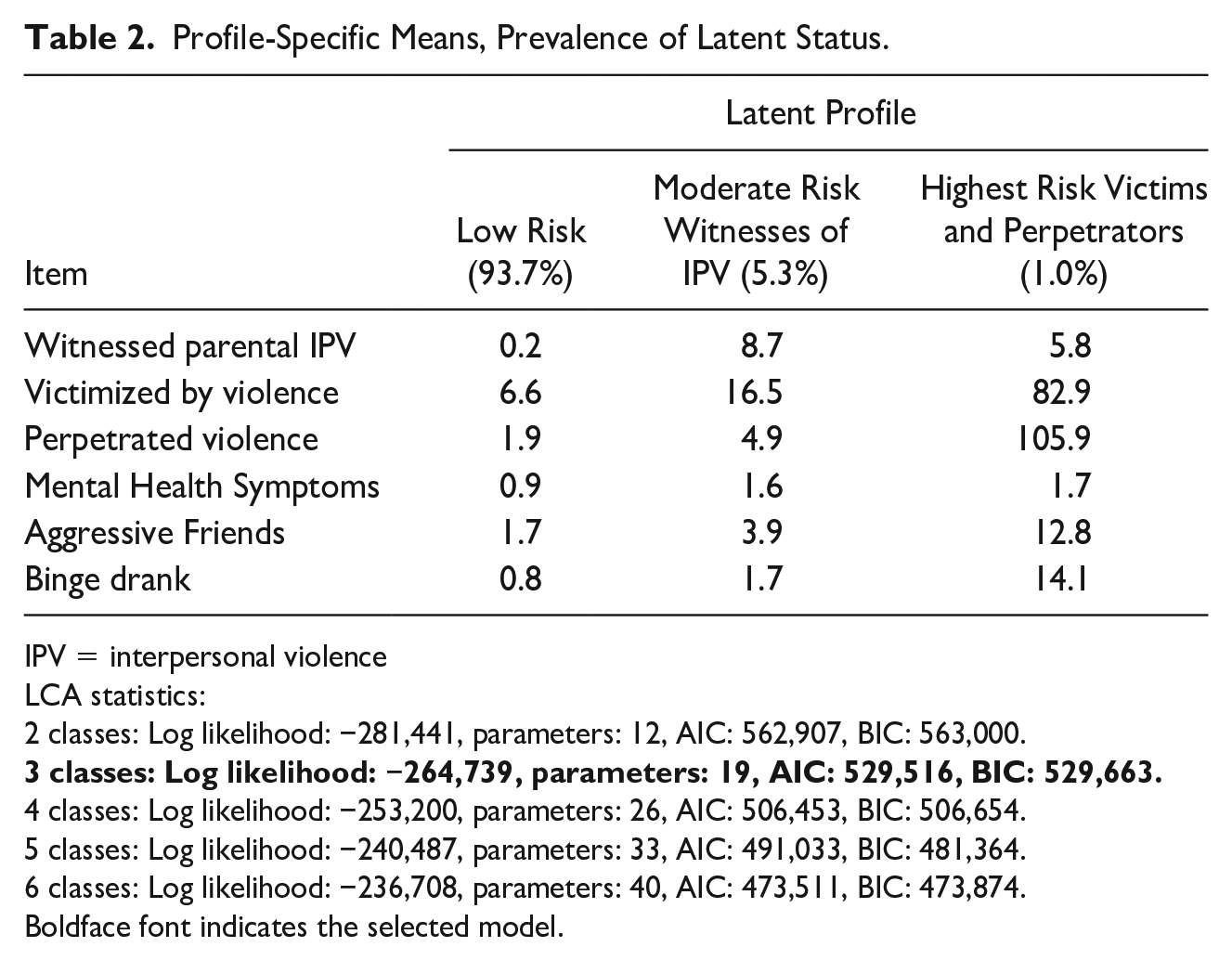
IPV = interpersonal violence
LCA statistics:
2 classes: Log likelihood: −281,441, parameters: 12, AIC: 562,907, BIC: 563,000.
4 classes: Log likelihood: −253,200, parameters: 26, AIC: 506,453, BIC: 506,654.
5 classes: Log likelihood: −240,487, parameters: 33, AIC: 491,033, BIC: 481,364.
6 classes: Log likelihood: −236,708, parameters: 40, AIC: 473,511, BIC: 473,874.
Boldface font indicates the selected model.
Bivariate Associations by Profile
Demographic differences were observed between latent profiles (Table 3). Compared to the low risk profile, a larger proportion of participants from the moderate risk witnesses of IPV profile identified as girls, students of color, not exclusively heterosexual, in a relationship in the past 12 months, and receiving a free or reduced-price lunch. Compared to the low risk profile, youth in the highest risk victims and perpetrators profile were much more likely to identify as boys, be students of color, not exclusively heterosexual, and be in a relationship in the past 12 months. Notably, almost all (95%) of youth in the highest risk victims and perpetrators profile reported being in a relationship in the past 12 months.
Bivariate Associations Between Profiles and Variables of Interest.
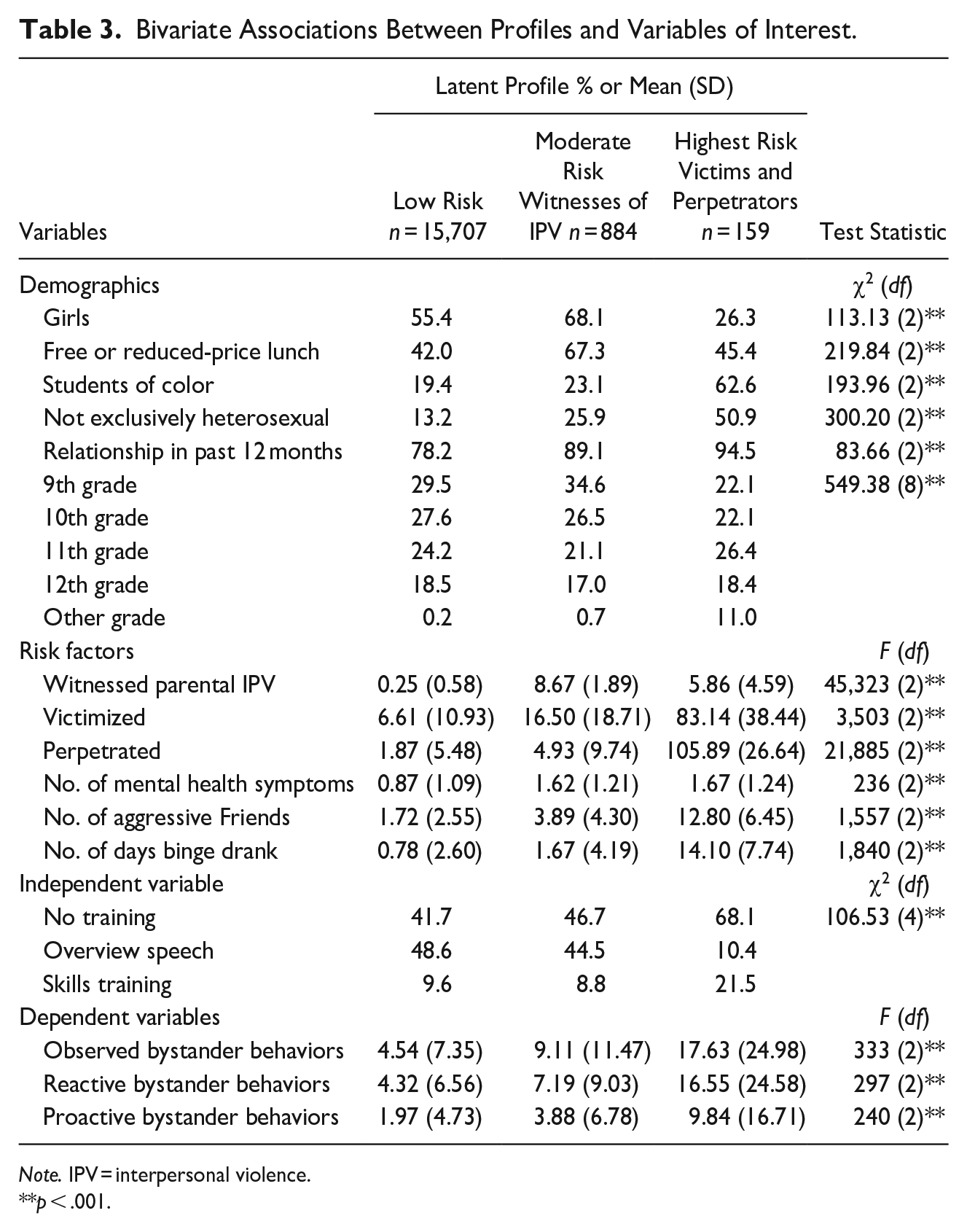
Note. IPV = interpersonal violence.
p < .001.
A greater proportion of youth from the highest risk victims and perpetrators profile reported receiving no training (68.1%) or the skills training (21.5%) compared to the low risk group, with the lowest proportion of this highest risk victims and perpetrators profile reporting receiving just the overview speech (10.4%). The number of observed bystander behaviors rose across risk groups, with moderate risk witnesses of IPV observing more behaviors than the low risk group, and the highest risk victims and perpetrators profile witnessing more behaviors than the moderate risk witnesses of IPV. This pattern followed for the other bystander outcomes, with moderate risk witnesses of IPV using more reactive and proactive bystander behaviors than the low risk group, and the highest risk victims and perpetrators profile using more reactive and proactive bystander behaviors than moderate risk witnesses of IPV.
Path Analysis
The multigroup path analysis demonstrated excellent fit (RMSEA = 0.00, SRMR = 0.00, comparative fit index [CFI] = 1.00, Tucker-Lewis index [TLI] = 1.00). Furthermore, the χ2 difference test indicated that the multigroup model was a better fit to the data than the full group model (χ2 difference = 2,089, df = 48, p < .001).
Associations with the Overview Speech
The overview speech was only associated with increases in reactive and proactive bystander behaviors for the low risk group (proactive bystander behaviors: B = 0.04, 95% CI: [0.03, 0.05]; reactive bystander behaviors: low risk B = 0.11, [0.10, 0.12]). The overview speech did not have an association with observed bystander behaviors for any group, and was not associated with proactive or reactive bystander behaviors for moderate risk witnesses of IPV or the highest risk victims and perpetrators profile.
Associations with the Skills Training
The skills training was associated with higher levels of all bystander behaviors for all groups (Table 4), except observed bystander behaviors for moderate risk witnesses of IPV. The association between the skills training and observed bystander behaviors was stronger for the highest risk victims and perpetrators profile (B = 0.32, 95% CI: [0.20, 0.44]) compared to low risk students (B = 0.05, [0.04, 0.06]). The association between the skills training and reactive bystander behaviors was strongest for the highest risk victims and perpetrators profile (B = 0.39, 95% CI: [0.28, 0.51]) compared to moderate risk witnesses of IPV (B = 0.23, [0.17, 0.28]) and those in the low risk group (B = 0.16, [0.15, 0.17]). The association between the skills training and proactive bystander behaviors was highest among the highest risk victims and perpetrators profile (B = 0.38, 95% CI: [0.26, 0.49]), followed by moderate risk witnesses of IPV (B = 0.12, [0.06, 0.18]), then the low risk profile (B = 0.07, [0.05, 0.08]). Across all three groups, the bystander training had a stronger association with reactive bystander behaviors, followed by proactive bystander behaviors, then observed bystander behaviors.
Standardized Path Estimates and 95% CIs from Multigroup Path Model.
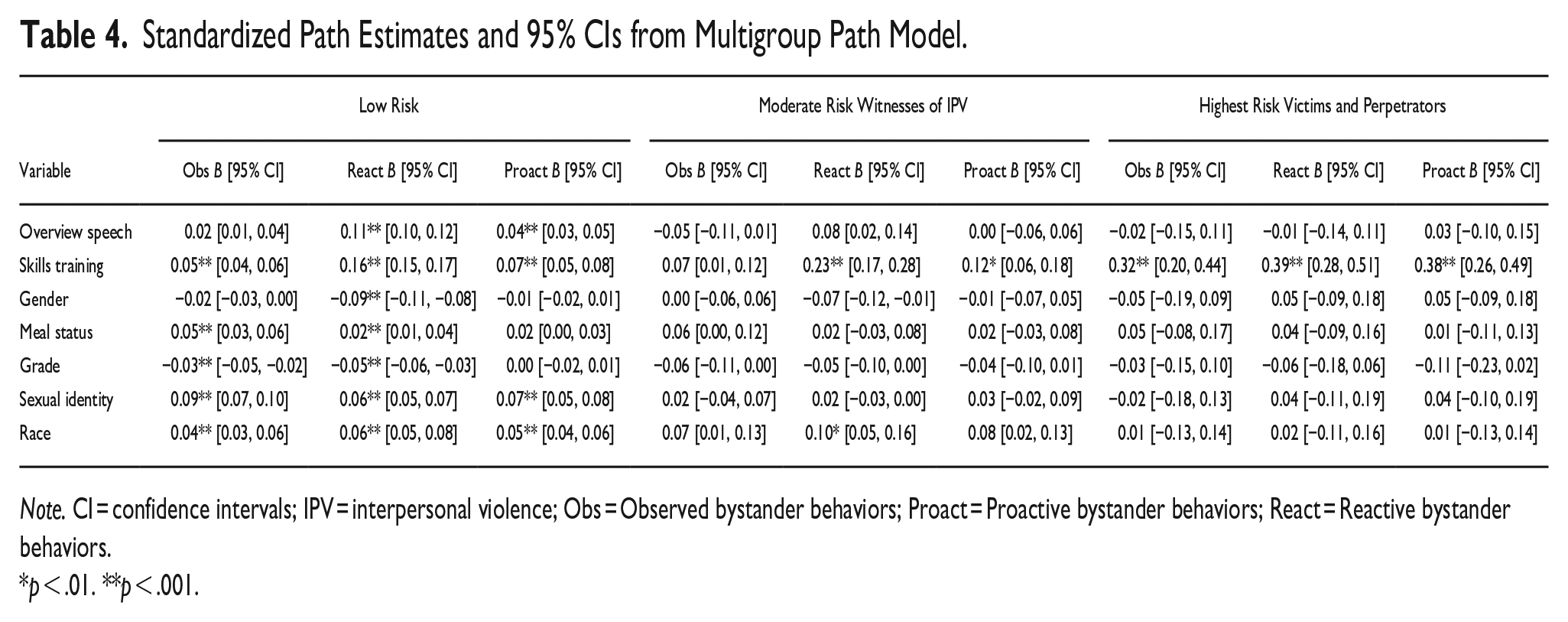
Note. CI = confidence intervals; IPV = interpersonal violence; Obs = Observed bystander behaviors; Proact = Proactive bystander behaviors; React = Reactive bystander behaviors.
p < .01. **p < .001.
Discussion
Based on the data available, this research identified three latent profiles of risk among high school youth: low risk, moderate risk witnesses of IPV, and highest risk victims and perpetrators. Factors within these latent profiles (violence exposure, mental health symptoms, association with aggressive friends, and alcohol use) are theorized or demonstrated to be associated with use of helpful bystander behaviors (Leone & Parrott, 2018; Leone et al., 2022; Woods et al., 2020), but this is the first known investigation to simultaneously consider these factors together in a latent way as it relates to bystander outcomes. This is important because these factors are often correlated (Braga et al., 2018), and likely cluster together in unique ways. Distinguishing factor between the higher risk profiles was witnessing parental IPV, victimization by violence, and perpetration of violence. Additional factors that were heightened among the highest risk victims and perpetrators profile were association with aggressive friends and binge drinking.
Looking at bivariate associations between risk profile and outcomes, highest risk victims and perpetrators reported the highest number of observed, reactive, and proactive bystander behaviors. Moderate risk witnesses of IPV also reported more bystander outcomes than their low risk peers. It is possible that prior victimization experiences and mental health symptoms explain part of the greater use of bystander behaviors among these profiles, in line with previous research (Wu et al., 2016). For the highest risk victims and perpetrators, who had the highest number of observed, reactive, and proactive bystander behaviors, it is possible that this increase is due to greater opportunity for bystander behaviors as a result of personal binge drinking and greater number of aggressive friends. Past research indicates that drinking is associated with more opportunities for bystander intervention (Waterman et al., 2019; Zozula et al., 2021) and research on peer groups indicate that friends have similar norms and behaviors as each other (Mumford et al., 2017), which suggests that a person who associates with aggressive friends would have more opportunities to use bystander behaviors. The bivariate associations observed here between latent profiles and bystander outcomes among the highest risk youth may suggest that association with aggressive friends and drinking leads to the use of more bystander behaviors for high school youth.
Looking at the moderating effect of these latent profiles between training received and bystander outcomes, important trends emerge. First, the overview speech was only effective among the low risk group. The overview speech alone was associated with increases in reactive and proactive bystander behaviors for the low risk group, but not observed bystander behaviors. Importantly, the overview speech alone was not associated with increases in any bystander outcomes for either the moderate or highest risk groups. Second, the skills training was associated with increases in most types of bystander behaviors across all risk groups. However, the strength of this association was larger among the two higher risk groups compared to the low risk group, and the largest among the highest risk victims and perpetrators. The current research indicates that receipt of the intensive 5-hr skill-based training is associated with increases in bystander outcomes among higher risk student groups. Other research into bystander intervention programs reinforces this finding, suggesting that multi-session trainings are much more effective than single session approaches (McMahon et al., 2015). The current research adds evidence to the case that the “active ingredient” in this particular bystander approach is the intensive skills training, and that the overview speech has less of a direct impact.
Prior research has identified that Green Dot is particularly effective at reducing violence outcomes among the high risk group of high school youth who had previously witnessed parental IPV (one component of risk identified in the latent profiles used in this investigation; Mennicke et al., 2021, 2022). The current study provides a possible explanation for this previous finding. In this case it appears that high risk youth are directly benefiting from the intervention (e.g., their own bystander behaviors increase and their own violence decreases), instead of a possible alternative explanation. Namely, it could have been possible that violence decreases among high risk youth because bystander behaviors increase among low risk youth. This does not appear to be the case. While it is true that the intervention (specifically the skills training) was effective at increasing bystander behaviors among all risk profiles, it was most effective among higher risk youth.
An additional contribution of this research was the inclusion of observed bystander behaviors as an outcome. Opportunities for bystander intervention often occur in social settings (Haikalis et al., 2018; Taylor et al., 2019), and therefore it is possible that multiple observers have the opportunity to act. In the case of peer groups, it is likely that not every person performs a bystander action, but instead one or two people in the friends group take responsibility and action. Therefore, the inclusion of observed bystander behaviors allows researchers to better understand these contexts. This information may reflect actual increases in bystander behaviors or the use of delegation/negotiation techniques among observers. In this data, observed bystander behaviors were the most frequently reported outcomes (generally and within risk profile), occurring more often than reactive or proactive bystander behaviors. The inclusion of observed bystander behaviors may also be capturing an individual’s increased awareness of bystander actions after receiving training, as they may now have improved skills to recognize and label situations as problematic and behaviors as helpful. Finally, the inclusion of observed bystander behaviors can act as a bias check, as the data can be used to triangulate self-reported use of bystander behavior. Overall, this research revealed that observed bystander behaviors increased among low risk individuals who received the skills training, but this increase was much stronger among highest risk victims and perpetrators.
Implications
Future bystander intervention programs may benefit from using an intensive skills training approach, specifically tailored to and informed by the experiences of high risk populations. Because of the high amount of violence experienced among these high risk groups, especially among highest risk victims and perpetrators, bystander programs should consider integrating trauma-informed elements (SAMHSA, 2014) into their intensive trainings. A strength of the bystander approach is that everyone who receives training is viewed as part of the solution instead of being identified as a potential problem, and integrating a trauma-informed approach could help youth exposed to violence further see themselves as part of the solution to stopping the cycle of violence. Interventionists should try to create training environments that are safe for victims of violence and attempt to eliminate obvious triggers. For example, trainers should emphasize the signs and risk factors that bystanders could notice as outsiders, instead of graphically depicting details of violence. Another suggestion is to incorporate basic information on the neurobiology of trauma, so survivors can understand their own behaviors as well as the behaviors of other victims.
Because frequent binge drinking was reported among the highest risk victims and perpetrators profile, and the skills training was most effective for these youth, future modifications to bystander programs could integrate substance use prevention techniques into the programming to further enhance its efficacy. Recommendations include addressing the reasons that people choose to use alcohol in social situations, focusing on the behaviors someone who is impaired or incapacitated may be exhibiting, and addressing the role of bystanders to intervene in potentially harmful situations (Klein et al., 2018). Recent research into the influence of alcohol on bystander behaviors reveals that intoxication of a bystander decreases their ability to notice a concerning situation, but when they do notice, alcohol increases their likelihood to act (Ham et al., 2019). Thus, bystander intervention programs geared toward youth who binge drink should focus on heightening skills in noticing concerning situations, as well as providing realistic options for bystander to utilize in response. These programs may also benefit from establishing and reinforcing norms that helpful bystander behaviors among drunk or drinking youth are meant to keep each other safe—building on the importance of social relationships during this developmental period (White et al., 2014). Additionally, because of the important influence of peer relationships during this age, bystander programs could incorporate social norming data about the actual use of bystander behaviors to correct any misperceptions youth might have about their peers (Mennicke et al., 2018).
Exposure to violence also emerged as such an important distinguishing feature between latent profiles. Interventionists could use assessment tools to identify whether students have been exposed to parental violence, been victimized in the past year, and whether they binge drank in the past month. Examples of short screening tools that could be used include the four-item HARK (Humiliation, Afraid, Raped, Kicked; Sohal et al., 2007) to screen for domestic violence, and the four-item TAPS (Tobacco, Alcohol, Prescription Medication, & Other Substance Use; McNeely et al., 2016) to screen for substance use. Students who respond yes to both could be identified as the highest risk (without the need to assess for perpetration—which is a frequently underreported behavior; Renner & Whitney, 2012), and could receive tailored training that includes alcohol education and identification of healthy coping mechanisms. Furthermore, if someone indicates that they had witnessed parental IPV or were victimized but infrequently binge drink, they would still be identified as moderate risk and could receive slightly tailored training that focused more on healing from trauma. Finally, if someone indicates no for exposure to violence and binge drinking, they could be identified as low risk, and receive a lower dose training (such as overview speeches alone). Because the overview speech was most effective among the low risk group, and the skills training was least effective among this group, it may be more efficacious to deliver the low-dose component of the training to this group and reserve resources for implementing the higher-dose training for the youth most at risk of violence and most likely to benefit from it.
Future Research
Future research could benefit from prospective examination of bystander behaviors within the context of changing individual risk behaviors. As youth mature, have new experiences, and receive training, their risk profiles will likely change. Elements of bystander training may need to be tailored to changing risk profiles. Additionally, future research should use social networking approaches to examine who these bystander behaviors are being used upon. Are they mostly used within group (low risk using reactive bystander on their low risk peers, highest risk victims and perpetrators using reactive bystander behaviors when their friends display concerning behaviors)? This could help intervention designers understand how to best tailor prevention programming within risk profiles.
Limitations
Data were collected via retrospective self-reports. While potentially prone to bias, students are the only source of these data. Collection of observed bystander behaviors was included to address this potential bias. Additionally, the measures used herein (especially for creating risk profiles) were based on known and available risk factors and may miss nuance in other experiences. The latent profiles of risk may therefore be misspecified if important indicators were not accounted for (e.g., self-control). A simpler approach to measurement was necessary because the survey needed to be short (99 questions). Data are now relatively dated, which may limit generalizability to today’s high school youth. The now ubiquitous integration of social media in student’s lives may increase opportunity for bystander intervention as cybervictimization and cyberbullying are prevalent on online platforms; however, there are also unique barriers and facilitators to intervention that are not captured within this study. Finally, while schools were randomly selected, increasing the generalizability of the findings, the study was conducted in one state, Kentucky, and may not be generalizable to all high schools in the United States.
Conclusions
The current research identified three latent profiles of risk: low risk, moderate risk witnesses of IPV, and highest risk victims and perpetrators. These latent profiles were important in understanding the effectiveness of components of the Green Dot intervention at increasing bystander outcomes. Specifically, it was observed that the skills training of Green Dot is most effective at increasing observed, reactive, and proactive bystander behaviors, especially among higher risk profiles. This information can be used to further tailor bystander intervention programs to increase their effectiveness, an especially important task among high school youth who are most at risk of experiencing violence.
Footnotes
Declaration of Conflicting Interests
The author(s) declared no potential conflicts of interests with respect to the authorship and/or publication of this article.
Funding
The author(s) disclosed receipt of the following financial support for the research and/or authorship of this article: The parent study was supported by the Centers for Disease Control and Prevention Cooperative Agreement 5U01CE001675. Support for the secondary data analysis research was supported by the Centers for Disease Control and Prevention Award 1K01CE003158-01-00. The findings and opinions expressed in this paper do not necessarily reflect the views of the CDC.
