




Abstract
In this article, we analyze data from a survey conducted in the Swiss city of Fribourg to investigate the correlation between bystanders’ experiences of street harassment and their likelihood of active engagement and strategies used to stop the harasser or assist and support targets of street harassment. Results reveal that, among bystanders, lifetime experiences of street harassment correlate positively with their ability to recognize street harassment conduct and the likelihood of intervention, support of the survivors, and reporting emergencies, even more significantly when the bystander endured physical abuse. In addition, behavioral differences among bystanders reflect different forms of resistance to the sexist culture that fuels street harassment. In light of these findings, we emphasize the need to integrate the narratives of the bystanders into awareness programs and campaigns, the importance of designing tools and policies to improve feelings of safety and limit street harassment conducts, including forms of benevolent sexism, and support further studies to assess the effectiveness of different intervention strategies in support of victims, including the need to research the use of digital media and its impact as a deterrent to street harassment or in increasing police reporting.
Introduction
On the street, in public transport, and more generally in public places, 1 individuals are surrounded by people and potentially always under observation. Nonetheless, sexually driven street harassment behaviors—that is, insistent stares, undesired remarks, body shaming, provocative gestures, touching, threats, violence, and rape—are widespread and affect the everyday life of millions of people (Davis, 1993; Gardner, 1995; Stop Street Harassment [SSH], 2014). The prevalence of these behaviors led researchers to question the causes of street harassment and the role of bystanders, who theoretically should have a deterrent effect on these antisocial, deviant, and illegal acts, even if empirical evidence shows divergent results (Fileborn & O’Neill, 2023; Lyons et al., 2022).
Several factors compel the likelihood of bystander intervention. Latané and Darley (1970) proposed a situational model—also known as the bystander effect theory 2 —suggesting that intervention is conditioned to a high sense of commitment, whereas, in the presence of multiple bystanders, the responsibility for intervention is dispersed among several observers, reducing the likelihood of active engagement. Passive bystanding is also related to individual lack of competence and moral disengagement. The former refers to skill deficits or a lack of confidence about how to intervene to stop the aggression (Bennett et al., 2014; Yule & Grych, 2020). The latter considers missing intervention, a consequence of bystanders not judging aggressive behaviors negatively, ignoring the harassment, or not recognizing it, thereby justifying the offender (Gini et al., 2020; Thornberg & Jungert, 2013). In addition, active engagement depends on perceived social and peer norms. In this respect, higher tolerance of sexism can feed rape myths and victim blaming (Banyard, 2011; Powell, 2014) and minimize behaviors that, by nature, should be stigmatized (El Moghrabi, 2015; Vera-Gray, 2016). This conduct is observable in individuals who tolerate sexist remarks in day-to-day talks without even questioning their sexist nature (Bailey, 2017) or blame victims of street harassment for their clothes, style, or look (Fairchild & Nguyen, 2020). Ultimately, the fear of crime and retaliation also inhibits the involvement of the bystander (Baker et al., 1990) and is usually associated with the perceived risk of revictimization.
However, scholars have not yet analyzed the degree of involvement of (and strategies adopted by) bystanders who have experienced street harassment firsthand. The results from similar research conducted in school settings—mainly related to bullying practices (Thornberg & Jungert, 2013)—reveal that survivors in the role of bystander tolerate forms of harassment less than other individuals. 3 Although various individual, psychological, and situational factors may discourage intervention—for example, fear of retaliation or lack of peer support in case of intervention—previous victimization equips survivors with the ability to recognize harassment (Latack et al., 2017). In addition, survivors also develop greater empathy toward the target, even more in the case of emergencies (Fischer et al., 2011), that is, events characterized by a significant degree of physical abuse or interpersonal violence. In this study, we build on these premises to corroborate the correlation between the experience of street harassment and the likelihood of actively engaging to stop the assault and protect and support the harassed.
We organize the article as follows. The following section delineates street harassment and the profile of survivors through a feminist and intersectional perspective. The subsequent sections stress the deterrent role of bystanders in street harassment and the extent to which the current policy and practice-based interventions integrate bystander experience and conclude by recalling the main hypotheses and the research question. The methodological section introduces the survey, the main variables, and the empirical strategy. The results section presents the regression specifications. Finally, the discussion debates the main findings and delineates policy and research implications.
Street Harassment: A Feminist and Intersectional Perspective
From a feminist and intersectional viewpoint, street harassment can be read as an intertwined expression of sexism, racism, homophobia, and transphobia through which harassers impose their will on people who do not conform to the dominant norms of gender and the prescribed patterns of binarity (Vera-Gray, 2016). From this perspective, street harassment works as a mechanism of reinforcement and reproduction of patriarchy and the power imbalance between social groups (Baptist & Coburn, 2019; Vera-Gray & Kelly, 2020; Quinn, 2002), or by paraphrasing Payne and Smith (2016), as an instrument of gender policing, that is, “the social process of enforcing cultural expectations for normal masculine and feminine expression” (p. 129).
Numerous harassment behaviors forge on these standards. Empirical literature reports that catcallers are more likely to share sexist beliefs, endorse self-ascribed traditional masculinity, and reveal tolerance of sexual harassment (Walton & Pedersen, 2021). Sexual predators also act in their desire to punish women who do not conform to norms of obedience or men who do not adhere to masculine models or present feminine personality traits (Baptist & Coburn, 2019). These power relations are not limited to gender relations but interact with social constructs such as race, social class, or age. It results that people who hold multiple marginalized identities, such as the LGBTQ+ community and racially minoritized communities (in Gunaratnam’s words), 4 are more likely to experience forms of street harassment (Baptist & Coburn, 2019; De Backer, 2020; Flores, 2017). For instance, women of color often experience both racist and sexist forms of street harassment, while gay men suffer homophobic harassment for breaking gender prevailing norms. In other words, street harassment reveals relationships of dominance, force, and control over others without consent.
The absence or the limited capacity of laws to punish such behaviors trivializes street harassment and can lead to a sort of legitimization of these conducts. The consciousness of acting with impunity nurtures an environment of sexual terrorism (in the word of Kissling, 1991) where the fear of sexual assault and rape is omnipresent (Kissling, 1991) and has the power to impact the routines of people regardless of their lived experiences (Lea et al., 2017; Mellgren et al., 2018). This last consideration translates into what Vera-Gray and Kelly (2020) called safety work, that is, techniques or strategies which become automatic reflexes that allow survivors to limit or dissuade stranger intrusions, such as cultivating friendships to hang out with, avoiding walking alone at night, or calling a taxicab to return home after parties (Dhillon & Bakaya, 2014; Lieber, 2002). These measures are conceived for self-protection and are, therefore, individual in nature, underpinning the active response of survivors in confronting episodes of street harassment (Baptist & Coburn, 2019). However, these self-protection strategies can also foster a paradoxical feeling of victim blaming that leads targets of harassment to deny incidents through distinct neutralization techniques, that is, by feeling guilty about the way they dress, the places they frequent, or the lifestyle they adopt, resulting in a discouragement effect on crime reporting (Mellgren et al., 2018; Weiss, 2011).
That said, strategies can also take on a collective character. For instance, international online activism allows people to share and process experiences of street harassment, spotlight self-defense practices (Fileborn, 2014; Fleetwood, 2019), encourage engagement in social movements defying sexism or other forms of oppression (Flores, 2017), and help survivors achieve a kind of justice by giving them the possibility to express themselves (Fileborn & Vera-Gray, 2017). The latter is instrumental in providing survivors with notions and self-confidence to cope with street harassment events, even in the role of active bystanders.
The Deterrent Role of Bystanders in Street Harassment
The active engagement of bystanders might play a role in deterring and desisting offenders from committing harassment and can be conceived either as an informal justice mechanism or a harm reduction strategy (Fileborn, 2017). The literature investigating the role of bystanders in street harassment events remains limited in scope and yields mixed empirical findings revolving around the motives supporting or hampering interventions. Some studies explained the lack of bystanders’ active engagement because of the context in which these acts occur. In public spaces, acts of harassment are usually unexpected and involve strangers whose behaviors are subject to the rule of civil inattention (Goffman, 1963). It means that strangers are disposed to ignore the copresence of others in public spaces to avoid any intrusion and protect their autonomous use of public space. In addition, the fear of violating the autonomy of others and the difficulties in recognizing forms of street harassment reduce the possibility of an intervention in the event of street harassment (Dekker, 2019). Therefore, bystanders are more likely to help when the survivor explicitly asks for help or in contexts where the pretexts to intervene are at hand. For instance, a crowded bus offers bystanders an occasion to dissuade the offender from committing a crime by standing between the target and the aggressor, drawing the crowd’s attention, or approaching him with a plausible excuse (Lea et al., 2017). This example exemplifies how bystanders could take advantage of situations in which it is possible to interfere without potentially entering into conflict with the aggressor (Dhillon & Bakaya, 2014). Furthermore, fear of physical or emotional harm, risk of retaliation, lack of social identification with the persons nearby, and low perception of social support are likely to discourage bystanders from intervention (Berkowitz, 2009). Lastly, previous research points out that bystander reaction tends to be more emphatic and confrontational in the presence of serious offenses such as physical harassment and sexual abuse (Fischer et al., 2011; Taylor et al., 2019), as violence is more noticeable in these cases and they involve a greater degree of urgency.
Beyond this previous evidence, there is a relative paucity in studies analyzing the level of engagement of bystanders who have experienced street harassment firsthand. Previous studies highlight—albeit in more supervised contexts and primarily related to bullying practices (Thornberg & Jungert, 2013)—that survivors tend to react differently according to their perceived skills. In the lack of social skills to deal with conflicts directly, survivors are more likely to express empathy toward targets by providing support once the aggression is over (Jiang et al., 2022). It is plausible to assume that survivors may also act differently from other individuals in public spaces, owing to a greater sensitivity to forms of harassment (Latack et al., 2017), thus giving more exposure to harassment practices even though the public space offers opportunities for neglect or inattention and even if previous victimization might confine their willingness to intervene due to fear of retaliation and revictimization. Howsoever, personal experiences may prompt the bystander to pay more attention to situations worthy of intervention and nurture a greater sense of social commitment. Likewise, the determination to intervene, to stop the offender, and to support the person harassed could be, among survivors, more substantial, even confrontational, in critical situations, in which individual cost-effectiveness analysis should give way to prosocial behaviors and spontaneous, uninhibited, and empathic reactions.
Policy and Practice-Based Initiatives Against Street Harassment
Several organizations advocate active bystander initiatives as a response to street harassment through the dissemination of good practices or the promotion of resources and training programs. The primary goal is to enhance the capability of bystanders to recognize street harassment or the need for intervention, increasing both confidence and intervention efficacy. For instance, the nonprofit organization Right to be embraced the so-called “The 5Ds (Distract, Delegate, Document, Delay, and Direct) of bystander intervention,” which teaches bystanders how to intervene effectively without causing harm or blaming the victim or without exacerbating the situation. Other organizations such as Stop Street Harassment have also delivered intervention guides to disseminate safe practices to face harassment episodes. Despite increasing resources, few studies have tested the effectiveness of these practices, and there is no conclusive evidence of their influence in reducing harm or instilling a sense of justice among the survivors of street harassment, or shifting community knowledge and attitudes (Fileborn, 2022; Hamby et al., 2016).
From an empirical point of view, a glimpse of the value of bystanders’ engagement in preventing forms of harassment is more observable in studies about sexual violence prevention programs, or practice-based interventions targeting sexual abuse or bullying either in the school environment (Kubiszewski et al., 2019) or working settings (Coyne et al., 2019). Concerning sexual violence programs, recent studies have shown how promoting active bystander training helps build shared individual and community responsibility, thereby challenging the broader cultural norms fueling interpersonal violence and sexual abuse (Banyard et al., 2004; Powell, 2014). An example of good practice is the domestic abuse primary prevention program called “Active Bystander Communities,” developed in the United Kingdom by academics and public health practitioners, which raised participants’ knowledge concerning typologies of help and support and helped members of various communities become more familiar with different intervention strategies (Fenton & Mott, 2017).
There is, therefore, a clear need to investigate the role of bystanders in street harassment in more depth to provide additional empirical support for the development of targeted practice-based interventions, especially as research, shows that the effectiveness of bystander engagement with street harassment can vary (Fileborn & O’Neill, 2023). For these reasons, the present study attempts to deepen into bystander behaviors in cases of street harassment by analyzing the reactions of bystanders who have experienced street harassment firsthand.
The Current Study
In the current study, we explore the specificity of bystander engagement in street harassment events by exploiting data from an online community-based survey conducted in the Swiss city of Fribourg. 5 We are particularly interested in exploring the behavior of bystanders by investigating the correlation between forms of active engagement—for example, intervention, support of survivors, and reporting emergencies—, types of strategies adopted by bystanders in street harassment episodes, and experiences of street harassment, accounting for individual differences in gender identity, age, literacy level, and sexual orientation. Following the literature review presented in previous sections, the analysis explores two main hypotheses. First, we estimate if experiences of street harassment among bystanders strengthen their capability to recognize street harassment, raise their sense of responsibility, and increase the odds of intervention, support toward survivors, and reporting emergencies. Second, we focus on intervention strategies to assess the correlation between experiences of street harassment and the type of intervention. The research question draws on these premises and is formulated as follows: What is the link between firsthand experiences of street harassment and bystanders’ reactions to it? By answering this research question, we expect to acquire and corroborate knowledge to support policies and programs to prevent street harassment.
Data and Method
The Survey
The data used in this study come from an online survey conducted in the Swiss city of Fribourg from August to October 2019 (Carbajal et al., 2020). The survey did not rely on a representative sample of residents, although 4,328 responded to the questionnaire, of which 4,035 observations were deemed valid. To increase the comprehensibility of the questionnaire and ensure a high scientific standard, several procedures were implemented. First, the questionnaire was submitted to field experts to incorporate their feedback in the survey. Second, pretests were conducted to assess language accuracy and semantic comprehension. Once approved, the online questionnaire—written in French and translated into German—was disseminated by the Municipality of Fribourg throughout the city through an extensive communication campaign (posters, flyers, radio communications, social network posting, bus advertising) that encouraged citizens to take part in the survey making it possible to boost participation and minimize the bias given by the lack of a representative sample. Notice that no monetary or nonmonetary compensation was offered, promised, or given to the community of the Municipality of Fribourg in return for participation in the study.
The 4,035 individuals aged 14 years or above who took part in this research answered questions related to their daily routines, spatial patterns of risk perception, experiences of street harassment, prevention strategies adopted to avoid harassment in public spaces, and role of bystanders. This last set of questions interrogated the role of bystanders regarding personal experiences (e.g., What did the people who witnessed the scene do?) and observed episodes of street harassment (e.g., Have you ever noticed forms of street harassment? If so, what did you do?). In this article, we focus on the latter question to investigate the correlation between bystanders’ personal experiences of street harassment and active engagement. In general, 2,941 individuals (68% of the total sample) have witnessed street harassment at least once in their lifetime, among whom 1,324 (45%) never intervened during a street harassment occurrence, primarily because they did not know what to do. The latter reason is more prevalent among women than men (41% vs. 32%, see Author, 2020). Women also indicated more than men that they did nothing because they were afraid (22% vs. 15%, see Carbajal et al., 2020).
Operationalization of the Variables
Bystanders Intervention in Street Harassment
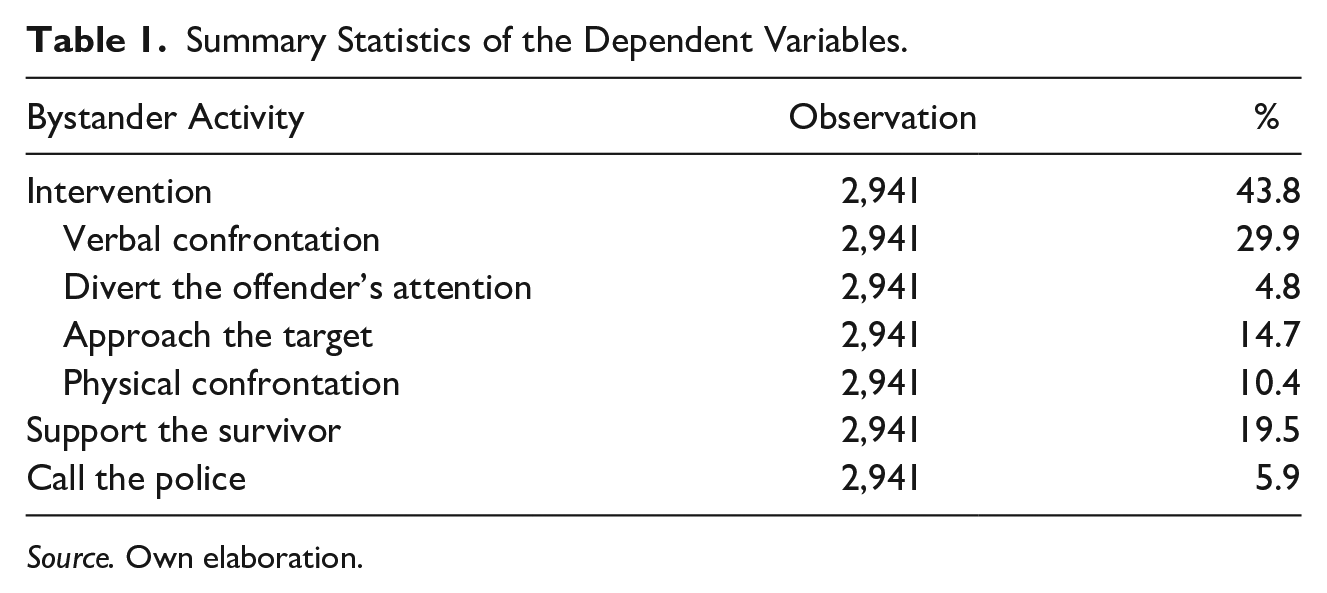
The survey asked respondents about several types of behavior associated with the bystander role. In this article, we consider three actions specifically: (a) the direct intervention of the witness aimed at interrupting the act while it is taking place; (b) the decision to support the survivor of the harassment once the harassment was over; and (c) the action of calling the police or a security officer to report the case or request an intervention. In addition, concerning (a) intervention, we focus on some strategies, including: (a1) verbally confronting the perpetrator(s) of the harassment; (a2) looking for an excuse—for example, asking for a cigarette—to divert the aggressor’s attention from the target; (a3) approaching the target to make the perpetrator(s) assume that the bystander and the target were friends; and (a4) physically interposing oneself between the aggressor and the target or physically confronting the perpetrator. Each of these actions represents a dependent variable in this study. Table 1 provides the figures. Verbal confrontation appears to be the most common intervention (30%), followed by supporting the survivor (20%) while diverting the aggressor’s attention (5%) is the least common behavior among bystanders.
Summary Statistics of the Dependent Variables.
Source. Own elaboration.
Forms of Street Harassment
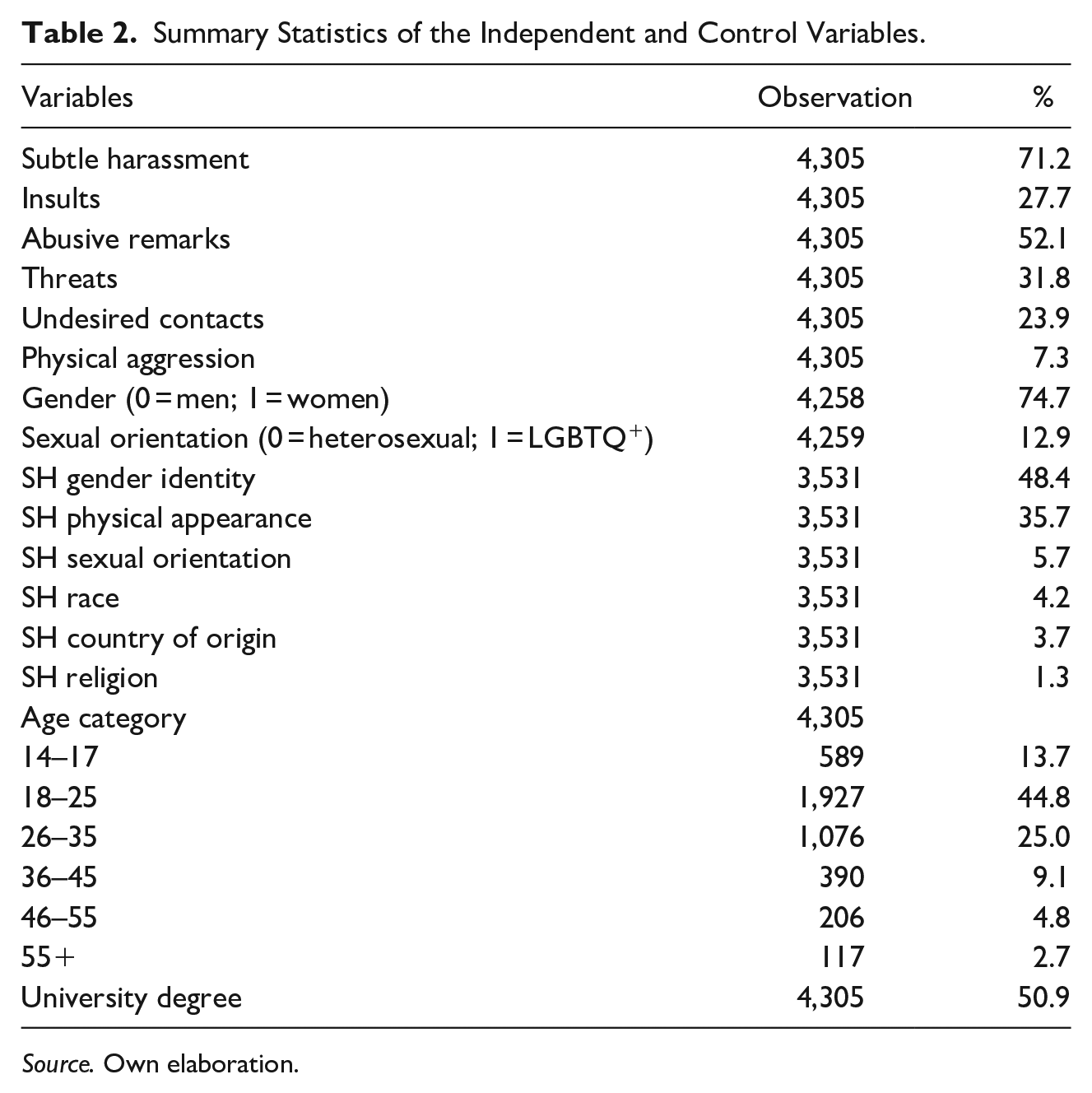
A first set of independent variables refers to different forms of street harassment that the bystanders may have experienced in their lifetime. In line with the literature (see Gardner, 1995; Heben, 1994), we identify six types of offending behaviors differentiated based on the intensity of the aggression and the proximity to the aggressor: (a) subtle street harassment includes whistling, gazing, honking, smacking, and leering, (b) insults comprise sexist, racial, religious, or general affronts, (c) abusive remarks contain clothing remarks, body shaming, improper inquiries, and indecent proposals, (d) psychological and physical threats enclose being followed on the road and stalking, (e) undesired contacts include groping and grinding, and (f) physical aggressions comprise physical or sexual assault and rape. Figures range from 7% in the case of physical abuse to 71% for subtle street harassment episodes. On average, each respondent reported more than two forms of harassment, and 86 respondents (2%) reported all six offenses combined.
Sociodemographics
For each regression, we include respondents’ characteristics related to gender identity, sexual orientation, education, and age to account for individual patterns in response to street harassment. Following an intersectional perspective, gender identity and sexual orientation are analyzed also in terms of their interaction. The variable gender identity indicates women with one and men with zero. Non-binary individuals are excluded from the regression analysis since few individuals identify as non-binary (n = 47; 1.09% of the overall sample). The second dummy variable considers sexual orientation dichotomizing heterosexual people from nonheterosexual people. The intersectionality paradigm also points to other forms of discrimination whose link to harassment raises some methodological issues. For example, knowing people’s nationality or country of origin provides no information about the racialization process to which the person may be subjected. 6 Similarly, religious affiliation is not a source of discrimination unless the person wears visible symbols of religious affiliation. Therefore, to get an additional indication of how intersectional discrimination (i.e., discrimination based on gender, sexual orientation, physical appearance, race, country of origin, or religion) connects to street harassment, we asked respondents to indicate the prevalence with which these factors were associated with street harassment: 48% refer to gender identity, 36% to the physical appearance, 6% to sexual orientation, while few respondents report that race, religion, or the country of origin were the reasons of harassment. For exhaustiveness, we run alternative regressions using the latter categories as proxies for the statuses concerned by intersectional discrimination. 7 Each specification also includes a few other demographics, for example, a dummy variable for respondents holding a university degree and a categorical variable accounting for the age of the participants, coding 14 to 25-year-olds with one and 55+-year-olds with five. Table 2 provides the figures for the independent variables.
Summary Statistics of the Independent and Control Variables.
Source. Own elaboration.
The Empirical Strategy
Given the binary nature of the dependent variables, we estimate seven distinct logistic regressions, each corresponding to a dependent variable. Subsequently, we adhere to the recommendations outlined in Mize (2019) by evaluating the interaction effect of intersectional variables based on first and second differences with regard to their impact on predictions. Specifically, we initially present logistic regression models for the diverse dependent variables (Tables 3 and 5), followed by an analysis of the first and second differences in the average marginal effects of one of the interaction terms across the others (Tables 4 and 6). 8
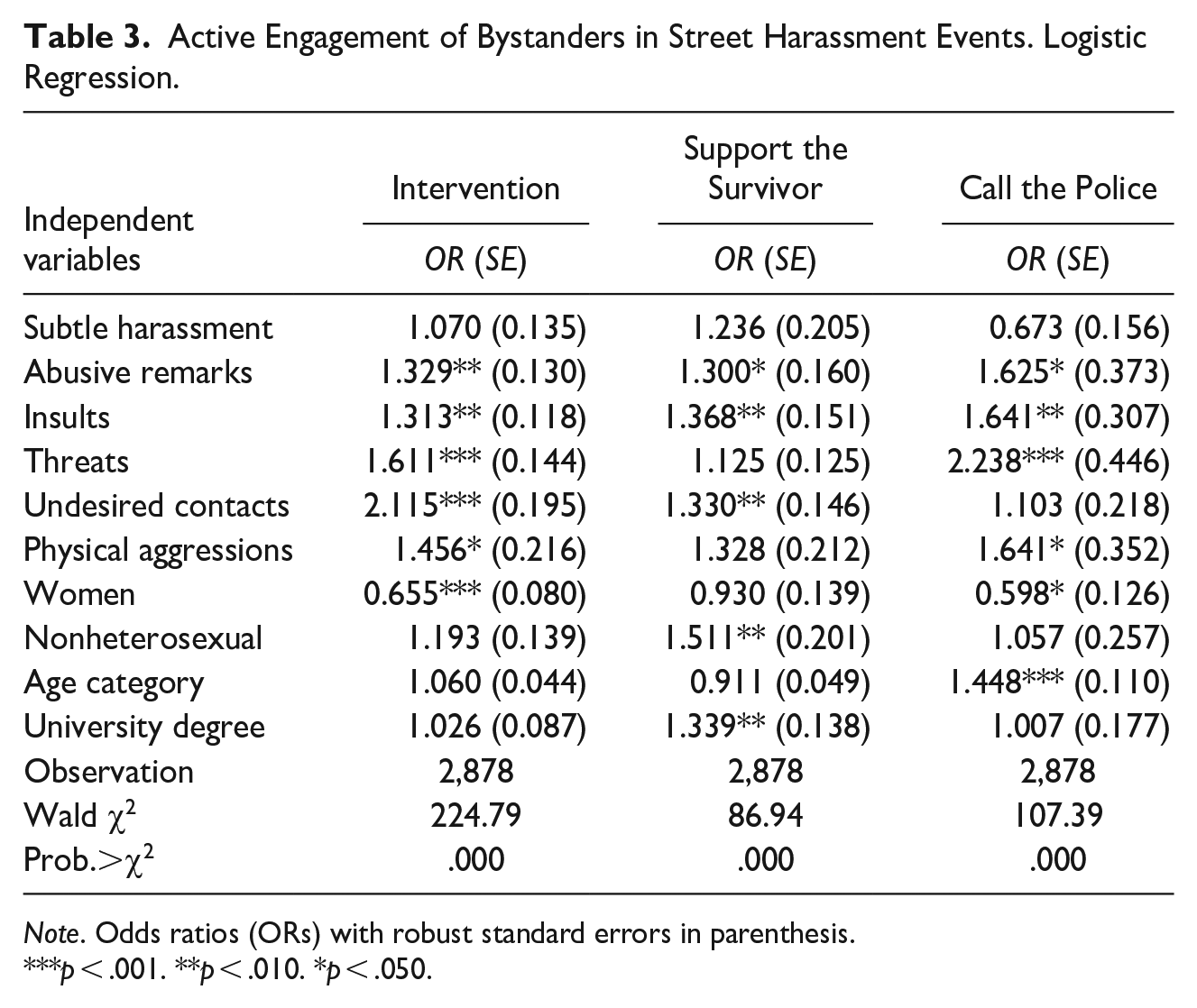
Active Engagement of Bystanders in Street Harassment Events. Logistic Regression.
Note. Odds ratios (ORs) with robust standard errors in parenthesis.
p < .001. **p < .010. *p < .050.
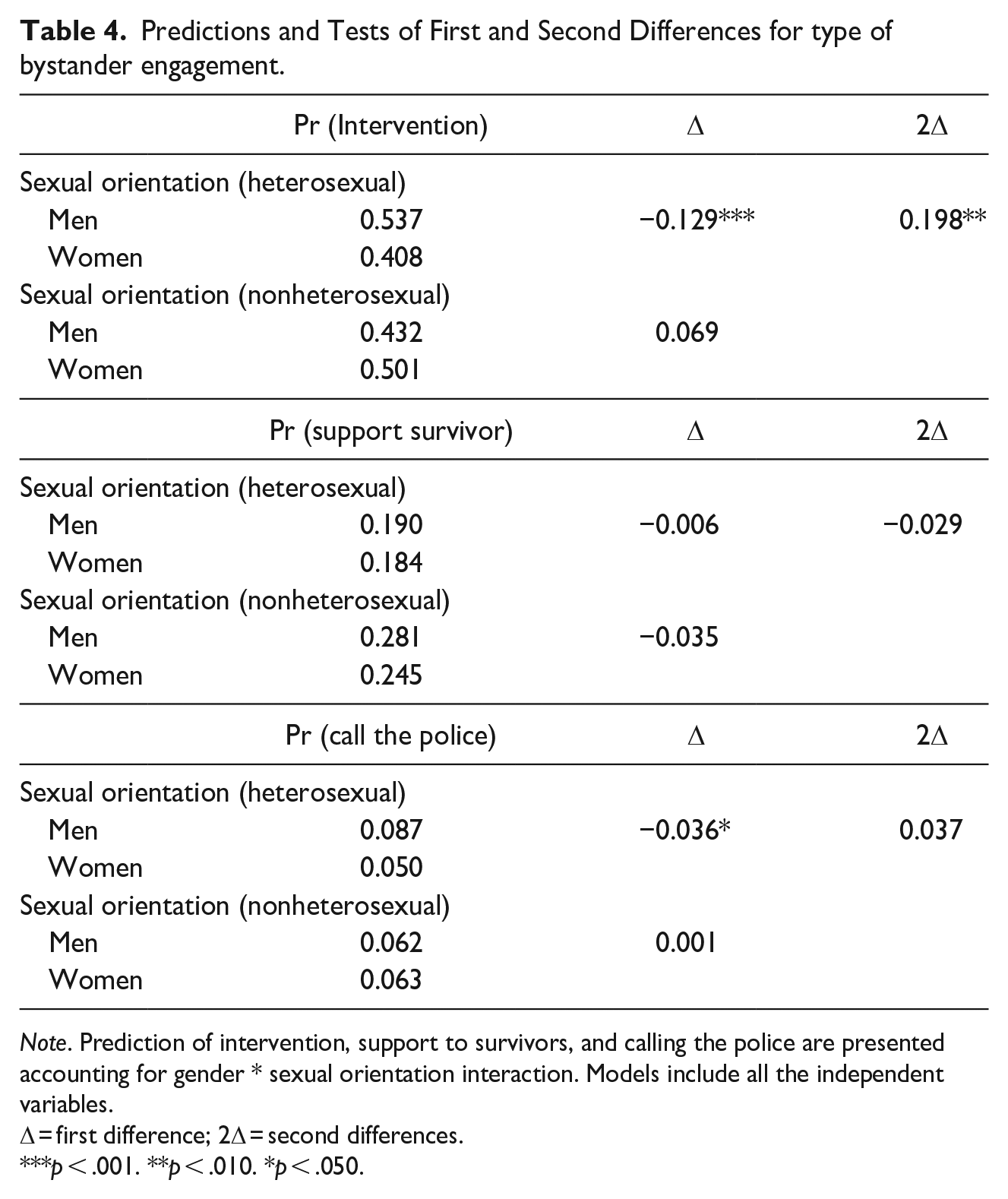
Predictions and Tests of First and Second Differences for type of bystander engagement.
Note. Prediction of intervention, support to survivors, and calling the police are presented accounting for gender * sexual orientation interaction. Models include all the independent variables.
Δ = first difference; 2Δ = second differences.
p < .001. **p < .010. *p < .050.
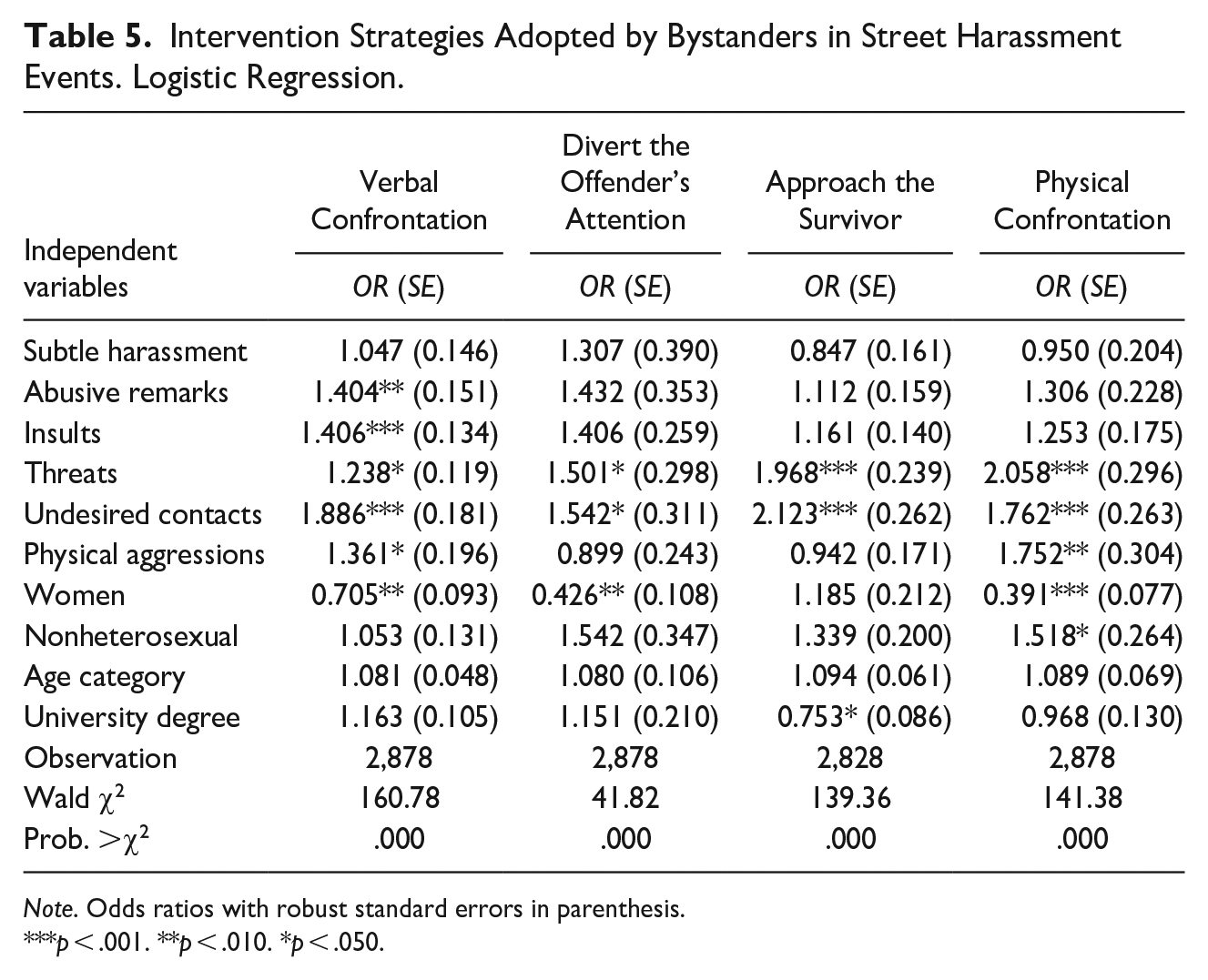
Intervention Strategies Adopted by Bystanders in Street Harassment Events. Logistic Regression.
Note. Odds ratios with robust standard errors in parenthesis.
p < .001. **p < .010. *p < .050.
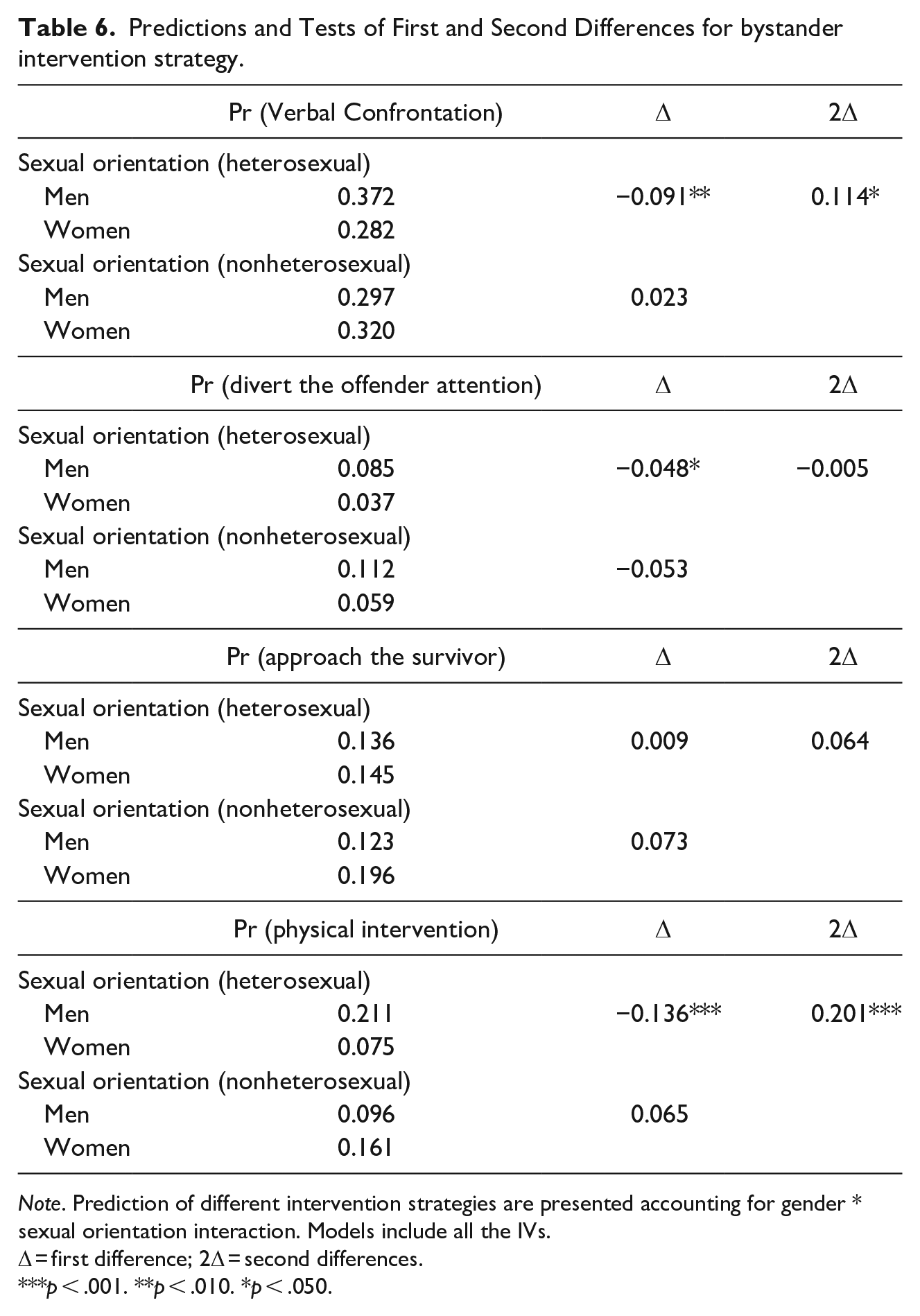
Predictions and Tests of First and Second Differences for bystander intervention strategy.
Note. Prediction of different intervention strategies are presented accounting for gender * sexual orientation interaction. Models include all the IVs.
Δ = first difference; 2Δ = second differences.
p < .001. **p < .010. *p < .050.
Empirical Results
Overall, the majority of instances of street harassment experienced by survivors, with the exception of subtle forms, exhibit a statistically significant and positive correlation with the three situations outlined in this article: intervening during the incident, providing support to survivors afterward, and contacting a security officer. Out of the three options, direct intervention shows the strongest correlation as reported in Table 3. In particular, an increment of one unit in the frequency of experiencing unwanted physical contact in public areas results in a 2.1-fold increase in the odds of intervening. Similarly, being threatened raises the odds of intervention by a factor of 1.6 (p < .001), while experiencing physical harassment raises the odds by 1.5 (p < .050). Insults and abusive remarks consistently increase bystander commitment, regardless of the three actions considered. The intensity of these correlations remains stable in the specifications that include the intersectional discrimination variable. Minor discrepancies in bystanders’ conduct emerge when accounting for individual traits. Women exhibit a decreased likelihood of intervening (odds ratio [OR] = 0.66; p < .001) and contacting the police (OR = 0.60; p < .050). Conversely, nonheterosexual individuals are more likely to provide assistance to the victim following the harassment (OR = 1.51; p < .001). Moreover, individuals with college degrees have a higher tendency to offer support to the survivor once the harassment has ceased, whereas older individuals are more inclined to report the incident to the police.
Table 4 displays the marginal effects, as well as the first and second differences, of the interaction between gender and sexual orientation. The findings reveal that, compared to heterosexual women, heterosexual men show higher probability to intervene and contact the police (first difference, with p-values of less than .05 and .001, respectively). Furthermore, the analysis indicates that sexual orientation (nonheterosexuality) has a more pronounced positive effect on women’s likelihood of intervening than it does on men’s (second differences = 0.198, p < .001).
Deepening into the different intervention strategies (Table 5), we observe that, among bystanders, those who experienced street harassment are more likely to confront the perpetrator verbally than individuals who never experienced these acts, independently of the type of offense. An increment of one unit in unwanted physical contact increases the odd of verbal confrontation by 1.9 (p < .001). At the same time, insults (p < .001), abusive remarks (p < .010), and physical aggression (p < .050) increase the likelihood of verbal confrontation by 1.4. Findings also suggest a positive association between the seriousness of the offense endured by the bystander and the intensity of the bystanders’ reaction. Physical interventions are more likely among bystanders who have experienced forms of street harassment characterized by higher levels of physical abuse. For instance, bystanders who experienced threats (p < .001) confront the offender physically 2.1 times more than non-victims. Undesired contacts (p < .001) and physical assaults (p < .010) also increase the odds of physical confrontation by 1.8. Undesired contacts and threats also correlate positively with strategies to distract the perpetrator’s attention or to support survivors, although the magnitude of the first correlation is rather weak. Besides, intervention differences among genders or sexual orientations are driven primarily by the fact that women are less likely than men to confront the offender verbally (OR = 0.71; p < .010) and physically (OR = 0.39; p < .001), as well as divert the offender’s attention (OR = .43; p < .010). Nonheterosexual individuals are also more likely to confront the harasser physically (OR = 1.52; p < .050).
A further analysis on interaction effects reveals that behavioral differences between men and women are limited to heterosexual respondents (first difference). Nonheterosexual orientation has a greater positive effect on the likelihood of verbal and physical intervention for women compared to men instead (second differences = 0.114, p < .001; .201, p < .001, respectively).
Discussion of the Main Findings
We have investigated the behaviors of bystanders who have experienced street harassment when confronted with street harassment events. The findings suggest that respondents who have experienced street harassment firsthand are more likely than individuals who do not have to intervene in public spaces, identify the harassment as a risky situation that needs intervention, assume a sense of responsibility to intervene, decide how to help, and finally, actually intervene, in line with Latané and Darley’s (1970) situational model. This finding is relevant in two aspects. First, bystanders’ intervention questions the images of apathy, indifference, and inactivity widely related to bystanders’ conduct in public places, usually pictured as anonymous spaces of civil inattention (Goffman, 1963). Second, we have highlighted that these acts occur in the context of sexual terrorism (Kissling, 1991), where street harassment acts as a mechanism to discourage deviation from gender norms and prescribed patterns of binarity. Therefore, the active engagement of bystanders might emphasize a form of resistance to the sexist culture that fuels street harassment.
Moreover, the empirical analysis underlines that bystander involvement is more confrontational the more physically intense the act of harassment experienced. Indeed, respondents who suffered from physical harassment and abuse (e.g., threats, undesired contacts, and assault) are more likely to report having confronted the aggressor physically than other respondents. It is also interesting to note that, among bystanders, those who experienced sexual abuse and rape seek contact primarily with the aggressor and less with the target. The latter might emphasize a source of revenge or retaliation against the aggressor. Since we do not have data on the type of harassment suffered by the survivor in the event of a bystander’s intervention, it is not possible to infer whether bystanders sort forms of harassment based on the severity of the experience endured, thereby discerning the behaviors deserving intervention based on personal experiences, or in agreement with the level of public tolerance toward these various conducts. That said, although the active engagement of bystanders can signal a form of questioning the widespread presence of sexism, its close link to the severity of harassment endured in a lifetime might nevertheless reflect and reproduce a certain trivialization of some forms of street harassment, notably whistling, gazing, honking, and smacking. Notice that all forms of street harassment, from less severe to more severe, fall on a continuum from benevolent to hostile sexism (Sarlet & Dardenne, 2012) and constitute a stranger intrusion into individual lives without consent (Vera-Gray, 2016) that reinforces social inequalities through gender and, more generally, social discrimination.
In line with the reasoning expressed above, the underestimation of specific acts of street harassment might discourage a call to the police. Indeed, although the results shown in Table 3 highlight a positive and significant correlation between experiences of street harassment and calls to the police, the likelihood is lower for more subtle forms of street harassment, that is, those acts that tend not to be punished by law. 9 In general, police reporting in the event of street harassment is not frequent and is limited to severe forms of harassment, as emerged from a recent analysis of official records from the city of Lausanne (Burkhardt & Caneppele, 2021), a Swiss city comparable to Fribourg where official data do not account for street harassment. Several explanations are plausible to explain the aforementioned statistical associations, such as negative experiences with the police for similar reasons (e.g., not being taken seriously, the embarrassment of having to tell the story several times), the inability to provide evidence concerning the harassment, or victim-blaming mechanisms. Another reason that could explain different patterns of police reporting is the trust in public institutions, which varies among social groups (Leiber et al., 1998). Findings suggest that the probability of calling the police increases with age, even though adults should theoretically trivialize more acts of harassment than youth, since these behaviors were, until the recent past, considered as standard practices and forms of expression of chivalry or seduction (Fileborn, 2022). According to some evidence, one motivation behind this result is young people’s tendency to prefer social media (e.g., Tik Tok, Instagram) rather than public institutions as a channel to report harassment or rally against it (Fileborn, 2014; Mcnamara, 2017). This last consideration requires in-depth studies to be confirmed and would demand—if further documented—rethinking the online presence of public institutions on digital platforms to approach the norms of communication, expression, and needs of young citizens.
Differences in intervention strategies concerning gender and sexual orientation are also worthy of mention. Nonheterosexual women and heterosexual men intervene more than heterosexual women or nonheterosexual men, and these differences relate mainly to seeking physical confrontation with offenders. The extended tolerance of sexism, homophobia, and transphobia that characterized public spaces could explain why we observe such differences. In this context, heterosexual women or nonheterosexual men may intervene less as they suffer various forms of marginalization by dominant social groups (Logan, 2015; Weber & Gredig, 2018), therefore, feeling less supported and protected. Under these conditions, the fear of retaliation may be amplified, thus explaining why they prefer not to confront the aggressor physically. By contrast, nonheterosexual women and heterosexual men facing the offenders are noteworthy. The former group could react to harassment as a form of affirmation of the right to express oneself differently in public, that is, a condemnation of discrimination based on gender and sexual orientation. The finding concerning heterosexual men is even more relevant in public spaces characterized by anonymity and pervasive misogyny. We argue that this result—which could also be affected partially by the type of sampling used, which overrepresents men who are survivors of or susceptible to acts of street harassment—indicates a form of questioning perceived social norms and expectations, particularly those relating to men’s appearance and behavior in public spaces.
Notwithstanding these results, some findings should be taken as cautious evidence since this study is not exempt from limitations. Despite a large number of participants, the sample is not representative of the population of the city of Fribourg. We can presume that a non-probabilistic sampling methodology has attracted the attention of participants more emotionally, intellectually, or culturally concerned by street harassment. Therefore, the results may suffer from self-selection bias and overestimate the prevalence of street harassment and bystander behaviors. For example, the women–men distribution (75% vs. 25%) among survey participants does not reflect the population ratio, emphasizing, to some extent, the higher exposure of women to street harassment. That said, we aimed to ensure greater inclusiveness by employing various dissemination strategies (e.g., advertisements and language translations) that helped a large segment of the resident population become familiar with the survey. Diversity was also addressed by including questions regarding self-reported intersectional discrimination (i.e., explanation of harassment based on gender identity, sexual orientation, physical appearance, race, country of origin, or religion). Of course, the possibilities of surveying the multiple dimensions related to the intersectional paradigm are debatable. Lastly, the research design imposes other limitations on the present investigation, mainly due to the lack of temporal order between street harassment experiences and bystander engagement, which limits the analysis to correlation alone. Indeed, the applied empirical approach does not assert causality.
Policy Implications and Final Considerations
The results prompt us to suggest policy recommendations in support of existing street harassment prevention initiatives. Noting that all acts of street harassment are abusive and, to some extent, illegal, this article has stressed the crucial role of experienced bystanders in acknowledging street harassment events. In recent years, Swiss public institutions have launched several initiatives to make public space more accessible and safer, promoting active bystander training and workshops and encouraging the active engagement of citizens. Some examples are the “Don’t Look the other way” workshops run by Amnesty International offered in several French-speaking cities in Switzerland and the workshop “Courage civile: harcèlement de rue, agir en tant que témoin” (https://milleseptsans.ch/couragecivil/) supported by the association Mille sept sans in the city of Fribourg.
We believe that these initiatives could further benefit from the results of this study in several ways. First, street harassment experiences allow for a more concrete identification of street harassment situations that may seem harmless to other users of public spaces. However, the type of bystander intervention seems related to the severity of street harassment: when street harassment is more intense, the reaction of bystanders is more confrontational. Instead, practice-based initiatives should encourage interaction in a nonconfrontational manner so as to not deprive survivors of their ability to act, establish a sense of justice, lessen retaliation, and make harassers meditate on their actions and avoid re-offending. A physical confrontation may not be effective in achieving these purposes: it may be riskier for the bystander, causes more fear and anxiety to the survivor without empowering the survivor to handle future street harassment situations, and fails to stimulate self-reflection in the offender about his behavior. Collecting user-submitted stories showing examples of successful bystander nonconfrontational intervention, as illustrated by Stop Street Harassment on its website, could be an effective way to promote nonviolent confrontation practices between bystanders and survivors. Second, police officers should be involved in street harassment prevention programs. These programs should provide room for police to explain their procedures and reasoning when dealing with calls related to street harassment. Likewise, the police should learn from the experiences of bystanders and survivors, for example, to understand the reasons behind the reluctance to call the police. Training should also take place online to encourage police reporting and to approach the norms of communication, expression, and needs of the younger generations. Third, street harassment is entrenched in intersectional discrimination even more when gender identity, physical appearance, and sexual orientation do not conform to standard norms or when race and religious affiliation are subject to marginalization and minorization processes. Therefore, it is crucial to involve sexually and ethnically minoritized audiences in the design of these programs.
We conclude with a few suggestions for future studies. The results of this article suggest the need to increase theoretical and practical knowledge about benevolent sexism, its manifestations, and its consequences. Street harassment, regardless of its forms, is part of a sexist, homophobic, and transphobic culture, but it is mainly the more subtle forms of harassment that encounter forms of societal resistance that prevent their full recognition and condemnation. Concerning the role of bystanders, further studies should investigate whether bystander intervention is contingent on the type of harassment observed. In other words, we should assess to which point experiences of stress harassment impact survivors’ ability to question socially tolerated behaviors, such as forms of benevolent sexism. Additional research should also evaluate strategies to increase crime reporting among that segment of the population that relies less on public institutions. Finally, future investigations should examine the effectiveness of practice-based interventions to tailor programs to reduce harm and achieve greater social justice.
Footnotes
Acknowledgements
The authors would like to acknowledge the Municipality of Fribourg for supporting the project “Harcèlement de rue en ville de Fribourg” and Emmanuel Fridez for his valuable work during the project.
Authors’ Contributions
Myrian Carbajal has coordinated the project and managed the data collection. Riccardo Milani has drafted the methodological section and conducted the data analysis. MC and RM have equally contributed to the introduction, results, discussion, and conclusion sections. Both authors reviewed and agreed the submitted version of the article. Other usual disclaimers apply.
Declaration of Conflicting Interests
The author(s) declared no potential conflicts of interests with respect to the authorship and/or publication of this article.
Funding
The author(s) disclosed receipt of the following financial support for the research and/or authorship of this article: The data presented in this study have been collected within the “Harcèlement de rue en ville de Fribourg” project, financially supported by the Municipality of Fribourg (Switzerland).
