




Abstract
Past research has emphasized the need to identify profiles of men who perpetrate intimate partner violence (IPV) as a way to better understand this heterogeneous population and guide the development of tailored services. However, empirical validation for such profiles remains limited, since it still focuses on specific populations or fails to consider IPV as reported by men seeking treatment for IPV. We know little about the profiles of men who seek services for their use of IPV (with or without a justice referral). This study sought to identify profiles of men seeking treatment for IPV, based on their self-reported use of the various forms and severity of IPV perpetrated, and to compare the identified groups on key psychosocial risk markers of IPV. A total of 980 Canadian men entering treatment in community organizations specialized in IPV answered a series of questionnaires. A latent profile analysis identified four profiles: (a) “no/minor IPV” (n = 194), (b) “severe IPV with sexual coercion” (n = 122), (c) “minor IPV and control” (n = 471), and (d) “severe IPV without sexual coercion” (n = 193). Results revealed differences in psychosocial risk markers, including attachment insecurities, childhood interpersonal trauma, undesirable personality traits, affect dysregulation, and psychological distress, mostly between the “severe IPV without sexual coercion” profile and the “no/minor IPV” and “minor IPV and control” profiles. Very few differences were found, however, between the “severe IPV with sexual coercion” and “severe IPV without sexual coercion” profiles. Implications for awareness, prevention, and treatment efforts for each profile are discussed.
Data from Canadian population victimization studies attest to the high occurrence of violence between romantic partners, with more than 40% of women and 33% of men reporting having experienced some form of intimate partner violence (IPV) over their lifetime (e.g., Cotter, 2021). IPV can take place in any relationship, no matter the cultural, ethnic, or socioeconomic background, and defines any act used by a current or former intimate partner that causes physical, psychological, or sexual harm (Cotter, 2021; World Health Organization [WHO], 2021). According to the WHO (2021), IPV is a serious public health issue associated with severe and deleterious consequences for men, women, and children worldwide. In the past decades, a number of research and prevention initiatives has been undertaken to better understand those who use IPV, mostly men, to reduce the occurrence of this form of violence and its consequences. Yet, perpetrators of IPV do not form a homogeneous group and research on the risk markers of multiple forms of IPV (e.g., physical, psychological, sexual) has highlighted their complex and multifaceted nature (Capaldi et al., 2012; Clare et al., 2021).
A promising avenue of research to help researchers and practitioners better understand those who use IPV has focused on the identification of profiles among IPV perpetrators (e.g., Hardesty et al., 2015; Holtzworth-Munroe & Stuart, 1994; Johnson, 2008). This important endeavor has allowed awareness, prevention, and treatment efforts to better align with the specific needs of IPV perpetrators (Stare & Fernando, 2014). Indeed, studies conducted using samples of men (Jewkes & Morrell, 2018) or young adults from the community (Grest et al., 2018; Saint-Eloi Cadely et al., 2020) have emphasized significant psychosocial differences between subtypes of IPV perpetrators and have stressed the need to tailor prevention and treatment efforts accordingly. Unfortunately, little is known about the profiles of non-incarcerated men who seek help for IPV-related issues (e.g., aggressive behavior, anger management difficulties, control, impulsivity, highly conflictual relationships). Using a sample of 147 men consulting for alcohol abuse, Klostermann et al. (2009) identified two distinct profiles of men based on their low or high perpetration of violence. Although many IPV perpetrators struggle with substance abuse, not all of them do (Klostermann, 2006). Therefore, the profiles that emerged in this study might not reflect the different profiles of men seeking help for IPV-related issues. The current study aimed to contribute to a better identification of profiles of men who seek help for IPV-related issues, whether they referred themselves, or had been referred by other institutions or professionals.
Current Classifications and Typologies of Men Who Perpetrate IPV
Research in the past decades has emphasized the multifaceted nature of IPV, its risk factors, and the psychosocial characteristics of perpetrators (see Clare et al., 2021, for a review). This bulk of research has been fueled by the assumption that the identification of psychosocial risk factors specific to the various forms of IPV may reflect similarities in men who use IPV and lead to the development of more accurate and nuanced detection, assessment, and intervention strategies, ultimately leading to a reduction in the occurrence of IPV (Boxall et al., 2015). Such research can also help better equip practitioners, healthcare providers, social workers, and actors from the legal system to assess the risk of IPV and refer men to adequate prevention and treatment services, to protect current or potential victims (Ali et al., 2016; Beck et al., 2013).
In their review of the classifications of IPV perpetrators, Ali et al. (2016) stated that previous typologies relied on a variety of indicators. For instance, some typologies were developed based on the nature of the perpetrated IPV (e.g., Hardesty et al., 2015; Johnson, 2008), whereas others have emerged from the characteristics of men who use IPV (e.g., Holtzworth-Munroe & Stuart, 1994). More recent classifications of IPV perpetrators have also included IPV victimization (Grest et al., 2018), arrest records (Weber et al., 2019), or combined male and female perpetrators (Saint-Eloi Cadely, 2020). However, most existing typologies omit key forms of IPV and their level of severity. Some classifications have excluded coercive control (Grest et al., 2018) or sexual coercion (Saint-Eloi Cadely, 2020). Yet, coercive control is a key form of IPV to help distinguish violence that occurs as a result of conflicts (i.e., situational couple violence) from intimate terrorism (Hardesty et al., 2015; Johnson, 2008), which is the repetitive use of tactics aimed at regulating the intimate partners’ daily life while restraining their personal liberties and inducing fear (Johnson, 2008). In the same vein, most studies did not consider sexual coercion in their classification analyses (for exceptions, see Grest et al., 2018; Hardesty et al., 2015), thus overlooking another key form of IPV. This follows a general tendency in the study of IPV, which has often overlooked sexual coercion toward an intimate partner (Monson et al., 2009) despite its associations with a host of severe consequences for the victims (Salwen et al., 2015).
Moreover, almost none of the previous classifications included men who are seeking help for IPV-related difficulties (Ali et al., 2016). For instance, researchers investigated IPV through divorced mothers’ reports of victimization (Hardesty et al., 2015) and others only included men who were on probation after being arrested for IPV (Weber et al., 2019). Identifying profiles of IPV perpetrators by relying solely on victims’ reports (e.g., Hardesty et al., 2015) or on men who are court-mandated (e.g., Carbajosa et al., 2017) precludes us from drawing conclusions that may be representative of the diversity of men involved in prevention and intervention services. Indeed, some men who seek help for IPV-related difficulties may do so voluntarily because they do not feel they have people around them in which to confide and talk about ways to deal with their violence problems (Palmstierna et al., 2012). Others may seek help when they see no other options, for instance, when they receive an ultimatum from a partner, family member, or an employer, or when they—or a close one—conclude that they can no longer go on without help (Palmstierna et al., 2012; Snyder et al., 2009). Examining IPV perpetration profiles in a more heterogeneous and inclusive sample of men who seek help for IPV-related issues, whether they are court-mandated or not, will permit us to pinpoint their specific needs and contribute to the development of more effective and tailored services. To gain a better understanding of the profiles of men who perpetrate IPV, we need to examine whether men in these different profiles vary according to known psychosocial risk markers associated with IPV.
Profile Distinctions According to Demographic and Psychosocial Variables
In a few of the previously developed typologies of IPV perpetrators, researchers have raised the possibility that men from different profiles may differ according to demographic and psychosocial variables that are known risk markers for IPV. For instance, in their typology of IPV perpetrators, Holtzworth-Munroe and Stuart (1994) hypothesized that the more men used frequent and severe IPV, the more likely they were to present undesirable personality traits (e.g., psychopathy) and high attachment-related anxiety and avoidance. This theory was later supported by a study showing that men who use low levels of IPV present low attachment anxiety and avoidance, men who use moderate levels of IPV present higher attachment anxiety, and men who use high levels of IPV present both higher attachment anxiety and avoidance (Mauricio & Lopez, 2009). In another study, Petersson et al. (2019) found that men who use more severe and frequent IPV (a profile named antisocial perpetrators) are five times more likely to have mental health issues and substance use problems, compared to men who use less severe and less frequent violence, and who aim it primarily toward their family (a profile named family-only perpetrators). Their results also revealed that antisocial perpetrators are less likely than family-only perpetrators to report an immigrant background. Results from this study and others (Cunha & Gonçalves, 2013; Goldstein et al., 2016; Graña et al., 2014) suggest that men who use more severe and frequent IPV, compared to men who use less frequent and severe IPV, tend to present lower education and employment, more judicial problems, and higher levels of antisocial personality traits (e.g., psychopathy).
Johnson (2008) also hypothesized sociodemographic and psychosocial differences when developing their typology. He suggested that men who are classified as intimate terrorists (i.e., those who employ more severe and frequent tactics of violence and coercive control toward their partner; akin to antisocial perpetrators) would present more difficulties regulating their emotions—such as anger—more psychopathology, and more antisocial tendencies than men who are classified as situationally violent perpetrators (i.e., who use minor forms of psychological or physical IPV in response to stressors or conflicts; akin to family-only perpetrators). According to Holtzworth-Munroe and Stuart (1994) and Johnson (2008), both antisocial perpetrators and intimate terrorists are more likely to report childhood interpersonal trauma. In their classification study of IPV perpetrated by emerging adults, Grest et al. (2018) supported this by showing that those who reported more childhood victimization were more likely to report a higher frequency of various forms of perpetrated IPV. Yet, to date, few of the previously presented typologies have empirically tested whether men in their profiles show differences in demographic and psychosocial variables, even less so in samples of men who are seeking help.
Finally, Johnson (2008) suggested that perpetrators can be differentiated by their report of IPV victimization. For instance, situationally violent perpetrators would report similar levels of sustained and perpetrated IPV due to conflicts that escalate into aggression, whereas intimate terrorists are more likely to be the sole perpetrators of IPV with their partner rarely resorting to aggression (or only in self-defense). Despite these differences, and although this seems like an important theoretical component of the differentiation of IPV perpetrators, few taxonomies have examined whether profiles of IPV perpetrators differ according to their report of sustained IPV.
The Current Study
The main objective of this study was to develop profiles of men seeking treatment for IPV, based on the forms and severity of perpetrated IPV, and to compare men in these profiles on their reports of sustained IPV, demographic variables, and psychosocial risk markers of IPV, namely education, employment, immigration status, judicial status, substance use, history of childhood interpersonal trauma, romantic attachment, affect dysregulation, indicators of psychological distress, and undesirable personality traits (i.e., psychopathy, narcissism, and Machiavellianism). Although our approach was mainly exploratory, we expected a profile of more severe and generalized IPV (akin to intimate terrorism and antisocial perpetrator) and a profile of less severe IPV (akin to situational violence and family-only perpetrators).
Method
Participants
The sample included 980 men aged 18 to 88 years old (M = 36.75, SD = 10.89), who were entering treatment in one of the 11 partnered community organizations specialized in IPV (17.0% not for the first time) in a province of Canada. Almost two out of three men (63.6%) had gone through a judiciary process (either in IPV, youth protection, or another) and/or had a restraining order from their (ex-) partner. They spoke French (91.2%), English (6.9%), Spanish (1.0%), or another language (0.8%), and were born in Canada (84.6%) or another country (15.4%). Most men had a high school diploma or less (72.6%), had a personal annual income of less than CAN$40,000 (56.2%), and were working full time or part time (62.3%). Men identified mostly as heterosexual (95.4%), and a few identified as bisexual (1.7%), homosexual (0.5%), pansexual (0.2%), two-spirited (0.1%), in questioning/other (0.4%), or did not want to disclose this information (1.6%). All men had been in an intimate relationship in the past year, but were currently single (16.3%), separated/divorced (6.3%), going through a separation (11.4%), dating (13.4%), cohabiting (34.1%), married (14.6%), starting a new relationship (2.6%), seeing sexual partners only (0.6%), or reported another status (0.7%).
Procedure
This study was part of larger ongoing partnership research program conducted with 11 community organizations offering treatment for IPV in a province of Canada. Within this research program, all men who seek help in one of these partner organizations are invited to answer self-report questionnaires on the Qualtrics secure platform as part of a standardized assessment protocol. Questionnaires are then analyzed by the research team and a summary of interpreted results are sent back to the organizations to assist in the identification of treatment needs. Although questionnaire completion was mandatory prior to receiving treatment, all men were free to decide whether they wanted their data to be used for research purposes or not. The data for this study were collected between April 2020 and March 2021. Among the 1,455 men who entered treatment, 1,136 agreed to take part in the research (78.1% participation rate) and 980 met the inclusion criteria (i.e., they identified as men, were aged 18 years or older, had been in an intimate relationship in the past year, and had completed all measures).
Measures
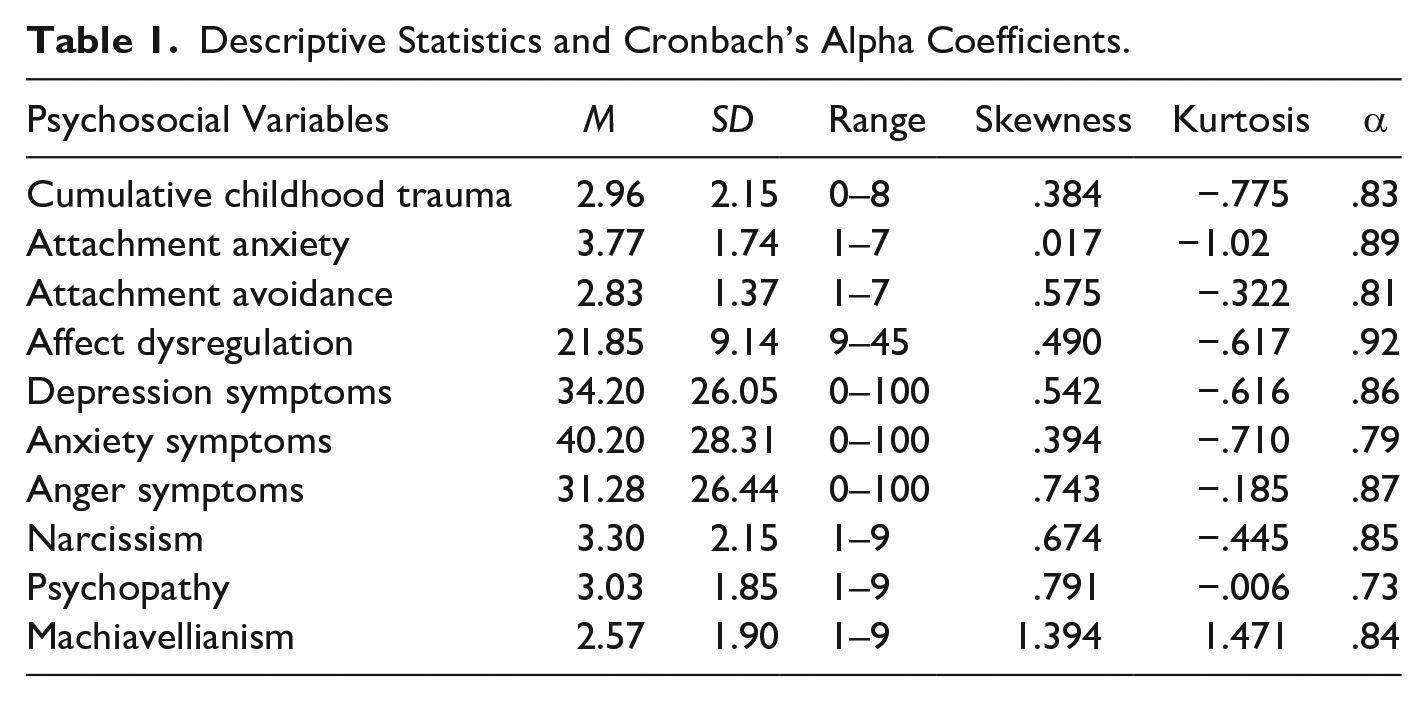
A demographic questionnaire assessed sociodemographic information (e.g., age, sex, gender, sexual orientation), as well as education, employment, immigration status, judiciary status, and substance use (i.e., alcohol, cannabis, and stimulant drug use, problematic substance use according to close ones). In addition to IPV, the following validated measures of psychosocial risk factors were selected based on their adequate psychometric properties and brevity. Alpha coefficients for the validated measures in the current study are shown in Table 1.
Descriptive Statistics and Cronbach’s Alpha Coefficients.
Intimate Partner Violence
A 20-item short version of the revised Conflict Tactics Scales (Straus & Douglas, 2004) assessed the frequency of perpetrated (and sustained) minor and severe physical IPV (e.g., pushed, shove), psychological IPV (e.g., insulted, swore), and sexual coercion (e.g., insisted on sex when my partner did not want to) in the past 12 months. Items were rated on a scale ranging from 0 (this never happened) to 6 (more than 20 times in the past year). Based on Straus and Douglas’s (2004) recommendations, a three-level severity score was created for each form of violence, where 0 = no violence, 1 = minor violence only, and 2 = severe violence. Higher scores indicate a greater severity of perpetrated (and sustained) IPV.
An eight-item version of the Coercive Control Scale (Johnson et al., 2014) assessed the frequency of perpetrated (and sustained) coercive control in the past 12 months (e.g., I insisted on knowing who my partner was with at all times). Items were rated on a scale ranging from 0 (this never happened) to 6 (more than 20 times in the past year). A three-level severity score was also created for this scale (0 = no control, 1 = minor control, 2 = severe control). Higher scores indicate a greater severity of perpetrated (and sustained) IPV.
Childhood Interpersonal Trauma
A 10-item version of the Childhood Cumulative Trauma Questionnaire (CCTQ; Godbout et al., 2017) assessed eight types of interpersonal trauma experienced before the age of 18 (physical, psychological, and sexual abuse; physical and psychological neglect; witnessing physical or psychological parental violence; bullying). Each type of trauma (0 = absence, 1 = presence) was summed to create a total score of CCT (ranging 0 to 8), referring to the number of different types of childhood interpersonal trauma reported by men.
Attachment-Related Anxiety and Avoidance
The 12-item version of the Experiences in Close Relationships scale (Lafontaine et al., 2016) assessed general romantic attachment anxiety (i.e., fear of losing one’s partner based on a negative self-image) and attachment avoidance (i.e., discomfort with emotional intimacy based on a negative view of others). Items were rated on a seven-point Likert scale ranging from 1 (strongly disagree) to 7 (strongly agree), then relevant items were averaged to create each subscale score, higher scores indicating higher attachment anxiety or avoidance.
Affect Dysregulation
The nine-item affect dysregulation subscale of the Inventory of Altered Self-Capacities (Briere, 2000) assessed affect skills deficits (i.e., affect control deficit and incapacity to regulate or tolerate distress) and affect instability (i.e., mood swings and anger inhibition issues). Participants indicated to what extent they agreed with each item, using a five-point scale ranging from 1 (never) to 5 (very often). Items were summed to create a global score, higher scores indicating higher affect dysregulation.
Psychological Distress
The brief 12-item version of the Psychiatric Symptom Index (Ilfeld, 1976) assessed psychological distress symptoms with three subscales: depression (five items, e.g., feel bored or had little interest in things), anxiety (three items, e.g., feel fearful or afraid), and anger (four items, e.g., get angry with things that are not too important). Items were rated on a four-point scale ranging from 1 (not at all) to 4 (very often), then relevant items were summed to create individual subscale scores, higher scores indicating higher symptoms. Cutoff points allow identifying whether symptoms are deemed clinically significant or not (Ilfeld, 1976).
Undesirable Personality Traits
The Dirty Dozen (Jonason & Webster, 2010) 12-item scale assessed three socially undesirable personality traits: narcissism (e.g., tend to want people to admire me), psychopathy (e.g., tend to lack remorse), and Machiavellianism (e.g., tend to manipulate others to get my way). Items were rated on a nine-point Likert scale ranging from 1 (strongly disagree) to 9 (strongly agree). Relevant items were averaged to create each subscale’s score, higher scores indicating higher presence of the undesirable personality traits.
Data Analysis Strategy
To classify participants into distinct groups, a latent profile analysis (LPA) was conducted using Mplus 8 (Muthén & Muthén, 2017). LPA allows the researchers to identify mutually exclusive groups of individuals that show similarities on observed variables through the identification of latent categories that arise from unobserved heterogeneity in a population (e.g., Nylund et al., 2007). To identify the classification model with the best fit, a series of LPA models with an increasing number of profiles were tested, until optimal fit was reached (Geiser, 2013). Evaluation of model fit was estimated based on the Akaike’s information criterion (AIC; Akaike, 1987), the Bayesian information criterion (BIC; Schwartz, 1978), the sample-size-adjusted BIC (aBIC), entropy (Celeux & Soromenho, 1996), the Lo–Mendell–Rubin adjusted likelihood ratio test, and the Vuong-Lo–Mendell–Rubin likelihood ratio test (Lo et al., 2001). To select the best fitting model (i.e., to decide the number of profiles that best represent the data), the following criteria were used: the smallest values of AIB, BIC, and aBIC, an entropy statistic that is close to 1 (indicating high classification accuracy), and significant values of the Lo–Mendell–Rubin adjusted likelihood ratio test, and the Vuong-Lo–Mendell–Rubin likelihood ratio test, which indicate that the estimated model fits the data significantly better than a model with one profile less (Geiser, 2013; Nylund et al., 2007). Geiser (2013) also suggests that the best fitting model should be selected based on its interpretability, theoretical significance, and parsimony. We examined differences in risk markers across profiles using the AUXILIARY command in Mplus (Asparouhov & Muthén, 2013), with the DU3STEP specification for unequal means and variances. We used chi-square tests to compare profiles according to categorical risk markers (country of origin, education, income, occupation, substance use, judiciary processes).
Results
Table 1 displays the sample’s descriptive analyses and Cronbach’s alpha coefficients for all psychosocial variables. Across the sample, 38.3% of men perpetrated at least one act of physical assault in their intimate relationship in the last year, 80.0% perpetrated at least one act of psychological abuse, 13.4% perpetrated at least one act of sexual coercion, and 62.2% perpetrated at least one act of coercive control. Moreover, most participants reported clinically significant (i.e., higher than the proposed cutoff) symptoms of depression (51.2%), anxiety (63.1%), and anger (47.9%). The distribution for all psychosocial variables did not depart from normality.
To identify profiles of participants using LPA, the severity scores (from 0 to 2) for each form of self-reported IPV (i.e., physical and psychological IPV, sexual coercion, and coercive control) were used. Table 2 provides model fit indices for every LPA model that was tested. Analysis of the entropy statistic suggests that the four-profile and the five-profile models show the highest classification accuracy. Although the smallest AIC, BIC, and aBIC values were found for the five-profile model, results of the Lo–Mendell–Rubin adjusted likelihood ratio test and the Vuong-Lo–Mendell–Rubin likelihood ratio test indicated that the five-profile solution did not fit the data significantly better than the four-profile solution. Based on the interpretability, theoretical significance, and parsimony criteria, the four-profile solution was retained.
LPA Model Fit Indices for One- to Five-Profile Solutions.
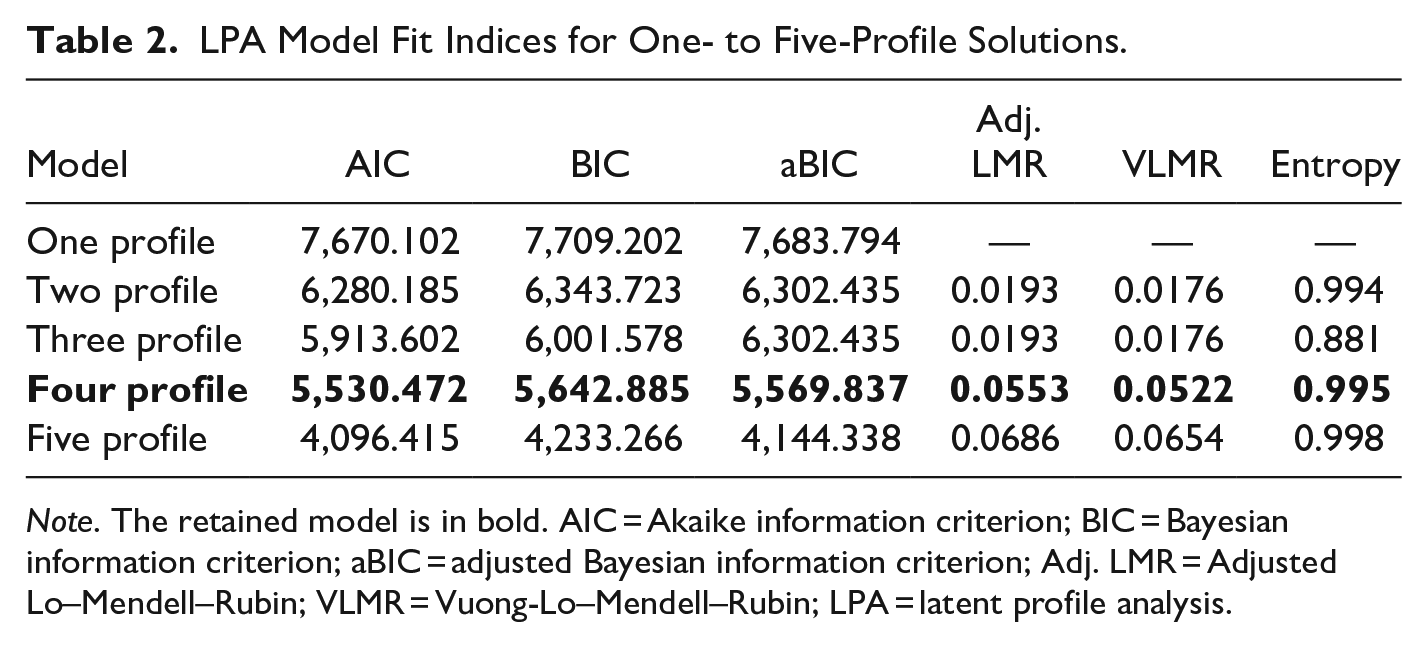
Note. The retained model is in bold. AIC = Akaike information criterion; BIC = Bayesian information criterion; aBIC = adjusted Bayesian information criterion; Adj. LMR = Adjusted Lo–Mendell–Rubin; VLMR = Vuong-Lo–Mendell–Rubin; LPA = latent profile analysis.
As shown in Table 3, the four-profile model included: (a) a profile of men reporting no or minor IPV (19.8% of the sample); (b) a profile of men reporting severe IPV with sexual coercion (12.4%); (c) a profile of men reporting minor IPV and control (48.1%); and (d) a profile of men reporting severe IPV without sexual coercion (19.7%). Table 3 also shows the proportion of participants, in each profile, who reported having sustained IPV. Men in the “no/minor IPV” profile were less likely than all the other profiles to report sustaining all forms of IPV, although they still reported sustaining minor psychological abuse and coercive control. Men in the “minor IPV and control” profile reported sustaining minor psychological abuse, coercive control, and physical assault in higher proportions than the “no/minor IPV” profile, but in lower proportions than the two severe profiles. More men in the “severe IPV with sexual coercion” profile reported sustaining sexual coercion than men in the three other profiles.
Proportion of Self-Reported Perpetrated and Sustained Violence between the Four Latent Profiles.
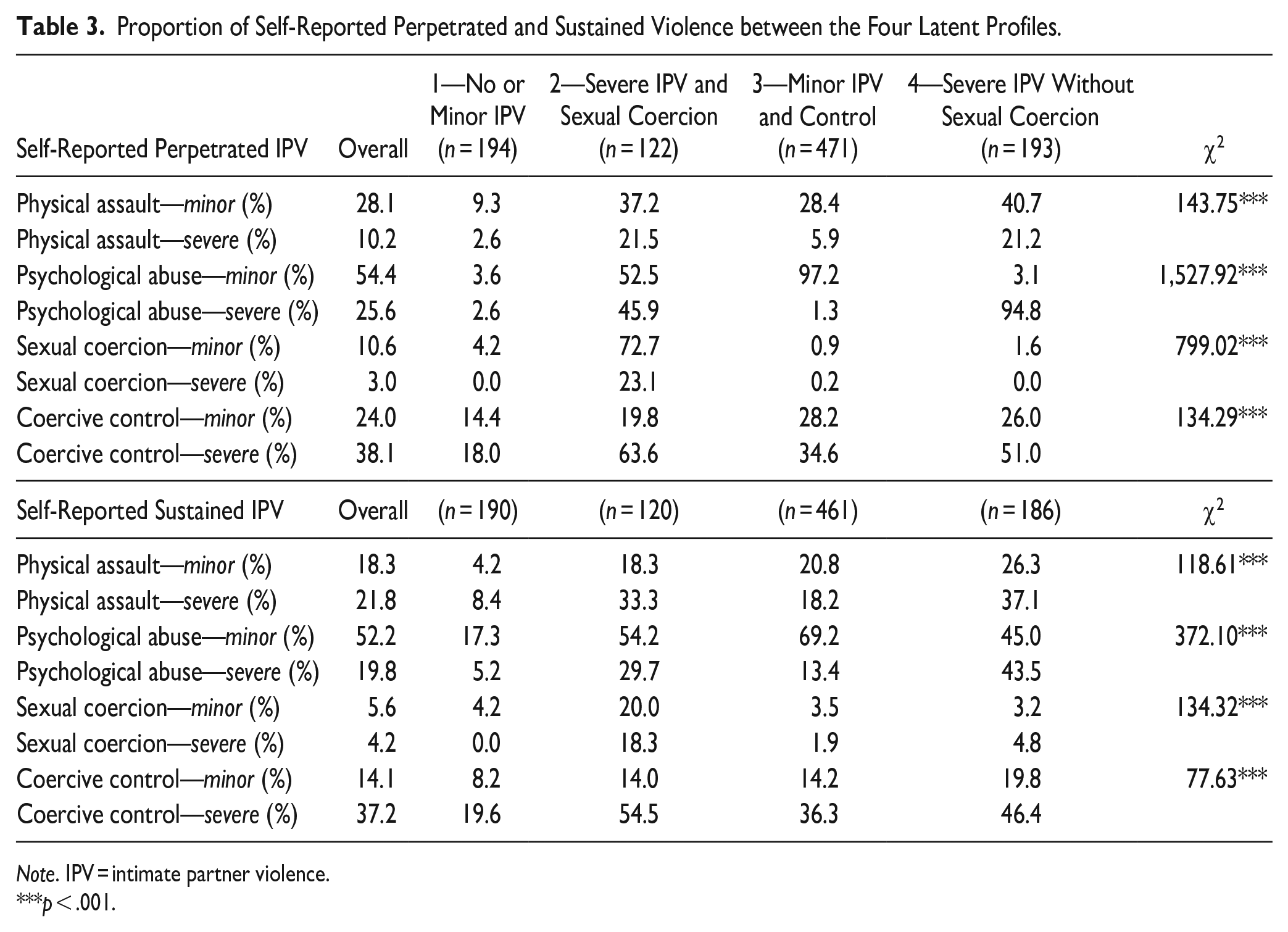
Note. IPV = intimate partner violence.
p < .001.
Table 4 presents the demographic, substance use, and judiciary differences across the four profiles. The “severe IPV without sexual coercion” profile presented a higher proportion of men who were born in Canada as compared to men in the “no/minor IPV” and the “minor IPV and control” profiles. No differences between profiles were found for education, income, and education, but men in the “severe IPV without sexual coercion” were younger on average than men in the “no/minor IPV” (not shown, respectively 38 vs. 35 years old, p = .006). No differences between profiles were found for daily alcohol use, but men in the “no/minor IPV” men were less likely to report a daily use of cannabis than men in the three other profiles. Men in the two severe IPV profiles were more likely to use stimulant drugs on a monthly basis, as compared to men in the two other profiles. Yet, men in the “severe IPV with sexual coercion” profile were the most likely to report that their close ones viewed their substance use as problematic, followed by the “severe IPV without sexual coercion”, the “minor IPV and control”, and the “no/minor IPV” profiles. The “severe IPV without sexual coercion” profile presented a higher proportion of men going through a judiciary process for IPV, and a higher proportion of restraining order from their (ex-) partner than the other three profiles.
Demographics, Substance Use, and Judiciary Status Differences between the Four Latent Profiles.
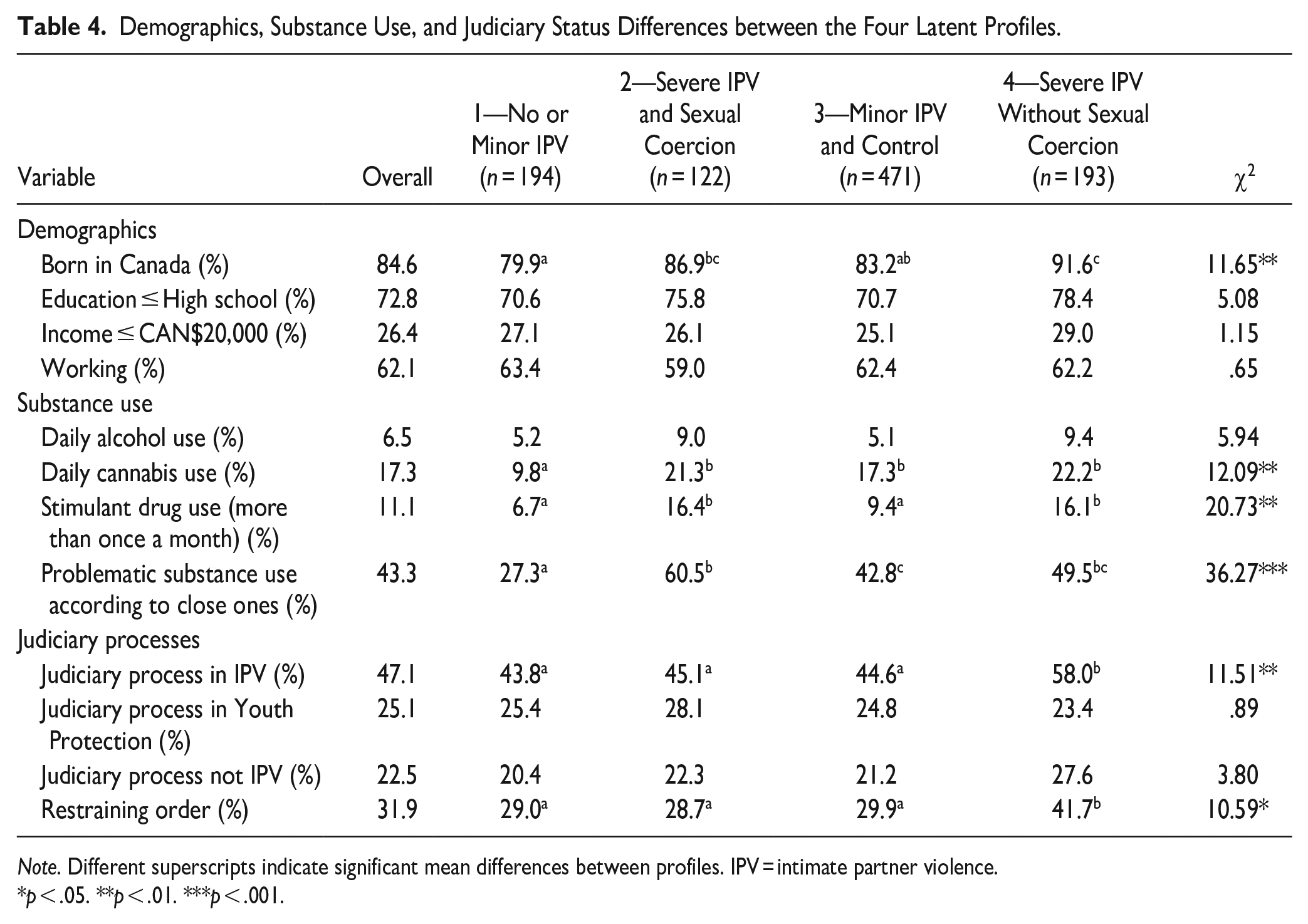
Note. Different superscripts indicate significant mean differences between profiles. IPV = intimate partner violence.
p < .05. **p < .01. ***p < .001.
Table 5 shows mean differences on the psychosocial variables across the four profiles. Four patterns of results emerged: (a) Men in the “no/minor IPV” profile reported lower levels of attachment anxiety, affect dysregulation, anger, narcissism, and psychopathy than men in the “minor IPV and control” profile, who reported lower scores than the two severe IPV profiles; (b) Men in the “no/minor IPV” and the “minor IPV and control” profiles reported lower levels of Machiavellianism, depression symptoms, and attachment avoidance than the two severe IPV profiles (except for the absence of a significant difference in attachment avoidance between the “severe IPV with sexual coercion” profile and all other profiles); (c) Childhood trauma was more present in the two severe IPV profiles than in the “no/minor IPV”; and (d) Men in the “no/minor IPV” profile reported lower levels of anxiety symptoms than all the other profiles, although men in the “minor IPV and control” profile also reported lower anxiety symptoms than men from the “severe IPV without sexual coercion” profile.
Psychosocial Differences between the Four Latent Profiles.
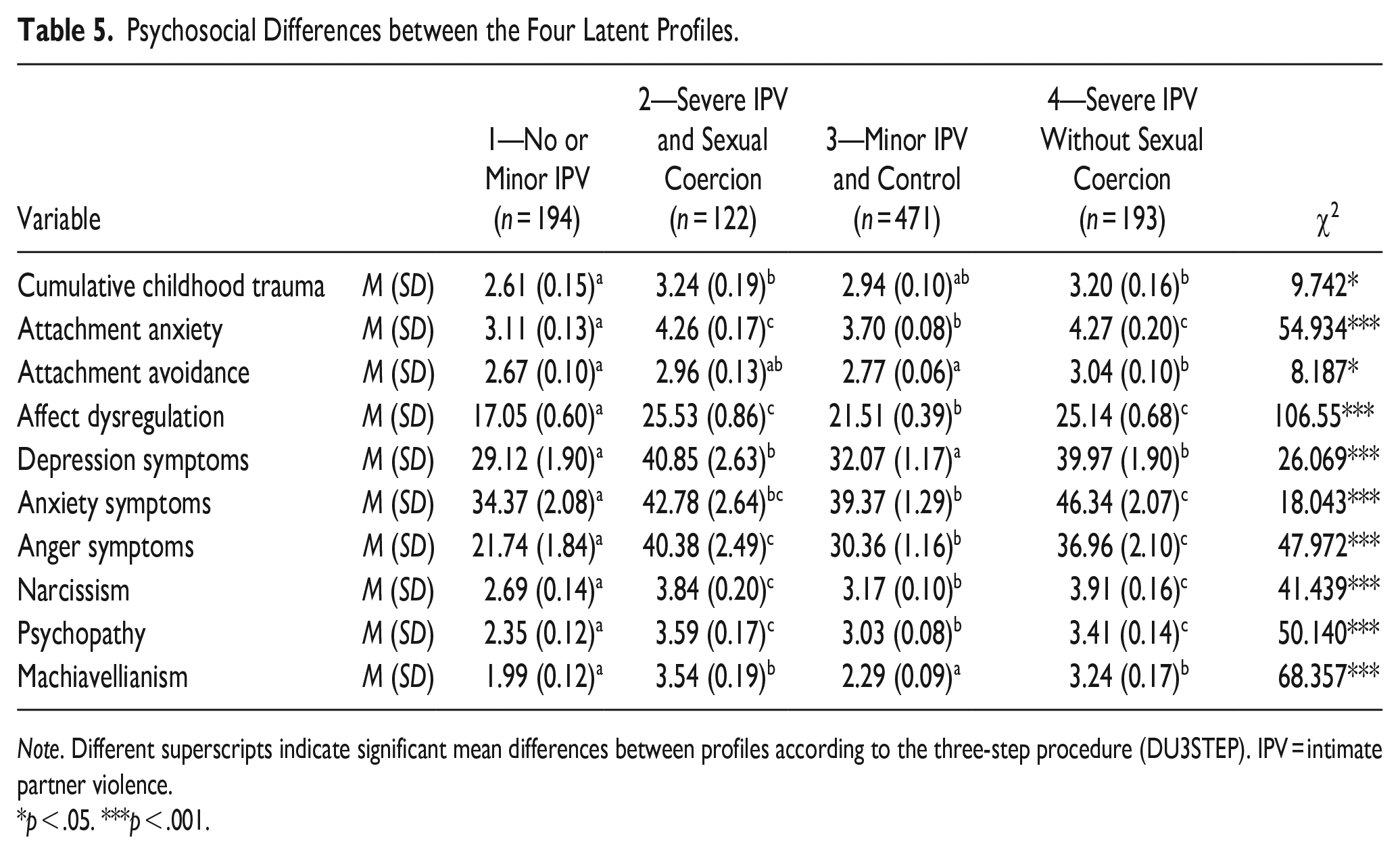
Note. Different superscripts indicate significant mean differences between profiles according to the three-step procedure (DU3STEP). IPV = intimate partner violence.
p < .05. ***p < .001.
Discussion
This study aimed to develop profiles of men seeking treatment for IPV-related difficulties, based on the forms and severity of their IPV perpetration. The profiles were then compared on men’s self-report of sustained IPV, demographic variables, and psychosocial risk markers of IPV. Our results yielded four distinct profiles of male IPV perpetrators: two profiles (1 and 3) paralleled Johnson’s (2008) situationally violent perpetrators (or family-only perpetrators, Holtzworth-Munroe & Stuart, 1994) and included two-thirds of our sample, and two profiles (2 and 4) showed similarities with Johnson’s intimate terrorists (or antisocial perpetrators, Holtzworth-Munroe & Stuart, 1994) and included a third of our sample.
The first profile, labeled “No/minor IPV”, includes men who reported perpetrating no IPV or mostly minor forms of IPV (physical, psychological, control). Although many men in this profile reported being involved in a judiciary process, they generally reported less severe acts of violence compared to other men in the sample. Around one in five men in the “No/minor IPV” profile reported sustaining either psychological abuse or coercive control. Although they reported experiencing some levels of psychological distress, they also reported an overall higher level of psychological functioning compared to the other profiles: they were better at regulating their emotions, including anger, and displayed less attachment insecurity. It is possible that this profile includes men who seek services for IPV, or IPV-related difficulties (e.g., depressive symptoms following a separation) earlier than men from the other profiles, or before their IPV escalates into more severe forms of violence. Since many reported being in a judiciary process, it is also possible that this profile includes some men with higher levels of social desirability or those who do not acknowledge their use of IPV (Chan, 2011).
The third profile, labeled “minor IPV and control”, appears to include men who resorted to more IPV than those from the first profile, but in a less generalized and severe way than men in the second and fourth profiles. This profile is characterized by men who report using minor forms of psychological and physical IPV, as well as some control tactics. It includes close to half of our sample. These men reported moderate levels of affect dysregulation, anger symptoms, attachment-related anxiety, and undesirable personality traits. Interestingly, men from this profile seemed to share similarities with those of the first profile on some psychosocial variables (e.g., attachment avoidance, Machiavellianism, depression symptoms), whereas they show similarities with profiles 2 and 4 on others (e.g., anxiety symptoms). Although they might resemble men who report using no/minor IPV, the fact that they experience more anxiety, anger, and abandonment issues, in addition to more struggles with affect regulation and more insensitivity toward others (i.e., narcissism and psychopathy), could lead them to resort to coercive control and aggression in a relational context. When compared to perpetrators using more severe IPV (profiles 2 and 4), their overall level of functioning is somewhat higher, they are less likely to manipulate others (i.e., Machiavellianism), and they show less insensitivity toward others (i.e., psychopathy). This profile of IPV perpetration draws similarities with Johnson’s (2008) description of situationally violent perpetrators who use IPV due to high levels of distress and the inability to regulate this distress during escalating conflicts with an intimate partner. Many men in this profile reported being a victim of IPV at a similar level at which they report perpetrating it. This might indicate a situationally violent couple dynamic. Alternatively, these men may also report IPV victimization as a way to justify their own perpetration of IPV by blaming their partner (Chan, 2011).
The second (“severe IPV with sexual coercion”) and fourth (“severe IPV without sexual coercion”) profiles include higher proportions of men who report perpetrating severe physical and psychological IPV, and severe coercive control when compared to the first and third profiles. Their use of IPV echoes the intimate terrorism pattern of violence described by Johnson (2008). These men report more difficulties related to attachment insecurities, psychological distress, and affect regulation as well as more experiences of childhood interpersonal trauma and more undesirable personality traits as compared to the other profiles, albeit some differences were not significant. They had the highest levels of psychological distress and lowest levels of functioning.
Although slightly more men in the second profile (“severe IPV with sexual coercion”) reported that their close ones thought their substance use was problematic, the only significant difference found between men from profiles 2 and 4 is the higher likelihood of judiciary process (and restraining order) in profile 4 (“severe IPV without sexual coercion”). As such, the report of sexual coercion is the only key aspect clearly distinguishing these two profiles. Although men in these two profiles report exerting severe forms of violence toward their romantic partner, men from profile 2 reported using sexual coercion to exert their control over their partner, whereas men from profile 4 did not. Perhaps, men from profile 2 could represent a more dominant type of intimate terrorist, as their modus operandi involves the use of all forms of severe IPV—including sexual coercion. Men in this profile may hold certain beliefs that allow them to extent their abuse and control in every aspect of their relationship. In contrast, men in the fourth profile could represent a different type of intimate terrorists, who, although they use severe forms of abuse and control, do not resort to sexual coercion. It is possible that men from the fourth profile minimized or denied their use of sexual coercion, but it is also possible that differences exist within men who perpetrate intimate terrorism, an observation that has seldom been reported by IPV clinicians and researchers. Intimate terrorists tend to be described as a homogeneous group and more studies are needed to examine whether they all share a similar clinical portrait. The fact that studies on profiles of IPV perpetrators have mostly excluded sexual coercion could also explain this new finding regarding the potential differentiation in subgroups of men perpetrating intimate terrorism. Our results thus emphasize the need to consider sexual coercion to distinguish perpetrators of IPV and to identify other psychosocial factors that may help distinguish men resorting to this form of IPV from those who do not. The endorsement of heteronormative beliefs (i.e., belief that men are sexually active and persistent while women are passive and submissive; Eaton & Matamala, 2014) or sexual precedence beliefs (i.e., belief that one’s intimate partner should be always sexually available when sexual access has been established, Livingston et al., 2004) could explain why some—but not all—men use sexual coercion.
Overall, our results revealed that participants, regardless of their profile, all reported high levels of psychological distress, affect dysregulation, and attachment insecurity as well as high rates of victimization, both during childhood and in their intimate relationship. Yet, childhood interpersonal trauma, psychological distress, affect dysregulation, attachment insecurity, and undesirable personality traits—all known risk factors for IPV perpetration—tended to increase in severity in participants who use more severe IPV. Men in the four profiles, however, did not differ on most sociodemographic variables. Although we might expect that men who use no or minor forms of IPV would be less likely to be arrested or to have a complaint against them when compared to more severely violent men, few differences related to judicialization were observed across profiles. It is possible that some participants underreported their perpetration of IPV, which could explain this result. It is also possible that partners of men who perpetrate severe IPV and sexual coercion (men from profile 2) feel they are unable to report their victimization to authorities because they fear retaliation or an increase in violence from their partner.
Our results also revealed that men from most profiles reported having sustained IPV in the past 12 months, with lower rates reported in profile 1. This finding partly supports Johnson’s (2008) typology according to which those who report perpetrating low to moderate levels of IPV are also likely to sustain IPV. However, our results depart from Johnson’s (2008) theory according to which intimate terrorists do not sustain IPV in their relationship (apart from minor physical IPV when their partners try to defend themselves). Our results rather show that men who perpetrate the most severe forms of IPV also report sustaining both minor and severe forms of abuse and coercive control. Social desirability biases, lack of responsibility taking, and fear of judiciary consequences could however partly explain these reports. Some men may also feel the need to justify their own use of IPV by reporting that their partner uses the same behaviors (Chan, 2011). It is, however, also possible that some men who perpetrate severe IPV are in a relationship in which they also sustain IPV, which would refer to Johnson’s (2006) mutual violent control type of IPV. Dyadic designs are needed to further examine this question.
Implications
The findings from this study add to the existing literature that has sought to identify profiles of men who perpetrate acts of IPV to emphasize distinctions among them and develop tailored prevention and treatment interventions. Given that the current study is among the first to use a sample of non-incarcerated men seeking help for IPV-related difficulties, it enables the identification of specific needs in those who are most likely to benefit from tailored services. Taken together, our results highlight that several prevention and treatment targets apply to all men who enter services, regardless of their sociodemographic profile or the severity of the violence they use. These targets are psychological distress, affect dysregulation, childhood interpersonal trauma, and romantic attachment insecurities. Yet, our results suggest that these difficulties are more severe as the diversity and severity of IPV behaviors perpetrated by men increase and may thus take more time to address. Moreover, undesirable personality traits are more likely to be observed among more severe profiles of IPV perpetrators, which are factors known to accentuate men’s resistance to change, mistrust, and lack of responsibility taking (e.g., Brassard et al., 2022). Their presence may require a pre-treatment educational phase or motivational interview to assess willingness to change. Yet, many services offering IPV treatment to men use a one-size-fits-all approach (Cantos & O’Leary, 2014) that may not address the specific needs of this heterogeneous population. Our results thus support the use of a systematic assessment/screening of every man entering treatment and, whenever possible, the adoption of tailored services that could lead to an increased treatment effectiveness (e.g., Snyder & Anderson, 2009).
Limitations
Although this study makes an important contribution to the literature on the typologies of men who perpetrate IPV, it has important limitations. First, as the data are solely based on the participants’ self-reports, shared method variance, lack of introspection, and social desirability may have biased the results. Some biases could be overcome by corroborating the participants’ answers to the questionnaires with reports from the (ex-) partners or with a therapist’s in-depth qualitative interview. Second, although this study relied on a large number of men from a usually hard-to-reach population, the sample primarily consists of cis-gender heterosexual Canadian men, which limits the generalizability of the findings, notably to adults from a culturally diverse background or from the LGBTQ+ community. Although original, these profiles need replication and a further exploration of potential risk markers that could help differentiate the men forming these profiles and their specific needs. Finally, this study relied on cross-sectional data collected at the beginning of men’s treatment, which does not allow us to draw conclusions on the ways in which men evolve over treatment. A future avenue of research would be to follow these men over their treatment and assess whether their membership to a specific profile varies when (or if) they take full responsibility for their use of IPV and improve their affect regulation skills.
Footnotes
Declaration of Conflicting Interests
The author(s) declared no potential conflicts of interests with respect to the authorship and/or publication of this article.
Funding
The author(s) disclosed receipt of the following financial support for the research and/or authorship of this article: This research was funded by a SSHRC Engage grant (# 892-2019-1049).
