




Abstract
The objective of this article is to assess the effect of domestic violence on abortion and investigate the mediating role of unwanted pregnancy. A secondary analysis was conducted on the National Family Survey data. This survey was a cross-sectional study conducted across Iran in 2018. The association between domestic violence and abortion was analyzed using the Partial Least Square-Structural Equation Model (PLS-SEM) with WarpPLS version 8.0. From among 1,544 married women (mean age 42.8 years) who participated in this survey, 27% (418 women) reported experiencing at-least one-lifetime of abortion. Overall, two in three women (67.3%) experienced at least one form of domestic violence. Almost half of the women with experience of abortion (49.3%) reported at least one unwanted pregnancy in their life course. The bivariate analysis showed a significant positive relationship between domestic violence and abortion, and there was a positive direct effect of domestic violence on unwanted pregnancy. Moreover, age had a negative direct and indirect effect on unwanted pregnancy and abortion. Although, the direct effect of domestic violence on abortion was not significant in the Structure Equation Model, a positive indirect effect of domestic violence on abortion through unwanted pregnancy was confirmed. The effect of unwanted pregnancy on abortion was particularly strong (β = .395, p < .01). These results have some implications for prevention of abortion through interventions against unwanted and unplanned pregnancy and domestic violence. This study makes a unique theoretical contribution to the literature through assessing the mediating role of unwanted pregnancy between domestic violence and abortion by using the SEM model.
Keywords
Introduction
Despite that induced abortion in Iran is legally restricted except when necessary to save the life of the woman and severe fetal abnormality (Ghofrani et al., 2018), evidence indicates that nearly 92,257 cases of abortion with medical indications and 128,969 with no medical indication are performed annually in Iran (Rastegari et al., 2014). Another study among 708 married women attended to a public hospital in Tehran in 2013 showed a prevalence of 12 to 14% of abortion using two different indirect methods of unmatched count technique and randomized response technique (Ghofrani et al., 2018).
Moreover, domestic violence has been recognized as the most pervasive forms of violence against women by international and national bodies, and it occurs in different ages, ethnicity, socio-ethnic groups, and religion (WHO, 2005). Domestic violence has various forms including physical abuse that includes punching, kicking, biting, choking, burning, shaking, and beating, and it can be severe enough to cause permanent damage or death. It is most commonly found in intimate relationships (VandenBos, 2007); sexual abuse as another form of domestic violence is defined as unwanted sexual activity, with perpetrators using force, bribes, or coercion, and making threats (Smit et al., 2019); emotional abuse consisting of extreme verbal abuse (Wu et al., 2005) that hurt someone emotionally. This type of abuse includes unreasonable expectations, questioning the spouse’s decisions and perceptions, mentally pressing the partner to do something wrong, and mentally abusing them (Neeraj et al., 2021).
In spite of that violence against women is banned in many parts of the world, the reality is that intimate violence against women is hidden behind cultural customs and social norms, and religious beliefs (Alizadeh et al., 2021). Therefore, cultural and social norms have a direct effect on the report of the violence and the accuracy of scientific evidence regarding its prevalence. Many women who had experienced domestic violence were unwilling for this to be disclosed to primary healthcare professionals. Cultural awareness is paramount because fear of familial shame and dishonor were important factors deterring women from seeking assistance (Goodwin et al., 2000; Leung et al., 2002).
In the cultural context of Iran in which women are responsible for keeping the family together as wife and mother (Garrusi et al., 2008), reporting incidents of domestic violence can be considered as a private issue; it is also regarded disrespectful and shameful. It might also result in less acknowledgment of domestic violence from male partners. In such a gender-stereotyping context, women tend to not report to legal authorities for many reasons, including fear of being deserted by their family or separated from their children (Hajnasiri et al., 2016). However, a review study assessed 38 Iranian papers published between 2000 and 2013, and it estimated the prevalence of domestic violence during pregnancy (any types of physical, sexual, and economical) to be between 19.3 and 94.5% which is a concern (Moafi et al., 2014). Another meta-analysis study estimated a rate of 52% domestic violence during pregnancy in Iran (Solimany et al., 2016).
The prevalence of domestic violence in women seeking abortion varies according to the definition of domestic violence and how women are asked. A cross-sectional study conducted in China among 1,215 women seeking induced abortion indicated a prevalence of about 23% domestic violence. It included 18.1% sexual abuse, about 8% physical abuse, and 3% emotional abuse. Among abused women, about 17% reported frequent violence, and 4.4% reported all three types of violence (sexual, physical, and emotional violence). The frequency of induced abortion in the abused group was significantly higher than that of the non-abused group. Reasons such as fear of the partner, quarreling with the partner, the partner’s economic control, and receiving the cold shoulder from partner were associated with seeking abortion (Wu et al., 2005).
Another study in Hong Kong, comparing 245 women who were seeking abortion and 256 general gynecology patients, found 27.3% lifetime and 13.5% recent domestic violence prevalence rates in the abortion group, both of which were significantly higher than the 8.2 and 3.1% rates in the non-abortion seeking group (Leung et al., 2002). A Canadian study (Bourassa & Bérubé, 2007) reported rates of domestic violence nearly three times higher in the abortion group than women who continued their pregnancy. The risk of being a victim of physical and/or sexual violence in the preceding year was almost four times higher (Bourassa & Bérubé, 2007) in the abortion group.
Even in the settings such as Uganda where abortion is illegal (except to save the life of the woman and a cause of maternal mortality and morbidity), a study of 311 women admitted to hospital with abortion complications showed that many women had experienced moderate violence (slapping and punching) and received multiple injuries. Nearly, 57% reported domestic violence during their first pregnancy. Domestic violence-related issues were given as the main reason for inducing abortion by 23% of women who admitted to inferring with their pregnancies. Several respondents reported childhood sexual abuse and witnessing a close relative being abused during childhood (Federation, 2006).
A recent meta-analysis was conducted based on the available evidence on domestic violence against women during pregnancies in Iran between 2000 and 2018. Thirteen studies with a total sample size of 11,818 individuals were included, and the findings indicated that abortion, low birth weight (LBW), preterm delivery, and premature rupture of membranes had a significant association with domestic violence against women during pregnancy (Bahmani et al., 2022).
On the other hand, due to a significant decline in the fertility rate in Iran over the last four decades (Abbasi-Shavazi, 2020), pro-natalist population policies were adapted by the government in 2014. These policies included some restrictions in the availability of contraceptive methods and also abortion (Bagheri et al., 2021), and prevention of unsafe abortion and consequent possible infertility can be a priority in line with current population policies. Despite a considerable contraceptive prevalence rate in 2013 (80%), one-third of pregnancies were unplanned (Erfani, 2013). Hence, we do not have recent evidence of rates of abortion after the new population policies. Both unintended pregnancy and abortion have adverse implications on women’s health, and they are also incompatible with the population policies which encourage fertility and childbearing.
Domestic violence should be recognized as a health condition for women (Couto et al., 2015) and abortion contributes to negative outcomes for women’s health—mentally and physically (Naghavi et al., 2019; Reardon, 2018). Most previous studies examined the relationship between abortion and domestic violence in Iran were small scale or systematic review. In this study, we aim to do a secondary analysis of the National Family Survey (NFS) conducted in 2018 to assess (a) the association between domestic violence and abortion, and (b) whether and how unwanted pregnancy mediates the relationship between these two, and (c) to recommend some intervention to prevent abortion and enhance women’s health. An evidence-based understanding of the interconnectedness of domestic violence, unwanted pregnancy, and abortion would directly assist in the development of strategies for effective interventions for reducing domestic violence, particularly during pregnancy.
Theoretical Framework
To conceptualize these relationships, a framework was developed by applying a mixture of gender and psychosocial theories. The Connell’s gender and power theory (Connell, 1987) was adapted to analyze domestic violence as a gender issue that influences reproductive outcomes comprising unwanted pregnancy and abortion. Aligning with this theory, domestic violence reflects power disparities between women and men, male control over women as well as the limited negotiating power within the intimate relationships. According to this perspective, in places with higher of intimate partner violence, women would be expected to largely forgo decisions related to fertility and pregnancy, which can ultimately result in unwanted pregnancy and illegal abortion (Pallitto & O’Campo, 2005).
From among the health-related theories, the theory of planned behavior (TPB) (Ajzen, 1991), as a psychosocial theory, has been widely used to explain fertility decisions and abortion. In addition to the core focus of the TPB on the formation of intentions and the relationship between intentions and behavior, the TPB provides a link to background factors. According to this theory, the degree of actual control on fertility decisions is affected by personal or background factors. Ajzen and Klobas (2013) argued that when a given background factor is found to influence fertility behavior, the TPB permits us to explain this finding by tracing the factor’s effects on beliefs, attitudes, subjective norms, perceptions of control, and intentions with respect to fertility (Ajzen & Klobas, 2013). Perception of control can be considered here in this study because we assume that in a violent relationship, the control over fertility can be minimized because of lack of power. Among the factors, age, as one of the demographic characteristics, could be modeled as a background factor in the fertility domain (Ajzen & Klobas, 2013) and has been shown to affect unwanted pregnancy and abortion in past research (Lifflander et al., 2007; Maxson & Miranda, 2011). Lifflander et al. (2007) used the TPB’s concepts to explore the reasons for the high rate of unintended pregnancy for a U.S. sample of low-income women between 18 and 49 years of age (Lifflander et al., 2007).
Although other studies in Iran have shown that there is a relationship between domestic violence and abortion, it is important to know the pathways on how domestic violence can lead to abortion in order to provide preventive interventions. One of the possible pathways of this relationship is the occurrence of unwanted pregnancy, which could lead to abortion due to the underlying factors of domestic violence, spouse’s non-participation in reproductive decisions, and contraceptive use (Stöckl et al., 2012).
To our knowledge there has been no previous study on a representative sample in Iran investigating the association between domestic violence and abortion by focusing on the mediating role of unwanted pregnancy. Therefore, we assume that domestic violence through unwanted pregnancy is more likely to cause abortion. In light of this assumption, this study aims to evaluate the effect of domestic violence on abortion and assess the mediating role of unwanted pregnancy upon control of age in the aforementioned relationships. Aligned with the main assumption of this study and objectives, the following hypotheses have been developed to represent the proposed conceptual framework:
H1: Age has an effect on abortion.
H2: Age has an effect on unwanted pregnancy.
H3: Domestic violence has an effect on unwanted pregnancy.
H4: Domestic violence has an effect on abortion.
H5: Unwanted pregnancy has an effect on abortion.
H6: Age will have an indirect effect on abortion through unwanted pregnancy (unwanted pregnancy will mediate the relationship between age and abortion).
H7: Domestic violence will have an indirect effect on abortion through unwanted pregnancy upon control of age (unwanted pregnancy will mediate the relationship between domestic violence and abortion).
Materials and Methods
Study Instrument and Sampling
This study utilized data from the NFS conducted in 2018 (Alborz University Jihad, 2019). This national survey comprising individuals aged 15 years and over resided in family households in urban areas around the country. The selection method was a two-stage cluster sampling: primary units comprising a collection of secondary units which were selected randomly. In the second stage, every sampling unit was selected with definite probability. Primary sampling units comprised at least 55 secondary sampling units or eligible people and one block or a section of a block or some urban block. A sample size of 5,036 was considered from around the country which can detect the prevalence rate of 0.07 and greater with estimated bias (α = .10). Eight hundred thirty-five blocks as primary sampling units were identified with a randomly proportional probability to size of number of family households who resided in urban areas. These blocks were distributed across 206 (16.5%) cities around the country. Two hundred forty-two questionnaires were discharged due to reasons such as incomplete completion, poor allocation of time by the interviewer to fill the questionnaire, and so on. These questions were replaced by new questionnaires. Refusing to participate was found to be 17.6%. To collect the data, first a pilot study was conducted both using a field questionnaire and an in-person interview and also using a tablet. A comparison of responses showed reliable and comparable results. Then it was decided to use tablet to administer the instrument. The data collection was conducted using a trained team around the country in June and July 2018 (Alborz University Jihad, 2019). Prior to the investigation, informed consent was attained from the study respondents. The interviewers explained the aims and objectives of the survey to the study participants and the respondents verbally agreed to participate in the survey. They were ensured about confidentiality and anonymity.
Participants
Permission to use the NFS data for this study was obtained from the NFS project principle investigators. The sample for this study comprised all married women. In NFS, married women were asked questions about their demographic characteristics, reproductive history, and exposure to intimate partner violence.
Measures
A scale was constructed for measuring domestic violence with relevance to five domains: (1) The psychological violence domain included reports of doubting, shouting, continuous control, ignoring the spouse, and threatening to have sex with another person; (2) The physical violence domain included reports of throwing objects, threatening with knives or other tools, pushing and beating; (3) The sexual violence domain included reports of being forced to have sex without consent, to have sex during menstruation, unusual sexual behavior without consent, and hesitating to have sex; (4) The financial violence domain included reports of permanent control of expenses and hiding income by husband; and (5) The verbal violence domain included reports of swearing, insulting to either the woman or her loved ones, and verbal humiliation.
All five types of violence were combined into a composite measure of violence (domestic violence) with a 6-point Likert-type scale in which score 0 indicates “not having experienced the situation as referred to Not at all,” and score 5 indicates “having experienced the situation very frequently.” The scale scores ranged from 0 to 90. Domestic violence is treated as a formative construct as it can be perceived as an explanatory combination of indicators that are not expected to be correlated (Fornell & Bookstein, 1982), meaning that a change in one indicator does not necessarily imply a similar directional change in others (Chin, 1998).
Unwanted pregnancy and abortion were assessed through the questions of “Have you ever had an unwanted pregnancy” and “Have you ever had an abortion” using dichotomous response options (“yes” or “no”). Responses of “No” were scored 0 and responses of “Yes” were scored 1.
Data Analysis
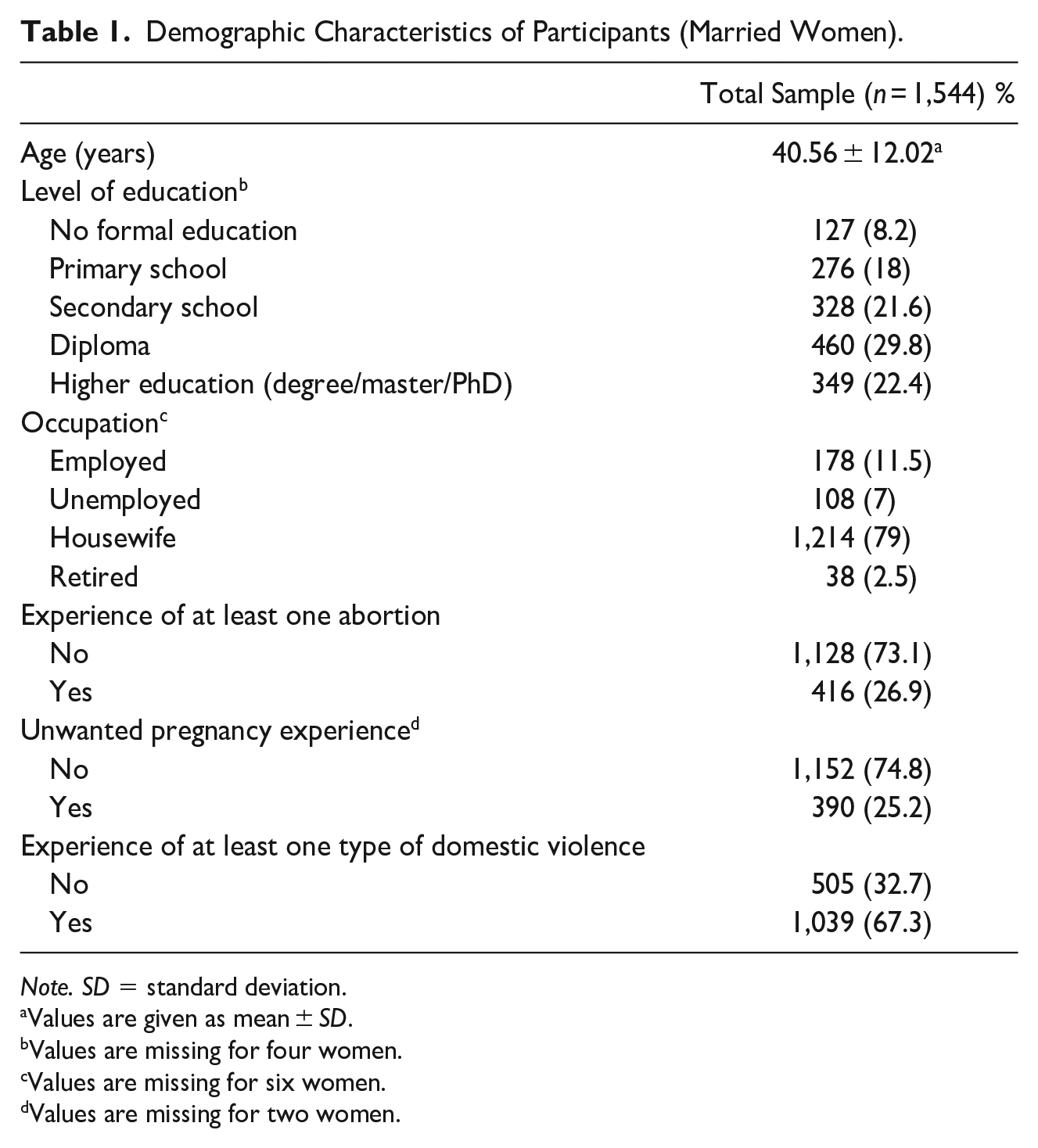
Data were analyzed using SPSS version 22.0 (IBM, Armonk, NY, USA). As shown in Table 1, participants’ general characteristics were reported as mean ± standard deviation (SD) or number (percentage). Mean (±SD) values were used to assess age and levels of domestic violence. The Chi-square test was employed for categorical variables to assess the associations between abortion and other independent variables. Independent t-test was performed to assess the differences in domestic violence and age as continuous variables by experience of abortion among women. The Partial Least Square-Structural Equation Model (PLS-SEM) (Hair et al., 2017) with WarpPLS version 8.0 (ScriptWarp Systems, Laredo, TX, USA) was also used. The PLS-SEM “conceptually and practically is similar to using multiple regression analysis” (Hair Jr et al., 2017).
Demographic Characteristics of Participants (Married Women).
Note. SD = standard deviation.
Values are given as mean ± SD.
Values are missing for four women.
Values are missing for six women.
Values are missing for two women.
In this study, the PLS-SEM was the preferred method of analysis for two reasons: first given that the framework of this study contains a formative (composite) construct (Hair et al., 2011); and second, it accommodates variables that violate normality assumptions, such as the dichotomous variables (Dilla et al., 2016) comprising unwanted pregnancy and abortion. Additionally, considering the main objective in this study, the PLS-SEM helps to assess whether domestic violence does predict abortion, rather than confirm structural relationships (Hair et al., 2011). It should also be noted that the SEM analysis model with WarpPLS can identify and estimate the relationship between latent variables whether the relationship is linear or nonlinear (Sarstedt et al., 2014).
Results
From among 1,544 women participated in this survey, 418 (27.0%) reported the experience of at least one lifetime abortion and 1,128 (73.0%) never had an abortion in their life (Table 1). One in four married women reported having had at least one abortion in lifetime. Overall, two in three women experienced at least one form of domestic violence (67.3%). About 29% of women who reported at least one form of domestic violence, reported an abortion in their life course. More than half of the women who experienced at least one lifetime unwanted pregnancy (52.6%) reported having at least an abortion.
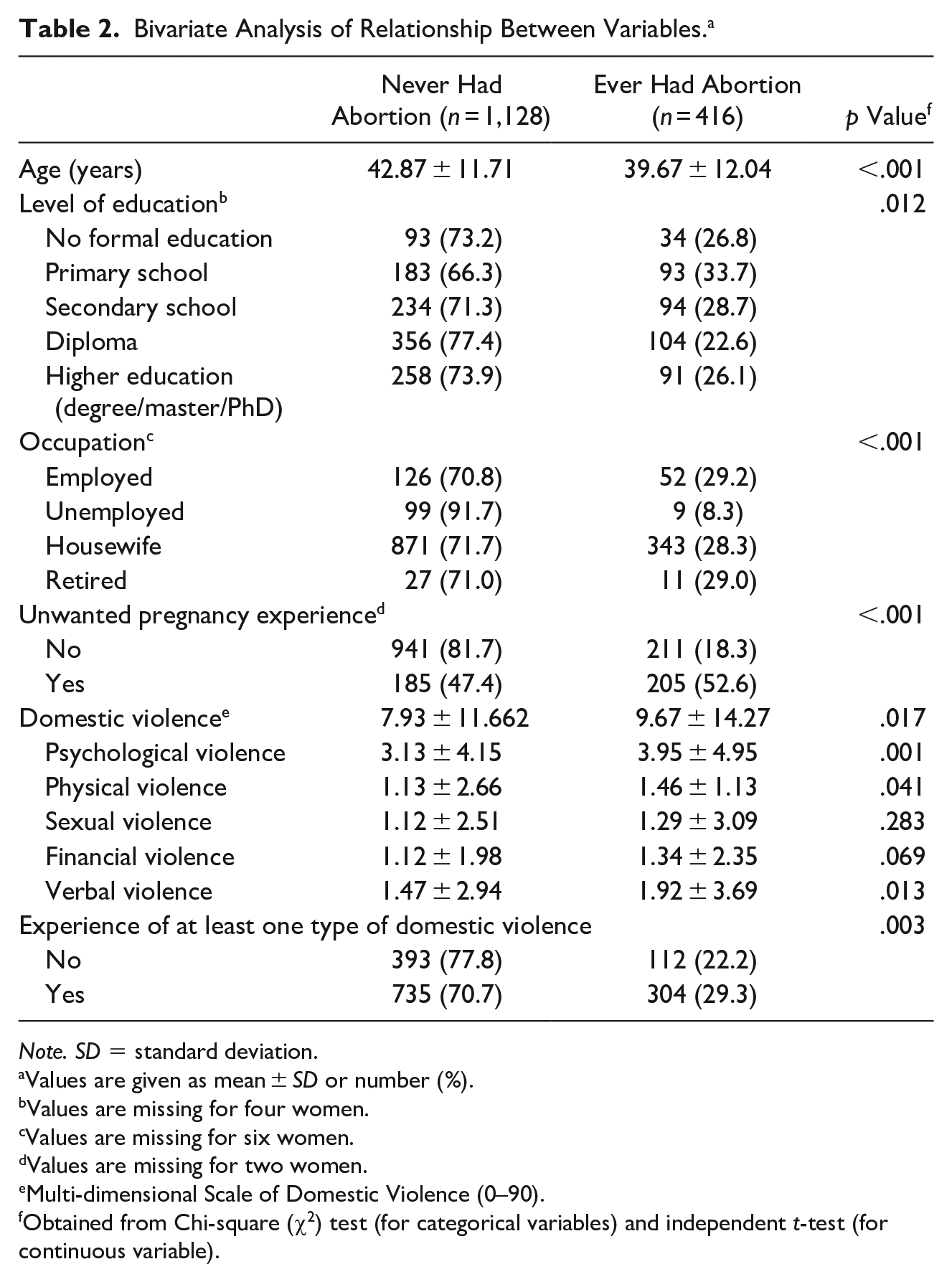
Table 2 shows the bivariate analysis of the relationships between characteristics of women and experience of lifetime abortion. Mean age differs between groups as women who ever had abortion (39.67 years) are significantly younger than women who never had an abortion (42.87 years) (p < .001). Women who ever had an abortion had a significantly higher rate of unwanted pregnancy (about 53 vs. 47%, p < .001). The bivariate analysis of relationship between domestic violence and abortion shows that women who ever had an abortion significantly had experienced higher rates of physical, psychological, and verbal violence.
Bivariate Analysis of Relationship Between Variables. a
Note. SD = standard deviation.
Values are given as mean ± SD or number (%).
Values are missing for four women.
Values are missing for six women.
Values are missing for two women.
Multi-dimensional Scale of Domestic Violence (0–90).
Obtained from Chi-square (χ2) test (for categorical variables) and independent t-test (for continuous variable).
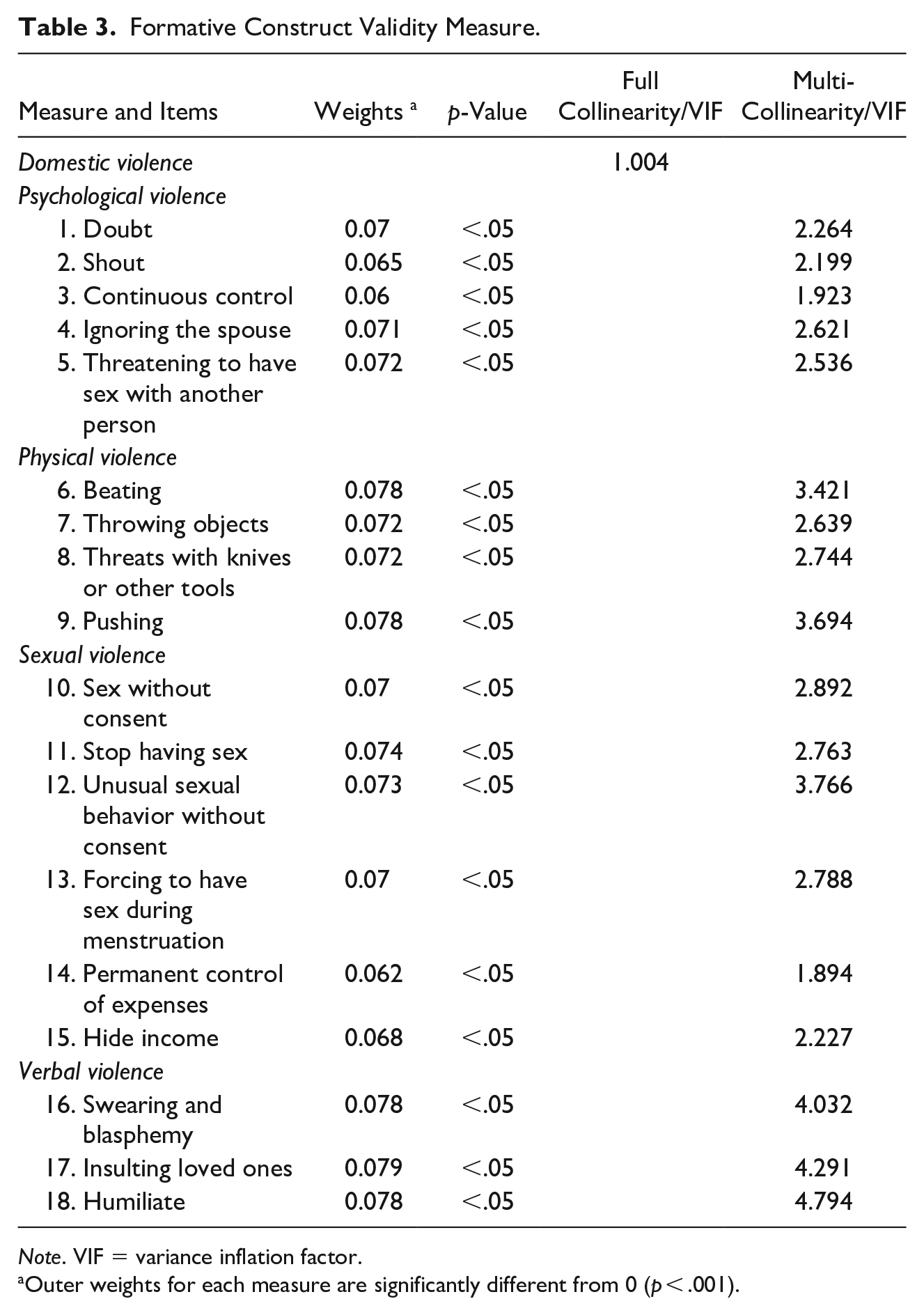
Table 3 depicts the results of formative construct validity. Variance inflation factors (VIFs) or collinearity between the items associated with the formative construct and outer weights are two commonly used measures of formative construct validity. All VIFs for the construct measures are less than the commonly accepted threshold of 5 and the p value of the outer weight of the items are lower than .05 and significant (Hair et al., 2017), indicating that the measures are valid indicators of the formative construct. Additionally, based on a full collinearity test with VIF less than 3.3 (Kock & Lynn, 2012), indicating that the model is not contaminated by common method bias (Kock, 2015). Therefore, the results show the acceptability of the measurement model for the domestic violence as a formative construct.
Formative Construct Validity Measure.
Note. VIF = variance inflation factor.
Outer weights for each measure are significantly different from 0 (p < .001).
In assessing the structural model, the significance of path coefficients and the value of R2 should be measured (Hair et al., 2017). In this study, the R2 value is 0.18 which is considered as a relatively high and acceptable measure by behavioral studies (Kock, 2011).
In order to measure the power of the research model regarding predictive relevance, it is recommended to compute the Stone-Geisser’s Q2, such that Q2 value larger than zero indicates that the model has predictive relevance for a certain endogenous construct (Hair et al., 2017). Q2 values in this study were 0.029 and 0.182 for unwanted pregnancy and abortion, respectively, confirming acceptable predictive validity.
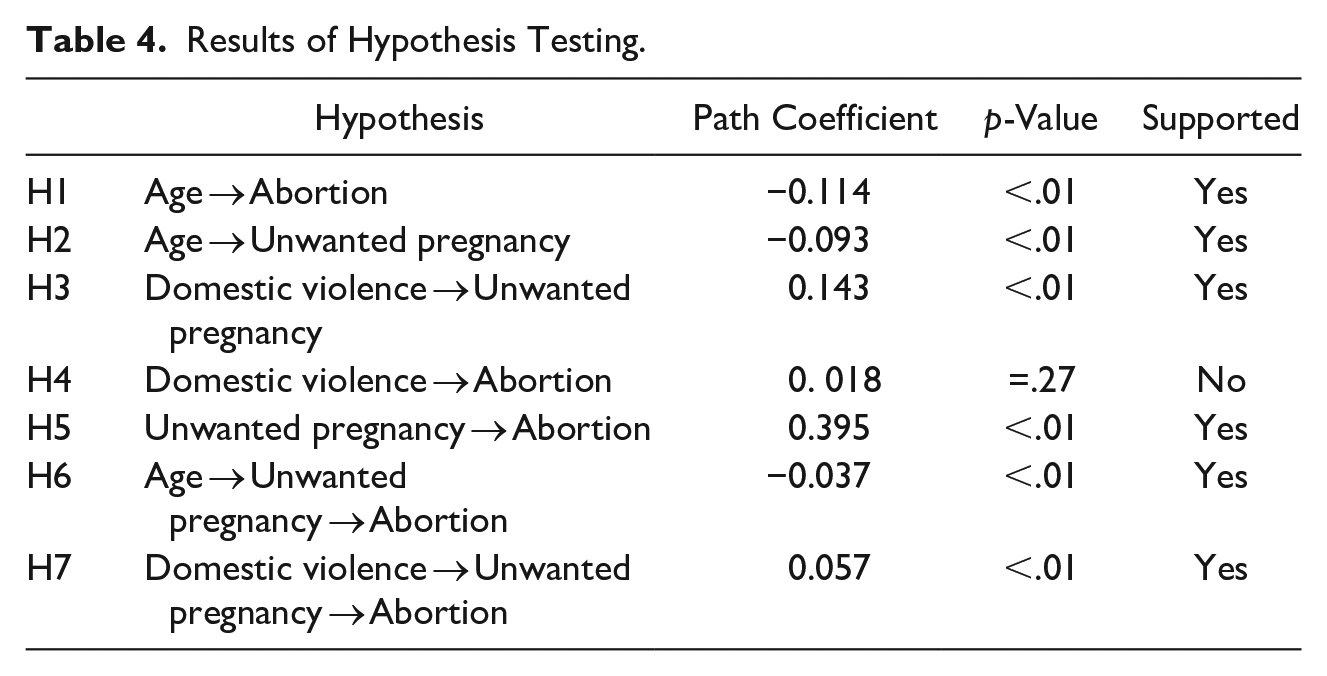
Table 4 and Figure 1 show the results of path coefficients and hypothesis testing. The results indicate a significant and negative effect of age on abortion (H1) and unwanted pregnancy (H2), as well as a significant and positive effect of domestic violence on unwanted pregnancy (H3). In other words, the findings indicate that older women report less unwanted pregnancy and abortion. Moreover, the positive and significant effect of domestic violence on unwanted pregnancy indicates that women who experienced domestic violence report more unwanted pregnancies. In addition, unwanted pregnancy was shown to have a positive and significant effect on abortion (H5). In other words, increased unwanted pregnancy among women contributes to abortion (Figure 2).
Results of Hypothesis Testing.
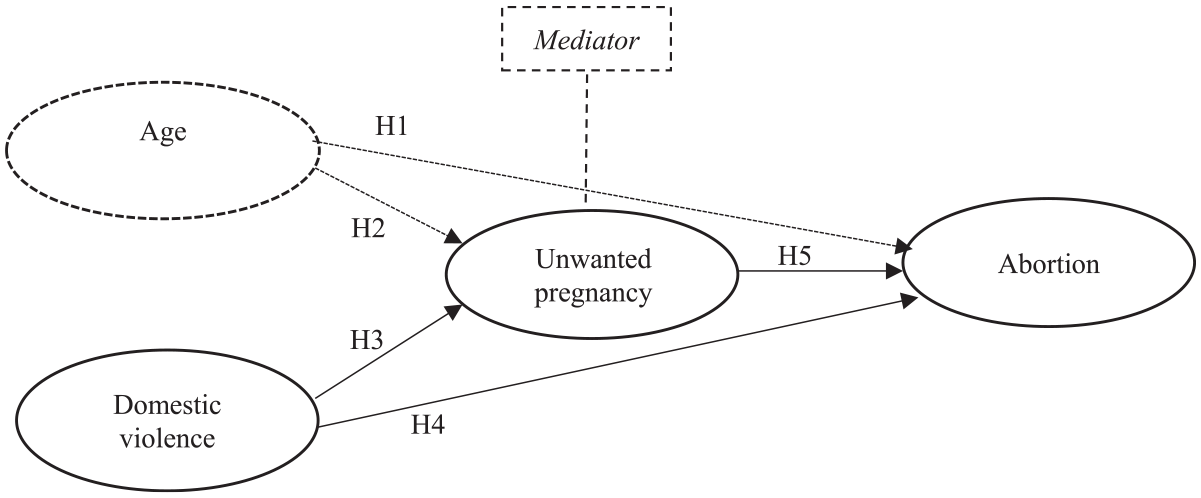
Conceptual framework.
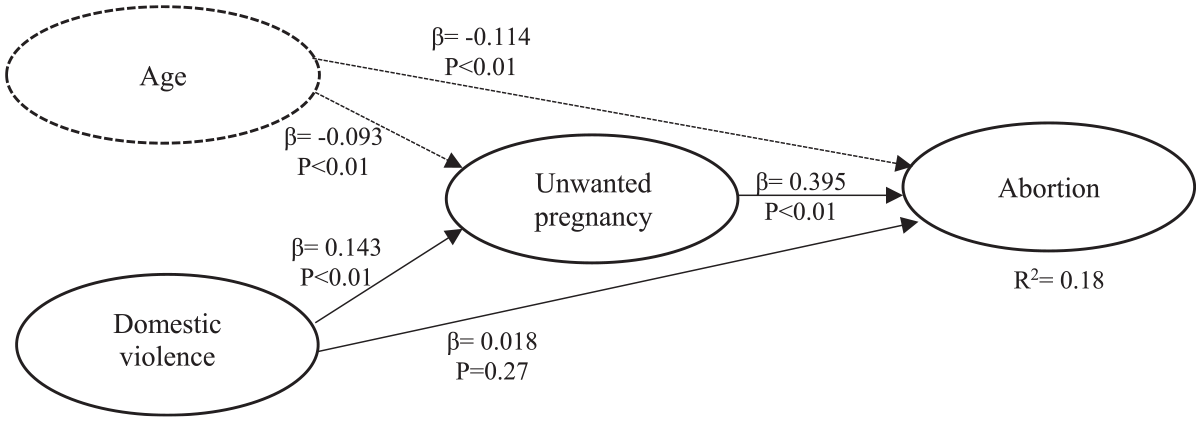
SEM results.
H6 and H7 predict that unwanted pregnancy will mediate the relationships between age and domestic violence and abortion, respectively. The results support the indirect effects of age and domestic violence on abortion through unwanted pregnancy (H6 and H7). As shown in Table 4, including unwanted pregnancy in the model reduces the age to abortion path coefficient from 0.114 to 0.037; however, the coefficient remains significant (p < .01). In a different way, including unwanted pregnancy in the model makes the domestic violence to abortion path coefficient significant with 0.057 (p < .01) whereas the direct effect of domestic violence on abortion (H4) was insignificant. Therefore, this study shows that domestic violence contributes to a rise in the rate of abortion through increase in unwanted pregnancy.
Discussion
The results of the present study showed that nearly more than two-third (67.3%) of married women experienced at least one type of domestic violence in their life course. This is a concerning issue and has important public health implications for women’s health. In addition, 27.0% of married Iranian women experienced abortion in their lifetime.
Given the conceptual framework of this study, it was assumed that exposure to domestic violence would be a significant predictor for unwanted pregnancy and abortion. Based on the results of the current study, the positive and significant effect of domestic violence on unwanted pregnancy indicated that women who experienced domestic violence reported greater rate of unwanted pregnancies. This result is consistent with the results obtained by previous studies demonstrating that domestic violence had a significant relationship with unintended pregnancy (Pallitto et al., 2013; Pallitto & O’Campo, 2005; Rahman et al., 2012). These results can be explained by the fact that women who are exposed to violence are more likely to have lower control over their fertility decisions and they tend to experience reproductive coercion (Grace & Anderson, 2018; Rosenfeld et al., 2018), and they are less likely to be able to use any method of contraception and thus may be at greater risk of unintended pregnancy than women who are not exposed to domestic violence by their husbands (Miller et al., 2014; Rahman et al., 2012; Rosenfeld et al., 2018).
The association between domestic violence and abortion has received much attention in many studies, demonstrating that women with a history of intimate partner violence are significantly more likely to experience induced and spontaneous abortion (Alhalal et al., 2021; Antai & Adaji, 2012; Arthur-Holmes et al., 2023; Pallitto et al., 2013). However, little is known about the mechanism of such influences. Some explanations have been suggested by previous studies regarding the relationship between domestic violence and spontaneous abortion, including the negative influence of domestic violence on woman’s psychological wellbeing, general health, poor nutrition, poor or delayed antenatal care, and injuries during pregnancy, which lead to negative birth outcomes and abortion (Alio et al., 2009; Silverman et al., 2007; Stephenson et al., 2016).
In bivariate analysis, domestic violence and abortion were significantly associated, while in SEM a significant direct effect of domestic violence on abortion was not shown, and the effect was indirect through unwanted pregnancy. This indicates that when unwanted pregnancy is entered into the model, the association between domestic violence and abortion loses its significance. This result is consistent with the results obtained by the study of Stephenson et al. (2016) in India which reported similar findings. In fact, the significant relationship between domestic violence and abortion has been demonstrated to be mediated by unwanted pregnancy. This study revealed the significant mediation effect of unwanted pregnancy as a single mediator, indicating that unwanted pregnancy can increase the likelihood of abortion in married women. By comparing the indirect effect of domestic violence on abortion through unwanted pregnancy with the direct effect of domestic violence on abortion, this study reveals the significance of unwanted pregnancy.
Another finding of this study was the contradictory relationship between age and abortion. In the current study and some other studies (Maxson & Miranda, 2011), the results showed that the effects of age on unwanted pregnancy and abortion were reversely significant. Abortion was greater among younger women than older. Stephenson et al. in 2016 also revealed that compared with women below age 25 years, women aged 25 to 35 years had a significantly lower likelihood of spontaneous abortion (Stephenson et al., 2016). Newly married couples do not wish to have a child early in the course of their married life. Thus, when pregnancy occurs it is more likely to be reported as unintended (Begum et al., 2010). One another explanation is that younger women might be more idealistic and individualistic and they might be in an unstable situation in terms of employment, education, and marital stability (Barbieri et al., 2015; Karabchuk, 2020; Meggiolaro & Ongaro, 2010). Other studies revealed that young women’s reproductive decisions are mostly influenced by the desire for education and social mobility. They mirror what we interpret as an on-going transition from traditional fertility ideals to more modern ideals of limiting the number of children in favor of education and economic security (Cleeve et al., 2017). Within such contexts, some young women describe abortion as an act of moral responsibility when facing economic hardship, and their responsibility to prevent mistimed childbearing and the related stigma and its consequences, the circumstances that are highly gendered and influence agency (Cleeve et al., 2017; Whittaker, 2002).
The decision to have an abortion is influenced by one’s social and ideological context (Kumar et al., 2009). One of the reasons for the negative correlation between age and abortion is that older women might not plan for more children but continue to full-term as abortion is illegal or because of religious ideologies. Women in their later reproductive age tend to be more religious and place more values on religion than younger women (Bengtson et al., 2015; Voas & Doebler, 2011) and describe abortion as an immoral act as they also are likely to accept pregnancy as “given by Allah” (Rahman et al., 2012).
The association between age and abortion can be explained within the context of gender and power as well as the control dynamics emphasized by TPB, as gender norms and power imbalances create vulnerability and constrain women’s decision-making power and control over their fertility behaviors and in relation to abortion decisions. As such, in patriarchal and older couples prevailing fertility, childbearing, motherhood, and idealized womanhood (Spagnoletti et al., 2018), women’s reproductive agency is constrained by gender norms and power imbalances and strongly influenced by stigma. Young women, in contrast, position abortion as an agentive action as they negotiate and enact reproductive agency and claim ownership of the abortion decision, aiming to regain control over their own bodies and futures (Cleeve et al., 2017) and to regain power (Maxwell & Aggleton, 2010). Therefore, according to the theory of gender and power, in a context with high emphasize on traditional ideologies and power inequality, women would be expected to lack adequate control on fertility decisions.
This study makes a theoretical contribution to the literature through assessing the mediating role of unwanted pregnancy between domestic violence and abortion by applying a gender and psychosocial perspective and using the SEM model. However, the interpretation of the results of this study should consider several limitations. The main potential limitation of this study is the reliance on data for abortion as asked through a general question without considering the differentiation of types of abortions. So, we could not measure spontaneous and induced abortion separately, which consequently would result in misclassification bias. Moreover, the study does not include abortions among unmarried women in the population. Further qualitative researches are needed to increase our understanding of domestic violence and to provide a greater understanding of the context, characteristics, and interpersonal dynamics influencing abortion due to domestic violence in Iran. Further research is also suggested to understand how a woman’s exposure to domestic violence makes her to experience unwanted pregnancy and have an abortion. Another limitation of this study is due to the fact that the current analyses are cross-sectional and, thus, do not allow for assessment of the chronology of the associated events or inferences regarding causality. For instance, pregnancy loss and abortion might be a reason for domestic violence. Hence, longitudinal research regarding the relations of domestic violence and unwanted pregnancy and abortion is suggested to provide clarity regarding these concerns.
This study has several implications. Past research has demonstrated that domestic violence has detrimental impacts on women’s physical health, including aggravating the symptoms of menopause and increasing the risk of developing diabetes, contracting sexually transmitted infections, engaging in risk-taking behaviors such as drug and alcohol use, developing chronic diseases (Stubbs & Szoeke, 2022) and mental health problem (Ansara & Hindin, 2011). Domestic violence has a substantial negative influence on pregnant women by raising the risk of LBW infants, preterm delivery, and neonatal death, as well as difficulties in postpartum breast-feeding (Sarkar, 2008). This study contributes to the existing body of knowledge by identifying the harmful impact of domestic violence on unwanted pregnancy and abortion.
Important implication of these findings is that women exposed to domestic violence need to be empowered to have control on fertility decisions and educated about contraceptive methods and have access to counseling services to prevent unwanted pregnancies. These interventions will enhance and promote women’s physical and mental wellbeing and also prevent abortion and infertility.
Conclusions
This study contributes toward an understanding of the effect of domestic violence on abortion. Given the increased risk for women’s reproductive health following unwanted pregnancy and abortion, the association between domestic violence and abortion is of interest in terms of women’s reproductive health. The findings corroborate calls for policy makers to consider domestic violence as a reproductive health issue. There is an urgent need to develop programs and intervention targeted at preventing marital domestic violence and its associated poor reproductive health outcomes comprising unwanted pregnancy and abortion and consequent health problems for women in Iran.
Footnotes
Acknowledgements
This was based on a project conducted during the first author’s (RB) short-term postdoctoral research position under the mentoring of the second author (FKF). This post-doc position was supported by the Centre for International Science and Technology Interaction of The Vice President, Iran.
Declaration of Conflicting Interests
The author(s) declared no potential conflicts of interest with respect to the research, authorship, and/or publication of this article.
Funding
The author(s) received no financial support for the research, authorship, and/or publication of this article.
