




Abstract
Exposure to parental violence in childhood is a significant predictor of psychological distress in adulthood. Factors at the individual level may explain the variance in psychological distress among adults exposed to parental violence. The current study examined the effect of exposure to different forms (i.e., physical violence and psychological aggression) and different patterns of parental violence (i.e., witnessing interparental violence, experiencing parental violence) on later psychological distress. The mediating role of sense of coherence (SOC) and the moderating role of gender in this relationship were also examined. A cross-sectional survey was conducted among 604 married Arab adults in Israel (age = 20–60, M = 33.5, SD = 6.52) using a retrospective, self-administered questionnaire. Results indicate a significant positive relationship between all forms and types of parental violence explored in the current study with levels of psychological distress. Furthermore, exposure to parental violence correlated negatively with SOC, and low levels of SOC predicted higher levels of psychological distress. SOC was found to partially mediate the relationship between exposure to parental violence and psychological distress. Gender differences were found only with regard to experiencing physical violence as a predictor of psychological distress, indicating that the relationship between these variables is stronger in females. These results highlight the importance of SOC as a personal resource and its role in promoting psychological wellbeing. Healthcare practitioners should be aware of possible gender differences in psychological distress among Arab adults exposed to parental violence.
Keywords
Introduction
The link between exposure to parental violence in childhood and psychological distress in adulthood is well established in the literature (Norman et al., 2012; Ozer et al., 2003; Vu et al., 2016). In the current study, the expression exposure to parental violence comprises two forms: (a) witnessing interparental violence and (b) experiencing parental violence. Previous studies have shown that such exposure is associated with greater psychological distress later in life and may manifest in depression, anxiety, somatization, withdrawal, hostility, aggression, or delinquent behavior (Haj-Yahia et al., 2019; Moylan et al., 2010; Norman et al., 2012). A meta-analysis of 124 studies has found that experiencing different forms of parental violence, abuse, and neglect during childhood is associated with symptoms of depression, anxiety, post-traumatic stress, eating disorders, and suicidal tendencies among adults (Norman et al., 2012). A meta-analysis of 74 studies that examined the longitudinal association between witnessing interparental violence and externalizing and internalizing symptoms has found similar negative effects as those associated with experiencing parental violence (Vu et al., 2016). It was found that witnessing interparental violence was linked prospectively with externalizing and internalizing symptoms (Vu et al., 2016). Although exposure to parental violence has the potential to negatively impact a person’s psychological wellbeing in the long term, researchers have found that not all victims of parental violence experience adverse effects (DuMont et al., 2007). Many studies have identified factors at the individual level, the family level, and the individual’s broader social network that promotes resilience in the aftermath of exposure to family violence (DuMont et al., 2007; Haj-Yahia et al., 2019; Jaffee et al., 2007). The current study explores the role of sense of coherence (SOC) as a personal resource that may have implications for the individual’s psychological wellbeing later in life.
Sense of coherence is defined as “a global orientation that expresses the extent to which one has a pervasive, enduring though dynamic feeling of confidence, that one’s internal and external environments are predictable, and that there is a high probability that things will work out as well as can reasonably be expected” (Antonovsky, 1979, p. 123). SOC is regarded in the Salutogenic Model as a key concept in understanding the relationship between exposure to stressful life events and mental health. The Salutogenic Model was developed by Antonovsky (1979) and focuses on factors that support health and wellbeing. It was found that people with a strong SOC tend to see the world as more comprehensible, manageable, and meaningful, in contrast to people with a weak SOC, who tend to see the world as stressful, disturbing, and chaotic (Eriksson & Lindström, 2006). A strong SOC seems to be an important psychological resource, which is related to resilience, physical and mental health, quality of life, and psychological wellbeing. Many studies have found that people with a strong SOC reported fewer psychological and psychosomatic symptoms and that lower levels of SOC were associated with higher levels of psychological distress such as anxiety and depressive symptoms (Eriksson & Lindström, 2006; Freitas et al., 2015; Moksnes et al., 2014). A recent meta-analysis based on 45 articles found that low SOC scores were associated with higher level of post-traumatic stress symptoms in the aftermath of traumatic or stressful events (Schäfer et al., 2019). This meta-analysis included a wide range of traumatic experiences such as the Holocaust and war trauma, accidental trauma, and medical trauma. There is a need to assess the specific relationship between SOC and psychological distress in the context of interpersonal and prolonged traumatic experiences, such as exposure to parental violence. Specifically, it is also important to investigate the distinct effect of exposure to parental violence on the development of SOC.
Family background plays a major role in the development of the children’s SOC. Antonovsky (1987) emphasized the importance of four factors within the family that contribute to the development of a strong SOC: consistency, load balancing, decision-making, and emotional closeness. These factors include creating a consistency in life experiences that leads to the perception of life as ordered and predictable, balancing between the demands placed on the child and their abilities or resources, involving the child in shaping outcomes, and providing a warm and supportive family atmosphere (Antonovsky, 1987). The effect of a positive family environment on the development of a strong SOC has been previously reported in a number of studies. García Moya et al. (2012) found that family context accounted for 18% of the explained variability in SOC scores among adolescents, whereas affection, ease of communication with parents, and the quality of the relationship between parents were the most influential family factors in shaping a strong SOC.
Children exposed to parental violence grow up in an emotionally less favorable family environment. They report less intimacy and closeness in their relationship with their parents; experience intense feelings of confusion, helplessness, solitude, and emptiness; and perceive their lives as meaningless, insecure, chaotic, and unstable (Carmel, 2019). We can assume that such experiences within the family may have a deleterious effect on the development of SOC. Support for this assumption was found in Evans, Marsh, and Weigel’s (2010) study on risk and protective factors associated with SOC development, which found that family conflict was significantly associated with lower levels of SOC among adolescents. A recent study found that SOC mediated the relationship between victimization and mental and physical health among adults. It was found that lifetime victimization to emotional, sexual, and physical violence was associated with low levels of SOC (Simmons & Swahnberg, 2021). However, Simmons and Swahnberg’s (2021) study examined violence perpetrated by family members, intimate partners, or by others, so it is hard to conclude from their study about the implications of exposure to parental violence on the development of SOC.
In relation to psychological distress, previous literature has suggested that gender may play a moderating role in the development of trauma-related sympto (Showalter et al., 2019) ms, such as depression, anxiety, and somatization (Tolin & Foa, 2008; Trickey et al., 2012). A meta-analysis conducted by Trickey et al. (2012) revealed that the female gender may be a risk factor for developing internalizing symptoms (i.e., depression, anxiety, and somatic complaints). Similar results were found in Tolin & Foa's (2008) meta-analysis, which indicate that the odds of developing trauma-related symptoms were approximately twice as high among female participants compared with male participants. Evans, Davies, and DiLillo’s (2008) meta-analysis examined gender as a moderator of the outcomes of exposure to domestic violence. They found gender differences regarding externalizing symptoms but no gender differences regarding internalizing symptoms. That is, boys were more likely to exhibit externalizing symptoms than girls, but girls did not exhibit more internalizing symptoms than boys (Evans et al., 2008). Since the moderating role of gender on trauma-related symptoms is not unequivocal, further research is needed to clarify these associations. Based on the existing literature, it may be important to examine further how gender affects the level of psychological distress among adults who have been exposed to parental violence during childhood and adolescence.
The Present Study
Taken together, the extant literature suggests that exposure to parental violence is associated with psychological distress and that low SOC may increase the risk for psychological distress (Eriksson & Lindström, 2006; Freitas et al., 2015; Moksnes et al., 2014; Norman et al., 2012; Ozer et al., 2003; Schäfer et al., 2019; Vu et al., 2016). It also suggests different outcomes for males and females. In the current study, we consider whether two forms of exposure to parental violence (i.e., witnessing interparental violence and experiencing parental violence) during childhood and adolescence predict later psychological distress. We examine two types of violence: physical violence and psychological aggression. We used the conceptual framework of the Salutogenic Model (Antonovsky, 1987) for examining the link between exposure to parental violence and psychological distress through the mediation of SOC. The role of gender as a moderator in this relationship will also be examined.
The current study is conducted in the context of the Arab society in Israel which faces a steep rise in the rates of crime and violence in recent years partly due to the abundance of illegal weapons, resentment, and diminished trust of the police by the Arab citizens of Israel (Ben-Porat, 2020). For example, Arab children are significantly more likely to be exposed to parental violence than Jewish children. A recent Israeli national epidemiological survey of 12,035 Jewish and Arab children and youth revealed that 14% of the Arab children reported having been exposed to parental violence in comparison with 8.6% of Jewish children (Lev-Wiesel et al., 2018). These findings point to the harsh reality in which children live in Israel, especially Arab children. The prevalence of this phenomenon among Arabs in Israel and its long-term consequences poses a social problem and emphasizes the need to reduce its extent as well as to develop adequate intervention programs with populations of Arab adults. Additionally, Arab society is essentially a traditional, collectivistic, and patriarchal society that emphasizes family solidarity and mutual dependence on the collective over individualistic behavior and personal development (Haj-Yahia & Sadan, 2008). Due to its collectivist nature, there is a need for research on individual-level coping strategies that may have implications for the individual’s psychological wellbeing later in life. Understanding the possible role of SOC as a personal resource may assist in the prevention and treatment of depression, anxiety, and other psychological distress. The following hypotheses were tested: 1. Witnessing interparental violence and experiencing parental violence during childhood and adolescence will be positively associated with psychological distress during adulthood. 2. Mediation model: The effect of witnessing interparental violence and experiencing parental violence during childhood and adolescence on psychological distress during adulthood will be mediated by SOC. 3. Moderated direct effect: Direct effect of exposure to parental violence during childhood and adolescence on psychological distress during adulthood will be moderated by gender.
Method
Study Design and Sampling
A cross-sectional survey was conducted among 604 Arab married adults in Israel between February 21 and March 23, 2021. The data were collected using Qualtrics Survey Software that allows direct and anonymous data collection. The study sample was selected in two steps: First, 45 Arab localities as well as localities of mixed Arab and Jewish citizens were randomly selected from the six main districts of Israel, taking into consideration the demographic cluster of the localities. Second, households within the 45 localities were systematically sampled and participants who met the inclusion criterion (married and currently living with a spouse) were asked for their consent to participate in the study. The purpose of the sampling method is to ensure a representative sample in terms of gender, religion, and socioeconomic status. Out of 1244 potential participants who were approached, 604 agreed to take part in the study (i.e., 49% response rate).
After obtaining initial consent, the participants received a link on an electronic device (tablet) loaned to them by the research assistants where a brief study description was provided, and informed consent was obtained. The participants completed the self-administered questionnaire in the privacy of their homes, at their convenience and during their free time, and could skip any question they did not wish to answer. At the end of the survey, the participants were provided with “hot line” numbers and the researcher’s contact information in case they felt any discomfort following their participation in the study. Upon completion, the electronic devices were collected by the research assistants in coordination with the participants. The questionnaire and the study procedure were approved by the Ethics Committee at the Hebrew University of Jerusalem.
Participants
The study sample was composed of 301 men aged 24–60 years (M = 35.2, SD = 6.5), and 303 women aged 20–55 years (M = 31.8, SD = 6.1). The majority of participants were Muslims (79.3%), and the rest were Christians (10%) and Druze (10.7%). Most of the participants had graduated from high school (39.4%), while the rest indicated that they completed or are currently enrolled in bachelor’s degree (26.4%), master’s degree (8.1%), PhD (0.5%), or another type of post-secondary education (16.6%); and about 9% indicated their level of education was less than 12 years of education. Concerning their parents’ level of education, 55% of fathers and 59% of mothers did not complete high school (i.e., 12 years of education). The distribution of income per family in the sample is as follows: 39.4% reported their income is lower or much lower than average; 26.9% reported their income is close to average; and 33.6% reported their income to be higher or much higher than average.
Instrument Package
Descriptive Statistics, Cronbach’s Alpha Values, and Factor Loadings Range for the Scales.
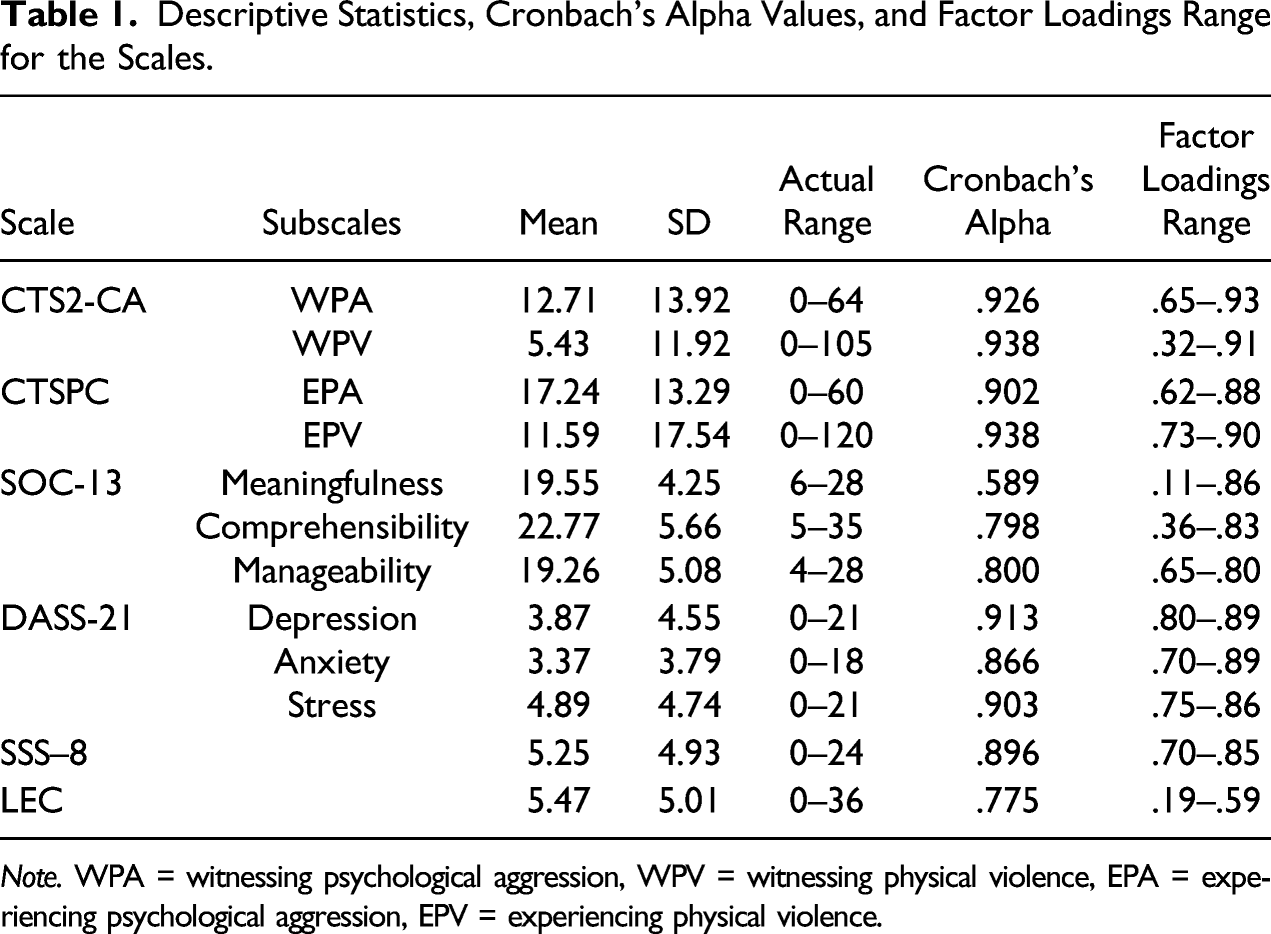
Note. WPA = witnessing psychological aggression, WPV = witnessing physical violence, EPA = experiencing psychological aggression, EPV = experiencing physical violence.
Background and Sociodemographic Information. This questionnaire included questions about the sociodemographic characteristics of the participants, for example, gender, age, place of residence, religion (Muslim, Christian, and Druze), occupational status (full-time employee, part-time employee, business owner, unemployed/not working, student), level of education (up to 8 years of education, up to 11 years of education, high school graduation, post-secondary education, Bachelor’s degree, Master’s degree, and PhD), and level of income (ranging from “much lower than average” to “much higher than average”). The participants were also asked about their parents’ level of education.
Adult-Recall version of the Revised Conflict Tactics Scale (CTS2-CA; Straus, 1999). The CTS2-CA is a 62-item scale designed to assess adults’ recall of behavior and acts of violence between their parents. For this study, we used two subscales of the CTS2-CA to assess witnessing interparental violence: 12 acts that measure psychological aggression (e.g., “Mother insulted or swore at father”), and 26 acts that measure physical assault (e.g., “Father pushed or shoved mother”). The reporting period chosen for this study was “during your childhood and adolescence.” Participants reported having witnessed mother-to-father and father-to-mother psychological aggression and physical assault. For each act, participants indicated the frequency on a 7-point scale ranging from 0 (Never) to 6 (More than 20 times). Scores from the mother-to-father and father-to-mother subscales were summed up and two scores were generated (i.e., witnessing psychological aggression and witnessing physical assault), with higher scores indicating higher frequencies of having witnessed interparental violence. The CTS2-CA was found to have good psychometric qualities with internal consistency coefficients of the subscales ranged from .90 to .93 (Milletich et al., 2010). The CTS2-CA was translated to Arabic in accordance with the Arabic version of the CTS2 (Haj-Yahia, 2000).
Parent-Child Conflict Tactics Scale (CTSPC; Straus et al., 1998). We used the CTSPC to measure participants’ experience with parental psychological aggression (5 items; e.g., “Father cursed or swore at me”), and physical violence (14 items; “Father hit me with a fist or kicked me hard”) during childhood and adolescence. Each item was asked twice, once for the mother’s behavior and once for the father’s behavior. For each item, the participants were asked to indicate the frequency on a 7-point scale ranging from “Never” to “More than 20 times” in the referred period (i.e., childhood and adolescence). The answers were summed up, and two scores were generated (i.e., experiencing psychological aggression and experiencing physical violence), with higher scores indicating higher levels of having experienced parental violence. The CTSPC has shown adequate internal consistency coefficients: .55 for Physical Assault, and .60 for Psychological Aggression (Straus et al., 1998). The Arabic version used in this study was adapted in accord with the Arabic version of the CTS (Haj-Yahia & Dawud-Noursi, 1998).
Psychological Distress. We used two instruments to measure general psychological distress as the main dependent variable of the study:
The Short Depression, Anxiety, and Stress Scale (DASS-21; Lovibond & Lovibond, 1995) is a 21-item scale designed to measure negative emotional states of depression, anxiety, and stress, with seven items for each subscale. Sample items included “I felt down-hearted and blue” for the depression subscale; “I felt I was close to panic” for the anxiety subscale; and “I found it difficult to relax” for the stress subscale. The items were scored on a 4-point Likert scale ranging from 0 (Didn’t apply to me at all) to 3 (Applied to me very much or most of the time). The internal consistency coefficients for the DASS-21 sub-scales were .94 for Depression, .87 for Anxiety, and .91 for Stress (Antony et al., 1998). The DASS-21 was translated to Arabic in accordance with the Arabic version of the DASS, (Moussa et al., 2017).
The Somatic Symptom Scale–8 (SSS-8; Gierk et al., 2014) is an 8-item scale designed to measure somatic symptoms (e.g., headache, chest pain, and sleeping problems) using a 5-point Likert scale ranging from “0” (Not at all) to “4” (Very much). Response choices were summed to create a total score with higher scores indicating higher levels of somatic symptoms. The SSS-8 was found to be a reliable and valid self-report measure of somatic symptoms with internal consistency coefficient of .81 (Gierk et al., 2014).
The Orientation to Life Questionnaire (Sense of Coherence, SOC-13; Antonovsky, 1987). Sense of coherence (SOC) is tested in the current study as a mediator in the relationship between exposure to parental violence and psychological distress. We used S0C-13 (Antonovsky, 1987) to measure a total SOC score as well as scores for its three components: meaningfulness (4 items: e.g., “How often do you have the feeling that you don’t really care about what goes on around you?”), comprehensibility (5 items: e.g., “How often do you have the feeling that you are in an unfamiliar situation and don’t know what to do?”), and manageability (4 items: e.g., “How often do you have the feeling that you’re being treated unfairly?”). The items were on a 7-point scale ranging from 1 (Always) to 7 (Never). After reversing the scores of five items, a total sum score ranging from 13 (low SOC) to 91 (high SOC) was obtained. Internal consistency coefficient for the SOC-13 was .87 (Grevenstein & Bluemke, 2021). The Arabic version of SOC-13 was utilized in previous studies and proved to have very good internal reliability (e.g., Daoud et al., 2014).
The Life Events Checklist (LEC; Gray et al., 2004). This is a brief 17-item measure of exposure to potentially traumatic events within a person’s lifetime ranging from being shot, stabbed, or threatened with a knife or gun to experiencing natural disasters, accidental or injury-related traumas, or someone’s violent death (homicide or suicide). For each item, participants indicated their experience on a 3-point scale (0 = “Doesn’t apply”; 1 = “Learned about it“; 2 = “Happened to me”). Responses to all items were summed to create a total score. Due to the fact that the data were collected during the covid-19 pandemic, we added an additional item not included in the original LEC. The item added was “Infection with Covid-19." We measured exposure to traumatic events as a control variable in the analysis.
Data Analysis
Prevalence and Mean Scores of Participant’s Exposure to Parental Violence by Gender.
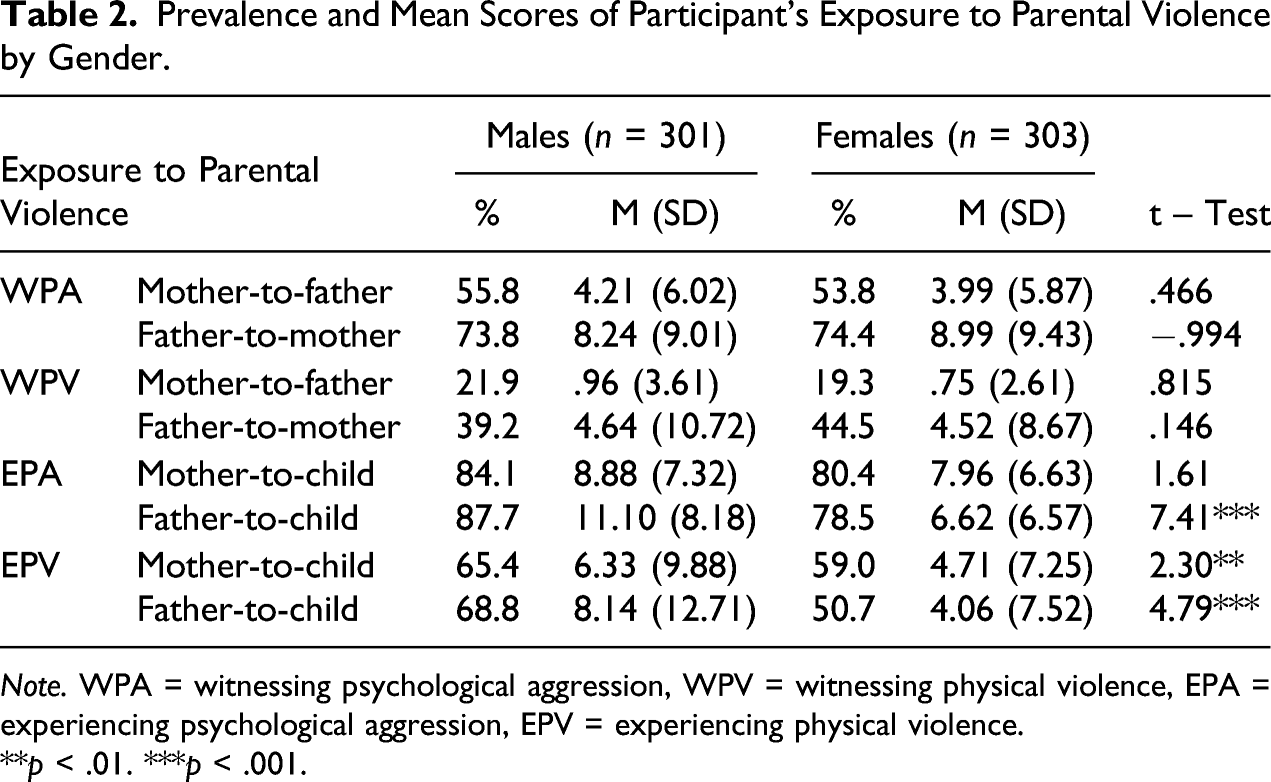
Note. WPA = witnessing psychological aggression, WPV = witnessing physical violence, EPA = experiencing psychological aggression, EPV = experiencing physical violence.
**p < .01. ***p < .001.
Spearman Correlation Coefficients (N = 603).
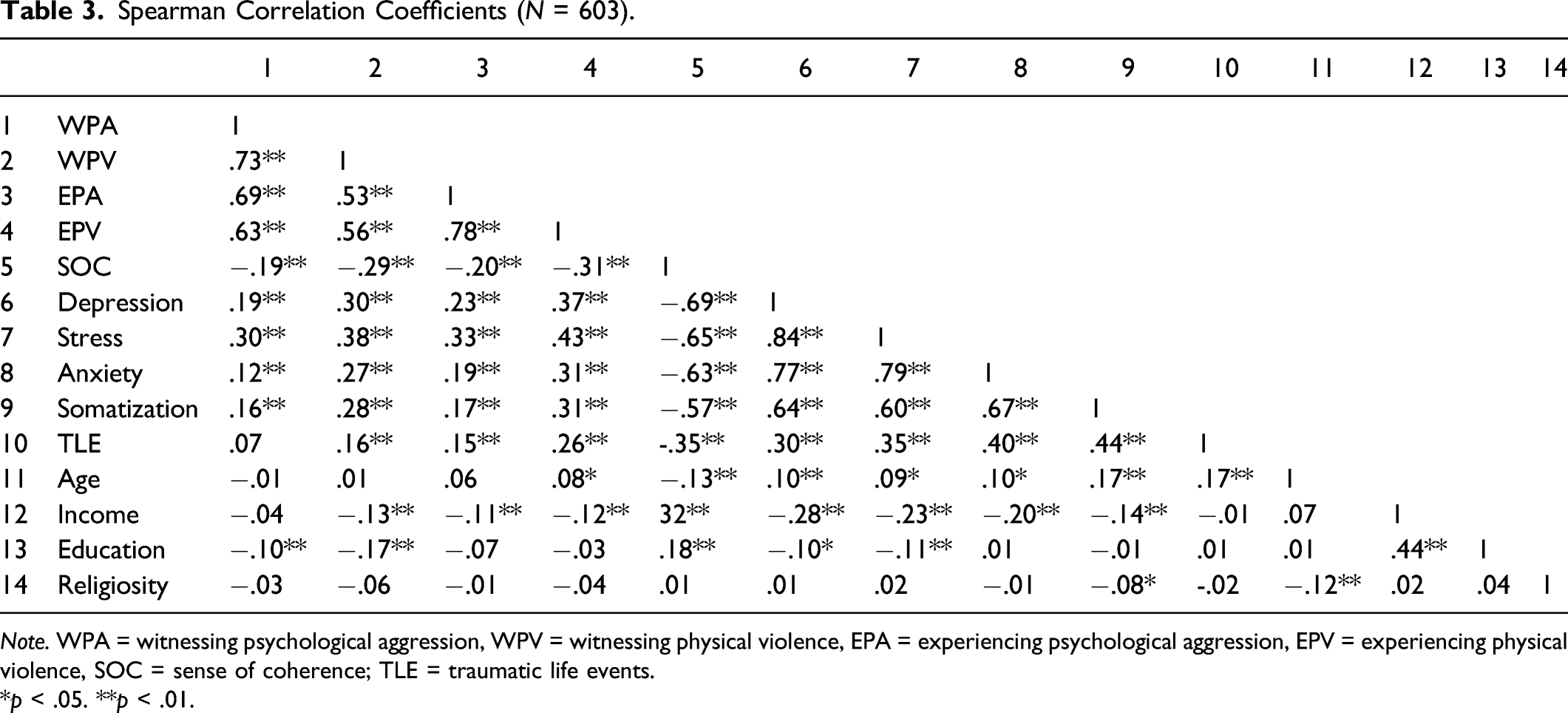
Note. WPA = witnessing psychological aggression, WPV = witnessing physical violence, EPA = experiencing psychological aggression, EPV = experiencing physical violence, SOC = sense of coherence; TLE = traumatic life events.
*p < .05. **p < .01.
Mediation Model: Effects of Exposure to Parental Violence on Psychological Distress as Mediated by Sense of Coherence.
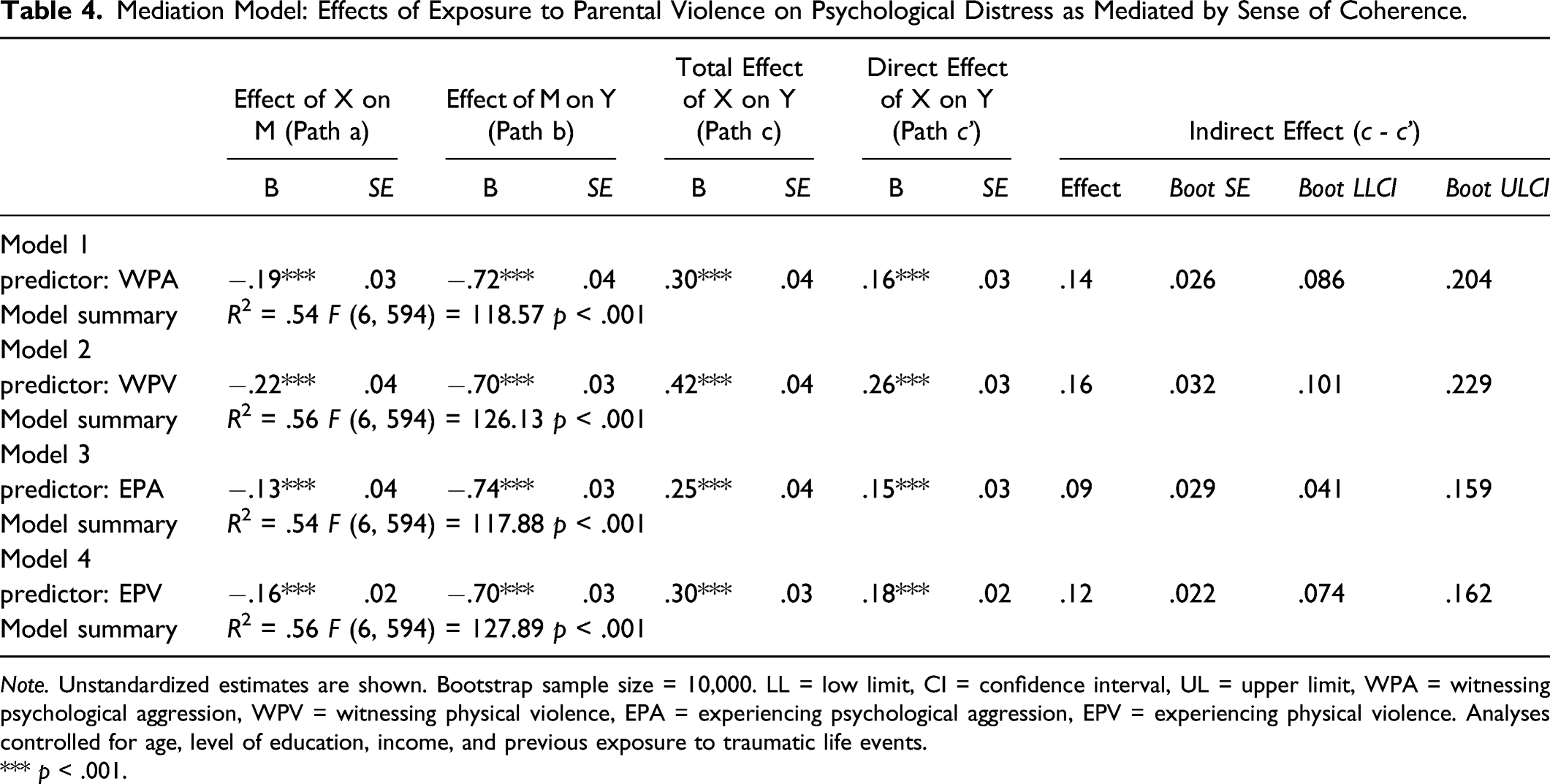
Note. Unstandardized estimates are shown. Bootstrap sample size = 10,000. LL = low limit, CI = confidence interval, UL = upper limit, WPA = witnessing psychological aggression, WPV = witnessing physical violence, EPA = experiencing psychological aggression, EPV = experiencing physical violence. Analyses controlled for age, level of education, income, and previous exposure to traumatic life events.
*** p < .001.
Control Variables
Traumatic life events such as financial hardship or the death of a close relative have been shown to weaken SOC (Volanen et al., 2007). In addition, a vast body of literature has shown that exposure to different types of traumatic events is significantly associated with psychological distress (Briere et al., 2008; Ozer et al., 2003). Therefore, we controlled for exposure to traumatic life events as a potential explanation for psychological distress and SOC levels. The participants’ age, level of education, and income were also controlled for due to their possible correlations with the outcome variables in the model (i.e., psychological distress and SOC).
Results
Descriptive Statistics
Table 2 shows the percentage and mean score of witnessing mother-to-father and father-to-mother psychological aggression (WPA) and physical violence (WPV), at least once before the age of 18 years, as well as the percentage and mean score of experiencing psychological aggression (EPA) and physical violence (EPV). Table 2 also presents a summary of the independent sample t-test result of gender differences in exposure to parental violence. It was found that male participants reported significantly higher mean scores on EPA perpetrated by the father, and significantly higher mean score on EPV perpetrated by both parents.
Table 3 presents Spearman correlations among the study variables. Results of the correlation analysis revealed that both witnessing interparental violence and directly experiencing parental violence were positively related to psychological distress, measured in the current study as symptoms of depression, stress, anxiety, and somatization. Analysis also indicated that both witnessing interparental violence and directly experiencing parental violence were negatively related to SOC. In addition, a significant negative correlation was found between SOC and each of all four indicators measuring psychological distress. Exposure to traumatic life events, the participants' age, income, and level of education correlated with SOC and with all four indicators measuring psychological distress. A negative correlation was found between the participants' age with the level of religiosity while the participants' level of education correlated positively with the level of income.
Witnessing Interparental Violence and Experiencing Parental Violence as Predictors of Psychological distress
To investigate Hypothesis 1, a simple mediation analyses were performed using PROCESS macro (model 4). The results of the mediation analyses are presented in Table 4. The total effect column in Table 4 (Path c) shows the estimates of the direct effects of witnessing and experiencing parental violence on psychological distress. Regarding Hypothesis 1, the results indicate that WPA and WPV were positively and significantly associated with psychological distress [B (SE) = .30 (.04), p < .001; B(SE) = .42 (.04), p < .001, respectively]. WPA accounted for approximately 27% of the variance in psychological distress (R 2 = .268) while WPV accounted for 29% of the variance (R 2 = .291). Similar results were found for the effects of experiencing parental violence on psychological distress. The results indicate that EPA and EPV were positively and significantly associated with psychological distress [B (SE) = .25 (.04), p < .001; B (SE) = .30 (.03), p < .001, respectively]. EPA accounted for 24% of the variance in psychological distress (R 2 = .242) while EPV accounted for approximately 30% of the variance (R 2 = .297). The results support Hypothesis 1 and indicate that both witnessing interparental violence and experiencing parental violence during childhood and adolescence were significant predictors for psychological distress in adulthood.
Test of the Mediation Model
With regard to Hypothesis 2, Table 4 presents the results of the mediation analyses performed in order to test the effect of the IVs on the mediator (path a), the effect of the mediator on the outcome (path b), and the direct effect of the IVs on the outcome when the mediator is included in the model (path c’). The results in Table 4 indicate that all forms of exposure to parental violence were negatively associated with SOC (path a; all p values <.001). That is, high levels of witnessing interparental violence and/or experiencing parental violence predicted lower levels of SOC. The results also indicate that SOC was significantly and negatively associated with psychological distress in all models (path b; all p values <.001). The introduction of SOC as a mediator reduced the direct effects of the IVs on psychological distress but they were still significant predictors, not through SOC (path c’; all p values <.001) indicating partial mediation. The bootstrapped 95% confidence interval (CI) using 10,000 resamples shown in Table 4 confirmed that the indirect effect of SOC in the relationship between all forms of exposure to parental violence and psychological distress were significant (path c - c’; CI did not include zero in all models). We can conclude that witnessing interparental violence as well as experiencing parental violence were related to a reduction in SOC levels and that low levels of SOC predicted higher levels of psychological distress. These results support Hypothesis 2 regarding the role of SOC in mediating the relationship between exposure to parental violence and psychological distress. Exposure to parental violence remained a significant predictor of psychological distress, indicating partial mediation of SOC in this relationship.
Test of the Moderated Direct Effect
To test for Hypothesis 3, moderated—mediation analyses were performed using PROCESS macro (model 5). We tested the interaction effects between gender and all forms of exposure to parental violence tested in the study (i.e., WPA, WPV, EPA, and EPV). The results indicate that gender significantly moderated the direct effect of EPV on psychological distress (B (SE) = .14 (.05), p = .008) indicating that at high levels of EPV women reported higher levels of psychological distress than men. A visual representation of the interaction between gender and EPV is shown in Figure 1. Contrary to our hypothesis, the interactions between gender and WPA, WPV, and EPA were not significant, indicating no evidence for a moderating effect of gender. Overall, the results partially support Hypothesis 3. Moderating effect of gender on the relationship between experiencing physical violence and psychological distress.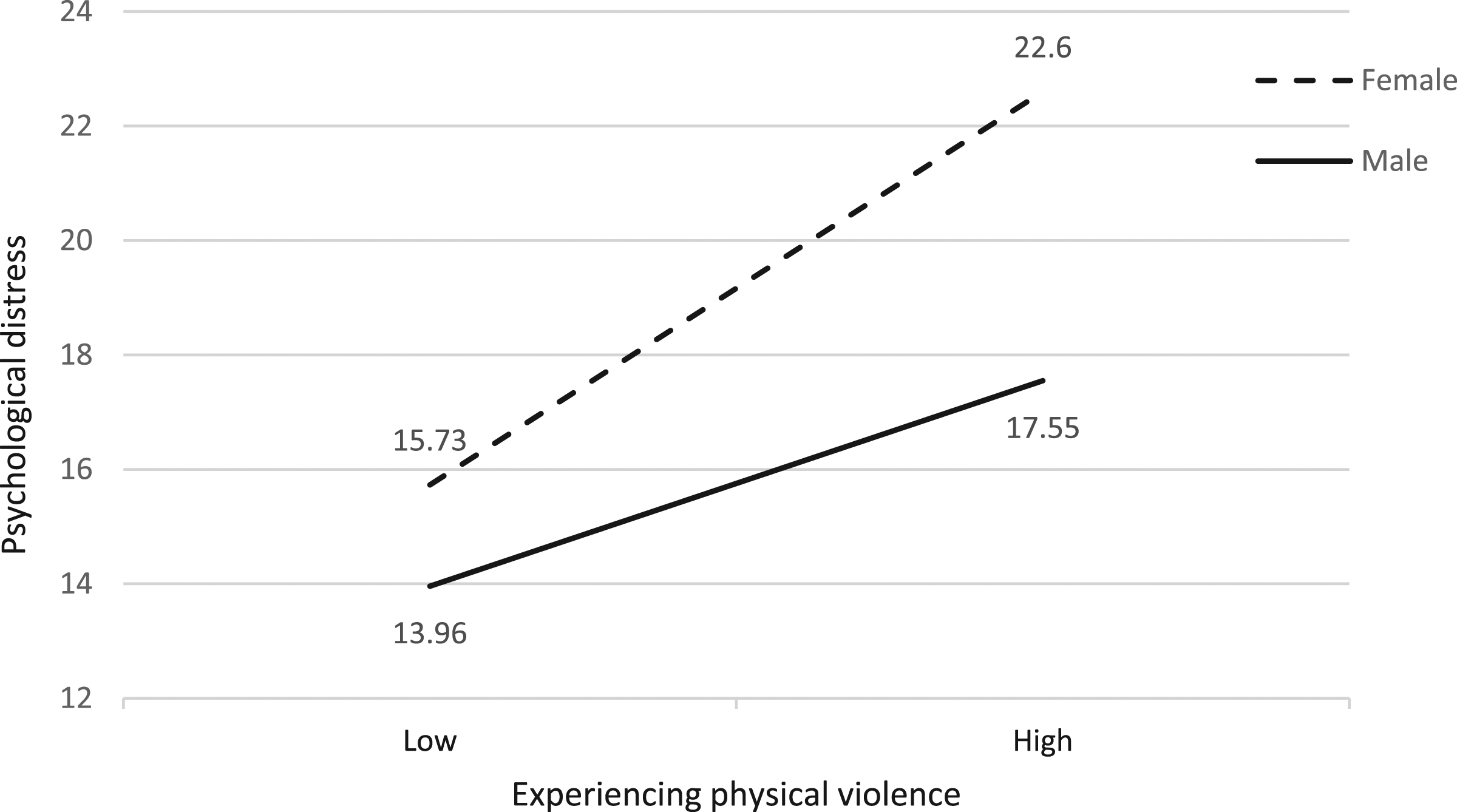
Discussion
This study examined the relationship between exposure to psychological aggression and physical violence perpetrated by one or both parents during childhood and adolescence on the levels of psychological distress among Arab adults in Israel. In addition, we investigated the role of sense of coherence (SOC) as a mediator and gender as a moderator of this relationship. The study findings support our first hypothesis regarding the direct relationship between exposure to parental violence and psychological distress. The results indicate a significant positive relationship between all forms and types of parental violence explored in the current study with the levels of psychological distress. These findings are in line with previous research on the adverse effects of exposure to parental violence on psychological wellbeing in the long term (Haj-Yahia, Hassan-Abbas, et al., 2019; Haj-Yahia, Sokar, et al., 2019; Norman et al., 2012; Showalter et al., 2019; Vu et al., 2016; Wolfe et al., 2003). The current study sought to examine the distinct yet often related forms of exposure to parental violence and their effect on psychological distress in the context of the Arab society in Israel, which is essentially a traditional, collectivistic, and patriarchal society. Our findings are similar to other studies conducted in Western societies and suggest that witnessing interparental violence and experiencing parental violence are prospectively related to higher levels of psychological distress.
The relationship between exposure to parental violence and psychological distress is well known and is also a much-studied phenomenon (Haj-Yahia et al., 2019; Moylan et al., 2010; Norman et al., 2012). However, the analysis of this direct relationship should be examined in a more complex way by exploring variables that may explain the relationship between these two aforementioned variables. Another objective of this study was to investigate the mechanism linking exposure to parental violence and psychological distress through the mediation of SOC. The results derived from multiple mediation models of the present study supported our second hypothesis regarding SOC as a mediator in the relationship between all forms of exposure to parental violence and psychological distress. It was found that witnessing interparental violence as well as experiencing parental violence correlated negatively with SOC and that low levels of SOC predicted higher levels of psychological distress. These results confirm those obtained in Simmons and Swahnberg’s (2021) study regarding the mediating role of SOC in the relationship between victimization and mental and physical health among adults. In the current study, we used the conceptual framework of the Salutogenic Model (Antonovsky, 1987), focusing on the SOC concept, to explain why individuals who were exposed to parental violence may experience higher levels of psychological distress. According to the Salutogenic theory, SOC is considered a central resource that can increase resilience to stress. However, the development of SOC is largely dependent on several factors within the family, mainly a positive family environment. Growing up in an insecure, chaotic, and unstable family environment was found to be associated with lower levels of SOC (Evans et al., 2010). Moreover, consistently with the Salutogenic Model, SOC was found to be strongly related to mental health (Eriksson & Lindström, 2006), and many studies have confirmed that low levels of SOC predicted higher levels of psychological distress (Eriksson & Lindström, 2006; Freitas et al., 2015; Moksnes et al., 2014). As predicted based on the Salutogenic Model, our results show that exposure to parental violence may increase the risk for later psychological distress through the development of a weak SOC. These findings join previous studies on the mediating role of SOC, however, the evidence of partial mediation suggests that there is a need for exploring other possible mediators between exposure to parental violence and psychological distress.
Finally, we expected that the relationship between exposure to parental violence and psychological distress would be stronger in female participants. The hypothesis regarding gender as a moderator was supported only with respect to experiencing physical violence as a predictor of psychological distress. Our results show that experiencing physical violence was associated with higher levels of psychological distress for female compared to male participants when controlling for exposure to traumatic events and socio-demographic variables. This finding is consistent with previous studies on gender differences in trauma-related symptoms (Tolin & Foa, 2008; Trickey et al., 2012). This finding is particularly interesting given the fact that the males in our sample experienced physical violence at a higher level than females, suggesting that female participants are more likely to exhibit psychological distress despite experiencing lower levels of physical violence. One explanation for this specific finding in females is that females are more likely than males to report on internalizing symptoms such as depression, anxiety, and stress, while males are more likely to report externalizing symptoms (Evans et al., 2008). Another explanation may be attributed to traditional gender role beliefs and a different socialization process for males and females within the Arab society. Expressing feelings of weakness, helplessness, and distress among women is socially acceptable, while the expression of such feelings is not acceptable for men (Abu-Baker, 2005). Future research should include measures for externalizing behaviors such as drug abuse, self-harm, and aggressive behaviors. Contrary to our hypothesis, no evidence for a moderating effect of gender was found for the other three forms of exposure to parental violence (i.e., witnessing psychological aggression, witnessing physical violence, and experiencing psychological aggression). This finding is supported in Evans, Davies, and DiLillo’s (2008) meta-analysis which found no gender differences regarding internalizing symptoms. Consequently, the moderating role of gender on the relationship between exposure to parental violence and psychological distress needs to be clarified in future studies.
Strengths and Limitations of the Study
In the current study, we reached a representative and sufficiently large sample which increases the generalizability of the results and enabled the use of statistical analyses for exploring gender differences in our sample. The present study contributes to the existing literature on SOC by examining the distinct impacts of witnessing interparental violence and experiencing parental violence on SOC development. Findings regarding the role of SOC as a mediator in the relationship between exposure to parental violence and later psychological distress are particularly important as they demonstrate the importance of SOC in facilitating coping with stress and promoting mental health. Some limitations of the study should be considered. First, due to the cross-sectional design of the study, it is not possible to establish a causal relationship between the studied variables. Second, reports regarding the participants' exposure to parental violence during childhood were collected based on retrospective self-report measures. This led to non-representation of illiterate or low-education population in the study. It is recommended for future studies to use additional data collection methods such as interviews. The participants were asked to report the frequency of their exposure to different forms of parental violence before the age of 18 years. Such recollection may be biased due to difficulties in remembering the violent incidents over such a long period, repression, or over-estimation of these events. It would have been desirable to measure exposure to parental violence prospectively and at different periods, for example, during childhood, and adolescence. In addition, the current study focused on two types of parental violence (i.e., physical violence and psychological aggression). It would be of great value to examine other types of abuse, such as experiencing sexual violence and neglect and witnessing other types of interparental violence such as economic abuse and social abuse. Third, data were collected during the Covid-19 pandemic and shortly after the removal of some of the restrictions imposed on the citizens of Israel during the third lockdown. This could have affected the levels of psychological distress and the sense of coherence among the participants. To avoid this, we controlled for “infection with Covid-19" among other traumatic events measured in the LEC questionnaire. Yet, it is recommended that future studies replicate these findings when the pandemic is over.
Conclusions and Implications for Intervention and Prevention
The results of the current study provide empirical evidence of the deleterious effect of exposure to parental violence on the development of SOC, which may increase the risk for later psychological distress. Our findings partially support the hypothesis regarding gender differences in psychological distress following exposure to parental violence. Important implications for practice can be derived based on the current findings. First, it is important to provide therapy or access to child protection services aimed to intervene with children and youth exposed to parental violence. Such therapy or intervention programs should be aimed at enhancing personal psychological resources (such as SOC) and promote effective coping with stress. It is recommended to develop programs for Arab adults who display depression, anxiety, stress, and somatic complaints as a result of their exposure to parental violence. An emphasis should be placed on encouraging Arab females to join such intervention programs. Secondly, preventing child maltreatment and providing therapy usually requires disclosure. Arab children and youth are less likely than their Jewish counterparts to disclose their exposure to parental violence (Lev-Wiesel et al., 2019). This may lead to a situation in which Arab children are greatly untreated by professionals, which increases their risk for psychological distress in the long term. Keeping this in mind, school counselors, teachers, and other mental health practitioners should be provided with proper training and knowledge regarding signs and symptoms of abuse, while also being informed about their legal obligation to report to child protective services when child abuse is detected.
Footnotes
Acknowledgments
This study was supported by grants from the Ariane de Rothschild Women’s Doctoral Scholarship, and the Center for the Study of Multiculturalism & Diversity at The Hebrew University of Jerusalem.
Declaration of Conflicting Interests
The author(s) declared no potential conflicts of interest with respect to the research, authorship, and/or publication of this article.
Funding
The author(s) received no financial support for the research, authorship, and/or publication of this article.
