




Abstract
The present study aimed to investigate how those who had been chronic victims of bullying perceive their bullying experience from their initial attacks to their bullying exit, how they understood processes and actions causing a situation to become progressively worse, and how they interpreted their own coping behaviors. Nine individuals who were victimized for at least 6 years were interviewed. The grounded theory approach was used to analyze the data, which generated a grounded theory of the downward spiral of bullying, demonstrating hidden aspects of bullying—the victim’s inner process as a response to external victimizing and accompanying events. The interdependence of those processes is presented in a timeline to show their cumulative nature as new vicious circles of bullying involving maladaptive coping strategies (e.g., self-blame), which form an overriding pattern of behavior that renders victims unable to break it even if they enter a new peer group. In terms of policy implications, the findings suggest the need to introduce school transition programs supporting school adaptation, identify chronic victims, and take every victimhood narrative seriously.
Introduction
Bullying, usually defined as a social process in which an individual in a less powerful position is intentionally and repetitively harassed or excluded by other students (Gini & Pozzoli, 2009; Olweus, 2002; Salmivalli, 2014), can take several forms. Physical and verbal bullying involves direct intent to cause immediate harm by physical or verbal acts (name-calling, hitting or kicking, threatening with weapon, and stealing or destroying things). Relational bullying refers to harming the victim through a third party such as the victim’s social network, friendships, social support, and acceptance in a peer group. It is displayed through various forms at school or via the Internet, for example, by gossiping, excluding, giving the silent treatment, and ignoring. Even more indirect forms entail imposing harm to a targeted student via a third party by ruining the target’s reputation and destroying his/her friendship networks or by using secret codes and collusive communication acts (Underwood, 2003; Wójcik, 2018).
There is evidence suggesting that although being bullied is generally a transitory experience, for a small but worrying number of students, it becomes chronic (Bowes et al., 2013; Juvonen et al., 2016) and is linked to harmful and long-term consequences (Moore et al., 2017). Victimized students depict themselves as unpopular, unhappy, and unsafe at school (Wójcik & Flak, 2019). They are at a great risk of developing severe adjustment problems, which may include depression, anxiety, suicidal tendencies, social withdrawal, emotional dysregulation, low self-esteem, loneliness, peer rejection, lack of friends, absenteeism, and a decline in academic performance (Bowes et al., 2013; DeLara, 2016; Smokowski & Kopasz, 2005). Furthermore, the aftermath of bullying is palpable throughout one’s life in terms of adult psychological problems, described by Thornberg et al. (2013) as lingering internal victimizing. Altogether, the effects of bullying render it a societal problem of enormous dimensions, and victimized individuals are undeniably seen as true and legitimate victims, although not in a judicial sense (Tholander, 2019).
Previous qualitative studies (Horton, 2011; Lyng, 2018; Teräsahjo & Salmivalli, 2003; Thornberg, 2011, 2015, 2017; Thornberg & Delby, 2019) suggest that bullying is a social phenomenon that includes group dynamics in which the victim tends to be perceived or co-constructed by bullies and other peers as different, odd, or deviant in some way. Some scholars suggest that the victim is seen as someone who does not fit in, threatens the existing order, and therefore, deserves to be treated with hostility (Wójcik & Mondry, 2020). The pathway to victimization from the group perspective has already been described in the previous studies. It shows the creation of a culture of bullying which includes norms, a multistage process of victim creation, rituals confirming the victim’s status, students’ roles, and group coherence (Corsaro, 2005; Lupton, 2013; Salmivalli, 2014; Thornberg, 2017; Wójcik, 2018). This process of creating a multideviant victim was noted by Thornberg (2011), who identified four phases of victimizing and showed that mis-fitting was the main theme in creating deviant peers. Thus, the discourse on fitting and misfitting seems very significant in this context and is linked with social exclusion anxiety and the fear of social death as established by Søndergaard (2012) and confirmed by Thornberg (2017), who showed that students considered being excluded, bullied, or having no friends as the worst conditions for them at school.
Further qualitative research with an emic approach (Patton et al., 2017) designed to examine the so-called insider perspective of the victims, who have been exposed long-term and repeatedly to this labeling and stigmatizing peer socialization process produced by the group dynamics of bullying, is therefore needed.
Current Study
Bullying has mainly been studied through surveys measuring prevalence, impact on mental health, and protective factors (Bjereld et al., 2015). However, studies that have explored the victims’ own perceptions and interpretation of their victimization path (Bjereld, 2016; Carlisle & Rofes, 2007; DeLara, 2006, 2008; Tholander, 2019; Tholander et al., 2020; Thornberg et al., 2013; Thornberg, 2015; Wójcik & Flak, 2019) are still scarce. Considering the current body of research on school bullying, there is a need to conduct qualitative studies to gain an understanding of former victims’ perspectives and interpretation of their bullying experience. Accordingly, the aim of this study was to investigate how those who had been victims of bullying over a long time perceive their chronic bullying path and to generate a grounded theory of this victimization pathway. We aimed to explore how former victims of bullying perceived their experiences over time from the initial attacks to the bullying exit, how they understood the processes and actions causing a situation to become progressively worse, and how they interpreted their own coping behaviors. We employed a grounded theory approach to guide our data collection and analysis, as it allows for a deeper understanding of the victims’ perspectives on complex interplaying mechanisms contributing to victimization. We also build on DeLara’s grounded theory model (2016), which accentuated victims’ cognitive interpretation of bullying.
Furthermore, this approach culminates in a theory grounded in data that are collected directly from participants based on their lived experiences (Glaser & Strauss, 1967). As a result, this approach can help us understand bullying as a set of processes and actions causing an individual to become and remain bullied over a long time, and determine the interactions, interpretations, and meanings of those processes (Charmaz, 2017).
Methods
Participants
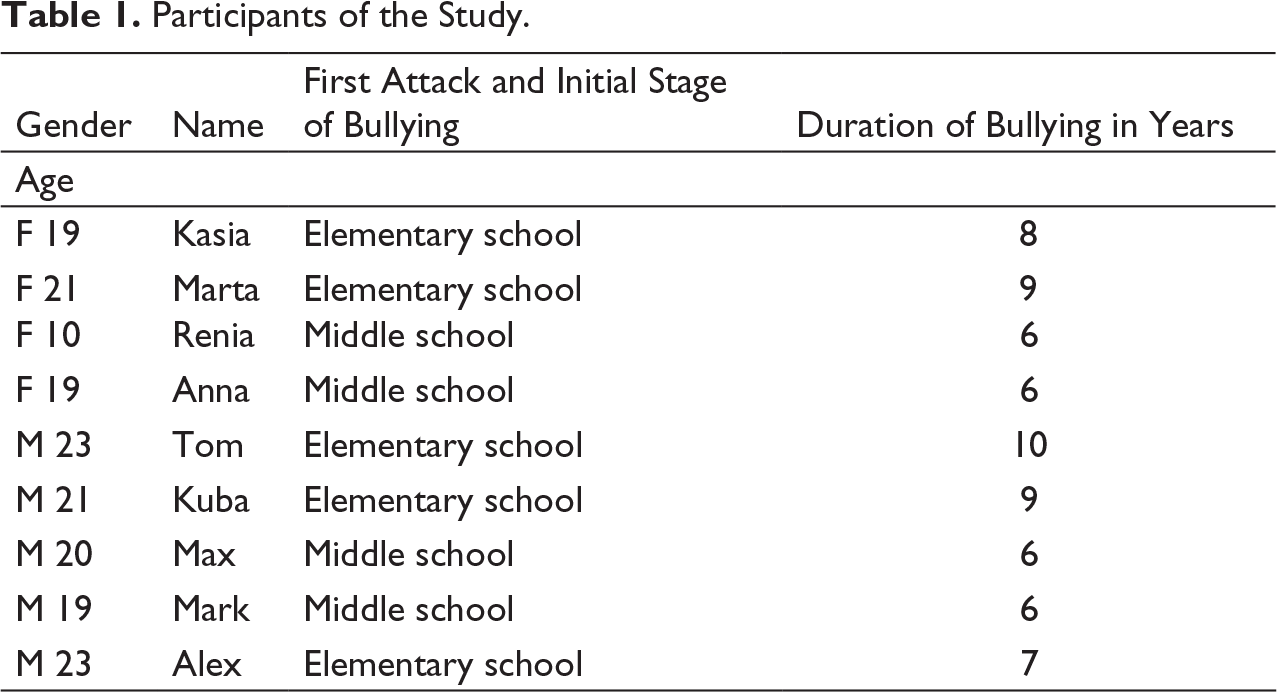
The present study is a part of a larger study on bullying victimization carried out with adults who had experienced being bullied in the past. We used volunteer sampling to recruit participants. Following approval by the University Committee for Research Ethics, a questionnaire was distributed to students at three universities in Poland. We asked about school bullying experience of (time and duration) and their willingness to participate in an individual interview. Overall, 154 students reported past victimization, and 23 agreed to participate in interviews. For the present study, we have selected those participants who were bullied for at least 6 years and whose bullying continued beyond school transition (elementary to middle and/or middle to secondary) and lasted incessantly till graduation. The cut-off point of 6 years meant that the bullying had to have lasted even after school transition.
Our decision was influenced by the fact that there are few studies researching such a unique group of long-term victims of bullying. Therefore, our final sample consisted of nine participants (four females and five males; age range F=19.75; M=21.20). The homogeneity of Polish society 1
According to National Census (2011) 97.09% of people declared on polish nationality, 2.05% two nationalities and 1.05% non-polish nationality.
Participants of the Study.
Procedure
All data were collected via semistructured face-to-face, in-depth interviews held between January and May 2019. Each participant was informed that the interview would focus on his/her experience of bullying and was assured that the interview would be confidential and recorded for research purposes only. An interview guide was used, but participants were encouraged to determine what they wanted to discuss. Each interview began with an open-ended question, such as “Tell me about your experiences at school” or “What are your most significant memories of school?” The participants were also encouraged to talk about the following: their bullying experiences from the start to the end; their thoughts and actions regarding the bullying; the actions of other students and teachers; and the way they dealt with it. These were followed by probing questions to clarify participants’ descriptions and interpretations of their victimization path, such as “Tell me how it all started,” “Why, in your opinion, did other students bully you,” “What did your teachers do,” etc. At the end of each interview, participants had time to add anything that they felt they needed to, ask questions, or express doubts. Each interview was conducted in a university building, lasting 40.50–60.20 minutes (M = 50.30) and was audio-recorded and transcribed verbatim. Participants were encouraged to take breaks whenever they wanted and were offered drinks and snacks. Since we realized that they might talk about sensitive issues or become upset, the interviews were conducted by a qualified psychologist (M.W.). Participants received a refund of transportation costs and a bookstore coupon in exchange for their participation.
Data Analysis
The interview transcripts were analyzed using NVivo 11 based on a constructivist grounded theory approach (Charmaz, 2014, 2017). The process included coding, constant comparison, memo writing, and memo sorting. We initially performed initial coding, which involved breaking down the data into units of meaning, and aimed to derive answers to our analytical questions: What happened and why? How did the participant perceive their situations, classmates, or teacher? How did they interpret their situation? We analyzed the data sentence-for-sentence, looking at bullying situations, and described actions and reactions, as well as thoughts and interpretations. In further analysis, we examined the context, events, and situations that were common to individuals for whom bullying became a never-ending condition. In the second step, we used focused coding to identify the most significant and frequent codes derived from the open coding and compared them to each other and to memos that were written throughout the process. We also clustered and organized the data into more complex concepts: first attack, initial stage of bullying, primary and secondary isolation, changes in causal attribution of own victimization, cascade of decline, and secondary victimization. Finally, we used theoretical coding (Glaser, 2005) to explore and analyze how the categories and constructed codes related to each other. We then integrated them into a grounded theory using the theoretical codes.
Results
The analysis generated a grounded theory of downward spiral of bullying. Following our participants’ discourse on their victimization, we present it as a path leading from first attacks to graduation and, thus, bullying exit. Bullying exit signifies the exit from bullying that took place prior to college. By following their accounts, we tried to place events on a bullying timeline along with interpretations, reasoning, attitudes, undertaken coping strategies, and perceptions of others. Additionally, by comparing their accounts we identified some external factors and mechanisms that seemed to exacerbate their situation and rendered them unable to escape the bullying traps. We truly appreciated the unique opportunity to follow participants’ path and listen to their retrospective interpretations, especially since a few of them had decided to talk about their victimization for the first time.
Grounded Theory of Downward Spiral in Bullying
First attack. Our participants were able to recall their bullying path and position certain incidents on a timeline. Their bullying journey began with first attack, which for five of them occurred in elementary and for four in middle school. Attacks took the form of insidious acts with a diffused beginning, which was hard to identify. They were chosen as a victim and targeted for a while before they thought that they might be being bullied. At the beginning of the school year students in each class were in the process of reconstructing alliances, starting new ones, and gaining a sense of the group dynamics. Those in powerful positions were observing and deciding who would be easy to bully and who may submit to victimization. Then, single, minor acts of bullying were carried out to test the reaction of potential victims. So, for example bullies joked about a behavior, feature, or appearance:
I had an impediment of speech and they started to mimic me. (Kasia)
Girls were laughing at my hair, but I didn’t think much of it at the beginning. (Marta) Well, everybody got his share of contempt. One day I noticed that they talked behind my back. Later I learned that somebody made up some ridiculous rumor. (Mark)
Initial stage of bullying. Because joking and mocking is a regular occurrence at school, our participants did not suspect that those single incidents could turn into something more serious, which hindered their reaction (they did not say anything or defend themselves, they also did not report it to the adults). This, in turn, made them seem easy to bully. Therefore, as our participants thought, teasing turned into more substantial, open acts of bullying, and the initial stage of bullying began. The process of victimization was characterized by bullies adding up multiple characteristics that they could verbalize or use against a participant to confirm his/her position in the class. As participants expressed:
From laughing at my hair, it went to saying that I had no idea about fashion and no taste. And to ridiculing my mom as she was a cashier and other moms were doctors and managers. And then to the fact that I had no dad, but others also had just their moms. So, they were saying that I was from poor, broken, uneducated family and therefore couldn’t hang out with them. (Marta)
Talking behind my back evolved to openly stating that there must be something wrong with me because I had an individual teaching program in elementary school. I was named weirdo, weakling, and outcast. (Mark)
It was the beginning of the school year. Alliances started to form. You know who is cool. Once a popular boy called me a puppy, I ignored it, so everybody called me that. Then, it escalated. They called me names I don’t even want to repeat. (Max)
Everything was fine, I had a group of friends and a best friend—Mary. But in December it all started to change slowly, and in February I was all alone. Later, Mary told me that somebody said I had a girlfriend and I was lesbian, which was a lie. That my father was from Egypt, which was true, but it had never been a problem before. And that he had a suspicious source of income, which was also a lie. (Anna)
The cumulation of negative labels, their complexity, and frequency made our participants realize that they were bullied and excluded, and outside of most alliances. Notably, open acts of bullying were followed with more and more students joining in complicity. For those who had experienced the commencement of bullying in elementary school, it was mainly verbal and relational with occasional physical aggression, while those bullied through middle and secondary school experienced complex relational aggression, turning also into cyber-aggression. Renia, whose bulling started in the first grade of middle school, remembered the following:
At that time nobody wanted to sit with me, even those who were friendly before. There were insults. They were talking about me and laughing, and I didn’t know what they were saying. I felt trapped.
Anna, who was also attacked for the first time in middle school, said that she fully realized her situation:
[…] somebody showed me a fabricated photo (of herself) that had circulated on the Internet for days and had tons of likes. I was so ashamed that I stayed at home for a week hoping that they would leave me alone. When I came back it was even worse.
Our participants started to reason why they were bullied and what actions should be taken in this situation. They remembered contemplating motives, e.g., being better than others in terms of academic capability, financial situation, or former achievements. Some of them stated:
I had very good grades and won all math competitions. (Tom)
My school was in a kind of poorer district, but my family was better off, and my parents really took care of us. We went on holiday and had nice clothes, unlike many others at my school. So, I guess, I stood out. (Alex)
They also wondered whether the bully was mentally disturbed or seeking attention in an antisocial way, that other students were so bored at school that they were seeking entertainment, or that middle-school students are in a developmental stage wherein they “learn and exercise hatred.” Participants mentioned the possibility that bullying was induced by a specific behavior of theirs, e.g., trying to answer all the teacher’s questions, going to church, wearing unfashionable sneakers, and laughing in an idiotic way.
They believed that the bullying would stop soon, and everything would return to normality. However, they concurrently declared that bullies “detected weaknesses in them,” which reveals an emerging internal conflict about self-strength:
I was a kid then, but I remember that I thought it was because I won all science competitions, so I looked at my bully with pity. He was stupid. But I also thought I was weak or had some weak point or shortcoming. (Kuba)
I came to this school with achievements I was proud of. When bullying started, I thought it was a part of being better. But then I had a feeling, and I still have, that there is a flaw in me that I don’t see but others do. (Mark)
Correspondingly, this dissonance was noticeable in their coping strategies, as some of the participants collaborated with the perpetrators by laughing at their jokes and wanting to be a good sport but simultaneously suffering and beginning to panic. They experienced rejection and were willing to do anything to be accepted. Especially Tom, Kuba, Max, and Mark “played cool” and did favors for the bullies. As Max said:
I pretended I liked Greg (bully), and it was only a game between us. I knew all the time it was serious and painful.
Only three of them reported being bullied to teachers or talked to their parents about it. They were advised to wait and see how the situation would evolve or try to ignore others’ behavior. Those who believed that bullying was caused by their actions tried to act differently and were extra careful about their behavior in class. For example, Renia tried to be very quiet during lessons, Kasia controlled her laughter, and Marta asked her mom for new shoes. According to our participants, those reactions and coping strategies to stop bullying only fueled a spiral and caused more students join the bullies’ side.
Full-blown bullying stage. Next, the full-blown bullying stage began, wherein they were repeatedly harassed. Consequently, they developed a deepening sense of abandonment and isolation step by step. Then, they began to avoid undertaking any actions except for holding back and “hiding.” In the next step, they started to feel helpless in interpersonal situations that subsequently led to lingering feelings of shame. Their main memories circled around distinctive bullying incidents that recreated peer exclusion and repeatedly confirmed their status as a deviant victim. One event, in particular, seemed to open a new chapter of abandonment and isolation in their bullying journey and significantly worsened their situation. It was the moment when their last friend or ally left them. As they remembered:
I entered school with my friend John […], at the beginning (of bullying) he was with me, but never said anything. Step by step he started hanging out with others. (Max)
Mary (best friend) told me honestly that it was too much for her, and she didn’t want others to suspect that she was lesbian. She never spoke to me again. (Anna)
Some girls in the class were always telling (the bullies) to stop, which was comforting for me. But gradually they got bored or got interested in something. (Renia)
In retrospect, they realized that the moment of complete loneliness that they experienced after friends left made them even easier targets not only because of lack of actual defense but also because they themselves became more vulnerable. They recalled a sudden drop in their self-esteem as they “were not able to keep even one friend” and “literally nobody cared.” Moreover, they started to perceive their situation in a different light by self-doubting and blaming, as they reasoned that if everybody left them, there must be something wrong with them. For example:
I started to agree with them. I couldn’t speak properly so there is something wrong with my brain. Obviously, they didn’t want to be with me. (Kasia)
Being good at school is one thing, but I was apparently socially incapable, which is a handicap. (Tom)
My skin was a tiny bit darker, no doubt. And I had some Arab blood in me. (Anna)
In this step of full-blown bullying, they changed the perception of their plight and felt that they had no control over the situation, and whatever they tried would worsen it. Moreover, they remembered believing that it would never end and that they would become forever outcasts. This led to avoidance. Their coping strategies changed as they did not believe in the effectiveness of their own actions, so instead of trying to stop the bullying, they began, like the long-term bullying victims in Thornberg et al. (2013), to find ways to protect themselves through turning off their emotions, self-isolating, social shielding, or holding back in social situations. Their main coping strategy was avoidance in all social situations, including those outside the school context. For example, they expressed:
I couldn’t keep them away, so I kept myself away from them. Mentally. (Renia)
I listened to music a lot. I would put my headphones on and did not pay attention to world around me. I started to write stories and kind of lived in them. (Kuba)
I was very quiet. I avoided doing anything that could be noticed. I wanted to be invisible. But I was sad and angry. Stayed at home all the time. (Alex)
Simultaneously, they began to distrust others and interpret others’ intentions as hostile. They also developed early warning and defense systems. In other words, they became careful when observing other students’ behavior and paid attention to the smallest details (tone of their voice or nonverbal signals) which, in turn, indicated how they should interact. Kuba remembered:
I developed antennas searching my social surrounding all the time, picking up warning signs. I was alert all the time ready to escape. I’m like that even now.
Others said:
I used to bet with myself who would do what that day. Like who would push me or destroy my stuff. And I was earning points if I was right. (Mark)
I wrapped myself in a barbed wire not to allow anyone to hurt me even more. (Renia)
In retrospect, they realized that their social expectations, attitudes, and behavioral patterns as a victim followed them when changing school and classes, so they were unable to take advantage of the potential of school transition. Even though they transitioned to secondary school with a new set of peers, bullying continued even if “only” in the form of exclusion and rejection.
Upon remembering the beginning of secondary school, participants expressed that their own approach pushed people away, hindered social interactions, and drastically decreased their opportunities to build a supportive peer circle or make friends. They also reflected that they might have been too conscious and chose to stay safe instead of risking the pain of rejection again. Although they remembered perceiving the climate of the new class as hostile, years later, they admitted that they were biased and expected hostility. It all triggered a negative vicious circle, contributing to stable victimization.
Another significant occurrence common to our participants, although occurring at different times of their education, was the reaction of the adults at school to whom they disclosed their problems. It contributed to a victim schema, self-attribution, and the generalization of perceived hostility, and thwarted future help-seeking attempts. Mark called it “subsequent bullying” and described it as “an unexpected blow to the back” when the teacher to whom he disclosed as a 15-year-old silenced him saying that it was not serious, and other people had it worse. They also expressed:
The class teacher kept repeating that it is going to be all right, don’t pay attention, so after a few times, I permanently stopped mentioning that I was being bullied. (Kasia).
School psychologist told me to think what I was doing wrong. (Marta)
It was a weird conversation. He (teacher) kept saying: did they really say so, are you sure he did that, no…they couldn’t have done that. (Anna)
With my father, we talked to the headmaster about my bullying. The next day, hell began; he came to my class and punished everyone. They all blamed me, my situation was worse than ever. When the headmaster asked me if my situation improved, I honestly told him. He said that it was my fault as I didn’t know how to act with peers. (Kuba)
This experience was interpreted in different ways by participants and withheld their readiness to actively seek help and intensified self-isolation. Adding to this is the fact that they did not have effective family support. Three of them did not disclose their problems to their family as they could not trust them, while four of our participants did so but were ignored or told that it was not a big deal and therefore, did not receive the expected support. Only Anna and Alex stated that their parents tried to deal with the situation by visiting the school and talking to the teachers, but it did not bring the desired solution, so they gave up. Anna’s parents intervened when she was in second grade of middle school (when she was 15), while Alex’s mother talked to the teachers when Alex was 14 and in the last grade of elementary school.
We may assume that the last step in the full-blown bullying stage was the development of a very distinctive feeling of shame lingering till the present time. In their retrospective view, it resulted mainly from social rejection and the feeling of not fitting in. It brought up self-blame, so they felt ashamed that they were victims, were not “normal,” and did not have friends or allies. When they graduated and bullying ended, our participants kept victimization a secret in most cases. They were afraid to disclose it in case others agreed with their past perpetrators or began to have doubts. Three of them discussed their bullying experiences during therapy, while two shared their experiences only with their partners. For four of them, the interview was the first time that they were disclosing it. It is noteworthy that shame as a serious and long-lasting effect which interferes with reporting (while at school) or talking about experiences in adult life has been presented in previous studies (Carlisle & Rofes, 2007; Duffell, 2000; Hugh-Jones & Smith, 1999).
Discussion
Despite this being a small-scale retrospective study, we tried to recreate the timeline of bullying and determine subsequent phases, stages, and turning points. While we are aware of the limited general applicability of the presented results, we hope that they advance our understanding of the single steps that lead to the long-term victimization of some students, which, in many cases, leads to serious after-effects in adult life (Bowes et al., 2013; DeLara, 2016; Moore et al., 2017; Thornberg et al., 2013).
Studies examining former victims’ own perspective of their bullying experience are scarce and those including participants whose victimization continued for many years are even scarcer. One reason for this may be the difficulty of recruiting former victims to participate in an interview study, as they are very reluctant to disclose this information and because this group is relatively small (Bowes et al., 2013). However, at the same time, such victimization poses more serious consequences for young adult development: poor mental and physical health, poor relationship building and maintenance, and unsatisfactory professional life (Copeland et al., 2017). So, the study’s findings may inform bullying prevention measures and guide the development of intervention strategies for those who are vulnerable to long-term victimization. Additionally, the study findings add to the literature on victimization stages (DeLara, 2019; Thornberg et al., 2013; Wójcik, 2018), presenting a deeper and more detailed view as we followed former victims’ accounts from their first attack (the onset of bullying), initial stage of bullying, through full-blown bullying till graduation. We included changes in attitudes and coping strategies induced by certain events; events that might be noticed by adults at school, even if they are not reported, and treated as warning signs of possible victimization (Figure 1).
Downward spiral of bullying.
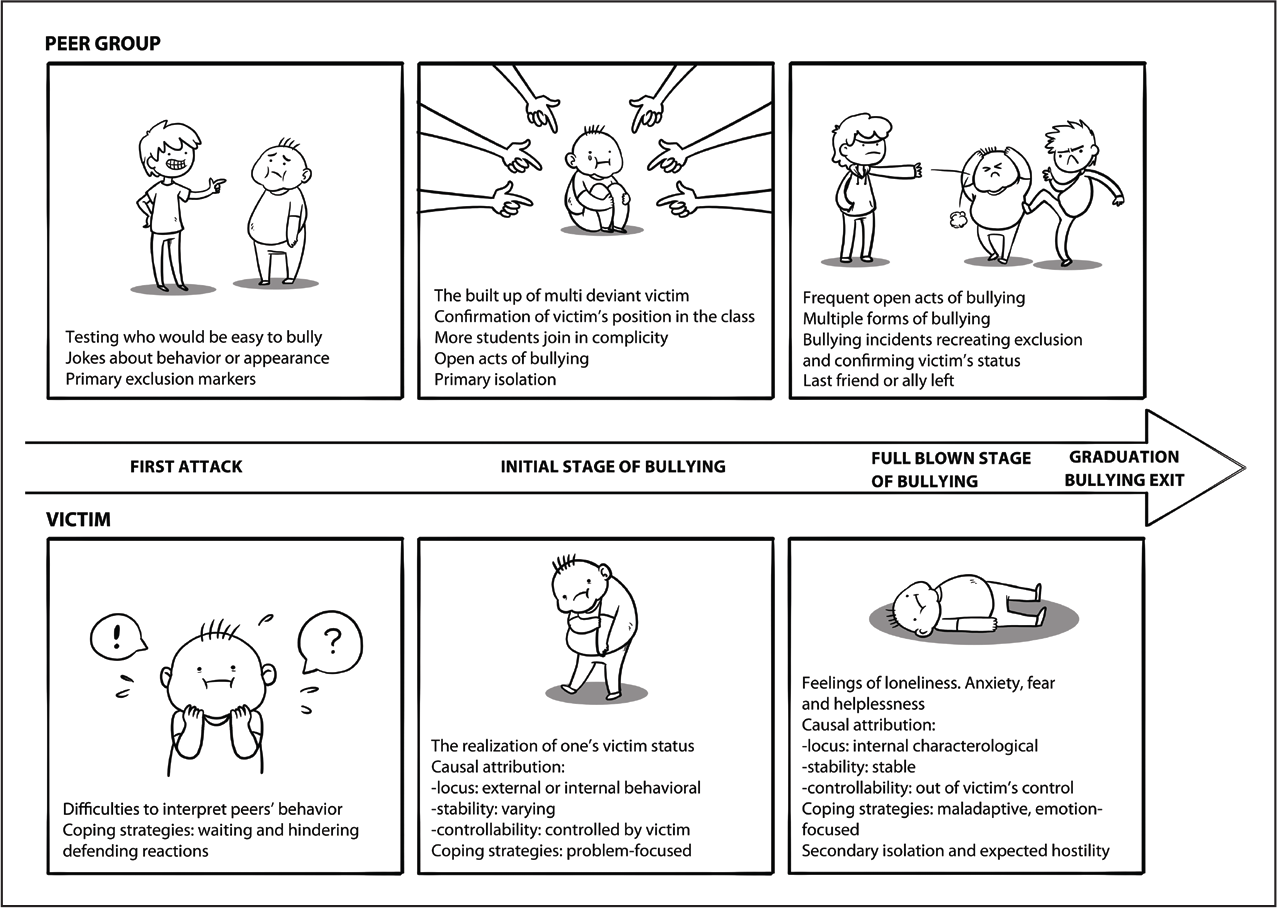
The findings confirm that the form of first bullying attacks and the way it is interpreted are crucial for the further development of bullying. Its ambiguity hinders victims’ responses (Thornberg et al., 2013), which, in turn, propels bullies’ actions. The collective decision to exclude and bully someone is not made overnight, but it is influenced by the complex processes of fitting and misfitting (Teräsahjo & Salmivalli, 2003; Thornberg, 2015; Thornberg & Delby, 2019) and by primary and secondary exclusion markers ascribed to the victim (Wójcik, 2018). In this initial stage of bullying students perform “the odd student repertoire” (Teräsahjo & Salmivalli, 2003), confining victims to negative labels. Our participants found themselves excluded by a growing number of class members, which slowly changed the way they interpreted the situation and altered their coping strategies. After the first realization of one’s own victimization, participants attributed the bullying to the fact that they were different in a positive way or that the bully was mentally disturbed. With time, they began to see their own actions as accountable for the bullying and started to suspect that they might be at some fault, so causal attribution gravitated toward internal attribution. Self-blame among victims of school bullying has also been found in other studies (Tholander et al., 2020; Thornberg et al., 2013; Viala, 2014), and might, at least partly, be a result of internalizing the negative image of them as deviant and not fitting in that is repeatedly produced in bullying behaviors and conversations directed toward them (Thornberg et al., 2013).
Research on the consequences of certain attributions (internal versus external, stable versus unstable, or controllable versus uncontrollable) show different outcomes and motivational consequences (Janoff-Bulman, 1979). On the edge of initial bullying and full-blown bullying stages, participants made either external or internal behavioral attributions, ascribing the blame either to others (mainly bullies) or to their own behaviors. They also believed that the situation would revert to normal and that by changing behaviors, their bullying would stop. In a causal dimension framework, external attribution or internal behavioral attribution are both unstable and controllable, so they may elicit adaptive responses (Carnelley & Janoff-Bulman, 1992). Believing in the future avoidability of negative outcomes (Anderson et al., 1994), our participants tried to use problem-focused coping skills (Compas et al., 2001) such as pleasing the bully, trying to appear cool, changing and controlling certain behaviors, or telling the teacher. In their view, those strategies were ineffective and seemed to support bullies’ plan to confirm their socially constructed victimhood. It is difficult to explain why our participants were so unsuccessful, but we can assume that the resources of high self-esteem, physical strength, assertive personality, a social network and support, and quality of friendships were lacking.
A significant turning point established in our analysis that pushed victims into the abyss was when they were abandoned by their last friend or ally in the class. The role of friendship in safeguarding against bullying has been widely researched (e.g., Kendrick et al., 2012). It has been shown that friends and other classmates often leave victimized youth to preserve their own safe position in the social network and hierarchy (Kochel et al., 2015; Strindberg et al., 2020a, 2020b; Thornberg, 2015). Bullying influences not only the individual student but also the entire social network connected to him/her. Although victims may benefit from having supportive friends who can protect them, they tend to spend time alone or with those who are in danger of victimization (Sentse et al., 2013). Our results showed that the moment when victims were left completely alone in a hostile environment altered the way they reasoned about their situation and consequently, changed their coping strategies. Without friends or allies, they were left without immediate defense during bullying (Hodges et al., 1999; Tholander et al., 2020). Moreover, upon perceiving the group as coherently hostile or indifferent, they began to “update” causal attributions on all dimensions (Dodge,1980). They had already employed behavioral self-blame after the initial stage but gradually, especially after allies left and in the absence of disconfirming evidence, it evolved into characterological self-blame (having Arab blood or darker skin, fat, weird, coming from a poorer family), which are nonmodifiable sources of attribution. According to the casual dimension framework mentioned above, such attribution triggers belief in personal deservingness for past negative outcomes, expectations of future hostile behavior, perception of stability of peers’ behavior, and lack of control over one’s victimization. Consistent with previous research (Anderson et al., 1994; Janoff-Bulman, 1979), this research shows that individuals who begin to make characterological self-attributions for being bullied use emotion-focused coping skills (Olweus, 2002), going into secondary isolation by separating themselves from the peer group, developing warning and defense systems, social distancing strategies, and a strong sense of distrust toward others (Carlisle & Rofes, 2007; DeLara, 2016; Thornberg, et al., 2013). Thornberg et al. (2013) described this phase as one of double victimizing that presented similar coping strategies, ending in self-resignation, which was also the case with our participants, who declared that they perceived that nothing could be done to improve their situation. In the same study, Thornberg et al. (2013) revealed that for some victims changing schools or class did not result in the bullying ending, which also illustrates the experiences of participants in this study. The findings suggested that one factor that influenced whether they became bullied again or not was their perception of the social climate of the new class. Those who continued to be bullied perceived a hostile atmosphere. Our study confirms that it is an influential factor and shows that mechanisms leading to this are: constant readiness in detecting the smallest manifestations of hostile intentions in others, inclination to perceive general hostility, scripts of self-isolating behaviors, and characterological attribution of one’s situation. They were unable to benefit from the potential of school transition, which for some bullied students is a deliverance from oppression and by many others is perceived as a “new beginning” and a chance to form satisfying friendships (Wójcik & Kozak, 2015).
Another significant moment on the bullying timeline was the reaction of adults at school to whom they disclosed their problems. What happened was what they feared the most—they were not treated seriously, were silenced, or exposed to retaliation after intervention (Mishna & Alaggia, 2005). There was also no effective family support to rely on, which contributed to the victim schema and discouraged future help-seeking attempts. One of our participants called this event “subsequent bullying,” which may be what victimologists refer to as “secondary victimization” (Stroble, 2010; Tholander, 2019), i.e., various problematic reactions by third parties that exacerbate victims’ original suffering.
It is important to note that although Polish society and the respective school population are very homogeneous in terms of ethnic backgrounds, races, and religions, other individual demographic variables play an important role in students being identified as different and chosen as victims. The feeling of “difference” and “otherness” prevails in our respondents’ discourse and is associated with “strangeness” and not belonging to the same group. In this study difference was based on disability (impediment of speech), ethnicity (Egyptian father), financial status (poorer and better off), higher (than the class) academic achievements, or some unspecified behavior or appearance. Students in victims’ classes seemed to be very creative when deciding on the reason to exclude and bully, which has also been presented in previous studies (Wójcik, 2018). When there were no obvious culturally avoidable characteristic—such as disability, different nationality, or sexual orientation (Álvarez-García et al., 2015; Wójcik & Kozak, 2015)—any difference was enough. This may suggest that when planning bullying prevention, we must work toward the general appreciation of diversity and difference. It might be achieved through encouraging good and supportive class relational climates, which along with lower levels of class moral disengagement contribute to lower victimization (Thornberg et al., 2017).
Limitations
There are several limitations to the study that warrant consideration in interpreting these findings. First, in qualitative interviews, there is a higher risk of social desirability bias compared to anonymous questionnaires. There also might be a risk of recall bias as the interviews were carried out some time after the events. We have also used a self-selected sample, so there might be some inherent traits of the participants exaggerating some particular findings of the study. Further, self-reported experience can potentially distort incidents or events because it can be difficult to remember the events and their timeframe (Berlan et al., 2010). Nevertheless, in accordance with a constructivist position of grounded theory, we do not claim to offer an exact picture, but rather an interpretative portrayal of the phenomenon studied (Charmaz, 2014). Furthermore, we recruited participants from Poland, whose experience might differ from those who attended school in other countries given the contextual and cultural variations across countries and educational systems. Future research needs to examine the downward spiral of bullying victimization in the current findings among long-term victims of school bullying in other countries and in relation to various contextual and cultural conditions.
Conclusion
Our grounded theory of the downward spiral of bullying demonstrates some hidden aspects of bullying—the victim’s inner processing in response to external victimizing and accompanying events. The current study contributes to the research body on victimization by depicting and conceptualizing the psychosocial processes from long-term victims’ perspective. We tried to portray the interdependence of those processes on a timeline and to demonstrate that victims are not passive but rather actively try to cope with the bullying events. The processes are cumulative over time and new vicious circles of bullying involving maladaptive coping strategies (e.g., self-blame) form an overriding pattern of behavior that thwarts victims from breaking it even if they enter a new peer group.
Our study results, which are especially important for bullying prevention, point to turning points that exacerbate victimization, namely first attacks, primary isolation, departure of friends and allies, and secondary isolation. They point to some important policy implications. First, effective intervention is possible only when the bullying process is fully understood and tackled from different perspectives. It has been demonstrated that antibullying programs based on the participant role approach (Olweus & Limber, 2010; Salmivalli et al., 2011; Wójcik & Hełka, 2019), which aims to influence school and class contexts, promote bystander intervention and reduce the prevalence of bullying. Yet, it is also crucial to take special care of students who are victimized and struggle to change their status in the group for a long time. As evident by the study of Huitsing et al. (2019) on the healthy context paradox, even in a school with effective antibullying interventions, there are students who remain victims. It is applicable to a relatively small group of vulnerable children, but they are at high risk, given the long-term effects of prolonged victimization. It is of prime importance to identify chronic victims for prevention and intervention efforts. We suggest an attributional approach to intervention, which states that a change in causal thoughts will result in a change in emotions and behaviors that are linked with the attribution. If intervening teachers can change maladaptive thoughts about the causes of victimization, this could enable the victims to leverage the chance of school transition in halting the bullying. It seems to be a very potent moment for victims to break the vicious circles of victimization, and therefore, we recommend implementing school transition programs supporting school adaptation, which is crucial in fostering academic and social success (Maltais et al., 2017). Helping students develop networking skills during transition is essential. Such programs may help teachers manage hierarchies, group positioning, and ingroup boundaries and form more egalitarian classrooms wherein students with victimization histories may battle their expectations of hostile attitudes, secondary isolation strategies, and behavioral labels of being victims. We also suggest that teachers who engage in individual contact with victimized students should take every victimhood narrative seriously, be very careful with their own discursive environment, refrain from blaming the victim, and attempt to solve the problem as soon as possible.
In conclusion, it is important to acknowledge that bullying is a set of interdependent, multistaged, domino-effect psychosocial processes which, if not interrupted, become a downward spiral and a dead-end road for some children.
Footnotes
Declaration of Conflicting Interests
The author(s) declared no potential conflicts of interest with respect to the research, authorship, and/or publication of this article.
Funding
The author(s) disclosed receipt of the following financial support for the research, authorship, and/or publication of this article: Open access of this article was financed by the Ministry of Science and Higher Education in Poland under the 2019–2022 program “Regional Initiative of Excellence,” project number 012/RID/2018/19.
