




Abstract
The collective communication model of terrorism (CCMT) proposes that understanding terrorists’ motives influences appraisal (threat perception and emotional well-being) and reaction to terrorism (intention to retaliate). Fischer et al. (2011) presented evidence from two experiments for the assumption that understanding motives of terrorism influences appraisal. The present preregistered experiment aimed to replicate their second experiment, validate the measures they used, and also test the second proposition of the CCMT. Ensuring sufficient power for multiple tests and the given effect size, we collected data from 188 participants. The findings by Fischer et al. (2011) were partly replicated, but the comparison of the original effect sizes and the effect sizes from the replication attempt does not provide convincing evidence for the hypothesis that understanding the motives for terrorism reduces the perceived threat or negative emotional impact of acts of terrorism. Correlations with other risk-perception measures call into question the validity of the items used to assess perceived threat. Results suggest that understanding the motives for terrorism may influence whether the targeted populations want to retaliate.
Enabling people to cope well with threats and to be prepared but not afraid (Stevens et al., 2012; Willis, 2007; Wirtz & Rohrbeck, 2018) is a pertinent objective of psychological research. The collective communication model of terrorism (CCMT; Fischer et al., 2010) focuses on terrorist attacks and its informational implications for collective conflict. It suggests that understanding terrorists’ motives reduces the negative psychological impact of reports about terrorism. The psychological impact in this model is conceptualized as threat perceptions (the subjective probability to become victimized), emotional reactions, and intentions to escalate or de-escalate the conflict.
The CCMT (Fischer et al., 2010) provides an account of the collective effects of terrorism. The theory defines terrorism as a severe form of interpersonal violence (Fischer & Ai, 2008), builds on a general communication model by distinguishing sender, message, and receiver (Röhner & Schütz, 2020), and assumes that the reaction to terrorism depends on the attributes of all three components. In the CCMT, the sender of the message is the terrorist, the message is the attack, and the target of terrorism is conceptualized as the receiver. Importantly, the receiver of the message is not a victim who has been directly affected by a specific act of terror but a person who is a member of the target group, that is a potential target. As such, the theory focuses on individuals who are members of a specific target group rather than individual victims (i.e., it is not about individuals who have been wounded or psychologically hurt). The CCMT is distinct from general models of coping with trauma that results from terrorism, where the positive effect of understanding and making sense of the traumatic experience for one’s personal life has been shown (Maguen et al., 2008; Taylor, 2007; Updegraff et al., 2008). Thus, there are two important differences between the CCMT and previous models that study trauma. First, the CCMT focuses on the communication between terrorists and potential targets and not on individuals who have been victimized. Second, tests of the CCMT were based on experimental as opposed to correlational designs and thus allow causal inferences.
When investigating an individual’s response to reports of terrorism, the CCMT builds on Lazarus and Folkman’s (1984) model of coping by distinguishing between the appraisal and coping phases. In the appraisal phase, the motives for the terroristic act are perceived and integrated. The psychological reaction to terror is based on two complementary reactions: the inner-directed reaction at the individual level in terms of threat perception and decreased emotional well-being resulting from appraisal, and the outward-focused response directed against the threat. In response to the threat, the CCMT distinguishes between two types of reactions. The first, termed primary coping, results in conflict escalation by removing the threat through a physically aggressive reaction (e.g., military intervention). The second, termed secondary coping, results in conflict de-escalation by reappraising the threat, for example, by readjusting one’s attitudes toward terror. In this line, the model suggests that understanding the subjective causes of terrorism would render the conflict de-escalating responses more likely to occur.
The first assumption that understanding the motives for terrorism influences appraisal has been tested previously with two experiments by Fischer et al. (2011). As two experiments only present limited evidence and replications are necessary to estimate the true effect (Garcia-Marques & Ferreira, 2011; Nelson et al., 2018; Shrout & Rodgers, 2018; Wagenmakers et al., 2012), we aim to further test this assumption. Furthermore, the second assumption that understanding motives for terrorism influences primary and secondary coping has not been subjected to an experimental test yet.
Empirical Evidence for the Effect of Understanding on Appraisal
Fischer et al. (2011) compared three conditions to test the hypothesis that the appraisal of terrorism is moderated by the understanding of motives underlying terrorism: a control condition, a high terror salience condition, and a high terror salience condition in which the motives for terrorism were also described. Perceived threat and emotional well-being were measured as dependent variables. The results of the experiments were interpreted as evidence that providing information about the causes of terrorism (e.g., injustice or poverty) reduces the negative psychological impact of terror salience on perceived threat and emotional well-being. But does the empirical test of the CCMT stand critical scrutiny and replication?
The critical test of the focal hypothesis was the comparison of the high terror salience condition with information about motives for terrorism and the high terror salience condition without information about motives. Regarding perceived threat, this effect was observed in Experiment 1, d = 0.67, 95% CI [0.03, 1.30], p = .04, and just missed statistical significance in Experiment 2, d = 0.73, 95% CI [0.09, 1.38], p = .058. For emotional well-being, this effect was not observed in Experiment 1, d = –0.15, 95% CI [–0.78, 0.47], p > .10, and just missed statistical significance in Experiment 2, d = –0.64, 95% CI [–1.27, 0.003], p = .058 (effect sizes are depicted graphically for all conditions of the original experiments and our replication in Figure 1). A close inspection of the effect sizes and the power of the studies suggested that a replication of the original effect was warranted.
The original paper argued that the findings from Experiment 1 were replicated in Experiment 2. However, items measuring the perceived threat of terrorism in Experiment 1 and Experiment 2 differed. Experiment 1 used three items that assessed perceived threat for self, perceived threat for loved ones, and personal risk; Experiment 2 used two items: perceived personal threat and threat perceived by the government. For this reason, the comparability of the two experiments regarding the effect of the manipulation on perceived threat was limited. Furthermore, the effect of providing information about motives for terrorism on emotional well-being was observed only in Experiment 2 but not in Experiment 1.
The original paper argued that the process underlying the observed effects is the understanding of motives for terrorism; however, there was no manipulation check (i.e., the extent to which the understanding of the motives for terrorism differed between the experimental groups was not clear). A footnote reported results from a pilot study in which the effectiveness of the manipulation was tested. In this pilot, 73 students were randomly assigned to one of three conditions: control condition, terror salience without motives, and terror salience with motives. The overall effect was significant, η = .13. The degrees of freedom in the ANOVA's F-test, which was reported as F(2, 57), suggested that 13 participants were dropped from the sample, and the final sample was only N = 60. Because this change may have affected the results, a manipulation check in the replication seemed warranted.
Both of the original experiments had a small sample size (N = 60). Neither experiment reported an alpha-level correction for multiple tests, included a manipulation check, or reported effect sizes. Plus, our own a posteriori calculation of effect sizes showed that the confidence intervals were very close to zero or even included zero for the focal comparison. Therefore, we ran a replication.
Present Study
The present study extends the empirical research on the CCMT (Fischer et al., 2010) by (a) replicating an earlier experiment and (b) testing the impact of information about terrorists’ motives (motive manipulation) on the preference for a conflict-escalating or a conflict-de-escalating reaction. Furthermore, by measuring additional variables, we aimed to provide construct validation for the items from the original experiments. Toward this goal, we measured four dependent variables after the replication procedure: state anxiety, risk perception (collective, self, average German), and preferences for conflict-escalating and conflict-de-escalating reactions to terrorism.
As in the original experiments, we compared two experimental conditions with a control condition. We attempted to replicate the original findings using the measures of Experiment 2. Materials were obtained from the original paper, translated into German, and presented to the first author of the original experiments for approval. After approval, the replication was preregistered (see
Method
Planned Sample Size
We conducted an a priori power analysis to determine the minimum required sample size using G*Power (Faul et al., 2007). Based on Fischer et al.’s (2011) results for perceived personal threat in Experiment 1 (reported η² = .09, which is f = .31) in Experiment 2 (reported η² = .11, which is f = .35), an assumed effect of f = 0.35 with power (1 – β) = 0.95, and α = .01, the required sample size was N = 174.
Sample Size and Design
Participants were recruited from the local university’s Facebook groups and billboards for an online study in June 2019. Participants received course credit or a 4.00 € gift certificate. Participants who themselves or their families had been affected by acts of terrorism were excluded from the data before the analysis. This preregistered exclusion criteria were applied as in the original study. Furthermore, the number of affected individuals in Germany at the time was very low, and as a result, individuals with personal experience would potentially be a very extreme case, and as an outlier could have inadequately influenced the results. We collected data from N = 192 participants, and after removing participants according to the preregistered exclusion criterion and the criterion used in the original study, the final sample size was N = 188 (54% women; ages ranged from 18 to 80 years; M = 27.3 years, SD = 9.9). Participants were randomly assigned to one of three experimental conditions: high terror salience without motives (terror condition), high terror salience with motives (terror + motives condition), and a control condition (control condition). After the manipulation, we measured participants’ understanding of the motives for terrorism and the dependent variables. All materials were approved by the first author of the original experiment. As dependent variables, we measured perceived threat and affect (PANAS; Breyer & Bluemke, 2016). As in the original experiment, we calculated perceived threat (as the mean of participants’ collective and individual threats) and well-being (as the difference between negative and positive affect). In extending the original experiment, we also measured state anxiety (STAI; Grimm, 2009), risk perception of terrorism for Germany, oneself, and the average German (items adapted from Lerner et al., 2003), and preferences for responses that escalate or de-escalate conflict (attitude toward violence and pacifism; Jonas et al., 2008).
Material and Procedure
Experimental treatment
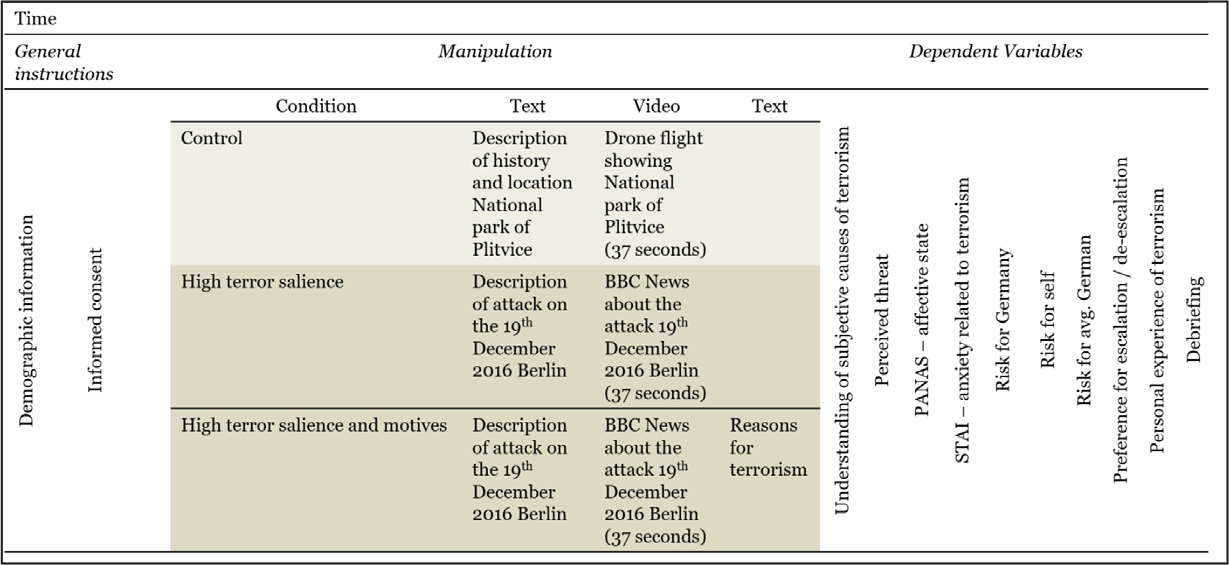
In the high terror salience condition, participants received information about the terroristic attack on the Breitscheidplatz in Berlin on December 19th, 2016. First, they read a text describing the event and then watched a 37-s sequence from a BBC News video without sound (Adams, 2016). The text (translated into English) read: “On the night of December 19th in 2016, a crowd celebrated the advent season at a Christmas market at Breitscheidplatz in Berlin across from the Kaiser Wilhelm Memorial Church. Suddenly, a man drove a truck into the crowd and killed 12 people. Another 55 people were injured, some seriously. The perpetrator was initially able to escape and was shot dead by a police patrol a few days later during a routine check.”
In the high terror salience with motives condition, participants received the same information and also received information about the perpetrator’s potential motives. The text had been provided by the first author of the original experiments in English and was translated into German. The text read: “The basic concept of the main cause of terrorism is that certain conditions create a social environment and widespread misery, which results in the emergence of terrorist organizations and acts. These conditions—including poverty, demographic factors, social inequality and exclusion, expropriation, and political grievances—are either consciously intended or allowed through passivity. The concept suggests that, for example, the general feeling of insecurity creates conditions that allow terrorism to thrive. (O'Neil, 2002b, p. 20). For some minorities, terrorism is the only way to raise awareness of their social problems.”
In the control condition (low terror salience condition), participants received information about the National Park of Plitvice in Croatia. First, they read a text describing the geographic location and then watched a 37-s film sequence without sound made by a drone flight.
Measures
As a manipulation check of the motive manipulation, we assessed the understanding of the subjective cause of terrorism with the three items that were taken from the pilot study in the original paper. The items were aggregated into a scale with good internal consistency (Cronbach’s alpha = .79; Fischer et al., 2011 reported Cronbach’s alpha = .72). Participants responded on a scale ranging from 1 (not at all) to 7 (very much) to these three items: “To what extent do you understand that terrorists carry out attacks?” “How much sense do terrorist attacks make to you?” and “How much do you understand why terrorist attacks are being carried out?”
Perception of threat through terror was measured with the two items from Experiment 2 by Fischer et al. (2011). The items were translated into German and rated on a scale ranging from 1 (not at all) to 5 (extremely). The items were: “Terrorism is a great concern for the German government” (collective threat) and “How likely do you think it is that you will be involved in a terrorist attack?” (personal threat). As in the original study, the two items were aggregated into one scale despite the lack of internal consistency (Cronbach’s alpha = .38) and their low correlation (r = .23, p < .001).
Current emotional well-being was measured using the German version of the Positive and Negative Affect Scale (PANAS; Breyer & Bluemke, 2016). The internal consistencies for the positive (Cronbach’s alpha = .83) and negative (Cronbach’s alpha = .85) items were good. As in the original study, the difference between the positive and negative affect scales was a measure of emotional well-being.
State anxiety was assessed using the German version of the STAI short version (Grimm, 2009). Participants responded to 10 items on a scale ranging from 1 (not at all) to 8 (totally), and the scale yielded good internal consistency (Cronbach’s alpha = .86).
Items for Measuring Collective Risk Perception.
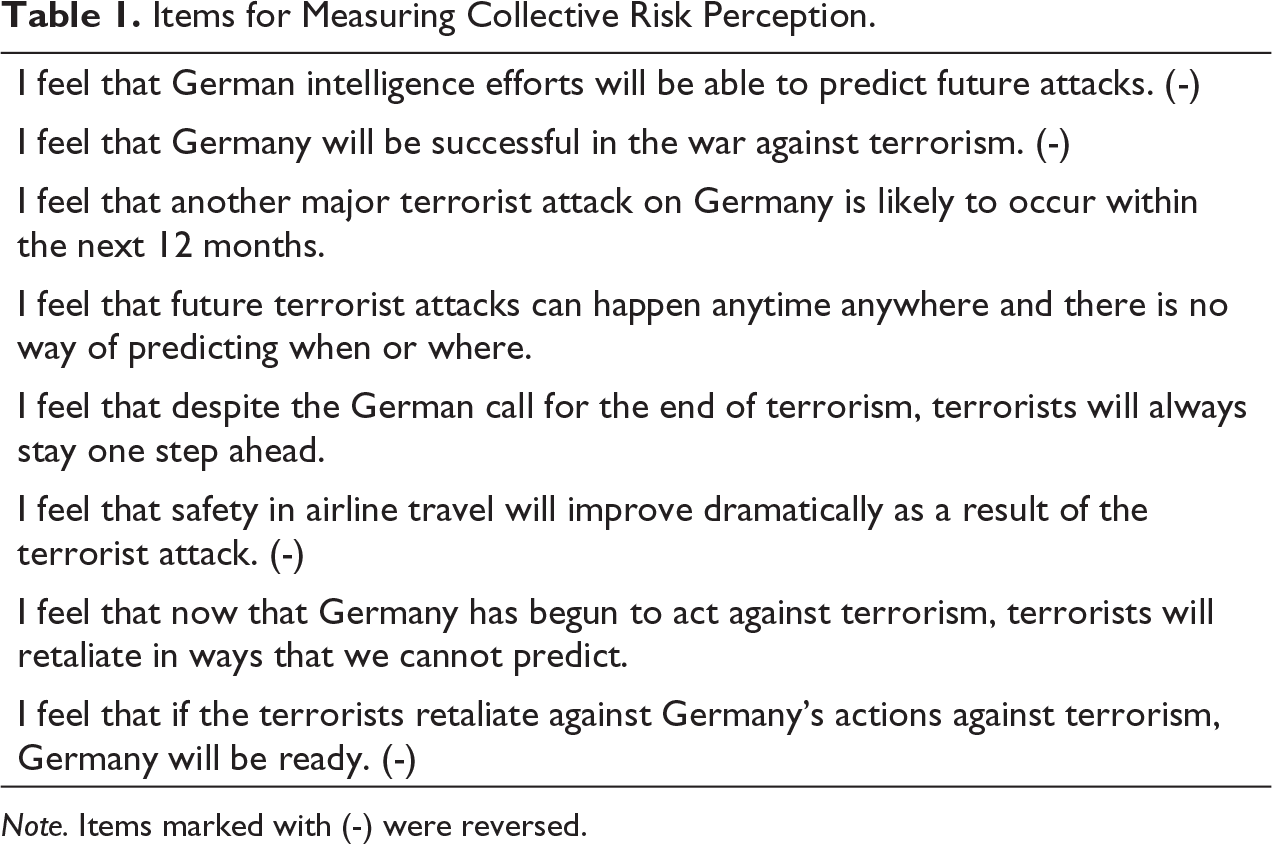
Note. Items marked with (-) were reversed.
Items for Risk Perception for the Oneself and the Average German.
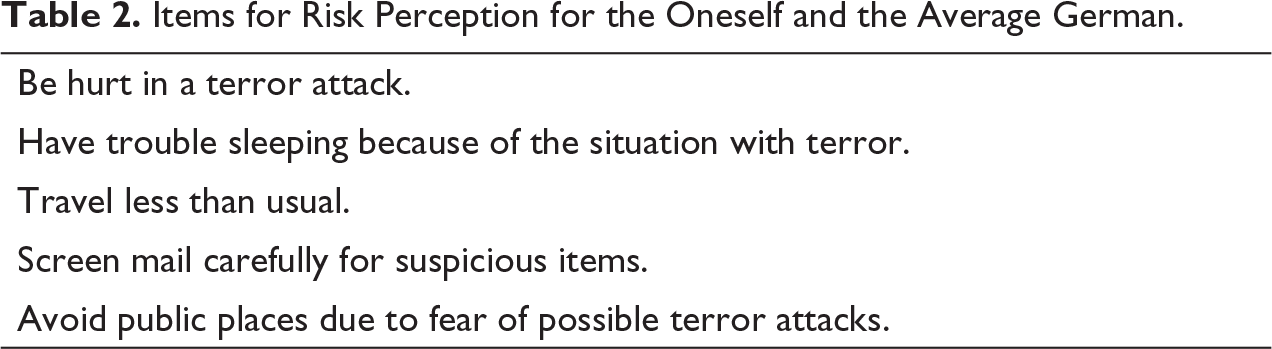
Participants responded on a slider measure, which showed probabilities ranging from 0% to 100%, and the values below 1% were log-scaled (i.e., in steps with a magnitude of 10; Figure 1). Items were aggregated into a scale of risk perception self (Cronbach’s alpha = .83) and risk perception other (Cronbach’s alpha = .87).
The measure of subjective probability for risk perception.

A preference for de-escalation was assessed with the attitude toward pacifism scale by Jonas et al. (2008). The scale yielded satisfactory internal consistency (Cronbach’s alpha = .65). The items read: “How willing would you be to support a peace-promoting organization (e.g., the Red Cross, Amnesty International)?” “How much would you support a referendum in favor of pacifistic action?” and “How interested are you in obtaining information about the organization ‘Friends and Proponents of a Violence-Free Society’?”
Preferences for conflict escalation were measured with the attitude toward violence scale by Jonas et al. (2008), which yielded a satisfactory internal consistency (Cronbach’s alpha = .72). The items were “How much do you agree that military force is sometimes unavoidable?” “How much do you agree that violence as a reaction to violent action is justified?” “How much do you agree that nuclear attacks should be responded to in the same way?” and “How strongly do you favor a military intervention abroad after a terrorist attack in your country?”
The sequence of the experimental procedure is shown in Figure 2.
Procedure and experimental manipulation.
Methodological Differences Between the Original Experiments and the Replication Attempt
Location and sample. In the original experiments, participants were approached on a university campus and asked whether they would be willing to participate in a study on terrorism. Participants were asked to participate only if they or their family members had not previously been affected by terrorism. Our replication was advertised online, and participants were students as well as members of the general public. Our replication study was not advertised as a study on terrorism but as a study on reactions to extreme events in order to avoid demand effects.
Language used in the materials. The original study was conducted in the UK and the replication in Germany. Hence, all original materials were translated from English to German. To ensure that the German translation was in line with the original materials, all of the materials were sent to the first author of the original study who is German and who reviewed and approved the materials.
Depicted act of terror. In the original Experiment 1, participants were exposed to pictures of the 7/7 London Bombings in July 2005. In the original Experiment 2, participants were exposed to newspaper articles about the 7/7 London Bombings in July 2005. The text of the newspaper article was the following: “Four suicide bombers struck in central London on Thursday July 7th, killing 52 people and injuring more than 770. The coordinated attacks hit the transport system as the morning rush hour drew to a close. Three bombs went off at or around 0850 BST on underground trains just outside Liverpool Street and Edgware Road stations, and on another traveling between King’s Cross and Russell Square. The final explosion was around an hour later on a double-decker bus in Tavistock Square, not far from King’s Cross” (BBC News,
In the replication attempt, participants received information reporting on the terrorist attack on the Breitscheidplatz in Berlin on December 19th, 2016. First, they read a text that described the event and then watched a 37-s sequence of a BBC News video without sound. The text read: “On the night of the 19th of December 2016, a crowd celebrated the advent season at a Christmas market in Berlin on Breitscheidplatz across from the Kaiser Wilhelm Memorial Church. Suddenly, a man drove a truck into the crowd and killed 12 people. Another 55 people were injured, some seriously. The perpetrator was initially able to escape and was shot dead by a police patrol a few days later during a routine check.”
Compensation. The authors of the original experiments did not state what compensation they had offered to the participants in their experiments. In our experiment, we compensated participants with a 4.00 Amazon gift card or course credit. We chose this reward because it was necessary to motivate students and members of the general public to participate in the study.
Random assignment. No information was given in the original publication about how participants were assigned to conditions. In the replication, participants were randomly assigned on the basis of a random number draw from an electronic urn with a uniform distribution of all three conditions.
Data Analysis
To compare effect sizes across experiments for perceived threat and emotional well-being, Cohen’s d was computed based on the information provided in the original article. As in the original article, we used ANOVAs to test the hypotheses that understanding motives for terrorism affects emotional well-being, perceived threat, and preferences for escalation or de-escalation. In the exploratory analyses, comparing responses on individual items, we used a mixed-effects ordinal regression analysis with a cumulative logit function to account for the ordinal nature of the data, and with a random intercept for each participant to account for the repeated measurement. For the data analysis we used R 4.0 (R Development Core Team, 2020). For the calculation of confidence intervals of the effect sizes we used the package MBESS (Kelley, 2020). For the mixed effects ordinal regression, we used the package ordinal (Christensen, 2019).
Results
Effect of Understanding Motives for Terrorism on Appraisal
Means, Standard Deviations, and Correlations with Confidence Intervals for all Variables.
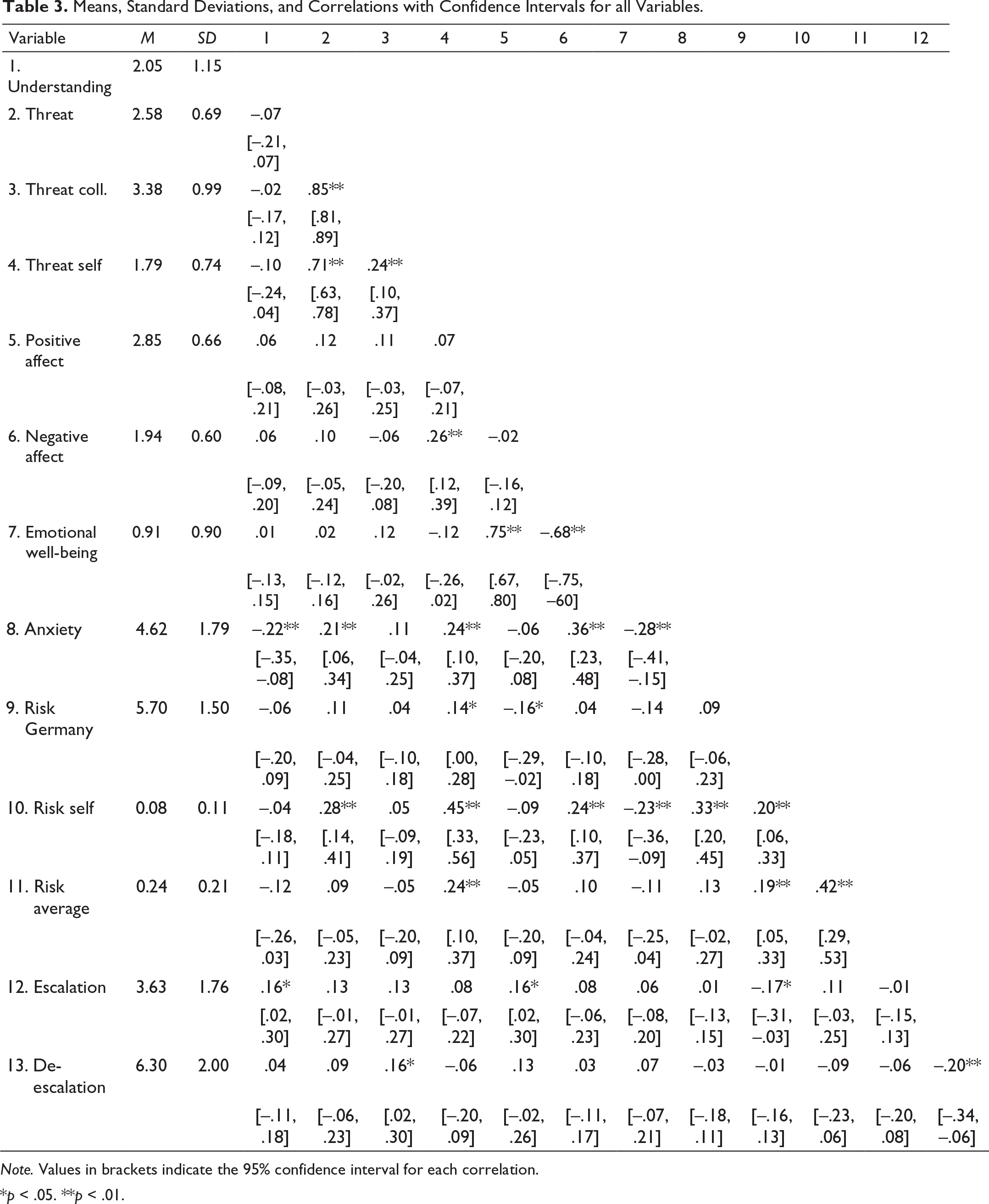
Note. Values in brackets indicate the 95% confidence interval for each correlation.
*p < .05. **p < .01.
Emotional well-being and perceived threat were not correlated, r = .02, 95% CI [–.12, .16]. Perceived terrorist threat did not differ between conditions, F(2, 185) = 0.97, p = .38, η = .01, 95% CI [0.00, 0.05]. Emotional well-being differed between conditions, F(2, 185) = 4.71, p = .01, η = .05, 95% CI [0.01, 0.12]. Using a pairwise comparison test with the Tukey method for adjusting the p-values revealed a significant difference between the control condition (M = 1.19, SD = 0.78) and the terror condition (M = 0.77, SD = 0.95, p = .022) as well as the terror + motives condition (M = 0.78, SD = 0.91, p = .025). No difference was observed between the terror condition (M = 0.77, SD = 0.95) and the terror + motives condition (M = 0.78, SD = 0.91, p > .99). Descriptive statistics for each dependent variable and experimental condition are presented in Table 3.
Effect sizes for the critical test differed significantly from zero only for perceived threat in Experiments 1 and 2 and for well-being in Experiment 2 (Figure 3).
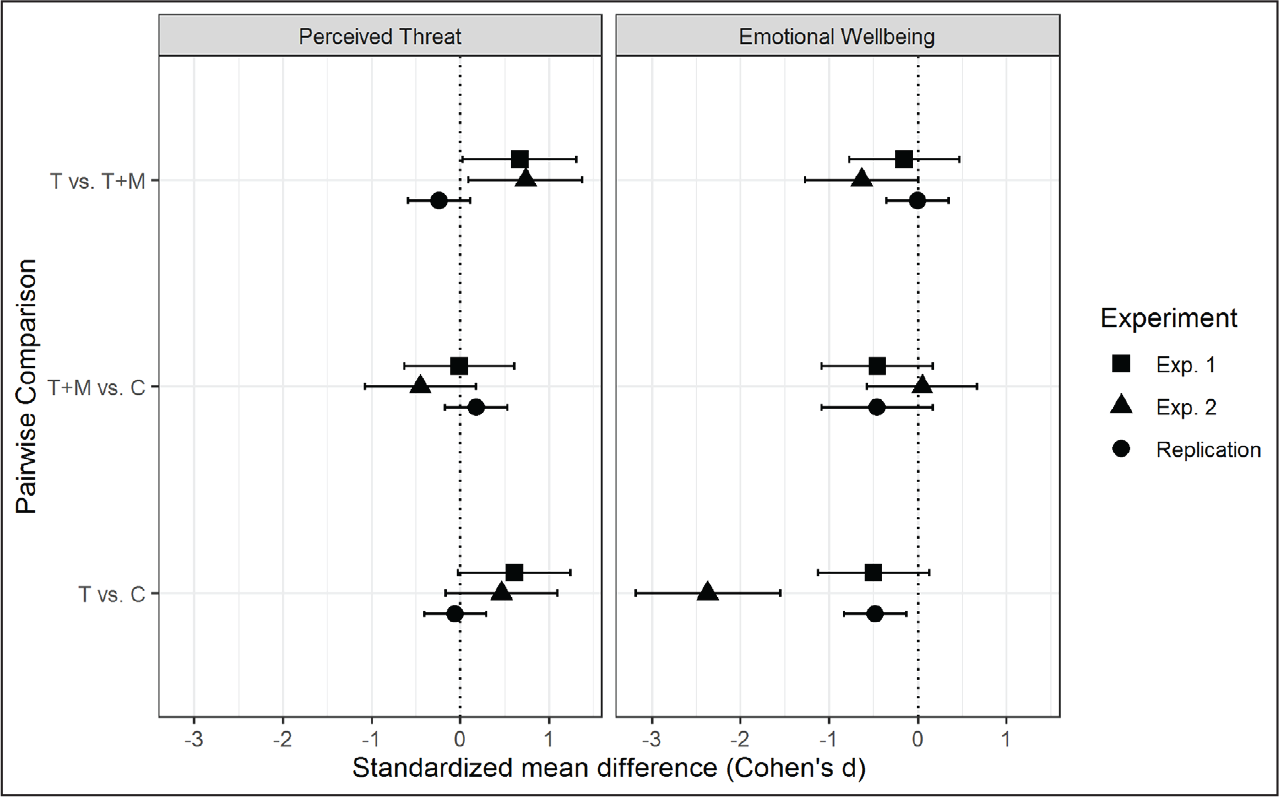
Note. Facets show separate dependent variables. The points show the point estimate of the standardized mean difference for each original experiment and the replication. The dotted vertical line shows d = 0. The y-axis shows each pairwise comparison.
In the original study, threat of terror was measured with two items (individual threat and collective threat) that showed only a low correlation (r = .23, p < .001) and thus lacked internal consistency as a scale (Cronbach’s alpha = .38). For this reason, we carried out an exploratory analysis for each item individually. Overall, the results showed that in the terror salience condition, the collective perceived threat was perceived to be higher than in the two other conditions, but the individual perceived threat was lower than in the two other conditions (Figure 4).
The proportion of responses reflecting the perceived collective threat and individual perceived threat.
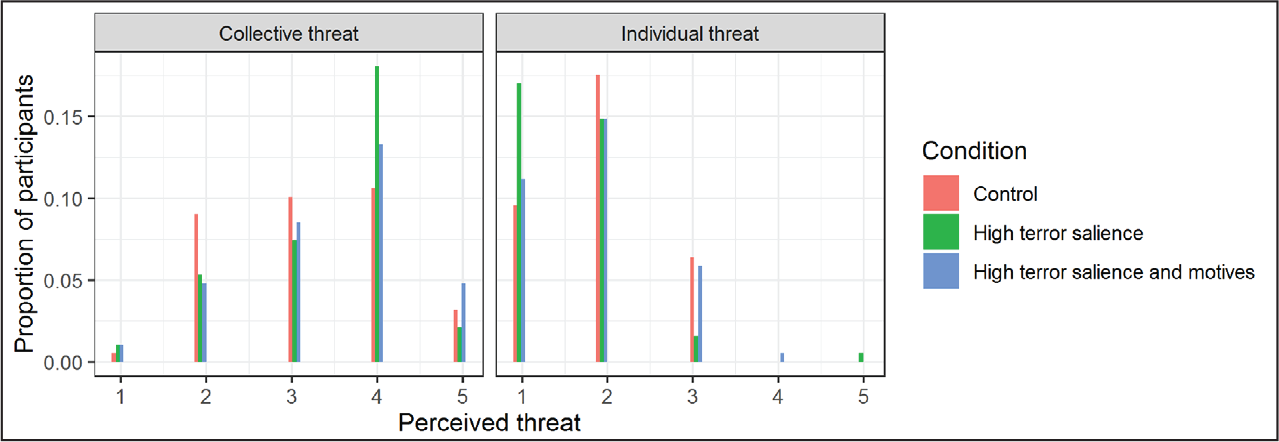
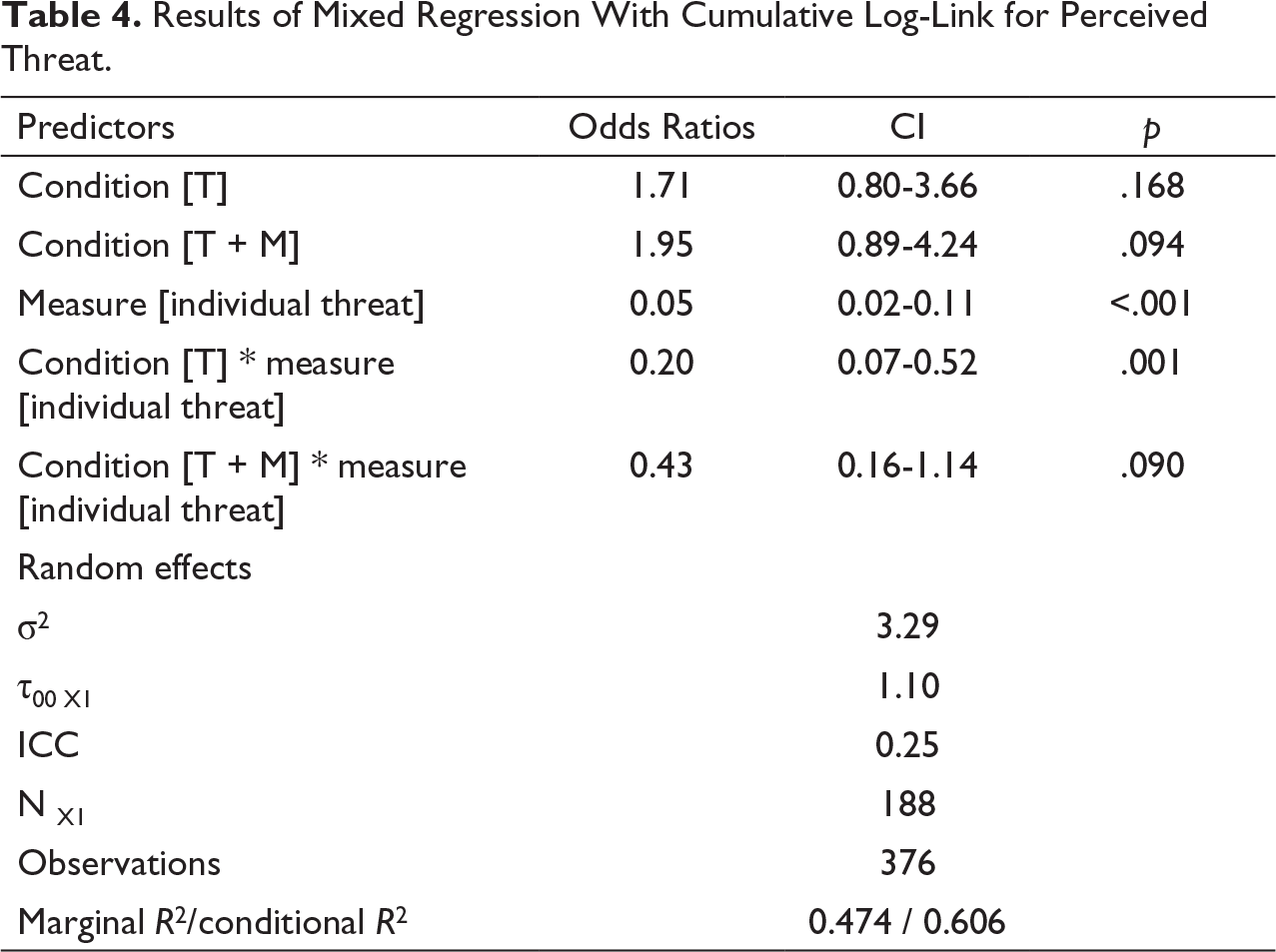
Participants generally perceived the collective threat to be higher than the individual threat, and this effect was stronger for the high terror salience condition than in the two other conditions (Table 4).
Results of Mixed Regression With Cumulative Log-Link for Perceived Threat.
Risk perception for oneself was generally low in all conditions and was correlated with the perceived threat of terrorism scale, r = .28, 95% CI [0.14, 0.41]. Perceived personal threat was correlated with the item assessing risk for oneself, r = .45, 95% CI [0.33, 0.56], and the risk for average Germans, r = .24, 95% CI [0.10, 0.37], but not with perceived collective risk perception, r = .04, 95% CI [–0.10, 0.18]. The perceived collective threat was not correlated with any of the other intercorrelated measures of risk perception.
Effect Understanding Motives for Terrorism on the Preference for De-escalation and Escalation
Testing the effect on the preference for de-escalation and escalation we observed, that the preference for de-escalation did not differ between conditions, F(2, 185) = 0.73, p = .48, η2 = .01, 95% CI [0.00, 0.04], but the preference for escalation did, F(2, 185) = 3.02, p = .05, η2 = .03, 95% CI [0.00, 0.09]. The preference for escalation in the high terror salience without motives condition (M = 4.01, SD = 1.82) was not significantly higher than in the control condition (M = 3.63, SD = 1.70, p = .45) but was significantly higher than the high terror salience with motives condition (M = 3.24, SD = 1.70, p = .04). The values in the control condition (M = 3.63, SD = 1.70, p = .45) were not significantly higher than in the high terror salience with motives condition (M = 3.24, SD = 1.70, p = .42). The distribution and means of participants’ preferences for escalation and de-escalation are depicted in Figure 5.
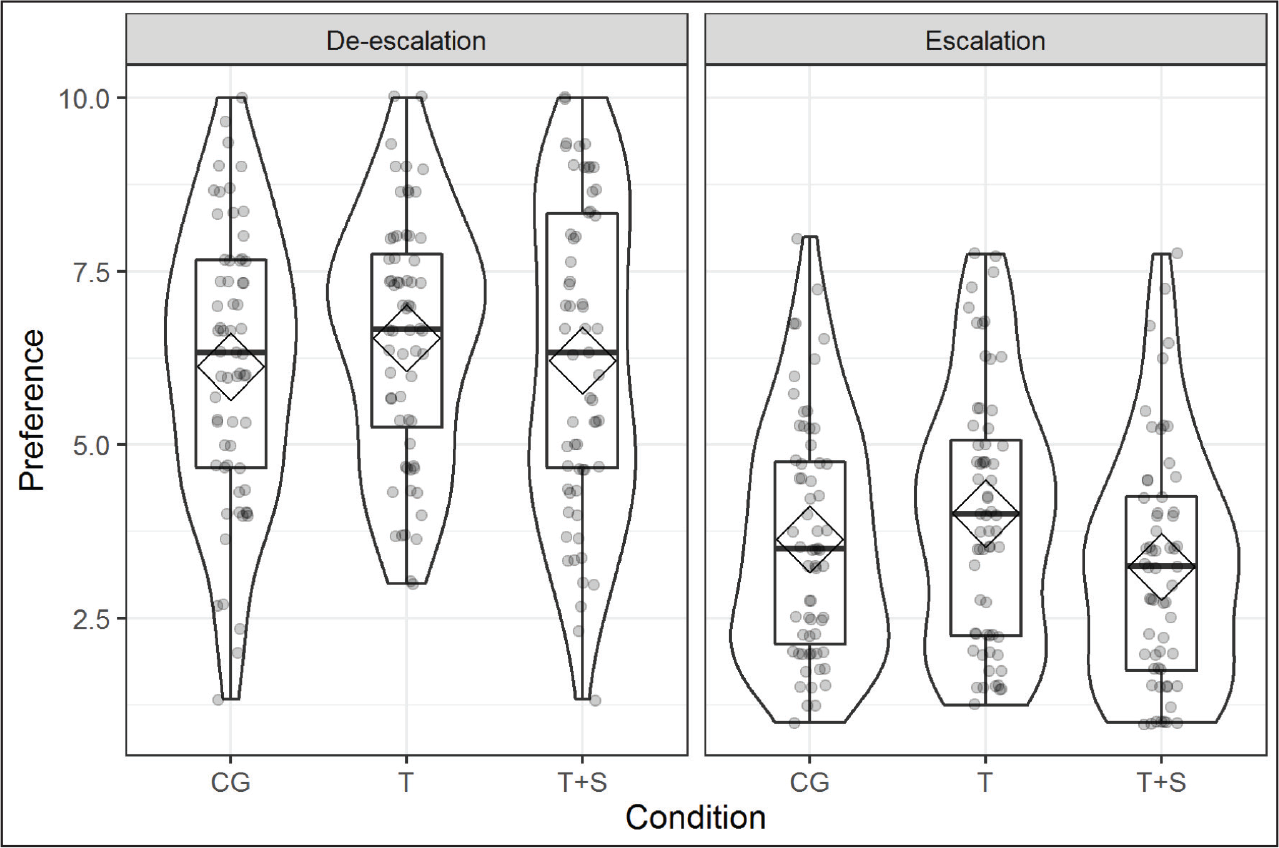
Note. The figure shows violin plots depicting the density of the responses. Points are individual participants. Boxplots with the median as the horizontal line are depicted within the violin plots. The rhomboids show the mean.
Discussion
Using a high-powered experiment, we did not find evidence for the assumption that providing information about motives for engaging in terrorist acts reduces the negative psychological impact of terror salience. For perceived threat, our point estimates of the effect sizes for the pairwise comparison of the terror salience condition and the terror salience with motives condition were not within the 95% CIs of Experiments 1 and 2; hence, we did not replicate the findings of the original experiment. We did not observe a higher perceived threat in the terror salience group than in the control group. In fact, the question about terrorism after viewing a pleasant landscape may result in a contrast effect and thereby increase risk perception, perceived threat, and anxiety. Another explanation could be that the replication was carried out in Germany in June 2017 after seven incidents involving Islamist terror had occurred in 2016 (
For emotional well-being, our point estimates of the effect sizes for the pairwise comparison of the terror salience with motives conditions with the terror salience condition were not within the 95% CIs of Experiment 2 but were almost identical to Experiment 1; thus, we partially replicated the results from the original experiments.
In our extension of the original experiment we found that providing motives resulted in a lower preference for escalation but did not affect the preference for de-escalation. The effects were weak, and results should be treated as preliminary.
Theoretical Implications
The main assumption of the CCMT tested in the current experiment was that understanding motives and the construction of meaning influences the appraisal of and the coping with threats of terrorism. The results regarding appraisal of the current experiment were not consistent with the two previous experiments. Before treating this a challenge to the theory itself, the current findings may be considered as pointing to issues at a methodological level.
First, as in the original Experiment 2, perceived threat was measured with a scale that had low internal consistency, so it was not clear what the aggregate measure reflected. Correlations with other variables suggested a lack of validity of this compound score of perceived collective and individual threat. Individual threat shared variance with perceived risk and anxiety, but collective threat was not correlated with any other risk measure. In our extension, the collective and individual threat responses diverged. More importantly, we found that perceived individual threat was higher in the condition with information about motives, which makes sense: If the attack is not portrayed as erratic but instead grounded in sustained injustice and grief, the threat seems actually larger and more persistent. Thus, in order to further assess the impact of understanding of motives on threat perception, it may be important to distinguish the respective target, i.e., does the respondent personally feel vulnerable or does the respondent perceive a threat to the collective?
Second, the original studies did not have a manipulation check. Thus, we have no estimate from the original studies regarding the difference in understanding between the conditions or of the relationship between the degree of understanding motives for terrorism and the reactions to it. Note that the manipulation check was not significant in the replication attempt. The participants in the high terror salience with and without motives conditions did not differ in their ratings of understanding. For this reason, our replication does not rule out that understanding motives for terrorism can be related to the reactions to it. Still, our findings suggest that constructing meaning and increasing understanding may not be as easily achieved as suggested by the original two experiments.
These methodological problems, however, are not unrelated to the CCMT because it does not make a clear prescription about what meaning and understanding entail, it does not distinguish between collective and individual threat, or prescribe under which condition both types of perceived threat converge and when they diverge.
At a more general level, the approach of the original studies and the replication was experimental and differs considerably from other studies that address the question of how people respond to terrorism (Fredrickson, 2001; Hobfoll et al., 2009; Lerner et al., 2003; Marshall et al., 2007; Rubin et al., 2005). In the present replication and their original counterparts, the manipulation was not a terrorist act, but information about such acts, and in our study, we even removed individuals who had themselves experienced such acts. Thus, the present study does not discount the previously shown influence of understanding for coping in general (Davis et al., 1998) or terrorism in particular (Taylor, 2007; Updegraff et al., 2008), but it shows that the perception of terrorism after receiving information about a specific event may not depend on the understanding of the motives of the terrorist.
Limitations and Future Research
Assuming that in the original study understanding did differ between experimental groups, the question arises, why did it not differ in the replication attempt? One main difference between the original study and the replication was the nationality of the perpetrator. While the perpetrators in the original study were British nationals, the perpetrator in the replication study in Germany was an asylum seeker. It is possible that the explanations of the motives were perceived sufficient to explain the behavior of the perpetrators in the UK but not in Germany. This would suggest that explanations of behavior must be carefully tailored to the event. However, in both cases the perpetrators were members of minorities and were socially excluded, which was the main explanation provided for their actions.
We did not find a difference between the control group and the group that only saw the news coverage of the terrorist act, which suggests that the manipulation of terror salience was not successful. Three explanations come to mind for this observation. First, the original experiments were carried out in the UK, where terrorism is not a new phenomenon due to IRA activity. However, from 2000 to 2010, only seven terrorist incidents had occurred, and at the time of the study, only the events portrayed in the manipulation had recently occurred (
Finally, although research on terrorism and trauma investigates directly affected individuals, experimental studies have examined how a person reacts who hears about terrorism in the news. As Fischer et al. (2011) point out, the merit of field studies on the effect of terrorism is their external validity, but their Achilles heel is their correlational nature. Importantly, both Fischer et al. (2011) and we aimed to capture a real-world phenomenon in an experimental study; however, our results question whether this is easily possible. The mere presentation of pictures or movies may not be a strong enough manipulation to find effects regarding the psychological impact of terrorism—after all, participants may feel safe in the laboratory context, and the information is retrospective and not recent. Future experimental research could use methods that lead to a higher degree of immersion such as serious games (Chittaro & Sioni, 2015) or simulations (Rosoff et al., 2012) to test causal paths regarding the impact of understanding terrorists’ motives on the reactions to terrorism.
Conclusion
The results of the replication and the reanalysis of the original results call into question the robustness of the effects of the original experiment. The construct validity of the measure of perceived threat seems low, and the reanalysis of the effect sizes across all experiments does not show convincing evidence for the hypothesis that understanding the motives for terrorism reduces the negative psychological impact of terror.
Footnotes
Author’s Note
The funding source had no involvement in the study design, data collection, data analysis, interpretation of data, writing, or decision to submit. We thank Peter Fischer (first author of the original experiments) for the helpful cooperation and sharing of the material from the original studies. Material was adapted to the German context and approved by the first author of the original experiments. Finally, we thank Jane Zagorski for language editing.
Declaration of Conflicting Interests
Funding
The author(s) disclosed receipt of the following financial support for the research, authorship, and/or publication of this article: this research was supported with funds from the Commission for the Advancement of young researchers (FNK02060422) at the University of Bamberg.
Note
Open Data/Material
Data and analysis scripts are available on the OSF (

Supplemental material
Author Biographies
References
Supplementary Material
Please find the following supplemental material available below.
For Open Access articles published under a Creative Commons License, all supplemental material carries the same license as the article it is associated with.
For non-Open Access articles published, all supplemental material carries a non-exclusive license, and permission requests for re-use of supplemental material or any part of supplemental material shall be sent directly to the copyright owner as specified in the copyright notice associated with the article.
