




Abstract
This study investigates how participation in survival economies—specifically sex work and begging—shapes the social inclusion outcomes of transgender individuals in Delhi–NCR, India. Drawing on Structural Marginalization Theory and the Intersectionality Framework, the paper explores how institutional exclusion and overlapping disadvantages related to gender, education, and income perpetuate economic dependency and social invisibility. Primary data were collected from 335 transgender participants using purposive sampling, and an ordered probit model with marginal effects was employed to assess the impact of survival economies across ten dimensions of social inclusion. The findings reveal that survival economies significantly diminish access to healthcare, social support networks, cultural participation, and dignity of labor, while education and income emerge as strong protective factors. The analysis highlights a disjunction between internal empowerment (e.g., self-esteem, gender expression) and external societal exclusion. The study underscores that true social inclusion cannot be achieved without addressing economic exclusion, and it calls for policies that move beyond legal identity recognition to ensure dignified employment, inclusive education, and healthcare access.
Transgender 1 community in India continue to face pervasive socio-economic marginalization, which has historically limited their access to formal employment, education, and healthcare (Pandey & Sivakami, 2021; Lal, 2023). As a result, many are pushed into survival economies, such as sex work and begging, as a means of livelihood (Gayathri & Karthikeyan, 2016; Konduru & Hangsing, 2018). While these activities provide essential income, they also deepen social exclusion by reinforcing societal stigma and discrimination, thereby hindering meaningful social inclusion (Bakko, 2019; Meher et al., 2024). At the same time, scholarship highlights that sex work in India is highly diverse, ranging from street-based and brothel-based work to increasingly online and independent forms. Many sex workers negotiate a degree of personal and professional agency even as stigma and structural barriers constrain their choices (Azhar et al., 2020; Karandikar et al., 2021). Moreover, accounts from Delhi's urban margins show how gender minorities often resist and reshape the terms of their participation in informal economies, linking survival strategies with everyday struggles for bodily integrity and dignity (Padgett & Priyam, 2018).
Participation in survival economies is not merely an economic choice but a forced outcome of systemic barriers. Many transgender individuals, often denied access to educational institutions and formal job markets due to identity-based discrimination, find themselves trapped in cycles of poverty and marginalization (Lal, 2023; Mal, 2015). Studies reveal that transgender individuals engaged in sex work or begging face significantly higher odds of discrimination by service providers compared to those not involved in such activities (Bakko, 2019). This discrimination manifests across multiple domains—from healthcare to housing—further alienating transgender individuals from mainstream social participation (Rout et al., 2022).
The COVID-19 pandemic exacerbated these challenges when lockdown measures disrupted primary income sources like ritualized begging and sex work, intensifying financial instability and deepening social isolation (Chakrapani et al., 2022; Rout et al., 2022). Despite the enactment of the Transgender Persons (Protection of Rights) Act, 2019 and the subsequent Transgender Persons (Protection of Rights) Rules, 2020—which legally recognize transgender individuals and prohibit discrimination—implementation remains weak. Many transgender individuals still lack access to identity documents required for welfare schemes, and enforcement mechanisms remain limited (Pandey & Sivakami, 2021; Pautunthang, 2024; Singh et al., 2019). As a result, legal reforms have provided symbolic recognition without dismantling the structural exclusions that compel transgender individuals into survival economies.
Engagement in survival economies not only affects economic well-being but also significantly impacts social standing and mental health. The stigma associated with sex work and begging leads to heightened experiences of social rejection, abuse, and mental health vulnerabilities (Gayathri & Karthikeyan, 2016; Mal, 2015). The Hijra community, for instance, though historically recognized in Indian culture, remains relegated to the margins due to societal reluctance to accept non-binary gender identities in contemporary contexts (Agoramoorthy & Hsu, 2015; Konduru & Hangsing, 2018). During British colonial rule, hijras were systematically stigmatized and criminalized under measures such as the Criminal Tribes Act of 1871, which dismantled precolonial recognition of hijras as ritual and cultural figures and instead branded them as deviant. The stigma institutionalized under colonial law continues to shape their exclusion in postcolonial India.
Moreover, survival economies perpetuate negative stereotypes that transgender individuals are inherently associated with deviant or illegal activities, which in turn affects their prospects for social mobility and integration into formal sectors (Khan et al., 2024; Meher et al., 2024). Economic vulnerabilities resulting from reliance on informal, stigmatized work limit access to housing, education, healthcare, and legal protections, further entrenching cycles of marginalization (Koushik & Muthukumar, 2023). The intersection of poverty, survival economies, and social exclusion underlines the need to move beyond tokenistic legal reforms toward comprehensive, affirmative action that enables access to education, dignified employment, healthcare, and social security for transgender individuals (Pautunthang, 2024; Singh et al., 2019). Without addressing the structural conditions that compel transgender individuals into survival economies, efforts to foster social inclusion are likely to remain superficial.
The study is situated in the Delhi–National Capital Region (Delhi–NCR), India's largest metropolitan area, encompassing the national capital and adjoining urban districts. With a population exceeding 46 million, Delhi–NCR is one of the most socio-economically diverse regions of South Asia, combining affluent urban enclaves with large informal settlements. The region has historically hosted a sizable Hijra community, often visible in both ritualistic practices and survival livelihoods at public sites such as traffic intersections and marketplaces. This makes Delhi–NCR a critical site for examining how urban structures shape the inclusion and exclusion of transgender individuals. Although prior studies have highlighted the challenges faced by transgender individuals in India—particularly their disproportionate reliance on survival economies—most existing research remains rooted in qualitative inquiry or broad descriptive narratives. While these studies have been instrumental in capturing lived experiences and structural marginalization, there is a marked absence of rigorous quantitative analysis that systematically evaluates how engagement in survival economies affects distinct dimensions of social inclusion—such as access to healthcare, participation in cultural life, and perceptions of labor dignity. Furthermore, the extant literature often focuses on broad outcomes like discrimination or poverty, without sufficiently exploring how survival-based livelihoods function as both symptoms and mechanisms of continued exclusion. For example, earlier work has noted that those in sex work or begging face heightened service-provider discrimination and societal rejection, but these findings are seldom disaggregated across multiple, measurable inclusion outcomes. This methodological gap limits our ability to draw policy-relevant inferences on which specific socio-economic interventions might mitigate the marginalizing effects of survival economies.
The present study directly addresses these gaps by deploying an ordered probit model and calculating marginal effects for ten disaggregated domains of social inclusion. Against this backdrop, the research pursues three main objectives:
To examine the extent of transgender individuals’ engagement in survival economies, such as sex work and begging, in Delhi–NCR; To analyze how such engagement influences multiple dimensions of social inclusion, including healthcare, social support, cultural participation, and dignity of labor; and To assess the role of protective factors such as education and income in mitigating the adverse effects of survival economies.
These objectives guide the quantitative analysis and frame the study's contribution to existing scholarship. The paper builds on emerging demands within academic and advocacy communities for empirically grounded, disaggregated, and context-specific analyses that can inform more effective, inclusive development strategies for transgender individuals in India.
Theoretical/Conceptual Framework
This study draws upon two central frameworks—Structural Marginalization Theory and the Intersectionality Framework—to examine how survival economies shape the social inclusion pathways of transgender individuals in urban India. Structural Marginalization Theory, as articulated by Young (1990), posits that social oppression extends beyond overt discrimination and is embedded in society's structures—economic systems, institutional arrangements, and policy frameworks—that systematically disadvantage certain groups. In this context, transgender individuals in India face exclusion not only from formal labor markets but also from social services and public spaces, reinforcing their dependence on informal survival strategies. Paul Farmer's (2009) concept of structural violence complements this by explaining how embedded inequalities produce social suffering by denying access to dignity, security, and recognition. Steven Lukes (2005) third dimension of power further emphasizes how power can operate in latent and invisible forms, making the marginalization of vulnerable populations seem normal or inevitable.
To understand how multiple axes of identity contribute to this exclusion, the study also adopts the Intersectionality Framework. Originally conceptualized by Crenshaw (1989), intersectionality emphasizes that individuals experience oppression in overlapping ways based on their gender, class, caste, and sexuality. For transgender individuals in India, especially those from lower socio-economic strata, these identities are not merely additive but interlocking—compounding their vulnerability. The study did not collect caste data, but caste affiliation is widely recognized as a determinant of access to resources and opportunities in India; future research should examine how caste-based marginalization intersects with gender identity to further compound exclusion. This insight aligns with Hill Collins and Bilge's (2016) assertion that intersectionality is both an analytic lens and a tool for social justice, highlighting how systems of oppression are mutually constituted. Furthermore, Cho et al. (2013) call for a praxis-oriented approach to intersectionality, urging researchers to apply these frameworks to analyze real-world exclusions, as done in this study.
We define survival economies as livelihood practices that emerge when access to secure, formal employment is systematically denied. These strategies are characterized by precarity, stigma, and limited bargaining power, and they are embedded in cultural hierarchies that determine whose labor is valued. Within this framework, begging and sex work are not disparate activities but different manifestations of the same structural condition: both represent ways of monetizing visibility and embodied identity when dignified labor is inaccessible. While they differ in the type of stigma attached (ritualized dependence in the case of begging and moralized sexuality in the case of sex work), both fall under the umbrella of survival economies because they are structurally produced, sustained by constrained choice, and regulated by social sanction. This conceptual integration justifies our aggregated operationalization while also making clear that the social meanings and consequences of these practices may diverge in important ways.
Following an intersectional perspective, we recognize that exclusion from formal labor markets is not experienced along a single axis of gender identity. Instead, gender identity intersects with socio-economic position—proxied here by education and income—to shape both entry into survival economies and the severity of stigma experienced within them. This lens motivates the expectation that material resources can buffer, but not eliminate, the penalties associated with survival-economy livelihoods.
Materials and Methods
Research Design and Data Collection
This quantitative study examines how engagement in survival economies—specifically sex work and begging—influences the social inclusion of transgender individuals in Delhi–NCR, India. Data were collected using a structured survey administered between November 2023 and February 2024. Because the transgender population is hard to reach, a purposive sampling technique was employed. Participants were recruited primarily through established community-based organizations (CBOs) active in Delhi and surrounding NCR districts, selected for their longstanding engagement with transgender communities and their extensive outreach networks. Prior to data collection, ethical approvals were secured from the relevant university and community ethics boards. Fieldwork consisted of visits to CBO offices and community gatherings, with peer navigators and CBO representatives facilitating introductions and building trust. Confidentiality and anonymity were strictly maintained throughout the research process.
The targeted sample size was 365 (Yamane, 1967), and responses were successfully collected from 335 participants who met the eligibility criteria of being 18 years or older and self-identifying as transgender (trans men and trans women) or hijra or kinnar. It is important to note that only those participants who reported having a formal bank account (n = 201) completed the portion of the questionnaire pertaining to social and economic inclusion. This decision was taken because the broader study sought to examine the impact of financial inclusion on social and economic outcomes. Only participants with prior access to formal banking could meaningfully respond to these items, whereas including unbanked participants would have produced inconsistent responses. As a result, descriptive statistics for background characteristics and independent variables are based on the full sample (N = 335), while the analysis involving social inclusion as the dependent variable is based solely on the subsample of 201 banked individuals. Of the 335 participants, 134 were excluded from the regression sample due to not having a bank account, and an additional 30 cases were excluded for incomplete responses. This approach ensures consistency in measurement and comparability across the social inclusion dimensions.
The authors acknowledge their positionality as university-based researchers collaborating with marginalized communities. Working alongside CBO staff helped mitigate potential power imbalances and build rapport, but the researchers’ outsider status may still have shaped participants’ responses.
Survey Instrument and Measures
The survey instrument demonstrated excellent internal reliability, with a Cronbach's alpha of 0.9105 for the economic empowerment scale. The questionnaire included sections assessing demographic information, engagement in survival economies, and perceptions of social inclusion. Social inclusion was measured using a 5-point Likert scale ranging from “Strongly Disagree” (1) to “Strongly Agree” (5) for each item. We computed descriptive statistics such as means, standard deviations, and frequency distributions to summarize participants’ characteristics and their involvement in survival economies.
Model Selection and Specification
Given that the dependent variable, social inclusion, was measured on a 5-point ordinal scale, the study employed an ordered probit model for inferential analysis. Ordered logit and probit models are commonly used to analyze ordinal data (Agresti, 2010; Liao, 1994; Liu, 2016; Long & Freese, 2006, 2014). Probit models were chosen over logit models because they assume a normal distribution of error terms, which is often a better fit for social science data and allows for capturing subtle variations in response behaviors (Long, 1997; Powers & Xie, 2000).
Following Long (1997) and Greene (2014), the structural form of the model is defined as:

Where yi* = represents the latent variable (social inclusion), xi = is the vector of observed explanatory variables, and εi is a random error term with mean zero and variance one.
The empirical model used in the analysis is given by:

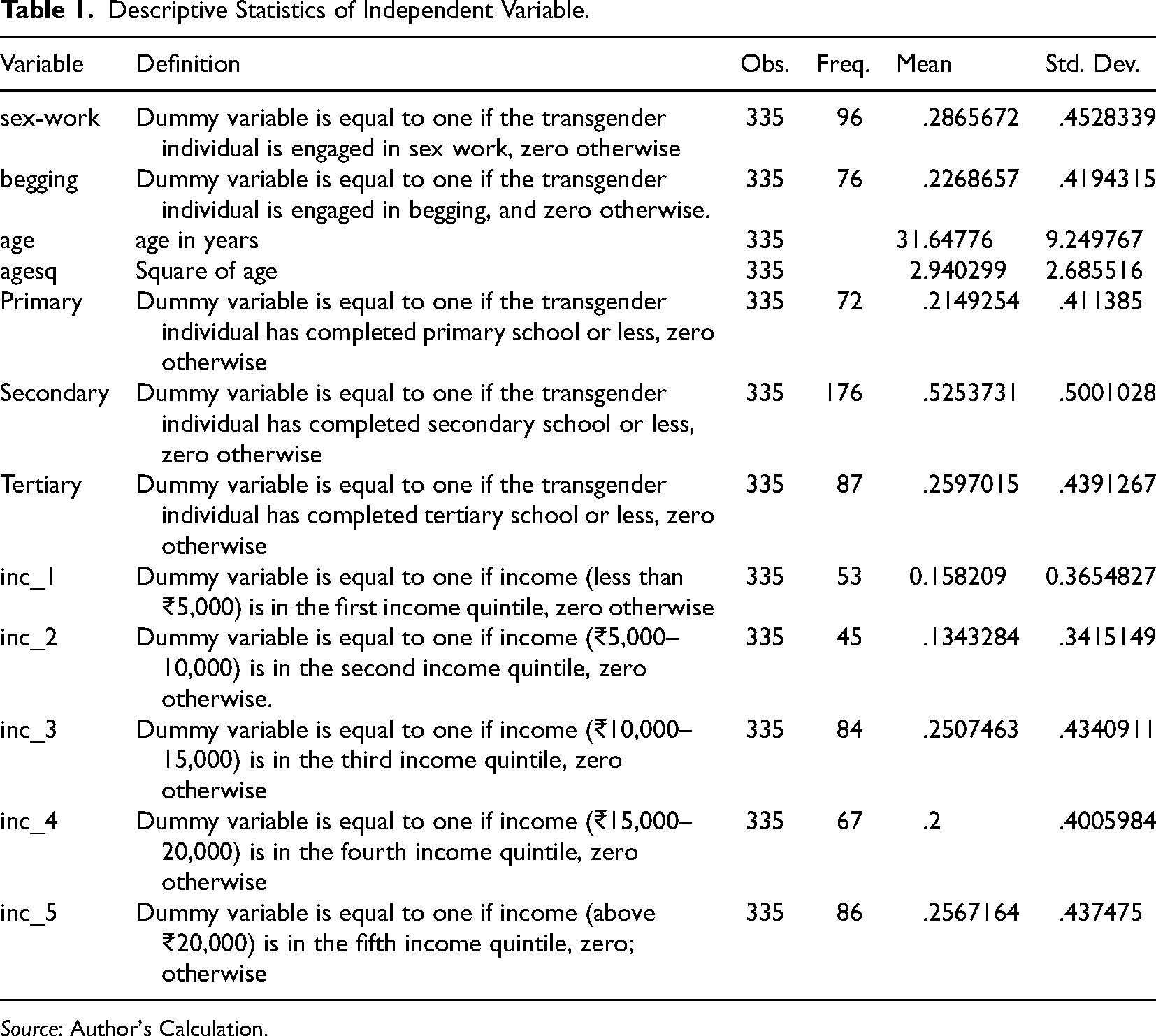
The detailed descriptions of all independent variables are provided in Table 1. All models include education and income quintiles as class-position proxies to reflect this intersectional perspective within data constraints. Given power considerations, we prioritize subgroup marginal effects (reported in Results) over fully interacted specifications.
Descriptive Statistics of Independent Variable.
Source: Author's Calculation.
In ordinal probit models, observed outcomes Y* are linked to the unobserved latent variable through threshold points α1, α2, α3,…, αj, and α1 < α2< α3 < … < αj . The outcome categories are structured as: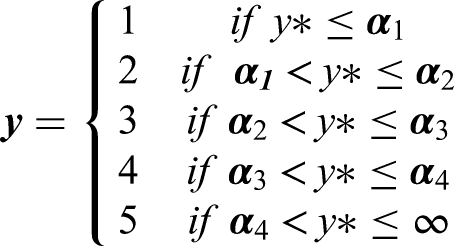
Thus, the cumulative probability of being at or below a particular social inclusion category is:
Where Φ denotes the cumulative distribution function of the standard normal distribution, the ordered probit model estimates parameters through maximum likelihood estimation, with the likelihood function expressed as:
Interpretation of Model Parameter Estimates
The ordered probit model was estimated using the oprobit command in Stata. Marginal effects were computed to interpret the practical implications of predictor variables on the probability of falling into highest category of social inclusion (Chen et al., 2002; Liao, 1994). Marginal effects measure the instantaneous change in the predicted probability of a particular outcome category for a one-unit change in a predictor variable, holding other factors constant.
Mathematically, the marginal effect for a specific predictor xn on the probability of being in category j is given by:
A positive marginal effect indicates an increase in the likelihood of being in a particular category (e.g., “Strongly Agree”), while a negative marginal effect suggests a decrease. Interpretation focuses on the magnitude and sign of marginal effects. For instance, if education has a marginal effect of +0.05 for “Strongly Agree,” it implies that a one-unit increase in education level increases the probability of strongly agreeing with social inclusion statements by 5%, holding all other variables constant. Through this modeling approach, the study provides nuanced insights into how survival economies shape the social inclusion experiences of transgender individuals, offering important implications for policy interventions aimed at promoting dignified employment and comprehensive social integration.
Data Analysis Strategy
The data collected from the 201 participants (banked subsample) were entered, cleaned, and analyzed using Stata 14. Initial data screening involved checking for missing values, outliers, and inconsistencies. Given the sensitivity of the study population and the challenges of field data collection, cases with incomplete responses on key variables were excluded to maintain data integrity. Descriptive statistics (frequencies, means, and standard deviations) were computed to summarize participants’ socio-demographic characteristics and engagement in survival economies.
Robustness checks included testing the parallel slopes assumption inherent in ordered models and calculating variance inflation factors (VIF) to check for multicollinearity among independent variables. No serious violations were detected. After estimating the ordered probit model, marginal effects were calculated to interpret the substantive impact of each predictor variable on the likelihood of different levels of social inclusion. All statistical tests were conducted at the conventional 5% significance level. The results were interpreted in terms of both statistical significance and practical relevance to the social inclusion of transgender individuals engaged in survival economies.
Results
Descriptive Statistics
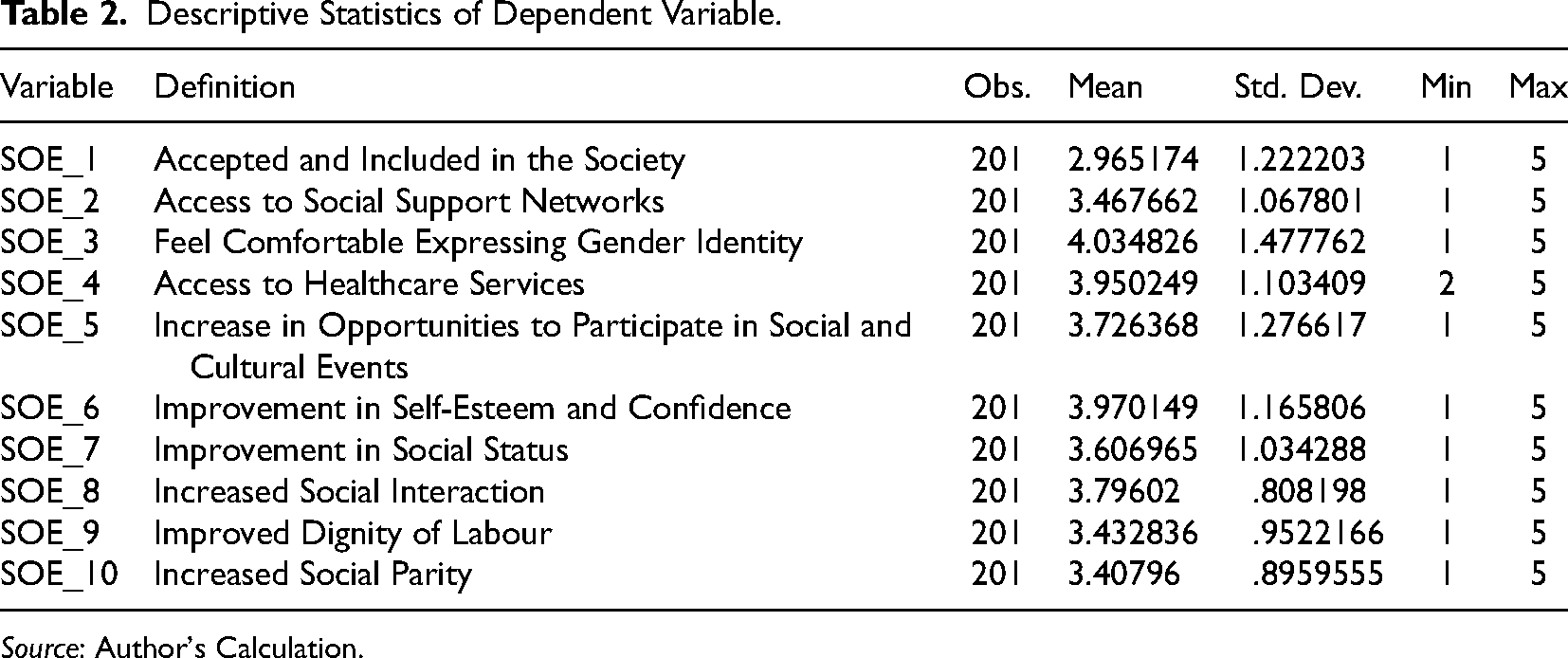
Table 1 presents the descriptive characteristics of the sampled transgender individuals in Delhi–NCR (n = 335). The mean age of respondents is 31.6 years (SD = 9.2), with the majority falling in the 18–45-year bracket, indicating a predominantly young adult population. The distribution of age squared confirms sufficient variability to capture life-course effects in subsequent models. Participation in survival economies is widespread: 28.7% of respondents reported engagement in sex work, while 22.7% reported begging as their primary or supplementary livelihood (Table 1). These figures underline the centrality of survival economies in the economic lives of transgender communities in Delhi–NCR. In terms of education, a sizable proportion of the sample remains in the lower attainment categories. While some respondents had attained primary or secondary education, only a small fraction reported tertiary education, highlighting persistent structural barriers to formal schooling. Income distribution further reflects socio-economic vulnerability: a large share of respondents falls in the bottom two quintiles (earning < ₹10,000 per month), with comparatively fewer individuals in the higher quintiles. Taken together, the descriptive statistics indicate a community that is relatively young, disproportionately reliant on precarious livelihoods, and concentrated in the lower rungs of education and income. These baseline characteristics contextualize the regression results, particularly the pronounced penalties of survival economies on social inclusion and the protective role played by higher education and income (Table 1 and Table 2).
Descriptive Statistics of Dependent Variable.
Source: Author's Calculation.
Impact of Sex Work on Social Inclusion
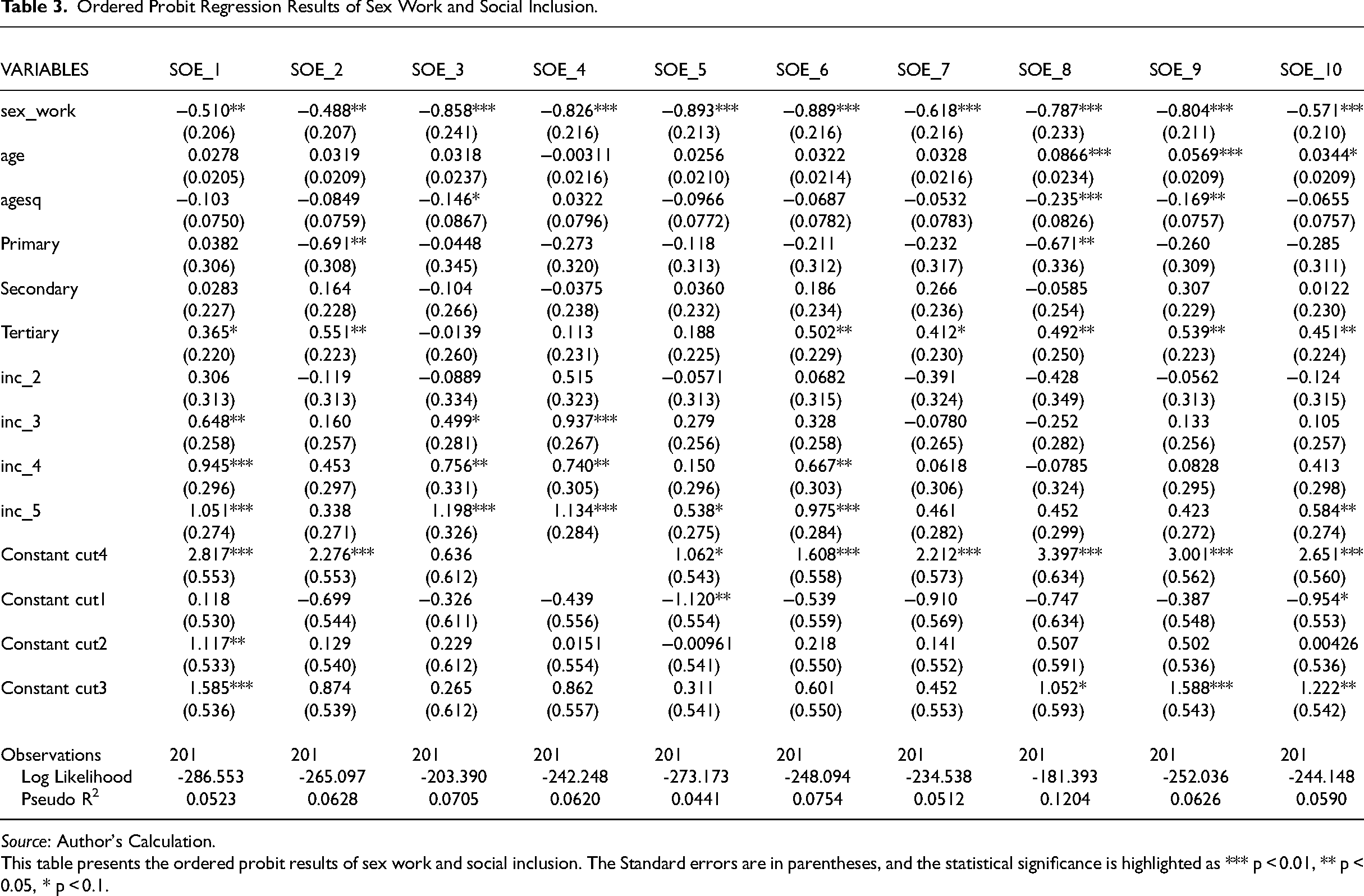
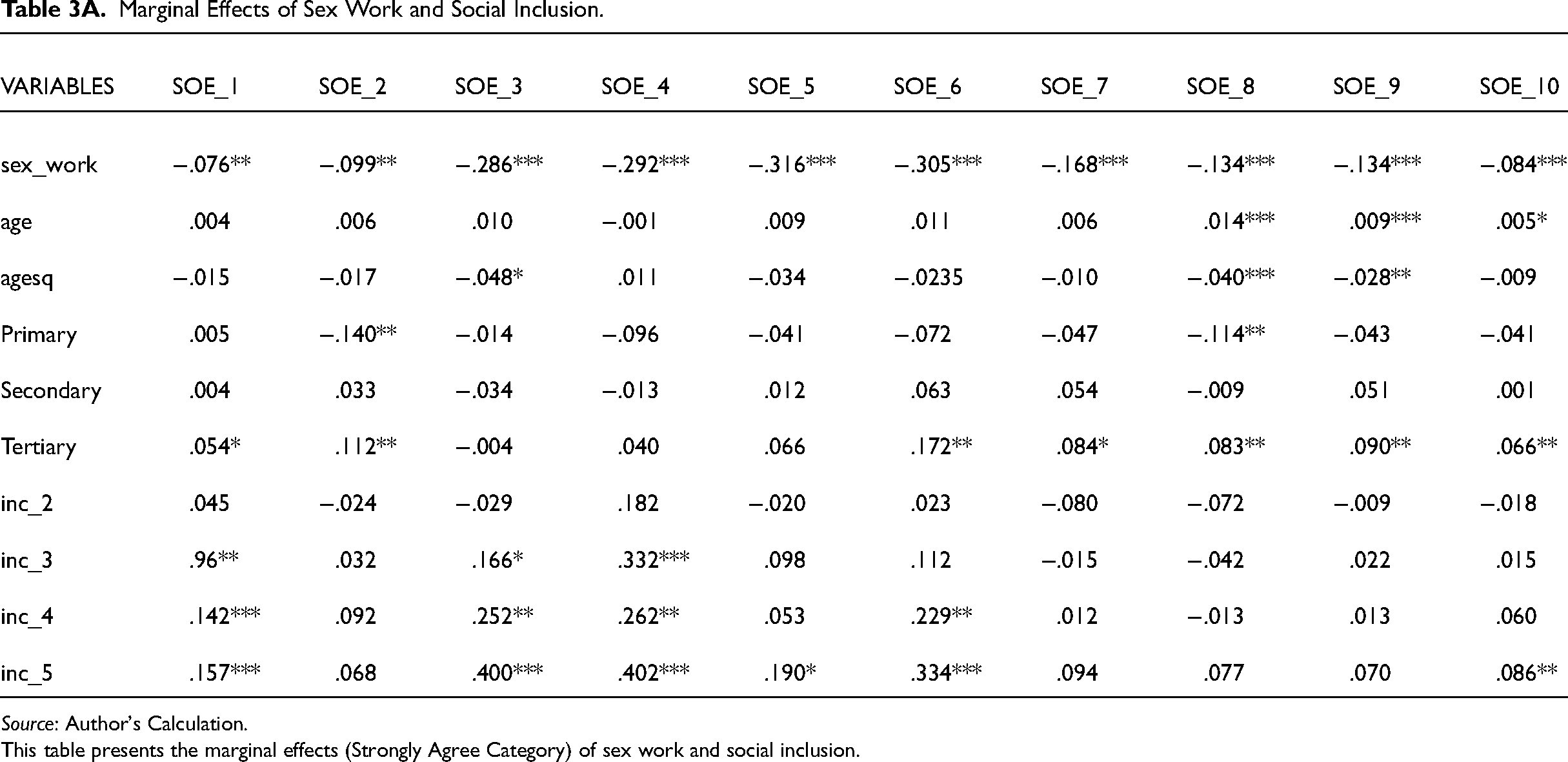
The marginal effects from the ordered probit model indicate that engagement in sex work significantly reduces the probability that transgender individuals in Delhi–NCR strongly agree with positive statements of social inclusion across all ten dimensions (Table 3A). The most substantial penalties are observed in access to healthcare (SOE_4: −29.2%), opportunities to participate in social and cultural events (SOE_5: −31.6%), and comfort in expressing gender identity (SOE_3: −28.6%), and improvement in dignity of labor (SOE_9: −13.4%). The reductions remain statistically significant even for interpersonal domains such as improvement in self-esteem and confidence (SOE_6: −30.5%), improvement in social status (SOE_7: −16.8%), increased social interaction (SOE_8: −13.4%) and access to social networks (SOE_2: −9.9%), feel accepted in the society (SOE_1: −7.6%), and increase social parity (SOE_10: −8.4%) (Table 3).
Ordered Probit Regression Results of Sex Work and Social Inclusion.
Source: Author's Calculation.
This table presents the ordered probit results of sex work and social inclusion. The Standard errors are in parentheses, and the statistical significance is highlighted as *** p < 0.01, ** p < 0.05, * p < 0.1.
Marginal Effects of Sex Work and Social Inclusion.
Source: Author's Calculation.
This table presents the marginal effects (Strongly Agree Category) of sex work and social inclusion.
The marginal plots (Figure 1a–1d) reinforce these findings: across all items, predicted probabilities of “Strongly Agree” are markedly lower among sex workers compared to their non–sex work counterparts. The gap is widest for participation and healthcare, where probabilities for sex workers remain far below 20% even when education or income levels rise.
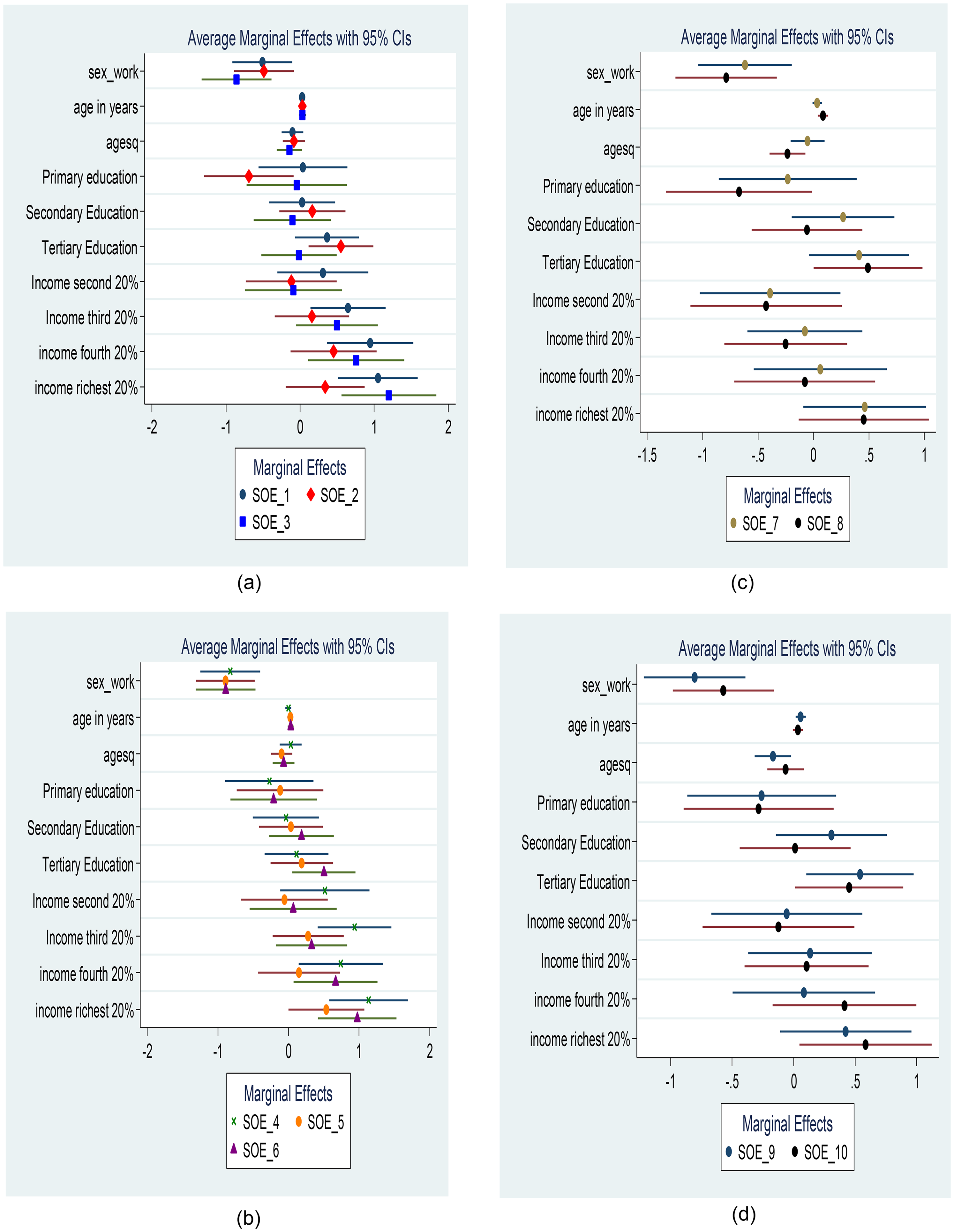
Marginal Plots of Sex Work and Social Inclusion. (a) Social Acceptance
Other covariates provide further nuance. Age shows a non-linear pattern: marginal effects on inclusion are positive at lower and middle ages (e.g., SOE_8: + 1.4%, SOE_9: + 0.9% per year, p < 0.01) but taper off as age² becomes negative (Table 3A), suggesting that social inclusion gains from age plateau and decline in later years. Education exerts consistent positive effects—tertiary education raises the probability of strong agreement by 6–17% across items like self-esteem (SOE_6) and social parity (SOE_10). Similarly, higher income quintiles (Q5) increase the likelihood of acceptance (+15.7%), gender expression (+40%), healthcare access (+40.2%), self-esteem (+33.4%), participation in cultural and social events (+19%), and social parity (+8.6%). Importantly, however, these gains never fully offset the penalties associated with sex work, implying that the stigma tied to sex work persists even among educated and higher-income transgender individuals (Table 4).
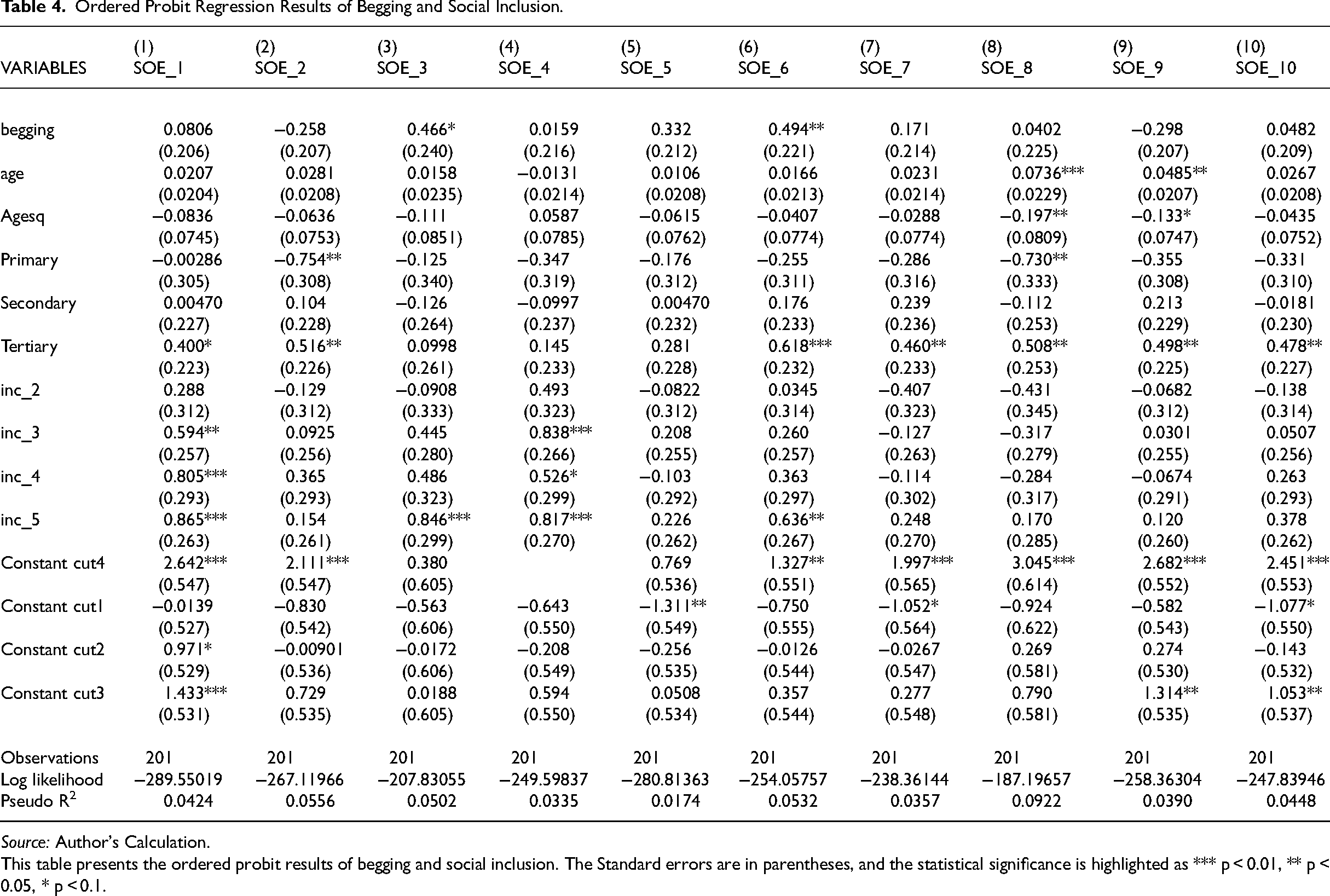
Ordered Probit Regression Results of Begging and Social Inclusion.
Source: Author's Calculation.
This table presents the ordered probit results of begging and social inclusion. The Standard errors are in parentheses, and the statistical significance is highlighted as *** p < 0.01, ** p < 0.05, * p < 0.1.
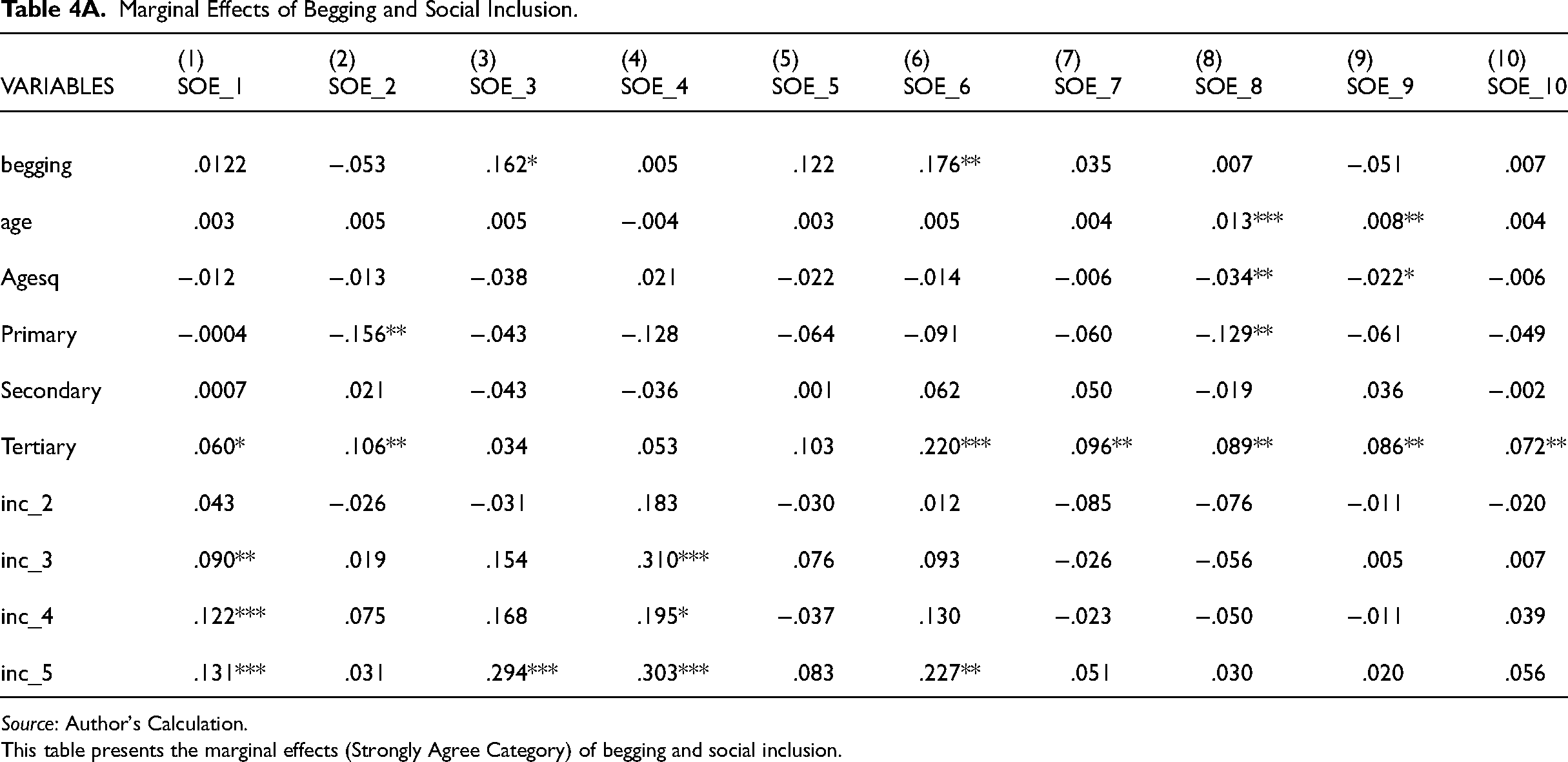
Marginal Effects of Begging and Social Inclusion.
Source: Author's Calculation.
This table presents the marginal effects (Strongly Agree Category) of begging and social inclusion.
Impact of Begging on Social Inclusion
The results for begging are more nuanced and less consistent (Table 4A). For most social inclusion items, the marginal effects are small and not statistically significant, indicating little systematic difference between those who beg and those who do not. However, two exceptions stand out: comfort in expressing gender identity (SOE_3: + 16.2%) and self-esteem and confidence (SOE_6: + 17.6%). These positive effects suggest that begging may provide limited psychosocial resilience, possibly through community-based validation or reduced stigma of gender identity compared to sex work.
The marginal plots (Figure 2a–2d) illustrate this mixed picture. While probabilities remain flat or nearly identical for most outcomes, upward shifts appear for identity comfort and self-esteem. This pattern suggests that begging does not significantly expand societal acceptance, networks, or parity, but may enhance individual-level psychosocial well-being.
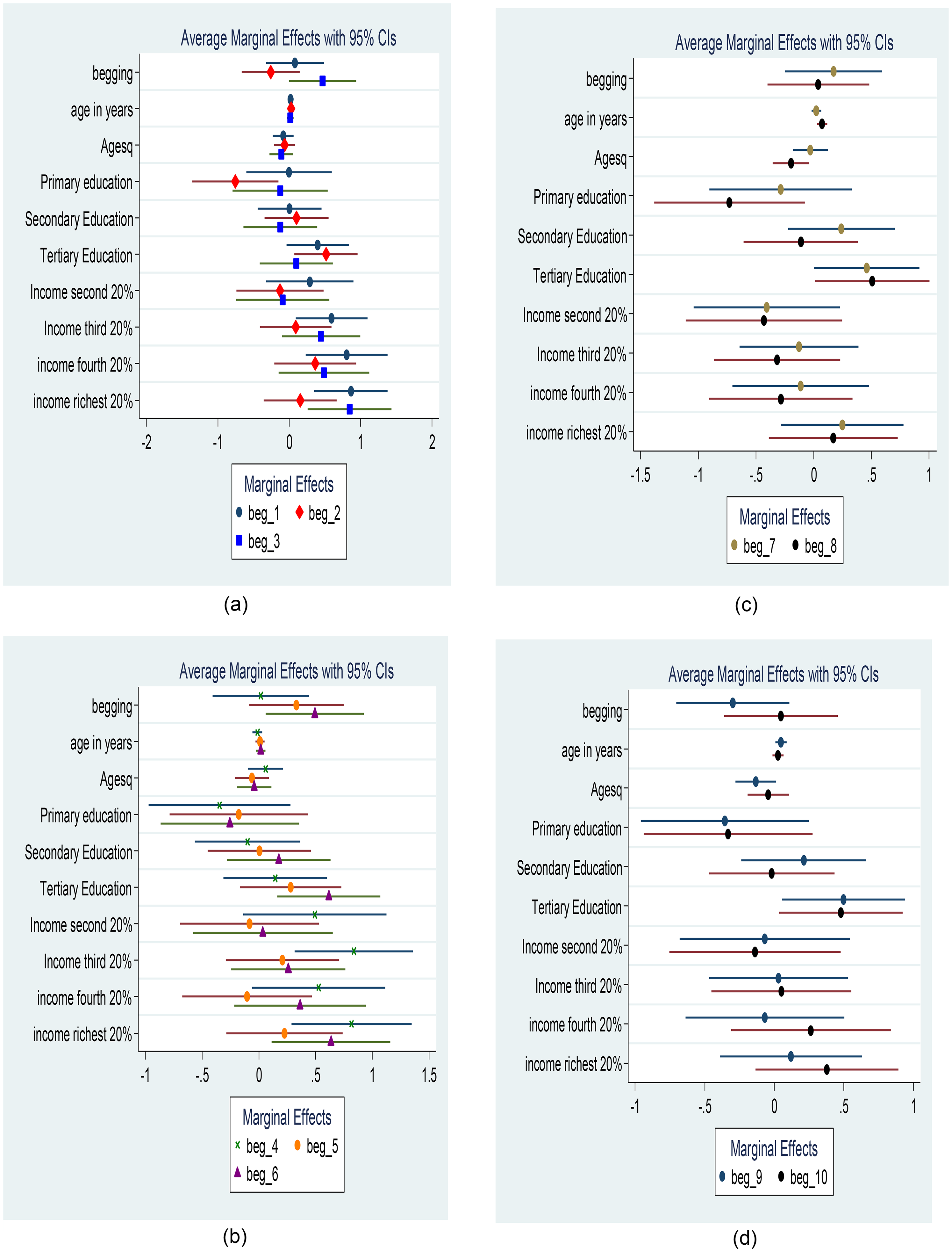
Marginal Plots of Begging and Social Inclusion. (a) Social Acceptance
The role of covariates again adds clarity. Age demonstrates the same inverted-U pattern as in the sex work models: positive inclusion gains in early adulthood reverse at higher ages due to the negative squared term (SOE_8: + 1.4%, age²: −0.04%, both significant). Education continues to show strong protective associations: those with tertiary education experience substantial boosts (up to +6–22%) in social networks, participation, self-esteem and parity, regardless of begging status. Income quintiles similarly show that being in Q5 is positively associated with acceptance in society (+13.1%), expressing gender identity (+29.4%), healthcare access (30.3%), and self-esteem (+22.7%) (Table 4A). Notably, for begging, these structural factors appear more decisive than begging itself in predicting inclusion outcomes, implying that income class and education largely overshadow the effects of begging on social inclusion.
Comparative Impact of Survival Economies
The marginal effects and plots reveal a clear separation between the two survival-economy pathways. Sex work is linked to broad, statistically robust reductions in the highest category of social inclusion responses across all domains, whereas begging shows narrow, psychosocially focused gains (primarily in identity comfort and self-esteem) without wider social recognition or parity. The protective effects of education and income are consistent and sizable across both models, suggesting that class position and human capital can partially buffer—but not eliminate—the penalties attached to survival-economy participation (Tables 3A & 4A; Figures 1–2).
Discussion
The findings of this study provide a nuanced, theoretically grounded understanding of how survival economies (sex work and begging) shape transgender individuals’ social inclusion in India, resonating with broader national and international scholarship. Consistent with prior research, engagement in survival economies profoundly exacerbates social exclusion across multiple domains. For example, Mal (2015) and Konduru and Hangsing (2018) note that many Indian transgender individuals (hijra) denied access to formal jobs resort to begging or sex work and subsequently face intensified discrimination. The quantitative analysis further corroborates these observations by demonstrating a systematic negative impact of survival livelihoods on access to healthcare, social support, cultural participation, and perceived dignity of labor.
International studies echo these patterns. Logie et al. (2017) found that transgender individuals in Jamaica who engaged in survival sex experienced heightened violence, stigma, and homelessness compared to those who did not. Likewise, analyses from the United States reveal that a significant subset of transgender individuals turns to the sex trade when facing extreme poverty, homelessness, and joblessness—a practice which compounds their marginalization. In the U.S. National Transgender Discrimination Survey, about 11% of participants reported having participated in sex work to survive, and transgender sex workers were twice as likely to live in extreme poverty as other transgender individuals. These parallel findings from India, Jamaica, the U.S., and elsewhere confirm that structural economic exclusion produces similar adverse outcomes globally. Engaging in survival economies is thus not a culturally isolated phenomenon but a structural response to marginalization that universally hinders social inclusion.
Critically, this study uncovers a stark divergence between internal empowerment and external inclusion among transgender individuals. Participants reported relatively high self-esteem and confidence in expressing their gender (internal indicators), even as external indicators like perceived social acceptance and dignity at work remained severely low. This finding complicates simplistic narratives of marginalization: it suggests that while transgender communities in India have fostered resilience, pride, and solidarity internally, broader society has not kept pace with accepting or valuing them. Such an “empowerment gap” has been underexplored in prior studies. The results add to the literature by highlighting how transgender individuals can achieve personal agency and group cohesion even under duress, confirming ethnographic accounts of agency within survival contexts. For instance, Padgett and Priyam (2018) document that on Delhi's urban margins, gender minorities actively resist and reshape the terms of their participation in informal economies, seeking dignity and bodily integrity despite structural constraints. The quantitative evidence reinforces this dialectic: transgender individuals exhibit remarkable self-affirmation and coping strategies, yet structural barriers—entrenched transphobia, stigma around sex work, and lack of institutional support—prevent that internal empowerment from translating into societal inclusion. In doing so, the study adds conceptual depth, showing that true inclusion entails more than individual empowerment or legal recognition; it requires dismantling the external social and economic obstacles that persistently relegate transgender individuals to the margins.
Furthermore, the findings confirm and build upon structural theories of marginalization while engaging an intersectional lens. Drawing on Structural Marginalization Theory, the analysis interprets the data as evidence that institutional exclusion from education, formal employment, and healthcare systematically drives transgender individuals into precarious survival economies, which in turn reinforce their “economic dependency and social invisibility.” This reflects Young's (1990) insight that structural inequalities—rather than individual failings—underlie the persistent poverty and exclusion of marginalized groups. The severe impacts observed (for example, survival economy participation yielding sharp declines in healthcare access) illustrate how power operates through institutional norms and everyday practices to oppress transgender communities, paralleling Lukes (2005) notion of a third dimension of power that maintains compliance by shaping societal values and excluding certain groups.
At the same time, the analysis engages the Intersectionality Framework (Crenshaw, 1989; Hill Collins & Bilge, 2016) to explain heterogeneity within the transgender community. Not all transgender individuals experience exclusion uniformly: those with higher education or income attain markedly better inclusion outcomes, indicating that gender-based stigma intersects with class and education privilege to produce compounded disadvantages for the most vulnerable. This intersectional pattern aligns with prior Indian studies showing education and income as protective factors. For instance, Koushik and Muthukumar (2023) and Singh et al. (2019) found that higher educational attainment equips transgender individuals with social capital and skills to navigate hostile environments, improving their social integration. The data confirm this: tertiary-educated transgender individuals reported significantly higher probabilities of accessing support networks and maintaining dignity compared to less-educated peers, even under otherwise hostile conditions. The findings empirically validate intersectionality theory in the Indian transgender context, demonstrating that education and income intersect to shape one's inclusion trajectory. This adds to both national and international literature by quantitatively illustrating how multiple axes of oppression (transphobia, poverty, lack of schooling) reinforce one another. It also challenges one-size-fits-all approaches in policy and research—reminding us that a transgender person who is also poor and less educated will likely face a qualitatively different, and harsher, reality of exclusion than a transgender person from a higher socio-economic stratum.
The study also engages critically with existing policy discourse, especially the limits of legal recognition-focused reforms. In India, the past decade saw significant legal strides—most notably, the NALSA v. Union of India (2014)2 Supreme Court judgment affirming transgender rights, and the Transgender Persons (Protection of Rights) Act, 2019, which prohibits discrimination. However, the findings suggest that these measures, while symbolically important, have had little material impact on most transgender people's lives. Despite formal rights, transgender individuals remain effectively excluded from the very institutions meant to include them. The persistence of survival economies points to glaring gaps in implementation and structural change. Indeed, the analysis finds that being legally recognized as “third gender” does not protect participants from extreme marginalization in health, employment, and community life. This outcome corroborates critiques by Indian scholars who argue that the 2019 Act has so far delivered “symbolic recognition without dismantling structural exclusions.” Pandey and Sivakami (2021) report that many transgender individuals still cannot obtain the identity documents needed to access welfare schemes, and enforcement of anti-discrimination provisions is weak. These findings directly underscore the policy-practice disjuncture: laws on the books have not altered the lived reality that transgender individuals are denied jobs, harassed in hospitals, and shunned in society—outcomes driven by economic marginalization that legal identity alone cannot fix.
In fact, the data challenge policymakers to move beyond identity politics toward economic justice. The Transgender Persons Act and similar initiatives focus largely on recognition and rights, but the study shows that without concrete economic inclusion (jobs, education, social security), such legal changes are insufficient to improve tangible social inclusion outcomes. This finding adds a critical perspective to international debates. As Nancy Fraser argues, true justice requires combining cultural recognition with material redistribution, as economic disadvantage and cultural stigma are “entwined” and must be addressed together. The results strongly support this argument: they reveal that neglecting redistribution—i.e., failing to provide livelihoods and economic security—leaves transgender communities trapped in survival modes despite formal recognition. In other words, recognition without redistribution is inadequate.
Finally, by comparing our findings with broader scholarship, this study positions itself as both a confirmation and an extension of existing knowledge on transgender individuals’ social inclusion. Nationally, the quantitative analysis builds on decades of qualitative work by Indian activists and researchers documenting social ostracism, violence, and economic deprivation faced by transgender communities (e.g., Agoramoorthy & Hsu, 2015; Lal, 2023). The study provides statistically grounded evidence for many issues that were previously known only anecdotally: for instance, it shows a measurable drop in healthcare access and social participation associated with sex work involvement, lending weight to prior observations of rampant healthcare discrimination against transgender sex workers. At the same time, the work adds new insights by quantifying how different domains of inclusion are affected and by identifying protective factors (education, income) that mitigate—though not erase—the penalties of survival economies.
Internationally, the results are largely congruent with global trends: transgender populations virtually everywhere face structural exclusion leading to poverty and informal work, and those engaged in survival economies encounter intensified stigma and health risks. For example, across diverse contexts, poverty often drives transgender individuals to begging, dancing, and sex work, locking them in a cycle of exclusion, and transgender sex workers suffer higher rates of HIV, violence, and homelessness. The study confirms this global pattern but also challenges any notion that this is an immutable or culture-specific fate. The variation observed within our sample—namely, that some transgender individuals (those with greater education and income) achieve better inclusion—suggests that policy interventions can indeed make a difference by boosting access to resources. In contexts where comprehensive inclusion programs have been attempted, there are promising signs. For instance, when given supportive housing or job training, many transgender individuals readily exit street-based work and report improved well-being. Thus, the findings not only align with the grim reality highlighted in other studies but also reinforce calls in the literature: to truly move “beyond identity,” research and policy must address the economic and structural drivers of transgender marginalization.
In sum, the discussion emerging from this study converges with—and contributes to—a body of evidence that points to the same conclusion: transgender social inclusion will remain elusive until society tackles the structural inequities that force these individuals into survival economies and then punishes them for it.
Policy Implications of the Study
In addressing the multifaceted marginalization of transgender individuals, an overarching theme emerges: the need for a structural, intersectional approach in both policy and research. Recommendations spanning education, healthcare, employment, welfare, and law are deeply interrelated and should be pursued in tandem as part of a comprehensive inclusion strategy. The study's findings directly inform actionable solutions: for example, identifying education as a protective factor leads to calls for inclusive schooling; uncovering healthcare denial leads to demands for trans-affirmative health reforms; observing legal ineffectiveness leads to demands for better enforcement.
For policymakers, the lesson is clear—piecemeal or symbolic efforts will not suffice. Instead, investments in social inclusion programs must match the scale of exclusion. This includes reserving jobs and school seats for transgender individuals, funding health and housing support, and vigorously protecting their civil rights. By acting on these implications, governments and societies can break the vicious cycle identified in our research—whereby survival economies both result from and reinforce social exclusion.
The ultimate vision is of a future where transgender individuals in India no longer have to choose between livelihood and dignity, where their survival is not predicated on social exile. Achieving that vision will require sustained commitment informed by evidence and guided by principles of justice that are both redistributive and recognitive. This study provides one piece of this evidentiary puzzle, confirming what transgender communities and scholars worldwide have long voiced: true social inclusion demands structural change. It is now incumbent on academics and policymakers alike to carry these insights forward—to design interventions, reforms, and further research that advance the social inclusion, economic security, and human rights of transgender individuals in India and beyond. Through such concerted effort, the gap between formal recognition and lived reality can finally begin to close, fulfilling the promise of “beyond identity” by ensuring that transgender citizens are not only legally visible but also socially and economically equal.
Limitations of the Study
It should be noted that this study has several limitations. First, the use of purposive sampling, due to the hard-to-reach nature of transgender populations, may limit the generalizability of the findings to transgender communities in other regions of India. Participants were primarily recruited through community-based organizations, which may result in a sample that is more socially connected or resource-accessing than transgender individuals outside such networks. Second, the sample size is relatively small; although sufficient for the planned analysis, a smaller sample may reduce the power to detect smaller effect sizes, and certain subgroups within the transgender population may be underrepresented.
Third, all measures relied on self-reported data, which could introduce reporting biases such as social desirability or recall bias, especially in sensitive areas like engagement in survival economies, income, or experiences of social exclusion. Fourth, the cross-sectional design of the study limits the ability to draw causal inferences. While ordered probit modeling captures associations between survival economies and social inclusion dimensions, it does not establish temporal or causal relationships. Longitudinal studies would be better suited to examining how changes in economic engagement impact social inclusion trajectories over time.
Finally, we did not implement a formal intersectional analysis; the absence of caste and religion data and limited statistical power for interaction terms constrain such modeling. Recognizing these limitations provides a foundation for cautious interpretation of the results and highlights directions for future research to build on these findings.
Conclusion
This study offers strong empirical evidence that engagement in survival economies significantly undermines the social inclusion of transgender individuals in Delhi–NCR. Participation in sex work and begging was found to restrict access to healthcare, social support networks, cultural participation, and dignity of labor—demonstrating that economic marginalization remains a core driver of transgender individuals’ exclusion. While participants reported relatively high internal empowerment—such as self-esteem and comfort in gender expression—the broader societal structures continued to marginalize them, revealing a critical disjunction between personal agency and structural acceptance. Crucially, the study reframes this exclusion not merely as a matter of social attitudes but as a structural outcome of institutionalized inequality.
Drawing on Structural Marginalization Theory (Farmer, 2009; Young, 1990), the findings reveal how exclusion is embedded in systems that deny transgender individuals access to education, healthcare, and formal employment, thereby reinforcing their dependence on informal and stigmatized survival economies. These survival strategies, while offering subsistence, simultaneously deepen marginalization by reducing opportunities for meaningful participation in mainstream social life. Furthermore, the differential impact of education and income across the ten domains of social inclusion confirms the relevance of the Intersectionality Framework (Crenshaw, 1989; Hill Collins & Bilge, 2016). The data reveal that not all transgender individuals experience exclusion equally—those with higher education and income demonstrate greater inclusion outcomes, suggesting that identity-based discrimination interacts with economic and class-based vulnerabilities to produce compounded disadvantages.
Recognizing the study's limitations—particularly its use of purposive sampling and its cross-sectional design—future longitudinal research is called for to explore how transitions out of survival economies influence social inclusion trajectories over time. Future work should also disaggregate different types of survival economies and expand to other contexts, where gendered exclusions may manifest differently. Ultimately, this research affirms that true social inclusion for transgender individuals cannot occur without economic inclusion. Legal recognition alone is insufficient in the absence of structural reforms that enable access to quality education, dignified employment, and healthcare. Unless the economic structures that perpetuate survival, economies are dismantled, transgender individuals will continue to be relegated to the margins of society—excluded not only by prejudice but by policy inaction.
Footnotes
Declaration of Conflicting Interests
The authors declared no potential conflicts of interest with respect to the research, authorship, and/or publication of this article.
Funding
The authors received no financial support for the research, authorship, and/or publication of this article.
