




Abstract
This qualitative study was informed by critical race feminism and sought to examine Canadian Black women's motivations for participating in the research study that explored their experiences with the police in the context of intimate partner violence (IPV), and the key factors that complicated their decisions. Semistructured interviews were conducted with 25 self-identified women over the age of 18. Findings indicated that Black women's experiences of anti-Black racism and various forms of systemic barriers influenced their decisions to disclose their experiences of IPV. Key themes included the invisibility of Black women's narratives, fostering political change, and the impact of racialized and gendered insider positionality. Given these findings, positioning Black women's narratives at the centre of IPV research creates opportunities for Black women to share their experiences of IPV, recognizes them as experts of their own experiences, identifies their differential experiences accessing services and supports and the barriers that impact their participation in research studies. The study provides strategies on how to increase Black women's participation and engagement in IPV research.
Keywords
Intimate partner violence (IPV) has been recognized as a global social issue affecting women from diverse backgrounds (Truman & Morgan, 2014; World Health Organization, 2021). Due to the lack of race-based data in Canada, national data representing prevalence rates of IPV among Black women is sparse (Cotter, 2021). However, according to the Canadian 2018 Survey of Safety in Public and Private Spaces, Arab (44%) and Black women (42%) were more likely to report experiencing IPV since the age of 15 than other racialized women (Cotter, 2021). Whereas, Latin American (51%) and Black (41%) women reported higher rates of victimization (i.e., physical and sexual violence) in their lifetime (Cotter, 2021). In the U.S. Black women are twice as likely as white women to be murdered by their partners (Violence Policy Center, 2020). They are more susceptible to poor health outcomes due to economic and social disadvantages (Veenstra, 2019), and are at high risk of experiencing mental health issues, including depression, posttraumatic stress disorder, and suicidal ideation (Bubriski-McKenzie & Jasinski, 2014; Vance et al., 2023). Existing research also shows a relationship between Black women's experiences of IPV and other forms of oppression (Nnawulezi & Sullivan, 2014; Taylor, 2005). There is a substantial body of literature on the pervasiveness of structural and systemic violence and anti-Black racism and its intersections with economic, social, and political disadvantage (Este et al., 2018; James et al., 2010; Maynard, 2017).
Data describing the extent to which Black women seek formal support for IPV are mixed (Satyen et al., 2019). Some researchers found that Black women are more likely to seek formal support for IPV intervention while others found Black women are not only reluctant to access IPV supports but encounter barriers in receiving appropriate services (Satyen et al., 2019; Taylor, 2013). There is a relationship between the barriers that impede Black women's willingness to seek support and access services and their motivations to participate in research studies. Some of these barriers include fear (Duhaney, 2022b), stigma (Bent-Goodley, 2007; Oyewuwo-Gassikia, 2020), issues around trust (Duhaney, 2022b), limited understanding of supports and services (Akinsulure-Smith et al., 2013; Lucea et al. 2013), and a lack of appropriate supports (Waldron et al., 2021).
Despite ongoing recommendations from researchers to address the underrepresentation of Black women in IPV studies (Gillum 2021; Waller & Bent-Goodley, 2022; West 2021), their experiences are mostly homogenized with the experiences of white women (Chigwada-Bailey, 2004) and other racialized women (Cotter, 2021). With little data and analysis on Black women's differential experiences of IPV, their experiences are rendered invisible (i.e., Hamilton & Worthen, 2011). Moreover, IPV research devoted to exploring Black women's experiences of victimization (e.g., Brown, 2012; Potter, 2008; Richie, 2012; Waller & Bent-Goodley, 2022), are predominantly from an American perspective. There is also minimal recognition of Black women's unique experiences in IPV scholarship within the Canadian context (Duhaney, 2022b); thus, researchers risk misrepresenting, misconstruing, and reinforcing deep-seated negative stereotypes about them (Bell & Mattis, 2000). These issues are further complicated by the recent COVID-19 pandemic, which exacerbated Black women's experiences of IPV (Khanlou et al., 2020).
As Black women have an increased risk of experiencing IPV (Cotter, 2021), forefronting their perspectives is essential in IPV research. This qualitative study contributes to limited research in this area. Findings from the study represent a subset of data from a larger study that aimed to gain insights into Black women's experiences of IPV and the police. Data informing this article primarily focuses on Black women's motivations for participating in the research study, and the key factors that informed their decisions. It also provides important insights for future research with Black women.
Literature Review
Black women often experience multiple forms of victimization including IPV, family and community violence, historical trauma, as well as structural, cultural, and institutional violence (Duhaney, 2022a; West, 2021). However, some Black women are reluctant to share their experiences with researchers and participate less frequently in clinical research studies than their white counterparts (Le et al., 2022). Several barriers have been cited as inhibiting their participation, which include issues around privacy and confidentiality (Coker et al., 2009) and trust (Corbie-Smith, 2004; Duhaney, 2022b; Hughes et al., 2017; Kibler et al., 2014). Black women's distrust of researchers may be related to witnessing Black people being mistreated, misrepresented, and deceived by researchers. An often-cited research study is the Tuskegee Syphilis Study that lasted for 40 years. During this time, researchers withheld treatment from Black men diagnosed with syphilis, resulting in serious health problems and the death of 128 participants (Brandt, 1978; Reverby, 2011). The Tuskegee Syphilis Study is just one example of unethical research that involved and deceived Black communities (Kenny, 2012; Scharff et al., 2010). However, unethical medical experiments on Black people commenced in North America during the slave trade (Kenny, 2012). Moreover, these forced medical experiments did not extend only to Black men. Black enslaved women were subjected to unethical vaginal surgeries without anesthetic (Washington, 2006). Other factors found to impact Black women's participation in research studies include fear (Hughes et al., 2017), religious beliefs (Kibler et al., 2014), perceived social stigma (Hatchett et al., 2000; Valandra et al., 2019), and economic constraints (Corbie-Smith, 2004). West (2004) noted that Black women might be reluctant to share their perspectives with institutions and researchers because of the web of trauma which characterizes their communities’ histories. That is, traumatic events such as sexual violence during slavery and ongoing coercive medical experiments, with little to no accountability for the violence inflicted upon women (West, 2004). Black women's hesitancy to participate in research studies may also be related to their lack of knowledge and understanding of the research process (Hughes et al., 2017), administrative issues (e.g., poor communication between researchers and sites, problems establishing partnerships and staffing issues) (Paskett et al., 2008), and insufficient efforts by researchers in recruiting Black participants (Mason, 2005).
Some scholars have addressed the challenges associated with recruiting and retaining Black women as research participants by utilizing various strategies during the research process (Clay et al., 2018). These include utilizing flexible data collection methods, involving community groups, and using social media and social marketing tools (Blanchet et al., 2017; Clay et al., 2018; Coker et al., 2009). Strategies to retain participants have included: offering incentives and gifts; implementing multiple tracking, reminders, and contact procedures; and building relationship and trust (Tillman, 2006). Others have sought to effectively engage with Black women by addressing cultural and racial/ethnic barriers (Germino et al., 2011), contextualizing research and subjectivity, triangulating multiple sources, monitoring symbolic power, and showing care during the research process (Few et al., 2003). Identifying and understanding the factors that create barriers for Black women is necessary to develop strategies to increase their involvement in research. However, most of these strategies are focused on increasing participation in health or clinical studies. Research focusing on recruitment and retention strategies in IPV studies is limited (e.g., Burge et al., 2017; Dichter et al., 2019). There are even fewer studies that focus on the experiences of Black women, particularly those who have been victimized and criminalized. Moreover, there is a lack of research and literature pertaining to Canadian Black women's experiences of IPV, and their reluctance to participate in research studies.
While recruitment and retention of Black women in research studies have proven difficult for researchers, conducting research that centers the voices of Black women creates opportunities for them to share their experiences and advances discussions on how to effectively respond to their unique experiences of IPV. This article explores the complexities of IPV in Canadian Black women's lives as well as their motivation for participating in the study. The research questions addressed are: (1) Why do Black women choose to participate in a research study exploring their experiences of IPV and with the police? (2) What factors influence their participation in this research study? (3) What recruitment strategies can researchers utilize during the research process with Black women who experienced IPV, some of whom are charged with an IPV-related offence?
Positionality
Positionality is an integral part of the research process, where qualitative researchers situate themselves by identifying the ways in which their beliefs, assumptions, and biases inform the study. Recognizing and naming these are at the forefront of everything we do, including how we engage with others and how we understand ourselves in relation to those around us. Qualitative researchers also write about their social location (i.e., gender, race, age, and social class) to express how these identities impact their research. A researcher's experience has significant value in the research process because it helps them make sense of the world. They do not claim to be objective or detached from the research they are conducting. Instead, they are of the view that as they enter the lives of their participants, they may shape their lives and the research in significant ways. This perspective is considered highly valued and necessary and brings a greater understanding to the study (Rossman & Rallis, 2017). As Boveda and Annamma (2023) state, positionality [is] not merely [a] function of reporting findings to colleagues, but critical in the design and practice of ethical inquiry. Thus, with these considerations in mind, I situate myself in my research by discussing how I am connected to the research and how my experiences as a heterosexual Black woman inform what I know and understand as well as how I approach my research.
Theoretical Framework
The overarching theoretical framework that guided this study was critical race feminism (CRF) which is informed by critical race theory (CRT) (Treviño et al., 2008). CRT emerged as an intellectual movement that critiqued the ways in which race and racial power were manifested, understood, and articulated by critical scholars (Crenshaw, 1991). There are several key tenets of CRT. The first tenet is that racism is ingrained in society and impacts the everyday experiences of racialized people (Delgado & Stefancic, 2017). However, colorblind discourses make it difficult to address (Gotanda, 2013). The second tenet is racism advances the interests of white elites (Bell, 1995) who have little regard to eradicate racial injustices. The third tenet examines the process of racialization (Bonilla-Silva, 2015) in which racialized groups are subjected to differential unjust treatment based on race (Chan & Chunn, 2014). The fourth tenet concerns the unique voices, perspectives and experiences of racialized people and asserts that their unique identities position them well to advance issues around race and racism (Delgado & Stefancic, 2017).
Building on the key tenets of CRT, CRF proponents encourage a gendered analysis that centers the voices of racialized women (Wing & Willis, 1999–2000). CRF scholars also critique essentialism, an element of feminism that is largely based on the experiences of white women. Specifically, feminist essentialism is based on “the notion that there is a monolithic ‘women's experience’ that can be described independent of other facets of experience like race, class, and sexual orientation” (Harris, 2013, p. 349). CRF adherents adopt a nonessentialist perspective that recognizes that there is not one essential woman and that women have different and complex experiences (Grillo, 1995). Nonetheless, others have problematized a nonessentialist feminist stance which “still excluded some women … poor and working-class women, women of colour, and lesbians” (Goldenberg, 2007, p. 142). An intersectional approach is a key component of CRF and attempts to account for the diversity among women. Specifically, it draws attention to other interlocking forms of oppression (i.e., gender, class, and sexuality) (Wing & Willis, 1999–2000). It examines the various ways in which Black women's multiple identities overlap while simultaneously compounding their marginalization (Crenshaw, 1991). Utilizing CRF as both a theoretical and methodological approach is relevant to this study as it allows me to forefront Black women's narratives while providing a comprehensive analysis of their experiences.
Methods
This qualitative study relied on a subset of the overall findings that examined Black women's experiences of IPV and with the police. The findings presented in this article specifically focus on Black women's reasons for participating in the study, and the factors that influenced their participation. The study was approved by the Research Ethics Board at Wilfrid Laurier University.
The criteria for inclusion included being a woman who self-identifies as Black, is over the age of 18, resides in the Greater Toronto Area and surrounding areas, has experienced IPV in a heterosexual relationship, and has been arrested and charged with a domestic violence-related offence. Recruitment was done through purposive, snowball sampling and occurred across the Greater Toronto Area and other Southwestern Ontario regions. Purposive sampling involves choosing a group of people from which the researcher gains substantial knowledge about their experiences (Polkinghorne, 2005). This recruitment method was beneficial because it allowed identification of a specific group of Black women with similar experiences, in this case, with IPV and the criminal justice system. To reach potential participants, flyers were posted across various social media platforms, social service agencies, and communities. Snowball sampling allows participants to nominate someone else that they believe would make a positive contribution to the research, thus participants were asked to nominate others.
In-depth, one-to-one semi-structured interviews were conducted with participants at a local public library or in their homes. Participants were asked to share their motivations for participating in the study. Some of the questions that guided the study included: “What was your reason for agreeing to participate in the study exploring your experiences of IPV and with the police?” “What factors influenced your participation in this research study?” Interviews were audiorecorded and lasted for approximately two hours; no formal follow-up interviews were required. However, a few participants were emailed or contacted by phone to get clarification on their demographic information. Participants were given a $35 honorarium in recognition of their time and contribution to the research study.
Transcribed interviews were analyzed using CRF as both a theoretical perspective and methodological framework. Consistent with its liberatory, emancipatory and transformative focus, critical race counter-storytelling was used as a method to help Black women name their own realities from their perspectives while challenging dominant pejorative stereotypes. According to Huber (2008), critical race counter-stories disrupt dominant perceptions of race to reveal the realities of racism, classism, sexism, and other forms of subordination experienced by [racialized people]…while humanizing the struggles and injustices [they face] within academic research, calling attention to racist structures, policies, and practices. (p. 167)
This epistemological and methodological standpoint helped inform my understanding of the ways in which race, anti-Black racism, gender, and class are implicated in how Black women experience the research process and engage with me as a Black woman. Canadian Black women's experiences were also situated within the broader context whereby various systems of oppression reinforce stereotypical images of them. Given the vulnerability of this population, pseudonyms were used to protect the identities of the participants.
Miles et al.'s (2014) framework was utilized to better understand emerging themes from the data. This framework includes three interconnected and continuous streams: data condensation, data display and drawing and verifying conclusions. During the data condensation phase, data immersion was obtained by listening to each interview recording and reading and re-reading the interview transcripts. After reading each interview transcript, preliminary understandings of some of the recurring themes began to emerge. Once data condensation was completed, I moved to the data display phase to extrapolate “an organized, compressed assembly of information that [allowed] conclusion drawing and action” (Miles et al., 2014, p. 31). Data display was ongoing and occurred throughout the coding process. The third stream of qualitative analysis identified by Miles et al. (2014) is referred to as conclusion drawing and verification where I developed preliminary interpretations of the information women presented by “noting patterns, explanations, causal flows, and propositions” (p. 32).
Qualitative research can be assessed by its rigor, credibility, dependability, and engaging in reflexivity. Several strategies were used to enhance the quality and integrity of the study including utilizing various techniques and methods for collecting and analyzing data. Different sources were used to gather and validate data (e.g., interviews and questionnaires), and I conducted screening interviews with participants to determine whether they met the criteria for inclusion. When necessary, I followed up with participants to respond to their queries or collect missing data.
Findings and analysis were ensured to be consistent with the data (Merriam, 2009). Interpretations and findings were shared with my dissertation committee who provided in-depth feedback to help deepen my analysis. Engaging in reflexivity is considered a critical component of qualitative research (Lietz et al., 2006). It “necessitates that you assess and continuously reassess your positionality, subjectivities, and guiding assumptions as they directly relate with and shape your research” (Ravitch & Carl, 2016, p. 1169). Through the lens of CRF, I critically examined the underlying assumptions made about whose knowledge got validated and legitimized. Thus, there was an intentionality in positioning Black women's voices at the forefront of the study while providing space for them to share their counter-stories. Reflexivity also entails an appraisal of oneself, how I am situated in relation to participants, how these affect the research setting and how data is collected and interpreted (Berger, 2015). I engaged in reflexive practice when discussing how my insider/outsider identity influenced women's participation in the study and my interactions with them.
Findings
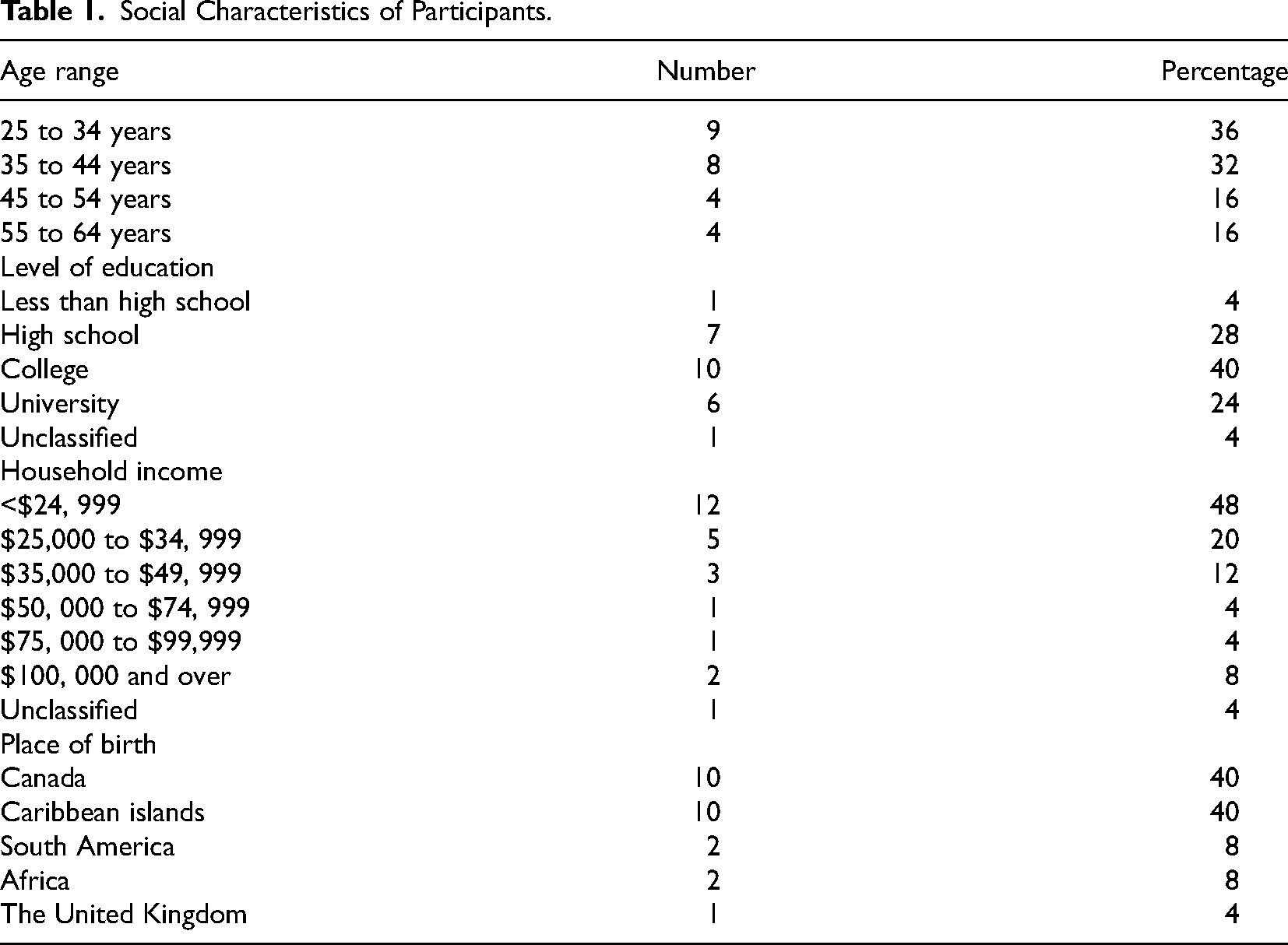
The final sample consisted of 25 women, 15 of whom had been charged with an IPV-related offence. Participants were between the ages of 25 to 64 years, had various educational levels ranging from less than high school to university educated, and predominantly made under $50,000 per annum. Most participants were either single or divorced/separated (see Table 1). Five main themes emerged from the interviews: (1) a community's code of silence; (2) safeguarding Black women and men from racial oppression; (3) the invisibility of Black women's narratives; (4) racialized and gendered insider positionality; and (5) fostering political change. Exploring these themes through the lens of CRF not only demonstrates the ways in which race, racism and various aspects of Black women's identities complicate their experiences but unearth some of the complexities related to Black women's involvement in IPV research studies.
Social Characteristics of Participants.
A Community's Code of Silence
Black women expressed their initial reluctance to participate in the study, which was related to what is often termed, a code of silence, within Black communities. A code of silence is a group protective strategy to prevent police brutality and disproportionate arrests (Askin, 2014). Women may also have been reluctant to participate in the study because they were embarrassed, fearful of further violence from their partners and concerned about being ostracized by their communities. Black women may also not want to reify stereotypical and oppressive images of Black people which alludes to the larger systemic barriers they face in society.
The women shared that growing up they were told to keep personal problems and challenges to themselves. As Ruth commented, “A Black person doesn’t generally jump up and put their life story out there… I guess it's because of embarrassment or you don’t want people to look at you a certain way when you get out of the house.” Black women develop a culture of silence based on the various cultural scripts they confront daily. Like Ruth, many Black women fear being perceived negatively by others; this fear is grounded in the belief that Black people are often villainized in society.
Some women expressed concerns about how disclosing their experiences of abuse could result in further harm to them. As Anna stated, “We’re taught not to say anything, which is, don’t tell nobody your business. That means any good, anything bad. You just don’t tell anybody your business, except to your family. That … can be harmful.”
Many Black women are vulnerable to multiple forms of violence, including partner violence, community violence, and structural, and institutionalized violence (Brown, 2012; West, 2004). For some women, racism reinforces the need to remain silent about abuse in their relationships. Similarly, Evelyn reflected on the risk of sharing her experiences with others: We’re told to keep your mouth shut and keep your nose down. So, don’t speak unless you’re spoken to. So, there's always control, overbearing. The Black community, I see that quite often. So, I would assume, that even I would say that women of colour, especially Black women, wouldn't want to go put themselves in that position because there's risk.
Like Anna, Evelyn's narrative illustrates Black women's fear of violence both within and outside of their homes. According to Richie (2012), Black women are “subjected to misdirected anger, their mobility is threatened, and they are kept under constant surveillance, and must engage with unsympathetic community members or institutional authorities who make them feel ashamed or punish them for their social circumstances” (p. 134).
Participants were also hyper-aware of the impact of pejorative stereotypes for Black women and Black people in general. Ava was concerned that stigma around sharing her experiences may reify people's stereotypical views of Black women. As she stated: I think there's a stigma around being public, and not suffering in silence. In almost all interaction Black women have with the world; our identities are called into question. And the validity of who we are as human beings is always an issue for other people. Either it makes someone feel unsafe, or uncomfortable, or challenged if they’re also Black and not comfortable with our womanhood. And I feel like that deters us from speaking on our own experiences as history participants.
Ava's narrative captures the ongoing challenges Black women face in their everyday encounters. The very essence of who they are is called into question, which creates challenges for women who wish to seek support and leave an abusive relationship.
Black women are in a precarious position where they are thwarted from speaking about the various forms of violence that shape their lives. They are constrained by having an additional burden of constantly negotiating not only their own safety but that of their partners and communities.
Safeguarding Black Women and Men from Racial Oppression
Another consideration for participants was determining how their disclosures to me would impact them, their families, and their communities. Some feared being subjected to racism, further scrutiny, while others feared subsequent victimization or criminalization. Some women were also concerned about how they and their partners may be perceived by others.
The women took steps to safeguard against the negative stigma that Black women often face and were careful to negotiate the information they shared with me. In many instances I had to assure the women that I would not disclose information to any agencies they were involved with or to the police. Like other women in the study, Sarah chose to participate once she recognized that her information would be kept private. As she stated, “This research is so private…it's not too bad because my name is not going to be mentioned and they can’t judge me.” Similarly, Jocelyn shared that she had less problems when others were not involved. As she conveyed, “I don't really talk much. If I have problems with my husband, or somebody, I just keep it to myself. I really don't want to involve too many people in it because more problems will come.” Gabby expressed fear that her disclosure may result in the involvement of the Children's Aid Society. She requested several times that her name remain confidential. As she stated: “You said it's going to be private and confidential, this is not going to the program or anything like that? As long as there's nothing, any problem in the information or anybody calling family workers, stuff like that.”
At the time of her interview, Evelyn was still in a relationship with her abusive partner. The police had intervened previously due to IPV. Subsequently, they were restricted from future contact with each other. Due to Evelyn's precarious position, I had to assure her that the police would not be notified. She also had to reassure her partner that information about him would not be shared with the police. As she declared: “Well, he knows very well I’m speaking to you right now. He's not happy about it.” And he was like, “If this is something you think and you feel that this is going to be beneficial for other women, you know, at least—in the shadow of secrecy—that's something that might help fix this process. Just don’t incriminate me.” She responded by saying, “Like, duh, you think I want to incriminate myself?”
The Invisibility of Black Women's Narratives
Despite their initial reluctance, the Black women who participated in the study recognized the relevance of their narratives. For some of these women, it was evident that Black women's experiences were not always visible, therefore, their participation was intended to validate, elevate and forefront Black women's voices.
Crystal acknowledged that Black women's experiences are not often considered relevant. However, she was propelled to share her experience of IPV and with the police to help increase Black women's visibility. She said, For me personally, I think because we’re not used to ever being important, you know, we’re shunned from everything and resources… I’m just boldly stepping up, to be honest with you. I was afraid before, but I’m not afraid. I’m not afraid to talk. I’m not afraid because I am now accepting it, you know. And I’m tired of running so I’m facing it.
Crystal's statement speaks both to the invisibility of Black women's experiences and the structural barriers they face that create obstacles for them to speak out.
Like their experience of invisibility, some women believed their voices were either not heard or not considered relevant. Jada was of the belief that Black women's voices are not heard and was motivated to share her experience. As she expressed, I was interested in participating because I feel like my voice is never heard. I’ve participated in many women abuse groups and on average typically I may be the only one in the group or maybe there might be someone else of colour but not specifically Black females and sometimes I felt like, you know, while abuse is abuse, the experiences are different in the way that it's perceived by others as well.
Although women were aware to some extent of the representation of Black women in the U.S., some were of the belief that the context is different for Canadian women. For Zoe, there is a lack of relevant Canadian data that focus on Black women's experiences. As she acknowledged: You hear more about Black women's issues in the U.S., but I don’t think there's enough information given to people in general about Black women in different parts of the world. At the end of the day, we’re two completely different people. Although we are all Black, our experiences are definitely going to be different from those in the U.S.
There certainly is limited Canadian data about Black women's experiences of IPV and with the police, as was identified previously, which makes it possible to misconstrue the complexities of violence in their lives.
Racialized and Gendered Insider Positionality
Another theme that emerged in women's discussions was the influence of my racialized and gendered insider positionality. Racialized researchers may have an advantage as insiders during the recruitment and interview stages when conducting research with marginalized populations. In this study, Ava was forthright in commenting on how significant my positioning as a Black woman was to her. As she stated: If you weren’t Black, I wouldn’t have done this. If you weren’t a woman, I wouldn’t have done this. Representation matters. For me, it's like a marker of safety. I feel that internalized guilt around what it could mean if I talk about my pain somehow is eased because you’re Black. And it may be fucked up, but I feel like it makes me feel less guilty. Although everybody's experience is different, I feel like community trauma matters.
My gendered and racialized identities, therefore, were beneficial in establishing and maintaining trust during the research process.
Sarah described her reasons for participating in the study by stating, “Well I wanted to support you because you’re a student and I think it's nice for us to support, especially Black people that are students, to assist them in their career.” Similarly, Dixie stated: If it will help you complete your studies and get you what you need then I’m good. It's [the abuse] been a long time and I moved on. Without the research it will not make a difference. The only way it stands a chance of making a difference is if we do share and give you the opportunity to find, assimilate it and make heads or tails out of it.
The women's narratives allude to the ongoing racial inequities and systemic barriers that Black women face. Their narratives also allude to the trust participants placed in me to articulate their lived realities and their attempts to make a difference in other women's lives.
Fostering Political Change
While women were cognizant of inherent risks in participating in the study, they were also motivated by the possibility that telling their story could result in change and help other Black women know that they were not alone. Pamela remarked, “Well, you know what? I always think that if people know the statistics, about things like this, of what goes on behind closed doors, it could make a change. It could change the system.”
A few of the women believed they were wrongfully arrested following police intervention and shared their story to bring attention to this injustice. As Jocelyn asserted: After what happened to me, I felt stronger. Like, there's something that needs to be done about it because a lot of people are going through this, and it's not nice. It's injustice. It's breaching the human rights of women, especially. I felt like if there were any means that I could help and resolve this, I think this opportunity came, and I make use of it.
As was evident in Jocelyn's narrative, there are many Black women who continue to suffer in silence and are not aware of their rights. By sharing her story, she hoped to bring to light some of the struggles that Black women experience to contribute to systemic changes.
For Melanie, sharing meant that her story may have a positive impact on other women. She shared: Because some of them have been victimized by their husbands and other people who they’re with and some of them don’t say anything, which is kind of sad. And I hope that, you know, this will open a broader range of people speaking out and I’m happy that you're doing this type of service so that a woman would know that they don’t have to put up with this type of abuse.
As a new immigrant, Ruth experienced additional barriers, including isolation and a lack of support. In my conversation with her, Ruth spoke of the challenges she faced and hoped that sharing her experience would provide necessary support for other women in a similar situation. As she expressed: I’m a Black woman and I’ve been through a lot of the experience that you’re looking for in the research. So, I thought it's my way of speaking out on behalf of other Black women generally and women in general that go through abuse, but particularly Black women. Because I find it's really hard for a Black single woman with no support. Zero and no support being in this country. I’m like the only one in this country. Like, I have no siblings, I have no aunts, no uncles. It is just me, right. So, it can be difficult, it can be challenging, but without awareness, there is no hope.
Ruth alluded to some of the barriers (e.g., social, legal, economic, and social isolation) that new immigrants face that further complicate their experiences of IPV.
Discussion
Interviews with Black women provided significant insights on the factors that inform their motivation and reluctance to participate in IPV research. Black women's experiences are seldom at the forefront of these discussions; however, through counter-storytelling, their narratives not only get legitimized but simultaneously exposes and challenges dominant discourses that distort their realities. Some women's reluctance to participate in the study was tied to a community's code of silence where they were expected to remain silent about abuse in their relationships. This finding is consistent with previous research by Taylor (2013), who found that Black women were influenced by a deeply entrenched code of silence that made them reluctant to seek help following their experiences of IPV. There is considerable stigma associated with disclosing experiences of IPV (Bent-Goodley, 2007). As such, some Black women in the study discussed pressures from their families and members of Black communities to remain silent about issues within the home. This fear is further compounded by negative stereotypes that construct Black women and men as violent. However, some Black women may remain silent to prevent negative perceptions of them; this concern could certainly influence other prospective participants’ willingness to share their experiences. While some women referred to this code of silence that prevails in Black communities (Bent-Goodley, 2007), not all women shared this sentiment. In fact, some women are encouraged to speak up when they are victimized or experience discrimination.
It is likely that many of the women who participated in the study endorsed beliefs that they should speak up. Nonetheless, the fear of unjust harm to women and their families is warranted considering their experiences of anti-Black racism, and health and social inequities on multiple levels of society including individual, interpersonal, and institutional (Government of Canada, 2020). Thus, given these systemic barriers, it was not unusual that these women were ambivalent about sharing their stories. Some feared that their disclosure may lead to negative repercussions (e.g., increased discrimination, surveillance, and further marginalization) not only for themselves but their partners. In addition, Black women were uncertain whether their stories would be used by others to perpetuate stereotypical views that construct them as aggressive and violent.
Consequently, due to their history of marginalization, oppression and anti-Black racism, the Black women who participated in the study went to great lengths to safeguard themselves and their partners from further oppression by taking additional precautions during the research process. For example, they asked for reassurance that their identity would remain anonymous, and their information would not be shared with social service agencies and the police. Black women's high level of vigilance and distrust exemplifies the adverse effects of racism. It is important to highlight that myriad factors, including historical, social, and political conditions, inhibit Black women's willingness to share their experiences of IPV (Richie, 1996, 2012). According to West (1999), it is common for Black women who have experienced IPV “to combine a sense of obligatory racial responsibility with self-censorship” (p. 85). To ward off further racism, many Black women may repress their needs. Indeed, women's narratives, as in Evelyn's case, alluded to the racial inequities that are prevalent in society and more specifically exist within the criminal justice system; these views are well supported by Canadian and U.S data. Black people are more likely to be stopped and searched than their white counterparts (Wortley, 2019), be arrested (Bureau of Justice Statistics, 2018), have encounters resulting in police use of force (Kiedrowski et al., 2015), be over-represented in correctional facilities (Government of Canada, 2022) and receive longer sentences (Russell-Brown, 2009). The over-surveillance and criminalization of Black women and men create a high level of fear and distrust (Wortley & Owusu-Bempah, 2009). However, women in the study exhibited a great deal of courage to dispel and dismantle entrenched stereotypes.
Despite these barriers, some women shared that their reasons for participating in the study was because Black women's experiences in general are often not heard (Hatchett et al., 2000), overlooked, and considered insignificant. Black women are speaking up about the abuse they experience and urging other women to speak out as well. This form of resistance against male partner violence was also found by Taylor (2002) who found that women's motivation to participate in the study was to help other women. The invisibility of their voices and experiences in all facets of society is further exacerbated by societal barriers that contribute to their skepticism and distrust of researchers and the research process. Black women's understanding of who they are is very much informed by dominant ideologies. As hooks (2015) eloquently asserted, We learn that we do not have the power to define our own reality or to transform oppressive structures…to look to those empowered by the very systems of domination that wound and hurt us for some understanding of who we are. (p. 253)
However, negating Black women's voices and experiences is intentionally orchestrated to maintain social inequalities and justify their oppression (Collins, 2000). It is also necessary for Black women to endorse beliefs that they are insignificant for “hegemonic ideologies to function smoothly” (Collins, 2000, p. 284). Subsequently, Black women become convinced that their “lives are not complex and are therefore unworthy of sophisticated critical analysis and reflection” (hooks, 1992, p. 2).
Manipulative tactics such as, restricting Black women's voices, are so deeply entrenched in society that Black women who endorse these beliefs are more reluctant to speak out about their experience of IPV or social injustice. As consistent with key tenets of CRF, centering Black women's voices is necessary especially for women whose voices are seldom considered relevant in public discourse (hooks, 2015) or have been silenced or subjugated. It provides them with a platform to create counter-stories to disrupt dominant narratives about their experiences while informing understanding around the complexities of IPV in their lives.
Black women's willingness to participate in the study was significantly influenced by my positionality. According to Serrant-Green (2002), a researcher's positionality as an insider or outsider is “based on a range of issues including the participants’ knowledge of the research; their expectations of the researcher; researcher characteristics; and their experience of taking part in research” (p. 36). There are several advantages of being an insider: (1) researchers may gain or increase access to participants; (2) insider researchers may be more sensitive or responsive to the needs of Black women if they have shared social, linguistic and cultural commonality with participants; and (3) researchers may also have success eliciting deeper explanations (Kerstetter, 2012).
My lived and embodied experiences provided a unique lens to present women's stories and were significant motivators for women who participated in the study. Many women shared that their reason for agreeing to participate in the study was because the researcher was a Black woman with similar experiences of racism and other forms of oppression. In this regard, racialized and gendered identities as well as other intersecting aspects of my identity positioned me well as an insider and “someone who understood their struggles and history and the significance of these to their experiences” (Ochieng, 2010, p. 1730). Being an insider provided a unique perspective not only to connect with the women but to elicit raw details about their reasons for participating in the study. I was able to break down linguistic barriers and easily understood women who spoke with stronger accents, irrespective of the region in which they were born. Engagement with participants was further enhanced when I demonstrated in-depth knowledge of the ways in which their histories of IPV intersected with deep-seated forms of oppression rooted in policies, practices, and interventions. This allowed me to better understand the multiplexities, multidimensionalities and interconnections in their lives (Absolon & Willet, 2005).
Despite the commonalities shared with participants, I never assumed to be granted unmitigated “insider” status. While I shared similar identities based on race and gender with participants, barriers are possible because of differences in class, sexual orientation, or nationality (Few et al., 2003, p. 3). For example, there was risk of being characterized as an outsider due to earning a relatively good salary in relation to the participants, living in an affluent neighborhood and being in a doctoral program. It is essential to be aware of the power dynamics that inform the researcher–participant relationship, and to recognize the fluidity of the insider and outsider positions that are simultaneously occupied and to be cognizant of the tensions that come with both roles (Dwyer & Buckle, 2009).
Some Black women believed that their voices and experiences of racism and various forms of social oppression were often invalidated on multiple levels in society. In Waldron et al.'s (2021) study that explored Black women's experiences of IPV, they found women experienced multiple barriers accessing support including having a lack of education about IPV and receiving limited information about available services and supports. A similar finding was captured in a study conducted by Lucea et al. (2013), who found that 60% of the women who did not access services were not aware that services were available to them. These examples reflect some of the ways through which society invalidates Black women's experiences. However, women in the study were motivated to share their experiences to help other women who experienced abuse and inform researchers, social service agencies, the police and policy makers about their unique experiences of IPV. Indeed, sharing their stories was considered by many as a form of resistance to advocate for systemic change.
Implications for Research
Before conducting research with Black women, researchers must immerse themselves into scholarship and training opportunities to gain a deep understanding of the impact of anti-Black racism and white supremacy and counter ingrained pejorative stereotypes of Black women and Black communities. It is imperative that researchers understand, not only the historical roots of anti-Black racism, but more importantly, how racial oppression and white supremacy currently exist to continue to oppress Black people. It is not enough to address anti-Black racism on the experiential or personal level, as might be detailed by participants, but researchers must also understand how racism is perpetuated systemically through institutions and ideologies founded in white supremacy (Lopez, & Jean-Marie, 2021). This is especially important in research, considering the inherent power dynamics between researchers and participants. Researchers must engage in critical consciousness, and continually question one's positionality. Through a process of learning and unlearning, researchers, particularly non-Black researchers, can better understand how racism can affect research design and implementation. Researchers must move beyond intellectualism to help foster change and increase trust among Black research participants (Lopez, & Jean-Marie, 2021).
Researchers should also adopt methodological strategies that consider Black women's unique experiences at each stage of the research process (Mechanic & Pole, 2013) as they help promote confidence and build trust in the researcher. Because of their history of social marginalization and everyday racism, improving participation of Black women in research studies requires a “multifaceted approach to remove historic, cultural and socio-economic barriers” (Branson et al., 2007, p. 37). The inclusion of these women's voices may also help to address epistemic injustices that have historically impacted them and contribute to the development of programs and services that consider the barriers they face. Moreover, Black women's voices are needed in research studies to help inform policy, and decision-making processes on issues that directly affect them (Khanlou et al., 2020).
Many Black women may not be aware of the research process, therefore, educational material that informs participants of their rights as research participants and the value of participating in a research study may improve their participation (Branson et al., 2007). Recruitment efforts should utilize multiple strategies to locate an appropriate number of participants (Clay et al., 2018; Dichter et al., 2019). Black women tend to draw support pertaining to IPV from within their own communities (e.g., family members and church community), rather than seeking formal interventions (Sabri et al., 2016). Thus, to repair the trust that has been lost due to a longstanding history of mistreatment of Black people in research, and to increase the researcher's credibility, researchers must work collaboratively with Black leaders and Black led community organizations. Research that collaborates with community organizations has demonstrated increased participation and retention rates among participants (Blanchet et al., 2017; Ragavan et al., 2019; Sabri et al., 2022); this may partially be due to an established relationship of trust between the researcher and community members (Sabri et al., 2022).
Intimate partner violence research continues to be dominated by white scholars. While more racialized scholars are conducting IPV research, the shift is slow (Raphael et al., 2019). More Black scholars are needed to ensure the accurate representation of Black voices and experiences (Smith et al., 2021). However, Black scholars are at risk of having their voices minimized (Raphael et al., 2019), therefore, they must utilize Black feminist epistemologies and critical methodologies such as CRF. These provide the lens through which researchers can unpack white supremacy and dominant ideologies while centering Black experiences.
Conclusion
Black women's unique experiences of IPV have largely been overlooked (Bent-Goodley, 2007) and misrepresented in IPV scholarship (Few et al., 2003). The underrepresentation, misrepresentation and erasure of their experiences have contributed to Canadian scholars’ overreliance on the limited U.S. data that exist. However, these data may not accurately capture the cultural and structural challenges faced by Black women in the Canadian context. The results from this study demonstrate that Black women are experts of their own experiences (Wahab et al., 2014), and powerful contributors of change. It also contributes to IPV research that examines the recruitment of Black women. Specifically, it provides important insights about the challenges Black women may encounter, factors that influence their perception of the research process and willingness to share their experiences with IPV researchers. CRF was a relevant theoretical framework that allowed me to centre Black women's voices and experiences while highlighting issues of race, gender, power, and racism.
Black women's willingness to participate in the research study was compounded by factors related to the invisibility of their experiences, racism, and racial loyalty. Their experience of anti-Black racism and marginalized positionality amplify the barriers they face while making them more vulnerable to victimization and criminalization. Moreover, their intersecting identities of race, gender, and class as well as pejorative stereotypes inform the decisions they make around disclosure of IPV. Despite the various factors that influenced their decision to participate in the study, women in the study were motivated to share their experiences because of my positionality as a Black woman and the possibility that their contributions will help foster political change. Thus, results from this study are timely and advance discussions that consider Black women's experiences from their perspective. While these strategies pertain to women who were victims of IPV, some of whom were also arrested for an IPV-related offence, these strategies may also prove beneficial to researchers across multiple disciplines who conduct research with Black women.
Findings from this study provided significant insights about conducting IPV research with Black women; however, there are some limitations. Due to practical constraints, this study focused solely on women who live in urban areas and were accessible by phone and/or email. These criteria may certainly pose a limitation for women in rural areas and with limited access to these resources. However, being able to contact and meet with participants were necessary to share information and conduct the study. These limitations could be partly addressed by conducting interviews remotely to increase accessibility to women who may be isolated. There is a need for more research that examines Black women's unique experiences of IPV and the research process. Black women must not be mere additives in research studies and topics must be relevant to them. Thus, it is recommended that future research position the experiences of Black women at the forefront of IPV research (Potter, 2008).
Footnotes
Declaration of Conflicting Interests
The author declared no potential conflicts of interest with respect to the research, authorship, and/or publication of this article.
Funding
The author received no financial support for the research, authorship, and/or publication of this article.
