




Abstract
Social workers often rely on non-professional community figures to identify and refer at-risk populations. One such figure is the Jewish “balanit” (plural: balaniyot), who assists women at the mikveh, a religious bathhouse for monthly purification. Mental health symptoms can come to light in this unique situation. This quantitative study drew on the feminist perspective and concept of the “moral third” to explore factors contributing to balaniyot's role perception regarding distressed women. Israeli balaniyot (N = 166) completed self-report questionnaires assessing the role perception of aiding distressed women, and independent variables relating to commitment and connectedness to the victims (organizational commitment, years of experience, workdays), and acknowledgment of suffering (knowledge of distress situations, beliefs about violence toward women). Hierarchical regression showed that more weekly workdays, higher community belonging, and greater knowledge of distress situations contributed to role perception. Moreover, among participants with low community belonging, organizational commitment was associated with lower role perception. The findings suggest that organizational commitment may conflict with community belonging, requiring balaniyot to choose between them. The study indicates the need for specialized training to increase balaniyot's knowledge of distress situations and ensure that their organizational commitment is not strengthened at the expense of their crucial capability to aid distressed women.
Keywords
Introduction
Women who experience mental health issues, distress, or intimate partner violence often struggle to acknowledge their situation or turn for help. This is true even, or perhaps especially, when their condition is severe and/or accompanied by feelings of shame (Bacchus et al., 2003; Dennis & Chung-Lee, 2006; Haj-Yahia & Btoush, 2018), cultural stigma, or negative beliefs and stereotypes in their society (McEvoy et al., 2017; Rosen et al., 2008). Studies show that once such women decide to ask for assistance, the first reaction they encounter is highly critical. This window of opportunity often determines whether they will continue to seek help or will shut down, perhaps for many years to come (Haj-Yahia & Btoush, 2018; Peckover, 2003).
Some women may feel more comfortable disclosing their difficulties to an individual with whom they have a relationship of intimacy, trust, and empathy, rather than to a mental health professional (Beebe et al., 2018; Hagler et al., 2019). These informal confidantes have an enormous potential to aid such women by referring them to appropriate professional help (Beebe et al., 2018; McLaren et al., 2010), particularly welfare departments and social workers (Evans & Feder, 2016). Moreover, social workers themselves rely on non-professional figures in the community to make contact with people in need (Blom & Morén, 2010; Gondolf, 1998; Simning et al., 2010). Although social work values stress the importance of reaching out to marginalized clients, the populations most in need may be inaccessible, challenging reaching-out strategies (Compton et al., 2005). Not only must social workers contend with problems of time and workload, but, as noted above, people experiencing adversity may be afraid to share their plight, fearing the consequences of disclosure (Bacchus et al., 2003; Dennis & Chung-Lee, 2006; Haj-Yahia & Btoush, 2018).
The present study focuses on one such non-professional, the “balanit” (plural: balaniyot), or mikveh (bathhouse) attendant, a key figure in the Jewish community who is in a unique position to identify women suffering from mental illness or distress. The purpose of the study is to explore factors that might support attendants’ tendency to address the needs of women whom they see as suffering from distress, as well as to identify the internal and organizational obstacles that may prevent them from doing so.
Previous studies have investigated informal service providers in the community, including cosmetologists, barbers, hairdressers, manicurists, and nail technicians. The issues examined include associations between women's adversities and the type of help offered (Beebe et al., 2018; Hagler et al., 2019; Sattler & Deane, 2016); the link between service providers’ years of experience and their ability to identify appropriate responses; factors contributing to the willingness of service providers to offer assistance, such as the type of relevant responses they are familiar with (Sattler & Deane, 2016); and factors contributing to service providers’ self-confidence in their ability to assist women in distress (McLaren et al., 2010). The current study adds to this literature by exploring, for the first time, the balanit, who, like other informal service providers, maintains frequent, constant, close, and sometimes even intimate, relations with her clients. In addition, to the best of our knowledge, this is the first study to relate to service providers’ role perception regarding aid to women in distress and to examine factors that may contribute to it.
The Role of Informal Service Providers in Aiding Women in Distress
In recent years, several professional associations, including those representing beauticians, hairdressers, and breastfeeding consultants, have begun promoting initiatives aimed at furthering acquisition of the knowledge and tools needed to identify and assist women in distress (Beebe et al, 2018; McLaren et al., 2010). This trend derives from the understanding that these service providers regularly meet with women, over time developing personal ties, so that they may be able to notice signs of distress (Buist et al., 2006; Gamble & Creedy, 2009). Thus, for example, a new law in Illinois requires salon professionals to receive training in sexual assault and domestic violence (Beebe et al, 2018) as a prerequisite for licensure renewal (YMCA News, 2019). Similarly, Australian hairdressers have been trained to act as a referral source for mental health issues (McLaren et al., 2010). While there is growing awareness of the potential of service providers to identify women in distress and offer them basic assistance, the questions regarding the contributors to this role perception have yet to be investigated.
The Potential of Jewish Bathhouse Attendants (Balaniyot) to Aid Women in Distress
Balaniyot's potential to help women in distress stems from their unique relationship with their clients (Polak-Sahm, 2009). They are employed by municipal religious councils to assist women at the mikveh, a ritual bathhouse used for purification by Jewish women after each menstrual cycle. This is a personal and intimate experience performed in the nude under the gentle, but watchful, eyes of a balanit, who ensures proper immersion according to Jewish law, or Halacha. The mikveh consists of several private rooms, each of which contains an area for preparation and leads to a small pool, which is fed by natural rainwater, spring water, etc. There is only one woman in the room or pool at any given time. When the woman finishes her preparations, she calls the balanit who oversees her immersion, ensuring that it is performed in strict compliance with Halacha. During the immersion, the woman's entire body is underwater (Achrack-Wein et al., 2015; Berkowitz, 2010; Polak-Sahm, 2009; Raucher, 2017). In Israel, more than 750 mikvehs across the country are managed by about 640 balaniyot, and visited regularly, not only by Orthodox and ultra-Orthodox women, but also by secular women (Achrack-Wein et al., 2015).
Although the balanit's job and training focus on Halacha alone (Achrack-Wein et al., 2015), she is also a unique witness to various signs of distress and mental illness that may come to light in the highly vulnerable situation of naked immersion, as well as to intimate disclosures (Friedman et al., 2009). Numerous mental health symptoms may be evidenced, including post-partum depression, obsessive–compulsive disorder (OCD)-related compulsions revealed in the intensive preparation for immersion (Kaufman, 2017), post-traumatic stress disorder (PTSD) symptoms as a result of physical or sexual abuse, which may be triggered by the required nakedness (Schecter, 2017), signs of violence on the woman's body, or emotional strain stemming from anticipation of sexual relations immediately following immersion as encouraged by Jewish law (Polak-Sahm, 2009; Schecter, 2017). In such cases, the balanit might feel an obligation to reach out to these women out of a sense of sisterhood and solidarity. The feminist perspective promotes such initiatives across the world, acknowledging the power of this assistance and encouraging women to mentor other women in need or in distress, to share their experience with them, and to support them throughout the process of receiving help and overcoming their difficulties (e.g., Banks-Wallace, 2000; Barkin et al., 2021; Cwikel et al., 2018; Dubus, 2014; Romero, 2006).
In the case of informal service providers, however, offering this assistance requires an extension of their role definition. According to the organizational literature, the question of whether the specified role of a worker will be expanded to include other functions they feel obligated to perform is determined by Role Perception, defined as a worker's perspective of their role within a system and in relation to others (Biddle, 1986). Thus, exploring what may contribute to a balanit's perception of her role as occupying a crucial window of opportunity that allows her to aid women in distress, an expansion of her basic role definition, is of utmost importance. The concept of the “moral third” may provide an answer and was therefore used as the theoretical framework for this study.
The “Moral Third” and Role Expansion
The “moral third” refers to witnessing unlawful behavior, pain, distress, or injustice, and acknowledging and condemning them, causing the witness to adjust their role perception so that they view it as their role to end the wrongdoing. That is, they display an expanded role perception that does not derive from any formal role they are obligated to fulfill in general, or in respect to the suffering people they encounter in particular (Benjamin, 2004, 2016). “Thirdness,” elaborated upon in psychoanalytic theory (Aron, 2006; Benjamin, 2004), is the intersubjective mental space that facilitates recognition of the other and a position of connectedness (Benjamin, 2018a). Thus, in the context of the current study, when a balanit sees the suffering or pain of an immersing woman, she must decide whether to expand her role perception to include witnessing and active presence. This concept has furthered understanding of the place of assistance among professionals who witness wrongs done to their patients and has underlain studies examining the factors that increase their tendency to respond to these vulnerabilities and offer the needed assistance, even when it is not included in their job description (Békés & Hoffman, 2020; Bragin, 2019; Kerzner, 2013). Although it is argued that such tendencies should also be displayed by non-professional bystanders (Byers, 2016), the current study is, to the best of our knowledge, the first to empirically explore and validate this theory for informal service providers who encounter women in distress.
According to Benjamin (2018a), two main factors can explain the tendency of the “moral third” to reach out to suffering individuals: the extent to which they see themselves committed and connected to the victims, and the acknowledgment of suffering, which consists of two components: a relational position of recognition of suffering; and perceptions that condemn unlawful behavior, injustice, or pain, and therefore demand action, or in Benjamin's term “efforts at repair” (Benjamin, 2004, 2016, 2018b).
Commitment and Connectedness to the Victims
Commitment
Organizational Commitment refers to emotional attachment and a sense of obligation to achieve the organization's goals and serve its clients as best as possible (Cook & Wall, 1980; Meyer et al., 2012). Since no clear instructions are given to balaniyot regarding the identification and referral of women in distress, the question arises as to whether those with high organizational commitment will perceive this to be part of their role. Two contradictory assumptions can be drawn from the definition of organizational commitment. On the one hand, an obligation to the organization might encourage them to adhere to their basic role definition, which relates solely to the act of immersion (Berkowitz, 2010; Raucher, 2017). On the other hand, serving the needs of the clients might urge them to aid the women they witness to be in distress.
Two additional organizational measures of commitment may also be pertinent: the balanit's years of experience; and her weekly workdays. It is reasonable to assume that the longer a balanit has worked at the mikveh and the more time she spends there, the more committed she will feel to the women she assists in immersion. Moreover, balaniyot who work more days a week are more likely to meet with the same women regularly, which may lead to closer relationships and greater intimacy, facilitating higher openness and disclosure of distress. This may influence the balanit's perceptions of non-immersion-related functions, that is, functions related to the personal, rather than the religious sphere. We therefore assumed that more years of experience and more weekly workdays would be associated with higher role perception in regard to aiding women in distress.
Connectedness to the Community
Balaniyot's sense of belonging to their communities may also be associated with this role perception, since they almost always work in their own communities (Cicurel, 2000). Sense of Community Belonging refers to the perception of being part of a collective that serves as a source of security and support (Newbrough & Chavis, 1986). It consists of four components: spirit, a reference to one's sense of emotional safety and feeling of acceptance; mutual influence and trust; fulfillment of needs; and shared emotional connection to the community (McMillan, 1996, 2011). We therefore assumed that balaniyot who demonstrate strong community belonging would sense an obligation to community members’ welfare and a willingness to respond to community needs, and consequently will be more inclined to expand their role perception and assist community members in distress.
Acknowledgment of Suffering
The first factor relating to the acknowledgment of suffering is Knowledge of Distress Situations, that is, the extent to which people are familiar with various distress situations and their severity and implications. Mental health literacy was found to help in recognizing mental health disorders and to be associated with the willingness to offer assistance and refer individuals to professional help (Breslin et al., 2017; Evans & Feder, 2016; Jorm, 2012; Yamaguchi et al., 2011). We therefore assumed that balaniyot more knowledgeable in distress situations would display higher expanded role perception.
Another factor relating to the acknowledgment of suffering is the balanit's Beliefs about Violence toward Women, that is, her attitude toward physical, sexual, emotional, or economic abuse on a continuum between condemnation and tolerance (Bahadir-Yilmaz & Oz, 2019; Steinmetz & Haj-Yahia, 2006). This may be relevant for several reasons. First, other forms of distress, including physical and mental health issues, might ultimately result from physical violence or sexual abuse (Park et al., 2017; Rogathi et al., 2017), and accordingly, violence is one of the most common situations of distress that the balaniyot may encounter (Friedman et al., 2009). Secondly, in religious and/or conservative societies, the attitude toward intervening in cases of violence against women may be more ambivalent than toward other forms of distress (Haj-Yahia & Schiff, 2007). In these societies, it may be claimed that abuse of women can, or even should, be ignored for several reasons, including protecting the woman's financial security (Shams et al., 2020), avoiding stigmatization because of the supposed failure of the marriage (Steinmetz & Haj-Yahia, 2006), or the belief that it is important to protect the integrity of the family, even at the expense of the woman's safety (Bulka, 2016; Steinmetz & Haj-Yahia, 2006). Beliefs that justify wife beating, or even contend that women benefit from being beaten, result in a lower tendency to intervene to stop the violence (Haj-Yahia & Schiff, 2007). We therefore assumed that higher levels of beliefs condemning violence would be associated with higher levels of expanded role perception among balaniyot.
Religious Affiliation
As balaniyot are recruited from either the Orthodox or the ultra-Orthodox sectors (Berkowitz, 2010), the Religious Sector to which they belong may also be pertinent. The two sectors differ from one another, with the latter characterized by a stricter religious lifestyle and a tendency to preserve its way of life by isolating itself, largely residing in separate neighborhoods and maintaining its own educational, social, and cultural institutions (Arkin & Cojocaru, 2018; Coleman-Brueckheimer et al., 2009; Neriya-Ben Shahar, 2017). Consequently, affiliation with a particular religious sector may affect some of the factors described above, among them: beliefs about violence toward women, which may be tolerated more in stricter communities; community belonging, which is stronger in more isolated and homogeneous communities; and knowledge of distress situations, as students of the ultra-Orthodox educational institutions are not exposed to psychological theories. It is thus important to investigate not only the direct association between the religious sector and the balanit's role perception, but also its effect on the associations between role perception and other factors.
The Current Study
This study investigated the factors that may contribute to balaniyot's role perception in respect to the identification of women in distress and their referral to appropriate professionals. In light of the literature, we hypothesized that higher levels of the commitment and connectedness factors and acknowledgment of suffering factors would contribute to higher role perception regarding aid to women in distress. Due to the contradictory possibilities for the direction of the link between organizational commitment and role perception, this association was examined exploratively, as was its potential effect on the associations between role perception and the other variables, and the possibility that the religious sector might interact with other variables in predicting role perception.
Method
Participants and Procedure
The sample size was calculated using G*Power (3.1.0 software) for three covariates and six predictors, and the power of .8. This calculation indicated that 109 participants were needed. In addition, we followed the specific recommendation for regression analyses in the literature, of N ≥ 50 + 8m (m = number of predictors) or N ≥ 104 + m (Green, 1991). Considering the desired power, the total number of Israeli balaniyot (640; Achrack-Wein et al., 2015), and additional factors, including the fact that many balaniyot cannot be reached by online surveys due to religious restrictions, and the rate of their participation in balaniyot conferences as estimated by the Ministry of Religious Affairs, we sought to achieve a sample size of between 100 and 150 participants. We ultimately succeeded in recruiting 166 balaniyot.
Age ranged from 30 to 70 years (M = 51.50, SD = 10.46), and years of education from 6 to 25 (M = 14.47, SD = 2.96). Half of the participants (N = 83) defined themselves as Orthodox and the other half as ultra-Orthodox. Years of experience ranged from 0.5 to 40 years (M = 12.06, SD = 9.16), and weekly workdays from 1 to 7 (M = 3.90, SD = 1.95), with almost half of the sample (45.2%) reporting they worked 1–3 days a week. Of these, 13% reported working only one day a week, and 16% reported working two days a week.
The study was approved by a university ethics committee and was conducted in accordance with the ethical criteria for social research. The questionnaire was distributed at professional conferences for balaniyot throughout Israel during the year 2019 and required ∼20 min to complete. Participation in the study was voluntary, and the women were assured anonymity. The response rate was ∼60%. None of the balaniyot specifically refused to participate, with those not completing the questionnaires usually claiming to have been too busy.
Instruments
Balaniyot’s Role Perception is an instrument assessing the balanit's role perception in regard to identifying and assisting women in distress. The questionnaire was based on central elements of existing inventories investigating role perception (e.g., Lev-Wiesel & Friedlander, 1999), particularly those examining the expansion of the basic role definition (e.g., Grove & Bush, 1998), and adapted for balaniyot with the help of a focus group of researchers and practitioners from the field of social work and community interventions. The participants were asked to respond to ten items (e.g., “When a balanit identifies a woman in distress she should offer to refer her for help”) on a five-point Likert scale, from 1 (strongly disagree) to 5 (strongly agree). Each participant was assigned a score equal to the mean of her responses. Cronbach's alpha was .78.
Organizational Commitment Scale (Cook & Wall, 1980), a nine-item instrument measuring employees’ commitment to their organization (e.g., “I am glad to know that my work has contributed to the good of the organization”). Responses were marked on a five-point Likert scale from 1 (not true at all) to 5 (very true). Scores were calculated as the mean of the responses to all items. Cronbach's alpha for the original instrument was .76, and was .80 in the current study.
The Psychological Sense of Community Index (Buckner, 1988) was developed as part of the Neighborhood Cohesion Instrument to assess the sense of belonging to the community. It consists of 11 statements regarding feelings about the individual's community (e.g., “I feel I belong to my community”). Responses were indicated on a five-point Likert scale, from 1 (strongly disagree) to 5 (strongly agree). Scores were calculated as the mean of the responses to all items. Cronbach's alpha for the original scale was .88, and was .90 in the current study.
Knowledge of Distress Situations, a 10-item checklist used to assess balaniyot's familiarity with various stressful physical and psychological situations that women might experience (e.g., “post-partum depression”). Participants were asked to indicate the extent of their knowledge about each of the situations on a five-point Likert scale from 1 (I am not familiar with this situation at all) to 5 (I am familiar with this situation to a great extent). Scores were calculated as the mean of the responses to all items. Cronbach's alpha was .95.
The Inventory of Beliefs about Wife Beating (Saunders et al., 1987) was used to assess the balaniyot's beliefs about spousal violence toward women. It consists of 36 items (e.g., “Wives could avoid being battered by their husbands if they knew when to stop talking”). Responses were indicated on a four-point Likert scale from 1 (strongly disagree) to 4 (strongly agree). Scores were calculated as the mean of the responses to all items. Cronbach's alpha for the original instrument was .72 and was .71 in the current study.
A sociodemographic questionnaire tapped information regarding background characteristics, including age, education, religious sector (Orthodox or ultra-Orthodox), years of experience, and weekly workdays.
Data Analysis
First, Pearson correlations were conducted to rule out the possibility of multicollinearity. In the next stage, we performed a hierarchical regression to examine the unique and combined contribution of the study variables to the explained variance in balaniyot's role perception regarding identifying and assisting women in distress. The background variables were entered in Step 1, the commitment and connectedness factors in Step 2, and the acknowledgment of suffering factors in Step 3. In the last step, the interactions between both the religious sector and organizational commitment and the other variables were entered. Finally, the interactions found to be significant in the regression analysis were further examined by MODPROBE of PROCESS to test for moderation relationships between the variables (Hayes, 2013). The constituent variables for interactions were centered before the interaction terms were computed as their cross-products (Aiken et al., 1991).
Results
The results of the Pearson correlations appear in Table 1. As can be seen from the table, none of the correlations were high enough to indicate multicollinearity.
Intercorrelations Among the Study's Variables.
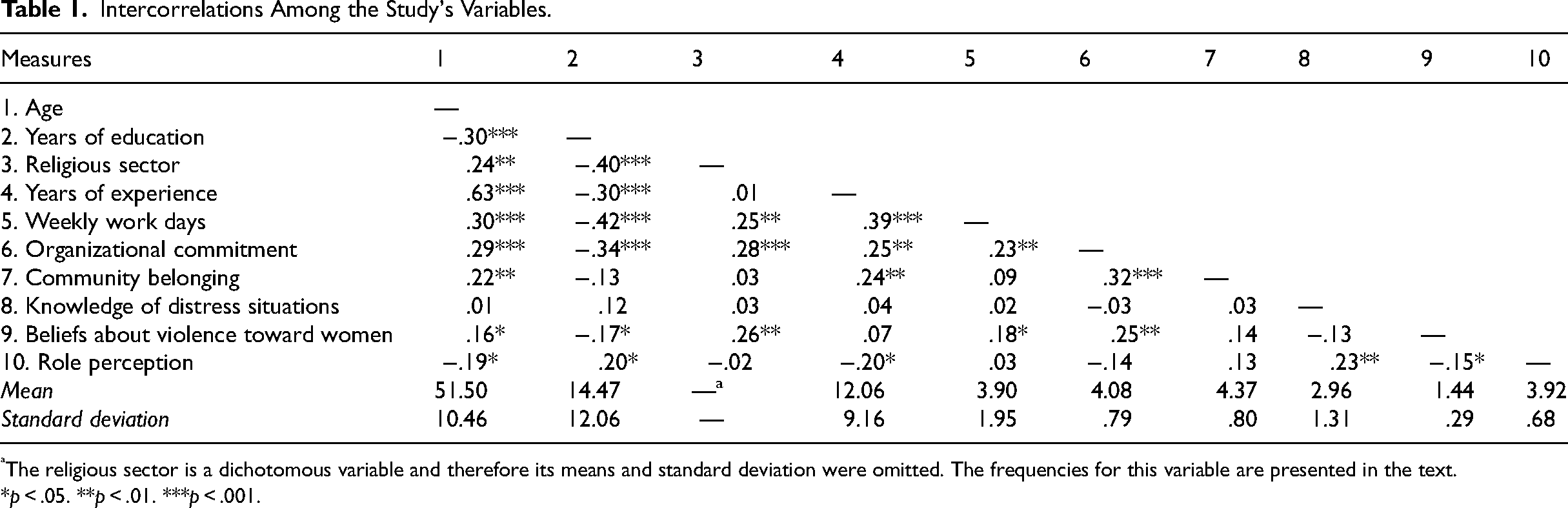
The religious sector is a dichotomous variable and therefore its means and standard deviation were omitted. The frequencies for this variable are presented in the text.
*p < .05. **p < .01. ***p < .001.
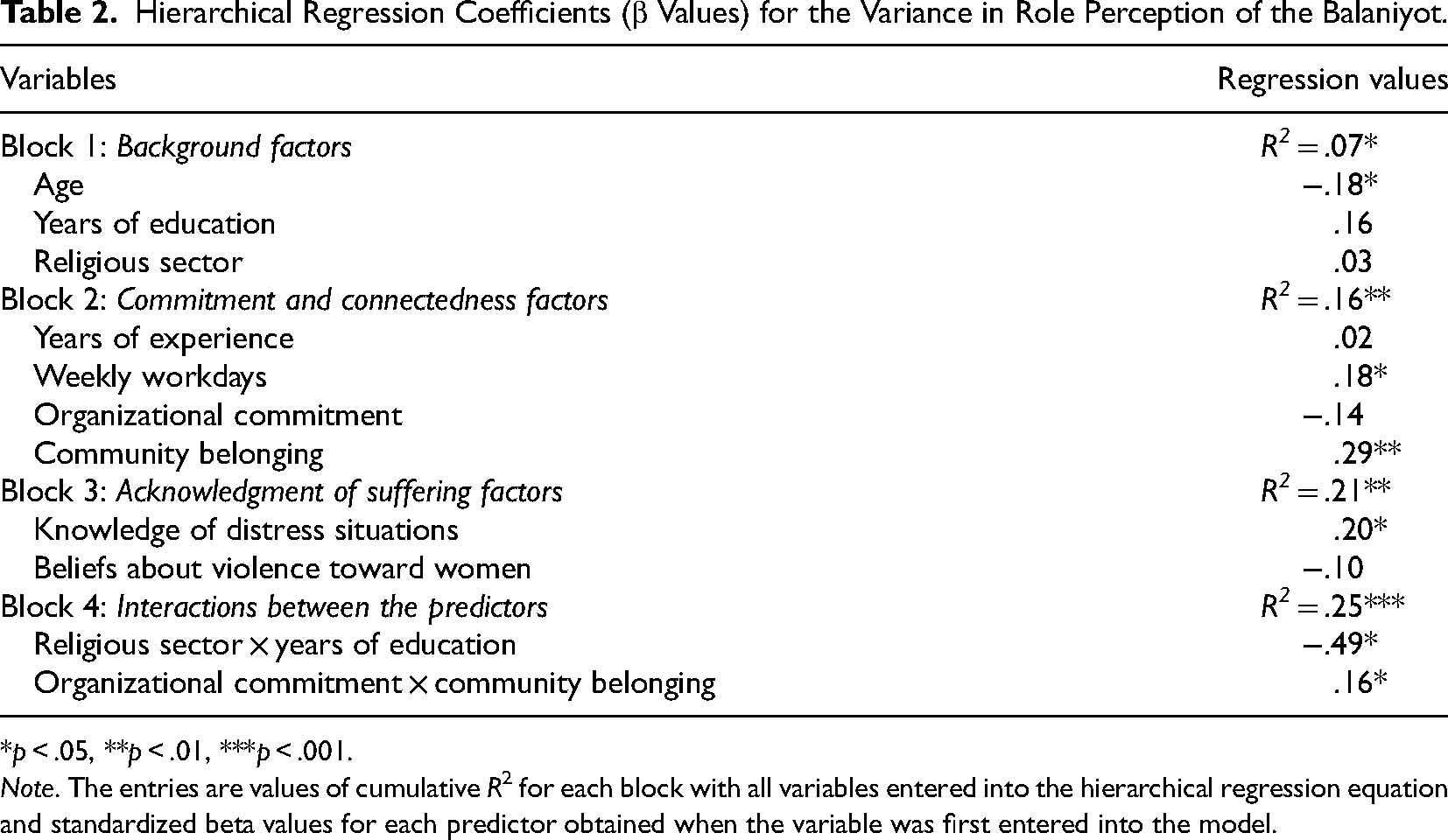
Table 2 presents the results of the regression analysis examining the unique and combined contribution of the independent variables to the explanation of the variance in balaniyot's role perception.
Hierarchical Regression Coefficients (β Values) for the Variance in Role Perception of the Balaniyot.
*p < .05, **p < .01, ***p < .001.
Note. The entries are values of cumulative R2 for each block with all variables entered into the hierarchical regression equation and standardized beta values for each predictor obtained when the variable was first entered into the model.
As the table shows, the nine predictor variables and two significant interactions explained 25% of the variance in balaniyot's role perception with adjusted R2 = .17, F(11, 154) = 3.12, p < .001. The background variables (Block 1) accounted for 7% of the variance, F(3, 162) = 2.74, p < .05, with younger women and those with more years of education reporting a stronger perception of the balanit's role regarding women in distress. The commitment and connectedness factors (Block 2) explained an additional 9% of the variance, F(4, 158) = 2.96, p < .05, so that balaniyot who worked more days a week and those who displayed higher community belonging reported a stronger role perception of assisting women in distress. The acknowledgment of suffering factors (Block 3) explained a further 5% of the variance, F(2, 156) = 3.16, p < .05: balaniyot with more knowledge about distress situations reported a stronger role perception regarding women in distress. Beliefs about violence toward women did not contribute significantly to the prediction of the balaniyot's role perception.
Two significant interactions emerged in the final step of the regression (Block 4): religious sector × years of education and organizational commitment × community belonging, explaining an additional 4% of the variance in role perception, F(2, 154) = 2.82, p < .05. The interactions were plotted using values corresponding to the mean, one standard deviation (SD) above the mean, and one SD below the mean for the predictors and moderators (Cohen & Cohen, 1983). Analysis of the simple slopes was conducted using the PROCESS procedure (Hayes, 2013). Figure 1 presents the plots of the religious sector by years of education in predicting role perception (t = −1.74, p < .05).
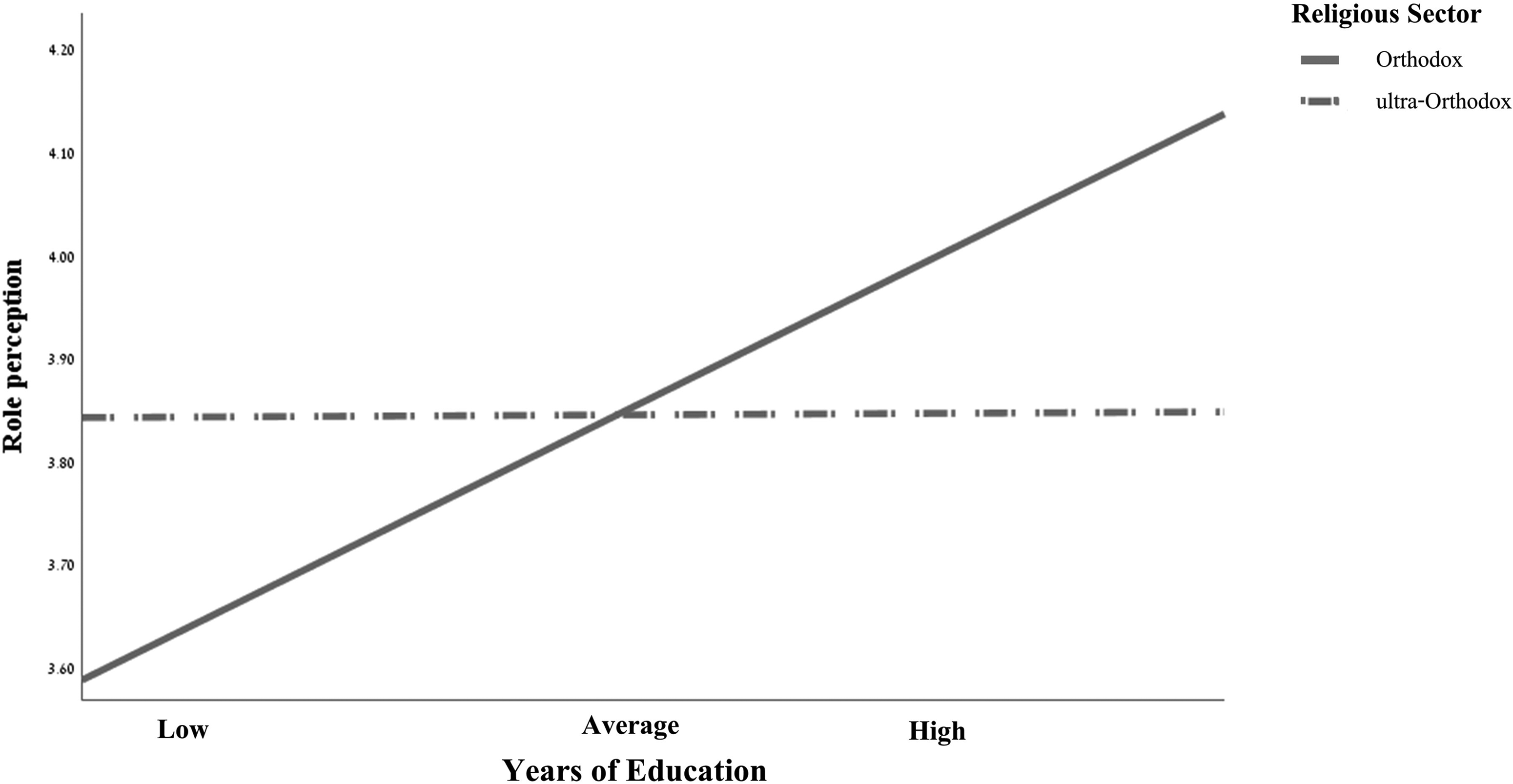
Interaction between religious sector and years of education predicting balaniyot’s role perception.
As can be seen from Figure 1, the effect of years of education on the balaniyot's role perception was significant only in the Orthodox sector (β = .08, SE = .03, p < .01, and β = .00, SE = .03, p = .98, for Orthodox and ultra-Orthodox, respectively).
The plot of organizational commitment by community belonging in predicting role perception (t = 1.76, p < .05) appears in Figure 2.
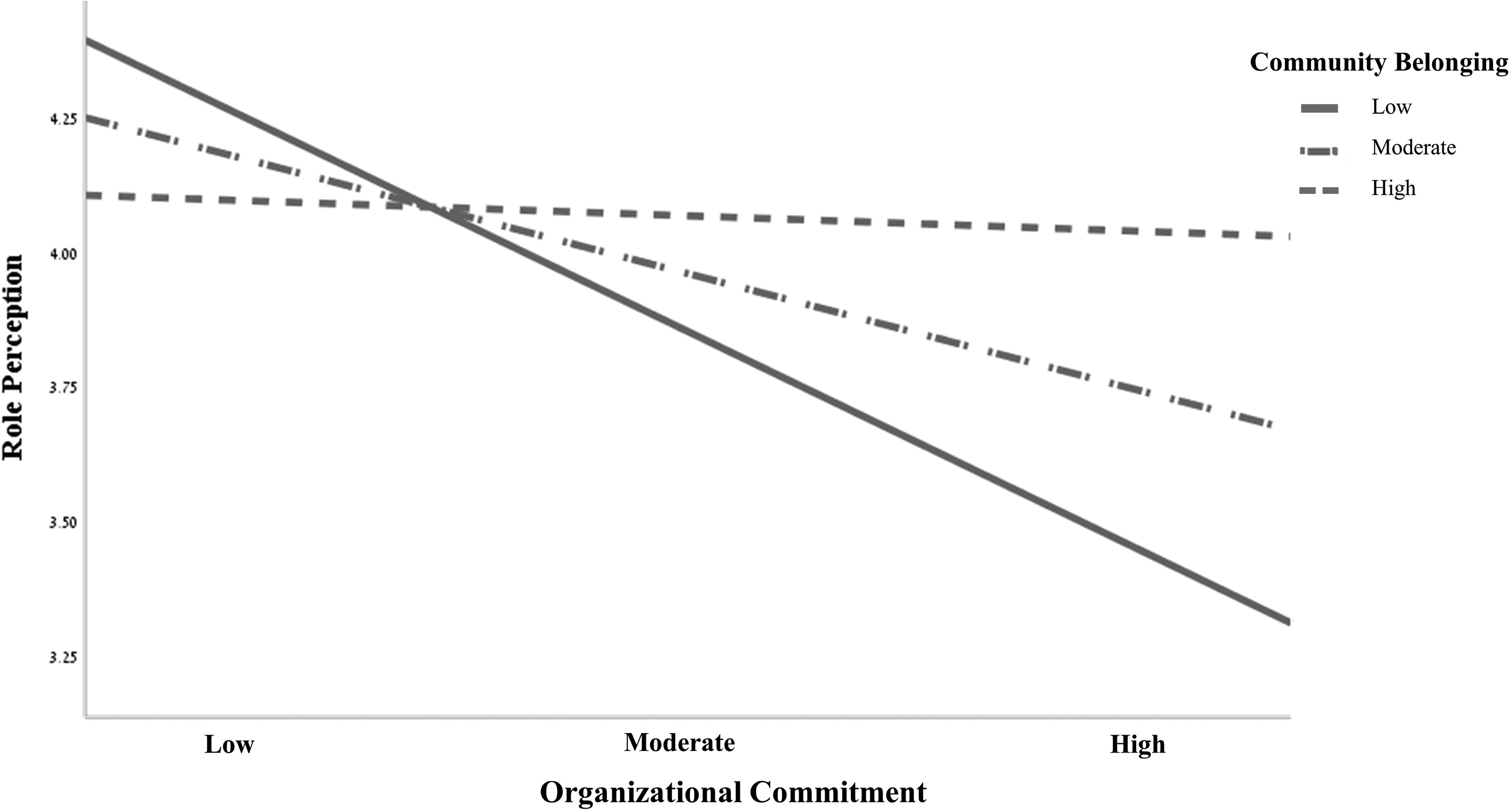
Interaction between community belonging and organizational commitment predicting balaniyot's role perception.
As Figure 2 shows, the negative correlation between organizational commitment and role perception was significant only for moderate and low levels of community belonging. Accordingly, the simple slope for 1 SD below average was β = −.325, SE = .12, p < .01, for average community belonging β = −1.74, SE = .08, p < .05, and for 1 SD above average β = −.023, SE = .12, p = .85.
Finally, as the mean score for all the items assessing knowledge of distress situations was very low (M = 2.96, SD = 1.31), we examined more closely the means of the responses to each item, calculating the percentage of respondents who marked scores “1” and “2,” indicating negligible knowledge. The results indicated that about 60% of the balaniyot did not know the meaning of sexual violence, sexual abuse, and PTSD (not necessarily the same participants on all items); about 50% did not know the meaning of an eating disorder or bipolar disorder; about 40% did not know about OCD; and about 30% were not familiar with situations of depression or anxiety.
Discussion
This study explored the contribution of commitment and connectedness to the victims and acknowledgment of suffering by balaniyot to their role perception with regard to identifying and assisting women in distress. The exploration was embedded in the concept of the moral third, which relates to the factors that encourage people witnessing pain, distress, or injustice to reach out to those who are suffering (Benjamin, 2004, 2016, 2018b). The results provide insights into a crucial aspect of the work of an informal service provider central to the lives of Jewish women worldwide.
The Contribution of Commitment and Connectedness Factors to Role Perception
The findings paint a complex picture of the association between the commitment and connectedness factors and role perception. As predicted, weekly workdays and community belonging contributed to the balaniyot's expanded role perception. As suggested above, balaniyot who spend more time at the mikveh may feel more committed to the women they encounter there and are more likely to meet with the same women on a regular basis and consequently to develop closer relationships with them. This, in turn, may lead to greater openness and disclosure of distress on the part of the women, thereby encouraging balaniyot to relate to the personal sphere, and not confine themselves solely to their religious duties.
A similar dynamic may also explain the positive association between community belonging and expanded role perception, as expected. Since balaniyot almost always work in their own communities (Cicurel, 2000), a higher sense of community belonging may promote closer relationships with the immersing women, which, in turn, may promote an expanded role perception of aiding women in distress. This is also in line with the notion of the moral third, whereby the tendency of people witnessing wrongdoing to intervene is greater the more they are connected to the suffering individual (Benjamin, 2018a).
In contrast, organizational commitment was not related to the balaniyot's role perception. As noted above, two contradictory assumptions may be posited regarding the connection between organizational commitment and role perception, and it is therefore possible that they offset one another. The interaction between organizational commitment and community belonging appears to strengthen this possibility. Among balaniyot with lower community belonging, a higher organizational commitment was associated with lower role perception regarding women in distress. Given that higher community belonging was associated with higher expanded role perception, the interaction suggests that commitment to the organization may sometimes be perceived as contrary to commitment to the community. This supports the premise that organizational commitment consists of two aspects: commitment to the organization itself and commitment to the organization's clients. In certain circumstances, such as that of the balaniyot where the organization's clients are members of their own community, these commitments might be seen to contradict one another. Thus, whereas balaniyot with high community belonging perceived their role to include offering help to clients in distress, those who did not feel strongly connected to their community did not share this role perception, so that high organizational commitment was associated with lower expanded role perception.
Furthermore, some rabbis fear that dealing with extraneous issues might interfere with the focus on proper immersion (Polak-Sahm, 2009). Thus, balaniyot may be instructed not to stray from their job. Indeed, some have reported being placed in a sensitive position when they sense a conflict between an immersing woman and the Rabbinate, forcing them to choose sides (Cicurel, 2000). Role conflict is a complex issue that has been widely discussed in the context of service providers with dual loyalty to their organization and its customers. However, little reference has been made as to how to resolve such dilemmas (Briskman & Zion, 2014; Schulz & Johnson, 2003; Zion et al., 2012). Nevertheless, in the case of balaniyot, the conflict might be resolved, at least to a certain degree, by gaining the support of rabbinical authorities. This suggestion is in line with the social work literature showing that in religious communities in Israel, the support of rabbinical leaders, whether on the national or local level, is considered essential by the public and increases the effectiveness of social workers’ interventions (Zanbar & Itzhaky, 2013).
Finally, contrary to our hypothesis, years of experience was not significantly associated with role perception in regard to aiding women in distress. Although to the best of our knowledge, no previous studies have considered this association, one investigation that examined the tendency of hairdressers to provide informal assistance to their clients (e.g., referring them to professional help) in the case of mental health issues indicated that years of experience was associated with greater ability to assist (e.g., familiarity with relevant channels of assistance; Sattler and Deane, 2016). As years of experience obviously increases with age, the lack of an association between this variable and role perception in the current study may stem from the fact that younger age was found here to be associated with higher expanded role perception (a finding discussed at greater length below), perhaps offsetting the effect of experience.
The Contribution of Acknowledgment of Suffering to Role Perception
The findings indicate a positive association between knowledge about distress situations and expanded role perception. This is in line both with our hypothesis and with previous research highlighting the role of mental health literacy in willingness to offer assistance to individuals suffering from mental disorders and refer them to professional help (Breslin et al., 2017; Yamaguchi et al., 2011). It is also consistent with the notion of the moral third, whereby recognition of suffering is an essential prerequisite for aiding others to overcome their distress (Benjamin, 2004, 2016, 2018b).
Contrary to expectations, however, beliefs about violence toward women were not associated with the balaniyot's role perception. This is surprising given previous reports of an association between more tolerant attitudes toward wife beating and a lower tendency to interfere and stop the violence (Haj-Yahia & Schiff, 2007). Moreover, spousal abuse is among the most common causes of distress among women and is also associated with other mental health problems (Park et al., 2017; Rogathi et al., 2017), so it is likely to be one of the distress situations encountered most often by balaniyot (Friedman et al., 2009). This suggests that the relationship between beliefs about violence toward women and role perception may be moderated or mediated by other variables. Although we conducted supplementary analyses to examine the interactions between beliefs about violence toward women and the other research variables, none were found to be significant. Further studies might shed light on other personal and organizational factors that may impact (i.e., moderate or mediate) the association between attitudes toward spousal abuse and a role perception of service providers that includes aiding women in distress.
The Contribution of Background Variables to Role Perception
The main background characteristic found to contribute to the balaniyot's role perception was age: younger balaniyot had a higher expanded role perception. This might be attributed to the fact that younger balaniyot grew up in a time of greater recognition and acceptance of mental illness in the Orthodox community than their older colleagues (Schnall et al., 2014), making them more willing to approach and aid a woman in distress, that is, to act as a moral third.
No significant direct associations were found between the religious sector or years of education and role perception. However, moderation analysis revealed that years of education was associated with higher expanded role perception only among Orthodox balaniyot. This may stem from the education of ultra-Orthodox women, even on the college level, in separate and independent institutions (Arkin & Cojocaru, 2018; Coleman-Brueckheimer et al., 2009). Thus, while the need to assist women in distress has increasingly been addressed by various academic disciplines, this is not reflected in ultra-Orthodox schools or colleges. Consequently, more years of education would not increase awareness of the importance of identifying and helping such women.
Limitations and Recommendations for Further Research
The first limitation of the study is the cross-sectional design, which necessitates caution in drawing causal conclusions, despite their theoretical foundations. Longitudinal studies tracking the impact of the factors relating to commitment and connectedness to the victims and acknowledgment of suffering on balaniyot's role perception might make it possible to draw clearer conclusions. Secondly, the sample consists solely of Israeli balaniyot and therefore may not be representative of the Orthodox Jewish community at large. Cultural differences relating to the characteristics of the community, the extent to which women are willing to open up to balaniyot, etc., might influence the extent to which the balaniyot themselves feel comfortable expanding their role perception to include aiding women in distress. Further studies conducted among balaniyot in other parts of the world might indicate the generalizability of the findings. Finally, a key element that could impact balaniyot's role perception is training in the skills needed to identify and aid women in distress. However, as only a small number of balaniyot in the current sample had received such training, it was impossible to examine this factor. Such training is currently offered only on a limited scale. Hopefully, it will be expanded to include more programs and reach more balaniyot, enabling future studies to compare balaniyot who have received training with those who have not, as well as to conduct evaluation studies, following balaniyot before and after training.
Conclusions and Implications
This study makes both a theoretical and a practical contribution to the literature. On the theoretical level, it is the first investigation to explore the factors that contribute to the expanded role perception of informal service providers in the community regarding women in distress. Moreover, the results validate the concept of the “moral third” (Benjamin, 2016) among non-professional workers, and its ability to explain the variance in role perception and the tendency to assist distressed women by means of factors relating to commitment, connectedness, and acknowledgment of suffering. Furthermore, the tendency of balaniyot, as informal helpers, to aid their clients may be enhanced by feminist empowerment, whereby they acknowledge their ability to assist other women.
On the practical level, although the findings indicate that more weekly workdays are associated with higher role perception, implementing its implications might not be feasible, since according to Halacha, immersion takes place only after sundown. This might make it difficult for balaniyot to commit to working more days a week. However, as the mean number of workdays in our sample was relatively low (with a very high rate of balaniyot worked only one or two days a week), thought should be given to whether even a slight increase could be both practical in terms of the demands from the balaniyot, and beneficial, encouraging them to assist more women in distress. Furthermore, the fact that balaniyot are employed by the municipal religious councils (Achrack-Weinl et al., 2015), which provide additional religious services that do not involve working late in the day, might offer other opportunities for these women to connect with their communities, as well as enhancing their sense of connectedness to their work. Moreover, it is important not only to employ balaniyot within their own communities, but also to choose women with a high sense of community belonging, and/or to create platforms to strengthen this sense, as well as to recruit balaniyot with a higher capacity to be supportive, and/or to strengthen this ability.
In addition, religious councils should examine whether balaniyot's commitment to the organization is indeed preventing them from assisting women in distress and whether they perceive such assistance as conflicting with their role definition. We recommend encouraging open discussions of the nature of their commitment and the functions it should or should not include. In addition, we recommend that the directors of social services (at both the local and national levels) strengthen their ties with rabbinical authorities and bring to their attention the importance of the potential role balaniyot can play in the life of women in distress. As noted above, support from rabbinical leaders would undoubtedly reduce the balaniyot's hesitation or fear of negative consequences if they choose to aid such women, increasing their tendency to refer them to social workers for assistance.
Furthermore, the lack of knowledge about distress situations, as well as the link between this knowledge and the balaniyot's role perception, highlights the need to develop psychoeducational training for this unique population that will enable them to identify and assist women in distress. This understanding led the Jewish community in London to design a psychoeducational program for formal and informal care providers imparting broad knowledge on mental health issues, which was found to be effective in facilitating the provision of appropriate assistance (Perry et al., 2018). Our findings point to the need for a comparable program for balaniyot. It must be stressed, however, that the goal of such training is not to qualify balaniyot to offer mental health care themselves, nor is it to place responsibility for women's welfare in their hands. Rather, the goal is to equip them with tools that will assist them in recognizing that certain women are in distress, to reach out to them, to share information on the bodies to which they can turn for help, specifically welfare departments and social workers, and to encourage them to do so. Social workers rely on non-professional figures in the community to make contact with people in need (Blom & Morén, 2010; Gondolf, 1998; Simning, 2010), especially in populations that are largely inaccessible or that avoid turning to outside help (Compton et al., 2005), as is the case in Orthodox, and even more so in ultra-Orthodox, societies. Balaniyot can assist women in these communities to overcome their reluctance to share their plight and fear of the consequences of disclosure (see Bacchus et al., 2003; Dennis & Chung-Lee, 2006; Haj-Yahia & Btoush, 2018).
Policymakers should also be advised of the importance of developing and funding psychoeducational training for balaniyot. Moreover, balaniyot should receive a clear message from managers, even at the level of the Ministry of Religious Affairs, regarding this aspect of their work. It goes without saying that they could not, and should not, be obligated to assist women in distress. However, their involvement in identifying such women and referring them to appropriate channels should be highly encouraged. The same approach should guide professional associations of other service providers as well. The design of special training programs and the framing of explicit policy in regard to the role they can play in the lives of women in distress would enable them to take advantage of the unique window of opportunity their work offers.
Footnotes
Declaration of Conflicting Interests
The authors declared no potential conflicts of interest with respect to the research, authorship, and/or publication of this article.
Funding
The authors received no financial support for the research, authorship, and/or publication of this article.
