




Abstract
A fundamental value of social work is social justice, which includes gender and racial/ethnic equality. Feminists address gender-based oppression and often work to address racial/ethnic inequalities as well as many other forms of oppression. However, most literature suggest that less than half of social work students identify as feminists. This study investigated factors that contribute to student feminist self-identification, focusing on how racial/ethnic identity may influence feminist identity. Four predicting constructs were identified: method of exposure to feminism, feminist knowledge, feminist attitudes and ideologies, and description of feminists. A multiple regression model was applied to the overall sample (N = 660) and to each racial/ethnic group. Findings indicate that in the overall sample, all four constructs significantly contributed to predicting feminist identification, while in the non-Hispanic white sample (n = 366), method of exposure, feminist attitudes and ideologies, and description of feminists made significant contributions; for the Hispanic sample (n = 157), only feminist attitudes and ideologies made significant contributions to predicting feminist identification; and for the African American sample (n = 137), method of exposure and description of feminists made significant contributions. These findings indicate differences among racial/ ethnic background in feminist identity and provide a comprehensive picture of feminist identity among Master’s of Social Work (MSW) students.
Keywords
While feminism has increased the status of women, women continue to face gender-based inequalities including being inadequately represented in government, being paid less for the same work, and being exposed to sexual and domestic violence (Alkadry & Tower, 2006; Lawless & Fox, 2012; Tjaden & Thoennes, 2000). Women of color may face inequities related to gender, but also to racial and ethnic identity, and may face oppression rooted in the ways in which racial and ethnic identities intersect with gender to create experience (Collins, 2000; Crenshaw, 1991). Women of color are less represented in government than white women, are paid less than white women, and are subject to high rates of sexual and domestic violence similar to white women (Black et al., 2011; National Partnership for Women and Families, 2014). Gender-based and race-/ethnic-based discrimination has far-reaching consequences for women from varying backgrounds.
Social workers share with feminists a core value of social justice, including a goal of reducing discrimination based on gender, race, or ethnicity, as well as other forms of oppression (National Association of Social Workers [NASW], 2008). Most MSW students are women: women comprise 85% of full-time and 82% of part-time MSW students (Council on Social Work Education [CSWE], 2015). While the vast majority of social workers are women, the prevalence of women is not indicative of increased status or power (see McPhail (2004), article, “Setting the Record Straight: Social Work is not a Female-Dominated Profession”). MSW students tend to be more racially and ethnically diverse than the overall master’s degree student population, with African American students comprising 17% of full-time MSW students and Hispanic students comprising 13% (Aud et al., 2010; CSWE, 2015). In addition, most social work clients are women and most licensed social workers have clients who are people of color (Center for Health Workforce Studies & NASW Center for Workforce Studies, 2006; NASW, 2009). However, existing literature suggests that most social work students do not consider themselves feminists (Charter, 2015; Lincoln & Koeske, 1987). Further, there appears to be no literature that indicates whether feminist identification among social work students varies by race or ethnicity.
Existing literature indicates the importance of self-identifying as feminist: feminists are more likely to believe in and engage in activism that seeks to increase gender equality (Liss et al., 2001; Nelson et al., 2008; Yoder et al., 2011; Zucker, 2004). Therefore, social work students who call themselves feminist may be more likely to work toward social justice. Further, feminist social workers who recognize the importance of multiple social identities may be better able to address the intersections of oppressions. Generally defined, a feminist is “someone who supports political, economic, and social equality for women,” (Harris Poll, 1995, as cited in Huddy et al., 2000, p. 326). However, in this study, “feminist” was not defined for participants but rather relied on their own sense of what the term means with the intention of understanding of how feminism is perceived without the influence of the researcher.
Feminism has been heavily criticized for ignoring women of color (Collins, 2000; hooks, 2000). Historically, non-Hispanic white feminists have been put to the forefront in the feminist movements, and feminist issues have tended to center on the concerns of non-Hispanic white women (hooks, 1984). Moreover, while non-Hispanic white feminists often marginalized and ignored women of color, the media has also subsumed the work done by feminists of color by creating a visual landscape that seems to suggest that feminism is only for non-Hispanic white women (Collins, 2000, p. 13). Collins (2000) notes that black women have been important players in the feminist movements though their visibility in feminism has often been obscured.
However, feminist thought has expanded tremendously over the past few decades, and many current groups of feminists, including black feminists, Chicana feminists, and intersectional/standpoint feminists, explicitly seek to address the experiences of women from diverse racial and ethnic backgrounds. Importantly, some people of color may feel that feminist terms that denote racial/ethnic identity may have more salience for them, such as “black feminist” (Collins, 1996) rather than just “feminist,” while some appear to endorse the general term “feminist” (hooks, 2000). This article explores how membership in diverse racial/ethnic groups may relate to students’ experiences and understandings of feminism and provides a current and clearer picture of feminist identification among social work students.
Oppression, based on gender and/or racial/ethnic identities, continues to be a significant barrier for non-Hispanic white women and women of color against gaining social equality. Social justice is among the key endeavors of the social work profession, and it is essential that social workers are able to identify and address gender and racial/ethnic oppression, which as detailed by an intersectionality framework (explained further below) is complex and differs depending, in part, on not only one’s gender but also racial/ethnic identity. As mentioned, those who self-identify as feminist are more likely to engage in activism that works to reduce gender-based oppression, suggesting that social work students who call themselves feminists may be more apt to address gender equality. Therefore, better understanding whether social work students self-identify as feminist, and predictors of feminist self-identification, including racial/ethnic identity, will help to broaden insight into feminist identity and could lead to future research about how to promote activism that addresses gender inequality and strives to address the complexity of the oppression of women who belong to multiple oppressed groups.
Background
Prevalence of Feminist Self-Identification
Among the general public, feminist identity has remained relatively low. Reporting on polls from 2007 to 2009, Kelly and Gauchat (2016) found that 20% of men and 31% of women identify as feminist. Research on the racial/ethnic variance in feminist self-identification is limited and conflicted. Some research indicates that feminist self-identification does not vary by race/ethnicity (Anderson et al., 2009; McCabe, 2005) while other research suggests that African American women tend to be less likely to self-identify as feminists than other racial/ethnic groups (Myaskovsky & Wittig, 1997; Robnett et al., 2012), and still other research has found that African American women are significantly more feminist than white women (Cole & Zucker, 2007), which may be because African American women are already aware of racial oppression and therefore are more likely to identity sexism (Hunter & Sellers, 1998). In an older study, 8% of African American women identify as feminists compared to 19% of Hispanic women and 33% of white women (Myaskovsky & Wittig, 1997). However, most research on feminist identity tends to compare gender rather than racial subgroups (e.g., Huddy et al., 2000).
While there appears to be little recent research on feminist self-identification among social work students, Charter (2015) found that 42% of master-level social work students identify as feminist, which is similar to Munson and Hipp’s (1998) study where 54% of undergraduate and graduate students called themselves feminist. Charter (2015) and Lincoln and Koeske (1987) each examined just one university, while Munson and Hipp (1998) examined four schools of social work; however, their overall sample was relatively small (n = 127). The current study was conducted at schools of social work across the country and has a substantial sample size. There does not appear to be existing literature that indicates racial or ethnic differences in feminist self-identification among social work students. In this article, factors that could predict and explain feminist identification among MSW students as a whole and by racial/ethnic group will be examined and explored, such as feminist knowledge or having a feminist family member, among many more.
Conceptual Framework
Social Identity Theory (SIT)
SIT indicates that social identity is formed by belonging to groups and that a positive experience of a group will increase membership as membership will positively increase one’s sense of self (Tajfel, 1981). For example, men may be more likely to align themselves with feminism after being exposed to positive stories about feminist men (Wiley et al., 2012). Further, belonging to a group can influence a group member’s attitudes and behaviors and may contribute to activism (Gecas & Burke, 1995; Gurin et al., 1980; Smith & Tyler, 1997). Identifying as a feminist is related to collective action (Nelson et al., 2008; Yoder et al., 2011; Zucker, 2004) suggesting that social work students, identifying as a feminist may indicate increased activism.
In this study, four constructs, method of exposure, feminist knowledge, feminist attitudes and ideologies, and description of feminists are examined separately and in concert, comprising an overall perception of feminism. (See Figure 1 for an overview of the conceptual and regression model.) An intersectionality framework further indicates that factors that may influence how students perceive feminism include students’ social positions such as their racial/ethnic identities.
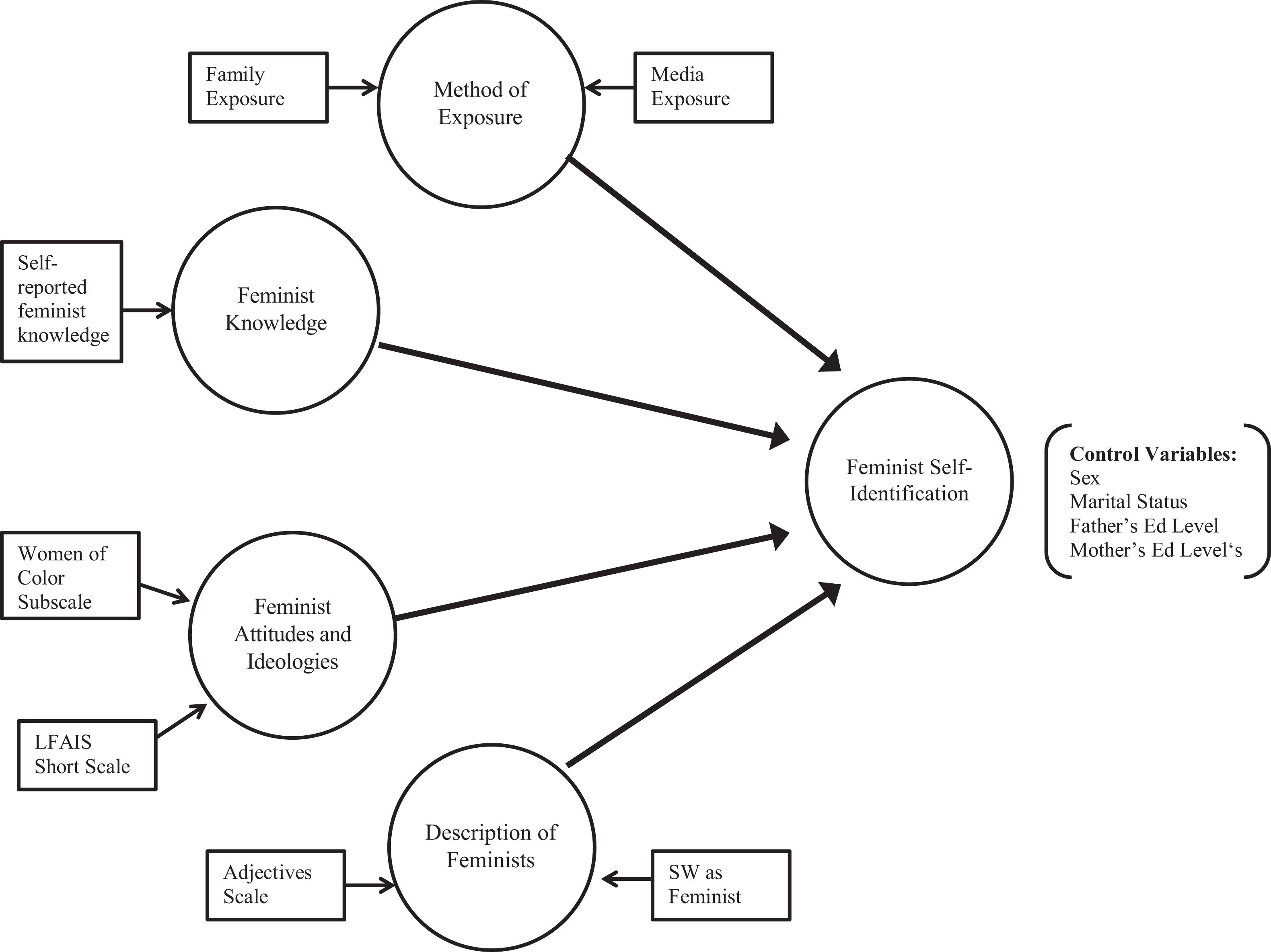
Conceptual and regression model.
Intersectionality Framework
An intersectionality framework, like many feminist theories, interrogates power and oppression but rather than focusing on particular elements of identity, conceptulizes human experiences as being rooted in muliple positions such as race, gender, and class. (Crenshaw, 1989; Vakalahi & Starks, 2010). An intersectionality framework is particularly useful when studying women who also ascribe to another oppressed group—like being a person of color—and suggests that rather being additive, experiences of oppression intersect to create new meaning for different groups (Crenshaw, 1989). Further, “dominant conceptions of discrimination condition us to think about subordination as disadvantage occurring along a single categorical axis” (Crenshaw, 1989, p. 57) so that when thinking of oppression, one may focus on a single area of oppression such as race or gender but fail to see how oppression is experienced when these areas intersect.
A more recent exploration of intersectionality explains that experiences of oppression (and privilege) can change and shift depending on one’s social location (Hulko, 2009). Hulko (2009) indicates that while intersectionality can be thought of as a overall theoretical stance, “[s]ocial location refers to the relative amount of privilege and oppression that individuals possess on the basis of specific identity constructs, such as race, ethnicity, social class, gender, sexual orientation, age, disability, and faith” (p. 48). In application to feminist identity, an intersectional framework may indicate that feminist inclusion in one’s identity may be influenced by social location. The social location of women of color in relation to feminist identity likely has several components that may not be experienced by non-Hispanic white women, such as the historical exclusion of women of color in feminism and the perception that one must choose between focusing on gender or racial/ethnic forms of oppression (Collins, 2000; hooks, 2000; Moradi, 2005). In that sense, it may be that holding a feminist identity is linked to non-Hispanic white privilege. Moreover, the decision to take on a feminist identity may shift depending on one’s social location.
Intersectionality can be applied in everyday social work experiences, where social workers can use a critical lens to specifically interrogate power and oppression related to race, class, and gender (Mattsson, 2014) as well as other social locations. Similarly, social work educators and students can apply these critical analyses to feminist identity, examining how feminist identity might interact with social location and whether and how privilege is related to feminist identity. Findings that the predictors of feminist identification for non-Hispanic white women, like education and marital status, do not predict feminist identification for African American women (Harnois, 2005) are consistent with an intersectionality framework in which different groups of women will have differing experiences.
Several established and original measures that comprised constructs hypothesized to be integral in feminist identity, and guided by SIT, were utilized to comprise an overall perception of feminism. Feminist identity was operationalized with an item that asks students to rate their level of feminist identification. The four constructs were method of exposure to feminism, feminist knowledge, feminist attitudes and ideologies, and description of feminists. Or, simply put, this study sought to better understand whether and how one’s overall perception of feminism, and social location in relation to race/ethnicity, related to feminist identity. The perception of feminism included the ways in which social work students were exposed to feminism, such as through family members or media; whether they saw themselves as being knowledgeable about feminism; whether they supported feminist ideals; and whether they saw feminists in a positive or negative manner. It was hypothesized that most social work students would not identify as feminist. It was also hypothesized that working in concert, these constructs would predict feminist identity for non-Hispanic white MSW students but that variations in feminist identity would be present based on race/ethnicity. The differences in these variations were not predicted due to the lack of existing literature.
Method
Participants and Procedure
In an effort to better understand feminist identification among MSW students, a survey of MSW students of varying racial/ethnic identities was conducted guided by an intersectional framework that indicates that one’s social location could influence one’s feminist identity. Participants were 660 MSW students from MSW programs across the United States. MSW students were recruited through several methods including an email describing the survey, which was sent to matriculated students; through faculty forwarding the email to students; and through flyers. Participants were offered a $3 gift code incentive to Amazon.com. All study procedures and protocols were approved by the University of Connecticut Institutional Review Board. Students from 10 MSW programs completed the survey during the purposive sampling phase of the questionnaire administration, and through snowball sampling, it is estimated a few additional programs were also included. The overall study sample was 660 students including 366 non-Hispanic white students, 157 Hispanic students, and 137 African American students.
Given this study’s focus on race and ethnicity and goal of delineating differences among groups, purposive sampling and snowball sampling were utilized to increase participation from each of the three racial/ethnic groups. MSW programs were selected based on status as a Hispanic-serving institution (HSI), a historically black college or university (HBCU), or a school that has traditionally had a larger population of non-Hispanic white students. The CSWE has compiled a list of 24 accredited MSW programs that are HSIs (Erin Bascug, 2015, personal communication [March 3, 2020]). The CSWE’s (2015) website also indicates that 28 HBCUs have social work programs that are accredited by the CSWE. Of these, 15 programs are at the master’s-degree level. Additionally, an MSW program was selected into the study that has higher rates of non-Hispanic white students. For each racial and ethnic group, program administrators or faculty were approached based on the criteria of having a large enough MSW student population to gain an adequate sample. Data were collected during the spring semester of 2016.
Of the 24 HSIs, contact was initiated with nine MSW programs. Of the nine programs, four were included in this study—two are located on the West Coast and two are in the South. Of the 15 HBCUs, contact was initiated with 12 MSW programs, and five programs, all located in the South, were ultimately included. Two MSW programs with predominantly non-Hispanic white MSW students were initially approached, but only one, located in the Northeast, was included because the needed sample of non-Hispanic white students had already been reached through surveying one largely non-Hispanic white program as well as the HSIs and HBCUs.
The email sent to students to gain participation was fairly short, highlighted the importance of the research, and endorsed the $3 Amazon gift code survey incentive. Text from the email included that the researchers are looking to “understand your thoughts and perceptions about issues that are vital to social work: women’s issues, race, and ethnicity. All matriculated MSW students are being asked to help us better understand these important social work topics.” Similarly, the flyer language included, “Please help us learn more about you! MSW Students Wanted for a Research Study of: MSW Students’ Perceptions of Women’s Issues, Race, and Ethnicity.” The term “feminist” was purposely left off of the recruitment materials in an effort to reduce response bias, where those who feel strongly about feminism may be more likely to participate.
Measures
Feminist identification
The primary dependent variable, feminist identification, was measured continuously and asked participants to indicate their agreement on a 5-point scale (possible scores ranging from 1 to 5) and answer choices ranging from strongly agree to strongly disagree with the statement, “I am a feminist” (Zucker, 2015, personal communication [November 3, 2015]). This dependent variable is similar to Robnett et al.’s (2012) measure of feminist identity that asks participants to rate their feminist identity on a 5-point scale, ranging from “strongly antifeminist” to “strongly feminist.” The primary dependent variable is also similar to Cowan et al.’s (1992) measure that asks participants to agree on a 5-point scale with the statement “I consider myself a feminist.” (See Table 1 for the means, standard deviations, and correlation matrix of the independent and dependent variables.) In addition to measuring feminist identity, this study explored whether alternative identities related to feminism were endorsed by participants. Participants were asked “Do you think of yourself as” and given the option to check all that apply to answer choices including “womanist,” “black feminist,” “Chicana or Latina feminist,” “feminist of color,” “none,” and “unsure.”
Pearson Product–Moment Correlations Between the Independent Variables and the Dependent Variables.
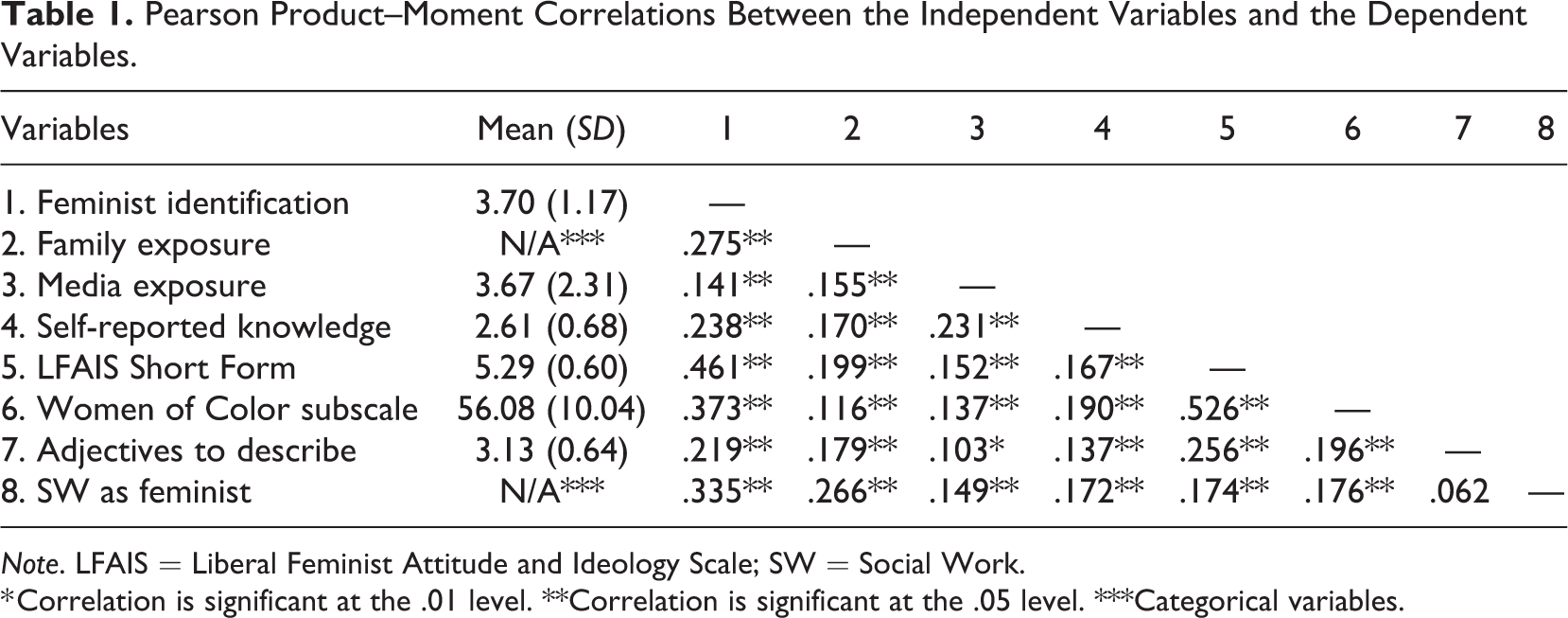
Note. LFAIS = Liberal Feminist Attitude and Ideology Scale; SW = Social Work.
* Correlation is significant at the .01 level. **Correlation is significant at the .05 level. ***Categorical variables.
Method of exposure
Two areas of exposure, familial and media, were explored. Familial exposure was measured with an item by Zucker (2004), “Is/was anyone in your family of origin a feminist,” which can be answered with a binary “yes” or “no” response. Media exposure items, developed for this study, were addressed by asking students to endorse in which media sources they have “heard or read the term ‘feminist’” with an answer choice list that included items like “television,” “movies,” and “Facebook.” The summed scale of nine questions resulted in possible scores that ranged from 0 to 9, and responses were summed so that a higher score indicated having been exposed to feminism in more media outlets; Cronbach’s α reliability for the summed scale was adequate (α = .71).
Knowledge/education
This construct was comprised of an item by Munson and Hipp (1998) about self-reported knowledge, “Please indicate your knowledge of feminism.” A Likert-type response was requested ranging from “none” to “substantial” with scores ranging from 1 to 4.
Feminist attitudes and ideologies
This construct was measured first by the short form of the Liberal Feminist Attitude and Ideology Scale (LFAIS; Morgan, 1996). The items comprising this scale, such as “A woman should have the same job opportunities as a man,” were rated on a 6-point scale from strongly disagree to strongly agree. A mean score was utilized with a theoretical range from 1 to 6, but in this sample, the scores ranged from 2.70 to 6.00. Both the initial study (Morgan, 1996) and the current study had a Cronbach’s α of .81.
Additionally, the Women of Color subscale of the Feminist Perspectives Scale was utilized and asked students to endorse their agreement with items like “Women of color are oppressed by white standards of beauty” from strongly disagree to strongly agree on a 7-point scale. This scale is summed, and possible scores ranged from 10 to 70, but in this sample, scores ranged from 19 to 70. The Women of Color subscale had a Cronbach’s α of .88 in the scale development study (Henley et al., 1998). The current study also found high internal reliability with a Cronbach’s α of .87.
Description of feminists
This construct was comprised of two items. The first by Munson and Hipp (1998) is “The social work profession is feminist” that was answered with a binary response. The second measure by Reid and Purcell (2004), a 9-item semantic differential–type scale, asks respondents to “rate the average feminist.” Possible scores for this scale range from 1 to 5, and the scores are averaged. This scale had a Cronbach’s α of .87 when presented by Reid and Purcell (2004). The bipolar adjectives include items like “undesirable–desirable,” “ugly–beautiful,” “masculine–feminine,” and “gay–straight.” In the present study, the Cronbach’s α was similar at .86.
Demographic variables
Several demographic variables were also examined such as sex, age, marital status, income, and social work concentration (micro, macro, generalist, and other). In order to be trans-inclusive, separate variables were utilized to measure sex at birth and current gender identity. Sex at birth, but not gender identity, was significantly correlated with feminist identity and therefore was included in the current model. The demographic variables worked to better assess how the independent variables predict feminist self-identification, through, when applicable, acting as control variables.
Data analysis
Data from the online surveys were imported to Statistical Package Social Sciences (SPSS, Version 22) for analysis. Descriptive statistics of the participants’ characteristics were analyzed. Internal consistency and reliability were computed using Cronbach’s α for the scales. Standard multiple regression was used to assess the ability of the outlined constructs to predict feminist identity. Preliminary analyses were conducted to ensure no violation of the assumptions of normality, linearity, multicollinearity, and homoscedasticity. One-way between-groups analysis of variance (ANOVA) and χ2 tests for independence were utilized to assess the relationship among demographic characteristics and the dependent variable, feminist identification, and to assess possible differences in demographic characteristics.
Results
The participants identified as 56% non-Hispanic white, 24% Hispanic, and 21% African American. (See Table 2 for an overview of demographic characteristics.) The average age of the sample was 31 years (SD = 9.18) and was 90% female and 11% male (percentages rounded). The gender balance among MSW students is similar to the overall MSW population with about 14% of MSW students as male (CSWE, 2015). Most students reported their marital status as “single” at 56%, while 35% endorsed being married, and 10% were divorced or separated. Of these demographic characteristics, only sex (p = .04) and marital status (p = .01) were significantly correlated with feminist identification and therefore were included in the multiple regression model as control variables. For parental educational attainment, there was a significant difference with parents of non-Hispanic white students having achieved higher levels of education than parents of Hispanic or African American students (p = .01). Therefore, parental education status was also included in the multiple regression model as a dichotomous control variable, college degree or higher and less than a college degree.
Demographic Characteristics and Differences Between Racial/Ethnic Groups.
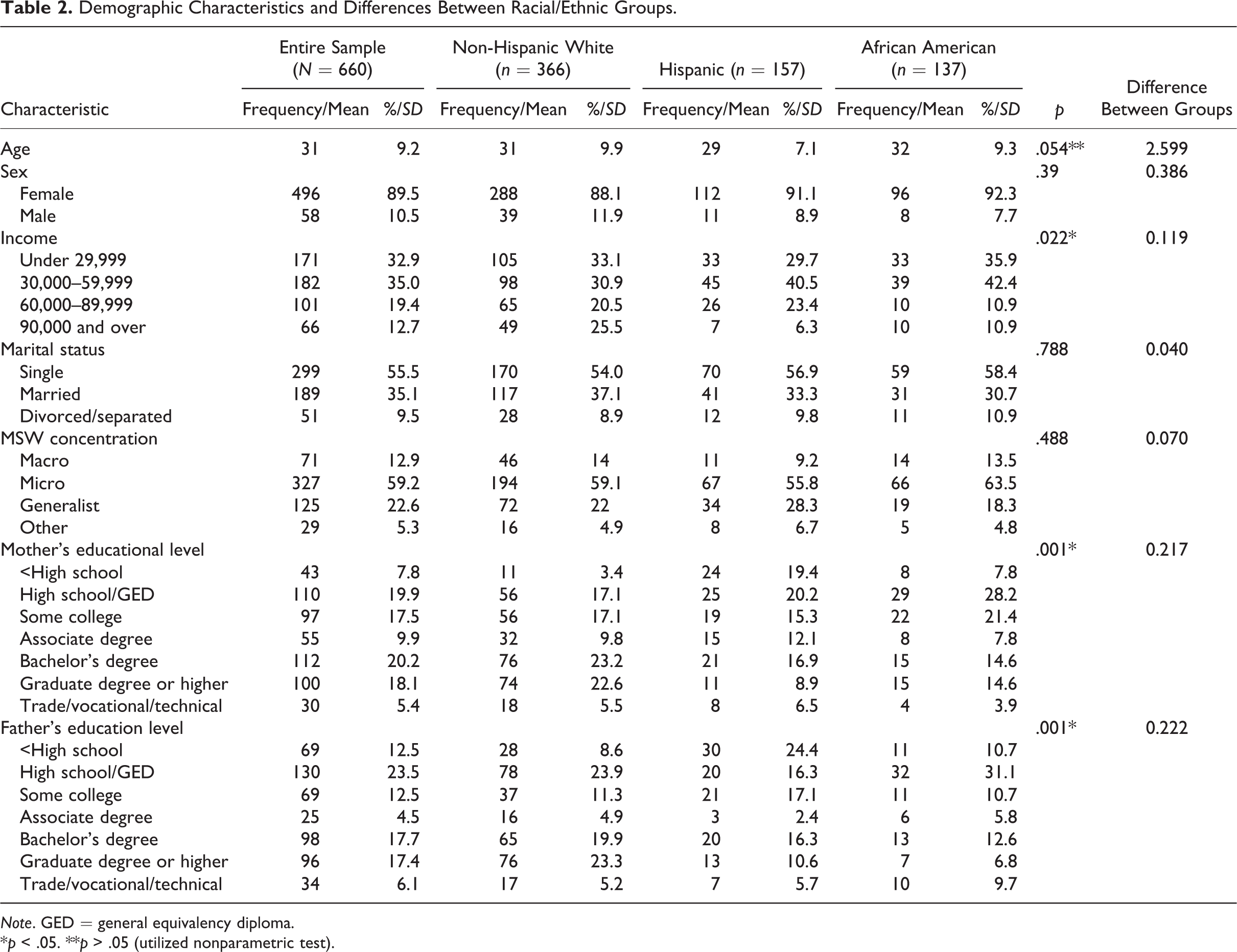
Note. GED = general equivalency diploma.
*p < .05. **p > .05 (utilized nonparametric test).
Feminist Identity
In the present study, when asked to rate the statement, “I am a feminist,” 29% of MSW students indicated that they strongly agreed, 33% indicated that they somewhat agreed, 23% neither agreed nor disagreed, 7% somewhat disagreed, and 7% strongly disagreed. In sum, 62% of students endorsed a feminist identity to some extent. Among non-Hispanic white students, 69% were feminist; among Hispanic students, 59% were feminist; and among African American students, 48% were feminist. (See Table 3 for feminist identity in the entire sample and by race/ethnicity.)
Feminist Self-Identification Among Entire Sample and by Studied Racial/Ethnic Group.
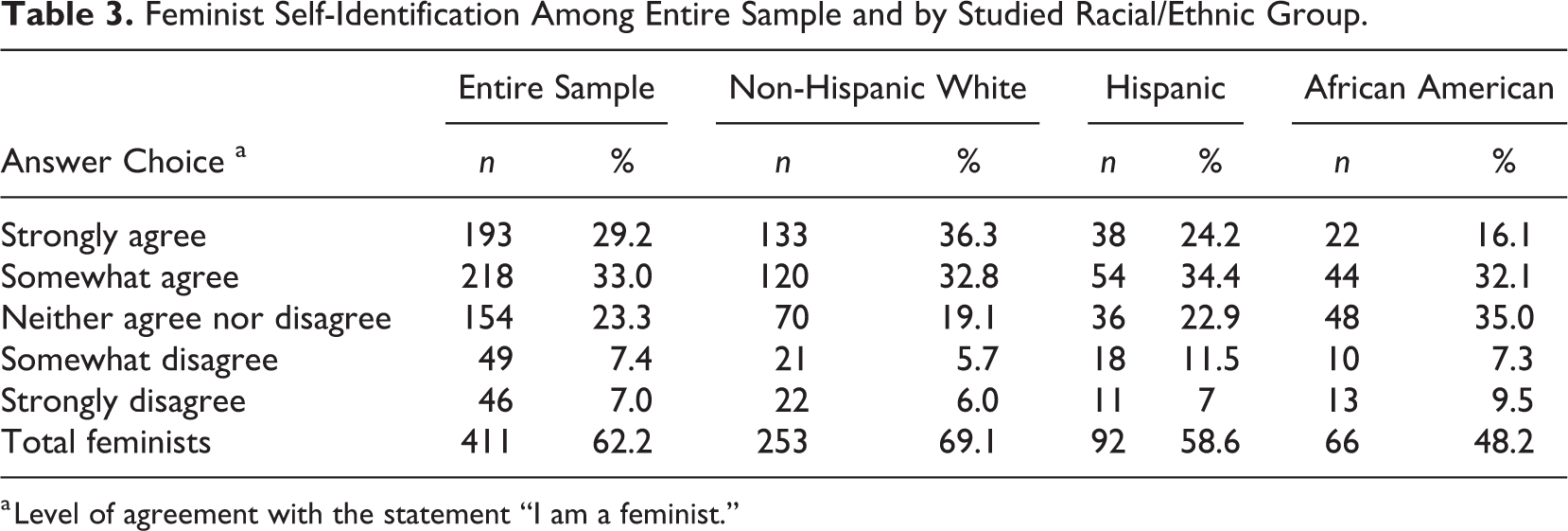
a Level of agreement with the statement “I am a feminist.”
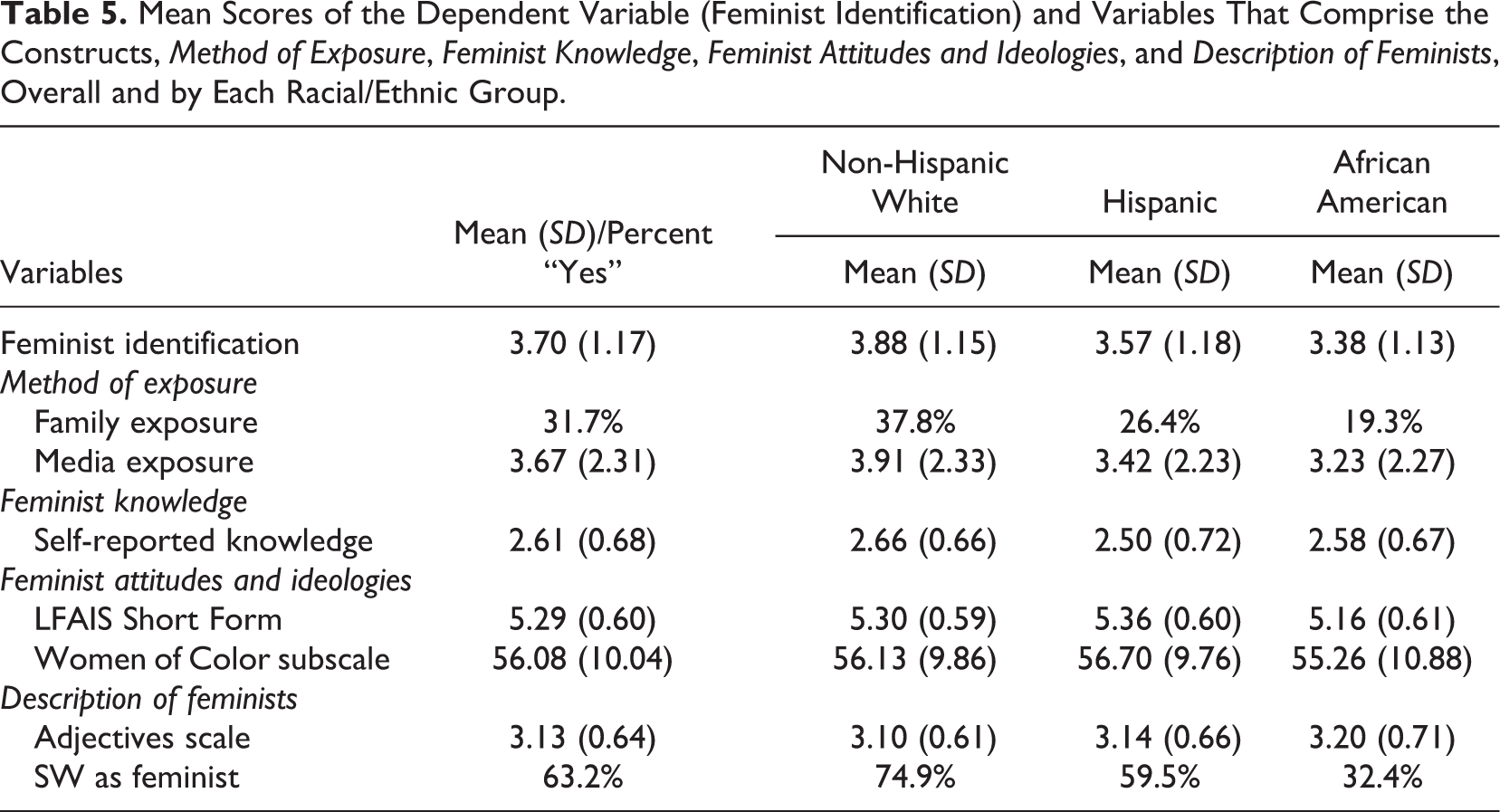
A one-way between-groups ANOVA was conducted to explore the relationship of race/ethnicity with feminist identity. There was a statistically significant difference in feminist identity scores at the p < .05 level among the three groups, F(2, 657) = 10.6, p = .01. Despite reaching statistical significance, the actual difference in mean scores among these groups is small (Cohen, 1988). The effect size, calculated using partial η2, was .03. Post hoc comparisons using the Tukey Honestly Significant Difference (HSD) test indicated that the mean score for the non-Hispanic white students (M = 3.88, SD = 1.15) was significantly higher than the Hispanic group (M = 3.57, SD = 1.18) and the African American group (M = 3.38, SD = 1.13). However, the Hispanic group and African American groups did not differ significantly from each other. Therefore, consistent with my first hypothesis that differences in racial and ethnic groups would be present, non-Hispanic white MSW students were more likely to identify as feminist than Hispanic and African American students.
Alternate Feminist Identities
In this study, 17% of non-Hispanic white, 19.1% of Hispanic, and 20% of African American respondents endorsed being a “womanist.” Among African American students, 39% reported being “black feminists” (while 1% of non-Hispanic whites and Hispanic respondents identified as black feminists). Almost a third of Hispanic students (30%) identified being Chicana or Latina feminists. (One percent of non-Hispanic white students and zero African American students called themselves Chicana or Latina feminists.) A much smaller portion of Hispanic students identified as feminists of color (13%), and a smaller portion of African American students identified as feminists of color (18%). Less than 1% of non-Hispanic white students called themselves feminists of color. (Please see Table 4 for an overview of alternate feminist identities.)
Alternate Forms of Feminist Identity.
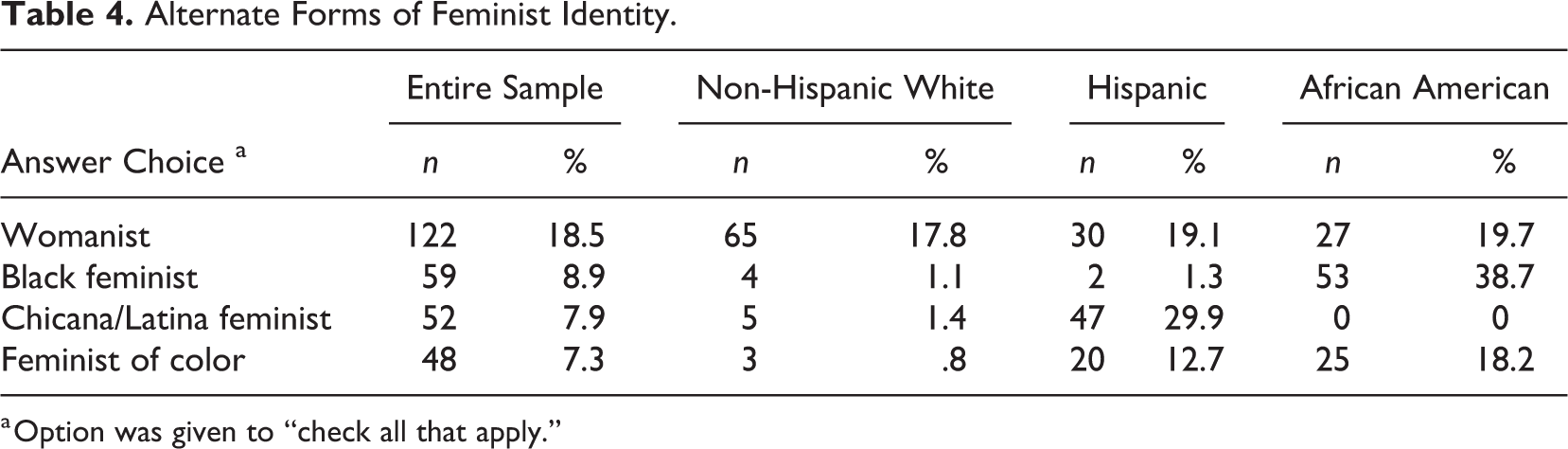
a Option was given to “check all that apply.”
Demographic Variables
Four demographic variables, sex, marital status, and parental education attainment (mother and father) were included in the regression model because they were significantly correlated with feminist self-identification or because they were significantly different among the racial/ethnic groups. In the overall model, only the variables that comprise marital status made a uniquely significant contribution to feminist identity (married was β = −.11, B = −.27, p = .004, and divorced was β = −.08; B = −.33, p = .031), indicating that single students were more likely to claim a feminist identity than married or divorced students. Similarly, when applied to the non-Hispanic white sample, it was again found that the variables that comprise marital status made a uniquely significant contribution to the dependent variable (married was β = −.17, B = −.41, p = .001, and divorced was β = −.10, B = −.40, p = .047), again suggesting that single students were more feminist. For the Hispanic sample, of the control variables, sex made the only uniquely significant contribution (β = −.19, B = −.76, p = .034) to feminist identity, indicating that those born as female were more likely to identity as feminist. Finally, for the African American sample, none of the control variables made a uniquely significant contribution.
Preliminary analyses: Predicting constructs applied to overall sample and to each racial/ethnic group
Seven independent variables comprise the four constructs explored in the study. (Please see Table 5 for the mean scores of the independent variables and the primary dependent variable overall and by racial/ethnic group.) The construct method of exposure is comprised of family and media exposure variables. Familial exposure had a binary yes/no response set, and in the overall sample, 31.7% endorsed having a feminist family member. For media exposure, the overall mean was 3.67 of a possible 0–9. The construct feminist knowledge is comprised of the variable, self-reported knowledge, and the overall mean score was 2.61 of a possible 1–4. Feminist attitudes and ideologies consists of the LFAIS Short Form and the Women of Color subscale. The overall mean for the LFAIS Short Form was 5.29 of a possible 1–6. The overall mean for the Women of Color subscale was 56.08, with a possible range of 10–70. The last construct, description of feminists, contains two variables, an adjectives scale and whether social work is feminist. The overall mean score for the adjectives scale was 3.13 of a possible 1–5 range. The social work is feminist variable was measured with a binary yes/no response, and 63.2% responded that social work is feminist.
Mean Scores of the Dependent Variable (Feminist Identification) and Variables That Comprise the Constructs, Method of Exposure, Feminist Knowledge, Feminist Attitudes and Ideologies, and Description of Feminists, Overall and by Each Racial/Ethnic Group.
Testing research questions
It was hypothesized that four constructs, method of exposure, feminist knowledge, feminist attitudes and ideologies, and description of feminists, would work to predict feminist identification. Preliminary analyses were conducted to ensure no violations of the assumptions of normality, linearity, multicollinearity, and homoscedasticity. Findings indicate that when applied to the overall sample, this model explains 34.6% of the variance in feminist self-identification, F(12, 492) = 21.65, p = .001. When applied to the non-Hispanic white sample, this model explains 38.7% of the variance, F(12, 292) = 15.36, p = .001; when applied to the Hispanic group, it explains 35.5% of the variance, F(12, 91) = 4.12, p = .001; and when applied to the African American group, it explains 29.8% of the variance, F(12, 75) = 2.66, p = .005.
In the overall sample, each of the four constructs made unique contributions to the model, and one of the items that comprised feminist attitudes and ideologies, the LFAIS Short Form, made the biggest contribution to explaining feminist self-identification (β = .28, B = .54, p = .001), indicating that holding feminist attitudes and ideologies was the most related to feminist identity. When applied to the non-Hispanic white group, method of exposure, feminist attitudes and ideologies, and description of feminists made unique contributions to the dependent variable, and similar to the overall sample, the LFAIS Short Form made the biggest contribution to explaining feminist self-identification (β = .36, B = .69, p = .001). For the non-Hispanic white sample, feminist knowledge or seeing oneself as being knowledgeable about feminism did not make a uniquely significant contribution. As with the whole sample, for this subsample, holding feminist attitudes and ideologies was most associated with feminist identity.
For the Hispanic group, only one construct, feminist attitudes and ideologies, made a unique contribution to the model, with the Women of Color subscale (β = .26, B = .03, p = .006) making the biggest contribution to explaining feminist identity. Therefore for the Hispanic group, variables that comprised the other three constructs such as exposure to feminism through family and the media, feminist knowledge, and describing feminists in a negative or positive way were not uniquely associated with feminist identity. Holding feminist attitudes and ideologies made the biggest uniquely significant contribution to feminist identity.
Finally, for the African American group, method of exposure and description of feminists made unique contributions to the model, with one of the items that comprises description of feminists, seeing social work as feminist, making the biggest contribution (β = .25, B = .61, p = .015). Therefore for the African American group, seeing social work as feminist made it more likely to hold a feminist identity. For this subsample, holding feminist attitudes and ideologies and perceiving oneself as holding feminist knowledge did not make uniquely significant contributions to the model.
Discussion
Findings from this study indicate that social work students indicate a higher level of feminist identity than previously reported and that there are significant differences in feminist identification by race/ethnicity, with non-Hispanic white students more likely to endorse a feminist identity than Hispanic and African American students. Further, these findings indicate that predictors of feminist identity vary by race and ethnicity. When applied to the overall sample, it seems that all of the constructs, method of exposure, feminist knowledge, feminist attitudes and ideologies, and description of feminists, make significant contributions to predicting feminist identity. In other words, how one is exposed to feminism, such as through family members; whether one sees themselves as being knowledgeable about feminism; whether one holds feminist ideals; and whether one described feminism in a positive or negative manner or sees social work as being feminist contribute to feminist identity. However, among each racial/ethnic subgroup, differing constructs are significant. The following paragraphs will discuss these findings and the relevance for social work education.
Feminist Identity
In the overall sample, as well as the non-Hispanic white and Hispanic samples, students endorsed higher rates of feminist identification than had been previously found among MSW students (Charter, 2015; Munson & Hipp, 1998; Vinton, 1992). Among the African American students, feminist identity was similar to previous studies, though these studies did not differentiate feminist identity by race (Charter, 2015; Munson & Hipp, 1998).
It is possible that variations in how questionnaire items are posed might influence responses with binary response choices producing lower feminist identity (e.g., ABC News/Washington Post, 2009; Harvard Institute of Politics, 2016), and longer sets of answer choices may result in higher rates of feminist identity (e.g., Cai & Clement, 2016). However, Charter (2015) utilized a broad set of response choices garnering a 42% feminist identification rate among MSW students in 2012 and in the present study, while a different question was used, several answer choice options were given, and the rate of feminist MSW students increased to 62%, suggesting that another factor may be influencing feminist identity. It is possible that a recent resurgence of feminism in popular culture, including celebrities like Beyoncé Knowles-Carter and Hillary Clinton claiming feminist identities, may account for some of the increase in feminist identity. However, given that this sample was different in many ways than the previous study, including the location of the MSW programs, there are many possibilities for the discrepancy in feminist identity.
As noted, the rates of feminist identification were significantly higher for non-Hispanic white students than for Hispanic or African American students. It is possible that the social location of women of color may create ambivalence about feminism because feminism has historically excluded women of color. The exclusion of women of color within feminism is a clear example of the importance of intersectionality and how power and privilege can be maintained within oppressed groups, like women. The lack of inclusion of women of color in the women’s movements may have caused many women of color to assume that the term “feminist” is not applicable to them but rather is a term used for white women (Collins, 2000; Moradi, 2005).
Another reason that women of color may not be inclined to claim a feminist identity is because they may have felt tension between their racial/ethnic identity and their gender. For African American women, supporting feminism may be seen as being at odds with African American men (Collins, 1996). The term “womanist” or the term “black feminist” may feel more appropriate for some black women (Collins, 1996). My findings indicate that there may be confusion among MSW students around the term “womanist,” given that almost as many non-Hispanic white and Hispanic students as African American students claimed a womanist identity. Moreover, African American students were more likely to claim a “black feminist” identity (38.7%) than a “womanist” identity (19.7%).
Hispanic women may have also felt tension between their gender and their race/ethnicity (Roth, 2004). Chicana feminism, which was developed during the Chicano movement, allowed Mexican American women a political identity that not only moved away from the largely non-Hispanic white feminist movement but also refused to allow the status of women to be subsumed by the Chicano movement (Córdova, 1998; Roth, 2004). For some Hispanic women, the terms “Chicana feminist” and/or “Latina feminist” may feel more suitable because these account both for gender and racial/ethnic identity. In the present study, almost 30% of Hispanic students endorsed a Latina/Chicana feminist identity. For both Hispanic and African American students, the term “feminist of color” was endorsed far less often than the more specific “black feminist” and “Latina/Chicana feminist” identity, indicating that specific feminist identities may have more resonance. Simply put, feminist identification may be more complicated for women of color because of their dual status in oppressed groups (Collins, 1996; Flores et al., 2006). It is essential to continually interrogate privileges and power dynamics that arise from social location in order to ensure that feminists and feminist movements are inclusive of women of color.
Method of Exposure
When applied to the sample as a whole, the non-Hispanic white sample, and the African American sample, method of exposure was found to uniquely and significantly contribute to feminist identification. As mentioned, how students are exposed to feminism may influence their feminist identification, and this seems to be the case for the entire sample, the non-Hispanic white sample, and African American sample but not the Hispanic sample. Notably, being exposed to feminism through family, not the media, appears to be significant in predicting feminist identification. In terms of exposure to feminism through familial means, these findings are consistent with previous literature, where daughters who perceive their mothers as being feminist were more likely to self-identify as feminist (Nelson et al., 2008), and self-identified feminists are more likely to indicate having had a feminist in their family (Zucker, 2004).
However, the finding that, for Hispanic students, familial exposure may not be significantly predictive of feminist identification is a departure from these findings and may reflect ambiguity that has been previously documented in relation to family and feminist identity. For example, among social work students, Vinton (1992) found that student support for feminism was not correlated with parental disapproval of feminism. Moreover, while there appears to be little research indicating whether familial exposure to feminism differs by race/ethnicity, some research has examined general familial differences but findings are inconsistent. In a study of Latina adolescents, feminism was more strongly endorsed among girls whose mothers did not work, which contradicts previous findings that girls with mothers who stay at home tend to hold more traditional attitudes (Manago et al., 2009), though these findings may also be connected to issues of class. It could be that the impact of being exposed to feminism through familial means could have differing influences on feminist identification among social work students of different races/ethnicities.
For all groups studied, media exposure was not found to uniquely and significantly influence feminist identification. However, in this study, media was defined not only as traditional forms of media such as television and newspapers but included forms of social media as well, such as Facebook and Twitter. There does not seem to be existing literature that systematically examines feminist portrayal among modern platforms including social networking sites, though some authors have suggested that social media may improve access to feminism and promoting inclusivity for young women (Crane, 2012).
Feminist Knowledge
Findings indicate that feminist knowledge, as measured by self-report, was significant in predicting feminist identity within the entire sample but lost significance when applied to the racial/ethnic subgroups. The findings that knowledge is not significant among the racial/ethnic subgroups are consistent with a recent study that found that knowledge was not significant in predicting feminist self-identification (Charter, 2015) but may contradict previous findings that indicate that taking a women’s studies course is associated with higher rates of feminist self-identification (Nelson et al., 2008). However, another recent study found that even after gaining feminist knowledge though participating in a women’s studies course, students remained unwilling to identify as feminist because they were aware of the stigma associated with feminism (Dyer & Hurd, 2016). It could be that even when students are knowledgeable about feminism, they avoid a feminist label because they fear others will make negative assumptions about them.
Feminist Attitudes and Ideologies
The feminist attitudes and ideologies construct was significant for the overall sample, the non-Hispanic white sample, and the Hispanic sample but not for the African American sample. These findings, which indicate the extent that respondents endorse feminist ideals, are partially consistent with a recent study (of mostly non-Hispanic white students) that found that feminist attitudes and ideologies was the strongest predictor of feminist self-identification among MSW students (Charter, 2015). The Liberal Feminist Attitude and Ideology subscale, which measures feminist ideals from a liberal feminist perspective, was the most predictive variable in this model for the overall sample and the non-Hispanic white sample. While it was also significant for the Hispanic sample, it was the Women of Color subscale that was most predictive. As indicated by SIT, these findings make logical sense because shared ideologies and attitudes should correspond to increased group identification.
However, the fact that feminist attitudes and ideologies were not predictive of feminist identity among African American students was interesting. Several studies have indicated that while many people tend to endorse feminist attitudes and ideologies, they are also hesitant to self-identify as feminist. For example, college students have been found to support “covert” feminism (Burn, Aboud, & Moyles, 2000), suggesting that while feminist attitudes and ideologies may be important to feminist self-identification, factors such as stigma may be preventing feminist self-identification (Charter, 2015). Further, as indicated by an intersectionality framework, “identities are couched within status and power relations” (Warner, 2008, p. 455), and one’s social identity is often related to one’s experience of oppression (Collins, 2000; Crenshaw, 1989). It is possible that for African American students, feminist identity is not as straightforward as holding feminist beliefs and therefore calling themselves feminists; experience and identity may be multilayered and, as mentioned above, may be more complicated for African American students.
Description of Feminists
Description of feminists was significant in predicting feminist identity for the overall sample, the non-Hispanic white sample, and the African American sample but not the Hispanic sample. As mentioned, this construct consisted of two variables: one examining adjectives used to describe feminists and one that required respondents to indicate whether “social work is feminist.” In the overall sample, the adjectives variable was a significant predictor, indicating that in the overall sample, whether one saw feminists in a positive or negative manner was related to feminist identity, consistent with previous findings (Charter, 2015; Reid & Purcell, 2004).
However, for the non-Hispanic white and African American samples, seeing social work as feminist was a significant predictor while adjectives used to describe feminists was not. SIT suggests that identifying with a social group “tells us both who we are and who we are not” (Spears, 2011, p. 203). Therefore, it could be that when study participants indicate that social work is feminist, they may be more likely to see themselves as belonging to the feminist group. As mentioned, for Hispanic students, description of feminists did not make a unique and significant contribution to feminist identity. Some research has indicated that most respondents tended to see feminists as not being like them (Twenge & Zucker, 1999). It could be that Hispanic students’ descriptions of feminists may not correlate with their feminist identity, if they tend to see feminists as being part of a separate group.
Implications for Social Work Education
This study provides a clearer picture of what factors may contribute to feminist identity among MSW students, and an important general finding is that feminist identity differs among racial and ethnic groups. Much previous research has missed the opportunity to explore these differences, and therefore, findings were more likely to mirror feminist identity among non-Hispanic white people because this group tends to be more highly represented in study samples. The current finding that feminist identity predictors, which are based in the existing literature, are more relevant for the non-Hispanic white sample supports this supposition.
The findings here provide a jumping-off point for intersectional education around feminism that acknowledges that experiences, understandings, and identification with feminism will likely vary depending on one’s social location and particularly one’s racial and ethnic location. By including this knowledge when exploring feminism and feminist social work in an educational context, feminist social work educators can begin to work toward an anti-racist stance by “learning about black perspectives” as indicated by Dominelli (2018) and by refusing to assume that the experiences of students of color are the same as non-Hispanic white students.
Educators in schools of social work can increase the prominence of feminism by carefully listening to the experiences of students of diverse backgrounds, by examining the limitations of the feminist movements especially as related to women of color, and by refusing to assume that feminist identity is experienced similarly across students of differing social locations. This could be a beginning point for social work students from a variety of backgrounds and social locations to consider whether a feminist identity is one they would like to endorse. As noted at the beginning of this article, feminists are more likely to collectively act to increase the status of women (Liss et al., 2001; Nelson et al., 2008; Yoder et al., 2011; Zucker, 2004), and feminist social workers with an intersectional perspective may be better able to identify how social location influences experiences of power and oppression in their personal and professional lives.
Limitations
While this study seeks to utilize an intersectional framework, quantitative research does not lend itself easily to addressing all elements of identity. While class was briefly addressed in this survey, ethnic/racial identity was the focus. This study was cross-sectional and nonexperimental, and therefore, causal factors cannot be established. In the interest of gaining large number of participants from each studied racial/ethnic group, purposive sampling and snowball sampling were employed; therefore, this study is not generalizable. Participants were included who endorsed being non-Hispanic white, Hispanic, or African American because these groups are the most prevalent in MSW education. Participants who endorsed other racial/ethnic groups or multiple racial/ethnic groups were not included, which also limits generalizability and cannot account for the likely differences that may exist in racial/ethnic groups not included here. It is possible that those who are more passionate about feminism may have elected to take the survey, creating response bias.
Future research
In future research, it will be important to enhance knowledge about the experiences and perceptions of those who adopt a feminist identity or not, especially among students of color; a qualitative study may provide a platform for the voices of students of color to be more fully heard. This could lead to more specifically defining factors that lead to feminist identity among students of color. Moreover, establishing whether social work students who identify as feminist do indeed engage in feminist behaviors and practices could better establish a connection between identity and behavior among MSW students and could attend to the unique roles of social workers and whether feminist identity leads to engaging in feminist social work practice.
This study did not include questions about anti-racism educational exposure or anti-racist/racist identity, and future research could establish these factors could be integral in better situating feminist identity as related to race. While social work education around anti-racism has been found to be successful in increasing awareness around racism (Singh, 2019), a systematic review of literature of race and ethnicity social work education indicates that better research is needed to ensure that student learning and awareness around race is achieved (Olcoń et al., 2020). Future research that examines exposure and knowledge of racism, racist/anti-racist identity, and other forms of oppression including heterosexism, classism, and cissexism could provide important understandings around feminist identity.
Conclusion
It is clear that race and ethnicity relate to feminist identity, and these findings suggest that when engaging in social work education around feminism, educators must be cognizant of how intersecting identities, especially racial and ethnic identity, may influence the perception of feminism. Moreover, because feminist identity has largely been studied in groups where race and ethnicity have not been considered, more research is needed to identify additional factors that contribute to feminist identity. Better understanding of the factors that may contribute to identifying as feminist may indicate how social work students understand and perceive feminism as well as possible areas of educational growth for social work students around feminism and the intersectional nature of oppression.
Footnotes
Declaration of Conflicting Interests
The author(s) declared no potential conflicts of interest with respect to the research, authorship, and/or publication of this article.
Funding
The author(s) received no financial support for the research, authorship, and/or publication of this article.
