




Abstract
This study examines the post-incarceration housing experiences of 33 women. Using Residential Timeline Followback methodology, participants were asked to report where they lived at arrest and every location since their release. Follow-up questions asked women to describe these locations, who they lived with, how much they paid, and whether or not they felt safe. Demographic information and criminal justice history were recorded. The data paint a complicated picture of social and community resources, persistence, and struggle. Housing assets lost at incarceration were difficult to recover. Most women bounced between various locations, relying heavily on short-term subsidized congregate housing programs and rarely securing independent housing. Participants described the family, friends, and acquaintances who housed them during reentry as overextended and vulnerable. Implications for policy and practice are explored.
Globally, the United States (US) has the highest rate of incarceration with over 2 million people behind bars, 95% of whom will eventually be released (Hughes & Wilson, 2019; Kaeble & Cowhig, 2018). Every year, approximately 600,000 individuals return to the community from state prisons (Hughes & Wilson, 2019). Formerly incarcerated people, who are disproportionately low-income and racial minorities, face myriad challenges (Hall et al., 2016; Mauer & King, 2007). The prison experience can weaken social ties and exacerbate problems of interpersonal violence, unemployment, housing insecurity, and illness (Bosworth, 2010; Clear, 2007; De Giorgi, 2017; Mauer & Chesney-Lind, 2002; Travis & Waul, 2003; Western et al., 2015). At the same time, the persistence and resourcefulness of this population, their social networks, and community-based organizations support their reentry success (Chaney, 2011; Lee et al., 2016; Maruna, 2001).
Women and Reentry
There are over 200,000 women incarcerated in the US (Sentencing Project, 2019). While the majority of women in prison are White, women of color are disproportionately represented (Mauer, 2013). Formerly incarcerated women are less likely to be the subject of corrections and reentry research because the overwhelming majority of people who are confined, arrested, and surveilled by criminal legal systems 1 are male (Braithwaite et al., 2005). When reentry studies include both men and women, the small number of female participants relative to male participants often means that the impact of gender on outcomes cannot be determined (e.g., Bahr et al., 2005; Hamilton et al., 2015; McNeeley, 2018). More knowledge about women’s specific experiences of reentry is needed to inform the development of programs and policies because feminist theory suggests that gender matters: Service needs and experiences at reentry vary by gender, and programs and policies designed for one gender may not be responsive to another (M. Brown & Bloom, 2009; Covington & Bloom, 2007; Huebner & Pleggenkuhle, 2013; Spjeldnes & Goodkind, 2009).
Women’s pathways in and out of lawbreaking are relational, that is, strongly shaped by the dynamics of their relationships with intimate partners, children, family, and friends (Michalsen, 2018). For example, heterosexual marriage, which has been associated with positive outcomes for formerly incarcerated men, has not proven to be consistently beneficial to formerly incarcerated women (Huebner & Pleggenkuhle, 2013). The fact that 75%–95% of incarcerated women are survivors of family and/or intimate partner violence (Zust, 2009) is critical to understanding women’s perceptions of home life and safety planning needs. In addition, concerns about their children have proved to be “uppermost in the minds of reentering women” with the potential to fuel motivation or despair (Brown & Bloom, 2009, p. 314). While women imagine reunifying with their children at release, this vision is not always realized: A study of 188 formerly incarcerated women with minor children found that just under half of them were reunited with these children at release (Brown & Bloom, 2009). Knowledge about these gender-specific pathways can inform the development of reentry programs and policies that support women’s capacity to negotiate the relational dynamics produced by marriage, interpersonal violence, trauma, and motherhood (Michalsen, 2018).
Housing and Reentry
Among the various challenges faced by formerly incarcerated people, housing is one of the most pronounced (see LeBel, 2017, for review). Research has demonstrated an association between secure, stable post-release housing and positive psychosocial outcomes, including employment, physical health, and lower rates of recidivism (Clark, 2016; Geller & Curtis, 2011; Hamilton et al., 2015; Pleggenkuhle et al., 2016). In spite of the evidence that housing improves health and psychosocial outcomes and reduces correctional costs, efforts to connect formerly incarcerated people to secure, stable housing are inhibited by various individual (e.g., lack of income, unemployment, poor credit history, mental health problems), social (e.g., perception of formerly incarcerated people as undeserving of support and/or less deserving than other low-income people, stigma, parole restrictions), and structural issues (e.g., poverty, neoliberal policies that restrict resources, including rental subsidies, for low-income people), (De Giorgi, 2017; Dum et al., 2017; Grossi, 2017; Hamilton et al., 2015; Keene, Rosenberg, et al., 2018; Leasure, 2019; LeBel, 2017; Visher & Bakken, 2014). Unable to secure their own housing, formerly incarcerated people may turn to family and friends for shelter; however, these doors are not always open. Some people end up living in the streets or other public areas not designed for sleeping (Roman & Travis, 2004).
Social and Structural Issues
Formerly incarcerated people encounter additional structural challenges related to their criminal legal status, on top of the housing access and instability issues faced by all low-income people. For example, stigma and local housing policies can be a barrier to housing (Kubrin & Stewart, 2006; Western et al., 2015). In the private markets, formerly incarcerated people must negotiate the bias and discretion of property managers and landlords, and public housing policies may explicitly prohibit formerly incarcerated people from living in subsidized housing (Curtis et al., 2013; Keene, Rosenberg, et al., 2018; Purtle et al., 2020). Unfortunately, the inability to secure housing after release only further compounds the stigma that formerly incarcerated people experience upon reentry (Keene, Smoyer, et al., 2018).
Judicial restrictions and parole stipulations may also dictate where and with whom people can live (Western et al., 2015). For people released on parole, halfway houses run by the Department of Corrections can offer transitional housing and supportive services. However, this housing is not always available and, if it is, it is temporary and reaching a permanent home from these places, which are often located in underresourced neighborhoods, can be a challenge (Roosevelt, 2018). People who leave prison without parole supervision may be able to access subsidized congregate housing programs, especially if they are managing addiction or mental health issues (LeBel, 2017). But again, these programs tend to be located in neighborhoods with high rates of lawbreaking activity and limited employment opportunities, so they may not lead to long-term solutions. Indeed, contextual and neighborhood factors (i.e., local housing policies, zoning regulations, and institutional resources) impact the quality and availability of these post-incarceration housing opportunities (Kubrin & Stewart, 2006).
Family and Friends
Formerly incarcerated people who are unable to secure and maintain their own independent living situation may consider living with family or friends. The homes of female family (i.e., sisters and mothers) or intimate partners (i.e., spouse, girlfriend, and boyfriend) are a common destination for people leaving prison, especially men (Huebner & Pleggenkuhle, 2013). However, if these family and friends are living in subsidized units, policy may prohibit reentrants from living with them and even when regulations allow formerly incarcerated people to cohabitate with family in subsidized units, anxiety about creating additional burdens for loved ones may prevent people from accessing these resources (Keene, Rosenberg, et al., 2018). In addition, these personal resources are often overextended and longitudinal data suggest that, over time, utilization of this option decreases (Western et al., 2015). Older people with longer histories of incarceration and people who are living with chronic addiction or mental health issues are less likely to live with family, even for a short period of time, because their family’s willingness or ability to assist has been depleted (Western et al., 2015). Finally, conditions of release may prohibit people on parole or probation from interacting with people who have been convicted of a crime, making it impossible for reentrants to live with friends or family who have criminal legal backgrounds (Clear, 2007).
Women, Housing, and Reentry
Improving women’s access to housing at reentry requires attention to how gender impacts the individual, interpersonal, and structural determinants of housing instability (Willison & O’Brien, 2017). A 2009 review of the reentry literature summarized the psychosocial and health differences between men and women (Spjeldnes & Goodkind, 2009). Women are more likely than men to have grown up in “dire circumstances,” have family members who are involved in the criminal legal system, and have substance use issues that were “sparked by life crises” (Spjeldnes & Goodkind, 2009, pp. 318–319). Women report more physical and mental health problems and have less formal education and employment experiences than men (Spjeldnes & Goodkind, 2009).
Social and Structural Issues
Women also face a particularly harsh gendered stigma related to their criminal legal involvement, compared to their male counterparts. For example, the intersecting stigmas of drug use, incarceration, race, and gender present a tremendous challenge for formerly incarcerated women (Van Olphen et al., 2009). While men can tell a story of their lawbreaking behaviors (i.e., drug dealing and violent crime) and incarceration that reinforces their masculine identity and strength, women may struggle to construct positive self-narratives from the stories of abuse, victimization, and sex work that led to their detention (Brown-Long & Mauger, 2020; Burton & Lynn, 2017; Senghor, 2017). Systemic violence against women, racism, and economic inequality also rationalize narratives about formerly incarcerated women as undeserving of support (Willison & O’Brien, 2017). In addition, while there is an increase in violent crime by women, especially related to domestic violence, female offenders are primarily convicted of nonviolent drug and property crimes (Spieldnes & Goodkind, 2009). The fact that women comprise a small minority (7%) of incarcerated individuals (Carson, 2020), combined with the perception that they are undeserving of support and less dangerous than men, reduces the urgency of reentry services for women. A study of the 10 largest cities in the US found that “reentry programs do not sufficiently meet the needs of post-incarceration women” including, but not limited to, housing needs (Scroggins & Malley, 2010, p. 160).
Family and Friends
Access to informal sources of housing support from family, friends, or intimate partners also varies by gender. For one, many women have experienced interpersonal and domestic violence in their childhood and adult homes (Jones et al., 2018), so the prospect of returning to these places may not feel safe. Two, children may complicate women’s housing opportunities. Many more women (64%) than men (44%) report living with their children prior to incarceration (Mumola, 2000). When a woman is incarcerated, the most common scenario is that her relatives will care for her children (Mulmola, 2000). This is very different from men who are most likely to leave their children with the child’s mother (Mulmola, 2000). The fact that a woman’s relatives are caring for her children can make it difficult for her to return to her family home (Brown, 2010). She may not be ready to reunite with her children upon release, the home may not be physically large enough to accommodate her, and/or the relatives may feel they do not have the financial resources to support her reentry given their childcare responsibilities. Alternatively, for men, the resources and homes of their relatives may be more available because their children are living elsewhere. In addition, women with children who are seeking to secure their own housing may feel pressure to rent a larger unit that can accommodate their children, increasing their housing costs (O’Brien, 2001).
Three, women are less likely than men to have an intimate partner with stable housing. In low-income communities, women control affordable housing resources: 75% of public housing and project-based Section 8 households are headed by women (Bolton & Bravve, 2012). From this, reentrants who have female sex partners have a greater chance of securing housing through this partnership than reentrants who have male sex partners. While 35%–40% of incarcerated women do identify as lesbian, gay, or report having had sex with women (Meyer et al., 2017), most incarcerated women are heterosexual and have male partners. This situation stands in contrast to formerly incarcerated men: Over 90% of incarcerated men identify as heterosexual (Meyer et al., 2017) and have female partners.
While the challenges to securing housing after incarceration are clear, little is known about where women actually live during reentry. To what extent are women accessing halfway houses and other transitional programs? When they are housed in these programs, where do they go when these temporary solutions end? If they don’t qualify for a transitional publicly funded programs, where do they go? Are families providing housing during reentry? Do their intimate partners have stable housing to share? Are they able to finance their own place? Like many of the experiences of vulnerable, low-income women, the quotidian reality of post-incarceration housing is largely invisible. This project seeks to shine light onto women’s housing trajectories after incarceration in order to inform social work practice and public policy discussions.
Study Methods
The study was conducted in a small urban area in the northeastern region of the US. To qualify for the study, participants must have been released from the state’s only correctional facility for women in the last 12 months. Note that this is a consolidated facility that includes both women who have been sentenced and women being held on pretrial detention. Recruitment and data collection took place at the city’s centrally located reentry service center. In addition, recruitment flyers were distributed to local nonprofit organizations and advocacy groups that provide services to formerly incarcerated people. Individuals who were interested in participating called the phone number on the flyer to make an appointment to meet with study staff at the reentry center. Study staff was also available to meet with women on a “walk-in” basis.
Data Collection
After consent was obtained, the staff-administered interview began with a series of sociodemographic closed-ended questions about dates of last incarceration, age, race/ethnicity, place of birth, number of children, and number of times incarcerated. Next, participants were asked to describe where they were living at the time of the arrest that led to their most recent incarceration. They were asked who they lived with, how much they paid to live there, and if they felt safe in this location. They were then asked to briefly summarize the circumstances of their arrest by describing the original charge, the charge they were actually convicted of, and if the judge set bail, for what amount, and did they bond out. Finally, they were asked whether their case was adjudicated with trial or plea bargain.
This introductory series of questions served several purposes. One, the sociodemographic data were needed to describe the sample. Two, these questions offered an opportunity to build rapport with participants by allowing them to tell their version of the events that led to their most recent incarceration. In our experiences, this is a story that formerly incarcerated women want to tell, and so it is useful to allow it to be shared early on in the interview. Finally, at the time of data collection, our state was involved in public policy discussions about bail reform. Information about their experiences with the bail system helped us to begin building a preliminary understanding of women’s experiences with bail.
Following this introductory segment, staff asked a series of housing questions using the Residential Timeline Followback (TLFB) method (Tsemberis et al., 2007). This method, an adaptation of the TLFB method developed by substance abuse researchers, involves reviewing a printed calendar with each participant in order to spark their memories about the events of a specific time period (Tsemberis et al., 2007). Staff began this process by showing participants a calendar of the last 12 months and circling the day the participant was released from prison and the current date. This time period “since release” was identified as the focus of our inquiry and reviewed with the participant to identify key holidays and personal events (i.e., birthdays, funerals, and special occasions). This identification of key dates helps to spark participants’ memories about the time period. Once the time period under consideration had been articulated and reviewed, the inquiry focused on the day that the woman left prison. Staff asked a series of questions to walk her through that day: Was she expecting to leave on that day? What time was she discharged? How did she leave the facility (i.e., picked up by family or transported in state vehicle)? Where did she sleep that first night out? From there, staff moved through the “since release” time period day by day, using the calendar, to identify the specific places where she lived. For each place, study participants were asked to answer the following questions: Where did you live? (This was an open-ended question. Later, during the data analysis stage, these responses were aggregated into several categories.) Whom did you live with? (i.e., specific family, nonsexual friend, sex partner, or alone). How much did you pay to live at this place? (dollar amount per week or month) Did you feel safe there? (yes/no)
This section of the interview ended with a discussion about their current housing situation (i.e., Where did you sleep last night?). To close the interview, women were asked to describe what resources have been most useful in their efforts to secure housing and what their ideal housing situation would be.
Staff recorded notes about the participants’ responses on a worksheet that was developed specifically for this inquiry. This worksheet listed the open- and close-ended questions in a table form with large space available for staff to record women’s answers. Staff recorded notes on the women’s responses and the data were later coded as nominal quantitative data during the data analysis phase (described below). The interviews, conducted by the first and fourth authors, were not recorded. The survey took about 30 min to administer. Participants received a US$10 supermarket gift card to compensate for their time. The study protocol was reviewed, approved, and monitored by the first author’s university institutional review board.
Data Analysis
After data collection was complete, participant responses, including the demographic data, information about criminal legal history, and the costs (dollar amount) and perception of safety (yes/no response) for each of the participants’ housing locations, were entered into an Excel spreadsheet. In addition, staff notes on the participants’ descriptions of each location were entered. The next step was to code each of these unique location descriptions into mutually exclusive exhaustive categories. The first and third authors read through all of the descriptions in order to create categories. Ultimately, six categories were created that captured all of the participants’ responses: Own housing: When participant owned property or signed lease or housing contract and paid rent. May or may not receive a subsidy to help pay for the rent or mortgage. Family’s housing: Biological or chosen (i.e., mother, father, grandparent, sibling, adult child, aunt, uncle, and cousin). Friend’s housing: Male or female nonrelative with whom there was no sexual relationship. Sex partner’s housing: Male or female nonrelative with whom they had sex on a regular or sporadic basis (i.e., acquaintance, boyfriend, girlfriend, partner, husband, and wife). Housing program: Social service or medical organization offering short-term accommodation for formerly incarcerated women (i.e., halfway house, sober house, homeless shelter, and in-patient treatment program). These programs vary in terms of length of stay from one night (homeless shelter) to three months (sober house) or longer periods of time as dictated by sentence (halfway house) or drug treatment plan (in-patient treatment). Common characteristics of these programs are that they are state- or federally funded (i.e., did not require any rent or payment from residents) and have staff who restrict resident movement and freedoms (e.g., evening curfews, daytime monitoring) and provide or link residents to social services and treatment. Homeless: Sleeping outside or in an area not regularly used for sleeping (i.e., park bench, tent in woods, car, and abandoned building).
Once these six categories were created, the third author went through all the study notes and used this key to code each of the participants’ housing locations. When she completed this coding, the first author reviewed each code and discussed discrepancies with the third author until consensus was reached for each item.
Description of Sample
In total, 33 eligible women participated in the survey during the five-month data collection period (see Table 1). Most of the sample identified as Black or African American (n = 16, 48%) or White (n = 13, 39%). Also included in the sample were Latina/Hispanic (n = 2, 6%) and multiracial (n = 2, 6%) women. Participants ranged in age from 22 to 63; the average age was 41 years old. The number of times that participants reported being incarcerated ranged from 1 to 30, with an average of 5.09 incarcerations. One third of the women (n = 10, 30%) had only been incarcerated once. Almost all of the women (n = 26, 80%) were mothers. At the time of the survey, participants had been released, on average, for about three months (mean = 126 days). The number of days since release ranged from 5 to 365 days. The length of their most recent incarceration ranged from one month to five years, for a variety of different charges. The most common charges reported were larceny (n = 13, 39%) and violation of probation (n = 6, 18%). Other charges included manslaughter, assault, driving while intoxicated, drug possession and sales, breach of peace, endangerment of a minor, criminal trespassing, and sex work.
Sample Demographics.
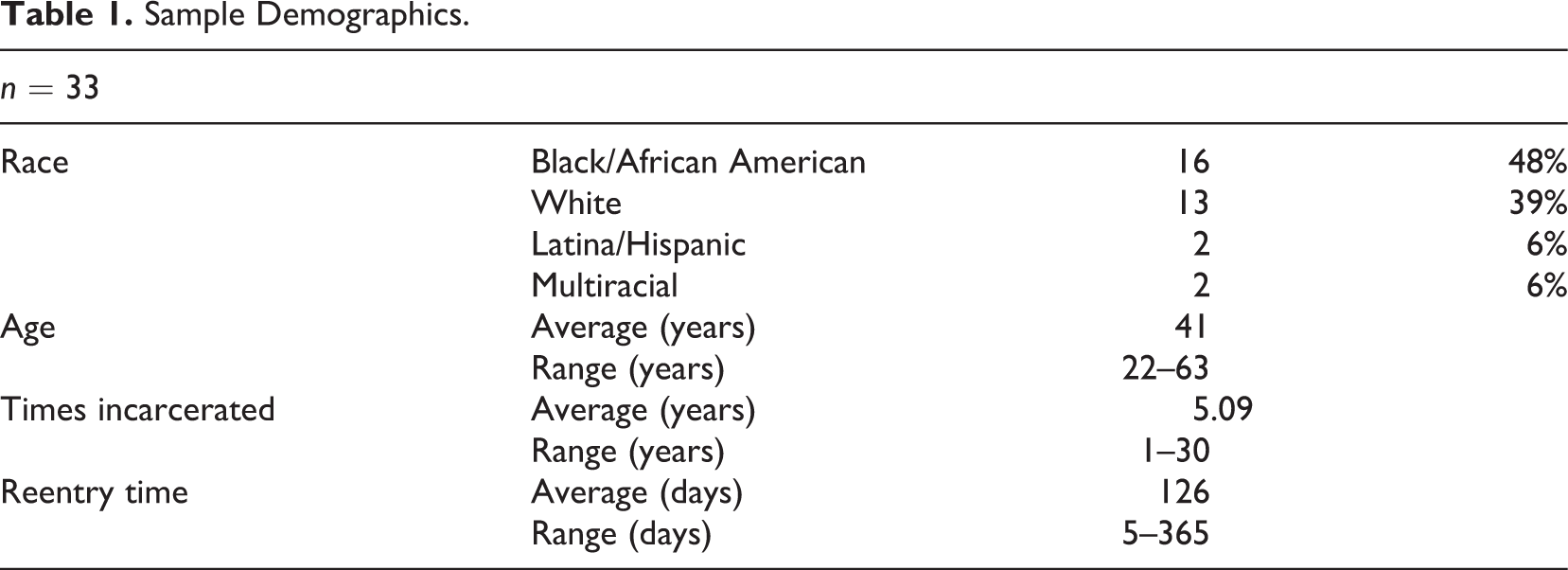
Figure 1 was created to summarize the study data. This figure includes one row for each of the 33 participants. The first columns report Study ID, participant race (Black, White, Latina, or multiracial), and the amount of time they had been out of prison at the time of the interview (in months). The next 10 columns report information about where they were living at arrest and since release. The column that reports where they lived at arrest is followed by a column that reports how long they were incarcerated (in months). The next columns report the different locations where they have lived since release. The graphics used to represent the various housing situations are presented in the figure’s key.
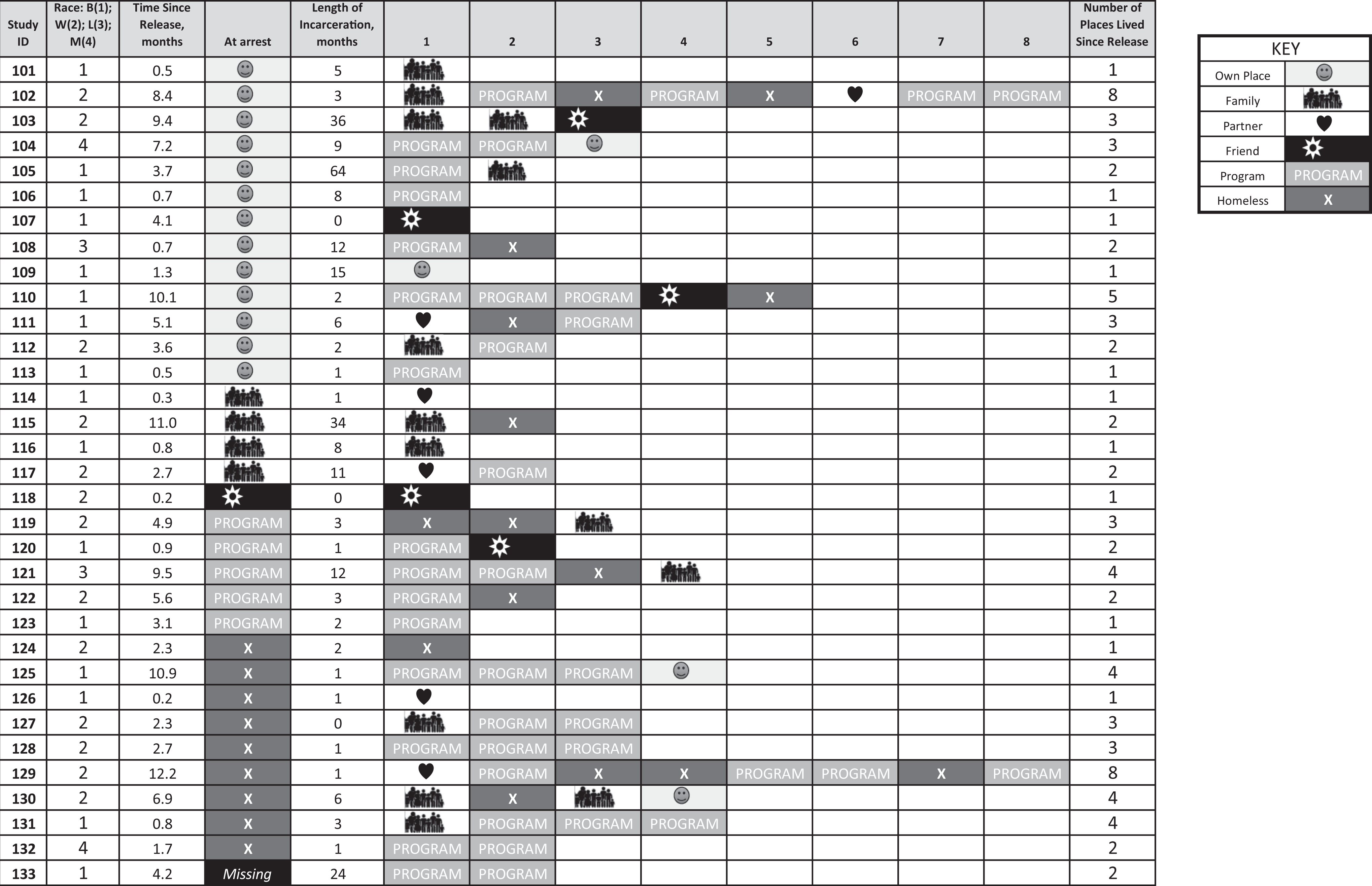
Women’s housing at arrest and since release.
Note that these columns report only where women lived, not how long they lived there. For example, Participant (PT) 103 left her own place when she was incarcerated for three years. She was released to a family member’s house, moved from there to another family member’s house, and then moved to a friend’s house. In total, she has been in three different locations since being released 9.4 months ago. The amount of time in each location is not specified, because in spite of the use of the TLBF methodology, participants struggled to recall the specific dates that they moved from one place to another. All of the women could recall the date they left prison and if they were released to a halfway house or another type of transitional program, they could usually recall the exact amount of time they spent in that facility (i.e., 60 days or 90 days). However, once they left these mandated sites, the dates began to blur. A woman might recall, for example, that she was at her mother’s home for Thanksgiving and then living with her sister on New Year’s, but be uncertain about when she left one place for another. Further, movement between locations was fluid. For example, a woman could be living with her mother, but staying with her sister several nights a week and then eventually transition to living at her sister’s house, but still sleeping at her mother’s house on occasional weekends. Because of the recall difficulties and inexact dates of occupancy, we were not able to report the number of days in each location.
Housing Findings
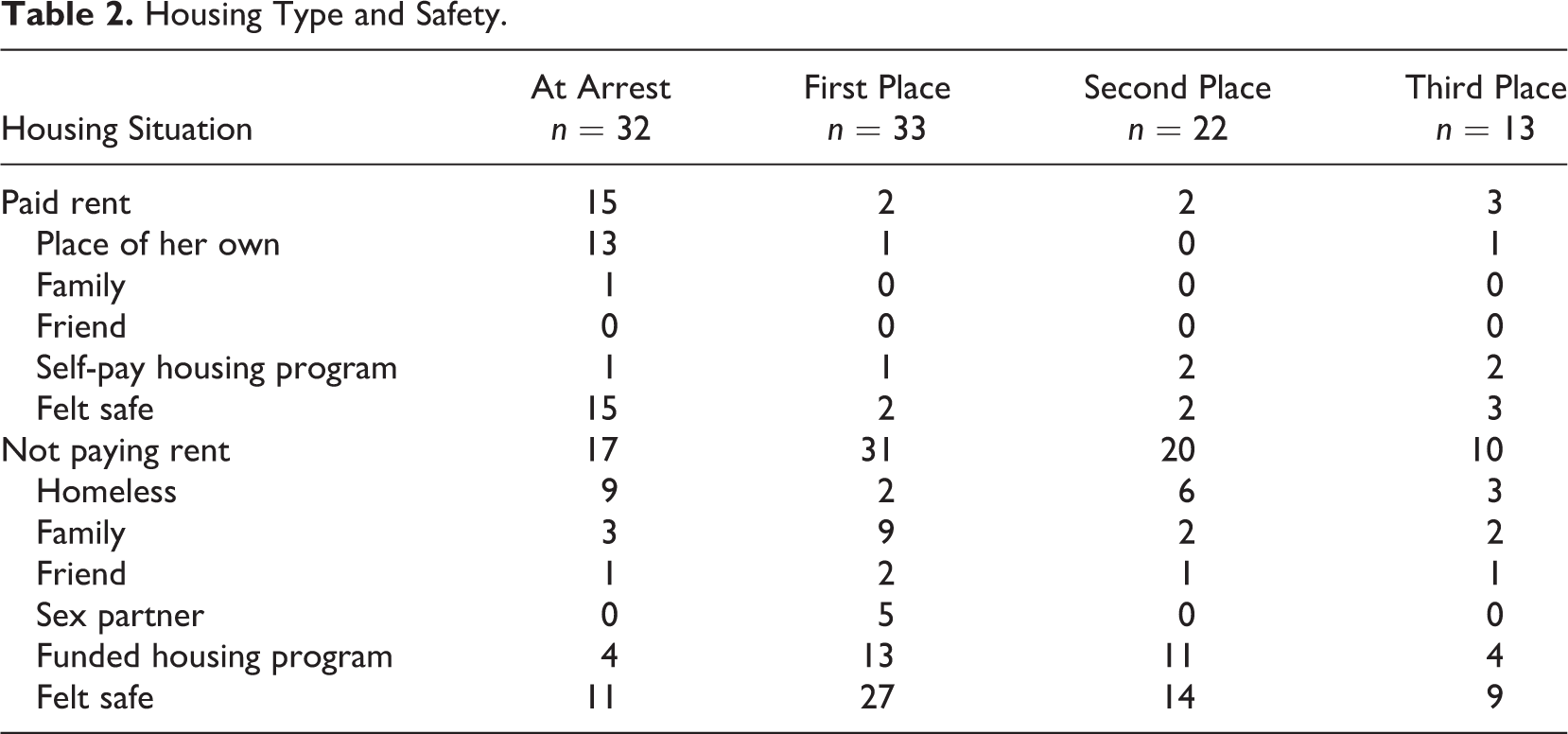
We present study findings of housing in three ways. First, we describe women’s housing experiences by summarizing the places where women reported living at arrest, upon release, and since release (see Table 2) and whether or not they felt safe in these housing situations. We also report if they paid rent which we understand as an indicator of some degree of stability and control, versus “free” accommodations that suggest either temporary subsidized housing or “at-will” arrangements with members of their social networks. Second, we describe participants’ movement from place to place in order to explain the varied housing trajectories that the women experienced after incarceration. Figure 1 illustrates these findings of movement (see Data Analysis section, above, for more information about this figure). Third, we share a selection of the participants’ descriptions of their accommodation with friends and families.
Housing Type and Safety.
Housing Experiences: Places, Rent, and Safety
At arrest
At the time of their arrests, 15 of the participants (47%) were paying for their housing. Rents ranged from US$450 to US$1,200 per month, with an average of US$783. Most of these women (n = 13) lived in an apartment for which they had signed the lease. One woman lived with a family that charged her rent and another lived in a self-pay shared sober housing apartment. All 15 of these women who paid rent reported feeling safe in these locations. The other women were not paying rent (n = 17, 53%) because they were homeless (n = 9), staying with family or friends who did not charge them rent (n = 4), or staying at a publicly funded housing program (n = 4). (Data about preincarceration housing were missing for one participant.) Eleven of the 18 women (61%) who did not pay rent reported feeling safe in their housing situations.
At release
When asked to identify each of the places where they had lived since being released from prison, participants reported between one and eight places, with an average of 2.5 places. Immediately upon release, two women were able to secure independent housing: One returned to her own apartment (US$700/month) and one lived in a self-pay sober house (US$550/month). The other 31 women were staying in housing programs (n = 13), living with family (n = 9), friends (n = 2), or sex partners (n = 5) or homeless (n = 2). Most (n = 31, 93%) reported feeling safe in these post-incarceration settings. The two that felt unsafe included a woman who was homeless and another who was staying with her sibling.
After release
Among the 22 women who reported moving from this first post-incarceration housing to a second location, the situations were similar. Only two of these 22 women paid rent at the second place that they stayed, both of which were self-pay sober houses (US$500 and US$200 per month). The remaining women, who were not paying for housing, were homeless (n = 6), staying in publicly funded housing programs (n = 11), or with family (n = 2) or friends (n = 1). Most (n = 16, 72%) reported feeling safe in these settings. The six that felt unsafe included women who were homeless (n = 3) and women living in residential programs or shelters (n = 3).
There were 13 women who reported three housing situations after their release from incarceration. Only three of these 13 women paid rent, one for her own place (US$550) and two in sober houses (US$300 and US$90). Among those who did not pay rent, three were homeless, three stayed with family or friends, and four were in housing programs. All of them felt safe in these settings, except for one woman in a housing program. Data about the seven women who reported staying in more than three places since release can be found in Figure 1. Two of these women managed to secure their own place with their fourth move. The others bounced between homelessness, programs, and the homes of family and friends.
Safety
When documenting participants’ various housing situations during reentry, research staff asked participants, in regard to each situation, did you feel safe there? This simple question was not elaborated for participants, inviting each of them to define safety on their own terms. As presented above and in Table 2, 100% of the women who were living in housing that they controlled, where they paid rent, felt safe. This finding underscores the ability of independent housing to boost mental health outcomes (Wright & Kloos, 2007). About 80% of the women who did not pay rent felt safe in those environments. The time of greatest insecurity among women who were not paying rent was at arrest: 40% of the women who were not paying rent at the time of their arrest remembered feeling unsafe in those spaces. These findings suggest that the time leading up to arrest can be very chaotic and uncertain. Indeed, for many women, prison can be a safe refuge after periods of intense social conflict, substance use, or mental health challenges (Bradley & Davino, 2002; Bui & Morash, 2010).
In short, while almost half of the participants were living independently prior to incarceration, most were relying on publicly funded housing programs, and, to a lesser extent, family or friends, after incarceration. Women who had stable housing that they controlled before prison moved to less stable, shared housing afterward. However, among the women who were homeless or unstably housed before prison, their situations improved slightly after incarceration: Fewer women were homeless after incarceration than before, and more reported feeling safe in their situations after release than before arrest.
Housing Trajectories
Participants’ reports about housing before and after incarceration paint a complicated picture of social and community resources, persistence, and struggle. On the one hand, incarceration destabilized many women’s housing, moving them from independent rentals to temporary state-funded programs or family situations. On the other hand, some of the participants’ housing situations improved: Most women who were experiencing homelessness at arrest were not immediately homeless after prison. In short, some women’s housing situations deteriorated while others stabilized. In terms of specific pathways or typologies, our analysis was unable to identify any housing patterns or sequences based on where women lived prior to incarceration or where they lived when they were first released. Women who returned to a subsidized housing program, for example, were not more or less likely to secure independent housing than women who were released to a family member’s home. Like a ping-pong ball that lands for a moment and then bounces in a completely unanticipated direction, these women’s housing trajectories were unpredictable and multifarious. Still, a few commonalities emerge.
Castles in the air
Incarceration undermined women’s housing independence. When asked about their ideal housing situation, participants reported that they would like to control their own housing. However, very few women (n = 4) were able to secure independent housing post-incarceration. Short-term housing programs rarely led to independent situations; it was more common for participation in a housing program to lead to another program or homelessness. In describing their ideal housing situation, almost all participants (n = 31, 93%) reported wanting to live in their own place, either by themselves (n = 17) or with family members, primarily children (n = 14). At the time of their arrest, 13 women were living in this “ideal” setting—on their own. However, only one of these 13 women who were living independently at the time of their arrest returned to this same type of independent housing situation upon release. All the other women, including four who were detained for less than two months, lost their independent preincarceration housing.
Race and housing at arrest
These data suggest a relationship between housing at arrest and race. Women of color (i.e., African American/Black, Latina, and multiracial) were incarcerated despite stable housing at the time of their arrest; while White women tended to be unstably housed when they were detained by law enforcement. Housing at arrest data are missing for one woman, so the data set includes information about 32 participants, of whom 41% (n = 13) were White and 59% (n = 19) were women of color: African American (n = 15, 47%), Latina (n = 2, 6%), or multiracial (n = 2, 6%). At the time of arrest, 13 of these women (41%) lived in their own apartment or house, where they paid rent and had their name on the lease. Of these 13 women, 77% (n = 10) were people of color. Put another way, 53% (n = 10) of the 19 women of color who participated in the survey were living independently at the time of their arrest, while only 23% (n = 3) of the 13 White women were living on their own. At the time of their arrest, most (77%, n = 10) of the 13 White participants were living with family or friends, in a program, or homeless.
Post-incarceration programs
Publicly funded temporary housing programs were the most common situation to which women returned immediately after prison. This category included short- and long-term homeless shelters, 90-day stays in sober houses (paid for by the state), halfway houses operated by the Department of Corrections, and inpatient drug treatment programs, funded by private or public health insurance. On their first night following their release from incarceration, 42% of the women stayed at a program, 27% with family, and 21% with a friend or sex partner. One woman returned to her own place and two women were homeless (i.e., sleeping outside). After this first night, programs continued to be the most frequent source of housing. It was not uncommon for women to move from one program to another. Completion of these programs did not appear to ameliorate their housing status: Women moved from programs to the same places (i.e., family, friends, and homeless) that women accessed who had not participated in a program. Altogether, participants reported staying in 84 different places since their release from prison. Half of the sites (48%, n = 40) were included in the “program” category. The next most commonly utilized sites included homelessness (18%), family (17%), and friends (13%).
Living With Family and Friends
The low utilization of family and friends for housing is somewhat counterintuitive. A common narrative in our shared dialogue about incarceration includes the idea of returning home. However, the pathway home for women is complicated. While 16 of the 33 participants (48%) moved “home” with family, friends, or intimate partners upon release, the other half returned to programs or homelessness because family and friends could not or would not house them. Further, only seven of the 16 women who returned to the homes of family and friends remained there. The other nine moved from that initial landing pad to programs or homelessness. At the time of their interviews, only 11 of the 33 (33%) women were living with friends, family, or partners.
These findings stand in contrast to previous research that has identified family to be the primary provider of housing for formerly incarcerated people. For example, the Returning Home study of 324 reentrants in Baltimore found that “at one to three months after release…80 percent [of respondents] were living with family members” (Visher et al., 2004, p. 6). Our findings may be different because our participants had been out of prison for a longer period of time, allowing the opportunity for relationships to deteriorate, but even on the first night out, the number of participants who reported living with family was low. Another explanation of this difference could be gender. Our study was comprised entirely of women while the Returning Home study, and most other studies about reentry, are primarily men. (The Returning Home sample was 73% male.) Further research is needed to understand how the gendered stigma of criminal legal involvement, the resources and efforts expended by maternal relatives in caring for the children of incarcerated women, and the housing insecurity of male sex partners impact women’s ability to secure informal housing supports after prison. Our hypothesis is that women are more likely to face angry relatives, crowded homes, and resource-limited partners than men who can craft criminal legal-related narratives in service of positive masculine identities, are less like to have family resources expended on the care of their children, and may partner with women who have never been involved with criminal legal systems and can offer stable housing and social ties.
Details from these data about women’s housing opportunities with members of their social networks further complicate romantic notions of home. What does it mean for someone to live with family or friends? This category reveals only with whom the person was living, not the circumstances within these homes. To build an understanding of these accommodations, details shared by select participants are reported here. These snapshots offer a glimpse of the vulnerabilities faced by the family and friends who offered lodging to formerly incarcerated women. For example, PT 101 reported returning to her grandmother’s house after five months in prison. Prior to her arrest, she had been living on her own. Upon release, she stayed in her grandmother’s two-bedroom house with her nieces, aged 4 and 8. At night, she would sleep either in her grandmother’s bed or with her nieces. She did not pay rent, but she helped with chores around the house. Similarly, PT 102 also stayed with her sister, where she slept on the kitchen floor. During the day, she had to be out of the house because her sister and brother-in-law did not trust her to be alone in their home. PT 118 stayed with a female friend who was in the process of being evicted. They lived in the apartment and did not pay rent, as the eviction process unfolded. At the time of her arrest, PT 124, who was pregnant with twins, had been living with her boyfriend in a tent setup in a public park under a highway, and she returned to this situation. When she called the state’s emergency housing hotline phone number, there were no beds available, but, given her pregnancy, she was offered a couch in the common area of a long-term housing shelter as a temporary situation until a bed in the dormitory opened up. She declined this arrangement, feeling it would offer no privacy, and chose to stay with her boyfriend until a bed opened up.
Discussion
These data about women’s housing situations prior to and following incarceration highlight the challenges of securing safe, stable housing after release from prison. Incarceration sets women on a trajectory of housing instability that relies on short-term housing programs and the hospitality of friends and family, many of who are coping with their own vulnerabilities. These data also suggest that resettlement takes a long time and may be an unattainable goal for some. Women in this sample, who on average had been out of prison for about three months, were by no means resettled: Their housing was still unstable and short term and the level of independence reported prior to arrest had not been reestablished. Participants’ engagement in temporary housing programs did not lead to stable, independent housing. Instead, completion of short-term housing programs most commonly led to another short-term housing program, to the homes of family and friends, or homelessness. While this flux could be attributed to the participants’ brief time since release—on average the women had been released from prison in the last three months—women who had been out for longer periods of time had also not achieved stability.
Our data suggest that incarceration was particularly devastating for the housing stability of women of color. Many of the White participants were already experiencing housing instability when they were arrested: homeless, or living in precarious situations, feeling unsafe. In contrast, most of the women of color were living independently at arrest, paying for their own housing, and feeling safe in these accommodations. This housing was lost when they were incarcerated. How might these racial differences in housing at arrest be explained? One, these data could suggest that formerly incarcerated women of color are savvier about identifying community housing opportunities than White women. Through intergenerational poverty and housing discrimination, women of color may have better understanding of affordable markets and public housing resources that allows them to be more successful in securing independent housing than White women. Two, this trend could suggest that in order to attract the attention of law enforcement, White women must reach a state of deeper vulnerability and crisis than women of color. At the time of their arrest, White women were more likely to be homeless or in programs, an indication that they were experiencing mental health and/or substance abuse issues. Alternatively, women of color were arrested even when they were living in their own homes, presumably with some source of income (i.e., employment or public assistance). The women of color had some level of stability; nevertheless, they were identified as engaging in lawbreaking behavior. This difference in housing at arrest reflects the higher level of surveillance within communities of color (Alexander, 2012; Lipsitz, 2011).
Implications
Social service providers, policy makers, and correctional administrators committed to reducing the number of people who are incarcerated must ask: If people are released from prison, where will they go? At present, the answer to this question seems to be, back to prison. Longitudinal data analysis by the Bureau of Justice Statistics found that 84% of the men and 77% of the women who were released from correctional facilities in 2005 were rearrested in the subsequent 9 years (Alper et al., 2018). Given the development of and investment in reentry programs (Pettus-Davis & Epperson, 2015), this statistic is discouraging. Data in this study describe the housing instability experienced by formerly incarcerated women and call for a renewed commitment to linking women to secure, stable housing. For women in this study, participation in transitional housing programs was not an entree to stable housing. Rather than placing these women on a route of increasing independence and permanence, outcomes were varied with women bouncing from one program to another, between the homes of friends and family, and homelessness, without ending up any closer to a stable place. Multipronged solutions are needed to increase access to safe, stable housing among formerly incarcerated women.
For one, courts could request a “housing impact report” when assessing sentencing options. If women are currently living in safe, affordable, independent housing, this is a factor for judges to consider when determining if community supervision is a viable option. If the court decides that incarceration, inpatient drug treatment, or any other type of residential program is required, the state could consider paying rent during and immediately following incarceration in order to retain the woman’s housing. While this subsidy might not be possible for longer sentences, it would be worthwhile considering for short-term absences given the difficulty in securing affordable housing. The cost of having a woman return to homelessness or residential care after a 90-day incarceration is costlier, on many levels, than three months’ rent. Alternatively, if the woman is homeless at arrest, as nearly one third of this sample was, the woman’s lawbreaking behavior should be considered in light of this housing instability. Homelessness suggests that the women are in crisis and invites engagement in mental health and substance use services. Six of the nine women who were homeless at incarceration spent one month or less in prison. This bounce from homeless to prison to program is an inefficient use of resources. Finally, displacing women from self-funded, safe, independent housing punishes both that individual and the taxpayer. Probation and diversion programs that can keep women in independent safe housing, especially when they are convicted of nonviolent offenses like larceny and violation of probation, would decrease unnecessary housing-related costs including publicly funded subsidies, furniture acquisition, utility connections, and moving.
Two, greater investment in Housing First resources is needed to assess women’s needs at arrest and release and place them appropriately the first time. The Housing First framework suggests that safe, affordable, independent housing must be in place in order for people to realize other goals related to substance use, mental health, employment, and desistance (Padgett et al., 2016; Tsemberis, 2015). Housing First programs place people in permanent housing with supportive services in order to help them identify the social, health, and economic resources they will need to remain housed (Padgett et al., 2011). Comparative analysis has found that among people living with addiction, mental health problems, and criminal legal histories, Housing First programs foster greater stability, independence, positive cognitive shifts, and less drug use than people who are living in transitional housing programs (Padgett et al., 2011; Pleggenkuhle et al., 2016). Housing programs for formerly incarcerated women should center evidence-based Housing First practices, for example, encouraging programs to work with women who relapse or violate program regulations by using restorative justice practices, rather than zero-tolerance rules, to promote personal growth and stability. Further, dissolving policies that prohibit people on parole and probation from associating with people with criminal legal histories and aggressive expansion of eligibility criteria that allow formerly incarcerated people to live in public housing are critical steps in building affordable housing opportunities, including Housing First options, for this vulnerable population (Keene, Rosenberg, et al., 2018).
Three, length of stay in reentry housing programs should be reconsidered. Resettlement cannot occur in 90 days, especially when women are coming off of lengthy sentences. These data indicate that women who completed transitional housing programs were not positioned to secure independent housing and were forced to move to another program, unstable family housing, or homelessness. Research has found that formerly incarcerated women who had longer stays in sober housing (six months are more) have more positive outcomes than those experiencing shorter stays (Jason et al., 2016). Systems of care for other vulnerable populations have managed to raise significant funding for housing by centering this service as critical to well-being. For example, in the U.S. response to HIV/AIDS, housing has been conceptualized as prevention and the federal government has set aside funds to provide safe, stable housing for people living with HIV (Aidala et al., 2005; Gupta et al., 2008). A similar prioritization of supportive long-term housing is needed for formerly incarcerated people: Safe stable housing is key to preventing recidivism.
Consideration of contextual factors is also important to understanding the potential of these housing programs to connect participants with stable, independent housing. Just as context needs to be considered when predicting individual recidivism rates (Kubrin & Stewart, 2006), it should be considered when evaluating housing program outcomes. Programs will face problems connecting participants to employment and affordable housing if legitimate job opportunities and housing resources are scarce. Our study documented women’s return to a small urban area plagued by rigid economic and racial housing segregation and astronomical rental costs (Seaberry, 2018). Economic analysis has found that minimum-wage workers in this metropolitan area, and throughout the state, would require 2.5 full-time jobs in order to afford a two-bedroom apartment (National Low Income Housing Coalition, 2018). These realities suggest that the failure of these post-incarceration housing programs to link participants to independent housing could reflect the program’s shortcomings and/or broader contextual constraints. The best social worker in the world cannot help a client to find permanent, safe housing within their budget if the community does not have well-paying jobs or affordable housing. This reality underscores the need to expand affordable housing opportunities, including long-term federally subsidized options like Section 8, for formerly incarcerated people. When more of these subsidized options exist, and formerly incarcerated people are allowed access to them, transitional reentry housing programs can be more successful at moving participants into independent housing.
Four, especially until more publicly funded housing is created, psychosocial and economic resources should be directed to families who provide housing and reentry support. Research has found that family’s instrumental support post-incarceration (i.e., providing housing and transportation) is effective in reducing recidivism, regardless of interactional and emotional support (Mowen et al., 2019). In other words, family who provide housing can help individuals succeed, even if they are not socially supportive. In this sample, while women who found housing with family were in the minority, social networks did provide critical support for many participants. Nine women lived with family upon release. At the time of their interviews, two of these women (each of whom had been out for less than a month) were still living in these family homes, the other seven women had moved to programs or homelessness. Intensive case management and financial support for these families, initiated prior to the women’s release and continued for up to 12 months, could make these family situations more sustainable. In-home services, supervised visitation, furniture vouchers, and other types of support that are currently provided by state governments to families with minor children and disabled family members could help these vulnerable families provide instrumental support.
Limitations
These findings, derived from a small convenience sample, are not generalizable. One of the challenges of building knowledge about the lives of incarcerated and formerly incarcerated women is that the number of women in this situation is small, relative to the number of incarcerated men and other subpopulations of women. In the state where this research was conducted, there were just under 1,000 incarcerated women at the time this study was conducted, and approximately 50 women returned each year to the small city where data were collected. In addition, the experience of incarceration is highly stigmatized, especially for women, and so recruitment is a challenge. Given the small size of this hidden population, it is difficult to recruit large samples. And while the small sample size certainly limits generalizability, the alternative, to not conduct research about women who are involved in criminal legal systems, or focus instead on men, only perpetuates the gaps in our knowledge about formerly incarcerated women. This study responds to the imperative to expand understanding, however incremental, about the lives of this vulnerable population.
Given our anticipation of a small sample, a more open-ended exploratory instrument that collected deep rich data about women’s housing experience might be advised. This type of qualitative work is conducive to smaller samples. However, this project did not have the time or financial resources to conduct a more elaborate study. This was a modest project run on a small internal grant secured by the first author from her university that covered stipends for two graduate assistants and a minimal remuneration for participants. The research question, where do women live with they return from prison, was well suited for the TLFB methodology, allowing research staff to efficiently and accurately record participants’ housing trajectories. The discussion and deliberation that arise from these data speak to the compelling nature of these findings and invite further inquiry into the lives of formerly incarcerated women.
A second limitation of this study is that the recruitment strategy may have produced a particularly vulnerable sample of formerly incarcerated women. Women were recruited through the city drop-in center for formerly incarcerated people and nonprofit organizations that work with women who are involved in criminal legal systems. Formerly incarcerated women who were able to secure stable housing and employment upon release and were not utilizing social services would have been less likely to know about the study. At the same time, women who were very active in their addiction or mental illness and completely disconnected from care and services would also have been unlikely to participate in the study. The racial diversity of the sample and the wide range of housing arrangements at arrest, including both women who were living on their own and women who were homeless, suggest that a range of participants were included.
Finally, while the TLFB methodology did solicit detailed information about their housing since incarceration, it was not always possible for women to recall each night, especially when they had been out for several months. The exact amount of time that they spent at each place was not always clear because the start and stop date at each location could be fluid. Real-time prospective recording of their housing situations, using cell phone app technology or a daily check-in, would produce more exact information about women’s housing trajectories, especially for women who were living at a series of locations (“couch-surfing”) or moving between shelters and the streets.
Conclusion
Safe, affordable, rental housing is in short supply throughout the US (Desmond, 2016). Criminal legal reform calls for the resources saved by decreasing prison populations to be invested in community-based programs, including housing (Lamb & Weinberger, 2014). However, this transfer of funds is not likely any time soon due to a lack of public support for people who have been convicted of crimes, and poor people of color, more generally (Willison & O’Brien, 2017). With no new burst of affordable units or housing vouchers on the horizon, the best strategy may be to maximize the resources that are available. Bouncing women from place to place is not an effective use of resources. If women have safe, affordable housing, every effort should be made to keep her in this home. If women have access to shared spaces with family or friends, investment in these options will reduce the need for community-based institutional housing. Similarly, for women who need residential programs, placing them in the least restrictive housing situation, and allowing them to stay there on a long-term basis, may offer women much needed stability. Strategies like these are needed to build better answers to the question of where formerly incarcerated women will go after being released from prison. Rather than sending them back to prison, these data suggest that there are opportunities to place them in their pre-arrest home, supported family environments, and long-term publicly funded supportive housing programs.
Footnotes
Declaration of Conflicting Interests
The author(s) declared no potential conflicts of interest with respect to the research, authorship, and/or publication of this article.
Funding
The author(s) disclosed receipt of the following financial support for the research, authorship, and/or publication of this article: Funding for this research was received by a Connecticut State Universities-AAUP Faculty Research Grant (PI: Smoyer) and a Graduate Student Assistantship from Southern Connecticut State University (Grantee: Oyola).
