




Abstract
Violence against women often continues after couples separate. Although the involvement of children in intimate partner violence is known, no study has investigated the role of children in postseparation violence in southern Europe. The aim of this study was to analyze male perpetrators’ strategies to maintain control over the woman after couples separate and the involvement of children in this process. We designed a multimethod research with a sample of women attending five anti-violence centers in Italy: In the quantitative part, women were interviewed with a questionnaire (N = 151) at baseline and followed up 18 months later (N = 91); in the qualitative part, in-depth interviews were carried out with women (N = 13) attending the same centers. Results showed that women experienced high levels of violence and that children were deeply involved. When women with children were no longer living with the violence perpetrator, threats, violence, manipulation, and controlling behaviors occurred during father–child contacts: 78.9% of women in the longitudinal survey and all women in the qualitative study reported at least one of these unsettling behaviors. The qualitative study allowed for discovering some specific perpetrator strategies. Making the woman feel guilty, threatening, denigrating, and impoverishing her; preventing her from living a normal life; and trying to destroy the mother–child bond were key elements of a complex design aimed at maintaining coercive control over the ex-partner. Results from this multimethod study provided a deeper understanding of the mechanisms of coercive control and postseparation violence and how perpetrators use children to fulfill their aims.
Keywords
Intimate Partner Violence (IPV), Children, and the Postseparation Context
The World Health Organization has shown that women are more at risk of experiencing IPV than by anyone else (Garcia-Moreno, Jansen, Ellsberg, Heise, & Watts, 2005). The Council of Europe (2011) developed the Convention on preventing and combating violence against women and domestic violence, acknowledging that violence against women is a form of gender-based violence, committed against them because they are women. In the Convention, the gendered nature of violence is underlined, recognizing that violence is due to a complicate network of individual and relational factors but is also a clear manifestation of the disparity of power between men and women and the systematic discrimination of women (Dobash & Dobash, 1998).
Feminist researchers have argued that at the core of IPV is the will of the man to exert power and control over the woman: This is the fulcrum and the starting point of all other forms of violence (Pence & Paymar, 1990). The centrality of coercive control in the nature of IPV was noted by Stark (2007), who argued that violence against women will remain epidemic until serious interventions at the political level are taken to attack the structural nature of this violence and “come to grips with coercive control” (p. 397). The acts of coercive control, intimidation, and isolation entrap women in private and public life and prevent them from being free. Stark argues that the core of coercive control is primarily political, not physical or psychological. It is a deprivation of rights and resources critical to personhood and citizenship with a direct impact on women’s private and public sphere.
Three well-established conclusions emerge from the literature on IPV (for a review, see Davies, Ford-Gilboe, & Hammerton, 2009). First, IPV is a direct consequence of gender inequalities. Second, at the core of IPV is the man’s desire to control the woman and to have power over her. Third, leaving an abusive relationship does not correspond to the end of violence. This idea contrasts with the common assumption that a woman with an abusive partner should leave him to stay safe and put an end to the violence (Bell, Goodman, & Dutton, 2007; Fleury, Sullivan, & Bybee, 2000). It derives from the widespread misconception that violence is comparable to couple conflicts, terminating when the couple separates. Therefore, women who do not make the decision to separate can be viewed as passive or ambivalent, not really wanting to be free of the violence, and even “masochists” (Romito, 2008). Unfortunately, leaving is not always better than staying. Indeed, violence often continues, with serious consequences for the well-being of women and their children and their daily lives. In the worst-case scenario, women and children who leave a violent partner and father lose their lives (Sev’er, 1997). In Italy, Ricerche Economiche e Sociali (EURES) and Agenzia Nazionale Stampa Associata (ANSA) studies (2012) reported that two thirds of femicides occurred during the 3 months after the breakup with a violent man.
According to studies of women who present at a dedicated service for victims of IPV, between 27% and 90% reported being victims of violence even after separation (Fleury et al., 2000; Kelly, Sharp, & Klein, 2014; Montero, Martin-Baena, Escribà-Aguir, Vives-Cases, & Ruiz-Pérez, 2015; Ornstein & Rickne, 2013). In Italy, according to a recent study of women who had visited an anti-violence center (AVC), 44.7% were still subjected to IPV 3–5 years after the contact with the center (Pomicino, Beltramini, & Romito, 2018). Despite the general agreement that women who have children with the abuser are more likely to experience postseparation violence than are women with no children (Hardesty & Chung, 2006; Pomicino et al., 2018), only a few studies have systematically investigated the involvement of offspring in the postseparation period. Kelly, Sharp, and Klein (2014), in a longitudinal study of 100 women contacted through domestic violence services in the United Kingdom, found that children were used to facilitate the abuse postseparation, with men employing derogatory language about women in front of their children, which was repeated when they returned home to their mothers. Some men pressured children to plead their case or questioned them to find out things women had chosen not to tell them. Moreover, 50% of the perpetrators used children to continue the violence against their mother after the separation; 38% tried to turn children against their mother, sabotaging efforts to rebuild her life; and 18% abused/threatened the mother during their contact with children.
Procontact Culture and IPV: Legal Context and Research Evidence
In the last three decades, family law in Western countries has shifted profoundly. Jurisdictions have come to the conclusion that although the marriage may be dissolved, parenthood must not: A defining feature of family law is now that parenthood is indissoluble (Parkinson, 2013). This change has led to a shift from the notion of sole custody to joint custody (Parkinson, 2013), emphasizing the essential importance of both parents in bringing up children. So, across the Western world, shared parenting after separation and divorce is encouraged or imposed as the default option “in the best interests of the child” (Eriksson, 2011). In Europe, “the children’s right” to have direct contact and a personal relationship with both parents after separation or divorce is central in most regulations (Council of Europe, 2003).
In Italy, Law 54/2006, reformed with the Legislative Decree n.154/2013, introduced joint custody as the preferred model in custody cases: The primary objective of this legislation is to guarantee the continuity of affective bonds, attributing equal importance to both parents. Parent–child contacts are central in the principle of co-parenting and are considered crucial to ensure “the best interest of the child.” However, this principle is problematic and may be unsafe in presence of coercive control against women and partner violence. Moreover, domestic violence is a child protection issue. Indeed, there is substantial evidence that children’s exposure to domestic violence has a wide range of serious consequences, including emotional, behavioral, physical, social, and academic problems (McTavish, MacGregor, Wathen, & MacMillan, 2016). Coercive controlling violence against an intimate partner reveals much about the character of a person (Parkinson, 2013): It may be indicative of a tendency to dominate and control the children rather than to nurture and empower them (Kelly & Johnson, 2008). Despite this evidence, family courts almost always deem contacts with a parent with whom a child does not live (usually the father) to be in the child’s best interest, regardless of whether the nonresident parent has been or is a perpetrator of violence (e.g., Jeffries, 2016; Meier, 2003). Several studies show little or no differences in custody outcomes between cases with and without a history of domestic violence (Kernic, Monary-Ernsdorff, Koepsell, & Holt, 2005; O’Sullivan, King, Levin-Russell, & Horowitz, 2006; Pranzo, 2013); mothers who raise issues regarding their ex-partners’ violence tend to receive less than favorable custody rulings (e.g., Silberg, Dallam, & Samson, 2013). Male perpetrators are often viewed in more positive terms than are their female partners; they appear to be more suitable parents and are able to manipulate courts by expressing a desire for father–child contact and joint custody (Dalton, Carbon, & Olesen, 2003; Feresin, Folla, Lapierre, & Romito, 2018).
In the end, it seems that “best interest” considerations prioritize the maintenance of violent perpetrator–child relationships, with the consequence that priority may be given to “abuser’s rights” over victim’s rights and safety (Flood, 2010; Jeffries, 2016).
Current Study
In southern Europe, no study has investigated the involvement of children in postseparation violence. The aim of this work was to examine male violence perpetrators’ strategies to manage postseparation issues, aiming to maintain control over their partner, and the involvement of children in this process.
We used a case study approach, that is, “a strategy for doing research which involves an empirical investigation of a particular contemporary phenomenon within its real-life context using multiple sources of evidence” (Robson, 2002, p. 178). We designed a multimethod research. The quantitative approach is crucial to describe the frequency of the phenomenon under analysis and to give a solid description of the characteristics of women and their history of violence. The qualitative approach is needed to gain a better understanding of the complexities of these processes; in addition, it allows for “hearing” women’s voices, which are often silenced in social services and the courts.
Method
The quantitative data are part of a broader longitudinal study based in five AVCs situated in the north of Italy that aims to analyze predictors of the continuation/ending of violence. The qualitative data result from interviews of women attending the same AVCs focused on father–child contacts after couples separate.
Procedure
For the quantitative data, two phases of data collection were performed. All women attending these AVCs between February and November 2015 were eligible for inclusion. At 18 months after the initial data collection (baseline), the researcher recontacted and conducted phone interviews with these women (follow-up). Data were collected with two questionnaires developed for this study. In this article, we present data describing the violence experienced by women and children during the cohabitation and after separation.
Baseline
At each AVC, the advocates asked the women whether they wanted to participate in a study on the health of women seeking help at an AVC. The advocates explained that the questionnaire was anonymous, self-administered, and that the women were free to refuse to take part. Women were also assured that refusing to participate would not affect their relationship with the AVC. If women accepted, they received the informed consent form and the questionnaire in two different envelopes. They completed the questionnaire on their own but could ask the center advocates for help if they needed it. To be able to pair the first and the second questionnaire without using the woman’s name, we developed a coding system: Women were asked to formulate a code consisting of the first letter of their name, their birth day, their eye color, and their birth month. The sealed envelopes were then handed in to the advocates. The researcher trained the advocates in the procedure and met them regularly to discuss any problems or doubts and to collect the questionnaires.
Follow-up
The researcher recontacted the women who at baseline had agreed to be recontacted 18 months later. The phone calls were carried out in a secure and quiet room with a mobile phone used only for the study. To ensure that the woman was safe in answering the call, the researcher presented herself as follows: “Good morning, I’m…from the University of…. I’m collecting data for the University of…about Health and Wellbeing of Women. In this moment, are you free to speak?” If the woman was not free at that time, a phone appointment was established. Once the woman agreed to continue the call, the researcher reminded the woman about the study to which they had participated at the AVC 18 months before, and the entire research was re-explained in detail. The woman was then asked to participate in the second part of the study, answering a questionnaire by a phone call that lasted about 20–30 min; women were invited to stop the interview if the abuser or some other person arrived. To be able to pair the first and the second questionnaire without using the woman’s name, the researcher used the same code used at baseline, asking the woman to recompose the same code. Quantitative data were collected from February 2015 to May 2017.
For the qualitative part, the researcher asked the AVC advocates to promote the study among the women attending the center. All advocates agreed. The inclusion criteria were women who had experienced partner violence, were separated, and had at least one child under 18 years old with a violent partner. A dedicated phone number was given to the advocates who explained the study to eligible women, stressing that the participation was anonymous and that women were free to refuse to take part or withdraw their consent; then, women who volunteered to participate directly contacted the researcher. Interviews were carried out in a secluded and quiet room at the university or in the women’s home.
Qualitative data were collected from June to December 2016. All interviews were recoded and transcribed verbatim (Babbie, 2010). The transcripts were anonymized to ensure participants’ confidentiality; we gave each woman interviewed a pseudonym.
Instruments
Two questionnaires were developed for the quantitative study. Information was collected for the following items.
Baseline questionnaire
Violence indicators
Nature of IPV. To assess violence during the previous year, questions from the Fundamental Right Agency survey (European Union Agency for Fundamental Rights, 2014) were used. Women were asked to report psychological violence (18-item scale), physical violence (9-item scale), sexual violence (4-item scale), and stalking (offensive or threatening communications: 5-item subscale; following, loitering, or damage to property: 4-item subscale). One item was added to the psychological violence scale (“threatened to kill himself”) and another to the stalking scale (“made a scene at your workplace”). Possible answers were never, once, from 2–5 times, and more often. For each typology, a synthetic variable was developed. For psychological and physical violence, two separate three-level variables were coded: low, medium, and high levels of violence. A “yes/no” variable was developed for sexual abuse and for stalking.
Duration of violence. To assess for how many years the violence continued, women were asked when the violence had begun (“a year ago or less,” “more than a year ago but less than 5,” “more than 5 years ago but less than 10,” “more than 10 years ago,” “don’t know”).
Violence during pregnancy. Women were asked whether they had experienced partner violence during pregnancy.
Abuse of children. Two separate questions with a “yes/no” response were created for assessing the abuse of children during the previous year. Women with children were asked whether the children (1) had witnessed IPV and (2) had suffered violence from the abuser.
Fears regarding the perpetrator’s behaviors toward the children. Women were asked whether they “feared that the perpetrator may hurt children,” “feared losing custody of children,” or whether “the perpetrator threatened to take the children away from them.” One question investigated whether the perpetrator threatened to hurt the children during the previous year.
Women’s sociodemographic characteristics were assessed by questions on age, nationality, marital status, education, and number of children.
Follow-up questionnaire
Violence indicators
To evaluate the violence experienced by the women and their children during the previous year, the same questions of the first questionnaire were used: nature of intimate partner violence and abuse of children. Moreover, women were asked to indicate the trend of violence over the last 18 months: constant over time, decreased, increased, some types of violence decreased and others not, or stopped
Fathers’ Behaviors During Father–Child Contacts
Women who were not living with the perpetrator were asked about father–child contacts during the previous year by using nine questions from the Solace Women’s Aid Study (Kelly et al., 2014). A “yes/no” synthetic indicator of the presence of father’s problematic behaviors during the meeting was coded.
Qualitative Study
The qualitative interviews were performed with the “long interview” approach, starting with a few questions and inviting participants to express their views and to introduce new subjects (Kaufmann, 2007). The women’s interviews addressed the themes of history of domestic violence, postseparation period, parent–child relationships, and child custody issues.
Analysis
Quantitative data
Descriptive statistical analyses regarding violence characteristics, involvement of children in violence, and father–child contacts involved using SPSS Version 21 (SPSS Inc., Chicago, IL)
Qualitative data
Interview transcripts were analyzed by content analysis, focusing on paternal behavior and the involvement of children in the postseparation conflicts. It consisted of the following steps: defining recording units, constructing categories for analysis, identifying core categories, testing the coding and assessing its reliability (multiple coders), searching for the “negative case,” developing a model, and interpretation (Babbie, 2010). One researcher performed a preliminary definition of the recording units and the identification of categories, then these categories were discussed with the two other researchers until final agreement was reached. Saturation was reached at the 10th interview (see Glaser & Strauss, 1967).
Ethics
The study was conducted in accordance with the ethical guidelines for research on violence against women published by the World Health Organization (WHO, 2001) and was approved by the ethics committee of the University of Trieste.
Results
Sample Characteristics
The characteristics of the women in the study are reported in Table 1. Concerning the longitudinal sample, 151 women who were victims of IPV completed the questionnaire at baseline and 91 were successfully followed up. The 60 women lost to follow-up were significantly more often married and experienced higher levels of physical violence at baseline than did respondents; no other differences between respondents and nonrespondents were found. Both at baseline and follow-up, women were mainly 40–49 years old, Italian, with a medium to high educational level, and employed. Only about 15% of women did not have children. Marital status varied between the two time points, with the percentage of separated/divorced women doubling at follow-up.
Characteristics of Women Interviewed in the Longitudinal Survey and Qualitative Study.
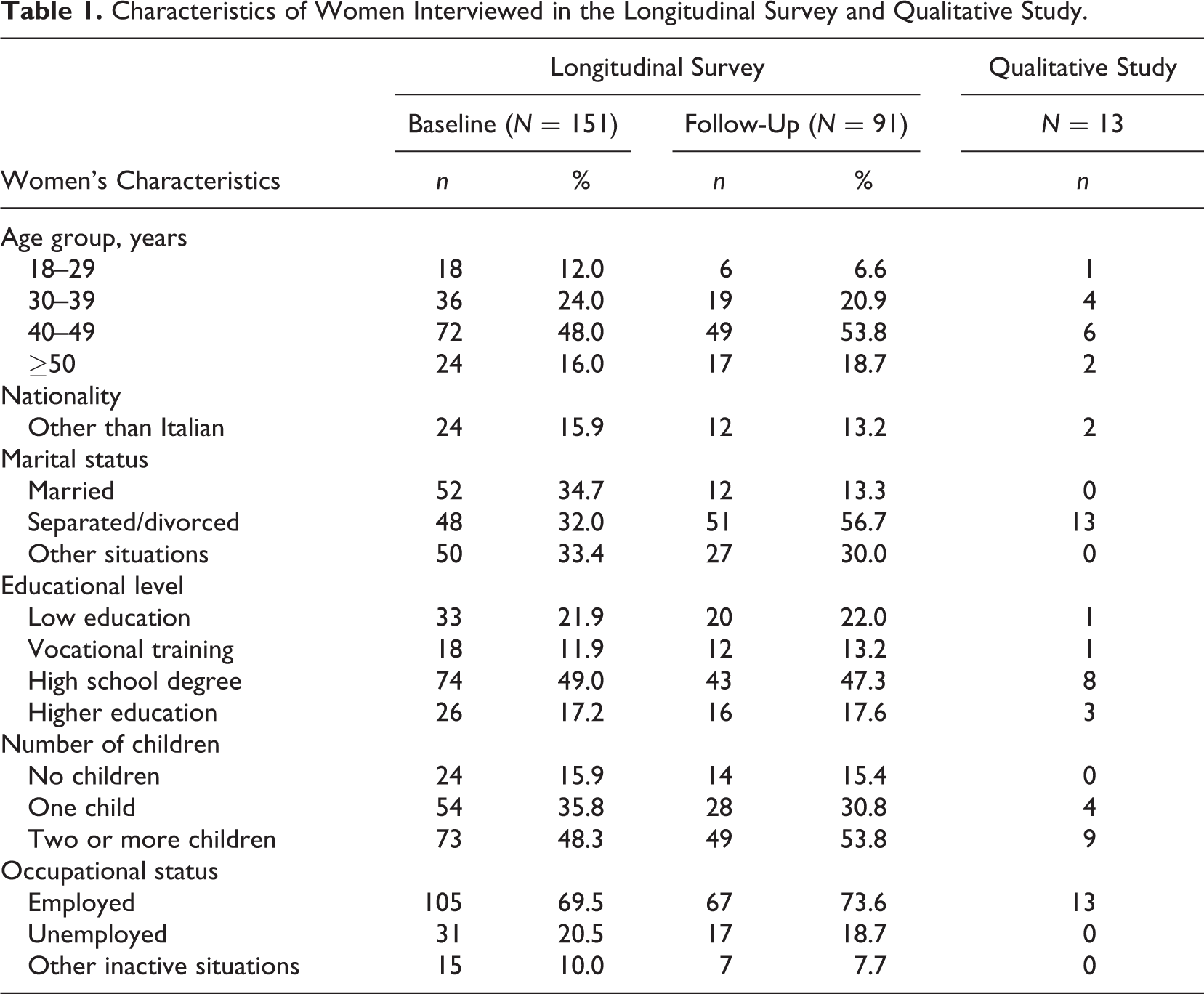
In the qualitative study, 15 separated women with children were contacted by the researcher, and 13 were interviewed (Table 1); 2 women, after having agreed to participate, had such serious problems with the abuser that they were placed in protection in another city. Following eligibility criteria, all women were separated/divorced and had children; the other sociodemographic characteristics were similar to those of the longitudinal survey sample.
Description of Violence
In the quantitative survey, at baseline, more than two thirds of the women reported moderate to high levels of psychological or physical violence; 42.8% reported sexual violence, 69.8% communication stalking, and 61.6% physical stalking (Table 2). More than one third of women reported that the violence had lasted more than 10 years. At follow-up, 41.4% of women reported that violence had stopped, and 34.5% reported that the violence had decreased in the previous year. For 6.9% of women, the violence had increased, for 8.0%, some types of violence had increased and others had decreased, and for 9.2%, the violence remained constant over time.
Intimate Partner Violence Experienced by Women During the Previous 12 Months in the Longitudinal Survey and Baseline.
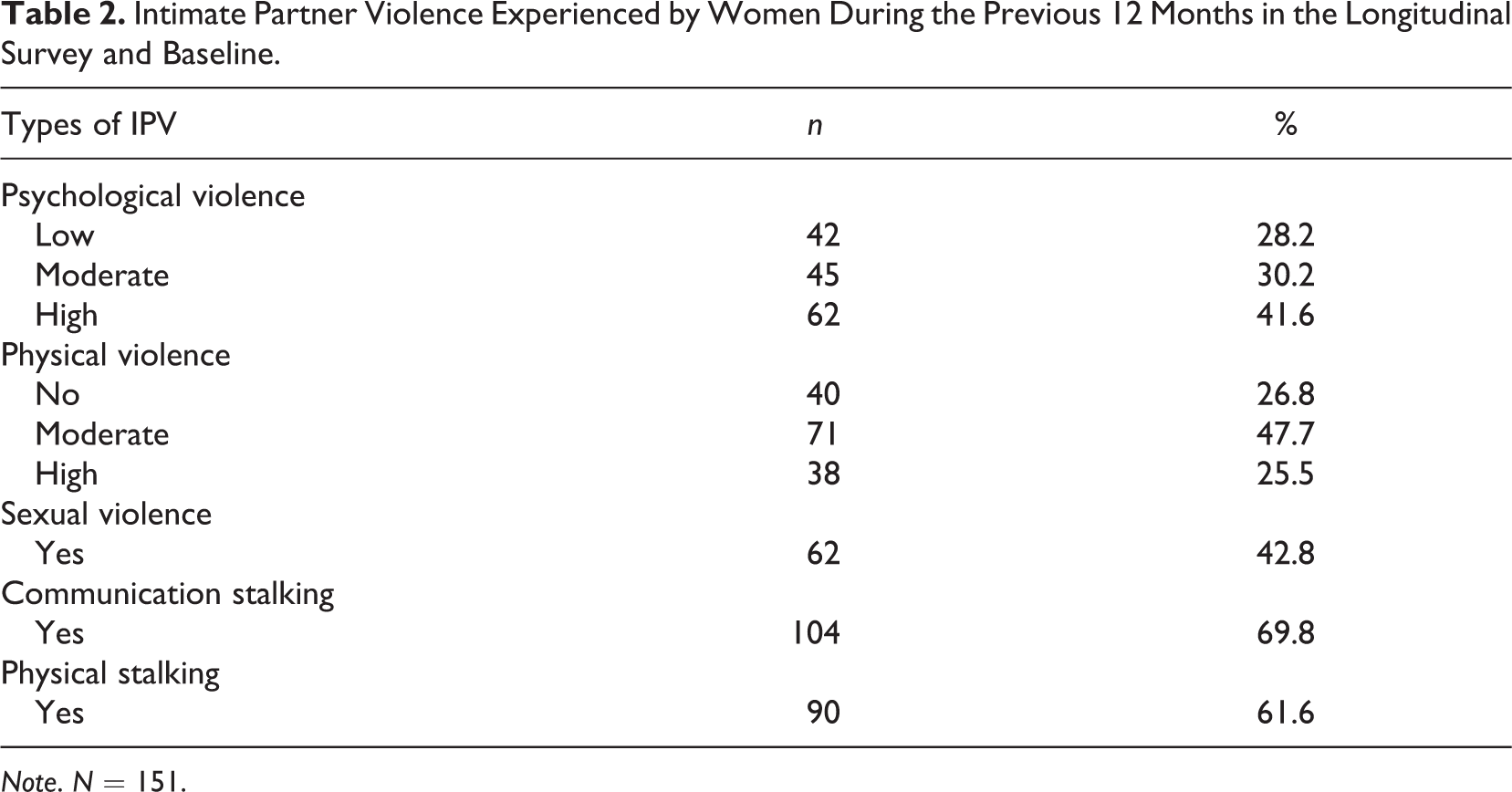
Note. N = 151.
Concerning the qualitative sample, all women reported psychological violence; 11 of 13 also reported physical violence and 6 sexual violence.
Involvement of Children in Violence
The involvement of children in violence often begins already when they are in the mother’s womb. In the longitudinal sample, among women who had ever been pregnant, in 45.6% of cases, there was violence during pregnancy (Table 3). Among women with children interviewed at baseline, 71.1% feared that the perpetrator may hurt the children, and 52% feared losing custody of the children. In the previous 12 months, 53.3% of women reported that perpetrators threatened to take the children away, and 23.5% said the perpetrators had threatened to hurt the children. In all, 78.5% of women reported that children had witnessed the abuse of their mother, and 40.2% reported that they had experienced direct violence at the hands of the abusive man. These two questions were the most unanswered ones in the questionnaire, with a high level of missing values.
Involvement of Children in Violence in the Longitudinal Study and Baseline.
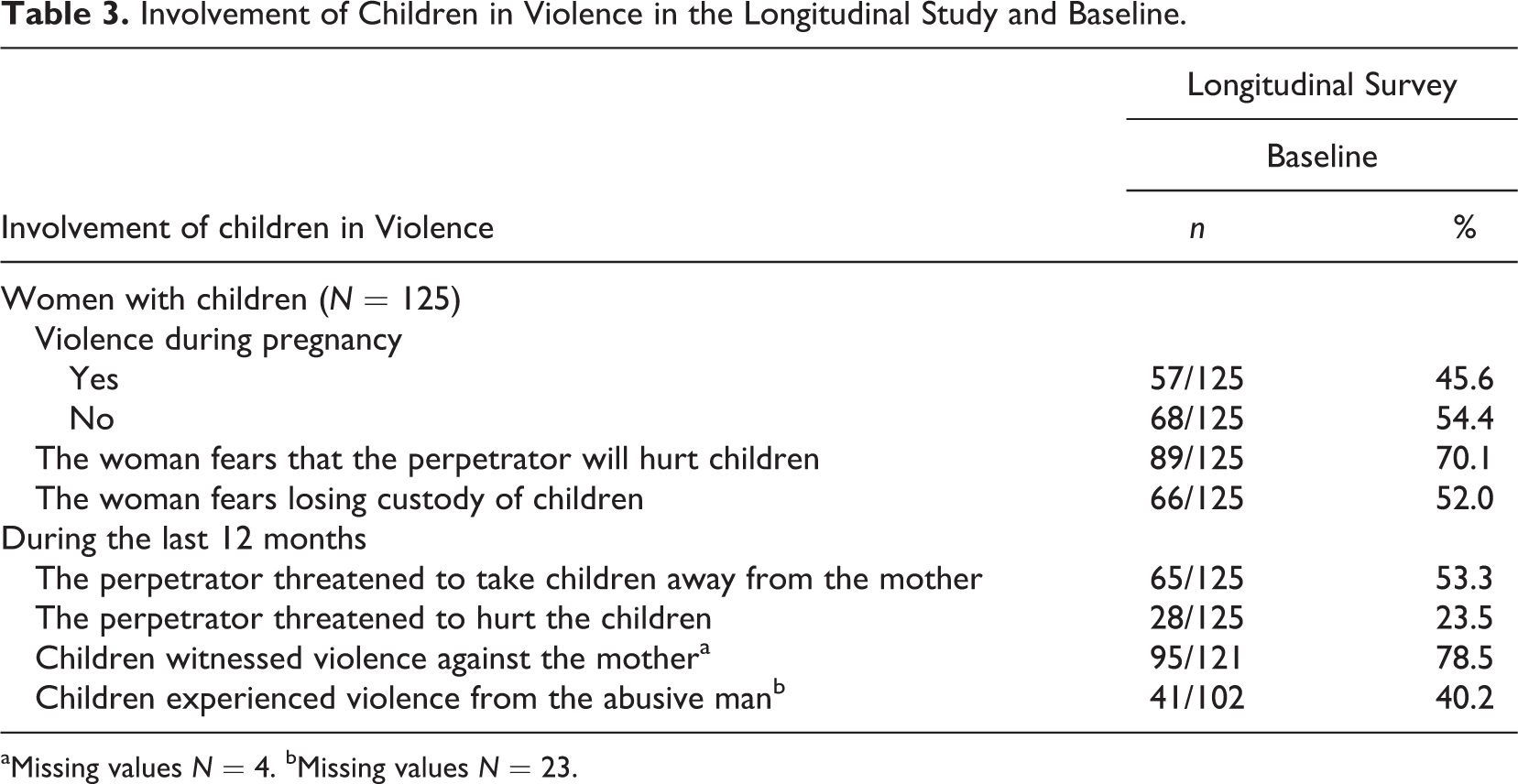
aMissing values N = 4. bMissing values N = 23.
In line with the quantitative data, the qualitative interviews showed that all the women’s children had witnessed the father’s violence against their mothers; 11 of 13 women reported that children were directly abused by the violence perpetrator.
Fathers’ Behaviors During Father–Child Contacts
With data from the longitudinal survey, Table 4 shows what happened in the previous 12 months during father–child contacts and how violent fathers abused their children or used them to continue to exert control or domestic violence against the mother. This analysis considered separated women with children less than 18 years old who lived with her (n = 39). Most women (78.9%) reported at least one type of abuse via children, the more common being the ex-partner abusing/threatening the woman (46.2%), changing visiting plans at the last minute (43.6%), trying to get information about the woman through children (43.6%), and trying to turn the children against their mother (44,7%). Moreover, 46% of woman experienced violence during the contacts and therefore the children witnessed the violence.
Fathers’ Behaviors During Father–Child Contacts During the Previous 12 Months.
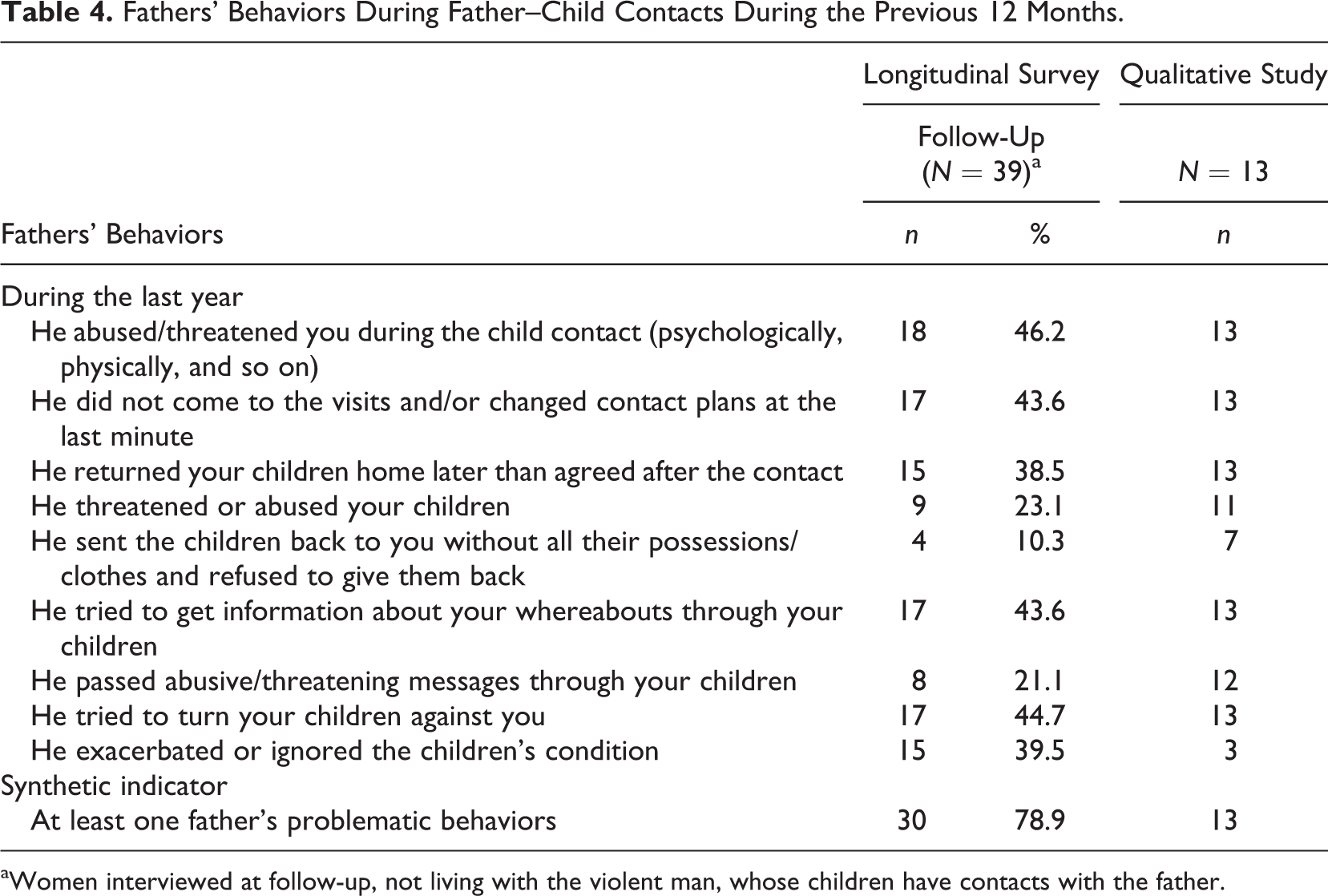
aWomen interviewed at follow-up, not living with the violent man, whose children have contacts with the father.
The qualitative data are consistent with the quantitative findings (Table 4). All interviewed women reported the fathers’ abuse and threats during child contacts, fathers’ changing contact plans at the last minute and delay in returning the children back to their mothers, attempts to get information about mothers’ whereabouts through their children, and turning children against their mothers.
Strategies Violent Men Use to Control and Abuse Women in the Postseparation Period
Qualitative data afford a detailed and deeper understanding of how violent men use and exploit children to continue to exert violence. From this analysis emerged different strategies men used to maintain power and control over women after the separation. These strategies included making women feel guilty, threatening, denigrating and discrediting them, impoverishing women and impeding their daily life, and finally attacking the mother–child relationship.
Making women feel guilty
After separation, violent men tried to make women feel guilty for depriving children of the father figure. He always blamed and accused me, because I behaved badly, I did not love my daughter because I deprived her of her father…. (Laura) My son was looking for his father but he also understood my resolved position about the separation and the fact that I could not forgive him (husband), instead my daughter told me “dad told me,” because I had the obligation to guarantee the father–children contact if he looked for them at least once a day, “Dad said he will not do any more. Dad asked you to forgive him—and crying she told me—forgive Daddy, Mum, forgive Daddy. (Maria) For me it was unthinkable to have destroyed my family, I felt partly responsible, I felt responsible for not keeping the family together. A close family for my children was what I had always wanted…. (Lena)
Threatening
Perpetrators paralyzed mothers through threats. The most common and powerful threat was the mother’s loss of custody of their children if she persisted in the decision to leave the violent man. My daughter suffered, saw what was happen, cried and I was so, at that time I was so tense, irritable because I was afraid because he always told me “if you leave home, you do not have a job, the judge will give me the baby” and for this reason I continued to stay there…. (Sveva) He massacred me from every point of view, obviously also threatening me that he would take our children away from me (…) he told me “well, if you leave me, I pay someone, you will go out tomorrow and you will be hit by a car, because I have these—he pulled out his money—and you know I can do everything.” (Lena)
Denigrating and discrediting
This strategy consisted in “dirtying” the mother, as described in the following quotation: It was really devastating, because he screamed to our children “your mother is a whore, she decided to separate and she thinks she can do whatever she wants, she sleeps with everyone” or “look, she goes around getting drunk with her friend”…they did not see these and I do not care to have a relationship with anybody, so no, our story is simply that he had ruined everything…. (Marta)
Impoverishing the women
Damaging mothers financially was a strategy that violent men used to underline their omnipotence, as in the following quote: As regards child support and maintenance for our children, he gave me how much money he wanted, for a month he gave me the exact amount, the next month nothing, sometimes a sum, sometimes another amount, he did not pay the schools…he did not worry about anything, fortunately I have a job, I had some in savings. His main purpose was that I starved to death, he told me. For him, I had to forget everything I had had and go back to hard work…so he did not care about his children, our children, because his focus was and is to hit me and the children were and are the means. (Lena)
Impeding women’s daily life
Finally, violent men chose to make women’s life hell, preventing women and children from organizing and managing their daily lives. He changed the timetable, the days, in the end he did not come, and said he was sick, everything worked like that. (Carla) Then he said: “I am an entrepreneur, I cannot set a day to dedicate to children, I will tell you when I can.” So, he was used to tell me the same day, or just the day before, then the same day he was used to tell me: “no, today I can’t”, but the child had her activities, I had my business, I tried to organize and manage…then I went along with everything. (Giada)
Attacking the mother–child relationship
Perpetrators tried to get children on their side, isolating and alienating mothers. After the separation, he really organized himself and begun to launch a scorched earth campaign…to continuously call the children when they were with me (…) this way of ignoring me, this will to put me aside, right? I always felt like a cow that made the calves, and now…we give you the sack, we do not need you anymore, he wants to make this clear, that I am useless. (Elisa) He said to (child’s name), in front of me: “Look how bad your mom is, look what a bitch. She wants to leave me alone. Do not allow this.” (Sara) Lately, she (the daughter) tells me that, when she is with her father, he only talks about me, to both the children, but more to her, because he knows he can manipulate her, she is older, and can understand more. His intent, in his sick head, is to put her against me, so that she wants to stay with dad, and take her away from me, because he knows that the most precious thing in my life are the children. (Paola) He forced the kids to write letters with the things he dictated, things against me, so he can (say to me): “I will let you read what the children write, what they really think.” And the children confessed me precisely that he had them write these things, and they told me Mum, you know, at a certain point dad insisted so much that I told him “it’s okay, I think so too,” and I agreed with him because I did not want to hear anymore, I could not hear it anymore. (Lena) He (son) sometimes is angry with me (…) at a certain point…he did not have any respect for me, he treated me as I was stupid, as he (partner) did, right? Ehm. I was stupid. He (child) was always used to tell the grandpa, to the dad “I love you more than I love mum,” but why? Because dad bought me this, dad bought me that, grandfather brought me there, grandfather brought me here, yes but with what money? Then (child’s name) talked back to me. It was like a hate but that was not the hate of (child’s name), it was his daddy’s hate against me. And I think it is not fair that a father says to a son “Your mum is so and so,” right? How can you explain that to a child? It is very difficult (whispering). So, I tried “love, do you remember what happened?”…and everything else…remembering a bad thing to a child hurts. (Sara)
Discussion
The aim of this multimethod study was to analyze violence perpetrators’ strategies to maintain control over the woman even after the couple has separated and the involvement of children in this process. We studied a sample of women attending five AVCs in northern Italy who presented high levels of psychological, physical, and sexual IPV as well as communication and physical stalking. Children were involved in this violence already from pregnancy, with 45% of pregnant women experiencing some kind of partner violence. After birth, children witnessed IPV to 78.5% of women, and in 40% of cases, children were directly abused by the perpetrator. Data collection for this last question resulted in a high percentage of missing values: indirect evidence of the shame and the fear women may feel when they are not able to protect their children from partner violence. A consequence of these missing answers is that the proportion of children’s abuse by fathers is likely underestimated.
Despite these high levels of violence against women and children, the perpetrators felt strong and safe enough to threaten the women to take the children away from them; not surprisingly, 52% of women feared losing custody of their children.
When women with children were no longer living with the perpetrator, father–child contact events were occasions for threats, violence, manipulation, and controlling behaviors: 78.9% of women in the longitudinal survey and all women in the qualitative study reported at least one of these unsettling behaviors.
This study is the first of this nature carried out in southern Europe, but these trends agree with international and national data. From a prevalence study (Devries et al., 2010), IPV during pregnancy is a common experience. The European Survey (European Union Agency for Fundamental Rights, 2014) reported that for women who have been pregnant during a violent relationship, 20% of victims of current partner violence and 42% of victims of previous partner violence say that physical or sexual violence by their partner occurred during pregnancy. According to the United Nations Children’s Fund (2006) report, 40–70% of abusive husbands are also violent with their children. In Italy (Istat, 2014), one child in four is a direct victim of violence at home, and 65% of children have witnessed the mother’s abuse; the percentage rose to 73% in a European survey (European Union Agency for Fundamental Rights, 2014). Children may be more likely to witness violence against a parent after the couple separates, perhaps because contacts between former partners most often occur in the context of child exchanges and other child-related activities (Hardesty & Chung, 2006; Hotton, 2001; Saunders & Oglesby, 2016).
In line with our study, Kelly and colleagues (2014) reported problematic fathers’ behavior occurring during father–child contacts in the United Kingdom: for instance, 38% of violent fathers tried to turn children against their mother, 26% changed contact plans at last minute, and 18% passed abusive messages to the mother via children.
The present study is unique in that by coupling detailed quantitative information with the living experience recounted by women in qualitative interviews, it allows for discovering a coherent strategy behind these violence perpetrators’ behaviors after separation. Making the woman feel guilty, threatening, denigrating and impoverishing her, and preventing her from living a normal life are key elements of a complex design aimed at maintaining coercive control over the victim. As a result, women manage conflict, set boundaries, and resist control in the context of ongoing fear (Hardesty & Ganong, 2006). Probably the most vicious of these elements is the perpetrator’s attack on the mother–child relationship—his aim to destroy their bond: This is a threat that, together with the other behaviors, may paralyze the woman until she is defeated in the struggle to live freely with her children.
Coerciveness is widely recognized as a central element of violence: One of the areas of life strictly controlled by many violent partners is the mother’s parenting (Bancroft & Silverman, 2002; Stark, 2007). Many violent men use children as a vehicle to harm or control the mother through tactics such as destroying the children’s belongings to punish the mother, requiring the children to monitor and report on their mother’s activities, or threatening to kidnap or take custody of the children if the mother attempts to end the relationship (Bancroft & Silverman, 2002; Eriksson, 2011). This conduct draws the children into the abuser’s behavior pattern (Bancroft & Silverman, 2002). All of these aspects of violence can undermine the mother–child relationship (Humphreys, Mullender, Thiara, & Skamballis, 2006; Kelly, 1994; Rathus, Jeffries, Menih, & Field, 2019; Stark, 2007). Of note, as stated by Herman (1981) and Hooper (1992), in case scenario of paternal sexual aggression, pitting mothers and children against each other (“if you say so, mother kills herself, she sends you away”; “you alone understand me, I prefer you to her”; and so on) represents a strategy frequently used by the aggressor to protect himself and continue the violent behavior undisturbed.
The main goal of violent partners is to prevent women from living freely without them, but their behaviors strongly affect their offspring also. As Meier said (2003, p. 705), people who need to control and abuse their intimate partners are unlikely to be capable of the loving, nurturing and self-disciplined behaviour that good parenting requires. By definition, a father who abuses the mother has indicated that he cannot put the children’s interests first, since their mother’s abuse, by undermining her well-being, is inherently harmful to children.
IPV needs to be considered seriously in custody-visitation determinations, and safety should be prioritized over co-parenting (Saunders & Oglesby, 2016). Custody and visitation should only be awarded when adequate safety provisions for the child and the mother can be made (e.g., supervised visitations with transportation provided by a third party). Otherwise, as argued by Hardesty and Chung (2006), it should be presumed detrimental to the child.
In Europe, the Istanbul Convention, and consequently national laws in several countries, including Italy, makes clear recommendations concerning father–child contacts in case of IPV. For instance, Article 31 “custody, visitation rights and safety” urges professionals who come in contact with women and children who are victims of violence to carefully analyze the situation and to avoid decisions based on the common assumption that the family has to be protected above all. Unfortunately, studies show that many professionals are unfamiliar with the Convention, and its recommendations are generally ignored (Feresin et al., 2018).
The failure to reveal postseparation violence and to assess the safety needs of victims, the lack of evaluation of men’s parenting (Harrison, 2008), and the practice of enforcing joint custody as a default option can put mothers and children at risk. A central principle in guidelines and protocols should be to suspend joint custody when there is evidence of coercive control or violence. Effective interventions require routine screening for IPV, individualized assessment and safety planning, and programmatic efforts within the legal system and across community agencies (Hardesty & Chung, 2006).
In order to put into practice these changes, it is crucial to educate and train professionals, as recommended by the Istanbul Convention and by WHO (2013b) Guidelines. It is also fundamental to train violent men to be responsible and caring fathers (see Wistow, Kelly, & Westmarland, 2017; Iwi & Newman, 2011). More generally, it is necessary to educate all men to be good parents (Promundo, 2017).
Limitations and Strengths
The study involved women attending five AVCs in Italy, and results cannot be generalized to women attending similar centers in other countries nor to the larger population of women victims of partner violence who do not take advantage of a dedicated service.
Strengths of the study are its multimethod approach: Data were from a longitudinal survey with a large sample of women, using a detailed questionnaire, and from rich, long qualitative interviews with a smaller sample, with similar characteristics. This double approach afforded a more complete analysis of the complex experience of women managing contact issues after a separation from a violent man and increased the validity of our results.
Conclusions
Results from this study confirm that postseparation violence is a serious problem for women after couples separate and that children are instrumental in the violent perpetrator’s aim to maintain coercive control over his ex-partner. They also cogently demonstrate that perpetrators have an articulated and coherent strategy to prevent women from being free of them: This evidence contrasts with the common assumption of mainly ex-partners “conflicts” occurring during the postseparation period. At least in Europe, regulations are available to contrast violent men’s strategies and to protect victims: Professionals in social and justice sectors should take responsibility for knowing and implementing these rules.
Footnotes
Declaration of Conflicting Interests
The author(s) declared no potential conflicts of interest with respect to the research, authorship, and/or publication of this article.
Funding
The author(s) received no financial support for the research, authorship, and/or publication of this article.
