




Abstract
Economic abuse (EA) comprises tactics of intimate partner violence (IPV) which undermine survivors’ economic self-sufficiency and self-efficacy. Evidence is strong that survivors of IPV who have accessed formal services have experienced a wide range of EA tactics. However, there remains a gap in our understanding of EA experiences for survivors who have not sought IPV services. Thus, this article presents the findings of qualitative interviews with a group of women attending community college (n = 20) who screened as having experienced intimate partner violence in their current or most recent relationship but who have never sought formal IPV services. Four themes emerged: (1) economic control, (2) economic exploitation, (3) economic manipulation, and (4) the economics of safety. The voices of these survivors highlight how EA is a critical issue for social workers in IPV service agencies, along with those who interact with IPV survivors in a range of other settings. Empowering social workers to identify the tactics and impacts of EA could lead interventions aimed at supporting survivors and begin undoing the economics of abuse.
Economic abuse (EA) is a form of intimate partner violence (IPV) which includes tactics aimed at undermining the economic self-sufficiency and self-efficacy of an intimate partner (Adams, Sulivan, Bybee, & Greeson, 2008; Postmus, Plummer, McMahon, Murshid, & Kim, 2012). Documented tactics of EA include disrupting work or school, destroying or fraudulently using credit in an intimate partner’s name, and controlling shared finances though preventing access to funds or exerting other forms of unilateral financial control (Adams et al., 2008; Ericksson & Ulmestig, 2017; Postmus et al., 2012; Voth Schrag & Edmond, 2017). Evidence is strong that survivors of IPV dwelling in IPV shelters, accessing transitional housing, or seeking economic support services have long histories of EA experiences, with studies identifying 99% of sheltered IPV survivors and 98% of service-seeking women as survivors of EA (Adams et al., 2008; Postmus et al., 2012). A recent systematic review of the literature on EA found remarkable consistency across studies in the inclusion of economic control, economic exploitation, and employment sabotage as key aspects of EA for various populations of survivors around the world (Postmus, Hoge, Breckenridge, Sharp-Jeffs, & Chung, 2018).
However, there remains a gap in our understanding of EA experiences for survivors who have not sought IPV services. Building a deeper understanding of the experiences of these survivors is critical to understanding the true impact of EA and is an essential step in developing effective community-level prevention programming. However, to this point, the majority of scholarship and theorizing related to the experiences and impact of EA for survivors has been with the subset of survivors who have sought assistance from formal IPV service agencies. To begin to bring the voices of survivors dwelling in the community and not in contact with IPV service agencies into the conversation, this article presents the findings of qualitative interviews with a group of women attending community college (n = 20) who screened as having experienced IPV in their current or most recent relationship but who had never sought formal IPV services. Interviews included a focus the women’s economic experiences, and the particular focus of this study is on their reflections related to economic control and coercion by their intimate partner. This study asks: How are nonservice engaged community dwelling survivors experiencing EA?
Background
Evidence underscores IPV’s negative impact on the employment, education, earnings, and long-term stability of survivors (Adams, Greeson, Kennedy, & Tolman, 2013; Goodman, Smyth, Borges, & Singer, 2009; Voth Schrag, Ravi, & Robinson, 2018). The pathways through which these impacts are carried are varied. It is thus the obligation of service providers and scholars to deepen our understanding of this interplay (Brush, 2004). The current study seeks to contribute by highlighting the voices of survivors who have not sought services from traditional sources.
EA
There is significant quantitative evidence for the impact of EA on survivors of IPV across life domains. Studies have linked tactics of economic control, economic exploitation, and work and school disruption to housing and employment instability; increased material hardship; and increased economic dependence (Adams et al., 2013; Goodman et al., 2009; Voth Schrag, Robinson, & Ravi, 2019). Studies have also demonstrated the way that past experiences with EA can impact survivors for years after the end of a relationship due to ongoing issues with debt, employment, and credit (Toews & Bermea, 2017; Ulmestig & Eriksson, 2017). Evidence is also mounting for the physical and mental health consequences of EA, with demonstrated correlations with increased risk of gastrointestinal syndromes, pelvic problems, and psychosomatic symptoms as well as mental health impacts including increased suicidality, higher rates of psychological distress, and heighted risk of depression (Antai, Oke, Braithwaite, & Lopez, 2014; Stockl & Penhale, 2015; Stylianou, 2018; Voth Schrag et al., 2019). Importantly, Antai, Oke, Braithwaite, and Lopez; Stylianou (2018), and colleagues (2019) all identified a unique contribution of EA to mental health symptomology above and beyond experiences of other forms of IPV.
Along with this quantitative work, scholars have sought to bring survivor voices to the center of the conversation around the impact of EA. In interviews with IPV survivors who were referred for economic support services, Sanders (2015) explored survivors’ experiences with EA. Salient themes for this high need population included monetary control, the role of economic dependence in leave/stay decisions, economic conflict as an “impetus to abuse,” abuse in the form of disruption of employment or education, the role of debt and credit, abuse through stealing or destroying property, the long-term aftermath of EA, and creative financial strategies employed by survivors.
Many IPV survivors do not access formal services, such as domestic violence shelters or IPV-specific counseling agencies, yet they still experience a wide range of adverse impacts from violence. In a nationally representative survey, nearly half of survivors reported having specific service needs (such as medical, legal, and advocacy help) that were not met (Breiding, Chen, & Black, 2014). Survivors who face forms of IPV but do not seek services may have a unique set of experiences and subsequent service needs due partly to differences in the economically abusive behaviors they have experienced. However, little is known regarding the perceptions of such survivors regarding their experiences or impacts of EA.
Coercive Control Theory (CCT)
Our growing conceptualization and understanding of the role of EA in the lives of survivors is deepened and extended when EA is viewed through the lens of CCT because of CCT’s emphasis on how IPV destroys the survivor’s autonomy (Arnold, 2009). CCT points to the central role of power in IPV, outlining how an abusive partner gains microcontrol over their partner using a range of coercive tactics, which critically can include, but is in no way limited to, violence. CCT recognizes the ultimate “aim” of IPV as the breakdown of a survivor’s autonomy and self-efficacy, an aim which may be achieved via tactics including threats, intimidation, emotional abuse, and physical violence (Dutton & Goodman, 2005; Stark, 2007). CCT provides a framework for understanding the economic instability facing survivors of IPV, as an abusive partner may use tactics of power and control to increase a survivor’s economic dependence on the abusive partner, thereby enhancing an abusive partner’s overall control of the survivor’s life (Postmus et al., 2012; Stark, 2007).
Method
Sample Selection
Study participants (n = 20) were recruited from among participants in a larger sequential mixed-methods study of female community college students (see Voth Schrag & Edmond, 2018 and Voth Schrag et al., 2019). One aim of that study was to have the analytical power to assess relationships between experiences of victimization and various outcomes in a group where there was little data available to estimate the extent of IPV victimization (community college students). Because of this, the decision was made to limit the recruitment to female identified students in order to maximize the likelihood of observing a wide enough range of IPV experiences to have analytical power. A simple random sample of female community college students was recruited via their campus based e-mail address from four campuses of a community college system in a Midwestern metropolitan area. Consented participants who were eligible for the study (those who were at least 18, identified as female, and had been in an intimate relationship in the past 12 months) completed an online quantitative survey (n = 435). Standardized measures used in the quantitative survey included the abusive behavior inventory (ABI), which screens for domains of IPV including physical, sexual, and emotional abuse (Postmus, Stylianou, & McMahon, 2016). An ABI score above a cutoff point established in the literature was utilized to indicate a positive screen for IPV in the participant’s current or most recent relationship. Participants for the current study were purposively recruited from among those who both screened positive for experiencing IPV and indicated that they were willing to be contacted to complete a follow-up interview. Among all 20 participants, none indicated they had previously received community-based IPV services on a checklist of community resources included in the quantitative survey. Initial recruitment e-mails were sent to 70 potential participants and 27 students contacted the study team by e-mail or phone to discuss participation. Twenty participants eventually completed an interview. The institutional review boards of the community colleges and the sponsoring university approved study protocols prior to data collection.
Interview Protocol
A PhD-level social worker with previously interviewing experience as a qualitative researcher, as well as a history of practice in the area of IPV services conducted the in-depth semistructured interviews. They occurred in the winter and spring of 2015–2016 in a place of the participant’s choice and were 60 min long on average. Informed consent was obtained at the start of each interview, and each participant received a US$25 gift card as a thank you. Interviews were captured via audio-recording, and word-for-word transcripts were used for data analysis. The semistructured interview guide was developed and pilot tested with the input of a community advisory board of IPV survivors and service providers. The finalized guide included questions and prompts designed to gather rich data regarding economic factors impacting survivors’ relationships including “How has [the relationship/the IPV] impacted you financially” and “What sort of financial challenges have you faced?”
Data Analysis
Transcripts were first reviewed in their entirety, with the aim of identifying and flagging any discontinuities in the text such as contradictions in the narrative or situations in which a question was misunderstood (Lehrner & Allen, 2008). The Dedoose qualitative data analysis platform was used to track and organize the analysis, as well as to facilitate memo writing, which was used to document issues raised by this first round of holistic analysis and link memos with specific sections of text. Memoing continued throughout the analysis to document the process and identify key themes and codes. After the initial holistic analysis, two coders, both PhD-level social workers with experience and training in qualitative methods, worked independently to review all 20 transcripts. One coder has a history of work with IPV services, while the other has a background in another area of social work. They independently developed categories and themes using content analysis, including “coding down” from preestablished categories from the literature and “coding up” from themes that emerged inductively (Padgett, 2010). Following the first round of coding, the second independent round sought to refine the analysis. This included a focus on identifying and winnowing down thin codes, while identifying key themes and continually referencing understandings gained through the initial holistic round of analysis (Charmaz, 2006; Padgett, 2010). Finally, the two independent coders came together to develop a mutually agreed upon understanding of the codes through negotiation to consensus. The analysts considered negative cases, identifying a group of participants (n = 7) who largely reflected positively on their intimate relationship, though they may reference examples of microeconomic control within that generally positive frame. Methods for qualitative rigor employed included analyst triangulation with multiple coders and analysts from various standpoints reviewing the data (Patton, 2002). Secondly, expert audit review was employed when a third PhD-level social worker with a history of work in violence against women service agencies who had not been part of the initial analysis examined transcripts toward the end of data analysis as an independent audit of the themes developed (Patton, 2002).
Description of the Participants
Participants’ average age was 27.9 years (SD = 10.2), with almost three semesters of schooling (mean = 2.8, SD = 2.6). Most had at least one child in the home, and about half were currently living with their partner. Participants were racially diverse (35% white, 40% black, 10% Asian, 10% Latina, and 5% multiracial). See Table 1 for more information on the sample.
Participant Demographics.
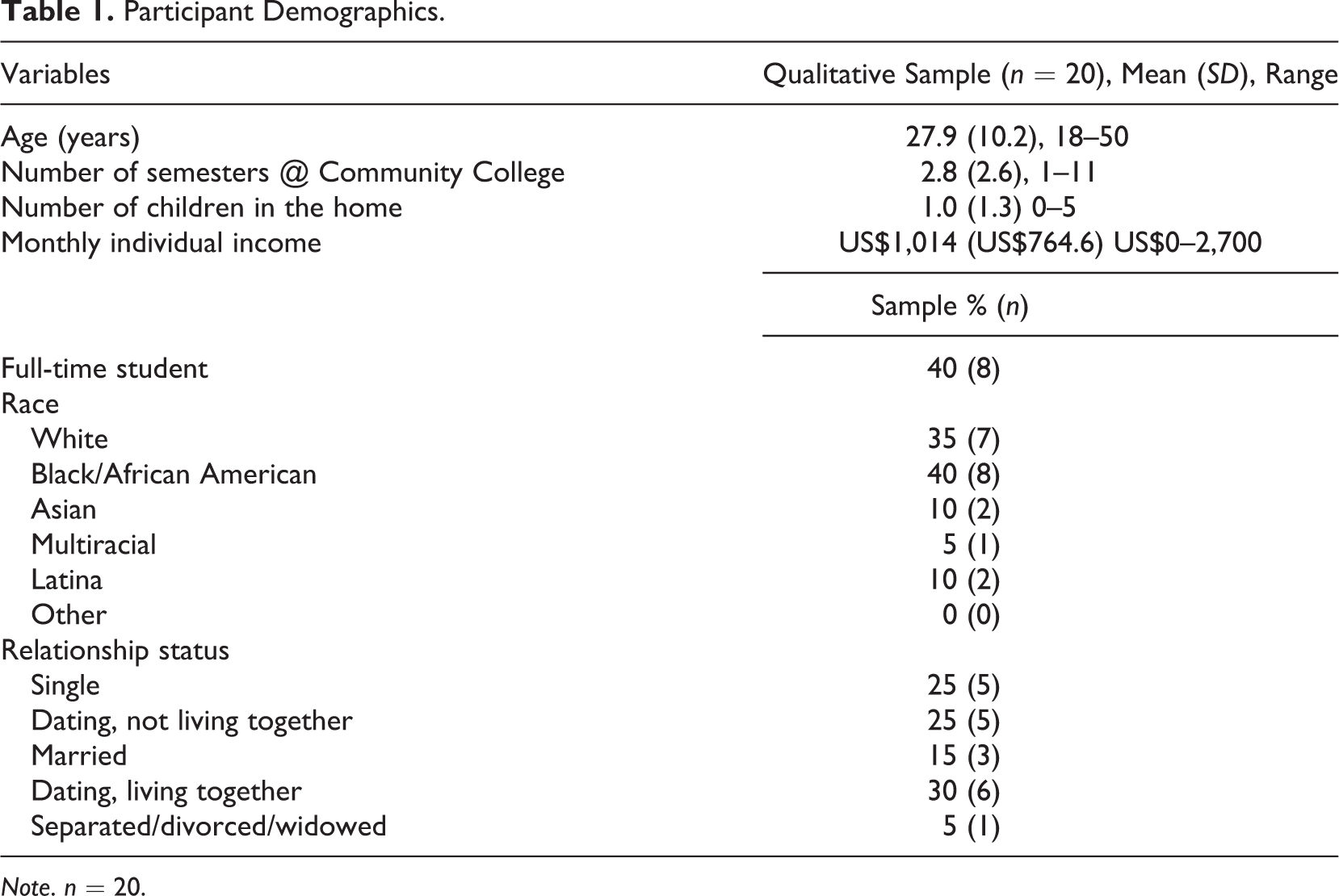
Note. n = 20.
Results
Participants reflected on their current and previous relationships, and a set of themes related to economic control and abuse emerged coming out of those reflections. Participants were asked general questions about the role of finances and abuse in their intimate relationships. The interviewer used probing questions to explore dynamics including income, debt, and decision-making where those issues emerged. Four themes, each of which was reflected frequently and equivalently strongly across the interviews, emerged from these discussions: (1) economic control, (2) economic exploitation, (3) economic manipulation, and (4) the economics of safety.
It is also noteworthy that these 20 women represent a range of ages, economic experiences, and relationship stages. While there was nearly universal agreement that economic issues play an important role in intimate relationships, the kinds of relationships represented were varied, and the extent of economically abusive behaviors varied as well. Further, while all participants screened “positive” for IPV in their current or most recent intimate relationship based on their score on the ABI, the severity of abuse and the perceptions of the participants on the health of these relationships varied. Importantly, 7 of the 20 perceived their relationships as flawed but as a fundamentally positive force in their life When reviewing the transcripts and meanings developed from these seven interviews, we paid special attention to these cases to understand how they informed or detracted from the emerging themes, treating them as potential negative cases (Patton, 2002). However, across these seven interviews, there were still many examples provided of behaviors which scholars have termed “economic abuse,” including heavily monitoring spending (e.g., demanding to see receipts for small purchases) and stealing money. These “negative cases” inform the analysis by highlighting the presence of economically abusive tactics in relationships that might fall outside of many individual’s notions of what constitutes IPV.
Economic Control
Participants reflected on partners exerting microcontrol over finances, including finances that, from the participant’s perspective, should be jointly held resources. Economic control was reflected in situations where a partner severely limited a student’s say in or knowledge of their economic situation or where they placed barriers in front of a student’s use of joint resources. Examples included partners who withheld needed funds, made unilateral decisions regarding family finances even after the participant requested input, or who otherwise limited participant’s access to economic resources. These experiences of loss of economic control left participants feeling diminished, dependent, frustrated, and often unsure how to proceed. One participant described the day-to-day experience like this: “It was like if I needed something…. Let’s just say I need some soap and toothpaste and some deodorant. He won’t give me the money.” Another participant described how experiences of economic control impacted her perception of her relationship overall, reflecting that economically controlling behaviors felt like a statement by her partner of his ultimate authority. She shared, We always seemed to get into fights, because it was like, “You know how much money we have, so you can spend the money, and you kind of give me an allowance.…So yeah, it’s more of a comfortable feeling for me, because of course he would always say he’s not doing it intentionally to make me feel a certain way, or to make me feel like he’s the person in charge, and only him.” That was a big question about whether I would be able to retake those classes to go back to grad school or not. That was something we needed to talk about, and he could have said no, and I wouldn’t have been able to go.
Economic Exploitation
Participants who shared reflections about experiences of economic exploitation spoke about partners who stole or insisted on spending a student’s money or other valuable economic resources without their consent or agreement or who put excessive pressure on the student to “consent” to sharing economic resources. Often participants reflected on being unsure of the line between how people share resources in a loving relationship and when a partner is asking too much or contributions become uneven or unfair. Participants reflected on these experiences across a range of relationship types, from long-term marriages to short-term dating partners. One participant, who was in a relatively short-term abusive relationship and who never lived with or otherwise financially entangled herself with her partner, nonetheless experienced this form of exploitation. She talked about the reverberating impact of many small acts of exploitation over time, reflecting: He would say, “Can you pay for it because I don’t have it.” Or, “Can you pay for the gas because we’re taking my car.” Or, “Can I just borrow this from you?” and then never giving it back kind of thing. I felt too pressured to not say no…. That was a big thing for 6 months or so, which is part of the reason why I’m going to community college because I’m so broke because that’s part of it. I started working, I wasn’t working a ton at first, I was working 20 hr a week, or something normal like people in school do. When I started working 30, 35 hr a week when I was still in school, I was spending a lot of money. Actually, a lot of money to, when he would just ask for it, I would just say, “Okay, that’s fine.” I now realize that I should’ve never done that because that was mine and I worked for it. to take out extra [personal school] loans [so] that we can live on in the winter…. Loans are never fun, but it’s like, let’s pay our house payment with this school loan so that we can get through.
Economic Manipulation
A number of participants spoke about how their intimate partners used economic strategies or economic realities to gain control in the relationship and limit the survivor’s options for self-sufficiency or independence. For example, one student shared that her abusive ex-partner threatened to leave her soon after she had dropped out of the workforce to go back to school (a decision they had come to jointly as a good pathway for their family), and just as they had moved into a new home with a substantial mortgage. This caused her to drop out of school to ensure that she could continue to provide for her children in the case that he followed through on his threat. Reflecting on her decision to drop out then, she said
My kids’ dad actually was going to leave us. He said he was going to leave us. We were buying a house. We had some things going on, and I knew that I couldn’t afford it on my own.
The Economics of Seeking Safety From Violence
Several participants recognized that economic realities were playing determining roles in their choices around seeking safety in the face of abusive relationships. One shared that she was choosing to stay in a relationship that she knew was dangerous because for her, economic insecurity outweighed other considerations. She said: I know for me personally, [the barrier to leaving my abusive partner is] just having money. I only get paid so much to work at the chocolate factory. I’ve been driving the same car since I did in high school, so 5, 6 years now. I can’t really afford a new one. I could not afford to live on my own at all.
Discussion
Findings from the current study highlight that survivors of IPV across a range of relationship types and levels of “severity” are impacted by economically coercive and controlling tactics. With some exceptions, these are not dramatic stories of extreme exploitation. Instead, when put together, they tell a story of encroaching power and control which constrain opportunities, entrench abusive patterns, and deepen cycles of dependence. Participants in the current study articulated dynamics of economic control, exploitation, and manipulation which all influenced their decision-making on their economic and safety futures (Figure 1). These findings are largely consistent with emerging evidence from research with survivors who have sought assistance from IPV service agencies (e.g., Postmus et al., 2012; Sanders, 2015), who evidence suggests may have histories of more extreme IPV than these participants who have not sought services from IPV service agencies (Flicker et al., 2011). The current results correspond with and generally support the themes found by Sanders (2015) in a population of women who were seeking help for dealing with the economic impact of IPV on their lives. In particular, they the two most salient and frequently endorsed themes from Sanders’ study: monetary control and lack of access to financial resources and economic dependence and the role in staying or leaving.
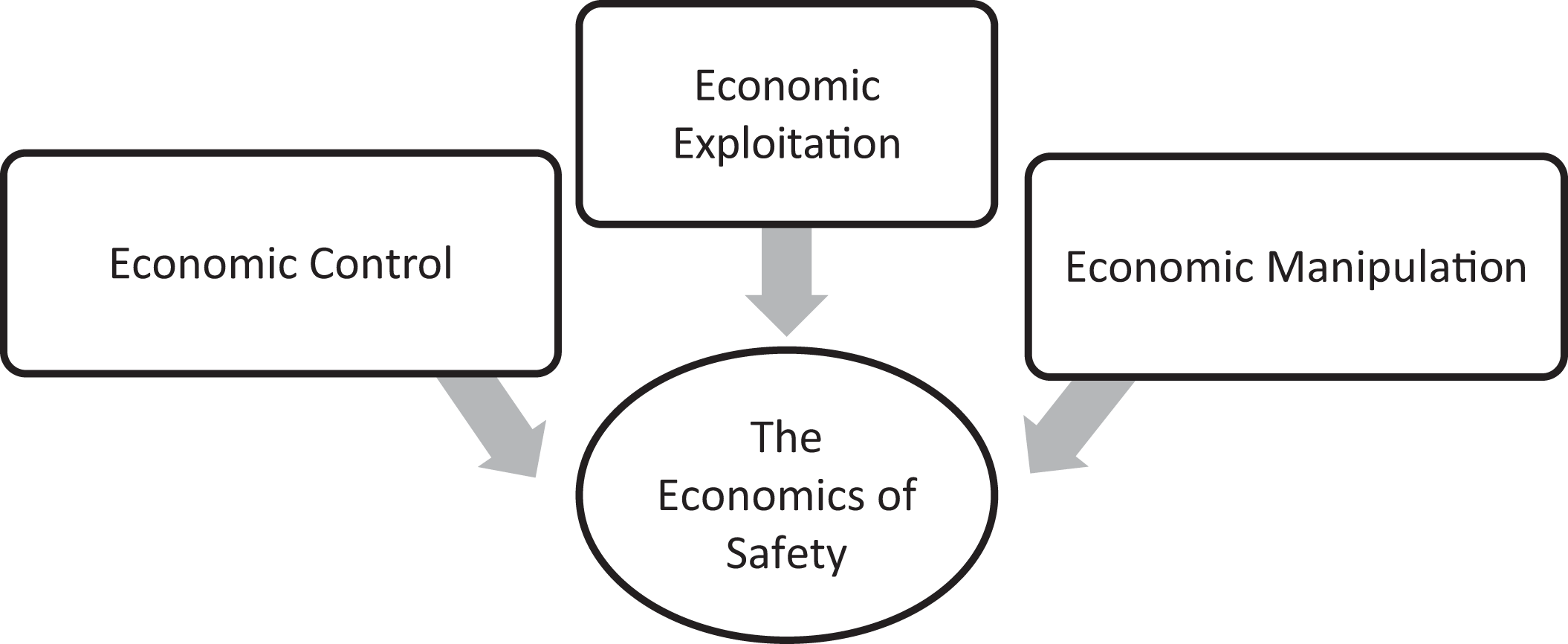
Economic abuse: Emerging themes.
Consistent with CCT, participants highlighted how their partners exerted microcontrol over finances, limiting their perceived available choices and causing them to doubt their ability to live safely and independently (Stark, 2007). Participants were clear on the ways in which these economic tactics (control, exploitation, and manipulation) were having direct impacts on their decision-making related to their relationships as well as their economic futures. A primary implication from these interviews is that, for these women, the tactics of EA are a major vector for coercive control in their intimate relationships. This was true for women with a range of perspectives on their relationships overall, from some who felt strongly that their relationships were violent and unhealthy to others who had mainly positive feelings.
These findings highlight how social norms related to gender and financial roles contribute to this form of coercion, providing justification for creeping control and muddying lines between partnership and abuse. Participants talked about how they often felt cared for by initial examples of economically controlling behavior, which were viewed as being chivalrous. In many ways, these findings highlight how EA is a “silent” but deeply impactful form of IPV. Importantly, while it may be easier to identify and conceptualize the potential impact of EA in established “adult” relationships which include financial ramifications such as joint debt or joint assets, these interviews highlight that EA can be a force even in relationships that don’t included these entanglements. For these newer relationships, it may be difficult to distinguish between a partner who is simply providing financial accountability and one who is excessively monitoring their partner’s spending versus financial accountability, the way that these dynamics are context and relationship specific. This could cause specific challenges with measurement. It requires scholars and practitioners to hold both the tactics being used and the relational context (e.g., length of commitment, age of participants, and existence of other forms of coercive controlling behavior) in mind. Going forward, researchers should seek to understand the trajectory of EA, from witnessing EA as children, through experiences of economic coercion in teen dating violence, to experiences of EA in adulthood (Voth Schrag, Edmond, Tlapek, & Auslander, 2017). It is also important to recognize that, while the current data come from female identified study participants who reflect on the intersection of their gender identity and economic control, the gendered nature of IPV—and economic control in particular—is nuanced and will look differently for different individuals. In relationships that flip societal scripts surrounding gender, money, and power, including lesbian, gay, bisexual, transgender, or queer (LGBTQ) relationships and heterosexual relationships in which female identified partners use economically controlling tactics, the experiences, meanings, and impacts of EA could be substantially different. Continued work to understand these distinctions, and how those distinctions should guide social work practitioners in their work with clients, is critical.
Limitations
There are a number of limitations to consider along with these conclusions. Participants were drawn from among women attending community college, and as such they may face economic realities unique to their status as students. Continued work is needed to illicit the perspectives of survivors of IPV from across populations. Male and nonbinary survivors, survivors in same-sex relationships, and those who possess significant wealth may all have different experiences with the interplay between economic power and intimate relationships. For effective intervention and prevention, future work is needed to understand the contexts and experiences of unique communities. The aim of these interviews was to collect deep data from a small group of survivors. Extensions which seek to quantitatively document the extent, impact, and effectiveness of interventions for EA are clearly needed in order to identify modifiable factors which could be the target for practitioners and policy makers. Future work could also benefit from examining the impact of the economic standing of the participant on their experiences and perceptions of EA.
Implications for Community Practice
EA is a critical issue for practitioners serving in IPV service agencies, along with those who interact with IPV survivors in a range of social work roles including in health care, education, mental health, and child welfare. As a sometimes silent and creeping form of abuse, it can be easily overlooked by survivors and service providers alike. The current study highlights the need for social workers to be aware of and screen for these dynamics, particularly in cases without obvious financial entanglements. Empowering advocates to identify the tactics and impacts of EA opens the door for education, advocacy, and systems change which can support survivors and begin to undo the economics of abuse.
In a recent systematic review, Hahn and Postmus (2014) identified a set of emerging best practices for those working with IPV survivors dealing with the economic fallout of abuse. These include effective information and screening processes (MacMillan et al., 2009), programs aimed at enhancing survivor financial literacy (Sanders, Weaver, & Schnabel, 2007), programs such as Individual Development Accounts (Sanders, 2014; Sanders & Schnabel, 2006) and other asset and capability building efforts (Sanders, 2013), and individualized advocacy programs (VonDeLinde, 2016). Each of these interventions could be implemented within or outside of IPV service agencies. Given that participants in the current study were not accessing IPV services, developing novel dissemination and access strategies to reach a wider population could have important social benefits going forward. Social workers outside of IPV service agencies could look to some of these best practices as strategies to serve all clients, but they might be uniquely beneficial to those among their caseloads who are dealing with IPV.
For practitioners in IPV service agencies, the current findings underscore the critical role of economic advocacy in their menu of services for survivors. True survivor-centered economic advocacy requires advocates in IPV service agencies to work with survivors to understand their current economic situation and the causes of that situation. Then, the survivor and advocate can work together to develop an individualized plan (VonDeLinde, 2016).
There is also a clear call for the inclusion of EA in violence prevention work. Several participants reflected on economically exploitative or controlling experiences they had as teenagers, while others indicated that they had ambivalence or felt unsure about where a healthy economic partnership in which two people may have different roles becomes more dangerous and exploitative. Teen dating violence prevention efforts should include examples of economic coercion to encourage youth to think about and discuss healthy economic boundaries, and broader public health style campaigns should address these issues along with other types of IPV.
Conclusion
The voices of these 20 survivors highlight how pervasive EA is and shed light on the experiences of survivors outside of service settings. For the survivors, economic control, economic exploitation, and economic manipulation all contribute to the economics of safety.
Empowering social workers who encounter survivors outside of IPV service settings to identify the tactics and impacts of EA could expand the reach of services aimed at supporting survivors and begin to undo the economics of abuse.
Footnotes
Declaration of Conflicting Interests
The author(s) declared no potential conflicts of interest with respect to the research, authorship, and/or publication of this article.
Funding
The author(s) disclosed receipt of the following financial support for the research, authorship, and/or publication of this article: Fahs Beck Fund for Research and Experimentation, New York Community Trust.
