




Abstract
Using a mixed methods approach, the current study tested whether an intervention, the Gender By Us® Toolkit, decreased implicit gender bias compared to a generic conversation. Researchers randomly assigned participants in the study to the intervention (n = 11) or a generic conversation (n = 12). Participants completed pre-, post-, and 2-week follow-up surveys. Valid psychometric instruments and t tests were used to assess group differences on the following measures: (1) the Social Dominance Orientation Scale, (2) the Neosexism Scale, and (3) the Modern Sexism Scale. Quantitative results showed the intervention group scored significantly higher on the Modern Sexism Scale at posttest than the control group (p = .00), demonstrating increased acknowledgment of gender discrimination. Both groups also were asked open-ended questions related to the intervention and implicit gender bias. Qualitative results suggested that participants’ overall perception was that the intervention increased their awareness of implicit gender biases within themselves and their ability to identify biases in others, yet a comparatively low number of intervention participants retained the ability to identify an example of implicit gender bias at posttest. Findings may indicate the intervention had a small but positive effect on disrupting implicit gender bias.
The 21st century has witnessed contemporary social movements directed at achieving equitable outcomes for oppressed and marginalized groups with attention to the persistence of implicit biases and seemingly neutral processes that actually reinforce inequality in workplaces and labor markets. Today, despite equal employment policies and the majority of Americans claiming not to hold sexist views (Campbell, Schellenberg, & Senn, 1997), statistics show that women are vastly underrepresented in positions of power within fields such as politics, science, religion, technology, medicine, business, academia, entertainment, and even social work, a profession inherently committed to social justice (e.g., Williams, 2013). Moreover, the underrepresentation of women of color proves even more significant. For instance, only two women of color currently occupy chief executive officer (CEO) positions within all Fortune 500 companies (0.004%), none of which are African American (Catalyst, 2019). Additionally, white women still only make an average of 77 cents to white men’s dollar, while African American and Latina women make 61 and 53 cents, respectively (U.S. Census Bureau, 2018).
In what some have argued to be a “postfeminist” society (Noble & Moore, 2006), women in the United States also continue to face high rates of poverty and sexual violence as well as a lack of access to health care (Global Gender Gap Report, 2017; U.S. Census Bureau, 2017a). In fact, the World Economic Forum ranks the United States as 45th of 144 countries in the Global Gender Gap Report (2017). With such dissonance persisting between inclusive gender attitudes and policies and these sexist outcomes, the question remains, why?
In an effort to address why sexism persists in the contemporary era, gender scholars and researchers demonstrate how sexism and gendered assumptions are patterned throughout society in ways that are often taken for granted by actors. For instance, Bem (1993) and Risman (2004) illustrate that individuals often reproduce gender inequality even when actively or consciously opposed to sexism. Risman (2004) further illustrates how assumptions of a rigid gender binary are patterned throughout society in ways that inherently advantage men and further conceptualize gender as an actual social structure. Social psychologists then built on this notion of structural sexism and argued that gendered symbols, patterns, processes, and assumptions embedded throughout society shape the unconscious minds of well-intentioned actors in ways that produce implicit or unconscious gender biases (e.g., Greenwald & Krieer, 2006; Jolls & Sunstein, 2006; Levinson, Cai, & Young, 2010).
Gaining significant traction over the last decade, this area of research illustrates how implicit or unconscious gender biases influence the development of policies, hiring decisions, and interactions in ways that typically disadvantage women (Axelson, Solow, Ferguson, & Cohen, 2010; Chapman, Catz, & Carnes, 2013; Hoyt & Burnette, 2013; Levinson et al., 2010). Subsequently, psychosocial scientists and social workers have worked to develop interventions directed at lessening or eliminating unconscious gender biases for the purpose of decreasing sexist outcomes. Today, results of such interventions are mixed with most studies showing small but significant decreases in unconscious gender biases postintervention (Carnes et al., 2015; Girod et al., 2016; Isaac, Lee, & Carnes, 2009).
The purpose of this article is to contribute to the small body of work examining the effectiveness of implicit gender bias interventions. Specifically, this study tests the effectiveness of the Gender By Us® Toolkit an intervention designed to decrease implicit gender biases by engaging participants in conversations about gendered norms, disparities, and policies that negatively impact women. Researchers conducted a small pilot study on the intervention to determine whether (or not) and the extent to which conversations guided by the Gender By Us® Toolkit decrease implicit gender biases more than generic conversations.
Literature Review
Gender as a Social Structure
Toward the end of the 20th century, psychological and social scientists began critically examining medical research on sex and gender, which posited that biological differences (e.g., brains, hormones) between males and females were directly related to differences in their behaviors, personalities, and preferences. A review of these studies revealed that, overall, this body of research fails to pass the basic indicative test for scientific research (Risman & Davis, 2013). By and large, these studies rely on inconsistent understandings of sex, gender, and/or hormones; are methodologically flawed; and rarely produce consistent findings across studies (Connell, 2005; Epstein, 1997; Fausto-Sterling, 2000; Jordan-Young, 2012; Risman & Davis, 2013). Moreover, medical studies on sex and gender fail to address why inequalities between the two sexes exist and persist in modern society.
Social scientists with expertise in sex and gender illustrate how the dominant notion of a rigid gender binary posited by many medical researchers and some psychologists proves invalid and undergirds structural gender inequality in contemporary society (Jordan-Young, 2010; Risman & Davis, 2013). Social scientists investigating the concept of gender instead argue and empirical research shows that gender is a socially constructed facet of everyday life consistently reinforced through dominant gender norms such as expectations, interactions, organizational processes, and social institutions (Butler, 1988; West & Zimmerman, 1987). In the same way that modern racism is best conceptualized in terms of institutional racism, which assumes that racist assumptions are patterned throughout systems, images, and beliefs of dominant culture, Risman (2004) argues that sexist assumptions of a rigid gender binary are embedded at all levels of society as well. Therefore, well-intentioned actors may perpetuate gender inequality by participating and engaging in these gendered systems (Banaji & Greenwald, 2016; Martin, 2006).
Gender scholars illustrate how a society built on the assumption that men and women are naturally different (beyond anatomy) inherently results in a hierarchical relationship between the sexes because masculinity (typically assumed to be the innate qualities of men) and femininity (typically assumed to be the innate qualities of women) are valued unequally. For instance, some studies show that children with a same-sex primary caregiver are more likely to develop the ability to nurture. Since mothers are most often positioned to be the primary caregivers, girls are more likely to be nurturing than boys (Kane, 2012). Consequently, “we get nurturant women and independent men in a society dominated by men and which values independence,” and therefore masculinity (Risman, 1999, p. 15). On the societal level, the hierarchical relationship between masculinity and femininity is further reflected in typical high salaries and social statuses of masculinized professions (e.g., medicine, engineering, law) compared to feminized professions (e.g., social work, teaching), which exposes the dominant inequitable notion that masculinized skills should be valued higher than feminized skills (Levanon, England, & Allison, 2009; Mandel, 2013).
Sex and gender researchers have built a wide and dense collection of research studies demonstrating the various ways gender binaries, and therefore gender inequalities are embedded at various levels of society. Although progress has been made, the gender binary still proves salient in the socialization of children through toys, activities, and dress (Kane, 2012); classroom rules and curriculum (K. A. Martin, 1998); literature (Storer, 2017); interactions (Davies, 2003); religious doctrine (Rankin & Beemyn, 2012); advertising images (Cortese, 2015; Zimmerman & Dahlberg, 2008); scientific discourse (Risman & Davis, 2013); the division of labor (U.S. Census Bureau, 2017b); dating practices (Storer, 2017); hiring protocols (e.g., movies and television; Haskell, 2016); role models or lack thereof (Lockwood, 2006); legislation, processes of organizations and workplaces (Britton, 2003; Rhoton, 2011); and the list goes on. Such gendered images, systems, and structures are consistently interacting and reinforcing dominant ideals of men and women in ways that influence individuals’ conscious and unconscious decision-making processes as well as how they view themselves and interact with others.
Implicit/Unconscious Bias
Individuals are consistently formed and influenced on unconscious levels by the images, systems, and processes that form dominant gender structure thereby resulting in what researchers refer to as an unconscious or implicit gender bias (Banaji & Greenwald, 2016; Greenwald & Krieger, 2006; Jolls & Sunstein, 2006; Ridgeway, 2009). Specifically, unconscious or implicit gender bias is defined as unintentional and automatic mental associations based on gender deriving from norms, traditions, values, culture, policies, institutions, interactions, images, and/or experiences (Jolls & Sunstein, 2006). This means that well-intending actors can reinforce gender inequality even when consciously opposed to sexism (e.g., Banaji & Greenwald, 2016). In the context of a workplace or organization, unconscious gender bias typically results in a loose coupling between organizational goals and outcomes as they relate to gender equality in ways that negatively impact women (Easterly & Ricard, 2011). In fact, Williams (1992, 2013) shows how conscious and unconscious gender biases partly contribute to the disproportionate overrepresentation of men in positions of power even in social work, a predominately female profession inherently committed to gender equality.
Researchers have subsequently developed implicit gender bias interventions purposed for decreasing individuals’ sexist assumptions most often within the context of organizations and workplaces (Carnes et al., 2015; Girod et al., 2016; Isaac et al., 2009). Most interventions are conducted in the form of an interactive workshop and are informed by the notion that habit-changing interventions not only increase awareness of individuals’ biased behavior but also motivate people to learn and intentionally utilize new unbiased behaviors until they become habitual (Bandura, 1999; Rudman, Ashmore, & Gary, 2001). To date, the few studies that examine the effect of unconscious bias interventions present mixed results with most showing small but significant decreases in unconscious gender biases postintervention (Carnes et al., 2015; Girod et al., 2016; Isaac et al., 2009).
For instance, Carnes et al. (2015) conducted a gender bias habit-changing intervention in 92 academic departments at a university. The workshop was comprised of three modules. The first module reviewed research demonstrating the pervasiveness of stereotype decision-making in workplaces. The second module described gender bias manifestations in academic work settings. The final module presented evidence-based behavioral strategies for overcoming gender bias. Workshop participants then applied this knowledge in discussions and participatory activities. Researchers utilized a pre- and posttest to determine the effectiveness of the intervention. Results showed that a modest but significant change in most gender bias categories in the experimental group. Of particular note, baseline scores for the Implicit Association Test (IAT) showed that the majority of participants displayed a slight, moderate, or strong automatic association of females as supporters and males as leaders. This score did not change significantly postintervention. Similarly, Girod et al. (2016) distributed pre- and posttests to 281 faculty members (58% male) in clinical departments and administered a 20-min educational intervention on implicit biases between tests. Results showed that while male and older faculty still preferred men in leadership positions, there was a small but significant change in their average IAT scores postintervention.
Current Study
The current study evaluates the effectiveness of an implicit gender bias conversation that integrates many of the components present in the aforementioned programs such as education about implicit bias and tools that raise awareness of gender inequality. Unique to this intervention, participants draw on personal experiences to engage in semi-structured conversations with each other to better understand how components of dominant gender structure influence their daily lives. Different from other studies, which primarily utilized the IAT, this study is distinct in that it utilizes three forms of measurement including the (a) Social Dominance Orientation (SDO) Scale (Ho et al., 2012), (b) Neosexism Scale (Tougas, Brown, Beaton, & Joly, 1995), and (c) Modern Sexism Scale (Swim, Aikin, Hall, & Hunter, 1995).
Research context
Women’s funds across the country unite financial resources, organizations, donors, and the women and girls they serve. The Women’s Funding Network (n.d.) reports that there are 120 women’s funds across the country, making it the largest philanthropic network in the world devoted to women and girls. Together, national programs reach 21 countries across six continents and collectively invest more than US$350 million annually in advancing women’s and girls’ rights both locally and globally. Each women’s fund across the country set priorities and goals and in turn implement workshops, trainings, and advocacy events related to creating social change both locally and in the broader social and political climate.
In 2016, The Women’s Fund of Central Ohio commissioned The Ohio State University’s Kirwan Institute for the Study of Race and Ethnicity to explore the connection among implicit gender bias and the existing disparities between women and men in workplace settings in central Ohio. One key product of this work was the creation of a Gender By Us® Toolkit. To reiterate the aim of the current study, researchers conducted a small pilot study to explore the effects of the Gender By Us® Toolkit as an intervention to address implicit gender bias. The specific research question of interest was to discern whether (or not) conversations facilitated by the Gender By Us® Toolkit, compared to a generic conversation, resulted in increased awareness of implicit gender biases.
Method
Recruitment and Sample
Participants recruited for the pilot study included individuals living in central Ohio, aged 21–55, who were employed full time. The rationale for full-time employment was because the Toolkit was initially designed for use in traditionally gendered workplace settings such as law, health care, medicine, and business. To recruit a diverse pool of participants from the community, flyers and postings were sent to research and university dissemination outlets such as ResearchMatch and StudySearch. ResearchMatch is a free and secure online tool created by academic institutions across the country to recruit individuals to participate in research studies. Anyone living in the United States, including Puerto Rico, can join ResearchMatch, along with individuals of all age groups and backgrounds (i.e., parent consent needed for youth under 18). Similarly, StudySearch is a platform created to enhance visibility of and opportunities to participate in research studies at the university. StudySearch provides an easy way for the general public to search for and find basic descriptive information about research studies and clinical trials at the university that are actively seeking study participants. In total, 33 participants responded to recruitment materials posted on ResearchMatch and StudySearch and signed up to participate in the study at one of the two comparable time slots.
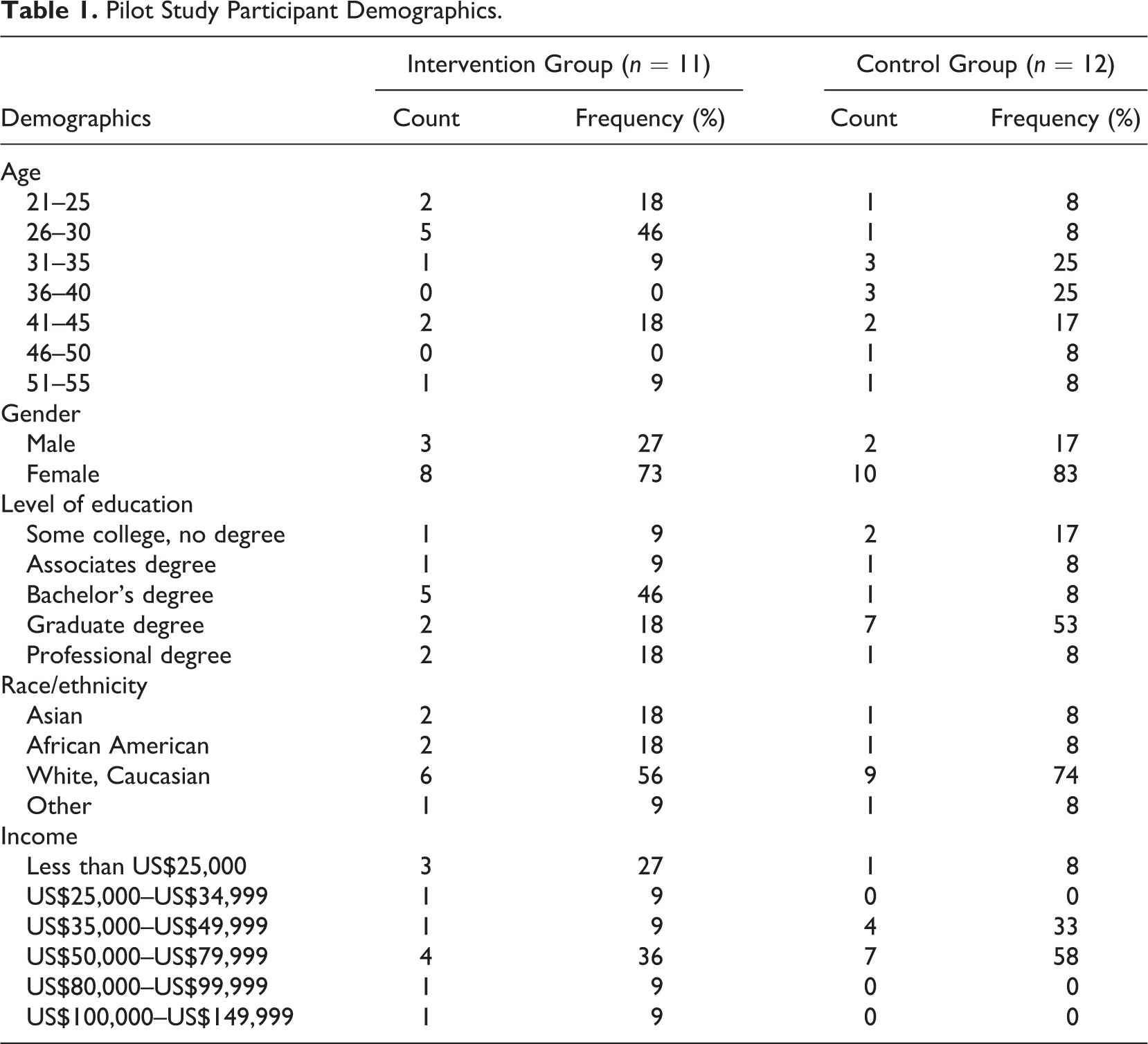
Recruitment efforts resulted in a small, convenience, nonprobabilistic sample. Researchers then assigned a condition to each of the two groups (i.e., flipped a coin to see what group would receive the intervention and what group would receive the generic conversation). In the end, 23 participants engaged in the study. Participants either received the intervention (i.e., Gender By Us® Toolkit; n = 11) or not (rather a generic conversation; n = 12). All recruitment and study procedures were approved by the institutional review board of the lead author at the time of the study. Demographics of the two groups of individuals who participated in the pilot study are reported in Table 1. The majority of the sample identified as female (78.26%), identified as white (65.22%), had a college education or graduate degree (76.26%), and reported making US$50,000 a year or more (56.52%).
Pilot Study Participant Demographics.
Procedure
Once participants arrived for their designated conversation, signed consent forms, and provided their e-mail addresses (to provide a link to a 2-week postintervention survey and incentives), individuals completed a baseline survey on paper, which asked questions about their perceptions and opinions about people, social problems, and stereotypes based on gender, race, age, and disability. After collection of the survey, participants engaged in conversations where they either received the intervention or engaged in a generic conversation. At the end of conversation, participants were asked to again complete a paper survey regarding their perceptions, opinions about people, social problems, and stereotypes based on gender, race, age, and disability. All participants received an incentive (US$10 gift card) each time they completed a survey. Further, a link for the follow-up survey and an additional US$10 gift card was sent to participants electronically 2 weeks after participating in their conversations.
To implement the intervention and generic conversation with fidelity, two members of the research team were trained by staff at The Women’s Fund of Central Ohio for 90 min on how to facilitate a conversation guided by the Gender By Us® Toolkit. In addition, prior to the implementation of the current study, researchers each observed the intervention facilitated by experienced moderators at least twice for at least 3 hours in contexts such as legal firms, businesses, and health-care settings. Notably, the Toolkit is designed for anyone to facilitate a gender-focused conversation in their home or workplace. Hence, the researchers simply facilitated the instructions prior to the intervention or generic conversation which varied only somewhat for both groups and then the participants engaged in conversations on their own. The same researcher facilitated instructions for both group conversations while the other researcher observed, took detailed notes, and acted as a timekeeper. Both groups participated in their conversations for approximately 1 hour.
Intervention
The intervention group participated in conversation specifically related to gender using the Gender By Us® Toolkit (download Toolkit here: http://www.womensfundcentralohio.org/gender-by-us-toolkit/). The Toolkit provides step-by-step instructions to guide a semistructured conversation. The first step prior to initiating the conversation is to review the Toolkit’s conversation “Do’s and Do Not’s” to promote a safe environment for conversation. The second step involves facilitators providing basic education regarding the terms “gender norms” and “implicit bias,” followed by a group discussion regarding gender roles and stereotypes using the “Man/Woman Box” icebreaker activity. From there, the intervention involves small groups self-facilitating a conversation guided by data point and prompt cards from the Toolkit.
Conversation prompt cards are related to personal experiences (i.e., have you ever been treated differently because of gender), cultural examples (i.e., throw like a girl), opinions (i.e., what is acceptable behavior), and societal views about gender and its impact on individuals and society. Additional examples of prompt cards include: Describe an experience when you have been affected by gender bias. What impact does gender bias have on our society? What gender-related messages did you hear growing up? How are gender norms reflected in society, including pop culture, advertising, movies, and TV?
Data point cards are related to disparities influencing women in relation to income, employment, education, health care, and mobility in politics from the state of Ohio and nationally. Examples of data point cards include: Women living below the poverty line have slightly higher educational attainment than men, yet they still have higher overall poverty rates. Even when we hold education, experience, employment gaps due to children, occupation, industry, and job title constant, there is a pay gap. This “unexplained” pay gap leaves little beyond discrimination to explain it. Some research has found this unexplained portion is a sizable share of the gap (41%).
Generic conversation
The group that participated in a generic conversation experienced a similar design and presentation comparable to the Gender By Us® Toolkit, but conversation prompts related to personal experiences, opinions, and societal views about all kinds of topics (e.g., family traditions, life questions, opinions, preferences). After reviewing the Toolkit’s conversation “Do’s and Do Not’s,” the researchers provided basic education regarding the terms “belief” and “stereotype” (as opposed to gender norms and implicit bias) and then facilitated group discussion regarding stereotypes using a “Dog-Person/Cat-Person Box” (as opposed to man/woman) icebreaker activity. From there, small groups self-facilitated discussions using conversation and data point and prompt cards from the Toolkit. Examples of prompt cards include: Do the ways people look indicate their level of intelligence? If you could be a superhero, which special power would you choose to have? What are your thoughts about aging in the United States?
Examples of data point cards include: In 2010, U.S. Census data show that approximately 19% of the population has a disability. In 2015, more people were killed from injuries caused by taking a selfie than by shark attacks. Today, the United States makes up 5% of the world’s population and has 25% of the world’s prisoners.
Quantitative Methods
Measures
Several validated measures were used in the study. The IAT to measure unconscious bias was not used in this study, but rather to not cue either group to the purpose the study other scales were used to assess perceptions of inequality and support for or against gender-based discrimination and workplace policies. Scales included: the SDO Scale (Ho et al., 2012), the Modern Sexism Scale (Swim et al., 1995), and the Neosexism Scale (Tougas et al., 1995). In addition, researchers created several items to assess overall perceptions to determine what, if any, influence it has on their ability to identify gender norms and motivations to intervene if they notice gender bias in their environment.
SDO
The SDO Scale (Ho et al., 2012) is a 16-item measure that assesses psychological orientations underlying a person’s preference for group-based dominance and inequality using a 7-point Likert-type scale (1 = strongly disagree and 7 = strongly agree). Higher scores on the SDO indicate one’s degree of preference for inequality among social groups. An example item is “Some groups of people are just more worthy than others.” As such, SDO is negatively correlated with empathy, tolerance, communality, and altruism. Higher scores represent greater intolerance, while lower scores represent greater empathy and tolerance. In past research, the scale demonstrated adequate reliabilities ranging from .79 to .92 (Ho et al., 2012). Reliability of the SDO measure in the current study was considered adequate ranging from .88 to .92 among the entire sample.
Neosexism
The Neosexism Scale developed by Tougas, Brown, Beaton, and Joly (1995) was used to examine this topic among the intervention and generic conversation groups at pretest, posttest, and 2-week follow-up. The Neosexism Scale examines respondents’ (lack of) support for policies designed to enhance the status of women. The scale is measured on a 7-point Likert-type scale (1 = strongly disagree and 7 = strongly agree). According to Tougas et al. (1995), contemporary sexists are under pressure to adopt egalitarian norms, but questions about affirmative action policies allow the neosexist to express underlying negative effect toward women in socially acceptable forms. Thus, higher scores indicate less support for policies designed to enhance the status of women, while lower scores represent greater support for policies designed to enhance the status of women. An example item on the scale is “Women will make more progress by being patient and not pushing too hard for change.”
The scale demonstrated adequate reliabilities in past research (α = .78) and ranged from .85 to .88 in the current study. To reiterate, to not cue either group to the purpose of the study, researchers included the Neosexism Scale in its original form and also included the scale in three other forms at pretest, posttest, and 2-week follow-up. For example, the scale was amended to replace the word “women” with other groups who may experience implicit bias (i.e., individuals with disabilities, people of color, and older adults). In the current study, only results from the original Neosexism Scale are reported to examine the effects of the intervention on perceptions of policies designed to enhance the status of women.
Modern sexism
To examine gender discrimination and a lack of sympathy for women’s issues, researchers used the Modern Sexism Scale (Swim et al., 1995) at posttest and 2-week follow-up for both groups. Since the scale asks specifically about women’s issues and discrimination, the scale was not used at pretest in an attempt to not cue either group to the purpose of the study. The Modern Sexism Scale (Swim et al., 1995) assesses perceptions as to whether gender discrimination continues to exist, resulting in unsympathetic resistance to gender equality efforts. An example item is “Discrimination against women is no longer a problem in the United States.” Higher scores represent greater awareness of the existence of gender discrimination. The scale is measured on a 5-point Likert-type scale (1 = strongly disagree and 5 = strongly agree). In past research, the scale yielded adequate reliability (α = .85; Swim et al., 1995). In the current study, the scale demonstrated adequate reliability with α ranging from .83 to .85.
Perceptions of the Toolkit
Participants also were asked about their general perceptions and self-efficacy at posttest. Items were designed by the researchers to examine how participants perceived the conversations, and what, if any, influence it had on their self-efficacy to identify gender norms and motivations to intervene if they noticed gender bias in their environment. Items are measured on a 5-point Likert-type scale (1 = strongly disagree and 5 = strongly agree). An example item read: “As a result of the conversation I am able to identify instances where gender norms may be operating in my environment.”
Plan of analysis
Using the Statistical Package for the Social Sciences (SPSS Version 22), survey data were analyzed by assessing the scale means, standard deviations, and differences within and between the intervention group and the group that participated in the generic conversation. To examine differences in the means between groups (i.e., intervention vs. generic), independent samples t test were used to compare the overall mean scores to see whether they differed significantly from one another. For items developed to assess perceptions of the Toolkit, independent samples t test were used to compare the overall mean scores on each item to see whether they differed significantly from one another. A significance level of p < .05 was used to assess significant differences between groups.
Qualitative Methods
Implicit gender bias
Both groups were asked a question at posttest designed to test their ability to transcend implicit gender bias (Tartarilla, Belle, & Schieber, 2016). The question reads: A son and father are driving down a twisty road when they accidentally swerve off the side and hit a tree. Upon arrival, the medics notice that while the father has died, the son is still breathing. They bring him to a local hospital in hopes of saving his life. When they arrive, the surgeon looks down at the boy and says, “I cannot operate on this boy because he is my son.” How is this possible?
Beliefs, awareness, and behaviors
Second, at posttest and 2-week follow-up, participants were asked a series of yes and no questions developed by the researchers about what was learned during the conversation and their behaviors since attending the conversation. Probes were used to elicit additional information pertaining to the yes or no response. An example question was “As a result of the conversation you participated in, did you learn anything new? If yes, please give an example.” In total, six open-ended questions were asked. Researchers analyzed these data in two ways. First, simple descriptive statistics of yes and no responses were recorded among both groups. Second, content analysis was used to distill themes related to changes in thoughts and beliefs, knowledge and awareness, and behaviors after the intervention group participated in the Gender By Us® Toolkit conversation. Two peer coders analyzed the responses separately and agreed upon mutually exclusive quotes to demonstrate reported changes in beliefs, knowledge and awareness, and behaviors.
Results
Quantitative Results
SDO
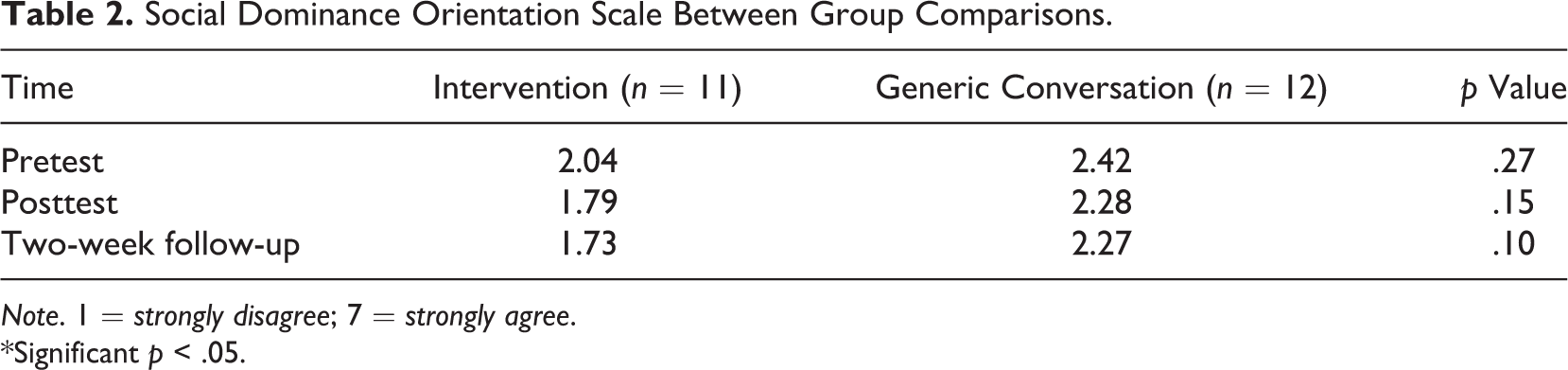
Results showed mean scores for the intervention group on the SDO Scale (designed to assess perceptions of group-based dominance and inequality) did not significantly differ from the generic conversation group at posttest or 2-week follow-up. While results were nonsignificant at p < .05 level, lower scores reported by the intervention group indicate greater empathy and tolerance when compared to the generic conversation group (see Table 2).
Social Dominance Orientation Scale Between Group Comparisons.
Note. 1 = strongly disagree; 7 = strongly agree.
*Significant p < .05.
Neosexism
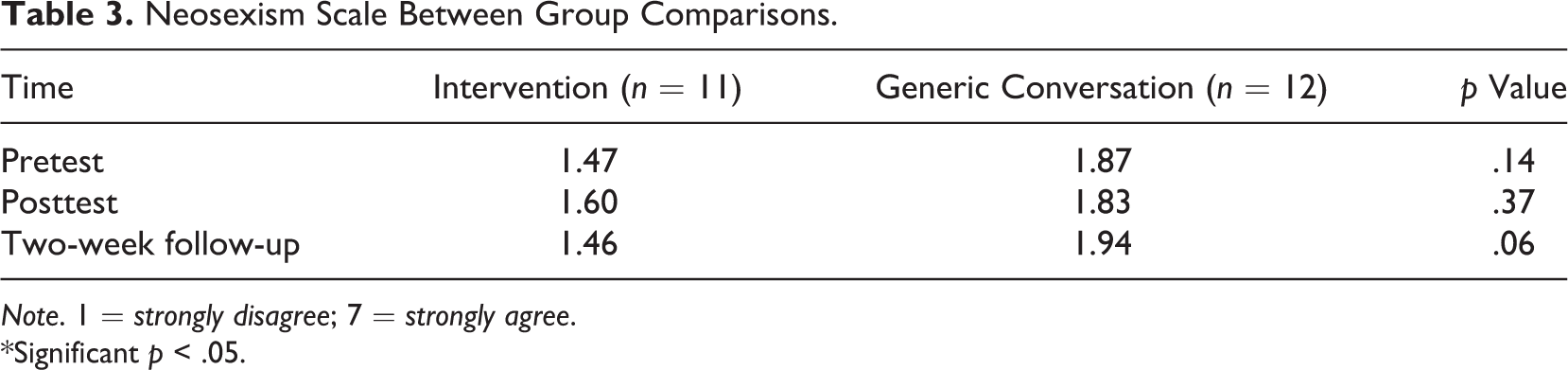
Intervention group mean scores on the Neosexism Scale did not significantly differ from the generic conversation group at either pretest or posttest (see Table 3).
Neosexism Scale Between Group Comparisons.
Note. 1 = strongly disagree; 7 = strongly agree.
*Significant p < .05.
Modern sexism
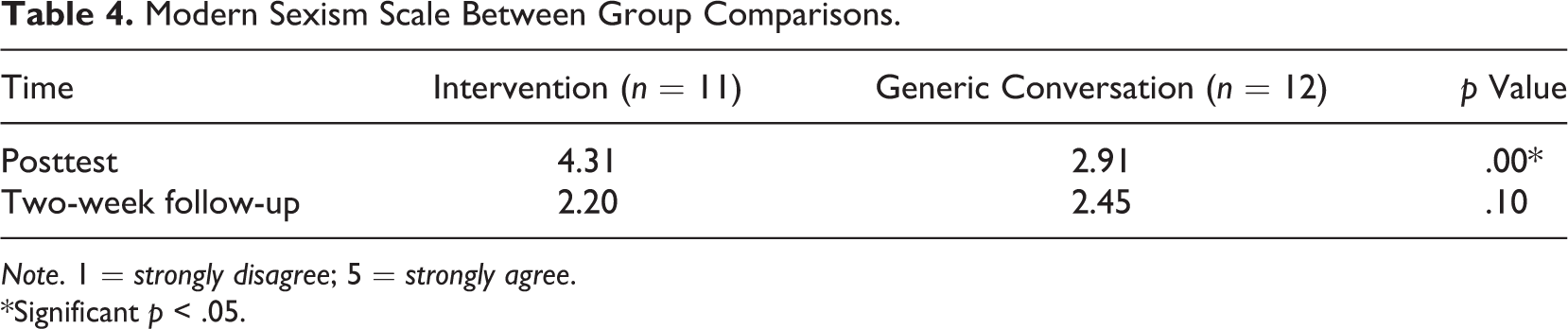
Results presented in Table 4 showed the difference between mean scores of intervention group and the generic conversation group were statistically significant at posttest indicating the intervention group reported greater awareness of the existence of gender discrimination (.00; p < .05).
Modern Sexism Scale Between Group Comparisons.
Note. 1 = strongly disagree; 5 = strongly agree.
*Significant p < .05.
Perceptions of the Toolkit
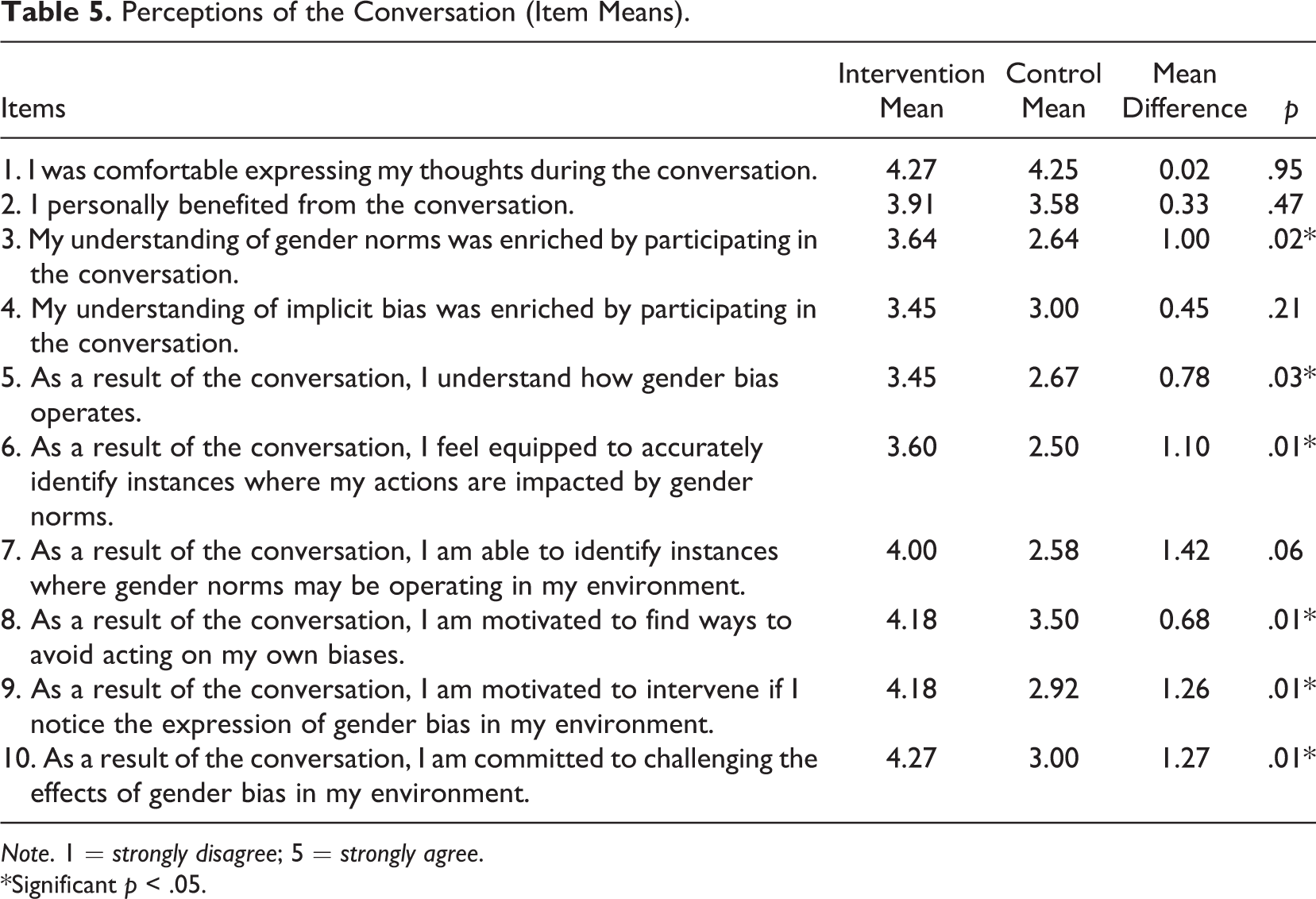
Participants in the generic conversation and intervention groups were asked about their perceptions of the Toolkit conversation and perceived self-efficacy at posttest. Results showed the intervention group scored significantly higher on 6 of the 10 questions, of which the majority related to understanding and identifying gender bias along with motivations for the future (see Table 5).
Perceptions of the Conversation (Item Means).
Note. 1 = strongly disagree; 5 = strongly agree.
*Significant p < .05.
Qualitative Results
Implicit gender bias
Three of the eleven participants who participated in the intervention correctly stated the boy’s surgeon was his mother. From the generic conversation group, a total of 6 of the 12 participants correctly identified the boy’s surgeon as a woman stating that the surgeons was the boy’s mother. In total, 9 of the 23 participants (approximately 39%) stated the boy’s surgeon was his mother. Notably, one participant initially stated the boy’s surgeon was “his stepfather,” but then crossed out that response and stated the boy’s surgeon was his mother thereby suggesting this participant’s first assumption was that the surgeon was male.
Conversely, eight participants from the intervention group and six from the generic conversation group assumed the boy’s surgeon was male. Example responses included: “Dads are married”; “Could be a gay couple. Could be a biological versus adoptive father. Could be a transgender individual”; “Boy has two fathers, married, one who died in the crash, the other who is the surgeon or the father who died is the grandfather, surgeon is his son, young boy;”; and “Maybe a stepfather!” Four participants also noted alternative forms of parenting or familial structures. For example, three participants mentioned “adoption” and did not specify a gender, while one other participant stated “sperm donation” with no reference of gender.
Beliefs, awareness, and behaviors
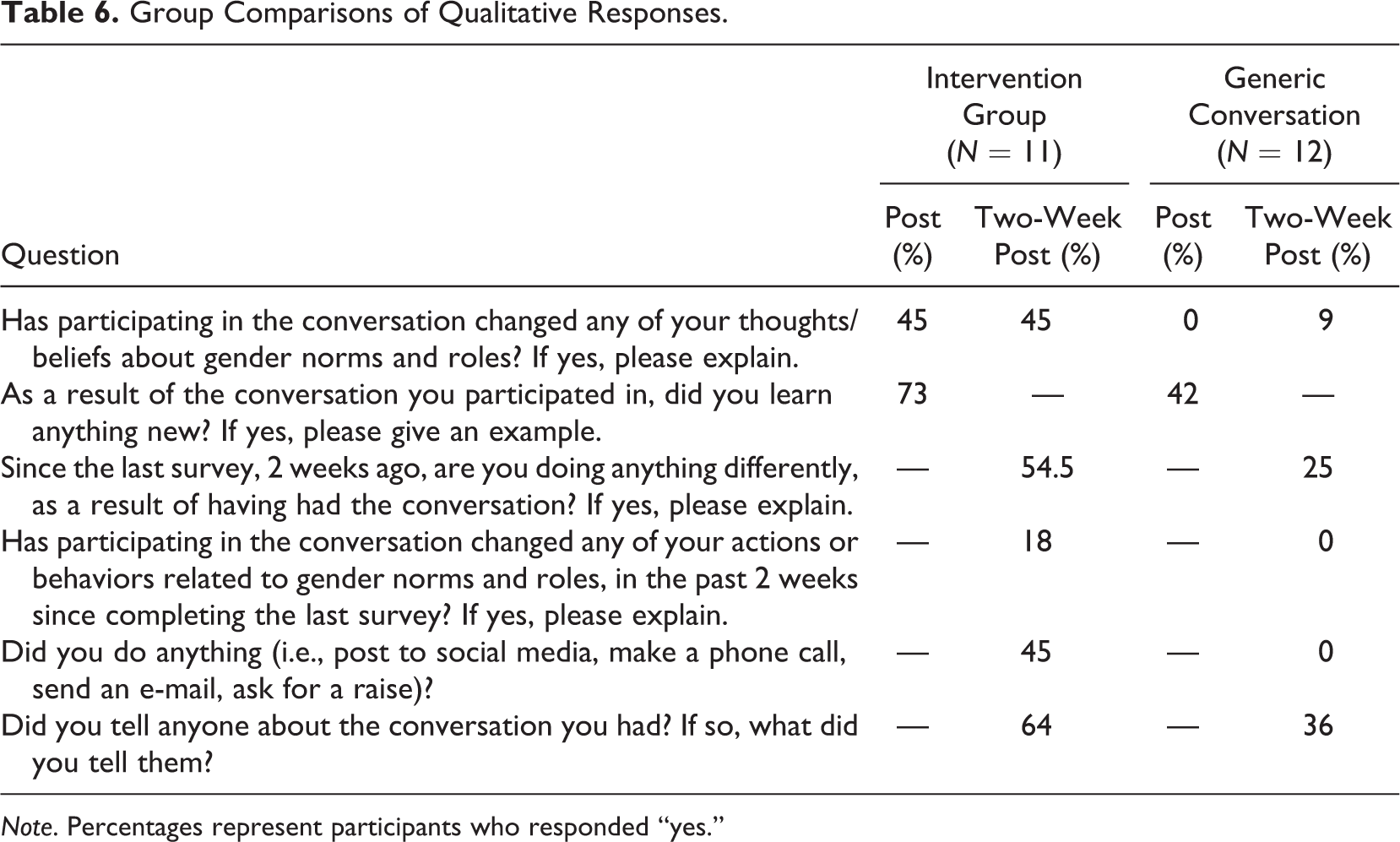
The intervention and generic conversation groups were asked open-ended questions about their experiences and behaviors after attending the conversations. Table 6 shows the yes and no responses across both groups. Results show the intervention group were more likely to report changes in their thoughts and beliefs, knowledge gained, and changes in their actions or behaviors on all of the questions asked at either posttest or 2-week posttest.
Group Comparisons of Qualitative Responses.
Note. Percentages represent participants who responded “yes.”
Beliefs
Five people (45%) in the intervention group reported “yes” the Gender By Us® Toolkit conversation changed their thoughts or beliefs about gender norms and roles immediately after the conversation (posttest). When probed, one participant stated, “It confirmed a need to be mindful and examine gender normative roles on an individual basis.” Another participant mentioned, Definitely, yes. I was surprised by how subtle some of these beliefs can be. I will be on the lookout for them now—for all genders, whereas before I had really only considered what it was like from my own. Yes, we talked about a lot of things that I had not really spent much time thinking about previously. Once it was brought to my attention, it has been much easier to spot their influences in our society. It seems to be lurking in the back of my mind continually.
Awareness
Eight intervention group participants (73%) reported “yes” they learned something new from their conversation at posttest. When asked to give an example, several participants reported examples specific to the impact of implicit gender bias. One participant reported, “Women on average (average being our group) don’t ever think about asking for a raise or compensation.” In addition, six participants (54.5%) reported they were doing something differently (e.g., a change in awareness, increased empathy) 2 weeks after their conversation. One participant stated, “I take a moment to think before I respond. I try to put myself in the other person’s perspective and try to understand why they may think/feel/say/do something.” Another participant mentioned greater awareness of how women were treated at their workplace stating, “I’m paying more attention to how women are being treated at my work.”
Behaviors
Two intervention group participants (18%) at 2-week posttest responded “yes” when asked whether they engaged in a change in behavior or a specific action as a result of participating in the Gender By Us® Toolkit conversation. One participant reported, “Yes, I’ve been mentoring this woman at work and standing up for myself more.” Another participant stated, “Yes…it has helped me have these conversations with others when the opportunity presents itself.” Another question asked participants at 2-week posttest whether they did anything (i.e., post to social media, make a phone call, send an e-mail, ask for a raise) after participating in the Gender By Us® Toolkit conversation. Five participants (45%) reported “yes.” One female participant mentioned, “[I] started saying no to unreasonable requests at work.” Another female participant reported, “Yes, I applied for a job that I previously thought I was underqualified for (I didn’t get the job).”
Finally, participants were asked at 2-week posttest whether they told anyone about the conversation and, if so, what they told them. A total of seven intervention group participants (64%) reported “yes.” Notably, the two males in the group both said they told their wives about the conversation. Another participant reported, “Yes, I told them about gender norms and implicit bias and how surprised I was to see the words we came up with the box exercise.” A second participant mentioned, Just one person. I told her about the conversation and how we were discussing gender norms and specifically women in society and the biases that they encounter. This wasn’t anything new to her, but she did find it interesting that an active conversation on the topic was constructed, and that those involved were as open as they were.
Discussion
This study examined whether conversations guided by the Gender By Us® Toolkit decreased implicit gender biases more than a generic conversation. Several findings indicate the conversation facilitated by utilizing the Gender By Us® Toolkit had a small, but positive effect on participants in the intervention group. First, descriptive results suggest the intervention group reported greater dissatisfaction of inequality among social groups at 2-week follow-up compared to their pretest scores. Second, results from the Neosexism Scale suggest, when comparing the scores of the intervention and generic conversation group at 2-week follow-up, the intervention group was more likely to report support for policies designed to enhance the status of women. This finding provides support that the intervention influenced perceptions of support toward policies to enhance the status of women compared to the generic conversation group who did not have a conversation about gender. Together, findings may indicate the Gender By Us® Toolkit may play a role in making participants more conscious of their implicit gender biases.
Additionally, findings from the Modern Sexism Scale suggest the intervention group reported significantly higher scores at posttest compared to the generic conversation group regarding awareness of the existence of gender discrimination. This finding aligns with past research suggesting small change in gender biases may emerge postintervention for groups engaging in discussion-based activities focused on stereotypes or gender bias manifestations in the workplace (Carnes et al., 2015; Girod et al., 2016; Isaac et al., 2009). However, the current study extends prior research as the intervention was tested among a group of full-time employed professionals and not just faculty members, and the study also gathered perceptions 2-week postintervention (Carnes et al., 2015). Findings also show scores at 2-week follow-up for the intervention group may not have lasting effects on participants in the long term. Such results may indicate that sustained cognitive or behavioral changes for implicit gender biases require a larger or more frequent dose of the intervention.
Finally, questions designed to assess perceptions and self-efficacy provided some context about how participants perceived the conversation and the knowledge gained. For example, participants in the intervention group reported feeling significantly more knowledgeable about how gender biases operate and in identifying instances when actions are impacted by gender biases. Participants in the intervention group also reported motivations to not only avoid acting on their own biases but also to intervene when an expression of gender bias was identified in their environment. Overall, the intervention conversations guided by the Gender By Us® Toolkit appear to not only decrease implicit gender biases more than generic conversations but also may result in more self-efficacy in understanding, identifying, and intervening when gender biases display themselves.
Despite participants’ overall perceptions that the intervention increased their awareness of implicit gender biases, the comparatively low number of intervention participants assuming that the boy’s surgeon in the riddle was a woman suggested most participants still retained implicit gender biases at least to some extent. Many of the participants not only assumed that the surgeon was male but also offered relatively complex justifications for a male surgeon rather than more simply stating that the surgeon was the boy’s mother, a woman. Today, women comprise just over 40% of physicians and surgeons, and yet many participants still fully bypassed the option of the surgeon being a woman (U.S. Census Bureau, 2017). Individuals’ masculinized implicit assumptions of physicians and surgeons are likely formed by dominant societal notions of the ideal worker in masculinized professions, which suggest that the perceived ideal worker or in this case the ideal surgeon is actually a white male (Acker, 1990; Davies, 2003; Risman, 2004).
Results suggest that the educational intervention had a positive impact on increasing participants’ awareness and knowledge; however, participants displayed cognitive processes that appeared to remain intertwined with unconscious gender biases despite this increase in knowledge and awareness. This finding proves consistent with other implicit bias research that demonstrates the rifeness of unconscious biases even when paired with the good intentions or informed consciousness of actors (e.g., Banaji & Greenwald, 2016). These findings suggest that participants may require more consistent interventions over a longer period of time. Yet, the extent to which unconscious biases can be decreased or reversed remains and requires further longitudinal research.
Limitations
Results should be interpreted with several limitations in mind. The pilot study included a small sample. Additionally, the individuals involved in the intervention and generic conversation conditions seemed to be motivated, well-educated participants. Thus, social desirability bias cannot be ruled out when interpreting the results. Further, random sampling was not used. Without true randomization and future research on the replicability of findings from the pilot study using a larger and more diverse sample—in terms of socioeconomic status, education, and gender—results should be interpreted with caution. Both the intervention and generic conversation groups consisted primarily of women, which also may bias findings. Future studies should purposively recruit more male participants in order to investigate potential differences in outcomes by gender. Further, the intervention was a brief, one-time activity. It is quite possible that its effects are dose-responsive. Another potential limitation is that one of the researchers also facilitated the intervention and generic conversation group conversations. This dual role, despite validity safeguards, may have influenced results. Future studies may consider comparisons of outcomes based upon whether or not the guided conversation was conducted by an expert facilitator or a lay person.
The IAT to measure unconscious bias was not used in this study and may have low reliability among first-time users (Rezaei, 2011). However, future studies investigating the effectiveness of Gender By Us® Toolkit may consider use of this popular tool to better understand its reliability and validity in assessing implicit bias. Additional research on interventions designed to raise awareness and challenge implicit gender biases related to the concept of gender as a social structure, structural/institutional sexism, gender identity, gender expressions, and gendered language are needed.
Implications
There are several implications for practice and policy regarding the findings of the study. Starting with practice, the Gender By Us® Toolkit may be an effective educational tool for generating open conversations and increasing awareness regarding implicit gender biases influencing men and women. In workplace settings, the Toolkit may be a feasible and easy to administer tool for professional development activities that aim to increase awareness of implicit gender biases, especially in fields such as politics, religion, technology, medicine, business, law, and even social work, where women are historically disadvantaged. Using the Toolkit to engage administrators and supervisors in conversations about how organizational policies unequally affect employees may result in meaningful agency-level policy change. For example, the conversation may facilitate and bring awareness to topics such as equal pay, equitable hiring and promotion practices, and other policies negatively influencing women. As a result of the small but significant effects of the conversation on participants, organizational leaders and employees themselves may be more likely to support policy changes that mitigate gender discrimination in the workplace.
Furthermore, social workers can expand upon the current use of the Toolkit to facilitate discussions and educational activities more broadly about societal stereotypes, attitudes, and limited perceptions and understanding of gender, gender identity, and gender expression. In addition to facilitating increased awareness about the harmful impacts of implicit bias and the gender gap in the workplace, these discussions provide an opportunity for improved understanding of the complexities of gender and added layers of societal discrimination that exists for gender-nonconforming individuals.
Conclusion
The current pilot study, designed to examine the effects of the Gender By Us® Toolkit compared to a generic conversation, contributes to a small body of work regarding implicit gender bias interventions. Overall, findings indicate the Gender By Us® Toolkit may have had a small but positive effect on decreasing implicit gender bias for the intervention group. The use of valid psychometric measures other than the IAT extends existing research on implicit bias interventions, yet future research with a larger and more diverse sample is needed. In the end, The Gender By Us® Toolkit aims to create a more gender equitable social environment, particularly on the organizational level. The Gender By Us® Toolkit may be a useful and easily administered intervention to raise awareness of the effects of implicit gender biases and in turn promote practice and policy changes to support women in the workplace.
Footnotes
Acknowledgments
The researchers acknowledge the contributions of Nichole Dunn and Sarah Pariser for their support and efforts on the project without whom the present study could not have been completed. We also would like to acknowledge the intervention researched in the current study was developed by The Ohio State University’s Kirwan Institute for the Study of Race and Ethnicity.
Declaration of Conflicting Interests
The author(s) declared no potential conflicts of interest with respect to the research, authorship, and/or publication of this article.
Funding
The author(s) disclosed receipt of the following financial support for the research, authorship, and/or publication of this article: This research, conducted by the Community and Youth Collaborative (CAYCI) at The Ohio State University, was financially supported by The Women’s Fund of Central Ohio.
