




Abstract
This review examines the emergence of trauma-aware approaches in urban planning. In doing so, it traces the theoretical evolution of trauma-aware planning, explores the nature and definition of trauma in a planning context, and categorises interventions into three typologies—awareness-building, response-oriented, and transformative approaches. Findings reveal theoretical and practical gaps, including a lack of empirical research on the effectiveness of trauma-aware practices and their integration into broader planning processes beyond engagement. This study underscores the need for further investigation into whether and how trauma-aware approaches can facilitate positive planning outcomes and contribute to systemic change in diverse planning contexts.
Introduction
In recent years, the concept of trauma-aware approaches in planning has gained attention as a means of conceptualising and addressing the adverse impacts of events and processes with a spatial component, such as natural disasters (Donovan 2012; Gibson 2022), war and violent conflict (Draus et al. 2019; Hatuka 2009; Kusiak and Azzouz 2023; Schwake 2018), and planning decisions like urban renewal and development as they intersect with or articulate racial discrimination (Anguelovski 2013; Corburn et al. 2023; Fullilove 2001; Knapp, Poe and Forester 2022; Poe 2022; Sweet and Harper-Anderson 2023). The present review is motivated by the need to give shape to this emerging area. In fields such as health, education, and social services, trauma theory is well-established, with frameworks, tools, and metrics to guide trauma-informed practice (For example: Champine et al. 2019; Fye, Wind and Cook 2023; Goodman et al. 2016; Lanphier and Anani 2022; Leitch 2017; Magruder et al. 2016; Saunders et al. 2023). In contrast, trauma theory in planning lacks an equivalent foundation, despite assertions that planning processes can both cause and respond to trauma (Schroeder 2023). Without conceptual clarity or a shared language, it remains difficult to evaluate the value or limitations of trauma-aware approaches in planning or to design appropriate interventions.
Trauma theory itself has a complex and discontinuous history. First used in the mid-1800s to describe physical injury, the term was soon applied by medical professionals to describe psychological responses such as shock. A key development was the formal categorisation of Post-Traumatic Stress Disorder (PTSD) as a psychological condition following the Vietnam War, reframing what had previously been casually labelled as “post-Vietnam syndrome” (also called “shell-shock” or “combat fatigue”) into a clinically defined mental health condition. Subsequent advances in psychology introduced more nuanced understandings of trauma, including the concept of complex trauma to describe the cumulative effects of repeated exposure to harmful experiences, and intergenerational trauma (Lehrner and Yehuda 2018) among others. These developments moved trauma studies beyond individual diagnosis toward broader social, collective, and cultural understandings.
Beyond psychology, trauma theory has since shaped disciplines such as law, philosophy, sociology, public health, education, and increasingly, spatial planning (Corburn 2021; Sütterlin 2020). A key inflection point was the US Department of Health and Human Services publication of Concept of Trauma (Substance Abuse and Mental Health Services Administration – SAMHSA 2014), which introduced a framework of trauma-informed approaches, later elaborated in SAMHSA's Practical Guide for Implementing a Trauma-Informed Approach (2023). These frameworks have informed similar trauma-informed practice models and policy documents in Canada, the UK, Europe, and Australia. Crucially, they also spurred the development of assessment tools and metrics to evaluate organizational trauma-responsiveness and the impact of trauma-informed practices, though these tools are largely absent from the planning field.
Trauma-aware approaches have resulted in measurable, positive outcomes in other disciplines, suggesting their potential value for planning (For example: Matlin et al. 2019; Saunders et al. 2023). However, planning operates with distinct institutional logics, spatial scales, and social dynamics. Thus, adapting and developing trauma-aware approaches for planning has the potential to improve planning processes, particularly in the local planning context where issues are often culturally, socially, and/or economically sensitive. Moreover, it has the potential to produce planning outcomes that are more sensitive to the needs of affected stakeholders. Applying trauma-aware approaches in this context in a grounded and contextually appropriate way requires synthesising existing contributions by mapping how trauma is already being conceptualised, applied, and contested within the literature. To date, no systematic review has examined how trauma is defined or discussed in planning, nor the interventions it has inspired. This review begins to address that gap by analysing how trauma is currently understood, framed, and operationalised in planning scholarship, thereby laying the groundwork for advancing trauma theory and practice within the discipline.
The primary objective of this systematic review is to determine how trauma is currently being defined, conceptualised, and operationalised as such within the planning literature. The specific objectives of this paper are to identify: (1) the attributes of existing planning trauma literature, including geography, publication date, and planning sub-discipline; (2) the theoretical origins of planning trauma; (3) how trauma is defined and discussed in academic planning literature; and (4) the key interventions proposed in planning trauma discourse. In delivering these objectives, the review employs a methodological approach including: a systematic search and review of academic publications; the formulation and application of inclusion and exclusion criteria; followed by thematic analysis of the selected studies in accordance with the stated objectives. The review includes studies published between 2000 and 2024, encompassing varied geographical regions and urban settings.
Methods
Search and Inclusion Strategies
The review was carried out in a series of sequential steps based on the PRISMA 2020 flow diagram for new systematic reviews which included searches of databases and registers only (Page et al. 2021). Notable diversions from this process included a separation of the title and abstract screening step into two distinct steps, and an initial full-text screening to eliminate articles that did not discuss trauma or related interventions in a planning context. Data collection included the following steps:
Initial identification of articles Screening
Title screening Abstract screening Initial full text screening, to eliminate articles without discussion of trauma or trauma-informed practice (TIP) in a planning context Final full text screening
Information Sources and Selection of Sources of Evidence
The Scopus database was selected as the information source for this study for several reasons. Compared to the Web of Science database, Scopus indexes more journals and includes a higher proportion of journals from non-western and peripheral regions (Asubiaro, Onaolapo and Mills 2024), aligning with the goal of capturing geographically and institutionally diverse literature. In contrast to Google Scholar, Scopus supports Boolean searches and filtering by peer-reviewed academic sources, which made it more suitable for a systematic and replicable review focused on scholarly planning research (Gusenbauer 2022; Gusenbauer and Haddaway 2019). Finally, Scopus “does not differentiate in institutional coverage packages, while WOS offers tailored database packages,” which interferes with replicability (Gusenbauer 2022, 2689). While this review follows previous research in selecting a sole database for review (e.g.,: Hartt, Lee and Empey-Salisbury 2024; Sobhaninia 2024; Verweij and Trell 2019), future research in this area would benefit from the review and synthesis of literature from diverse sources.
Eligibility Criteria
Initial Identification of Articles
As there has been no comprehensive systematic literature review on the topic of trauma and related interventions in planning, the eligibility requirements were very broad to begin with and were narrowed in each consecutive step. This approach ensured that all relevant literature was captured. The focus of the review is spatial planning specifically, resulting in the exclusion of any records outside of this field. The broad search term “planning” allowed for the capture of regional, spatial, town, urban, and rural planning Figure 1.
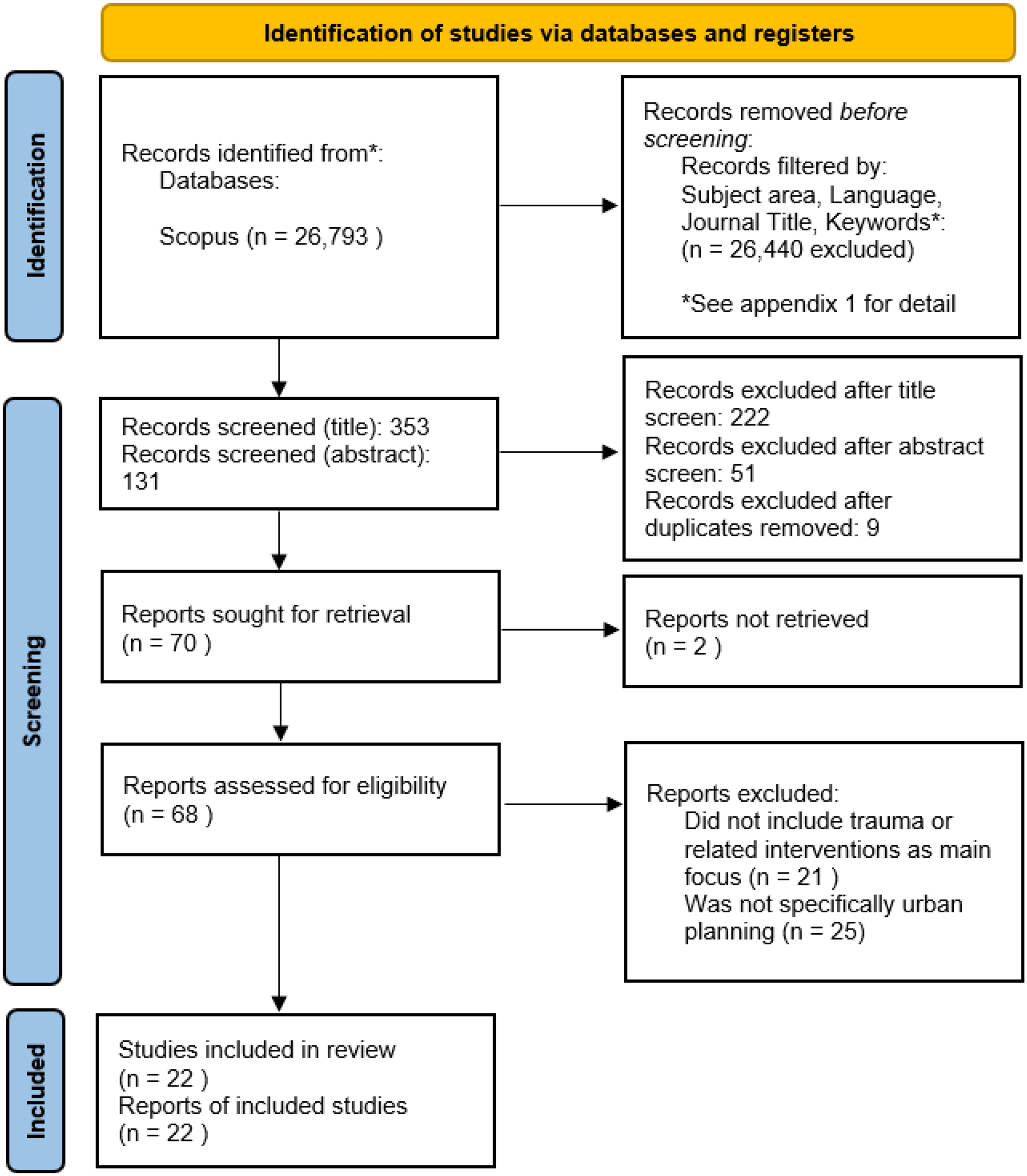
PRISMA Record Search and Selection Flowchart.
Articles that did not explicitly include the language of trauma were excluded from this review. This decision aligns with the review's core objective: to analyse how trauma is currently being defined, conceptualised, and operationalised as such within the planning literature. As a result, adjacent work that may share conceptual or thematic overlap but does not use trauma-related terminology was necessarily excluded. Given that trauma-aware planning remains an emerging area, this review seeks to identify the defining characteristics, assumptions, and perspectives found in literature that explicitly employs the language of trauma. In doing so, it aims to establish a grounded starting point for future analyses of related literature through a trauma-aware lens, and to support more nuanced conversations about how trauma-aware planning is defined, framed, and identified.
Central to the decision to require the explicit use of trauma language was a desire to respect the choices of authors who may engage with trauma-related themes but do not frame their work in that language. Moreover, scholars have called for the “responsible, non-appropriative globalization of trauma studies that acknowledges minority and non-Western cultures on and in their own terms” (Sütterlin 2020, referencing Craps 2013, emphasis our own). Trauma is a theoretically and politically charged concept, and some scholars may deliberately choose not to employ it due to epistemological commitments, disciplinary context, or cultural standpoint. Rather than assume equivalence, we have limited the scope of this review to literature that explicitly invokes trauma. While this means excluding work that may share conceptual ground, we believe it is essential to begin with what is already self-identified as trauma scholarship in planning.
The selection process was iterative, and included three search strings, modified by within-database filters (see Appendix 1 for detail). The terms in the initial search string [(TITLE-ABS-KEY((urban OR planning) AND (trauma OR healing))] were selected to capture as many articles as possible relating to trauma and related interventions in the context of urban planning. The word “healing” was selected for inclusion based on the frequent use of the word in indicative literature with which the author was familiar before beginning this systematic review (including: Berglund and Kitson 2021; Erfan 2017; Knapp, Poe and Forester 2022; Poe 2022). The second search string [(TITLE-ABS-KEY(urban planning AND “spatial justice”) ALL(trauma))] was selected to capture any urban planning articles focused on spatial justice that included a reference to trauma. This string was selected based on the appearance of spatial justice and trauma appearing together in indicative literature (Knapp, Poe and Forester 2022). The final search string [(TITLE-ABS-KEY(“urban planning”) ALL(trauma)] was selected to attempt to capture any other urban planning articles that referenced trauma. This differed from the first search string, where the syntax specified “urban” OR “planning”, and instead returned results for “urban planning,” resulting in a narrower search.
Screening
Articles were screened in four steps. The first step involved a manual title screening process, and articles that were not related to trauma in an urban planning context were excluded. This was followed by an abstract screening process, which further narrowed the focus of the records to those that discuss trauma in an urban planning context as a central element of the article. An initial full-text screening was conducted to exclude any articles that subsequently emerged as not having any relevance to trauma and related interventions within the context of urban planning. As this review is specifically focused on how the concept of trauma has emerged and evolved in urban planning literature (for reasons outlined above), the remaining records were screened for the use of the word “trauma” within the body of the paper (excluding any records that included trauma in the title, abstract, or references, but that did not discuss trauma in the body paragraphs).
Data Collection and Analysis
After screening, a total of 22 articles were included in the review. This relatively small number of qualifying papers demonstrates the infancy of the concept of trauma in a planning context. The following data was collected from each article (see Appendix 2 for full table):
Author Article Year DOI Geography of study Sub-discipline of planning Definition of trauma Proposed intervention Theoretical or empirical approach Main subject demographic/ characteristic being studied Emerging themes
The analysis had two main components. First, an analysis of the study attributes was undertaken. This aimed to determine study design (empirical or theoretical), a timeline of publications, and the geography of case studies appearing in the literature. To accomplish the timeline and geography analysis, the relevant data was structured for the analysis software Tableau Desktop. Using the built-in visualisation tools, a map of individual cases, and a timeline of publications were developed.
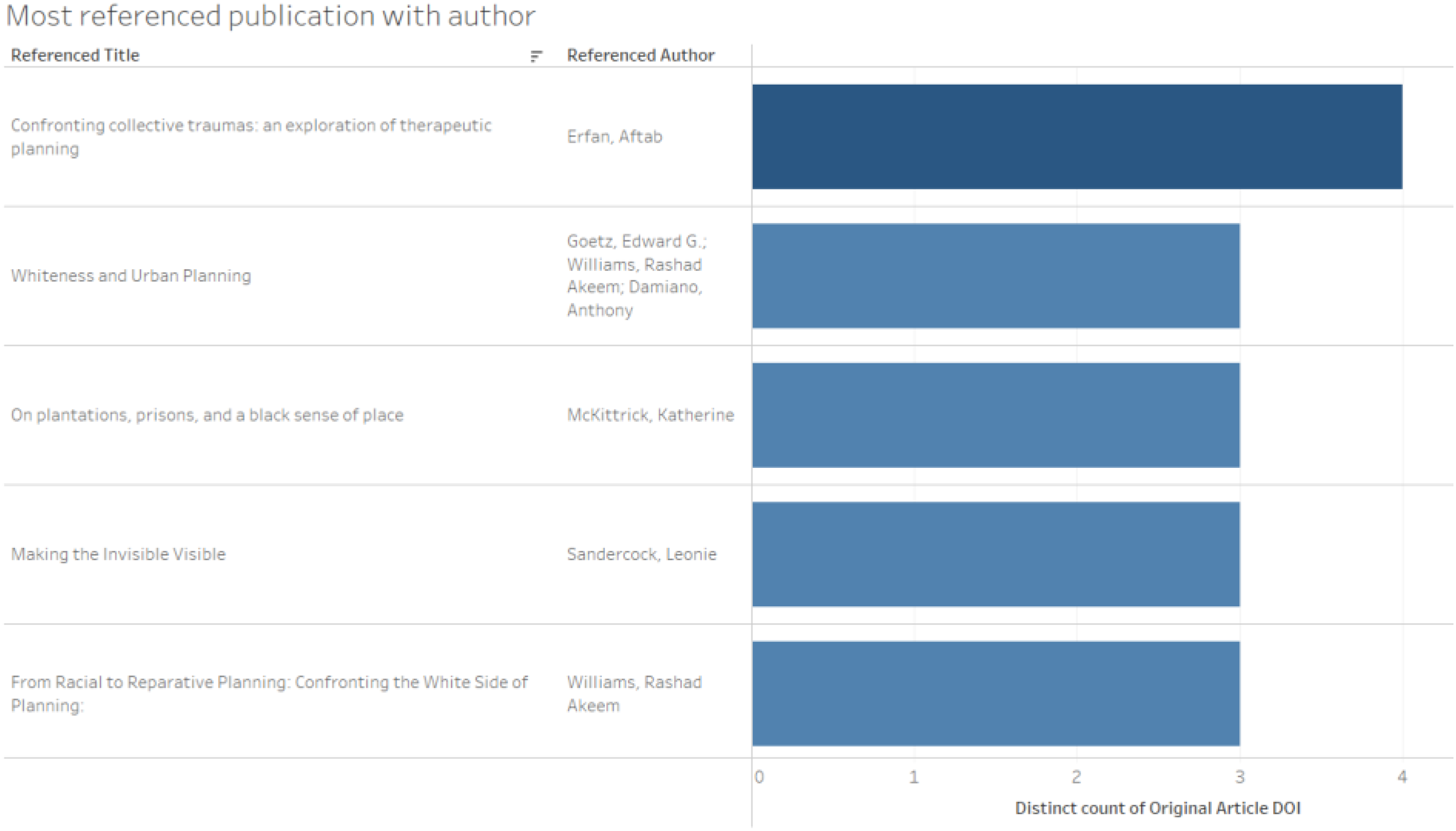
A reference analysis was undertaken to identify common references across the included records, with the aim of identifying common influences on trauma theory and related interventions within urban planning. . To perform this analysis, the DOI of each included record was inputted into citationchaser (https://estech.shinyapps.io/citationchaser/). 1 A backward citation chase was then performed, which returned a list of references for the inputted record. These were copied and pasted into an excel database. These steps were performed for each of the included records. These data were structured for the analysis software Tableau Desktop. Using the visualisation functions within the software, it was possible to identify authors and publications that had been referenced most frequently by the included records. Analysis was done to determine those referenced by the highest number of unique records, with the aim of identifying common influences on trauma and related interventions within urban planning.
Finally, the included literature was synthesised using theoretical thematic analysis at the semantic level (Braun and Clarke 2006). The analysis was guided by the review's core research objectives, which focused on how trauma has been conceptualised and operationalised in planning literature to date. Broad categories were developed in alignment with these objectives, including: (1) theoretical origins of trauma in planning; (2) definitions and characterisations of trauma; and (3) trauma-aware approaches and interventions. Within these categories, sub-themes were identified through close reading and comparison across sources. The aim was to provide a descriptive synthesis of the current landscape of trauma-aware planning literature. As part of this process, preliminary typologies were developed to help describe and differentiate types of trauma-related planning scholarship, offering a provisional framework for future exploration.
Limitations
The results of this study should be interpreted with its limitations in mind, particularly regarding information sources (see “Information Sources and Selection of Sources of Evidence”) and eligibility criteria (see “Eligibility Criteria”). First, this review was restricted to peer-reviewed, English-language journal articles indexed in Scopus. This limitation necessarily narrows the scope of perspectives included and contributes to the centring and promotion of Western and Eurocentric conceptualisations of trauma. Future research would benefit from the inclusion of related literature in languages other than English. Critically, a more nuanced and grounded understanding of trauma-aware planning will require attention to theory and practice expressed through informal routes, such as oral tradition, storytelling, embodied practice, or non-academic writing.
The inclusion criteria were significantly narrowed by the requirement that the term “trauma” appear explicitly in the text. While this was a deliberate decision in line with the semantic thematic analysis approach, it is noted that the resulting analysis is primarily descriptive. Future studies could expand upon this work by engaging with adjacent literature through latent thematic analysis (or similar approaches) to explore the underlying assumptions, ideologies, and conceptual frameworks that shape how trauma-related issues are framed and addressed in planning theory and practice (Braun and Clarke 2006).
Results: Study Attributes
Timeline and Reference Analysis
Of the 22 papers reviewed, half (11) were published between 2001 and 2020, and half (11) were published between 2021 and 2023. This is a distinct shift that shows an increasing interest in the topic of trauma in the planning context, perhaps due to a confluence of social and political events. In 2020, the Black Lives Matter movement increased in earnest in the United States after the murder of a black man named George Floyd by a white Minnesota Police Department Officer. There is an increase in the proportion of literature focused on trauma with regard to race coming from the United States in this timeframe, answering a broader sociopolitical call to acknowledge and grapple with the articulation of white supremacy and racism across all institutions. Globally, the Covid-19 pandemic sparked increasing conversations about social and spatial inequity. The review reveals that planning papers consistently explore trauma through three recurring sub-themes: the spatial and social effects of racial and ethnic discrimination, trauma in post-conflict landscapes, and trauma in post-colonial communities. However, the distribution of research across these themes fluctuates over time, with certain periods showing greater focus on one theme over the others Figure 2.
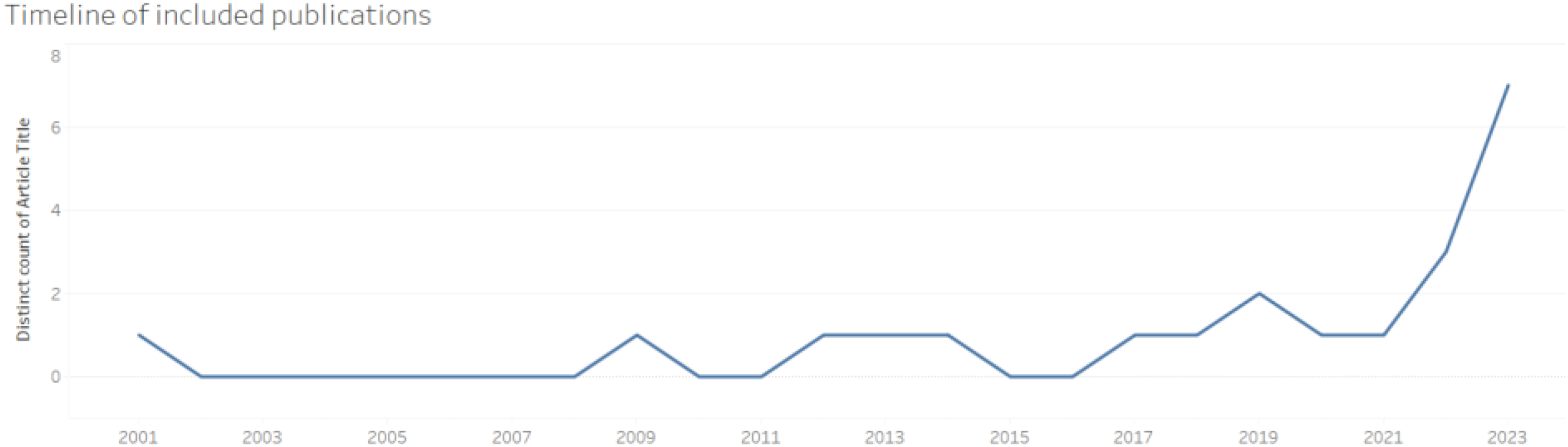
Timeline of Publication Dates of Papers Included in Present Review.
Analysis of the most referenced author in the included papers helps illuminate the theoretical underpinnings of trauma and related interventions in urban planning, including communicative, collaborative, and participatory planning orientations (Healey 1992, 1996, 1997, 2003; Sandercock 1998, 2000, 2003, 2004a, 2004b, 2010; Sandercock and Attili 2014), deliberative and equity planning (Forester 1982, 1999, 2012, 2020), and various spatial justice perspectives (including but not limited to: Fullilove 1999, 2016; McKittrick 2011, 2013; Mignolo 2005, 2009, 2011, 2020; Yiftachel 1998, 2009, 2020).
Forward citation data were also collected for the included papers and analysed to identify any landmark or highly influential papers. Forward citation data were reviewed both with and without statistical outliers (identified using the interquartile range method). This provided a more balanced view of citation patterns across the literature. Excluding outliers, the mean forward citation count was 18.6 with a standard deviation of 19.4, indicating substantial variation in how frequently included works have been cited. This variability reflects the exploratory and dispersed nature of trauma scholarship in planning. Two papers, Anguelovski (2013) with 199 citations and Fullilove (2001) with 244 citations, were identified as statistical outliers. While citation count can serve as a rough proxy for scholarly prominence, it is also shaped by the age of a publication. These two papers are among the oldest in the dataset, whereas over three-quarters of the included articles were published after 2013 and more than half after 2021, limiting the time available for citation accumulation. Citation data should therefore be interpreted with caution, especially when comparing newer publications.
The reference analysis showed limited cross-citation among included studies. While this may suggest a degree of fragmentation, it likely reflects the nascent and exploratory status of trauma research within planning. Overall, the analysis suggests that current scholarship draws from diverse sources and theoretical frameworks, which have yet to be consolidated into a cohesive conceptual foundation within the discipline.
Study Design
To date, trauma planning literature remains largely theoretical. Of the included publications, 15 were theoretical papers, while seven were empirical studies. The theoretical publications generally relied on case studies to explore and build theory. These papers explored causes and types of trauma, including cultural and collective trauma, trauma caused by natural and anthropogenic catastrophes, and trauma caused by planning. Many papers developed definitions of trauma (Draus et al. 2019; Erfan 2017; Gotham and Campanella 2010; Hatuka 2009; Schwake 2018). The majority of papers were concerned with both establishing that trauma exists in an urban planning context and exploring the role of planning in healing trauma. While the nature of healing was underdeveloped in the literature, a dominant theme of trust as a component, result, and driver of healing was revealed (Berglund and Kitson 2021; Corburn et al. 2023; Draus et al. 2019; Erfan 2017; Fullilove 2001; Jackson 2019; Knapp, Poe and Forester 2022; Kusiak and Azzouz 2023; Ortiz 2023; Poe 2022). Many theoretical papers explored potential trauma interventions. Some papers suggested particular trauma-aware planning approaches or orientations, including reparative planning, communal trauma theory, and radical hope. Others reflected on the use of specific trauma-aware methods or tools, such as storytelling or trauma-aware mapping (see “Trauma-aware Approaches and Interventions”).
A review of the methodologies used in the empirical studies clearly shows an emphasis on qualitative research and a focus on contextual and case-specific insights in the study of trauma and related interventions in urban planning. Table 1 summarises the analytical approaches of the empirical publications included in the present review.
Study Design, Data Collection and Analysis Found in Empirical Studies Included in Present Review.
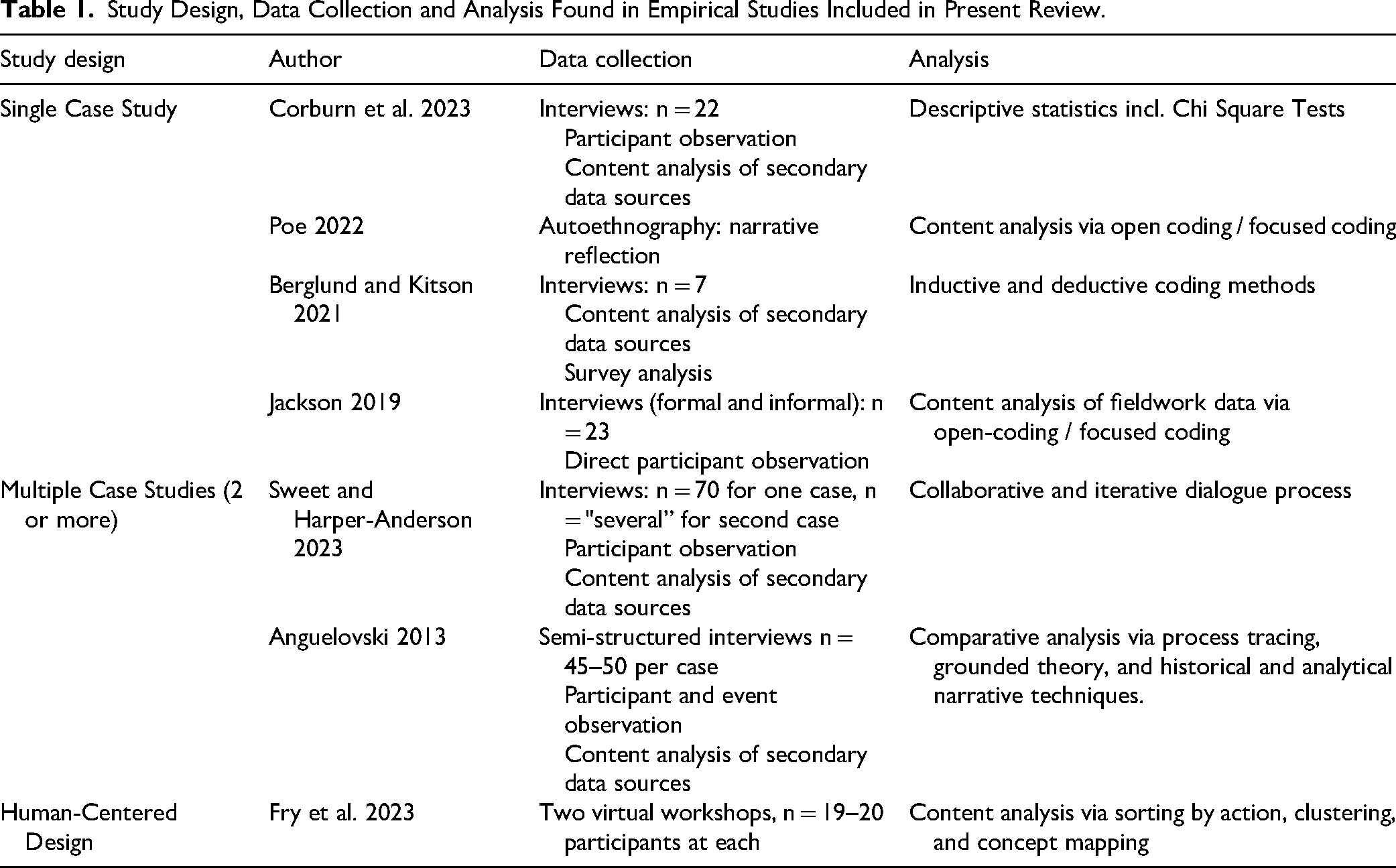
Most of the studies were single case studies (Berglund and Kitson 2021; Corburn et al. 2023; Jackson 2019; Poe 2022), while two of the included papers used multiple case studies (Anguelovski 2013; Sweet and Harper-Anderson 2023). Only one study included quantitative analysis, in the form of the analysis of two waves of public surveys. These surveys were not purpose-built for the study, but provided applicable insights (Corburn et al. 2023). All but one study (Poe 2022) included interviews to gather in-depth insights from participants. The number of interviewees ranged significantly, from 7 to 50. Interviewees often included a mix of community members, planning experts, and other community agencies or organisations related to the specific case. Both formal and informal interviews were used to capture a range of perspectives. Participant observation was another common method, wherein the researchers observed planning processes and community interactions to gain contextual understanding (Anguelovski 2013; Corburn et al. 2023; Jackson 2019). Content analysis of secondary data sources was also widely used. Secondary data sources included municipal agency reports and maps, nonprofit and community organizations’ reports and memos, newspaper articles, and press releases (Anguelovski 2013), public meeting summaries, plans, grant proposals, annual reports, and program evaluations (Corburn et al. 2023), published interviews, both in print and on video, published accounts of the history of Jackson Ward; Books, studies, and the Norristown comprehensive plan from 1965 (Sweet and Harper-Anderson 2023), and project archives (Poe 2022). Analytical techniques included grounded theory and process tracing (Anguelovski 2013), inductive and deductive coding (Berglund and Kitson 2021), open and focused coding (Jackson 2019; Poe 2022), and content mapping and clustering (Fry et al. 2023). The survey analysis computed descriptive statistics of responses from each survey wave and chi squared tests were used to determine levels of significance (Corburn et al. 2023).
Of the 22 publications included in the present review, six were focused solely on the US context (Corburn et al. 2023; Fry et al. 2023; Fullilove 2001; Jackson 2019; Poe 2022; Sweet and Harper-Anderson 2023), and a further three publications had a US location as at least one case-study (Anguelovski 2013; Draus et al. 2019; Knapp, Poe and Forester 2022). Additional case studies were included from a wide geographical range, including a total of 18 countries located across North, Central and South America, Europe, the Middle East, Asia, Africa, and Australia. East Asian and African countries were underrepresented, although it is not clear if this is due to differences in cultural perceptions of trauma, limited focus on trauma in the planning context in these regions, publisher bias, or the fact that only English-language publications were included in this review.
A critical analysis of the findings from both the empirical and theoretical papers in accordance with the core objectives of the review is presented below.
Discussion
Theoretical Origins
Although trauma-aware planning is a relatively new area of inquiry, the present review suggests it is informed by and connected to a range of established planning theories. To clarify the conceptual underpinnings of trauma-aware approaches in planning, the following section synthesises the theoretical foundations cited within the reviewed literature (including communicative and therapeutic planning, reflective practice, and equity planning), and highlights how these earlier traditions influence trauma-aware planning literature. As such, the analysis extends slightly beyond the immediate content of the reviewed papers to clarify how trauma-aware approaches inherit, adapt, and sometimes depart from earlier planning traditions.
From the 1970s, the rational-comprehensive paradigm started to give way to suggestions of more collaborative approaches, concerned with pluralism and representation. These methods increasingly sought to involve the public in planning processes and decisions. Arnstein's seminal Ladder of Participation provided a framework for gauging the degree of public participation in a process, and argued for citizen power as opposed to nonparticipation or tokenism (Arnstein 1969). Following on from this, and drawing from varied social and theoretical movements, multiple planning theories emerged around ideas of increased democratisation of planning decision-making.
Extant planning trauma literature has emerged as part of the post-rational planning paradigm, and takes heavy inspiration from the concept of therapeutic planning. Therapeutic planning, introduced by Leonie Sandercock, fundamentally hoped to exploit “the possibility of social transformation, of a process of public learning that results in permanent shifts in values and institutions” (Sandercock 2004b, 193). This approach, situated in the communicative planning tradition (see: Healey 1997; Innes 1998), seems to be a natural evolution of earlier radical and transactive planning approaches, sharing the goals of equity and justice, and increased democratic processes within planning (Grabow and Heskin 1973; Angotti 2007; Lane 2005), in addition to sharing communicative planning's commitment to collective deliberation and consensus building. Notably, therapeutic planning added the explicit language of emotional engagement. Because emotions like “fears, and hopes, anxieties and desires, memory and loss, anger about and fear of change” drive many of the challenges in planning, Sandercock posited that it is impractical to imagine that any meaningful resolution might be reached without acknowledging these emotions (Sandercock 2004b). This approach also advocated for the recognition of the “intelligence of emotions,” noting that the notion of reason and emotion as two opposing forces was outdated (ibid). This perspective was informed in part by Antonio Damasio, a neuroscientist who studied emotions, and whose work had significant implications for trauma theory in the field of psychology (Hoch 2006; van der Kolk 2014). Therapeutic planning represented a step forward in planning in a more holistic way, by taking emotions into consideration. While critics suggested that planning decisions should hinge on rational arguments, Sandercock (2004b) posited that there is no rationality devoid of emotion.
Reflective practice has also influenced planning trauma literature. Inspired by Schön's Reflective Practitioner (1991), elements of reflective practice were incorporated into planning work (see De Leo and Forester 2017). Reflection-in-action was used to describe the process of practitioners consciously analysing their actions to determine what was, or more often, was not working well to help them solve a practice-problem. This in turn would inform the responsive creation of new practice (Cameron 2009). While reflective practice was initially focused solely on the individual practitioner reflecting on their individual practice, planning literature has evolved to a more ecological imagining of the concept. Employing terms like “critical pragmatism” (Forester 2012), “deliberative practice” and “action inquiry” (Erfan 2017), reflective practice encourages planners to interrogate how their practice is shaped by and interacts with political, societal and social spheres, to the end that “that we might explore and develop to help plural publics deal with their differences of interests and values, worldviews and cultures, ideologies and more” (Forester 2012, 9).
The papers analysed as part of this review also demonstrate linkages to equity planning. Arising in response to Davidoff's advocacy planning, in which the role of the advocacy planner was to use technical expertise to empower and represent a variety of communities with a particular focus on the poor and disenfranchised (Angotti 2007), equity planning specifically focuses on achieving equitable outcomes in urban planning. Equity planning involves actively working to address and rectify inequalities within communities, ensuring that planning decisions promote fairness and benefit underserved populations (Krumholz 1982). Following a comprehensive review of six decades of equity planning literature, Arroyo, Sandoval and Bernstein (2023) introduced Racial Equity Planning (REP). REP is defined as “planning that aims to ameliorate historically racist policies, programs, and actions through prioritizing public resource redistribution, ethnic and racial representation, and participatory procedural design” (Arroyo, Sandoval and Bernstein 2023, 438). REP comprises four key eras, including the civil rights era (1961–68), the model cities and successive programmes era (1969–1991), the HOPE VI and HUD's SCRPG era (1992–2015), and the contemporary era (2015–2021). The primary themes associated with each of these eras (social justice, citizen participation, equitable housing and local community stability and grassroots partnerships/racially based reparations, respectively) are reflected in the included papers in this review. Particularly, trauma due to housing dispossession (Fullilove 2001; Jackson 2019; Sweet and Harper-Anderson 2023) and reparative planning (Berglund and Kitson 2021; Knapp, Poe and Forester 2022; Poe 2022) are common themes across planning trauma literature coming from the United States.
While the concept of trauma in planning is emerging, critiques of therapeutic planning have been recognised as applicable to trauma-aware approaches in a planning context. Like therapeutic planning, trauma-aware planning could be interpreted as overly-focused on emotions, and so seen as irrational (Erfan 2017). The skills required to successfully integrate emotionally-engaged planning into practice may be more typical in the psychology field, where professionals undergo extensive training to prepare to safely and effectively engage with clients or members of the public (ibid). There are limited opportunities for professional planners to develop the breadth and depth of knowledge and practical experience integrating trauma-aware approaches into planning practice. Relatedly, the adoption of a trauma-aware orientation without critical and reflective processes can lead planners to cause more harm. There is a risk of understanding planners as the solution to the problem of trauma. As Poe (2022) notes, “Planning must resist the white savior complex pervasive in planning literature and center community histories, knowledge, and planning approaches” (2022, 71). Finally, it is undeniably resource and time intensive to develop these skill sets, and engage in the in-depth reflective practice described above (Berglund and Kitson 2021).
In summary, trauma planning literature has emerged from several related planning traditions, including therapeutic or emotionally engaged planning, equity planning, and reflective practice. The introduction of trauma-aware planning theory and practice grounds emotionally engaged planning in the pursuit of working toward spatial equity and justice. Trauma also provides a more structured way to consider the long-term embodied consequences of harm. Trauma theory suggests that trauma is a physically embodied experience–in addition to psychological distress, symptoms of trauma are physiological. Urban morphology is replete with the “city as the body” metaphors, and planning trauma literature explores the consequences of planning trauma that are embodied in the built environment, including traumatic ruins (Le Blanc 2020), redeveloped areas that are palimpsests of earlier forms (Hudani 2024), and other physical manifestations or reminders of trauma, often referred to as “marks” or “scars” (Draus et al. 2019; Erfan 2017). Ergo, trauma provides an avenue for planning scholars to consider both the emotional and the physical consequences of harm, and to explore the relationship between the two, with the aim of addressing harm that has taken place and mitigating future harm. Reflective practice prompts the exploration of how planning specifically is complicit and/or active in the cause of trauma, and what should be done to redress it. These practical considerations may in part address critiques about the utility of emotional engagement in planning.
Definitions and Nature of Trauma
While early trauma theory and research in psychology focused primarily on trauma at the individual level, it is well-recognised now that collective trauma can impact communities, and be expressed collectively (Corburn 2021). As planning decisions virtually always impact a collective, collective trauma is the most common conception of trauma in the planning literature. Collective trauma has been identified as one of the foremost public health crises (Corburn 2021; van der Kolk 2014), and as such it is intimately connected to the goal of serving the public interest by promoting equality and equity that is included in several professional planning organisations’ codes of ethics and professional conduct (American Planning Association 2021; Irish Planning Institute 2024; Royal Town Planning Institute 2023). While all of the included articles reference trauma, only 12 attempt to define or discuss the nature of trauma. The remaining articles used the word trauma without defining it as a concept, but always casting it as an unfavourable condition, and generally as a response to experiencing harm.
Sociology scholar Jeffery Alexander put forward a theory of cultural trauma that has formed the bedrock for articulations of trauma in much of the planning trauma literature to date. Alexander described cultural trauma as leaving “indelible marks on group consciousness, altering memories and future identities in fundamental ways” (Alexander 2012, 1). This definition's influence on planning trauma literature is evident: Draus et al. (2019) use Alexander's cultural trauma as their working definition. Similarly, Erfan (2017, 34) suggests that collective traumas stem from unique events that leave a lasting impact on the individuals involved, and that each event “also leaves a mark on the physical body of the city, and on the psyche of its communities”. Echoes of Alexander's (2012) definition can also be heard in the recent theory of communal trauma, which describes communal trauma as “harm and wrong committed against targeted racialized groups so horrendous that it induces a traumatic condition” (Poe 2022, 65). According to Alexander (2012), in order to be raised to the status of collective trauma, a communal issue must become a societal issue.
As illustrated by Poe's communal trauma theory, several conceptions of trauma in the literature focus on race as a central aspect (Fullilove 2001; Jackson 2019; Poe 2022; Sweet and Harper-Anderson 2023). Many of these definitions of trauma discuss the consequences of urban redevelopment that uproots minority or marginalised communities, particularly Black American residents in the United States. Rootshock, originally coined by Fullilove (2001), is described as “a substantial emotional trauma from the displacement of a person's physical environment due to urban renewal” (Jackson 2019, 503). This trauma arises from the loss of social, political, and economic capital within established neighbourhoods as those neighbourhoods are redeveloped (ibid). Rooted firmly in both cultural and racial trauma theory, communal trauma theory posits that trauma is legitimated by the occurrence of at least one of three processes: the condition disrupts conceptions of time and place, it destroys relationship to place, challenging identity and causing psychosomatic reactions, or causes spatial processes to be perceived as threats to collective well-being (Poe 2022, 72). Although the literature does not use this terminology, it often conceptualises trauma as a collective complex trauma, meaning that a group of people is exposed to repeated and/or prolonged traumatic events. Sweet and Harper-Anderson (2023, 554) touch on this concept by suggesting that planning may participate in creating and perpetuating racial spatial trauma via contributions to economic policy, land-use decisions, and resource allocation, in what they call “slow violence”. Here, slow violence refers to systemic inequalities that erode a population's potential for health and wellbeing over time, leaving them in a perpetual state of disadvantage, and vulnerable to experiencing trauma. In each of these definitions, race is inextricably linked to the experience of trauma, stemming from planning decisions that uphold white supremacist systems and processes. It is worth noting that some planning literature discusses this concept in more depth through the lens of reparative and restorative planning but was excluded from this review as it did not discuss trauma by name (Schweitzer 2016; Song and Mizrahi 2023; Williams 2024). Nevertheless, the concepts of restorative and reparative planning and trauma in planning are tightly intertwined.
In all cases, definitions of trauma and deliberations on the nature of trauma include the notion of disruption and loss. This may be caused by a range of circumstances, including social and ecological disruption and devastation caused by war, terrorism, pandemics, and natural disasters (Gotham and Campanella 2010). Institutional processes and policy can also play a role in inducing trauma, including urban planning processes and decisions (Knapp, Poe and Forester 2022; Poe 2022; Sweet and Harper-Anderson 2023). An event may be said to be traumatic if it exposes or disrupts the pretense of security and completeness of social order and personal action (Hatuka 2009). Although both loss and absence can cause challenging conditions (for example, the loss or absence of a sense of place or social capital within a neighbourhood), loss “relates to a specific tangible historic trauma, while absence is trans historical and signifies an existential lack” (Schwake 2018, 51). Schwake (2018) suggests that planners sometimes attempt to develop alternative narratives that treat urban traumas as an absence rather than accepting and addressing the loss, thereby enacting a type of erasure of experience, and preventing the healing of those traumas. 2
Some literature does not offer a definition of trauma, but rather discusses trauma in terms of indicators. These indicators include: distrust, disempowerment, difficulty taking part in collective action, difficulty envisioning the future and positive change, stress, fear, uncertainty, distress, intense emotional pain, feelings of dehumanisation, deprivation, long-term physiological and psychosocial consequences (Berglund and Kitson 2021; Bridge Housing Corporation 2018; Corburn 2021). While many of these indicators present frequently across public consultation around planning projects, it is unlikely that collective trauma is permeating every instance. Rather, it may point to the observation that any instance of social change may evoke responses similar to the trauma and grief typically associated with loss (Erfan 2017).
To date, there has been limited interrogation in planning trauma literature into the subjective nature of trauma. This is likely because of the difficulty of transforming subjective concepts into meaningful studies or practice. However, it suggests there may be an opportunity to probe the nature of trauma in planning anew. As often noted in trauma theory, trauma is difficult to define, because in essence an event is not traumatic in and of itself. To be deemed traumatic, the event has to provoke a trauma response in someone. Trauma responses are informed and mediated by societal, cultural and individual contexts (Alexander 2012). In trauma theory literature, ecological models have been constructed in trauma theory to account for the multidimensional nature of trauma responses. These models differ slightly in construction, but share the underlying aim of considering the multiple factors influencing trauma responses.
Likely as a consequence of the subjective nature of trauma, the planning trauma literature reviewed offers little in the way of metrics to determine whether planning trauma is verifiably present. While other fields have developed tools and frameworks to assess trauma, 3 these tools have not yet been reviewed for adaptation in a planning context. There does not seem to be a clear theoretical position in any of the planning literature on what counts as trauma and what does not. Where Alexander's definition of cultural trauma is used, it may be possible that his framework is implicitly adopted, and that by definition, cultural trauma must rise to the level of a societal issue. However, this fails to account for trauma experienced collectively at a smaller scale. What then is to be made of a communal experience of harm with ongoing consequences that does not rise to the level of a societal issue? We can return here to the idea that “all situations of social change can trigger something similar to the trauma and grieving process that is initiated by loss” (Erfan 2017, 45). While resistance to social change has often been framed by planners as “a kind of ignorance, selfishness or blindness to good reason”, this may be better understood as the tension between the conservative impulse to maintain their worldview and sensemaking strategies, and the necessity of adapting as new needs arise (ibid 2017, 46). This view shares collective trauma's valuation of identity and sensemaking, and posits that change, and certainly harmful change, can result in something akin to a trauma response.
Whether it is useful in practice to differentiate between trauma and reactions to change or harm that present as trauma-like responses warrants further consideration. There may be value in differentiating between collective trauma and instances where community members are united by their experiences of harm, rather than by race, culture, or other identity markers. In planning contexts, “the community” is often defined by the geographical scope of a plan or development, with proximity acting as the primary unifying factor. This raises questions about identity and its role in trauma. While a planning decision might not disrupt an individual's sense of belonging to a specific group (since the group is defined by the project's catchment area), the disruption of their sense of place or security can create a collective experience of harm resulting in trauma-like symptoms. If a disrupted sense of identity is a crucial factor in determining whether trauma has occurred, then attending to this disruption may be a key component of addressing planning-related trauma. However, some scholars argue convincingly that trauma-aware planning approaches can be effectively applied across a wide range of situations. These approaches emphasise both attending to emotions and embedding principles of equity into planning practices, which is beneficial in any context (Berglund and Kitson 2021; Erfan 2017).
Trauma-aware Approaches and Interventions
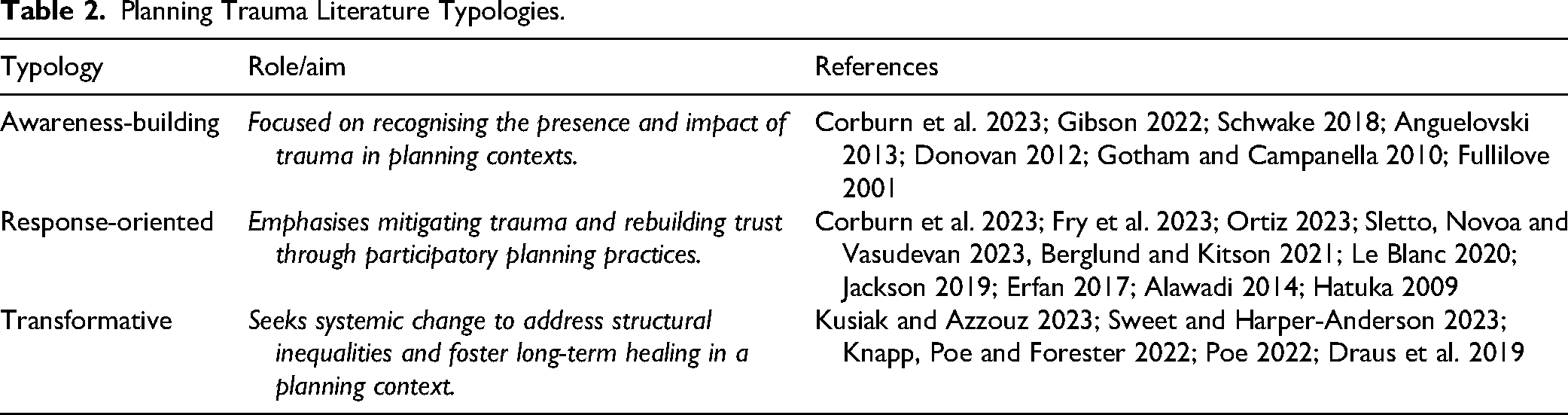
The role of trauma-aware approaches in planning is to serve as a mechanism for recognising and acknowledging the presence and implications of trauma as they present in a planning process. It is a means by which to take account of affective data, and to ensure that it has a place in influencing the planning process. The aim of implementing trauma-aware approaches is to improve planning via facilitating increased resilience (Fry et al. 2023; Gotham and Campanella 2010; Kusiak and Azzouz 2023; Le Blanc 2020), increased democracy (Fullilove 2001), fostering equity (Fry et al. 2023), attending to/addressing issues of spatial justice, especially race-based (Fullilove 2001; Jackson 2019; Knapp, Poe and Forester 2022; Poe 2022; Sweet and Harper-Anderson 2023), and increased sensitivity to context, for example, the specific experiences, perspectives and needs of people in post-conflict or post-colonial areas (Berglund and Kitson 2021; Erfan 2017; Ortiz 2023; Sletto, Novoa and Vasudevan 2023). Planning trauma literature can be categorised into distinct intervention typologies, which provide a framework for organising the literature according to the roles and aims of trauma-aware approaches in planning: increasing trauma-awareness, responding to trauma, and fostering systemic change. Table 2 categorises the literature included in this review into these distinct typologies. The following section synthesizes planning trauma literature into three typologies—Awareness-Building, Response-Oriented, and Transformative—reflecting the progression from recognizing trauma to actively addressing it and embedding systemic change.
Planning Trauma Literature Typologies.
Awareness-Building Approaches
Awareness-building literature emphasises the importance of realising and recognising the existence and implications of trauma in planning. This literature suggests that increased sensitivity to historical and contextual factors is necessary for the initial recognition of trauma in planning. For some authors, the primary argument put forward in relation to trauma in the urban planning context is the need to be aware of it. Especially earlier publications were concerned with establishing the idea that trauma in planning existed and warranted further scholarship. In an example of reflexive practice, these papers examined how planning was complicit in or responsible for causing trauma. Fullilove's Rootshock (2001) was among the first to elucidate the relationship between race, urban renewal and trauma. In particular, Fullilove was concerned with how prejudicial urban renewal projects ultimately impacted functional democracy. This paper included a call for further interrogation of questions like:
“How should we manage progress in the context of democracy? How are conflicts of interest to be managed? Is the government simply to be the tool of powerful interests? How are the weaker portions of the population to be represented? If government policies actually enfeeble the political strength of the weak, is this not a violation of the principles of democracy?” (2001, 79).
Gotham and Campanella also call for increased scholarship around trauma, and put forward a research agenda on the concept of transformative resilience, with the aim of producing “theoretically driven, empirically rigorous studies that explain how the different social, economic, institutional, and environmental subsystems of cities interact and respond differentially to disturbances and traumatic events …” (2010, 18). 4 This call is echoed by Gibson (79, 2022, citing Alizadeh et al. 2022), who surmises that in delivering infrastructures that “nurture places and people” planning practitioners have the role of attending to the lived experience and “engage in democratic processes” (Gibson 2022, 79) to facilitate consensus building. Here too there is emphasis on the need for on-going qualitative research, “to document extant conditions and reveal prosaic cultures of care and regional resilience” (ibid 2022, 80).
Anguelovski (2013) notes that planners should ensure elements of trauma are not relegated to the background in planning processes but does not elaborate on how that might look. 5 Similarly, Schwake (2018) suggests that if trauma is ignored it will prevent healing, but does not include any specific suggestions for what to do instead. Le Blanc (2020) suggests that the conservation of urban traumatic ruins (ruins that are a result of either natural or anthropogenic catastrophe), is a delicate and powerful process that can reshape and redefine urban identity but does not delve further into discussing how planning actors should proceed.
Response-Oriented Approaches
Response-oriented literature focuses on building trust, promoting healing, and creating inclusive engagement processes in order to mitigate the impacts of trauma via planning processes. The focus on practical strategies for addressing trauma in planning is both compelling and necessary; however much of the literature in this typology emphasises public engagement without addressing other critical aspects of the planning process.
Straddling the line between awareness-building and response-oriented literature, Donovan (2012) outlines some basic principles to put into practice to help urban design and planning after disaster, though does not discuss any methods by which to put these into practice. Several of the proposed principles align to the principles put forward by the Trauma Informed Practice (TIP) framework, though Donovan's principles pre-date the TIP framework. Harris et al. (2023) call for research on trauma-informed practice to extend into social policy (related to planning). They note the six principles associated with TIP: safety, trustworthiness and transparency, collaboration, empowerment, choice, and the intersectionality of social positions, and suggest that introducing these elements into policy development will “allow women to remake the city in ways that are meaningful to them and attribute meaning to traumatic events that … embody the city” (2023, 660). However, this paper also falls short of offering any discussion or review of potential methods by which these principles could be embedded into practice.
In contrast, response-oriented literature discusses specific trauma-aware planning practices. Trauma-aware public engagement methods include trauma-aware co-design (Corburn et al. 2023), human centred design (Fry et al. 2023), storytelling (Ortiz 2023), trauma-aware mapping (Sletto, Novoa and Vasudevan 2023), and the Lewis method of deep democracy (Erfan 2017). Authors share a sense of optimism about these approaches and suggest that these and similar approaches are a critical tool in the planner's toolbox for practicing meaningful emotionally engaged planning. While the findings suggest positive outcomes from trauma-aware public engagement, these studies fail to consider the application of trauma-aware interventions in planning processes outside of engagement. Similarly, there is a lack of empirical research exploring the efficacy of trauma-aware interventions, even in the public engagement processes of planning. As these interventions become more widely applied, one direction for future research is empirical investigations which systematically assess the outcomes resulting from trauma-aware planning interventions.
Transformative Approaches
Literature in the transformative typology suggests trauma-aware interventions or frameworks that shift planning systems to be more equitable and responsive, with the aim of addressing and redressing structural inequalities and spatial injustice. Several papers advocate for the adoption of particular theoretical planning approaches or orientations including reparative planning (Draus et al. 2019; Knapp, Poe and Forester 2022; Poe 2022), communal trauma theory (Poe 2022), and Radical Hope (Kusiak and Azzouz 2023). These approaches share a commitment to reflective practice. Another commonality is that they, to some extent, ask planners not just to engage with the public's emotions, but also pay attention to their own feelings as a source of data and be mindful of how this can direct a planning process. Notably, of these approaches, only communal trauma theory was put forward as an empirical study. While communal trauma theory lays a compelling foundation, the autoethnographic methodology provides a limited perspective, creating an opportunity for additional future research.
Results from an empirical study exploring how planners might codify trauma-aware practices into formal processes resulted in several specific recommendations for planners working with communities who have experienced the trauma of systemic racism (Berglund and Kitson 2021). Authors propose that planning processes should involve input from trauma-informed agencies and professionals, adopt engagement formats that protect survivor communities from public debate, enable reflection on systemic racism and reform practices, and acknowledge the historical and social significance that trauma has to physical sites to avoid reinforcing trauma. Anguelovski (2013) also argues for a more coordinated, holistic approach, proposing there should be greater coordination between neighbourhood development, public health, environmental protection, and youth and recreation departments, with streamlined funding processes managed by program managers familiar with urban neighbourhoods.
A review of the existing literature suggests that it would benefit from a more nuanced discussion of the limitations of trauma-aware approaches in fostering systemic change. Indeed, Donovan (2012) notes that while planning may influence the development of spaces and conditions within which reconciliation and reconstruction (following trauma) takes place, “it seems unlikely that it can kick start the process alone” (2012, 76). Here Donovan suggests that planning may be a catalyst of reconciliation and reconstruction, but not the sole cause (ibid). Further exploration around how external structures and relationships shape the formulation, adoption and implementation and impacts of trauma-aware planning approaches in different contexts would be useful.
Outcomes of Trauma Aware Approaches and Interventions
As noted above, due to the nascent nature of trauma in the planning field, there are substantial gaps in both theoretical and empirical literature. Particularly, there is currently very little understanding of the efficacy of planning-aware interventions in planning. Preliminary findings suggest that increased engagement with trauma-aware planning approaches is beneficial and that it is a promising avenue for continued research. Many papers position trauma-aware interventions as a mechanism for facilitating healing (from trauma) within communities (Berglund and Kitson 2021; Corburn et al. 2023; Donovan 2012; Erfan 2017; Gibson 2022; Knapp, Poe and Forester 2022; Kusiak and Azzouz 2023; Sletto, Novoa and Vasudevan 2023; Sweet and Harper-Anderson 2023). However, the nature of healing is left relatively underdeveloped in the literature to date. Presumably, the result of healing is the reduction of conditions that can cause trauma, in the experience of trauma, and in the symptoms of trauma. While there is limited discussion around these ideas, there is a prevailing perception that trust is tightly intertwined with trauma and healing.
Distrust was recognised as an indicator of trauma (Berglund and Kitson 2021; Fullilove 2001; Knapp, Poe and Forester 2022). Conversely, Corburn (2021) also noted that trust within communities is linked to better overall health outcomes and wellbeing, an illustration of the embodied nature of trauma and healing. Trust was also implicitly positioned as a component of healing by several papers, as the two were often positioned as dual objectives. Trauma-informed planning processes that focus on empowerment, collaboration, and providing choices can promote healing and build trust (Berglund and Kitson 2021; Erfan 2017). Inclusive design and co-creation of urban spaces can help reestablish trust and legitimacy of municipal governments (Draus et al. 2019). Corburn et al. (2023) suggested that planning processes that involve co-creation and reclaiming community spaces can also lead to enhanced trust among neighbours, and overall community healing. On the other hand, if planners act as “heavyhanded bureaucrats or all-knowing consultants they will easily be classified as untrustworthy …” (Erfan 2017, 44). In order to remain trustworthy, it is critical that planners make space for the diverse understandings and contextualisations that exist across communities involved in planning processes (Ortiz 2023).
According to the literature, trauma-aware approaches promote healing by working through differences and building a foundation of trust for future dialogue (Berglund and Kitson 2021; Erfan 2017). Effective engagement processes, which allow for sharing experiences and breaking down hierarchies, can illuminate barriers to trust building and create inclusive processes (Berglund and Kitson 2021), while dialogue among individuals with related histories of trauma can build trust and solidarity, facilitating transformative planning (Forester 1999; Knapp, Poe and Forester 2022). Poe (2022, 57 citing Huxley and Yiftachel 2000) offers what might be a slightly different perspective on the role of dialogue in addressing distrust due to trauma, noting that expressions of resistance and upset she encountered were “more than just feelings of distrust of authoritative planning, only requiring more communicative engagement.” Instead, these expressions revealed the psycho-socio-cultural phenomenon in spatial processes of communal trauma. While Poe (Ibid) suggested that her trauma-aware approach did build some measure of community trust, it was the adoption of a communal trauma framework that held the promise of facilitating a healing process.
The most developed discussion about trust and trauma in the planning context can be seen in Jackson's (2019) exploration of localized histories of political trust in neighbourhoods undergoing intense transitions due to redevelopment and gentrification. Jackson (ibid 2019, 505) posits that the political “distrust and paranoia in Black communities derives from their histories of devastated neighbourhoods, inequality, and treatment as second-class citizens as understood through the continuance of de facto discrimination”. Specifically, she emphasises the importance of neighbourhood history, context, and place-based distrust. In her view, urban renewal serves as a spatial mechanism that vividly demonstrates the anxieties surrounding neighbourhood loss. Neighbourhoods are physical spaces that encompass interconnected networks of social, political, and economic capital, fostering trust and reciprocity. Disrupting these environments through urban renewal can be devastating, causing residents to experience a profound sense of root shock (see “Theoretical Origins” for discussion of root shock). For Jackson, “redevelopment that restores trust and neighborhood capital has the potential to create more institutional transparency, reduce anxiety, and increase agency with neighborhood stakeholders” (ibid, 515). But as Kusiak and Azzouz (2023) point out, in contexts of persecution and forced uprooting, reconstructing trust requires accountability and justice, and can take a long time. The frequency with which trust and healing are paired in the literature suggests that further scholarship on elucidating the relationship between trauma, trauma-aware approaches, trust, and healing may be fruitful.
There is a lack of empirical research within the literature about whether trauma-aware approaches actually facilitate healing or community building. While strong arguments have been made for trauma informed approaches, there have been relatively few conclusions drawn about the effect of this. Has it substantially changed planning at an institutional level? Are there policy implications? Have participants in these approaches experienced any substantive benefits in terms of healing or increased social capital? These questions are largely unanswered by literature to date.
Conclusion
This systematic review highlights the emerging interest in trauma-informed practices within urban planning but also underscores significant gaps and limitations. While theoretical frameworks such as cultural and communal trauma provide a foundation, there is a lack of empirical studies validating these concepts. The literature often fails to define what constitutes healing and how it can be measured, leaving planners without concrete metrics to assess the impact of trauma-informed interventions. Moreover, much of the focus is on responsive rather than preventive measures, which limits the potential for proactive planning to mitigate trauma. As such, it is difficult at present to conclude definitively that trauma-aware approaches have a positive impact on planning processes or outcomes, though the papers reviewed above show promise in that direction, particularly in relation to influencing public trust. Key findings include the need for more nuanced theoretical models that account for the subjective nature of trauma, the importance of addressing trauma at different scales and in different contexts, and the critical role of public trust in the healing process Ultimately this paper shows need to critically engage with heretofore unsubstantiated calls for the adoption of trauma-aware approaches in a planning context.
Future empirical research could focus on developing and validating standardised metrics for assessing trauma and healing, developing a unified Trauma-Informed Planning (TIP) framework that integrates these elements into practical applications, exploring the application of TIP in diverse planning contexts to enhance its effectiveness and adaptability, and undertaking longitudinal studies to measure the long-term impact of trauma-informed practices. Additionally, as urban environments continue to face challenges from climate change and social upheaval, planners must prepare to address overlapping and evolving traumas, ensuring that future interventions are both responsive and preventive. Deeper discussions of how to balance opposing trauma narratives, and how to navigate the prioritisation of healing–whose healing matters most in planning cases where multiple groups present with complex traumas?–provide an opportunity to deepen reflective practice as we grapple with the planner's role in these decisions.
Supplemental Material
sj-xlsx-1-jpl-10.1177_08854122251387669 - Supplemental material for Trauma and Related Interventions in Urban Planning: A Systematic Scoping Review
Supplemental material, sj-xlsx-1-jpl-10.1177_08854122251387669 for Trauma and Related Interventions in Urban Planning: A Systematic Scoping Review by Nicole Lanphier, Linda Fox-Rogers and Enda Murphy in Journal of Planning Literature
Supplemental Material
sj-xlsx-2-jpl-10.1177_08854122251387669 - Supplemental material for Trauma and Related Interventions in Urban Planning: A Systematic Scoping Review
Supplemental material, sj-xlsx-2-jpl-10.1177_08854122251387669 for Trauma and Related Interventions in Urban Planning: A Systematic Scoping Review by Nicole Lanphier, Linda Fox-Rogers and Enda Murphy in Journal of Planning Literature
Footnotes

Ethical Considerations
N/A.
Consent to Participate
N/A.
Consent for Publication
N/A.
Funding
The authors disclosed receipt of the following financial support for the research, authorship, and/or publication of this article: This research was supported by University College Dublin's Ad Astra Doctoral Scholarship award.
Declaration of Conflicting Interest
The authors declared no potential conflicts of interest with respect to the research, authorship, and/or publication of this article.
Data Availability Statement
Supplemental Material
Supplemental material for this article is available online.
Notes
Author Biographies
References
Supplementary Material
Please find the following supplemental material available below.
For Open Access articles published under a Creative Commons License, all supplemental material carries the same license as the article it is associated with.
For non-Open Access articles published, all supplemental material carries a non-exclusive license, and permission requests for re-use of supplemental material or any part of supplemental material shall be sent directly to the copyright owner as specified in the copyright notice associated with the article.
