



Abstract
Public participation is an increasingly popular topic in China, but more attention needs to be given to stakeholders’ willingness to participate. This paper reviews case studies to identify incentives and disincentives for the public and local governments to be involved in public participation in planning. The identified incentives and disincentives are classified into individual, social, civil society, and governmental levels. The study finds that personal interests primarily incentivise the public, while local governments lack essential incentives. Governmental-level factors influence both parties, emphasising the need for political approaches to enhance public participation in planning practices in China.
Introduction
Public participation is gaining increasing attention from researchers and planning practitioners in China. Researchers from various fields, such as urban planning, public infrastructure planning, resource management, heritage management, and tourism planning, have studied the effectiveness of participatory approaches in the Chinese context and have provided evidence that public participation is valuable for decision-making in China's top-down planning system led by elites (Li et al. 2020a; Lin and Simmons 2017; Shan and Yai 2011; Wang et al. 2008; Zhang et al. 2013).
However, as Albrechts and Balducci (2013) stated that some politicians refuse to engage the public in decision-making due to resistance to giving up control and power. Although the central government of China encourages public engagement in civil affairs, the system was designed to protect political and administrative processes from an overactive citizenry (Shan and Yai 2011).
The Chinese central government has taken actions to promote public participation in planning to maintain domestic social-political stability. The Law of the People's Republic of China on Urban and Rural Planning (also known as the Urban and Rural Planning Law, URPL) legalised the people's right to participate in the planning processes in 2008. According to this law, the responsible organs must display the plans for at least 30 days, gather opinions from experts and the public, and report on adopting the public's opinions. Some cities (such as Beijing, Shanghai, Guangzhou, Shenzhen, Xi’an, etc.) have been designated to experiment with engaging the public in planning affairs in addition to the general law requirements. Besides URPL, other national laws and regulations in various fields (e.g., Environmental Impact Assessment Law in 2003) also require governments and departments to consult the public during the decision-making process, but in an ambiguous manner.
The context-sensitive study of the Chinese planning system should start with the country's interpretation of ‘public participation’. Reed (2008) defined participation as the active involvement of individuals, groups, and organisations in decision-making that affects them. This definition emphasises the process of choosing to take an active role. However, in many Chinese cases, public participation is understood by local officials as simply allowing the public to participate in the process rather than empowering them to take charge (Wang et al. 2008). The form or process of public participation is not defined. Based on such an interpretation, the scope of this study includes any type of public involvement in planning. It includes formal and informal approaches, top-down and bottom-up strategies, and individual and collective participation (Brown 2015).
In most cases, effective public participation requires the willingness of both participants and project initiators to collaborate. Participants refer to different groups involved in decision-making (Zhuang et al. 2019). Although the public in China is, in principle, allowed by the central government to participate, they are also often excluded from the decision-making process (Hui, Wong and Wan 2008). On the other hand, local governments (province, city/municipality, county, and town/village) are typically the initiators of planning projects (Tan and Altrock 2016). They are decision-makers in most cases at various types of plans, ranging from detailed to master plans. However, the local governments are far from omnipotent. Chinese planning departments have practised top-down hierarchical planning approaches since the 1950s (see Figure 1), following the hierarchical structure of the Chinese government. Local-level plans must be sent to the next higher-level government for examination and approval. Given that both the public, as participants, and local governments, as project initiators, face constraints in the urban planning process, this study aims to explore the state of public participation in urban planning in China from the perspectives of these two entities. It is worth noting that in Chinese practices, experts (in planning and other related fields) are sometimes regarded by local governments as part of the public for consultation purposes, thereby fulfilling legal requirements for public participation. However, these experts, especially planners, have also often been criticised for serving more as mediators between the government and the public as they are subordinate to the bureaucratic mechanism (Luo and Shen 2008; Zhao 2015). Therefore, we exclude planners from ‘the public’ in this study, although we acknowledge their advocating roles in public participation (Zhang et al. 2020a).
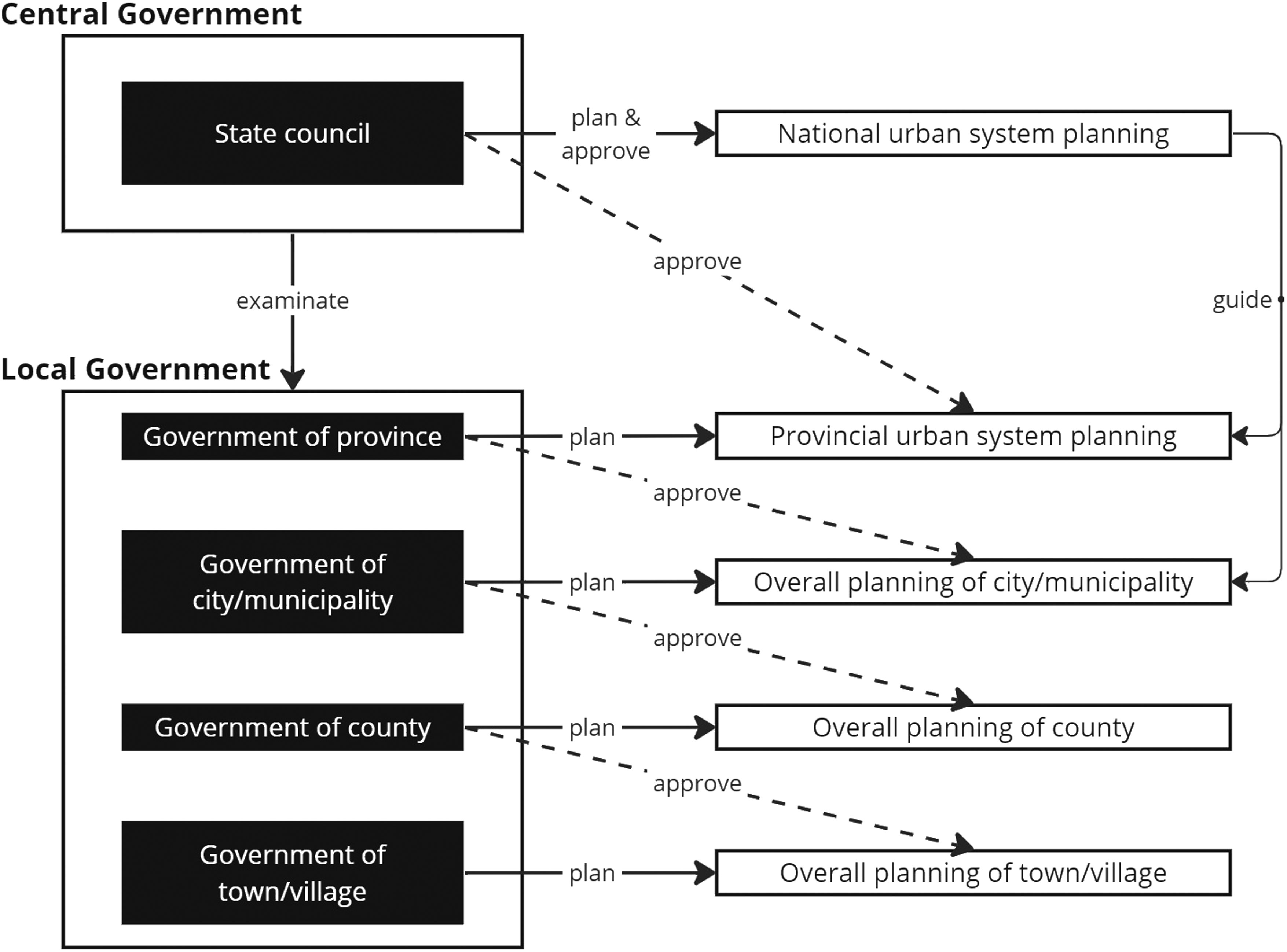
Simplified illustration of the planning system in China based on URPL. 1
Despite the increasing number of studies concerning public participation in planning practices in China, little attention has been given to the willingness of the public and local governments to participate. Previous studies have mainly focused on assessing participatory approaches and outcomes (for example, Wang et al. 2021), while studies on willingness typically focus only on individual characteristics such as age, gender, education, and income (for example, Shan 2012), as well as planning project characteristics such as content and scale (for example, Li et al. 2020c). To bridge this gap, this research reviewed previous case studies of public participation in China's planning practices. The aim was to identify empirical evidence from case studies revealing the factors promoting or hindering public participation in China. To understand the public and local governments’ willingness, we raise the research questions ‘Why would (not) the public participate in the planning process?’ and ‘Why would (not) the local governments engage the public in the planning process?’.
Conceptual Framework
Two key concepts to address the research questions are incentives and disincentives. Feldman and Lobel (2009) defined incentives as ‘any mechanism designed to encourage certain behaviours.’ Incentives can take many forms, such as monetary compensation, legal protection, social recognition, and moral obligation. Disincentives or perceived barriers are the factors that make participation less attractive (Arendt and Shelton 2009).
Li et al. (2020c) developed a theoretical model based on the Self-Determination Theory (Deci and Ryan 2013) for analysing the motivations and intentions underlying citizen participation in China. They argued that the factors affecting participation motivation could be categorised as ‘civil society’, ‘personal interest’, ‘social influence’ and ‘constraints’. In their model, Li et al. (2020c) concluded that personal interest and civil society are intrinsic, while social influence is extrinsic motivation. On the other hand, as service providers in the dynamics of participation, local governments have their motivations and expectations of public participation (Simmons and Birchall 2005). Although local governments in China hold strong power as stakeholders in planning projects, there are many governmental sectors at different levels with unclear functionalities and responsibilities, leading to low efficiency in engaging with other stakeholders like the public (Zhuang et al. 2019). This complexity of governments themselves may limit their engagement with the public (Huxham et al. 2000). To understand the public and local government's decision-making at the same time, we suggest combining Li et al.'s and Simmons & Birchall's models and propose a more fine-grained model for categorising factors contributing to the willingness to participate into four levels: individual, social, civil society, and governmental (see Figure 2). Instead of understanding participants through a psychological lens and including all constraints in one category as Li's model, our proposed model classifies both incentives and disincentives into the four levels. It suggests that the public and local governments may encounter incentives and disincentives at different levels before public participation happens. The four levels are described as follows:
Individual level: For the public, individuals can be incentivised by their sense of responsibility (Seo 2022), political interest (Neblo et al. 2010), interest in learning (Li et al. 2020d), and monetary compensation (Li et al. 2020d). Conversely, participants can be discouraged from participating because they lack skills, confidence, and trust (Mai et al. 2022). For local governments, individual-level factors arise from their perception of individuals within the public, including people's capability and motivation to participate, as well as the value they place on the knowledge and viewpoints of the public (Morrison and Xian 2016). Recognising the value of individuals’ knowledge in the planning process could incentivise local governments. We acknowledge that individuals within local government bodies have personal views, interests, and motivations. However, we restrict ourselves to discussing these individuals as representatives of their governments rather than as active participants with personal agency in the public. Social level: Incentives and disincentives at the social level stem from the social networks of individuals (Li et al. 2020c). For the public, incentives/disincentives could result from social influence, such as peer pressure between friends, neighbours, and any informal groups they belong to. These informal groups may not be explicitly formed for public affairs, yet they may impact individuals’ decisions regarding participating in planning practices. For local governments, establishing a positive image among individuals’ social networks can be an incentive. Conversely, provoking criticism on social media can be a disincentive for local governments. Civil society level: For the public, the support and empowerment from civil society could encourage them to participate in planning practices. A strong civil society is often a foundation for democratic politics (White, Howell and Shang 1996). Public participation in China has been criticised as insufficient due to the country's lack of a civil society tradition (Zhao 2015). However, studies have found that China's incipient civil society organisations facilitate better communication between the government and the public (Xu 2013). As of January 2021, over 900,000 civil society organisations were registered in China, 2,292 of which were registered with the Ministry of Civil Affairs.
2
Civil society can unite citizens to gain the support of higher-level government authorities when confronting local governments (Gao and Teets 2021). For local governments, an ideological consensus within society, such as collectivism and consciousness of citizenship, will affect their attitude towards public participation. Governmental level: Beyond civil society, the Chinese government, especially the central government, plays an omnipresent role in planning affairs and public participation. He and Warren (2011) coined the term ‘authoritarian deliberation’ to describe the use of deliberative practices to reinforce authoritarian rule in China. It means the Chinese government allows some space for deliberation and public participation but with limited empowerment (Lin 2023). Based on the government's subtle attitude towards public participation and the power relation between central and local governments, we argue that there are incentives/disincentives at the governmental level for both the public and local governments. For the public, the incentives/disincentives can be the policies announced and the public participation environment created by the government. For local governments, incentives/disincentives can be the pressure from a higher-level government and the inherent complex structure of the government.
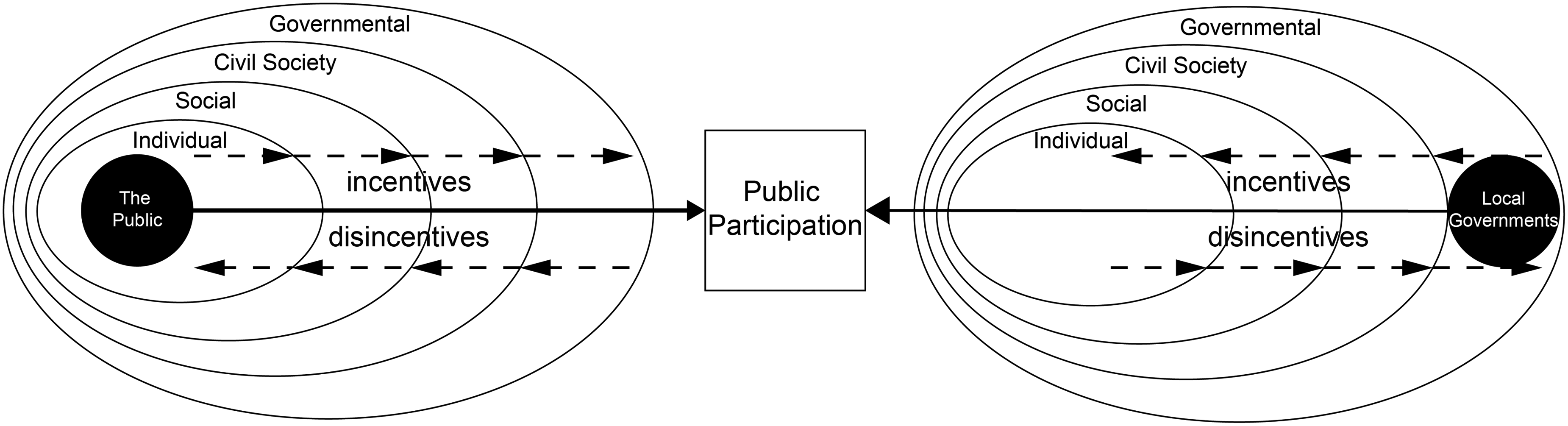
Model of incentives and disincenitves for the public and local governments.
This approach can help provide a comprehensive understanding of China's public participation in planning and can also be used to study other contexts.
Methodology
This research reviewed the literature on case studies on China's planning practices. The following provides an overview of how we selected the eligible articles and how the incentives and disincentives were identified.
Eligibility Criteria
Articles were eligible if they described a case study of a planning project involving the public in China after 2008. This study aims to examine planning practices in China since the enactment of the URPL in 2008. Thus, studies published before 2008 were excluded. Because the aim is to identify empirical evidence of relevant incentives and disincentives in planning practices, we excluded those articles that studied public participation without reporting actual planning projects and those that were literature reviews. Planning activities that included various regions (urban and rural), various planning levels (ranging from detailed planning to master planning), and various types of projects (development or redevelopment) were considered eligible. Likewise, various public participation approaches were deemed eligible, encompassing all types and levels of participation in the planning process (e.g., meetings, workshops, committees, public hearings, protests, petitions, using social media, etc.).
Information Source and Search Strategy
A search on Scopus was conducted in April 2021. A supplementary search was conducted on Scopus and Web of Science in February 2023 to include additional and more recent studies. Relevant grey literature, including policy and government documents, was considered supportive background information but not included during identifying factors. Searches were limited to English-language publications. We acknowledge the value and potential insights provided by articles written in Chinese but did not include them due to a language barrier.
Search terms for article titles, abstracts and keywords contained three categories: 1) urban/rural planning practices, 2) public participation and 3) China. Preliminary search terms were identified from similar literature reviews. Pilot searches were conducted to gauge the specificity of the search terms. The final search terms iterated as ‘TITLE-ABS-KEY (‘public participate*’ OR ‘public involve*’ OR ‘participatory planning’ OR ‘participatory approach*’ OR ‘public engage*’ OR ‘collaborate* plan*’ OR ‘communicate* plan*’ OR ‘community engage*’ OR ‘community involve*’) AND TITLE-ABS-KEY (‘urban plan*’ OR ‘spatial plan*’ OR ‘community plan*’ OR ‘rural plan*’ OR ‘land use’ OR ‘renewal plan*’ OR redevelope*) AND TITLE-ABS-KEY (China OR Chinese) AND PUBYEAR > 2007’.
In total, 403 articles were retrieved from Scopus and Web of Science. We imported the results into Rayyan.ai for duplicate deletion. Eighty-nine duplicates were deleted, resulting in 314 potential articles.
Study Selection and Data Charting
We screened the titles and abstracts of the 314 potential articles to determine their eligibility. Full texts were also sourced when there was no clarity from the title and abstract. The potential articles were labelled with ‘irrelevant field’, ‘no public participation’, and ‘not a case study’ on Rayyan.ai for exclusion. Eventually, 241 not-eligible articles were excluded, with 73 eligible articles remaining. The remaining articles were numbered to identify incentives and disincentives and other analyses.
Two rounds of identification were conducted. In the first round, we scrutinised the full text of the eligible articles, focusing on the four levels of influencing factors. The identified factors were recorded on a Miro board, and similar factors were grouped. In the second round, we skipped the introduction and methodology parts of the articles and focused on identifying empirical evidence for the factors found in the first round. The identified evidence was placed on the Miro board in groups according to the corresponding factors. An Excel table was also used to record information of the eligible articles, including titles, authors, published years, case location, urban/rural, topics, and identified factors. Eventually, we identified incentives and disincentives, along with their empirical evidence, in 45 eligible articles. The remaining articles did not contain any incentives or disincentives.
Results
The Public's Perspective
Individual level
Personal interests were identified as a critical individual-level incentive for the public (see Li et al. 2020d; Mai et al. 2022; McKinnon 2010; Tan and Altrock 2016; Zhuang et al. 2019). Personal interests include economic interests, perceived benefits, changes in daily life, place attachment, etc. People are strongly incentivised by their economic interests, which typically are the compensation for their loss of housing and collective lands (Shin 2014; Tan and Altrock 2016) or an ideal relocation (Zhuang et al. 2019). On the other hand, some participants, especially those with professional knowledge, are motivated by their sense of responsibility to help disadvantaged minorities, such as those suffering from housing distress or lacking bargaining power (Seo 2022).
Maximising economic interests does not imply avarice but insufficient compensation or potential changes in daily life quality (Xiao et al. 2019; Zhao, Liu and Wang 2021). The willingness to participate can be influenced by living conditions, as it is a response triggered by unpleasant environments (Wang et al. 2021). In some cases, residents cannot afford to buy a same-size apartment nearby with the monetary compensation for their housing losses. When resettlement housing is offered as compensation, the location is sometimes too far away for residents to continue their work and lifestyles (Tan and Altrock 2016; Zhao, Liu and Wang 2021). The central government announced regulations, such as the Urban Housing Units Management Regulations 3 (UHUMR) in 2001 and the Housing Expropriation and Compensation Regulations on State-Owned Land 4 (HECRSOL, replacing the former) in 2011 to ensure property owners’ rights to reasonable compensation. However, these national regulations lacked detailed instructions and allowed for arguments between property owners and local governments.
Different interpretations of property ownership lead to different attitudes towards public participation between residents and property owners. According to UHUMR, tenants should be compensated for moving out (Act 27 and Act 31), but the corresponding provisions were deleted in its replacement regulation, HECRSOL. Tenants are absent from public participation since they are not considered stakeholders (Xu and Lin 2019). Likewise, migrant residents have fewer interests in the collective activities hosted by the local authority but are only concerned about their own businesses (Li et al. 2020b).
Wang, Wu and Chiles (2022) found that projects located within or near residential compounds receive significantly more attention than those elsewhere. Projects with specific themes, such as high-risk (environmental) infrastructure (Gu 2016; Wu and Dai 2014), cultural preservation (Zhao, Liu and Wang 2021), historic building preservation (Shin 2014; Tan and Altrock 2016), and religious/clan value (Sun and Zhang 2016), gain more attention from affected residents. These cases typically involve developing infrastructure that could threaten the nearby environment, such as waste incineration and chemical plants. They may also involve the demolition of buildings that residents consider important, such as temples, cemeteries, or ancestral halls.
Two individual-level disincentives for the public were identified: the participants’ lack of knowledge and skills and the distrust of local governments. Lack of knowledge and skills in planning and public participation can lead to a poor experience. The most used participatory methods, such as workshops, committees, and meetings, as well as digital tools like GIS and social media, require specific skills and knowledge from participants. However, people often lack confidence and willingness to participate, even when invited (Li et al. 2020b; Mai et al. 2022), especially when expertise is implied in the invitation (Seo 2022). When ‘laymen’ are approached by planning professionals or researchers, they might feel challenged by the communication standard and technical jargon (Brombal et al. 2018).
Additionally, people's misunderstanding and mis-expectation of public participation discourage them from being actively involved. They often view planning processes as more of a technical engineering matter than a social activity that values collaboration (Xu et al. 2019). They also tend to understand planning simply as demolition and construction and expect ‘fancy’ modernisation projects by the state that they have seen in the mass media and that are enabled by economic growth (Xu et al. 2019). Yan et al. (2023) found that residents in rural areas even hold an ‘outsider’ attitude, thinking their village's development is only the experts’ job and not theirs. For these reasons, residents do not believe that it is worthwhile to invest time and effort in participation, either because they consider it beyond their abilities (Tian et al. 2022) or because they expect the outcomes to fall short of their expectations.
Moreover, in some regeneration cases, the residents may not be aware of the historical and cultural value of their living area (Li et al. 2020d). Although education activities have been implemented in some cases, these activities typically aim to raise public awareness of the planning area's value rather than improving their participation skills (Li et al. 2020b).
In the meantime, the public's distrust of local governments was identified in some reviewed cases (Li, Han and Wu 2019; Mai et al. 2022; Sun and Zhang 2016; Sun and Huang 2020; Wang et al. 2008; Zhang et al. 2020b; Zhuang et al. 2019). This distrust is partially rooted in people's awareness of the economic conflicts between them and the local governments. Shen and Wang (2023) described such distrust as a ‘Tacitus Trap’, which refers to a situation where an unpopular government is hated no matter what it does and whether it is right or wrong.
The distrust also arises from negative participation experiences people have had or heard about. The likelihood of a person's ideas being accepted and implemented influences his/her willingness to participate (Seo 2022). However, due to the placating characteristic of government-led public involvement, people usually compromise but are unsatisfied. The gap between the government's propaganda and the people's actual experience fosters people's distrust (Sun and Huang 2020). A study in Guangzhou showed that participants considered the Co-creation Committee to be established by the local government as a political tool for the legitimisation of hegemonic policymaking rather than a collaborative method (Zhao, Liu and Wang 2021). As a result, they refused to attend meetings with the committee. Together with the corruption issues and collusion between local governments and businesses, this has led to a comparatively low level of credibility for local governments.
People's distrust even radiates to the involved experts, especially planners, as the public sees them as agencies representing governments or real estate developers. Any less-than-satisfying performance of a government-authorised organisation might exacerbate the participants’ distrust of the government (Li, Han and Wu 2019; Zhang et al. 2020b). People see differences in values and interests between them and planners (Wang and Wang 2020; Xiao et al. 2019). While confronting such value differences, participants would insist on their opinion and neglect the professional advice from experts, contrary to the lack of confidence in participation we discussed previously (Wang and Wang 2020). The distrust also hinders the participants from freely expressing their opinions, especially when they know that their words are being recorded (Wang et al. 2008). People remain sceptical and wary about public participation initiated by authorities.
It is worth noticing that even with a low level of trust, people see the government as the only actor who can host planning projects (Sun and Zhang 2016). Besides, Wang, Wu and Chiles (2022) found that people tend to be highly satisfied with the central government's infrastructure development performance even when participation is not supported, and they expect the government to take full responsibility for essential projects. This suggests that people have less trust in their local governments than in the central government, and a higher level of trust does not necessarily lead to increased participation in planning.
Social level
Two social-level incentives were identified: media support and informal groups. Media support plays two increasingly essential roles in public participation in China: 1) as a platform for expressing opinions and 2) as a platform for obtaining information and inspiration.
Individuals can use mass and social media to attract public attention and achieve their goals (Cheng 2013; Li, Han and Wu 2019). Extensive media coverage has been effective in putting appropriate pressure on governments (Wu and Dai 2014). The rise of social media and mobile devices provides convenient channels for the public (Tian et al. 2022). Social media's anonymity eliminates discrimination based on gender, age, wealth, etc., and encourages the public to express their opinions.
Media help the public to share information and experiences in public affairs (Wu and Dai 2014). For example, residents in a land requisition case in Guangzhou withdrew their agreement on compensation and resettlement and demanded further negotiation after they saw an article in a local newspaper reporting a higher compensation in another case in the same city (Tang, Wong and Lau 2008).
When facing the power imbalance between the government and the public, the media play an essential role in supporting the latter. On the one hand, traditional mass media, with their professionals and resources, help reframe planning problems, debates, and storylines of planning projects. On the other hand, social media delivers this reframing to a larger population and provides a space for discussion that helps to clarify participants’ thoughts. In the aforementioned land requisition case in Guangzhou, social media brought local knowledge and expert views to the public, and the mass media discovered the historical and cultural value of that area (Tan and Altrock 2016). This approach of reframing the issue by media encourages additional stakeholders (e.g., cultural conservation organisations) to participate in the discussion.
However, the selected articles also indicate concerns about social media, particularly regarding online discussions with a high degree of anonymity. Anonymous discussions carry the risk of causing group polarisation, whereby the opinions of individuals are likely to become more extreme (Sunstein 2017). Such polarisation would hinder the equal participation of stakeholders (Cheng 2013). Cheng (2013) argued that the public's collective predisposition makes them hard to discuss rationally with other participants in a planning project. Moreover, Cao (2022) found that social media might be used tokenistic to legitimise the planning process by involving groups that are irrelevant to the plan but tend to support it while excluding the stakeholders most affected by it.
Alongside the media, informal groups, such as dancing troupes, choral groups and volunteer teams, play a role in encouraging public participation at the social level (Boland and Zhu 2012). These informal groups are usually location-based and have often been overlooked in studies on public participation in China (Boland and Zhu 2012). However, due to their close relationships with the participants, some key persons in these groups significantly influence mobilisation. These groups provide a more relaxing environment for participants, with fewer political elements than in official organisations like the Residents’ Committees and NGOs.
In contrast to the media support and informal groups, peer pressure among individuals was identified as a social-level disincentive. The Chinese social and cultural context does not encourage individuals to express their opinions publicly. In a rural area with closer social ties, being gregarious and keeping peace with neighbours is important for one's social and daily life. The mainstream participatory methods in China are public hearings, meetings and committees that require participants to express their opinions in front of all the other participants (Li et al. 2020a). It is hard for an individual to speak out his/her true thoughts. In such a context, a herd mentality that prevents objectively appraising minority or unpopular views could be easily fostered. This herd mentality is also seen in public participation through social media (Zhao, Lin and Derudder 2018). Zhao, Lin and Derudder (2018) found that anonymous social networks facilitate the formation of groups with similar characteristics. Members of these groups tend to engage in collective action to avoid exclusion rather than having input to a plan. Moreover, less-educated individuals are often more easily misled by rumours and gossip in their social environment or on social media (Wang and Wang 2020). The fear of not being gregarious or being the centre of gossip may drive the public to have convergent but not necessarily sincere opinions. In addition to subtle influences, peer pressure can manifest itself in direct and tangible ways. For instance, a redevelopment case in Shenzhen demonstrated that residents who supported the official plan used collectivist norms to urge others to stop opposing it (Li, Han and Wu 2019).
Civil society level
No civil society-level disincentives for the public were identified. Among the civil society-level incentives, two that stand out are third-sector support and the effectiveness of protests and petitions. Studies showed that third-sector support plays an essential role in public affairs despite third sectors’ early stage of growth in China (Chen and Qu 2020). Individual participants have less power in the planning process without the involvement of third sectors (Chen and Qu 2020). Third sectors, including NGOs and groups of experts, play roles as advocates, mediators and activists (Zhang et al. 2020a). Their opinions can be used by the public to attract the attention of the government since they are considered powerful, and the government tend to trust them (Cao 2022), even though sometimes the public may not trust the experts, as we discussed previously. Kou, Zhang and Liu (2019) also found that third sectors could increase the public's enthusiasm and confidence.
While NGOs in China are usually financially supported by the government, they are constrained when facing conflicts between the government and the public (Chang, Lau and Calogero 2019; Sun and Huang 2020). Although these third sectors are not always successful in their involvement in planning projects, they are still able to increase people's awareness and ability to participate (Yuan, Chen and Cao 2021).
Besides the third-sector support, the effectiveness of protests and petitions also encourages the public to participate actively in planning affairs. The public is aware of the local government's fear of protests and petitions, as local governments see those activities as a sign of social instability that should be eased before leading to a higher-level government intervention (Cao 2022; Shih 2019). Therefore, the public knows that protests and petitions are effective by politicising the issue and threatening social stability (Wu and Dai 2014). When a protest is still on a small scale, local governments tend to listen to the protestors and negotiate with them placatingly to avoid escalating the issue. However, protest is the public's last choice since it could result in great loss for both sides (Sun and Zhang 2016). For the public, protesting means openly standing against the local government, which could result in individual retaliation by local officers or even the police force (Wu and Dai 2014; Zhang et al. 2020b).
Governmental level
As a governmental-level incentive, supportive policies could inspire and encourage the public to participate (Chen and Qu 2020; Morrison and Xian 2016; Zhang et al. 2020b). Laws and regulations in fields other than planning may also encourage the public to participate actively in the planning process. For example, in Beijing, a resident took legal action to stop a redevelopment project and claimed he was inspired by the newly issued national Property Rights Law (replaced by the Civil Code of PRC in 2021) (see Zhang et al. 2020b). Due to vague national regulations, local governments have the space to develop policies and institutionalise public participation. Different local policies may lead to varying forms of public participation in planning (Zhang et al. 2020b). A case in a rural area in Heilongjiang province showed the importance of supportive policies by revealing that the lack of a compensation system and policies to support alternative livelihoods for relocated farmers are the most significant obstacles for farmers to participate in the programme (Zhang et al. 2011).
As governmental-level disincentives, a power imbalance between the public and government and collusion between government and businesses were observed in the planning and public participation process. The power imbalance between the public and government is reflected in the domination of discussion, control of the media and third sectors and enforcement intervention.
Firstly, local governments can decide on additional public participation in the planning process as long as the process is legitimate. When they choose to involve the public, the topics, definitions of stakeholders, and the ways of discussion and evaluation are predetermined by them (Wang, Zhang and Wu 2022). In the process of public participation, officers from the authorities wield the most power in the dialogue with all participants (Brombal et al. 2018). When there are undesirable opinions or results during the participation process, they still have the power to stop it (see Cheng 2013). The government is the player who makes the final decision, making the public think that their engagement is useless (Liu, Jin and Dupre 2022).
Secondly, the (local and central) governments have the power to control the media, NGOs, and autonomous organisations directly or indirectly by policymaking and controlling their financial support. State-owned mass media are regulated by the General Administration of Press and Publication, and commercial mass media and social media platforms are required to comply with censorship policies. NGOs must register under the civil affairs sector and are subject to its supervision. Some NGOs might even be restrained by the government's budgeting (Chang, Lau and Calogero 2019).
Thirdly, the government can use the police force to intervene in public participation, usually by arresting protestors (see Wu and Dai 2014) or suspending public events (see Zhang et al. 2020b). In some regeneration projects, the government could deal with residents individually to avoid the forming of collective action like protests (Zhang et al. 2020b).
The collusion between government and businesses worsens the power imbalance, although they are not always allies. Governments can decide whether to allow developers to participate in a planning project through local policy-making (see Tan and Altrock 2016; Zhang et al. 2020b). In 2011, HECRSOL (Act 5) prohibited for-profit organisations from taking part in expropriating state-owned lands. However, since development and redevelopment projects require high capital costs but do not necessarily yield high income, local governments may develop an informal relationship with developers to gain financial support and control investment risk (Liu, Jin and Dupre 2022; Zhuang et al. 2019). This informal relationship between governments and businesses may lead to informal collaboration and information exchange (see Wang and Chan 2020). Such collusion might cause a loss of accountability and controllability in the planning system (Deleon and Varda 2009; Stone 2008), worsen the power imbalance and lead to the public's distrust.
Local Governments’ Perspective
Individual level
While individual-level incentives were not found for local governments, individual-level disincentives were identified in several cases. Knowing that consulting is sufficient to legitimise a project, avoid conflicts and minimise the responsible organs’ duties disincentivises local governments to promote further public participation. Although national policies like URPL have ensured people's right to participate, public participation typically happens only after a plan has been made. Moreover, there are no legal requirements to adopt the public's opinion nor further mandates for local governments to arrange additional public engagement activities during other planning phases or in different formats. As a result, those more consultative public participation methods are not commonly practised (Morrison and Xian 2016).
In a case in Guangzhou, planners admitted that providing a minimal level of engagement, like consulting the public and collecting their opinions during the plan display, is primarily a way to avoid conflicts with the public (Morrison and Xian 2016). They also acknowledged that the report on public participation is often done tokenistic, as less feedback means fewer follow-up duties. Local government officials tend to think that the public do not participate to have a better plan but rather to maximise their economic interests (Cao 2022; Sun and Zhang 2016; Zhuang et al. 2019). Regarding regeneration projects with more diverse stakeholders, the situation can be more complex, as it is more challenging for local governors to balance the interests of multiple parties (Li et al. 2020d). However, one case about ‘locally unwanted land use’ (Shen and Wang 2023) showed that merely ‘consulting’ is sometimes not sufficient, as environment-related projects are often accompanied by protests and suspensions (see Gu 2016). This indicates that the local governments need to evaluate the effectiveness of ‘consulting’ based on the project type.
Social level
No social-level incentives or disincentives were identified in the reviewed cases. The absence of factors at this level for local government will be discussed in the Discussion section.
Civil society level
As a civil society-level incentive, community building has been promoted in China by the government since the late 1980s. The community (shequ), as the mediator between the government and the public, plays a vital role in maintaining society's harmony. The government enhances its influence on the public by increasing its community-level organisations and promoting community activities.
Residents’ Committees (juweihui), as grassroots autonomous community-level organisations in urban and suburban China, shoulder most of the interactions between citizens and the government and organise most of the top-down public participation activities. Public participation initiated by Residents’ Committees tends to have more forms and broader ranges of activities compared to the other official top-down ones (Boland and Zhu 2012). These activities serve as participation mobilisation on the one hand and help to develop harmony, unity, and sustainability within the community on the other hand.
Despite the autonomous characteristics of a Residents’ Committee, it still inherits the role of collective mobilising and achieving collective honour in the socialist period (Boland and Zhu 2012). In addition, although the Residents’ Committees are not administratively government agencies, they are financially dependent on state expenditure and are under the leadership of the Chinese Communist Party (CCP). Community building is under the umbrella of ‘party building’ (Chang, Lau and Calogero 2019). Such community/party building is essentially an approach to social stability maintenance as an extension of the governmental administration structure. A case in Beijing had the same finding, showing that community-level officials engaged the public in planning to achieve harmony between the authorities and the public (Hu, de Roo and Lu 2013). Thus, local governments see community building outcomes, such as community harmony and unity, as incentives to facilitate public participation.
In contrast to community building, the ideology of collectivism, as a civil society-level disincentive, discourages local governments from public participation. Rooted in ‘Socialism with Chinese Characteristics’ and often bound with traditional Chinese virtues, collectivism prevails across the country. Despite propaganda that emphasises (usually quoting Joseph Stalin) that socialism and collectivism do not deny self-interests but integrate self and collective interests, socialist ideology still considers collective interests more important than individual ones (Zhang and Pearlman 2009). The state apparatus ambiguously defines and manipulates the notion of ‘collective interest’ (or ‘public interest’) (Xu and Lin 2019). Collectivism is propagated through state-owned media and education, so putting self-interest above collective interests is considered politically incorrect. Local governments encourage individuals to ‘sacrifice’ their personal interests for the collective interests when conflicts arise between the two in public affairs (Tang, Wong and Lau 2008). Correspondingly, the public tend to agree with the decisions that emphasise collective interests, consolidating the effectiveness of ‘consulting is sufficient’. Therefore, we argue that local governments may be disincentivised from engaging the public because they may not see the value of individual participation in serving the collective interests. However, it is worth noting that collectivism has its limits and is not omnipotent (Mai et al. 2022).
Governmental level
When discussing the governmental-level incentives, it is essential to understand that socio-political stability is a priority for both local and central governments in China (Gu 2016; Xu and Lin 2019). Economic development, including increasing revenue and improving residents’ economic status, is also crucial for the government as a performance indicator. Socio-political stability is believed to be a prerequisite for economic development (Gu 2016). Chinese government applies public participation in the planning process to achieve socio-political stability. It believes that this approach is unlikely to undermine the political legitimacy of the CCP (Morrison and Xian 2016), especially since practices have shown that public participation can be improved without major administrative reforms (Zhang and Pearlman 2009).
China's central government sees socio-political stability as an overriding need and closely monitors lower-level governments to maintain stability (Gu 2016; Xu and Lin 2019). When there is potential socio-political instability or public resistance, local governments are willing to make concessions, such as relocating or cancelling the projects (Gu 2016; Sun and Zhang 2016), to avoid the higher-level government's intervention. Such intervention may result in the dismissal or punishment of local governors, damaging their political careers (Sun and Zhang 2016). To avoid provoking conflicts and protests, local governments endorse public participation in planning (Tang, Wong and Lau 2008). However, public participation driven by the pursuit of social-political stability does not necessarily aim to create better plans. Instead, it aims for compliance rather than consultation (Tang, Wong and Lau 2008). This kind of public participation is considered a way to ensure project legitimacy and gain public support.
Concerning governmental-level disincentives, the planning ideology and the government's administrative structure are the main ones for the local governments. As an outcome of the country's half-century of political and economic evolution, China's planning ideology inherits several traditions from imperial and socialist planning mechanisms. These traditions overemphasise technical rationality and rely heavily on blueprints and master plans (Morrison and Xian 2016; Zhao 2015). In China's five-year plan system, plans are essential documents in land-use and urban-rural planning. These plans become legal documents regulating land-use activities (Zhang and Pearlman 2009). However, these documents are usually created through an opaque process with little public involvement (Zhang and Pearlman 2009), as planning decision-making is considered expert-led and expertise-dependent. In addition, urban-rural planning also serves as a tool for achieving economic growth, which requires it to focus on land-use efficiency rather than public opinion. Due to this technical-rationality-emphasised, master-plan-focused, and economic-oriented planning ideology, local governments’ willingness to promote public participation is limited. Local elites are more welcome, while local governments consider public participation inefficient (Shin 2014). Even though public participation activities may occur in a project, they may be used to achieve a better plan rather than to be a goal (Zhang et al. 2019). This so-called ‘better plan’ aims at higher land-use efficiency and economic growth, but the representativeness of the participants is not considered, making public participation an act of tokenism.
Cao (2022) proposed that public participation should be a buffer for local governments to avoid pressure from higher-level governments considering the disjointedness and stratification of China's political system. However, we identified a disincentive for public participation in the administrative structure of China's governments. As the central government decentralises authority, a large amount of power is concentrated at the meso-level of government, particularly in the hands of local governors (Morrison and Xian 2016). Although national policies, such as URPL, have stipulated public participation in the planning process, details and clear guidance are lacking. This vacuum gives opportunities to local governors to steer the policy interpretation in their desired direction by exercising their excessive discretionary powers (Cao 2022; Morrison and Xian 2016; Zhang et al. 2020b), usually serving the economic growth purpose. Moreover, within meso-level governments, the complexity of government sectors leads to intertwined responsibilities and decision-making power (Zhuang et al. 2019).
Alongside the pursuit of economic growth, the bureaucracy in the planning system leaves little room for the public's voice. Studies have shown that this hierarchical planning system in China lacks an effective mechanism to guarantee public participation (Lin and Geertman 2015; also see Lin, Zhang and Geertman 2015) or to distribute and balance power (Cheng 2013). A governor with strong leadership skills can coordinate various sectors and encourage public participation. However, due to their typically short tenure, they may not comprehensively understand the local situation. Additionally, when a new governor takes office, consistent policies may be lacking (Li et al. 2020d).
Discussion
To study the willingness of the public and local governments in China to be engaged in public participation in planning, we reviewed 45 case study articles. We identified incentives and disincentives for both parties across four levels. The results of this study (see Table 1) are partly consistent with the work of Li et al. (2020c), who found that individual and civil society-level factors are essential in the public's willingness to participate. This study concludes that their personal interests primarily incentivise the public. At the social level, Li et al. (2020c) argued that individuals’ intentions to participate are positively affected by their peers, but we found that peer pressure hinders individual participation. In the meantime, the public can be encouraged by media and informal groups. Additionally, this study identified governmental-level incentives and disincentives for both the public and local governments.
Identified incentives and disincentives.
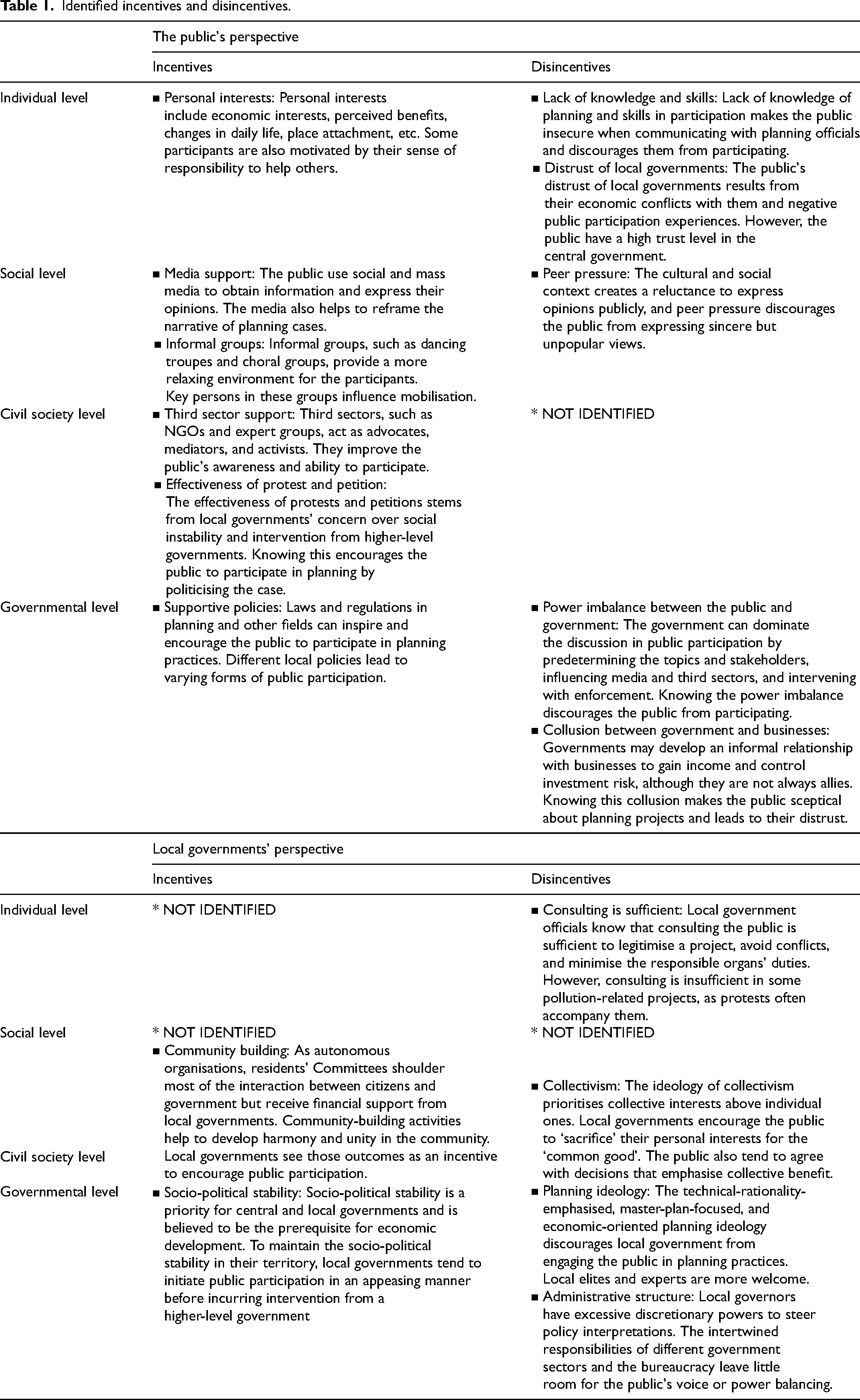
We did not identify incentives/disincentives at every level. No incentives were found for local governments at individual and social levels. ‘Community building’ and ‘social-political stability’ are the only two incentives for local governments. Considering that ‘community building’ serves ‘social-political stability’ to a certain extent, we argue that local governments lack essential incentives to involve the public in planning practices.
Among the identified factors, we observed interrelations between various levels. First, the effectiveness of protest and petition, as a civil society-level incentive for the public, is only ensured by the central government's demand for socio-political stability. This means the public are not exerting their power through civil activities like in a democratic society. Their power comes from local governments’ fear of intervention by a higher-level government. The relationship between protest and socio-political stability encourages local governments and the public to be active in public involvement but in two different ways. The effectiveness of protests may be debated once local governments find alternative ways to avoid intervention by higher-level governments. Second, the technical rationality-oriented planning ideology of the planning authority, which does not prioritise public participation, creates a high barrier to entry and exacerbates the public's lack of confidence due to their limited knowledge and skills. This reciprocal relationship between the planning ideology and the public's knowledge limitations creates a vicious circle that discourages both the public and local governments from collaborating. Third, the government's administrative structure creates an environment that fosters collusion between government and business, exacerbating the power imbalance between local governments and the public and, ultimately, contributing to the public's distrust of local governments.
This study found that political and social factors outside the planning system influence the public and local governments’ decisions to participate in planning affairs. This finding aligns with Horelli's (2002) claim that promoting public participation is not only a scientific but also an ethical and political issue. It highlights the need for organisational and political approaches (Horelli 2002) to overcome the structural obstacles in China's public participation in planning. This does not seem to be an issue only in China, as Horelli and Wallin (2023) also found that the renewal of Finnish planning legislation ignored civil society's self-organisation. Future research can explore social and civil society-level factors that encourage governments to promote public participation in both democratic and authoritarian contexts.
This research could have analysed the geographic distribution of the identified incentives/disincentives, and provided numerical statistics to determine the significance of every factor. Still, we suggested being cautious before drawing such a conclusion. Some cities’ over-representativeness might bias the selected cases’ geographic distribution. For example, the city of Guangzhou in Guangdong province was studied in 13 articles out of the 45 selected ones, with the second most frequently studied city, Beijing, in only five. This could be due to the topicality of specific projects in that city or the research interests of local institutions. On the other hand, the contextual differences within the country are worth noting. A comparative study between Beijing and Guangzhou found that different levels of connections with the central government lead to different local participation atmospheres (Zhang et al. 2020b). Therefore, while our study has revealed a general situation in China, localised context-based studies are needed when implementing public participation in actual planning cases.
It should also be noted that the reviewed case studies did not exclusively centre around incentives/disincentives research. Some significant factors may have been overlooked. Therefore, the number of cases in which an incentive/disincentive was identified may not accurately represent the significance of that factor. For instance, the need for socio-political stability may be a prevalent underlying factor not explicitly discussed in many cases. Likewise, ‘third-sector support’ was identified in seven articles, while ‘supportive policies’ was identified in four. However, concluding that the ‘third-sector support’ is twice as significant as ‘supportive policies’ to the public would be arbitrary.
Nevertheless, the findings and model developed in this study could serve as a stakeholder pre-assessment in the initial phase of public participation. Planners in China's planning system have the discretion to engage the public beyond the minimal legal requirements (Morrison and Xian 2016), whether driven by pragmatic, normative, or trust-building motivation (Reed et al. 2018; Rowe and Frewer 2004) and whether they adopt a collaborative or agonistic approach (Zhang et al. 2020a). Although we excluded planners from the research scope, this research could help planners understand the concerns of the public and local governments as they decide whether to participate in public participation in planning. A stakeholder study could prepare them for potential obstacles and help identify the root causes of ineffective public participation arrangements in China.
Supplemental Material
sj-docx-1-jpl-10.1177_08854122241262748 - Supplemental material for Incentives and Disincentives in Public Participation – A Review of Public Participation in Planning Practices in China
Supplemental material, sj-docx-1-jpl-10.1177_08854122241262748 for Incentives and Disincentives in Public Participation – A Review of Public Participation in Planning Practices in China by Xunran Tan and Marketta Kyttä in Journal of Planning Literature
Footnotes
Acknowledgements
Our thanks to the editors of this journal for the rigorous process and the significant contribution of the anonymous reviewers, who have produced a better article.
Declaration of Conflicting Interests
The authors declared no potential conflicts of interest with respect to the research, authorship, and/or publication of this article.
Funding
The authors received no financial support for the research, authorship, and/or publication of this article.

Supplemental Material
Supplemental material for this article is available online.
Notes
Author Biographies
References
Supplementary Material
Please find the following supplemental material available below.
For Open Access articles published under a Creative Commons License, all supplemental material carries the same license as the article it is associated with.
For non-Open Access articles published, all supplemental material carries a non-exclusive license, and permission requests for re-use of supplemental material or any part of supplemental material shall be sent directly to the copyright owner as specified in the copyright notice associated with the article.
