




Abstract
Despite a growing body of research on the smart city framework for disaster resilience, a comprehensive systematic literature review from urban planning perspectives has never been attempted. In this review of smart and resilient cities, we distill vital learning and shared concepts, identify research trends and limitations, and suggest avenues for future research. The results reveal that reviewed articles primarily focused on methodological approaches addressing how to adapt technologies for disaster resilience, yet rarely discussed the sociological approaches to environment, economy, and governance. This study will provide a reference to trace existing research and suggest equitable smart resilience.
Introduction
Increasing public awareness about climate change has intensified the demand for effective data collection and its use in the context of disaster preparedness and resilience. As a result, big data analysis, urban informatics, and innovative technologies have been applied to urban disaster resilience research and development (Tonmoy, Hasan, and Tomlinson 2020; Yabe et al. 2022).
The advances in smart city technologies and their applications have boosted interest in recent years (Komninos et al. 2019). The smart city concept is defined as the integration of emerging technologies to generate a city's growth (Song 2005; Kunzmann 2014) and achieve environmental, economic, and social development for sustainable cities (Kurushina and Kurushina 2014; Kitchin 2015; Francini et al. 2021). Specifically, advances in artificial intelligence, sensing technologies, information and communications technology (ICT) infrastructure, and big data sources (i.e., social media and mobile devices) allow real-time information and computational analysis of big datasets for smart and connected cities (Kitchin 2014; Gupta and Gupta 2016; Murayama, Scholl and Velev 2021; Arafah and Winarso 2017). According to Cohen (2015), the concept of a smart city has gradually evolved through three generations: Smart Cities 1.0 with state-of-the-art technologies, Smart Cities 2.0 led by public administrations for technology-enabled managed cities, and Smart Cities 3.0 as solid and creative public engagement and a high degree of interaction between the government and citizens in urban development. Such technical and government advancements provide opportunities to develop data-driven decision support tools for managing natural hazard events in cities to increase urban resilience for communities (Tonmoy, Hasan, and Tomlinson 2020). Additionally, the smart city concept has increasingly contributed to unveiling the uncertainty and recurrent natural hazard events resulting from climate change (Janitra 2020). The concept of resilience involves the ability to identify and withstand shocks and risks through adaptation and transformation for long-term sustainability (UNISDR 2012; Independent Evaluation Group 2019; Janitra 2020). Disaster resilience refers to the ability of a system, community or city to withstand, adapt to, and quickly recover from adverse events such as natural disasters, pandemics, or other disruptive events (Norris et al. 2008; Chandra et al. 2011). In the context of smart cities, disaster resilience is essential for sustainable urban development. As cities become more complex and interconnected, they become more vulnerable to various types of shocks and stresses. By incorporating resilience into their planning and operations, smart cities can better protect their citizens and critical infrastructure and reduce the negative impact of disasters on their economy and society. Hence, building disaster resilience in a smart city context involves preparedness, infrastructure and design, technology, and social cohesion.
Bridging multiple components and interactions to reveal a complex resilience system is the key to empowering urban capacity. A smart city framework can play a significant role in developing disaster resilience by utilizing new technologies. Janitra (2020) formulated six smart city components that overlap with the urban resilience approach: (1) technology, (2) data and information, (3) human resources and society, (4) environment and spatial aspects, (5) the economy, and (6) governance. By organizationally applying these approaches from the individual to the regional level, smart disaster resilience can be achieved by connecting cities’ economic, ecological, and social aspects and supporting the long-term sustainability of communities. Overall, smart disaster resilience can be defined as the use of innovative technologies, data analytics, and intelligent systems to improve disaster response, mitigate risk, and enhance recovery efforts, aimed at creating more resilient communities and infrastructure in the face of natural hazard events.
A systematic literature review (SLR) is an approach used to find and aggregate the existing knowledge about a specific area of interest or research question (Velásquez, Caro, and Rodríguez 2018). Systematic reviews of this body of scholarship have recently been established. One stream of SLR on smart disaster resilience focuses on reviewing the concepts of important terminologies by comparing differences and connections between smart city and resilient city concepts (Zhu et al. 2020), identifying the definitions of sustainability and resilience in smart city planning (Ramirez Lopez and Grijalba Castro 2020), defining the smart city concept through a lens of resilience (Arafah and Winarso 2017), and focusing the concept of big data and its applications for smart disaster management cycles (Munawar et al. 2020). Another stream of SLR in this field concentrates on emerging technologies and their applications in disaster management. Sarker et al. (2020) examined big data technologies to facilitate postdisaster management and development. Khan, Gupta, and Gupta (2020) focused on emerging technologies that help monitor, detect, recover, and manage multihazard disaster events. Tonmoy, Hasan, and Tomlinson (2020) specifically reviewed smart city technologies used for disaster management of coastal cities. Despite the increased reliance on smart city frameworks in disaster resilience, little research has systematically reviewed a holistic strategy to study subject trends and disciplinary collaborations. In addition, none of the research has addressed research gaps from urban planning perspectives to suggest policies and initiatives for future smart disaster resilience. In this context, this synthesis work reveals the trends in extant smart resilience literature and provides recommendations for academics and policymakers.
To that end, this article will discuss how urban resilience could be effectively integrated with smart city development by improving the theoretical and practical applications of smart resilience scholarship. Given that, this SLR provides an overview of the extant literature by finding answers to the following four questions:
What is the current state of research on smart city frameworks in disaster resilience? What are the trends and patterns in interdisciplinary collaborations in the extant literature on smart disaster resilience? What keywords bridge the concepts of smart city and disaster resilience? What are the policy suggestions for smart disaster resilience in urban planning, and what recommendations can be made for academics and policymakers based on the SLR of smart disaster resilience?
Methods
Systematic Literature Review
Keyword Combinations, Search Terms, and Databases Used.
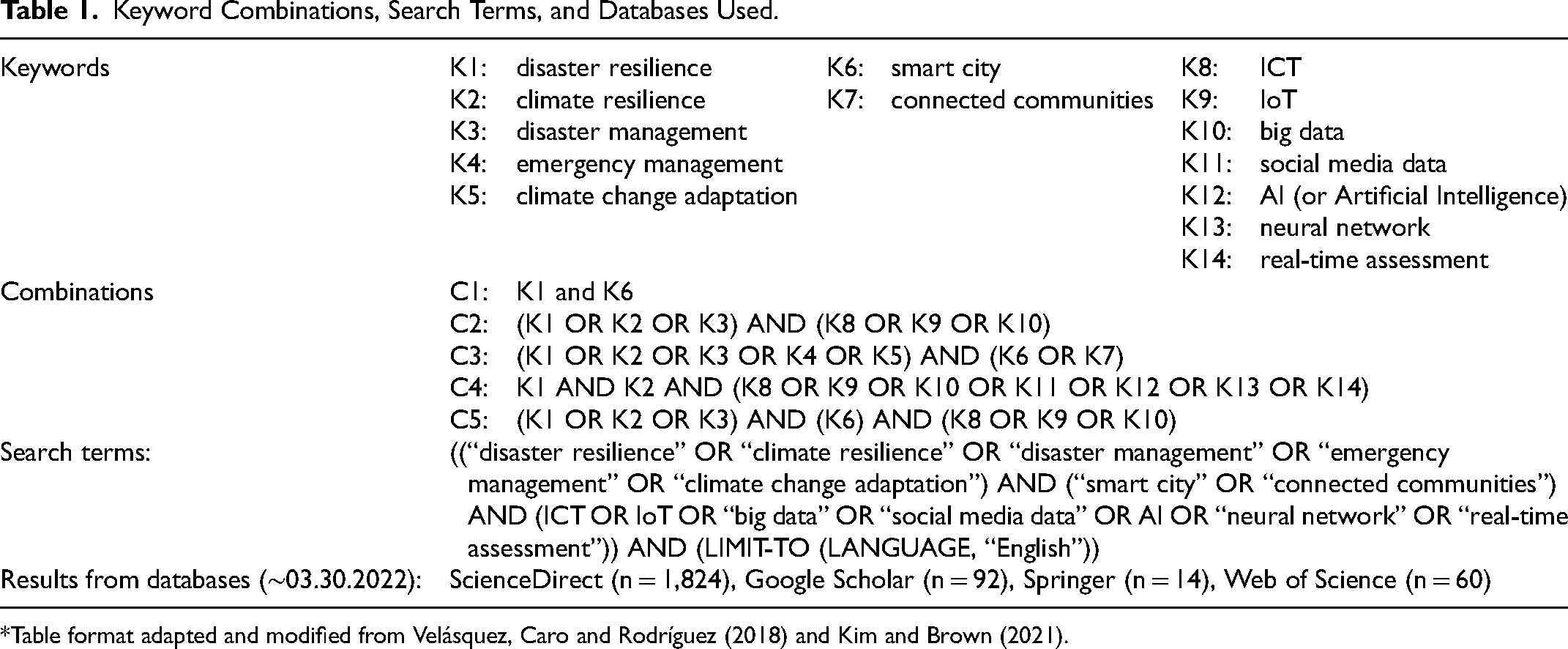
*Table format adapted and modified from Velásquez, Caro and Rodríguez (2018) and Kim and Brown (2021).
Given that the literature was identified through robust sampling strategies using different combinations of keywords, unique query strings for the review should be structured prior to conducting an SLR (Booth et al. 2021). We started with the primary keywords “disaster resilience” (K1) and “smart city” (K6) as a constant base and then expanded to words with similar meanings. The combination then added terms with specific smart city technologies (K8–K14) to expand the search. The literature search was conducted from February to March 2022 using four literature research sources, ScienceDirect, Google Scholar, Springer, and Web of Science. Our searches were not time-bound.
With ninety-two selected articles after the screening process based on the inclusion criteria, we conducted forward and backward searches by reviewing the references of each of the retained articles to find additional pertinent studies that were missed in the initial database searches (Xiao and Watson 2019). We then utilized Google Scholar to include any relevant papers that had cited the retained articles and finally added twenty-six articles, which made 118 studies for this review. Figure 1 shows a flow chart of the literature searches and the exclusion process for the SLR. From the final included articles, we conducted an in-depth review to extract the following information: (1) author's affiliation countries or continents, (2) study location, hazard type, and disaster stage, and (3) smart city framework to promote disaster resilience. To increase inter-rater reliability, two authors developed an extraction tool using Microsoft Excel and went through an interactive process of consistently checking our coding to synthesize the articles. The data extraction coding criteria include the following: study ID, authors, year, title, journal name, volume, issue, pages, date, DOI, keywords, academic disciplines of authors, citation number, and country authors are affiliated with, hazard type, case study area, the purpose of using technology, disaster management stage, resilience stage, detailed data type, and smart city components related to urban resilience approach (in terms of technology, data and information, human resources and society, environment and spatial aspects, the economy, and governance). All screening processes were conducted using EndNote 20, a bibliography software, and we used Microsoft Excel for data extraction.
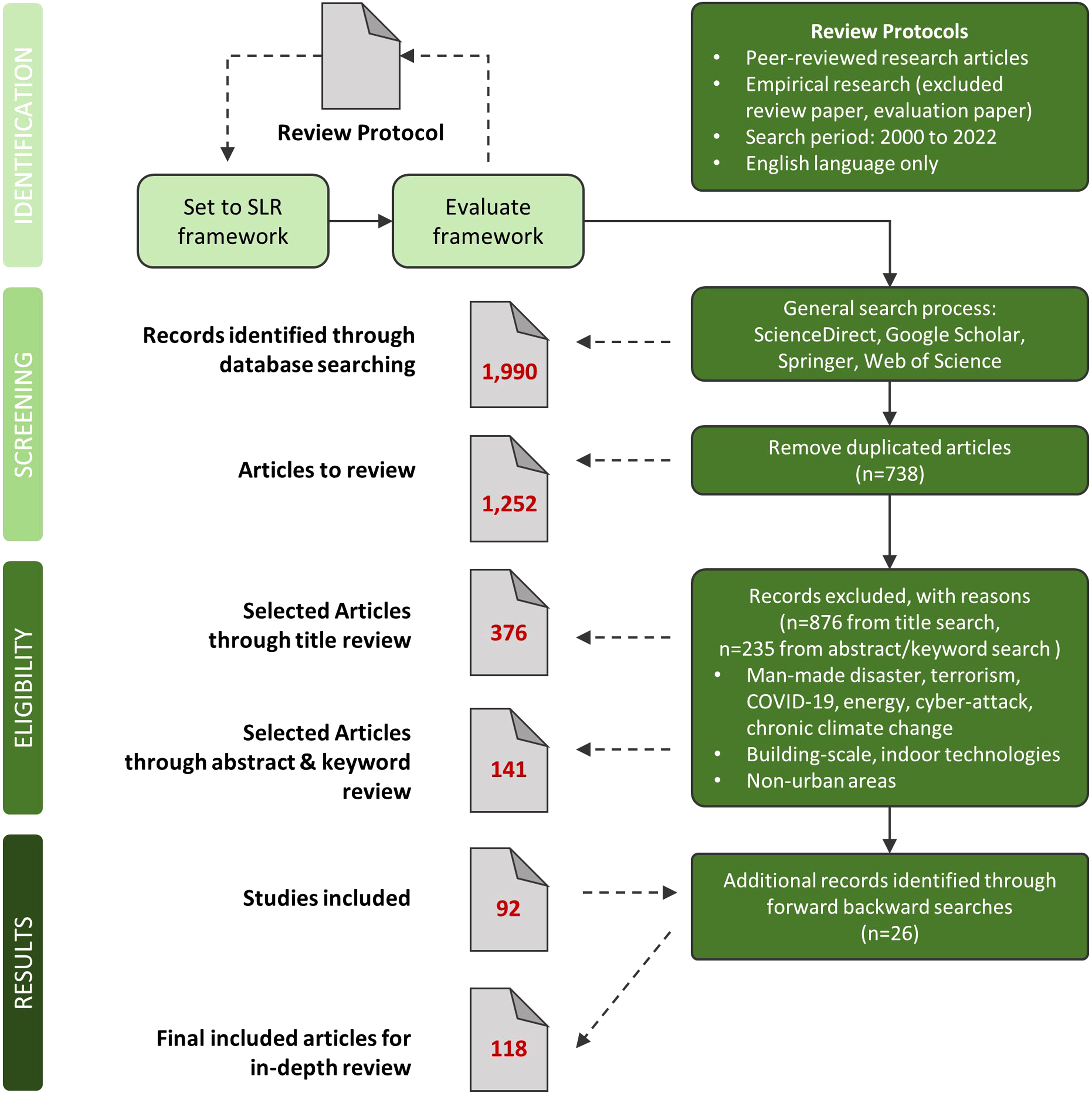
Literature search and exclusion process (model adapted from Xiao and Watson (2019); graphic adapted from Kim and Brown (2021)).
Cluster Analysis
Cluster analysis allows researchers to identify a small number of groups whose elements are more similar to one another than to those of other groups (Francini et al. 2021). This method is beneficial given that it helps visually highlight distinctive characteristics and group them for typology (Francini et al. 2021). We used the VOSviewer (1.6.18), a software tool for visualizing and constructing bibliometric networks. This tool is especially useful for a large quantity of data (Siderska and Jadaan 2018) to create a graphical representation of maps in an easy-to-interpret way (Van Eck and Waltman 2010). We chose VOSviewer for visualization because it allows researchers to explore network clusters efficiently by performing data cleaning with thesaurus files and setting thresholds using a fractional counting approach (Van Eck and Waltman 2010). Specifically, co-occurrence analysis is one of the most popular tools in the VOSviewer, given its natural language processing and advanced clustering techniques. The weight of an item (i.e., academic disciplines or author keywords) refers to a value that determines the item's importance in a network visualization. The larger the circle, the greater is the weight. The color of an object is determined by the cluster it belongs to. Lines connecting objects represent linkages, and the distance between two items on the map approximates their relatedness in terms of co-occurrence, identifying pairs of items that frequently appear together in the same bibliographic record. In this process, the VOSviewer groups these pairs into clusters based on the strength of their co-occurrence relationships.
In order to investigate the current multidisciplinary collaboration networks and research trends for smart disaster resilience, two cluster analyses were conducted in this SLR. First, we chose disciplines of the authors’ affiliations reported in the selected publications as a unit of analysis. We conducted a co-occurrence cluster analysis to review which academic disciplines have led to smart disaster resilience studies and where the interdisciplinary collaborations have been built. When an author is affiliated with a multidisciplinary program, we listed both fields separately in the bibliographic record to acknowledge the multidisciplinary nature of the author's affiliation and the potential for their work to encompass a broader range of perspectives and to provide a more comprehensive representation of the author's background without overestimating their expertise. The second cluster analysis was conducted using keyword lists reported in each publication. Similar to the discipline co-occurrence analysis, the authors generated a bibliographic map illustrating hot topics and trends in the research field. If two keywords frequently appear together in the sets of bibliographic records, they may be more closely related than other pairings of words (Romero and Portillo-Salido 2019). We then use the same keywords to illustrate overlay visualization by time and discuss how the trends in keywords related to smart disaster resilience have changed over time.
Results
Results From the Systematic Review
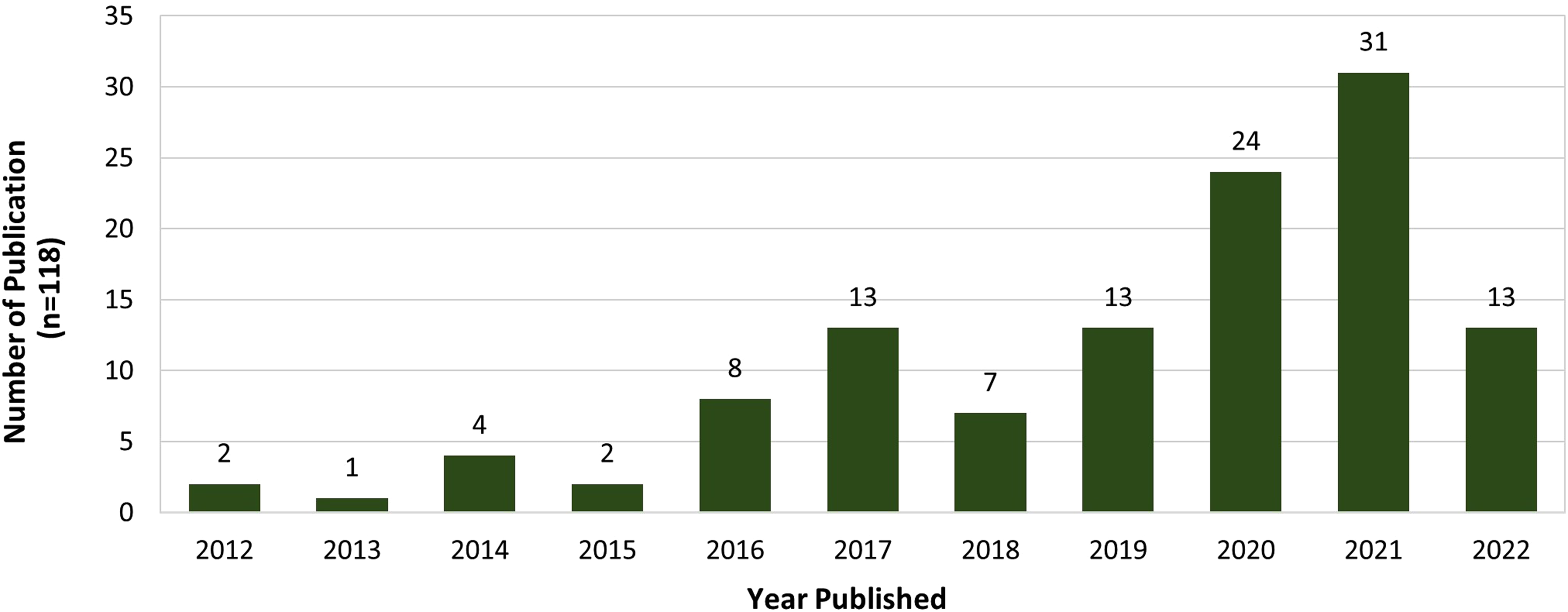
Number of publications by year (n = 118; This study focused only on research published until March 2022).
Figure 3 shows the summary of the studies reviewed from the following three perspectives: (1) author's affiliation countries and continents, (2) study region, disaster management stage, and disaster stage, and (3) smart city framework.
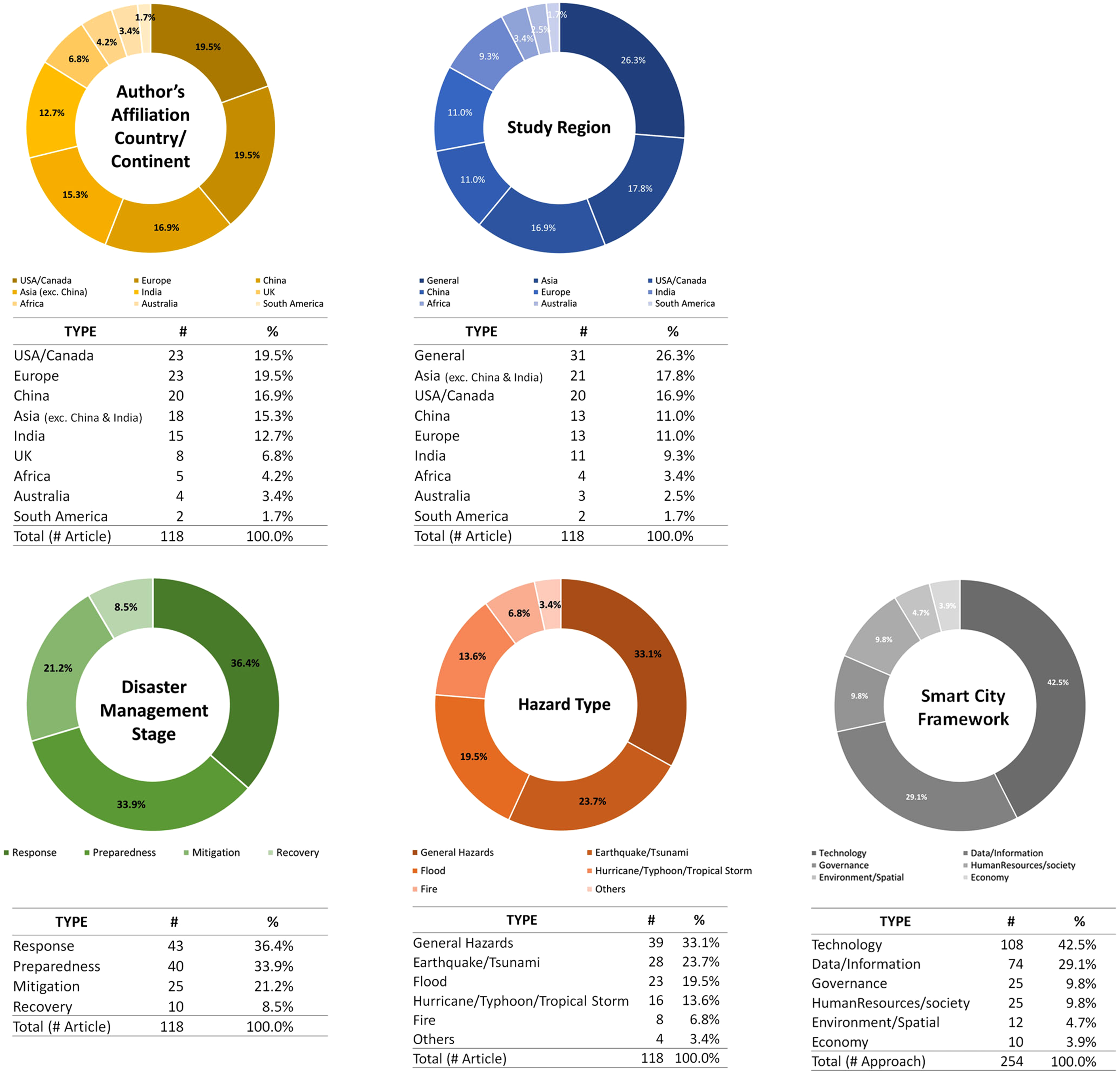
Summary of the studies reviewed: (a) author's affiliation country, (b) study region, (c) disaster stage, (d) hazard type, and (e) smart city framework.
Results From Cluster Analysis
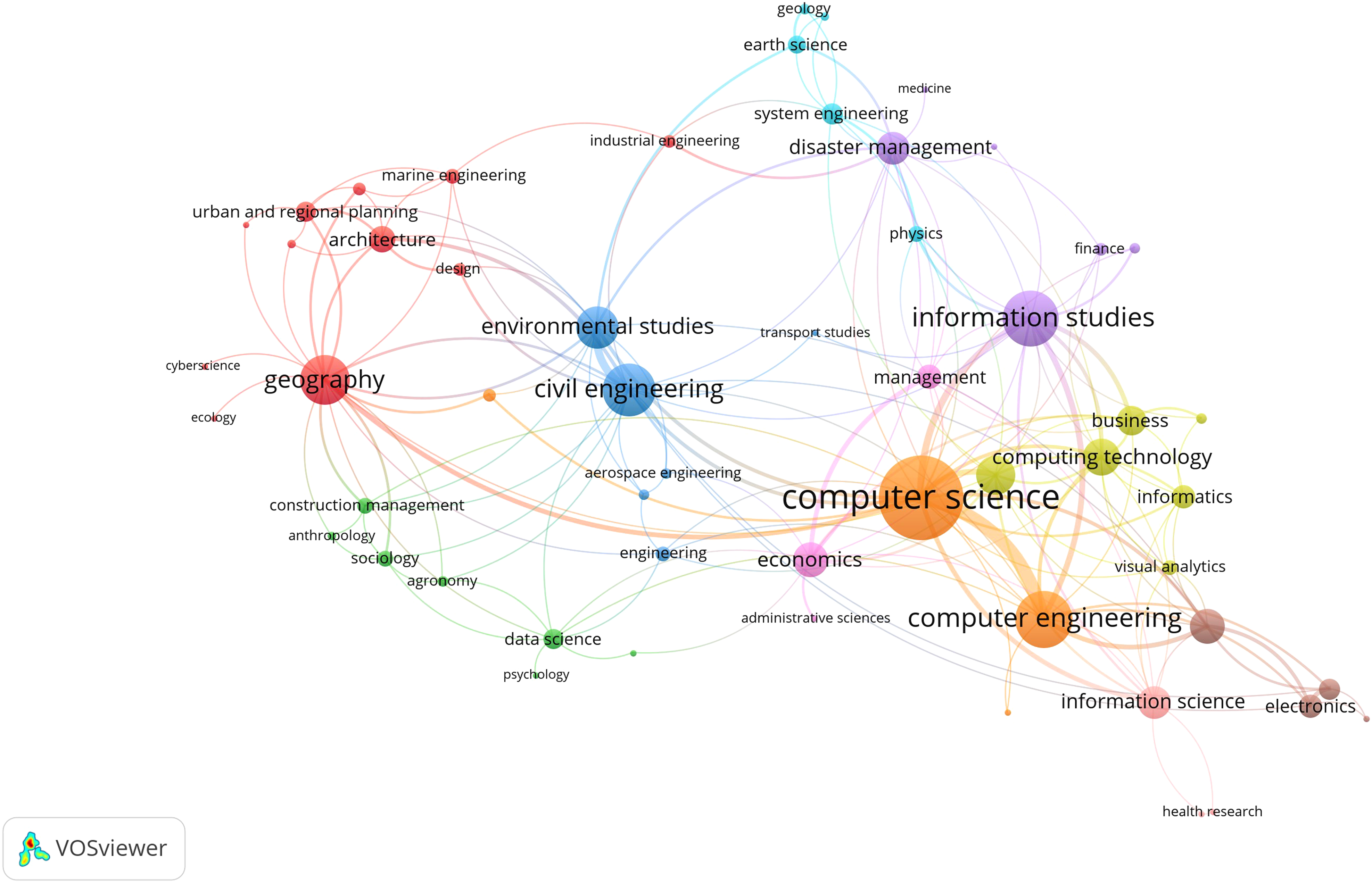
Frequency of academic disciplines based on co-occurrence cluster analysis through VOSviewer.
Clusters of Academic Disciplines Identified by Cluster Analysis of Seventy-Eight Keywords With a Minimum Threshold of Two Co-Occurrences Using VOSviewer Software.
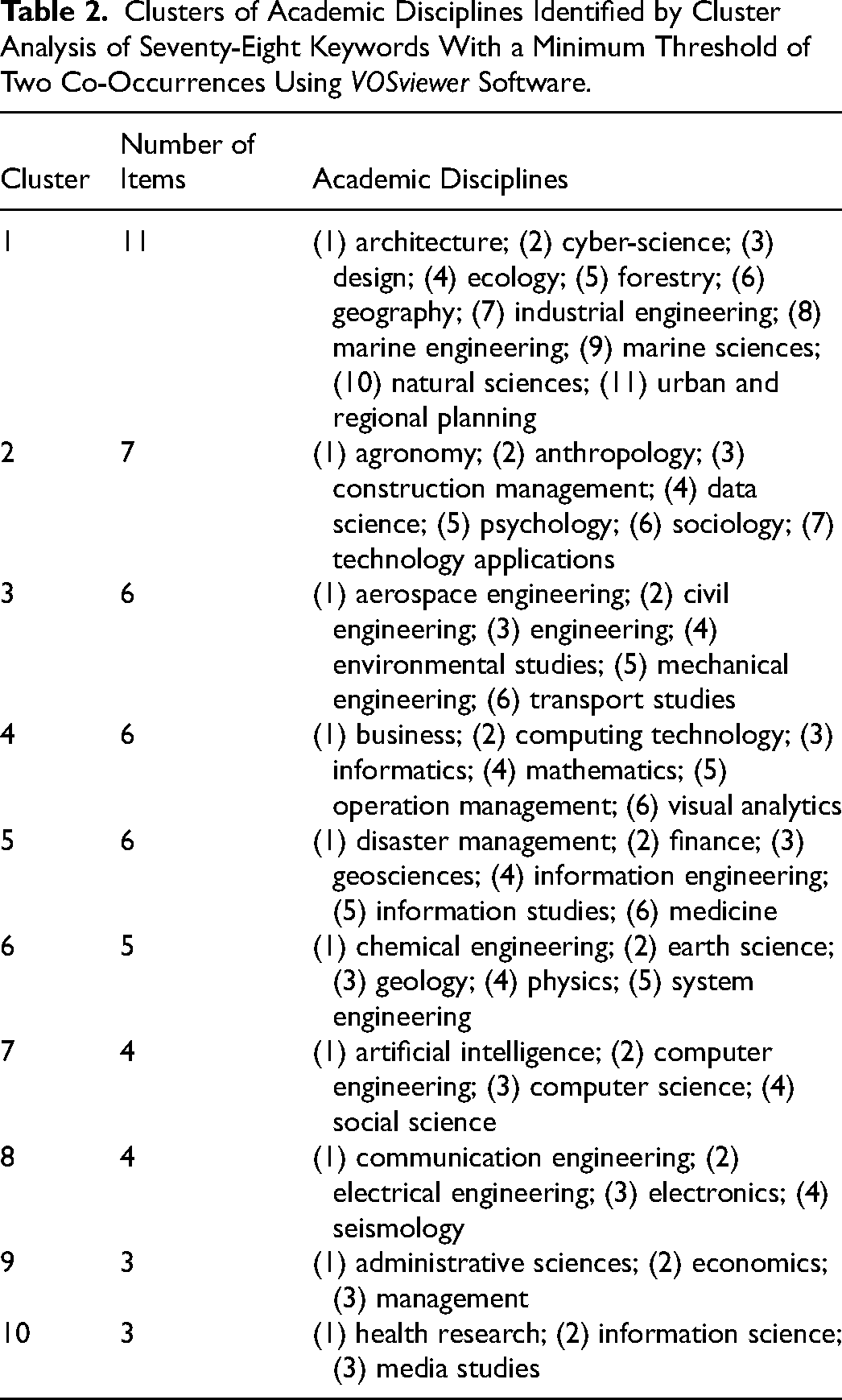
The size of the circles denotes the academic field's number of publications, while the thickness of the lines shows the extent of cooperation. The top three strongest links for collaboration were shown between computer science and computer engineering (a link strength of 13), environmental studies and civil engineering (a link strength of 7), and computer science and information studies (a link strength of 6). Given that the same color-coded fields are in the same cluster, computer science had the most active multidisciplinary collaboration with other fields, including information studies, mathematics, business, geography, construction management, economics, and electrical engineering. Despite relatively weak collaboration links, civil engineering played a significant role in bridging between engineering disciplines (i.e., electrical engineering, aerospace engineering, marine engineering, mechanical engineering, and computer engineering) and social science fields (i.e., sociology, geography, urban and regional planning, and anthropology), with twenty links and thirty-two link strengths. In the urban planning field, all collaborations occurred within the same cluster except one outside cluster (environmental studies), showing seven links and nine link strengths. Its far distance from academic fields in other clusters, such as data science, computer engineering, information studies, economics, business, or electrical engineering, calls for a stronger interdisciplinary collaboration in the future.
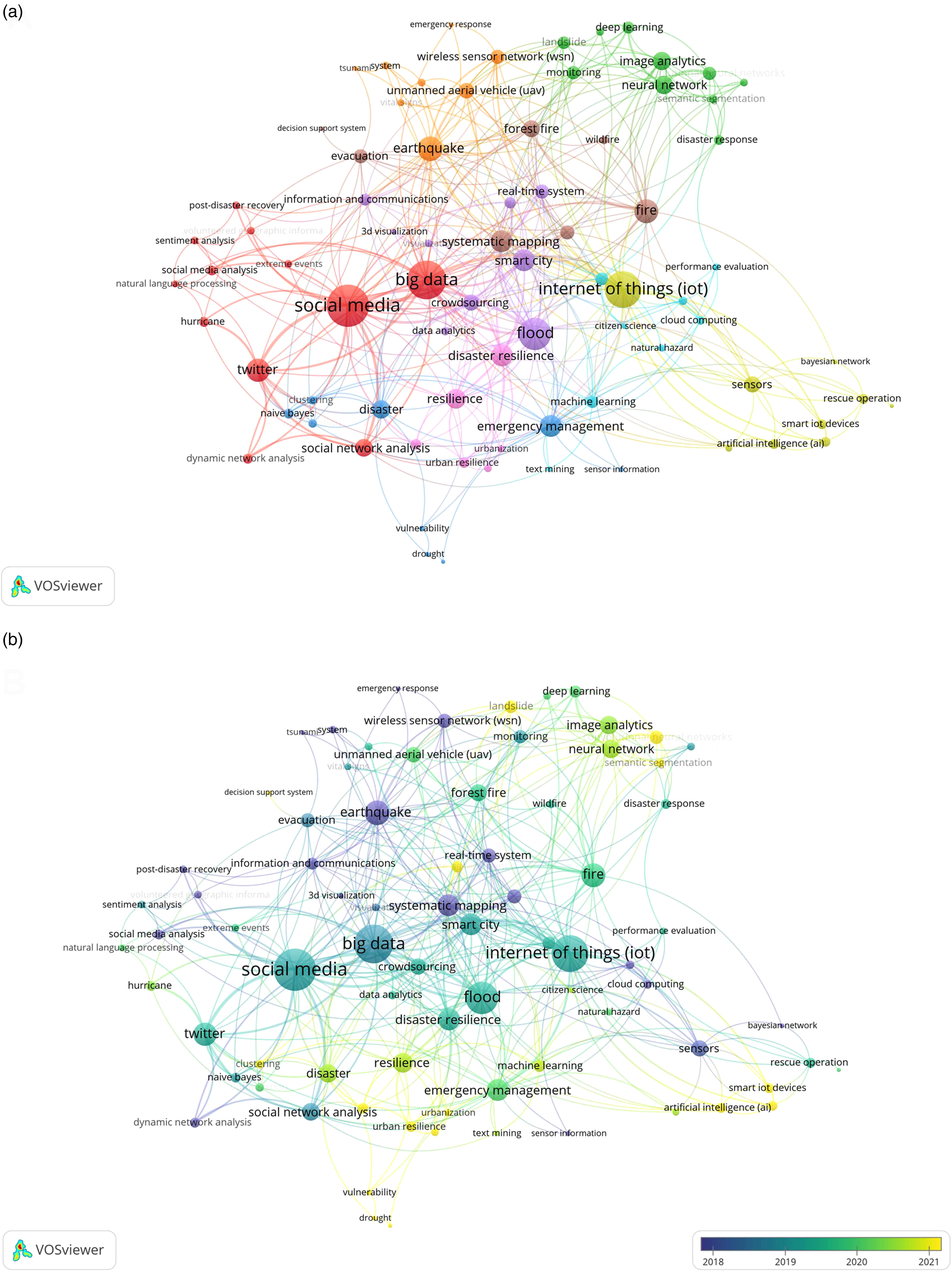
High-frequency terms in author keywords for smart city framework for disaster resilience publications during 2000–2022. Of the 578 keywords, eighty-nine terms occurred at least two times. Omitting the term “disaster management,” the largest set of connected keywords with the greatest total link strength consists of seventy-eight terms in nine clusters. (A) VOSviewer network co-occurrence visualization map. (B) VOSviewer overlay visualization by time.
The average publication year (Avg. pub. year) of those high-frequency terms in author keywords was primarily found between 2018 and 2019, compared to terms that appeared in early years, such as “wireless sensor network (WSN)” (Avg. pub. year: 2016.5), “information and communications technology (ICT)” (Avg. pub. year: 2016.8), or “earthquake” (Avg. pub. year: 2017.6). Keywords describing explicit technologies or analytic methods—such as “artificial intelligence (AI)” (Avg. pub. year: 2021.0), “convolutional neural networks” (Avg. pub. year: 2021.0), “blockchain” (Avg. pub. year: 2021.5), or “clustering” (Avg. pub. year: 2021.5)—were found in recent years (Figure 5B). Chronologically, keywords in the early years (2016–2018) focused on sensor-based early warning systems and emergency response measures against earthquake and tsunami risks, including real-time system development, dynamic network analysis, three-dimensional (3D) visualization, and systematic mapping. In the middle years (2018–2020), the utilization of sensor networks had been diversified and expanded to various natural hazards by suggesting specific disaster management activities using IoT sensors in flood and fire evacuation. Monitoring, rescue operations, and the development of crowdsourcing platforms are examples specified for disaster management measures. During this period, diversity in big data and social media in disaster management had increased, and studies using social media analysis, social network analysis, or sentiment analysis exploded. In more recent years (2020–2022), concerns about the ethical utilization of technologies have emerged. Given that, keywords associated with equity in risk reduction (i.e., equitable urban resilience and disaster vulnerability) and civic engagement (i.e., citizen science and a decentralized decision support system) have been found in recent studies. Additionally, technologies utilized in disaster management were expanded to the preparedness and mitigation stage, and holistic concepts shown in early-year studies specified concrete data analytics, technologies, or device management (i.e., neural network, semantic segmentation, blockchain, and unmanned aerial vehicle [UAV]).
Clusters and Thematic Areas Identified by Cluster Analysis of Seventy-Eight Keywords With a Minimum Threshold of Two Co-Occurrences Using VOSviewer Software.
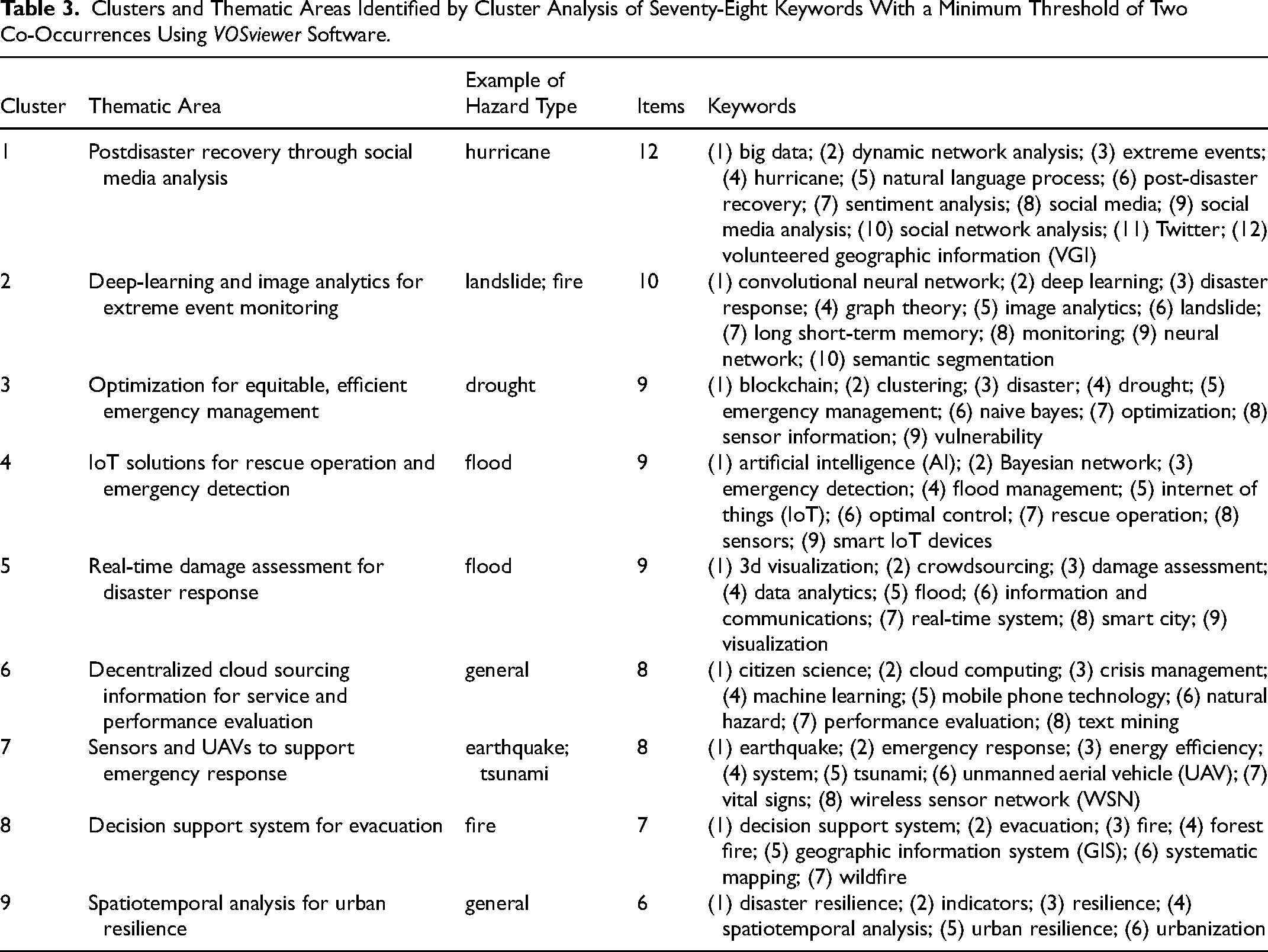
The first cluster of postdisaster recovery through social media analysis highlights how social media and big data can be applied to extreme events, such as hurricanes or storms, for the postdisaster recovery process. Social media/network analysis was conducted to examine public perceptions and concerns toward natural hazard events (Wang et al. 2020), to identify the basic needs of the people affected by the disaster using Twitter data (Ragini, Anand, and Bhaskar 2018), and evaluate the increased level of social capital through ICT and social media (Cheng et al. 2015). Fan et al. (2020) focused on the biased representativeness of social media in disaster informatics by identifying areas with underrepresented populations. The literature in this cluster demonstrates the efficacy and better adoption of social media for disaster resilience.
The second cluster of deep-learning and image analytics for extreme event monitoring focuses on advanced modeling to monitor abnormal weather events and disaster prediction. Tao (2020) suggested an IoT soil monitoring sensor to detect the rainfall amounts that produce landslides. A recent study on landslide prevention introduced a deep-learning technique to establish a geotechnical cyber-physical system for rainfall-induced landslide prevention by developing autonomous water pumping to maintain groundwater levels (Biniyaz et al. 2022). Deep-leaning algorithms are applied to detect fire monitoring by image processing from IoT devices and surveillance cameras (Cui 2020; Khan et al. 2021). Those real-time fire and smoke detection and monitoring technologies allow emergency responders to take effective action with quicker and more accurate information.
The third cluster optimization for equitable, efficient emergency management refers to new technologies that facilitate emergency responses. Poonia et al. (2021) proposed how a blockchain-based framework can reduce drought fatalities through a cost-efficient, decentralized drought risk management system in India. The literature was echoed by Wang and Chen (2022) by suggesting a multi-agent collaborative mechanism based on blockchain technology. Studies in this cluster, in sum, address the advantages of the potential of blockchain in terms of distributed storage, decentralization, consensus algorithms, tamper-proof, traceability, and smart contract in emergency management (Poonia et al. 2021; Rodríguez-Espíndola et al. 2022; Wang and Chen 2022).
The fourth cluster shares IoT solutions for rescue operations and emergency detection, focusing on utilizing IoT devices in emergency responses during disaster events. Goyal, Ghanshala, and Sharma (2021) suggested using smart IoT devices for recommendation-based rescue operation models in flood management systems. Some studies focused on pedestrian evacuations in large regions with limited automobile usage (i.e., theme parks, concert halls, and campus environments) (Solmaz and Turgut 2017). Such IoT solutions have expanded to the cloud-assisted IoT and big data systems developing how to collect, share, and integrate the data for disaster analysis (Wang, Qin, and Samuel 2020).
The fifth cluster, real-time damage assessment for disaster response, concerns how new technologies can achieve quicker reconnaissance for damage assessment amid disaster disruptions. Integrating the crowdsourcing of social media data with the artificial intelligence (AI) technique (Zhang et al. 2022), textual data analysis (Tan and Schultz 2021), and both text and image analysis modules (Hao and Wang 2020) provides streaming damage assessment for rapid damage information access and effective disaster relief activities. In addition, Twitter-sourced damage estimates can capture initial estimates that are not captured in the federal government estimates, which demonstrates the potential of balance between the governmental and social media sourced damage estimates (Villegas and Martinez 2022).
The sixth cluster decentralized cloud sourcing information for service and performance evaluation focuses on how decentralized disaster risk management systems through new technologies can enhance inclusive and locally contextual knowledge production and resilience building. Studies in this cluster addressed mobile phone technologies that leverage the rearrangement of the disaster management system, adopting a polycentric approach that involves multiple local stakeholders (Sukhwani and Shaw 2020; Paul, Bee, and Budimir 2021; Poonia et al. 2021; Wang and Chen 2022). The literature suggests an innovative, collaborative disaster management mechanism from the stakeholder's perspective and how the new system can complement the extant emergency management system for better service and performance.
The seventh cluster of sensors and UAVs to support emergency responses introduces UAV techniques that can complement or replace the conventional communication infrastructure during a disaster crisis. The literature in this cluster demonstrated the need to adapt UAVs for disaster assistance and aerial monitoring (Malandrino et al. 2019), fire detection with 3D visual effects and high-accuracy imaging (Sharma, Singh, and Kumar 2020), energy-efficient task scheduling schemes in health data collection (Ejaz et al. 2020), and communication support (Masroor, Naeem and Ejaz 2021). Recent studies specify “how” to support rescue operations and damage assessment during and immediately after disasters, seeking challenges arising in communication and outlining efficient, optimal solutions to control problems (Ejaz et al. 2020; Masroor, Naeem, and Ejaz 2021; Pereira 2021).
The eighth cluster decision support system for evacuation highlights the support of new data and techniques for timely decision making. It is demonstrated by using geo-tagged images with a deep-learning method from earthquake-damaged areas in Japan and Italy (Chaudhuri and Bose 2020), flood control decision support systems suggested for Poland and Iran, respectively (Balis et al. 2017; Akbarian et al. 2022), a geo-spatial early warning decision support system in Cyprus (Damalas et al. 2018), and an agent-based simulation for postearthquake pedestrian evacuation in Taiwan (Chang, Wu, and Ke 2022). The research in this cluster addressed the efficacy of new technologies in emergency management decision-making systems.
Finally, the ninth cluster spatiotemporal analysis for urban resilience highlights the policy implications of using new approaches in urban resilience. Wang et al. (2020) suggested the fusion of social media data, land use data, and other geographical information to measure the spatiotemporal patterns of public responses to urban flooding in China, which can complement existent policy measures for flood mitigation. Recent studies integrated social equity into the ICT infrastructure dimension for spatiotemporal assessment of holistic urban resilience efficiency (Lin et al. 2022). Studies in this cluster focused on new technologies to support regional resilience policies and better decision making for disaster mitigation.
In sum, we propose that the smart city framework provides technical support based on different disaster management stages, including preparedness (Cluster 2), evacuation (Clusters 4, 7, and 8), recovery (Clusters 1 and 5), and mitigation (Cluster 9), through the optimized decision support system (Cluster 3) and decentralized service provision (Cluster 6).
Discussion for Future Research
With the expanded usage of novel technologies in smart cities, researchers have started to focus on smart city frameworks and technologies to assist disaster management, as indicated by the growing number of publications on smart disaster resilience in recent years. This study systematically documents what is known about smart disaster resilience across 118 articles, extracting the features of smart disaster resilience and key research findings through keyword co-occurrence cluster analysis. Based on the findings, gaps in existing studies and suggestions for future research on smart and resilient cities are discussed.
First, one of the most significant gaps in the smart disaster resilience literature reflects the relatively low interest in a multidisciplinary collaboration between engineering and social science fields. Many recent smart disaster resilience studies were conducted in computer science, engineering, and information sciences, with less interest in other relevant contexts such as social science, geography, or urban planning. The limited geographic scope of collaboration, as shown in Figure 4, indicates the need for caution when considering future multidisciplinary partnerships in the studied areas. The interdisciplinary collaborations within urban planning have so far only included marine science, engineering, geography, architecture, environmental studies, and communication sciences, revealing a restricted engagement with engineering and science disciplines. Prior research by Lin et al. (2022), Feldmeyer et al. (2021), and Wang, Qin, and Samuel (2020) illustrates the importance of urban researchers in integrating multiple data sources through multimodal data analysis for a more holistic understanding of urban resilience. Additionally, studies by Yan, Chen, and Wang (2020) and Hasfi, Fisher, and Sahide (2021) emphasize the crucial role of public sentiment, perception, and civic participation in planning disaster management. Furthermore, urban planners are keen to explore how the implementation of new technologies can address current service gaps (Singh, Sabnani, and Kapse 2021) and strengthen existing policies and initiatives to better prepare for future disaster events (Hao and Wang 2020; Yao and Wang 2020). In brief, the findings of this study suggest that urban planners should work closely with other disciplines to develop comprehensive disaster management systems that protect communities and enhance overall urban resilience. Thus, future research on smart disaster resilience calls for more collective efforts between engineering and social science disciplines to provide different approaches and perspectives on the project.
Second, drawing from the findings of the SLR, we identified a recurring issue of a lack of interdisciplinary collaboration, particularly in addressing the varying demands of different populations in urban areas. Although not explicitly focused on equity, these findings point to a broader gap in considering the heterogeneous needs of various populations, especially vulnerable communities. As previous studies have demonstrated the ethical use of smart technologies for disadvantaged groups, such as low-income communities of color (Lung-Amam et al. 2021), rural and remote communities (Spicer, Goodman, and Olmstead 2021), and developing ICT infrastructure tribal communities (Duarte et al. 2021), we extend the line of thought to emphasize the importance of designing equitable disaster technologies within interdisciplinary collaboration. Future research may produce more inclusive solutions that accommodate varied community demands by combining urban planning and technology design disciplines. For example, the research by Tonmoy, Hasan, and Tomlinson (2020) describes a smart city framework with four layers (a perception layer collecting data; a network layer to interconnect information sources; a data storage layer to store big data in cloud-based systems; and an application and information management layer for analyzing stored and real-time data, which may include georeferenced data analysis and dissemination of alarms and notifications). Given that, urban planners can envision highlighting the need to address the digital divide by designing a more advanced application layer with decision-specific algorithms for equitable outcomes. Building upon the findings of Seong, Losey, and Van Zandt (2021), and Seong, Losey, and Gu (2022), which reveal that resource allocation for hazard mitigation often disproportionately benefits specific communities due to unequal resource distribution in decision-making processes, disaster planners must adopt and incorporate smart city technologies to address efficiency, sustainability, and equity concerns in urban resilience. The smart disaster resilience framework must consider the social and economic ramifications of disasters, which disproportionately impact disadvantaged groups when viewed through the “lens of social vulnerability” (French, Feser, and Peacock 2008; Peacock et al. 2014).
Third, the study's findings reveal the importance of developing decentralized operations for smart disaster resilience. Decentralized systems can enhance public engagement and governance, leading to more efficient and effective responses to disaster events, having significant implications for improving the overall resilience of urban areas and better serving the needs of affected communities. In terms of efficiency, Olshansky, Hopkins. and Johnson (2012) highlighted the necessity of time compression in emergency response and postdisaster recovery, further underscoring the need for efficient, user-centric technologies and systems. By identifying the advantages of incorporating public engagement and user-based technologies in managing disaster events through decentralized operations in smart disaster resilience, this research contributes to the ongoing discourse on urban resilience and provides valuable insights for future developments in the field.
Finally, this study suggests a need for cohesive interdisciplinary collaboration in smart disaster resilience, underscoring data reliability for effective disaster management. For instance, without reliable data collected from various sensors and analyzed through interdisciplinary approaches, efforts toward efficient disaster response could be hindered. The lack of collaboration between engineering, information sciences, and other relevant disciplines, as revealed in our review (e.g., Figure 4), emphasizes the critical role that accurate and dependable data plays in shaping effective disaster management strategies. As prior studies have noted issues such as wear and tear, battery exhaustion, or malicious attacks that might affect data reliability (Puangpontip and Hewett 2019), our findings suggest a pressing need for robust interdisciplinary collaboration that can ensure data quality. By fostering cooperation among different fields, urban planners, engineers, and information scientists can develop shared protocols and methodologies to evaluate and test data reliability. This will, in turn, enable more accurate assessments of disaster sizes, required emergency responses, and resource allocations. In doing so, the smart disaster resilience framework can be strengthened to better prepare for and respond to future disaster events.
Conclusion
Smart disaster resilience is a recently used concept for creating more resilient communities and infrastructure in the face of natural hazard events and a relatively new arena that should be further developed in terms of utilizing new technologies and governance frameworks. This article synthesizes the existing literature and provides insights into further research approaches needed to progress in this field of study. In terms of future research needs, we highlight four essential suggestions. First, researchers should consider their own disciplinary biases that they bring to their research and attempt an active interdisciplinary collaboration between engineering and social science fields for a balanced point of view. Second, equitable disaster technologies should be considered for ethical, sustainable application in disaster resilience by encouraging a higher degree of decision-making algorithms. Third, decentralized operation for smart disaster resilience should be further considered through public participation to enhance a quicker and more democratic disaster management system. Lastly, researchers should seek a better way of evaluating data reliability and accuracy for extensive use of big data in disaster resilience.
This study has a few limitations that should be noted. First, an SLR has the possibility of publication bias, which may have resulted in excluding relevant studies despite our best efforts to be comprehensive and systematic in our search strategy. Second, our inclusion and exclusion criteria may not have captured all relevant aspects of the research question, potentially leading to the exclusion of relevant studies or the inclusion of studies that do not address the research question. Third, a quality assessment for each selected article was not conducted when preparing the pool of studies for data extraction and synthesis. This may cause differences in study quality among the reviewed articles. Finally, we acknowledge that using author affiliation as the assessment for analyzing collaboration trends may not capture authors who make contributions to fields outside their affiliated discipline. In addition, we did not consider the quality of collaboration, the nature of the collaboration, or the extent to which authors from different fields worked together in the same project. These limitations should be taken into consideration for future research to provide a more comprehensive analysis.
On the basis of existing SLRs on smart disaster resilience, this study provides an insight into how urban planners and city officials can utilize the results of smart disaster resilience studies to establish policies and plans by adopting new technologies derived from the smart city framework. This study also provides a detailed explanation of the review methodologies, which future researchers may replicate, reproduce, and modify to create their own design based on this generalizable SLR approach. For researchers, we believe that addressing four essential issues in future research would better advise planners in meeting the varied needs for establishing fair, efficient, and smart disaster resilience.
Footnotes
Declaration of Conflicting Interests
The authors declared no potential conflicts of interest with respect to the research, authorship, and/or publication of this article.
Funding
The authors disclosed receipt of the following financial support for the research, authorship, and/or publication of this article: This project is supported by the NSF Grants (2043060, 2133302, 1952193, 2125858, 2236305), USDOT Consortium of Cooperative Mobility for Competitive Megaregions, Good Systems Grand Challenge at the University of Texas at Austin, and the MITRE Corporation.

Author Biographies
Appendix 1. Inclusion and Exclusion Criteria and Rationales.
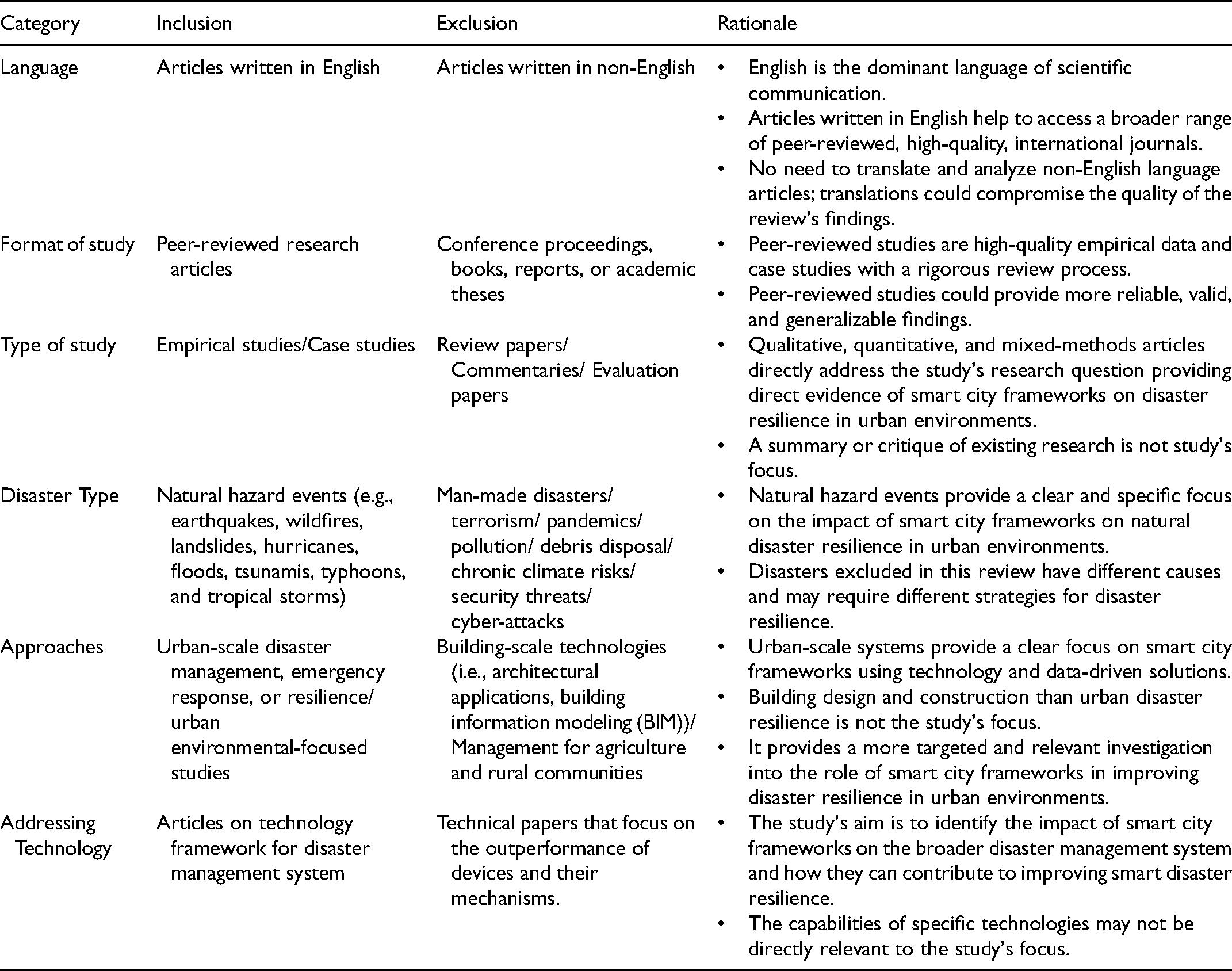
| Category | Inclusion | Exclusion | Rationale |
|---|---|---|---|
| Language | Articles written in English | Articles written in non-English |
English is the dominant language of scientific communication. Articles written in English help to access a broader range of peer-reviewed, high-quality, international journals. No need to translate and analyze non-English language articles; translations could compromise the quality of the review's findings. |
| Format of study | Peer-reviewed research articles | Conference proceedings, books, reports, or academic theses |
Peer-reviewed studies are high-quality empirical data and case studies with a rigorous review process. Peer-reviewed studies could provide more reliable, valid, and generalizable findings. |
| Type of study | Empirical studies/Case studies | Review papers/ Commentaries/ Evaluation papers |
Qualitative, quantitative, and mixed-methods articles directly address the study's research question providing direct evidence of smart city frameworks on disaster resilience in urban environments. A summary or critique of existing research is not study's focus. |
| Disaster Type | Natural hazard events (e.g., earthquakes, wildfires, landslides, hurricanes, floods, tsunamis, typhoons, and tropical storms) | Man-made disasters/ terrorism/ pandemics/ pollution/ debris disposal/ chronic climate risks/ security threats/ cyber-attacks |
Natural hazard events provide a clear and specific focus on the impact of smart city frameworks on natural disaster resilience in urban environments. Disasters excluded in this review have different causes and may require different strategies for disaster resilience. |
| Approaches | Urban-scale disaster management, emergency response, or resilience/ urban environmental-focused studies | Building-scale technologies (i.e., architectural applications, building information modeling (BIM))/ Management for agriculture and rural communities |
Urban-scale systems provide a clear focus on smart city frameworks using technology and data-driven solutions. Building design and construction than urban disaster resilience is not the study's focus. It provides a more targeted and relevant investigation into the role of smart city frameworks in improving disaster resilience in urban environments. |
| Addressing Technology | Articles on technology framework for disaster management system | Technical papers that focus on the outperformance of devices and their mechanisms. |
The study's aim is to identify the impact of smart city frameworks on the broader disaster management system and how they can contribute to improving smart disaster resilience. The capabilities of specific technologies may not be directly relevant to the study's focus. |