



Abstract
As governments and service agencies across the world grapple with chronic rates of homelessness and housing instability, there is a growing need to understand the value that providing secure, stable housing brings to the lives of people who are homeless and the broader community. The complex nature of homelessness is revealed across a variety of academic fields including planning, pharmacology, urban affairs, housing policy, nutrition, psychiatry, sociology, public health, urban health, and criminology. We undertook a scoping review according to PRISMA-P (Preferred Reporting Items for Systematic Review and Meta-analysis) that mapped the breadth and scale of the evidence-base and identified themes and gaps. We identified 476 reports and after excluding duplicates and ones that did not relate to our criteria, were left with 100 studies from eight countries. Each of them identified benefits and/or changes that occurred when people experiencing homelessness or housing insecurity transitioned into a secure, stable home. Outcomes measured were distributed across a range of domains including physical and mental health, well-being, mortality rates, criminal justice interaction, service use, and cost-effectiveness. Findings varied by degree but overwhelmingly found improvements in all domains once people were permanently housed. Housing provided a foundation for people to envisage a better life and make plans for the future. As one woman who had fled a violent home was quoted as saying: “housing made everything else possible.” The research identified savings for taxpayers and the wider community once people left homelessness for the stability of a permanent home, even after factoring in the cost of housing and rental help. We found numerous gaps. For example, there was a prevalence of studies that focused on those who are visibly homeless, in particular chronically homeless men with mental illness and/or substance use issues. Much less research looked at women whose patterns of homelessness are more varied and even less at homelessness involving children and families. Women who had left domestic and family violence were investigated in a very small number of studies and sample sizes were small. Few reports undertook the complex task of quantifying and comparing cost savings. Other notable gaps were older women, older people more generally, refugees, recent migrants, veterans, Indigenous people and those with a disability.
Keywords
Housing is an internationally recognized basic human right (United Nations 2014). The dignity and security of a stable home provides the platform upon which we can fully participate in the social and economic life of our community. Living in a permanent home offers benefits that go far beyond the provision of shelter. Without stability, people who are homeless tend to place heavier demands on nonshelter services such as hospitals, mental health facilities, substance use clinics, and prisons. These costs are borne by the wider society but because they are dispersed across a range of agencies such as the medical and criminal justice systems, the true cost of homelessness is generally not acknowledged by decision makers. If the true cost of homelessness was more widely understood, it might provide a stronger incentive to address it. By shining a light onto the “avoided costs” that come with the provision of housing, policy makers would be in a better position to make informed budgetary decisions. This scoping review maps the use and costs of those nonshelter services and outcomes. It also maps the changes experienced by individuals once they move into stable accommodation. It does this through an international scan of research papers published between 2009 and 2020.
The purpose of this article is to identify and map the outcomes and effects on individuals and society when people who are homeless are provided with stable, secure accommodation. By presenting the current evidence, we hope to assist planners, policy makers, and support agencies to develop long-term, consistent, and systematic approaches to homelessness, instead of the ad hoc and short-term policy solutions that have too often been employed across the world to date.
Our article is not a study of homelessness per se. Rather we focused our review on the value of stable, secure accommodation to both the individual and society more broadly. We could find no other review that had taken this particular approach. While “homelessness” of itself was not the focus of our word search, it underpinned all our research.
Several researchers have identified the need for a new approach to studying homelessness (Mollinger-Sahba and Flatau 2019; Ortiz and Johannes 2018). Molliner-Sahba and Flatau argue there is a strong need for homelessness to be seen within a broader political, cultural, geographical, historical, and organizational system. They argue that researchers have generally viewed homelessness through a “reductionist” lens, looking in a linear way at issues such as health or criminality, and that this has restricted our understanding.
In this article, we sought to find the evidence base that identifies the cost to both the homeless individual and society, more generally, of maintaining a business-as-usual approach to homelessness, versus a more holistic systematic approach such as Housing First, which has been successful in minimizing homelessness in countries such as Finland. By identifying gaps and mapping the breadth of the research so far, we sought to provide a picture of the homelessness ecosystem that could prompt a more collaborative approach by researchers and better decision-making by planners, government agencies, and homelessness services.
Homelessness is a complex and enduring global health, welfare, and financial challenge (Fowler et al. 2019). Apart from the toll on the lives of individuals, homelessness drives a wide range of nonshelter outcomes that are costly to the community. The COVID-19 pandemic declared in March 2020 has intensified the need for a more systematic approach to tackling the problems associated with homelessness, in particular a lack of adequate housing (Tsai and Wilson 2020).
People who are homeless, or those precariously housed, make much greater use than average of nonshelter services such as hospital emergency wards, substance use treatment centers, the justice system, and mental health services (Larimer et al. 2009; T. McLaughlin 2011). People who are homeless spend on average more nights in hospitals than those who are stably housed because they tend to seek treatment only when conditions are well-advanced. Some hospitals are directly addressing this by finding housing for patients who are homeless as a means of reducing the high rate of readmissions (Evans 2012; Wood et al. 2019). Poor diets and high rates of addiction add to the health burden (Taylor et al. 2016).
Homelessness has been studied by research teams from many academic fields including planning, pharmacology, medicine, housing policy, nutrition, psychiatry, sociology, public health, urban health, and criminology. Their research spans a wide range of population cohorts, outcomes, and research designs. This scoping review explores the value and impact of providing secure, stable housing for people experiencing homelessness or insecure housing. It builds a picture of the role of housing across a range of nonshelter outcomes and captures the breadth of research since 2009. It identifies gaps that could guide future research, interventions that provide for stable housing, and the corollary costs to individuals and the community of unstable housing. In the discussion, we synthesize the evidence to identify the limitations and strengths of the existing knowledge base and to provide a clearer pathway toward addressing the ongoing crisis of homelessness.
Definitions
Although stable and secure housing are key concepts in the study of homelessness, there remains a lack of consensus of terminology and definitions (Frederick et al. 2014).
Homelessness
We considered definitions of “homelessness” from the US Department of Housing and Urban Development, and the Government of Canada. For the purposes of this study, we adopted the comparatively brief but descriptive version from the Australian Bureau of Statistics (ABS): When a person does not have suitable accommodation alternatives they are considered homeless if their current living arrangement: · is in a dwelling that is inadequate · has no tenure, or if their initial tenure is short and not extendable, or · does not allow them to have control of, and access to, space for social relations. (ABS 2016)
Stable Housing
For “stable housing,” we turned to the definition employed in an extensive Canadian randomized control trial where it was defined as “living in one’s own room, apartment, or house or with family for an expected duration of at least six months or having tenancy rights (holding a lease to the housing)” (Aubry et al. 2015, 5).
Housing Security
Housing security we agreed was: “Availability of and access to stable safe adequate and affordable housing and neighbourhoods regardless of gender, race, ethnicity or sexual orientation. Homelessness can be thought of as a condition of housing insecurity” (Cox et al. 2017).
Housing First
The Housing First model originated in New York in the 1990s, offering: “rapid access to a settled home in the community, combined with mobile support services that visited people in their own homes. There was no requirement to stop drinking or using drugs and no requirement to accept treatment in return for housing” (Pleace 2016).
Method
Scoping Review
Given the large body of academic literature examining issues related to homelessness, we found the most appropriate system of analysis was a scoping review. This allowed us to effectively manage the breadth, range, and nature of topics and study designs of the 100 papers revealed by our search criteria. Peters et al. (2015) find a scoping review useful when a “body of literature has not yet been comprehensively reviewed, or exhibits a complex or heterogeneous nature not amenable to a more precise systematic review” (p. 141). Arksey and O’Malley (2005) note that scoping reviews: “…aim to map rapidly the key concepts underpinning a research area and the main sources and types of evidence available, and can be taken as stand-alone projects in their own right, especially where an area is complex or has not been reviewed comprehensively before” (p. 21). This approach enabled us to identify gaps in the literature, pointing the way for researchers of the future to focus their efforts.
Scoping reviews are successfully applied across many disciplines including planning and the built environment, such as Carnemolla and Bridge (2020), Koeman and Mehdipanah (2020), and Wolf et al. (2020).
Analytic Framework
We established a framework with which to analyze each study. We extracted from each paper author(s), year of publication, and journal title. We then extracted methodological data such as the research method, sample cohort, age, gender balance, and main findings (mapped into themes). Finally, we captured the terminology used for the main intervention being tested (such as Housing First, supported housing, housing stability, permanent supported housing, housing with case support).
Protocol
Our protocol was developed using the scoping review methodological framework proposed by Arksey and O’Malley (2005) and Peters et al. (2015).
Eligibility
The aim of this scoping study was to map key concepts underpinning the outcomes associated with providing stable housing and the main sources and types of evidence available. This aligns with the Arksey and O’Malley (2005) definition and role of a scoping review.
Inclusion Criteria
We included all academic and gray literature that reported empirical research associated with provision of housing programs for people experiencing homelessness. Eligible study designs included qualitative and quantitative methodologies. A paper was included if it examined what the provision of stable housing meant for a range of social and health outcomes or if it compared types of stable housing and relative outcomes. The review excluded psychiatric care models that incorporated housing as a de-institutionalization model. Review papers were not included in this report. Systematic or scoping reviews discovered through keyword searches were screened for their references and then assessed against our inclusion and exclusion criteria.
Exclusion Criteria
The review excluded commentary and methodology papers and those that evaluated the impact of financial assistance, rental subsidies, vouchers, and tax credits. This was the case even if the study claimed to be a Housing First intervention. We excluded papers where there was no evidence that housing was actually provided as part of the intervention/s studied. Housing First strategies were only included when housing was actually provided as a priority of the program. Protocol papers with no reported results were excluded. Studies that measured the predictors of housing instability or insecurity were excluded. Only studies that measured an outcome arising from provision of housing were included.
Information Sources and Search Strategy
Comprehensive literature searches were conducted for the period 2009–2020. We searched for English language studies in the following databases: MEDLINE, EMBASE, Cumulative Index to Nursing and Allied Health Literature, SCOPUS and Web of Science. Gray literature was searched using Google, Google Scholar, and the websites of agencies that fund housing and homelessness research and programs. The search strategy was not limited by study design. We scanned references of all relevant systematic reviews.
Study Selection Process
Studies were screened at two stages. At stage one, 476 records were identified of which 85 were removed as duplicates. After screening citations and abstracts (n = 389), we removed those not relevant and proceeded to stage 2 where we did a full-text review of the 123 remaining results. At the end of this, we were left with 100 reports.
Stage 1 results were imported into Microsoft Word as listings with abstracts. The inclusion/exclusion criteria were used for screening studies at both stages. Both reviewers agreed on a paper’s suitability for stage 2 before it was included in the final review.
Data Items and Data Collection Process
We extracted data on: Year of publication Country of research Journal/location of report Study design Housing intervention and terminologies Study participants Main findings Sample size Gender/ age Outcomes and outcome measures Important results No change, positive, or negative findings
Data extracted on each paper were shared between the researchers. The final matrix was verified as a whole by one of the researchers.
Methodological Quality Appraisal
We did not appraise methodological quality or risk of bias, as per guidance on scoping review conduct (Levac, Colquhoun, and O’Brien 2010; Arksey and O’Malley 2005). However, we did capture research design, whether it was quantitative or qualitative, and the sample size. Those, along with gender/age split of sample populations, were considered important criteria in mapping the range and type of evidence about housing programs.
Synthesis and Visualization
Team members identified, coded, and charted information using Microsoft Excel. This allowed for synthesis and analysis of papers across a range of indicators. Researcher (PC) then visualized the synthesized data to show the study populations and measured outcomes in a graph visualization. These are included as a Sankey Diagram (Figure 1) and a divergent stackable bar chart (Figure 2).
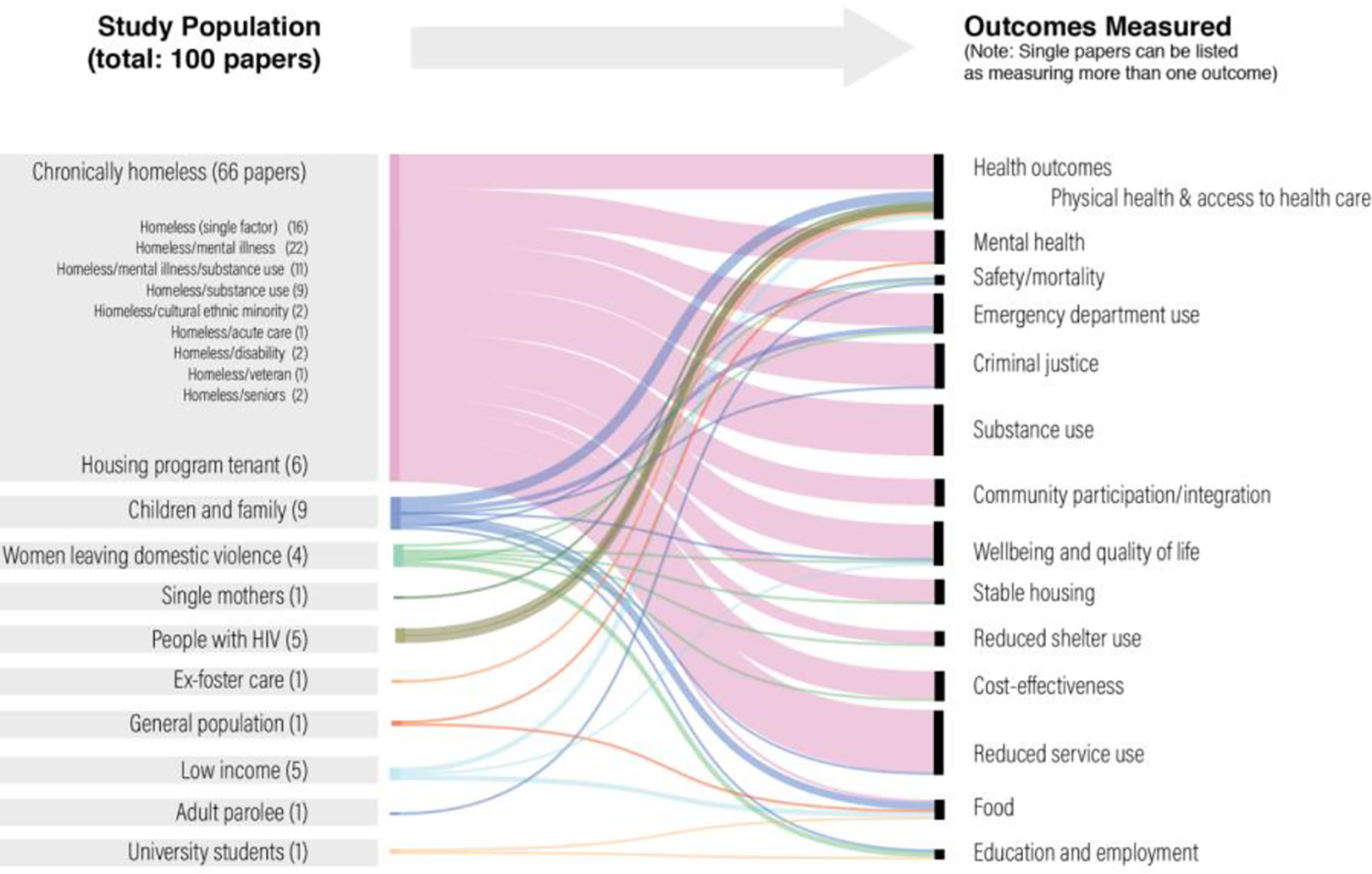
Flow analysis of study populations and research outcomes (n = 100).
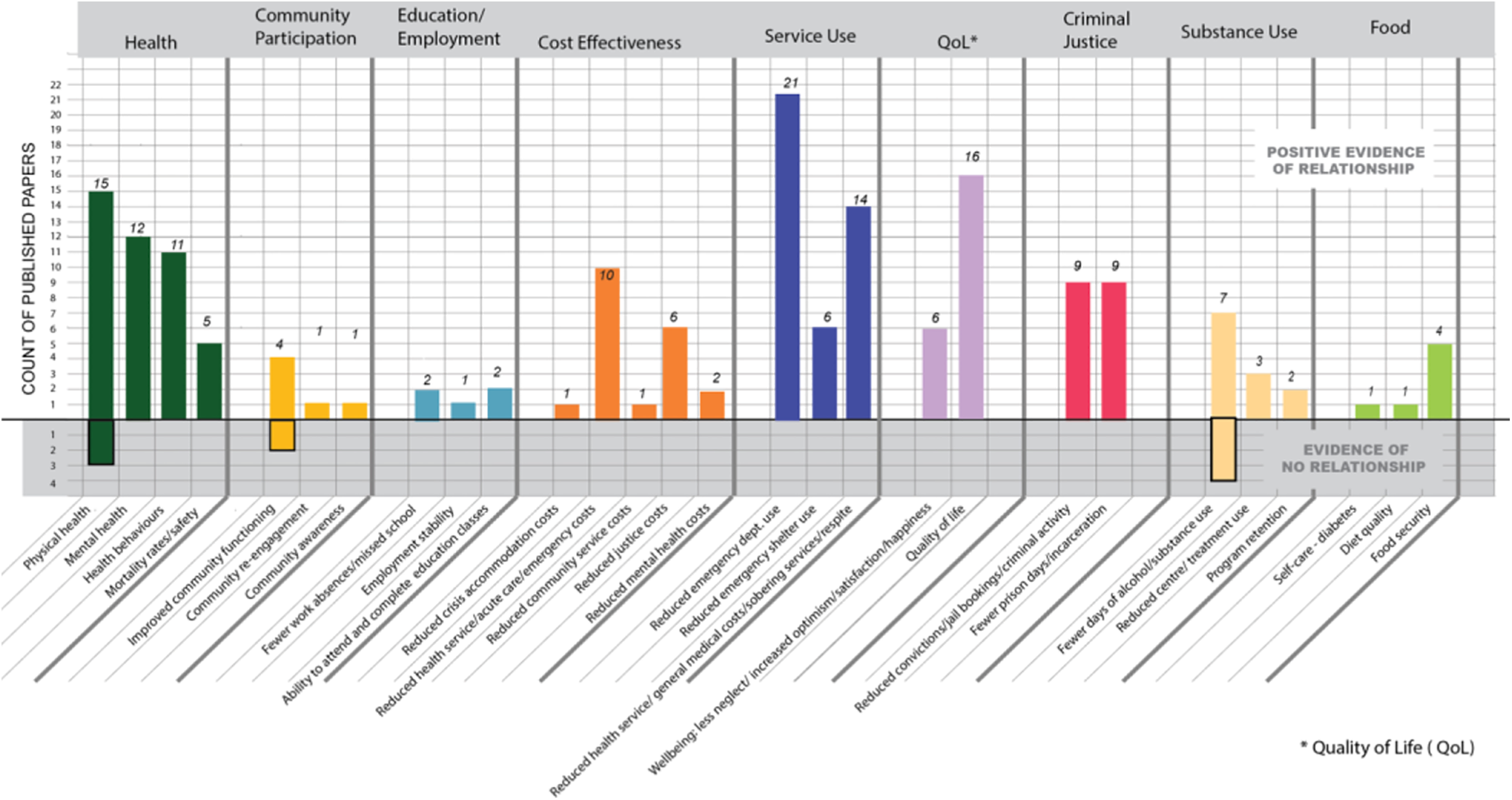
Outcome themes: Stacking bar chart illustrating empirical evidence of outcome themes associated with the provision of stable housing.
A Sankey Diagram is an explanatory tool used in research studies to show the flow of data (Leung et al. 2017; Marchand et al. 2019; Ritschl et al. 2019). In this scoping review, it was used to visually describe the connection between study populations in the included papers and outcomes measured.
Studies were visualized as stackable bar charts displaying research quality, type, effect, and theme. Included studies were classified and graded according to outcomes measured before being synthesized into the chart. This graphic tool has been applied in other scoping reviews where studies are diverse and originate from a range of research fields (Carnemolla and Bridge 2020). It is helpful in enabling a visual representation of the complexity and diversity of the data.
Results
One hundred studies met the inclusion criteria. The meta-analysis criteria included publication year, country of origin, sample population, and methodologies.
Research Country of Origin
Inclusion criteria restricted the review to English-language papers. Research originated from the United States (57 of 100 studies), Canada (25), Australia (11), France (3), Germany (1), United Kingdom (1), South Africa (1), and Israel (1).
As researchers, we were surprised that more translated work did not appear in our search results, given the extensive work undertaken, particularly in the European sphere. For this reason, we have been extremely transparent about our search criteria so that researchers building on our work can replicate it and build new search strategies.
Subpopulation Sample
Research participants across the 100 papers were overwhelmingly male, chronically homeless, and with an associated substance use disorder and/or mental illness. Far fewer studies focused on women, vulnerable families and children, women who were leaving domestic and family violence, single mothers, veterans, Indigenous people, those who were HIV positive, or injecting drug users.
Representation of Gender and Age Diversity
Of the100 studies, nine looked specifically at children and families (Bottino et al. 2019; Chen 2014; C. C. Collins et al. 2019; Cutts et al. 2011; Geller and Curtis 2011; King et al. 2013; Rog et al. 2014; Sandel et al. 2018; Warren and Font 2015) or entire households in poverty (Dunga and Grobler 2017). Of the adult studies, the main age requirement for participants was that they be aged eighteen years or above. Three studies focused on study participants who were older and homeless (Bamberger and Dobbins 2015; Henwood, Katz, and Gilmer 2015; Burns et al. 2020), while another compared older people (50+) with younger (18–49) adults (Chung et al. 2018). Lim, Singh, and Gwynn (2017) limited the age of study population to eighteen to twenty-four years and was investigating the experience of young adults who had been foster children.
Gender data were analyzed when provided and are illustrated in Figure 3. It could not be extracted from nine studies because the information wasn’t published or the article was a meta-synthesis of multiple studies. Gender was able to be analyzed in the remaining ninety-one papers. Six papers focused solely on women. Two of these looked at housing instability and HIV outcomes (Galárraga et al. 2018; Delavega and Lennon-Dearing 2015), while the remainder studied women who faced homelessness due to domestic and family violence (Clough et al. 2014; Hetling et al. 2018; Rollins et al. 2012; Sullivan, Strom, and Fluegeman 2017). There were two male-only studies. One looked at the experiences of fathers from vulnerable families (Geller and Curtis 2011), while the second focused on older men in Montreal who had moved into permanent supportive housing (PSH) (Burns et al. 2020). Of the seventy-eight papers that recorded inclusion of mixed genders, sixty-four had a study population where female representation was below 50 percent.
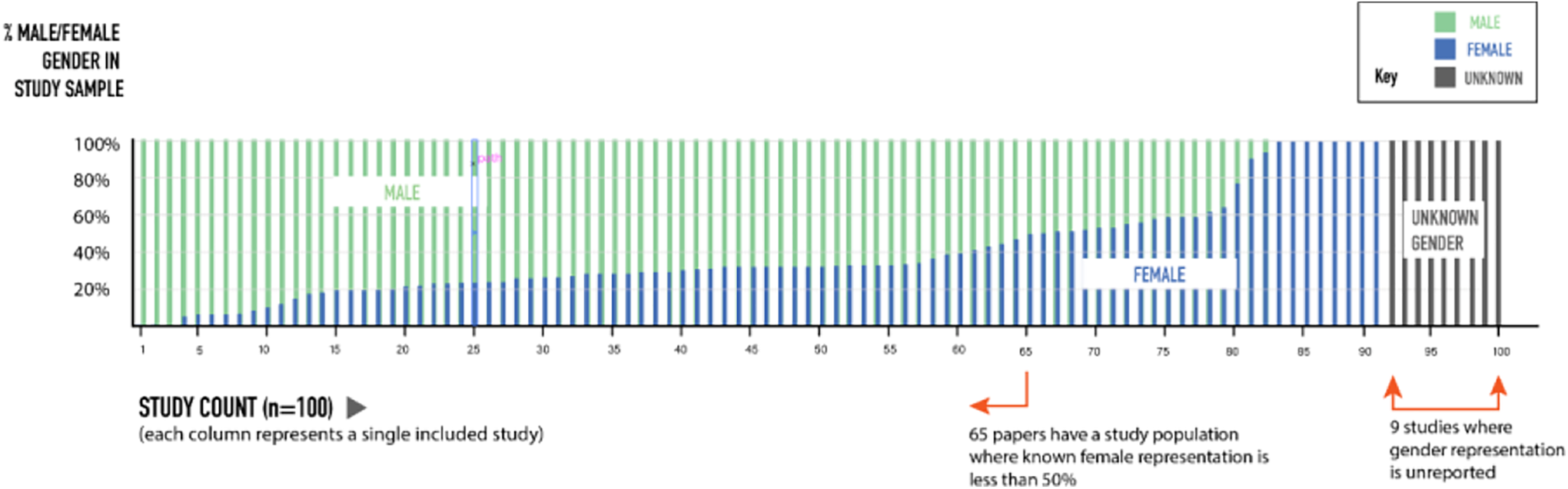
Analysis of representation of gender across all included studies (n = 100).
Analysis of Outcome Themes
Studies were classified and graded in order to map the effect that a stable permanent home had on the lives of people who had been homeless. The data were then extracted and synthesized into a diverging stackable bar chart (Figure 2). Nine themes were clustered to show research outcomes, relationships, and research gaps, enabling outcomes to be mapped by theme, revealing whether the evidence was positive or negative.
Analysis of Study Populations and Linked Outcome Measurement
An aim of the scoping review was to understand and map the research undertaken and the types of participants. Study populations and outcome data were extracted from the 100 papers and then comparatively analyzed. This enabled us to chart the spread of study populations across measured outcomes (Figure 1).
Figure 1 shows 66 of the 100 papers studied the impact of stable secure housing across populations considered chronically homeless at the time of the study. The remaining thirty-four conducted empirical research across a range of study populations, including children and families (nine), women leaving domestic violence (four), people on low incomes (five), and with HIV (five). The most commonly explored outcomes were physical health, reduced service use, well-being, quality of life, and criminal justice.
Outcome Themes
The 100 papers were analyzed to determine the range of outcomes and the relationship between the provision of housing and the outcome being measured. The results are presented across eleven domains: Clinical/physical health Mental health Community participation Education/employment Cost-effectiveness Service use Well-being and quality of life Mortality and safety Criminal justice Substance use Food and diet
Theme 1: Health
Health was the most researched of all measured themes (Table 1) . Almost all papers (forty) showed positive health outcomes when people who were homeless settled into permanent secure accommodation. Benefits included reductions in insomnia (Henwood et al. 2019), lower infection rates of HIV and other sexually transmitted diseases (Galárraga et al. 2018; Lee et al. 2018; Lim, Singh, and Gwynn 2017), decreased rates of hospitalization and use of emergency care (Kerman et al. 2018; Montgomery et al. 2013; O’Campo et al. 2016; Sandel et al. 2018; Srebnik, Connor, and Sylla 2012; Wood et al. 2019; Wright et al. 2016), reduced delays in seeing a doctor (Stahre et al. 2015; Wright et al. 2016), and positive growth and child development (Cutts et al. 2011).
Outcomes Related to Health.
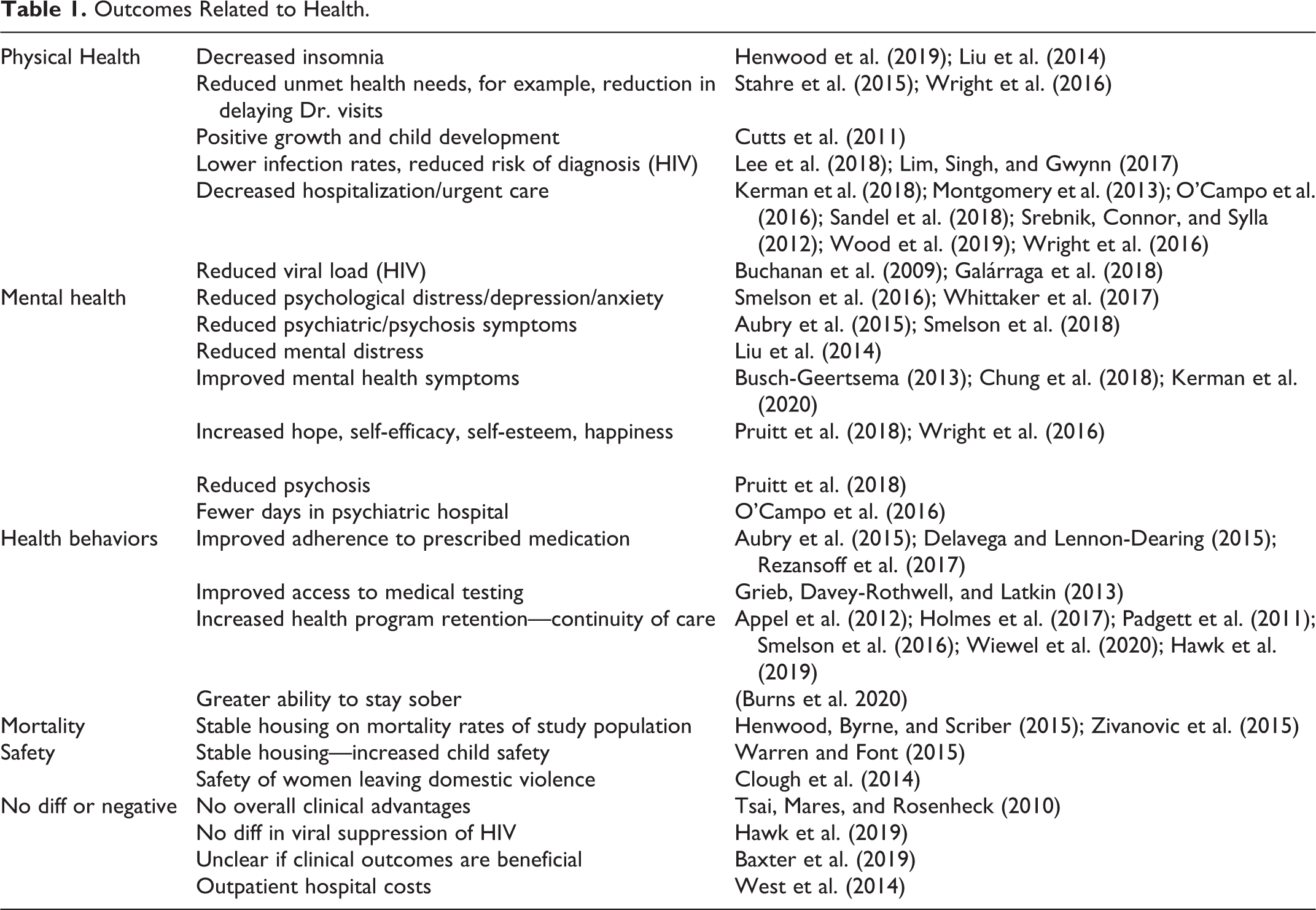
By analyzing data from a study of 3,082 HIV diagnosed women in five large American cities, Galarraga et al. (2018) found that unstable housing reduced the likelihood of viral suppression by 51 percentage points, thereby increasing their risk of illness. In a study of 8,415 respondents, Stahre et al. (2015) found that even adjusting for demographics and socioeconomic measures, “respondents who were housing insecure were more likely than those who were not to report delaying doctors’ visits, poor or fair health and 14 days or more of poor health or mental health limiting daily activity in the last 30 days” (p. 2). The team also found that people in insecure housing were more likely to be smokers (although they found that binge drinking in the previous 30 days was not significantly associated with housing insecurity).
Mental health showed considerable improvements when people were safely housed, with reduced levels of mental distress, depression, and anxiety (Smelson et al. 2016; Whittaker et al. 2017); reduced psychiatric and psychotic symptoms (Aubry, Klodawsky, and Coulombe 2012; Smelson et al. 2018); improved mental health symptoms (Busch-Geertsema 2013; Chung et al. 2018; Kerman et al. 2020); increased hope, self-efficacy, self-esteem, and happiness (Pruitt et al. 2018; Wright et al. 2016); and fewer days in a psychiatric hospital (O’Campo et al. 2016).
There was also evidence that stable housing had positive effects on behaviors such as greater medication compliance, better use of HIV testing, greater adherence to methadone programs (Appel et al. 2012; Aubry et al. 2015; Grieb, Davey-Rothwell, and Latkin 2013), and an increased ability to stay sober (Burns et al. 2020). Some studies reported inconclusive evidence (Baxter et al. 2019; Hawk et al. 2019; Tsai, Mares, and Rosenheck 2010; West et al. 2014) relating to some measured outcomes within the research design.
Mortality and Safety Rates
A total of four papers out of 100 measured or directly reported on the relationship between stable/unstable housing, safety outcomes and mortality rates (Clough et al. 2014; Henwood, Katz, and Gilmer 2015; Warren and Font 2015; Zivanovic et al. 2015).
Zivanovic et al. (2015) found an association between unstable housing and “all-cause mortality.” They found individuals in unstable housing were less likely to be involved in a methadone program and were more likely to report at least daily heroin injection, cocaine injection, and crack smoking.
Warren and Font (2015) found that unstable housing was associated with decreased child safety. Looking at results from the nine-year US Fragile Families and Child Well-Being Study of 4,898 children and their families, they found housing insecurity “may play a unique role in [child] maltreatment risk beyond the association between poverty and maltreatment.” They found that “housing insecurity operated in two ways—it is directly associated with neglect risk as well indirectly associated with both neglect and abuse risk through maternal stress.”
Clough et al. (2014) found that stable, affordable housing was critical in increasing safety for women survivors of intimate partner violence. In a series of qualitative in-depth interviews followed up three times over eighteen months, researchers identified many barriers women had to overcome to find a safe stable home for themselves and their children. “This study highlights the need for research on the unmet safe, affordable, and stable housing needs of Intimate Partner Violence (IPV) survivors and their children.”
Theme 2: Community Participation
Community participation was measured or observed across eight studies (Table 2) and “reflects participation in activities such as going to restaurants, places of worship, libraries or volunteering” (O’Campo et al. 2016, 7). Positive effects were measured in community functioning (Aubry et al. 2015) and community reengagement (Pruitt et al. 2018). Stergiopoulos et al. (2015) found that improvements in community functioning were small once people were stably housed.
Community Participation and Integration Outcomes.
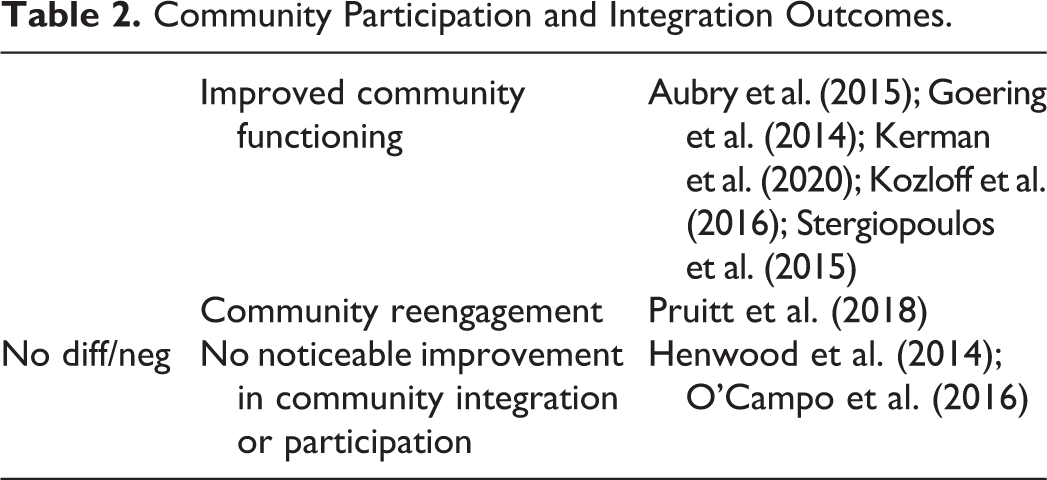
Two studies found no noticeable improvement in community integration (Henwood et al. 2014; O’Campo et al. 2016). However, in the two-year Canadian At Home/Chez Soi project involving 2,000 participants, Goering et al. (2014) found in face-to-face interviews, the quality of Housing First participants’ daily lives changed from being survival-oriented to being “more secure,” “peaceful,” and “less stuck,” and this enabled them to move forward in their lives. At baseline upon entry to the housing program, participants tended to describe their daily lives with phrases such as “killing time” and “shuffling around.” Kerman et al. (2018) found that some people in Housing First dwellings reported feelings of isolation. The researchers suggested that drop-in centers could help build social connections.
Theme 3: Education and Employment
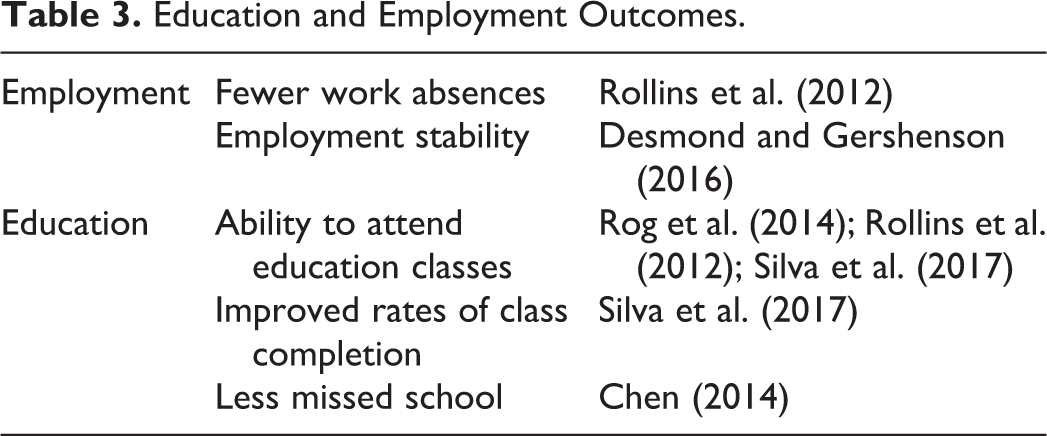
Of the small number of studies (five) that observed and measured changes to education and employment, all found positive outcomes once people were in a safe, stable home. Outcomes clustered in this theme (Table 3) related to the ability to attend education classes, complete courses, maintain attendance in employment, reduce days absent, and attend school. Desmond and Gershenson (2016) from Harvard University found that for low-income workers, a “forced move,” or housing loss (through eviction and foreclosure on rental properties) was a significant predictor of job loss. “We expect a forced move to increase the chances that a typical respondent loses his job within a year by around 22 percentage points…workers who did not experience a forced move had about a 1 in 6 chance of losing their job; those who did had nearly a 1 in 3 chance.” The researchers ran reverse modeling and found that the effects of a job loss on housing loss, though statistically significant, was only a tenth the estimated size of the effect of housing loss on job loss.
Education and Employment Outcomes.
Theme 4: Cost-effectiveness
All studies measuring the cost-effectiveness of providing people with permanent, stable housing found savings (see Table 4). Latimer et al. (2019) compared Housing First with a Treatment as Usual (TAU) approach in four Canadian cities and found Housing First reduced the cost of non-shelter services by 46 percent. PSH proved cost-effective for homeless seniors when they exited a period of nursing care (Bamberger and Dobbins 2015). Goering et al. (2014) found a reduction in crisis accommodation costs. Several research teams found savings across the justice system with fewer prison days and police contacts (Basu et al. 2012; Chalmers McLaughlin 2011; Goering et al. 2014; Greenberg et al. 2013; Larimer et al. 2009; West et al. 2014).
Cost-effectiveness Outcomes.
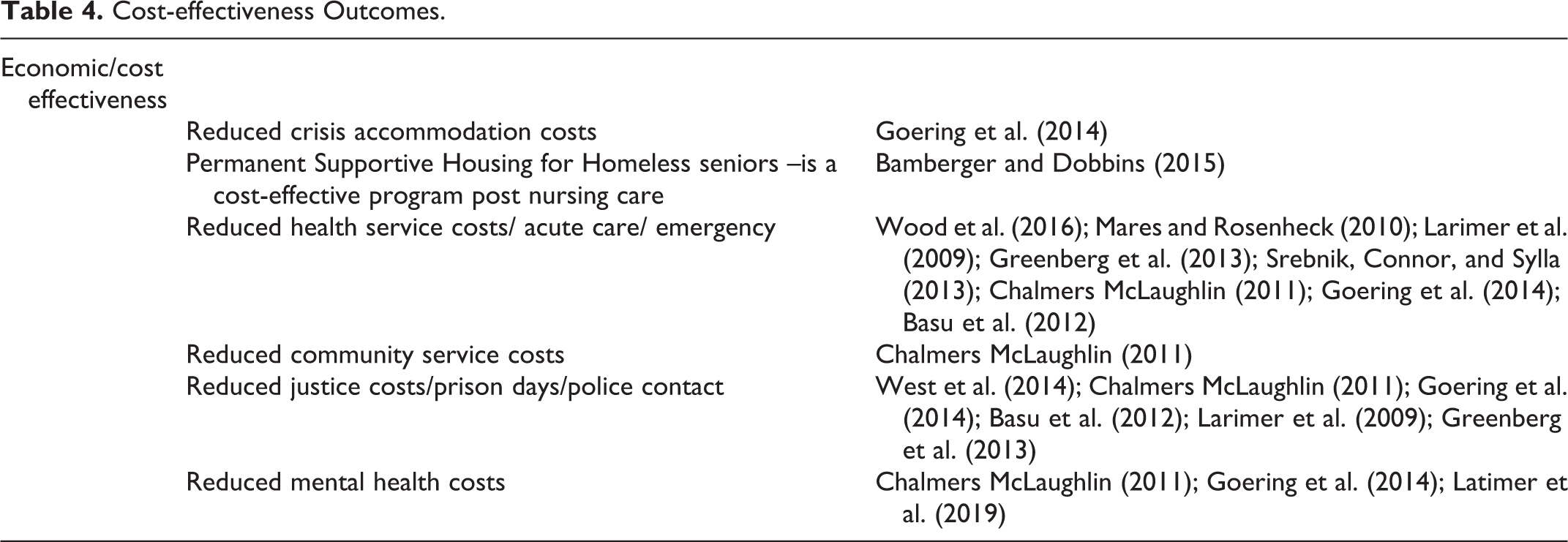
Greenberg et al. (2013) found that prior to housing, monthly health costs averaged $US195.93 per person per month, and one year after moving into permanent housing, these costs had dropped 85 percent to $US28.98 per month. There were reductions in mental health costs (Chalmers McLaughlin 2011; Goering et al. 2014). Reduced health service costs and fewer visits to emergency departments once people were stably housed and were reported in eight studies.
Theme 5: Service Use
Some researchers measured the impact of stable and permanent housing programs on the use of services (Table 5). While service use relates closely to “cost-effectiveness,” service use measures the number of times a service is used rather than the costs accrued in using it.
Service Use Outcomes.
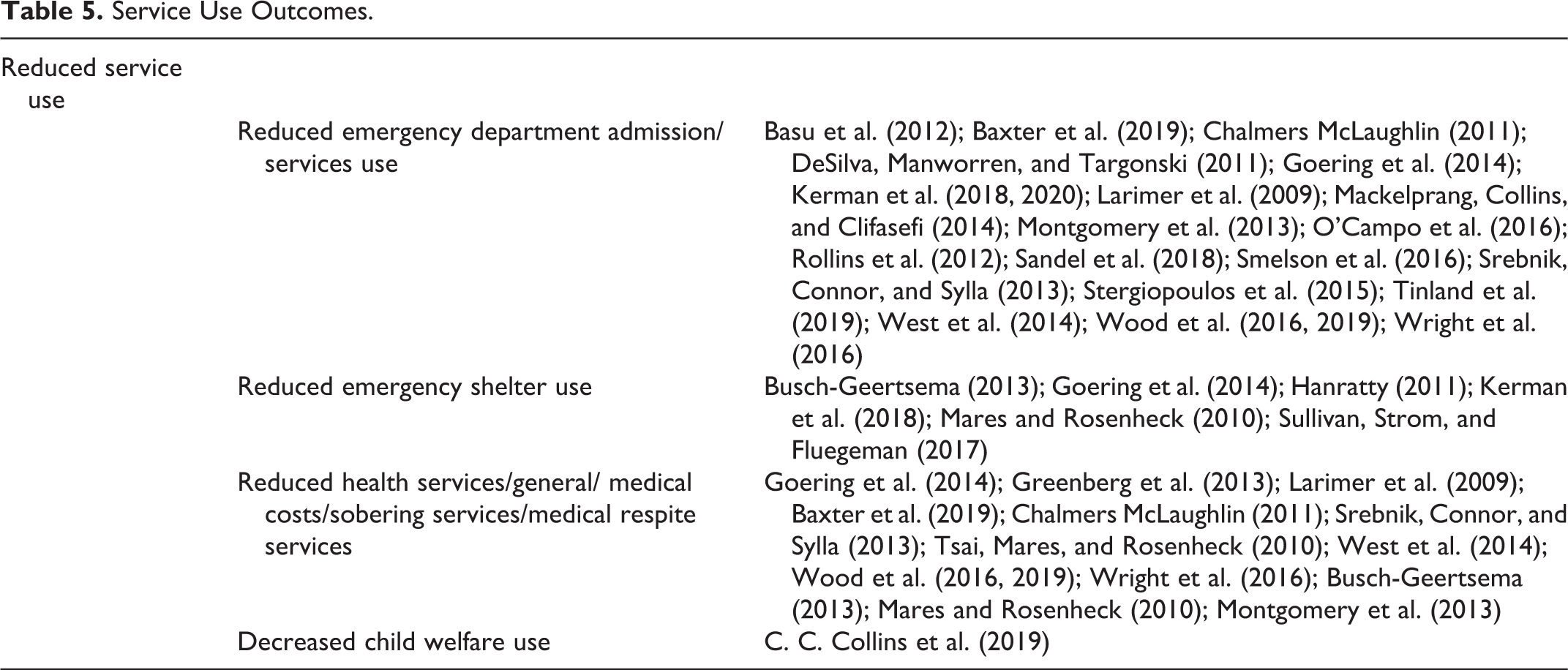
Every research team measuring service use outcomes reported a drop in use once a participant was settled into stable accommodation. None detected “no difference” or a “negative outcome.” As with cost-effectiveness, the majority of researchers focused on health usage—reduced emergency department admissions and other health areas such as sobering services and medical respite services (see references Table 5).
Not surprisingly, there were reductions in emergency shelter costs (Busch-Geertsema 2013; Goering et al. 2014; Hanratty 2011; Kerman et al. 2018; Mares and Rosenheck 2010; Sullivan, Strom, and Fluegeman 2017). A reduction in usage in child welfare services was also found (C. C. Collins et al. 2019).
Using billing and other official records, McLaughlin (2011) mapped the service usage of a cohort of 268 people who were homeless with a mental illness from both urban and rural communities. He found that after twelve months of housing, and factoring in the cost of housing support, the total saving across the cohort in health and mental health care, community support, substance use treatment, ambulance use, police contact, jail night stays, emergency room visits, shelter night stays, prescribed drugs, and housing was $US584,907, or $US2,182 per participant.
“When people are placed in supportive housing environments, they become stable and utilize fewer services than when they were homeless.” He noted that the biggest savings were to “the emergency service system of police contacts, jail nights, shelter stays, ambulance usage and emergency room visits…. Although newly housed people still utilize these services at higher rates than the general population, housing creates significant reductions.”
Wood et al. (2019) studied the first program of its kind in Australia where a homeless medicine GP service was attached to a major Perth hospital. It worked in partnership with a specialist outreach team to support formerly rough sleepers who had entered the 50 Lives, 50 Homes Housing First program.
They found that after twelve months of stable housing and specialist support, presentations per individual at the emergency department were down 56.8 percent, and inpatient admissions had fallen by 53 percent. They argued that the high rate of success, with 87 percent of individuals retaining their tenancies at twelve months, was due to “the synergism between hospital, GP practice and community services.”
Theme 6: Well-being and Quality of Life
The impact of stable housing on people’s well-being or quality of life was measured in twenty-three of the 100 studies. This was defined in a variety of ways including increased optimism, greater life satisfaction, well-being and happiness (Johnstone et al. 2016; Patterson et al. 2013; Sullivan, Strom, and Fluegeman 2017; Wright et al. 2016), or in specific health terms such as reduced insomnia (Henwood et al. 2014), or was measured via Quality of Life instruments (see references Table 6). In their detailed qualitative study, Burns et al. (2020) found that formerly homeless older men living in a PSH site in Montreal felt safer, had greater privacy, enjoyed the communal social activities, and found it easier to maintain sobriety. Some residents felt excluded from by other residents due to their skin color, religion, or sexual orientation. They did, however, feel “respected by staff.” Researchers recommended future PSH designs need to create a positive sense of home “across the physical, social and personal spheres.”
Well-being and Quality of Life (QoL).
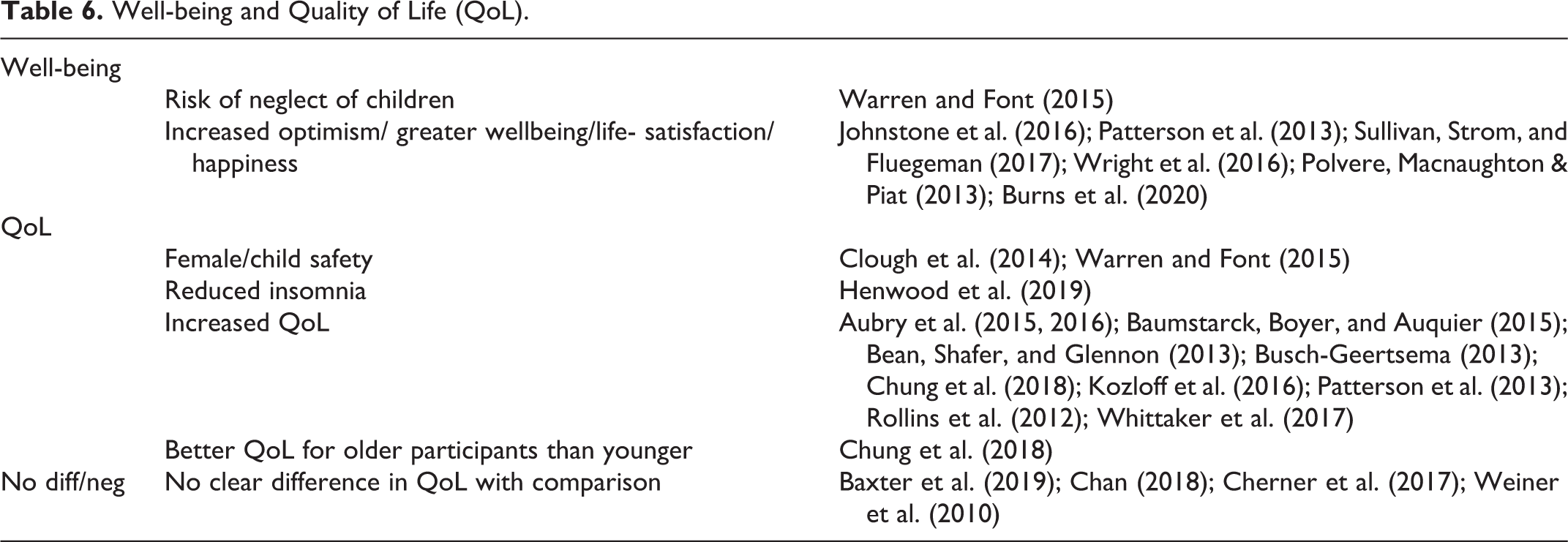
Two teams found that feelings of safety for women and children rose with the provision of secure housing (Clough et al. 2014; Warren and Font 2015). Not all investigations found a positive association between stable housing and quality of life (Baxter et al. 2019; Chan 2018; Cherner et al. 2017; Weiner et al. 2010). As Cherner et al. (2017) observed in a comparative study of Housing First participants with problematic substance use and a similar cohort who had not entered a housing program, the demands associated with achieving and maintaining independent living could pose difficulties. Housing First clients “might experience isolation and an associated low mood when they move into a neighborhood where they lack a social network.” Polvere et al. (2013) found 19 percent of participants struggled to adjust to life in permanent housing and experienced demoralization and social isolation. However, the vast majority felt able to reclaim their “personhood,” deal with mental health and addiction issues, and envisage better lives.
Theme 7: Criminal Justice Outcomes
Of the eighteen papers looking at criminal justice activity (Table 7), all reported a positive outcome once people moved into a permanent stable home. Somers et al. (2013) found reduced rates of criminal convictions and reconvictions. There were fewer prison stays and reduced rates of incarceration (Chalmers McLaughlin 2011; West et al. 2014).
Criminal Justice Outcomes.
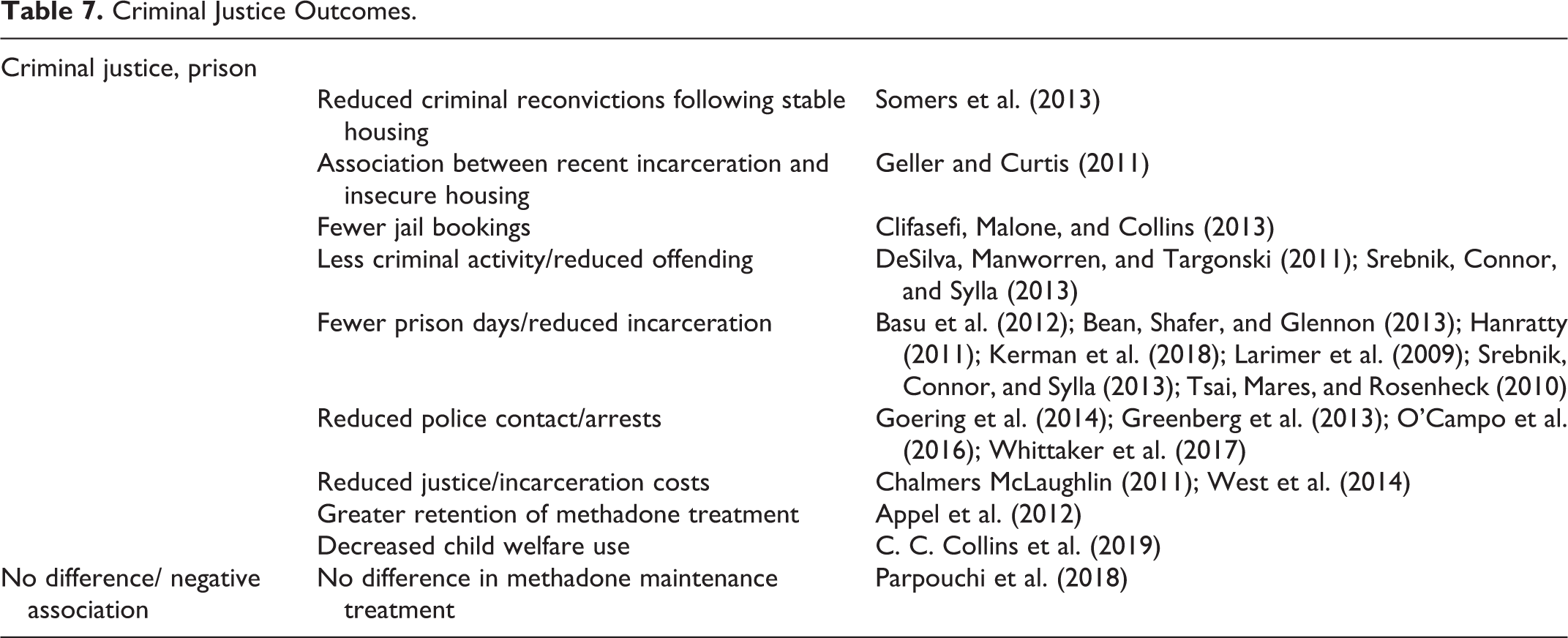
Other reports found less contact with police and fewer arrests (Goering et al. 2014; Greenberg et al. 2013; O’Campo et al. 2016; Whittaker et al. 2017). In the City of Mateo in California, Greenberg et al. (2013) found that once people were moved into permanent housing (with appropriate support services), police contacts were reduced by 99 percent to 0.04 per person per month.
Appel et al. (2012) found that stable housing was associated with greater retention of methadone treatment, though Parpouchi et al. (2018) found no difference. DeSilva, Manworren, and Targonski (2011) and Srebnik, Connor, and Sylla (2013) found the provision of stable housing saw less criminal activity and reoffending and Collins et al. (2019) found a drop in use of the child welfare system.
Whittaker et al. (2017) looked at the variation in rates of criminal activity over a twelve-month follow-up period when Housing First participants were housed in either scattered sites, or congregated sites. The research team found the number of contacts with “various types of criminal justice channels differed significantly between SS [scattered sites] and CS [congregated sites], decreasingly significantly among SS participants and increasing significantly among CS participants.”
Theme 8: Substance Use Outcomes
A total of ten out of fourteen studies found improved substance use outcomes once people were housed in secure, stable accommodation (Table 8). Researchers found reduced days of alcohol use (Parpouchi et al. 2018), improved ability to maintain sobriety (Burns et al. 2020), reduced days of illegal drug use (Smelson et al. 2018), lower rates of substance use (Busch-Geertsema 2013; Davidson et al. 2014; Padgett et al. 2011), lower mortality rates for injecting drug users (C. C. Collins et al. 2019; Zivanovic et al. 2015), and lower rates of substance abuse treatment (Bean, Shafer, and Glennon 2013; Chalmers McLaughlin 2011b). Four research teams found either insignificant changes or no changes at all (Aubry et al. 2015; Goering et al. 2014; Henwood et al. 2014; O’Campo et al. 2016).
Substance Use Outcomes.
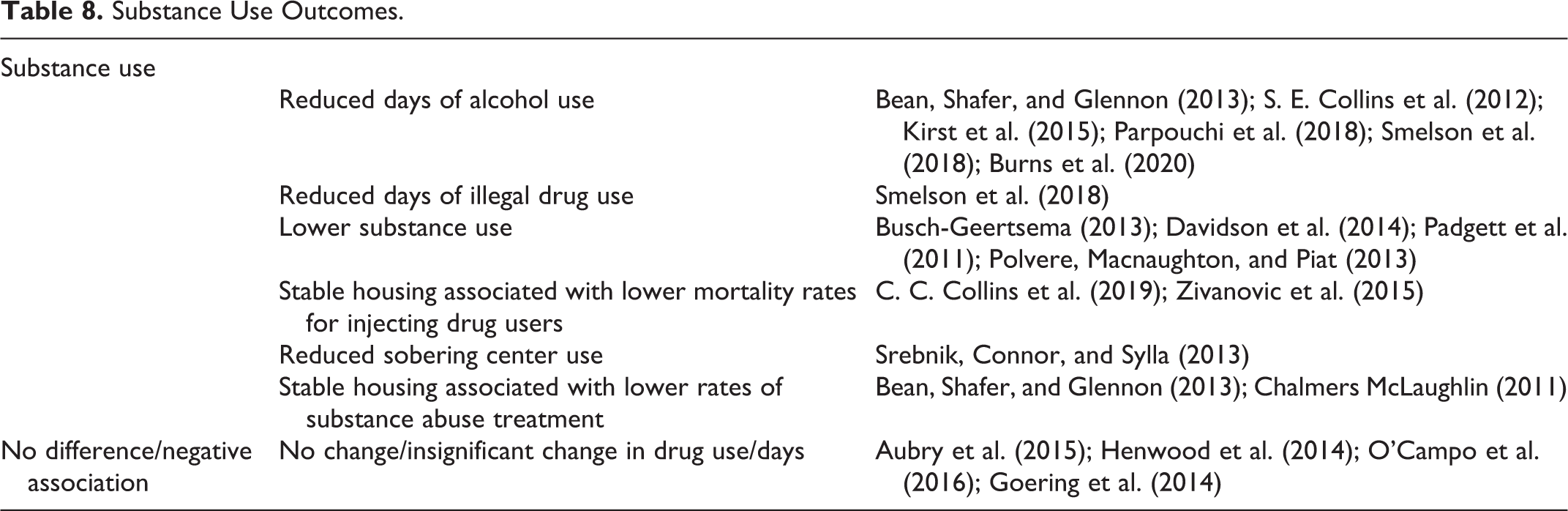
S. E. Collins et al. (2012) followed ninety-five chronically homeless individuals with alcohol problems living in a Housing First residential complex over a two-year period and found that for every three months in the study, participants decreased their alcohol use on typical and peak drinking occasions by 7 percent and 8 percent, respectively. The researchers described the changes over the two-year period as “sizable” finding that “means for peak drinks decreased from nearly forty to twenty-six drinks” and that “self-reported experiences of DTs…decreased from 65 percent to 23 percent.”
Theme 9: Food-related Outcomes
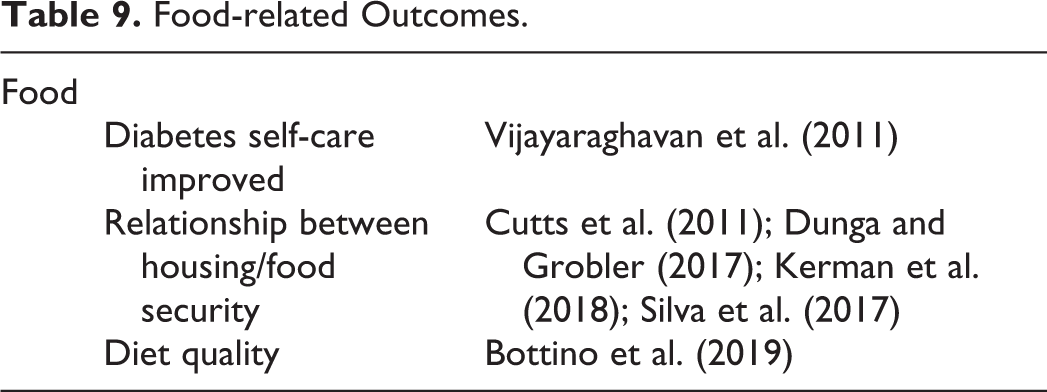
All six studies that looked at food related outcomes (Table 9) found a positive association between access to a stable home, a healthy diet, and food security (Vijayaraghavan et al. 2011; Cutts et al. 2011; Dunga and Grobler 2017; Kerman et al. 2018; Silva et al. 2017; Bottino et al. 2019). Vijayaraghavan et al. identified a link between housing insecurity, food insecurity and low efficacy in diabetes care. In a study of 580 low income households in South Africa, Dunga & Grobler identified an association between food insecurity, housing insecurity and poverty, and found that these factors were more prevalent in female-headed households.
Food-related Outcomes.
Discussion
This scoping review analyzed 100 English-language studies published between 2009 and 2020. Each of them looked in varying ways at the changes that a stable home brought to the lives of people who had been homeless, and the savings that flowed to the wider community through a reduction in the use of non-shelter services. The overriding consensus was that housing stability brings a raft of benefits to formerly homeless individuals and public savings to the community. The largest proportion of studies looked at the heavy use of emergency and hospital services by people who were homeless. Because their health issues are usually not treated early enough, homeless patients are admitted to hospital wards more frequently and stay for longer. Every study found a drop in their use once an individual moved into a permanent stable home.
Criminality was another heavily analyzed area and again all of the studies reported a positive outcome once people were housed. There were fewer days in jail, fewer arrests and rearrests, and fewer encounters with the police. In most studies, permanent stable (and often supportive) housing had a positive effect on rates of addiction with reduced use of alcohol and illegal drugs and lower associated mortality rates, as well as better adherence to methadone programs.
Despite the large number of researchers across many disciplines who have turned their academic attention to the effects of providing a home for people who have been homeless, this study identified significant gaps. A vast proportion of studies looked at chronically homeless males with a mental illness and/or a substance use issue. This may represent the most common homeless cohort or at least those most visible on the streets.
However, several studies failed to even mention the number of female participants, which had to be deduced by default. In the 2016 Census, Australian women over the age of fifty-five were found to be among the fastest growing groups of people who are homeless. It is hard to believe that this situation is unique to Australia, yet none of the papers looked specifically at this issue. Indeed only 6 of the 100 papers looked specifically at the issue of female homelessness, 4 of those were in relation to domestic violence. With domestic violence now recognized as a serious and ongoing social crisis, it’s surprising there has not been more research into the potentially life-saving role a safe, stable home provides for women (and children) leaving violence. Other notable research gaps were older people more generally, refugees, recent migrants, veterans, Indigenous people, and those with a disability.
With the exception of work by Aubry et al. (2015) and reports about aspects of the Canadian At Home/Chez Soi program by Goering et al. (2014), “community functioning” tended to be a small or incidental focus. Yet for people who had endured often years of homelessness, adjusting to life in both a new home and community could be difficult and isolating (Kerman et al. 2018). Research into programs that have found ways to address this could provide helpful guidance for support workers. Pruitt et al. (2018) suggested “a community-based participatory approach…could have far-reaching transformative impacts for research, practice, and policy.”
Of the reports that examined cost savings/effectiveness, only two quantified the total savings (or otherwise) across all service areas that accrued when formerly homeless people were settled into permanent, stable housing (Goering et al. 2014; Chalmers McLaughlin 2011). Fluctuations in currency values over time and the difficulty in obtaining complete and accurate costs across all relevant service areas and jurisdictions make such research difficult and complex. Yet such information is extremely valuable for agencies seeking to make the case for additional social housing and other improvements in homelessness policy.
With catastrophes such as the COVID-19 pandemic, social inequality and climate change hitting the world’s poor the hardest, governments are confronting growing rates of homelessness. Concerned the virus would spread rapidly through the homeless community, some jurisdictions responded by moving people into temporary accommodation such as hotels. In Australia, this prompted some state governments to find permanent homes for many of those individuals. It will be up to future researchers to assess whether the COVID-19 pandemic brought good luck to some homeless individuals by fast-tracking them into permanent accommodation.
Few countries have systematically sought to control homelessness and instead have invested resources in a “business-as-usual” approach. In doing so, they have allowed the fragmented costs across the justice, health, and welfare shelter systems to persist as a burden to taxpayers. This scoping review shows that beyond the moral and health arguments, there is an economic case for moving people into safe, permanent housing, should governments choose to respond to it, enabling a change in discourse, from “managing homelessness” to “homelessness solutions.” This in turn provides a strong argument for planners as they prioritize housing initiatives that address homelessness.
Further Research
The majority of research undertaken between 2009 and 2020 was on chronically homeless men with a mental illness or a substance use disorder. Future researchers could look at the effects of providing stable housing for cohorts where there has been little research: Older people, in particular women above the age of fifty-five years Women (and their children) who are homeless due to intimate partner violence Indigenous people People with a disability Refugees and recent migrants
Additional research is warranted into how to improve community integration for people who are newly housed. Few reports focused on this. Moving into a home also means adjusting to life in a neighborhood. A better understanding of this challenge would be useful for support workers and policy makers.
While many reports referred in passing to the vulnerability of veterans who had become homeless after returning from conflict zones, little research examined their experiences once securely housed. Given the toll that conflict can take on veterans in the form of ongoing mental and physical illness and relationship breakdowns, research into the benefits of providing stable housing for this cohort would surely be warranted. Very few reports looked at the issue of housing design and how dwellings could be adapted (or constructed) to better suit the needs of people who have been homeless. An exception is Donnelly (2020) who has focused on the needs of women leaving domestic and family violence and has created a fit-for-purpose guide for refuge accommodation. The type of housing, quality, location, and design all have an effect on the health and wellbeing of those who live inside.
Finally, very little research was undertaken by people who had themselves experienced housing insecurity or homelessness. Person-centered, interview-based research can provide a level of understanding that goes well beyond data-based outcomes by emphasizing the value of the lived experience.
Limitations
The search strategies employed in this scoping review include: word search strings in library databases; online checking via search engines; “reverse snowballing” (checking all references in relevant papers), and “forward snowballing” (checking all citations since publication in relevant papers; Badampudi, Wohlin, and Petersen 2015). While thorough, these techniques are not exhaustive. Inconsistencies in language and terminologies across housing and health fields means there is likely to be relevant empirical research not captured. This review is intended to provide a wide and high overview of the evidence-base published between 2009 and 2020.
The strict inclusion and exclusion criteria were established for two reasons. First, they enabled us to focus analysis on specific aspects of housing research (the effects of the providing stable, secure housing for those who are homeless or at risk of homelessness) in what is a very diverse field of research. Second, it ensured that a manageable list of relevant papers was available for analysis and synthesis.
Conclusion
Homelessness persists in most countries across the world, despite the well-documented success of approaches such as “Housing First.” This scoping review of 100 reports published since 2009 finds overwhelming benefits to both homeless individuals and the wider community in systematically addressing the issue. This review presents an opportunity to reframe the case for action away from the welfare and humans rights arguments (that have generally failed to engender serious action so far) toward one that focuses on public costs and savings. This underscores the important role for the planning profession in prioritizing affordable and community housing solutions to address the crisis of homelessness.
Such a reframing is echoed in a 2015 report by Robert Lake in the Journal of Urban Affairs where he argues that social and urban policy under the presidency of Barack Obama was subordinated by economic policy, in a similar fashion to previous administrations (Lake, 2015). This began, he reports, during oil shocks and global economic crises of the 1970s and was accelerated with draconian budget cuts of the Reagan administration in the 1980s. It was, as Jessop (2002) described, “the ecological dominance of the economy” (p. 24).
With rising unemployment and poverty in the face of the COVID-19 pandemic and the longer-term effects of climate change, a rise in homelessness across the globe is inevitable. This economic downturn is predicted to exceed anything the world faced with the global financial crisis during the Obama presidency. While it might be a capitulation to “the financialization of everything,” perhaps there could not be a better time for governments and policy makers to adopt a pragmatic financial argument as the most effective way of addressing a social catastrophe such as homelessness.
Footnotes
Acknowledgments
The authors gratefully acknowledge the financial support provided by The Big Issue toward the generation of this report.
Declaration of Conflicting Interests
The author(s) declared no potential conflicts of interest with respect to the research, authorship, and/or publication of this article.
Funding
The author(s) disclosed receipt of the following financial support for the research, authorship, and/or publication of this article: This research was undertaken at the University of Technology Sydney, Australia, with the support of The Big Issue.
