

Restricted accessResearch articleFirst published online 2026
Se nanoparticles-coated,PLGA-based spheres for biomedical applications: Cytotoxicity,genotoxicity,oxidative stress,biodistribution,and scintigraphic study
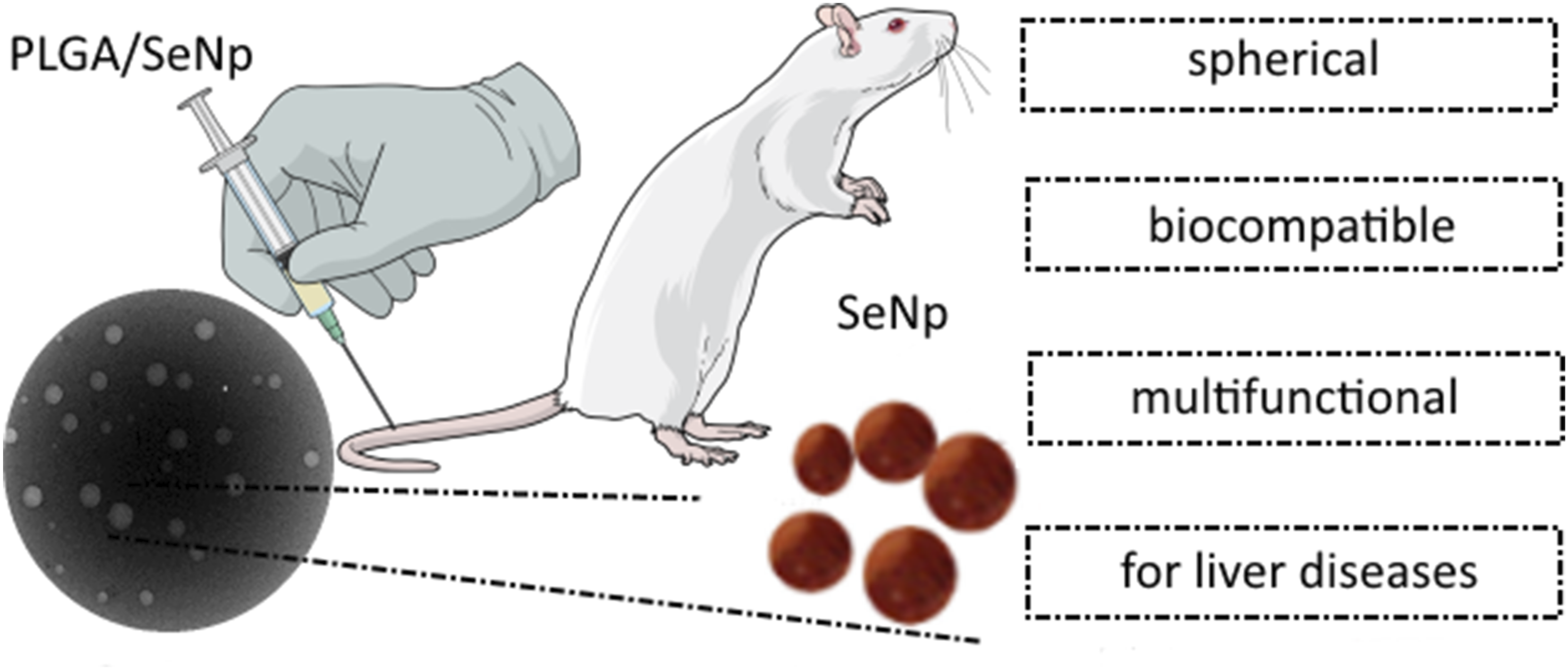
Conventional approaches to prevent and treat diseases, particularly liver disorders, often fall short, highlighting the urgent need for innovative strategies and materials in RNA therapeutics and genetic drug delivery. This study investigates the synthesis, characterization, and biological evaluation of poly (DL-lactide-co-glycolide) (PLGA) spherical particles as a novel drug delivery system for selenium nanoparticles (SeNp), presenting a promising (PLGA/SeNp) platform for enhancing the efficacy of genetic therapies aimed at liver diseases. We assessed the effects of PLGA/SeNp nanoparticles in vitro using human hepatoma cell lines (HepG2 cells), focusing on (i) cell viability, (ii) intracellular reactive oxygen species (ROS) generation, and (iii) genotoxic response. The findings indicated that PLGA/SeNp nanoparticles maintained cell viability, exhibited minimal ROS generation, and demonstrated low genotoxicity, underscoring their biocompatibility for therapeutic applications. Furthermore, this study explored the in vivo biodistribution and pharmacokinetics of PLGA and PLGA/SeNp particles through non-invasive dynamic imaging techniques. By radiolabeling with technetium-99m (Tc99m), we conducted scintigraphic imaging to analyze biodistribution. Our in vivo results revealed significant differences in the biodistribution profiles of PLGA and PLGA/SeNp formulations at 24 h post-injection, with PLGA/SeNp showing enhanced hepatic, splenic, and pulmonary uptake compared to PLGA. These findings emphasize the unique pharmacokinetic properties of the PLGA/SeNp system, presenting a viable option for RNA-based therapeutics in liver disease management.
FarokhzadOCLangerR. Impact of nanotechnology on drug delivery. ACS Nano2009; 3(1): 16–20.
2.
HuangLHuangXHYangX, et al.Novel nano-drug delivery system for natural products and their application. Pharmacol Res2024; 201: 107100.
3.
ShindeSPLoboCBRajputHSS, et al.Nanotechnology in drug delivery system: a new approach. J Drug Deliv Therapeut2025; 15(2): 112–123.
4.
ShabanDAEl-ShahawyAAGZanatyMI, et al.Utilizing nanoparticles of hesperidin loaded on layered double hydroxide to reduce hepatotoxicity caused by paracetamol in rats: controlling of biotransformation, oxidative stress, inflammation, and apoptosis. Pharmaceutics2025; 17(4): 429.
5.
SingaraveluSMotsoeneFAbrahamseH, et al.Green-synthesized metal nanoparticles: a promising approach for accelerated wound healing. Front Bioeng Biotechnol2025; 13: 1637589.
6.
FahimYAHasaniIWMahmoud RagabW. Promising biomedical applications using superparamagnetic nanoparticles. Eur J Med Res2025; 30(1): 441.
7.
BaidooISarbadhikaryPAbrahamseH, et al.Metal-based nanoplatforms for enhancing the biomedical applications of berberine: current progress and future directions. Nanomedicine2025; 20(8): 851–868.
8.
WeisslederRNahrendorfMPittetMJ. Imaging macrophages with nanoparticles. Nat Mater2014; 13(2): 125–138.
9.
StevanovićMUskokovićVFilipovićM, et al.Composite PLGA/AgNpPGA/AscH nanospheres with combined osteoinductive, antioxidative, and antimicrobial activities. ACS Appl Mater Interfaces2013; 5(18): 9034–9042.
10.
SholkamyEAhmadMManal YaserM, et al.Anticancer activity of biostabilized selenium nanorods synthesized by Streptomyces bikiniensis strain Ess_amA-1. Int J Nanomed2015; 3389.
11.
MinchintonAITannockIF. Drug penetration in solid tumours. Nat Rev Cancer2006; 6(8): 583–592.
12.
HuwaimelBAlqarniS. Design of poly(lactic-co-glycolic acid) nanoparticles in drug delivery by artificial intelligence methods to find the conditions of nanoparticles synthesis. Chemometr Intell Lab Syst2025; 258: 105335.
13.
TodariaMAwasthiR. PLGA nanoparticles as promising drug delivery carrier: the future of skin cancer treatment. J Umm Al-Qura Univ Appl Sci, 2025.
14.
BaoZKimJKwokC, et al. A dataset on formulation parameters and characteristics of drug-loaded PLGA microparticles. Sci Data2025; 12(1): 364.
15.
GaoFFengXLiX. Recent advances in polymeric nanoparticles for the treatment of hepatic diseases. Front Pharmacol2025; 16: 1528752.
16.
PanyamJLabhasetwarV. Biodegradable nanoparticles for drug and gene delivery to cells and tissue. Adv Drug Deliv Rev2003; 55(3): 329–347.
17.
DanhierFAnsorenaESilvaJM, et al.PLGA-Based nanoparticles: an overview of biomedical applications. J Contr Release2012; 161(2): 505–522.
18.
StevanovicMUskokovicD. Poly(lactide-co-glycolide)-based micro and nanoparticles for the controlled drug delivery of vitamins. Curr Nanosci2009; 5(1): 1–14.
19.
StevanovićM. Polymeric micro- and nanoparticles for controlled and targeted drug delivery. Nanostructures for Drug Delivery, 2017, pp. 355–378.
20.
HeHMarkoutsaEZhanY, et al.Mussel-inspired PLGA/Polydopamine core-shell nanoparticle for light induced cancer thermochemotherapy. Acta Biomater2017; 59: 181–191.
21.
StevanovicMMJordovicBUskokovicDP. Preparation and characterization of poly(D,L-lactide-Co-glycolide) nanoparticles containing ascorbic acid. J Biomed Biotechnol2007; 2007: 1–8.
22.
StevanovićMMŠkapinSDBračkoI, et al. Poly(lactide-Co-Glycolide)/Silver nanoparticles: synthesis, characterization, antimicrobial activity, cytotoxicity assessment and ROS-Inducing potential. Polymer (Guildf)2012; 53(14): 2818–2828.
23.
BromanMLindforsMNorbergÅ, et al. Low serum selenium is associated with the severity of organ failure in critically ill children. Clin Nutr2018; 37(4): 1399–1405.
24.
AuAMojadadiAShaoJ-Y, et al. Physiological benefits of novel selenium delivery via nanoparticles. Int J Mol Sci [Internet]2023; 24(7): 6068.
25.
RedmanCScottJABainesAT, et al.Inhibitory effect of selenomethionine on the growth of three selected human tumor cell lines. Cancer Lett1998; 125(1–2): 103–110.
26.
ProkopczykBRosaJGDesaiD, et al.Chemoprevention of lung tumorigenesis induced by a mixture of benzo(a)pyrene and 4-(methylnitrosamino)-1-(3-pyridyl)-1-butanone by the organoselenium compound 1,4-phenylenebis(methylene)selenocyanate. Cancer Lett2000; 161(1): 35–46.
27.
PopovaNV. Perinatal selenium exposure decreases spontaneous liver tumorogenesis in CBA mice. Cancer Lett2002; 179(1): 39–42.
28.
ZhengXXuWSunR, et al.Synergism between thioredoxin reductase inhibitor ethaselen and sodium selenite in inhibiting proliferation and inducing death of human non-small cell lung cancer cells. Chem Biol Interact2017; 275: 74–85.
29.
HimotoTYoneyamaHKurokohchiK, et al.Selenium deficiency is associated with insulin resistance in patients with hepatitis C virus–related chronic liver disease. Nutr Res2011; 31(11): 829–835.
30.
YuSYChuYJLiWG. Selenium chemoprevention of liver cancer in animals and possible human applications. Biol Trace Elem Res1988; 15(1): 231–241.
31.
WangYZhouMGaoS, et al.Selenomethionine counteracts T-2 toxin-induced liver injury by mitigating oxidative stress damage through the enhancement of antioxidant enzymes. Antioxidants2025; 14(7): 866.
32.
YuYSZhuYJLiWG. Protective role of selenium against hepatitis B virus and primary liver cancer in qidong. Biol Trace Elem Res1997; 56(1): 117–124.
33.
HuHLiGWangL, et al.Methylseleninic acid enhances taxane drug efficacy against human prostate cancer and down-regulates antiapoptotic proteins Bcl-XL and survivin. Clin Cancer Res2008; 14(4): 1150–1158.
34.
LiSZhouYWangR, et al.Selenium sensitizes MCF-7 breast cancer cells to doxorubicin-induced apoptosis through modulation of phospho-Akt and its downstream substrates. Mol Cancer Therapeut2007; 6(3): 1031–1038.
35.
GaoFYuanQGaoL, et al.Cytotoxicity and therapeutic effect of Irinotecan combined with selenium nanoparticles. Biomaterials2014; 35(31): 8854–8866.
36.
LuanJShenWChenC, et al.Selenium-containing thermogel for controlled drug delivery by coordination competition. RSC Adv2015; 5(119): 97975–97981.
37.
ParkKLeeSKangE, et al.New generation of multifunctional nanoparticles for cancer imaging and therapy. Adv Funct Mater2009; 19(10): 1553–1566.
38.
ZhangJWangXXuTT. Elemental selenium at nano size (Nano-Se) as a potential chemopreventive agent with reduced risk of selenium toxicity: Comparison with se-methylselenocysteine in mice. Toxicol Sci2008; 101(1): 22–31.
39.
ForootanfarHAdeli-SardouMNikkhooM, et al.Antioxidant and cytotoxic effect of biologically synthesized selenium nanoparticles in comparison to selenium dioxide. J Trace Elem Med Biol2014; 28(1): 75–79.
40.
WangHZhangJYuH. Elemental selenium at nano size possesses lower toxicity without compromising the fundamental effect on selenoenzymes: comparison with selenomethionine in mice. Free Radic Biol Med2007; 42(10): 1524–1533.
41.
LiuWLiXWongYS, et al.Selenium nanoparticles as a carrier of 5-Fluorouracil to achieve anticancer synergism. ACS Nano2012; 6(8): 6578–6591.
42.
Manojlović-StojanoskiMBorković-MitićSNestorovićN, et al.Antioxidant response of maternal and fetal rat liver to selenium nanoparticle supplementation compared to sodium selenite: sex differences between fetuses. Antioxidants2024; 13(7): 756.
43.
Manojlović-StojanoskiMBorković-MitićSNestorovićN, et al.The effects of BSA-stabilized selenium nanoparticles and sodium selenite supplementation on the structure, oxidative stress parameters and selenium redox biology in rat placenta. Int J Mol Sci2022; 23(21): 13068.
44.
MahmoudvandHFasihi HarandiMShakibaieM, et al.Scolicidal effects of biogenic selenium nanoparticles against protoscolices of hydatid cysts. Int J Surg2014; 12(5): 399–403.
ZhangTQiMWuQ, et al.Recent research progress on the synthesis and biological effects of selenium nanoparticles. Front Nutr2023; 10: 1183487.
47.
OliveiraRLMSBarbosaLHurtadoCR, et al.Bioglass‐based scaffolds coated with silver nanoparticles: synthesis, processing and antimicrobial activity. J Biomed Mater Res, Part A2020; 108(12): 2447–2459.
48.
StevanovićMFilipovićNDjurdjevićJ, et al.45S5Bioglass®-based scaffolds coated with selenium nanoparticles or with poly(lactide-co-glycolide)/selenium particles: processing, evaluation and antibacterial activity. Colloids Surfaces B Biointerfaces2015; 132: 208–215.
49.
FilipovićNUšjakDMilenkovićMT, et al.Comparative study of the antimicrobial activity of selenium nanoparticles with different surface chemistry and structure. Front Bioeng Biotechnol2021; 8: 624621.
50.
FilipovićNVeselinovićLRažićS, et al.Poly (ε-caprolactone) microspheres for prolonged release of selenium nanoparticles. Mater Sci Eng C2019; 96: 776–789.
51.
StevanovićMMFilipovićNKuzmanovićM, et al.Synthesis and characterization of a collagen-based composite material containing selenium nanoparticles. J Biomater Appl2022; 36(10): 1800–1811.
52.
MosmannT. Rapid colorimetric assay for cellular growth and survival: application to proliferation and cytotoxicity assays. J Immunol Methods1983; 65(1–2): 55–63.
53.
StevanovićMMaksinTPetkovićJ, et al. An innovative, quick and convenient labeling method for the investigation of pharmacological behavior and the metabolism of poly(DL-lactide-co-glycolide) nanospheres. Nanotechnology2009; 20(33): 335102.
54.
OsseniRADebbaschCChristenMO, et al.Tacrine-induced reactive oxygen species in a human liver cell line: the role of anethole dithiolethione as a scavenger. Toxicol Vitro1999; 13(4–5): 683–688.
55.
PetkoviĆJŽeguraBStevanoviĆM, et al.DNA damage and alterations in expression of DNA damage responsive genes induced by TiO2 nanoparticles in human hepatoma HepG2 cells. Nanotoxicology2011; 5(3): 341–353.
56.
SinghNPMcCoyMTTiceRR, et al.A simple technique for quantitation of low levels of DNA damage in individual cells. Exp Cell Res1988; 175(1): 184–191.
57.
MetaxaAFEfthimiadouEKBoukosN, et al.Hollow microspheres based on - folic acid modified - Hydroxypropyl cellulose and synthetic multi-responsive bio-copolymer for targeted cancer therapy: controlled release of daunorubicin, in vitro and in vivo studies. J Colloid Interface Sci2014; 435: 171–181.
58.
PsimadasDBaldiGRavagliC, et al.Preliminary evaluation of a 99mTc labeled hybrid nanoparticle bearing a cobalt ferrite core: in vivo biodistribution. J Biomed Nanotechnol2012; 8(4): 575–585.
59.
PsimadasDBouziotisPGeorgouliasP, et al.Radiolabeling approaches of nanoparticles with 99m Tc. Contrast Media Mol Imaging2013; 8(4): 333–339.
60.
EfthimiadouEKTapeinosCChatzipavlidisA, et al.Dynamic in vivo imaging of dual-triggered microspheres for sustained release applications: synthesis, characterization and cytotoxicity study. Int J Pharm2014; 461(1–2): 54–63.
61.
StevanovićMBračkoIMilenkovićM, et al.Multifunctional PLGA particles containing poly(l-glutamic acid)-capped silver nanoparticles and ascorbic acid with simultaneous antioxidative and prolonged antimicrobial activity. Acta Biomater2014; 10(1): 151–162.
62.
SilversteinRMWebsterFXKiemleDLB. Spectrometric identification of organic compounds. 8th ed. Wiley, 2014, p. 464.
63.
MoorsESharmaVTianFJB, et al. Surface-modified silver nanoparticles and their encapsulation in liposomes can treat MCF-7 breast cancer cells. J Funct Biomater2023; 14(10): 509.
64.
XuNWongMBalistreriGNE, et al. Neonatal pharmacokinetics and biodistribution of polymeric nanoparticles and effect of surfactant. Pharmaceutics2023; 15(4): 1176.
65.
Cayero-OteroMDGomesMJMartinsC, et al. In vivo biodistribution of venlafaxine-PLGA nanoparticles for brain delivery: plain vs. functionalized nanoparticles. Expert Opin Drug Deliv2019; 16(12): 1413–1427.
66.
KochmanUSitkaHKuźniarJ, et al.Targeted nanoparticles for drug delivery across the blood–brain barrier in early and late stages of alzheimer’s disease: a review. Mol Neurobiol2026; 63(75): 75.
67.
ZhiKRajiBNookalaAR, et al. PLGA nanoparticle-based formulations to cross the blood–brain barrier for drug delivery: from R&D to cGMP. Pharmaceutics2021; 13(4): 500.
68.
MalJVenemanWJNancharaiahYV, et al.A comparison of fate and toxicity of selenite, biogenically, and chemically synthesized selenium nanoparticles to zebrafish (Danio rerio) embryogenesis. Nanotoxicology2017; 11: 87–97.
69.
ShiraziANVadlapatlaRKoomerA, et al. Selenium nanoparticles as versatile delivery tools. Pharmaceutics2025; 17(12): 1556.
70.
AlexisFPridgenELindaK. Molnar and OCF. Factors affecting the clearance and biodistribution of polymeric nanoparticles. Mol Pharm2008; 5(4): 505–515.