




Abstract
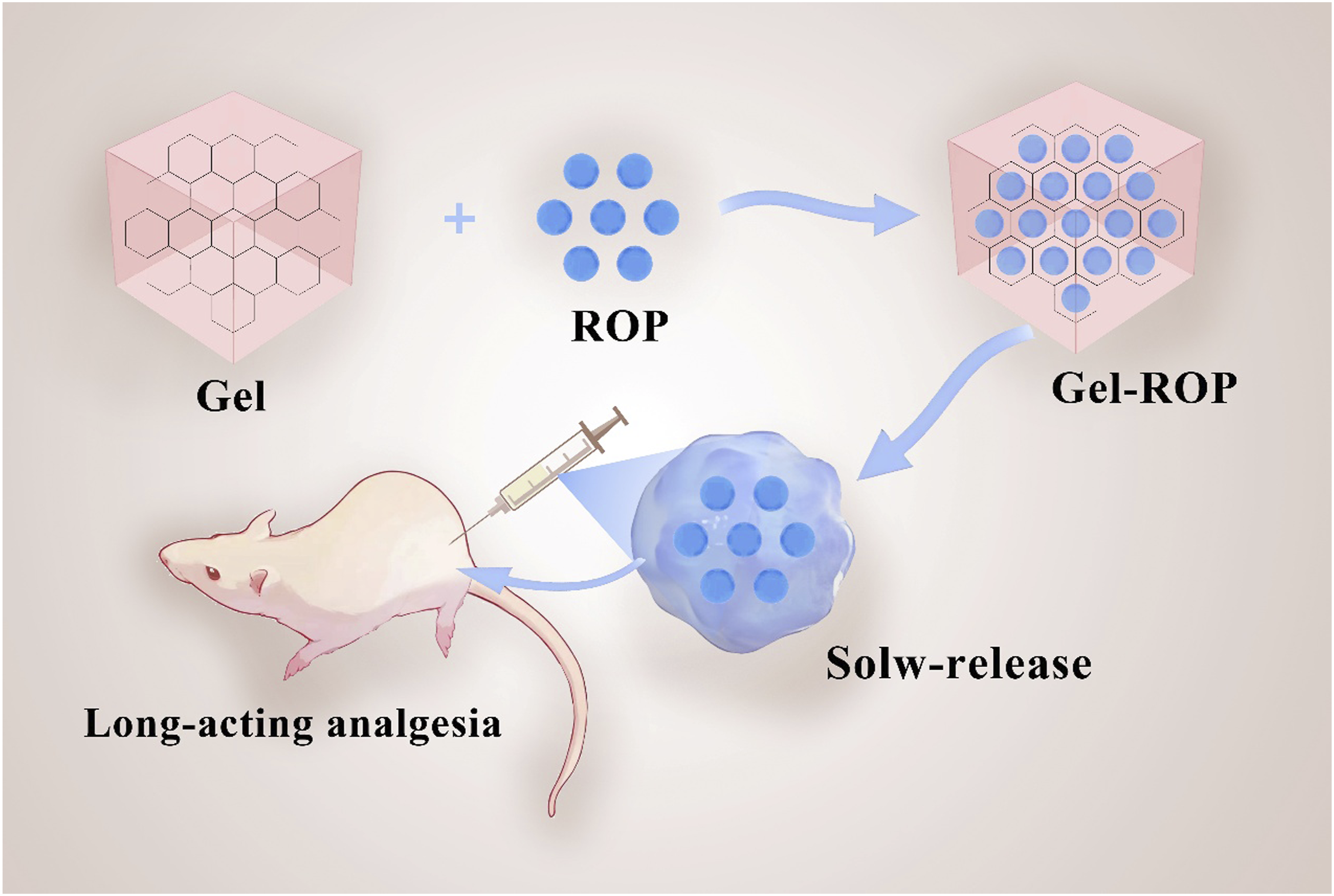
This study explored the in vitro characteristics of a ropivacaine-loaded hydrogel designed for sustained local anesthesia, using a gelatin matrix crosslinked with different concentrations of NHS-PEG-NHS. The hydrogel was comprehensively characterized through electron microscopy, rheology, biocompatibility testing, drug release and degradation analysis, and neurotoxicity assessment. Results showed the hydrogel had excellent gelation properties, a porous 3D network structure with pore size decreasing as crosslinker concentration increased, and enhanced gel strength with higher crosslinker concentrations. As the crosslinker content increases, the network pore size decreases, enabling sustained drug release and thereby prolonging the duration of nerve block. It also demonstrated good biocompatibility, demonstrate the viability of in vivo experiments. In drug release studies, the hydrogel effectively controlled ropivacaine release, achieving a more linear profile and reducing initial burst release. This demonstrates the material’s suitability for sustained-release delivery systems. Degradation studies indicated the hydrogel could persist locally for extended periods, which determine the drug’s sustained release behavior within the body and consequently dictate the duration of nerve block. The neurotoxicity of local anesthetics exhibits a dose-dependent relationship. In vitro neurotoxicity experiments demonstrate that gel-loaded drugs significantly attenuate the neurotoxicity of ropivacaine, with the degree of toxicity reduction positively correlated with NHS-PEG-NHS content. This indicates that the sustained-release properties of hydrogel materials prevent the abrupt release of drugs. Sciatic nerve block was performed in mice using 0.144% w/v ropivacaine. The free-ropivacaine group exhibited a sensory block duration of 3.2 h and a motor block duration of 2.24 h. In contrast, the hydrogel formulation significantly prolonged analgesia, extending sensory blockade to approximately 13.66 h and motor blockade to 10.35 h, while inducing only minimal inflammatory responses at the injection site. The study concluded that the ropivacaine-loaded hydrogel, with its 3D crosslinked network structure, effectively modulated drug release kinetics, prolonged nerve blockade, and reduced neurotoxicity, offering a promising novel solution for local anesthetic formulation improvement.
Get full access to this article
View all access options for this article.