




Abstract
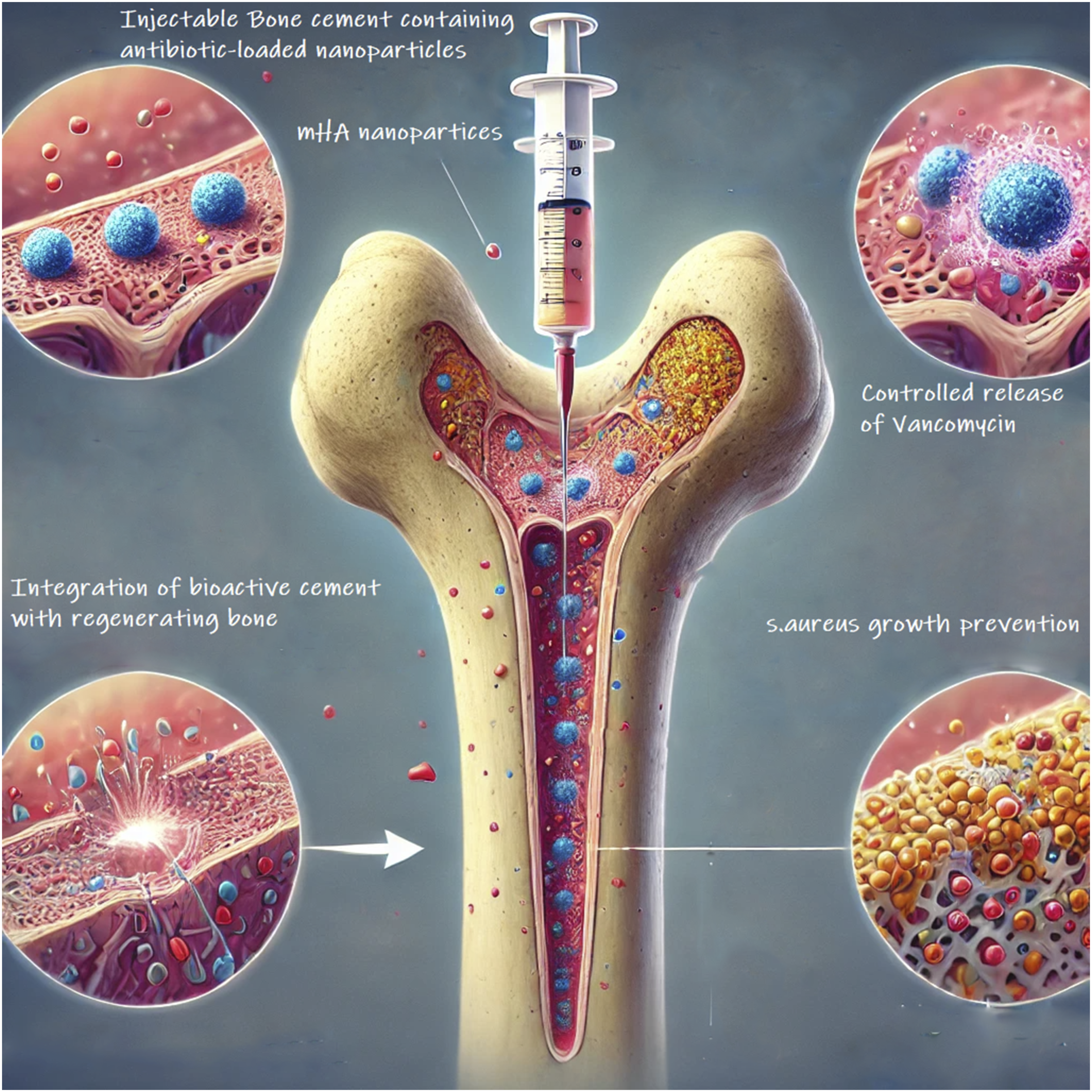
This investigation examines the influence of calcium sulfate (CaS) and modified nano-hydroxyapatite (mHA) additions on the physicochemical properties, microstructural development, apatite-forming potential, and antibacterial properties of bioactive tricalcium silicate (C3S) cement. Although C3S cements exhibit inherent antibacterial properties, their efficacy in treating infected bone defects requires enhancement. The release kinetics of vancomycin (VANCO), an antibiotic, and the modified cements’ antibacterial efficacy were systematically evaluated. The findings revealed a notable decrease in setting time from 363 to 264 min upon the integration of CaS. The composite cements demonstrated flow properties and injectability that met standard requirements, exceeding 75% at both 2 and 5 min. The modified cements noted Improved compressive strength compared to their unmodified counterparts. Furthermore, the cements promoted the formation of apatite on their surfaces when immersed in phosphate-buffered saline (PBS). Antibacterial evaluations established that VANCO released from the composites effectively impeded bacterial proliferation. These findings suggest that C3S cement enhanced with CaS and mHA exhibits superior physicochemical characteristics and bioactivity, thereby establishing it as a promising candidate for cutting-edge bone repair materials.
Keywords
Get full access to this article
View all access options for this article.
References
Supplementary Material
Please find the following supplemental material available below.
For Open Access articles published under a Creative Commons License, all supplemental material carries the same license as the article it is associated with.
For non-Open Access articles published, all supplemental material carries a non-exclusive license, and permission requests for re-use of supplemental material or any part of supplemental material shall be sent directly to the copyright owner as specified in the copyright notice associated with the article.
