




Abstract
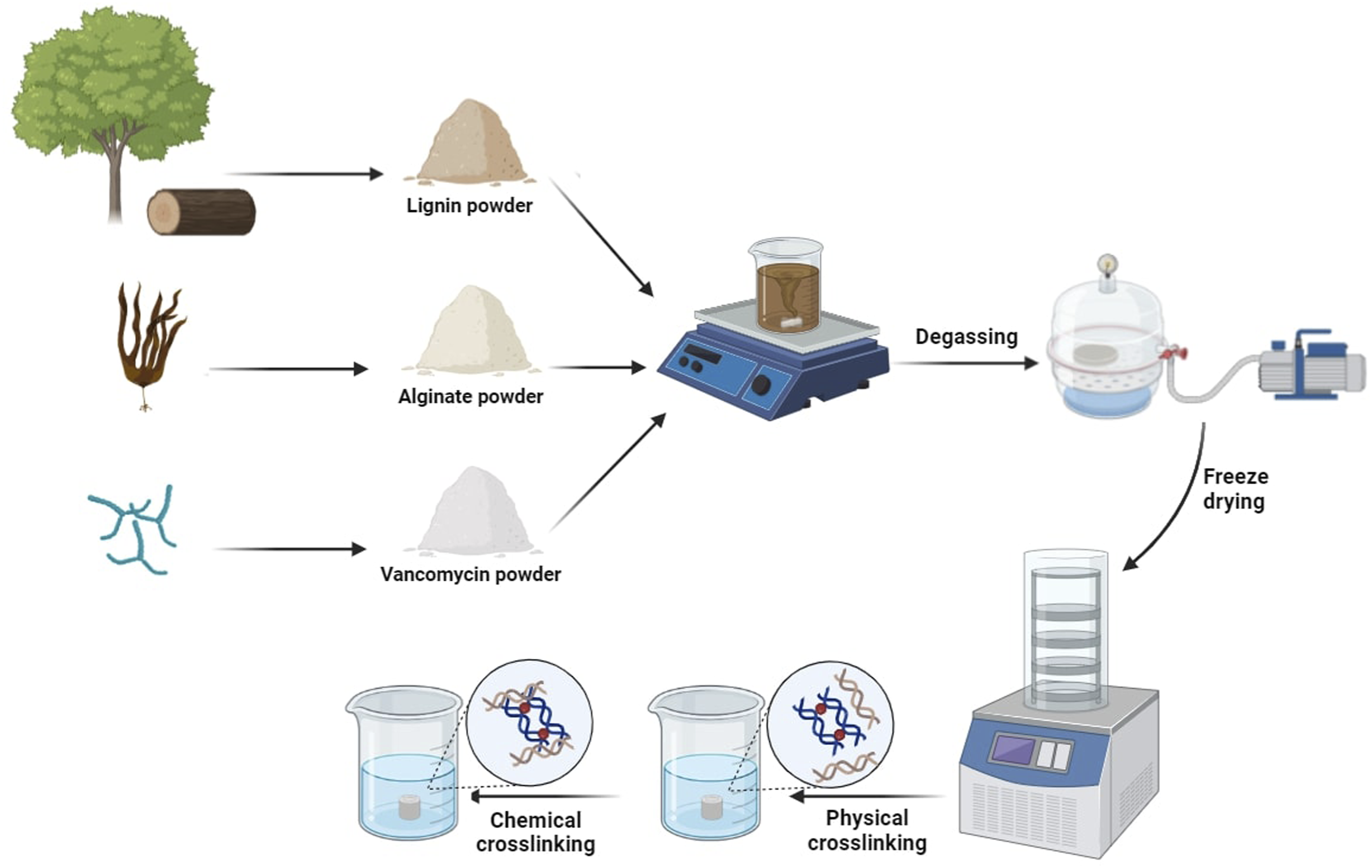
Hydrogels are advantageous for wound healing as they provide mechanical support and maintain a moist environment, essential for tissue repair. Although conventional alginate-based hydrogels are commonly used in wound care, they often lack essential properties like antibacterial and antioxidant functionality. To address this limitation, this research focused on synthesizing composite hydrogels combining alginate with lignin and loading them with Vancomycin. The incorporation of lignin and Vancomycin imparted antibacterial and antioxidant properties to the hydrogels, enhancing their therapeutic potential. The hydrogels are dual crosslinked (physically and chemically), where lignin counteracts high levels of reactive oxygen species and reduces excessive inflammation at the wound site. Furthermore, the hydrogels had pores ranging from 100 to 135 μm, which is beneficial to gas and nutrient exchange and wound fluid absorption. Results showed that lignin improved the hydrogels’ stability in physiological conditions by 50%. Additionally, the incorporation of lignin led to a 30% increase in antioxidant activity and a 50% boost in antibacterial activity. Vancomycin release from the hydrogels was measured, which showed alginate-only hydrogels releasing 50% and lignin-reinforced hydrogels releasing 35% over the first 24 hours. The MTT test confirmed approximately 90% cell viability across all samples, suggesting that the designed hydrogels are promising candidates for wound dressing applications.
Get full access to this article
View all access options for this article.