




Abstract
Background
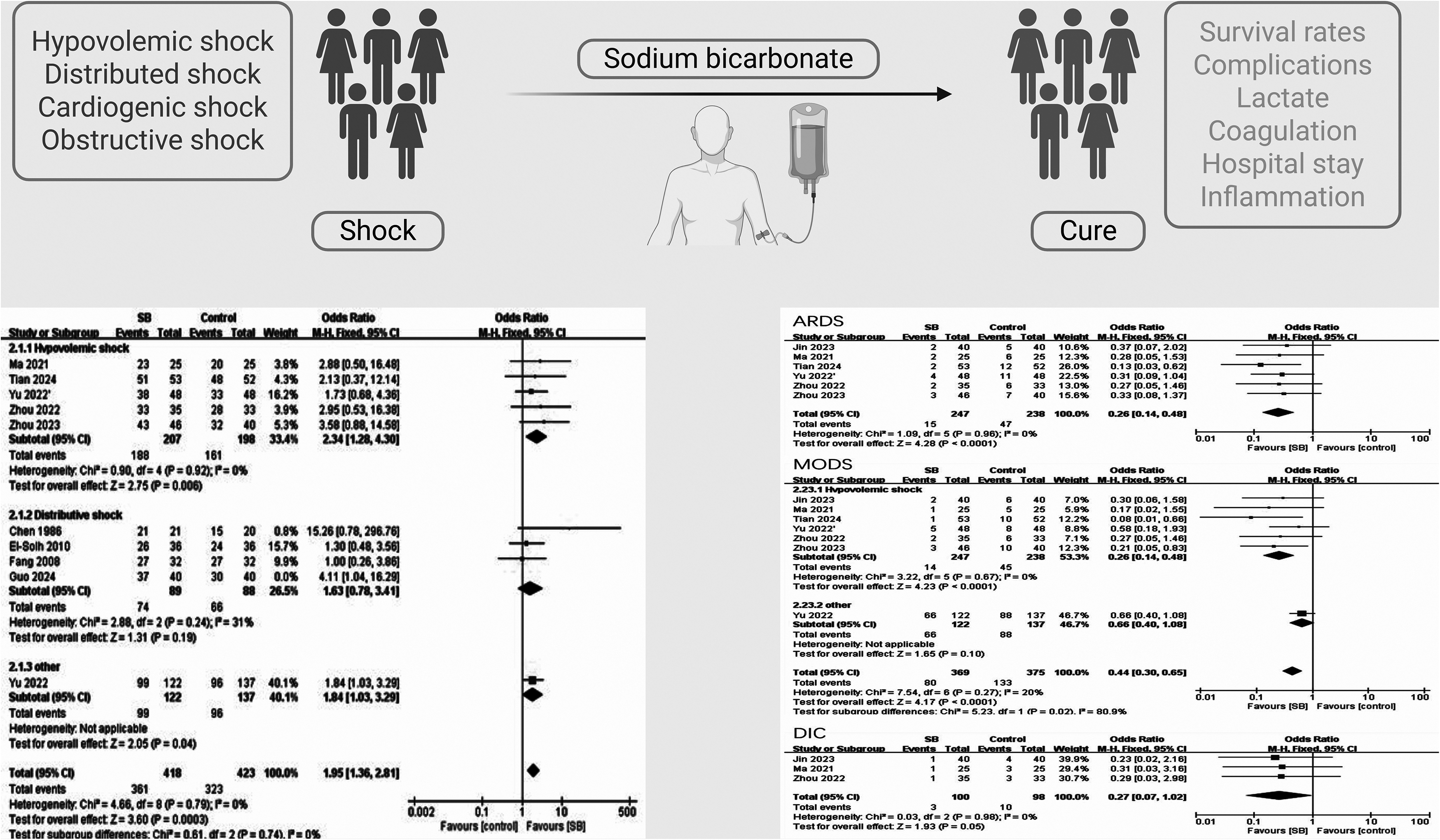
Fluid resuscitation represents conventional therapy for shock; however, the optimal fluid choice remains controversial. Sodium bicarbonate administration during resuscitation has shown potential benefits in modulating acidosis and hemodynamic parameters. This study aims to evaluate the clinical effects of sodium bicarbonate compared to conventional resuscitation fluids in patients with shock. We conducted a comprehensive literature search across the PubMed, Embase, Web of Science, and China National Knowledge Infrastructure (CNKI) databases, encompassing studies published in both Chinese and English. Publication bias was assessed using funnel plots and Egger's test. Sensitivity analyses were performed to evaluate the robustness of the findings. For studies exhibiting substantial heterogeneity, meta-regression was applied to explore potential sources of variability. Subgroup analyses examined the influence of shock type, control interventions, and temporal factors. A total of 4137 articles were reviewed. Ultimately, 18 studies meeting the predefined inclusion criteria were selected for analysis, comprising data from 1411 participants. Analysis of the included studies indicated that Sodium bicarbonate administration was associated with a reduction in the duration of intensive care unit (ICU) stay (MD = −1.42 days, 95% CI: −1.87 to −0.97) and total hospitalization length (MD = −2.78 days, 95% CI: −4.33 to −1.23). Sodium bicarbonate treatment lowered lactic acid levels (MD = −0.97 mmol/L, 95% CI: −1.28 to −0.67) and decreased the incidence of complications, including multiple organ dysfunction syndrome (MODS), acute respiratory distress syndrome (ARDS), and disseminated intravascular coagulation (DIC). Furthermore, improvements were observed in coagulation parameters, Including thrombin time (TT), activated partial thromboplastin time (APTT), and prothrombin time (PT). The inflammatory response was also attenuated, as evidenced by reduced circulating levels of interleukin-6 (IL-6), interleukin-10 (IL-10), and tumor necrosis factor-alpha (TNF-α).
Conclusion
This study suggests that Sodium bicarbonate may confer potential therapeutic effects in patients with shock compared to alternative interventions. Further research is required to investigate its efficacy across diverse shock etiologies and therapeutic approaches.
Graphical Abstract
Get full access to this article
View all access options for this article.
References
Supplementary Material
Please find the following supplemental material available below.
For Open Access articles published under a Creative Commons License, all supplemental material carries the same license as the article it is associated with.
For non-Open Access articles published, all supplemental material carries a non-exclusive license, and permission requests for re-use of supplemental material or any part of supplemental material shall be sent directly to the copyright owner as specified in the copyright notice associated with the article.
