




Abstract
Background:
Ischemic and hypoxic secondary brain insults are common and detrimental in traumatic brain injury (TBI). Treatment aims to maintain an adequate cerebral blood flow with sufficient arterial oxygen content. It has been suggested that arterial hyperoxia may be beneficial to the injured brain to compensate for cerebral ischemia, overcome diffusion barriers, and improve mitochondrial function. In this study, we investigated the relation between arterial oxygen levels and cerebral energy metabolism, pressure autoregulation, and clinical outcome.
Methods:
This retrospective study was based on 115 patients with severe TBI treated in the neurointensive care unit, Uppsala university hospital, Sweden, 2008 to 2018. Data from cerebral microdialysis (MD), arterial blood gases, hemodynamics, and intracranial pressure were analyzed the first 10 days post-injury. The first day post-injury was studied in particular.
Results:
Arterial oxygen levels were higher and with greater variability on the first day post-injury, whereas it was more stable the following 9 days. Normal-to-high mean pO2 was significantly associated with better pressure autoregulation/lower pressure reactivity index (P = .02) and lower cerebral MD-lactate (P = .04) on day 1. Patients with limited cerebral energy metabolic substrate supply (MD-pyruvate below 120 µM) and metabolic disturbances with MD-lactate-/pyruvate ratio (LPR) above 25 had significantly lower arterial oxygen levels than those with limited MD-pyruvate supply and normal MD-LPR (P = .001) this day. Arterial oxygenation was not associated with clinical outcome.
Conclusions:
Maintaining a pO2 above 12 kPa and higher may improve oxidative cerebral energy metabolism and pressure autoregulation, particularly in cases of limited energy substrate supply in the early phase of TBI. Evaluating the cerebral energy metabolic profile could yield a better patient selection for hyperoxic treatment in future trials.
Introduction
Ischemic and hypoxic secondary injury events are common in traumatic brain injury (TBI). 1,2 Maintaining an adequate cerebral blood flow (CBF) and delivery of oxygen is essential in TBI management. 3 Brain tissue oxygenation (pBtO2) below 20 to 29 mm Hg is associated with poor clinical outcome. 4,5 The pBtO2 correlates with regional CBF 6 and arterial oxygen content. 7 High intracranial pressure (ICP) and low cerebral perfusion pressure (CPP) are associated with low pBtO2, but most hypoxic insults occur in the absence of these predictors 4 and are probably caused by microvascular thrombosis or diffusion barriers such as cerebral edema. 8,9
Increasing the fraction of the inspired O2 (F
The link between CBF autoregulation and oxygenation also needs to be further explored in TBI patients. Cerebral blood flow is controlled by changes in arterial blood pressure, pCO2, pO2, and cerebral energy metabolism.
20
–23
Arterial hypoxia leads to increases in CBF by vasodilation, to maintain normal pBtO2.
24,25
This specific capacity can be estimated as the tissue oxygenation response (TOR), that is, the difference in increased pBtO2 compared to the arterial blood flow after an increase in F
In this study, we aimed to further elucidate the role of arterial oxygenation, incidence of hypoxia, and hyperoxia and the relation to cerebral energy metabolism, cerebrovascular reactivity, and clinical outcome in severe TBI. We hypothesized that arterial hypoxia would be disadvantageous and hyperoxia possibly beneficial in relation to these outcome measures.
Materials and Methods
Patients
Patients with severe TBI admitted to our neurointensive care (NIC) unit at the Department of Neurosurgery at the University Hospital in Uppsala, Sweden, 2008 to 2018 were eligible for this retrospective study. Of 1001 patients, those 115 patients with mechanical ventilation and monitoring of arterial blood pressure, ICP, arterial blood gas (ABG), and cerebral energy metabolism (using cerebral MD) that did not develop total brain infarction were included.
Patients were treated in accordance with our standardized ICP-oriented treatment protocol to avoid secondary insults. 28,29 Treatment goals were ICP ≤ 20 mm Hg, CPP ≥ 60 mm Hg, systolic blood pressure > 100 mm Hg, central venous pressure 0 to 5 mm Hg, pO2 > 12 kPa, arterial glucose 5 to 10 mmol/L (mM), hemoglobin (Hb) > 100 g/L, electrolytes within normal ranges, normovolemia and body temperature <38 °C. Patients were initially mildly hyperventilated (4.0-4.5 kPa) and normoventilated as soon as ICP allowed.
Data Acquisition and Analysis
Intracranial pressure was monitored with either an intraparenchymal sensor device (Codman ICP Micro-Sensor, Codman & Shurtleff) or an intraventricular catheter (HanniSet, Xtrans, Smith Medical GmbH) with the tip in the frontal horn. Arterial blood pressure was measured invasively in the radial artery at heart level. Arterial blood gas data were generally analyzed in samples taken through the radial arterial line every fourth hour, more often if needed. Arterial blood gas samples were analyzed on an ABL800 FLEX instrument (Radiometer), running automatic calibrations every fourth hour and internal quality control samples twice daily. In addition, an external quality control program with monthly control samples administered by the accredited clinical chemistry laboratory at Uppsala university hospital was used. The physiological calculations mentioned below were done in the Odin software. 30 Pressure reactivity index, traditionally calculated as the 5-minute correlation of 10-second averages of ICP and MAP, 31 was used in combination with a bandpass filter, limiting the analysis to oscillations with periods of 15 to 55 seconds (PRx55-15). 32,33
For MD, we used the 71 High Cut-Off Brain Microdialysis Catheter with a membrane length of 10 mm and a membrane cutoff of 100 kDa (M Dialysis). The MD catheter was placed in normal-appearing brain tissue in the right frontal lobe, adjacent to the ICP monitor. The catheters were perfused with a microinjection pump (106 MD Pump, M Dialysis) at a rate of 0.3 µL/min using custom made sterile artificial cerebrospinal fluid containing—NaCl 147 mmol/L (mM), KCl 2.7 mM, CaCl2 1.2 mM, MgCl2 0.85 mM and 1.5% human albumin. Cerebral interstitial glucose, lactate, pyruvate, and urea were measured hourly, with the CMA 600 analyzer or the ISCUSflex Microdialysis Analyzer (M Dialysis). The cerebral MD-urea was monitored to validate catheter performance. 34 The analyzers were automatically calibrated when started, as well as every sixth hour using standard calibration solutions from the manufacturer (M Dialysis). Quality controls were performed every weekday at 2 different concentrations for each substance (CMA 600 and ISCUSflex). Total imprecision coefficient of variation was <10% for all analytes. The correlation between CMA600 and ISCUSflex data was found to allow for direct comparisons of patient data. 35
Outcome
Clinical outcome was assessed at 6 months post-injury, by specially trained personnel with structured telephone interviews, using the Extended Glasgow Outcome Scale (GOS-E), containing 8 categories of global outcome, from death to upper good recovery. 36 –38
Statistical Analysis
The temporal course of pO2, F
Mean values were calculated for each patient the first day and the difference in mean values between day 2 and 1 (Δ(Day 2 − Day 1)) post-injury for pO2 (kPa), pO2 < 12 kPa (%),pO2 > 20 kPa (%),pCO2 (kPa), F
Ethics
All procedures performed in the studies involving humans were in accordance with the ethical standards of the institutional and national research committee and with the 1964 Helsinki declaration and its later amendments. Written informed consent was obtained from all individual patients included in the study or their next of kin.
Results
Demographic and Physiological Data
Of the 115 TBI patients included in the study, the mean age was 43 (±20) years and 76% were male. Median Glasgow Coma Scale Motor (GCS M) score was 5 (interquartile range [IQR]: 4-5). Twenty-one percent had a pupillary abnormality (anisocoria and/or fixed reaction) at admission. Seventy-five percent had diffuse injury (Marshall grade I-IV) and 25% focal brain injury (evacuated mass lesion V or nonevacuated mass lesion VI) on the first computed tomography scan. One percent of the patients had an impression fracture, 6% epidural hemorrhage (EDH), 20% acute subdural hemorrhage (ASDH), 6% traumatic subarachnoid hemorrhage (SAH), 35% cerebral contusions, 16% diffuse axonal injuries (DAIs), and 16% mixed intracranial injuries. Thirty-three percent had a thoracic injury and 41% had other extracranial injuries (abdominal, pelvic, spine, or extremities). Only one patient had extensive bleeding. Eleven percent was treated with thiopental and 15% with DC. Mean days in respirator was 12 (±8) days and mean stay at the NIC unit was 13 (±12) days. Outcome data 6 months after injury showed a mortality rate of 8% and median GOS-E was 5 (IQR: 3-7). The physiological data are presented in Table 1.
Description of Arterial Blood Gases, Neurophysiological, and Neurochemical Parameters Day 1 and Δ(Day 2 − Day 1) Post-TBI.a
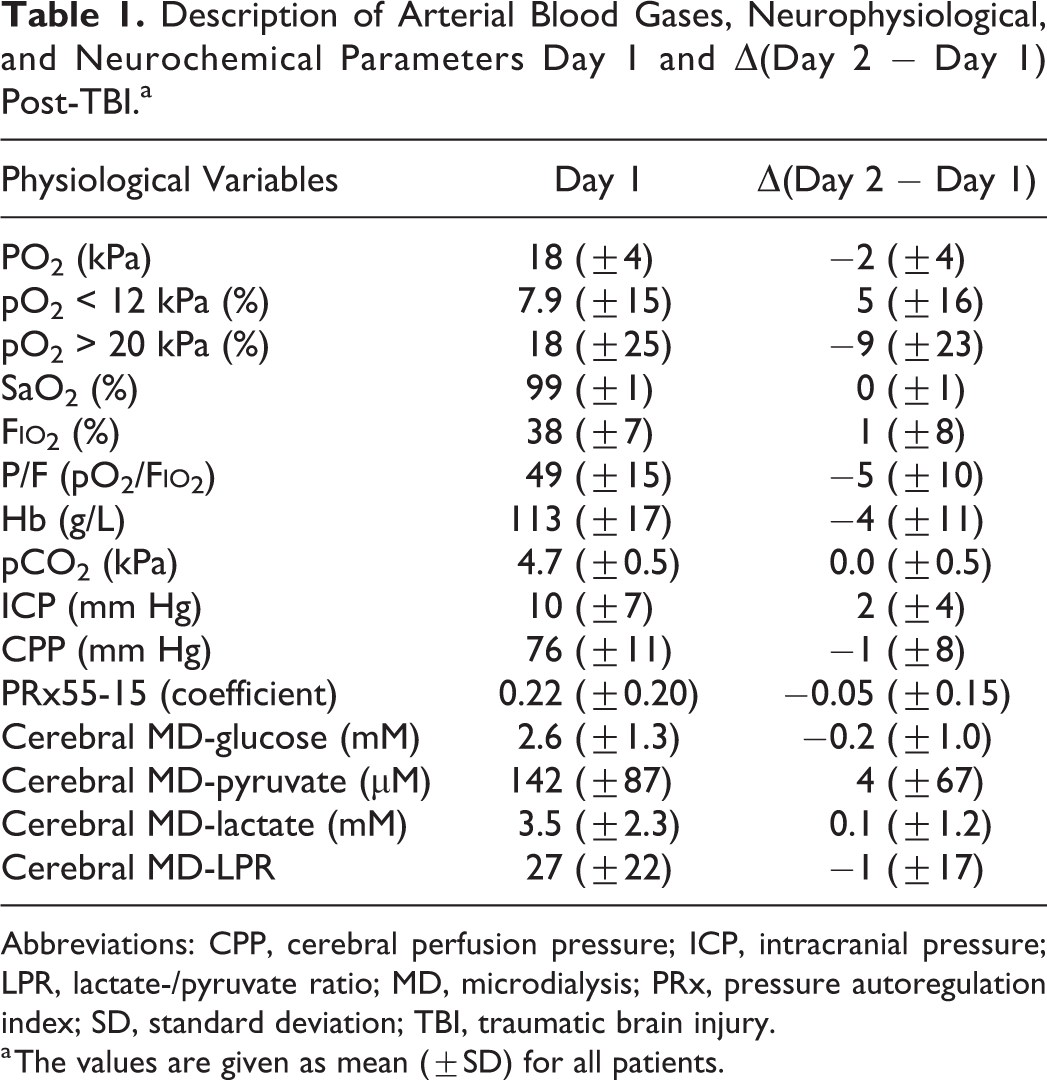
Abbreviations: CPP, cerebral perfusion pressure; ICP, intracranial pressure; LPR, lactate-/pyruvate ratio; MD, microdialysis; PRx, pressure autoregulation index; SD, standard deviation; TBI, traumatic brain injury.
a The values are given as mean (±SD) for all patients.
Arterial Oxygenation and Its Relation to Extracranial Injuries and Clinical Outcome
Mean arterial pO2 peaked the first day post-injury and gradually decreased (Figure 1). The percentage of ABGs with hyperoxia (pO2 > 20 kPa) decreased gradually, whereas the percentage of ABGs below our oxygen target (pO2 < 12 kPa) increased over the first 10 days. F
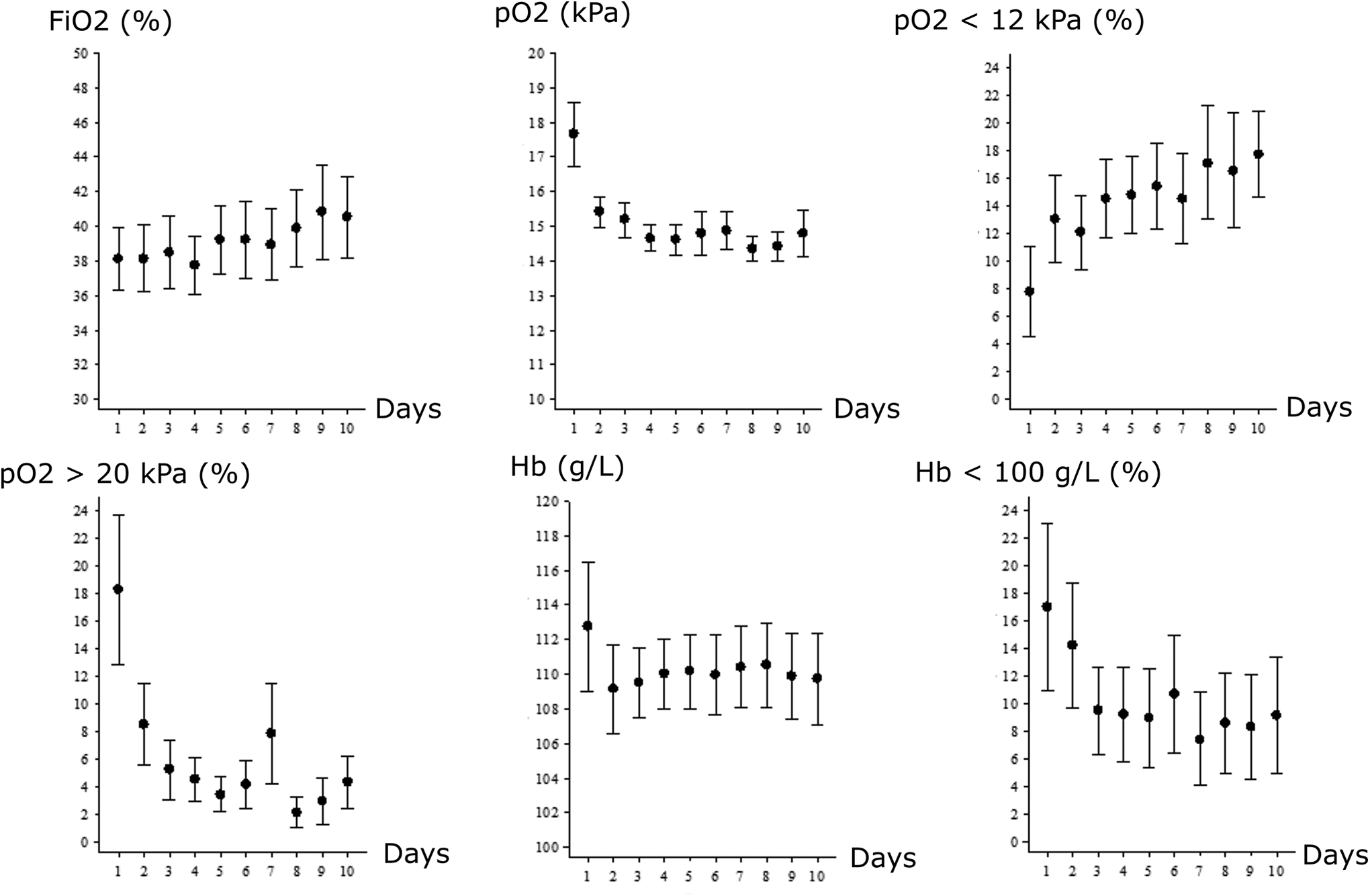
Arterial oxygenation—temporal course the first 10 days post-injury.
Arterial Oxygenation Day 1 Post-Injury—Relation to Intracranial Pressure Dynamics, Cerebral Energy Metabolism, and Clinical Outcome—Spearman Correlation Analyses.a
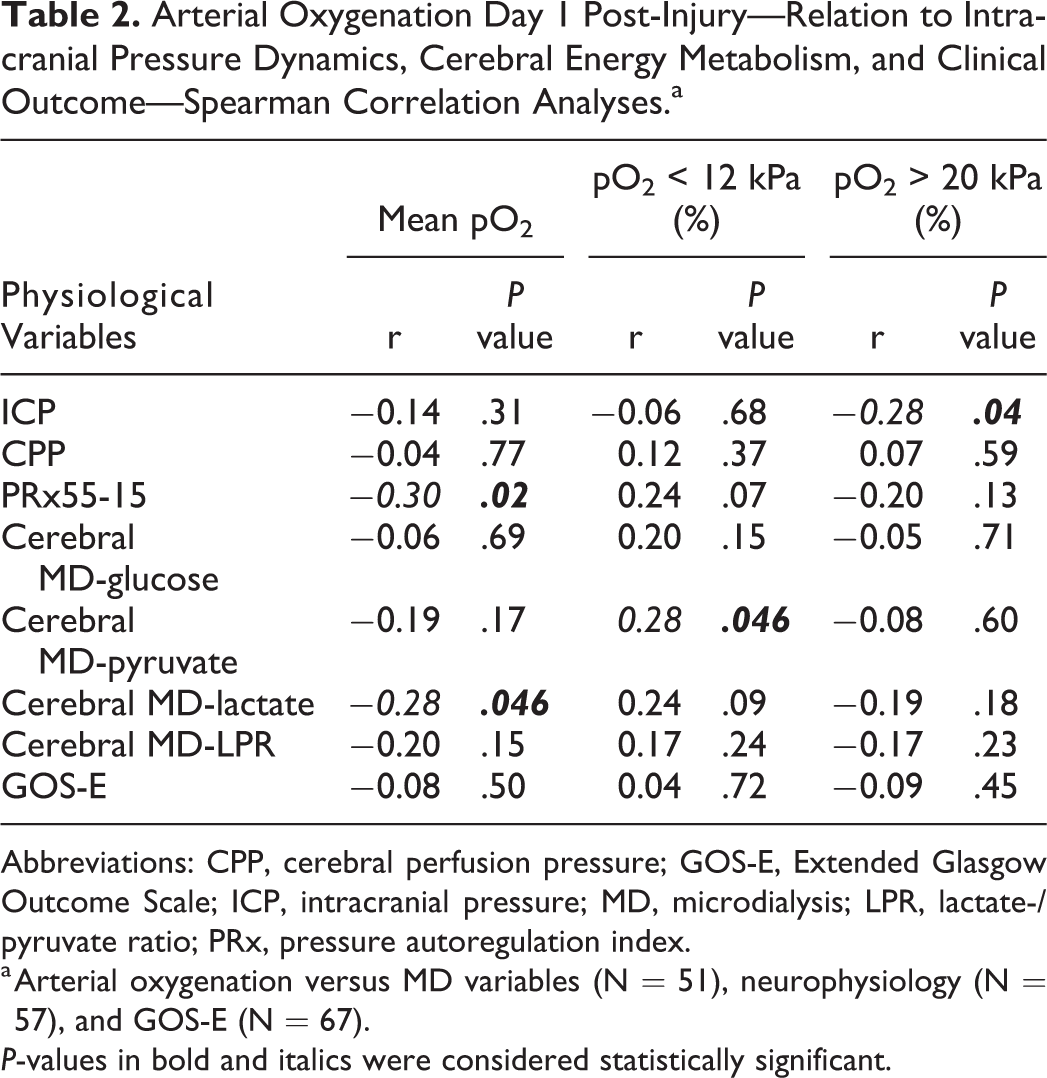
Abbreviations: CPP, cerebral perfusion pressure; GOS-E, Extended Glasgow Outcome Scale; ICP, intracranial pressure; MD, microdialysis; LPR, lactate-/pyruvate ratio; PRx, pressure autoregulation index.
a Arterial oxygenation versus MD variables (N = 51), neurophysiology (N = 57), and GOS-E (N = 67).
P-values in bold and italics were considered statistically significant.
Arterial Oxygenation and Cerebral Energy Metabolic Patterns
Higher mean arterial pO2 was significantly associated with lower cerebral MD-lactate (r = −0.28, P = .046; Figure 2A, Table 2). The mean pO2 did not correlate with the other energy metabolites (cerebral MD-glucose, MD-pyruvate, and MD-LPR; Table 2). The percentage of ABGs below our oxygen target 12 kPa was associated with higher cerebral MD-pyruvate (r = 0.28, P = .046; Figure 2B, Table 2). There was no significant correlation between the percentage of hyperoxia and the cerebral energy metabolites (Table 2). Similar correlation analyses using the Δ(Day 2 − Day 1) values did not reveal any significant associations between changes in arterial oxygen levels and cerebral energy metabolites. Exclusion of those patients treated with DC (n = 7) on the first day post-injury did not have any impact on the results.
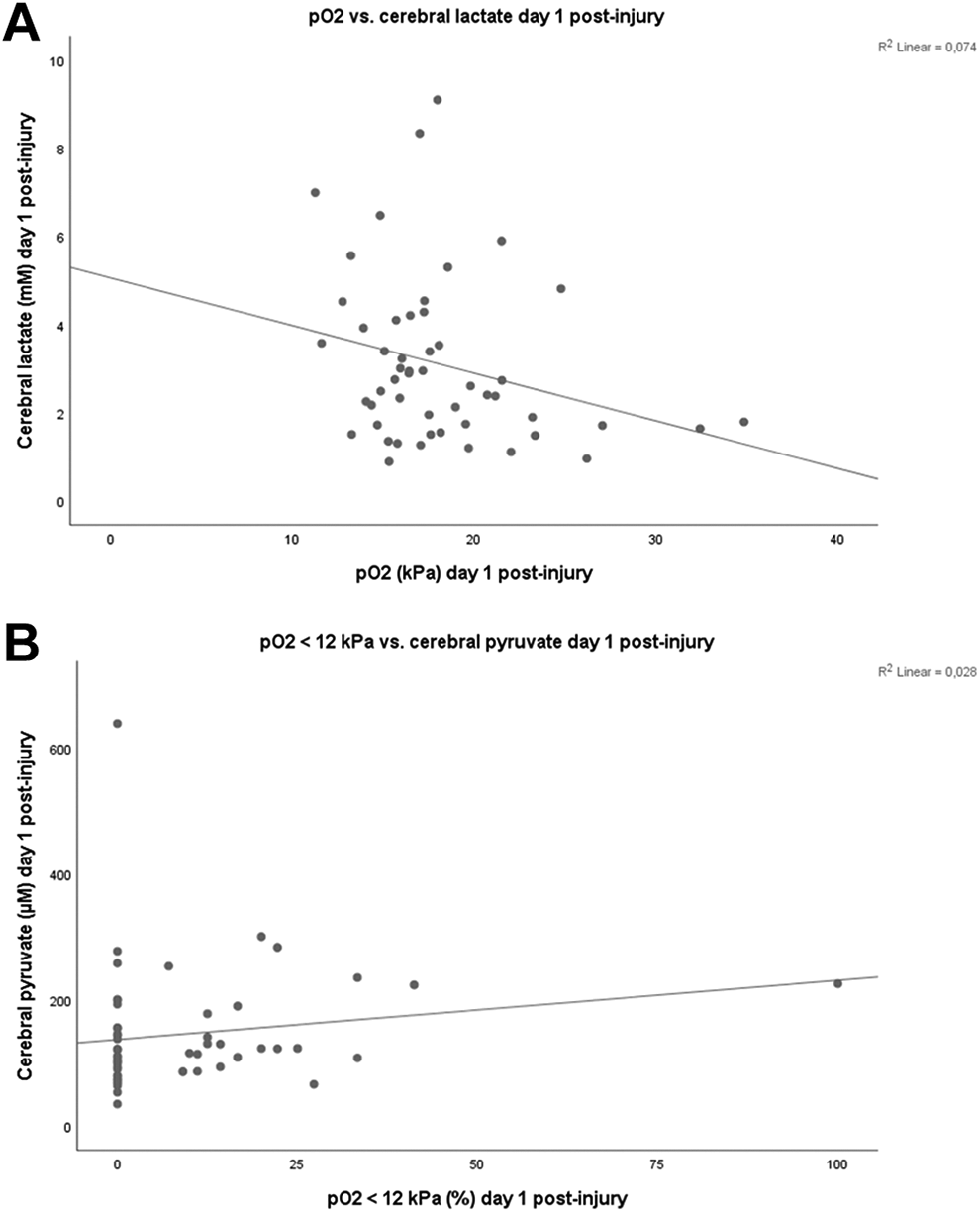
Arterial oxygenation and cerebral energy metabolism day 1 post-injury.
Patients (N = 51) were divided into 4 groups based on their metabolic pattern of mean MD and pO2 values for day 1 (Figure 3). The patients with a metabolic pattern of “energy metabolic disturbances and limited pyruvate supply” (cerebral MD-LPR > 25 and MD-pyruvate < 120 µM, N = 4) had significantly lower mean pO2 at 15 ± 1 kPa compared with those without metabolic disturbances but limited pyruvate supply (cerebral LPR < 25 and pyruvate < 120 µM, N = 21) at 20 ± 6 kPa (P = .001). Both of these groups had similar P/F (pO2/F
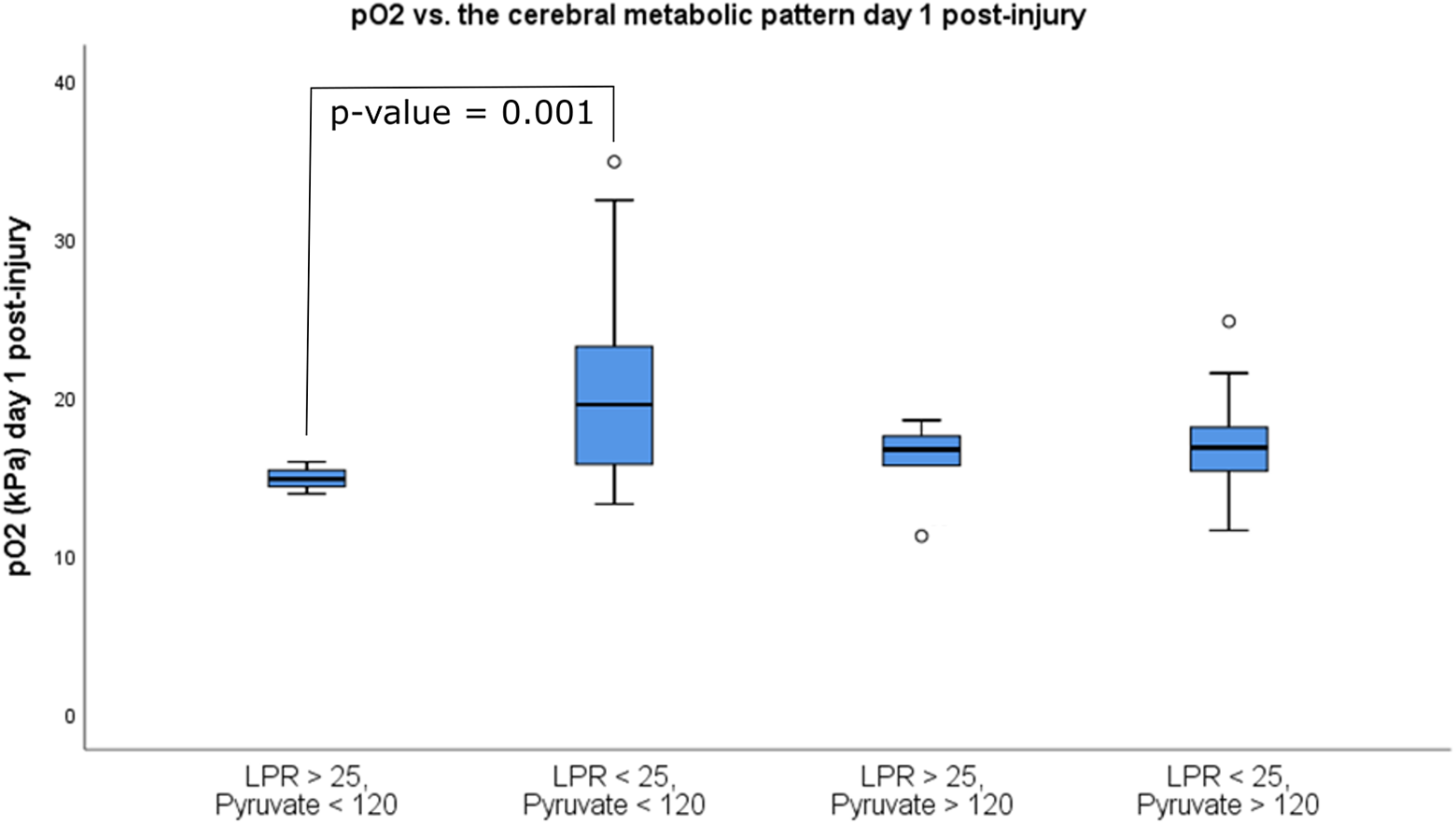
Arterial oxygenation in relation to cerebral metabolic patterns day 1 post-injury.
Of those with a mean cerebral pyruvate below 120 µM and LPR above 25, all but one patient had a mean cerebral MD-glucose above 1 mM. None of these patients had an ICP > 20 mm Hg or CPP < 60 mm Hg. All patients had a mean Hb above 100 g/L. There was no significant difference in mean ICP, CPP, and pCO2 between those with low cerebral MD-pyruvate and normal versus elevated MD-LPR (data not shown).
Arterial Oxygenation and its Relation to ICP, CPP, and Pressure Reactivity
Although the mean pO2 or ABG events below our oxygen target did not correlate with ICP or CPP, higher percentage of hyperoxia day 1 was significantly associated with lower ICP (r = −0.28, P = .04; Table 2). Furthermore, the correlation analyses of the (Δ(Day 2 − Day 1) values showed that patients who had decreased percentage of pO2 > 20 kPa had a significantly higher ICP (r = −0.29, P = .03) and a significantly lower CPP (r = 0.28, P = .03) from day 1 to day 2 post-injury.
In addition, higher mean pO2 was significantly associated with lower PRx55-15 (r = −0.30, P = .02) day 1 post-injury (Figure 4). Similarly, the correlation analyses of the (Δ Day 2 − Day 1) values showed that those patients who had decreased in mean pO2 had significantly higher PRx55-15 (r = −0.37, P = .005) from day 1 to day 2 post-injury. However, the association between arterial oxygenation and PRx55-15 was not significant in the later course (Spearman correlation test of mean values day 2-5 and day 6-10, respectively). Exclusion of those patients treated with DC on the first day post-injury did not have any impact on the results.
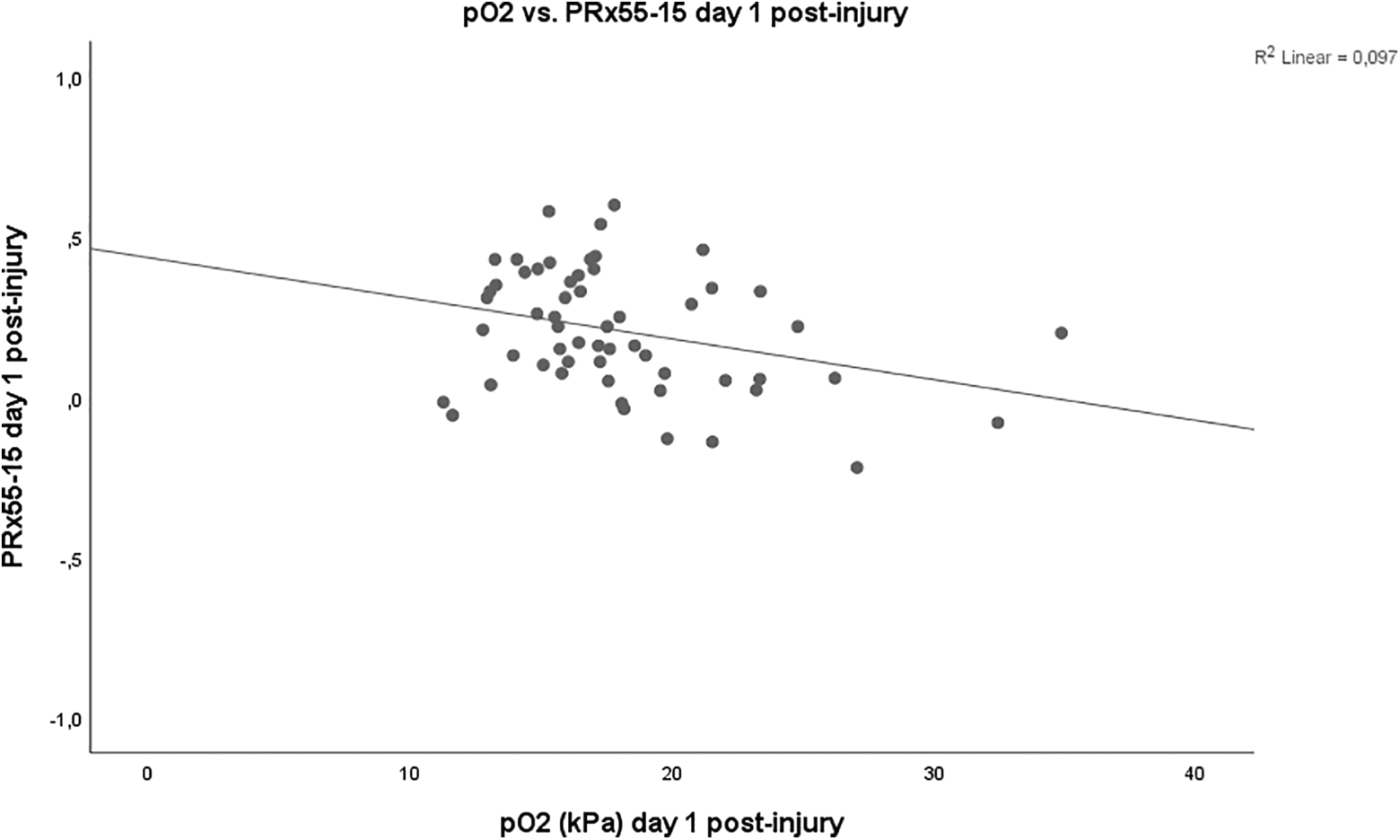
Arterial oxygenation and pressure reactivity.
In the multiple linear regression analysis for PRx55-15 (Table 3), including age, ICP, CPP, pCO2 and pO2, higher pO2 was marginally associated with lower PRx55-15 (P = .054).
Prediction of PRx55-15 Day 1 Post-Injury—A Multiple Linear Regression Analysis.a
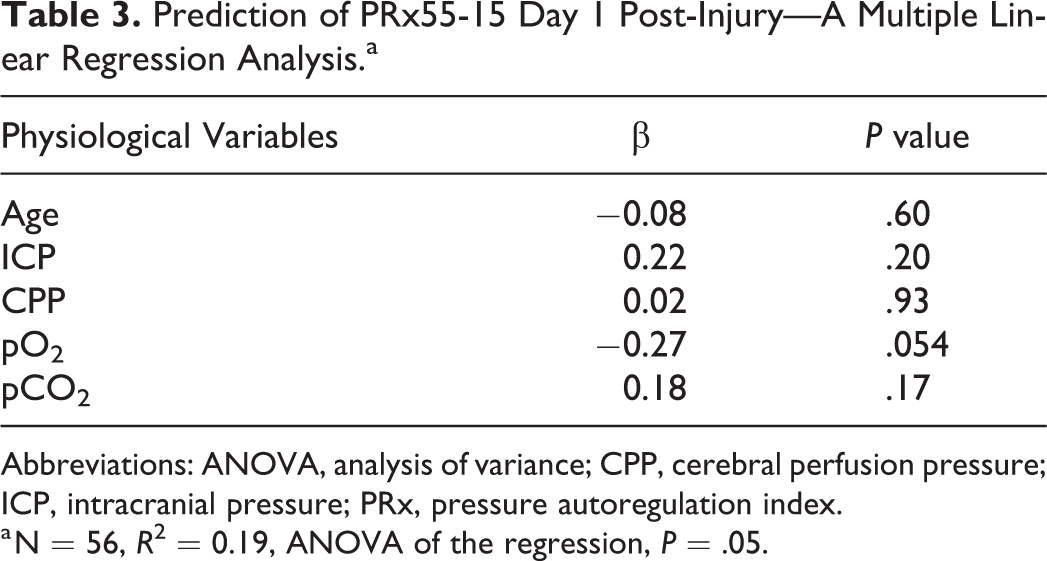
Abbreviations: ANOVA, analysis of variance; CPP, cerebral perfusion pressure; ICP, intracranial pressure; PRx, pressure autoregulation index.
a N = 56, R 2 = 0.19, ANOVA of the regression, P = .05.
Discussion
In this retrospective study including 115 patients with severe TBI, we found that high mean arterial pO2 was associated with better PRx55-15 and improved oxidative cerebral energy metabolism on the first day post-injury. In TBI patients with a cerebral metabolic pattern indicative of limited pyruvate supply, those with preserved oxidative energy metabolism (normal cerebral MD-LPR) had significantly higher arterial oxygen (20 vs 15 kPa) than those with energy disturbances (elevated MD-LPR). This suggests that TBI patients with disturbed energy metabolism with limited cerebral MD-pyruvate may benefit from a higher pO2-threshold than 12 kPa in early TBI management, although prospective studies are needed to validate this.
Arterial Oxygen and Cerebral Energy Metabolism
Cerebral ischemia and hypoxia are common secondary insults following severe TBI. 42,43 Optimizing cerebral oxygen delivery by maintaining adequate CBF and arterial oxygen pressure has been discussed extensively the last decades. 2 This has traditionally been achieved by CPP-oriented treatment protocols to increase CBF 44 and maintaining arterial oxygen content sufficient by keeping Hb above 70 to 100 g/L together with normal saturation. 28,45 More recently, NBO treatment has been suggested to compensate for cerebral ischemic hypoxia, overcome diffusion barriers from cerebral edema, and to improve mitochondrial function in TBI. 2
The benefits of NBO are debated. 2 Diringer et al found no global cerebral improvement in CMRO2 following NBO, 46 whereas Nortje et al found increased CMRO2 in ischemic regions. 16 Furthermore, many energy metabolic studies have found reductions in cerebral lactate following NBO, but no improvement in MD-LPR. 10,12 –15 However, another study found that the beneficial effect of hyperoxia depends on the concurrent cerebral energy metabolic state, as improvements in oxidative energy metabolism were only seen in cases of high cerebral MD-lactate before treatment initiation. 17 Similar to these previous studies, 10,12 –15 our patients who had higher mean arterial oxygen levels had lower cerebral lactate (Figure 2A) and those with higher percentage of ABGs with pO2 < 12 kPa had higher cerebral MD-pyruvate levels (Figure 2B), possibly as glycolytic enzymes were upregulated due to hypoxia. The correlation between arterial oxygenation and MD-LPR was modest and nonsignificant, but similar to Vilalta et al, 17 improvements in oxidative energy metabolism from higher pO2 could be seen under certain circumstances in our study. Our patients with normal oxidative cerebral energy metabolism (MD-LPR below 25) with concurrently low cerebral pyruvate, indicative of limited substrate supply, 41,47 had significantly higher arterial oxygen levels compared with those with limited substrate supply and deranged oxidative energy metabolism (Figure 3). However, there was no significant difference in P/F-ratio between the groups, indicating that pO2 rather than lung injury could explain this association and that TBI patients with limited energy substrate supply could benefit from higher oxygen levels. No patient with limited substrate supply had concurrent ICP above 20 mm Hg or CPP below 60 mm Hg and anemia and cerebral MD-glucose below 1 mM were uncommon. This indicates that macrovascular ischemia and arterial oxygen content were usually not the cause of the metabolic disturbances. Instead, microvascular disturbances, diffusion limitation, and hypermetabolism seem more plausible. 9 Furthermore, it has been suggested that arterial hyperoxia could be beneficial in case of mitochondrial dysfunction, but we did not find any difference in arterial oxygenation between the patient groups with normal cerebral MD-pyruvate supply with either normal versus disturbed oxidative energy metabolic state (low/high MD-LPR). However, it is difficult to evaluate the energy metabolic effects of different oxygen levels from this analysis, since the extent of mitochondrial injury in each group is unknown and probably differ. It would be better to evaluate the effect of arterial oxygenation prospectively in future trials with a hyperoxic challenge in patients with a metabolic pattern indicative of mitochondrial failure.
Arterial Oxygen and Cerebral Autoregulation
Cerebral autoregulation may become dysregulated in TBI and this is associated with poor outcome.
31
The cerebral vasoresponse to various regulators such as arterial blood pressure, pCO2, and cerebral energy metabolism represent the general health of the vessels and intact vessel response to one of these regulators usually corresponds to intact vessel response to the other regulators.
20
It is well known that arterial hyperoxia generates an autoregulatory reduction in CBF to maintain a normal pBtO2
24,25
and this has been further elaborated in the NIC setting by, for example, evaluating the cerebral TOR to an increase in F
Arterial Oxygenation in Relation to Clinical Outcome
Too low and too high arterial oxygen levels have been shown to be associated with worse outcome following TBI. 50 –52 Furthermore, low pBtO2 has also been found to correlate with worse outcome. 4,5 Although we did not find any correlation between higher arterial oxygen levels the first day post-injury and better clinical outcome, we did find correlated improvements in PRx55-15 and oxidative cerebral energy metabolism. Possibly, the primary brain injury and other secondary insults had greater impact, confounding any impact on functional recovery as measured using GOS-E. Alali et al 52 found that modest arterial hyperoxia (20-25 kPa) day 1 post-injury was associated with favorable clinical outcome in a study including 417 patients, indicating that our study may be underpowered to detect a small, but significant, effect of arterial hyperoxia on outcome.
Limitations
First, although pO2 and pBtO2 are correlated, we lacked sufficient data regarding cerebral oxygenation to evaluate the relation between pO2, pBtO2, and cerebral energy metabolism. Second, the number of patients with energy metabolic disturbances (MD-LPR > 25) was low, limiting the reliability of the analysis in Figure 3. Third, the associations between arterial oxygen levels and cerebral energy metabolism and PRx55-15 were weak, indicating that other factors could be more important. Fourth, the physiological variables were measured over different time intervals, for example, PRx55-15 (minute-by-minute), cerebral energy metabolism (every hour), and ABGs (every fourth hour). Considering the complexity of the data regarding differences in the frequency of measurements and for what time duration each measurement is relevant, we evaluated averaged values over 24 hours to determine the correlation of the total exposure of various physiological variables. Measures of energy metabolism minute-by-minute may be more time-compatible with the other physiological measures (PRx55-15/ICP and SaO2) and could in the future help determine the correlation between these physiological variables with higher resolution. There is also a need for prospective trials to better study the intraindividual neurophysiological response to hyperoxia. Fifth, the association between arterial oxygen levels and cerebral energy metabolism may be confounded by other important variables such as injury severity. However, we found no association between thoracic/extracranial injuries and arterial oxygen content indices.
Conclusions
Higher mean arterial oxygen levels the first day post-injury in severe TBI patients was associated with better PRx55-15 and improved oxidative cerebral energy metabolism. Particularly, patients with a cerebral metabolic profile indicative of limited energy substrate supply could benefit from higher arterial oxygen levels in the early phase of TBI. Furthermore, arterial oxygen may be used to optimize cerebral vasoreactivity and hence used in an integrated autoregulatory-oriented treatment regime. Future prospective studies are needed to determine whether there is a causal relationship of arterial hyperoxia in relation to autoregulation, cerebral energy metabolism, and clinical outcome.
Footnotes
Acknowledgment
The authors express their gratitude to Inger Ståhl-Myllyaho for technical assistance with the cerebral microdialysis.
Declaration of Conflicting Interests
The author(s) declared no potential conflicts of interest with respect to the research, authorship, and/or publication of this article.
Funding
The author(s) disclosed receipt of the following financial support for the research, authorship, and/or publication of this article: The study was supported financially by the Uppsala University Hospital (ALF grant, ie, Swedish Research Council funding for clinical research in medicine). The data for this manuscript can be accessed upon request.
