




Abstract
Objective:
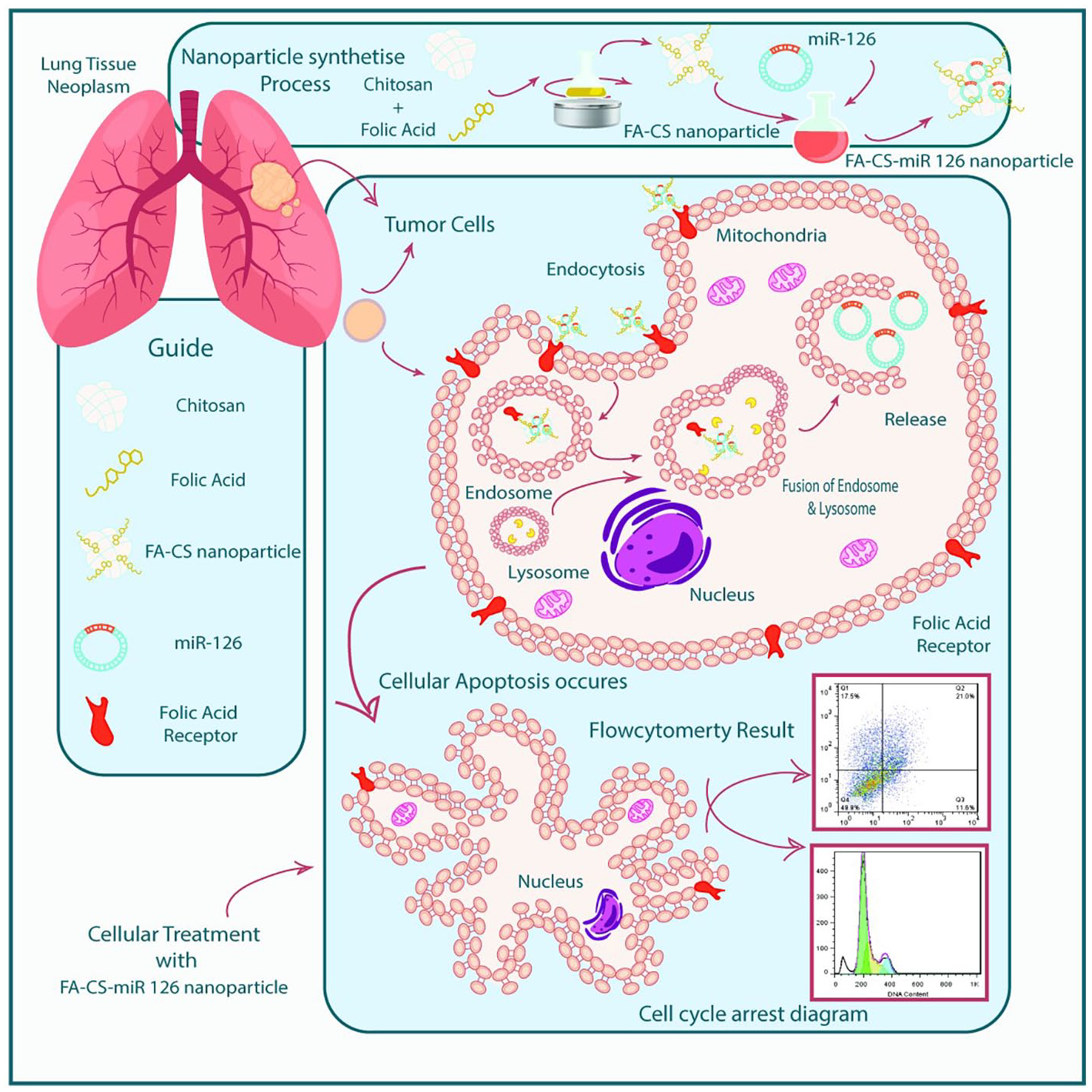
Nanoparticle-based drug delivery systems (DDSs) have been playing a considerable role in the eradication of cancer. In this experimental study, we designed and synthesized folic acid (FA)-decorated chitosan (CS) nanocarrier for targeted delivery of miR-126 (as a therapeutic agent) to lung cancer A549 cells.
Materials and methods:
Therefore, the FA-CS-miR-126 nano-complex was perfectly developed and characterized by various analytical devices such as Fourier transform infrared (FT-IR) and dynamic light scattering (DLS) spectroscopies and as well as transmission electron microscopy (TEM). The size was determined lower than 100 nm for synthetics. Then, a gel retardation assay was performed to investigate the entrapment efficiency of nano-complex. Afterward, the sort of in vitro assays was implemented on A549 (FA receptor-positive lung cancer cell line) and MRC5 (normal human diploid cell line) to evaluate the therapeutic efficiency of FA-CS-miR-126.
Results:
As the cell viability (40.7 ± 2.98% cell viability after 72 h treatment with 500 nM), migration assay (weaker migration after 24 h and 48 h), apoptotic and autophagy genes expression level (Caspse9: sixfolds; BAX: 17 folds; ATG5: fourfolds; and BECLIN1: threefolds more than the control group), the reduced expression level of EGF-L7, as a target gene for miR-126 was evaluated by Real-Time PCR too, then, cell cycle arrest (8.66% of cells in sub-G1 phase), and cell apoptosis assay (21.0% of cancer cell in late apoptosis phase) were scrutinized.
Conclusion:
These results are remarkably approved the biocompatible and efficient performance of FA-CS-miR-126 as a promising DDS.
Get full access to this article
View all access options for this article.
References
Supplementary Material
Please find the following supplemental material available below.
For Open Access articles published under a Creative Commons License, all supplemental material carries the same license as the article it is associated with.
For non-Open Access articles published, all supplemental material carries a non-exclusive license, and permission requests for re-use of supplemental material or any part of supplemental material shall be sent directly to the copyright owner as specified in the copyright notice associated with the article.
