




Abstract
In 2025, it is projected that global sales of battery-based electric cars (electric vehicle [EV]) will reach 145 million units, exceeding those of fuel vehicle-based cars (internal combustion engine [ICE]), so that in the future the demand for electric batteries (EBs) will be even greater. In managing the large nickel resources as raw material for electric vehicle batteries, new policies, and breakthroughs are needed so Indonesian electric vehicle batteries have high competitiveness in facing the global market. This study aims to analyse the condition of the electric vehicle battery industry sector in the global competitive arena, which consists of 14 countries with the world’s largest nickel resources and reserves. The results of the analysis show that, first, it is necessary to master technology and utilise qualified and professional human resources. Second, increasing the availability of supporting infrastructure for the establishment of electric vehicle battery factories, as well as improving the quality of electric vehicle batteries so that they are highly competitive to seize global market opportunities. The analysis can be used as input for the government to improve the competitiveness of electric vehicle batteries in facing the global market and the fulfilment of nickel needs for the domestic electric vehicle battery industry.
Keywords
Introduction
Indonesia has large reserves of medium- and low-grade nickel, making it a significant player in the global market for electric vehicle batteries. Nickel is a key raw material for lithium batteries, which are used to power electric vehicles. Indonesia’s reserves, coupled with its competitive prices and low production costs, have made it a major exporter of nickel intermediate products, particularly to China, Japan and South Korea, which are among the world’s largest nickel consumers. 1 However, the increasing trend of electric vehicles has also created a demand for nickel limonite for domestic electric vehicle battery raw materials, creating a tug-of-war between export interests and meeting domestic needs. Indonesia needs new policies and breakthroughs to ensure that its nickel sector for electric vehicles remains competitive in the global market. The establishment of a global market organisation, such as the World Trade Organization (WTO), has facilitated trade between countries without tariffs or restrictions, promoting economic growth and increasing competitiveness in both the domestic and export markets. 2
Furthermore, the increase in demand for electric vehicles and the need for nickel as a raw material for lithium batteries creates an opportunity for Indonesia to develop its domestic electric vehicle industry. 3 By investing in the production of nickel intermediate products such as mixed hydroxide precipitate (MHP), mixed sulphide precipitate (MSP) and sulphuric acid, Indonesia can supply its domestic electric vehicle industry with raw materials and reduce its reliance on imported materials. This would not only support the growth of the domestic industry but also create new job opportunities and increase the country’s economic resilience. However, there are also challenges to developing a competitive domestic electric vehicle industry. One major challenge is the lack of infrastructure to support electric vehicles, such as charging stations and battery recycling facilities. Another challenge is the need for a skilled workforce to manufacture and maintain electric vehicles. To address these challenges, the government can incentivise the development of infrastructure and provide training programs for workers in the electric vehicle industry.4–6
Additionally, the production of electric vehicles requires not only nickel but also other rare earth metals such as cobalt, manganese and lithium. Indonesia has limited reserves of these metals, which could limit the growth of its domestic electric vehicle industry. To address this, the government could explore partnerships with other countries or invest in research and development to find alternative materials or improve the efficiency of battery production.7–59 The increasing demand for electric vehicles presents an opportunity for Indonesia to leverage its large nickel reserves and develop a competitive domestic electric vehicle industry. However, to fully realise this opportunity, the government must address challenges such as the lack of infrastructure and skilled workforce, as well as the need for partnerships and research and development. Overall, a strategic and comprehensive approach is necessary to ensure that Indonesia can benefit from the global trend towards electric vehicles and contribute to sustainable economic growth.60–66
By analysing the strengths, weaknesses, opportunities and threats (SWOT) of its nickel resources, Indonesia can effectively manage its nickel sector, seize opportunities in the global battery and electric vehicle market and develop strategies to meet the needs of the domestic electric battery industry.67–78 The result of the SWOT analysis can be used as policy input to make nickel a strategic mineral and a driving force for the regional and national economy. Inefficient electric battery manufacturers will have low competitiveness and find it difficult to market their products. However, electric battery producers with efficient production levels will have high competitiveness and be able to dominate the global market, contributing large foreign exchange and encouraging economic growth.
Methods
This study uses a qualitative descriptive method to examine objects, conditions, planning systems and events that are likely to occur in the future through direct observation, observation, interviews and document searches of several Department of Energy and Mineral Resources (ESDM) and several nickel mining companies as respondents, as well as literature studies from various related studies. From the identification results, internal factors (strengths and weaknesses of the nickel sector for electric vehicle battery raw materials), external factors (opportunities and threats for the nickel sector for electric vehicle battery raw materials in the global market) and factors that lead to the superiority of Indonesian nickel mining in the global market can be known. Furthermore, all the factors of strength, weakness, opportunity and threat from nickel mining are analysed. 79 Once the SWOT indicators are identified, the first step is to determine the weight, rating and score weight. The weights are determined based on the level of importance on a scale of 1–4 (1 = not important, 2 = moderately important, 3 = important, 4 = very important). The second step is to add up the weights of strengths and weaknesses to obtain the total weight. Then, the relative weights for each indicator are calculated by dividing each weight by the total weight of the strengths and weaknesses, so that the total value of the relative weights when added up is 1 or 100%. In the same way, the relative weights for opportunities and threats are calculated, so that the total value of the weights becomes 1 or 100%. The third step is to determine the rating, which is an analysis that affects the organisation, then the weight is multiplied by the rating. The reason for choosing a scale of 1–4 is based on the high and low indicators (strengths and opportunities) which has the potential to become one of the global electric vehicle batteries producing countries compared to competitors. Scale 4 (if the indicator is better than competitors), scale 3 (if the indicator is quite good compared to competitors), scale 2 if the indicator is the same as competitors) and scale 1 (if the indicator is decreasing compared to competitors). Meanwhile, giving a scale of 1–4 for variables (weaknesses and threats) is the opposite. The smaller the performance value of this indicator, the worse it is compared to the main competitors. Scale 1 (if there are many weak indicators compared to competitors), scale 2 (if there are many weak indicators compared to competitors), scale 3 (if there are enough weak indicators compared to competitors) and scale 4 (if there are few weak indicators compared to competitors).
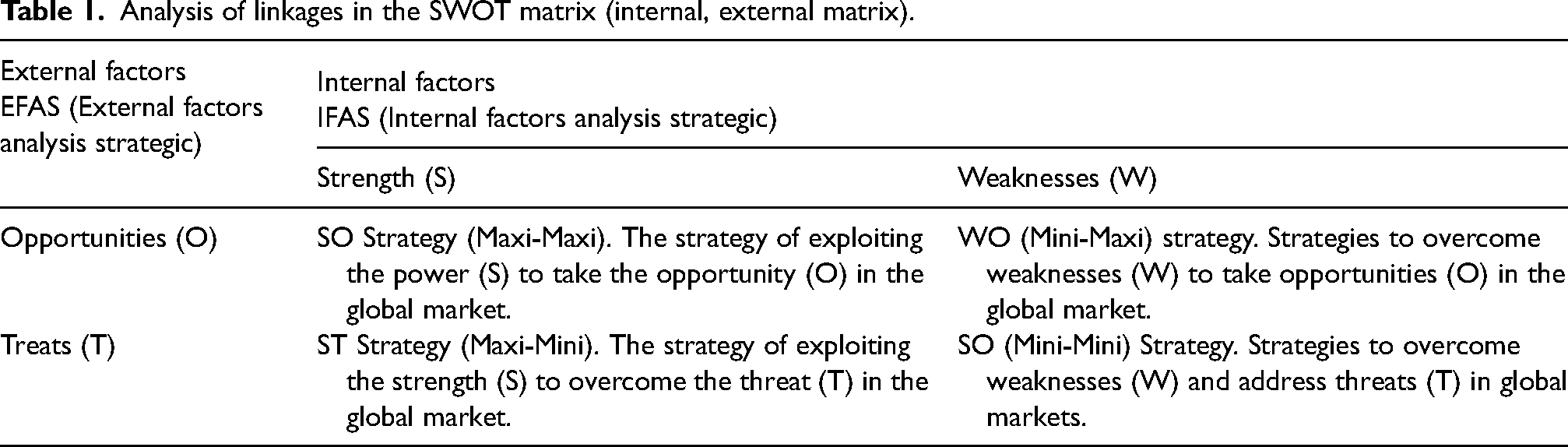
The weight value is obtained based on the result of the weight value multiplied by the rating value. The total value of internal factors, namely strengths and weaknesses (IFAS), is obtained. If the total score is close to 4, the strength is greater than the weakness. If the total score is close to 1, there are more weaknesses than strengths. The total value of external factors or opportunities and threats (EFAS) is also obtained. If the total value is close to 1, there are more threats than opportunities. If the total value is close to 4, it means that there are more opportunities than threats. This combination of internal and external conditions is then entered into the internal external matrix (analysis of linkages in the SWOT matrix) to determine the competitive position that will occur in the nickel industry for electric vehicle batteries being analysed. 80 Based on this position, the most appropriate strategy can be determined to dominate the global market compared to other WTO member nickel-producing countries (Table 1).
Analysis of linkages in the SWOT matrix (internal, external matrix).
Result and discussion
Internal conditions (strengths and weaknesses) of Indonesia’s electric vehicle battery industry
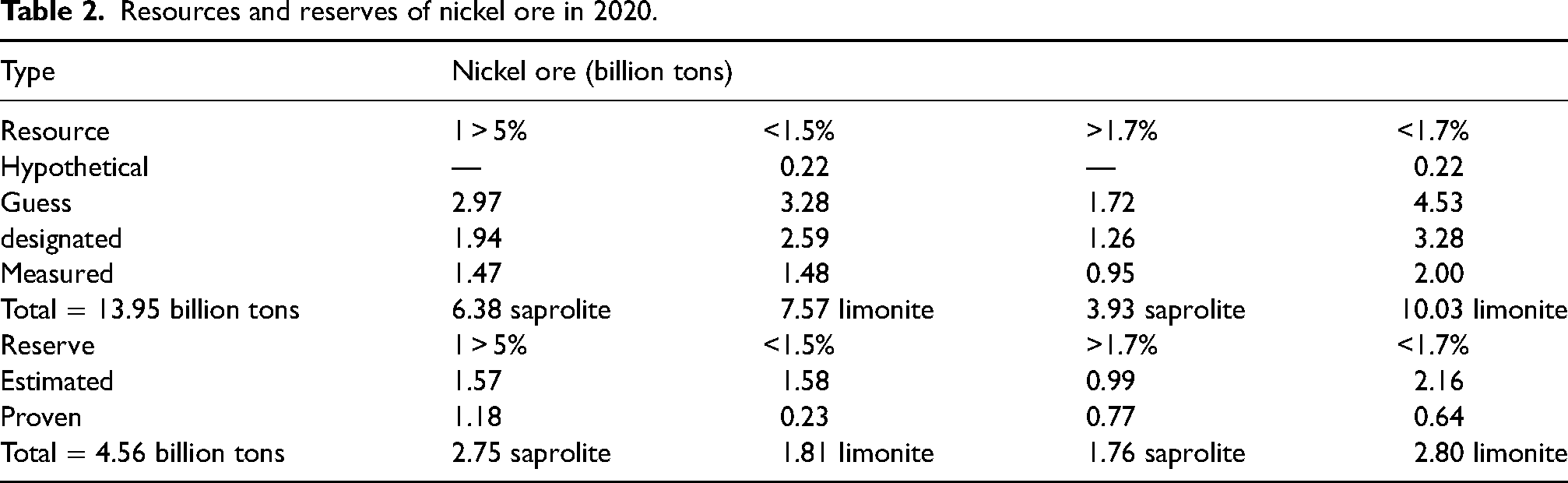
According to the Direktorat Jenderal Mineral dan Batubara, 5 Indonesia’s nickel resources amount to 13.95 billion tons (dominated by saprolite 6.38 billion tons, limonite 7.57 billion tons) and reserves of 4.56 billion tons (dominated by saprolite 2.75 billion tons and limonite 1.81 billion tons). Resources and reserves of limonite as the main raw material for electric vehicle batteries are a big enough force to dominate the global market (Table 2).
Resources and reserves of nickel ore in 2020.
Based on Table 3, Indonesia’s largest reserves are ranked No. 6, while its production occupies the No. 4 position in the world, surpassing New Caledonia and Russia which have reserves ranked No. 2 and No. 4, respectively. Indonesia’s nickel exports mainly consist of nickel pig iron (NPI), nickel matte, and ferrous nickel, with China, South Korea, and Japan being the primary destinations for exports. 81 In 2019 and 2020, Indonesia’s nickel production accounted for an average of 32% and 30% of the world’s nickel production, respectively, as shown in Table 4. Based on the data, 2 although Indonesia has a significant amount of nickel resources and reserves, it lags far behind China, South Korea and Japan in terms of downstream nickel products, which are the largest producers of batteries for electric vehicles. It is worth noting that South Korea and Japan do not have nickel reserves like Indonesia, but they are significant manufacturers of electric vehicle batteries in the world. There are seven electric vehicle battery manufacturers that dominate the world market, including Contemporary Amperex Technology (CATL), BYD Qinchuan, China Lithium Battery Technology from China, LG Energy Solution, SK Innovation, Samsung from South Korea and Panasonic from Japan.
World nickel reserves, 2023 (million tons).
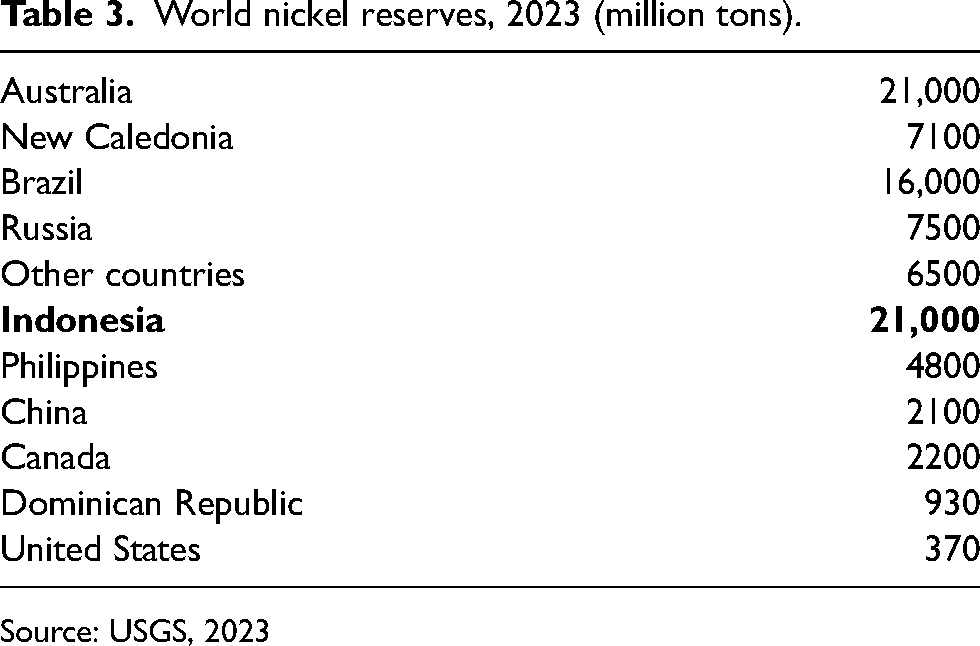
Source: USGS, 2023
Supply and demand for nickel metal in Indonesia and several other countries 2016–2020.
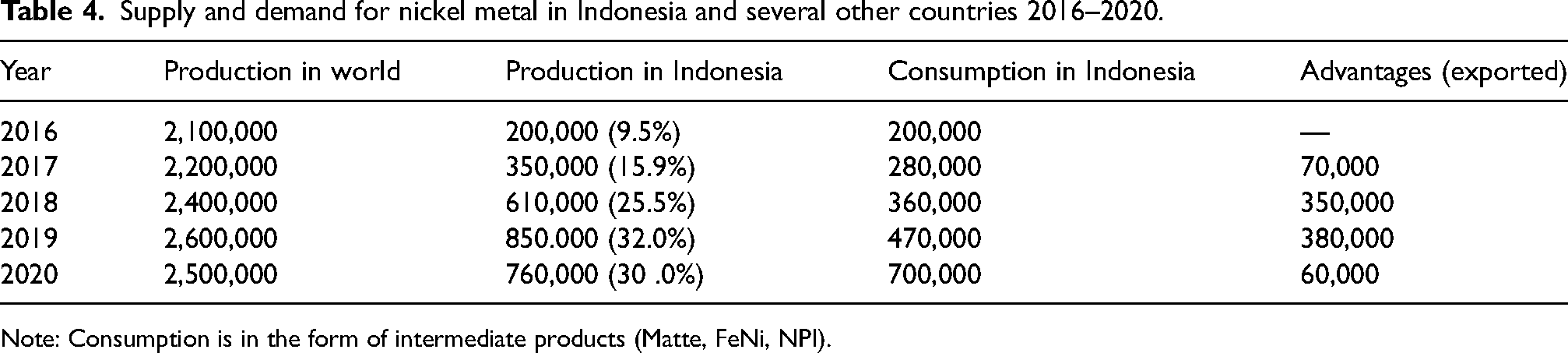
Note: Consumption is in the form of intermediate products (Matte, FeNi, NPI).
During the period of 2009–2020, Indonesia extensively mined nickel ore, with most of it being exported to the global market, especially to China. As shown in Table 5, Indonesia’s nickel ore production during this period averaged 33.83 million tons per year, with an average export volume of 27.02 million tons per year. The high price of nickel during this period was due to the prohibition on Indonesian nickel ore producers from exporting in the form of ore, causing a shortage of nickel in the market (Law No. 4 of 2019 in conjunction with Law No. 3 of 2020 on Minerals and Coal). The increase in export volume is believed to be due to the excess supply of nickel for the domestic market that was not fully absorbed by the downstream industry.
Nickel ore production and Indonesian nickel ore exports 2009–2020.
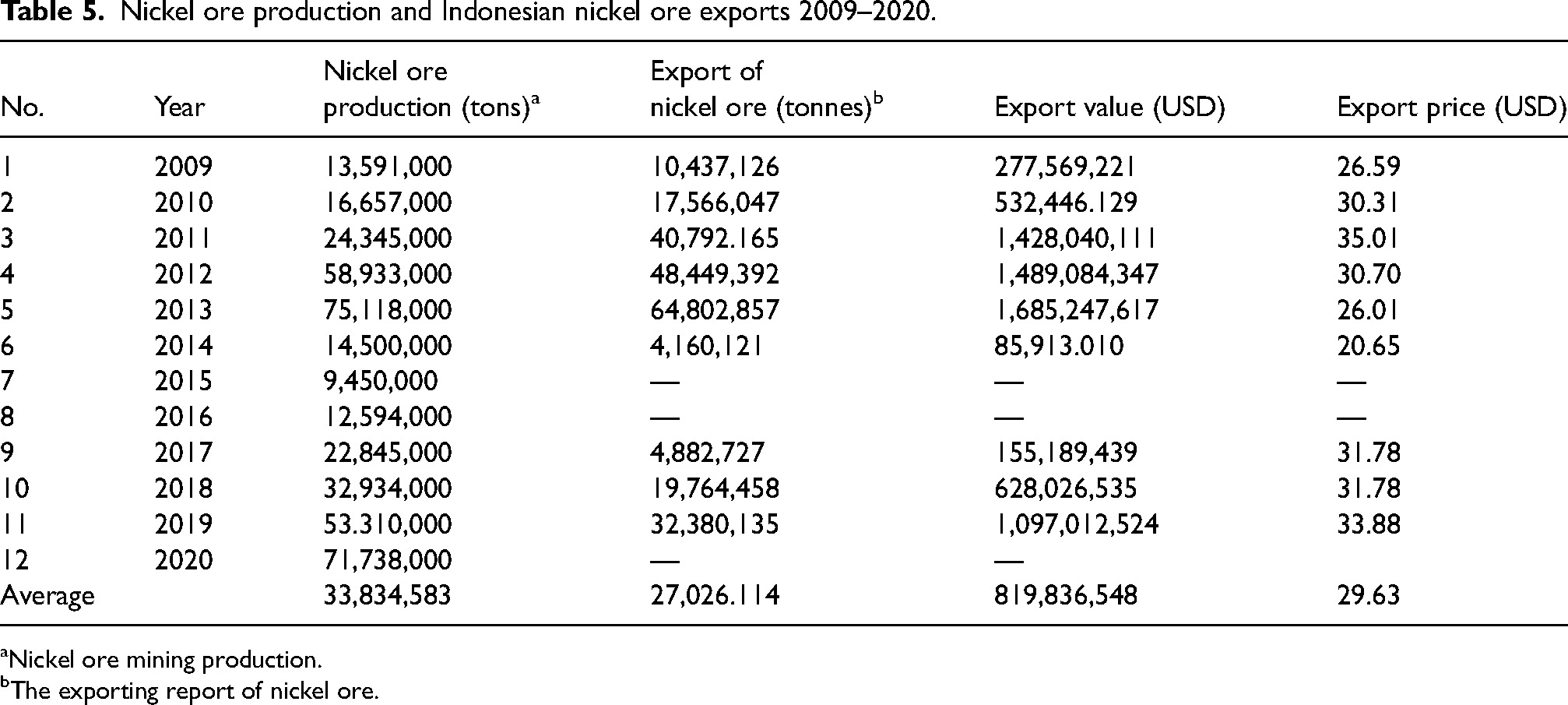
Nickel ore mining production.
The exporting report of nickel ore.
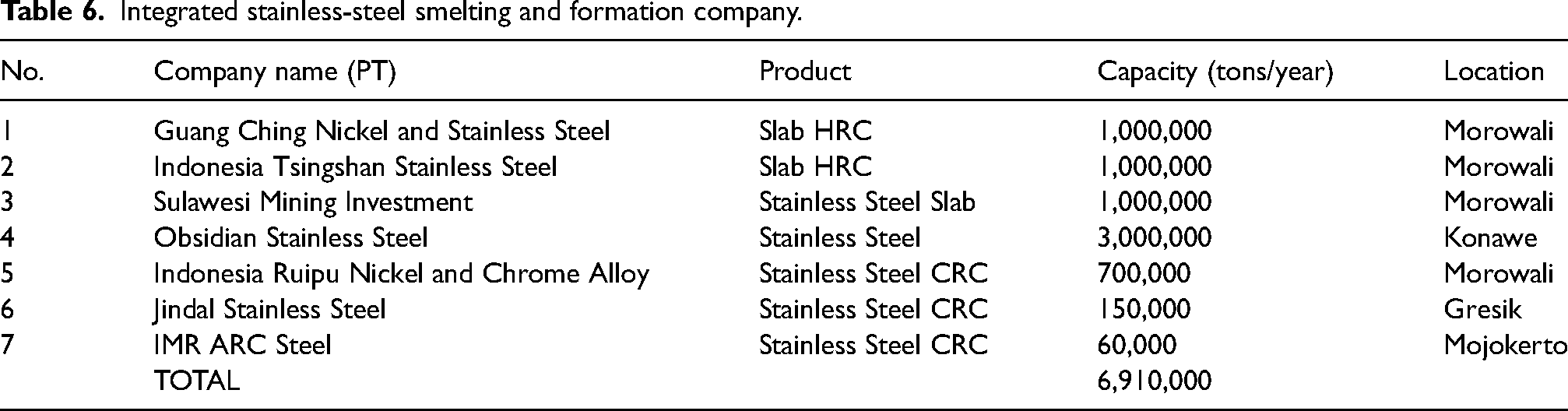
During the 2009–2020 period, there was a significant decline in exports in 2014–2017. The decline in exports is in line with the enactment of Law no. 4 of 2009 (Law No. 3 of 2020) to prohibit the export of nickel in the form of ore and must be processed and purified before being exported. Data from the shows that the increase in domestic consumption of nickel intermediate products (NPI, Matte and FeNi) from 200 thousand tons in 2016 to 760 thousand tons in 2020, is due to the operation of stainless-steel factories that require the nickel raw material which continues to increase every year (Table 6). 5
Integrated stainless-steel smelting and formation company.
Indonesia also has a large population, with most of its citizens being of working age. These two factors make Indonesia a potential market in the eyes of investors. Indonesia is projected to enjoy a ‘demographic bonus’ in the period between 2015 and 2030, where the number of productive populations exceeds the number of non-productive populations, leading to an increase in domestic consumption. 62 In 2021, Indonesia’s population is expected to reach 272.68 million, accounting for 3.49% of the world’s total population, making it the fourth most populous country in the world, after China (1.45 billion people, 18.47% of the world), India (1.40 billion people, 17.70% of the world) and the United States (333.89 million people, 4.50% of the world). 81 According to U.S. Geological Survey, Mineral Commodity Summaries, 81 the national economy grew by an average of 3.75% annually in the period between 2015 and 2021, with growth rates of 4.88% in 2015, 5.03% in 2016, 5.07% in 2017, 5.17% in 2018, 5.2% in 2019, −2.7% in 2020 and 3.6% in 2021. In 2020, economic growth was negatively impacted by the COVID-19 outbreak, which caused the entire economy to slow down. The short-term growth of GDP reflects a fairly good development of the national economy. To ensure stability in economic growth, efforts to improve technology, infrastructure and the availability of adequate electrical energy to support all economic activities need to be undertaken. Stable economic growth will be a strong asset for Indonesia in facing the global market, but it all depends on how the government manages it. A conducive investment climate, marked by the large number of investments entering Indonesia in 2022, reaching over Rp. 900 trillion, including 11 investors from the nickel smelter sector for electric vehicle battery raw materials, and 2 major electric battery companies (Contemporary Amperex Technology/CATL and LG Energy Solution), requires preparation from the government and all stakeholders. Based on data from the investment sector, Indonesia has a conducive investment climate. However, the country faces various obstacles in terms of investment. 82 In 2022, the World Bank noted several problems that hindered foreign investment in Indonesia, including problems with the licensing process, management of SNI, expensive and lengthy import processes for export production, inconsistent and conflicting regulations and regional regulations that are often counterproductive to central government regulations regarding user fees and permits. 83 There is no single entity (permanent legal entity) that is accountable for ensuring the government’s priorities, so if there is a problem, they cannot sue/claim other parties in court. In terms of foreign investment (PMA) and share divestment, the impact can be seen in the large number of large nickel smelter mining companies from upstream to downstream which are controlled by foreign parties. In the future, Indonesia’s nickel resources and reserves will run out because nickel is a non-renewable product that is mined on a large scale.
The nickel downstream program is still difficult to implement because Indonesia’s technological development is still far behind countries like China, Japan and South Korea that have succeeded in downstreaming. However, Indonesian human resources have a good ability to master technology because the country has many qualified and professional individuals. Social and security issues in Indonesia remain a concern, as evidenced by frequent social unrest and security situations that cannot be controlled, particularly in nickel-rich provinces like Southeast Sulawesi, Central Sulawesi, South Sulawesi, North Maluku and Maluku. On the other hand, Indonesia is considered to have capabilities and experience that exceed other ASEAN countries when it comes to mining environmental management, reclamation, mine closure and post-mining rehabilitation. 84 The weak competitiveness of the nickel mining sector is due to Indonesia’s tendency to sell nickel in intermediate forms like NPI, Matte and FeNi. The downstream program, which aims to increase nickel’s added value through Law No. 4 concerning Nickel Mining (in conjunction with Law No. 3 of 2020), has not yet been fully implemented, particularly in the nickel metal industry, nickel sulphate, MHP and MSP, which are crucial raw materials for electric vehicle batteries. Entrepreneurs suggest that the lack of infrastructure (such as electricity, docks, roads and ports) is a major barrier to the development of nickel’s added value. Furthermore, Indonesia’s nickel market share is limited to four major countries, with 40% destined for China and the remainder for India, Korea, and Japan. Any economic turmoil or changes in energy policy related to nickel in China could have a significant impact on Indonesia’s nickel mining sector.
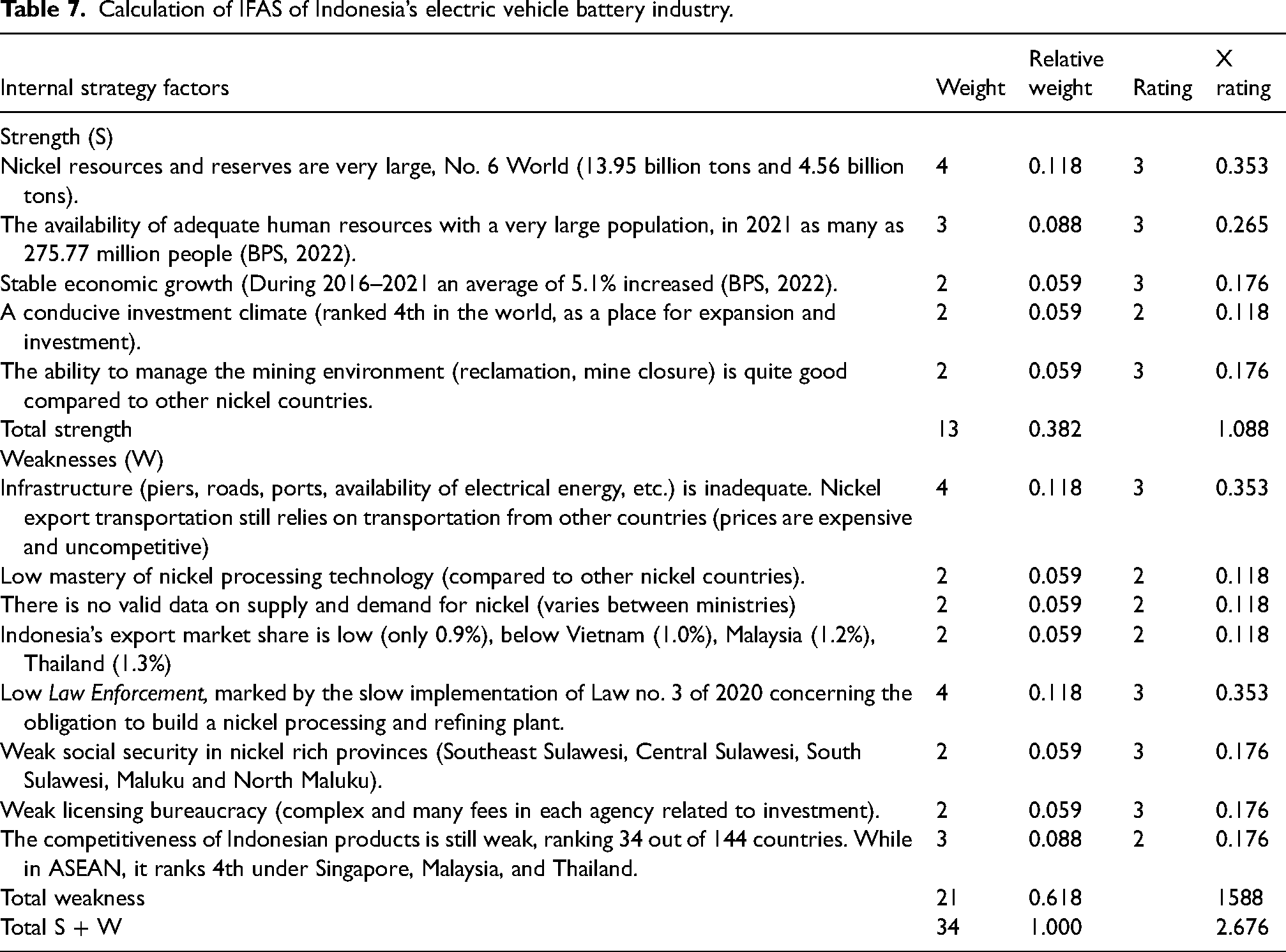
Enforcement of laws related to the nickel smelter mining sector, particularly regarding the handling of processing remainder (SHP) products from pyrometallurgical and hydrometallurgical technology, is weak and has significant environmental implications. The implementation of Law No. 4 of 2001 concerning mineral and coal downstreaming has been weak, with no implementation for more than 13 years, leading to a change in the law with Law No. 3 of 2020. Licensing processes in Indonesia’s bureaucracy are often long and complicated, which hinders attracting investors who want to invest in Indonesia’s electric vehicle battery factories. To address this issue, the government needs to simplify licensing processes. Table 7 includes an analysis of the Indonesian electric vehicle battery industry’s internal environment, providing an overview of its strengths and weaknesses through the internal factors analysis strategic (IFAS) matrix.
Calculation of IFAS of Indonesia’s electric vehicle battery industry.
IFAS analysis results:
Among the total strengths and weaknesses (2676) of Indonesia’s electric vehicle battery industry, it is worth noting that while Indonesia ranks sixth in the world for nickel-cobalt reserves and boasts the fourth-largest pool of human resources (surpassed only by China, India and the United States), the cumulative strength (value at 1.088) falls short when compared to the significant weaknesses (value at 1.588). The strengths of the electric vehicle battery industry are indeed substantial, including ample reserves of nickel–cobalt raw materials (value at 0.53) and a substantial workforce (value at 0.265). However, these strengths are hindered by inadequate infrastructure (value at 0.353), weak law enforcement (weighed at 0.353), and subpar product competitiveness in comparison to other ASEAN countries, falling behind Singapore, Malaysia and Thailand (weighted at 0.176). The competitive edge of electric vehicle battery products is undermined by the fact that the policy for downstream processing of nickel–cobalt until 2022 (Law No. 3 of 2020 concerning Minerals and Coal) has not been fully realised. Therefore, the sector responsible for downstream nickel–cobalt processing, particularly in electric vehicle batteries, must harness its significant strengths and work diligently to address its weaknesses. This effort will enable the Indonesian electric vehicle battery industry to capitalise on substantial opportunities within the global market.
External conditions (opportunities and threats) of Indonesia’s electric vehicle battery industry
External conditions present opportunities for the nickel mining sector in the electric vehicle battery industry, among others. According to the global growth of the electric vehicle automotive industry in the next 13 years will increase even more, with an annual increase (CAGR) of 2.8%. In 2016, there were 92 million total global electric vehicles. 85 This number is projected to increase to 110 million units by 2022 and 145 million units by 2035. As the number of global electric vehicles increases, the need for electric vehicle batteries will also grow. Nickel will dominate the use of electric vehicle batteries in the future due to the depletion of world oil reserves, making nickel a substitute for oil.
In addition to the growing number of electric vehicles worldwide, the Indonesian electric vehicle battery sector can benefit from fluctuating global economic growth. The World Bank projects the global economic growth in 2022 to be 2.9%, which is lower than the previous projection of 4.1%, due to the Russian invasion of Ukraine. 82 The global economy has not yet fully recovered from the impact of COVID-19, which has been exacerbated by the lockdown in China, supply chain disruptions, and the risk of global economic stagflation. The projected economic growth by region in 2022 is as follows: South Asia at 6.8%, East Asia and Pacific at 4.4%, Europe and Central Asia at 2.9%, Latin America and the Caribbean at 2.5%, the Middle East and North Africa at 5.3% and Sub-Saharan Africa at 3.7%. This global economic growth provides opportunities for the development of electric vehicles and the need for electric batteries for energy. Another opportunity is cooperation with developed countries such as China, Japan and South Korea to transfer technology and knowledge regarding battery manufacturing for electric vehicles. This collaboration can increase research and technology efforts as well as investment in the battery sector for electric vehicles. The transfer of technology and knowledge with China, Japan and South Korea is expected to create qualified and professional human resources in the battery sector for electric vehicles and encourage improvements in the allocation of production resources (capital, human resources, machinery) to more productive activities. 86 In addition to various conditions that provide opportunities for the Indonesian electric vehicle battery industry, there are various threats that must be faced, including high levels of competition from countries with the world’s largest nickel reserves (Australia, New Caledonia, Brazil, Russia, South Africa, the Philippines, China, Canada, Madagascar, Columbia, Dominica and the USA).
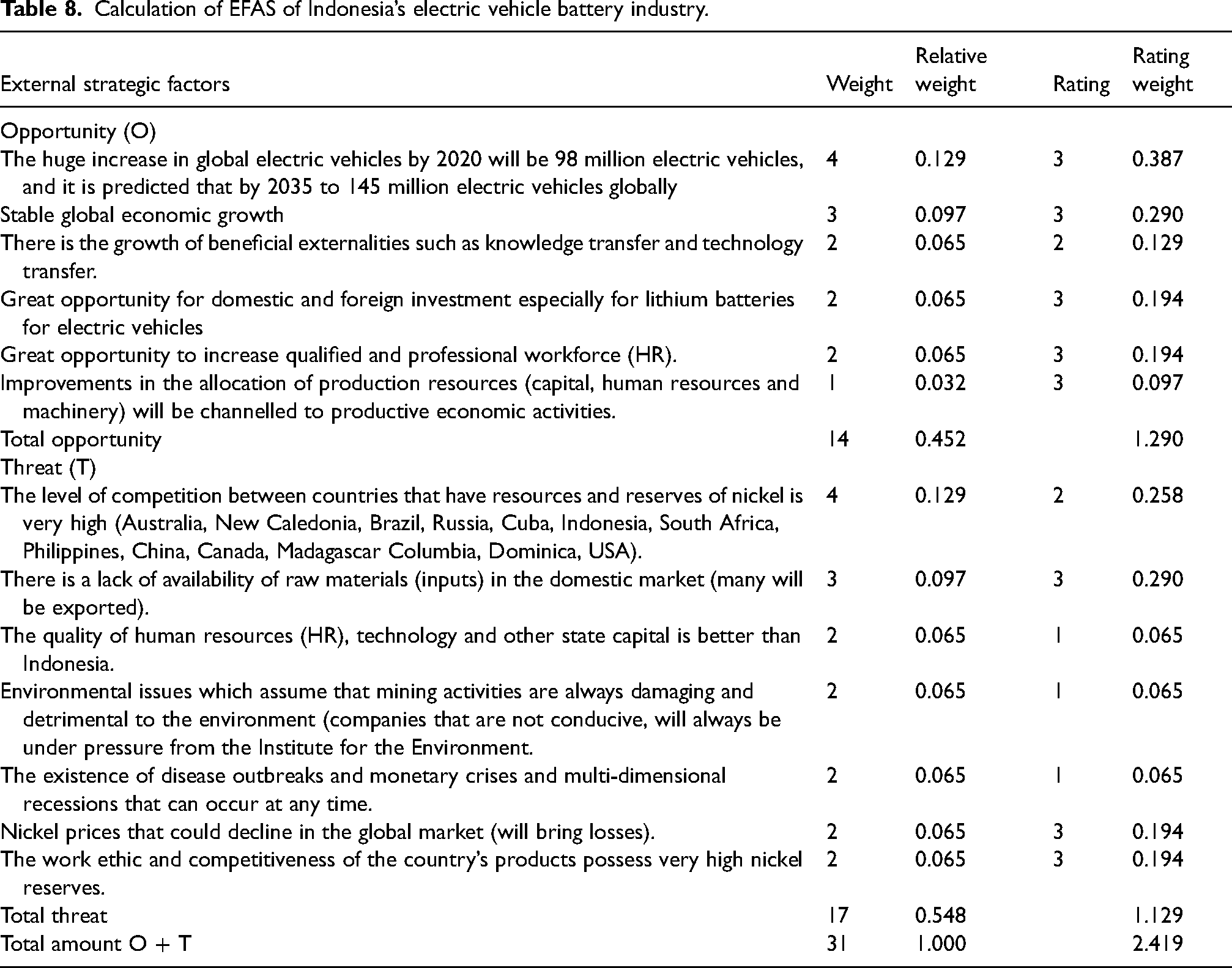
Other threats include a shortage of raw materials for electric vehicle batteries in the future due to large-scale nickel mining, the quality of human resources and technology, as well as capital from countries with more developed nickel reserves. Environmental issues assume that mining activities always damage and harm the environment. Additionally, the existence of disease outbreaks and monetary crises, as well as multidimensional economic recessions, can occur at any time. The price of nickel and electric vehicle batteries could decline in the global market, and the competitiveness of countries with nickel reserves higher than Indonesia’s could pose a threat. The global market can eventually become an opportunity or a threat for Indonesian electric vehicle batteries and may even interfere with national interests. Foreign parties can influence the formulation of domestic policies regarding building electric vehicle battery factories. All calculations from the external environment (which provide an overview of opportunities and threats) of the Indonesian electric vehicle battery industry are analysed in the external factors analysis strategic (EFAS) matrix in Table 8.
Calculation of EFAS of Indonesia’s electric vehicle battery industry.
EFAS analysis results:
Among the total opportunities and threats (2419) facing the Indonesian electric vehicle battery industry, it is evident that Indonesia possesses substantial opportunities (value at 1290) in comparison to its threats (value at 1129). The Indonesian electric vehicle battery industry is presented with significant opportunities, including the projected surge in electric vehicle adoption in the near future (value at 0.387), a considerable opening for investments in electric vehicle batteries (value at 0.194) and a substantial chance to enhance the quality of its workforce (value at 0.194). The government is urged to maximise the utilisation of these opportunities, especially considering the looming threats in the global electric vehicle battery market. These threats encompass intense competition from 14 countries that possess the world’s nickel-cobalt reserves (value at 0.258), the peril of raw material shortages due to extensive nickel-cobalt mining (value at 0.290), the challenge of heightened labour and product competitiveness from rival nations (value at 0.194) and the risk associated with the advanced Human Resources and technology of competing countries (value at 0.065).
SWOT analysis results (IFAS and EFAS analysis)
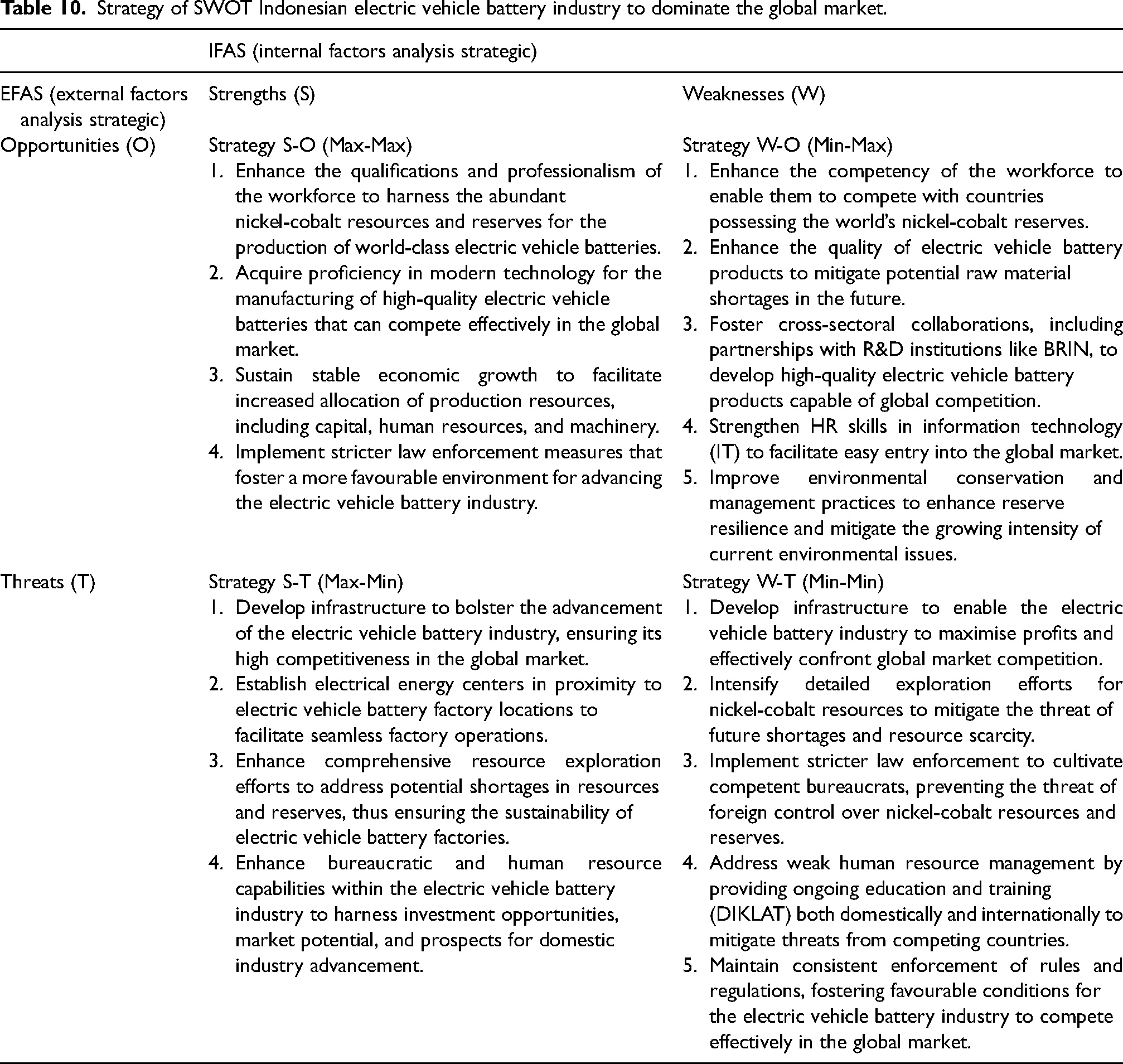
From the calculation of the internal environmental component matrix or IFAS (Appendix 1) and the calculation of the external environmental component matrix or EFAS (Appendix 2), various strategic policies are produced that must be taken by the government, so that the vehicle battery industry Indonesian electricity, can dominate the global electric vehicle battery market, including the S–O Strategy (Maxi–Maxi), W–O Strategy (Mini–Maxi), S–T Strategy (Maxi–Mini) and W–T Strategy (Mini–Mini). From internal–external factors and very high, medium and low scales, the position of the Indonesian electric vehicle battery industry in the global market from the analysis results can be summarised, including from internal conditions (total strengths are smaller than total weaknesses = minus weight value 0.500), from external conditions (total opportunities greater than threats = weight value 0.161) based on Table 9. From the results of the SWOT analysis, all the strategies that the Indonesian government must take so that nickel–cobalt mining as a raw material for the electric vehicle battery industry can dominate the global market, or the global electric battery industry supply chain, are summarised in Table 10.
Internal and external factors valuation.

Strategy of SWOT Indonesian electric vehicle battery industry to dominate the global market.
Conclusion
In the near future, the global electric vehicle industry is projected to grow significantly, with an estimated 145 million electric vehicles on the road by 2035. This shift is being driven by advancements in battery storage technology. As the world transitions from fossil fuel-powered vehicles to electric ones, there will be a substantial demand for nickel and cobalt, essential raw materials for electric vehicle batteries. Indonesia, as a major holder of nickel and cobalt reserves, is well-positioned to benefit from this green energy trend. SWOT analysis highlights Indonesia’s potential as a global electric vehicle battery producer. Its strengths include having the world’s 6th largest nickel-cobalt reserves (4.56 billion tons), a sizable population, stable economic growth despite the COVID-19 impact, a favourable investment climate, and effective environmental management. To realise this potential, Indonesia must address weaknesses and mitigate threats from other nickel–cobalt-rich nations. This involves improving infrastructure, technology mastery, the workforce’s work ethic, law enforcement, bureaucracy efficiency, product competitiveness, resource data accuracy, social security and preparedness for global economic challenges like monetary crises, disease outbreaks and fluctuating nickel-cobalt prices.
As the owner of the world’s No. 6 nickel reserves for electric vehicle batteries, with abundant human resources, stable economic growth and a conducive investment climate, Indonesia holds an important position in the supply and demand competition, as well as in battery and battery prices in the global electric vehicle battery market. Moreover, it could dominate the global electric vehicle battery supply chain by implementing the SO strategy, which aims to utilise its strengths (S) to take advantage of the significant opportunities (O) presented by the global electric vehicle battery market. The transfer of HPAL (high-pressure acid leaching) hydrometallurgical technology to produce electric vehicle battery raw materials, such as MHP, MSP, nickel powder and nickel sulphate can be accomplished through collaboration with China, Japan and South Korea, the world’s largest producer of electric vehicle batteries. Therefore, Indonesia’s nickel mining is expected to be more competitive than other nickel-producing countries among WTO member countries. The strategy that needs to be implemented is the WO strategy, which aims to address all the weaknesses (W) while taking advantage of significant opportunities (O) from the global electric vehicle battery market.
Footnotes
Acknowledgements
The authors gratefully acknowledge the support of the Research Center of Mining Technology-National Research and Innovation Agency of Indonesia for the research facilities. The authors would like to thank Mr. Fathan Bahfie as a promotor of this research.
Declaration of conflicting interests
The authors declared no potential conflicts of interest with respect to the research, authorship, and/or publication of this article.
Funding
The author(s) disclosed receipt of the following financial support for the research, authorship, and/or publication of this article: The authors would like to acknowledge the Organization of Nanotechnology and Material, National Research and Innovation Agency of Indonesia, for providing funds and contract no. B-626/III.10/PR.03.06/2/2023.