




Abstract
Background
Perinatal loss is a deeply emotional experience that impacts both parents. Yet, much of the literature is skewed toward women to the neglect of Black men whose experiences may be intertwined with masculine expectations.
Purpose
The purpose of this study was to explore the experiences of Black Canadian men navigating perinatal loss and masculine expectations.
Methods and Procedures
An exploratory descriptive qualitative design was used, and a semi-structured interview was conducted with thirteen Black men whose partners experienced perinatal loss. Data was analyzed using thematic analysis.
Results
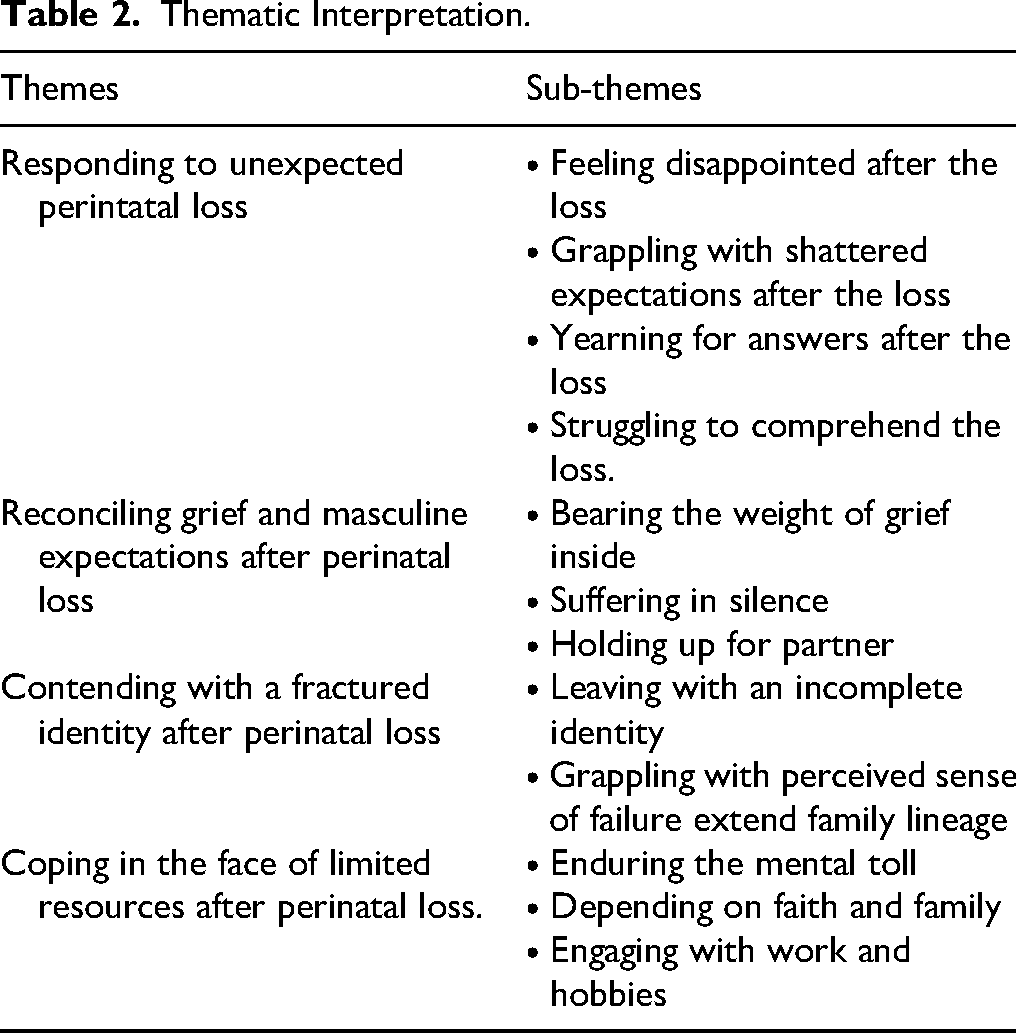
Four key themes capturing the experiences of thirteen Black Canadian men were identified a) responding to unexpected perinatal loss, b) reconciling grief and masculine expectations after perinatal loss, c) contending with a fractured identity after perinatal loss, and d) coping in the face of limited resources after perinatal loss. These themes and their sub-themes highlight the challenges Black Canadian men face navigating perinatal loss in the context of masculine expectations.
Conclusion
Black men's experiences of navigating grief after pregnancy are influenced and shaped by masculine expectations as well as cultural norms and beliefs. This study underscores the need for broader and culturally responsive grief support and counseling programs that address the cultural nuances surrounding grief after perinatal loss.
Background
Perinatal loss profoundly impacts both expectant women and men, yet the experiences of men remain underexplored in literature. It has been widely documented that the feminization of perinatal loss is a significant contributor to the lack of acknowledgement, invalidation, and marginalization of male partners’ experiences within the healthcare system and wider society (Burrow, 2024; McCreight, 2004; Miller et al., 2019; Williams et al., 2020; Zinner, 2000). This invisibility, in turn, affects the availability and access to formal and informal grief programs and support for men coping with perinatal loss (Aeschlimann et al., 2024; Jones et al., 2019; Obst & Due, 2019; Story Chavez et al., 2019). Evidence of this can be seen in Canada, as grief support services are widely available but predominantly tailored to women. Even where such support for men exists, it is unclear whether it considers the ways masculine expectations and cultural norms affect how men from different ethnoracial background process and respond to perinatal loss. Thus, the experiences of men navigating perinatal loss in the Canadian context remain a significant gap, warranting an investigation.
While the grief after perinatal loss may affect all men, the degree of impact varies based on the individual's socio-cultural context. For Black men, grief after perinatal loss can be intensified by masculinity expectations, dominant stereotypes about Black men, and cultural norms that exist within communities. Perinatal loss has been predominantly framed as a woman's issue to the complete neglect of male partners, especially Black men, whose grief experiences intersect with their gender, racial, and cultural identity (Boyden et al., 2014; Lekuti, 2020; Moore et al., 2022; Simonson et al., 2024). Traditionally, Black men have been socialized to show emotional restraint, a characteristic of their masculine identity that may discourage them from expressing grief (Allen, 2015; Johnson, 2019; Laurie & Neimeyer, 2008). This is compounded by racial stereotypes that portray Black men as stoic, emotionally resilient, and immune to pain interfere with Black men's ability to express emotional vulnerability and grief (Dean, 2021; Ellis, 2025; Granek & Peleg-Sagy, 2017). These experiences contrubutes to an internal struggle of reconciling their grief while attempting to conform to masculine and societal expectations (Bonnette & Broom, 2012; Boyden et al., 2014; Laurie & Neimeyer, 2008). This internal struggle, coupled with the already limited access to grief support may lead to Black men feeling disenfranchised and alienated in the grieving process.
The transition to fatherhood is a vital part of men's identity, providing them with a sense of purpose as they perceive their role as protectors, providers, and leaders within their family (Bitalo et al., 2024; Boyden et al., 2014; Cooper et al., 2021). As a result, fathers develop a strong connection with their unborn child, and this is often informed by their shared experiences with the partner's pregnancy journey and increased anticipation of welcoming a child (Borg Cunen et al., 2022; Lagarto & Duaso, 2022; McGarva-Collins et al., 2024; Mota et al., 2023). For some Black men, aspirations of fatherhood are deeply connected to the preservation of family legacy (Bitalo et al., 2024). Thus, the loss of a pregnancy can be particularly impactful for Black men, as it may challenge these deeply held aspects of their identity.
The shift from anticipating a child's arrival to coping with the death elicits a wide range of grief responses including, shock, sadness, helplessness, hopelessness, dissatisfaction, and a sense of emptiness (Armstrong, 2001; Aydin & Kabukcuoğlu, 2021; Berry et al., 2021; Blocksidge et al., 2025; O’ Leary & Thorwick, 2006; Mota et al., 2023; Story Chavez et al., 2019). Although grieving over a perinatal loss is a natural process, the lack of men-focused grief support to help them manage and cope can complicate and prolong the grieving process (Kersting & Wagner, 2012; Mughal et al., 2023; Obst et al., 2020; Zhang et al., 2024), thereby interfering with their daily functioning. These experiences can result in disenfranchised grief, which, in turn, may heighten the risk of depression, anxiety, and substance abuse among affected individuals (Due et al., 2017; Harty et al., 2022; Jones et al., 2019).
In Canada, very little is known about the unique experiences of Black men after perinatal loss. These gaps in knowledge hinder the understanding of how masculine ideals and cultural beliefs shape the way Black Canadian men respond to perinatal loss, process the grief, and the challenges they face in navigating for support. Given the broader influences that marginalize men's grief and the limited availability of support, it is important to understand the experiences of Black Canadian men. Therefore, this study explored the experiences of Black Canadian men navigating perinatal loss and masculine expectations. By focusing on Black Canadian men, our study contributes to addressing the existing knowledge gaps to inform the development and integration of culturally responsive and inclusive grief programs within nursing care to support and promote their well-being after perinatal loss.
Methods and Procedures
Study Design
We conducted a qualitative descriptive study with 13 men who self-identified as Black and resided in Canada. Qualitative descriptive design is relevant not only for capturing the unique and subjective experiences and perspectives of individuals but also for providing the insights needed to inform the development of programs and interventions (Neergaard et al., 2009; Sandelowski, 2010).
Data Collection
This study is linked to a larger study exploring the experiences of Black Canadian women and men following perinatal loss who were recruited from the Greater Toronto Area (GTA). According to Statistics Canada, the GTA is home to more than half of Canada's Black population (Statistics Canada, 2021). Our conceptualization of perinatal loss is based on Public Health Aegncy of Canada's (2020) definition, and this encompasses “infertility during the preconception period, fetal death during pregnancy (miscarriage, ectopic pregnancy, induced abortion, and stillbirth), and infant death in the first year of life (neonatal or post-neonatal death)”. Before the interview, participants were asked to complete a brief demographic questionnaire that was shared via a google form. Initially, we were aiming to recruit Black Canadian men who had experienced perinatal loss. Still, only two people responded to our widely circulated flier via Black community groups and associations, as well as faith-based groups, including churches. As a result, while interviewing the women as part of the larger study, we asked them to share our flier with their partners, and 11 male partners responded to join the study, in addition to the two who responded earlier. Hence, a total of 13 Black men were interviewed. We used a semi-structured in-depth interview guide to explore the experiences of Black Canadian men. PB and NP conducted the interviews, while FD and OA took notes. We began the interviews by asking participants to share their experiences of perinatal loss using open-ended questions, and we used additional probing questions based on participants’ responses to elicit for more information and to explore the meaning of their experiences. The duration of the interview lasted between 30–60 min and was conducted between March and May 2024. All interviews were conducted virtually and recorded using a digital audio recorder. Participants were provided with a CAD $50 gift card as a token of appreciation for volunteering to share their experiences.
Data Analysis
Aligning with our methodology, we used Braun and Clarke (2021) thematic analysis to interpret and to generate themes from the data. Thematic analysis is well suited for uncovering and illuminating contextual influences shaping participants’ experiences (Braun & Clarke, 2021). We started the analysis by reviewing the audio recording after each interview to gain analytical insight, which was then used to inform and refine subsequent interviews. After transcription was completed, three members of the research team (PB, NP, and FD) engaged with the initial process by immersing ourselves in the data through multiple readings of each transcript and writing down our initial impressions. Alongside reading the transcripts, we generated codes and met as a team to review them for consistency. To resolve any discrepancies, we defined and reviewed our coding frame, then met as a team to compare our interpretations and to reach consensus. We merged and collapsed some codes to eliminate redundancy and maintain coherence within our coding frame. For the codes that we had disagreements with, we deferred to in-vivo coding based on the actual words used by participants.
Subsequently, the three coders assigned codes to segments of the remaining dataset as they relate to our research question. After data coding was completed, we moved to the next phase: grouping the codes into broader themes based on the pattern in the data. We named these initial themes and reviewed them for consistency to ensure that they are directly drawn from the data. The themes were reviewed and refined by the team members to determine their relevance and meaning in relation to the purpose of our research. We extracted segments of the data to illustrate and support each theme. PB and FD with support from OT and DM, created a written narrative to convey the findings and our interpretation, offering meaningful insights into the experiences of Black Canadian men navigating perinatal loss.
We recognized that our background as Black women, scholars, and nurses, along with our shared values and beliefs may have influenced how we collected, analyzed, and interpreted the data. To minimize this influence, we actively engage in reflexivity by documenting our preconceptions to ensure they do not obscure how we interpreted and made sense of the data. We also met frequently during the analysis phase to reflect on our interpretations to ensure they stayed close to the data. We maintained an audit trail of our data coding and analysis, and we met frequently as a team to debrief and to discuss our interpretations.
Ethical Consideration
This study was approved by Toronto Metropolitan University Research Ethics Board (REB 2023-374). Written informed consent was obtained from the participants after they carefully reviewed the details outlined in the form. The consent form was shared with eligible participants by DM via a secure Google form licensed by Toronto Metropolitan University three days prior to their interview, for them to review and to ask questions should they need clarification. The consent form included a brief description of the study, the rights of research participants, confidentiality, benefits, and risks of participating. We were also cognizant of how distressing it might be for participants to recall their experiences; therefore, we included contact information and links to organizations that offer grief support on the consent form. After transcription was completed, the audio recordings were erased, and the transcripts were anonymized and stored securely on an institutional repository located at Toronto Metropolitan University.
Results
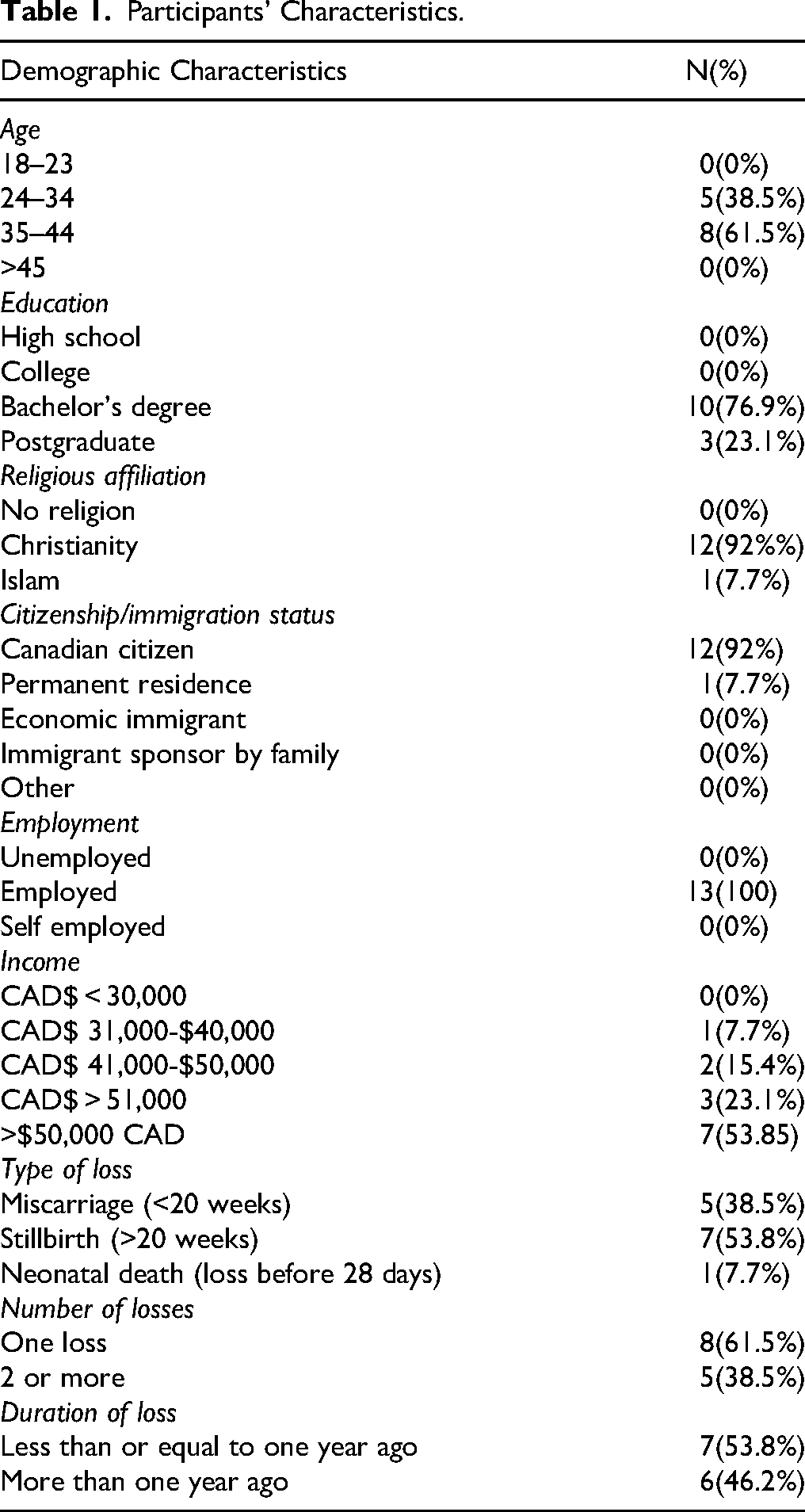
Table 1 provides a descriptive characteristic of the participants. Four themes capturing the unique experiences of 13 Black Canadian men include: 1) responding to an unexpected perinatal loss, 2) reconciling grief and masculine expectations after perinatal loss, 3) contending with a fractured identity after perinatal loss, and 4) coping in the face of limited resources after perinatal loss. The themes, along with their sub-themes, are discussed below and supported with exemplary quotes to illustrate their meaning (Table 2).
Participants’ Characteristics.
Thematic Interpretation.
Responding to Unexpected Perinatal Loss
Feeling Disappointed After the Loss
Participants expressed their disappointment after the demise of an expected child. For many of the participants, perinatal loss does not only symbolize the end of an expected child but also signifies the sudden loss of a long-held hope of starting a family. In recounting his experience after losing a pregnancy, one participant stated: Losing a pregnancy is not good because you lose hope. It feels like under the sun again and it's a bunch of feelings, disappointment, and anger. You feel like you've wasted something because all the while we have been going to clinics, visiting an OB and all the way you're hoping for the best. And then suddenly, all of your efforts just go down. So, it makes it feel like it's not worth it and it's very disappointing. [Participant 4, Miscarriage]
In sharing similar sentiments, another participant noted: “I must confess it was very disappointing…when we found out when we had the miscarriage, it was very disappointing, and it is like my efforts were futile investments. It made me angry and bitter” [Participant 3, Miscarriage]. One participant also described a heightened sense of failure for being unable to prevent the loss. I was disappointed, totally disappointed. I’m totally angry. I had a lot of stuff going on in my mind. I felt helpless and I asked myself what could I have been done to prevent it from happening. It is like I have failed. You have this guilt. You know, at first, I had a lot of questions. In my mind I was like whose fault. Was it my partner's fault? Was it medical reasons or it just happen naturally? [Participant 5, Stillbirth]
The burden of being unable to protect their partner and the expectant baby triggered a sense of guilt and left participants asking questions as they attempted to make sense of the loss and find closure.
Grappling with Shattered Expectations After the Loss
Participants describe feeling devastated after losing their expected child. This sense of devastation stems from the anticipation of fatherhood, along with the deep emotional connection that many of these participants had with their unborn baby. Many described their hopes and dreams of nurturing a child were suddenly replaced by a deep sense of loss. A participant narrated: It was a very sad period for me as an expectant father. Already I have a lot of imagination of having my baby. And when all that happened it was just like a dream being cut short for me. So personally, it was not a nice experience. Sometimes I just wish I could just forget it easily. [Participant 5, Stillbirth]
Another participant also narrated how he felt shattered and defeated after the demise of his unborn baby: “I felt crushed. I was devastated. I felt crushed emotionally, physically and even spiritually. I didn't know if I could come out of this situation because this is not what I was expecting” [Participant 2, Stillbirth]. The anticipation of welcoming a child also had a spiritual meaning for some participants. This spiritual connection, inspired by their hope of bringing about life invoked a sense of purpose. Thus, for Participant 4 [Miscarriage], “the loss made me feel empty. It is like I lost purpose.” Perinatal loss created a deep sense of void, leaving some to question their purpose in life.
Yearning for Answers After the Loss
Participants described longing for answers after perinatal loss as they struggled to make sense of the unfolding reality. The desire to search for answers about the loss led participants to project blame onto others. Such accusations, fueled by deep grief and a profound sense of helplessness, led some participants to question what their partners might have done wrong. A participant recounted: I blamed it on her, and I was like, “what did you do wrong? I asked her what the problem was. I felt that there was something she was supposed to do or something she didn't really do that caused it to happen…I am playing a blame game and trying to blame someone. It's easier to blame someone than to really face reality. I realized I was trying to put the blame rather than supporting her. [Participant 8, Stillbirth]
Participants acknowledged that rather than channeling their efforts to help their partners manage and cope with the grief, their ability to express such support was obscured by their intense desire to find answers. However, not all participants blame their partners for the loss. Two participants shared their experiences of how the perinatal loss fostered a mutual bond between them and their partners. I had to always keep a positive attitude while trying not to blame her. I stayed away from working to console her. We mutually bonded during that period. [Participant 7, Miscarriage] During the time we were going through that grief I can say we became very close. I was there for her, and it created a closer bond with my wife… I did not want to blame her, and I wanted to also be there for my wife… You know, when things like this happen you want to know the reasons because you will be asking many questions, and so if you don’t take time, you will blame her [Participant 6, Miscarriage]
By acknowledging their shared sense of their loss and grief, it diminished the possibility of blame and fostered a deep sense of empathy and emotional connection as they try to support each other.
Struggling to Comprehend the Loss
Participants described the struggle they experienced coming to terms with the loss. The anticipation of becoming a father, along with the plans and future they had envisioned, created a disconnect for many as they struggled to accept the unfolding loss. This disconnect contributed to delay in accepting the loss. A participant narrated. I wasn't ready to accept the loss because I had already made plans. We had already gone shopping for the baby and bought clothes. Like we were already fully prepared, we moved into a bigger house where we will be more comfortable. And suddenly you lose the baby, so I was not ready to accept that the baby was gone just like that. [Participant 1, Stillbirth]
Another also described his feelings: I thought it was just a dream. I thought it was not real. I never believed it was real. For days I still thought it was a dream, and I didn't believe the situation. I was speechless and I didn't know what to do. I was so sad that I couldn't even say anything during that moment. Like it was unbelievable. It took some months before I could actually accept that. [Participant 11, Stillbirth]
These reactions may have enabled participants to defer their grief and pain rather than confronting it. A participant noted that although “it was hard accepting that my wife lost the baby…I discovered that there's not much I could do to bring the baby back. So, I had to accept the situation so I can move on” [Participant 5, Stillbirth]. Such recognition enabled participants to process their pain in a meaningful way, creating a pathway for them to heal and move forward.
Reconciling Grief and Masculine Expectations After Perinatal Loss
Bearing the Weight of Grief Inside
Participants described the struggle they encountered in expressing their emotions and grief openly. The internalization of masculine norms and expectations led to some participants feeling pressured to conceal their grief. A participant recounted the pressure to show strength in the face of vulnerability, which made it difficult to express his grief. I felt that pressure…. like feeling you are the man. I am grieving but I do not have to break down emotionally in front of people or relatives…I always feel like I should not break down in front of people. So, I always kept everything inside. I'm grieving inside but outside I'm showing a normal face. Inside I really felt very down but it was hard to express that grief whenever I was around people. [Participant 6, Miscarriage]
Another participant shared how he concealed his emotions to avoid being seen as weak. I also broke down and I also felt pain, but I didn't let her see that side of me. I didn't want her to know I have a weakness or pain because I was going through for her. I was trying to keep the hurt and pain inside of me. I do not want to break down if I am trying to make her heal so I try to hide my pain. [Participant 13, Stillbirth]
For many of the participants, there was an expectation to remain stoic as a way of showing support for their partner; thus, emotionally expressing their grief meant that they had failed in their role. Nearly all participants attributed the decision to remain stoic to internalized beliefs about masculinity. I was trying to cover up as a Black man. Growing up in our homes we are told men don't cry. That's the first thing I'm sure you even tell your boys if you have them. Men are not supposed to cry and show emotions. Man is a man sort of thing…We Black men don't like talking about our grief and we try to suck it all in inside us like try to conceal it inside of us. We usually don't talk our emotions out and it is like talking about our issues makes us look weak in a way. So, you have this fear that you don’t want to be seen as weak. [Participant 1, Stillbirth]
For many of these participants, showing emotion was deemed as a sign of weakness and being less masculine, and therefore to conform and avoid being labeled, they had to conceal their grief.
Suffering in Silence
Participants described feeling hesitant to openly discuss their feelings and emotions after experiencing perinatal loss. This preference to keep things to themselves reflects the internalized cultural norms of masculinity, which discouraged participants from sharing their experiences even with those who are closer to them. As one participant stated, “I don't like to share things with a lot of people. I love to keep things to myself.” [Participant 11, Stillbirth]. Another felt that the lack of understanding about their grief made it difficult to openly share their feelings. At some point I felt they didn't really understand. I always feel that grief is personal. We are going through the same thing, but I process it differently, you process the same situation differently. I always felt there's no point in talking about it. [Participant 2, Stillbirth]
A participant also recounted that “the stereotype that men should feel strong…just made me feel it was hard for me to talk about my feelings in front of my relatives and family members” [Participant 5, Stillbirth]. Some participants intentionally avoided discussing their grief with their family as a way of escaping the grief. I didn’t really want to bring up the subject of my loss. So, I didn’t really want to participate in topics that had to do with grieving. And my family really understands that those kinds of topics are not what we should bring up in such situations. So, we didn’t really talk much about the grieving, all we were trying to do was try to get out of the grief, not bring us deeper into the grieving aspect. [Participant 12, Miscarriage]
Holding up for Partner
Participants held the belief that maintaining stability and assuming a protective role was an inherent part of their masculine identity. Thus, they prioritized the emotional needs of their partners over their own as a way of expressing their support and love. A participant recounted that “as a man, I tried to be my strongest person for my partner to be strong too. So, I had to try to be the man and comfort her and try to make her feel loved” [Participant 1, Stillbirth]. In re-echoing the sentiment of others, two participants narrated that portraying strength was a way of demonstrating responsibility. I just have to understand that I am the head of the family and if I don’t support her no other person is gonna do it… I need to be a pillar for my family… so I swallow my own grief so my wife could have a shoulder to lean on. It is definitely a sacrifice you have to make as the head of the family. I definitely have to suppress my own emotions or deprive myself of the chance of grieving more so that I could be a support system for her. [Participant 5, Stillbirth] I felt there was a need to be strong, especially whenever I was with my wife because I should be my wife's support. So, because I understood that responsibility, I had to pretend I was very strong just so that she could be comfortable. [Participant 1, Stillbirth]
This perceived sense of duty demanded that they channel their effort toward comforting and supporting their partners rather than focusing on their own emotions. For many of the participants’, portraying strength enabled them shield their partners from further distress as they both grappled with a profound sense of loss. While embodying strength enabled them to ‘contain’ the unfolding grief, the burden of trying to remain strong while confronting a deep sense of loss led to emotional strain. I was drained trying to grieve and be strong at the same time. Because you're trying not to show the pain to your wife who is looking up to you and so it's very difficult trying to grieve and stay strong. [Participant 2, Stillbirth] It was hard trying to be psychologically strong, mentally strong and emotionally strong in order to carry her along, but I must say the strength helped me to contain the grief and cope with the situation. [Participant 10, Neonatal death]
Contending with a Fractured Identity After Perinatal Loss
Leaving with an Incomplete Identity
Participants described that the loss of pregnancy affected their sense of identity. For many participants, the pregnancy brought so much anticipation and an increased sense of responsibility as they envisioned their roles as fathers and nurturers. The occurrence of perinatal loss interrupted this expected role and left participants with a deep void. You see yourself as a man because you have someone, you have some responsibilities, and you have a kid that is looking up to you. So, it is affecting me because I don't have a kid at this particular age, and my friends have children… So, I'm really phasing out. It affected me psychologically. [Participant 8, Stillbirth]
Perinatal loss goes beyond the physical demise of a child to encompass a personal loss that is connected to participants masculine identity. A participant said: “I would say as someone who was hoping to be a father it definitely hurts my gut…, it was something I was so proud of and so it hurts me more” [Participant 5, Stillbirth]. The anticipation of becoming a father, while it was a personal journey filled with excitement and pride, was also deeply intertwined with a perceived sense of worth and purpose. The way we've been brought up we are told at a certain age a man should have a family of his own or kids of his own…The loss of the pregnancy meant that I'm not going to be a father. I was excited about it because it was going to be my first time being a father. So it was something that I was really looking forward to and the excitement was cut short. [Participant 1, Stillbirth] I can say in the case of becoming a father, it affected me. Because for me as a person of African descent, being a father is something of high value. So, I felt like it was an expectation from society for me to have a child. Our relatives were expecting me to have a child and because my wife had a miscarriage it will be perceived as like she cannot give birth. So those thoughts came to my mind too, maybe my wife cannot give birth. [Participant 6, Miscarriage]
Perinatal loss resulted in feelings of inadequacy and a heightened sense of failure, leaving some to question the reproductive capacity of their partners. Participants also felt perinatal loss diminished their social status and affected their sense of belonging with peers. Well, most of my friends are family men…I'm the odd one out because I have no kid on my own. And the rest of my three friends have kids already and I was trying to get my first one. So, I felt like I was missing something socially. I even stopped hanging out with my friends and I started giving them lame excuses that I am caught up with some work…because whenever I hang out with them, and they start to talk about their kids I won't comment because I have no experience as a father. I have no actual experience as a parent. So I was missing out a lot and I had to try and cut off the time with my friends. [Participant 1, Stillbirth]
Grappling with Perceived Sense of Failure to Extend Family Lineage
Participants described that perinatal loss profoundly affected their ability to preserve their family lineage and legacy. The anticipation of becoming a father was not only associated with a sense of fulfillment but it was also perceived as a pathway to extending their family lineage. I looked forward to meeting the child and getting the news that the child's heart wasn't beating. The child is an extension of my family. I felt the branch which I was creating was stolen from me. I felt like a part of me just died. Like a part of me literally just died and it was hurtful. [Participant 2, Stillbirth]
For many of the participants, the child represented a natural extension of their identity and lineage, which some defined as deeply spiritual when they made inferences from the Bible. It means a loss of my own kind. It means a lot. It means a problem with my procreation. God asserted in the Bible that he sent us into this world to multiply…It also denied me the joy of becoming a father and the hopes of having someone of my kind…I felt less of who I am. It also affected the way people looked at me. [Participant 3, Miscarriage]
Perinatal loss left participants feeling incomplete, which impacted their social status. The inability to meet societal expectations and fulfill their roles led to existential questions as they struggled to make sense of the loss.
Coping in the Face of Limited Resources After Perinatal Loss
Enduring the Mental Toll
Participants described how perinatal loss impacted their mental health. The suppression of grief, along with the lack of acknowledgement of their emotion and support, heightens their risk for poor mental health. For some participants, navigating the intense emotion and grief became unbearable, compelling them to seek professional support. I went through emotional pain, and it affected my mental health…I had to reach out to a mental health professional, who was always willing to check up on me. [Participant 3, Miscarriage] I had a lot of emotional and psychological trauma…I have to seek a therapist because sometimes I sit down, and I tend to be lost. [Participant 10, Neonatal death]
Some participants lamented about the overwhelming lack of support to help them deal with the emotional turmoil. One participant said, “I never got any mental health support. I was just told that like, we're supposed to stick together. They [healthcare providers] never offered anything to me” [Participant 1, Stillbirth]. Participant 13 [Stillbirth] felt the lack of support they experienced was because “the system neglects the emotional needs of men…our mental health is not a priority”. Some participants indicated that they offered to participate in this research because they wanted to bring attention to the emotional needs of men after perinatal loss and to highlight the importance of facilitating access to inclusive support. It's important that people hear the side of men because most of the time they say men are supposed to be strong and we are just left alone to deal with the situation. But I think that this study has really opened our eyes to know that just as women need the support, we men also need support to deal with the loss. [Participant 2, Stillbirth]
Depending on Faith and Family
Participants described embracing spirituality as they strived toward making sense of the loss and move toward healing. For many of the participants, spirituality provided them with the solace and comfort they needed to deal with the unfolding grief. One participant stated that “I actually took solace and comfort in God…It is God that gives that it is God that also takes. I am a Christian and that is what I belief” [Participant 12, Miscarriage]. Others also felt that drawing on their faith gave them meaning as they attempted to make sense of the loss. I just put everything to God…I just need to move on and put everything to God…I personally went to church, and I prayed to God and handed over everything to God. [Participant 9, Stillbirth] I was actually praying and relying on the mercies of God because he has made us understand that He gives and takes…So I always hope and wish that another one will come. [Participant 10, Neonatal death]
By entrusting their situation to a higher power, participants sought out closure and looked forward with renewed hope and optimism. Some participants also described relying on their family for support in navigating the emotional turmoil. I must say that my family was the biggest support system…I was receiving calls from my uncles, my siblings, and my cousins all trying to check up on me. So, they were the biggest support system I had. [Participant 12, Miscarriage]
Support from family members offered the sense of understanding and stability they needed while navigating the loss and grief.
Engaging with Work and Hobbies
In the absence of limited support, participants engage in self-distraction as a way of coping with the grief and pain they experience after perinatal loss. For many of the participants, distraction enabled them to redirect their attention more to their work. In sharing his experience one participant said “I took my time more at work and I was more focused on my work… I was trying to avoid those thoughts by keeping myself busy and keeping my mind occupied.” [Participant 1, Stillbirth]. Others also described how they escaped from the burden of grief by channeling their effort toward activities that interest them the most. I distracted myself with what I love to do. I love to watch football, and I spend time watching football on TV. I also did some exercise because I needed to find things to do that would get me distracted from the situation. I didn’t want it to weigh me down. [Participant 11, Stillbirth] I hit the gym and just be around positive folks. It made me forget about what had happened…I felt good while I was out there…I also listened to good music. I had to do things that made me strongly think outside of what had happened, and that made me move on. [Participant 10, Neonatal death]
For many, keeping themselves occupied provided an outlet for channeling their energy into other things as they attempt to take control of the situation and return to normalcy.
Discussion
Our study sheds light on the psychosocial and emotional toll of perinatal loss on Black Canadian men and the challenges they experience navigating the ensuing grief. Prior research shows that the emotional responses expressed by men after perinatal loss were similar to those of women (Burrow, 2024; Lagarto & Duaso, 2022; Obst & Due, 2019; Obst et al., 2020). Consistent with existing literature (Kavanaugh & Hershberger, 2005; Mota et al., 2023; O'Leary & Thorwick, 2006; Simonson et al., 2024), Black Canadian men's responses to the loss were characterized by feelings of sadness, anger, disappointment, and hopelessness. The struggle to make sense of the loss and to find answers among some participants led to a tendency to attribute blame, which in turn, interfered with their ability to support their partners as they both grappled with the pain and unfolding grief.
The pressure to conform to masculine expectations affected how Black men in our study processed and expressed their emotions tied with grief. Studies have reported that Black men are often expected to exhibit strength and stoicism while being pillars of support and stability for their families (Moore et al., 2022; Simonson et al., 2024). This traditional expectation discouraged Black men in our study from openly expressing emotions and contributed to many concealing their grief to avoid being perceived as weak and less masculine. Although cultural perceptions about strength enable men to prioritize their partner's needs, it has also been found to lead to neglect and silencing of men's own emotional needs (Fernández-Basanta et al., 2022; Miller et al., 2019; Nguyen et al., 2019; Obst et al., 2020). The suppression of their emotional needs while grieving perpetuates dominant views of masculinity may not reflect the complexity of grief and the diverse ways individuals cope with loss. Consequently, our study shows that culturally restrictive norms about grief and masculinity hindered the ability of Black Canadian men to fully express and process the loss that may have contributed to disenfranchised and unresolved grief.
The stigma surrounding discussions of loss and grief further compounded the unwillingness of Black men to openly engage in conversations about their feelings. Studies have shown that men experience discomfort talking about their feelings and emotions following perinatal loss due to the lack of understanding and fear of receiving dismissive comments (Adams et al., 2023; Ellis, 2025; McGarva-Collins et al., 2024). This, coupled with the internalized beliefs about stoicism, compelled Black men to remain silent and to avoid discussing the loss and grief as a way of shielding themselves from awkward and hurtful comments. With limited space to openly talk about their feelings, Black Canadian men may feel isolated as they bear the weight of grief alone without acknowledgement and validation.
Our findings revealed that perinatal loss shattered Black men's sense of identity, which many perceived were deeply intertwined with their ability to bear children. For Black Canadian men in this current study, perinatal loss interrupted an anticipated future as they grappled with intense feelings of failure and inadequacy. In line with previous literature, men frequently struggle with their identity in the aftermath of a perinatal loss due to the pressure to fulfill traditional roles as nurturers and providers (Armstrong, 2001; Bitalo et al., 2024; Cooper et al., 2021; Due et al., 2017; McCreight, 2004). Thus, Black Canadian men felt perinatal loss diminished their social status, led to a lack of fulfillment, and resulted in a missed opportunity to honour familial obligation. Pregnancy not only represents a journey towards fatherhood, but it is also a means of passing down one's legacy and preservation of family lineage. Research shows that in cultures where having children is closely linked to one's identity and status, perinatal loss may undermine a person's social standing, leading to a sense of incompleteness and lack of belonging (Bitalo et al., 2024). Such feelings may deepen the weight of grief and complicate the grieving process.
Black men indicated that despite the significant toll of the loss and grief, they also acknowledged an overwhelming lack of support available to help them cope and heal. Research shows that although men experienced a wide range of mental health issues, including symptoms of depression, anxiety, and PTSD in the aftermath of perinatal loss, access to support remains very limited within the healthcare system (Due et al., 2017; Obst et al., 2020; Williams et al., 2020). Given that perinatal loss has been feminized within mainstream health and public discourse, much of the support and resources available are skewed towards women to the neglect of men. The lack of tailored programs and support for men after perinatal loss led Black Canadian men in our study to feel unsupported and neglected. Further, the absence of perinatal loss-related support within the healthcare system minimizes and invalidates Black Canadian men's grief and may leave them feeling invisible and unwilling to seek professional support.
In the absence of professional support, Black men adopted distraction techniques such as working and engaging in personal hobbies and activities. Previous studies have indicated that men commonly use distraction to gain temporary relief as they attempt to assert control over the situation and restore a sense of normalcy (Aydin & Kabukcuoğlu, 2021; Blocksidge et al., 2025; Miller et al., 2019; Obst et al., 2020, Obst et al., 2020). Some researchers have argued that using distraction without an avenue for processing the grief may lead to unresolved grief and unhealthy coping strategies, thereby increasing the risk of poor mental health outcomes (Abboud & Liamputtong, 2005; Due et al., 2017; Fernández-Basanta et al., 2022; Jones et al., 2019). While these coping strategies played a crucial role in supporting Black men to manage the weight of the loss and grief, they also emphasized the need to prioritize the emotional well-being of men after perinatal loss.
Recommendations for Nursing Practice and Future Research
The findings of this study have implications for addressing the cultural and racialized aspects of grief within nursing and clinical practice. First, nurses who care for grieving families must recognize that grief after perinatal loss does not affect everyone equally; hence, there is a need to consider the experiences and needs of Black men and offer support that is culturally responsive to their needs. This will require redesigning the current bereavement models and programs to make them more culturally responsive and relevant to the needs of Black men navigating grief after perinatal loss. Second, training nurses and other healthcare professionals on cultural humility and resilient informed approach to inclusive grief support would enhance the ability of nurses to offer culturally appropriate strategies for supporting Black men to navigate the cultural and masculine norms that impact on their journey after perinatal loss. Third, the findings of this study serve as a call to action for nurses to advocate for equitable access to mental health support programs for men after perinatal loss at no fee to promote their well-being. Alongside, promoting access to culturally concordant and responsive therapy ensures that Black Canadian men have access to the needed resources required to support their healing and recovery. Fourth, nurses need to partner with community organizations to provide grief and bereavement support that is inclusive of Black men. Such changes will support the creation of a Black centered peer support network to offer Black Canadian men space to share their experiences and foster collective empathy and support. Finally, nurses must lead in promoting awareness and conversation about perinatal loss and grief to help challenge the dominant views of masculinity and normalize the experiences of Black Canadian men. This will foster the creation of empowering spaces to support open discussion about grief and loss and contribute to dismantling masculine beliefs about expression of emotion and vulnerability.
Strength and Limitations
Our study is the first to document the experiences of Black Canadian men after perinatal loss, offering a rich and contextual understanding. The use of in-depth interviews allows for deeper exploration and the generation of a rich and nuanced understanding of participants’ experiences after perinatal loss. The study centers on the voices of Black Canadian men and provides evidence to inform the development of culturally and racially concordant grief support. Our findings also bring to attention the challenges Black men face navigating perinatal loss and will serve as a starting point for initiating public dialogue on the need for more inclusive grief support programs. The location of the study, which is the Greater Toronto Area and home to Canada's largest and diverse Black population, enhances the transferability of the findings to other Canadian contexts with Black populations. Notwithstanding these strengths, the study is not without limitations. The study is focused solely on the experiences of Black men, and findings may not apply to non-Black populations. Given the extent to which beliefs about masculinity impact Black Canadian men's experiences and responses to perinatal loss, future research should aim at designing interventions to help them reframe strength and vulnerability to promote healthy grieving.
Conclusion
Perinatal loss is a shared experience that impacts both parents, yet the experiences of men remain invisible within nursing and healthcare practice. The impact of perinatal loss has broader implications on the emotional well-being of Black men, underscoring the need for more inclusive support and accessible programs. Nurses are well-positioned to support Black men navigate their journey after perinatal loss by creating spaces for acknowledging and validating their experiences as well as offering culturally responsive grief support that addresses the sociocultural and emotional aspects of perinatal loss. Additionally, advocating for defeminization of perinatal loss will go a long way to foster more inclusive spaces and programs within and outside of the healthcare system to support men better manage their grief.
Supplemental Material
sj-docx-1-cjn-10.1177_08445621251409460 - Supplemental material for Grieving from the Margins: Black Canadian Men Navigating the Invisible Burden of Perinatal Loss and Masculine Expectations
Supplemental material, sj-docx-1-cjn-10.1177_08445621251409460 for Grieving from the Margins: Black Canadian Men Navigating the Invisible Burden of Perinatal Loss and Masculine Expectations by Priscilla N. Boakye, Nadia Prendergast, Feven Desta, Ola Abanta Thomas Obewu and Diana Mugambi in Canadian Journal of Nursing Research
Footnotes

Ethical Considerations
None.
Funding
This study received funding from the office of the Dean of Faculty of Community Services, Toronto Metropolitan University.
Declaration of Conflicting Interests
The authors declared no potential conflicts of interest with respect to the research, authorship, and/or publication of this article.
Data Availability Statement
Due to the consent agreement with participants, the data cannot be shared.
Supplemental Material
Supplemental material for this article is available online.