




Abstract
Background and Purpose
Despite documented accounts of racial discrimination against Chinese communities during the COVID-19 pandemic, few studies have examined experiences of racism among Canadian youth. This qualitative study explored the experiences of Chinese-Canadian youth during the COVID-19 pandemic and their mental health.
Methods
A qualitative descriptive research design, informed by Critical Race Theory (CRT), was used for this study. Data was collected using focus groups and image-based elicitation methods. Youth who self-identified as Chinese-Canadian, aged 18–24, and who experienced some account of self-defined racism were included. We analyzed the data using a coding system developed for this study and formulated key themes.
Results
Our analysis identified three themes: (I) Becoming racialized; (II) Learning the rules of racism; and (III) Effects of racism on mental health. We discuss findings in relation to the model minority stereotype, intersectionality of race and gender, and factors leading to a lack of support.
Conclusions
This study provides evidence that racism had immediate and prolonged effects on the mental health of Chinese-Canadian youth and their relationships with peers, family, and even strangers. Our research suggests the need for enhanced services for Chinese-Canadian youth and other groups experiencing racism.
Background and purpose
In the early stages of the coronavirus disease 2019 (COVID-19) pandemic, hate crimes such as acts of violence, verbal taunts, and vandalism of property against Asians occupied news headlines worldwide (Hahm et al., 2021). This anti-Asian hate increased after the World Health Organization (WHO) declared a “public health emergency of international concern” in January 2020 regarding COVID-19 (Centers for Disease Control and Prevention, 2020). The scapegoating and misuse of discriminatory terms such as the “Chinese virus” and the “Kung flu” by various government officials and journalists perpetuated harmful stereotypes that Asian people, food, traditions, and businesses were unclean and should be avoided (Gee et al., 2020; Hahm et al., 2021).
In particular, racism and prejudice towards Chinese people was exacerbated during the COVID-19 pandemic, in many parts of the world (Wang et al., 2020). The prejudice directed at Chinese communities created harmful divides between Chinese and non-Chinese people, ignoring the uniqueness of individuals (Ang, 2021). This ostracism and prejudice, inflated on a worldwide scale, affected mental health and caused anxiety, depression, stress, and suicidal thoughts among Chinese communities (Cheah et al., 2020; Chen et al., 2020).
The existing literature regarding the mental health implications of COVID-19-driven anti-Asian racism focuses on the experiences of Asian communities in the United States (Louie-Poon et al., 2022). Furthermore, the majority of studies examine the experiences of adult populations (Louie-Poon et al., 2022). However, youth and university-aged individuals are more likely to encounter racism, both online and in-person, and young people are among the most vulnerable to mental health deterioration following racist encounters (Cheah et al., 2020; Zhou et al., 2021). Nurses have an ethical and legal mandate to reduce health inequities via leading anti-racism practices which necessitates understanding the ways racism impacts the lives of individuals. Nurses have contributed to cultural care (McFarland & Wehbe-Alamah, 2019) and have used critical and post-colonial frameworks to address social injustices (Anderson et al., 2009). Conversely, nursing is historically complicit in racist and exclusionary institutional practices in Canada which have resulted in further marginalization of diverse communities (Symenuk et al., 2020). Ongoing attention to identifying and addressing health inequalities that persist in Canada's health care systems is an ethical mandate and a necessity for achieving optimal population wellbeing (Elias & Paradies, 2021).
Studies on the lived experiences of Asian youth in Canada are needed to better understand drivers and solutions to discrimination that negatively impacts youth mental health and other dimensions of wellbeing. To address this knowledge gap, this study aims to describe the experiences of racial discrimination among Chinese-Canadian youth and its impact on their mental health during the COVID-19 pandemic. The study was guided by two research questions:
What are Chinese-Canadian youth's experiences related to racism during the COVID-19 pandemic? From the perspectives of Chinese-Canadian youth, how did their experiences of racial discrimination affect their mental health?
Methods and procedures
This project used a qualitative descriptive research design which is aimed at presenting a comprehensive description of a phenomenon or of events (Doyle et al., 2019). We drew on Critical Race Theory (CRT) to frame the study, viewing racism as a systemic issue that is “embedded in laws […], policies, and practices of society and its institutions [providing] advantages to racial groups deemed as superior, while differentially oppressing, disadvantaging, or otherwise neglecting racial groups viewed as inferior” (Williams et al., 2019, p. 108). As a systemic issue, racism operates in different forms that may present as covert, overt, individual, cultural/ideological, and/or institutional discrimination (Hilario et al., 2017). CRT allowed for theoretical and methodological sensitivity to the diversity of self-identities and lived experiences within the target population. Ethics approval for this study was obtained from the University of Alberta's Research Ethics Board 1 (Pro00119169).
Sampling and recruitment
Inclusion criteria for participating in this study were youth who self-identified as Chinese-Canadian, living in Alberta, between the ages of 18–24 years old, and who experienced some account of self-defined racism. Youth who did not speak English could not be included in the study due to the lack of funding for translators and interpreters. The research team is based in Alberta; therefore, we focused on the province as our research site due to our contextual knowledge of the setting and our connections for participant recruitment. Convenience and snowball sampling methods were used to recruit participants (Woo, 2019). Recruitment materials included posters and information letters, which were distributed along with consent forms within the networks of the research team in Alberta. These contacts included various university student clubs, Chinese community cultural centres, mental health services, and organizations focused on anti-racism. A $20 gift card honorarium was given to thank participants for their time and contributions to the study after the completion of the focus group.
Data collection and analysis
Data were collected using focus group methods, facilitated by image-based elicitation. Prior to the focus groups, participants were asked to bring in two to four photos either from their own collection or through creative commons domains that represented their experiences of COVID-19-related anti-Asian racism and/or represented their mental health. These photos were used to guide conversation during the focus groups as participants were asked to contextualize their answers using their own experiences. In follow-up to the discussion of the photos, we asked probing questions about anti-Asian racism and mental health if it was not already addressed by participants (see Table 1).
Focus group discussion questions.
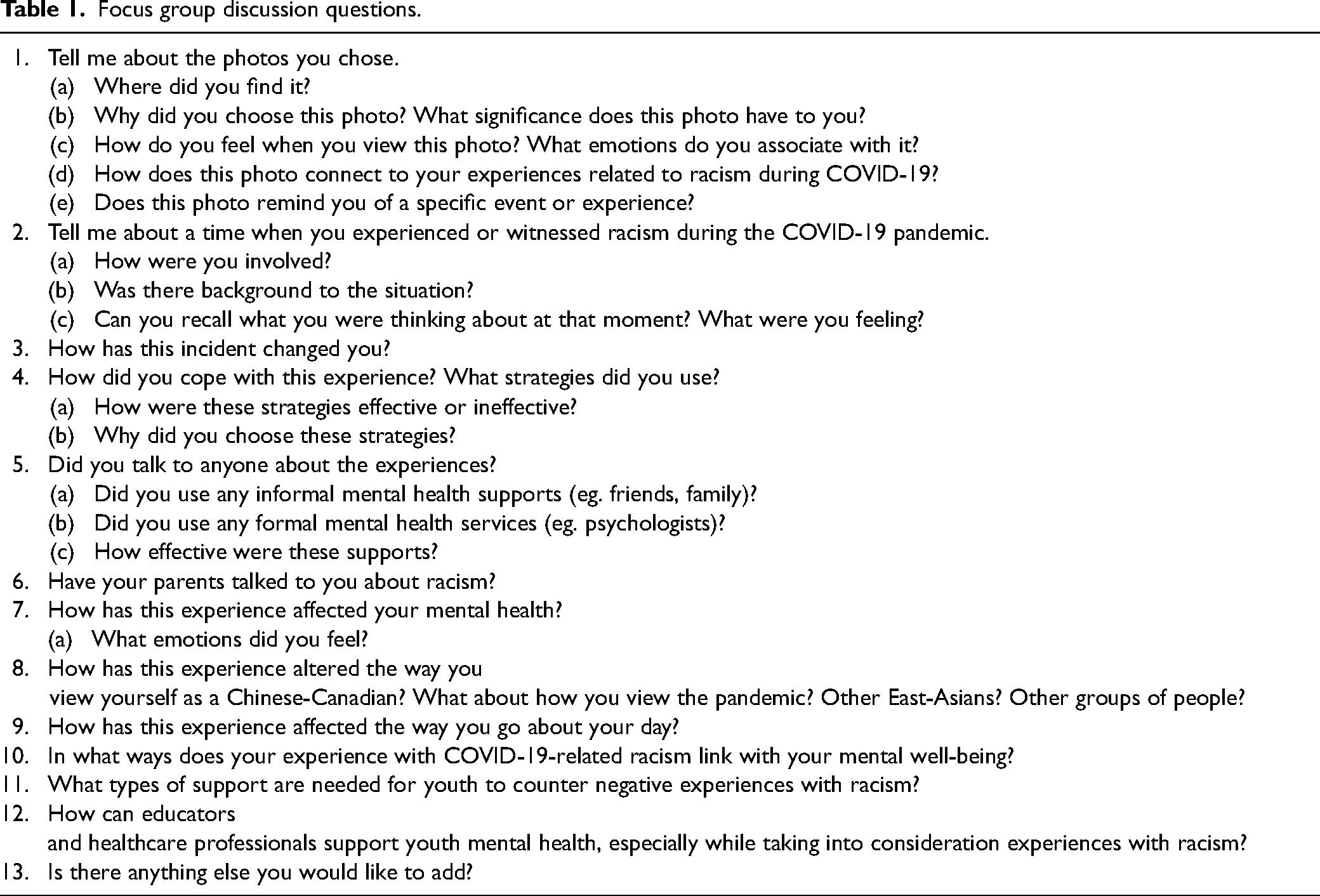
Recruitment and focus groups took place concurrently between June and September 2022, which was amidst the third and fourth waves of the COVID-19 pandemic (Detsky & Bogoch, 2022). Three focus groups, each over two hours long, were conducted over Zoom, a web-based videoconferencing application. The audio of each focus group was recorded and transcribed using the Zoom transcription feature.
Data included verbatim transcripts of the recorded focus groups and any free-to-use photos that participants shared during the focus group. The lead author reviewed and checked the Zoom-generated transcriptions of the focus groups against the audio for accuracy during the data cleaning process. Drawing on qualitative descriptive methods, the research team met regularly to develop and apply a coding system to help identify themes and patterns in the narrative data using a consensus-based approach (Sandelowski, 2000). We facilitated this organization of the data based on codes developed through repeated read-throughs of the data. Thematic analysis methods were used to organize and describe the gathered data in rich detail (Braun & Clarke, 2006), prioritizing quotes to maximize the “intensity and specificity of comments made” (Breen, 2006, p. 472). CRT informed analysis via ongoing questioning of the systemic barriers that created inequities for participants based on their racialized social locations. This involved, also, adopting a strength-based approach in analysis where identifying strengths and resistance to racism was critical to showcase the agency of those experiencing structural racism.
Researcher reflexivity
As a first-generation Chinese-Canadian, the lead author self-identified with the population under study, which has been viewed to increase empathy for participants and being able to gather rich and authentic data (Woo, 2019). At the same time, the author had to be acutely aware of her experiences and emotions through the research process. To practice reflexivity, she documented her thoughts and emotions that arose during the data collection and analysis process. Furthermore, insights during the analysis stage were shared and discussed among the co-authors who collectively have significant experience in qualitative methodologies, immigrant health, and discrimination. All authors have backgrounds in nursing which aims to support health promotion practices and mental health programming efforts, further contextualizing this study. Additionally, all authors self-identify as racialized visible minorities who understand experiences of discrimination.
Study participants
A total of nine youth participated in the study (see Table 2), ranging in age from 19 to 23 years old. All participants self-identified as Chinese-Canadian and were living in Alberta. Seven of the nine individuals identified as second-generation Chinese-Canadian, meaning that the participants were born in Canada to immigrant parents. Two participants described being of both Southeast Asian and Chinese descent. All participants were proficient in English, with some also speaking Mandarin, Cantonese, or other regional Chinese dialects. In terms of gender identity, six participants identified as female, two as male, and one as a gender minority.
Sociodemographic table.
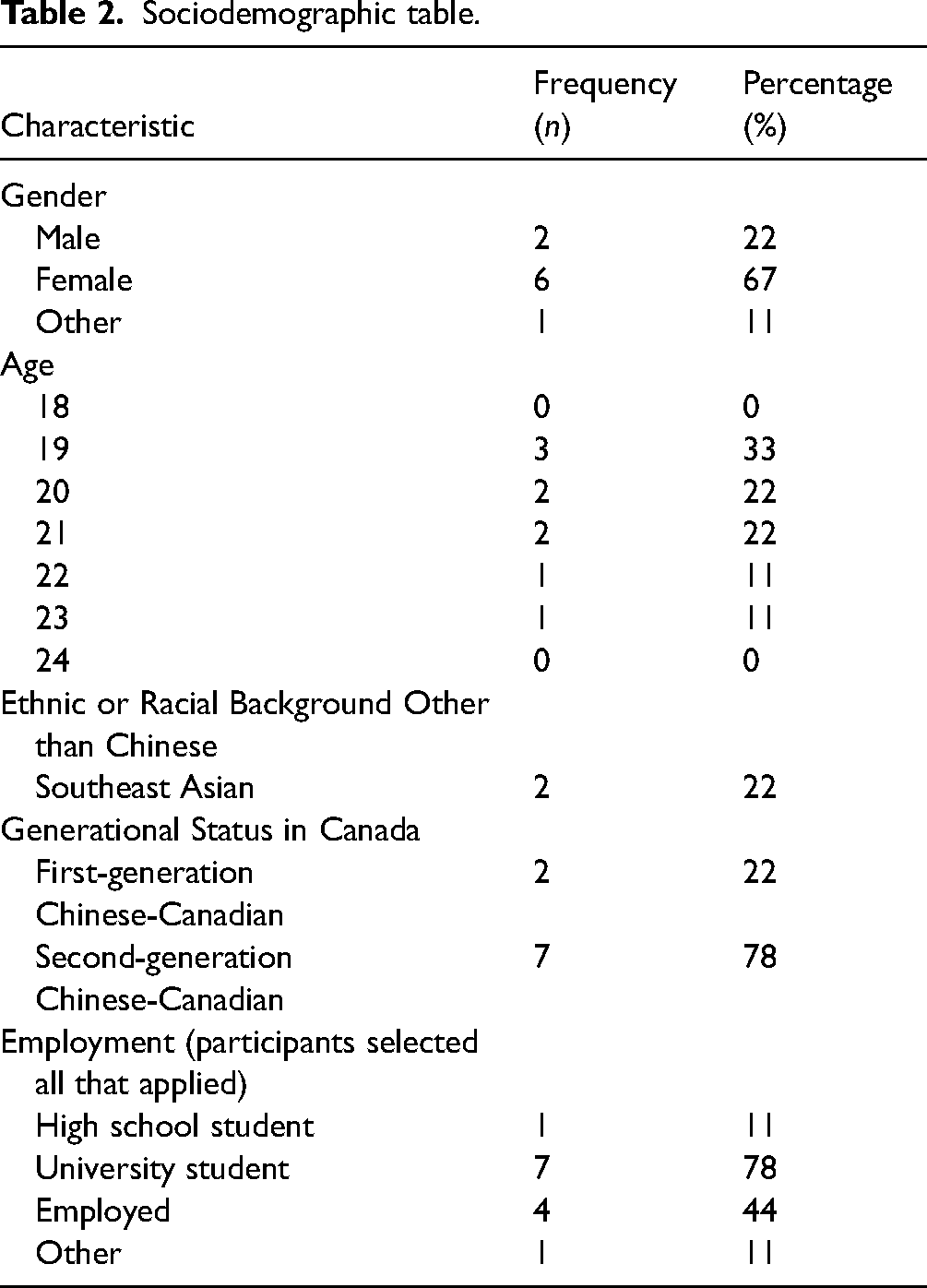
Results
The analysis indicated three themes: (I) Becoming Racialized, (II) Learning the Rules of Racism, and (III) The Lasting Effects of COVID-19 Anti-Asian Racism. All participants described a relationship between their mental health and their experiences of racism. The findings are presented with verbatim excerpts from the focus group transcripts and the free-to-use photographs shared by the participants. The names that appear in the findings are pseudonyms chosen by participants.
Becoming racialized: “I’m a visible minority now”
Among the participants, experiencing racial discrimination was a shared experience prior to the COVID-19 pandemic. Many participants recounted experiences of racism and harmful stereotypes dating back to grade school. However, participants described a drastic change in the frequency and severity of the racism they witnessed and directly experienced throughout the pandemic. In particular, Rachel (19 years of age) and Jay (23 years of age) used descriptors such as “more blatant” and “violent” when discussing this change (see Table 3). Rachel recounted her experience growing up as a second-generation Chinese-Canadian in Alberta. Prior to the COVID-19 pandemic, Rachel experienced racist encounters such as other people pulling at the corner of their eyes to mimic their East-Asian features. “People were racist before,” she recounted, “but now they use COVID as an excuse.”
Themes and additional quotes.
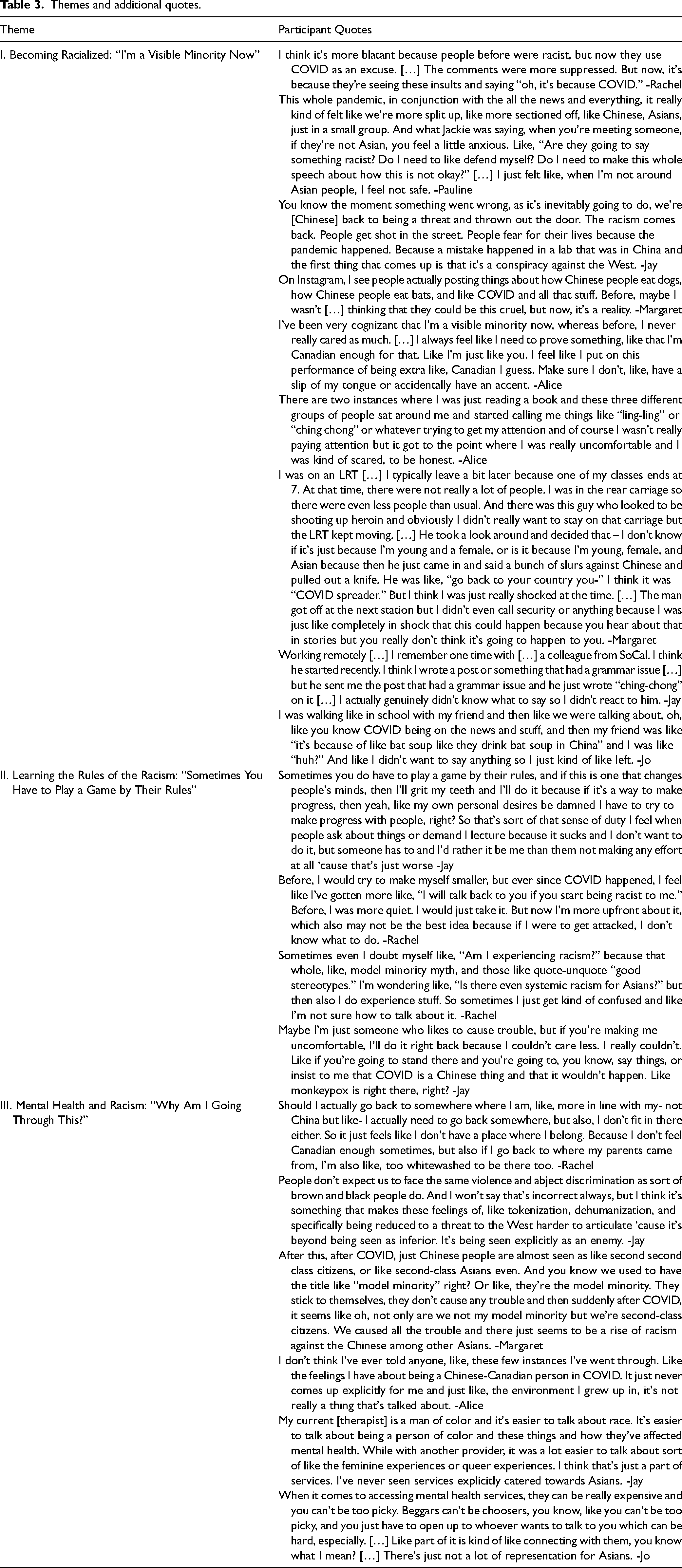
Due to pandemic-related public health measures, particularly the lockdowns, the world shifted predominantly to online interactions, leading participants to describe experiencing racism even within their homes through social media comments, online forums, and community groups. “Online interactions were definitely not fun […] Even like texting with your friends, sometimes they’ll poke fun at you. This is coming from your own friends […] but then that will turn sour very quickly,” Chen (19 years of age) said. He mainly communicated with his friends through an app called Discord and went on to describe these racist jabs from friends as a “daily experience during the COVID era.”
Beyond the home, racism was experience in person, specifically on public transit systems. Nearly half of the participants described discriminatory encounters, ranging in severity from verbal taunts to physical altercations, on the train or on the bus. Pauline (22 years of age) shared this photo and the following story (Figure 1): Me and my partner were just walking in the underground LRT [light rail train] and then someone came out really intimidatingly and started trying to like get us to fight or something. […] He started saying some racial slurs and everything, and in the end, when we were trying to leave the space, this person punched my partner in the face then pointed to another Asian person and told him he was next. And then he kind of just left.

Black framed glass window with white snow photo. Kipp (2020).
Although many participants experienced some racial discrimination prior to the global lockdowns, the COVID-19 pandemic seemed to make cultural differences more apparent, leaving participants feeling especially targeted and forcing them to consider more frequently how they would act in response to this increased racism.
Learning the rules of racism: “sometimes you have to play a game by their rules”
Participants described a range of responses to incidents of racism, depending on the circumstances, who the perpetrator was, and previous experiences of discrimination. One participant, Jay (23 years of age) mentioned that it felt like a game with rules that guide them in deciding how they would respond to these encounters – whether they would ignore it, go along with it, confront it, and/or attempt to educate others (see Table 3).
Ignoring racism
Some participants chose to disregard the racism they witnessed or experienced in an effort to fit in or avoid conflict. Across focus groups, several participants described how their parents advised them to ignore their experiences of racism. According to Margaret (20 years of age), her parents encouraged her to “keep your head down and just do what you gotta do.” Pauline also mentioned her parents, saying “they’re like ‘no, you don’t want to bring attention to yourself,’ […] There is a huge difference, like, a generational gap between our parents and what they believe in and how they react to certain situations.” This urge from her parents contributed to her and her partner's decision not to report the physical assault they faced on the train.
Others chose to ignore experiences of racism to avoid the resulting conflict. One participant, Jo (21 years of age), brought an internet meme that said, “I pretend I do not see but in reality, I do.” She related to it, explaining the following: It's kind of hard for me to confront people when they're being racist or when I hear racist comments. It's definitely concerning but like, you know, what can you do about it? So you're just kind of pretending it's not happening and almost like being numb to it.
Participants also shared internal turmoil when recognizing and processing microaggressions of racism due to other positive stereotypes, such as the ‘model minority myth’. Rachel shared the following: Sometimes even I doubt myself like, ‘Am I experiencing racism?’ because that whole, like, model minority myth, and those like quote-unquote ‘good stereotypes.’ I'm wondering like, ‘Is there even systemic racism for Asians?’ but then also I do experience [it]. So sometimes I just get kind of confused and like I’m not sure how to talk about it.
Going along with racism
Some youth described choosing to accept being the target of racism, and even go as far as to agree with it, putting up a front in favor of preserving relationships they already had with perpetrators. Chen (19 years of age), who mainly communicated with his friends through Discord, an instant messaging social platform, presented a picture of a yellow duckling trying to jump up on a curb with a group of goslings and used this to describe how “there's a lot of just, like […] making fun of my own background. It wasn’t the most comfortable experience.” He went on to share an instance where he posted “some slander about some farm dudes in China eating […] anteaters,” on social media and described the internal conflict he felt in that moment, saying “I don’t know what went through my mind […] all I knew is, like, I was sort of frustrated by my culture. I almost became the people who are being racist to me and I wasn’t proud of that.”
Several participants shared very vulnerable, firsthand stories of being victims of not only racism but sexual harassment. Perpetrators were described as ‘being anyone’, even those in positions of power who serve to protect the public. Jackie (21 years of age) recounted an instance where, while waiting at the train station, she was approached by a security guard who first mistook her for another Asian girl then asked her for a hug. Fearing that she could be assaulted further, she acquiesced and endured this sexual harassment. This was a shared experience, among several female and female-presenting participants.
As a result, participants spoke about attempting to change the way they were perceived by others to fit in and avoid scrutiny because of physical differences. Jo (21 years of age) shared the following: I’m like the Chinese girl. I have glasses and I’ve had glasses since I was probably 5 years old or something […] I was teased a lot growing up because I kind of looked like a nerdy Asian kid and maybe I would still argue I look like that now. But […] if I wear contacts and like, wear makeup, would people take me more seriously? Or like, if I bleach my hair blonde, […] will people treat me differently because I don’t look like that nerdy Asian kid I used to?
Jo's words illuminate the effects of looking like an ‘Asian kid’ and the ways in which these youth have felt pressured to conform in their physical appearances, further exacerbated by the racism they faced during the COVID-19 pandemic.
Confronting racism
Rather than ignoring or going along with racism, some participants chose to confront the racism they witnessed or experienced head-on. One participant, Rachel (19 years of age), explained how she would respond to the backlash she witnessed on social media platforms such as Instagram and Facebook during the first waves of the pandemic. Under the news headlines about the physical attacks on East-Asian older adults, Rachel recalled seeing many comments stating that the victims ‘deserved it’ and how these bothered her due to the false information. She described her response to these comments: Before, I would try to make myself smaller, but ever since COVID happened, I feel like I’ve gotten more like, “I will talk back to you if you start being racist to me.” Before, I was more quiet – I would just take it. But now, I’m more upfront about it.
Another participant, Jay (23 years of age), explained why they would respond to racist allegations towards them as well, asserting: Maybe I'm just someone who likes to cause trouble, but if you're making me uncomfortable, I'll do it right back because I couldn't care less. I really couldn't. Like if you're going to stand there and you're going to […] insist to me that COVID is a Chinese thing and that it wouldn't happen. Like monkeypox is right there, right?
Choosing to confront perpetrators online or in-person can be risky, as many focus group participants acknowledged, due to identifying themselves as another target and risking further harassment.
Educating others about racism
Some youth described their attempts to educate perpetrators of racism. At the same time, these participants shared their need to educate themselves first to prepare for such encounters. Jay recounted their efforts to fight racism with their knowledge both in remote work environments and through online communities, along with this picture (Figure 2): If this is one [conversation] that changes people's minds, then I'll grit my teeth and I'll do it. Because if it's a way to make progress, then yeah, like, my own personal desires be damned. I have to try to make progress with people, right? So there's sort of that sense of duty I feel when people ask about things or demand I lecture because it sucks and I don't want to do it, but someone has to and I'd rather it be me than them not making any effort at all ‘cause that's just worse.
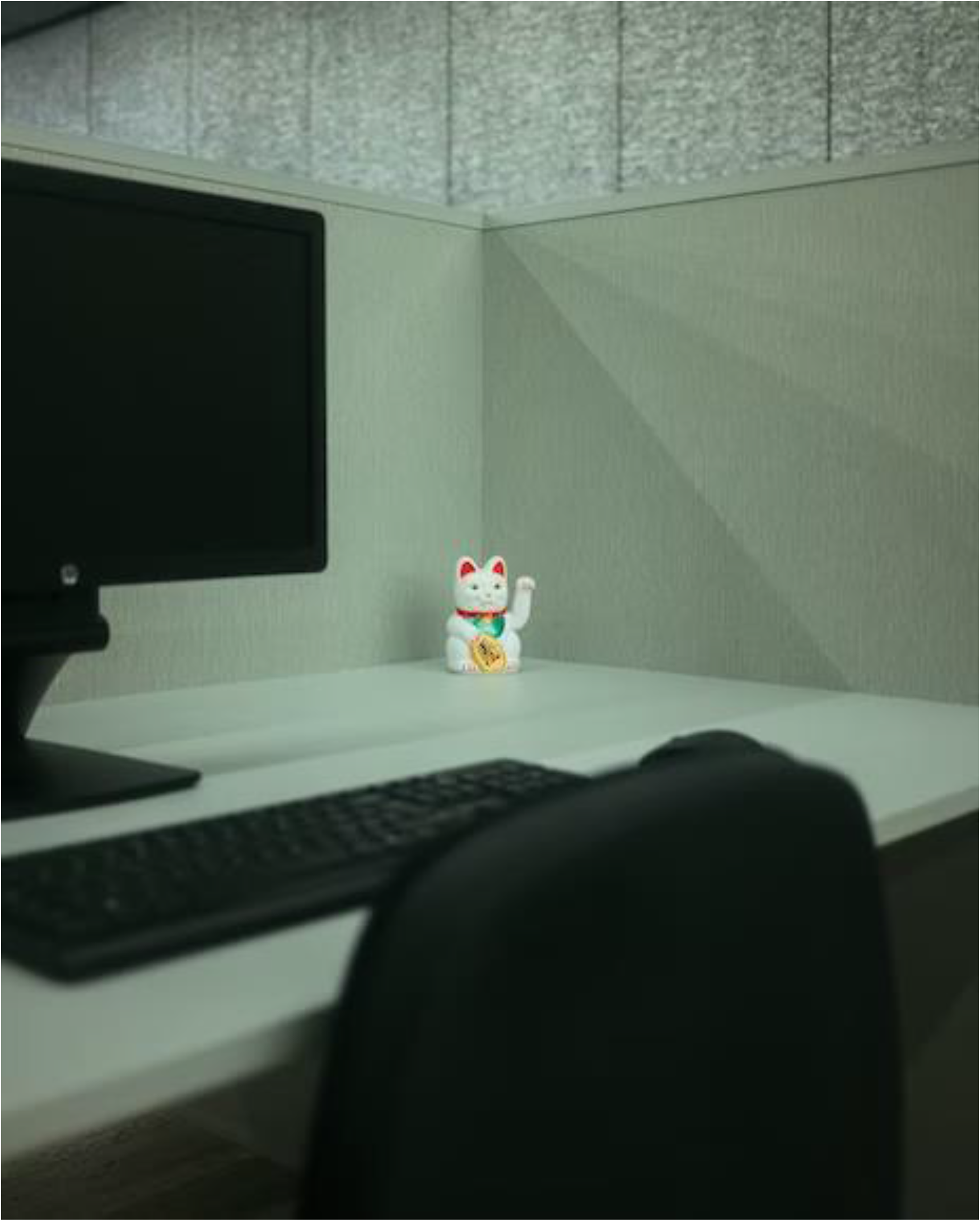
Lucky cat in office cubicle. Daino (2022).
However, participants described how, after a few failed attempts, they became apathetic to educating others. Chen (19 years of age) described a few instances where he tried to help both acquaintances and strangers understand but to no avail, resulting in the following mindset: I’m just gonna let you be mean and rude. I’m not going to deal with you anymore. So, again I've been like, just sort of giving less chances – being less friendly to people who I feel are more narrow-minded and less educated.
Attempts to educate perpetrators of racist encounters were perceived by the youth to have varying success. Across these responses and the ‘rules of racism’, the youth described how racism can be emotionally and physically draining.
Mental health and racism: “why am I going through this?”
Many participants described how experiences of racism led to feelings of loneliness, anger, and a decreased sense of self-worth. Participants explained that being ‘a targeted group’ compounded the isolation already caused by the pandemic, which significantly affected their mental health. During the focus groups, participants were explicitly asked if they accessed any professional mental health services, such as therapy or crisis hotlines. Many participants described hesitation to share their experiences with healthcare professionals as they felt that there was a lack of providers of colour in these services. Jo (21 years of age) expressed the following: When it comes to accessing mental health services, they can be really expensive and you can't be too picky. Beggars can't be choosers, you know, like you can’t be too picky, and you just have to open up to whoever wants to talk to you which can be hard, especially. […] Like part of it is kind of like connecting with them, you know what I mean? […] There's just not a lot of representation for Asians.
Jo and other participants went on to describe that because of the lack of services tailored for Asian or Chinese mental health, they felt there was a greater risk of misunderstandings and feeling further isolation. Margaret (20 years of age) contextualized her experience with a photo to explain how her mental health suffered due to this loneliness and feeling of helplessness (Figure 3): Before, I never really had an issue with anything […] related to mental health, but after the pandemic […] I just felt really alone and really frustrated mostly. Frustrated with everything, frustrated with the ignorance and the racism, frustrated with how people take this opportunity – they seem very happy with this opportunity to be racist to Asians.
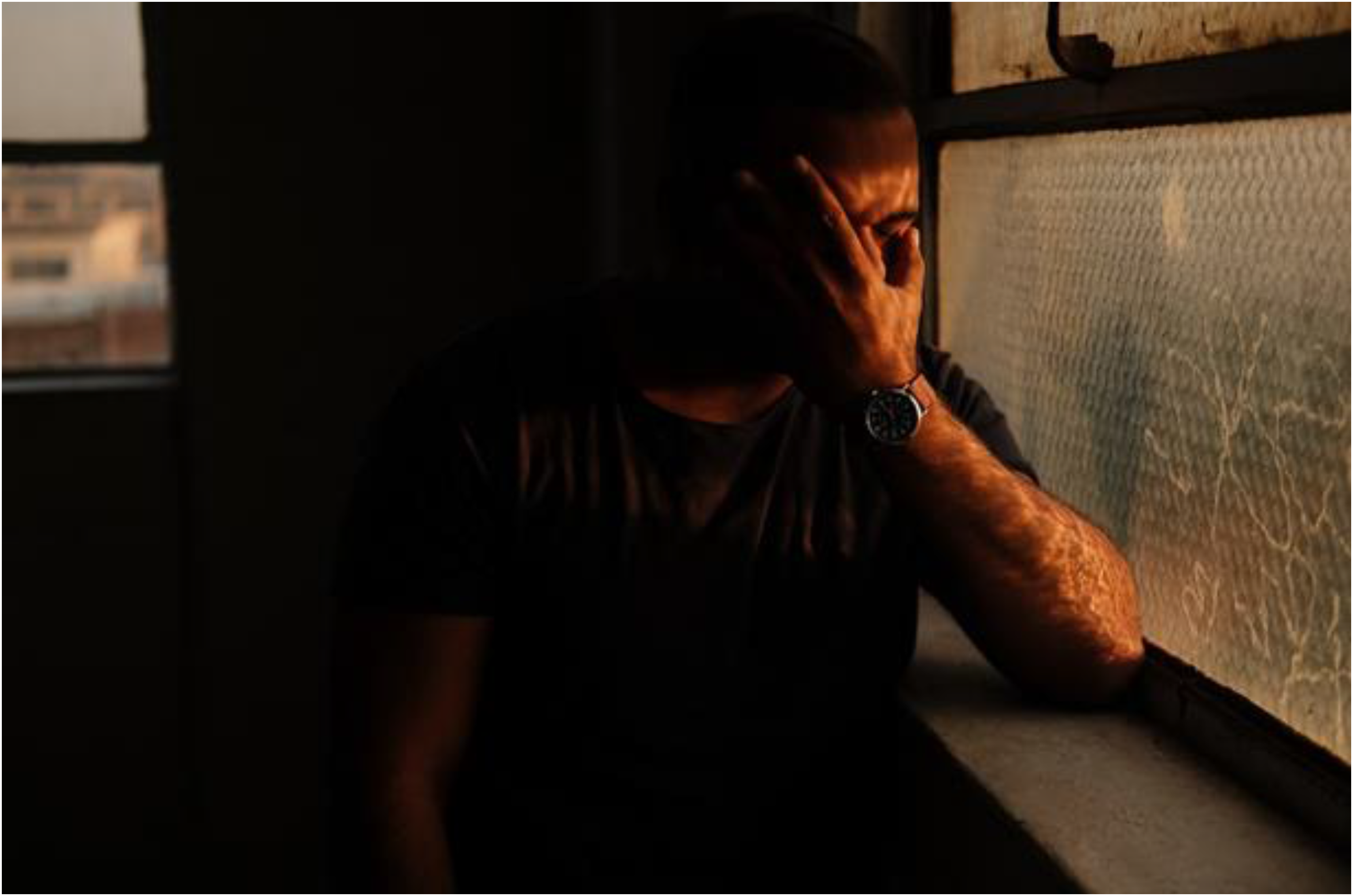
Man with head in hand. Sean (2022).
Rachel echoed Margaret's words and shared how she felt after responding to hateful online comments: “I definitely felt more stressed […] and angry, especially during peak COVID. I kind of took that anger […] trying to respond to those like, ignorant comments and I just found myself getting so worked up about it.”
However, reflecting on discrimination against them and finding ways to cope with circumstances also gave some youth the potential for collective resilience. Margaret shared that the historic theme park at which she worked had a weekly support session for all people of colour. Through this program, she felt a sense of unity through sharing experiences of discrimination in the following: I didn’t really realize the importance of feeling solidarity with […] fellow Asians, right? And I think having this support session every week really, really does help me feel not alone, which is, like, one of the things I was struggling with.
Chen, who would spend his summers in China growing up, shared similar sentiments in the following: If anything, I felt a little bit more reconnected to my culture […] these past three years have really made me feel, like, a lot more Chinese if anything again […] I’ve changed my [friend] group just to avoid. you know, those scenarios where they’re like “oh, you’re Chinese. You like bat soup,” you know, sort of poking fun at your culture […] I don’t have to deal with that anymore.
All participants described an initial decrease in their mental health as a result of the discrimination they faced during the pandemic. However, through discussions and reflections in the years since the initial pandemic lockdowns, some participants discussed finding resounding strength through these hardships. Youth mentioned that they found themselves to be prouder and more supportive of their Chinese heritage as a result. They also expressed feeling more prepared to support Chinese peers whether emotionally, physically, or financially. For example, Jay shared the following: I've made efforts to – at the very least – support Chinese businesses when I'm around trying to keep community. Like, there's things you can do on an individual level that make you feel like you can do something, and for me that's fighting white people who say stupid things and also supporting sort of Chinese and Asian businesses.
Despite the adversity they faced during the COVID-19 pandemic, participants expressed a newfound pride in their heritage and a sense of solidarity with their peers. Through acts of support and advocacy, such as Jay's commitment to both defending against racism and bolstering Chinese businesses, these youth have demonstrated a capacity for resilience and community-building that will have lasting effects on mental health and the broader Chinese community.
Discussion
The three themes identified in this article describe Chinese-Canadian youth's experiences of racism, particularly in relation to the COVID-19 pandemic. The findings highlight the youth's experiences and feelings toward the stereotypes and prejudice directed toward them. Although the sample size of this study may be smaller than in other qualitative studies, we identified repeated narratives across multiple participants and focus groups during our concurrent recruitment and data analysis process, suggesting data saturation (Woo, 2019) and allowing us to engage in a deeper understanding of the participants’ lived experiences, strengthening the claims of this study.
While there may be similarities in experiences of racism for Chinese populations across Canada, we recognize there may be some contextual nuances between geographic regions and provinces. It is important to note that these complex findings reflect the experiences of the participants and their context of living in the province of Alberta and are not meant to be generalizable. In what follows, we discuss the findings in relation to the existing literature on Asian youth, racism, belonging, and mental health.
The model minority stereotype
Youth's responses to anti-Asian racism, particularly ignoring and going along with racism, could be attributed to what has been termed as the ‘model minority’ stereotype. The ‘model minority’ term was first used to describe Japanese-Americans during the 1960s, attributing their success to their hard work (Cui, 2019; Shih et al., 2019). Furthermore, it was used as a way to create and perpetuate divisions based on racial categories (Abad, 2021). Since then, this stereotype has been broadened to be used as an umbrella descriptor for many East-Asian immigrant groups in North America. While this may be viewed as a positive stereotype as it is subjectively favourable towards East-Asians, it can be a harmful burden for youth to carry and live up to (Au, 2022; Cui, 2019; Shih et al., 2019). The model minority myth does not protect Asian communities from anti-Asian sentiment in North America that surfaces aggressively during public health crises such as disease outbreaks. The SARS outbreak in the early 2000s resulted in sensationalized accusatory discourses, ostracization, and violence against Asians but similar constructions of Chinese and other Asian peoples as bearers of disease is reported much earlier in the late nineteenth century onwards (Barde, 2003; Eichelberger, 2007). A major issue with the model minority myth post pandemic is the resulting neglect of Asian youths’ mental health struggles due to prevailing notions of not belonging to an at-risk group. Youths in this study identified coping mechanisms but also emphasize the need to address structural barriers to mental wellbeing that are rooted in anti-Asian racism. It is important to note that youths have a strong presence online and racism in virtual settings is notoriously aggressive, relentless and difficult to avoid which adds a dimension of complexity to studying racism that was not present for previous generations.
Cui (2019) has argued that the stereotype of being a model minority subdues some perception of East-Asians as people of colour, rendering them ‘immune’ to racism. This may explain why some participants in this study were inclined to ignore acts of racism, refusing to respond to perpetrators or discuss their experiences with friends or family. A few participants explained how this response stemmed from accounts of racism being normalized by themselves, peers, or family members prior to the pandemic. Au (2022) echoed this cultural divide, discussing that because of the model minority stereotype, Asians are put in a position of privilege relative to other minority groups, making it difficult for individuals to feel validated in their discriminatory experiences and struggles.
Race, gender, and the rules of racism
The second theme, Learning the Rules of Racism, indicated the ways in which racism and gendered power dynamics may intersect and come into play for youth. While men participants focused on anti-Asian racism during the pandemic, women and the gender minority participants’ narratives weaved discussions of racism and sexism that extended beyond the pandemic timeframe. For example, several young women and one participant who identified as a gender minority in the study shared experiences where they were specifically targeted due to their gender. These incidents were often uncomfortable, including unwanted advances from strangers. Asian women are often hypersexualized and exoticized, perpetuated by influences in western culture and media (Anandavalli, 2022; King & Iwamoto, 2022) while queer Asians are similarly exposed to demoralizing stereotypes (Azhar et al., 2021). The harms of this stereotype and the risks of sexual harassment or discrimination have been an important issue even before the pandemic. While there have been greater urges to educate society about the harms of sexualizing Asian women since the shootings in Atlanta in 2020, including the Stop Asian Hate campaign (Stewart, 2022), more action is needed.
As a result of this heightened discrimination, participants also expressed feeling like they needed to change their appearance, whether to look less Chinese, draw less attention to themselves, or appear more confident and therefore, unapproachable. Many participants, particularly those female or female-presenting, expressed an internal conflict on whether they would be taken more seriously if they looked less like stereotypical Asian characters portrayed in the media. Related literature shows that minority individuals are more likely to experience body dissatisfaction and depression or disordered eating as a result (Cheng & Youngju Kim, 2018; King & Iwamoto, 2022). Although the fetishization of Asian women has been a topic of concern even before the pandemic, widely circulated news headlines and an increase in violence against this population demonstrate a more overt change in discrimination expressed which results in lasting effects on the self-image of young Chinese individuals (Blanco, 2022; Dewan, 2021). The intersecting impacts of racism and sexism continue to show detrimental outcomes for the wellbeing of queer and non-queer communities before, during and after the COVID-19 pandemic (Azhar et al., 2021; Zhang et al., 2023) which necessitates developing mental health supports that specifically incorporates sensitivity to anti-Asian racism, sexism and their structural pervasiveness.
Factors leading to a lack of support
The results indicate a marked need for support among the youth. However, none of the participants reported accessing mental health resources to help them address the impacts of the racism they experienced during the pandemic. Participants also shared collectively that it was difficult to open up to family or friends during these trying times.
A lack of cultural competence in mental health services and limited resources were common barriers to professional support listed by the study's participants. Moreover, youth fear being judged, misunderstood, or labeled as weak if they seek help for mental health issues (Guo et al., 2021; Nguyen et al., 2023). Similar feelings seem to be shared across youth of other ethnic minorities in North America (Bravo et al., 2024; Cook et al., 2017). These barriers and fears can exacerbate youth's struggles and prevent them from receiving the support and services they need. Nurses working in spaces where youths might frequent to access healthcare services must become more aware of anti-Asian racism, their own biases that perpetuate the model minority myths, and ways to practice allyship with Asian youths.
Intergenerational conflict in Chinese-Canadian contexts may have also contributed to decreased mental health among youth when they felt unable to discuss mental health with their relatives or peers due to stigmas (Guo et al., 2021). Parents of these youth were born in China or raised with traditional Chinese values such as bringing honour to your family above all else and focusing on financial or academic success instead of prioritising personal wellbeing (Chen, 2018). As first and second-generation youth, they can feel pressured both from this perspective of their parents, as well as the counter argument of common western ways of thinking which emphasise physical and mental health and promote openness about struggles (Nguyen et al., 2023). This can feel isolating, as minority youth are more likely to avoid vulnerable discussions or reach out through informal sources, as opposed to seeking help from health professionals (Patel et al., 2022). There is a critical need to destigmatize discussions of poor mental health, particularly as it pertains to racial discrimination and violence, in Asian or minority communities where often mental health struggles go unspoken and unnoticed (Chen, 2018). In some cases, it may even be considered shameful to talk about mental struggles (Nguyen et al., 2023), making more barriers for youth to identify mental health challenges and seek help.
Conclusion
This study has the potential to inform future nursing practice and education in areas of anti-racism moving forward from the COVID-19 pandemic. The findings can contextualise the knowledge of healthcare professionals so they can provide more culturally aware and competent care. This research informs nurses on the experiences of racialized youth and the ways racism continue to affect their mental health. Nurses must participate in anti-racism training as part of their ongoing professional practice competence and non-racialized nurses need to situate themselves as allies for racialized youths who access formal mental health services. This project also shows the need for more research to be done in the area of lived experiences of Chinese-Canadians since youths’ experiences are often unreported. Given the persistent and pervasive nature of racism, we anticipate that there will be more stories that need to be amplified to improve approaches to anti-racism and minority youth mental health support.
Footnotes
Declaration of conflicting interests
The authors declared no potential conflicts of interest with respect to the research, authorship, and/or publication of this article.
Funding
The authors received no financial support for the research, authorship, and/or publication of this article.
Ethical approval
Ethics approval for this study was obtained from the University of Alberta's Research Ethics Board 1 (Pro00119169).
