




Abstract
What motivates a society or community to promote the rescue of individuals in hazardous waters? This article expands upon comprehensive research regarding charitable history and volunteerism in late Qing China to fill a void in the literature pertaining to the Zhengnitang, a local organisation committed to rescuing individuals from drowning. Although lifesaving has been examined within the framework of a global trend in organised humanitarian efforts, the particular practices, measures, and principles of Chinese lifesaving societies during the late imperial era in a transnational context require more scrutiny. This study contextualises the Chinese model of lifesaving within both national and international frameworks, emphasising its nuanced impact on the formation of European lifesaving societies during the long nineteenth century and conversely, how global humanitarian advancements may have influenced Chinese lifesaving efforts. We will also look at the deeply ingrained idea of lifesaving in imperial China, which is different from saving lives in other unfortunate situations, and how it has changed over time. This will allow us to explore how different Chinese humanitarian practices have affected the region and the world as a whole, as well as how they relate to the cultural history of water-related accidents and injuries.
Keywords
Introduction: China in European lifesaving accounts
The act of rescuing individuals from perilous waters is a universal concern, yet the motivations and mechanisms behind such efforts have varied widely across cultures. While China had a long-standing tradition of lifesaving, shaped by moral duty, religious beliefs and communal responsibility, it was through nineteenth-century European publications that these practices became part of a broader global discourse. European observers frequently acknowledged Chinese water rescue efforts, positioning them within a comparative framework that both recognised their distinctiveness and, at times, subjected them to sceptical scrutiny. For instance, William Thomas of New York remarked, About the year 1767, a humane society was established in Amsterdam, and almost simultaneously in other parts of Europe. The memoirs of the Dutch society were translated into English in 1773, which led to the formation of the Royal Society in England. The American Humane Society was organised around the year 1850. Similar organisations exist in China, Japan, and the East Indies.
1
These accounts, while differing in tone and perspective, point to two key observations. First, they suggest that Chinese lifesaving practices, including water rescues, were perceived as distinct from those in Europe, not necessarily inferior, but operating under different cultural principles. Second, despite such distinctions, European observers acknowledged and documented the existence of organised Chinese lifesaving efforts, offering an overlooked yet significant window into China's longstanding engagement with humanitarian rescue on a transregional scale.
Nonetheless, in contrast to the well-documented histories of European lifesaving organisations, the underlying principles and philosophies of lifesaving in imperial China have received far less scholarly attention. Most global histories of humanitarianism have focused on the development of state-sponsored lifesaving associations in the West, positioning these as the foundational models for modern water rescue efforts. However, the long-standing Chinese emphasis on benevolent rescue – rooted in ethical, religious and communal traditions – complicates the assumption that structured lifesaving initiatives were a uniquely Western, if not European, innovation. While Western institutions formalised lifesaving efforts through centralised organisations, the Chinese approach, although less institutionally codified, was deeply embedded in social and moral frameworks that guided collective responses to water-related emergencies.
Notably, as Clayton Evans suggests, as early as 1757, European sources referenced Chinese benevolent lifesaving practices, appearing even earlier than the sources cited above, coinciding with a growing European interest in resuscitation techniques for near-drowning victims. By 1767, the Netherlands had established the Institution for the Recovery of Drowned Persons, and similar organisations soon followed across Europe and North America, including Britain's Humane Society for the Recovery of Persons Apparently Drowned in 1774 and the Humane Society of the Commonwealth of Massachusetts in 1785. 4 While the emergence of these European lifesaving institutions can largely be attributed to local medical advancements, shifting attitudes towards public health, and the broader humanitarian movements of the time, the chronological overlap with documented Chinese lifesaving practices is striking. Given the Dutch East India Company's extensive trade networks in the Far East, it remains plausible that Dutch thinkers were at least aware of Chinese approaches to lifesaving and that such knowledge may have, even indirectly, shaped European discussions on humanitarian rescue efforts.
In addition, Western early lifesaving institutions often related their purpose to a global humanitarian discourse, and they were also used to allude to successes in other countries, in order to justify and spread their own. Some of those statements suggest an understanding of lifesaving as a transnational phenomenon, in which ideas and practices were shared and adapted across cultures and locations. While there is no evidence of a self-aware ‘China model’ of lifesaving being part of that discussion in the West, some European lifesaving organisations later quoted China in promotional materials as an established tradition. 5 This may indicate that, as historical fact or advertising fiction, China was regarded in the West as having a longstanding humanitarian tradition of water rescue.
Hence instead of considering lifesaving as a strictly European invention that was only later introduced to the rest of the world, a broader approach can take into account the contribution that China's long history of water rescue traditions has had, through direct or indirect channels, on the worldwide narrative on humanitarian action. The adoption of Chinese philanthropic paradigms or the wider dissemination of lifesaving knowledges through the circulation of people and ideas, is present in the historical sources, which indicates a more reciprocal exchange of ideas than that has been generally recognised in the dominant historiographies of humanitarianism.
However, it should be noted that cross-cultural exchange was not a one-way process. As much as the Chinese influence may have helped to shape, directly or indirectly, the development of organised lifesaving in seafaring nations of the West, the converse was true to some degree as well. The expansion of institutionalised lifesaving in Europe and North America may have contributed, whether directly or indirectly, to the codification and systematisation of lifesaving in China. The widespread emergence and dissemination of lifesaving societies in such places as Britain, the Netherlands and the United States no doubt contributed to an increasingly global conversation about the necessity and value of organised rescue, systematic training and standardisation of lifesaving equipment. In this context, the encounter with foreign models may have encouraged Chinese philanthropists to further codify and systematise Chinese indigenous lifesaving practice.
This article examines the Zhengnitang, a local lifesaving association in late imperial China, dedicated to rescuing individuals from drowning. Relying on community cooperation, separate funding and deeply ingrained Confucian, Buddhist and Daoist ethical principles, the Zhengnitang operated as a community initiative. It emerged from a broader tradition of self-governance and local philanthropy, where gentry, merchants and religious organisations collectively assumed responsibility for social welfare. While much of the literature on charitable institutions and volunteerism in late Qing China has explored orphanages, famine relief efforts and medical philanthropy, 6 water rescue remains an underexplored facet of China's broader humanitarian landscape. This study illuminates a neglected but crucial area of Qing-era public welfare initiatives by looking at the history of the Zhengnitang. It shows how grassroots acts of charity could develop into systematic, institutionalised responses to life-threatening crises. While reports and survey responses that detailed the Zhengnitang's activities are crucial for reconstructing organisational structures and ideals, they also capture the rhetorical goals of humanitarian associations, which frequently aimed to project the best possible image of themselves. As a result, this study views these documents as sources that disclose institutional practices as well as how organisations wanted to be seen, rather than just as transparent records.
In summary, this article situates the Zhengnitang within the local moral framework of late imperial China and the broader humanitarian discourses emerging across borders. The conversation starts with how Europeans saw Chinese lifesaving, then goes to the history of the Zhengnitang as an institution, and finally ends with thoughts on how this case makes existing stories of global humanitarian exchange more complicated. It also thinks about how the old values of benevolence (ren) and karmic duty (gongde) could be turned into more organised practices that include equipment, training and designated rescue stations. There is more than just a difference between ad-hoc rescues and formal institutions; there is also a gradual change that puts China firmly in the history of humanitarianism around the world. The Zhengnitang is a good example of how charity, business and government became mixed up. River trade, judicial power and religious patronage all came together to create new ways to save lives.
Lifesaving as a global trend in the nineteenth century
By the nineteenth century, the formalisation of lifesaving efforts had emerged as a defining feature of transnational maritime safety initiatives. The expansion of transoceanic trade, the intensification of naval operations and the rapid growth of coastal urbanisation collectively heightened awareness of the vulnerabilities inherent to seafaring and inland water travel. 7 These concerns spurred the establishment of structured rescue institutions across multiple regions, reflecting broader transformations in governance, philanthropy and humanitarian intervention. Although lifesaving traditions and societies had existed in various forms for centuries, as indicated at the beginning of this paper, the nineteenth century was a determining era that saw an unprecedented shift towards institutionalised, state-backed and technologically advanced systems of water rescue.
It is critical to distinguish between lifesaving organisations, which carried our rescues, and societies, which were qualified as ‘humane’. Coastal lifesaving organisations used lifeboat stations and trained personnel to focus on maritime rescue. In turn, one of the earliest humane societies was the Royal Humane Society, established in Britain in 1774. It emphasised public awareness, resuscitation techniques and rewarding bravery. One example of the first type is the Royal National Lifeboat Institution (RNLI), which was established in 1824. 8 That year, the KNRM was formed by the merger of two distinct rescue societies in the Netherlands. 9 By combining government assistance with private donations, the Deutsche Gesellschaft zur Rettung Schiffbrüchiger in Germany (1865) and the Société Centrale de Sauvetage des Naufragés in France (1865) contributed to the spread of this model. 10 When taken as a whole, these instances suggest a transnational current that is mostly limited to Western maritime powers rather than a completely global phenomenon.
This current had two ideological foundations: saving lives was portrayed as both a practical necessity to protect trade, military might and national prestige, and as a moral obligation that reflected enlightenment humanitarian ideals. Both governments and shipping companies realised that funding rescue efforts decreased losses and improved their standing as maritime powers. While lifesaving organisations created lifeboat technology, signalling systems and training regimens, humane societies promoted resuscitation and prevention techniques. Although its main focus was on battlefield relief, the International Committee of the Red Cross, which was established in 1863, can be considered the start of a movement to establish international organisations of humanitarian lifesaving. It mirrored a broader nineteenth-century trend towards professionalised and codified responses to human suffering, along with maritime rescue organisations.
Beyond Europe, similar trends took shape, albeit within distinct institutional and cultural frameworks. In the United States, organised lifesaving efforts began in the late eighteenth century with the establishment of the Massachusetts Humane Society (1785), which set up shelters and provisions for shipwreck survivors. By 1871, the United States Life-Saving Service had been formally established, growing into a nationwide network of rescue stations staffed by professional surfmen. 11 This initiative was eventually consolidated with the Revenue Cutter Service in 1915 to form the United States Coast Guard, institutionalising water rescue within a broader framework of national security and maritime governance. 12 In Russia, lifesaving initiatives were integrated into imperial naval operations, particularly along the Baltic and Black Sea coasts, where state-sponsored rescue outposts were established in the nineteenth century. These efforts were closely tied to naval defence policies, as Russian authorities sought to secure maritime routes that were vital to imperial expansion and trade. 13
The institutionalisation of lifesaving described above was deeply intertwined with the rise of humanitarian movements in the nineteenth century, which saw an increasing emphasis on organised, systematic responses to human suffering. Organisations such as the Royal Humane Society (founded in 1774 in Britain) played an instrumental role in promoting resuscitation techniques, awarding bravery medals to rescuers and advocating for public awareness campaigns on drowning prevention. 14 Their efforts not only encouraged the adoption of lifesaving methods but also contributed to the professionalisation of water rescue as a specialised field. Similarly, the International Red Cross (founded in 1863), although primarily focused on battlefield relief, began expanding its purview to include emergency medical care and disaster response, reinforcing the perception that lifesaving was a fundamental humanitarian duty. 15 This broader shift in humanitarian philosophy paralleled advancements in medical science, infrastructure and state intervention, as governments increasingly recognised the necessity of investing in lifesaving measures to protect both their citizens and the growing number of seafarers involved in global trade. By the late nineteenth century, water rescue had become not only a moral and humanitarian obligation but also an essential component of national policies on public health and maritime security.
In the final decades of the nineteenth century, there was a general increase in cooperation between lifesaving organisations on an international level. The International Lifesaving Congress, held in Marseille in 1878, was an example of such an event. Held to ‘exchange information about rescue techniques, and about equipment and best practices’, it was attended by ‘customs officers, doctors, and engineers’ from a number of countries. The conference was used to share and discuss information about standard lifesaving techniques, modern lifeboats and other equipment, as well as possible regulation systems for coastal safety. 16 This event exemplified a growing recognition since the early nineteenth century that drowning prevention and maritime rescue were transnational concerns that required cross-border collaboration. It also laid the groundwork for future international lifesaving cooperation, and it was often used as a reference point for sharing safety regulations and creating a feeling of duty to seafarers and coastal populations.
Many lifesaving organisations in the West started out as volunteer-led, community-based endeavours, with the state providing little more than token financial support or symbolic acknowledgement. These organisations progressively formalised their structures over time and occasionally gained support from the government. A similar pattern can be seen in China, where associations relied mostly on local initiative. However, some European observers from the nineteenth century suggested that the imperial government supported lifesaving measures, even in the absence of consistent funding or legal authority. Therefore, even as governmental or elite support increased, community involvement remained crucial in both China and Europe. Similar patterns can be seen in other places, like Southeast Asia and West Africa, where community duty, religious authority and regional customs all played a significant role in saving lives. Rescue efforts were also infused with ceremonial and moral significance in several societies, especially when connected to spiritual beliefs.
In China, in contrast, saving lives was specifically framed by moral and religious principles, which were viewed as a civic obligation and a test of one's virtue. Instead of being based in centralised institutions, local initiatives were based on philanthropy, temple patronage and merchant networks. Lifesaving was clearly portrayed in Chinese texts and commentary as a means of reversing the natural tendency towards self-preservation and promoting group responsibility. Although moral and religious arguments were also used by European societies, the Chinese case is notable for how deeply ingrained these ideals were in commonplace social and charitable activities. An ancient text, Huainanzi, vividly illustrates this concern, When a river bursts its banks and floods a village, fathers and sons, brothers and kin, abandon one another as they flee. They scramble up hills and seek refuge on higher ground, each striving to save themselves first, unable to turn back and help others. In times of peace and stability, people mourn even for strangers drowning in distant lands – how much more so for their own kin? Yet, when faced with personal danger, even the closest family ties are forgotten, and this is something people struggle to understand. A traveller cannot save a drowning man if his own hands and feet are bound; a person consumed by fire cannot rescue others from the flames, for his own body is already in pain.
17
This communal model of lifesaving was reinforced by prominent Qing intellectuals such as Hao Yixing (1757–1825), who championed a broad and interconnected vision of humanitarian intervention. He argued that ‘saving those who starve to death, rescuing those who drown or hang themselves, persuading those who take poison … and promoting the construction of critical bridges and perilous roads – all are acts of great merit (jiu jisi, zheng niyi, fudu quan … changxiu jinao qiaoliang xiandao, ju baigong)’. 19 Like many of his contemporaries, Hao saw lifesaving not as an isolated endeavour but as part of a broader ethical responsibility that encompassed famine relief, suicide prevention and infrastructural improvements. This perspective reflected longstanding Confucian ideals, which positioned social welfare as a shared duty of both local elites and the state, ensuring the preservation of social stability and moral order.
While these moral principles remained a consistent thread throughout late imperial China, the nineteenth century saw many charitable organisations take on a more structured and systematic form, increasingly resembling their counterparts in Europe. Although many philanthropic associations continued to be somewhat informal and dependent on variable donations, many others had more transparent means of funding, specific responsibilities and prescribed practices. For example, the Zhengnitang, while based on Confucian and religious principles, was also influenced by the practical concerns of efficiency, responsibility and institutional survival. Instead of relying on random benevolence, the Zhengnitang had designated areas of rescue, established rewards for rescuers and set administrative structures.
This, however, was more than a simple increase in scope and scale or an attempt to institutionalise or make permanent that which was once temporary. In essence, it suggested a growing understanding that philanthropy, in order to be effective, must be well organised and financially sustainable. This was not only a trend in China, as charity and social work in Europe and America also professionalised and increasingly cooperated with or were sponsored by the state. In the European context, a growing number of lifesaving institutions came to be more closely connected to or supported by the state. In the Chinese context, however, lifesaving associations were part of a larger set of gentry, merchant and religious networks in local society. Therefore, despite the increased scope and organisation of these charitable efforts in this period, they did not, at least in the realm of lifesaving, form a national or state-operated system. When understood in this domestic and international framework, late Qing lifesaving efforts were not frozen in time or on the margins of Chinese society but in fact part of a dynamic, historical tradition which, like other forms of public welfare and social relief in China, adjusted its charitable and moral goals in light of an evolving economic and social reality. This chapter has situated the Zhengnitang in this shifting landscape and explored how this particular organisation was established, how it operated and the legacies it left for later lifesaving work in China.
The society for rescuing the drowning: where, why and when?
The Zhengnitang was formally established in 1884, during the tenth year of the Guangxu reign, following an initiative led by Lu Moquan. Recognising the persistent dangers posed by the region's extensive network of rivers, rapids and tributaries, Lu mobilised local elites and merchants to launch a subscription campaign, successfully raising over 1000 taels to serve as the society's initial capital. 20 Unlike many late Qing charitable ventures that were tied to temples or clan-based organisations, 21 the Zhengnitang emerged as a distinctly civic and community-driven response to an urgent public need – one that reflected broader concerns over the increasing peril of riverine transport in Chongqing's expanding commercial sphere. As one of the fastest-growing inland trading hubs of the late Qing, Chongqing served as an important site of experimentation for new forms of civic engagement and public welfare, making the Zhengnitang's establishment particularly significant within the city's evolving commercial and social landscape.
Although Chongqing was not officially opened to British steamship navigation until 1890, the Yangtze River itself had been accessible to foreign vessels since 1861. This broader integration of the river into commercial networks, combined with the steady expansion of domestic riverine traffic, heightened the risks of waterborne accidents. 22 The increasing movement of junks, sampans and other vessels along the Yangtze and its tributaries, particularly in high-risk areas such as the Jiulong Rapid and Shimen Rapid on the main river and Tangjia Tuo below the city, exacerbated the frequency of drowning incidents. These waterways had long been treacherous, but Chongqing's growing economic integration into late Qing commercial networks led to greater congestion of ferries, cargo junks and passenger vessels. The rising density of river traffic, coupled with the absence of systematic safety regulations, made fatal accidents a grim and common reality, reinforcing the urgent need for organised lifesaving measures.
Unlike other guilds and institutions that hosted regular meetings, social gatherings and religious ceremonies, the Zhengnitang distinguished itself as a purpose-built rescue society, allocating its resources solely to lifesaving efforts. In contrast to the elite-sponsored charities that often prioritised public displays of benevolence, the Zhengnitang operated under a rigidly utilitarian ethos, explicitly prohibiting expenditures on separate boats or dedicated meeting halls, ensuring that funds remained concentrated on immediate and practical rescue efforts. This policy was not incidental; it reflected a broader tension within late Qing philanthropy between public moralism and pragmatic intervention, where some charities sought visible social legitimacy, while others, such as the Zhengnitang, positioned themselves as lean, function-driven entities that minimised excess while maximising impact. As the organisation's guidelines emphasised, The organisation, named jengni (Rescue the Drowning), is established solely for life-saving purposes. It shall not be involved in any other matters. No separate boats will be allocated for rescue, nor will a dedicated hall be constructed, to avoid unnecessary expenditures.
23
As briefly noted above, late imperial China had a long tradition of elite-led philanthropy, much of which was previously centred around ad hoc disaster relief, famine aid and temple-based welfare. Institutions such as orphanages, porridge dispensaries and medical charities had existed for centuries, often operating under the moral auspices of Buddhist, Daoist or Confucian principles. 24 These efforts, while deeply ingrained in local society, were typically reactive and temporary, mobilised in response to immediate crises rather than sustained as permanent organisations. However, by the late Qing period, philanthropy was undergoing a transformation, becoming increasingly professionalised and systematic. Greater emphasis was placed on efficiency, transparency and long-term institutional sustainability, reflecting a shift towards structured and goal-driven social welfare.
The Zhengnitang exemplified this shift by institutionalising lifesaving as a sustained civic duty rather than a sporadic act of charity. While its reliance on elite and merchant contributions aligned with long-standing philanthropic traditions, its approach differed in its structured application of resources, operational boundaries and emphasis on accountability. By focusing on riverine rescue, it integrated financial incentives and regulatory structures into a more systematic approach to risk management, setting it apart as a specialised initiative within the broader landscape of late Qing philanthropy. Its establishment reflected both continuities with traditional charitable practices and innovations that prefigured later developments in modern Chinese social welfare movements, reinforcing the idea that philanthropy could function not just as a moral obligation but as an institutionalised response to pressing societal needs.
Furthermore, the Zhengnitang took deliberate steps to centralise and standardise lifesaving operations, ensuring greater consistency and efficiency. One of its most significant measures was the establishment of a structured reward system, offering financial compensation to individuals involved in rescue efforts. This approach was rooted in a long-standing recognition of incentives as a powerful means of encouraging lifesaving behaviour Confucius himself provided an early example of this principle. In the state of Lu, there was a law that allowed citizens to redeem their compatriots who had been sold into servitude in foreign states, with the government reimbursing the cost. When Zigong, one of Confucius's disciples, ransomed a fellow Lu citizen but refused the repayment, Confucius lamented that his well-intentioned act had unintentionally discouraged future rescues, warning, ‘henceforth, no one in Lu will ransom their countrymen again’ (zijin yiwang, luren bushuren yi). In contrast, when another disciple, Zilu, saved a drowning man and accepted a cow as a token of gratitude, Confucius praised him, remarking, ‘from now on, the people of Lu will surely rescue those in danger’ (luren bi zhengni zheyi). 25 These examples underline the importance of material incentives in sustaining acts of public good.
Building on this logic, the Zhengnitang did not merely encourage spontaneous acts of heroism but created a formalised system that distinguished between different types of rescue efforts and rewarded them accordingly. By doing so, it ensured that lifesaving was not left to chance or individual morality but became an organised and institutionalised social practice. This framework reinforced both ethical imperatives and practical incentives, embedding lifesaving within the broader structures of community welfare and social responsibility. As outlined in official guidelines, the reward system specified, Boatmen who rescue individuals from the river shall receive a reward of 1,000 wen per person. If a boat is in distress but has not yet sunk, and someone onboard raises the alarm and assists in the rescue, they shall receive 400 wen per person saved. If a boat is approaching the shore and a person falls into the water at the dock, the rescuer shall be given 500 wen per person saved.
26
Beyond encouraging participation, the payment structure was also designed to ensure fair and transparent fund distribution, reinforcing the credibility of the Zhengnitang's operations. Different from many charitable funds of the period, which were disbursed irregularly and often susceptible to favouritism, the Zhengnitang introduced financial safeguards that guaranteed rewards reached those who risked their lives in rescue efforts. Payments were issued exclusively through an office in Chaotianmen, with strict protocols in place to prevent misallocation or embezzlement. As the regulations made clear, All payments shall be made in full, using standard currency, with strict oversight to prevent any deductions or misappropriations by those responsible for distributing funds.
27
Guaranteeing, however, that these measures could be put into practice and were not circumvented, was an entirely different question. Administrative systems, as well as fiscal ones, will always have their gaps and opportunities for corruption. Supervisors could still withhold relief funds or the distribution thereof and, in doing so, also control when and to whom the rewards were given. In late imperial China, corruption, embezzlement and patronage were serious problems in both official and philanthropic enterprises. 28 Faith in philanthropic bodies was always at risk and allegations of financial mismanagement and embezzlement often disrupted the confidence of relief operations. In this context, the rules that the Zhengnitang put into place that specified the exact details of the financial exchanges involved were, as much as they served to ensure that the ‘rules of the game’ were the same for all donors, meant to prevent the Zhengnitang itself from coming under suspicion. Strict codification of financial rules and mechanisms of oversight was thus meant to limit what would have otherwise been a relatively arbitrary or disorganised system. Even if it could not entirely guarantee this, the mere drafting and promulgation of these regulations was an announcement that these funds would be disbursed in accordance with a set of principles, as opposed to a system where a single supervisor would have full discretion over the funds that passed through his hands. Clear financial regulation gave more credibility not only to the body in the eyes of the donors but also to the idea that successful philanthropy was in large part an institutional matter, not simply one of good intentions.
Yet financial transparency alone could not ensure the endurance of the Zhengnitang's mission. Unlike some charitable institutions that amassed large endowments for long-term investment, the Zhengnitang's model required a constant flow of external funding. Every payout depleted available resources, meaning that financial sustainability depended not only on the effectiveness of its operations but also on its ability to cultivate enduring relationships with patrons. In this sense, the reward system functioned as both an operational necessity and a public demonstration of philanthropic efficacy. By showing that donations were not being wasted on administrative excess but were directly enabling life-saving actions, the Zhengnitang strengthened its appeal to elite donors and local benefactors.
Taken together with the formalisation of an incentive system, a standardised protocol for financial record-keeping represents a major development in the professionalisation of late Qing charitable giving. Prior to the Zhengnitang, elite-sponsored public welfare campaigns had almost always relied on a framework of social and moral suasion to draw donors to their causes. This was particularly true in the case of one-time or intermittent donations, where philanthropic gestures were couched as an act of Confucian social harmony (he) or the personal benevolence (ren) of the donor. The Zhengnitang, in contrast, professionalised its giving framework by placing its operation in an empirical and accountable context. Donations, in this model, were tightly integrated into a publicly visible process, where each yuan donated could be measured and accounted for as an input to the city's public welfare. Financial procedures and standardised reporting in this model, as well as in a growing number of other late Qing philanthropic organisations, created a measure of predictability in donation practices that set them apart from older models of relief.
However, there was a potential pitfall to this system as well. Since the reward system was only sustainable in the long term if the organisation could keep its donor network stable, the Zhengnitang could not fall back on ready-made financial reserves like the granaries for imperial relief or lineage-based charities. It had to constantly prove its worth in order to secure an unbroken influx of resources. The funding from different sources (Figure 1) also reveals traditional as well as evolving networks of economic relations. The rents from the properties into which it had invested some of its capital, for example, formed a passive yet continuous income on which the Zhengnitang could always rely and which it could fall back on in lean times. Donations from individuals such as wealthy merchants or local gentry on the other hand perpetuated the close and reciprocal ties between business success and charitable giving in late Qing society.
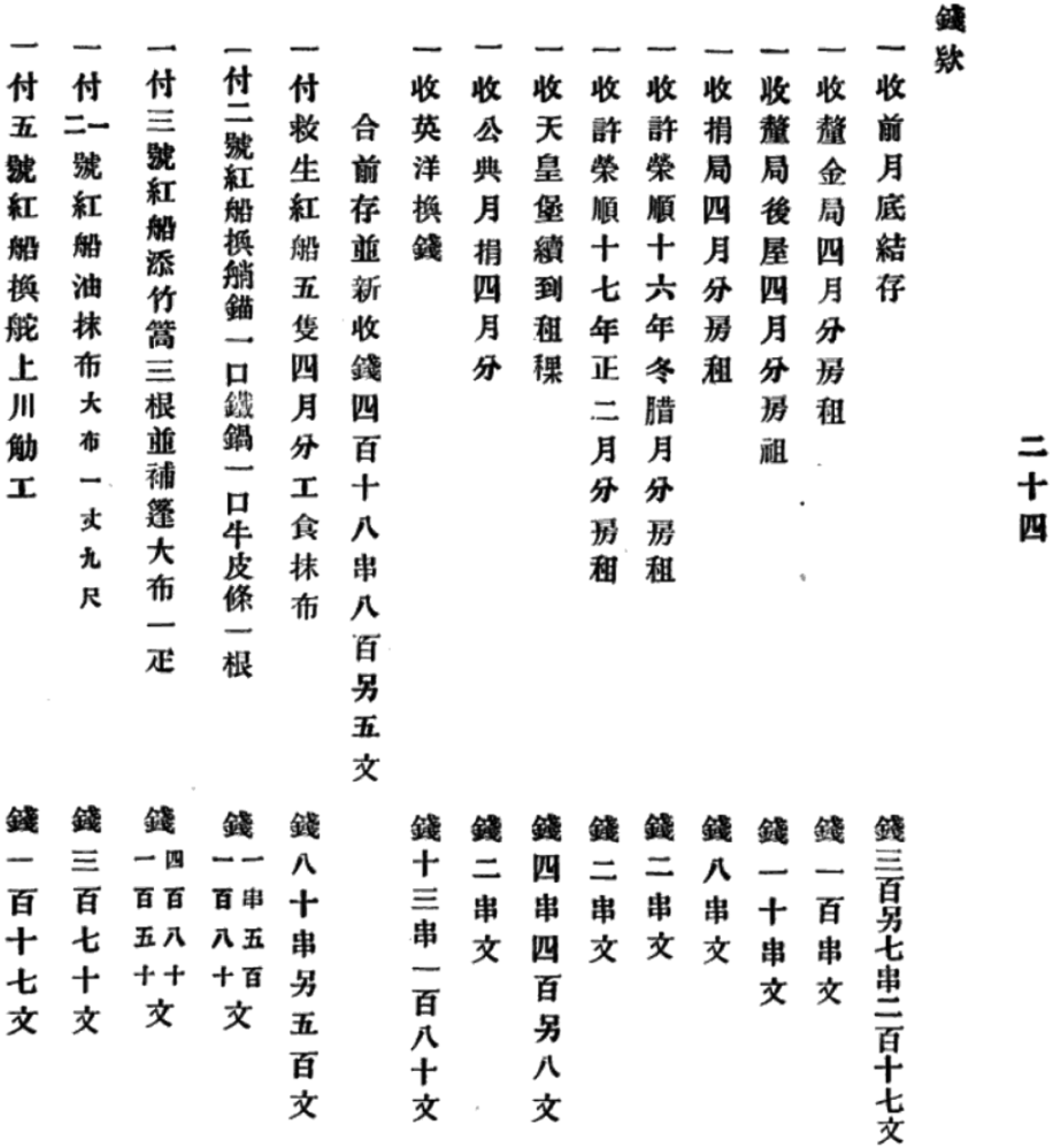
Selected primary funding sources of the Zhengnitang.
A more complex financial relationship emerged through the customs office, which contributed remittances to the organisation. Although the Qing Maritime Customs Service remained an official arm of the Qing government, its administration was heavily influenced by British officials. This revenue stream highlights how local philanthropic initiatives intersected with broader imperial economic structures, reflecting the increasing entanglement of late Qing governance with foreign financial management. While the funds helped sustain the Zhengnitang, they also highlighted the shifting financial landscape in which Chinese civic institutions operated – not solely dependent on traditional gentry patronage but increasingly tied to mechanisms of foreign trade and state revenue. The organisation also derived income from commissions on currency exchange between Chinese yen and British pounds, an activity that reflects the growing integration of local economies into transnational financial circuits. The need to engage in such transactions suggests that the Zhengnitang was not merely a reactive charitable body but one that actively navigated and adapted to the evolving economic realities of the time.
Unlike earlier charitable efforts that depended on ad hoc donations and personal networks, it operated within a structured financial system that required sustained trust from donors and beneficiaries alike. By institutionalising financial accountability and adopting a structured payment system, the Zhengnitang did not merely establish a charity – it shaped a new model of civic engagement, where philanthropy was closely linked to efficiency, direct impact and public confidence. This emphasis on rationalised resource management and demonstrable outcomes was not unique to China. Similar developments were taking place in Europe, where philanthropic institutions were undergoing comparable transformations. In Britain, the Charity Organisation Society (established in 1869) promoted systematic financial supervision to ensure that donations were distributed efficiently, while in France and Germany, welfare organisations introduced administrative reforms to track expenditures and measure social impact. 29 Just as the Zhengnitang had to demonstrate tangible results to secure continued funding from merchants and officials, European charities also adapted to growing expectations that relief efforts should be both effective and financially accountable. These parallels highlight how, in both China and Europe, the late nineteenth century marked a broader shift in philanthropy – one that increasingly prioritised institutional sustainability, public trust and measurable outcomes.
However, identifying stable sources of funding and ensuring their proper management was not enough; translating these regulated financial resources into an effective, coordinated rescue system required meticulous planning and structured implementation. After all, without a spatial framework in place to guide the distribution of resources, such a transparently funded endeavour risked becoming inefficient, redundant or at least difficult to sustain. In addition to strictly monitoring and managing donations and distributing remuneration, the Zhengnitang also had to rationalise the space in which rescue would take place. If the cost of goods would be spiralling out of control, if there was no clear sense of where rescues would take place and how resources were to be deployed in times of emergency, the rescue effort risked becoming incoherent, unnecessarily duplicative or both. In addition to financial oversight, the Zhengnitang also had to control the spatial organisation of riverine rescue in order to guarantee its orderly, effective and long-term performance. Thus, it had to be determined how the river should be covered, where relief personnel should be stationed, and how to synchronise rescue activities in the most dangerous stretches of the river.
To put this organisational vision into practice, the Zhengnitang designated specific rescue zones, beginning from Shimen Beach for the smaller river upstream to Jiulong Beach for the larger river upstream, and extending downstream to Tangjiatuo. These delineations were crucial for preventing financial strain and ensuring effective oversight. The guidelines explicitly stated that ‘defining these boundaries with precision is essential, as failure to do so would not only strain financial resources but also make effective supervision difficult’. 30 To further streamline operations, supervisory posts were established at key locations such as Jiulongtan, Nanchimen and Zhaotianmen, where appointed headmen were responsible for documenting rescue cases, verifying claims and distributing rewards accordingly. This hierarchical structure reinforced the Zhengnitang's commitment to both accountability and efficiency, ensuring that lifesaving efforts remained both coordinated and financially sustainable.
Supervisors were not only responsible for enforcing the integrity of the reward system but were also held to a high ethical standard. Their performance was assessed in an annual audit conducted during the Water Deity's birthday (shuiguan shengdan), an occasion that combined ritual significance with public scrutiny. 31 This timing was deliberate. The Water Deity, venerated as the guardian of rivers and those who navigated them, symbolised fairness, protection and moral righteousness. By aligning financial review with this sacred occasion, the Zhengnitang reinforced the idea that accountability was not merely a bureaucratic formality but a duty imbued with spiritual significance and communal expectation.
Beyond serving as a symbolic act of divine legitimacy, the ritualised audit also functioned as a public affirmation of the Zhengnitang's credibility. The event, attended by donors, local officials and community members, ensured that financial transparency was not just an internal administrative concern but a visible, collective responsibility. Any discrepancies or misconduct uncovered during the review could not easily be concealed, as the process was performed under the watchful eyes of both human and divine observers. This convergence of ritual, public engagement and institutional scrutiny strengthened trust among benefactors, reinforcing their willingness to continue supporting the organisation's lifesaving mission.
This integration of religious practice, financial regulation and community participation played a crucial role in discouraging corruption and maintaining institutional discipline. Supervisors, who received their compensation during this annual ceremony, were expected to uphold absolute integrity, with explicit prohibitions against collusion or fraudulent claims. The organisation's guidelines sternly warned, Any instances of collusion between boatmen and skilled swimmers attempting to fraudulently claim rewards shall be investigated. If proven, the offenders shall be punished, replaced, and held accountable.
32
The Zhengnitang did not emerge in isolation but evolved from the earlier Jiushengju, an organisation that had long overseen seasonal rescue operations. While the Zhengnitang introduced a more structured and permanent framework, it did not entirely replace its predecessor. Instead, it built upon the existing system, working alongside the Jiushengju and integrating its network of experienced boatmen and operational knowledge into a more formalised institution. This continuity ensured that expertise was not lost in the transition but rather absorbed into a broader, more sustainable framework for lifesaving.
This collaborative relationship between an older, loosely structured initiative and a newer, more institutionalised system was not unique to the Zhengnitang but reflected a broader pattern of philanthropic development in late Qing China. Many charities did not displace older ones, but were parallel with them, maintaining and developing their goals at the same time as they gained a more sound financial and administrative basis. Seen from this perspective, the Zhengnitang and Jiusheng ju was thus another example of the way in which late imperial Chinese philanthropy often advanced by modest steps, using and developing pre-existing networks, and borrowing well-known institutions and practices.
At the same time, while some charitable initiatives arose in response to shifting political and economic conditions, others were deeply rooted in long-standing cultural and moral traditions. Prominent among the former were the bodies engaged in the conservation of written materials, for instance those that sought to inculcate habits against the casual disposal of paper (xizihui). In contrast to the crisis response mechanisms previously mentioned, these organisations were less about emergency interventions and more about the continuity of moral and scholarly stewardship. An entry in the diary of a Chinese diplomat Xie Fucheng (1838–1894), written in February 1892 during his sojourn in Europe, sheds light on this practice, The writing preservation society (xizihui) in China was organized by a group of scholars many centuries ago. Its purpose is to show reverence for the ancient sages who created the written language and to prevent people from defiling or mishandling books and papers with writing on them. Over the years, this belief has become ingrained, fostering the idea that anyone who disregards these principles will face consequences both in this life and beyond. No such custom exists in Europe. I have seen people reading newspapers in carriages, only to discard them as soon as they are done, letting the pages fall into the gutter. They wipe utensils with newspapers and even use them as toilet paper. Yet they show no fear that divine punishment will follow.
33
In addition to ideological continuity, the partnership between the Zhengnitang and the Jiusheng ju also introduced significant practical benefits. Rather than constructing a dedicated fleet from scratch, the Zhengnitang absorbed Jiusheng ju's seasonal rescue boats into its system, allowing it to scale its operations without assuming the financial and logistical burden of permanent vessel maintenance. It should be noted that this approach was not just about cost-cutting. According to their internal regulations, it was also to ensure that the resources dedicated to rescue work could be redeployed as needed to address the most serious threats, concentrating efforts in the regions and during the times when flooding and river turbulence were at their worst.
Nevertheless, the incorporation of the Jiusheng ju into the Zhengnitang's framework was not just a matter of logistical matter; it also brought about a shift in how rescue operations were managed and structured. Both organisations were localised efforts, but they functioned in distinct ways. The Jiusheng ju, although long engaged in river rescue, operated as a more ad hoc and flexible system, mobilising boatmen as needed, often without rigid financial or procedural requirements. In contrast, the Zhengnitang introduced a more systematised model, one that placed greater emphasis on structured responsibilities, defined operational guidelines and financial transparency. This transition marked a move from a responsive relief effort to a more stable, regulated institution, ensuring that lifesaving work was no longer left to spontaneous or sporadic initiatives.
A key feature of this transformation was the requirement that helmsmen and oarsmen affiliated with the rescue fleet register with the magistrate's yamen, the local administrative office responsible for legal and civic affairs. While both the Jiusheng ju and the Zhengnitang were locally operated, this step signified an effort to integrate lifesaving work into a more formally recognised civic function, rather than leaving it purely to voluntary or community-driven efforts. By placing these boatmen under a structured registration system, the Zhengnitang introduced a level of accountability that reinforced long-term continuity rather than reliance on informal networks. This shift reflected a broader development in late Qing philanthropy, where local charitable initiatives were increasingly designed to function within durable, financially stable and administratively coherent frameworks, rather than as temporary or reactive measures.
This transformation was further reinforced through the standardisation of rescue equipment and operational protocols. Jiusheng ju vessels, which had previously relied on the individual capabilities and resources of boatmen, were now required to be outfitted with designated lifesaving tools such as plank buoys, rescue hooks and cables, ensuring that all rescue operations adhered to a common level of preparedness. The presence of standardised equipment ensured that lifesaving was no longer dependent on the improvisational skills of individuals but was instead embedded within a structured and methodical system. The integration of the Jiusheng ju into the Zhengnitang's operations thus exemplifies a critical mode of late Qing institutional evolution, where existing networks were not simply replaced but reorganised to function within a more durable and regulated framework. While the Jiusheng ju had long overseen riverine rescue efforts, it was the Zhengnitang that redefined and formalised these efforts into an enduring civic institution. This transition reveals a crucial feature of late imperial Chinese philanthropy – not merely the persistence of existing traditions, but the ability to restructure and adapt them in response to changing societal needs and evolving conceptions of public welfare.
Another distinctive aspect of this system was its openness. The Zhengnitang's approach did not restrict lifesaving efforts to its own designated fleet but extended participation to all boats navigating the Yangtze, regardless of their origin. As the rules stipulated, ‘all boats navigating the Yangtze River – regardless of their origin or direction – shall be permitted to participate in the rescue and receive the designated rewards’ (shuizhong youren hujiu, wulun nanbei, hengjiang shangxia, Changjiang ge chuanzhi junke fujiu). 34 This approach highlights an important dimension of collaborative philanthropy in the late Qing. Rather than monopolising rescue operations, the Zhengnitang sought to mobilise a larger network of river workers, embedding lifesaving efforts within a shared culture of civic responsibility. By making rescue participation an open and incentivised endeavour, it blurred the lines between institutional charity and communal duty, ensuring that its impact extended far beyond the boundaries of its own organisation.
This emphasis on collective responsibility was reinforced by a parallel concern for ethical conduct. The organisation mandated that human life take precedence over material possessions, ensuring that the pursuit of financial incentives did not compromise the integrity of rescue efforts. Official protocols explicitly forbade rescuers from seizing cargo or belongings of drowning victims, with violators facing legal consequences. A passage in the guidelines states: ‘Should a drowning victim first think of survival and, once safe, then think of their possessions, their priorities are self-evident. Others should not mock them but instead act with due caution and integrity.’ 35
Beyond regulating individual conduct, the Zhengnitang also placed great importance on fairness in leadership and decision-making. Instead of allowing leadership roles to be assigned arbitrarily or left to personal connections, the organisation turned to established civic institutions to provide oversight and legitimacy. The Zhishan Hall and Peide Hall, two respected local entities known for their engagement in public affairs, played a crucial role in this process. Regulations specified that those overseeing rescue operations would be selected from these halls, ensuring that leadership was entrusted to individuals with both practical experience and a reputation for integrity. This system not only reinforced ethical governance but also embedded the Zhengnitang's operations within existing structures of local authority, lending it credibility and public trust. Comparable attempts to ensure fairness, transparency and community oversight can also be found in contemporary European voluntary societies, suggesting a degree of functional convergence even across different cultural settings.
By formalising leadership appointments, the Zhengnitang ensured that authority was neither arbitrary nor concentrated in a few hands. Instead of relying on informal influence or hereditary privilege, it established a structured method for selecting leaders, one that balanced practical expertise with moral integrity. This system did more than regulate internal operations; it reinforced public trust in the organisation's fairness and reliability. At a time when many charitable ventures depended on elite sponsorship and personal connections, the Zhengnitang's leadership model reflected a shift towards a more merit-based and transparent approach, where credibility rested on competence rather than status. Here again, parallels with European contexts are striking: voluntary lifesaving and charitable organisations in Britain, the Netherlands and France also emphasised transparent accounting and merit-based authority as a way of winning public trust. Whether such similarities arose from direct emulation or from deeper, comparable social dynamics remains difficult to determine from the surviving sources.
This governance structure also reflected the organisation's effort to balance broad participation with careful management. While the Zhengnitang welcomed contributions from a wide network of river workers and patrons, it did not leave its operations to chance. Leadership was carefully selected to prevent undue influence or inefficiency, ensuring that resources were used effectively and in the interest of the community rather than personal advantage. In doing so, the Zhengnitang remained open and inclusive while still maintaining a degree of discipline and accountability, reinforcing the idea that public service required both collective responsibility and ethical stewardship. This leads us to ask: were such values necessarily the product of transnational exchange, or might they have developed autonomously, from a common impulse to keep voluntary associations running in contexts where public provision could not be taken for granted? The documentary record is rarely sufficient to adjudicate on the first question. The second seems clearly to be the case, and it is to this global context that Chinese lifesaving work belongs.
Legacy and reflections
Over time, the Zhengnitang's influence extended beyond Chongqing, inspiring the formation of similar rescue societies across Sichuan and neighbouring provinces. By formally establishing rescue zones, headmen and incentives, the association was better able to coordinate and streamline rescue efforts than the more ad hoc arrangements that preceded it. Furthermore, their advocacy had an impact on other areas of public safety, with official attention increasing on the monitoring of ferryboat routes and practices. This is evident in the rules and regulations they drafted which stated: ‘When the floodwater is high and about to become dangerous, all the wharf and ferryboaters must be strictly commanded to manage people's embarkation and disembarkation […] If the water becomes too dangerous, the crossing will not be allowed that day’. 36 In this sense, the Zhengnitang both reflected and represented a growth of extra-legal influence in local governance.
Determining the precise number of individuals rescued since the Zhengnitang's founding remains challenging, but what can be ascertained is the organisation's careful recording of the number of people rewarded for lifesaving, as well as other expenses (Figure 2). Beyond their recordkeeping for purely bureaucratic ends, the data in these tables help to show how interlinked the ideas of accountability, reward and moral economy were in practice. The official recognition of the rescuers (or rescuing unit) who had completed a rescue operation lent rescue an air of public duty and civic responsibility; it was no longer solely a private act of piety. The survival of this document, even if we do not know the exact rescue figures, suggests that accountability and transparency were considered to be just as important for the acknowledgement of money and physical donations as they were for financial outlays.
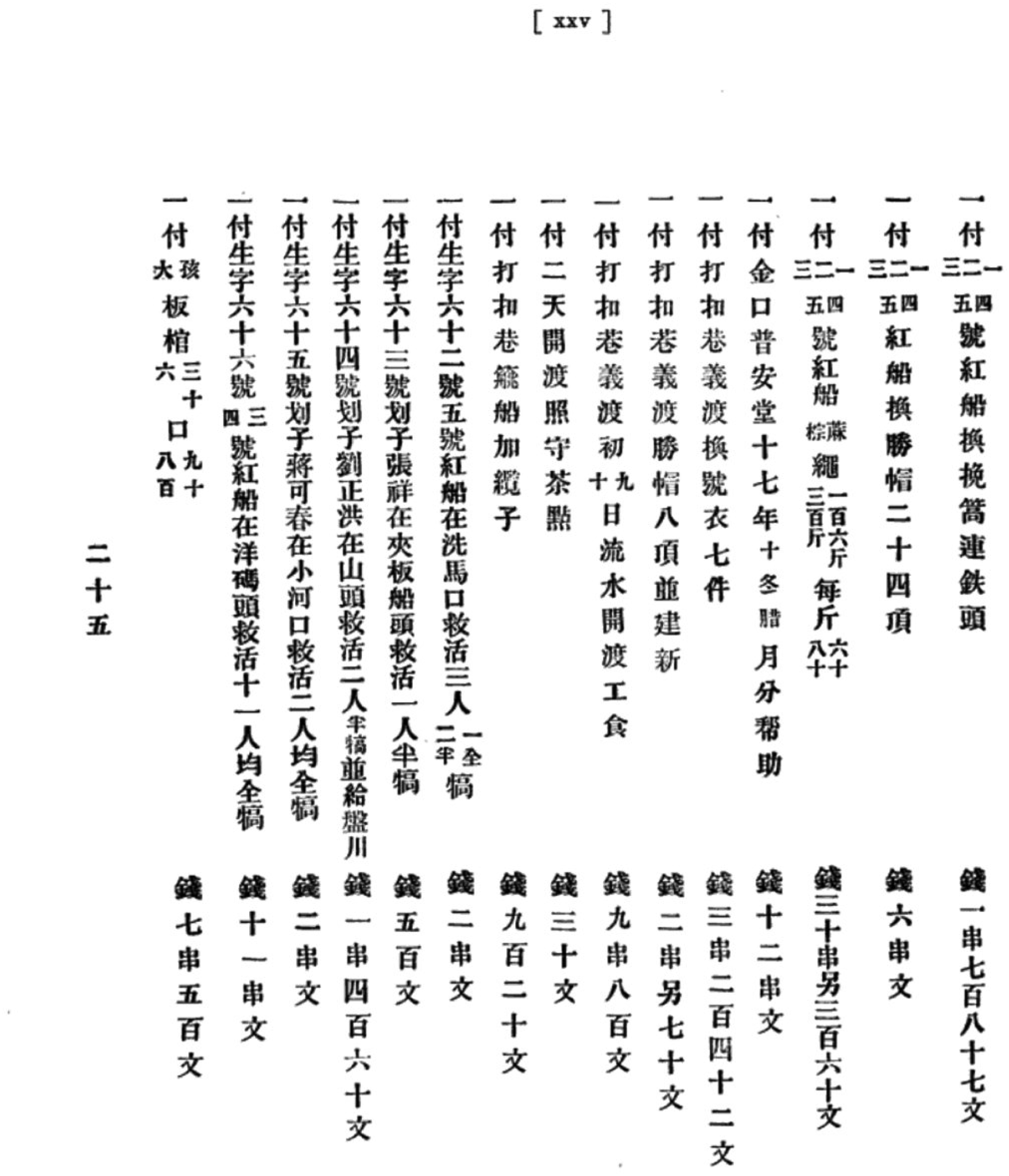
Excerpt from the Zhengnitang's documented expenditures.
By the late Qing, the Zhengnitang had become an established part of the civic landscape in Chongqing, and its existence is a reminder of the flexibility of private philanthropic organisations to respond to different political and economic circumstances. The expanded and changing role of the Zhengnitang is perhaps an indicator that philanthropy was more than a site of moral expression in late imperial China, and its functions were part of a system of social control that could work with and also in lieu of the state. While official rescue and relief efforts could be sporadic, local, community-level institutions such as the Zhengnitang were often effective at mobilising financial and material resources to meet the demand for public services.
The date of the abolition of the Zhengnitang remains unclear, but by the early twentieth century its continued existence would have become increasingly precarious. Like many charitable institutions of late imperial China, the Zhengnitang existed in an era of transition in which philanthropy, state policy and foreign economic interests were often closely linked. In its early years, the Zhengnitang was financially supported by a number of means including rental and property income, donations by individuals, remittances from the customs office (which was under British control during this period), and currency exchange profits. This diverse portfolio allowed for a measure of flexibility and sustainability for the organisation, but also made it vulnerable to larger political and economic forces, which became more acute as China's fiscal and administrative system evolved. By the early Republican period (1912–1949), philanthropic organisations such as the Zhengnitang came under mounting difficulties. The instability of the warlord era, foreign aggression and mounting fiscal uncertainty weakened traditional patronage and sources of donations, while the central state increasingly attempted to monopolise and modernise public welfare. Meanwhile, the rise of foreign-led relief programmes and the expansion of treaty-port philanthropy altered the landscape of charitable engagement, relegating institutions rooted in Qing-era civic structures to the periphery. In this shifting climate, it is highly likely that the Zhengnitang and similar institutions would have faced difficulty continuing in this new environment, for reasons beyond those of financial insecurity.
Its disappearance, however, was not merely the story of a fading institution but part of a broader transformation in how philanthropy functioned in China. The history of Zhengnitang demonstrates that private institutions of charity were often not simply competing with, but also supplementing the work of the state in meeting certain social needs. In the face of an erratic state response to social distress, the Zhengnitang provided a model of agility that reformed governance might have failed to deliver. In particular, the prioritisation of meritocracy in the awarding of rewards, the financial transparency of the organisation and the rigidity in its hierarchical structure were also part of a larger development in civil society in the late Qing period that saw the gradual intervention of local initiatives in meeting social demands.
Zhengnitang was only one of many philanthropic agencies that helped to provide a social safety net for the general populace of Qing China. The Qing state did have a presence in the sphere of public welfare in the form of bureaucratic and legal agencies, but there was a relative lack of infrastructure in terms of institutionalising the provision of social services at a localised level. For instance, it was insufficiently staffed to deal with incidents of unexpected death by drowning, an opportunity for individuals in civil society to participate in the governing process. Philanthropic associations led by gentry members had a crucial role in providing relief and assistance, and the example of Zhengnitang illustrates the decentralised nature of governance, where non-state actors played a fundamental role in maintaining social order and communal stability.
Furthermore, the Zhengnitang's survival and effectiveness were contingent upon its ability to secure financial support and maintain public trust. In contrast to a state-run affair, which could simply order a tax or compulsory contribution to be levied on the population, the Zhengnitang received donations from merchants and boatmen as well as from sympathetic officials, either from the local office or from the customs, and in that way, it could be seen as a reflection of the social responsibility of the local elite and officials. Moreover, because of this, the Zhengnitang had the opportunity to function in a more flexible way than a state-run organisation. In that light, it might be relevant to ask how such philanthropy was incentivised – whether through religious beliefs, social prestige or the expectation of reciprocal support in times of personal crisis.
Another consideration in understanding the nature of the Zhengnitang is to look at Western lifesaving institutions for a comparative view. Lifesaving institutions in Europe and North America were usually explicitly under government patronage and/or increasingly integrated into the governmental system. In many instances, lifesaving institutions eventually turned into semi-official or official governmental bodies. They were modelled to serve as public safety counter-measures. For example, in Britain, the RNLI was founded in 1824. Although the British lifesaving institution was funded by donations and volunteers, it was established and operated in a system of political governance, in which state patronage and recognition and governmental regulation of its operation led to a longer lifespan. The RNLI did not receive government funding, but it eventually became a state affiliated official entity and its development took a clear direction based on this relationship. In contrast, the Zhengnitang, was never under the umbrella of state authority, and never had state funding, as it was a completely private effort with local level leadership.
Beyond structural and financial differences, the two institutions also diverged in their responses to technological change. The late nineteenth century saw significant advancements in lifesaving equipment and vessel design, which influenced the operational effectiveness of these organisations. 37 European communities began to equip themselves with steam rescue boats, upgraded floats and other signalling devices to better address emergencies swiftly. The RNLI was able to raise funding to support more adequately equipped lifeboats to operate in challenging coastal conditions. 38 In China, which remained heavily reliant on water transport as an essential form of transport and commerce, the increasing number of steam-powered ships caused fresh problems such as machinery breakdowns and high-speed collisions, thus heightening the risk of shipping accidents. Although the Zhengnitang was less able to access new maritime technology, it also adapted by opening more rescue points, fine-tuning its reward systems and promoting safer ferry operations. This interplay between technological change and philanthropic adaptation illustrates that lifesaving institutions, whether in China or the West, were not static entities but evolved in response to new challenges in transport and infrastructure.
A third area of comparison is the wider context of debates about public safety and urban governance. Although the primary purpose of both the RNLI and the Zhengnitang was to rescue drowning victims, their political voice was broader than this emergency lifesaving role. In highlighting unsafe practices, including risky ferries, overloaded craft and the need for training boatmen, the RNLI and Zhengnitang were part of a wider political debate about the nature and scope of public safety in towns and cities. This was an area where the British state took an increasingly regulatory approach. In China, while the same debates occurred, the solution was more decentralised and piecemeal. Some local governments recognised the efficiency of privately run initiatives and tried to make their recommendations binding on the wider population. Enforcement was a different matter.
Ideology was a key factor in both the organisation of lifesaving and its social role. The RNLI and other Euro-American lifesaving organisations justified their efforts and goals through a discourse of civic responsibility, national duty and Christian charity, which buttressed the growing sense that maritime rescue was both a moral and state duty. 39 Similarly, in China, the Zhengnitang's work was deeply embedded within Confucian, Buddhist and Daoist moral frameworks, which also emphasised benevolence and ethical responsibility. Confucian values made life-saving a logical extension of righteousness and duty, while Buddhist and Daoist concepts of karmic merit created additional reasons to take part. The belief that saving people would create merit for those people increased the willingness to donate and get involved.
One important difference, however, resided in the institutional frameworks within which lifesaving was organised. The RNLI and its counterparts in Europe were becoming components of an emergent welfare paradigm, within which voluntary organisations were expected to work alongside state mechanisms. In contrast, the Zhengnitang was able to flourish in a philanthropic milieu in which private actors (rather than the state) assumed primary responsibility for the public good. Religion was a crucial component of this system, with temples often being used as collection sites for donations, and fundraising events being organised during religious festivals. Philanthropy and religiosity were deeply entwined in Qing-era social organisation, and the success of lifesaving was an outcome of moral philosophy, practical necessity and collective endeavour.
Taken together, these differences reflect distinct trajectories in the development of philanthropy. In the Western context, we find an increasing proximity between lifesaving groups and state systems. The Zhengnitang does not contradict this image, yet it does stand for a different dynamic in China, where philanthropy maintained a certain degree of separation from state institutions, although this does not and should not imply that philanthropy and welfare were independent of state oversight or need. We should not conceptualise the bureaucratisation of humanitarianism as an exclusively Western development, and the Zhengnitang is an illustrative example of how late imperial China developed a formalised and independent culture of philanthropy that was effective even with limited state support.
Concluding remarks
Examining lifesaving societies enables us to reclaim an underappreciated aspect of humanitarian practice, even though the majority of humanitarianism's histories have concentrated on famine relief, abolitionism and war-related aid rather than lifesaving. In this regard, the Zhengnitang serves as an example of a similar but somewhat different path in China. Its creation, which has its roots in Buddhist–Daoist ideas of karmic duty and Confucian moral obligations, is an example of how regional customs influenced organised humanitarian endeavours long before Western influences did. It was not simply a case of responding reactively to accidents by the case, but rather reflected and reinforced a broader civilisational ethical system, where saving lives was not simply a charitable good in itself but was inseparable from a whole range of other social, religious and even economic necessities. At the same time, it was also an organised and self-financing model of civic engagement that extended all the way into the modern era. It is also worth noting that the so-called ‘China model’ of lifesaving was often cited in Western societies in these contexts, and a number of lifesaving societies in Europe even distributed leaflets claiming that they were emulating Chinese rescue practices. While what exactly made up this model was never particularly clear, such a self-conscious deployment of China as a marketing tool points to the fact that Chinese rescue traditions were seen as an established aspect of Chinese civilisation both within Chinese society and, whether or not strategically as a part of self-fashioning, in the eyes of Western societies.
Understanding the Zhengnitang in the larger framework of philanthropy challenges conventional wisdom that depicts coordinated aid efforts as a uniquely Western phenomenon. China's lifesaving institutions developed gradually, based on long-standing customs of mutual aid, moral obligation and religious merit-making, rather than in response to foreign ideas. These organisations played a significant role in the civil society of late imperial China. They demonstrated how philanthropy operated outside of the direct authority of the government and reinforced local government structures. Their ability to leverage pre-existing social networks to secure funding from local elites, religious organisations and merchant groups allowed them to continue lifesaving efforts for many generations.
Furthermore, the Zhengnitang case implies that humanitarian endeavours in China were ingrained in larger philosophical and social frameworks rather than just focussing on saving people from imminent danger. Similar to other charitable organisations like the xizihui, which are briefly covered in this paper, Qing-era lifesaving societies remained explicitly entwined with spiritual beliefs, in contrast to many European humanitarian movements that increasingly secularised and separated themselves from religious motivations. A cyclical system in which philanthropy was both a moral obligation and a way to obtain spiritual rewards was established by the idea that merit was accrued through charitable deeds, which encouraged ongoing financial and logistical support. This cultural underpinning enabled people from all socioeconomic backgrounds to participate in lifesaving initiatives, with both affluent donors and regular boatmen recognising the benefits of supporting the cause.
Ultimately, the study of Zhengnitang challenges Eurocentric notions of humanitarian development by demonstrating how innovation, community service and enduring moral principles gave rise to lifesaving organisations in China. It demonstrates that in late imperial China, philanthropy was not merely a byproduct but rather a significant component of social welfare that complemented the deficiencies in bureaucratic management. In addition to assisting the government, community-driven projects established enduring models for public service. They demonstrated that humanitarianism is not a monolithic ideology, but rather evolves in response to local circumstances, including moral imperatives, environmental demands and economic pressures.
However, no philanthropic tradition is isolated. Although China's lifesaving techniques evolved within domestic contexts, outside influences did not completely ignore them. A worldwide discussion on systematic lifesaving, safety laws and training procedures was sparked by the nineteenth-century growth of organised rescue organisations in the United States, the United Kingdom and the Netherlands. Exposure to these changing international models may have strengthened the desire of Chinese philanthropic actors to improve and standardise current water rescue procedures, making them more methodical and long-lasting. Nonetheless, it is possible that some Chinese elements, which are based on moral obligation and group responsibility, also influenced how civic relief and maritime aid were perceived elsewhere in the world. Humanitarian practices developed through continuous discussions across cultural and geographic boundaries, influenced by mutual influence rather than unilateral diffusion, as opposed to following a straightforward East-to-West or West-to-East model of transmission.
As scholars continue to examine the relationships between maritime history, philanthropy and social welfare, China's lifesaving institutions offer a crucial lens through which to rethink the dynamics of humanitarianism globally. Their guiding principles were influenced by Confucian, Buddhist, and Daoist traditions, but the natural desire to preserve life speaks to universal concerns. There is, however, one caveat: most lifesaving societies in Europe had evolved on seaboards, while the Zhengnitang is primarily concerned with rivers. This divergence emphasises the significance of rivers for China's transportation, trade and social life, as well as the relative dearth of state-sponsored or Maritime Customs-led efforts in coastal rescue. Recent research on China's lifeboat services likewise reflects this imbalance, suggesting that organised lifesaving was far more developed inland than along the coasts. Whether this stems from environmental exigency or from conceptualisations of the sea itself remains a question to be explored.
Footnotes
Acknowledgements
The author is deeply grateful to Henning Trüper and Lukas Schemper, whose thoughtful readings and conversations enriched both the clarity and the spirit of this article. He also wishes to thank the anonymous reviewers for their generous engagement and discerning comments, which have helped sharpen the argument and refine its expression.
Author contribution
Ronald C. Po: Conceptualisation, archival research, data curation, analysis, writing – original draft, and writing – review & editing.
Declaration of conflicting interests
The author declared no potential conflicts of interest with respect to the research, authorship and/or publication of this article.
Ethical approval
Not applicable. No human or animal participants were involved in this research.
Funding
The author received no financial support for the research, authorship, and/or publication of this article.
