




Abstract
In twentieth-century Sweden, conventional inland nationalism was challenged by strong currents of maritime national identities. The reason was a national frenzy regarding maritime popular music – primarily, songs about Swedish sailors and their adventures in exotic faraway lands. Throughout the 1920s, 1930s and 1940s, and continuing into the 1950s, numerous Swedish composers, singers and musicians produced hundreds of sailor songs. Their commercial success was staggering, to the delight of Sweden's developing music industry, but the identitarian consequences were even more astonishing. Maritime national identities flourished as Swedishness itself changed drastically via this huge exposure to sailor songs.
Keywords
Introduction: the source material
From 1918 to 1960, hundreds of Swedish maritime songs were written, produced and sold via new mass markets as the modern music industry emerged, developed and matured. These Swedish sailor songs were different from, for example, the Anglo-Saxon tradition of sea shanties, as they had generally never been sung on ships or in other maritime environments. They were not maritime folk music as such. 1 Instead, the Swedish sailor songs were industrially and professionally produced specimens of modern capitalism, commercialism and popular culture. 2 They were intended to satisfy the growing music consumption of the masses – the ordinary Swedish population, not sailors or other limited maritime groups (coastal populations, harbour workers or navy personnel, for example). Sweden's twentieth-century popular maritime music craze was so huge that it came to surround Swedishness. Even today, many Swedes express that these songs culturally represent their national identity. To sing them is to be Swedish.
The sailor songs are sung on a multitude of Swedish media platforms, including national television shows, 3 and at traditional sing-along events like midsummer festivities (midsummer being hugely important to Swedishness) and other social occasions. The songs are such an obvious part of Swedishness that they are taken for granted by Swedes in general. They are commonplace and therefore not reflected on, which means that Swedish academics – even those who specialize in the study of national identities – have largely neglected this significant part of identitarian Swedishness.
Of the hundreds of maritime songs produced during the twentieth century, some 80 songs have been chosen as the source material for this study. They have been selected since they were, to various extents, the most commercially successful songs. They are therefore representative and can be regarded as ‘the greatest hits’ of the golden era of Swedish maritime popular music. 4
The Swedish maritime songs of the twentieth century are not all about sailors. Some celebrate other aspects of the national maritime culture and environments, such as Sweden's coastal landscapes, archipelagos and seafaring traditions. Many songs manifest the joy of leisure sailing. However, there is one notable exception concerning the themes of the songs: the naval (military) field – expressed via Sweden's navy, naval seamen, warships and so on – is almost absent in the source material, or at least very rare. 5 Maritime militarism almost seems to be perceived as foreign ‘otherness’.
The nation and popular culture
Modern nationalism, being the main political ideology of the post-1789 nation state, uses the collective mindsets of national identities to construct itself. 6 The concept of ‘the nation’ is an example of mass identity politics and, as such, far more intricate than the concept of ‘the state’. As was proclaimed in the newly formed Italian Parliament in 1861: ‘we have created Italy, now we must create the Italians’. 7 However, creating a nation is not enough, as nations require constant maintenance to imbue themselves with the continuing aura of being a natural given. Accordingly, nations need substantial, repeated and ongoing efforts on the part of groups and individuals. 8
Conceptions of a ‘national culture’, in particular, have been crucial to nationalistic rhetoric, practice and ideology. Such ideas have played a central role in fostering mass national identities.
9
Anthony Smith writes the following in his study Nationalism and Modernism: Just as nationalism has become a global movement and the nation the accepted norm of political sovereignty, so a national culture has become entrenched as the raison d’être of each and every national community, its differentia specifica and distinguishing mark.
10
Popular culture is deemed to be artificial, commercialized, manipulated, inauthentic, or just downright bad. All of this, of course, misses the point that most studies of popular culture may be more interested in the sociology of cultural movements than in the cultural products themselves.
12
large audiences are thought to commune, in a sense, through their shared participation in a mediated event, and in so doing experience and celebrate their connection with national others as much as the explicit content of the event in question.
16
Affect theory gives us tools to add, even serve as a corrective to, exclusive attention to the symbolic and the textual in popular expressions of nationalism. It draws our attention to questions of immediacy, liveness, eventfulness, embodiment, circulation, intensities, and flows. These phenomena may be organized by popular culture but are not readable off popular texts alone. It is only by examining how these texts are consumed, taken up, spread, and circulated that we can understand their role in generating affect.
17
People are spending money to be brainwashed on where to spend their next dollar and pay more for whatever that is. It's genius. Under this psychology, society is, in turn, creating a culture that expresses our deepest yearnings and desires.
18
Music and nationalism
Ever since 1792, when the initial line of ‘La Marseillaise’ – ‘Allons enfants de la Patrie’ (‘Arise, children of the Fatherland’) – was first heard in revolutionary France, the phenomena of music and modern nationalism have been closely connected. 19 In 1825, the British song ‘God Save the Queen’ was the first nationalistic song to be named an official national anthem, and during the nineteenth and twentieth centuries, most European countries followed Britain's example. 20 Thus, the same set of musical material repeatedly gathers on the nationalistic stage ‘to give voice to music and nationalism’. 21 Nations are collectives, and music is able to muster a collective when expressing the spirit of the nation via sound.
However, identitarian music does not have to be explicitly nationalistic, like national anthems, to produce national identities. Philip Bohlman makes the distinction between ‘national music’ and ‘nationalistic music’. In national music, reinforcing borders (such as the identitarian border between ‘us’ and ‘them’) is not a primary theme, whereas nationalistic music typically mobilizes the cultural defence of borders. 22
In fact, popular music is a more effective approach to producing national identities compared to the pomp and circumstance of nationalistic state-sponsored national anthems, operas and symphonies. National popular music's effectiveness occurs precisely because its nationalism does not enter ‘from the top, that is from state institutions and ideologies; it may build its path into music from just every angle, as long as there are musicians and audiences willing to mobilize cultural movements from those angles’. 23 Popular music is therefore better than nationalistic music at transforming narratives into nationalist discourse precisely because it is an example of banal nationalism rather than explicit flag-waving nationalism.
This means that popular music is the most frequently overlooked domain of nationalism in music.
24
Despite its powerful impact in terms of certain national promoted images, ideals and themes, according to Tim Edensor: culture is not fixed but negotiated, the subject of dialogue and creativity, influenced by the contexts in which it is produced and used. A sense of national identity then is not a once and for all thing, but is dynamic and dialogic, found in the constellation of a huge cultural matrix.
25
Background: Swedish inland nationalism, 1891–1918
States bordering on the sea often experience rivalry between maritime and inland national identities. 26 Commonly, maritime identities fight a losing battle. Almost all nation states prefer inland national identities connected to agrarian traditions, rural culture and farmsteads, as well as old castles, churches and battlefields.
As nineteenth-century globalization, industrialization and urbanization brought about social, political and cultural changes in human life, the notion arose that the ‘true nation’ – battling the degeneration of modernity – could only exist in the unspoiled fields, meadows and forests inland (‘the heartland’), far from the shores, beaches and coastlines of globalized oceans and their threatening transnational closeness to foreign ‘otherness’. An illustrative example is Norway, a coastal country that is almost entirely reliant on maritime resources for its livelihood.
27
Despite this, inland discourses constitute the strongest forms of national identity in Norway: From a perspective of cultural history, when Norwegian national culture was constructed during the nineteenth century, coastal cultures were considered watered down because of historical contacts with the outside world due to trade and seafaring. The coastline's contact with the outside world was therefore connected to something unauthentically Norwegian.
28
Dalarna had no contact with the extensive Swedish coastline.
29
Thus, the inhabitants of Dalarna were seen as particularly wholesome, white, unmixed Swedes. Dalarna lacked big cities and was therefore perceived as part of rural Sweden, spared from the degeneration of urbanization. Dalarna had a particularly strong regional identity, emphasizing identitarian traditions, especially midsummer festivities, folklore and historical events.
Thus, symbolizing ‘true Swedish’ whiteness, anti-urbanization, anti-modernity and anti-globalization, Dalarna was the very essence of inland constructions of Swedish national identities, starting in the late nineteenth century.
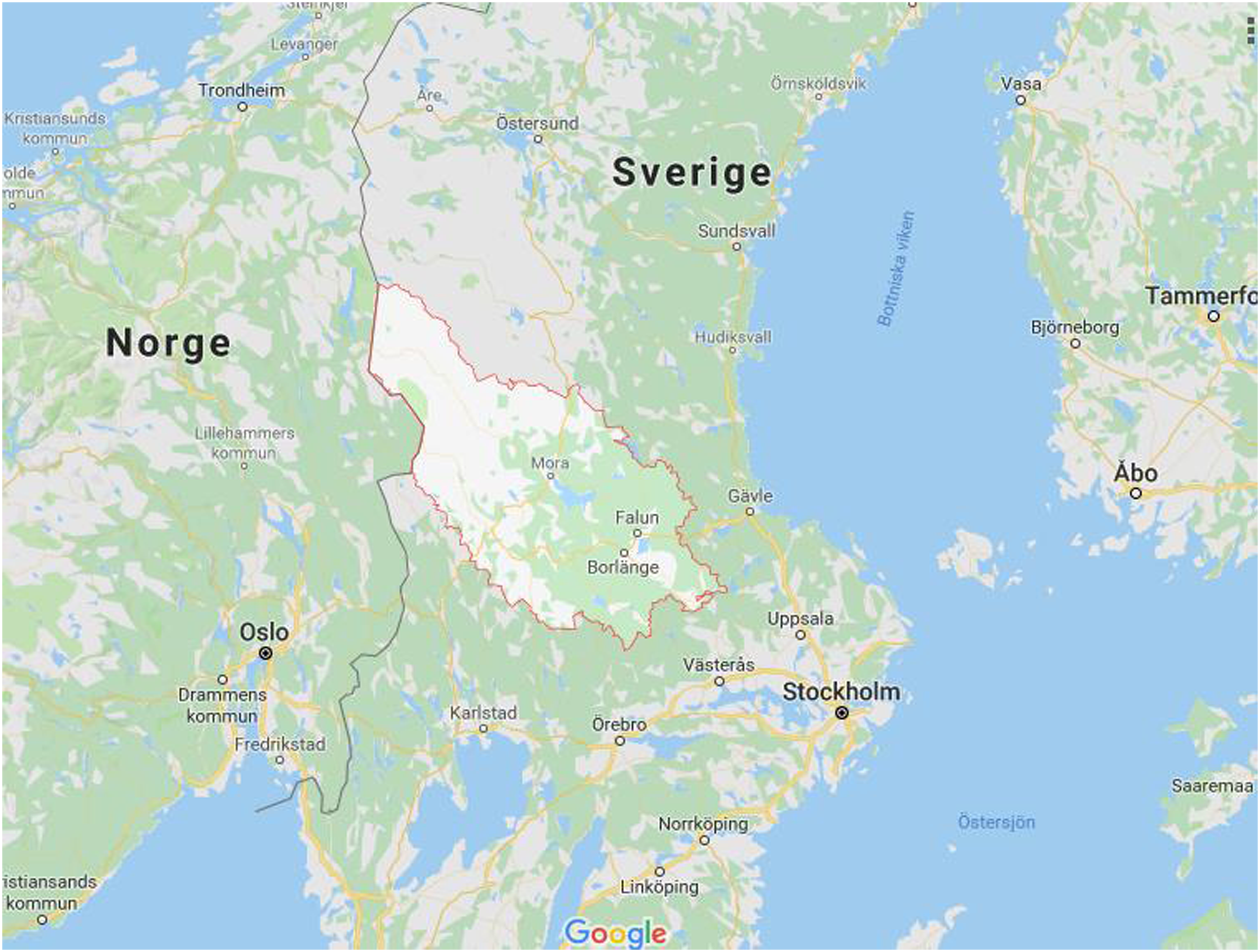
Dalarna (marked with a lighter shade of green on the map) has no coastline.
This was manifested physically in 1891, as parts of Dalarna were rebuilt in Sweden's capital, Stockholm, when the open-air museum Skansen (Figure 2) was inaugurated in the middle of the city. It swiftly became immensely popular. 30 Its founder, Artur Hazelius (1833–1901), transported ‘typical’ specimens from Dalarna – including houses, barns and other buildings, cattle and even people – to the nation's capital and Skansen. Shortly thereafter, Hazelius expanded his efforts beyond Dalarna and brought buildings and artefacts from other agrarian regions to his museum. However, he did not incorporate the maritime culture of Sweden’s coastal regions. Maritime Sweden was not to exist at Skansen.
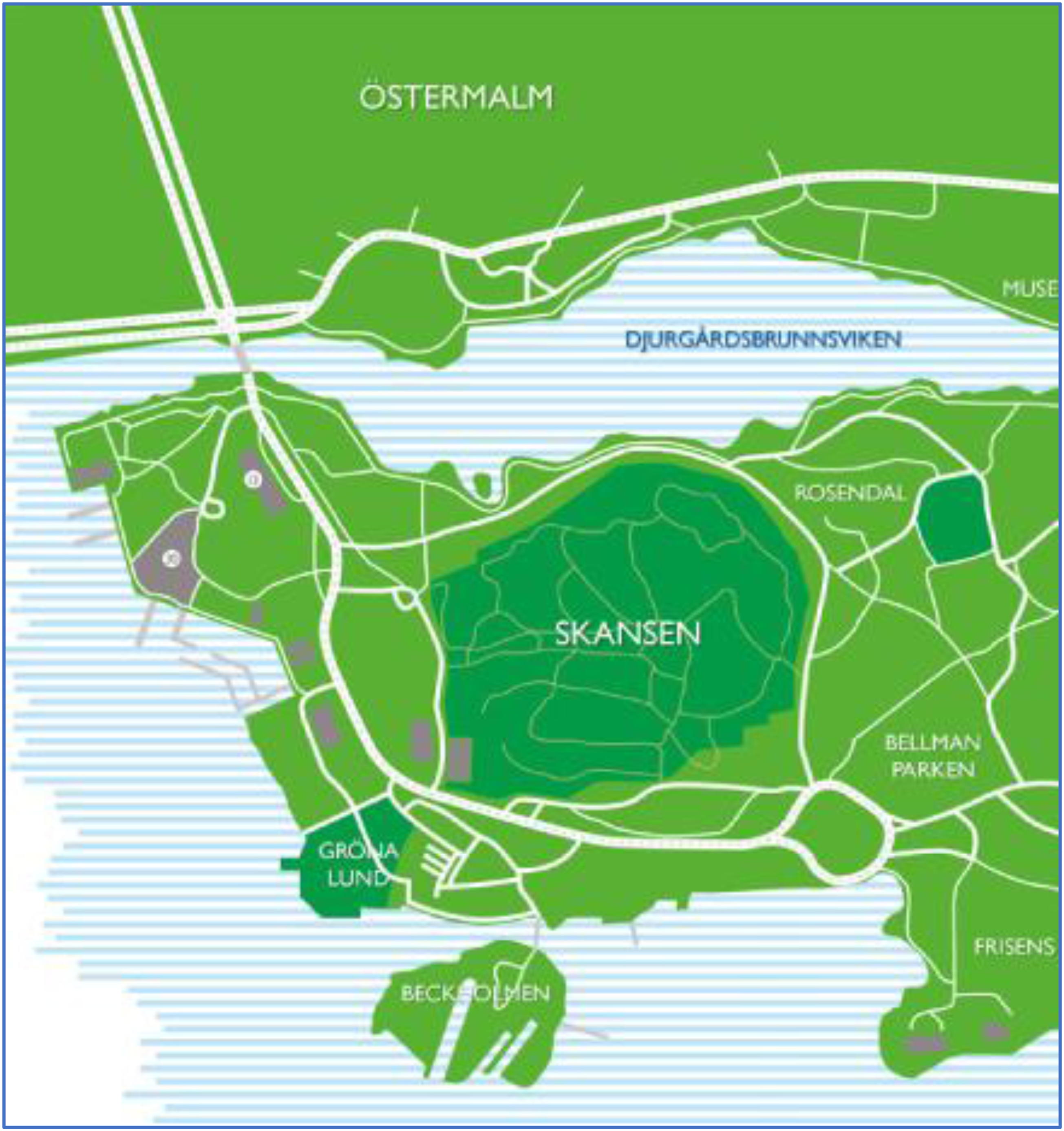
Like the region of Dalarna, Skansen (marked with a darker shade of green on the map) has no contact with the sea, even though it is situated on a small island.
Another forceful national identity affecting early twentieth-century Sweden was race biology – the notion that Swedes were biologically superior to all other humans, being the purest Germanic Aryans in the world. In 1895, the renowned Swedish lyricist Victor Rydberg wrote a celebrated poem in which he thanked the divine powers for being born a Swede:
The birth of Swedish popular-culture sailor songs
In the 1918 Christmas issue of the influential Swedish magazine Söndags-Nisse, the former sailor Evert Taube (Figure 3) made his public debut as a poet.
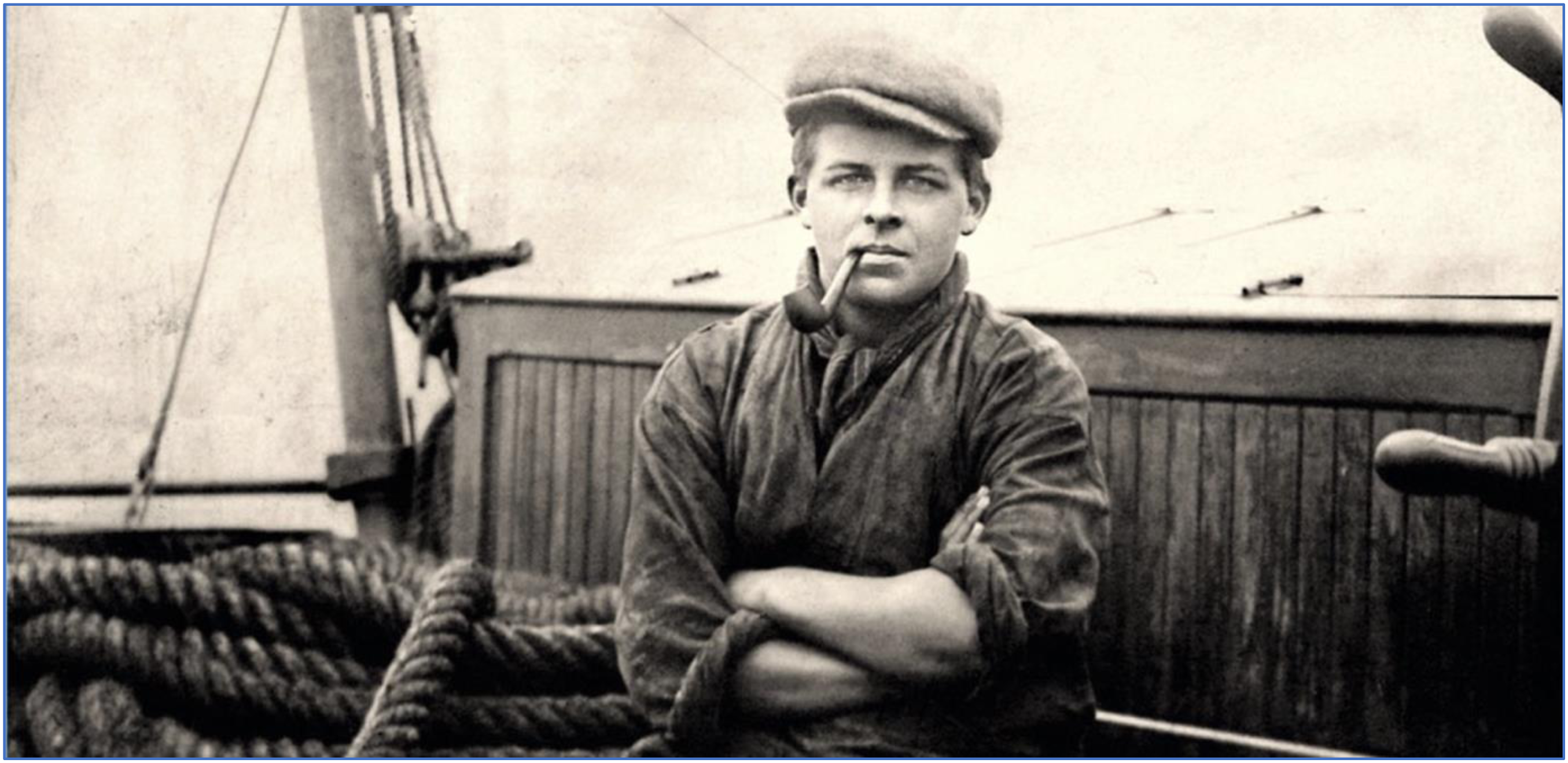
A young Evert Taube (1890–1976) on a ship in Australia, 1908.
His poem, ‘Karl-Alfred and Ellinor’, portrayed the adventurous Swedish sailor Karl-Alfred landing in Port Adelaide, Australia: ‘A sailor bold, Karl-Alfred was his name’. The Swede is seduced by the beautiful Australian girl Ellinor, who takes him home. But her intention is not to make love to Karl-Alfred; it is robbery:
Taube's interwar breakthrough was a milestone in Swedish entertainment history. Taube continued to deliver maritime songs all his life, with most becoming central parts of Swedish national culture and identity. Taube was everywhere – in newspapers, magazines, books and the cinema, on the radio, television and the stage – until the day he died in 1976. He is to this day, almost 50 years after his death, regarded as the primary national poet of Sweden (alongside the eighteenth-century poet Carl Michael Bellman) and generally perceived to personify Swedishness.
As a result of Taube's success in the 1920s, his brand of maritime songs gave rise to the industrial-scale production of similar songs, which were composed and performed by all kinds of Swedish artists. Almost none of them had any experience of working as sailors (unlike Taube), but that was not important. The record companies supplied the artists with songs about being a sailor, photographed them in some sort of sailor attire and sold large quantities of records.
Typically, the artists were male, portraying Swedish masculinity. Their names included national celebrities such as Lasse Dahlquist, Harry Brandelius, Åke Grönberg, Carl Jularbo, Gunde Johansson, Johnny Bode, Gösta Jonsson and the world-famous tenor Jussi Björling. But there were also female artists, such as Karin Juel, Sickan Carlsson (Figure 4), Alice Babs, Lisbeth Bodin, Elisabeth ‘Bullan’ Weijden and later, in the 1960s, Monica Zetterlund. Karin Juel (1900–1976), in particular, became a very prolific female performer of sailor songs.
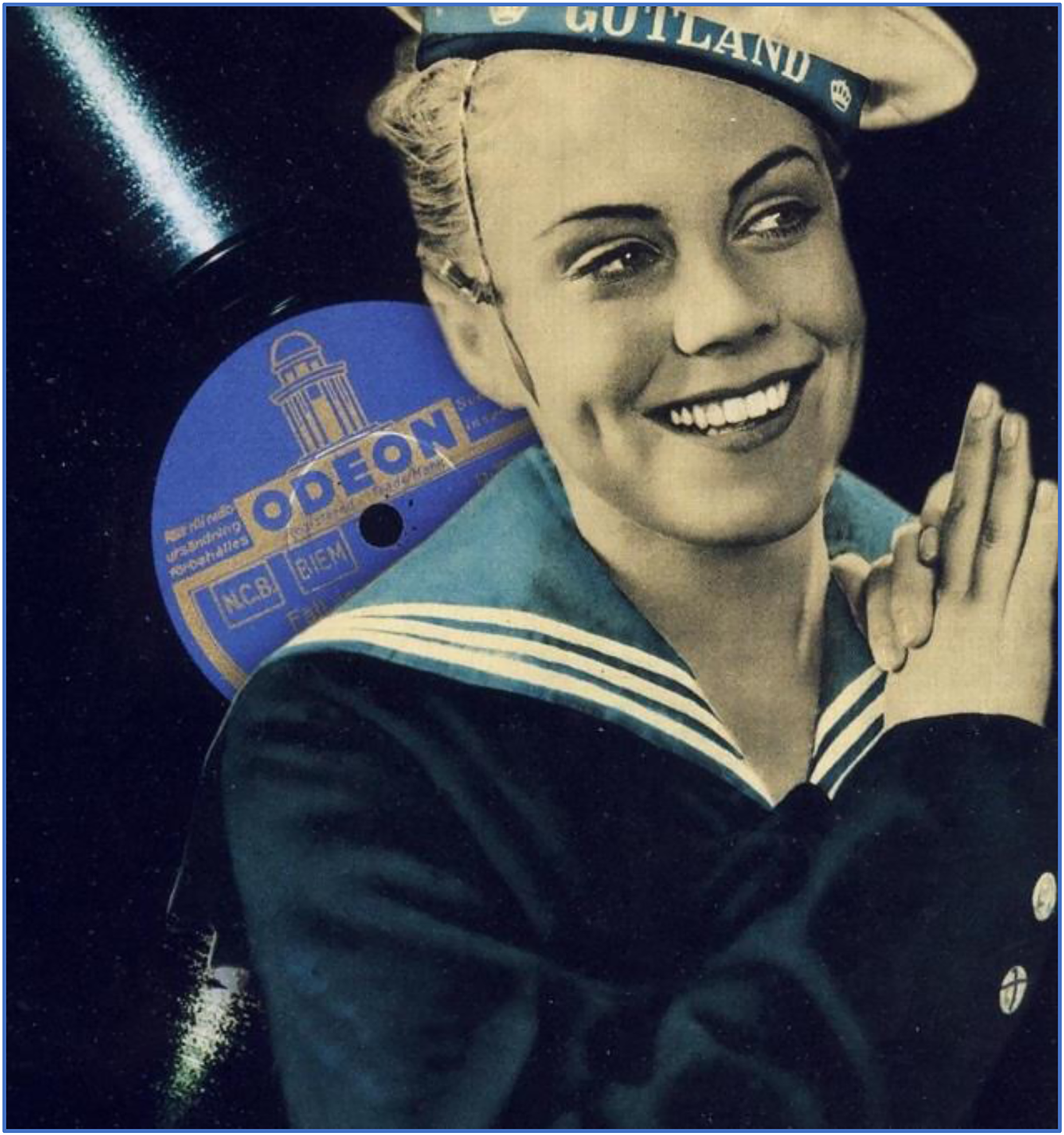
The Swedish actor and singer Sickan Carlsson in a colourized photograph from 1937.
The impact of the sailor songs
Most of the twentieth-century Swedish sailor songs were not songs that were sung by actual sailors on ships, sea shanties or maritime folk music. Instead, they were successful examples of modern popular culture that were mass-produced by professional composers and lyric writers who learned maritime themes and language on the job. The point is that the songs were not aimed at limited maritime communities, such as sailors. Instead, the intended buyers were the land-based national mass audience of the growing music-consuming Swedish population. 34
As a result, the songs were controversial among actual sailors, at least at the beginning. One example was Captain Sigurd Sternvall, who was shocked in 1926 when he returned to Sweden from voyages in the Far East. He decided to write a book with ‘authentic’ sailor songs to combat Evert Taube and the formidable surge of Swedish pop-culture maritime music. Nine years later, Sternvall's book Songs under Sails (Figure 5) was published, where he wrote in the foreword: What struck me when coming home after many years at sea was the sudden popularity of the so-called sailor song. Very few of these songs were sung on board ships or had indeed anything to do with sailor poetry. Are these stupidities meant to represent Swedish sailor songs and poetry? The very thought was repulsive!
35
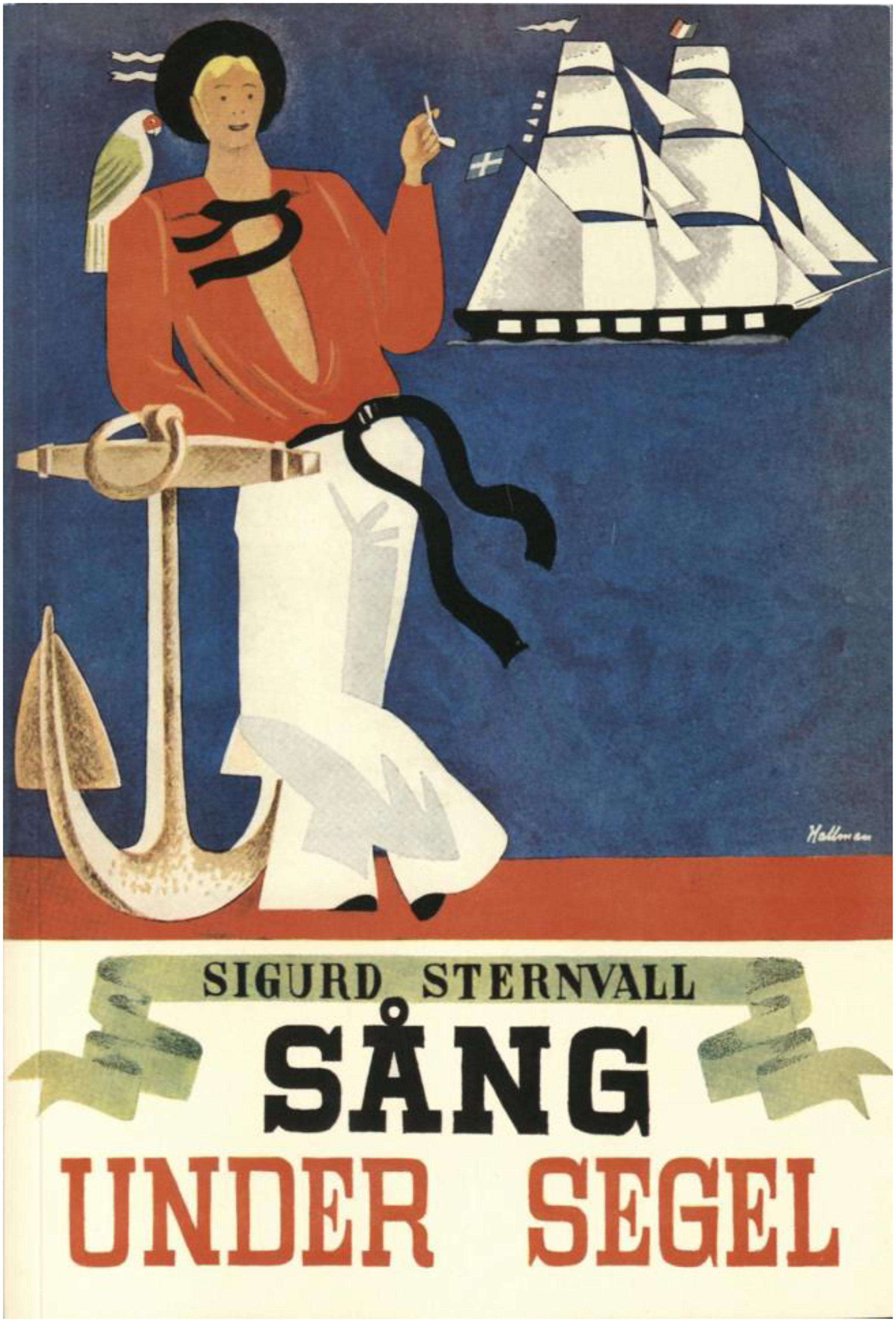
Sigurd Sternvall’s Songs under Sails (1935).
The irony was that, thanks to the success of the songs Sternvall hated, his own book became a bestseller, as Swedes were suddenly passionately interested in maritime culture. What Sternvall had intended as a ‘rescue operation’, aimed at eradicating ‘the parodies’ of authentic sailor songs, served to increase the craze around popular songs about the sea. Sternvall became an example of the very phenomenon he had tried to stamp out, as he was constantly heard on the radio singing sailor songs. Sternvall was simply unable to comprehend the true nature of the songs he despised. They were never supposed to be ‘real sailor poetry’. 36 So-called ‘genuine’ maritime culture was not important to the record labels, being commercial companies. They sold songs to make money, period.
National identities in the sailor songs
In the Swedish pop-culture songs of the sea, national identities are constructed via contrasts. The difference between the Swede (‘us’) and the foreigner (‘them’) is highlighted as the Swedish sailor (‘normality’) encounters the outside world (‘otherness’) via voyages on the high seas. Sweden represented superiority and the rest of the world represented inferiority.
This dichotomy was visible from the very beginning in 1918, as Evert Taube's fictional Swedish sailor, Karl-Alfred, encountered the dishonest foreign otherness of the Australian seductress, Ellinor. As the songs became increasingly popular, they produced more complex forms of Swedishness. The source material reveals underlying sub-dichotomies regarding the superiority of Swedishness (the Swedish sailor) versus the inferiority of non-Swedishness (non-Swedish humanity):
The Swede is masculine as opposed to the femininity of the non-Swede. The Swede is honest as opposed to the dishonest non-Swede. The Swede is white (a superior Germanic Aryan) as opposed to the non-whiteness of the non-Swede (either being an inferior Germanic Aryan or not a Germanic Aryan at all – for example, black).
A consequence was that the superior Swedish sailor venturing into the world was under the constant threat of being corrupted by the otherness of foreigners. For example, in 1922, the poet Dan Andersson enjoyed a huge hit with his song ‘Deckhand Jansson’ (Figure 6), in which the young sailor Jansson risks forgetting his white Swedish girlfriend ‘for a hooker in Yokohama’.
37
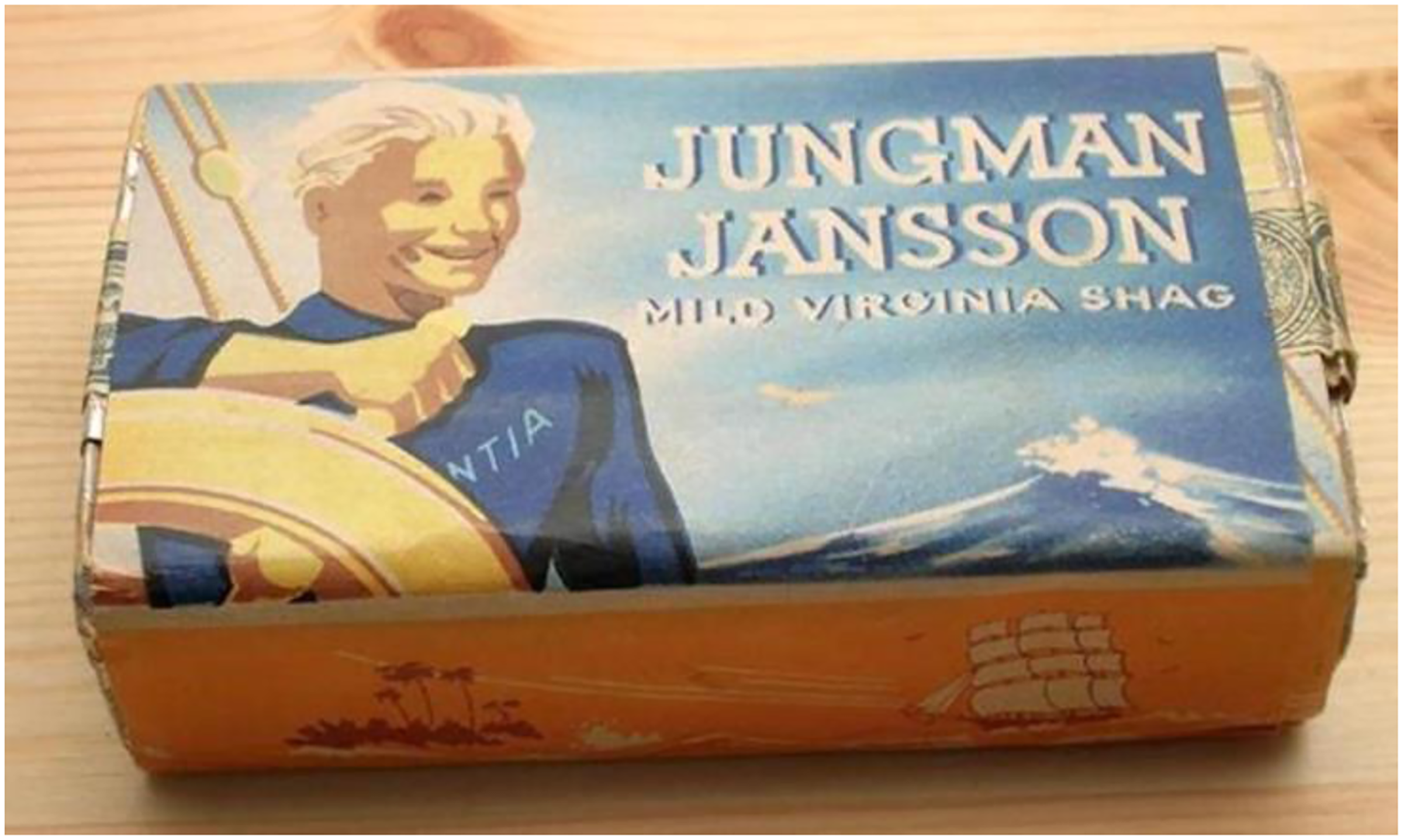
‘Deckhand Jansson’ (‘Jungman Jansson’) was such a commercial success that it was turned into a brand of tobacco in 1941.
Specifically, the inferior race of foreigners posed a special danger for the Swede abroad. In 1921, Taube recorded a song (written in 1919) about a Swedish sailor – Fritiof Andersson – arriving in Buenos Aires, where he is attacked by ‘two tall negroes’, who try to stab him.
38
Andersson displays Swedish superiority as he deals with the landlubbers: The white Swedish sailor is portrayed as the opposite of the non-white foreigners. The Swede is honest, even in a fight, taking his sweater off to show that he has nothing to hide and using his fists instead of a knife. The Swede represents superior masculinity, only needing to punch the feminine (black) foreigner once to accidently kill him.
In short, Swedish maritime identity and Swedish whiteness amplify each other in the song. This was made explicit by comparing the superior maritime Swede to the dual identities – the land identity and the black identity – of the inferior foreign ‘other’.
However, in the songs, Swedes risked contaminating their superior Swedish whiteness with inferior ‘otherness’ when venturing abroad on the high seas. In Taube's song ‘I Am Free’ (1926), the sailor Fritiof Andersson returns after being imprisoned for killing ‘the negro’ in the previous song.
40
Andersson confesses that he has had a love affair with ‘a creole woman’, who stole his money, signifying that a Swede – being a superior Aryan – should not mingle with non-white ‘others’. This is even more apparent in Taube's ‘The Ballad of Gustaf Blom’ (1928):
In general, the Swedish sailors in the songs are happy to return to the whiteness of their homeland. This is manifested by Fritiof Andersson in Taube's ‘Tattooist’s Waltz’ when the sailor comes home to Sweden after many adventures on the oceans. He meets a gorgeous Swedish girl at a dance:
One of the leading celebrity singer-songwriters with regard to Swedish maritime songs, Lasse Dahlquist (1910–1979), recorded ‘Oh Boy, Oh Boy, Oh Boy!’ in 1946 and it became a huge hit.
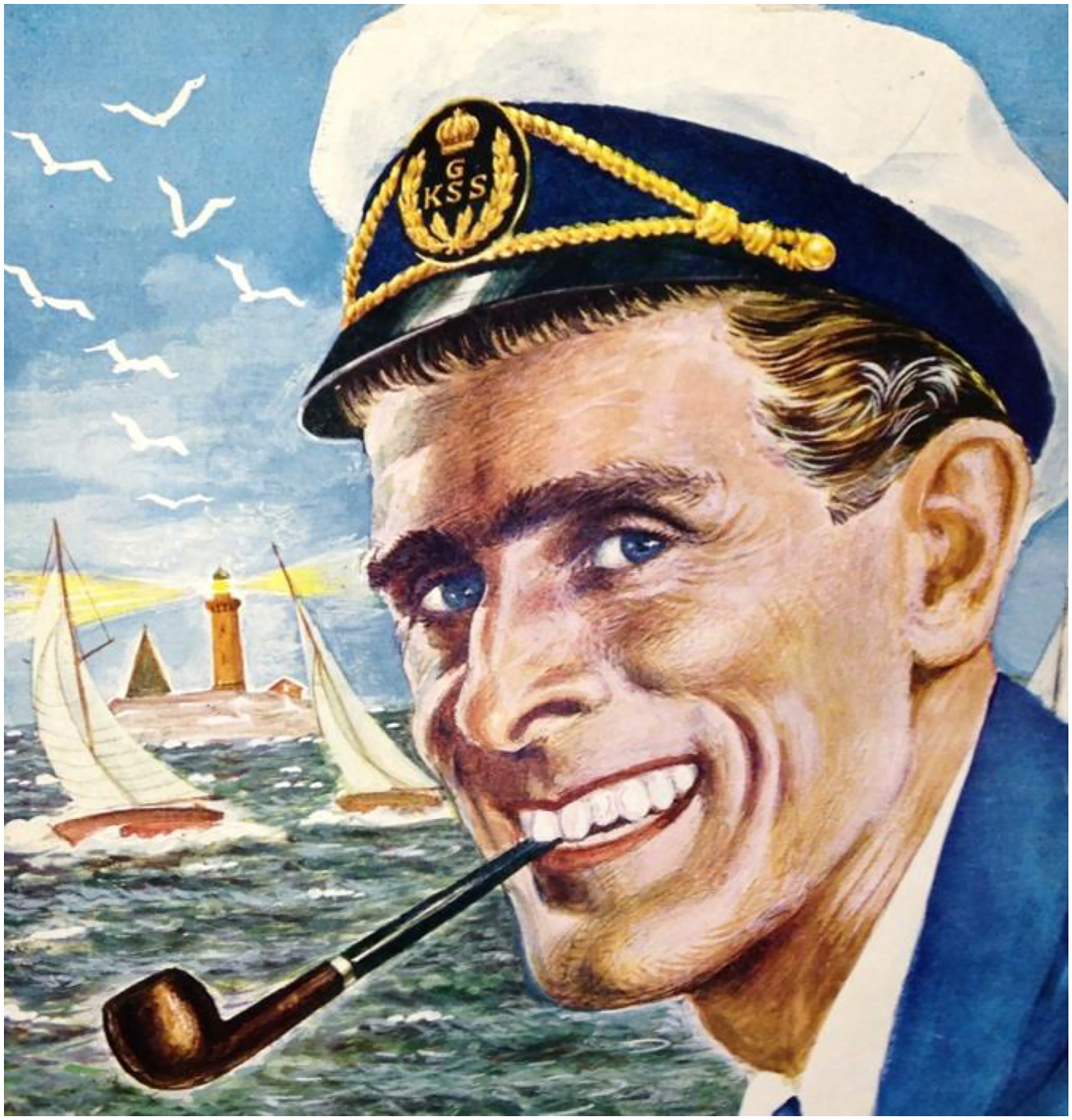
Lasse Dahlquist record cover.
It tells the story of the girls in Gothenburg going crazy because the British Royal Navy is coming to visit. Thus, it is an example of naval (military) maritime discourse being used as a non-Swedish ‘other’ in the Swedish maritime songs, which are almost never about the Swedish Navy.
45
In ‘Oh Boy, Oh Boy, Oh Boy!’, the girls of Gothenburg sing the following to their jealous boyfriends:
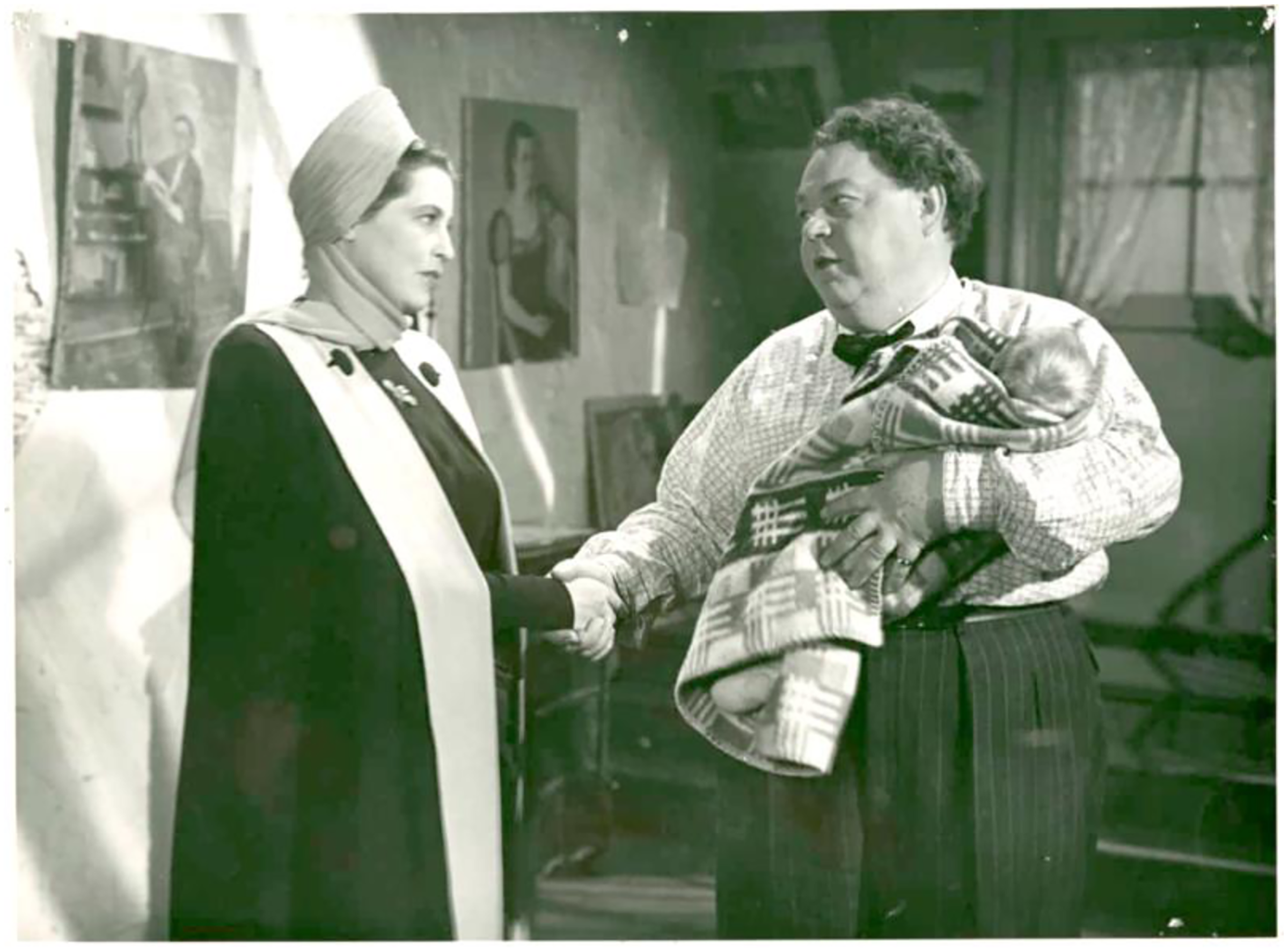
Actor and singer Elisabeth ‘Bullan’ Weijden (left) in the scene from the film “Sol över Klara” (1942).
The song tells the story of the fearsome Swedish female sailor Blonde Kristin:
Freedom and homesickness
Almost all nationalisms across the world emphasize that their nation is exceptionally freedom-loving. The Swedish national maritime identities portrayed in the sailor songs are no exception to this rule. For example, when the world-famous Swedish opera tenor Jussi Björling (1911–1960) sang ‘To the Sea’ in 1922, he emphasized the importance of freedom:
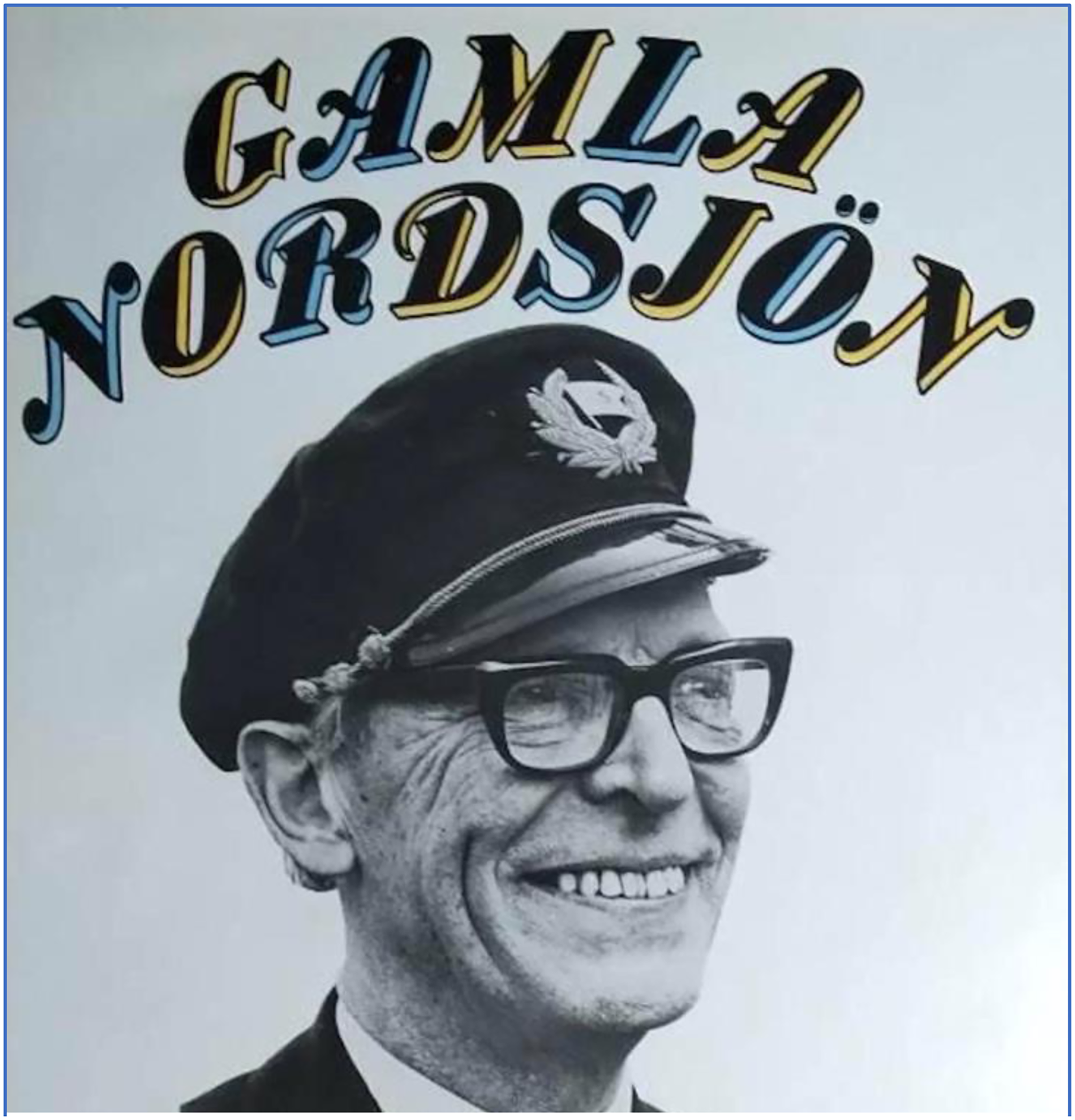
Harry Brandelius promoting his greatest hit, ‘The Old North Sea’ (‘Gamla Nordsjön’).
In one of his hits, ‘He Had Sailed before the Mast’ (1938), Brandelius sang about a Swedish sailor in China:
Something similar occurs in the song ‘Sailor's Christmas in Hawaii’ (1945), where Yngve Stoor (1912–1985) tells the tale of a Swedish sailor who is forced to endure Christmas in the tropics, instead of spending it with his loved ones back home in cold Sweden:
The decline of sailor songs
During the 1940s and 1950s, successful Swedish sailor songs were increasingly turned into feature films, as the film industry wanted to capitalize on the maritime craze. Evert Taube played himself in several films. Just about any successful sailor song could become a film, such as the 1948 ‘Girl from Backafall’, which became a hit and was made into a film in 1953.
52
These maritime films were generally of questionable quality,
53
but they obviously made money, affirming the national craze for maritime discourse. In fact, in the 1950s, sailor songs were such an obvious part of Swedish popular culture that even parodies became hits. One example was ‘The Ballad of Eugene Cork’, by Sweden's leading humourist Povel Ramel:
Another reason for the decline may have been that fewer Swedes were working as merchant sailors. Suddenly among the richest people in the world, Swedes could venture abroad without the hassle of working on ships. In 1955, the first holiday trip by charter plane from Stockholm to sunny Spain took off. Thus, in the age of commercial jets, cargo ships were no longer necessary when Swedes wanted to see the world. Instead of songs about sailors, the maritime national identities visible in Swedish popular music of the 1950s and 1960s began to focus more on tunes about leisure boating, the beauty of the archipelagos and living close to the sea.
This trend continued up until the end of the twentieth century. In 1982, the Swedish singer-songwriter Ulf Lundell was hailed by the press as a new Evert Taube when his song ‘Open Landscapes’ became a huge hit, idealizing coastal identity as authentic Swedishness:
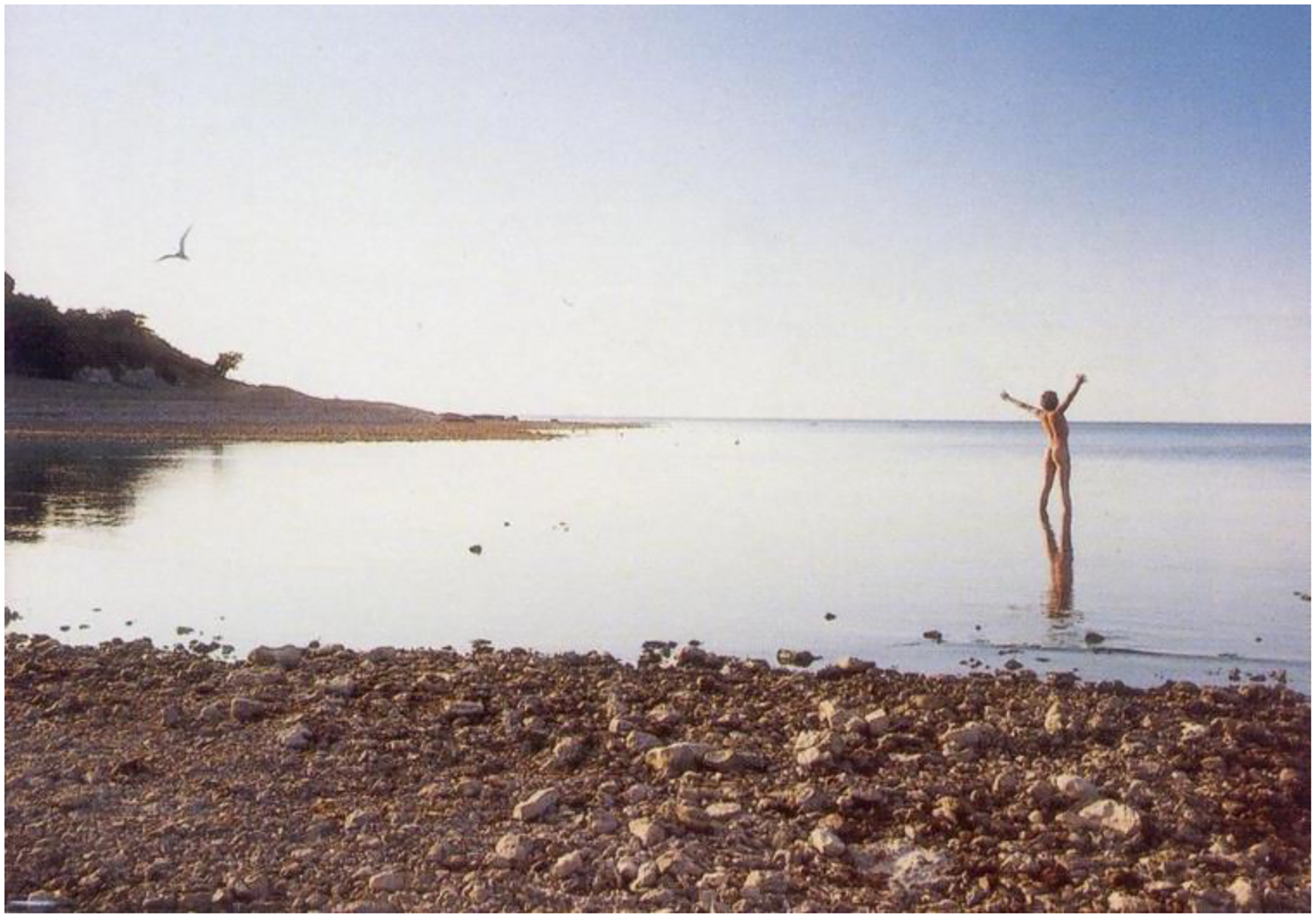
Ulf Lundell, “Kär och galen”, record cover (1982).
In 1985, the singer-songwriter Marie Fredriksson, who later became world-famous as half of the Swedish pop duo Roxette, sang in a similar way about the perfect way of living as a true Swede:
In the early twentieth century, it had been important that a perfect Swedish midsummer celebration should take place inland, preferably in Dalarna. However, during 1918–1960, this changed. Today, the perfect Swedish midsummer festivities take place on an archipelago island, and everybody attending is required to – or at least try to – sing an Evert Taube song about sailors, the sea and adventures in faraway lands.
Final thoughts
The example of the Swedish craze regarding maritime songs between 1918 and 1960 demonstrates how random national narratives can become powerful identitarian discourses when manufactured by modern popular culture via mass capitalism, being bottom-up examples of banal nationalism. The professionals who wrote, sang, recorded, produced, marketed and sold these songs did not plan on producing an ideology. Yet these Swedish maritime songs changed the nation, and may still affect Swedish national branding today.
I have tried to find a way of examining how Sweden wishes to portray itself today. I used a Google Images search and the search term ‘visit Sweden’. Figure 11 shows the resulting images. There were 26 images in total, comprising 12 maritime (46 per cent), 4 inland (15 per cent), 3 urban (12 per cent) and 7 other (logos and maps, 27 per cent) images.
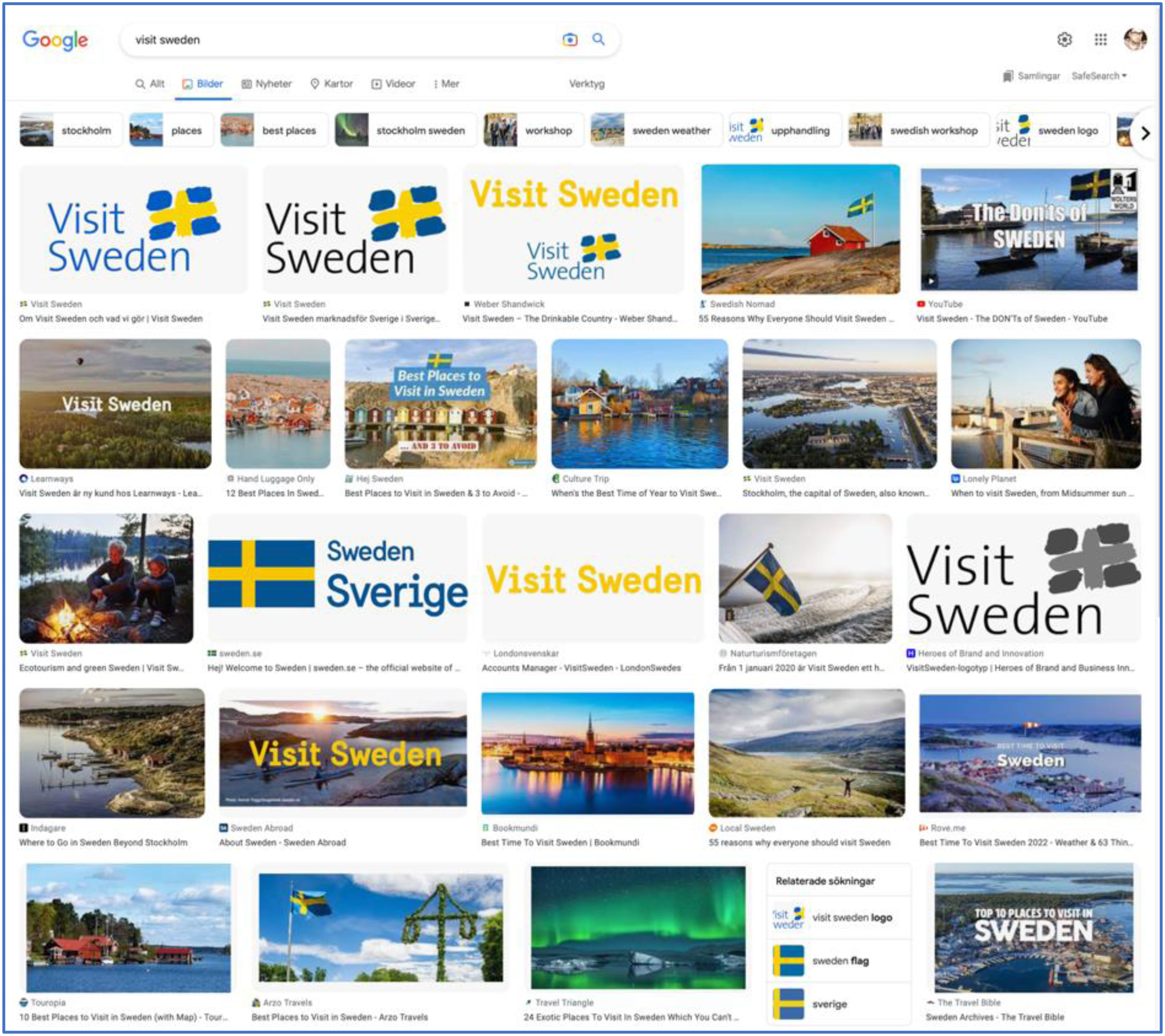
Result of Google Images search using the search term ‘visit Sweden’ (22 November 2022).
I compared these image results to the results for neighbouring Denmark using the search term ‘visit Denmark’ and, even though Denmark has extensive maritime traditions, the search yielded far fewer maritime images (14 per cent) than the Swedish search. 58 The search term ‘visit Norway’ yielded many images of fjords, but that does not make them maritime. Instead, the imagery highlights the rugged nature of Norway's mountainous landscapes, overlooking the fjords. In an attempt to find a national example with an exceptionally strong maritime identity, I used the search term ‘visit Britain’, which yielded the surprising result of zero maritime images. 59
It is, of course, doubtful whether this Google experiment is scientific. Moreover, it is impossible to say whether my present-day image search results have anything to do with the Swedish twentieth-century craze for pop-culture sailor songs. At the same time, it is likely that Sweden was deeply affected by what happened between 1918 and 1960. One hint regarding this is the fact that few countries have as many leisure sailors per capita as Sweden. There are 864,200 seaworthy Swedish boats in a country of only some 10 million inhabitants, and almost 20 per cent of all Swedish households own a boat.
60
I myself am one of these Swedish weekend sailors and I can assure you that the twentieth-century sailor songs are still being heard – and sung – in these extensive maritime communities, numbering hundreds of thousands (if not millions) of Swedes. This exceptional brand of Swedish maritime popular culture is not a thing of the past. For example, the young Swedish singer-songwriter Amanda Ginsburg, who was born in 1990, uses a multiplicity of complex references to several well-known sailor songs in her hit ‘Melody of the Sea’. Ginsburg, a millennial, represents yet another generation who is continuing Sweden's legacy of maritime popular music when she sings:
Footnotes
Acknowledgement
The article expands on research published in two previous papers: Henrik Arnstad, ‘Havet och svenskheten: Det maritima fältet och konstruktion av nationell respektive regional identitet’ (Stockholm University, 2016) and Henrik Arnstad, ‘Möten i monsunen: Sjömansvisor, svenskhet och globaliserade hav 1918–1949’ (Stockholm University, 2016).
Declaration of conflicting interests
The author declared no potential conflicts of interest with respect to the research, authorship and/or publication of this article.
Funding
The author received no financial support for the research, authorship and/or publication of this article.

Notes
Author biography
Henrik Arnstad (b. 1967) is a historian, author and university teacher (Södertörn University, Stockholm) specialized in ideology analysis. He has written books about fascism (Älskade fascism, Stockholm, 2013), democracy (Hatade demokrati, Stockholm, 2018) and socialism (Den förbannade optimisten Ernst Wigforss, Lund, 2023). Regarding maritime history, he has written about the usage of the bow-and-arrow in naval warfare, “Maritime military archery: Bowmen on European warships, 1000–1600”, in Leos Müller and Simon Ekström (ed.), Facing the Sea (Lund, 2022).