




Abstract
There was continuing public and political concern about the loss of life at sea during the second half of the nineteenth century in Britain. New regulatory requirements, introduced to examine the competence of officers, prevent overloading and reduce the risks from hazardous cargoes such as coal, were in place by 1890. However, the effectiveness of these measures was not systematically monitored at the time. This retrospective evaluation reviews subsequent loss of life in the coal trade, the largest sector of British exports by weight. Loss of life remained high; it was more dangerous to export a ton of coal than it was to mine it. Some routes, such as those around Cape Horn and to Scandinavia, carried the highest risk, and losses on European voyages were more common in winter. Over time, the risks reduced as sail gave way to steam and diesel propulsion, and as maritime communications improved.
Introduction
The aims of this investigation are to assess the risk of death from shipping casualties in the maritime transport of coal from Britain since 1890, and to compare the fatal accident risks in shipping with those in coal mining. The trends in shipping casualties and consequential mortality are reviewed by type of ship, port of departure, destination, type of casualty and flag (country of registration) of the vessel. All this information was available to the maritime sector at the time and could have been used to evaluate and reduce risks, but this was not systematically undertaken.
Between the 1850s and 1880s, there was intense concern about both ship casualties and crew deaths in shipping as a whole and the coal trade in particular. During this time, several royal commissions and other formal inquiries took place, leading to regulatory action on overloading (the Plimsoll line), crew competence and fitness (statutory certification), and the provision of ship lifeboats, navigation aids and rescue services. 1 Risks in the coal trade featured prominently, initially relating to the spontaneous combustion of coal cargoes and explosions from the generation of flammable gases from coal. These were largely resolved in ships carrying coal from Britain by new requirements to improve the ventilation of cargo holds, but continued to arise elsewhere. 2 There was opposition from shipowners, who tried to blame the water entry into holds on inadequate or damaged ventilators in stormy weather for the continuing high levels of coal-ship losses. 3 This issue was aired in detail during the evidence sessions leading to the 1887 report by the Royal Commission on Loss of Life at Sea, with the coal trade carried by British-registered ships having higher rates of ship losses than any other maritime trades. Evidence presented by the Board of Trade also made comparisons with coal miners on the overall mortality rate in seafarers, from both ship casualties and personal accidents. This indicated that it was considerably more dangerous to be a seafarer than to be a coal miner – evidence that was also disputed by the shipowners.
However, despite the high level of concern that led to these enquiries, there appeared to be limited official interest in analysing ship losses in subsequent years. Board of Trade investigations were held for many British ship losses, but these tended to be less frequent and detailed for the lower-value ships and cargoes such as coal, and the overall pattern of loss was not analysed. There is a parallel lack of historical research on long-term trends in ship casualties and consequential loss of life, either in general or for the coal trade.
The transition from sail to steam started in the latter third of the nineteenth century, and the consequences of this for crew risks across the whole maritime sector have been documented – notably, in the 1887 report of the Royal Commission on the Safety of Life at Sea, showing a marked reduction in fatalities. The Commission cited evidence that, overall, 1 in 73 seafarers had died through accidents per year between 1875 and 1883, but for sailing ships this was 1 in 39. Evidence submitted to the 1885 Commission indicated that 63 per cent of the lives lost were from ship casualties, with the rest being personal accidents. By the 1920s, this had fallen to 44 per cent. 4 The transition to steam also carried with it major consequences for the employment conditions of seafarers. These improved as crews that had often been recruited locally and sometimes paid per voyage on a profit-sharing basis were recruited in ports with agreed wages and terms of employment. 5 The regular passage times also enabled some crews to have predictable patterns of leave and a home life. Another major development was in communications, initially by telegraph from port to port, which aided the scheduling of voyage patterns. A major development in the 1920s was the widespread adoption of ship-to-ship and ship-to-shore radio, which assisted with responses to vessels or crew members in distress. The coasts of Britain and some parts of Europe and North America also had reliable charts, navigation aids such as lighthouses, and lifeboat stations, all of which reduced fatalities, but these were absent from many other parts of the world.
Much of the coal trade was carried by ships flagged (registered) in Britain, especially in the coastal trade and on those longer routes that were servicing the coaling stations set up by the Admiralty and by mail-liner companies. A lot of the trade within Europe was carried on ships from other nations, often those of the destination country, but some flags, such as those of Norway and Germany, carried coal and return cargoes between Britain and a range of transoceanic destinations. 6 Different nations adopted steam propulsion at different rates. British shipowners were among the first, while countries that were building wooden sailing ships into the late nineteenth century continued to ply the trade with these in the first decades of the twentieth century.
Britain led the world in the weight of coal exported in the late nineteenth and early twentieth centuries, with coastal as well as export trades increasing rapidly. This peaked in 1913 before going into a slow decline, with exports falling faster than production and domestic use. This was a consequence of not only new coalfields being developed in other countries, but also the replacement of coal with oil, particularly as the fuel for transport by land and by sea. The bulk export of coal was usually coupled with return voyages, bringing back raw materials such as grain, metal ores, timber and guano fertilizer to Britain. Coal was a difficult cargo as it could shift during adverse weather, rendering a ship unstable and prone to capsize. Some coals were liable to spontaneous combustion, and toxic or explosive gases could collect in holds. At the end of the nineteenth century, a large proportion of coal was still carried in sailing ships, but there was then a progressive transition to steam and subsequently motor ships.
There were two major coalfields that provided the bulk of the exports: the north-east England field, which was centred around Newcastle upon Tyne and stretched from Northumberland to the River Tees in North Yorkshire, and the South Wales field, with exports from several Bristol Channel ports – notably Cardiff, Swansea and Newport. 7 Large volumes were also exported from Scotland, north-west England and Humber ports. The trade from Newcastle to London had been important since medieval times. During the eighteenth and nineteenth centuries, production expanded, and the north-east of England exported large volumes of coal – much of it to northern Europe. The growth of exports from South Wales came later but was more rapid. During the nineteenth century, Welsh steam coal came to be the preferred fuel for the growing fleet of steamships, both those in the liner trades and naval vessels. This led to worldwide exports, paradoxically with large sailing vessels often transporting the coal needed by steamships, as they were more economical to operate on long oceanic sea routes, such as those to the west coast of South America, when carrying bulk products like coal outbound and other bulk products such as copper ore or guano on the return voyages.
While there has been considerable attention paid to mining disasters in Britain, there has been no comparable study to investigate the locations, causes and consequences of shipping casualties in the coal trade, despite earlier reports of storms leading to multiple ship losses, such as the coal-shipping disaster in Bridlington Bay in 1871, 8 and reports from two Royal Commissions on Loss of Life at Sea in 1885 and 1887. 9 This discrepancy is perhaps because the worst disasters in coal mining had death tolls in the hundreds. For example, 439 miners lost their lives in the Senghenydd colliery explosion in 1913, and 290 were killed in the Albion colliery disaster in 1894. For coal shipping, the maximum death toll would be the total loss of a crew that rarely comprised more than 30 persons. Also, mine disasters could be reported immediately and dramatically, and took place within the bounds of the UK, whereas shipping losses and disasters were often distant, with little or no scope for reporting details.
The coal trade has long attracted the attention of economic and social historians, aided by good long-running government statistics on production and exports, starting in 1865 with the studies of the classical economist W. Stanley Jevons and later those of his son. 10 Similarly, the technology of mining coal and its consequences for mine safety have been well documented. 11 The risks from loss of life in seaborne trading have received less attention. Many studies on the carriage of coal by sea and trends in freight rates have been published. 12 The significance and location of coaling stations for coal-fired steamships, both naval and merchant, has also been investigated. 13 These authors have not considered the risks from ship casualties in the coal trade, although individual ship losses would have been an immediate concern for shipowners and their insurers.
Information sources and methods
The study covers the period since 1 January 1890, but excludes the First World War years from 1915 to 1918 and the Second World War years from 1940 to 1945, when it is sometimes difficult to differentiate an accidental casualty to a ship from a war casualty. Although several months of both 1914 and 1939 were affected by the World Wars, the shipping losses through these conflicts were relatively minor during these months.
For coal mining, the study includes all fatal accidents among mine employees that occurred within the curtilage of a UK coal mine. For coal shipping, the study includes all fatalities that arose consequent to a vessel casualty (accident) to a merchant ship that was transporting British coal from a UK port. This includes casualties to both UK- and non-UK-registered ships – large ocean-going ships that exported British coal around the world, along with smaller ships that transported coal coastwise around the UK or to the near European continent. The study excludes fatalities on ships that were casualties on their way to the UK to load a cargo of coal, and also casualties to ships that were on return voyages to the UK or voyages to other ports (to take up subsequent cargo orders) after discharging the original cargo of coal from the UK. Moreover, the study excludes fatal accidents that were not secondary to a ship casualty – for example, through falling overboard or into cargo holds.
The information sources that were used to determine the fatal accidents in British coal mining, the populations employed, the volume of (saleable) coal output and the amounts of coal transported by sea include the annual reports of various inspectorates of UK coal mines and quarries up to 1948, 14 subsequent National Coal Board (later British Coal) annual reports, 15 historical compendiums, and annual returns of coal mining and other British historical statistics, 16 along with various other information sources. 17 The volume of coal transported by sea includes coastwise shipments around the UK as well as overseas exports, along with bunker shipments for use by ships. It also includes gas coke, other forms of coke and patent fuel. For a few years where the volumes of coal shipments were not available, interpolation was used.
For coal shipping, the main information sources used to identify ship casualties and human fatalities were, first, a complete series of Lloyd's Register of Shipping’s Shipping Casualties/Wreck Returns since their quarterly publication commenced on 1 July 1890. 18 Second, Board of Trade investigation Wreck Reports, which were held for many individual ship casualties. 19 Third, searches of the leading shipwreck website (wrecksite.eu), The British Newspaper Archive and Welsh Newspapers Online. Further information sources included compilation lists, websites, databases and books of shipwrecks; Marine Accident Investigation Branch and Registry of Shipping and Seamen death inquiry files; and various other searches. Details of the ships that became casualties with loss of life were obtained from Lloyd's Registers of Shipping and UK Registers of Shipping. Ship details and seafarer fatalities were cross-checked across the information sources to verify the cases. Where there were doubts about a case fulfilling the study-inclusion criteria, it was excluded.
There are no comparably consistent sources that give information on fatal accidents to seafarers in the coal trade other than those secondary to a ship casualty. It has therefore been necessary to estimate the relative frequency of death from ship casualties and from individual accidents from previous studies that have reported on merchant shipping generally, rather than coal-trading ships specifically. 20 The number of ship casualties and the death toll from them are closely linked. In this study, the emphasis is on the human cost of coal shipping, and so the focus is on deaths and death rates. As the pattern of ship casualties determines the distribution and trends in fatality rates, this is also analysed.
In coal shipping, ship casualties (with loss of life) are based on the Lloyd's Register classification and have been grouped into the following categories: ship disappearances, foundering, wrecking (or grounding), collisions, fires in cargo holds (from spontaneous heating and explosions from gas emitted by the coal), other fires and explosions (mainly in engine rooms, on deck or in accommodation areas), and other types of casualty. The latter category comprises mainly ships that sustained damages, usually in storms or severe gales (such as a dismasting or the wheelhouse or bulwarks washed overboard), but did not founder or wreck. Some of these ships were towed into ports; some ‘put back’ or reached nearby ports; others were abandoned.
The types of ship have been grouped into four categories: motor vessels (which were rarely used to transport British coal before 1930); steamships; large sailing ships and barques; and small sailing ships. The threshold used to differentiate a large from a small sailing ship is a registered tonnage of 400. Small sailing ships were largely schooners but also included other vessels such as brigs, brigantines, barquentines, ketches and sailing barges.
The region of the UK port from which the coal was transported is based on the five main areas outlined in the key study information sources: South Wales (or Bristol Channel ports), the north-east of England (Northumberland, Tyne, Wear, Tees and Durham), the north-west of England (Merseyside, Lancashire and Cumbria), Humber ports, and Scotland (the east and west coasts were not disaggregated in some information sources). The global geographic destinations focus primarily on continents, smaller regions and countries that imported large amounts of British coal. Other analysis provides comparison with, the coaling stations of the Mediterranean region, which were stocked with British coal largely from South Wales to service mail liners and naval shipping. Where possible, the study investigates destinations that are liable to wide variation in human fatality rates consequent to the differing sea routes taken. For example, voyages to the Atlantic coast of the American continent are compared with routes around Cape Horn to the Pacific coast of America. These comparisons are constrained by the destination categories provided in the key study information sources over different periods of time.
There is no reliable information source on the number of seafarers employed annually in the British coal-shipping trade, which encompasses both UK- and non-UK-registered ships that transported the coal. Instead, the use of coal tonnage as a denominator enables a comparison of risk in mining to be made with that for seafarers working in the coal trade. Hence, the key study outcome measure used for coal shipping is the annual fatal accident rate per million tons of coal shipped and, for comparative purposes, the corresponding measure used for coal mining is the annual fatal accident rate per million tons of (saleable) coal output. Other methods of analysis include long-term trends in fatal accident rates since 1890, which were smoothed using moving averages.
Findings
Coal-shipping and coal-mining fatalities compared
Fatality rates, secondary to ship casualties, were higher for coal-trade seafarers than for coal miners prior to 1900 but were declining rapidly, whereas the decline in mining fatalities was much slower (Figure 1). Based on British merchant shipping in general, individual accidents and ship losses would account for broadly similar numbers of fatalities. Hence, the total fatalities would be expected to be around twice the number associated with those listed as arising from ship casualties. The relative risk of a fatal accident for seafarers compared to miners is therefore even more extreme and likely to be in excess until the 1920s.
In terms of absolute numbers, there were some 12,994 recorded crew fatalities, secondary to 1,587 ship casualties, in British coal shipping during peacetime years from 1890 to 1980, and 59,607 fatalities from accidents in British coal mining. The mining population was many times larger than that which crewed coal ships, with peaks in 1920 of 1.27 million coal miners employed and 279,000 seafarers working in all forms of British maritime transport. 21 Crews in the coal trade only formed a minority proportion of this number. This is in accord with analyses undertaken earlier by the authors. 22 The comparison made in these previous studies suggests that, taking the full time period from 1890 to 1980, being a seafarer in the coal trade carried a much higher risk than death from disasters and personal injuries in coal mining.
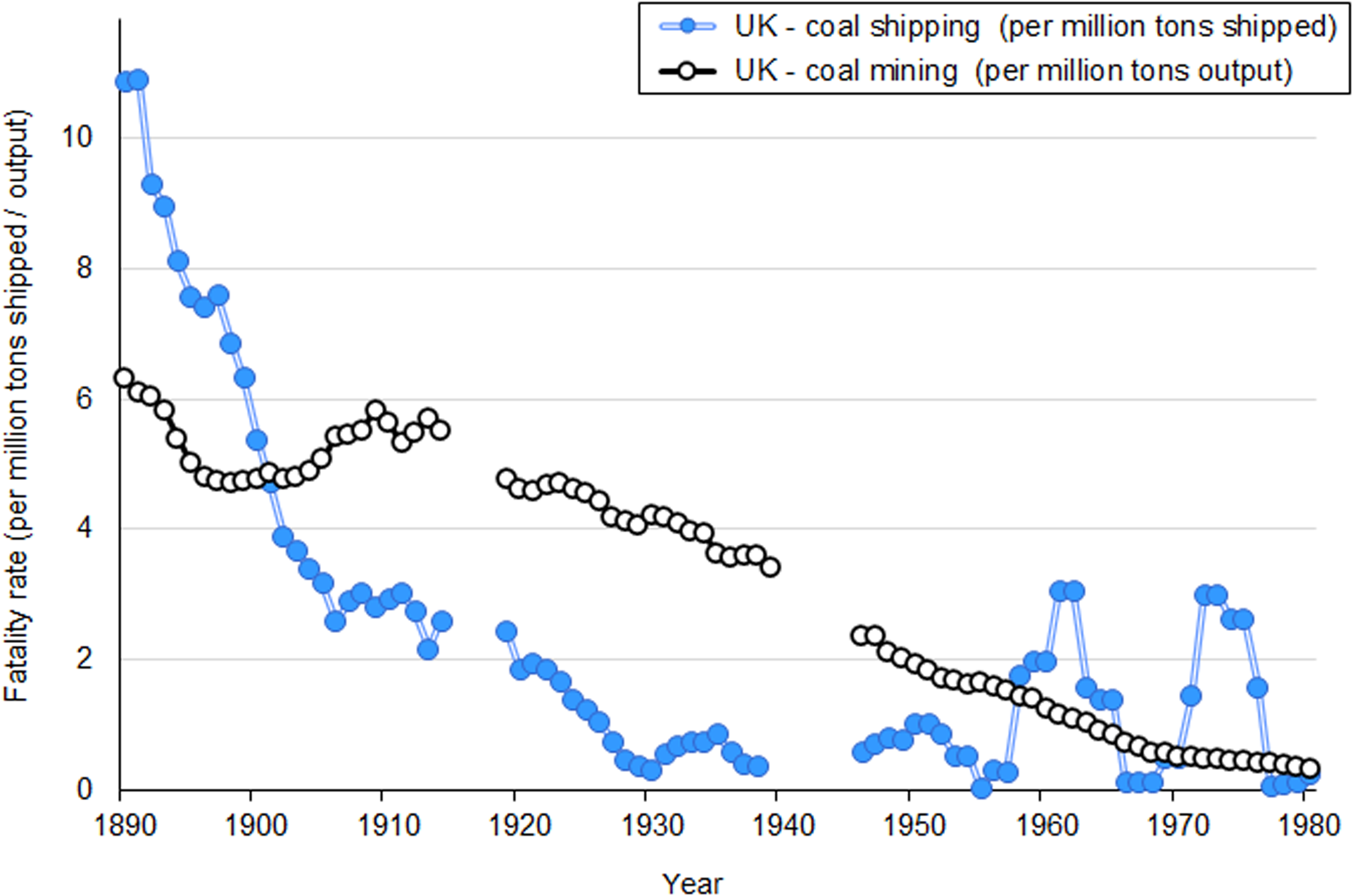
Trends in fatality rates for miners and for seafarers, secondary to a ship casualty, per million tons of coal output/shipments, 1890–1980.
A large part of the rapid decline in seafarer fatalities can be linked to the move from sail to steam as the means of propulsion. Figure 2 shows this for the coal trade. There were no concurrent changes in the technology of mining coal that would produce comparable reductions. Prior to 1900, the majority of fatalities were on sailing vessels (Figure 2). Between 1901 and 1914, sailing tonnage was replaced by a smaller number of larger steam-powered ships. The increase in crew fatalities from steamship casualties at this time is a consequence of this replacement. However, in the interwar years, when the market for coal carriage was saturated and few new steamships were built for the coal trade, there is a declining trend in the number of fatalities from steamship casualties. While some small sailing vessels remained into this period, largely on short sea runs and servicing small ports, the larger wind-powered ships that had originally traded coal worldwide ceased to feature.
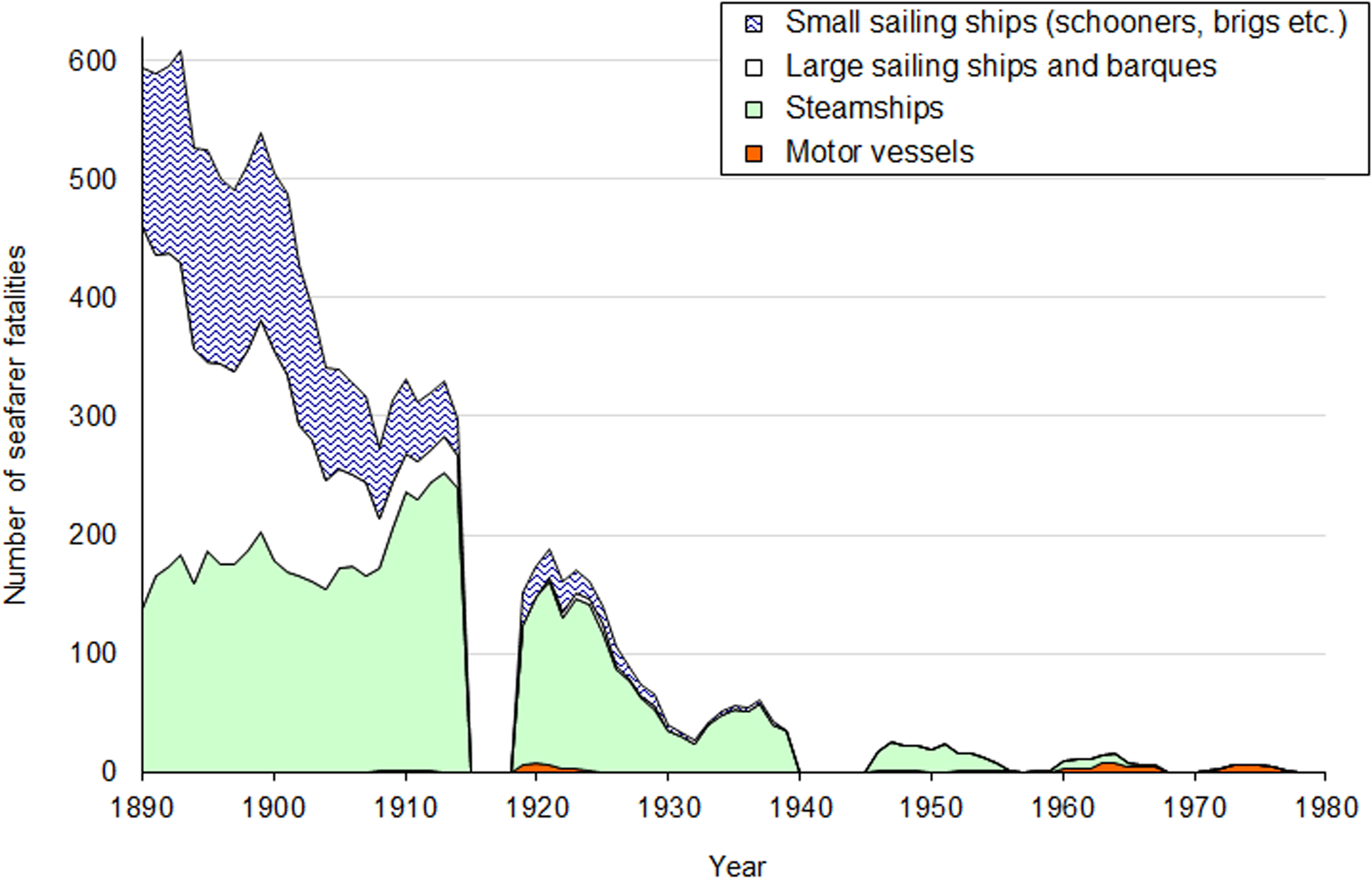
Trends in the number of seafarer fatalities according to the type of ship engaged in shipping coal from the UK, 1890–1980.
Destinations of coal shipments
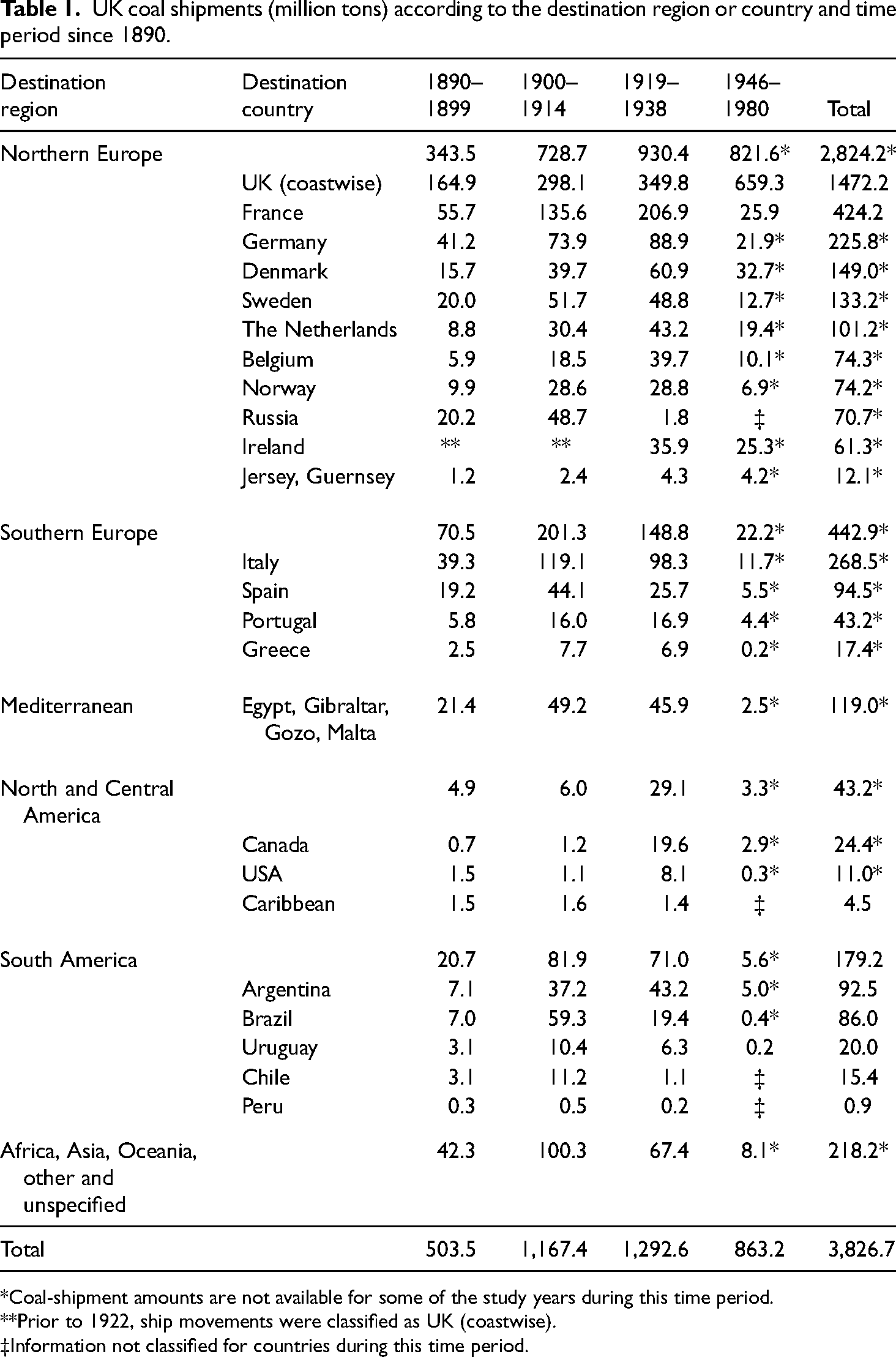
Table 1 shows the volume of coal shipped according to the destination continent and country. For some of the study years, coal-shipment amounts were not available. For the years with available information on shipment volumes, the total transported by sea was 3.8 billion tons. The majority of the coal was shipped across northern Europe or coastwise around the UK (2.8 billion tons). Large amounts were also transported to southern Europe and Mediterranean ports (560 million tons), South America (180), North America, Africa and Asia.
UK coal shipments (million tons) according to the destination region or country and time period since 1890.
*Coal-shipment amounts are not available for some of the study years during this time period.
**Prior to 1922, ship movements were classified as UK (coastwise).
‡Information not classified for countries during this time period.
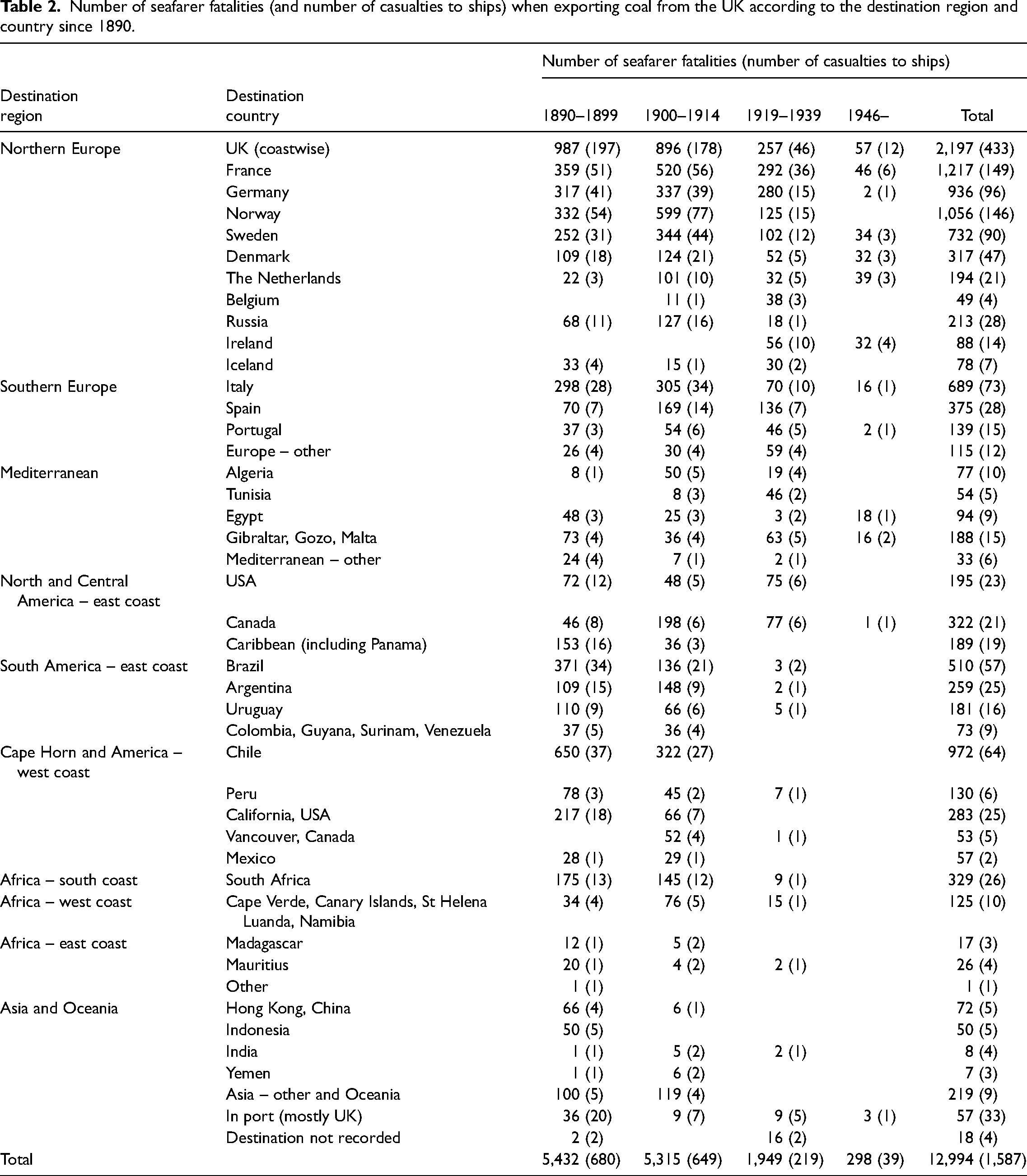
Table 2 shows crew fatalities and their associated ship casualties by destination. Some of the categories available for casualties are more detailed than those available for coal export destinations, as the latter are more dependent on the destination classifications available in the information sources. The fatality risks were not uniform; trade to some export destinations carried far higher risks than others, and most overseas destinations carried risks in excess of those in the coastal trade. The absolute numbers of ship losses partly reflect the size of the export trade to each destination (Figure 3), as well as the voyage lengths and other natural hazards.
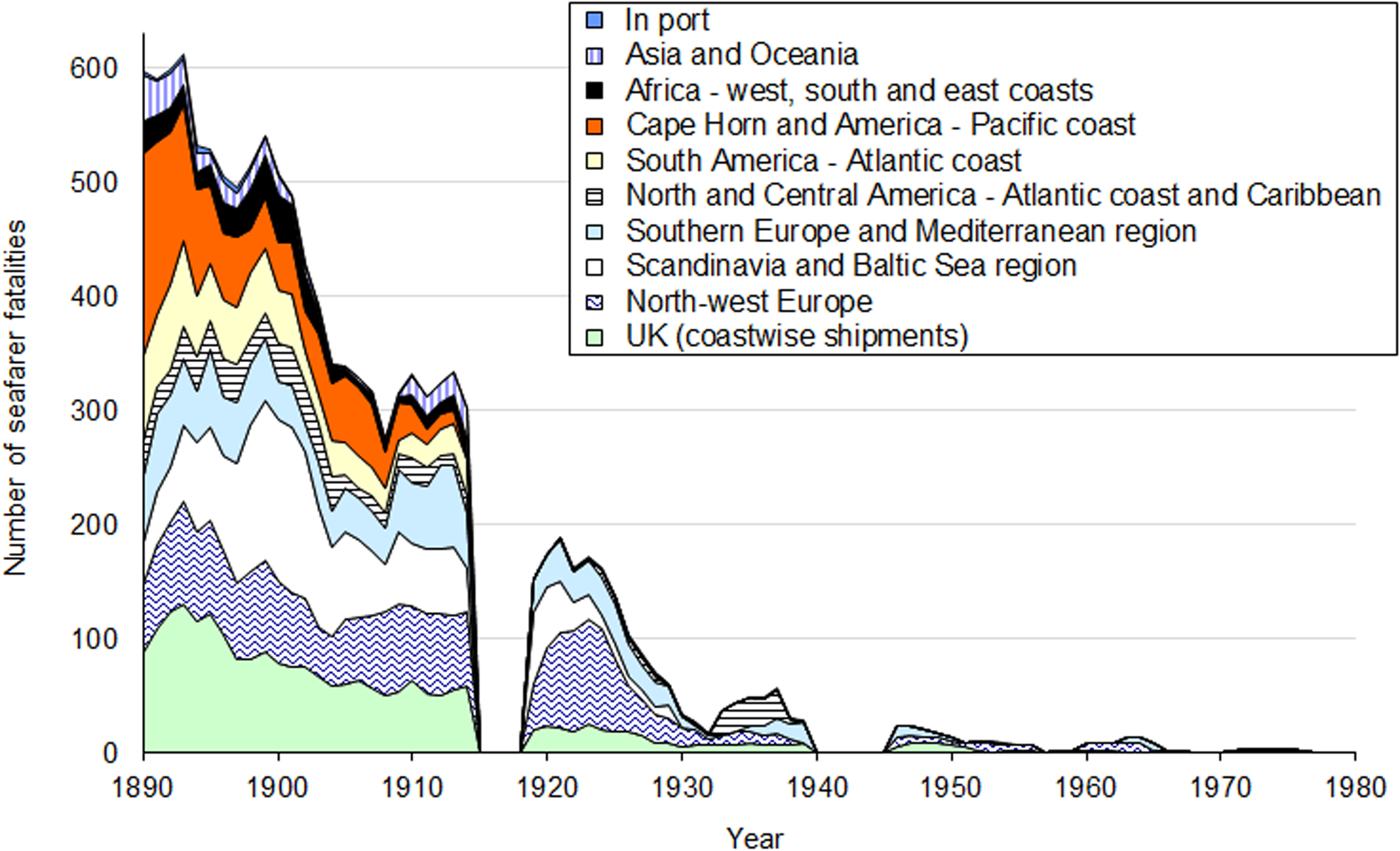
Number of seafarer fatalities from ship casualties when shipping coal from the UK according to the destination region, 1890–1980.
Number of seafarer fatalities (and number of casualties to ships) when exporting coal from the UK according to the destination region and country since 1890.
There are major differences in the risks associated with different export destinations (Figures 4 and 5). Relatively small trades dominate both the ship casualty and crew fatality rates. Larger trades tend to have lower rates, which could reflect navigational familiarity as well as variation in natural shipwreck hazards. Of the classifiable destinations, Figure 4 shows that those with the highest fatality rates were North America and South America (up to 140 and 100 deaths, respectively, per million tons of coal exported during the period prior to 1914). This compares with a fatality rate of 4.9 deaths per million tons for trades to all other destinations combined. The other trade with particularly high fatality rates (up to 45 deaths per million tons) – and extreme rates of (smaller) sailing ship losses – was to Norway. By contrast, fatality rates were relatively low in the trades to the Mediterranean region and southern Europe (Figure 4). It may well be that the specifications for coal type and the age, type and ownership of the vessels used for many of these trades kept the risks at a low level.
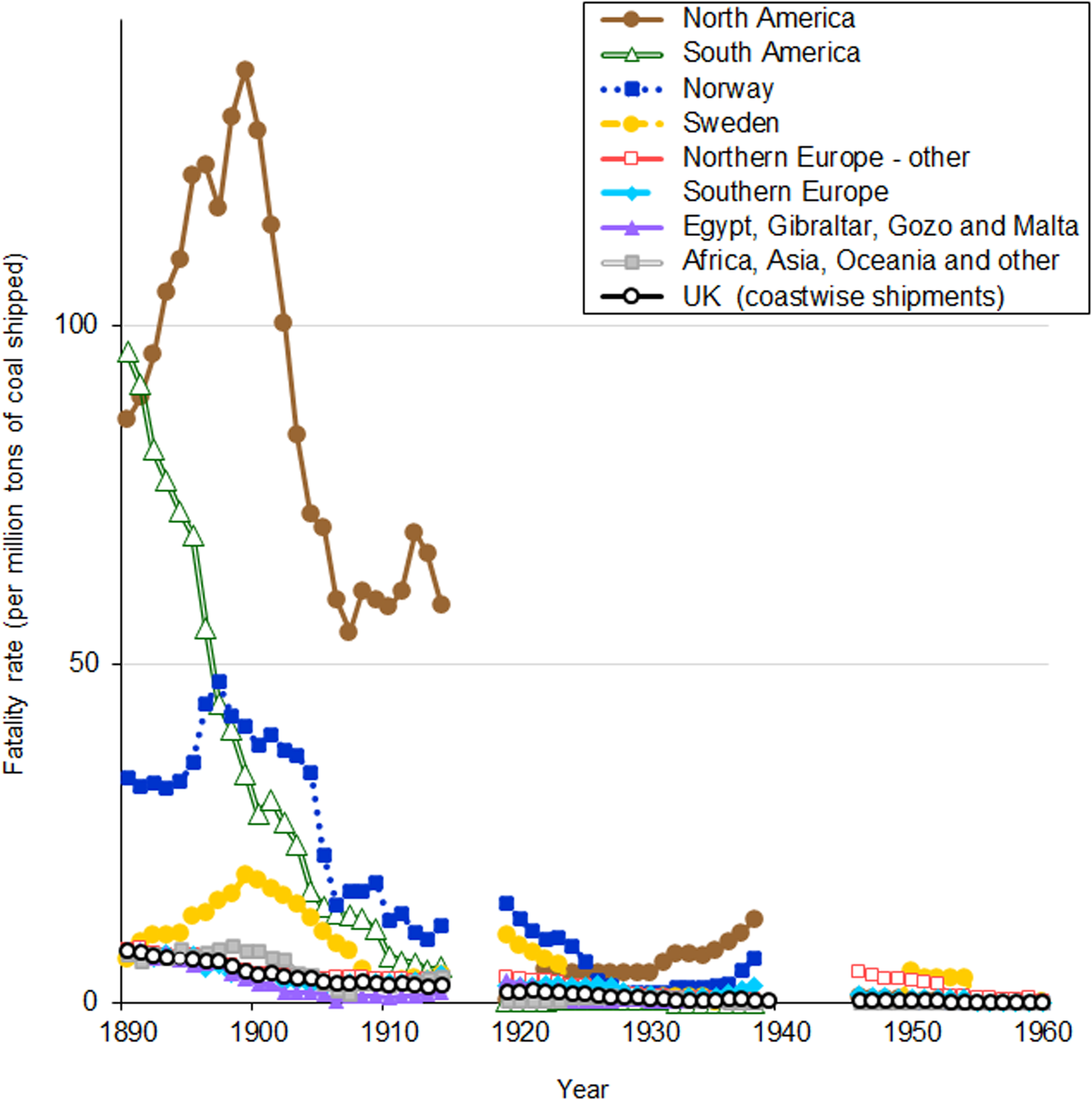
Trends in seafarer fatality rates (per million tons of coal shipped) according to the destination region or country, 1890–1960.
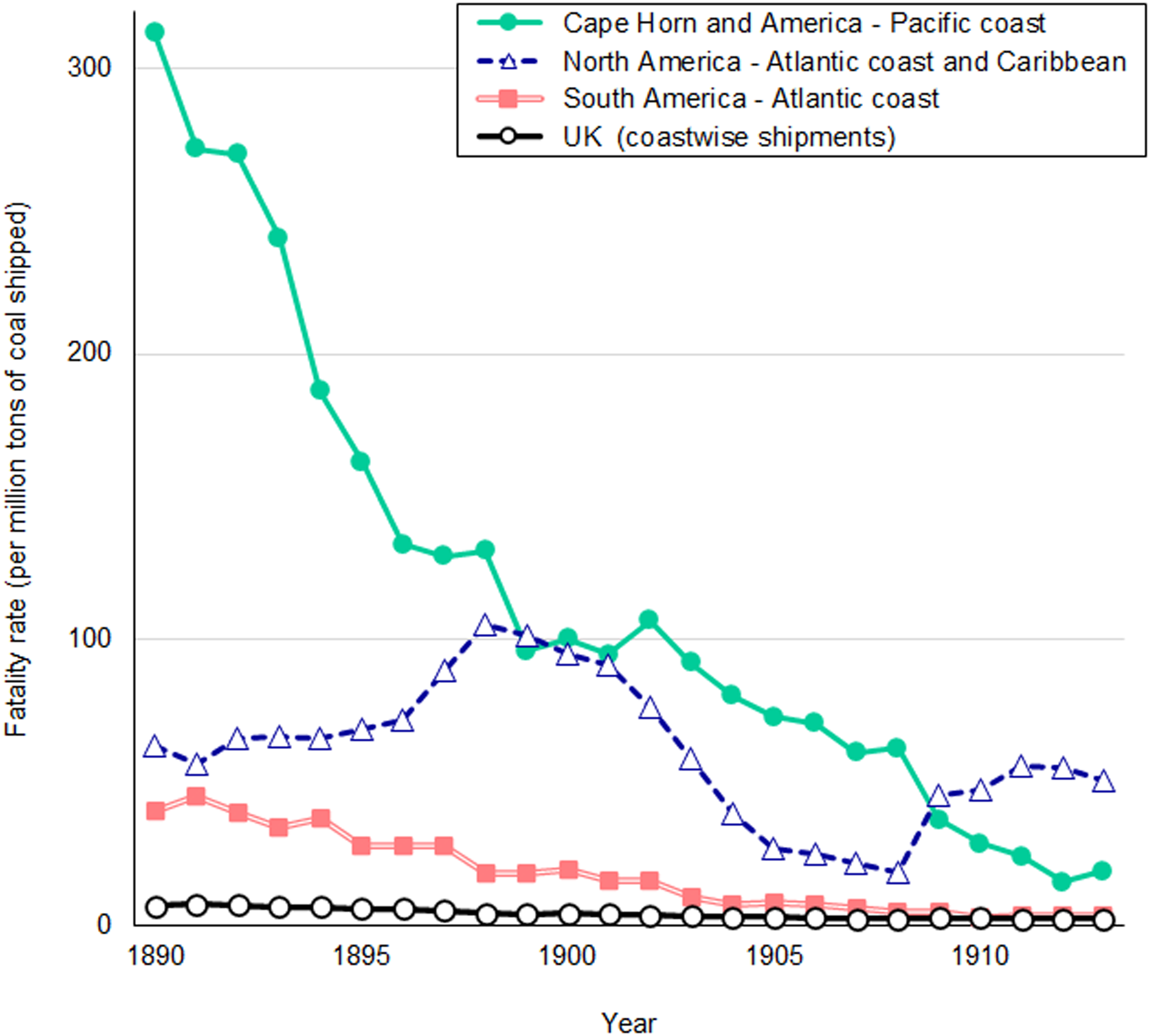
Trends in seafarer fatality rates (per million tons of coal shipped) for the Pacific (via Cape Horn), Atlantic coasts of the Americas continent, and the UK coal coasting trade, 1890–1913.
Fatality rates are available for the period prior to 1914, which allows for a comparison of the risks of transporting coal to the Atlantic/east coast of the Americas continent with the Pacific/west coast (Figure 5). The latter trade had to round Cape Horn prior to the opening of the Panama Canal. For both North and South America, the risks were far higher when rounding Cape Horn to the Pacific coast than when trading to the Atlantic coast. The risks of sailing around Cape Horn have long been documented, due mainly to the meteorological and geographical predisposition (a steeply rising ocean floor) to frequent severe storms and extreme ocean swells, along with the additional hazards of rocky shoals and seasonal icebergs. 23 The type of ship was also important. Before 1915, almost all the ships (95 per cent) that were lost when trading to the Pacific coast of the American continent were sailing ships. By contrast, one-third of those lost when trading to the Atlantic coast were steamships. The trade around Cape Horn to the Pacific coast had a fatality rate of around 300 deaths per million tons of coal exported during the early 1890s (Figure 5). This was vastly in excess of all other coal trades and about 40 times more hazardous than the British coasting coal trade at that time.
The British coal trade to the Pacific coast of South America largely ceased during the time of the First World War (Table 1), ironically after the Panama Canal was opened in August 1914. It was buoyed by lucrative return cargoes, such as ores, nitrate and guano fertilizer from Chile and Peru. Developments in synthetic fertilizers made this obsolescent. Also, coal to the Pacific coast of South America was increasingly being supplied by non-UK sources – notably from Newcastle, New South Wales, Australia. 24
By contrast, coal exports to the Atlantic coast of South America, primarily Argentina and Brazil, remained high during the 1920s and 1930s (Table 1), and fatality rates across the South Atlantic were relatively low over the entire period. Large sailing vessels had previously retained a major role in British coal exports to the Pacific coast of South America as a result of slow cargo discharges, long waits for return cargoes and subsequent slow loading. This favoured sailing ships, with their lower capital costs to service than steamships, which dominated coal exports to the Atlantic coasts of the Americas where, generally, unloading and loading facilities were better. As Figure 2 shows, vessel type was a significant factor in crew fatality rates.
A quarter of the ships lost (23 of 95) on the trades to all North American markets were destined for San Francisco. This trade was quite substantial, with around two million tons exported to California, much of it smokeless anthracite coal transported from Swansea. 25 Other ships lost on this trade were destined for Vancouver or the Pacific coast of Mexico.
In the years around the turn of the twentieth century, there were also high fatality rates when trading to the Atlantic coast of North America and the Caribbean (Figure 5). This is perhaps a reflection of the seaworthiness of some of the earlier steamship designs when exposed to the harsh conditions of the North Atlantic. The ships lost on these trades were destined for the United States (mainly Baltimore, Boston, New Orleans, New York or Philadelphia), Canada (Montreal, Newfoundland or Nova Scotia) and the Caribbean (Cuba, Puerto Rico or Trinidad).
Coal exports to North America increased during the interwar years (Table 1), while corresponding ship losses and human fatalities were greatly reduced compared with pre-1915 levels (Figure 4). This is likely a consequence of almost all the coal, by then, being transported in more modern steamships to the Atlantic coast rather than around Cape Horn to the Pacific coast in sailing ships.
The high risk of fatalities in the trade to Norway persisted until around 1930 and was mirrored to a lesser extent by the trade to Sweden (Figure 4). Much of the coal for these markets came from Newcastle or the east coast of Scotland, and was carried in small sailing vessels until the Norwegian and Swedish fleets modernized in the interwar years, moving directly to motor vessels and thus reducing the demand for steamship bunker coal. Exports also declined for domestic and industrial use with the development of hydroelectric power. Adverse weather conditions, especially during the northern winters, and a tradition of buying second-hand vessels for these trades may also have contributed to the decline. 26
The port where the coal cargo was loaded does not influence fatality risks greatly, although Scottish ports had higher relative risks prior to 1900 (Figure 6). This may be linked to the small wooden sailing vessels that traded and loaded in the relatively small ports in the Firth of Forth, and is also associated with the finding of higher risks in ships destined for the Nordic countries, especially Norway. Seventy-five (44 per cent) of the 170 ship casualties from the east coast of Scotland were destined for Scandinavia, including 45 (26 per cent) for Norway.
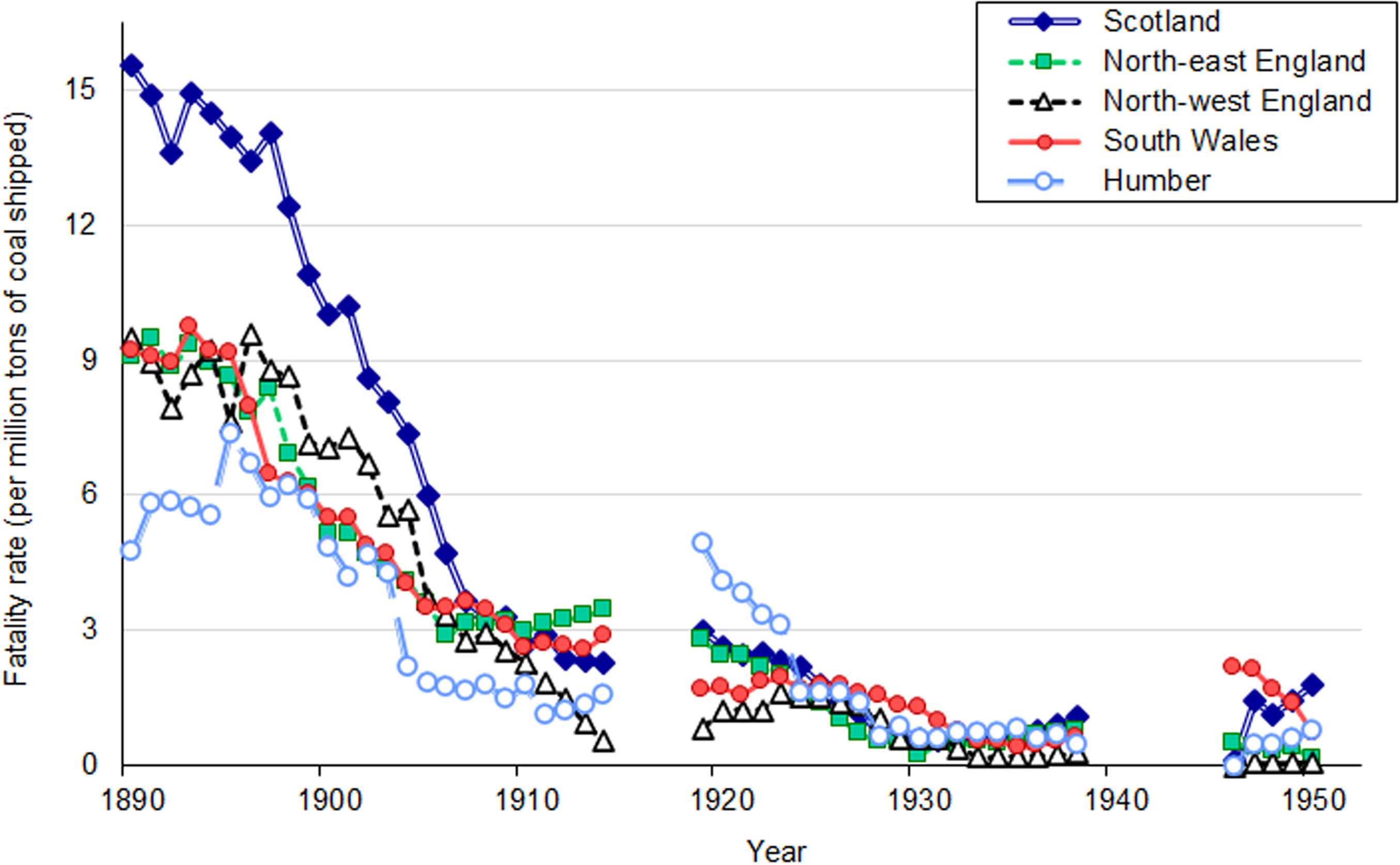
Trends in seafarer fatality rates (per million tons of coal shipped) according to the UK region of the shipping port, 1890–1950.
Casualties to ships
Of the total of 1,587 casualties to ships, the vast majority of voyages originated in the major coal-exporting areas, with 561 (36 per cent) from South Wales, 459 (29 per cent) from the north-east of England, 276 (18 per cent) from Scottish ports and 149 (9.5%) from the north-west of England. For some types of casualty, such as disappearances, all the crew inevitably perished. If it was a large vessel, crew numbers would be higher than for a smaller one, hence an average loss of life per ship casualty for the large sailing vessels going round Cape Horn was 14.7, compared with an overall coal-trade average of 8.2, while for the (mostly small) vessels exporting to Scandinavia it was 7.4, and coastwise around the UK it was 5.1. For other casualties, such as fire and explosion or a near-to-shore grounding or collision, a high proportion of the crew often survived. For ship disappearances, the average number of crew lost was 12.4, compared with foundering with loss of life at 9.4, wrecking or grounding at 7.0, collisions at 5.0, fires or explosions at 2.3 and other casualties at 1.7. Over time, the replacement of sailing tonnage with steam and later diesel ships, better ship design, aids to survival such as ships’ lifeboats, and improved communications and rescue services also mitigated the risk of death. This led to a changing pattern of ship casualties.
The destination of the voyage and its length, as seen from the fatality rates, were important determinants of ship casualties, with the coastal trade being a relatively low-risk sector throughout the study period. Seasonal variations in the frequency of severe weather would have also influenced the risk of a ship casualty, but some parts of the coal trade – notably, supply for domestic heating – were also seasonal, with peaks in the autumn and early winter months. The pattern for certain types of casualties that were less related directly to extreme weather, such as fires and collisions, varies less with the seasons (Figure 7).
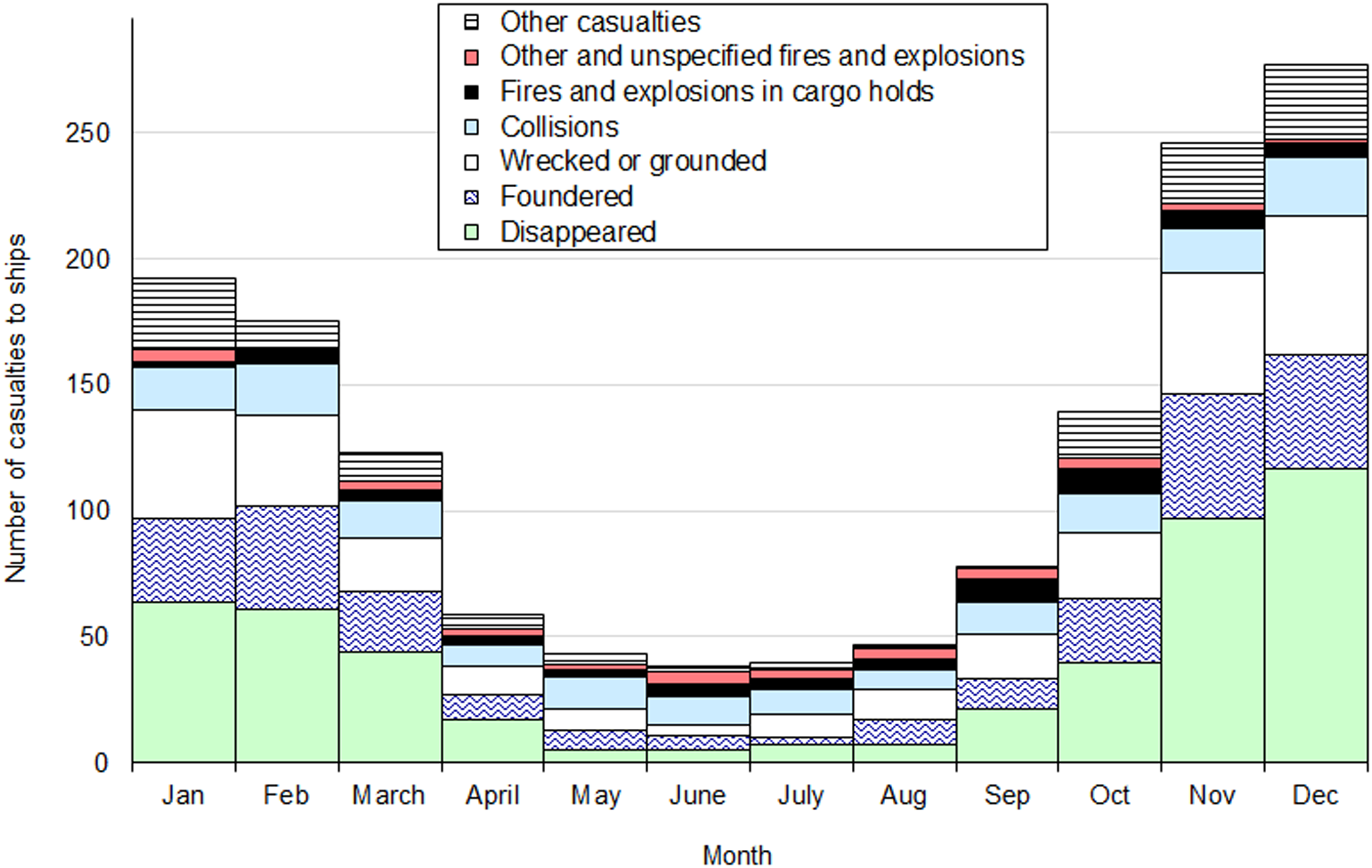
Northern hemisphere: number of casualties to ships that shipped coal from the UK according to the month of the year and the type of casualty, 1890–1980.
Disappearance became a rare form of casualty after 1930 (Figure 8). By this time, maritime radio communications had been developed and so information about a ship in distress could be transmitted. The cargo-specific risks from fire and explosion are only a small proportion of the causes of seafarer fatalities (with few lives lost in most of these cases), but account for a higher proportion of vessel casualties. Importantly, information is not usually available on the exact causes of serious incidents leading to disappearance in the period before radio communications. Although based on inconclusive evidence presented at Board of Trade enquiries, some of the ship disappearances may well have resulted from catastrophic explosions or through spontaneous combustion of certain grades of coal. In the period since 1946, when causal information on the ship casualties tends to be more detailed, cargo shifting was held to be a contributory factor in 8 out of 18 (44 per cent) of the shipping losses through foundering. This is likely to be the reason for the similar proportion of ships that foundered or disappeared in earlier years.
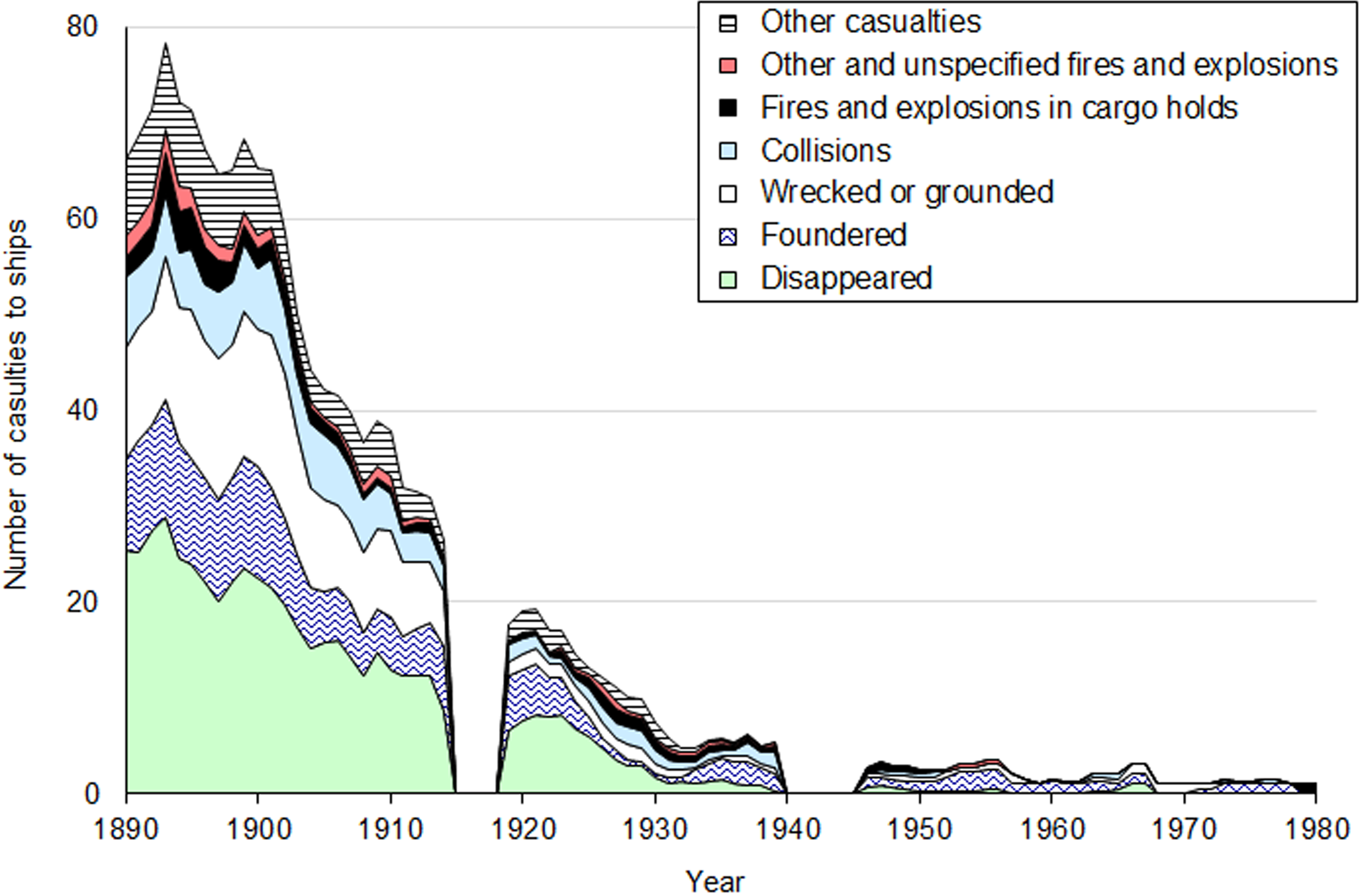
Trends in the number of casualties to ships that shipped coal from the UK according to the type of casualty, 1890–1980.
The most frequent (known) locations of shipwrecks were the North Sea, Norwegian Sea, Baltic Sea, Kattegat or Skagerrak (491 wrecks), and Bristol Channel, Irish or Celtic Seas (381). Other locations included the North Atlantic or Caribbean Sea (112), British rivers or ports (60), and the English Channel and Bay of Biscay or Mediterranean Sea (both 59).
The nationality of the ship was relevant in two main ways. First, it reflects the volume of that nation's shipping involved in the exporting of British coal. British ships were predominant, and losses for most other nations usually represent the use of their national fleets for carrying their own imports (Figure 9). Exceptions to this are the fleets of Sweden, Germany and, in particular, Norway, which had a considerable trade exporting to third countries. For example, during the 25 years from 1890, Norwegian ships accounted for 21 (37 per cent) of the shipping casualties through transporting British coal to Brazil and 10 (36 per cent) to South Africa, while German ships accounted for 21 (32 per cent) of the casualties around Cape Horn to Chile. Second is the pace at which each nation's fleet converted from sail to steam. Some, such as Norway and Sweden, did this relatively late and were engaged in transoceanic voyages with large sailing ships at least until the 1920s.
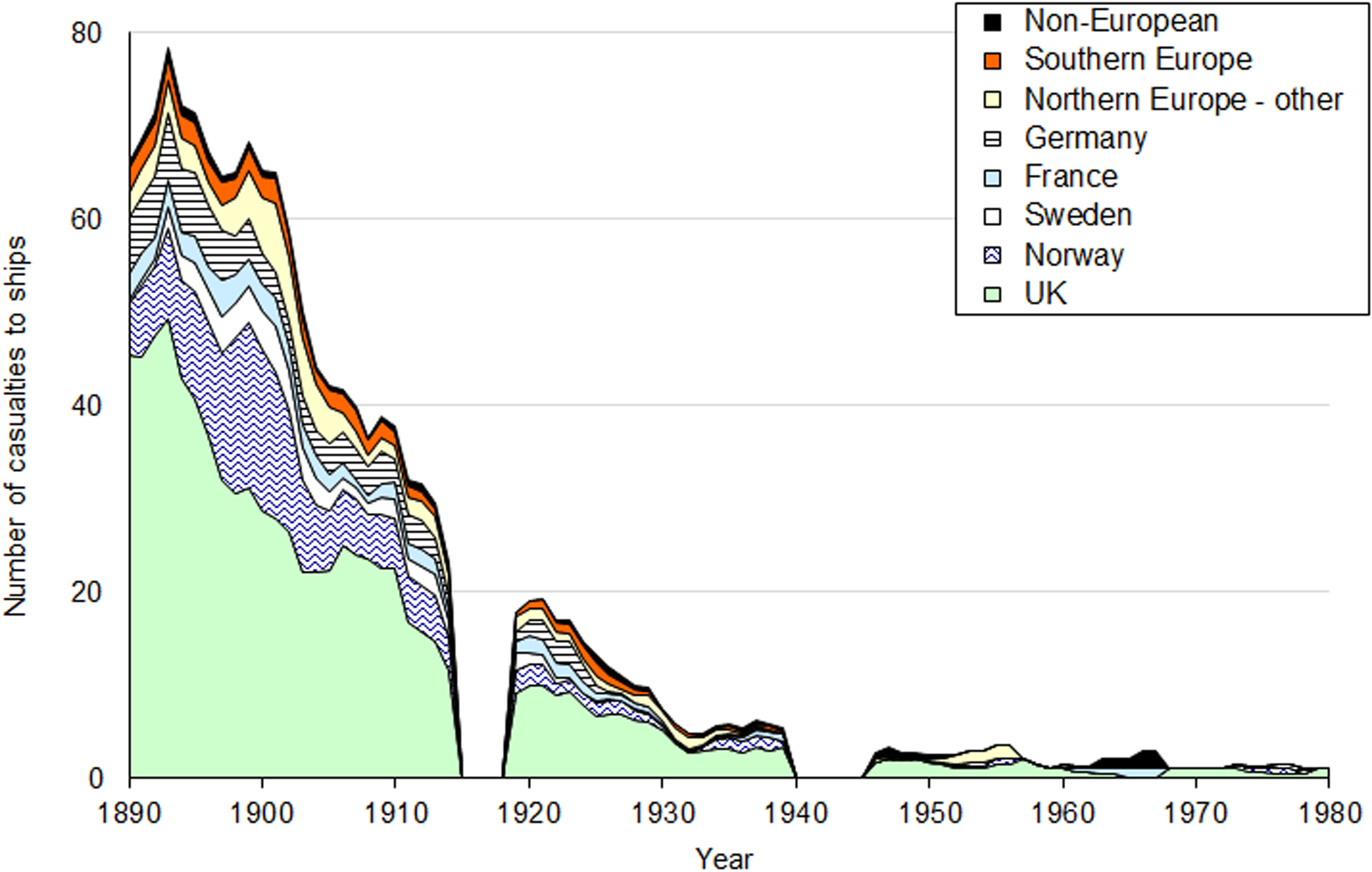
Trends in the number of casualties to ships that shipped coal from the UK according to the nationality of the ships’ flag, 1890–1980.
Discussion and conclusions
The human cost of Britain's domination of world coal transport in the period from 1890 to 1914 was considerable, with around 500 deaths a year from shipping losses alone. Subsequently, at a time of declining coal exports from 1919 to 1939, the risks of death secondary to ship casualties reduced to around 100 deaths a year, with considerable further reductions in the fatality rate and coal exports after 1946. Based on information for the whole shipping sector, it can be expected that there would have been roughly an equal number of accidental deaths in the maritime coal trade that were not associated with recorded ship casualties.
Ideally, the deaths would be matched to a measure of ‘person/years employed’ to arrive at the fatality rates but, as it is impractical to obtain population information on the crews of ships in the coal sector, the coal tonnages carried have been used as a proxy. This does enable comparisons to be made of the fatal accident risks in the seafarers exporting coal and the miners extracting it. For the earlier part of the period studied, prior to 1900 it was more dangerous to be a seafarer transporting a ton of coal than it was to be a miner hewing it. This also almost certainly was the case for the study period taken as a whole.
The lack of information on ‘person/years employed’ in different maritime trades is a wider problem in studies of the health and safety risks to seafarers, as it means that it is impossible to compare the risks across the different trades; this would have enriched this investigation by showing how risks to life in the coal trade compared with those in other sectors, such as liner trades or fishing.
It is surprising that after the intense public and political concern about the loss of life at sea in the period before 1890, and despite good records of ship casualties, there were no follow-up investigations to assess the adequacy of preventative measures while the coal trade was extant. It has been left to a study of what is now a historical risk to measure its scale and its cost in human lives. The social and political reasons for this require further study. Was it that the worst mining disasters led to larger numbers of casualties than any loss of a cargo ship? Was it distance from public scrutiny? Was it that maritime safety concerns were focused on passenger vessels rather than cargo ships? Was it that crews were often non-British nationals on cargo ships that were registered in other countries? Was it that coal was only one of a range of bulk cargoes carried?
Both coal mining and coal shipping show a large and progressive fall in fatalities per ton of coal mined or carried by sea. A large part of the high fatality rates in seafarers in the late nineteenth century can be linked to the known higher risks of the total loss of a sailing ship compared to a steamship. Steam power progressively took over from sail in the closing years of the nineteenth century and reduced the risk to seafarers at a time when mining technology and investment progressed little and most coal was still hewn by hand – hence the decline in the ratio of deaths in shipping compared to deaths in mining.
The export destination was a major determinant of risk. There were, however, different contributory factors for different destinations, although the persistence of sail contributed in all cases. The extreme weather conditions rounding Cape Horn and the voyage length for exports to the west coast of South America resulted in the loss of a considerable number of the large sailing ships that remained an economical means of transporting bulk cargoes on this route. In contrast, the short but inclement voyages to the Nordic countries, often using older vessels that were in poor condition, also increased risks, especially in winter, at least until these countries modernized their fleets and moved away from their dependence on British coal in the interwar years.
Insurance has long been a means of pooling risk in shipping. Access to insurance sources is limited but no doubt Lloyd’s and the various protection and indemnity clubs within the industry would have set premium rates based on claims experience within the coal-exporting sector. Were this information available, it could have added a further perspective to this study.
Footnotes
Acknowledgements
The authors thank the following for help and advice with accessing study information sources; Vaughan Pomeroy and John Crilley, Lloyd's Register of Shipping, London; Ian Smith at the National Waterfront Museum, Swansea; David Jenkins at the former Welsh Industrial and Maritime Museum, Cardiff Bay; Audrey Hodges and Cathy Pennock at the Marine Accident Investigation Branch, Southampton; and librarians at the South Wales Miners Library, Swansea; the Registry of Shipping and Seamen, Cardiff; and the Caird Library, National Maritime Museum, Greenwich.
Declaration of conflicting interests
The author(s) declared no potential conflicts of interest with respect to the research, authorship and/or publication of this article.
Funding
The author(s) disclosed receipt of the following financial support for the research, authorship, and/or publication of this article: Some of the data collection for this study was supported by the Maritime and Coastguard Agency (grant number RP 578).

Author biographies
Tim Carter has worked with industry, governments, international agencies and universities on workplace, road and maritime health risk management, most recently at the Norwegian Centre for Maritime and Diving Medicine. His long-standing interest in historical aspects of these topics has led to a range of publications on the science and politics of such risks and their control.
John Williams is a retired clinical academic and consultant gastroenterologist. He spent his early career as a Royal Naval Medical Officer, seeing service in Portsmouth, Plymouth, the Caribbean and south Atlantic, before being appointed Professor of Naval Medicine. He is now Emeritus Professor of Health Services Research at Swansea University Medical School.
Hance Smith is currently Honorary Senior Lecturer in the School of Earth and Environmental Sciences at Cardiff University. His research interests include the development of the maritime global economy, particularly since the late eighteenth century, and the implications for the management of the world ocean, including shipping and ports.
Jennifer Protheroe-Jones is Principal Curator of Industry at Amgueddfa Cymru - National Museum Wales, based at the National Waterfront Museum at Swansea; her research interests include the statistical history of Welsh mineral production.
Ann John is a clinical epidemiologist and Professor of Public Health and Psychiatry at Swansea University. Her research focuses on mental health and suicide and self-harm prevention. She chairs the National Advisory Group to Welsh government on Suicide and Self-harm prevention.
Stephen Roberts is a reader in public health and epidemiology at Swansea University Medical School, previously he was a research lecturer at the Department of Public Health, University of Oxford. His publications mostly address gastrointestinal diseases, occupational mortality, maritime disasters, suicides and mortality following hospitalisation for acute disorders.