




Abstract
The history of fishing has often been written from a local or regional perspective. There has gradually been a shift where fishing has been studied from a broader international perspective. Nevertheless, large international overviews need detailed studies of individual ports in a similar way as studies of individual ports benefit from the international perspective. The introduction of steam-powered fishing vessels in Scandinavia has often been regarded as an attempt to imitate fishing in Great Britain. However, a closer study of the Scandinavian countries shows that this does not match, for example, the Norwegian steam fishing fleet. Scandinavia's two main fishing ports with steam-powered fishing vessels, Ålesund in Norway and Gothenburg in Sweden, show great differences. Gothenburg is the place that has the most similarities with the large British fishing ports. Steam-powered fishing vessels played a modest role in Danish fishing. On the other hand, when it comes to the introduction of engines, the Danish fishery was the leader. However, it would take more than 30 years from the first functionable engines around the turn of the twentieth century before motor-driven fishing vessels could begin to compete with steam-powered fishing vessels. The problems of financing the new technology are emphasized in the article. Government loans were important in many countries, but much research is still needed to clarify the proportion that was government-financed and how much other financial actors contributed.
Keywords
Introduction
The North Sea and North Atlantic offer good opportunities for fishing. Over time, the anthropogenic exploitation of marine resources has steadily increased. It has recently been suggested that the history of fishing in this area can be divided into five stages. Fishing increased at the beginning of the eleventh century, but, lacking data, it is not possible to calculate how large the catches were. The next step occurred in the 1500s with ‘the North Atlantic fishing revolution’. A third step can be observed from 1750, mainly driven by extensive herring fishing. The fourth stage, which is the period covered by this article, began around 1880 with the breakthrough of steam-powered fishing vessels. The fifth step was taken after 1950, with a new wave of technological innovations. 1 Here, we focus primarily on the fourth stage, which occurred between 1880 and 1950. The aim of this article is to present an overview of the advancements of fishing vessels in Sweden, Norway and Denmark, highlighting the breakthroughs of steam power and motorization. To achieve this, we utilize the available statistics and combine research from economic history, natural science and contemporary archaeology.
Steamships began to be used in the fishing fleets of the Scandinavian countries at about the same time as in other northern European countries. The breakthrough was delayed until around the turn of the twentieth century. 2 At around the same time, engine technology was developed for smaller boats and became more common. There were many benefits to the new technology. Fishing could be conducted further out to sea and the equipment on board, such as winches, could be installed through motorization to aid the heavy work. The new technology was costly; capital was required to buy and operate the new ships. Of course, knowledge of how the machines worked was also needed. Steam-powered fishing vessels could, and had to be, in operation for most of the year, unlike the older fishing vessels. The costly investment in a steamer did not yield a return unless fishing was practised, in principle, all year round.
The spread of new techniques can be studied with the help of various written source materials, photographs, blueprints and also material remains. In this article, our intention is to bring together the current state of knowledge about the spread of steam power and motorization in Scandinavian fisheries. What influences – domestic and foreign – acted as driving forces in the introduction of the mechanized operation of the countries’ fishing fleets? The change of technology in Scandinavian fishing has been brought to attention within the framework of regional and national studies on the history of fishing in Scandinavia. However, comparative studies of the introduction of the new technologies are rare. This article aims to compare the fishing fleets of Norway, Sweden and Demark in order to clarify the process and driving forces behind the introduction of the mechanized propulsion of fishing vessels. Through an analysis of literature and official statistics, we aim to identify lacunas in the research and provide a more comprehensive understanding of this technological shift.
The riches of the sea and its regulation
The marine environment during the nineteenth century was not unaffected by humans. However, in many respects, it was in better condition than it is today, with richer fish stocks, larger lobster catches, undamaged oyster banks and vast eelgrass meadows. Fishing in Scandinavia was primarily focused on coastal fishing. Fishermen mainly relied on fishing with nets and longlines. Depending on the seasonal conditions, fishing was conducted in both coastal and offshore locations. 3 New research has illuminated that catching methods were seemingly simple but extremely efficient. For example, cod catches in 1788 amounted to 80 per cent of the catches in the first years of the twentieth century. However, the herring fishing of the pre-industrial period was not comparable to the early industrial fishing. Herring catches in 1788 corresponded to only 39 per cent of the catches in 1903. Thus, the sea was far from unaffected by humans when fishing vessels began to be equipped with steam propulsion and engines. Figure 1 shows the areas used by the International Council for the Exploration of the Sea for reporting catch statistics. 4
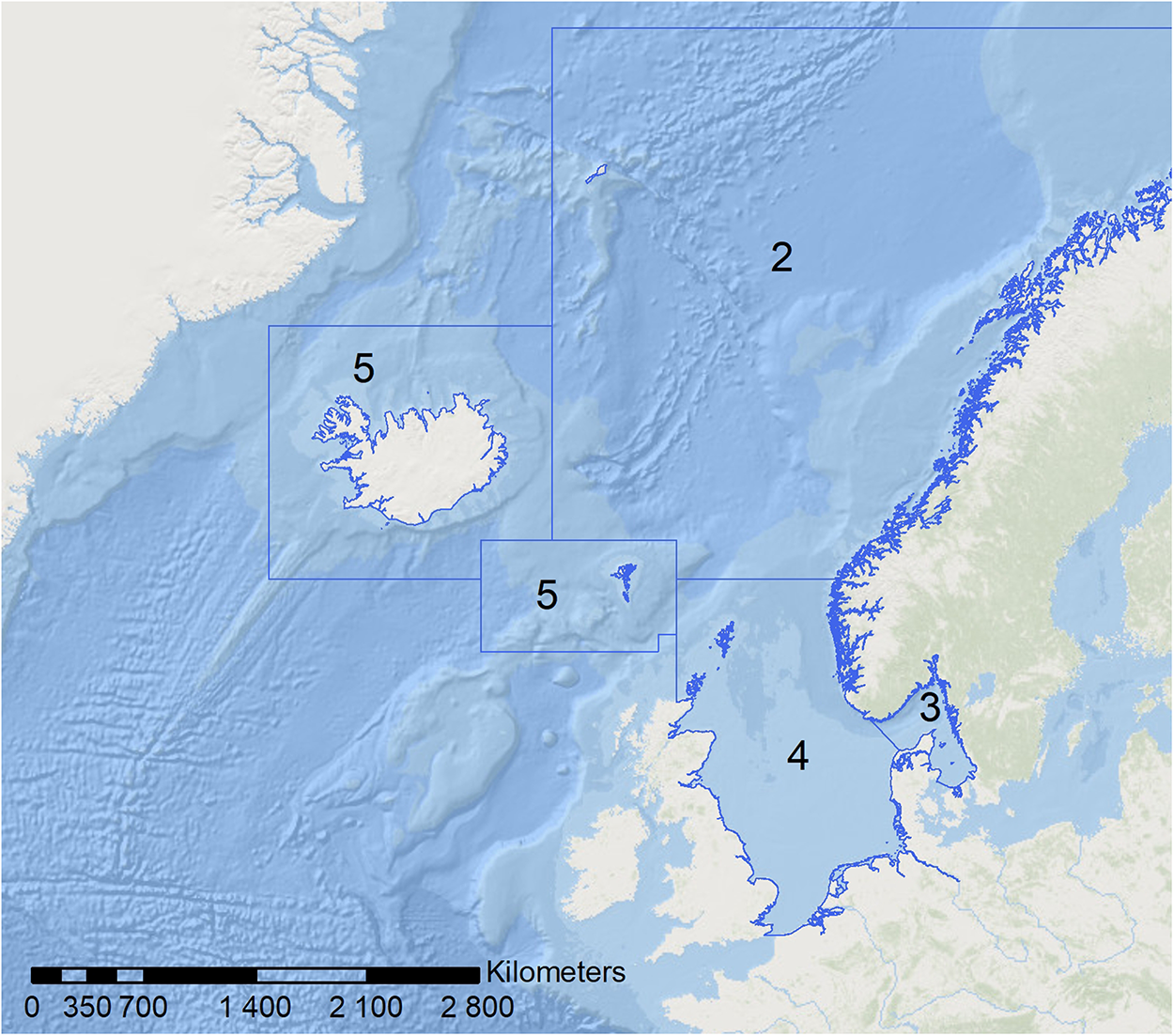
Geographical distribution of the seas presented in the statistics in this article (numbering according to the International Council for the Exploration of the Sea).
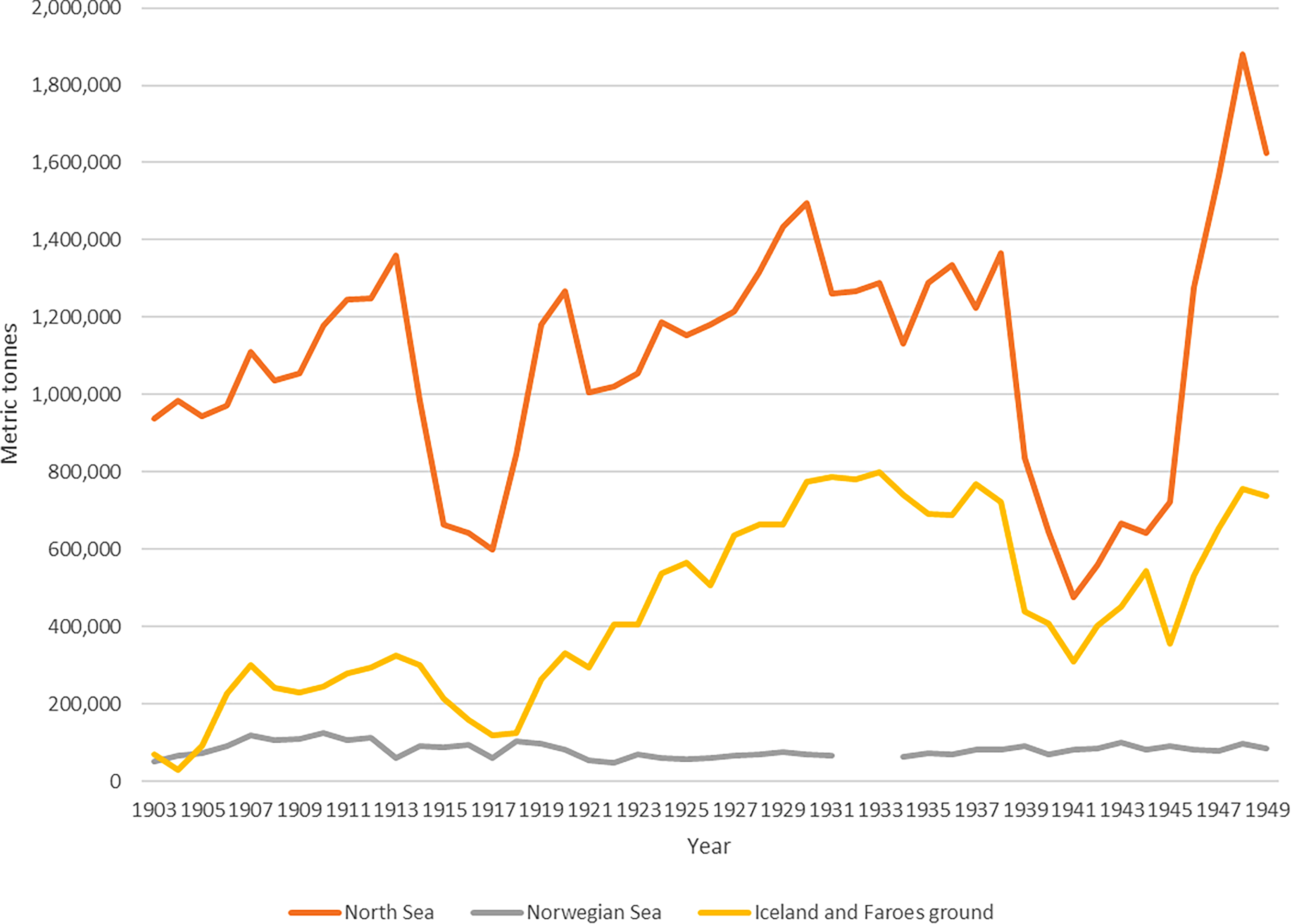
Quantity of fish landed from the North Sea, Norwegian Sea, and Iceland and Faroes grounds (metric tonnes).
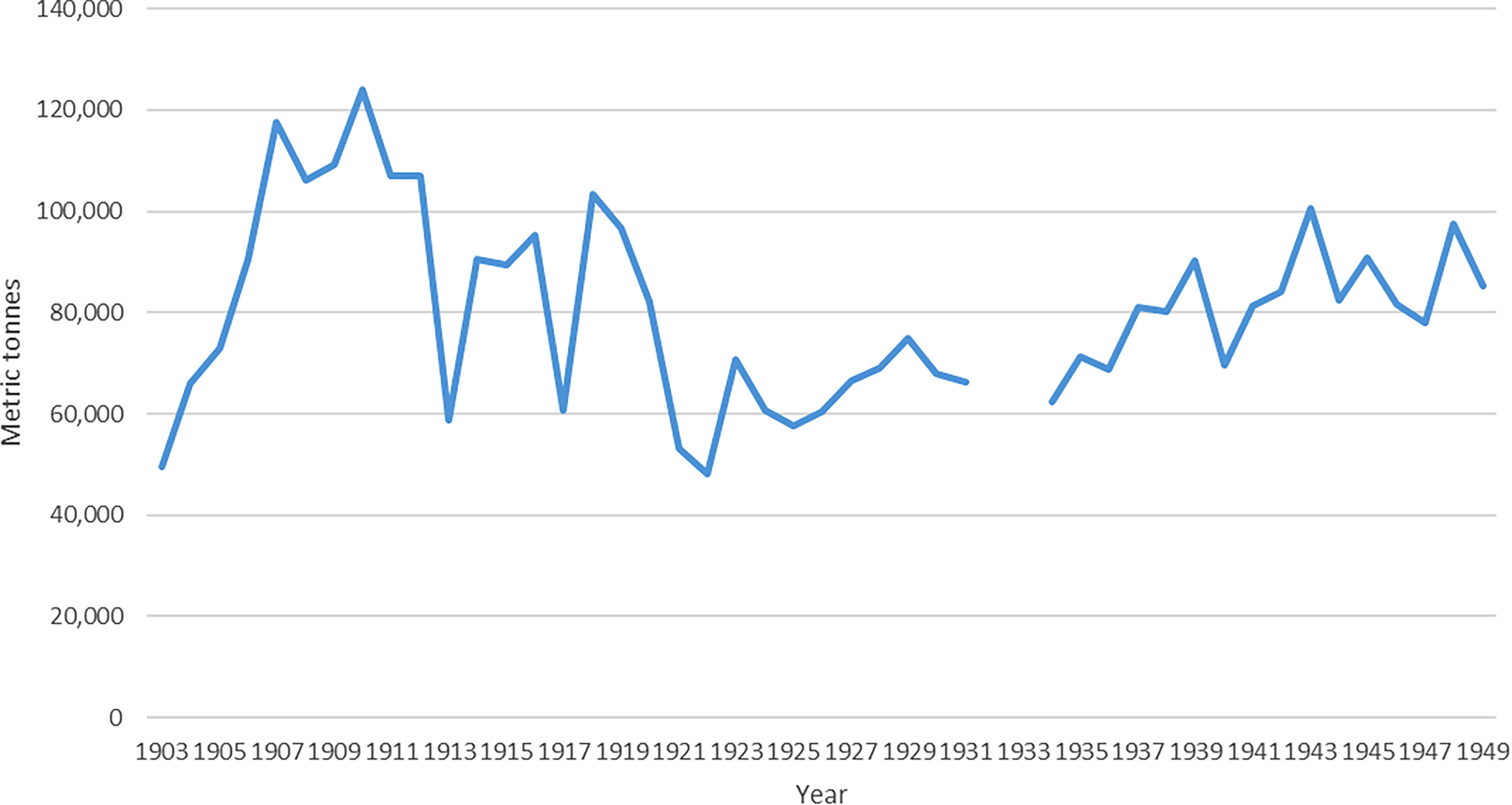
Quantity of fish landed from the Skagerrak and Kattegat (metric tonnes).
The International Council for the Exploration of the Sea has compiled statistics on how much fish was landed from different regions from 1903 onwards. Figures 2 and 3 show the total amount of fish landed from each sea according to the International Council for the Exploration of the Sea’s classification, not only by fishermen from the Scandinavian countries but by all who fished in the area. It is important to understand the total fishery in order to be able to discuss investments in new technology.
Of the fishing areas studied within the framework of this work, the North Sea was the most significant. The increase that can be observed before the First World War had of course begun with the introduction of steam trawlers in Britain, France, Germany and Belgium during the late nineteenth century. Fishing in the Skagerrak and Kattegat yielded no more than 120,000 tonnes when it was at its most successful in the years before the First World War. The sharp increase in catches between 1903 and 1907 is probably related to new fishing methods and the introduction of steam trawlers along the Swedish west coast.
The large catches that were landed naturally raise the question of what impact this had on the fish stocks in the sea. There was some concern as early as the end of the nineteenth century that the fishing banks in the North Sea were being damaged by the intense fishing. Catches could only increase by using new fishing grounds. Yet there were still strong forces claiming that the sea was inexhaustible. 5
An early example of a researcher who was concerned about the human impact on fish stocks was Sven Nilsson, a Professor of Zoology at Lund University. He was appointed in 1826 to lead an investigation into why herring had disappeared from the Swedish west coast in 1808. Nilsson concluded that the fish always returned to the place where they hatched to reproduce and the absence of herring could not be explained in any way other than that it had been overfished or the area of reproduction had been ruined. The fish that hatched in other places, on the other hand, could not be expected to make up for the shortage in the depleted sites of reproduction. In 1832, Nilsson suggested that the best way to restore a destroyed fishery was to protect it for one or more decades. He assumed that such a long period of time was needed for sufficient numbers of fish to be able to grow and become sexually mature for reproduction. According to Nilsson, the disappearance of herring was due to the overfishing of locally occurring herring stocks. However, this explanation is not likely because, even if there seemed to be local herring stocks in the Bohuslän fjords, these must have been far too small to have been able to support the extensive fishing. It is true that herring return to spawn in the place where they hatched, but these areas of reproduction were probably located mainly along the east coast of England. 6 The root cause of the fluctuations in the occurrence of herring in the Bohuslän fjords is still disputed. It is probable that climatological fluctuations were behind the varying tendency of the herring to migrate to the coast during the winter and, of course, also the size of the stocks. 7 Similar ideas were put forward by John Cleghorn in 1854 before the British Association for the Advancement of Science, although it took more than 50 years before the conclusions of these two researchers were heard in the research world. When Walter Garstang published his text ‘The Impoverishment of the Sea’ in 1901, he built on previous work and was able to show in his study that the extraction from the sea was greater than the regrowth. This had an international impact, although far from everyone agreed with his conclusions. 8
Before the First World War, the seas were largely open to fishing vessels from all countries. However, after the 1882 Hague Convention, regulations had been introduced closer to the coasts. Most countries followed the guideline of a three-nautical-mile border within which foreign countries were not allowed to fish. However, Sweden-Norway followed the Scandinavian tradition of a four-nautical-mile border. The Hague Convention also regulated the relationship between fishing vessels – for example, between trawlers and drift-net vessels. The agreement was largely intact until the end of the Second World War, although several countries had begun to deviate from the regulations during the 1930s. 9
Of the Scandinavian countries, Norwegian fishing was the most extensive and had the largest catches – nearly 300,000 tonnes per annum during the beginning of the twentieth century and well over a million tonnes towards the end of the 1940s. Swedish fishing increased in importance during the early twentieth century and yielded larger catches than the Danish. Swedish fishermen landed around 30,000 tonnes per annum, excluding catches from the Baltic Sea, during the early twentieth century and then increased their catches to almost 100,000 tonnes per annum at the time of the First World War, while Danish fishing at the same time reached just under 40,000 tonnes. During the interwar period, Swedish and Danish fishing were about the same size. During the Second World War and during the period up to 1949, there was a significant increase in Danish fishing up to 177,000 tonnes, compared to the 120,000 tonnes per annum for Swedish fishing. 10 There were thus significant differences between the Scandinavian countries.
Steam-powered fishing vessels
During the nineteenth century, steam-powered ships had gradually become an increasingly common sight in shipping. Of course, fishermen were also interested in the new technology. At an early stage, steamships served as support for sailing fishing vessels by bringing the catch ashore for sale. Steamships could also transport provisions and a change of crew, enabling the sailing ships to stay out at sea for longer periods of time. In all Scandinavian fishing waters, the experimental use of steam-powered fishing vessels occurred from the late 1860s, beginning in Norway. However, these early attempts were unsuccessful. Further Norwegian attempts were made in 1884 with the steamship Activ, built at the Møhlnpris mechanical workshop in Bergen and considered the first Norwegian steamship to be successful in fishing. A fishing bank was even named after the ship. 11 In Esbjerg on the west coast of Denmark, a fishing company was started in 1879 with three sailing fishing vessels and a steamship. However, the new company was not successful and was forced to close in 1885. 12 The first steam-powered fishing vessel in Sweden was bought from Great Britain in 1888. The new fishing vessel looked promising and worked well, although it soon became clear to the owners, the Winga company, that the cargo space was too small for longer fishing trips. Eventually, the fishing vessel was sold to new owners in Denmark in 1891. The new Danish owners intended to use the vessel in fishing off the coast of Iceland. 13 During the early trials with steam-powered fishing vessels, it was usually found that they were too small and required too much fuel.
In both Denmark and Sweden, the first attempts to introduce steam-powered fishing vessels failed. In Norway, conditions were different. There, the number of steam-powered fishing vessels steadily increased from the mid 1880s. Some vessels were purchased from other countries, but a large part of the Norwegian fleet was built in domestic shipyards and mechanical workshops. As early as 1902, the country had a fleet of 104 ships. At the ‘fisheries meeting’ in Lysekil in 1903, where fishermen and government representatives from all over the Nordic region met, the fisheries inspector, Jens O. Dahl, from Norway described the successful introduction of steam-powered fishing vessels. Many of the Norwegian vessels were relatively small and owned by companies or a few fishermen who had joined together to raise capital. The increase in the number of steam-powered fishing vessels continued until 1927, when the peak was reached and the fleet consisted of 370 vessels. 14 The steam-powered fishing vessels in Norway rarely engaged in trawling. Instead, they were bank fishing vessels. The largest concentration of steam-powered vessels was in Romsdal County. There were 92 steam-powered fishing vessels in 1906, which corresponded to 52 per cent of the total number in the country. 15
A second attempt to introduce steam-powered fishing vessels in Denmark began in 1887 when a Norwegian steamer was purchased. It was described as the first real attempt to conduct deep-sea fishing from Denmark. Initially, the steamer was used for fishing in the North Sea and the catches were landed in Hull. Thereafter, the fishery was moved to the Irish coast and then back to the North Sea and the Kattegat, in constant pursuit not only of fish, but also of markets. The ship's name, Dan, also became the name of the company that was formed in 1890 to raise more capital for the business. The business did not develop as expected and the company was reformed in 1892. Few were tempted to buy shares in the company, which only showed a modest profit. The company therefore turned to the Danish state for help in purchasing a new and modern steam trawler. Through benevolent politicians, the limited company received some of the money that had been earmarked for the development of small-scale fishing. Nevertheless, the state money did not succeed in saving the company. There seem to have been many shortcomings in the company's structure and investments in mainly outdated technology. 16 Even though the Dan company did not succeed in its operations, this did not mean the end of steam-powered fishing vessels in Denmark. Interest increased during the late nineteenth century. Norway was seen as a pioneering country, and the Danish consuls in Norway were asked to send reports to Copenhagen. These formed the basis for how the state could support the expansion of steam-powered vessels in the fishing industry. 17 New attempts were made during the following years to establish a company that fished with steam trawlers. For example, in 1908, a new company was formed in Svendborg, which bought a first-class steam trawler, the Dannebrog, to be used for fishing off the Faroe Islands and Iceland. 18 This attempt was also short-lived. The total number of steam-powered fishing vessels in Denmark was only five in 1914, and after the First World War steamships seem to have completely disappeared from the Danish fishing fleet in favour of vessels powered by a combustion engine or motor. 19
In Sweden, a new company – Göteborgs ångfiske aktiebolag – was formed in 1901; it was owned by one of Gothenburg's major industrialists, the brewer Melcher Lyckholm. The purpose of the company was to buy a steam trawler, but it was not deemed profitable to sell the fish in Gothenburg or Sweden, so the trawler was sent to fish in, among other places, the Irish Sea and the catch was landed mainly in the United Kingdom. The crew of the first steam trawler was from the United Kingdom, with the exception of the engine room crew, who were Swedes.
The first steam trawler to fish along the Swedish west coast was the Bris, which was built in a small shipyard near Gothenburg and owned by some fishermen brothers from the fishing village of Näset. The trawler was partly financed by government loans. 20 This small-scale attempt to engage in trawling, with a steam trawler of just over nine tonnes, ended in bankruptcy in 1904. 21 Along the Swedish west coast, the experiment with the trawler Bris is the closest parallel with the many small steam fishing vessels along the Norwegian coast, with the difference that the Bris was a trawler, which was not common in Norway. In the following years, the company Gadus fabriker, which was also owned by the brewer Lyckholm, began to buy steam trawlers. Just before the outbreak of the First World War, Gadus was Sweden's largest fishing company. 22
From 1914 onwards, there are national statistical descriptions of all the Scandinavian countries. A comparison shows the differences in scope when it came to steam operations in fishing. Denmark reported five steam-powered fishing vessels, Sweden 54 and Norway 210. The steam-powered fishing vessels were not evenly distributed along the coasts – some places dominated. In Norway, Romsdal County was incomparably the most significant, with 58 per cent of the steam-powered fishing vessels, followed by the city of Stavanger with 16 per cent. In terms of distribution within the counties, the city of Ålesund dominated in Romsdal County, with 81 out of the 122 vessels. Fourteen of the county's 34 steam-powered fishing vessels were based in the city of Stavanger. There was also a noticeable concentration in Sweden, where all steam trawlers in 1914 came from the County Gothenburg and Bohuslän. The city of Gothenburg was the home port for almost all of the 58 steam trawlers, except for three from the city of Uddevalla and one from the island of Gullholmen. 23 Even though the Norwegian fleet of steam-powered fishing vessels was largely concentrated in some cities, it was more dispersed than in Sweden.
During the First World War, many fishing vessels in the neutral Nordic countries were taken into service by the navy. Steam trawlers could be used as patrol boats, cargo ships or minesweepers. 24 When peace returned to Europe, fishing conditions were not improved. The interwar period posed major challenges for fishing, whether it was steam-powered, combustion-motor-powered or sailing vessels. In 1921, the situation was serious for shipping companies that owned steam trawlers. In Gothenburg, only one in 29 trawlers was in operation due to the high operating costs, which paralysed the entire industry. 25
During the interwar period, the number of steam trawlers along the Swedish west coast was at its highest in 1926, when 51 were registered (the majority in Gothenburg). Thereafter, the number decreased and, in the 1930s, there were less than 20. 26 Despite the fact that there were only 20 steam trawlers left in the 1930s, the weight of the caught fish amounted to 9,215,016 kilogrammes at a value of 2,268,384 Swedish kronor. This can be compared with the 71 motorized fishing vessels that landed 4,169,152 kilogrammes of fish at a value of 763,280 Swedish kronor. 27 Most steam trawlers were not brought back into operation after the Second World War. There were a few left that could still be put to work during the late 1940s. 28 The last remaining steam trawlers had been scrapped by 1960, or rebuilt for use in, for example, fishmeal factories. 29 Only a few Swedish steam trawlers were converted for operation with diesel engines. 30
In Norway, the use of steam-powered fishing vessels peaked in 1927, and thereafter a gradual reduction in the fleet began. The reduction in steam-powered vessels did not mean that the number of large vessels in the Norwegian fishing fleet decreased. Many steam engines were scrapped and diesel engines were installed in the ships instead. The importance of steam-powered fishing vessels decreased sharply during the 1930s, and the era can be said to have ended in around 1960 in Norway. 31 Although there were major differences between Sweden and Norway when it came to steam-powered vessels, it seems that the end of this era in fishing occurred simultaneously in both countries.
Introduction of motor power
The introduction of internal combustion motors meant that even small fishing boats could be equipped with mechanical propulsion. Previously, fishing boats on the Swedish west coast had been driven only by sails and oars. The new motors were, of course, significantly smaller than steam engines. In addition, they were often easier to maintain and did not require a specially trained engineer. The price of purchase and assembly was still significant in comparison to the incomes from small-scale fishing. The earliest breakthrough for motors occurred in Denmark. Around the turn of the twentieth century, several Danish motor manufacturers were leaders in this field in Scandinavia. During the early 1890s, Danish manufacturers succeeded in building reliable motors. The first motor-powered ship was the Dan, which was built by P. Jørgensen Maskinfabrik in Copenhagen in 1893 (not to be confused with the previously mentioned stream trawler with the same name). In 1900, it is estimated that there were about 200 fishing vessels with engines in Denmark. 32
The use of motors in all kinds of fishing vessels increased rapidly in all the Nordic countries until 1914. However, it should be emphasized that the regional differences were quite significant. Similarly, the differences were large in how motors were used and the size of the fishing vessels.
The introduction of motorized fishing vessels was rapid in Denmark. At the turn of the twentieth century, there were 200 such vessels but 14 years later there were 3,445 (see Table 1). The highest proportion was among the vessels fishing in the Skagerrak, where the value of the catches was also the highest, followed by catches from the North Sea. The most rapid introduction of motor technology took place in the port cities of Esbjerg and Frederikshavn. 33 Motors from Denmark also quickly spread to other countries, where fishermen preferred them over the English or German models. The Danish motors were considered more reliable. Furthermore, at the beginning, only the Danish motors had two positions – forward and reverse. 34
Motorization in Denmark, 1914.
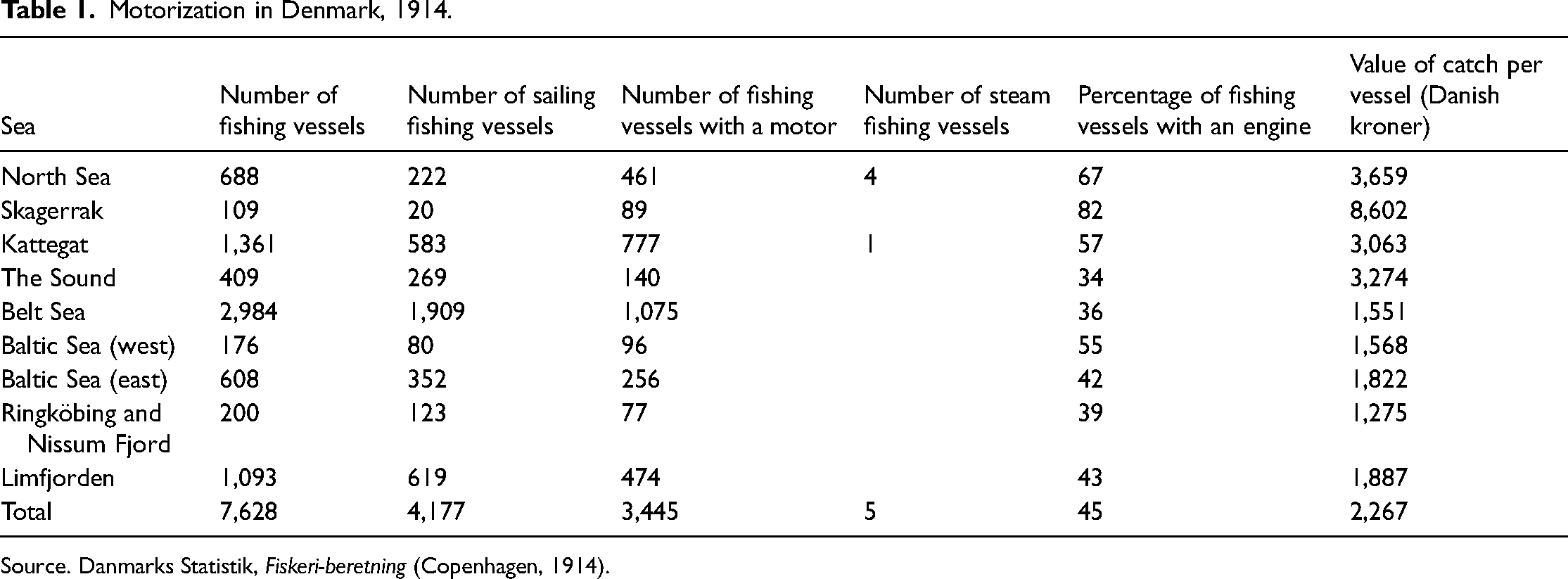
Source. Danmarks Statistik, Fiskeri-beretning (Copenhagen, 1914).
The proportion of fishing vessels with motors in 1914 in Norway naturally depends on the total number of vessels in the area (see Table 2). In counties with extensive fishing, the share of motorized vessels may appear to be small due to the fact that there were many simpler open boats without engines alongside the most modern motorized fishing vessels. In Norway, there was an early breakthrough for motorized fishing vessels in Romsdal and Sunnmøre, which were the home ports of the majority of Norway's motorized fishing fleet in 1905. After that, they spread rapidly along the coast. 35
Motorization in Norway, 1914.
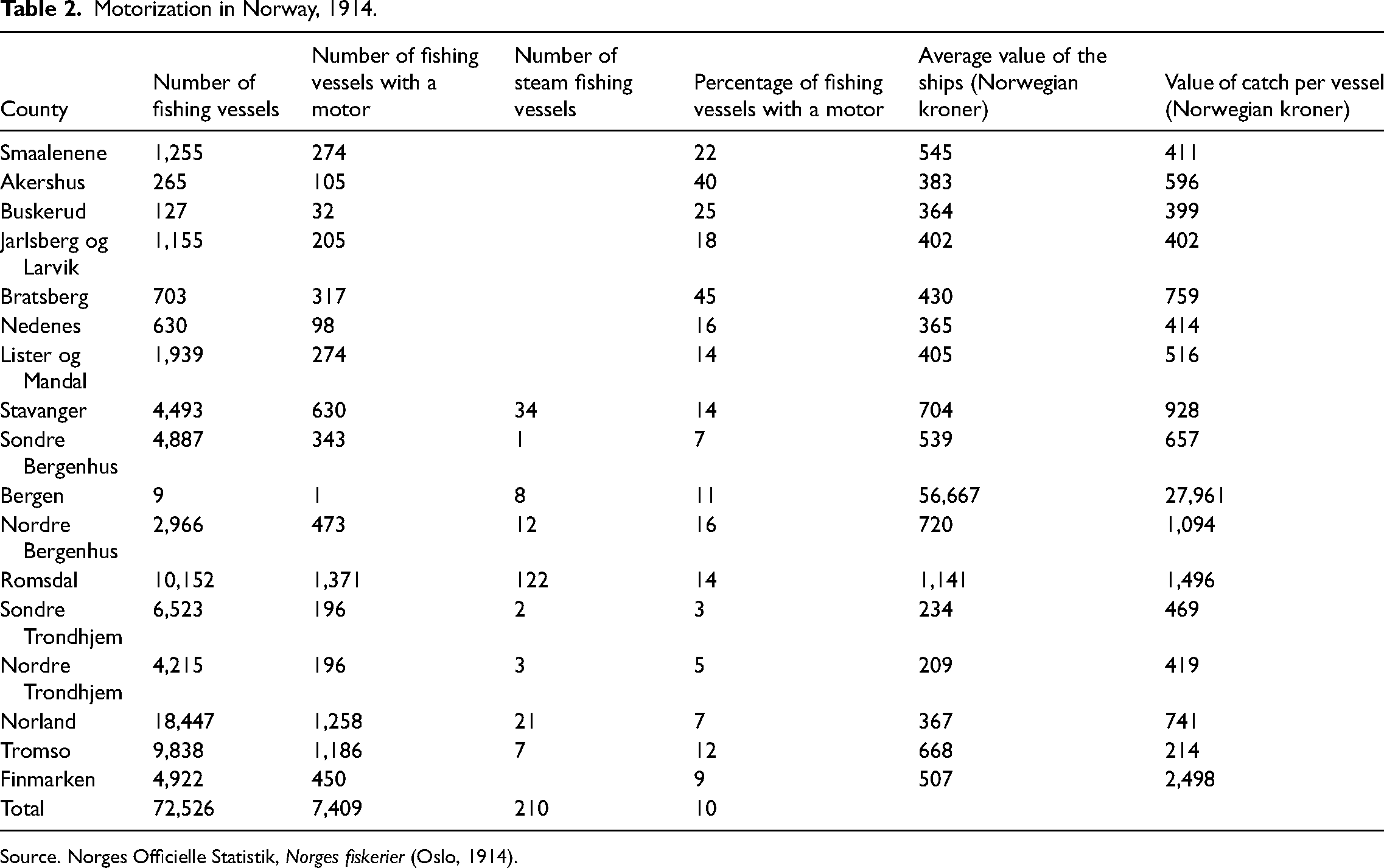
Source. Norges Officielle Statistik, Norges fiskerier (Oslo, 1914).
When the motorization of the Swedish fishing fleet began, Denmark was the model. At an exhibition of motor boats for fishing held in Copenhagen in 1903, part of the exhibition was arranged in Limhamn, Sweden, the latest technical breakthroughs were presented. A Danish-built ship was on display; the estimated cost of the vessel was 6,000 to 7,000 Swedish kronor, and its paraffin fuel consumption was approximately 4.5 kilogrammes per hour if the motor was running at maximum capacity. The maximum speed was seven knots. The Danish exhibitors dominated, which is to be expected since the exhibition was mainly held in Copenhagen. However, a few Swedish exhibitors were involved, including a car manufacturer from Stockholm, J. V. Svenssons Automobilfabrik, which also manufactured boat engines. However, there is no mention of exhibitors from Norway in contemporary accounts. 36
According to national statistics, the motorization of fishing vessels along the Swedish west coast amounted to 19 per cent of the fishing fleet in the county of Gothenburg and Bohuslän, and 31 per cent in the county of Halland. In absolute numbers, however, there was a large difference between the counties. In Halland, 68 fishing vessels were powered by motors, compared to 729 in Gothenburg and Bohuslän. In 1914, the value of the catch per vessel was 2,590 Swedish kronor in Gothenburg and Bohuslän, and 2,007 Swedish kronor in Halland. These two west-coast counties stand out in Sweden compared to other areas due to the high value of their catches (see Table 3).
Motorization in Sweden, 1914.
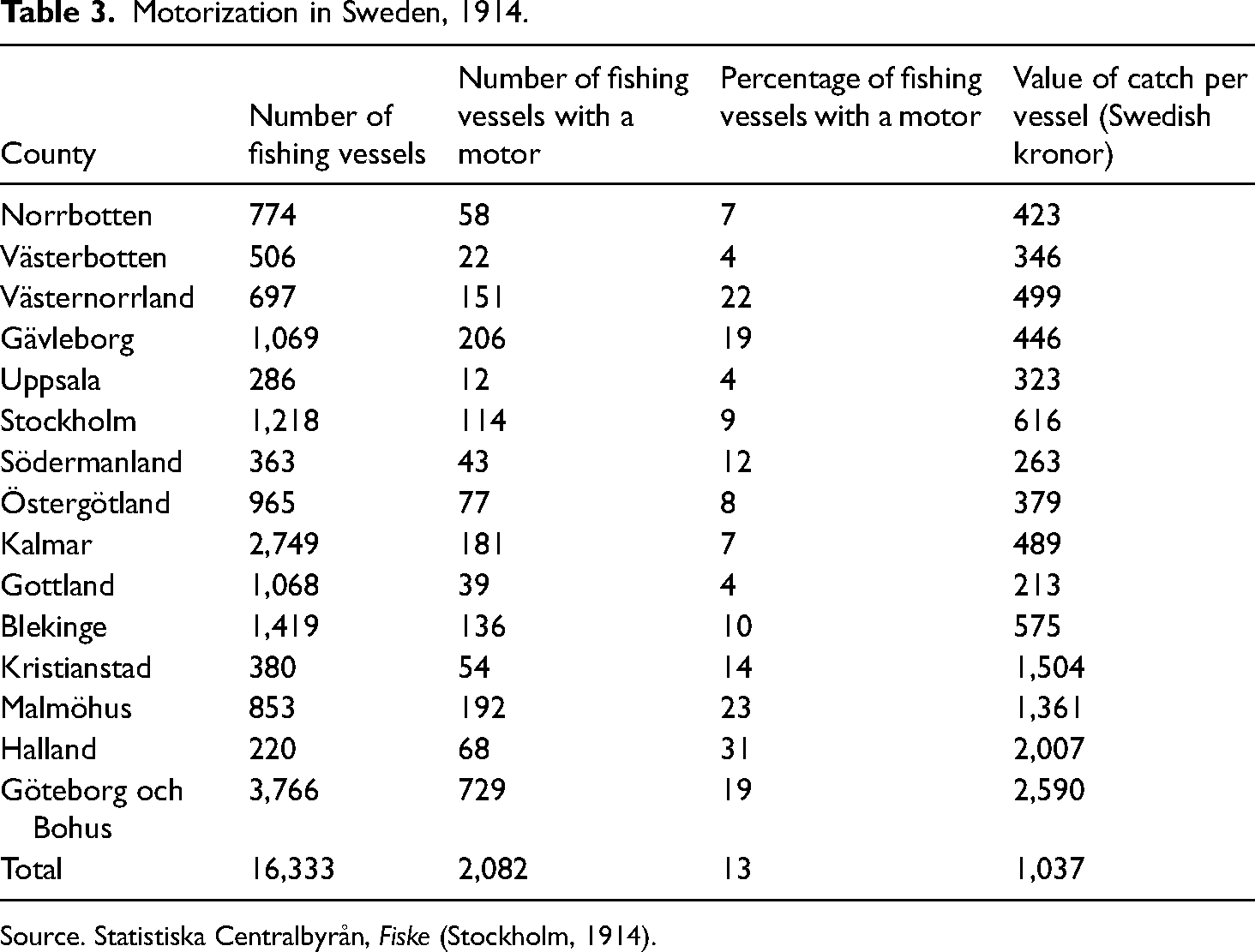
Source. Statistiska Centralbyrån, Fiske (Stockholm, 1914).
Although the impact of motor technology is impressive in its spread over a few years, it took some time before the motorized fishing fleet could compete with the steam-powered fleet in terms of fishing capacity. The national Swedish fisheries statistics of 1914 show that 86.3% of the value of the catch in Bohuslän came from the steam trawler fleet in Gothenburg. This means that the steam-powered vessels still dominated, despite the high degree of motorization in the fishing fleet. 37
It took time before motor technology became important for trawling. The results from a survey of catches landed in Gothenburg show this distinctly. It was not until the beginning of the 1930s that motorized trawlers became predominant compared to steam-powered trawlers (Figure 4). The same increase in the use of motorized vessels during the 1930s has been noted within wintertime purse-seine fishing for herring in Norway. 38
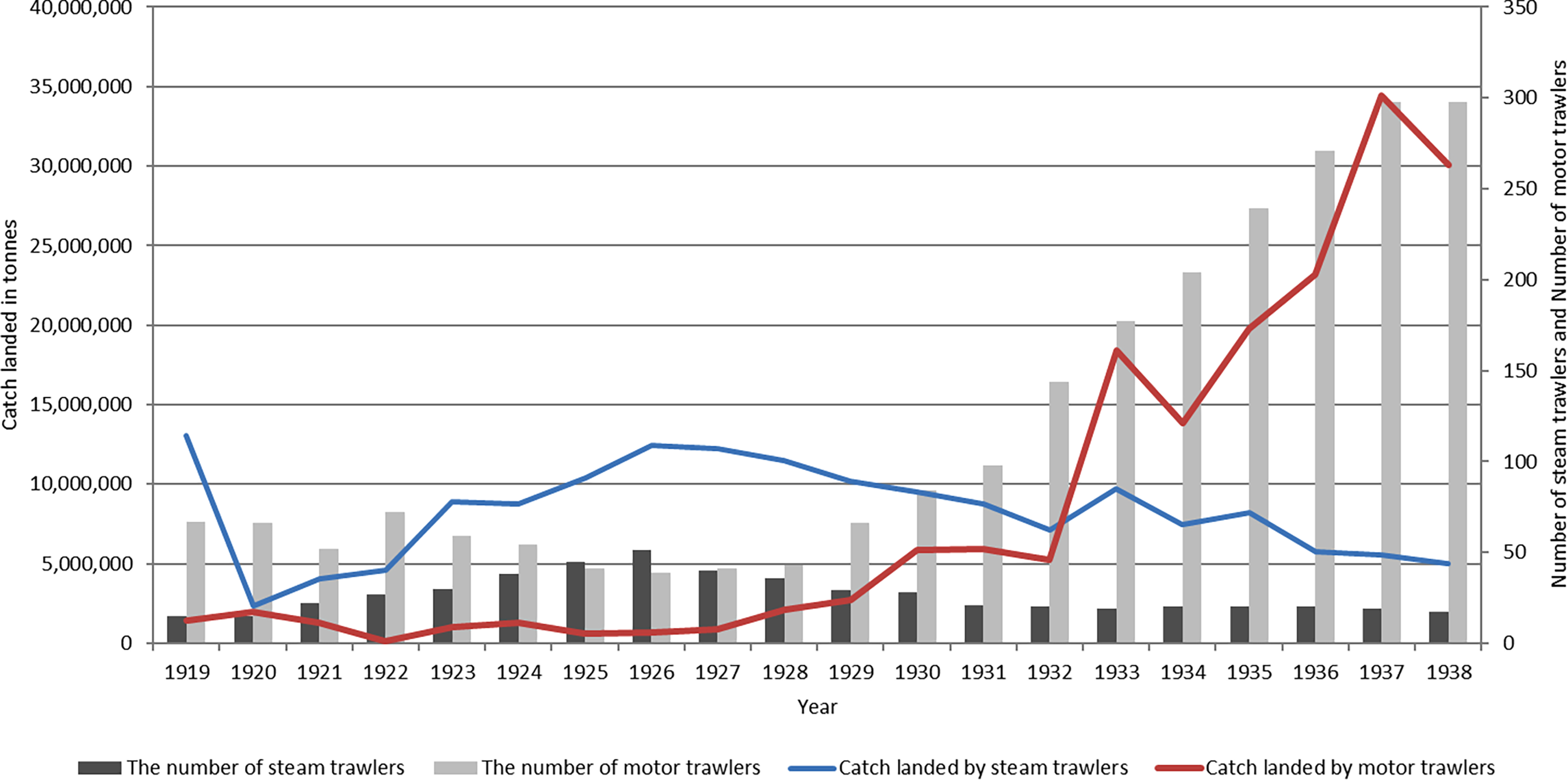
Catch landed in fishing port of Gothenburg, 1919–1938, by steam and motor trawlers, and number of steam and motor trawlers.
Financing of the new technology
In all the Scandinavian countries and in most other northern European countries, state loans were of great importance for the change in technology, especially with the introduction of motorization. The reasons for such support varied. It could be that the state wanted to keep a large group of fishermen who could be available for service in the Navy. Another reason might have been that a stable income could be earned, and therefore the incentive to emigrate was reduced. 39 In a Swedish parliamentary debate in 1905, it was claimed that thousands of fishermen had remained in the country due to the fishing loans from the Swedish state, which gave them a means to earn a living in their homeland instead of emigrating. 40
State loans for investments in steam trawlers and steam-powered fishing vessels occurred to varying degrees in all the Scandinavian countries. The efforts in Norway were the most extensive, where there was a special loan fund that only supported steam-powered fishing vessels. 41 From 1889, favourable government loans were available by using fishing vessels as security. The intention was to create a deep-sea fishing fleet. The size of the vessels varied from 18 to about 70 tonnes, and the value of the vessels from 25,000 to 45,000 Norwegian kronor. 42 In addition to government loans, many of the fishermen borrowed the whole sum, or part of it, from banks or private lenders via informal networks. The availability of bank loans varied in Norway: loans were granted more easily in the southern part of the country than in the north, where the banking system was less developed. The banks were also more cautious about loans for fishing in the northern parts. 43 However, loans from banks or the state were not enough to finance steam-powered fishing vessels. In Ålesund, the largest of the Norwegian fishing ports, steam-powered fishing vessels were introduced as early as the 1880s. However, with the introduction of state aid for the construction of steam-powered fishing vessels in 1900, the number increased rapidly from around 30 vessels to 119 at the outbreak of the First World War. The Norwegian state loan fund – Det nye havfiskefond – granted money to shipowners or groups of fishermen who wanted to build a steam-powered vessel. It was possible to receive up to 50,000 Norwegian kronor in support; the interest rate was four per cent and the loan was to be amortized within a 10-year period, with no repayment in the first year. State support was important in the initial stage, but when the Ålesund Ship Mortgage Association started in 1910, many people took out loans there and redeemed their government loans. There were no more applications from fishermen or shipowners in Ålesund for the state fund after the local creditor started its operations. In addition to the rapidly growing fleet of steam-powered vessels, motor-powered fishing vessels were introduced, and in 1914 there were 773 motor vessels for fishing in Ålesund and the surrounding area. These also required financing from government loan funds or private lenders. 44 At most, the loans covered 60 per cent of the cost; the remaining amount had to be personally funded. This means that private capital or borrowing on the informal loan market accounted for a significant part of the investment in the new vessels. 45
Even though motor technology was available at a lower cost than steam engines, the cost for an individual fisherman or team of fishermen to acquire a motor was still significant. Grants or loans to fishermen were therefore discussed in all the Scandinavian countries. In Denmark, fishermen could join together in a group and apply for a loan for the acquisition of equipment or motors. The state granted loans with the equipment as security for the loan. This loan system was highlighted as a model in the Swedish Parliament, where it was pointed out that credit losses were avoided in Denmark, despite the fact that the Danish system was more generous than that in Sweden. 46
In Norway, special loan funds were created at an early stage, which initially mainly supported the construction and purchase of steam-powered fishing vessels, as mentioned earlier. Investment in motorized fishing vessels only occurred to a limited extent. Later, new loan funds were created, which became essential for fishermen who wanted to install internal combustion engines in their fishing vessels. Individual municipalities in Norway also provided loan guarantees to support the local fishing industry. Loans from banks, especially savings banks, were also important, as was informal lending. 47
The Swedish loans to fishermen were mainly managed regionally, even though the money was allocated by the state. The size of these loans was increased slightly from 1900. At that time, motorization was not yet relevant. Loans were instead given for other improvements to fishing vessels and their equipment. 48 Over the next four years, demands increased for more generous loans that were better suited for the purchase and installation of engines. 49
Material traces of the mechanization of fishing
In addition to studying statistical data and natural science, it is possible to use material remains in the form of ships, shipwrecks, photographs, drawings and other visual material. The most important and complex artefacts in maritime culture are boats/ships. As ships were provided with mechanical devices, their technical complexity increased further, and ships must be regarded as large floating machines, with multifaceted aspects and a variety of physically connected artefacts. This article delves into two significant technologies of the industrial age: steam and motor propulsion for fishing vessels. In addition to the type of technology used to power these ships, another distinction can be observed between them. Typically, large steam-powered trawlers were constructed with steel hulls, whereas motor-driven fishing vessels were crafted from wood. Ships are needed for humans to be able to utilize the sea's resources. Ships also help us to understand the marine culture of past times. 50
Fishing vessels are often subject to significant transformations during their life cycle. Changes to the material movements, ownership, meaning and use of vessels over time can be tracked through various sources. Establishing and examining an individual object biography for each fishing vessel facilitates a deeper and more complete understanding of its circulation and transformation. This method stems from an anthropological approach, which is employed here to broaden our understanding of the relationship between people and objects, and in the revaluation of material culture and changing maritime culture. The recent development of this methodology has revealed the rich and complex history of these objects and their movements as they materialize in various forms and under various usages both spatially and temporally. This novel perspective has expanded comprehension beyond the use and reuse of artefacts, introducing nuance to the social life of things and their relationship with human beings. 51
The disciplines of marine archaeology and ethnology focus on the material and social dimensions of maritime culture, mainly from prehistoric, medieval and early modern times. The main interest of Swedish marine archaeology has been in older shipwrecks (mainly warships) and the construction of these ships, along with their functional and symbolic aspects. Traditional fishing vessels from the contemporary past have mainly interested maritime ethnologists. However, the main focus today lies on historical research and knowledge about wooden fishing vessels. 52
The British influence in the form of the English sailing trawlers and steam trawlers never had a direct impact on the design and construction of the traditional fishing vessels of Sweden. 53 Sailing trawlers left a deep impression in narratives, photographs and archives connected to the Swedish fishery. 54 From a material point of view, the sailing trawlers were a precursor to the steam trawlers. The two vessel types had much in common – in particular, a similar hull design. The steel trawler was more expensive, both to build and to run, and the superstructure of the steel vessel and most of the equipment were different from the sailing trawler. When the Bohuslän fishermen bought English sailing trawlers, the steam-donkey machinery used to winch the trawl on board was lifted out; trawls were not used, and therefore this machinery was removed.
Work on board became more efficient as a result of the transition from sail to steam, and from wood to iron and steel. 55 Safety on board fishing vessels continued to be a problem. A steam trawler was a dangerous workplace due to the rolling ship, dangerous equipment (such as the trawl), wires, winch, sharp knives and boilers of the steam engine. In addition, there were many other dangers that contributed to accidents and injuries. 56
No rusty remains of any steam-trawler hulls or other artefacts connected with the short Swedish steel-steam-trawler epoch can be found on the west coast of Sweden today. The material culture is gone. Steam trawlers have received little attention in previous research and heritage work, and can be regarded as a forgotten material culture and history. Interest and people's memories are directed towards other traditional fishing vessels, built from wood. The existing non-material traces can instead be found in the archives in Sweden and Britain. Drawings, blueprints (perhaps), documents and photographs offer great potential for the understanding and reconstruction of lost knowledge and material culture connected with steam trawlers.
Every single ship has its own complex history. The steam trawler has become more than a fishing vessel; it is a cultural object, a relic of an industrial maritime history. Through various kinds of source material, it is possible to investigate and follow the way that material culture has been activated, circulated and used in different combinations over time. The meaning of objects and their significance has varied over time; objects have been used, reused and changed in different ways.
With the help of a combination of different categories of sources such as archive material, oral sources and photographs, we can uncover and follow at least some parts of a ship's working life. The object biographies of steam trawlers’ careers differ significantly. We can see trawlers with long or short life cycles. Some were sold, others were scrapped and a few were lost at sea. One example of a steam trawler with a short working life during her time in Sweden is LL 562 Wiking (its former name was Egypt), which came from Hull in England. This trawler, which was built in 1891 by Cook, Welton & Gemmel, was bought by a company in Smögen on the Swedish west coast in 1907. The Wiking sank in Icelandic waters during her first herring fishery expedition in the summer of 1907. As a parallel, the Viola, which was built in Hull in 1906, is now one of the world's oldest surviving steam trawlers. The vessel trawled under the Norwegian flag in 1919 and was renamed the Kapduen; she was later converted for whaling. Today, she is located in Grytviken in South Georgia. 57 With her long and complex working life, the Viola shows us that it is difficult to connect a single maritime cultural artefact to a specific site or time. The Viola's case illustrates that material culture can often spread out in both time and space. Appearing in different places and having several layers of narratives and history connected to it.
A Norwegian steam trawler of a much later date was S/T Borgenes, which was built in 1942 in Collingwood, Ontario, Canada, and served in the Canadian Navy as an armed trawler. After the Second World War, the trawler was bought by the Norwegian trawling company Heinsa and became Norway's first commercially viable trawler. The trawling with the Borgenes ceased in 1973 when it was no longer possible to recruit a crew that could handle the steam engine. A foundation was created to renovate the ship, but, in 2012, money ran out and there was no other option than to scrap Norway's last steam trawler.
Discussion and conclusion
British fishermen with large steam-powered trawlers are almost the epitome of the industrialization of fishing. The introduction of steam-powered fishing vessels in Scandinavia took slightly different paths. In Denmark, the introduction was not successful. Norway built up the largest fleet, but without using trawling as a catch method to any great extent. Steam-powered fishing vessels were often owned by small companies or groups of fishermen, who acquired the vessels with the help of local capital and government loans. A large proportion of the vessels was built by shipyards in Norway. The largest concentration of steam-powered fishing vessels was in Ålesund, a town that had neither a road nor a railway connection; all transport to and from the city had to be by ship. There were thus few similarities with significant British fishing ports, all of which had railway connections, meaning that the catch could quickly reach markets around the country. The second-largest concentration of steam-powered fishing vessels in Scandinavia was in Gothenburg. The structure of the fishing fleet in Gothenburg was very similar to that in the United Kingdom. The vessels mainly engaged in trawling and were owned by companies, and from 1910 the catches were landed in a fishing port with a railway connection. Most steam trawlers were also purchased in the United Kingdom. This is somewhat strange as there was a significant shipbuilding industry in Gothenburg. A better understanding of the differences and similarities in Scandinavian fishing could be reached through an in-depth study of steam-powered fishing vessels based on company archives in Norway, Sweden and Denmark, in particular. A comparison with, for example, British and German fishing could also be made.
Danish motor technology led to the development of the motorization of fishing – initially, mainly coastal and small-scale fishing. The motors developed in Denmark inspired designers in other Scandinavian countries to follow suit, and this competition between many companies was a driving force in technical development. However, it is easy to be led to believe that the rapidly increasing number of motorized fishing vessels also meant that catches increased rapidly. As we have been able to show in this study, the new technology did not result in noticeably larger catches until the beginning of the 1930s. Until then, the largest catches were generated by steam-powered vessels that worked at the fishing banks further out to sea. In several aspects, the motorized fishing vessels exhibited greater flexibility than their steam-trawler counterparts, primarily due to the ease of transporting and utilizing liquid fuel in comparison to coal. Despite their functional advantage, however, the modernized fleet of motorized fishing vessels still benefitted from the pre-existing infrastructure established to accommodate stream trawlers, including railways and fishing ports.
Footnotes
Acknowledgements
The authors would like to thank Judith Crawford and Phoebe Alexandra Joy O’Brian, who helped us with proofreading. We would also like to thank the two anonymous reviewers, whose comments were very helpful.

Notes
Author biographies
Per Hallén is a researcher and teacher in economic history at the University of Gothenburg. Research into trade, credit markets, shipping and port cities as well as the history of fishing has dominated research in recent years.
Lennart Bornmalm has a doctoral degree in Marine Geology from the University of Gothenburg and is senior lectures at the Department of Marine Sciences/Biology an Environmental Sciences. Beside his main research in Marine and Environmental Sciences, he has published several articles and books in Maritime history.
Henrik Alexandersson recevied his PhD in Archaeology from the University of Gothenburg in 2021. His main research interests centre on maritime material culture and the history of the Swedish west coast fisheries in a long-time perspective. He has also written books and a wide range of articles in the maritime field.