




Abstract
Conduct problems are among the most common reasons of referral to special education services and placement in special classrooms. Students with conduct problems are at a high risk of school dropout. However, little is known about the association between placement in special classrooms and the risk of school dropout for students with conduct problems. We employed data from a longitudinal study of students with conduct problems who were receiving special education services in special or in inclusive classrooms at study entry (N = 302). Five patterns of placement in special (vs. inclusive) classrooms were identified. Higher academic performance and receptive vocabulary, and lower externalizing problems reduce the odds of persistent placement in special classrooms. Students with a persistent or delayed placement had higher risk of school dropout in comparison to students with no placement history. Students in special classrooms at study entry did not have a greater risk of school dropout if they later transitioned to inclusive classrooms. Strengthening the academic performance and receptive vocabulary of students with conduct problems could prevent placement in special classrooms. Limiting persistent and delayed placement in special classrooms may decrease the risk of school dropout among students with conduct problems.
Keywords
In the past years, an inclusive approach has been prioritized for delivering special education services to students with special educational needs. In Quebec, as well as in other provinces and territories in Canada, most children requiring special education services receive these services in inclusive classrooms (Human Resources and Skills Development, 2013). Inclusive classrooms are designed to accommodate all students, including those with special educational needs, by integrating them into the regular education setting while offering the necessary support to help them succeed alongside their typically developing peers. Only a small proportion of students with special educational needs receive school-based services in restrictive educational settings, such as special education classrooms. These classrooms feature smaller sizes and lower student-to-teacher ratios to facilitate individualized instruction, adapted curriculum, and additional support from specialized educators, aides, and therapists (e.g., speech-language therapists).
Placement in restrictive educational settings may have substantial long-term implications for educational attainment, graduation rates, and employment prospects (Chesmore et al., 2016; Moller & Stearns, 2012). A meta-analysis concluded that students with various needs (e.g., related to physical impairments, learning disabilities, or behavioral disorders) tend to academically underperform in special classrooms compared to peers receiving services in inclusive classrooms (Oh-Young & Filler, 2015). Furthermore, spending more years in special classrooms has been associated with a higher likelihood of school dropout (Chesmore et al., 2016). As such, an important educational goal for students in special classrooms is to facilitate their integration or re-integration into inclusive classrooms (Ministère de l’Éducation et de l’Enseignement supérieur [MEES], 2017).
Students with conduct problems, defined as having high levels of symptoms of conduct and oppositional defiant disorders, typically manifest acting out behaviors that cause harm to others or violate social norms, such as rule breaking, physical aggression, bullying, and impulsivity (American Psychiatric Association [APA], 2022). These problems substantially disrupt the classroom as well as relationships with peers and teachers. They are among the most common reasons for referral to special education services by teachers (Briesch et al., 2013; Kulkarni & Sullivan, 2019; Woods, 2020) and placement in special classrooms (Hurwitz et al., 2021; Kulkarni & Sullivan, 2019; Woods, 2020). Conduct problems in elementary school (i.e., onset before the age of 10; APA, 2022) tend to persist over time and are associated with low educational attainment and with school dropout (Lau et al., 2023). However, little is known about the link between placement in special or inclusive classrooms and the risk of school dropout for students with conduct problems, and whether transitioning from a special to an inclusive classroom is differentially associated with this risk.
Studies that have examined the longitudinal patterns of special education services or placement and their impact on educational attainment are limited. A longitudinal study of 3,970 American students who participated in the Early Childhood Longitudinal Study, Kindergarten Class of 1998–1999 established four trajectories of special education from kindergarten to eighth grade that varied in terms of timing of entrance into, and exit from special education (Woods, 2020): never, persistent, delayed, and discontinued. Another study conducted on a sample of 1,377 low-income, minority children from the Chicago Longitudinal Study reported that receiving (vs. not receiving) special education services in grades 4 to 8 were associated with a lower likelihood of high school completion (Chesmore et al., 2016). Whether these patterns applied to special education or inclusive classroom placement of students with conduct problems remain unknown.
Several routes via which placement in special education classrooms could lead to lower chance of high school graduation (or greater risk of high school dropout) have been hypothesized. The impact of labeling could alter self-confidence in learning and act as a self-fulfilling prophecy for students who, once placed in special classrooms, show poorer progress compared to those in inclusive classrooms (Francis et al., 2017). Placement in special classrooms is also posited to lead to victimization (Hartley et al., 2015), as well as to lowered expectations from teachers (Campbell, 2017), both of which may contribute to poor academic outcomes and dropout. In addition, teachers’ perception of their relationship with students is associated with the decision-making process for placement (Briesch et al., 2013). Teachers who are experiencing a conflictual relationship with a student are more likely to refer the student for school-based assessments for special education services, regardless of the student’s level of academic achievement (Breeman et al., 2018).
The current study extends previous knowledge by examining the longitudinal patterns of placement in special education/inclusive classrooms on the risk of school dropout among students with early onset conduct problems. Because boys are more likely to present with early conduct problems (Gutman et al., 2018) and to receive special education services than girls (Woods, 2020), this study tests for possible sex-based differences in patterns of placement. More specifically, this study (1) established patterns of placement in special education/inclusive classrooms from elementary to high school; (2) investigated the child (externalizing behaviors, academic abilities), peers (victimization), and teacher (student-teacher relationship quality) correlates of these patterns, and how they vary across (i.e., are moderated by) the sex of the child; and (3) examined the risk of school dropout for each pattern of placement in special education/inclusive classrooms.
Methods
Participants and Procedures
The sample included 339 students with conduct problems aged 6.3 to 9.9 years (mean age of 8.46 years) at the time of recruitment (Time 1). They were recruited between 2008 and 2010 from 155 French-speaking public schools from four regions in the Canadian province of Quebec, which significantly reduce linguistic and socioeconomic between-school heterogeneity.
To proceed with the recruitment of students with conduct problems, the School Commission Boards provided anonymous lists of students with individualized education plans receiving special education services for conduct problems. This means that students had a formal assessment of conduct problems by professionals (e.g., school psychologists) prior to recruitment in order to receive such services at school. School-based educators contacted students from the lists to invite them to participate in the study. All girls and one boy out of four randomly selected from these lists were invited to participate in our study. These students all reached the borderline clinical cut-off (>93rd percentile) on the Achenbach System of Empirically Based Assessment (Achenbach & Rescorla, 2001) scales for conduct and oppositional defiant problems. These scales are consistent with the criteria of the Diagnostic and Statistical Manual of Mental Disorders, fourth edition (DSM-IV; APA, 2000).
Home interviews with the respondent families were undertaken yearly, from 2008 to 2020 (T1; mean age = 8.46, SD = 0.94) to 2015 to 2017 (T8; mean age = 15.35, SD = 0.93), and 2 years later in 2017 to 2019 (T10; mean age = 17.37, SD = 0.97). The parent provided consent and voluntarily responded to the survey. Following parental consent, teachers were contacted by a research assistant via telephone from T1 to T8 to complete a battery of questionnaires about each participating student. All procedures were approved by the Institutional Ethics Board at the Faculty of Education, Université de Sherbrooke (No. 2015-1076, 2015-26-ESS/Dery).
For the current study, students were eligible if information on the type of classroom placement (inclusive vs. special classrooms) was available for at least seven of the eight periods of data collection (n = 302; 39% girls). At the beginning of the study, 70% of students were receiving special education services in inclusive classrooms and 30% in special classrooms.
Measures
Placement in Special Education/Inclusive Classrooms
Classroom placement data were collected longitudinally from T1 to T8, with both teachers and parents reporting on the student’s classroom setting (inclusive or special classrooms). The agreement between parent and teacher reports was high, with Cramer’s V correlations ranging from 0.88 to 0.96. Given the strong consistency between these reports and the higher proportion of missing data in teacher reports, we prioritized parent-reported classroom placement. When parent reports of classroom placement were unavailable, we supplemented the data with teacher reports, when applicable.
Risk of School Dropout
The students completed the Dropout Prediction Index at T10, which accounts for student-reported academic achievement (2 items), grade retention (1 item), and school engagement (4 items). These seven items allowed us to compute a dropout prediction index varying between 0 and 1, with higher scores indicating a greater probability of dropping out of high school. This measure has demonstrated good predictive validity (Archambault & Janosz, 2009). For the small proportion of students who were no longer attending school, their risk of dropout was coded as 1 if they had left high school without receiving a diploma, and as 0 if they had received a high school diploma.
Correlates of Classroom Placement
Information about correlates was collected at T1. Externalizing problems were assessed using the 35 items of the Child Behavior Checklist (Achenbach & Rescorla, 2001) rated by the parents on a 3-point Likert scale. A T-score greater than or equal to 65 indicate significant externalizing problems. Academic performance was measured using a six-item version of the Academic Performance Rating Scale (DuPaul et al., 1991) assessing productivity and academic success and rated by the teacher on a 5-point scale (α = .82). In addition, the child level of receptive vocabulary was estimated with the French-Canadian version of the Peabody Picture Vocabulary Test (PPVT; Dunn et al., 1993). This measure has great internal consistency (α = .93). Victimization from peers was rated by parents with an adapted version of the Direct and Indirect Aggression Scales (Björkqvist et al., 1992). The victimization score includes 15 items rated on a 5-point Likert scale measuring how often the child was victim of verbal, indirect, and physical aggression from others (α = .90). Student-teacher relationship quality was measured with the Student-Teacher Relationship Scale (Pianta, 2001), a teacher-report instrument of 28 items rated on a 5-point scale and assessing three dimension: closeness (11 items, α = .86) captures a warm affective relationship with a teacher, conflict (12 items, α = .92) measures the negative aspects in the relationship, and dependency (5 items, α = .64) measures possessive and clingy behavior in relation with teacher.
Sociodemographic Characteristics (Control Variables)
The sociodemographic characteristics were reported by the parent at T1: sex of the child (0 = female, 1 = male), low annual income (0 ≥ $25,000 CAD/year, 1 ≤ $25,000 CAD), parent postsecondary education (0 = yes, 1 = no), family structure (0 = two-parent family, 1 = single-parent family).
Analytical Strategy
A data-driven analysis was used to create the patterns of classroom placement based on history of placement in special education classrooms and transitions from one classroom setting to another (inclusive vs. special classrooms). Within the first 2 years of the study [T1-T2], students placed in a special education classroom at least 1 year out of two were grouped in the special education classrooms. Students in inclusive classrooms within the first 2 years were grouped in the inclusive classrooms. From T3 to T8, the transitions from one classroom setting to another were computed.
The correlates of classroom placement patterns were first tested by Chi-square or ANOVA, as appropriate. The non-binary correlates of classroom placement patterns were normally distributed. Multivariate outliers were not identified based on the Mahalanobis distance, calculated with 11 degrees of freedom and a significance threshold of p < .001. Correlates that were significantly associated with placement patterns at p < .05 were standardized (z-score) and entered in multivariable multinomial regression models. By standardizing each correlate to a range of −3 to 3 (mean = 0, SD = 1), the odds ratios become comparable in terms of effect size, and the results can be interpreted as the odds of classroom placement associated with a 1 SD change in the correlates. Associations among correlates ranged from −0.004 to 0.39. A tolerance factor > 0.6 and a VIF score < 2 suggested no issues of multicollinearity. Finally, one univariate general linear model (GLM) was run to estimate which patterns of placement predicted greater risk of school dropout. Assumptions to conduct this analysis were respected.
Results
Patterns of Classroom Placement
Five patterns of classroom placement were observed (see Figure 1): (1) a “no placement history” pattern (42.1% of the sample) that included students who were in inclusive classrooms over the entire course of their compulsory education; (2) a “persistent placement” pattern (11.9% of the sample) that included students who were in special classrooms over the entire course of their compulsory education; (3) a “delayed placement” pattern (19.9% of the sample) where students initially in inclusive classrooms were then placed in special classrooms; (4) a “returning to inclusive” pattern (18.5% of the sample) where students were initially in special classrooms but transitioned to inclusive classrooms (of note, 52% of the students in this group spend three consecutive years in special classrooms); and (5) a “temporary placement” pattern (7.6% of the sample) including students who were in inclusive classrooms at study entry and transitioned to special education classrooms and then returned to inclusive classrooms (78% of them spent only 1 year in special classrooms).
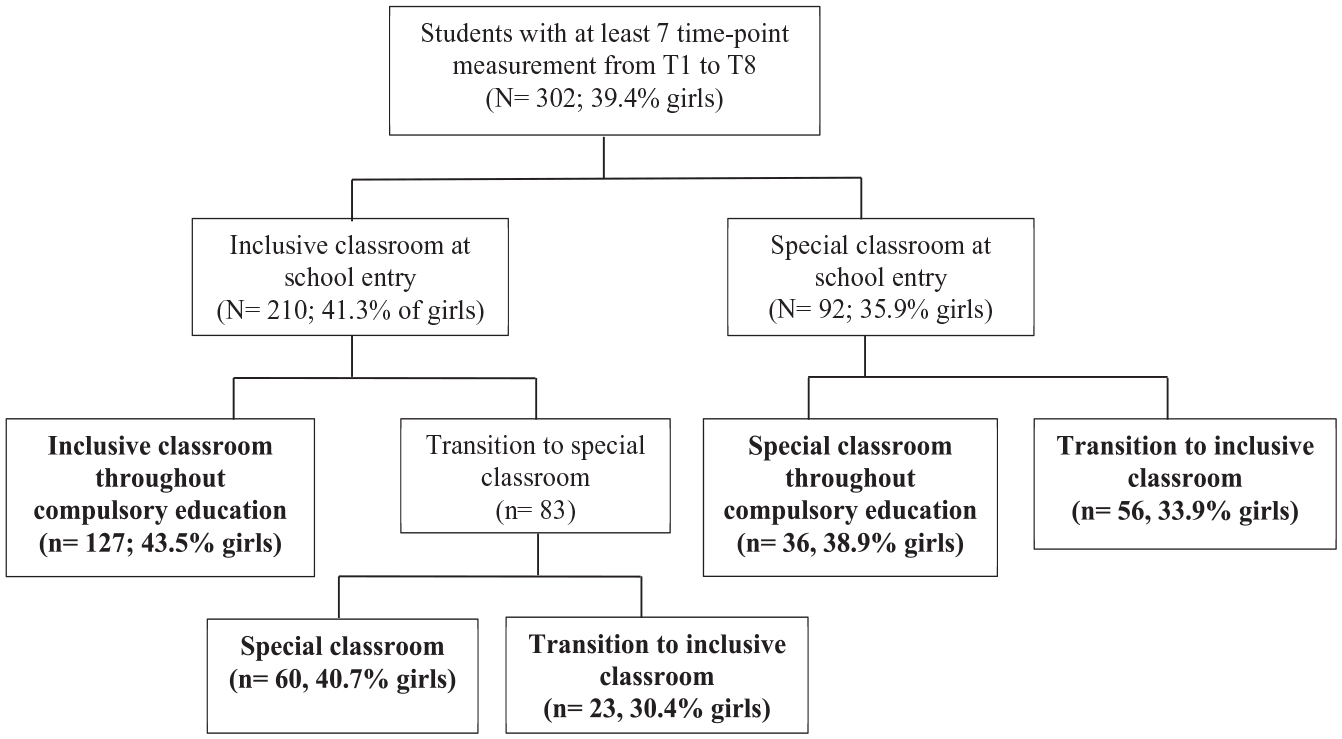
Patterns of classroom placement during compulsory education among students with conduct problems.
Correlates of Placement Patterns
Table 1 shows descriptive statistics for each correlate stratified by patterns of placement. The strongest differences across the five patterns pertained to academic performance and receptive vocabulary showing large effect size (η2 > 0.14), externalizing behaviors (η2 = 0.09), household income (Cramer’s V = 0.22) and parent education (Cramer’s V = 0.23) showing medium effect size, and victimization and dependency of students toward teachers showing small but significant effect (η2 = 0.05). The sex of the child was not significantly associated to placement patterns. Table 2 shows the results of the multivariable multinomial regression model, which tested associations among significant covariates and patterns of classroom placement (the “no placement history” was used as the referent category). Academic performance was associated with reduced odds of belonging to patterns of placement in special classrooms (OR ranging from 0.29 to 0.54) in comparison to students with no placement history, except for students with a temporary placement (OR = 0.66 [0.39, 1.13]). Higher receptive vocabulary reduced the likelihood of a persistent placement for girls, but not for boys (see Figure 2). Students with higher levels of receptive vocabulary were also less likely to have a delayed (OR = 0.50 [0.22, 0.79]), or temporary placement (OR = 0.44 [0.25, 0.78]). The levels of externalizing behaviors were uniquely associated with a persistent placement (OR = 2.78 [1.48, 5.23]). Finally, student dependency toward their teacher was associated with an increased odds of returning to an inclusive classroom (OR = 1.44 [1.00, 2.07]).
Descriptive Statistics for Each Pattern of Classroom Placement (N = 302).
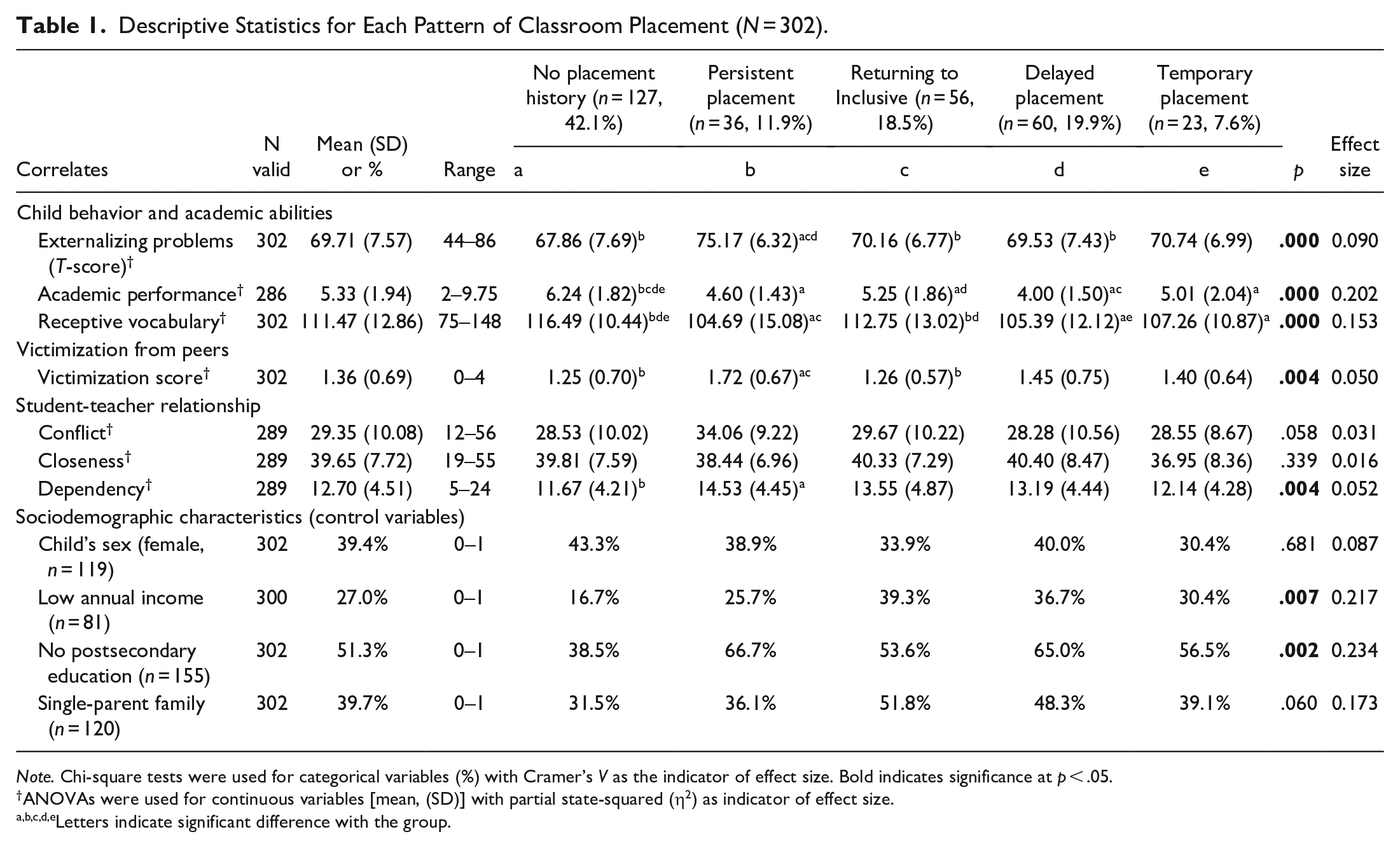
Note. Chi-square tests were used for categorical variables (%) with Cramer’s V as the indicator of effect size. Bold indicates significance at p < .05.
ANOVAs were used for continuous variables [mean, (SD)] with partial state-squared (η2) as indicator of effect size.
Letters indicate significant difference with the group.
Predicting Patterns of Classroom Placement During Compulsory Education, in Comparison to Students with No Placement History.
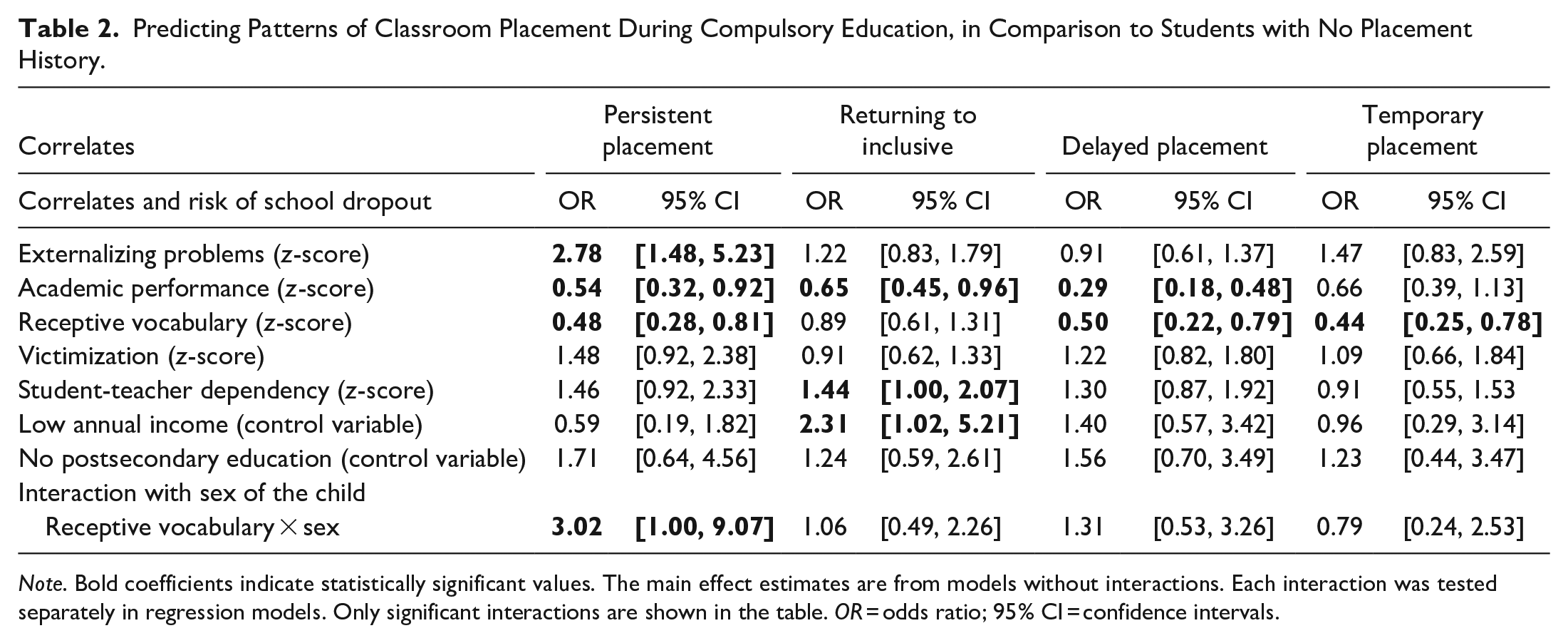
Note. Bold coefficients indicate statistically significant values. The main effect estimates are from models without interactions. Each interaction was tested separately in regression models. Only significant interactions are shown in the table. OR = odds ratio; 95% CI = confidence intervals.
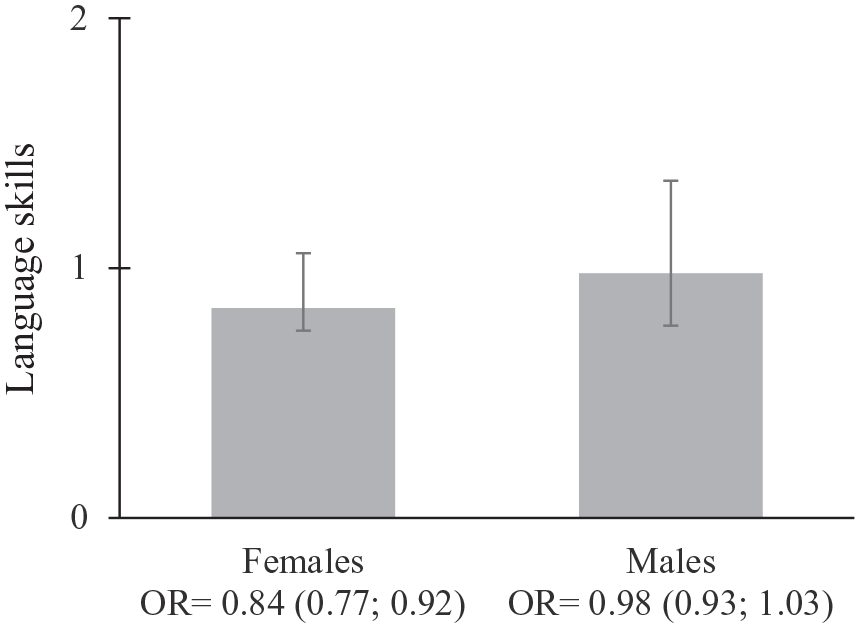
The association between language skills and persistent placement (vs. no placement history), by gender.
Next, a second multivariable multinomial regression was conducted focusing on students whose placement changed over time, and students with a persistent placement being employed as the referent group (results not shown in table). Relative to students with a persistent placement in special classrooms, students returning to inclusive classrooms were more likely to display better receptive vocabulary (OR = 1.76 [1.07, 2.90]), and less likely to experience victimization (OR = 0.55 [0.32, 0.94]). Relative to students with a persistent placement, the levels of externalizing behaviors (OR = 0.31 [0.16, 0.62]) and academic performance (OR = 0.49 [0.27, 0.91]) were associated with reduced odds of having a delayed placement. None of the correlates were significantly associated with the temporary placement group.
Risk of School Dropout
Figure 3 shows the mean-level of risk of school dropout by patterns of placement in special education classrooms, after controlling for significant correlates from Table 1. A test of between-subject effects yielded a significant difference in the risk of school dropout by patterns of placement, F(4, 242) = 3.21, p = .014, η2 = 0.05). Scheffe post hoc comparisons showed that students with no placement history were at lower risk of school dropout in comparison to students with a persistent placement (mean difference = −0.24, 95% CI = [−0.42, −0.06], p = .010) and a delayed placement (mean difference = −0.23, 95% CI = [−0.37, −0.09], p = .002). No other significant differences on the risk of school dropout were found between patterns of placement.
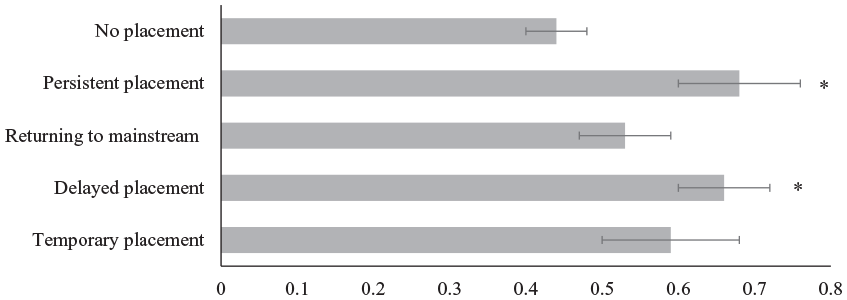
Average risk of school dropout by patterns of classroom placement.
Discussion
Examining the associations between history of placement in special/inclusive classrooms and the risk of school dropout may help explain how stratification of students in special classrooms may lead to educational inequality (Taylor et al., 2018). This finding is especially relevant for students with conduct problems as they are more likely to receive services in special classrooms (Kulkarni & Sullivan, 2019; Woods, 2020). In our at-risk sample of students with conduct problems receiving special education services, our longitudinal study showed that varied patterns of classroom placement in special or inclusive classrooms were differentially related with the risk of school dropout. Greater risk of school dropout foretells different types of employment, contributing to inequality in the labor market (Moller & Stearns, 2012). As such, better understanding patterns of placement in special education/inclusive classrooms and accounting for their correlates can help improve the subsequent educational experiences of students (Schulte & Stevens, 2015) and support more appropriate classroom placement decisions.
We found various patterns of classroom placement for students with conduct problems who were receiving special education services at school. In our sample, 70% of students were in inclusive classrooms at the beginning of the study, but only 42% remained in inclusive classrooms across all school years. Students in inclusive classrooms had lower levels of externalizing behaviors, peer victimization, and dependency toward teachers, and higher levels of academic abilities in comparison to students belonging to the other patterns of classroom placement. They were also less likely to drop out of school. Among students receiving special education services in special classrooms, approximately one-third had a permanent placement (11.9% of the sample). These students were the most disadvantage regarding their levels of externalizing problems, their academic abilities, their victimization from peers, and in the quality of relationship with their teachers. These students were also at greater risk of school dropout. The other three patterns (temporary, returning to inclusive classroom, delayed) characterized students whose placement changed over time. While these students were more disadvantaged at study entry than students with no placement history, only those with a delayed placement were at greater risk of school dropout.
Our findings are consistent with those of Chesmore et al. (2016) showing that long-term and delayed placement in special classrooms was associated with a decreased likelihood of school completion. The reasons why placement in special classrooms does not lower the risk of school dropout among students with conduct problems remain unclear. As mentioned previously, it is possible that placement in special classrooms impacts student self-confidence in learning, leading to poorer academic outcomes and greater risk of school dropout (Francis et al., 2017). This may be especially true for students with conduct problems as their behaviors could serve as barriers to teachers and peers support and reduce the efficacy of positive approaches to learning and academic motivation (Demirtaş-Zorbaz & Ergene, 2019). Importantly, receptive vocabulary was a leading factor associated with a return to inclusive classroom. Furthermore, better receptive vocabulary reduced the likelihood of having a persistent placement for girls, but not for boys. Gender bias regarding language abilities may influences practitioner decisions for placement. These findings parallel other work showing that boys are more likely to receive special education services than girls (Woods, 2020). Future studies should investigate gender bias for placement in special education classrooms to accurately identify which students should receive special education services.
Our findings suggest that students with conduct problems who experienced persistent placement in special classrooms had a greater risk of school dropout, even after controlling for levels of externalizing problems and receptive vocabulary skills at study entry. In contrast, students in special classrooms did not have a higher risk of school dropout if they returned to an inclusive classroom or had only a temporary placement. Considering the elevated risk of school dropout associated with early conduct problems (Lau et al., 2023), our findings provide empirical support for offering specialized services to students with conduct problems in inclusive classrooms and limiting persistent placement in special classrooms.
Limitations
This study captures important aspects of classroom placement for students with conduct problems that both replicate and extends prior research, but it is not without limitations. First, although all students with conduct problems received specialized services at the beginning of the study, between 12% and 18% of them did not receive further services after the first year of the study. Furthermore, the availability of special education classrooms and resources allocated to students with conduct problems may have been uneven across the four regions of recruitment in the province of Quebec, but our sampling frame considerably reduce between-school heterogeneity. Second, some classroom placement groups included small numbers of students, especially those having a temporary placement, which may have hampered the identification of significant differences between groups. Third, correlates were examined only at study entry, which prevented us from capturing their potential cumulative contribution to patterns of classroom placement and the risk of school dropout. Fourth, this study did not capture the student perception of classroom climate or teaching practices. Future studies on classroom placement should examine how perceived social exclusion, social participation, or school engagement contribute to patterns of classroom placement among students with conduct problems.
Relevance to the Practice of School Psychology
School psychologists can effectively support schools, parents, teachers and students in making informed decisions about the type of setting (inclusive vs. special education classrooms) that is the most appropriate for the unique needs of students with conduct problems. In particular, school psychologists may support recommendations for inclusive classrooms as informed by students’ assessment of strengths and weaknesses based on assessment of cognitive abilities, receptive vocabulary, and academic achievement.
School psychologists can also play a key role in optimizing the alignment of special education services for students with conduct problems by employing a comprehensive approach that includes regular assessment, clinical intervention, and collaboration with teachers and school-based professionals. For instance, school psychologists can assist teachers in enhancing the academic skills and receptive vocabulary of students with conduct problems by tracking their progress and evaluating their performance on standardized tests (e.g., PPVT) based on gender- and age-specific norms.
Conclusion
Strengthening the academic performance and receptive vocabulary of students with conduct problems could reduce the odds of placement in special education classrooms. Limiting persistent and delayed placement in special classrooms could also decrease the risk of school dropout among students with conduct problems. These findings underscore the importance of considering the duration of placement in special classrooms in understanding the educational outcomes of youth with conduct problems.
Footnotes
Acknowledgements
We are extremely grateful to all families who participated in this study, as well as all the professionals involved in the cohort project. We thank Annie Lemieux for her professional help in conducting the analyses.
Data Availability
This dataset is not available outside the secure server where the data is hosted. Requests to access this dataset should be directed to
Declaration of Conflicting Interests
The author(s) declared no potential conflicts of interest with respect to the research, authorship, and/or publication of this article.
Funding
The author(s) disclosed receipt of the following financial support for the research, authorship, and/or publication of this article: This research was supported by grants from the Canadian Institutes of Health Research (NRF 82694) and the Social Sciences and Humanities Research Council (SSHRC 37890). Gabrielle Garon-Carrier hold a Canada Research Chair funded by the Social Sciences and Humanities Research Council (grant # 950-232804).
Ethical Approval and Informed Consent
This study was reviewed and approved by by Le Comité d’éthique de la recherche—Éducation et sciences sociales de l’Université de Sherbrooke (No. 2015-1076, 2015-26-ESS/Dery). Written informed consent to participate in this study was provided by the participants’ legal guardian.
