




Abstract
This study examined opportunities and barriers for implementing evidence-based Social and Emotional Learning (SEL) programs in Prairie Canadian Schools. Educators from Manitoba, Saskatchewan and Alberta completed an online survey on SEL feasibility and reported on five feasibility domains: (1) attitudes about SEL, (2) knowledge about SEL, (3) job stress, (4) resources for implementing SEL, and (5) SEL practices. Results indicated that positive attitudes toward SEL significantly predicted increased perceived feasibility for evidence-based SEL implementation. Additionally, both knowledge and access to resources predicted increased SEL practice by Prairie Canadian educators. Analyses for open-ended responses paralleled quantitative results. Specifically, Canadian educators had positive views about SEL programing, but like previous research conducted in other countries, indicated that they require better access to SEL training, and resources (e.g., more time to plan and teach SEL, funding and program materials). A unique Canadian context-related finding from this study was that some Prairie Canadian educators indicated a paucity of French materials for SEL programs, which impeded implementation. In order to effectively implement evidence-based SEL in Prairie Canadian schools, policy makers must address the indicated barriers for Canadian educators, such as increased SEL training and resources, and easy access to appropriate French materials.
Introduction
Evidence-based Social and Emotional Learning (SEL) programs have been implemented in schools worldwide (Bierman et al., 2010; Kendziora & Yoder, 2016; J. Payton et al., 2008) and found to improve student behavior, academic outcomes, and emotional functioning (Bierman et al., 2010; Caldarella et al., 2009; Kendziora & Yoder, 2016; J. Payton et al., 2008). While information from other countries is available to understand SEL effectiveness and implementation (e.g., Freeman & Strong, 2017; Frydenberg et al., 2017; Humphrey et al., 2010), Canadian SEL research is in its infancy. A first step to facilitate SEL programing is directly examining contextual considerations for implementation to increase the likelihood that educators and schools can provide evidence-based SEL. To our knowledge, there is currently no specific research evaluating the feasibility (opportunities and barriers) for implementing SEL programs in Canadian Schools.
The Need for SEL in Schools
Reports of student challenging behavior, bullying and psychological distress are common (e.g., Attar-Schwartz et al., 2017; Tonmyr et al., 2011) and have highlighted the need for evidenced-based SEL in schools (e.g., Reinke et al., 2013; Seeley et al., 2011; Tishelman et al., 2010) as SEL has been found to be an effective intervention for these issues (Bierman et al., 2010; Durlak et al., 2011). The Covid-19 pandemic measures (that have impacted and isolated students) have placed increased anxiety on students and staff which has worsened student psychological distress and behavior (Vaillancourt et al., 2021). Recent research suggests that approximately 70% of school aged students have experienced deterioration in their mental health since the beginning of the COVID-19 pandemic (Cost et al., 2022). Policy papers from The Royal Society of Canada highlight “that there are notable threats to children’s well-being, educational success, and healthy development” because of the pandemic (Vaillancourt et al., 2021, p. 6). Clearly, this an urgent situation and SEL programing may be one way to improve outcomes for those impacted.
The SEL Framework
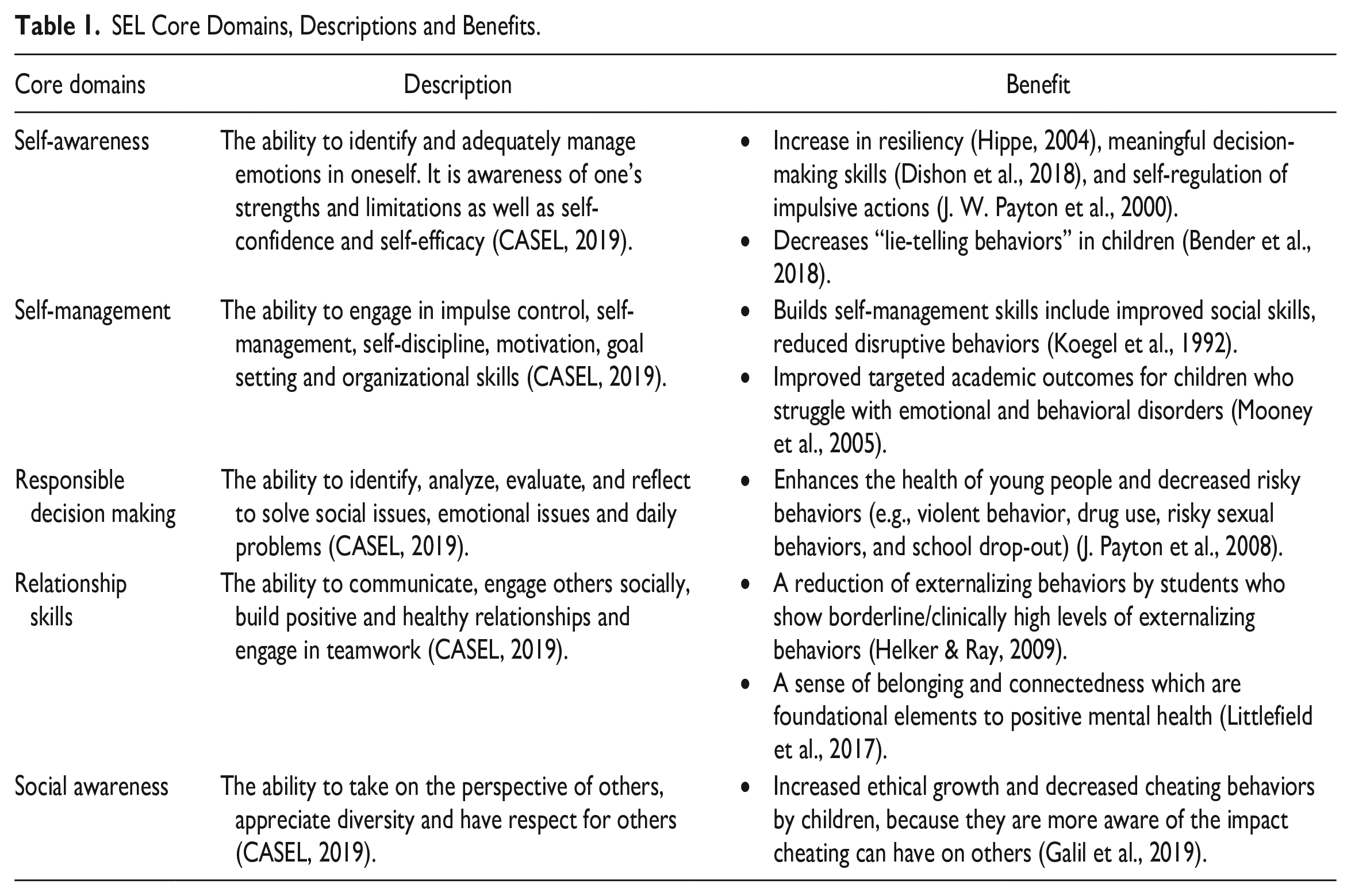
According to the Collaborative for Academic, Social and Emotional Learning (CASEL) Model, SEL facilitates the development of attitudes, knowledge and skills required to (1) understand and manage emotions, (2) set and achieve goals, (3) feel and show empathy for others, (4) establish and maintain positive relationships, and (5) make responsible decisions (Elbertson et al., 2010). CASEL provides a model for SEL which consists of five core domains of social and emotional competencies that are involved in developing the skills and benefits described above (see Table 1).
SEL Core Domains, Descriptions and Benefits.
Evidence-Based SEL Programs and Benefits
While Canadian research is limited, internationally, SEL research has found that the implementation in schools fosters the improvement and development of positive social and emotional skills, positive attitudes about self and others, and improved academic performance (Bierman et al., 2010; Caldarella et al., 2009; Durlak et al., 2011; Kendziora & Yoder, 2016; Kramer et al., 2010; Merrell et al., 2008; J. Payton et al., 2008). Furthermore, SEL has been shown to reduce conduct problems and emotional distress in students (Bierman et al., 2010; Durlak et al., 2011). Several evidence-based SEL programs have developed in other regions and are currently available (Durlak et al., 2011; Dusenbury et al., 2011), Canadian programs and related research are largely absent from the literature.
Non-Canadian SEL Feasibility Studies
Feasibility studies are essential for effective SEL implementation, as they provide insight into anticipated and unanticipated barriers, opportunities, and needs to facilitate programing. Previous non-Canadian studies have evaluated the feasibility of implementing evidence-based SEL programing and identify several crucial areas that facilitate effective implementation including teacher attitudes (e.g., Bridgeland et al., 2013), SEL knowledge (e.g., Buchanan et al., 2009), information on current SEL practices (Schonert- Reichl & Hymel, 2007), perceptions of required resources (e.g., Kendziora & Yoder, 2016), and considerations of job stress (Buchanan et al., 2009). These areas are likely relevant for the implementation of SEL programing in Canadian schools.
Attitudes About SEL
Understanding educators’ attitudes about SEL is crucial for program implementation, as international studies have demonstrated that positive attitudes are associated with increased teacher buy-in (Brackett et al., 2012; Buchanan et al., 2009). Negative attitudes are associated with decreased implementation (Humphrey et al., 2010).
Resources
Concerns regarding general resources for implementing SEL have been raised in many studies (e.g., Buchanan et al., 2009; Humphrey et al., 2010). International studies have identified time constraints, lack of funding, and general resources (e.g., SEL supplies) as barriers for implementing SEL in schools (Humphrey et al., 2010; Kendziora & Yoder, 2016).
Knowledge About SEL
A review of international SEL studies indicated that educator SEL knowledge (e.g., Buchanan et al., 2009) was paramount for feasible and effective SEL implementation. Lack of effective SEL training and knowledge of mental health were indicated as barriers for the implementation of SEL programing by international educators.
Job Stress
The demand of large classrooms, diverse student challenges and time constraints related to curriculum and administrative demands were identified as sources of stress for teachers and impacted the effectiveness of SEL program implementation in classrooms (Frydenberg et al., 2017; Jennings & Greenberg, 2009).
Current SEL Practices
Canadian schools are increasingly expressing interest in SEL, and many may already be providing some programing to support this area (Schonert- Reichl & Hymel, 2007). However, there is limited research-based information available on the perspectives of Canadian school educators (e.g., teachers, principals, and guidance counselors) regarding the feasibility of SEL implementation. Similarities between Canada and international countries may exist in terms of SEL feasibility, however, there is no evidence to suggest that these results would generalize to a Canadian context, and research indicates a strong relationship between SEL instruction and context (Collie et al., 2012). Thus, applying non-Canadian SEL feasibility studies to the unique context of Canadian schools may fail to capture the views held by Canadian educators on the feasibility of SEL implementation.
The Current Study
Previous research has not specifically evaluated feasibility for SEL instruction in Canadian schools, despite the need to ensure that programing, training, and policy for SEL fits the needs of Canadian educators. Directly examining Canadian teacher’s SEL perspectives, knowledge and current practices can inform evidence based SEL implementation. This study evaluated Canadian educator’s (1) perceived SEL knowledge, (2) current SEL practices, (3) access to resources, (4) job stress, and (5) perceived contributors to the feasibility of SEL implementation.
We anticipated that Canadian educators would identify issues for the implementation of SEL that are similar to issues identified in international SEL feasibility research. However, given the different context of Canadian schools, we expected that teachers would identify or emphasize other issues more than international populations. As a result, previous literature on other educator’s perspectives of SEL implementation may not be completely generalizable to Canadian schools. Therefore, the purpose of this study was to collect information on Canadian educator’s perspectives for the incorporation of SEL programing to inform policy, training and to contribute to future programing development of SEL in Canadian schools.
Methodology
Study Design
The design of this study was observational and cross-sectional and involved both qualitative and quantitative analysis (see below). Content analysis and constant comparison method within a Grounded Theory Framework were used to analyze each of the long answer (open-ended) question responses. The current study received ethics approval from the University of Manitoba’s ethics board.
Participants
Participant’s (teachers, principals and other educators that may take part in teaching SEL) were recruited across Manitoba, Saskatchewan, and Alberta. Since Canada is heterogenous in terms of regions and curricula, we aimed to include a relatively homogenous population, and thus “Prairie” teachers and school staff were recruited. Prairie provinces may be more similar to each other than other locations for demographic reasons, and also because they tend to use the same instructional curricula (Western & Northern Canadian Protocol, 2016). The inclusion criteria for these participants included: (1) employment within a school division or private school in one of the provinces indicated above and (2) the ability to independently read and write in English to complete the consent form and measures.
Procedure
Participants were recruited via e-mail through their teacher’s associations, or by posters on relevant social media platforms (e.g., Twitter and Facebook). The e-mail/poster provided a link to the questionnaire. The link led participants to the informed consent form. After consenting, participants were presented with the online questionnaire asking about their views on SEL, current practices, and barriers to SEL implementation.
Survey Measure
Survey Construction
This survey was developed by adapting measures from previous research (Brackett et al., 2012; Buchanan et al., 2009; Fisher et al., 2009; Lambert et al., 2001, 2009; Shea et al., 2014) and more regionally applicable questions were added based on expert input from Manitoba teacher focus groups. Once this survey was created, it was pilot tested to ensure quality (i.e., relevance and understandability) by pre-service teachers. The modification and testing phases of this survey included:
(1) Focus groups: Manitoban teachers (elementary school, middle school and high school teachers and one special education teacher) participated in focus groups and gave their input regarding their perspectives, attitudes, and beliefs about SEL. The focus groups emphasized the need for the inclusion of questions regarding barriers for implementation including time constraints, incompatibility of students needs with available programs and the belief that SEL was not a priority.
(2) Pilot test: Pre-service teachers (undergraduates in the Bachelor of Education program at the University of Manitoba) reviewed a questionnaire that rated the quality of each question. If the question was rated very low in quality by three or more out of 20 participants, it was modified for improvement by a panel of three University of Manitoba researchers.
The survey was administered using the data collection software Qualtrics (Qualtrics LLC, 2016). Most of the questionnaire items were structured (close-ended). Responses for structured questions were given in categorical or Likert-scale form. Participants responded to Likert-scale questions in terms of how demanding a situation is (1-Very demanding to 6-Not at all demanding), how familiar they were with certain aspects of SEL (1-Not at all familiar to 6-Very familiar), how true statements are (1-Not at all true to 6-Very true), agreement (1-Strongly disagree to 6-Strongly agree), and how supportive resources are (1-Not at all to 6-Very). Some questions were open-ended to allow participants to provide more detailed information about their responses.
Survey Description
The survey consisted of nine sections and had a total of 40 questions which took approximately 20-min to complete. The goal of this survey was to assess Prairie Canadian teachers for their demographic information, teaching background, teacher related stress, knowledge about SEL, attitudes about SEL, current SEL practices, resources, and the feasibility of implementing SEL. Objectives of the survey and examples of the survey questions are described below.
Section 1
Section 2
Section 3
Section 4
Section 5
Section 6
Section 7
Section 8
Section 9
Analyzes
Data was exported from Qualtrics. Missing values were managed using pairwise deletion (i.e., missing data were not included in the analyses). This method was chosen because it preserves the most information within a data set. After cleaning and managing missing values, the data was analyzed using Statistical Package for the Social Sciences (SPSS).
Results
Descriptive statistics, including frequencies, means, and standard deviations, were calculated and reported for each relative domain of the questionnaire.
Demographics
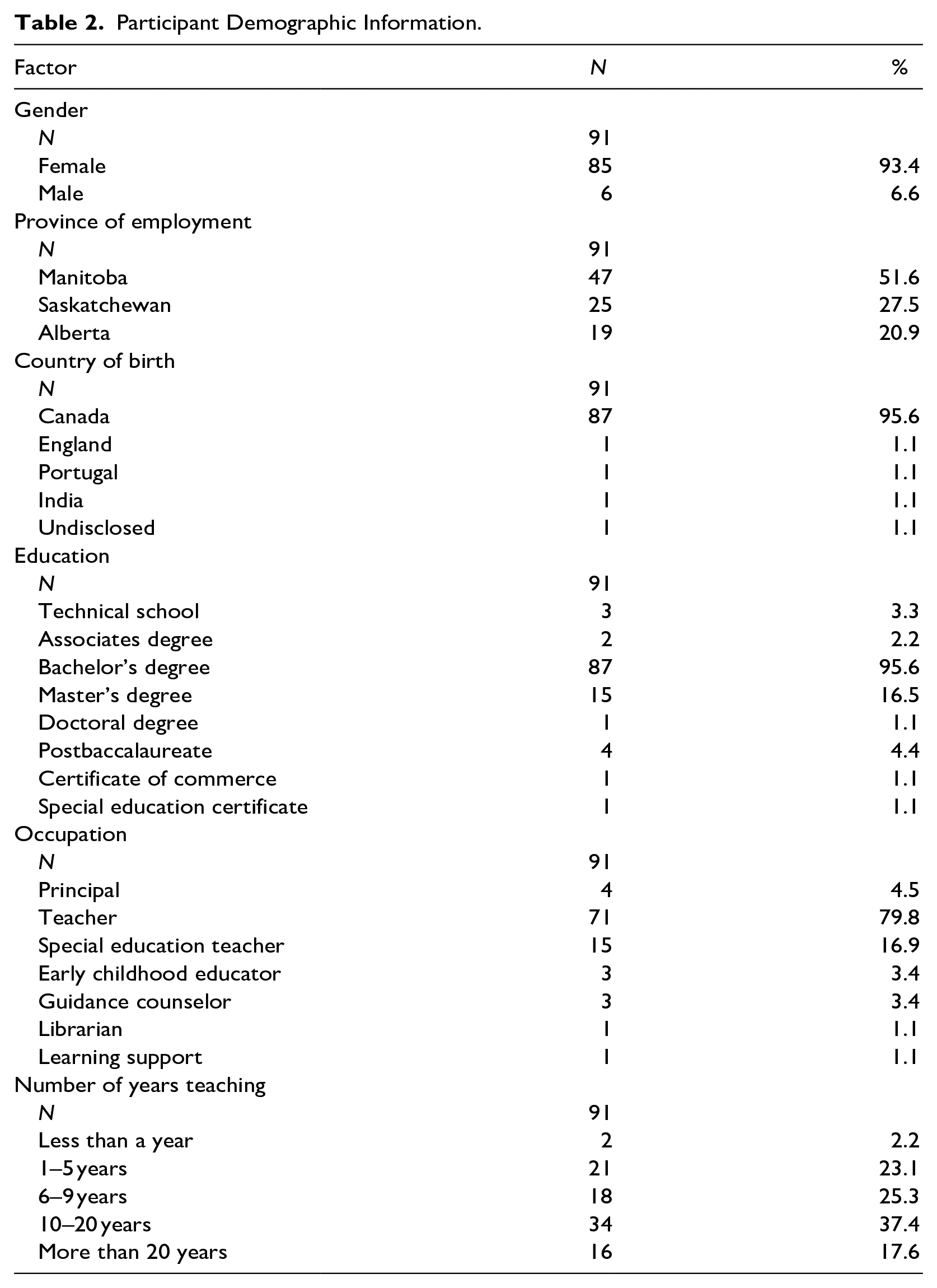
This study consisted of 91 participants from the Prairie Canadian Provinces with an average age of 39.3 (SD = 9.25). However, only 84 completed the full questionnaire and were included in the final analysis. See Table 2 for participant demographic information and Table 3 for subjects and grades taught by teachers.
Participant Demographic Information.
Subjects and Grade Taught.
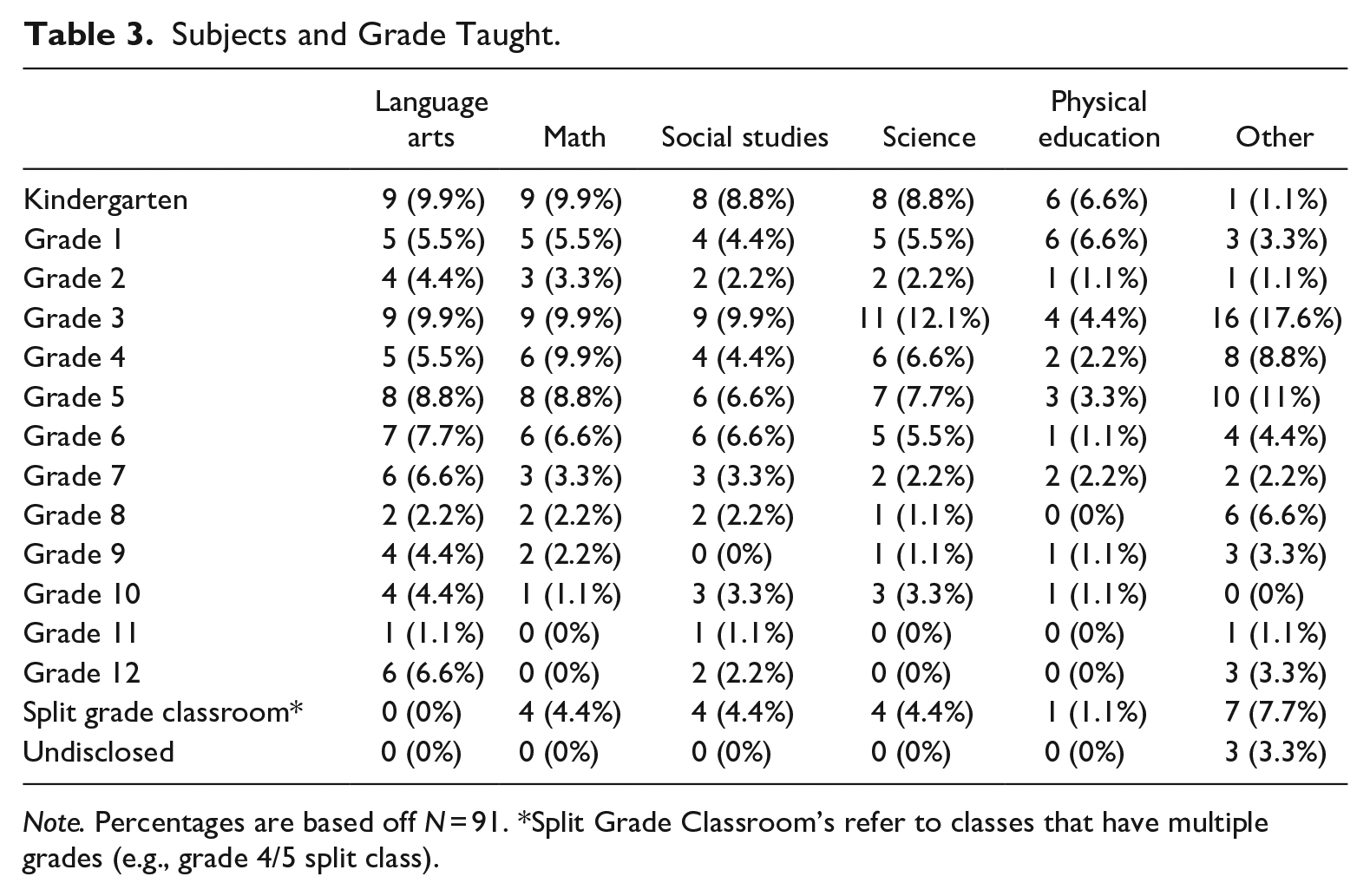
Note. Percentages are based off N = 91. *Split Grade Classroom’s refer to classes that have multiple grades (e.g., grade 4/5 split class).
Teacher/Principal Stress
The response options to the questions in this domain were: Not at all demanding, Mostly not demanding, Mildly not demanding, Mildly demanding, Mostly demanding, and Very demanding. Most participants (62.7%) did not endorse school responsibilities (e.g., supervising recess, coaching sports, etc.) as demanding. Most participants rated paperwork or administrative responsibilities (e.g., report card writing and attendance) (73.7%), finding instructional resources (e.g., guides and professional development workshops) (57.2%), managing a large class size (69.3%), managing student behaviors (78.1%) and student mental health issues (90.2%) as being demanding to some degree (i.e., mildly to very demanding).
Self-Reported SEL Knowledge
Some participants (21.3%) reported that they have received no SEL training. Most participants who received SEL training indicated receiving training through professional development workshops (33.7%) and self-study (23.6%). Most participants reported being mildly to very familiar with the term SEL (78.7%) and knowledgeable about SEL (65.2%). More than half of participants indicated feeling mildly to very confident teaching SEL programing in their classroom (59.5%).
Attitudes Toward SEL
Most participants agreed that SEL is important for success in life and school (97.7%). Similarly, most participants believed SEL programing should be implemented school-wide (94.3%) and that all teachers should receive training/support on how to teach SEL skills (96.7%). Most participants believed that SEL should be integrated into daily instruction (92%) and that it is their job to teach SEL (92.1%).
Current SEL Practices
Of the 87 participants who responded to current SEL practices items, 4.6% reported not incorporating SEL at all in their classroom. Most participants who reported teaching SEL in their classroom indicated they did so by incorporating it into informal lessons (81.6%). Approximately half of participants indicated they incorporated SEL into lessons (52.9%) and some incorporated it into games (37.9%), curriculum (28.7%) and in other ways (e.g., teachable moments which are teaching opportunities that may arise in everyday life, such as playground conflicts) (25.3%).
Resources: Accessing School Personnel for Any Type of Support
Most participants (72.1%) reported accessing team leaders (e.g., principals and vice principals) for SEL instructional support. Of these participants, 53.5% found team leaders to be mildly to very helpful. Most participants (74.7%) reported accessing school counselors for support. Of these participants, 48.2% found school counselors to be mildly to very helpful. Most participants (90.4%) reported accessing other teachers (their peers) for support. Of these participants, 60.2% found teachers (their peers) to be mildly to very helpful.
Resources: Other
Most participants (61.9%) reported that they do not have the time needed to teach SEL in their school. Most participants (69%) indicated that they had no funds (69%), materials (e.g., lessons) (71.5%) or access to SEL guidance and coaching (78.6%) to teach SEL.
Predictors of Feasibility of Implementing SEL
A significant positive correlation was only shown between ratings of attitudes about SEL and the ratings of feasibility of implementing SEL, r (79) = .38, p < .001. Multiple Linear Regression Analysis was used to determine how much of the variance in the dependent variable (i.e., feasibility of implementing SEL) was accounted for by the independent variables (i.e., knowledge about SEL, attitudes about SEL, resources and teacher stress). The analysis indicated that attitudes toward SEL (β = .97, p < .001, semi-partial R-squared) and resources (β = .36, p < .01) contributed significantly to the feasibility of implementing SEL. Multiple Linear Regression Analysis was also used to determine which types of resources (time, funding, materials, and access to guidance and coaching) for implementing SEL contributed significantly to SEL feasibility. Results indicated that having time to teach SEL in the classroom predicted higher feasibility rates for implementing SEL (β = 1.69, p < .05).
Predictors of SEL Being Taught in the Classroom
Binomial Logistic Regression was used to determine which of the independent variable’s (i.e., knowledge about SEL, attitudes about SEL, resources and teacher stress) significantly predicted whether educators incorporated SEL in their classroom. This analysis showed that resources (χ2(4) = 6.40, p < .05) and knowledge about SEL (χ2(4) = 14.90, p < .001) contributed significantly to SEL classroom incorporation. The odds of incorporating SEL into the classroom were 1.28 times higher for participants with more resources than participants with fewer resources, b = 0.25, p < .05, OR = 1.28 (95% CI [1.01, 1.62]). Similarly, the odds of incorporating SEL into the classroom were 1.69 times higher for participants with greater knowledge of SEL than for those with less knowledge of SEL, b = 0.52, p < .001, OR = 1.69 (95% CI [1.17, 2.45]).
Results for Open-Ended Questions
Supports and Resources Needed to Make SEL Implementation More Practical
Responses to this question generated seven subthemes: Access to (1) Program material, (2) Formal training, (3) Diverse programing, (4) Personnel support, (5) Identification of barriers for implementing SEL, (6) Unspecified resources, and (7) Current SEL Practices. Most responses subscribed to the “access to program material theme”; specifically, participants discussed the need for “access to SEL lesson plans and lesson plan material” (57.6%). The second most subscribed to theme was “access to formal training.” Most participants whose responses subscribed to this theme indicated wanting “access to professional development” (18.2%) and “general training” (18.2%) regarding SEL.
Another commonly occurring, and important theme was “access to diverse programing,” specifically the “applicable to French Immersion sub-theme” (6.1%). This emerging sub-theme speaks to the unique bi-lingual school system that exists in Canada. Clearly, access to various support for effective SEL implementation was an issue for many of our participants.
Additional Thoughts and/or Concerns About SEL Programing
Responses to this item were split into three main themes: (1) Recognizing SEL is needed, (2) Barriers for implementing SEL, and (3) Suggestions for SEL incorporation. Most participant responses subscribed to the “barriers for implementing SEL theme” and responses reflected concerns related to time constraints (31%) and attitudes (20.7%) as barriers. Many participant responses also subscribed to the “recognizing SEL is needed” theme. The majority of those whose responses subscribed to this theme discussed the importance of SEL (62.1%) and the increasing mental health needs of students (17.2%). It is evident that, despite challenges, educators see incorporating SEL as a worthwhile endeavor.
Discussion
Student challenging behavior, bullying and psychological distress are increasingly common in schools (e.g., Gilliam & Shahar, 2006; Jerome et al., 2008; Raver & Knitzer, 2002; Reinke et al., 2013; Rimm-Kaufman et al., 2000; Samara et al., 2008; Seeley et al., 2011; Tishelman et al., 2010) evidence-based SEL intervention has been shown to address many of these issues (e.g., Caldarella et al., 2009; J. W. Payton et al., 2000). Further, the impacts or the COVID-19 pandemic on students and staff has led to calls to wider implementation of SEL programing, particularly in light of the emotional toll on students and staff. The aim of this study was to understand educator’s perspectives and practices related to the feasibility of implementing SEL programing in Prairie Canadian schools to help inform, and potentially shape policy, guidelines, and training.
Current SEL Climate in Prairie Canadian Schools
Paralleling international studies (e.g., Buchanan et al., 2009; Freeman & Strong, 2017; Schonert- Reichl & Hymel, 2007), the current study demonstrated that most Prairie Canadian educators indicated regularly incorporating SEL in their classroom in various forms. This fell in contrast with Buchanan et al.′s study showing almost half of U.S. educators are implementing actual evidence based SEL programs in their classrooms (2009).
Similar to pre-existing international studies (Buchanan et al., 2009; Kam et al., 2011), most Prairie Canadian educators in this study indicated positive attitudes toward SEL. However, it appears more Prairie Canadians feel positively about implementing SEL programing in the classroom compared to their U.S. and Chinese counterparts (Buchanan et al., 2009; Kam et al., 2011).
Our study showed that educators reported diversity in the extent of their SEL training; approximately a quarter did not have any training while most have acquired some training through self-study or professional development workshops (i.e., 1 day presentation sessions). These results are like those found in a U.S. study done by Buchanan et al. (2009) which indicated a lack of formal SEL training opportunities. Despite a lack of formal training for Prairie Canadian educators, like the U.S. (e.g., Buchanan et al., 2009), most participants in the current study indicated having adequate knowledge about SEL. However, over half expressed confidence in teaching it in their classroom.
Predictors of SEL Being Taught in the Classroom
Prairie Canadian educators in this study indicated a lack of access to resources and training as the largest barriers for SEL classroom incorporation. Specifically, educators in this study indicated a lack of time, funding, materials, guidance and coaching. This is supported by educator responses to open-ended questions in which educators indicated requiring more time for SEL instruction, SEL lesson plan material, SEL professional development and general SEL training. These results are like those found in Buchanan et al. (2009) in which educators from the U.S. identified a lack of time for SEL lesson planning, teaching, and funding to pay for SEL material.
SEL studies from our U.S., U.K., and Australian counterparts have also demonstrated the importance of access to resources and training for effective SEL implementation (e.g., Buchanan et al., 2009; Freeman & Strong, 2017; Humphrey et al., 2010). For instance, time constraints due to the planning and teaching of regular curriculum, as well as administrative demands leave little room for the incorporation of SEL in the classroom (Frydenberg et al., 2017). Furthermore, if teachers are not granted appropriate funding for programing costs, they will not have access to evidence-based SEL materials and would therefore be unable to implement it. Similarly, Freeman and Strong (2017) shows that educators from Australia indicated that without effective training to build upon SEL knowledge and skills, implementation of evidence-based SEL decreases. Additionally, the short-duration SEL training programs, which most educators receive, does not foster changes in the SEL practice of educators (Freeman & Strong, 2017). It is evident that to increase the effectiveness of SEL implementation, policy makers need to provide Canadian teachers with SEL training and resources, specifically by finding ways to reduce time restraints and increasing access to funding and SEL program material.
A Unique Finding of the Current Study
A unique finding in the current study, is that some Prairie Canadian educators identified the need for French-translated SEL materials. To our knowledge, no other SEL study examining feasibility of implementation has highlighted the need for SEL to be translated into French. While Canada is primarily an English-speaking country, French is the official second language and as a result French Immersion schooling is offered across the country. Currently, within the provinces examined in this study, there are approximately 27,234 students enrolled in French Immersion Schools in Manitoba, 43,587 in Alberta, and 16,758 in Saskatchewan (Statistics Canada, 2021). French Immersion is for non-Francophones to develop their French speaking skills to become functionally bilingual (Government of Manitoba, 2009). To do this, the majority of their education is in French. Hence, if Prairie Canadian French Immersion educators are to implement SEL programing, it must be translated into French in order to maintain the integrity of French Immersion schooling.
Limitations
Data was retrieved from only three Canadian provinces: Manitoba, Alberta, and Saskatchewan. The findings from this study may not be generalizable to other Canadian provinces, especially since each provincial education system is independently mandated. Another limitation of this study is that results may not be entirely generalizable to the individual provinces in which we examined (Manitoba, Alberta, and Saskatchewan) due to each province having their own regulations on how education is conducted. In this study, data from the three Prairie Canadian provinces are summarized rather than presented on their own. Future studies may want to explore the feasibility of SEL implementation in specific/other provinces to gain a more accurate picture of their feasibility barriers and opportunities.
Content analysis and constant comparison method were used to evaluate open-ended questions. Due to the subjective nature of this method, despite using two coders, interpretations may be subject to the bias of the coder’s perspectives and experiences. Additionally, the responses to open-ended questions were minimal and lacked depth. Therefore, they may not have provided full insight into Prairie Canadian educators’ perspectives on SEL implementation. Additionally, only 91 educators participated in this study. While this sample size was effective to use our indicated analyses, increasing our sample would lead to increased reliability and decreased variability of results. Furthermore, an increase in sample size would allow results from this study to be more generalizable. Another limitation is the effects of other potentially impacting variables (e.g., age, gender, and years of experience teaching) not controlled for in our analyses. As a result, these variables may have impacted our results. For example, new teachers may have more positive attitudes toward SEL than their coworkers.
Future Research
Future research could assess the reliability and validity of the Social and Emotional Learning Questionnaire (SELQ) that was created in this study. As previously noted, future studies can utilize the SELQ to determine the feasibility of implementing evidence-based SEL in other provinces, cities and school divisions. Many Prairie Canadian educators indicate incorporating SEL practices informally into their classroom. Future research may wish to explore the type of informal practices being used, whether these practices yield the same benefits as evidence-based SEL programing, and to directly examine French Immersion contexts.
Conclusion
As previously noted, past studies have shown the increasing need for evidence-based SEL intervention in schools (e.g., increased rates of bullying and teacher distress) and the practices emerging from COVID-19 context has undoubtedly exacerbated this. In order to effectively implement evidence based SEL programs in Prairie Canadian Schools, policy makers and stakeholders must address barriers regarding the lack of access to SEL training and resources for educators. Further, policy initiatives recognizing teacher time and demands, in addition to providing resources to allow time for training, planning, and implementation could increase opportunity for effective SEL implementation. Likewise, funding geared toward SEL programing and materials would enhance the likelihood of effective SEL implementation. Without proper development of SEL knowledge and better access to SEL resources and support for implementation, the feasibility of implementing SEL will be much less effective. As a result, Prairie Canadian schools will not reap the SEL benefits (described in this study) compared to their non-Canadian counterparts.
Relevance to the Practice of School Psychology
School Psychologists are often tasked with making recommendations to assist with emotional and behavioral functioning to limit their impacts on academic functioning as well as providing consultation with teachers on emotional regulation in general. It is well known in the literature that issues with emotional functioning and behavior co-exist with Learning Disorders, ADHD, and other challenges to meeting academic outcomes. While school psychologists are well versed in providing consultations and recommendations on social-emotional intervention, the buy-in from teachers and actual resources in terms of time and support need to be there in order for them to successfully implement it. Thus, school psychologists may also play a key advocacy role to request for evidence-based materials for teachers to use and providing school-based PD training opportunity for teaching staff.
Footnotes
Declaration of Conflicting Interests
The author(s) declared no potential conflicts of interest with respect to the research, authorship, and/or publication of this article.
Funding
The author(s) received no financial support for the research, authorship, and/or publication of this article.
