




Abstract
COVID-19 has put additional stress on teachers, whose levels of psychological distress are concerning. However, studies that look at teachers’ work experiences and their association with psychological distress during the pandemic are lacking. This study aims to draw a portrait of psychological distress (i.e., symptoms of depression and anxiety) and work-related experiences (i.e., work engagement, workplace discrimination, interpersonal conflicts at work and quality of relationships among school staff) in a sample of preschool, primary and secondary school teachers in Quebec during the pandemic across socio-demographic characteristics (age, gender, years of teaching experience, school level, region, immigrant status). In addition, we investigated whether work-related experiences were associated with psychological distress. A total of 818 teachers (Mage = 44.5; SD = 9.04; 82.8% women) responded to an online questionnaire. Linear and logistic regression analyses were implemented. Results showed concerning levels of both anxiety and depressive symptoms in our sample. Gender, immigrant status and school level differences in the perception of the work environment emerged. Higher reported work engagement, fewer interpersonal conflicts at work and a better quality of relationships among school staff were all independently and statistically significantly associated with lower psychological distress. Promoting a cohesive school climate among school personnel can protect teachers from psychological distress in times of adversity. A socio-ecological approach to research and intervention that considers work experiences in terms of both engagement and quality of relationships is warranted to improve teachers’ well-being and contribute to a positive learning environment in schools for adults and students alike.
The teaching profession is considered a highly stressful occupation (Montgomery & Rupp, 2005) at high risk of psychological distress (Kidger et al., 2016). Indeed, teachers face considerable demands in their day-to-day activities, including but not limited to managing classrooms, meeting the diverse needs of students and contribute to student learning (Gray et al., 2017). Teaching is even more challenging when considering large class sizes, increasing diversity in schools as well as variability in school resources and funding. It is not surprising that an OECD report indicates that 25 to 30% of teachers in Canada leave their profession within their first 5 years of teaching, mirroring a global phenomenon (Santiago, 2002). Teacher shortages have been a critical issue in Quebec in the past decades and the number of teachers quitting the profession has increased significantly over the past three years and during the COVID-19 pandemic (Dion-Viens, 2023). If teaching is a stressful job under normal conditions, the COVID-19 pandemic has added more demands on teachers in a very short time, and teachers have had to flexibly adjust to novel and unpredictable situations with little control over the evolution of the situation. By all means, teachers have been essential frontline workers during this health emergency (Beames et al., 2021) and are playing a vital role educating and supporting new generations of students in very challenging and uncertain times. However, research on teachers’ mental health and their experiences in school, before and during the present pandemic, is scarce, especially when compared to research on students’ mental health. This is surprising in light of the well-established associations between teachers’ well-being and students’ learning and socio-emotional adjustment (Briner & Dewberry, 2007; Gray et al., 2017). It is even more surprising when the available studies on teachers’ mental health conducted during the pandemic all point to concerning levels of psychological distress among teachers, significantly higher than those reported in the general population (Hutchison et al., 2022; Kim et al., 2022; Kush et al., 2022; Santiago et al., 2023). It becomes evident that a better understanding of teachers’ mental health and associated risk and protective factors is essential to inform evidence-based interventions to reduce the negative impact of the pandemic on their psychological distress. At a societal level, such research is crucial to reduce the number of teachers quitting the profession as well as to cultivate healthy academic environments where all school personnel and students can thrive. Within a socio-ecological framework, the present study aims to investigate symptoms of anxiety and depression among preschool, primary and secondary school teachers and the quality of work-related experiences in Quebec during the pandemic. Specifically, we examine variations in anxiety and depressive symptoms as well as work engagement, perceived workplace discrimination, interpersonal conflicts at work and quality of staff relationships at school across socio-demographic groups; in addition, we investigate the associations between work-related experiences and symptoms of anxiety and depression.
Psychological Distress in Teachers
Although levels of psychological distress among teachers were concerning already before the COVID-19 pandemic (Kidger et al., 2016), a systematic review conducted on teachers’ mental health during the pandemic indicated that there has been a significant increase in psychological distress among teachers during this health emergency, especially in symptoms of anxiety and depression (Santiago et al., 2023). Hutchison et al. (2022) in their study on teachers’ mental health in British Columbia (Canada) confirmed that anxiety and depression were both higher among teachers than among the general population 1 year into the pandemic. The few available longitudinal studies on teachers’ mental health during COVID-19 suggest that teachers’ mental health kept deteriorating over time during the pandemic (Kim et al., 2022; Nabe-Nielsen et al., 2022; Santiago et al., 2023).
As regards socio-demographic differences in symptoms of anxiety and depression, available evidence suggests that women and younger teachers are at increased risk (Santiago et al., 2023), a finding that confirms studies conducted prior to the pandemic (Phillips et al., 2008; Varol et al., 2021). Less is known about how years of experience teaching, school level (preschool/primary vs. secondary education) or teachers’ immigration background impact, if at all, on their mental health.
Despite mounting evidence on the negative impact of the pandemic on teachers’ mental health, studies that focus on risk and protective factors associated with mental health among teachers are still rare. Within a socio-ecological perspective (Bronfenbrenner, 2005), teachers’ mental health is shaped by the complex interplay between individual characteristics as well as contextual variables. In this study, we focus on some personal and contextual work-related variables that are related to the school environment and that have been associated with mental health in prior studies. Namely, we focus on work engagement, perceived workplace discrimination, interpersonal conflicts at work and quality of relationships among school staff.
Work-Related Experiences and Psychological Distress Among Teachers
Job burnout, although already quite common among teachers before the pandemic, has also significantly worsened among teachers during this health emergency (Santiago et al., 2023). Engagement at work is defined as a positive, fulfilling, work-related pervasive affective-cognitive state of mind characterized by vigor (i.e., high levels of energy and resilience while working), dedication (i.e., strong involvement and sense of purpose at work) and absorption (i.e., high level of concentration and involvement at work) (Schaufeli et al., 2002). Research on engagement at work across different professions has indicated that it is more impacted by organizational rather than socio-demographic factors (Simpson, 2009). Higher work engagement is associated with higher job satisfaction and lower job burn-out across different professions as well as among teachers (Høigaard et al., 2012), thus representing a potential protective factor for mental health (Christian et al., 2011; Halbesleben, 2010). However, research on teachers’ work engagement is scant and relatively recent and has focused mostly on teachers’ work performance and quality of teacher-student interactions, rather than on teachers’ mental health or well-being (Soininen et al., 2023).
Extensive research has documented the negative impact of perceived discrimination on mental health (Pascoe & Smart Richman, 2009). Workplace discrimination is particularly salient because the workplace is the domain in which people are most likely to report discrimination (Kessler et al., 1999), as well as because of the significance of one’s professional life for identity and self-esteem (Tausig, 1999). Workplace discrimination has been found to be overall more frequent among visible minorities, immigrants, women, and LGBTQ individuals (Okechukwu et al., 2014; Ozeren, 2014). Although discrimination in schools has been widely researched among students and was commonly reported by students in colleges and universities in Quebec before and during the pandemic (Rousseau et al., 2022), the experiences of workplace discrimination among teachers has been often overlooked (Ghadban et al., 2023; Larochelle-Audet, 2019; Mooij, 2011).
Interpersonal conflicts at work refer to how often people experience disagreements with coworkers or are treated poorly at work (Spector & Jex, 1998). More interpersonal conflicts at work have been related to a range of mental health issues, including anxiety and depression (Marchand et al., 2015; Spector & Bruk-Lee, 2007). Although scant, available evidence indicates that interpersonal conflicts are an important aspect of workplace stress among school staff and a risk factor for their well-being (Bruce et al., 2022; Hilger et al., 2021). In times of growing social polarization and diversity in schools (Ngov et al., 2021; Rousseau et al., 2022; Santavicca et al., 2022), the study of interpersonal conflicts becomes even more salient.
School climate is a multidimensional construct that refers to the quality and character of school life, reflecting norms, goals, values, interpersonal relationships, teaching, and learning practices, as well as organizational structures in educational institutions (Thapa et al., 2013). In the current study we focused on one specific dimension of school climate, namely the quality of relationships among school staff. Interpersonal conflicts and quality of relationships among school staff were selected in light of preliminary evidence on how the quality of relationships with colleagues and perceived support from them have been among the most helpful protective factors for teachers during the pandemic (Baker et al., 2021; Martí-González et al., 2023). Indeed, more positive relationships with colleagues and school directors have been associated with higher teachers’ well-being (Aelterman et al., 2007). Type of school environment (e.g., primary vs. secondary) was found to influence multiple dimensions of school climate, as schools serving different grades have their own organizational characteristics (Gray et al., 2017; Huang, 2001).
COVID-19 and Schools in Quebec
Although the province of Quebec represents only 22.57% of the Canadian population, due to its large number of confirmed cases and deaths, it quickly became the epicenter of the pandemic in Canada and remained one of the most hard-hit provinces (Cameron-Blake et al., 2021). Soon after a state of health emergency was declared (March 2020), all daycares and schools in the province were closed, with adaptations quickly put in place to provide online classes. Daycare and elementary schools were allowed to reopen in May 2020 with very specific safety requirements and rules in place (i.e., mask wearing, hygiene protocols, physical distancing, and class bubbles), whereas secondary schools were reopened officially only in January 2021 (Rowe, 2020). The Montreal region was the first area in Quebec to be placed in a state of health emergency in March 2020 and faced the strictest sanitary measures over the longest period of time, followed by Quebec City (INSPQ, 2022). In light of differences in the number of cases and public health measures across different areas in Quebec, possible variations in teachers’ mental health and work experiences across regions are also investigated.
The Current Study
This study aims to investigate during the COVID-19 pandemic in a sample of preschool, primary and secondary teachers in francophone public schools in Quebec: 1) Levels of psychological distress in terms of self-reported symptoms of anxiety and depression; 2) Levels of work engagement, perceived workplace discrimination, interpersonal conflicts at work, and quality of relationships among school staff; 2) Variations by socio-demographic groups (i.e., age, gender, years of teaching experience, school level, region, immigrant status); 3) Whether experiences at school in terms of work engagement, perceived workplace discrimination, interpersonal conflicts at work and quality of relationships among school staff are associated with psychological distress.
Based on available evidence during the pandemic (Hutchison et al., 2022; Kim et al., 2022; Santiago et al., 2023), we expected to find high levels of anxiety and depression among teachers, especially among younger teachers and women. Given the lack of prior research specifically to the Quebec context and during the pandemic, we did not have specific hypotheses on other socio-demographic differences in work-related experiences. We expected higher work engagement and a better perception of the quality of relationships among school staff to be negatively associated, whereas perceived workplace discrimination and higher conflicts at work were expected to be positively associated with both anxiety and depression.
Method
Participants
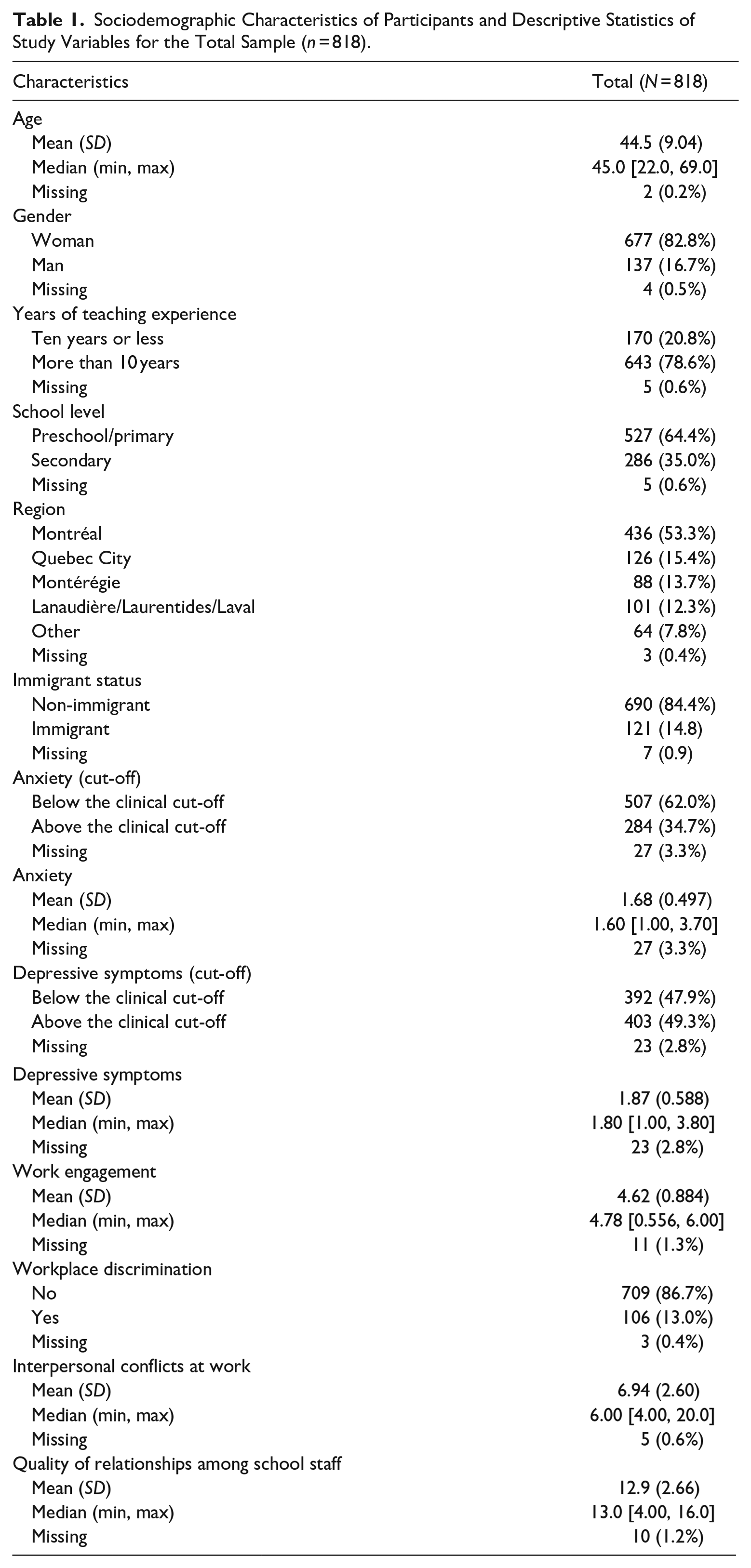
A total of 818 teachers (aged 22–69 years, mean age = 44.5, SD = 9.04; 82.8%, n = 677 women) responded to an online survey and were included in the present study. Teachers came from public francophone preschool/primary (n = 527) and secondary (n = 286) schools located in different regions of Quebec, Canada. The majority of participants (84.4%, n = 690) were born in Canada to Canadian-born parents (third generation or more), with 8.9% (n = 73) of teachers being first-generation immigrants (born outside of Canada) and 5.9% (n = 48) second-generation immigrants (born in Canada with at least one parent born outside of Canada). For statistical reasons, first- and second-generation individuals were combined in one category (i.e., immigrants), representing a total of 14.8% (n = 121) of the sample (with n = 7 participants who did not answer the question). The socio-demographic characteristics of the participants are presented in more detail in Table 1.
Sociodemographic Characteristics of Participants and Descriptive Statistics of Study Variables for the Total Sample (n = 818).
Procedure
Data were collected between October 2020 and March 2021, during the first two waves of the COVID-19 pandemic. The link to the online survey was disseminated via email and social networks thanks to the collaboration of multiple school boards and teacher associations across the province of Quebec (CA), as well as via snowball sampling (i.e., participating teachers were invited to share the link with their colleagues and within their professional networks). The project was described as a study on teacher’s mental health, focusing on the vulnerabilities and resilience of Quebec school teachers during the COVID-19 health emergency. Participants were eligible to take part in the study if they were teachers in preschool, primary or secondary schools in Quebec. Participants could complete the questionnaire in English or French and were informed that their participation was voluntary and their responses confidential. The study protocol and procedures were approved by the Institutional Review Board of the Université du Québec à Montréal.
Measures
Psychological Distress
Anxiety and Depressive Symptoms
The Hopkins Symptom Checklist-25 (HSCL-25) (Derogatis et al., 1974) was used to measure psychological distress. It is a commonly used self-report questionnaire designed to screen for levels of depressive symptoms and anxiety. Participants were asked to rate on a Likert-type response scale ranging from 1 (not at all) to 4 (very much so), how much they experienced over the past week symptoms of anxiety (10 items; one sample item is “shaking”) and depression (15 items; one sample item is “crying easily”). Levels of anxiety and depressive symptoms are calculated by averaging responses, separately for each subscale (range: 1–4). The Hopkins-25 symptom checklist requires a cutoff score of 1.75 to indicate clinically significant levels of depression or anxiety. In this study, Cronbach’s alpha and McDonald’s omega for the depression scale were .91 and .92 respectively; for the anxiety scale they were both .86.
Work-Related Experiences
Work Engagement
The Utrecht Work Engagement Scale (UWES) (Schaufeli et al., 2006), in its short form, was used to measure the engagement of participants at work. This self-report questionnaire consists of nine items, with good psychometric properties and cross-cultural validity (Hakanen et al., 2019; Schaufeli et al., 2019). Participants were asked to rate how often they experienced the proposed situations (descriptive statements), on a scale ranging from 0 (never) to 6 (every day). A sample item is “I am full of energy for my work.” A mean score is obtained for the overall scale (variable between 0 and 6), with higher scores indicating higher levels of engagement at work. Cronbach’s alpha and McDonald’s Omega for this scale in our sample were both .89.
Workplace Discrimination
The Perceived Discrimination Scale (Noh et al., 1999) was used to document teachers’ experiences of discrimination. It is a self-report questionnaire, inviting respondents to fill in their experience of discrimination, for a list of reasons and contexts. In this study, only 1 item asking about the workplace discrimination was used (yes/no response option). Based on their responses, participants were assigned to one of two groups: (1) those who had been discriminated against at work (i.e., “yes” responses), and (2) those who had not reported this type of discrimination (i.e., “no” responses).
Interpersonal Conflict at Work
The Interpersonal Conflict at Work Scale (ICAWS)(Spector & Jex, 1998) was used to measure conflict among school personnel. It is a self-report questionnaire with four items investigating the frequency of conflicts or arguments in the workplace, as well as rude behavior between colleagues. Participants were asked to rate on a Likert-type scale from 1 (never) to 5 (very often) how often they experienced each statement (i.e., “How often are people rude to you at work?”). Interpersonal conflict was calculated by adding responses to all items to obtain a total score. The higher the score, the more frequent the interpersonal conflicts at work, with scores ranging from 4 to 20. Cronbach’s alpha and McDonald’s Omega for this scale in our sample were .82 and .83, respectively.
Quality of Relationships Among School Staff
The Interpersonal Relations subscale of the Delaware School Climate Survey–Teachers Version (Bear et al., 2014) was used to measure the quality of interpersonal relationships among adults within the school (4 items). Participants were asked to rate on a Likert-type scale ranging from 1 (disagree a lot) to 4 (agree a lot), the extent to which they agreed with a given statement. A sample item is “Administrators and teachers support one another.” A total score was calculated by summing scores to all items (range from 4 to 16). Higher scores indicated more positive relationships among school staff. Cronbach’s alpha and McDonald’s Omega for this scale in our sample were .88 and .89, respectively.
Sociodemographic Characteristics
Participants answered specific questions about their sociodemographic background, providing information about their age, gender (man, woman), number of years teaching (up to 10 years, and more than 10 years), grade level of educational institution (preschool-primary, secondary), region of teaching (Montreal, Québec City, Montérégie, Lanaudière/Laurentides/Laval, and other) and immigrant status (immigrant, non-immigrant).
Statistical Analyses
Analyses were performed using R software (R Core Team, 2017). Means, SD, counts, and proportions were used for descriptive purposes on continuous and categorical variables, respectively. Pearson correlations among study variables are reported in Table 2. Prior to multivariable analyses, scores for anxiety, depressive symptoms, work engagement, interpersonal conflicts at work, and quality of relationships among school staff were standardized. Less than 5% of the data were missing for each variable and pairwise deletion was used in all statistical analyses. First, we investigated the associations of socio-demographic variables (age, gender, years of teaching experience, school level, region, immigrant status) with psychological distress (anxiety, depressive symptoms) and work experiences (work engagement, interpersonal conflicts at work, workplace discrimination, and quality of relationships among school staff) via multivariable linear and binomial regression models (one for each outcome variable). Next, a series of linear regression models were implemented to examine the associations of each work experience (work engagement, interpersonal conflicts at work, workplace discrimination, and quality of relationships among school staff) with psychological distress (anxiety and depressive symptoms). Separate models were implemented for each predictor, separately for each outcome, including socio-demographic variables as covariates. Last, independent associations of all predictors with both anxiety and depressive symptoms were assessed by including simultaneously in the same model all predictors. The threshold of statistical significance was set at 0.05 (two-sided tests).
Pearson Bivariate Correlations Among Study Variables for the Total Sample (n = 818).
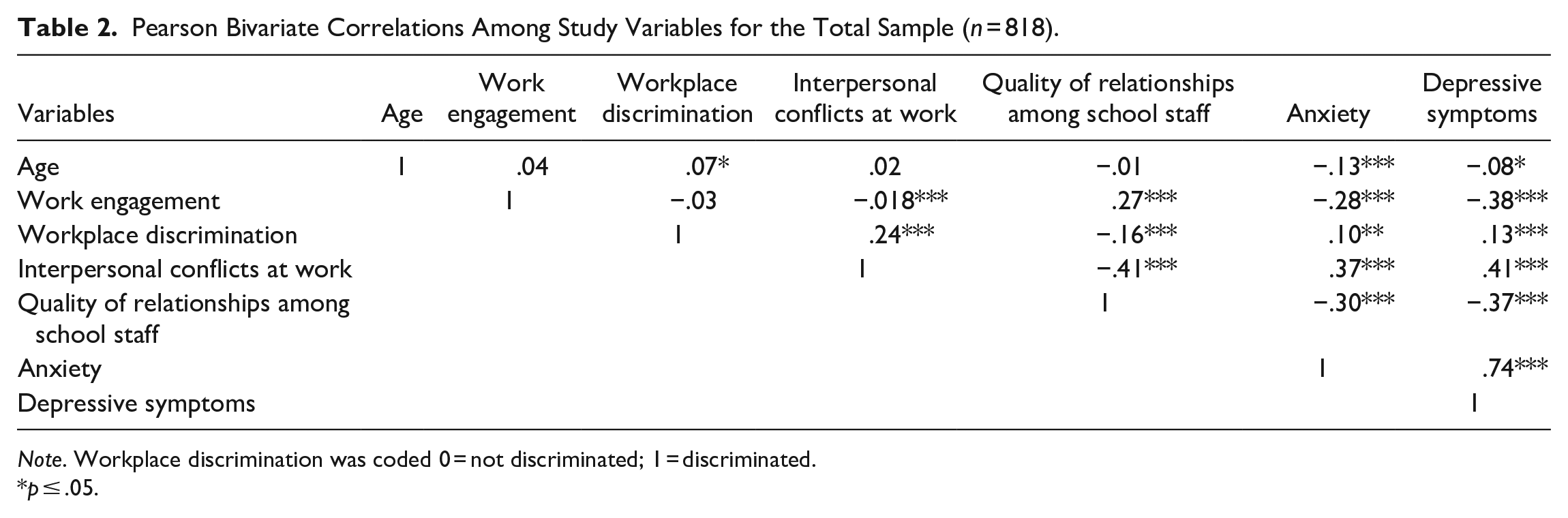
Note. Workplace discrimination was coded 0 = not discriminated; 1 = discriminated.
p ≤ .05.
Results
In our total sample 35% and 49% of teachers scored above the clinical cut-off for anxiety and depression, respectively (Table 1). In terms of perceptions of the work environment, 13% of teachers reported experiencing discrimination at work (Table 1). At a purely descriptive level, on average teachers reported a good level of engagement at work, good relationships with the school staff and a low level of interpersonal conflicts at work, although some variability can be observed (Table 1).
No statistically significant differences were found in levels of reported depressive symptoms across socio-demographic characteristics (Table 3). Older teachers reported lower levels of anxiety, although the effect-size was very small. No other socio-demographic statistically significant differences emerged in levels of anxiety. Socio-demographic variables explained 2% of the variance for anxiety and 0.5% of the variance of depressive symptoms (see Table 3).
Linear Regression Models Reporting the Associations of Socio-Demographic Variables With Psychological Distress (Anxiety and Depressive Symptoms) (n = 818).
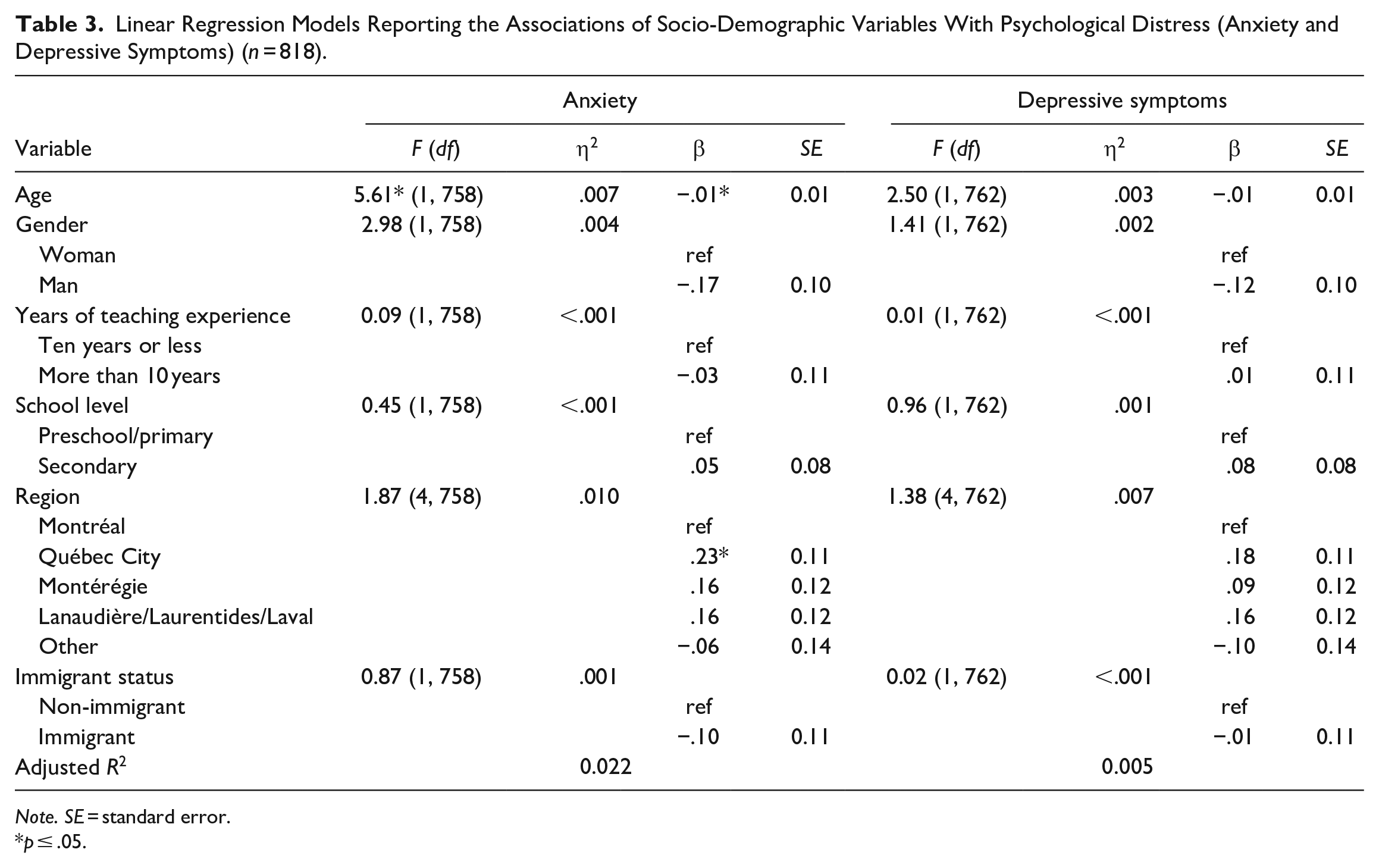
Note. SE = standard error.
p ≤ .05.
Some gender, immigrant status and school level differences in the perception of the work environment emerged (Table 4). Specifically, men reported lower work engagement and a better quality of relationships among school staff than women. Teachers with an immigrant background reported more engagement at work but lower perceived quality of relationships among school staff than teachers without an immigrant background. In addition, immigrant teachers were five times more likely than non-immigrant teachers to report having experienced discrimination at work. In terms of school level, teachers in secondary schools reported more interpersonal conflicts at work and a lower quality of relationships among school staff compared to teachers in preschool and primary schools. Socio-demographic variables explained 2% of the variance in both work engagement and interpersonal conflicts, 7% of the variance in quality of relationships among school staff and 15% of the variance in discrimination at work.
Linear and Binomial Regression Models Reporting the Associations of Socio-Demographic Variables With Work Experiences (n = 818).
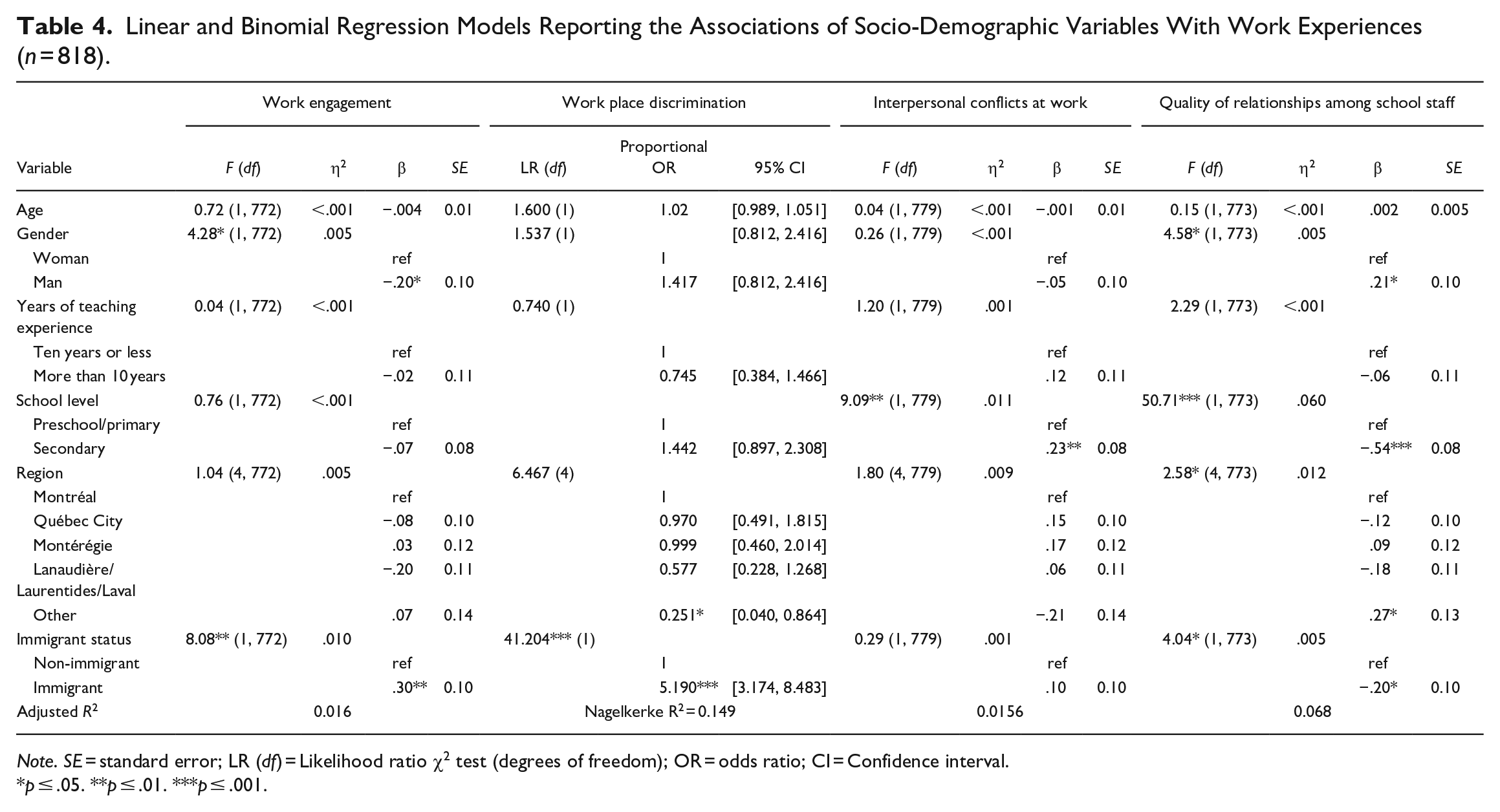
Note. SE = standard error; LR (df) = Likelihood ratio χ2 test (degrees of freedom); OR = odds ratio; CI = Confidence interval.
p ≤ .05. **p ≤ .01. ***p ≤ .001.
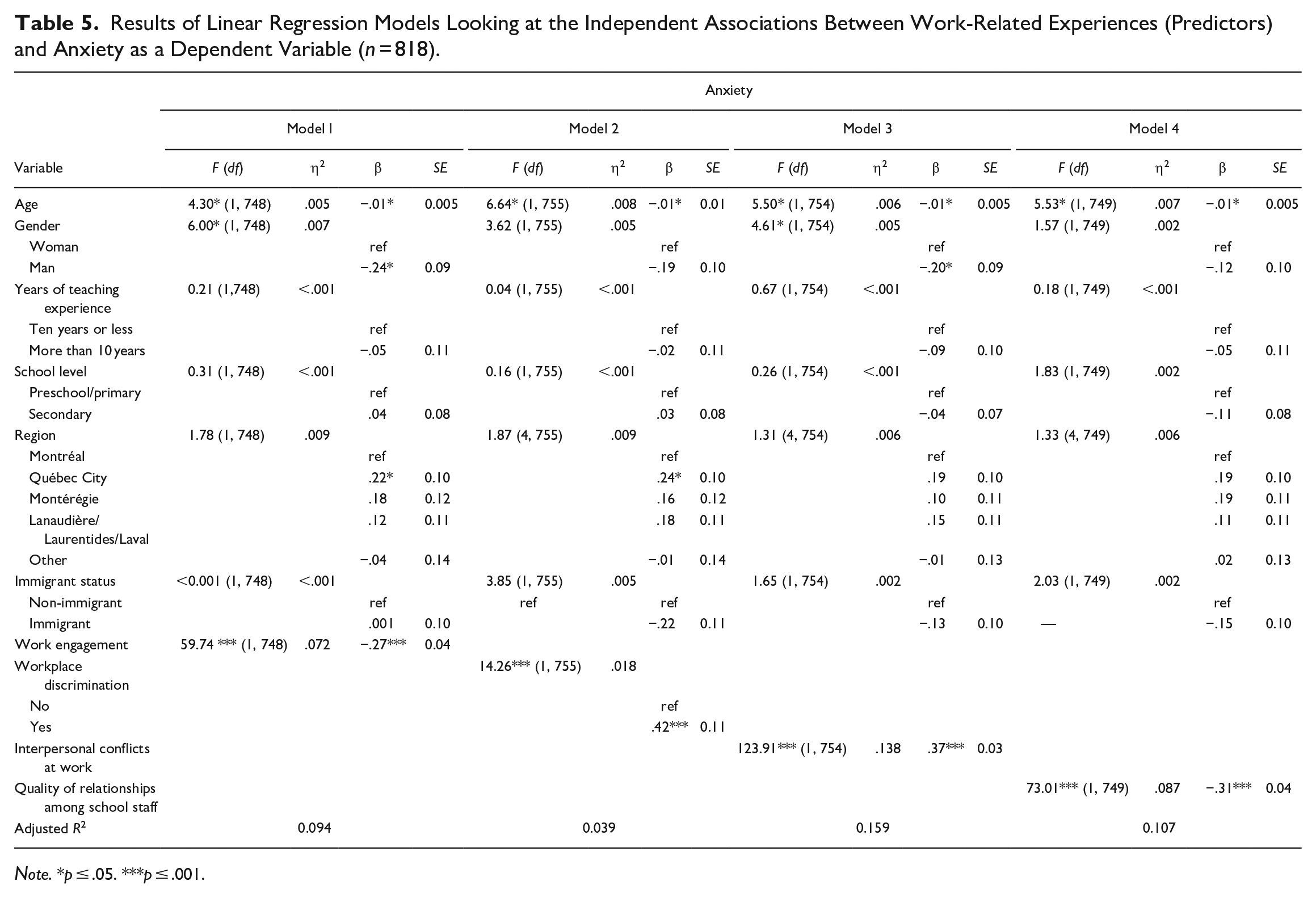
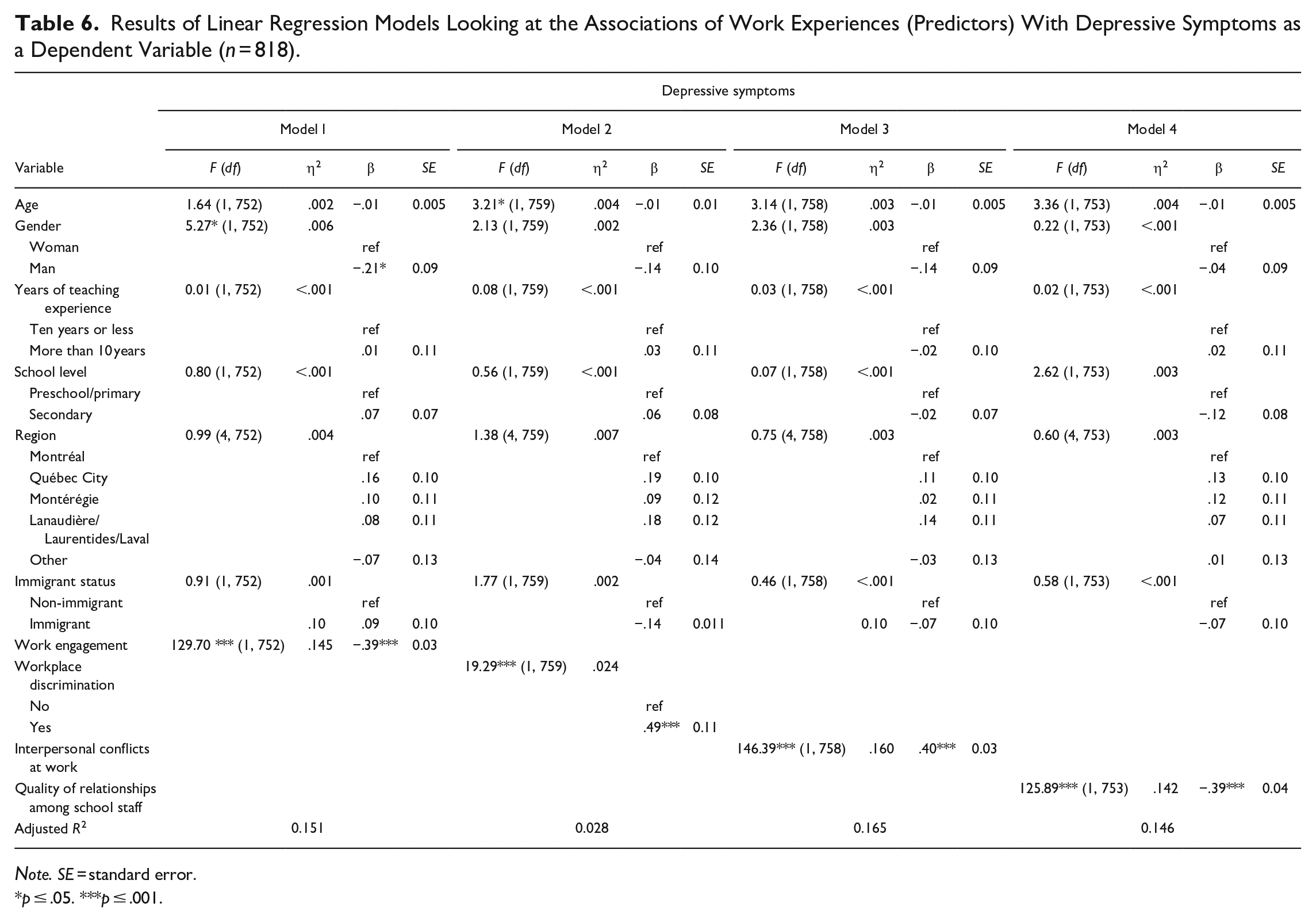
Higher reported work engagement, better perceived relationships among school staff, fewer perceived interpersonal conflicts at work and not having experienced discrimination were all significatively associated with lower anxiety and fewer depressive symptoms, when controlling for socio-demographic variables (see Tables 5 and 6). The models including interpersonal conflicts at work (as well as socio-demographic characteristics) explained 16% of the variance for both anxiety and depressive symptoms. The models including work engagement and quality of relationships among school staff as predictors explained both 15% of the variance of depressive symptoms, and 9% and 11% of the variance of anxiety, respectively. The model including workplace discrimination as predictor explained 3% of the variance in depressive symptoms and 4% of the variance in anxiety.
Results of Linear Regression Models Looking at the Independent Associations Between Work-Related Experiences (Predictors) and Anxiety as a Dependent Variable (n = 818).
Note. *p ≤ .05. ***p ≤ .001.
Results of Linear Regression Models Looking at the Associations of Work Experiences (Predictors) With Depressive Symptoms as a Dependent Variable (n = 818).
Note. SE = standard error.
p ≤ .05. ***p ≤ .001.
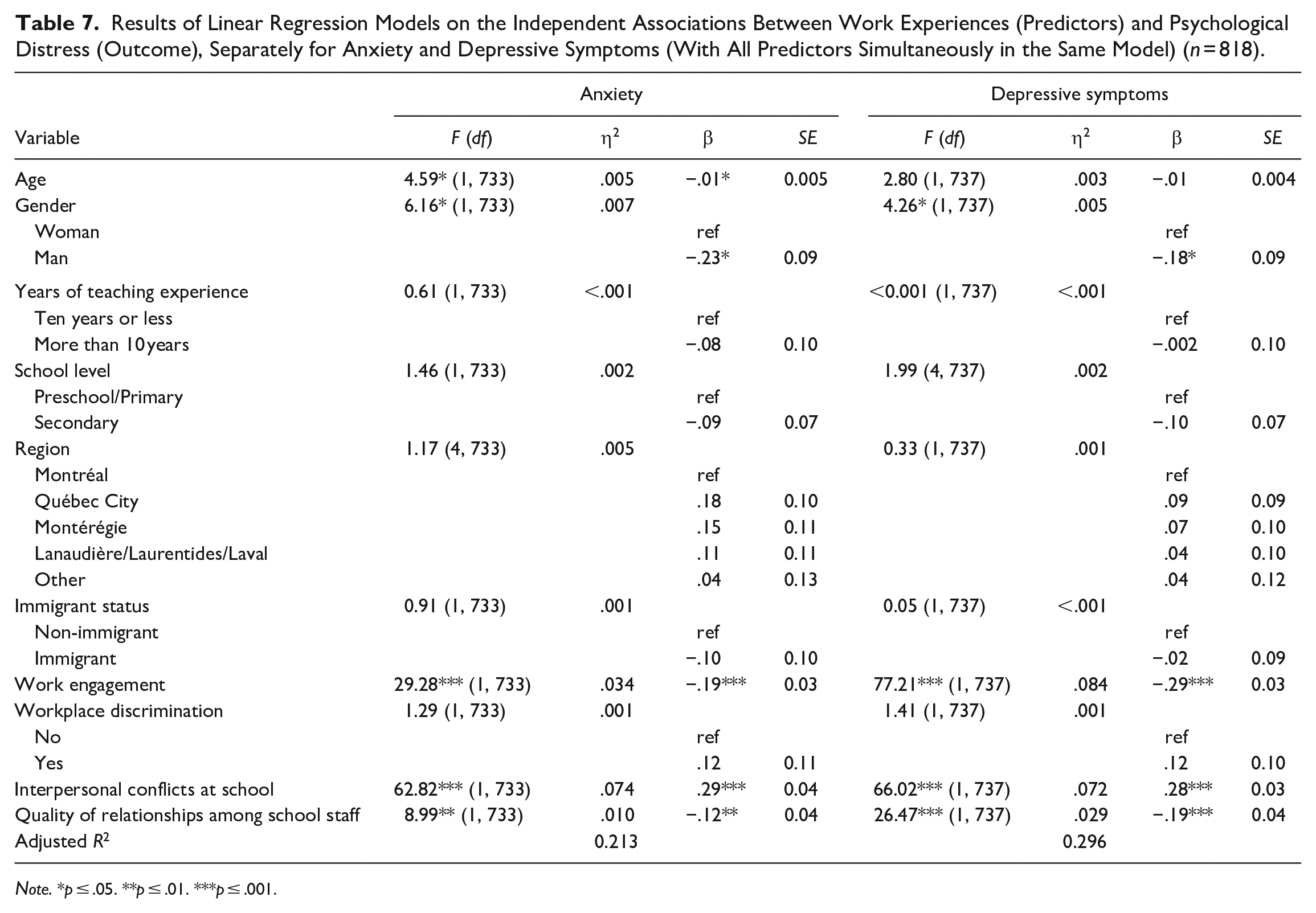
In the final regression models including all predictors together, we found that work engagement, interpersonal conflicts at work and quality of relationships among school staff were all independently and statistically significantly associated with both anxiety and depressive symptoms (Table 7). Only workplace discrimination was not independently associated with our outcomes. Effect-sizes ranged from low to medium, with interpersonal conflicts at work showing the largest effect size for both anxiety and depressive symptoms (η2 = .07). These final regression models explained 21% and 30% of the variance of anxiety and depressive symptoms, respectively.
Results of Linear Regression Models on the Independent Associations Between Work Experiences (Predictors) and Psychological Distress (Outcome), Separately for Anxiety and Depressive Symptoms (With All Predictors Simultaneously in the Same Model) (n = 818).
Note. *p ≤ .05. **p ≤ .01. ***p ≤ .001.
Discussion
Teaching is a wonderful, yet stressful, occupation, and the pandemic has increased this stress, with a negative impact on teachers’ mental health (Hutchison et al., 2022; Santiago et al., 2023). Within a socio-ecological framework, the present study explored levels of anxiety and depressive symptoms as well as personal and contextual work-related experiences (i.e., work engagement, workplace discrimination, interpersonal conflicts at work and quality of relationships among school staff) in a sample of preschool, primary, and secondary school teachers in Quebec (Canada) during the COVID-19 pandemic. We investigated differences in psychological distress and work-related experiences across socio-demographic characteristics (age, gender, years of teaching experience, school level, region, immigrant status). In addition, we investigated the associations between work-related experiences and psychological distress.
Although our measure of psychological distress is not a clinical one, our results indicate concerning levels of anxiety and depressive symptomatology among teachers during the COVID-19 pandemic, confirming mounting evidence on the urgent need to provide psychosocial support to teachers during and in the aftermath of similar health emergencies (Hutchison et al., 2022; I. S. D. Santiago et al., 2023). The fact that almost half of our sample reported concerning levels of depressive symptoms speaks to the urgent need to address the mental health needs of teaching professionals. Of importance, there was little variation in levels of psychological distress across socio-demographic variables, and socio-demographic characteristics explained all together very little of the variance in psychological distress. There is not much evidence on socio-demographic differences in levels of psychological distress among teachers, with most studies focusing mainly and exclusively on gender and age (Gray et al., 2017). Of importance, contrary to what found in prior studies, women and younger teachers did not report significantly more psychological distress compared to men and older teachers in our sample (very low effect sizes). It is possible that our convenience sample including a majority of women and older teachers is partly responsible for these non-significant findings. Nonetheless, our results suggest that other individual or contextual variables (such as work-related experiences), beyond the considered socio-demographic variables, may play a more crucial role in explaining teachers’ mental health.
Although on average participants reported to perceive an overall good work environment in terms of quality of relationships among school staff, work engagement and level of interpersonal conflicts, discrimination at the workplace was reported by 13% of teachers in our sample, confirming that discrimination in schools—related to multiple reasons such as for instance race/ethnicity, language, or gender—is present not just for students (Beaumont et al., 2018; Rousseau et al., 2022) but also for teachers (Larochelle-Audet, 2019). Noteworthy, socio-demographic characteristics were associated with variations in the perception of the work environment. Specifically, teachers with an immigrant background were more likely to experience discrimination at work and to report a lower quality of relationships among school staff. However, immigrant teachers also reported more work engagement. These findings point to potential negative experiences encountered by immigrant teachers when integrating the school system (Fee, 2011; Phillion, 2003); such experiences can compromise the quality of their work environment. Nonetheless, despite reporting more negative experiences at work, immigrant teachers did not report more psychological distress than non-immigrant teachers. It is possible that other personal and cultural factors linked to their migration experience (e.g., engagement, motivation and expectations) can be protective and reduce the negative impact of the work environment on their mental health (Cerdin et al., 2014; Khosa & Kalitanyi, 2015). Of importance, teachers in secondary schools reported more interpersonal conflicts and lower quality of relationships among school staff compared to teachers in preschool and primary schools. These findings point to the need to foster more cohesion in secondary school teams, which are usually larger and may have less opportunities to interact. It is also possible that high schools and collaboration within school teams were more negatively impacted by school closures and hybrid/remote learning during the pandemic (Hilger et al., 2021). However, longitudinal research on larger samples is needed to better understand the specific factors that can contribute to explain the lower quality of the work environment that was reported in high schools in our sample. In addition, male teachers reported lower work engagement but higher quality of relationships among school staff. Although gender differences have not been consistently found with regards to work-related experiences (Topchyan & Woehler, 2021), these findings suggest the need to further investigate the role that gender plays in the work environment and the need to consider gender in prevention and interventions targeting the work environment in schools. However, effect-sizes for such gender differences were small and in light of the limited participation of male teachers in our study (17%) these results need to be interpreted with caution. Overall, these findings underline that perceptions of work environment can vary significantly based on individual (immigrant status, gender) and contextual (school level) socio-demographic characteristics. However, we did not find significant variations in the perceived work environment based on age, years of teaching experience or region. It is possible that the adaptations and changes that were required from teachers during the pandemic may have impacted new and senior teachers alike, requiring flexibility and a rapid integration of new online tools and methods. As regards regional differences, the rapidly changing scenario linked to the rapid evolution of the virus and the overall consistency in regulations across regions in Quebec may partly explain the similarity of experiences and psychological distress reported across regions, despite the observed regional differences in infection rates at the beginning of the study. Although Montreal and Quebec were at the epicenter of the pandemic at its very beginning, other regions in Quebec were similarly affected by the virus later on and by the end of our data collection (Rowe, 2020).
As expected, a better work environment in terms of higher work engagement, better quality of relationships among school staff, lower discrimination, and fewer interpersonal conflicts at work were all associated with lower psychological distress (anxiety and depressive symptoms) among teachers. In particular, interpersonal conflicts at work were one of the aspects of the work environment that explained more of the variance in both anxiety and depressive symptoms, confirming preliminary results that indicate that better relationships reported by teachers at school during the pandemic are among the most important protective factors for their wellbeing (Baker et al., 2021; Martí-González et al., 2023).
It is important to interpret our findings in light of some limitations. First, this is a cross-sectional study and longitudinal studies are needed to investigate the directionality of the associations of interest. Although it is likely that better work-related experiences can contribute to better mental health, it is also possible that teachers that have a lower mental health tend to experience a more negative work environment. Second, the study is based on a convenience sample of teachers in francophone public schools in Quebec during the pandemic, and this compromises the generalizability of findings to the overall population, to other provinces and to a non-emergency context. In addition, a majority of women, experienced teachers and non-immigrant teachers participated in this study, thus limiting our possibility to investigate and understand gender, teaching experience, and immigration differences in our sample. Third, the study relied exclusively on self-report measures, introducing a possible bias related to shared-method variance in our analyses. Future studies should include qualitative data as well as multiple informers to overcome this limitation. Last, we did not collect information on teachers’ schools/institutions and cannot consider nor control for the variability in work experiences that may be shared across institutions.
Relevance to the Practice of School Psychology
In spite of these limitations, our preliminary findings add to the limited literature available on teachers’ psychological distress and work experiences in times of adversity and contribute to inform intervention priorities and directions in schools. In a socio-ecological perspective, it is crucial for school psychologists to foster cohesion and an inclusive climate within school teams, to support teachers’ motivation and work engagement and to provide psychosocial support to them during these difficult times. It is also important for school directors and professionals to acknowledge that discrimination and interpersonal conflicts can be present in the school context among school staff and negatively impact their mental health. Focusing on the quality of the work environment and of interpersonal communication and support in the school context can help to reduce the psychological distress experienced by teachers and reduce the number of teachers quitting the profession, contributing to better working and learning environments for all. Special attention should be given to secondary schools, where the quality of the work environment may have been more negatively impacted by the pandemic and related public health measures (e.g., prolonged school closures). In light of the present heated debate on the lack of teachers and need of policy changes in education in Quebec (Nerestant, 2023), and given the high probability of new health emergencies in the future, these findings underline the need to enhance the resiliency of our education systems by promoting teachers’ well-being and quality of the work environment in schools.
Footnotes
Acknowledgements
We would like to thank all the teachers that participated in our research for their time and contribution.
Declaration of Conflicting Interests
The author(s) declared no potential conflicts of interest with respect to the research, authorship, and/or publication of this article.
Funding
The author(s) disclosed receipt of the following financial support for the research, authorship, and/or publication of this article: Our work is funded by a pilot project grant awarded to GA by the research team Recherche et Actions sur les Polarisations Sociales (RAPS).
