




Abstract
Introduction
Each year, more than 3 million children are hospitalized in the United States, 1 approximately 45,000 of which will unfortunately succumb to their illness. 2 While innovations in prevention and treatment continually improve these metrics, childhood disease and death remain prevalent, often unavoidable, and substantially burdensome. A humble understanding of this reality in the health care community has inspired remarkable change in the care that can and is provided to children with life-threatening conditions and their families.
Since the turn of the century, the number of children's hospitals in the U.S. with pediatric palliative care programs has almost tripled, 3 and as the field of interdisciplinary pediatric palliative care has expanded, so also has the application of creative expression as therapy for patients and families. Specifically, music, 4 art, 5 and comedy 6 have been shown, among other metrics, to be efficacious in improving patients’ quality of life.
Another creative medium, photography, has long been appreciated for its capacity for healing 7 and, as such, was one the first arts to be applied to medicine. Initially, photography was applied as an intervention for perinatal bereavement and was efficacious in this context, having been shown to create positive memories and ease the grieving process.8,9 Yet, the application of photography as a means of documenting the journeys of the living has only recently taken root in medicine. One way in which that has taken shape is by providing patients themselves with cameras. The resulting patient-produced photographs provide meaning, 10 allow for self-expression, 11 and document growth, 12 among other positive impacts.
In addition to patient-produced photographs, professionally-produced portraits of children and their families have gained popularity in children's hospitals across the U.S. These photographs have been described as “living relationships”, “mementos”, and “prized possessions” 13 and are among the leading personal choices at neonatal end of life. 14 In fact, photography was recently incorporated into a clinician's guide to end-of-life care published by Frontiers in Pediatrics. 15
Yet, despite its expanding appreciation and application, there remains a lack of quantitative and qualitative research exploring the potential of photography as a therapeutic intervention for children diagnosed with life-impacting illnesses and their families. Moment by Moment Photography is a 501(c)(3) non-profit organization founded in 2006 that provides free in-hospital/in-hospice photography sessions at multiple institutions across California. Our organization is one of only a few such organizations in the U.S. meeting the expanding desire for in-hospital/in-hospice photography sessions. As such, we collected quantitative and qualitative data from those served by our organization with hopes of characterizing its therapeutic power.
Methods
Study Design
From June 2022 to January 2023, all families that received an in-patient or in-hospice photography session from Moment by Moment Photography were invited to participate in this quality improvement survey. Moment by Moment Photography provides these photography sessions at each of the following institutions: UCLA Mattel Children's Hospital, UCSF Benioff Children's Hospital (Mission Bay campus), UCSF Benioff Children's Hospital (Oakland campus), George Mark Children's House, Lucile Packard Children's Hospital Stanford, Kaiser Permanente (Santa Clara campus), and San Francisco Bay Area hospice agencies including Hospice by the Bay and Anchor Hospice. Criteria for receiving a photography session include having either a potentially life-limiting or chronically life-impacting disease in children ages 0–18 years old. Based on these criteria, candidates are identified by staff of the institutions listed above and invited to receive our services. Those that accept are scheduled for a 30-minute timeslot on the date that we are scheduled to be at that institution. While our photographers are aware that the families they photograph meet the general inclusion criteria outlined above, our photographers are not entitled to sensitive patient information (i.e. diagnosis) except for what the patient or their family voluntarily disclose. Most photography sessions take place within the patient's hospital room; however, if the care team approves, patients can be taken to other locations, such as playrooms, outdoor spaces, etc. for their session. Typically, the child has pictures taken alone first followed by photos with siblings and/or parents. At times, extended family also participate in the session. The children and families are encouraged to incorporate special items [e.g. Beads of Courage® (https://beadsofcourage.org), favorite stuffed animals, artwork] into the photographs as they wish. Ultimately, approximately 50 photographs are provided to families. With all that said, there is a great deal of variation in the length and nature of photography sessions, as our photographers are uniquely aware of and adaptable to the wishes of the children and their families. In the weeks following their photography session, the parents and/or guardians of these children received a text message informing them that their photographs had been sent to their email and inviting them to participate in a brief quality improvement survey.
Survey Design
The survey was composed of five questions in a variety of formats: binary, Likert scale, multiple choice, and open-ended. The survey questions are listed in
Survey.
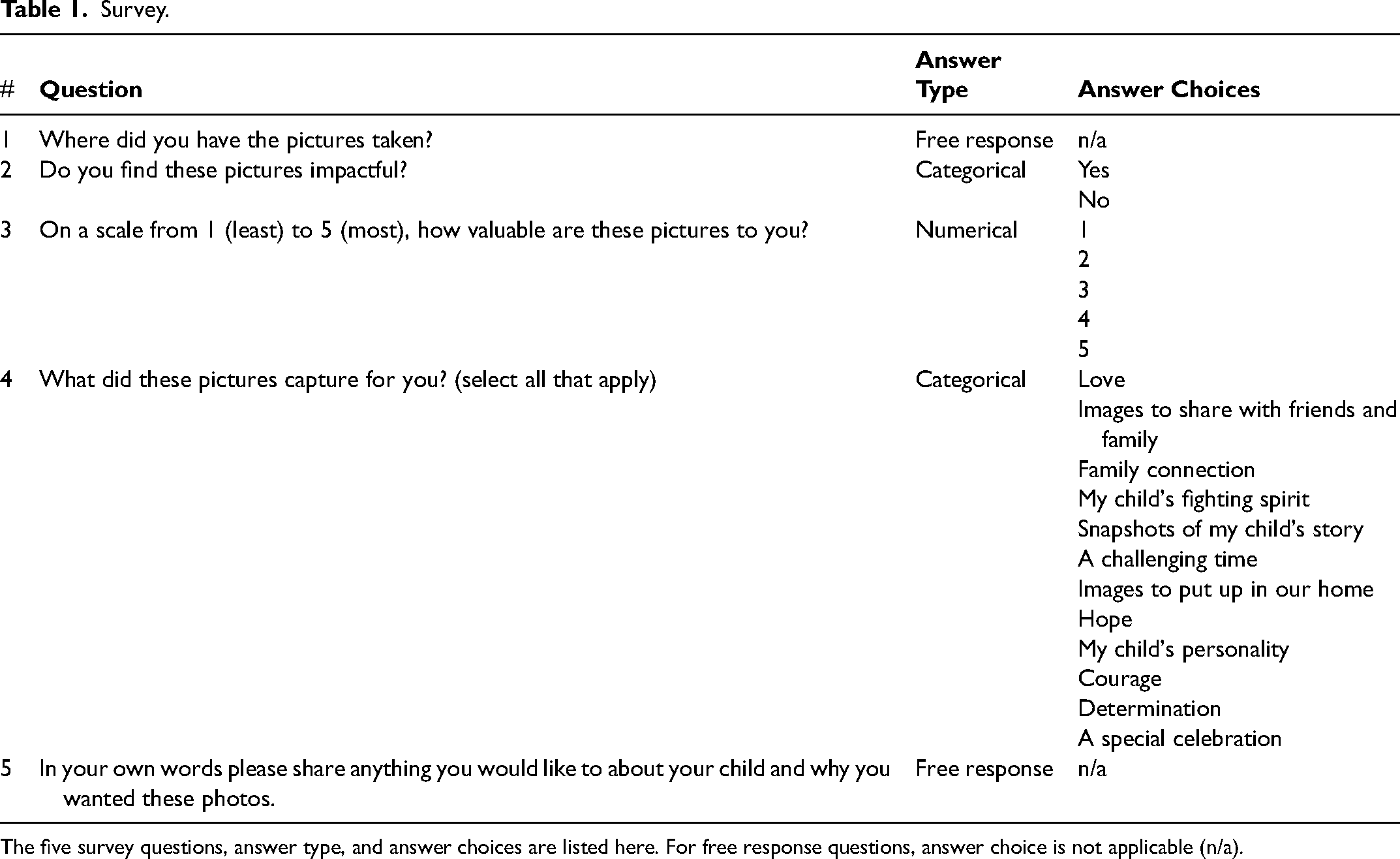
The five survey questions, answer type, and answer choices are listed here. For free response questions, answer choice is not applicable (n/a).
The survey was completed electronically via Typeform™ (https://try.typeform.com). All questions were written in both English and Spanish. At the end of the survey, participants were offered a $25 gift card to MPix™ (an independent picture printing company; https://www.mpix.com) for their participation. Participants were not made aware of this reward until after they had completed the survey.
Participants
In total, 473 families were invited to participate in the survey. 177 parents and/or guardians completed the survey, which was a 37.4% response rate. 130 participants accepted the reward. 47 participants declined the reward. The only demographic information collected from the participants was the institution at which they received Moment by Moment's services. This demographic information is summarized in
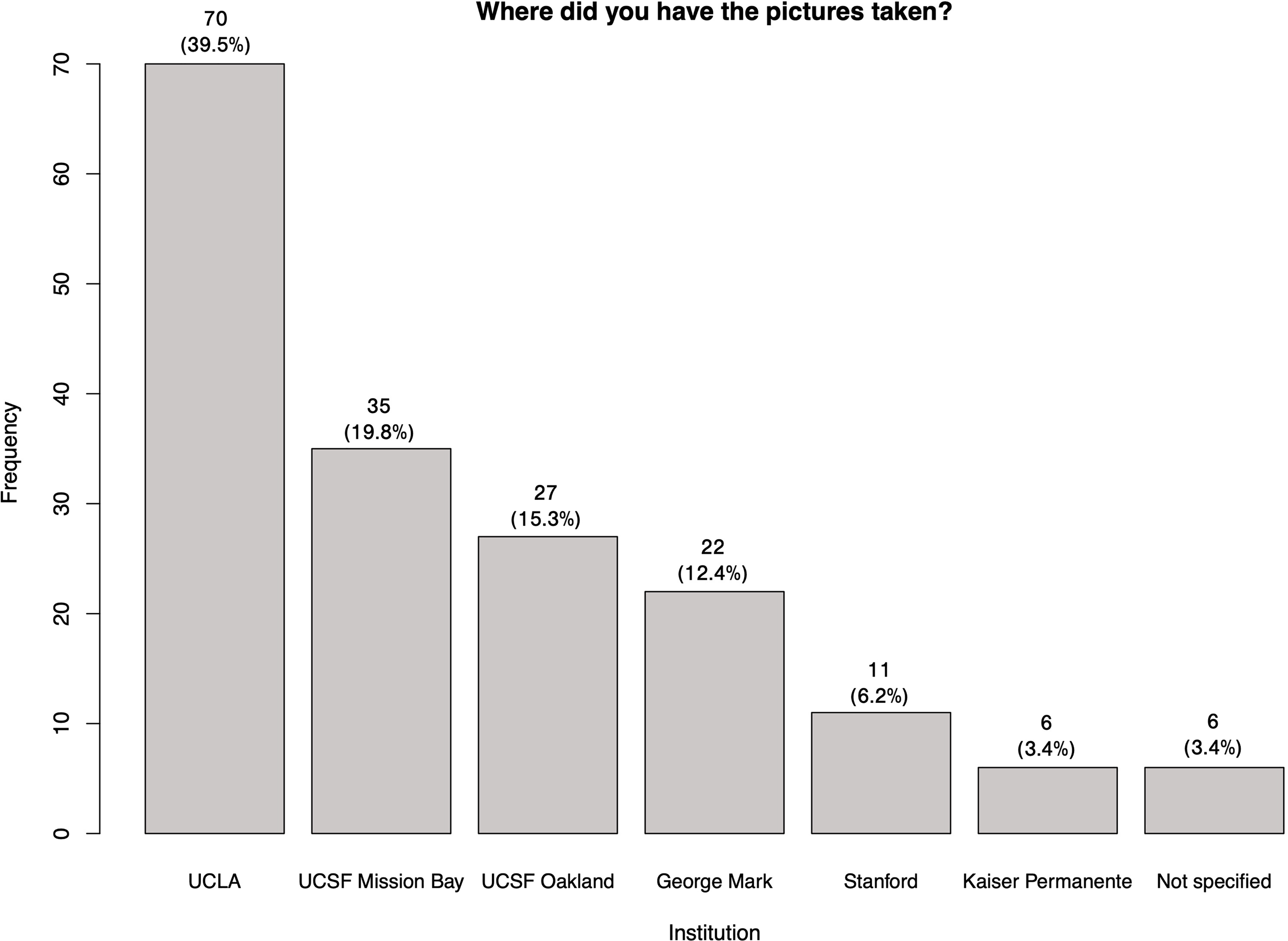
Data Analysis
Results were captured and stored in Typeform™. Figures were generated using R Studio 2022.12.0. Qualitative data was analyzed for prevalent themes/patterns by the authors. Quotes are verbatim except for grammatical corrections and where identifying information was deleted or changed to protect confidentiality without changing the meaning of the statement.
Results
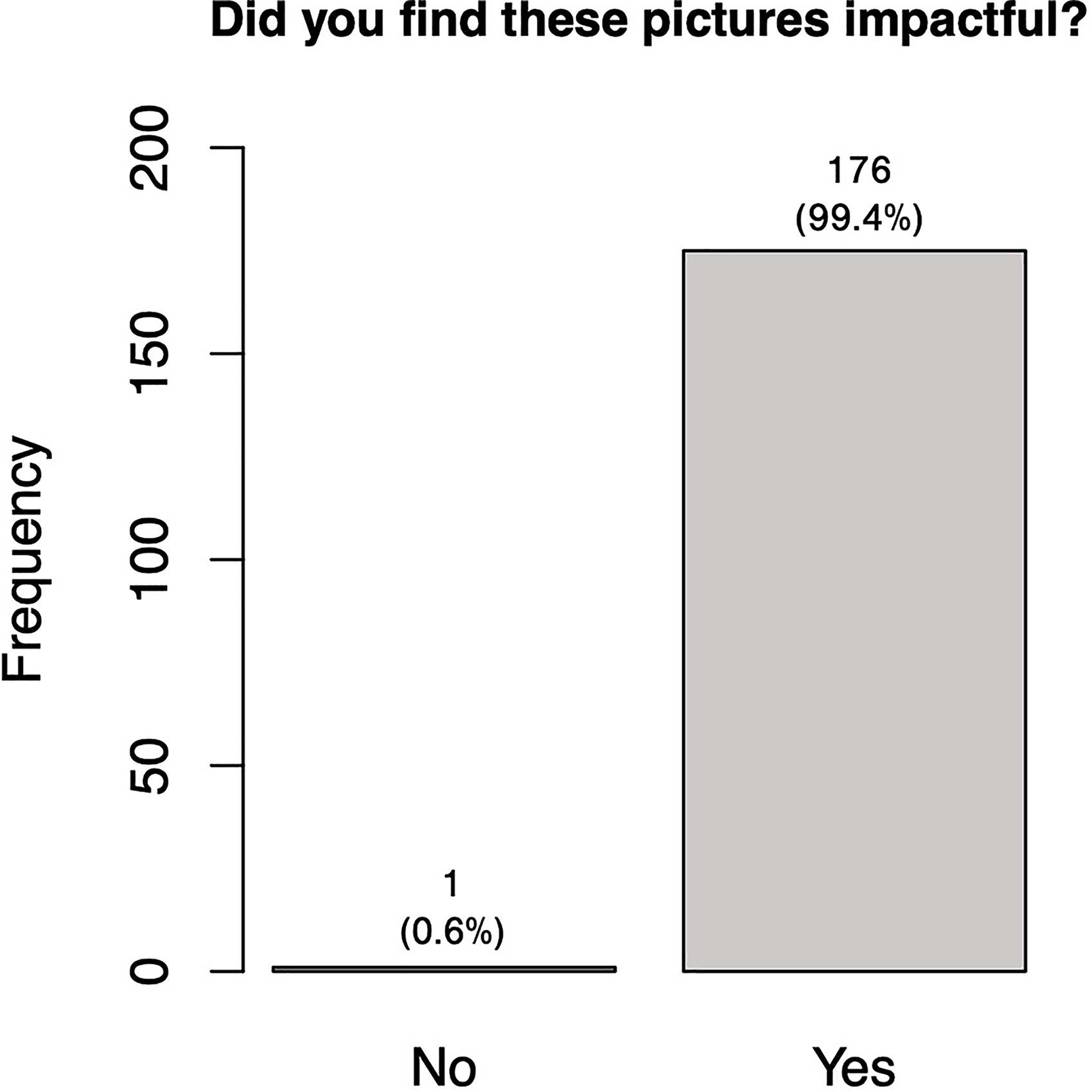
When asked “Do you find these pictures impactful?”, 176 (99.4%) participants answered “yes”, with only a single participant answering “no” (
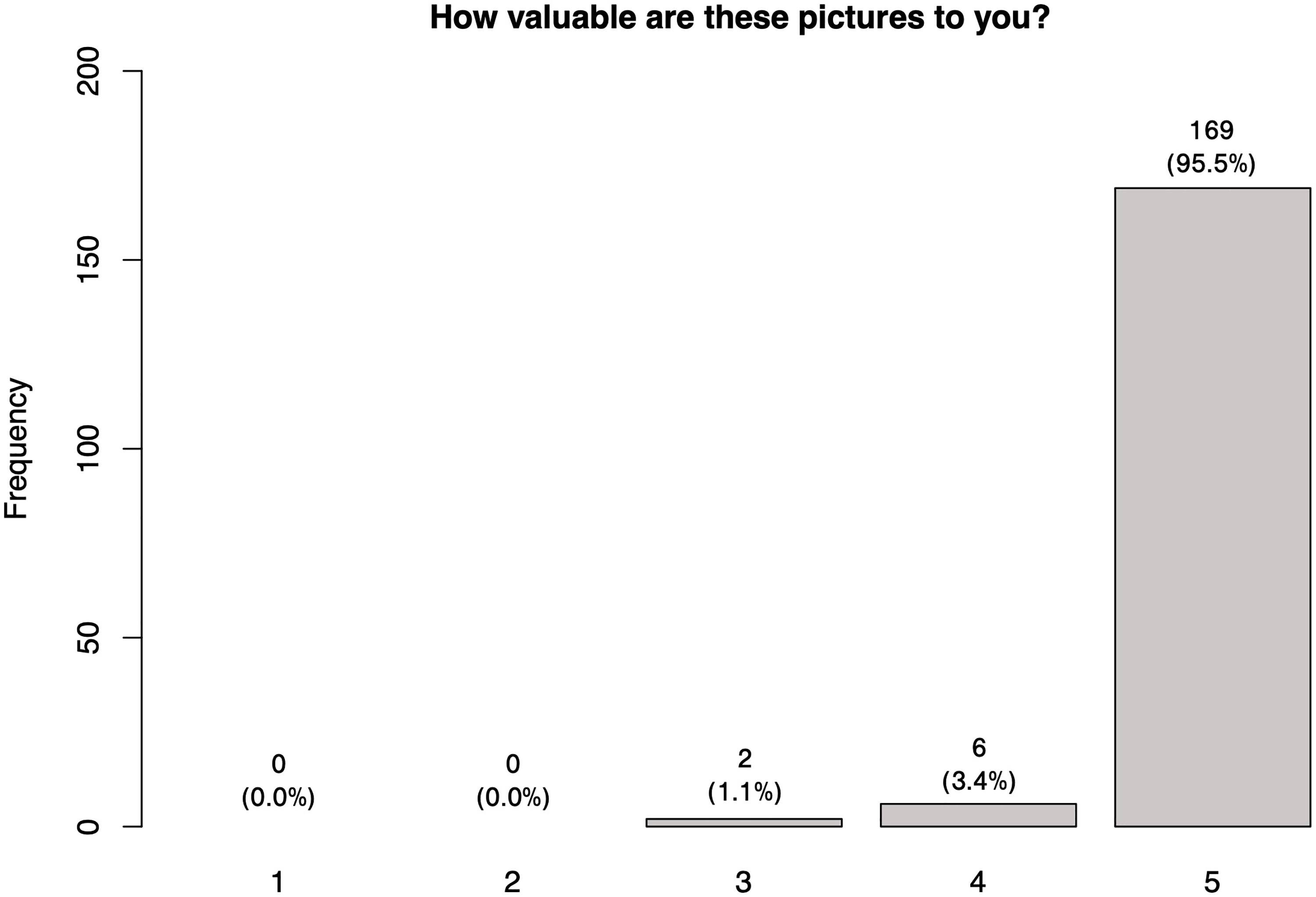
Qualitative analyses generated a dozen major themes, in response to the question “What did these pictures capture for you?” (
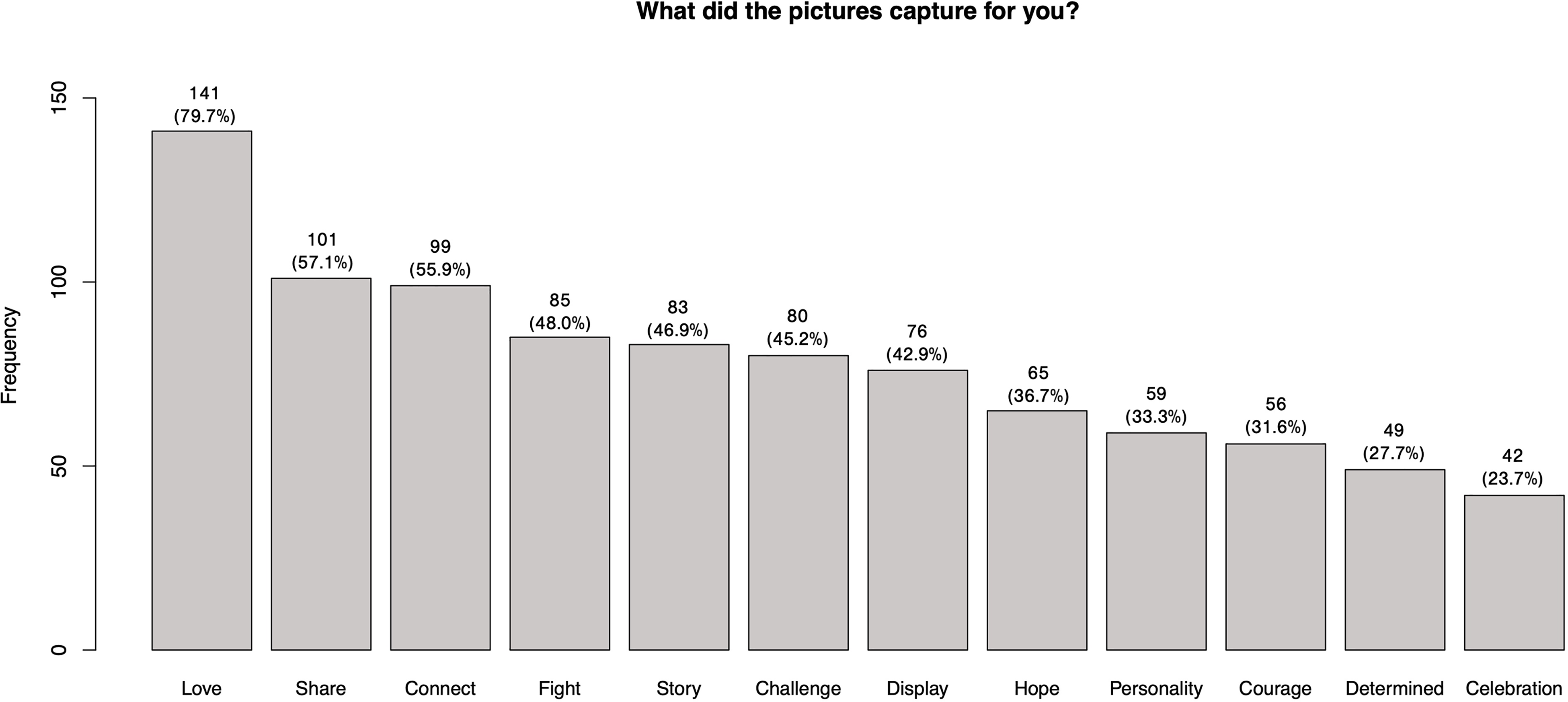
The most prevalent response was “love” (79.7%). This theme is encapsulated well in the following excerpt from a quote provided by one of the families: “When she grows up I want her to look out for the babies and kids going [through] their own battles and make sure she can find the little ways…to always spread the love. These pictures will be her lifelong reminder…”
Other important, interconnected themes included “images to share with friends and family” (57.1%) and “family connection” (55.9%). One family's comments articulate these themes well: “[He] had been in the hospital since birth[.] At almost three months old he was able to meet his brother for the first time and the photographer even caught the first kiss his brother gave him. We are so grateful!” Several participants indicated that these pictures were the very first images that had been captured of their family. Many participants were eager to share these special moments with others, as evidenced by the following excerpt: “…these pictures…were such a gift, truly beautiful and now we have photos to share with all of our family and friends.” Multiple participants indicated that these images would be used as their holiday photos to be sent to friends and family.
Other recurring, related themes we identified were “my child's fighting spirit” (48.0%), “snapshot of my child's story” (46.9%), and “my child's personality” (33.3%). All three themes are exemplified by the following excerpt from a participating family: “[He] is a fighter and has taught us what unconditional love means. His courage and daily effort give us hope. He is a big blessing in our lives. I believe the pictures captured his gentle soul and how much love we feel for each other even if he cannot express it with words.”
There were various other themes identified, including “a challenging time” (45.2%), “images to put up in our home” (42.9%), “hope” (36.7%), “courage” (31.6%), and “determination” (27.7%). Finally, for 23.7% of participants, these pictures captured “a special celebration (birthday, baptism, graduation, etc.) for my child.” Two quotes described what it meant to them to have their child's first birthday photographed. First, “Our daughter was diagnosed with cancer at three months, she took her first steps in front of the nurses in her room. On her first birthday, we had photos taken and it was a milestone in photos we will have to cherish.” Second, “Our daughter turned one, she has been in the hospital since she was a newborn. It was hard to think about her first [birthday] as a celebration…but the photos are beautiful and we are so happy we took what could be a sad time and made it happy.”
Finally, although not explicitly asked of participants, in the free response section, multiple participants voluntarily disclosed the fact that their child had passed away since the photographs of their family had been taken. Their comments suggest that the immortalization of memories in a photograph is a unique and powerful therapeutic tool that aids in the grieving process. One participant stated the following: “This may be the last time we laugh in a long time, our precious son passed away and we really need these pictures to remind us of those smiles.” Another participant echoed their sentiment: “These photos are the only way to make sure I don’t forget and help my memory along. Since I will never get back moments in my life, capturing photos is an important way to gather the moment's details into a picture I will have forever.”
Discussion
Early evidence of creative expression as a therapeutic modality in medicine stems from the disciplines of music, 4 art, 5 and comedy. 6 Yet, photography, which was historically a post-mortem intervention, 16 has recently been implemented and assessed in similar therapeutic contexts as other arts. Initially, self-produced photographs were shown to be efficacious means of exploring and validating the perspectives of both patients 17 and family members. 18 Of late, patients have moved from behind the camera to in front of it. While these professional photography sessions have substantial anecdotal support13,14 and have even been incorporated into end-of-life care guidelines, 15 to our knowledge, our photography impact survey serves as the first quantitative evidence of photography's therapeutic potential. Further, we characterized the nature of photography's impact. For example, we highlighted photography's capacity to foster family connection, which is consistent with previous research in non-photography contexts that supports togetherness with family as a health-promoting factor. 19 Finally, we articulated photography as a story-telling entity, which has been validated in the context of bereavement photography as a valuable grieving tool. 20
We are aware of a few limitations of our project. First, participants were offered a reward ($25 MPix™ gift card) for completing the survey. However, we do not think that this impacted participants’ responses, as participants were only made aware of the reward after submitting the survey. Therefore, any effect of the reward seems negligible on responses elicited prior to knowledge of the award.
Second, 65% of families that received Moment by Moment's services from June 2022 to January 2023 declined to participate in the study. While a 35% response rate is commendable, there is always concern that the population that participated in the survey shares a common motivation for participation that may confound the results. However, the large sample size (n = 177) mitigates that concern. In fact, our sample size is much greater than that of most other studies in the field.8–14,16–18
Going forward, we hope to use this work as a building block from which to conduct further investigation of photography's therapeutic power. For example, we hope to conduct a more formal quasi-experimental study that compares quality of life between those receiving photography sessions and those not receiving photography sessions. For such a study, we would use the Pediatric Quality of Life Inventory™ (http://www.pedsql.org), a 23-item generic health status instrument with parent and child forms that assesses five domains of health (physical functioning, emotional functioning, psychosocial functioning, social functioning, and school functioning). It is extensively validated21,22 including in in-patient settings 23 and has been widely applied as a quality of life metric in relevant literature.4,24,25
Another area of investigation we hope to explore is the medical professional's perspective on photography as a therapeutic modality as has been previously investigated in the context of bereavement photography. 26 This can be conducted in a similar quality assessment survey manner as presented here or folded into the quasi-experimental study discussed above. Regardless of its form, we hope to obtain both the medical professional's objective opinion of photography's impact on their patients as well as the impact of photography on the medical professionals themselves.
Finally, in any future investigations, we hope to expand the demographic information we collect. Of most interest would be understanding the types of illnesses that are represented among the population we serve and how the impact of our services may vary based on this and/or other patient characteristics. Such information would be invaluable in focusing our services on a demographic where our impact may be largest while simultaneously exploring adaptations to our services that may improve our impact in circumstances that may be more of a challenge to us now.
Conclusions
As the science of medicine perpetually evolves, we must ensure that the art of medicine does not lag behind. Our 17 years of experience as photographers for Moment by Moment have given us hope that art still sits at the heart of medicine, and the findings presented here suggest that our previously anecdotal observations are true. We characterized photography as a powerful therapeutic modality for children with life-impacting illness. In doing so, we are hopeful that photography, along with other artistic mediums, will be increasingly incorporated into the palliation of any and all childhood illnesses.
Footnotes
Acknowledgements
The work performed by Moment by Moment Photography would not be possible without the efforts of our photographers, board of directors, and other volunteers. In addition, we would like to acknowledge all the hard work and support provided by those at each of the institutions we serve, including child life specialists, nurses, staff, physicians, and more. Finally, we are grateful for the guidance provided by Dr. Thomas McNalley and Christy Torklidson.
Declaration of Conflicting Interests
The author(s) declared no potential conflicts of interest with respect to the research, authorship, and/or publication of this article.
Funding
The author(s) received no financial support for the research, authorship, and/or publication of this article.
Author Contributions
MH: Conceptualization, investigation, formal analysis, visualization, writing – original draft; KH: Conceptualization, investigation, formal analysis, resources, supervision. All authors have read and agreed to the published version of the manuscript.