




Abstract
This article seeks to explore the notion and strength of community belonging amongst the deaf community in Ireland. The article outlines the results from the online and anonymous survey that took place in June 2020. Three hundred ninety-nine responses were made, and 270 out of them are fully completed and analysed before a commentary is made. Concepts such as the “community” and “deaf community” are briefly theorised to see if they are compatible with the community beliefs held by the respondents. Key issues that are perceived to unite or divide the deaf community include solidarity, cultural affinity, sense of belonging, lack of trustworthiness, feelings of exclusion and dissent regarding leadership. The theoretical concept of ‘sense of community’ adapted is that proposed by McMillian and Chavis (1986), who define it as “a feeling that members have of belonging, a feeling that members matter to one another and the group, and a shared faith that members’ needs will be met through their commitment to being together.” It is envisaged to have the research expanded into specific issues such as the long-term sustainability of the community.
Introduction
This research, entitled Sense of Community – the Irish Deaf Community – seeks to explore the notion of “strength of community” and “belonging” within the deaf community in Ireland. There is a strong perception among members of the Irish deaf community that the community is declining because they notice that the bases, such as the residential schools and deaf clubs that traditionally ensured the continuation of Irish Sign Language (ISL), are dwindling (Cradden, 2018). However, on the other hand, “a” community has been problematised in other studies (see Blackshaw, 2010), and the concept of “deaf community” has been critically discussed (Meulder et al., 2019). The concept of the deaf community is to be discussed within the context of the perceived decline.
For instance, enrolment in residential schools for the deaf has been decreasing steadily since the early 1990s (Mathews 2011). Consequently, the numbers involved in the deaf community's social, sports, and cultural activities have fallen. Changes such as technological advances (Mathews, 2017), the consolidation of educational policies for deaf children in mainstream education (Mathews, 2017), and an increase in individualisation and social mobility (Snoddon and De Meulder, 2020) have been documented as having affected the community membership.
Those concerned with the community's current situation often point to the idea that the benefits of community participation are overlooked or ignored. At the same time, non-participatory potential members struggle with their well-being outside the community. Husting (2019) argues that hearing parents of deaf children are likely to decline the Deaf cultural (and minority status) socialisation approach 1 due to medical influences and advice, which prevents deaf children from accessing sign language/deaf culture and often unwittingly deprives them of positive identity development through shared cultural socialisation.
Several studies indicate that deaf children struggle psychosocially in mainstream education (Nunes et al., 2001, Olsson et al., 2018, Murray et al., 2019). Lack of access to sign language by deaf children can result in adverse effects on their psychosocial abilities (Hall, 2017). According to the research above on the psychosocial effects experienced by deaf children, they are less likely to participate in the deaf community in their subsequent years (Leigh et al., 2020, Singer et al., 2020). Such educational placements often play a crucial part in the sustainability of the community, and placements in schools for the deaf are more likely to lead to regular participation in the deaf community. Placements in the mainstream schools (especially without availing of the deaf cultural socialisation at home) are likely to be less active in the deaf community in the subsequent years 2 .
Kusters et al. (2017) remind us that the gradual decline of traditional sites disconnects many potential members from an essential part of sustaining deaf communities: intergenerational transmission of ontological and epistemological skills. Holcomb (2012) validates the existence of deaf communities as a source of “effective living” for many deaf people as he explains the benefit of having deaf communities: “Accident or not, the foundation for a vibrant social life was laid by these schools, which paved the way for the establishment of a well-coordinated community, equipped to meet the spiritual, athletic, political, cultural, and communicative needs of its Deaf members” (Holcomb 2012, 223–224).
Moreover, the community as a concept in a traditional sense is gradually replaced by different community concepts (Blackshaw, 2010) that might not be widely articulated within the deaf community (Kusters et al., 2017). O’Brien et al. (2019) describe the changing landscape of deaf communities in Britain by stating: “…the experiences of a contemporary deaf community whom, we suggest, is no longer well served by the older models of deaf communities, which were firmly rooted in the institutions of the deaf club and residential schools for deaf children as sites for transmission of cultural values and norms” (O’Brien et al. 2019, 901).
While we can apply some research and commentary on the dwindling number of signing deaf members outside Ireland and such observations to the Irish context (Leeson and Saeed, 2012), the research on how such changes have affected the deaf community cohesion in the Irish context is paltry. The current research attempts to address the gap. This survey and discussion are not intended to be final but to reignite discussions on the state of deaf communities with more future research on specific issues.
Before the online survey was conducted in June 2020 and presented in this report, Matthews (1996) carried out the last and most recent wide-ranging piece of social and descriptive research on the Irish deaf community. Thus, this survey is long overdue, mainly as significant changes have emerged in the Irish deaf community in the last two to three decades. These survey results are not intended to be analysed here at this stage. Still, they will be analysed and discussed after completing the subsequent phases of this survey with community dialogues, focus group meetings and interviews with key organisations in the community 3 .
Theoretical framework
Two main elements need to be discussed. The first element is the concept of the Sense of Community, and the second is the discourse on the concept of the deaf community.
1. The Sense of Community
McMillan and Chavis developed the Sense of Community theory. It is a starting point in understanding how the community takes shape over decades and how its members sense it (McMillan and Chavis, 1986). Describing the concept of community in various contexts may assist the community members in understanding and navigating it to ensure cohesion to protect their interests.
As stated by McMillian and Chavis, the theoretical concept of a “sense of community” is: “a feeling that members have of belonging, a feeling that members matter to one another and the group, and a shared faith that members’ needs will be met through their commitment to being together” (1996, 9).
According to the Sense of Community theoretical framework, a robust and cohesive community will enhance the intense feeling of belonging, increasing the likelihood of long-term emotional relationships and pride in community heritage.
The community's opportunities will enable its members to increase their influence on policies and outlooks and hone their administrative, organisational and volunteering roles; otherwise, the community's opportunities may not be available outside the community. The sense of community can be measured by four themes explained below.
To apply the Sense of Community Index statements, McMillian and Chavis divided 23 statements into four groups: a) membership, b) reinforcement and fulfilment of needs, c) influence, and d) shared emotional connection.
a) membership b) reinforcement and fulfilment of needs c) influence d) shared emotional connection
McMillan and Chavis (1986, 9) stated, “Membership is a feeling that one has invested part of oneself in becoming a member and therefore has a right to belong". They said boundaries of membership could be problematic depending on differing perspectives. They suggested five attributes to be assessed. The attributes are boundaries, emotional safety, a sense of community and identification, personal investment, and a common symbol system. McMillan and Chavis state that if these attributes are put together, one can judge whether one is part of the community or not.
According to McMillan and Chavis (1986), integration and fulfilment “is a primary function of a strong community” (p 13). They said members could expect rewards from the community if there are effective reinforcers within the community, for instance, depending on the status of membership, the success of the community, and the competence or capabilities of other members. They also stated that the community could fulfil individuals’ needs if it effectively prioritises its need-fulfilment activities; therefore, a strong community would be capable of meeting individual needs.
According to McMillan and Chavis (1986), influence is a bidirectional concept (pp. 11–12). One needs to be attracted to the community, and the member must have some influence over what the community does. Influencing within the community, it must be a positive relationship between cohesiveness and the community's influence on its members to conform. It is also acknowledged that there is a tension between conformity and uniformity among members at the individual level, but consensus validation can boost closeness and cohesiveness. They also reminded us that influence could be simultaneous as one individual member can conversely influence the community.
A shared history provides a base for a shared emotional connection. As McMillan and Chavis (1986, 13) state, members must identify with the community's shared history, although they don't need to participate in the historical process. However, they identify several features that may raise or inhibit the strength of the community. These include regularity and quality of interaction, closure to events, shared valent event (experiencing a disaster or a crisis together), investment (personal and financial), the effect of honour or humiliation, and spiritual bond.
It must be remembered that the concept was first mooted by Sarason (1974), who believed the psychological sense of community (PSOC) would provide a strong base for self-definition. However, the concept was not well developed until McMillan and Chavis redefined the concept in 1996. Gusfield (1975) names two distinct communities: proximal and relational. McMillan and Chavis's approach attempted to link proximity and relational communities. Moving away from the relational-community idea, theorists such as Durkheim and Wolff (1964) recognised the possibility of individuals being motivated by specific interests or skills to form a community. They argue that members can form communities without having a territorial base.
Blackshaw (2010) reminds us that community is not often a quantifiable thing despite the attempts of many theorists to measure or describe it. He also mentions that the community concept is ubiquitous but changeable in definition through the ages. Blackshaw (2010) asserts that “hermeneutics 4 and community are two sides of the same coin". Blackshaw reminds us that such interpretations of the community as a concept can be fraught with risks. He cites Heller (1999) to support his case by saying: “Though there is nothing inherently wrong with this function, the practice of hermeneutics is always potentially problematical because it is burdened by a romantic sensibility, which evokes feelings of nostalgia and closeness” (Blackshaw 2010, 1).
Community is interpreted differently by each person making it a problematic notion to describe, other than noting that it is typically considered a positive: “whatever the word … may mean, it is good “to have a community", “to be in a community” (Bauman, 2001). Bauman (2001) urges that the community concept already stands uniquely in our unconscious and is a concept surrounded by its atmosphere. It seems more than just a concept, so the community is hermeneutical; it is used to describe things of the world that are inherently linked by social relationships and to understand these relationships.
He believes we should move away from the utopian or ideological stance of community and engage in a hermeneutical approach, recognising the concept of community as paradoxical and constantly fluid. Yet, he believes that by using hermeneutics, we are enabled to make the world a better place by transforming our contingency into a collective destiny (Blackshaw, 2010, 31).
2. Discourses on the concept of the deaf community
In the theoretical sense, the concept of community has been contested over the past decades. It is pertinent to explore the current thinking among the deaf community members on the concept of community and how they sense it in their realities. The term “deaf community(ies)” is often a focal point or a basis for discussing relevant issues or raising awareness among the public. International, national and local deaf-led organisations
5
often use the term uncritically; to date, such a term has not been critically questioned outside of academia.
Academic discussions are taking place within deaf studies arising from the increasing awareness of the effects of intersectionality, technological advances, and the decline of traditional community sites like deaf schools. These changes may have weakened the community in solidarity and connectedness (Kusters et al., 2017).
Before the survey results can be discussed, one needs to theorise the concept of the deaf community. Previous attempts were to name the community as a monolith or expand the scope to include hearing members (for instance, CODAs). The previous attempts can be exemplified by the “model of deaf community” (Baker and Cokely, 1980), “Deaf community” (Padden and Humphries, 1988), “Deafhood” (Ladd, 2003), and “Sign Language Peoples” (Batterbury et al., 2007). These attempts have considerably aided our scholarly understanding of Deaf Studies and other disciplines. Yet, Lina, a respondent in a research conversation, made an important observation here: “Lina: One cannot forget that sign languages and signing communities are adapting to an ever-changing world, thus whatever generalisations are made about them should be not treated as static, but rather snapshots of particular times and spaces” (Hou and de Vos, 2022, 4).
De Meulder (2019) gave a brief account of how concepts of communities have been transited from the traditional one of the deaf communities to the current one: sign language communities (SLCs) which include ever-increasing non-traditional non-native signers like hearing persons (interpreters, researchers, parents of deaf children etc.).
Baker and Cokely (1980) (quoted in (Napier, 2002) propose that there are four general criteria to meet before members can be accepted into the deaf community, and these criteria are: deaf person, their language, their culture, and minority status. Padden and Humphries (1988) argue that ‘attitudinal deafness’ played a more significant part in deciding the validation of membership as one can decide to be a member or be accepted by other members if one is either culturally deaf or medically deaf. In his book (2003), Ladd suggests that deaf people have something in common beyond national or ethnic borders. Deaf people worldwide share existential and biological facts such as being a deaf person, acquiring sign languages and experiencing oppression. Although he recognises great diversity within deaf communities, he claims the principles of Deafhood unites them.
However, Kusters and de Meulder (2013) point out that Deafhood seems an essentialist and teleological element – therefore, it privileges sameness over difference (Kusters and De Meulder, 2013). Kusters and Friedner (2015) strongly critiqued previous thoughts on deaf culture as a basis of the deaf community. They argue that deaf people produce these worlds through their local, regional, and national epistemologies.
Therefore, it is clear that “the deaf community” as a theoretical concept can be challenging to pinpoint. Still, this research attempts to capture the sense of community felt by members of the Irish deaf community after experiencing the supposed decline of such facilities or a sense of disconnectedness. Echoing the advice given by Kusters and Friedner (2015) above, this survey focussed on the island of Ireland and a few respondents abroad with strong links to Ireland.
Previously, Irish references to the definitions of the Deaf community were often uncritically examined or left unproblematised. For example, Mathews (2017) refers to the definition of the deaf community in Ireland, which relies on the literature on the social model of deafness with a strong emphasis on the d/Deaf dichotomy (p. 3–5). Leeson and Saeed (2012) view the Irish Deaf community from a linguistic perspective, significantly showing how the ISL was evolved and been handled internally and externally. Like Mathews (2017), they recognise that the composition of community memberships is changing over time. For instance, an increasing number of hearing people gain reasonable skills in ISL and participate in community events more frequently than before. Matthews (1996) did not critique the concept of the deaf community as it relied heavily on previous literature such as Higgins (1980), Baker & Padden (1978) and Padden (1988) for defining the community.
These authors were prominent in championing signing fluency and regarded the level of hearing loss as insignificant as a barometer for being a community member. The questionnaires by Matthews (1996) have questions which focus on the frequency of community involvement or activism – for instance - by asking respondents how often they went to the deaf club or community events; however, they did not ask the respondents directly whether they identify themselves as deaf community members or have an affinity with the community critically examined. Therefore the current survey provides the opportunity to understand the feelings of those who regard themselves as community members. To my knowledge, this is the first research attempt in this regard in Ireland, possibly in Europe.
Despite the complexities in clarifying the definition of the community, the community as a concept can be a powerful catalyst for achieving socio-political gains. O’Brien (2017) reminds us to recognise that “many deaf signing people do, indeed, feel part of a “deaf community” (O’Brien, 2017). Such recognition is a vital part of strategic essentialism 6 tactics to strive for substantial equality for deaf people. The Irish Sign Language Act 2017 7 is an example of one of many achievements in which the Irish deaf community was the common dominator (Conama, 2021). Healthwise, several research studies are showing how beneficial being part of the community can be for deaf members who wish to avail of its benefits (Chapman and Dammeyer, 2017). This researcher believes Sense of Community as a concept is the best starting place for the theoretical base, and its index of questions is used here.
Declining community participation
Having covered the theoretical framework above, the issue is the widespread perception of community decline and its relevance to the Sense of Community. The decreasing participation rate in deaf communities was indirectly discussed in the United States (Padden, 2008) and Australia (Johnston, 2006). This decline is often accompanied by community concerns about the mental well-being of community members. This perception is supported by international studies in the Global North countries, such as New Zealand (McKee, 2017) and Canada (Snoddon and De Meulder, 2020). This issue is also one of well-being and welfare, not only for deaf people but also for their immediate families and the state; it has been revealed in the UK and the US that there has been a dramatic increase in the numbers of such people seeking help from the mental health services (Kuenburg et al., 2016, Leigh et al., 2020).
Many commentators often regard traditional deaf clubs as the barometer for community participation (Padden 2008; O’Brien et al., 2019). As early as 2003, Matthews and Cave (2004) noticed that community cohesion, especially participation in deaf clubs in Ireland, declined. In Britain, in a study on the changing effects on the deaf community in a specific location (Bristol), a mental health worker respondent estimated there would be massive growth in the number of deaf people seeking help in the mental health sector (O’Brien et al., 2019, 912). Padden (2008) recognises the positive contributions of the deaf club to the mental well-being of its members, as clubs provide a place of respite where they find companionship after a long day of being isolated at work (or home 8 ).
Interestingly, with the decline of deaf clubs as the central hub for the community participant, there are incidents of competing physical spaces other than Deaf clubs (Eckert, 2010). Inevitably, such temporary territories as Eckert identified could not match “the brick-and-mortar” versions. As quoted in Padden (2008), Leach (1999) suggests that such traditional places are lost, and large-scale disengagement and social apathy are likely consequences for the communities.
Methodology
Despite the vexing complexities of describing the concept of community, the Sense of Community Index (SCI-2) 9 is an ideal and ready-made tool to gauge the mood of community members and provides a basis for further community dialogues on how members sense their membership and what hopes they have for the community.
I opt for a mixed-method approach. Firstly, for a qualitative approach to analysing the survey results and for this research, I adopt the stance of hermeneutic phenomenology (Bynum and Varpio, 2018), 252-253). This has three features:
Its interpretive nature and focus on lived experience. The inclusion of researcher experiences in the processes of data collection and analysis. The dynamic, thoughtful process of reflecting and writing that guides data analysis.
These features shape what we mean when we say: hermeneutic phenomenology. Since I consider myself an active member of the deaf community in Ireland, the usefulness of this method is that I have to acknowledge my own experience and knowledge; it enables me to reflect and share my subjectivity during data collection and analysis.
While the arguments for a change in the conception of the deaf community to Sign Language Communities (SLC) are beyond a reasonable doubt, I use the traditional “deaf community” to reach many potential respondents because the concept of SLC is not widely used or understood outside of academia.
Regarding the survey instrument, this researcher used the Sense of Community Index 2 in this anonymous online survey. The survey instrument designed for this project begins with the question, “How important is it to you to feel a sense of community with other community members?” This central question is followed by 23 statements from the Sense of Community Index (McMillan & Chavis, 1986), covering many issues, including trust, fitting in, interdependence, and leadership. Respondents rated these statements as “extremely important", “very important", “somewhat important", “slightly important", “not at all important", or “prefer not to be part of this community". The demographic variables included in the analysis were level of fluency in ISL, gender, age groups, educational attainment, geographical location, sexual orientation, and socio-economic class. This was decided based on the anticipated number of expected responses (around 100 responses).
The response options deviate in two ways from McMillan and Chavis’ (1986) original Sense of Community Index. Two more options were added to facilitate the translation from English to ISL, and the order of responses was reversed 10 . Translation from English to ISL cannot be done literally; it has to be done figuratively, taking cultural and linguistic meanings into account (Young and Temple, 2014).
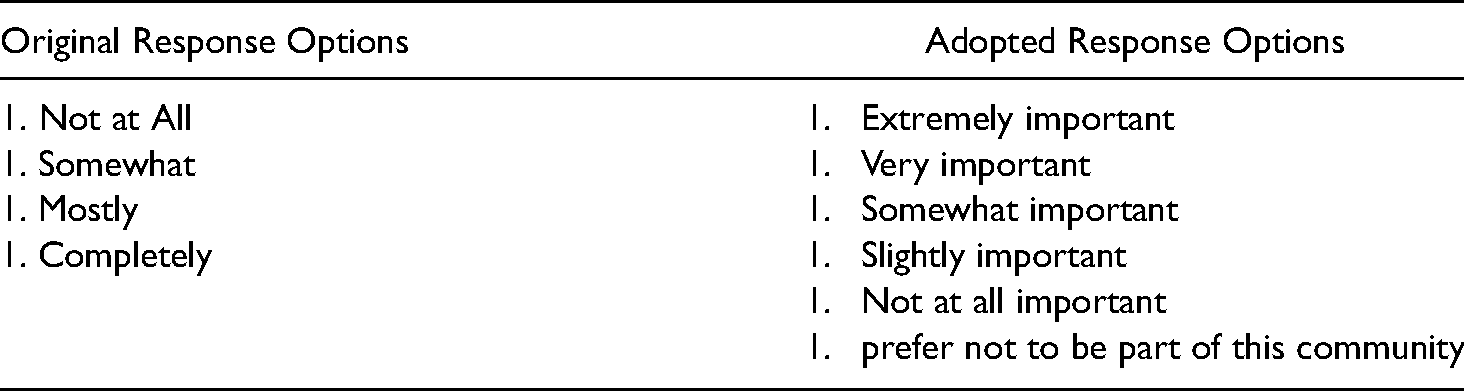
For the rest of the 23 statements, I use the response options: Fully Agree, Mostly Agree, Somewhat Agree, Not at all, Not sure. Because of the adaptations made to the response options, this researcher does not intend to use the scoring of the SCI-2 and prefers to focus on the qualitative aspect of responses.
Ethical approval was obtained from the university's Research Ethics Committee. The survey, which used Qualtrics software, was live for the month of June 2020. Respondents can access the survey through several devices such as mobile phones, tablets, and computers. Social media channels were used to inform potential members of the deaf community of its existence and encourage participation.
The anonymity of the respondents was maintained by switching off their IP address recording automatically, and the respondents did not give their names or specific addresses. Therefore, respondents can't be identified easily. The Qualtrics software has security settings to anonymise responses, prevent multiple submissions, and prevent indexing. The risk of sending multiple responses by the same respondent is very low if one uses these settings. A unique number is assigned to each respondent.
This researcher translated 11 each statement into the ISL via video and uploaded it to Qualtrics. There was no report of any significant difficulty with the survey by the respondents.
Finally, to gain more significant insights into the issues raised in the survey, this researcher shared the initial summary results with members of the deaf community via three community dialogues 12 conducted using a Zoom webinar. An in-depth analysis of results will be provided when results are shared with community dialogues, focus group meetings and key community organisations in future research.
Results
There were 399 responses to the survey in June 2020. However, 129 (almost one-third of all responses) were not filled completely, and three refused to consent, preventing them from completing the survey. It is speculated that people might have been curious to see what the survey was or started the survey and then opted out and decided to finish it off at a later stage or not. Sixty-eight per cent of respondents (n = 270) gave consent and completed the survey in full. For unknown reasons, 5 of the total responses (2%) did not identify themselves in demographical details. Therefore, the number of responses is reduced to 265 for demographical analysis, and the total 270 responses can be used in analyses without reference to the demographical detail.
It is difficult to determine the response rate for this online survey because it went live on many applications, including Facebook, Twitter, and Vimeo. However, all videos are from one base – Vimeo – so it is possible to gauge the videos’ level of engagement. There were 1150 impressions 13 on the videos uploaded on the 8th of June and 328 on the remainder of the videos uploaded on the 22nd. Against the total impressions of 1,478, the response rate (399 responses) can be reckoned at 27%. This rate is marginally lower than the average response rate to the online survey (29%) (Lindemann 2021). While this researcher has no way of authenticating the community membership of respondents, it is generally estimated that 5000 deaf persons use ISL daily. For every deaf signing person, there should be eight to ten hearing persons with different degrees of fluency in signing ISL (De Meulder, 2019, McKee, 2017).
As for the profile of the respondents, 81% (n = 225) identified themselves as deaf, 63% as female (n = 167), and 86% as heterosexual (n = 228). As for the geographical base, 42% were based in Dublin (n = 111). Regarding educational attainment, respondents from the ABC1 14 group with third-level qualifications predominated in the responses. Forty respondents identified themselves as hearing but regarded themselves as community members. Specific categories can be seen in the following sections below, and here is the table that shows how the respondents identified themselves: Table 1.
How respondents identified themselves.
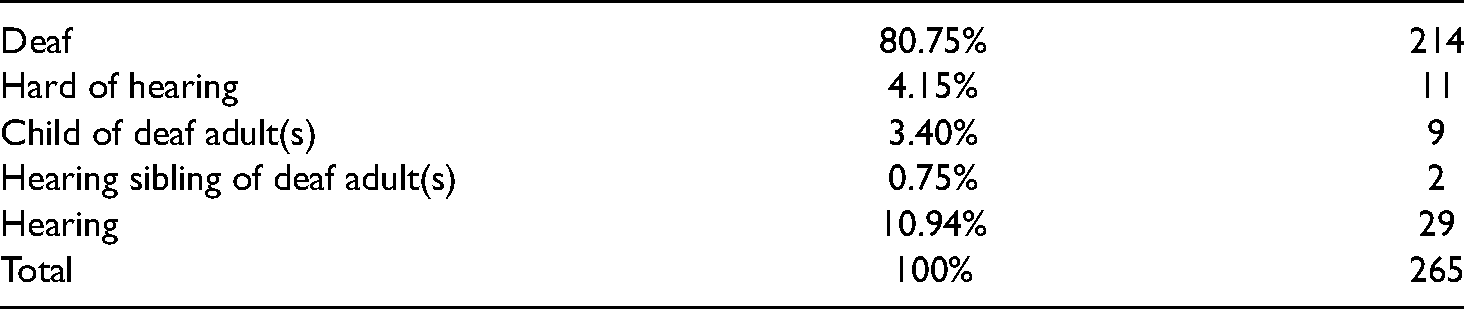
However, the response rate has to come with a caveat for such age groups: The age groups under 30 and over 65 were significantly under-represented – they accounted for 19% (n = 51). Therefore, in the representation, those who identified as well-educated, heterosexual, deaf, and belonging to the middle class were predominant and slightly less than half were likely to live in Dublin.
Central Question:
The survey's central question was the following: “How important is it to you to feel a sense of community with other community members?” Here is the graphic for the 270 responses: (Table 2).
Central question.
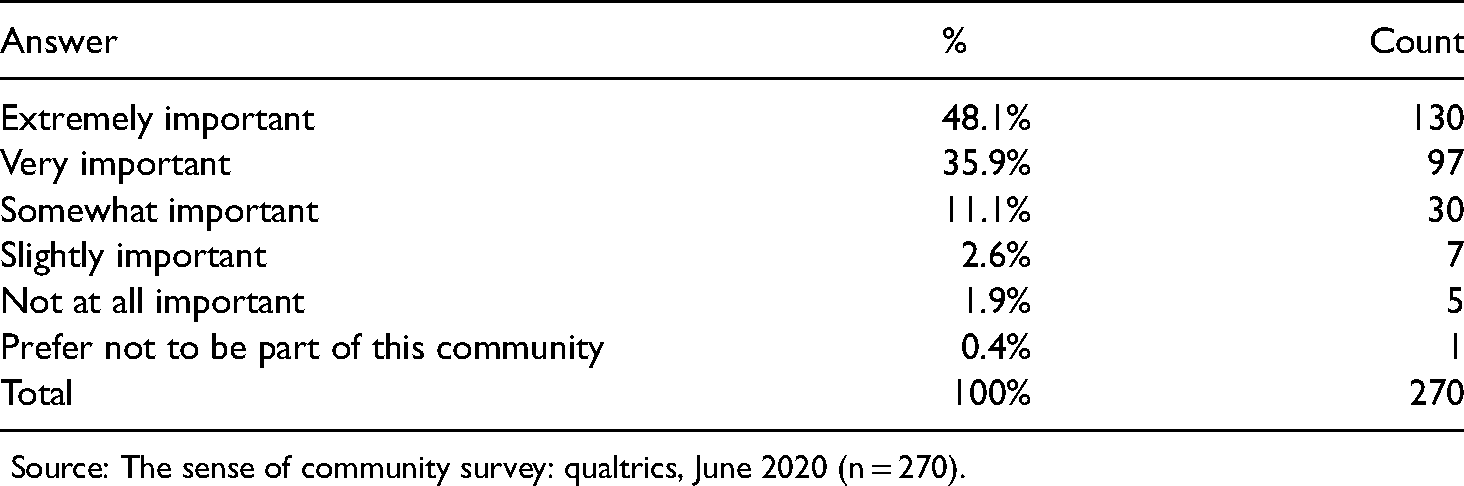
Source: The sense of community survey: qualtrics, June 2020 (n = 270).
Almost 84% of the respondents regarded the sense of community with other community members as important, ranging from “extremely” to “very important". The result alone validates the existence of transcendent linking with other community members through validation but requires further investigation. Responses to other questions will further clarify the picture later on.
Interestingly, the percentages were still the same when the responses were confined only to those who identify as deaf or hard-of-hearing (excluding other identities). There are 225 deaf and hard-of-hearing respondents. Regarding the specific variable, fluency in using ISL, those who regarded themselves as fluent in ISL (n = 157) came to regard the sense of community as extremely important – it rose to 57%. Yet, regarding other variables such as gender, sexual orientation, educational attainments and age, the percentages of responses changed significantly across variables.
Female responses tend to view the sense of community as more important than their male counterparts. Those who preferred not to reveal their gender or clicked Other” regarded the question as extremely important (Table 3).
Central question.
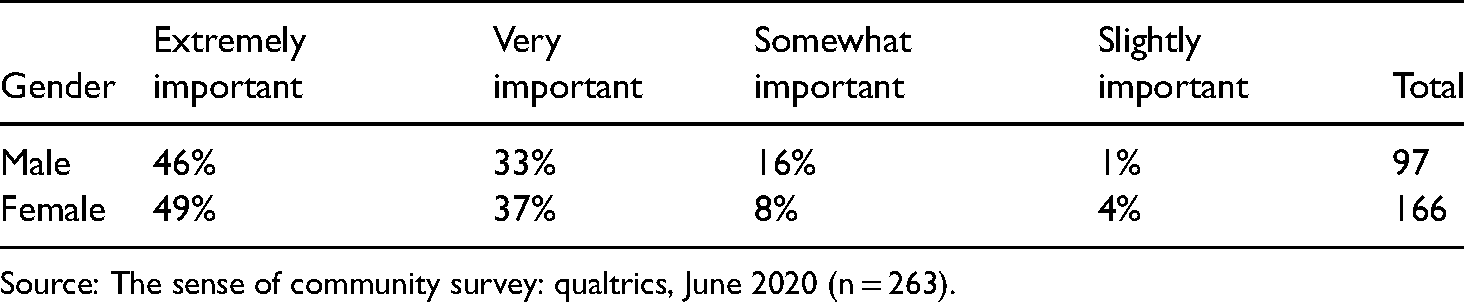
Source: The sense of community survey: qualtrics, June 2020 (n = 263).
Concerning sexual orientation, the percentages change pretty significantly, reflecting how a significant minority within the community, LGBQTI + , feel in terms of closeness. It is clear that the sense of community is not as strong as it is for heterosexuals (Table 4).
Central question.
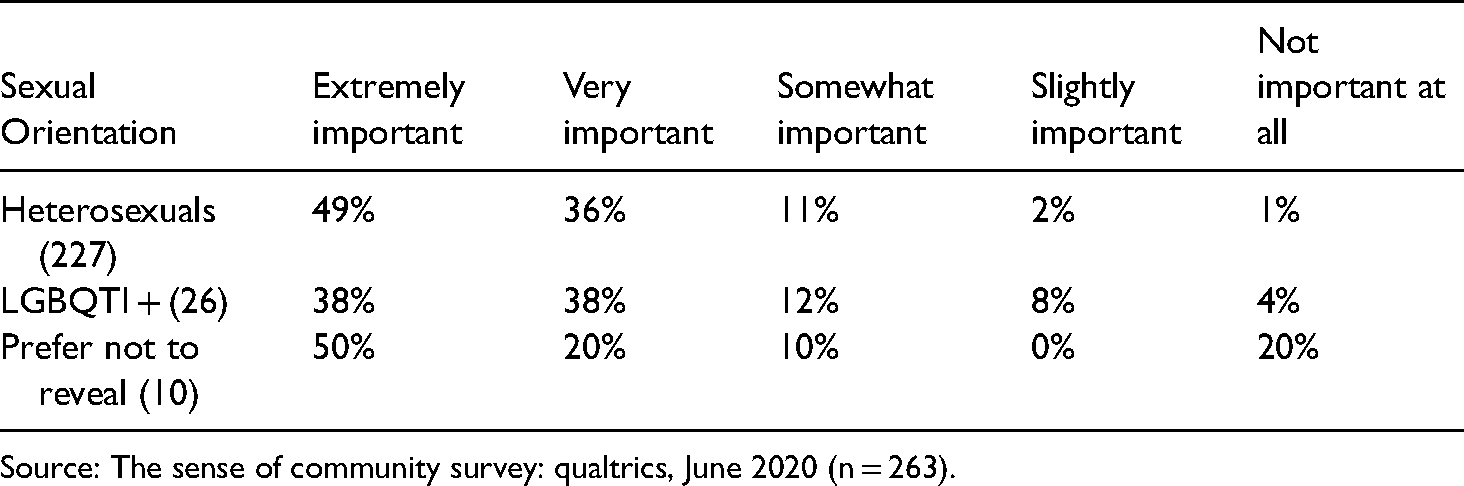
Source: The sense of community survey: qualtrics, June 2020 (n = 263).
The group who identified themselves in the socio-economic status group ABC1 (n-151) responded to the central question robustly, and 84% of this group responded as “extremely important” and “very important". Education-wise, 155 respondents with third-level qualifications (out of 183 respondents in this group) regarded the sense of community as extremely important or very important.
As for the age groups, 214 respondents in both age groups (31–49 years old and 50–65 years old) made up almost 81% of all respondents who identified themselves in this survey. Their collective sense of community is more robust and transparent, and 96% of them returned answers ranging from “extremely” to “somewhat” important.
This analysis of the survey results on the central question shows that the sense of community is robust among the respondents. As for the under 30s age group, despite the small number of respondents, they held a decisive view of the sense of community, as 86% attached importance to the sense of community. Concerning the over-65s group, the percentage returns as 92%. The following table details the rest of the statistics: Table 5.
Underrepresented groups:
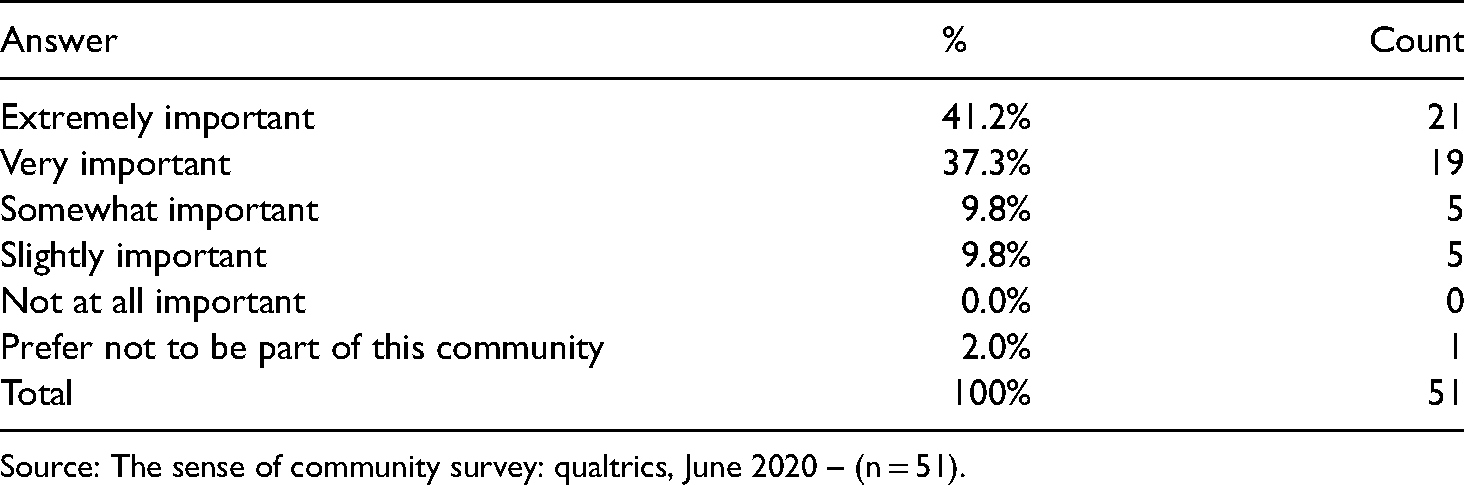
Source: The sense of community survey: qualtrics, June 2020 – (n = 51).
It is clear that those respondents – especially those who regard themselves as fluent in ISL and deaf/hard of hearing – gave the most robust answers regarding feeling a sense of community. However, the robustness became less prevalent when analysing different variables. This less robustness is noticeable regarding sexual orientation, age groups, and geographical locations.
However, a caveat is required as the under-30 and over-65 age groups are not adequately represented here. Another caveat is applied to the educational attainments as they paint a stunning picture: most respondents had received university or third-level qualifications. Especially among those who regarded themselves as fluent in ISL and deaf/hard of hearing, 68% (n = 140) of them received university or third-level education. This information skewed the representativeness further because other research surveys revealed a different picture of educational attainments (Coogan and O’Leary, 2018). In Coogan and Leary's research (2018), less than one-fifth of deaf women respondents have completed a bachelor's degree. Another caveat is applied to the socio-economic groups, as the respondents had unusually high returns of identifying themselves in the ABC1 group. Traditionally, Irish deaf communities are not well represented in this group, judging by several research projects into the employment and educational attainments of deaf people (Napier et al., 2020). For instance, according to Conroy (2006, quoted in Napier et al., 2020, 33), 55% of the deaf respondents (n. 354) “were concentrated in lower level clerical and manual posts with low levels of pay"; therefore, they can be considered as “working poor".
Because of these variables’ inadequate representation, representativeness must be handled carefully here. Such possible inadequate representation needs to be investigated. The researcher has no way of verifying the responses, but it does leave an impression, even for the respondents here, that they are over-representative in these categories. In future research, one must figure out how to solicit responses from community members who are not in the upper social classes or have not benefited from higher education.
Nevertheless, the survey has stimulated further interest in how the sense of community is felt across several variables. It can also help researchers understand how respondents view the deaf community in Ireland and how it is viewed within and outside. By any standards, 84% of overall responses to the question as “extremely important” or “very important” is noteworthy. Having covered the main question, some of the 23 statements that responded with differing degrees of agreement will be discussed here. It is intended to analyse the differences as described above in future research. For the sake of brevity, not all results for all 23 statements will be displayed and analysed here. Selected statements will be used and commented on here (Table 6).
Membership.
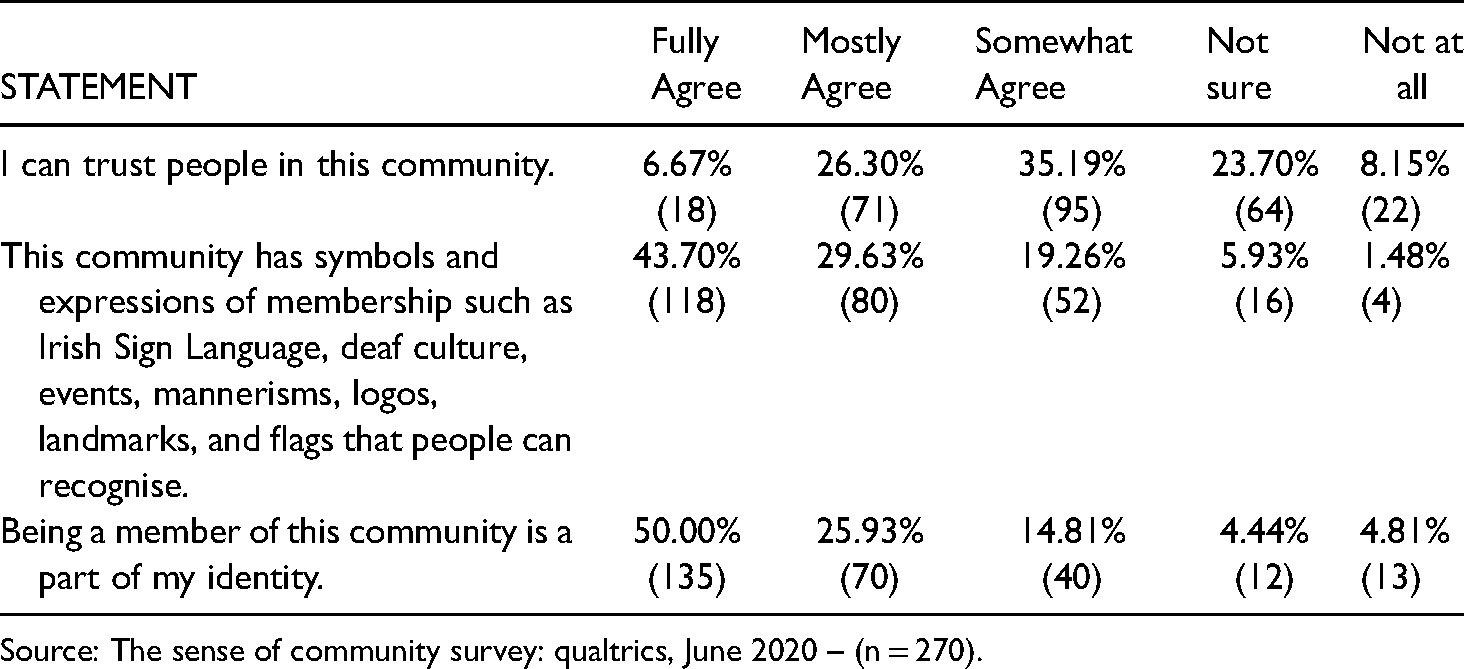
Source: The sense of community survey: qualtrics, June 2020 – (n = 270).
Membership
An average of 60% have expressed that they either fully or mostly agree with these statements concerning membership. Again, trustworthiness in the community is an issue, as 32% of the respondents expressed doubt about being able to trust people within the community. Yet, familiarity with the community is vital for most respondents—over 90% fully, mostly, or somewhat agree that the community has common symbols or expressions of membership. Boundaries are not identified in these statements, but from an individual point of view, it is also clear that some respondents (9%) do not feel it necessary to be part of the community. It is interesting to note that more than 90% of the respondents regard the community as a source of their individual identity, and almost 87% claimed that they invest their personal efforts into being part of the community.
McMillan and Chavis (1986, 9) suggest that membership is an investment for a person to avail five attributes: boundaries, emotional safety, a sense of belonging, personal investment and a common symbol system. There is no surprise in this survey regarding who returns a robust affirmative to the value of membership in the community. Several sources can support this observation. Holcomb (2012) reminds us that deaf signing persons living in the phono-centric society of the United States would regard the membership of the community as a source for “effective living". Emery (2009) refers to the fact that Britain being a phono-centric nation has implications regarding the struggle of British Sign Language users to claim their basic citizenship rights. There is evidence that homogamous relationships are proof of deep personal investment, and such chances for such relationships are made possible due to the existence of community (Abedi et al., 2018, McLaughlin, 2012, Braun et al., 2020) (Table 7).
Influence
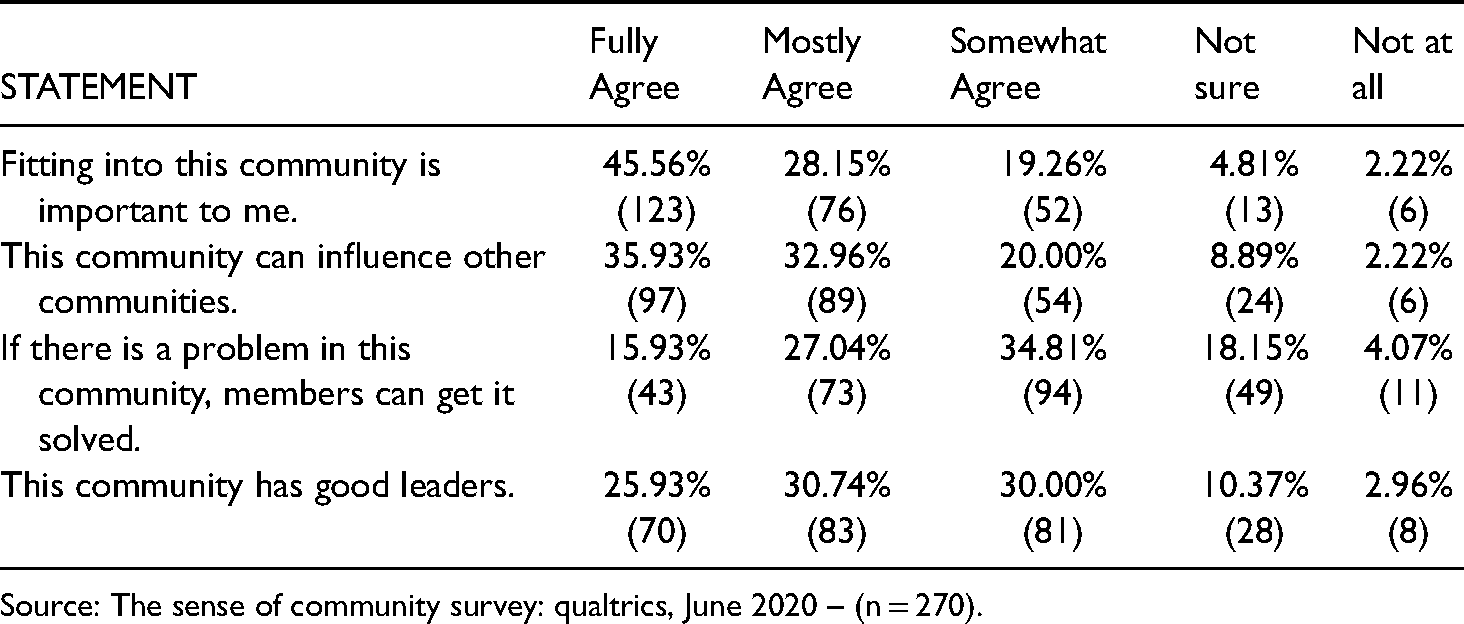
Source: The sense of community survey: qualtrics, June 2020 – (n = 270).
Influence
Almost 93% of the responses regarded “fitting in” in the community as a vital source of their bidirectional influence. Similarly, they are also somewhat optimistic that their community can influence other communities. Yet approximately 11% felt they do not have much influence over the community. Such a contrast between these respective statements requires further investigation. There is a good level of confidence among the respondents in the community's ability to solve a problem, so there is a general consensus on the presence of good leadership within the community, with only 13% expressing doubt or not agreeing with the statement on good leadership. Yet, it is noticeable that 68% felt optimistic about fitting in but became less confident regarding community leadership and its ability to solve community issues. This issue raises an interesting topic. Diminishing confidence in community leadership could be more prevalent when analysing and categorising answers from members of diverse groups.
McMillian and Chavis (1986, 11) remind us that influence is a bidirectional concept. They refer to the fact that for a member to be attracted to a community, the member must have an influence of some kind on the community. This fact leads to a notion that this apparent contradiction (influence and attractiveness) works simultaneously and makes it possible for members to conform and be dominated. Yet, it has to be remembered that conformity is not necessarily synonymous with loss of personal choice (p11). McMillan and Chavis urge us to remember that communities must recognise individual differences and preferences to ensure the bond between the community and its members. The responses to the statement under the element of influence appear to be more varied than other elements. The middle column, “somewhat agreed", dominates here, suggesting the influence element requires more investigation. Explanations for these varied responses are needed in future research.
Decreasing participation in the “brick and mortar” part of the community can be a possible example of members’ lack of influential power. Increasing bureaucratic work at the micro-level can be a factor. This feeling can be exemplified by the experience of a woman volunteer club committee member who strictly adhered to its rules without being adequately rewarded, seeing the work as a hindrance or a chore. She said as a consequence, very few people were willing to take up these roles (Cunliffe, 2020). The binary dichotomy of Deaf and deaf identity seems not adequately addressed at the community level. Such a failure may be a possible hindrance for new potential members (Table 8).
Reinforcement of needs.
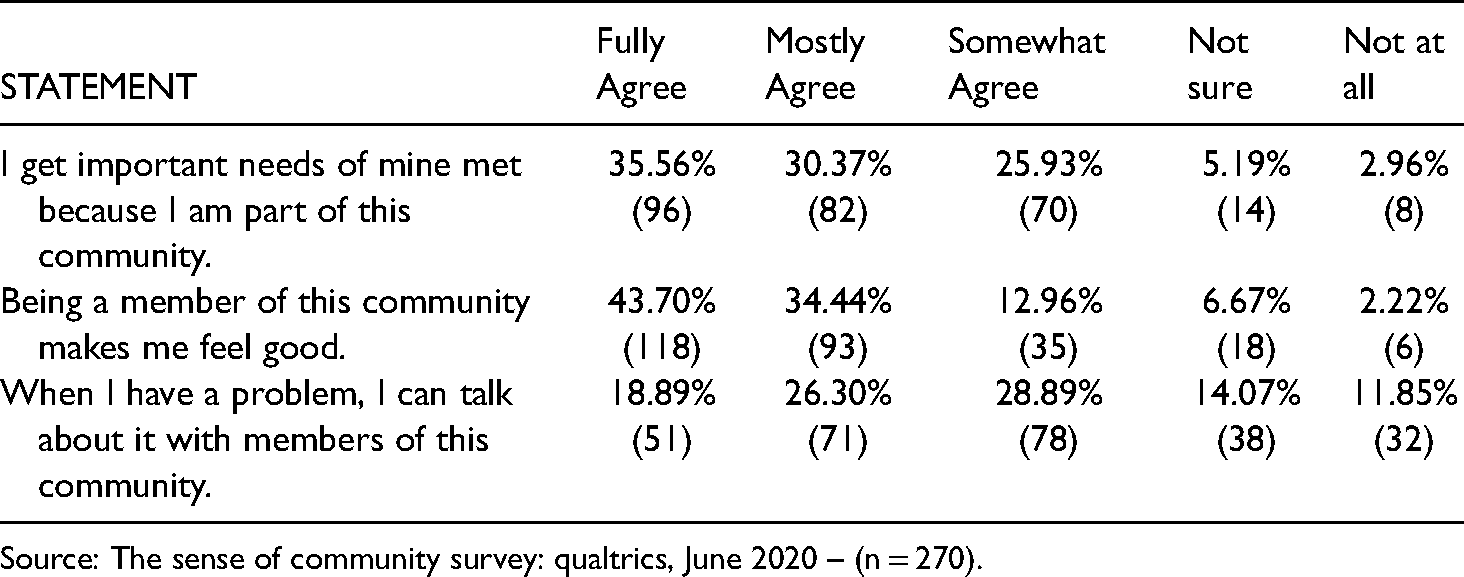
Source: The sense of community survey: qualtrics, June 2020 – (n = 270).
Reinforcement and fulfilment of needs
On average, 63% fully agree or mostly agree with these statements, indicating a strong sense of community that fulfils their individual needs. However, on the two responses (not sure and not at all), the average percentage for the first statements hovers around between 9% and 10% of the responses but rises to 26% for the last statement. The spike in these categories implies a lack of trust among members when discussing a problem. It is hard to know if the problem is perceived as a personal one or a community one. This issue needs to be investigated further.
As McMillan and Chavis (1986) point out, reinforcement is the key here. They argue that the competence of community leadership plays a huge factor in whether members gravitate towards the community or not. The last statement in Table 6 shows that such gravitation is more of a neutral state. However, most respondents agree that they feel good about being a member and firmly believe they share similar beliefs and needs. McMillan and Chavis (1986) state that rewards such as the successes made by the community can be a powerful reinforcement. The Irish Sign Language Act 2017 is an example that has significantly caused membership to gravitate to the community (Conama 2019). However, McMillan and Chavis (1986) said that the competence and capabilities of the community to meet needs is a crucial factor here. The varied response rate in this part shows a healthy amount of hesitation (Table 9).
Shared emotional connection.
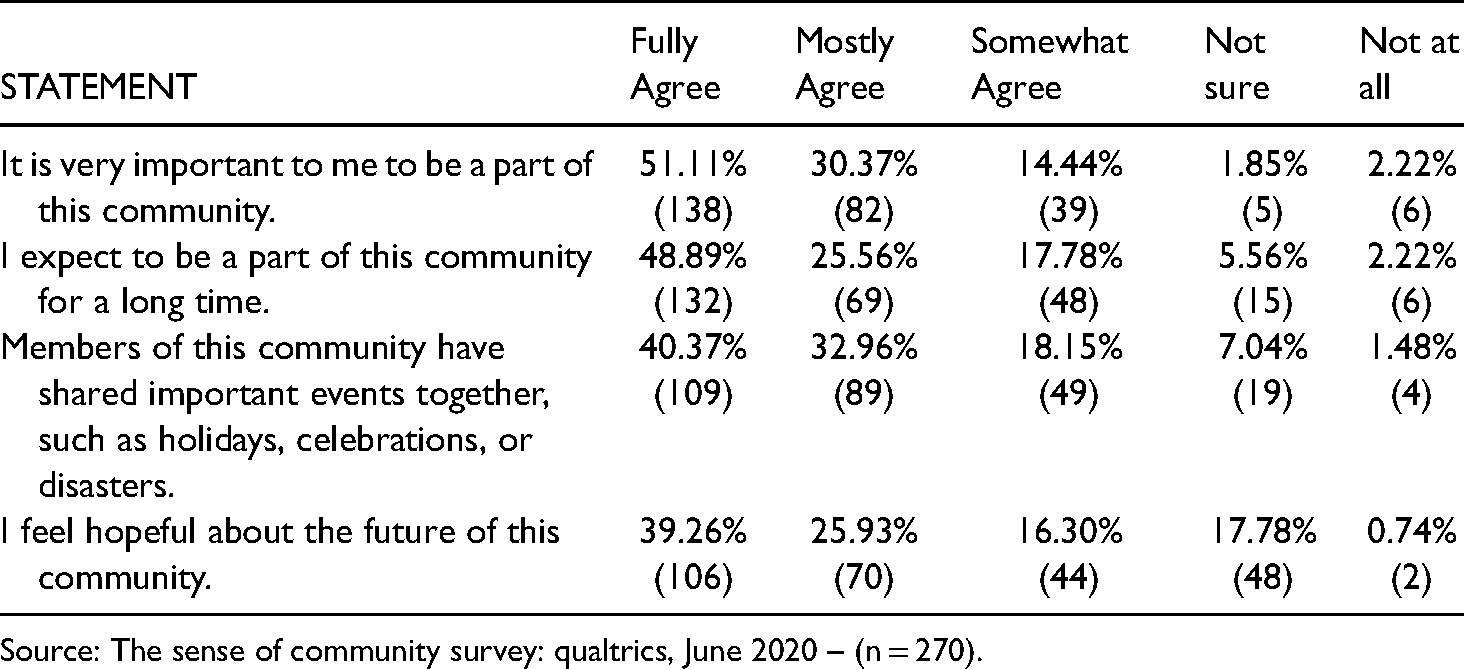
Source: The sense of community survey: qualtrics, June 2020 – (n = 270).
Shared emotional connection
For these last statements, the combined average percentages for the first three rows: fully agree, mostly agree, and somewhat agree, are consistently over 80%, with a robust response to the importance of being a part of the community reaching (96%) and expecting to stay in the community for a long time (92%). Both robust responses indicate that the shared emotional connections are powerful despite concerns over trustiness and fitting in. Interestingly, these respondents are optimistic about the community's future (over 80%).
This shared emotional connection shows an exciting reading as these responses are more on the side of “fully agree” and “mostly agree". According to McMillan and Chavis (1986), several attributes may facilitate or inhibit the strength of the community. It would be interesting to find the practical attributes of the vital responses to these statements.
The shared history is an example of this element, and in recent times, this can be exemplified by a growth of interest in Deaf history. A website outlines 11 different community-run museums focussing on deaf communities in Europe, including Ireland (www.deafmuseums.eu). There are annual conferences on deaf heritages nationally and internationally (for instance: https://www.deafheritagecentre.com and https://www.deafhistoryinternational.com/). These outlets are strong proof of shared emotional connection within deaf communities over time.
McMillian and Chavis (1986) state that the more people interact, the more likely they are to become close, depending on the quality of the relationship. With the decline of “blue-collar” occupations among deaf members and the rise of relying on state security and increased entrance to professional occupations on another side, it was inevitable that the community cohesion may not have the same strength as previous “brick-and-mortar” models of community. Such fragmentation has been documented elsewhere (Padden 2008).
McMillan and Chavis (1986, 14) suggest that reward or humiliation impacts attractiveness or aversion, but it is difficult to make generalisations from these varied responses. However, the community can be a source of fulfilling employment prospects. For instance, according to its annual report, Reach Deaf Services employs 53 (38% of its total workforce) for its community care work in Dublin, increasing from 25% in 2018 (Reach 2020).
Conclusion
One can see the robust response to the idea of how important the sense of community is. There are responses to the cultural statements that one can collate to paint the survey respondents’ perceived standpoints on cultural issues. Statements relating to culture such as “This community has symbols and expressions of membership such as ISL, deaf culture, events, mannerisms…", “Being a member of this community is a part of my identity", and “…shared important events together, such as holidays, celebrations..” have returned high percentages averaging in 73%. Members’ high attachment to the community culture requires further investigation as culture can be a significant feature in the sense of community.
However, the statements are grouped under four main themes, revealing differences. The theme of the shared emotional connection has proved a strong reason for their upbeat sense of community, followed by two other themes, reinforcement of needs and membership, which are moderately favourable for the respondents. The theme of influence seems problematic for the respondents who give mixed messages: they have confidence that the community influences other communities but have a negative view of trust and the ability to solve issues.
This research using the SCI-2 index intends to capture the snapshot of how members feel their sense of community, and it provides a good starting point for further in-depth research into four main areas in this index. Issues such as long-term preservation and sustainability of ISL and supporting the community can be considered. Not only for sustainability, the presence of community, be it deaf or signing, does provide an excellent service to society in terms of psychosocial and “effective living".
Footnotes
Declaration of conflicting interests
The author(s) declared no potential conflicts of interest with respect to the research, authorship, and/or publication of this article.
Funding
The author(s) received no financial support for the research, authorship, and/or publication of this article.
