




Abstract

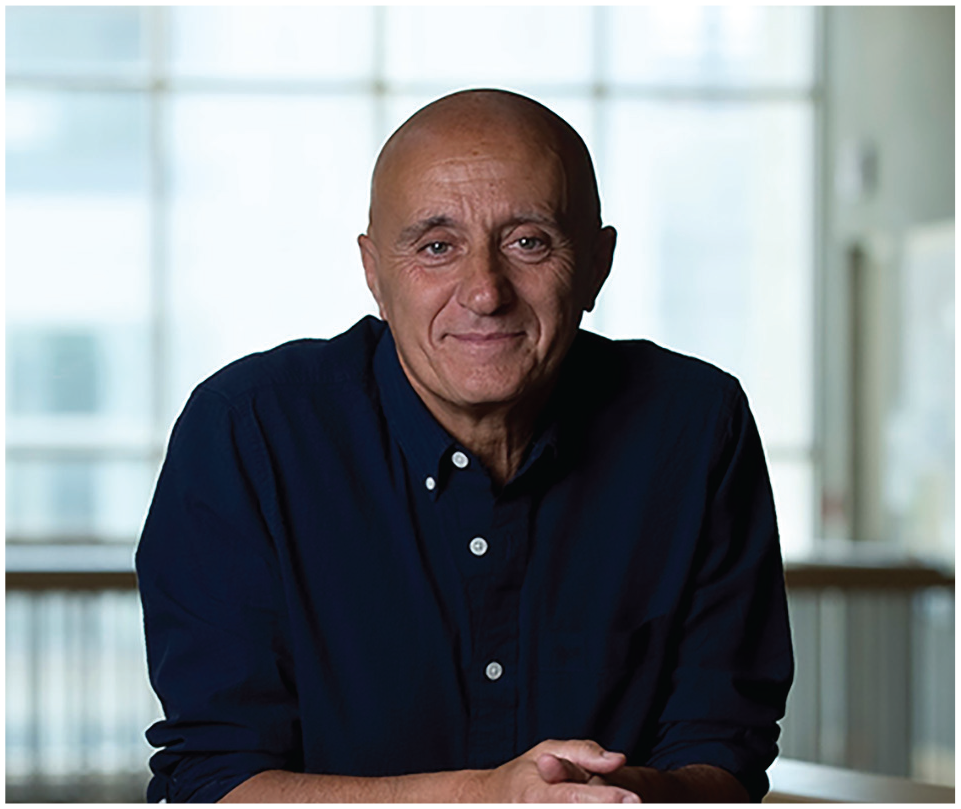
With heavy hearts, we share our profound grief in the passing of our mentor and friend, Paolo Sassone-Corsi. A larger-than-life member of the scientific community, Paolo passed away unexpectedly in Laguna Beach, California, on 22 July 2020. Paolo’s life and legacy are far-reaching, and we look back fondly to memorialize his scientific contributions in the fields of transcriptional regulation, epigenetic control, metabolism, and, particularly, within the realm of circadian rhythms.
Paolo was born in Naples, Italy, on 8 June 1956. Although Paolo originally fell in love with astronomy after receiving a telescope from his parents and catching a serendipitous glimpse of Saturn, his fascination with science and the intricacies of nature drove his passion for biology and his aptitude for research. After graduating from the University of Naples Federico II, Paolo undertook a postdoctoral fellowship at the Laboratoire de Génétique Moléculaire des Eucaryotes with Pierre Chambon in Strasbourg, France. Paolo’s early work focused on transcriptional regulation; he was involved in the early characterization of the regulatory motif that ultimately became known as the TATA box (Corden et al., 1980) and revealed key mechanisms underlying the transcriptional activity of the simian virus 40 enhancer element in vitro (Sassone-Corsi et al., 1985). After a highly productive training period in the Chambon group, Paolo joined the laboratory of Inder Verma at the Salk Institute in San Diego, California. There, Paolo carried out pioneering work to characterize the regulatory mechanisms that govern the proto-oncogene c-fos and subsequently identified JUN as the binding partner of FOS (Sassone-Corsi et al., 1988a; Sassone-Corsi et al., 1988b).
In 1989, Paolo began his independent career at the Institut de Génétique et de Biologie Moléculaire et Cellulaire in Strasbourg, France, where his lab went on to discover and characterize the transcriptional regulatory mechanisms of the cAMP-responsive element modulator (CREM; Foulkes et al., 1991). Importantly, his group was the first to identify the rhythmic and clock-driven expression of CREM in the pineal gland (Stehle et al., 1993), and this discovery launched Paolo’s scientific entry into the field of circadian rhythms. Paolo’s group demonstrated that light could control zebrafish peripheral clocks in culture (Whitmore et al., 2000), and in a separate study, they identified that light could induce phosphorylation of Ser10 of the histone H3 tail in mouse neurons from the suprachiasmatic nucleus (Crosio et al., 2000). This publication from the Sassone-Corsi lab was one of the earliest studies linking the circadian clock directly to epigenetic control and remains a conceptually important finding that coupled Paolo’s fundamental interest in transcriptional regulation and epigenetics with circadian rhythms.
Following a highly successful period in Strasbourg as a Directeur de Recherche, Paolo moved back to the United States in 2006 as a Donald Bren Distinguished Professor at the University of California, Irvine (UCI). At UCI, Paolo transitioned from studies primarily focused on transcriptional regulation by light entrainment to studies that began to define regulatory mechanisms that govern and fine-tune the core clock machinery. Paolo’s group discovered and characterized additional and important circadian posttranslational modifications of clock proteins, including the phosphorylation and acetylation of BMAL1 (Hirayama et al., 2007; Sahar et al., 2010; Tamaru et al., 2015), that built on previous findings identifying sumoylation of Bmal1 as a regulator of its activity (Cardone et al., 2005). The Sassone-Corsi lab also described the histone acetyltransferase activity of CLOCK (Doi et al., 2006) and the role of MLL1 in controlling histone methylation as a permissive event regulating rhythmic transcription (Katada and Sassone-Corsi, 2010). During this period, Paolo’s lab discovered that the nicotinamide adenine dinucleotide (NAD+)–dependent deacetylase SIRT1, and later SIRT6, were key players in reversing the acetylation of histones and clock proteins (Masri et al., 2014; Nakahata et al., 2008; Nakahata et al., 2009). These discoveries concerning how epigenetics impinged on circadian gene expression networks were expanded upon, and Paolo quickly realized that not only were chromatin modifications rhythmic but that higher-order nuclear chromosomal organization is also controlled by the circadian clock (Aguilar-Arnal et al., 2013). In 2009, Paolo’s group contributed to the essential discovery that cellular NAD+ oscillations were circadian, and this metabolic feedback mechanism affected the core clock transcriptional machinery through modulation of sirtuin activity (Nakahata et al., 2009). This was a critical juncture for Paolo’s lab, and subsequent studies also identified that cellular acetyl-CoA levels were also rhythmic (Sahar et al., 2014). Paolo recognized the importance of these fundamental observations that ultimately drove a new chapter of research underpinning the complex regulatory mechanisms that link circadian gene expression and epigenetic control with cellular metabolism (Eckel-Mahan et al., 2012).
In parallel with many labs in the circadian field, Paolo helped to establish the role of nutrition and dietary challenge as a hallmark feature of circadian reprogramming in peripheral tissues. Paolo’s lab contributed several studies related to how a high-fat diet rewires circadian metabolism (Eckel-Mahan et al., 2013), and recently, this work was expanded as an atlas to define tissue-specific metabolic networks that are affected by a high-fat diet (Dyar et al., 2018). The Sassone-Corsi lab went on to show how a ketogenic diet (Tognini et al., 2017), caloric restriction (Sato et al., 2019), and fasting (Kinouchi et al., 2018) serve as key regulators of circadian metabolism. Paolo became fascinated with how peripheral clocks maintain rhythms and how these tissue-specific pacemakers communicate under conditions of homeostasis, during aging, and in disease states, such as cancer (Dyar et al., 2018; Koronowski et al., 2019; Masri et al., 2016; Sato et al., 2019).
With an H-Index of 129 and a staggering 56,864 citations, Paolo’s impact was far reaching in the scientific community. Paolo had an uncanny intuition for identifying exciting questions that sometimes challenged the accepted model, and because of this, he published prolifically. His innovation and vision transported his research from molecular and cellular, to tissue-specific and organism-wide, and along the way, Paolo made his impact on many scientific fields. As a result, Paolo earned many accolades and awards for his work, including the EMBO Gold Medal (1994); the Edwin B. Astwood Award from the Endocrine Society (2004); the Transatlantic Medal of the Society of Endocrinology, UK (2012); and the Leonardo da Vinci Gold Medal, FMSI Federation, Rome (2016). Paolo was named a Fellow of the American Association for the Advancement of Science in 2018 and was also an external professor of the Max-Planck Institute in Germany.
Paolo had a remarkable passion for biology, and his energy for research was contagious. This drew people from all over the world into his orbit. He captivated his scientific audiences with his stories, and he shared his work with the greater community in ways that few individuals can. If you attended one of his seminars on circadian rhythms, you left with the feeling that the biological pacemaker was the most important cellular process governing our physiology. Paolo realized the importance of disseminating research discoveries to the public and the scientific community alike. One would think he was conducting his own personal circadian experiment as he crisscrossed the globe through multiple time zones, traveling extensively to share his passion and knowledge. Paolo could reach both scientific and nonscientific audiences in a way in which few are capable.
As a mentor, Paolo shared his vision and enthusiasm for research with everyone who worked closely with him. He had a remarkable ability to take the talent he saw in his trainees and cultivate it, transforming them into successful, independent leaders in the field. Paolo acted as a guiding hand but never overextended his reach. By allowing space for scientific creativity and independent thinking, he gave his trainees the tools to address exciting research questions. Paolo always encouraged dedication and persistence, reminding postdocs and students that a research career “is not a sprint, but rather a marathon.” He was there through disappointments, as research projects can change in unexpected ways, and always had a solution or piece of advice to help you get back on your feet. A win, small or large, was always a great achievement in Paolo’s eyes. For his trainees who went on to establish their own independent scientific careers, he continued to provide support and guidance. Paolo strongly advocated for the talent, creativity, and unique perspectives that were inherent to a young investigator and happily watched early career scientists flourish.
For those lucky enough to call Paolo a close friend, his scientific legacy is almost overshadowed by the kind, genuine, and compassionate human being that he was. Paolo had a tremendous heart for others, including his wife Dr. Emiliana Borrelli, professor of microbiology and molecular genetics at UCI; his brothers Lucio and Emilio Sassone-Corsi; his nieces and nephews; and his friends from the multiple stages of his life. As a testament to his gregarious nature, many of these friends were themselves former trainees from Paolo’s lab. He treated everyone equally, regardless of academic rank. It was not uncommon for Paolo to share laughs and stories with everyone around him with equal enthusiasm, from the dean to the student passing in the hallway. For Paolo, titles, accomplishments, and accolades were not the driving force in life. Even with all his remarkable scientific accomplishments, Paolo was an incredibly humble man. Paolo lived life fully, appreciating small things such as the sun setting over the ocean or the moon and stars on a cloudless night, all of which were eclipsed when his beloved SSC Napoli were on the pitch.
As his former trainees, writing this remembrance is decades premature, and words simply are not enough to express the tremendous void that Paolo’s loss leaves behind. Attending meetings with him as a colleague, collaborating with him on ideas generated in our own labs, or sharing a glass of wine in celebration of a publication are dreams that will never be realized. However, what we do have is the inspiration he instilled in all of us. This is the mark of a true mentor; someone whose impact continues to enrich your life even after they are gone. Paolo’s legacy is now imprinted in our own work, our mentorship, and our appreciation of the beauty inherent in the world around us. Galileo Galilei once remarked, “All truths are easy to understand once they are discovered; the point is to discover them.” We honor Paolo’s legacy by seeking those truths as we feel he would have done.
Footnotes
A note on the authors: All of the authors trained with Paolo as postdoctoral fellows. Y.N. trained with Paolo during 2005-2009, K.E.M. during 2008-2015, and S.M. during 2009-2017.