




Abstract
Man-made vitreous fibers (MMVF) are a class of inorganic fibrous materials that include glass and mineral wools, continuous glass filaments, and refractory ceramic fibers valued for their insulative properties in high temperature applications. Potential health effects from occupational exposure to MMVF have been investigated since the 1970s, with focus on incidence of respiratory tract cancer among MMVF-exposed production workers. The general population may experience exposure to MMVF in residential and/or commercial buildings due to deterioration, construction, or other disruption of materials containing these fibers. Numerous studies have characterized potential exposures that may occur during material disruption or installation; however, fewer have aimed to measure background MMVF concentrations in residential and commercial spaces (i.e., non-production settings) to which the general population may be exposed. In this study, we reviewed and synthesized peer-reviewed studies that evaluated respirable MMVF exposure levels in non-production, indoor environments. Among studies that analyzed airborne respirable MMVF concentrations, 110-fold and 1.5-fold differences in estimated concentrations were observed for those studies utilizing phase contrast optical microscopy (PCOM) versus transmission electron microscopy (TEM) and scanning electron microscopy (SEM), respectively. A positive correlation was observed between respirable air concentrations of MMVF and total surface concentrations of MMVF in seldom-cleaned areas. Ultimately, available evidence suggests that both ambient air and surface concentrations of MMVF in indoor environments are consistently lower than exposure limits developed to prevent negative health outcomes among sensitive populations.
Keywords
Introduction
Man-made vitreous fibers (MMVF), also referred to as man-made mineral fibers or synthetic vitreous fibers, are a class of variable inorganic fibrous materials primarily derived from glass, rock, or slag (ATSDR, 2004; IARC, 2002). MMVF include glass and mineral wools (i.e., glass wool, rock (stone) wool, and slag wool), continuous glass filament, and refractory ceramic fibers (RCF). The majority of MMVF produced are glass, rock and slag wools used in thermal and acoustical insulation for buildings, vehicles, and appliances. RCF are employed in high-temperature applications, and continuous glass filament fibers are utilized in composite materials often for the electronics and construction industry.
In the 1970s, recognition of the potential health effects of MMVF exposure prompted scientific research aimed at characterizing occupational exposures to MMVF and evaluating the risk of negative health outcomes among MMVF, specifically glass and mineral wool, production workers. Ultimately, consistent epidemiological evidence published over the last several decades suggests that typical workplace MMVF exposures are not associated with negative health outcomes among MMVF production workers, including respiratory tract cancer and non-malignant respiratory disease (IARC, 2002; Marsh et al., 2011; Suder Egnot et al., 2020).
Given the ubiquity of MMVF in residential and commercial buildings, there exists an opportunity for MMVF exposure, outside of the well-characterized manufacturing and production environments, due to deterioration, construction, or other disruption of materials. While the health effects associated with inhalation and dermal exposures to MMVF in non-production settings, such as irritation of the skin, eyes, and upper respiratory tract, are considered reversible, characterization of MMVF exposure in these environments can provide a valuable indication of indoor environmental quality (IEQ) and be used to assess causes of acute irritation. Further, accelerated by the COVID-19 pandemic, the definition of occupational space has been challenged by an increase in the number of people who work from home or other spaces not traditionally evaluated for potential occupational exposures. For these reasons, reliable and accurate characterization of MMVF in non-production settings is of public health importance.
MMVF exposure assessments in ambient, indoor environments have been performed using an assortment of analytical methods, including phase contrast optical microscopy (PCOM), scanning electron microscopy (SEM), and transmission electron microscopy (TEM) (Altree-Williams and Preston, 1985; Carter et al., 1999; Dodgson et al., 1987; Fischer, 1993; Gaudichet et al., 1989; Jacob et al., 1992; Miller et al., 1995; Nielsen, 1987; Rindel et al., 1989; Schneider, 1986; Schneider et al., 1990; Skov and Valbjørn, 1987; Tang et al., 2004; Tiesler and Draeger, 1993; Tiesler et al., 1993; Van der Wal et al., 1987). One notable study published by Carter et al. (1999) quantified respirable fibers in residential and commercial buildings using PCOM and differentiated fiber types using SEM, while also discussing results compiled from 13 similar studies of IEQ (Carter et al., 1999). Based on the evidence available at the time, Carter et al. (1999) reported that respirable fiber levels remained consistently low across settings (range <0.001 to 0.907 fibers per cubic centimeter (f/cc)).
We are unaware of a more recent review that has aggregated evidence regarding ambient exposure to MMVF since the Carter et al. (1999) study was published over 20 years ago. We therefore performed a literature search and review of all published peer-reviewed studies examining respirable MMVF exposure levels in non-production, indoor environments such as academic, commercial, and residential buildings. The aim of this review was to characterize MMVF exposures, specifically to glass, rock, and slag wools, in ambient, indoor environments.
Methods
Literature search and screening
We conducted searches of the PubMed and Scopus online databases in January 2022 to identify all peer-reviewed studies assessing exposures to MMVF in non-production, indoor environments. Search terms designed to target papers specific to MMVF included “man-made vitreous fibers,” “man made vitreous fiber,” “fiberglass,” “glass fibers,” “glass fibres,” “man-made mineral fibers,” “man made mineral fibers,” “man-made mineral fibres,” “glass wool,” “rock wool,” “slag wool,” “mineral wool,” “synthetic vitreous fibers,” “MMVF,” “MMMF” and “synthetic vitreous fiber.” An additional search phrase used to identify study types of interest included, “indoor air,” “residential,” “commercial,” “office” and “risk assessment”. A third search phrase targeted specific exposures and measurement techniques: “SEM,” “TEM,” “NIOSH 7400,” “NIOSH method 7400,” “fiber measurement,” “fiber levels,” “building dust,” “fiber concentration,” “fiber concentrations,” “total dust,” “particle concentration,” “particle concentrations” and “particle counts.” Additionally, references of relevant papers were screened to ensure that all potentially relevant studies were included in the review, including all works originally summarized in Carter et al. (1999). Two reviewers screened the titles and abstracts of the studies for relevance.
Studies that met inclusion criteria were peer-reviewed studies presenting original data, published in English, and presented air or surface respirable fiber or MMVF concentrations collected in indoor environments. Letters to the editor, commentaries or editorials, redacted articles, and other non-peer-reviewed studies were excluded. Studies that assessed only fibers beyond the scope of interest (i.e., asbestos fibers, continuous filament fiber, RCF, natural fibers, crystalline fibers, high-temperature fiber, microfibers, and special glass fibers) were excluded. While RCF and continuous glass filament fibers are included within the definition of MMVF, they were excluded from this review as their typical applications are not consistent with products found in ambient, indoor environments and they have been associated with different potential human health impacts than the insulation wools considered in this review.
Qualitative and quantitative analysis
Fiber concentrations measured in air samples were presented in a variety of units (ex. F/mL, f/cm3, f/L, f/m3, f/cc). To allow for comparison across studies, all results were converted to f/cc. Surface samples were all reported as MMVF or structures per square centimeter and were not converted prior to comparison. Descriptive statistics of reported study results were abstracted such that a range and, when reported, average concentration was determined for each study reviewed. For those studies that reported both air concentrations and surface density of MMVF, correlation between the measurements by cleaning frequency category was assessed using the CORREL function in Microsoft Excel.
Results
Our search identified 35 total articles, and upon screening, 16 studies met the inclusion criteria for this review. Relevant studies were published between 1985 and 2009, and included samples collected from residential, academic, and/or commercial settings. Four studies characterized airborne and/or surface concentrations of MMVF before or after installation of new residential insulation or MMVF-containing building materials in homes (Jacob et al., 1992; Miller et al., 1995; Van der Wal et al., 1987; Jaffrey, 1990). The other relevant studies were designed as surveys of ambient or background concentrations of airborne MMVF in commercial buildings, residences, academic buildings, and/or other unspecified buildings (Altree-Williams and Preston, 1985; Carter et al., 1999; Dodgson et al., 1987; Fischer, 1993; Gaudichet et al., 1989; Nielsen, 1987; Rindel et al., 1989; Schneider, 1986; Schneider et al., 1990; Skov and Valbjørn, 1987; Tang et al., 2004; Tiesler et al., 1993).
Mean, minimum, and maximum respirable fiber, inorganic (non-asbestos) fiber, MMVF, and organic fiber airborne concentrations abstracted from studies reviewed.
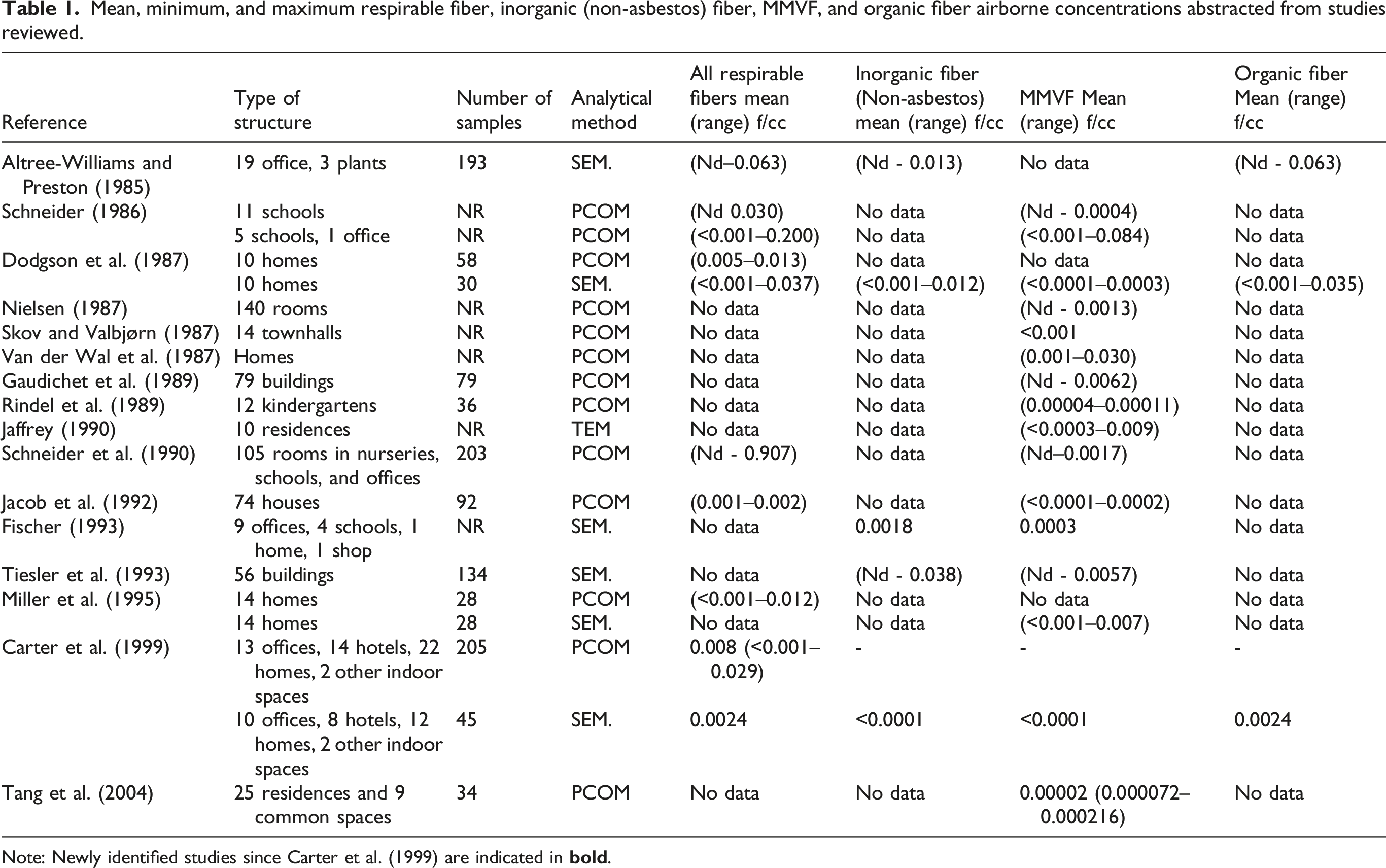
Note: Newly identified studies since Carter et al. (1999) are indicated in
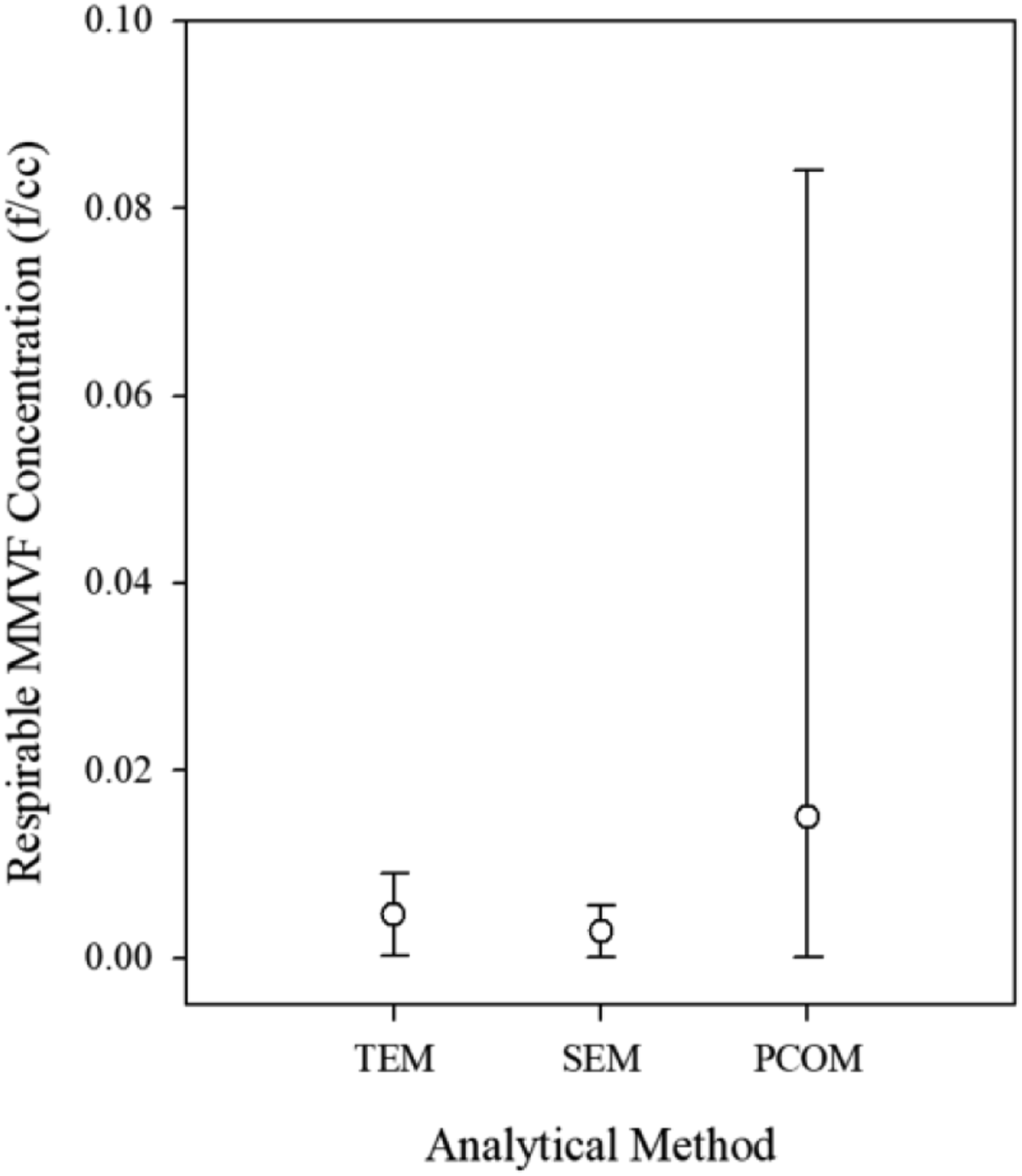
Respirable MMVF fiber concentration (f/cc) ranges by analytical method. Median values are represented by white circles. For those studies that reported the minimum as below the LOD, the minimum value was estimated as the LOD divided by the square root of two.
Ambient respirable fiber concentrations were evaluated in a variety of building types, including commercial, residential, academic, and governmental buildings. Six studies reported concentration ranges that described measurements collected from mixed building types (Altree-Williams and Preston, 1985; Carter et al., 1999; Fischer, 1993; Schneider, 1986; Schneider et al., 1990; Tang et al., 2004). As such, discernment of typical concentrations by building category for all studies was not possible. Reported concentration ranges for four building categories, academic and governmental, residential, unspecified, and mixed types, are presented in Figure 2. Concentrations measured in studies which characterized exclusively residential buildings (including homes, residences, and common spaces) ranged from <0.001 to 0.037 f/cc for respirable fibers and from 0.000072 to 0.030 f/cc for MMVF (Dodgson et al., 1987; Jacob et al., 1992; Jaffrey, 1990; Miller et al., 1995; Tang et al., 2004; Van der Wal et al., 1987). The concentrations measured in academic and government buildings ranged from non-detect to 0.03 f/cc and non-detect to 0.0004 f/cc for respirable fibers and MMVF, respectively (Rindel et al., 1989; Schneider, 1986; Skov and Valbjørn, 1987). MMVF concentrations measured in unspecified buildings or rooms ranged from non-detect to 0.0062 f/cc; notably, respirable fiber concentrations were not reported for this category of building type (Gaudichet et al., 1989; Nielsen, 1987; Tiesler and Draeger, 1993; Tiesler et al., 1993). Airborne respirable MMVF concentrations (f/cc) by building type. Median values are represented by white circles. For those studies that reported the minimum as below the LOD, the minimum value was estimated as the LOD divided by the square root of two.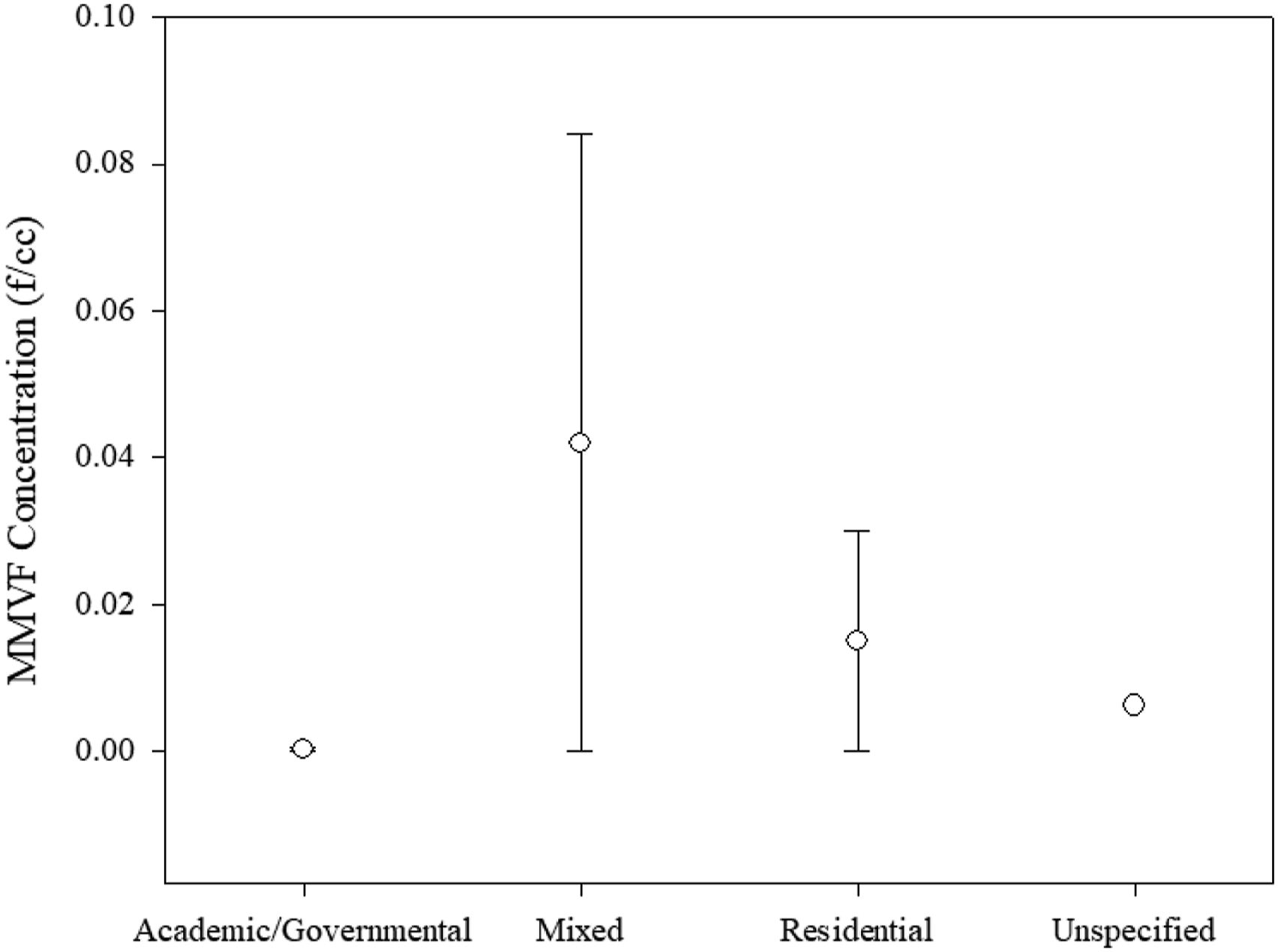
Surface MMVF density (f/cm2) by setting, sample collection method, and cleaning frequency.
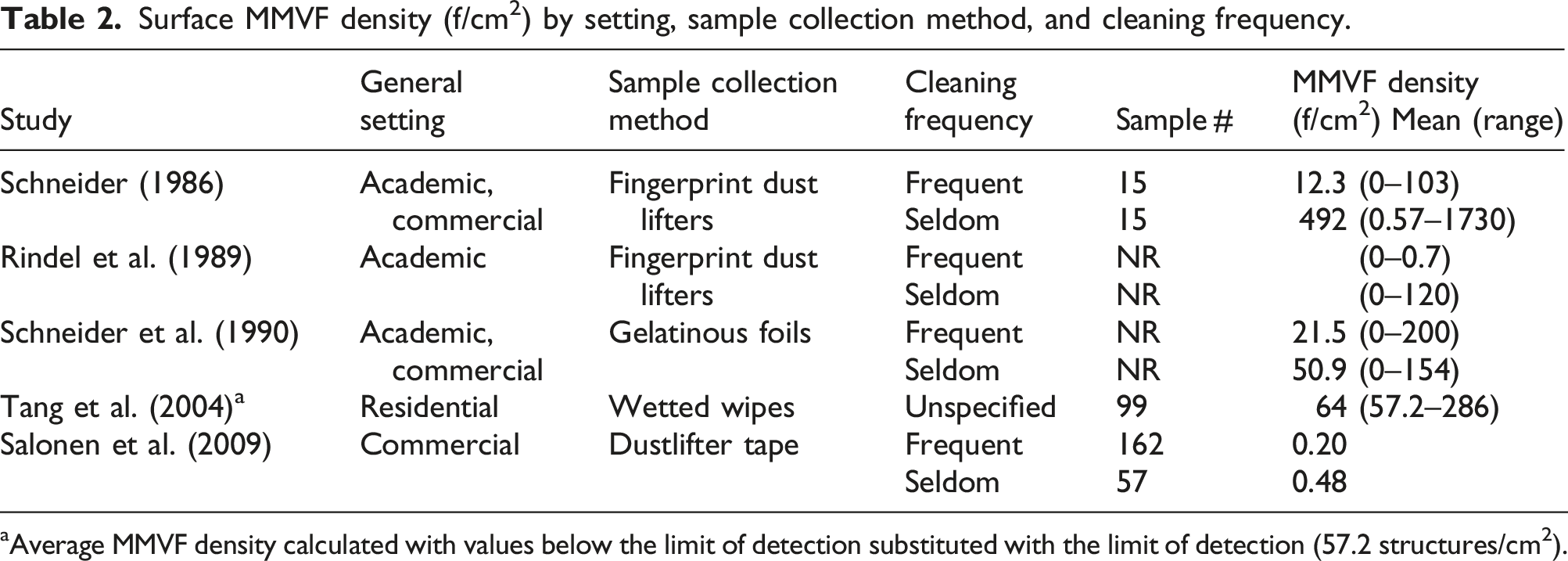
aAverage MMVF density calculated with values below the limit of detection substituted with the limit of detection (57.2 structures/cm2).
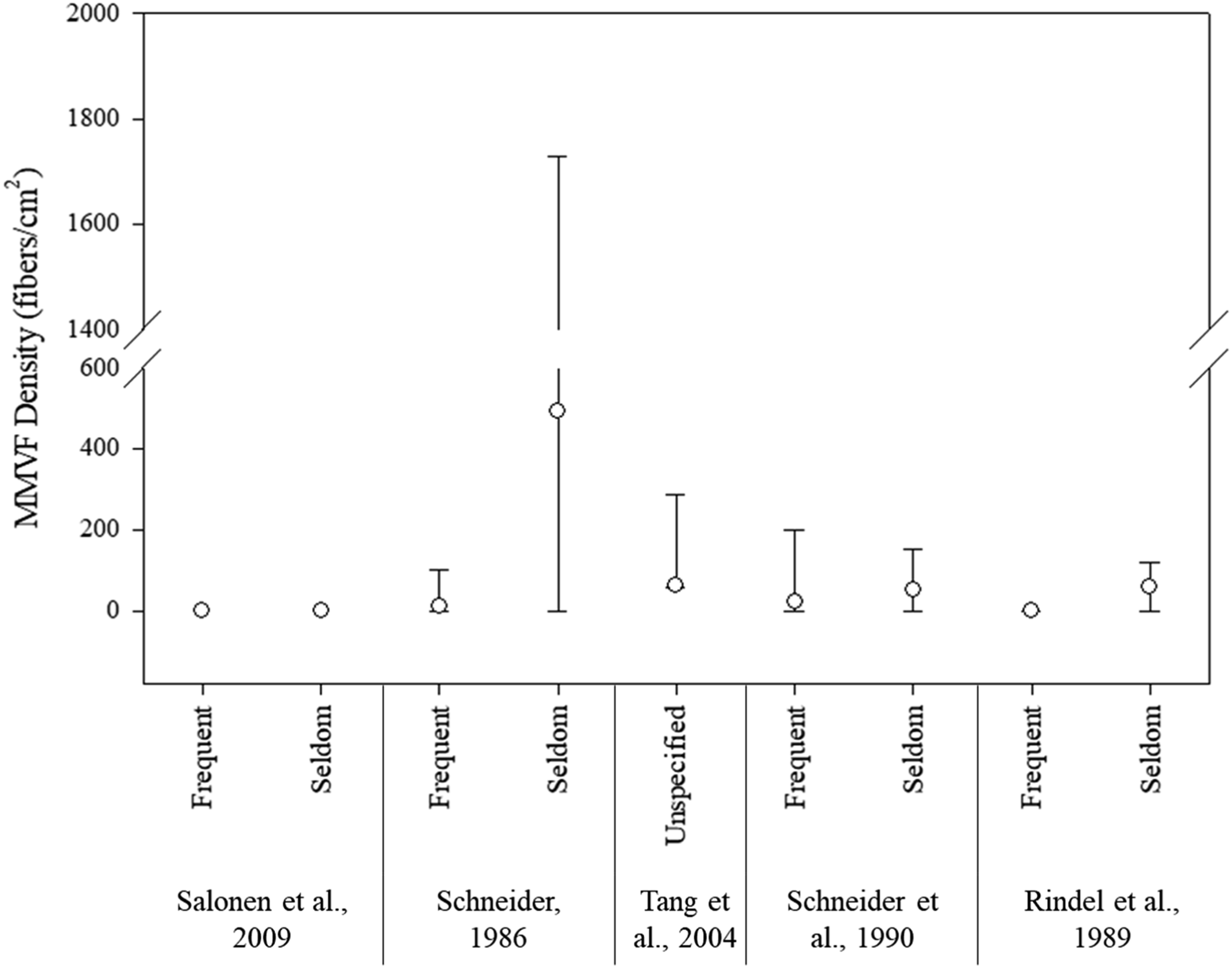
Total MMVF surface density (fibers/cm2) by cleaning frequency category, as reported by relevant studies. Average concentration is represented by white circles.
Four studies reported both surface MMVF density and MMVF air concentrations (Schneider, 1986; Tang et al., 2004; Schneider et al., 1990; Rindel et al., 1989). While no correlation was observed between measured air concentrations and surface concentrations measured from frequently cleaned surfaces, there was a positive correlation observed for air concentrations and seldom cleaned surfaces (Figure 4); however, correlation coefficients were not calculated for these measurements due to the small sample size for both pairings. Correlation between measured respirable MMVF air concentrations (f/cc) and surface concentrations (f/cm2) for studies that reported both measurement types. Seldom cleaned surface concentrations are designated with squares, frequently cleaned surfaces are designated with circles, and those with no cleaning frequency indicated are designated with a triangle.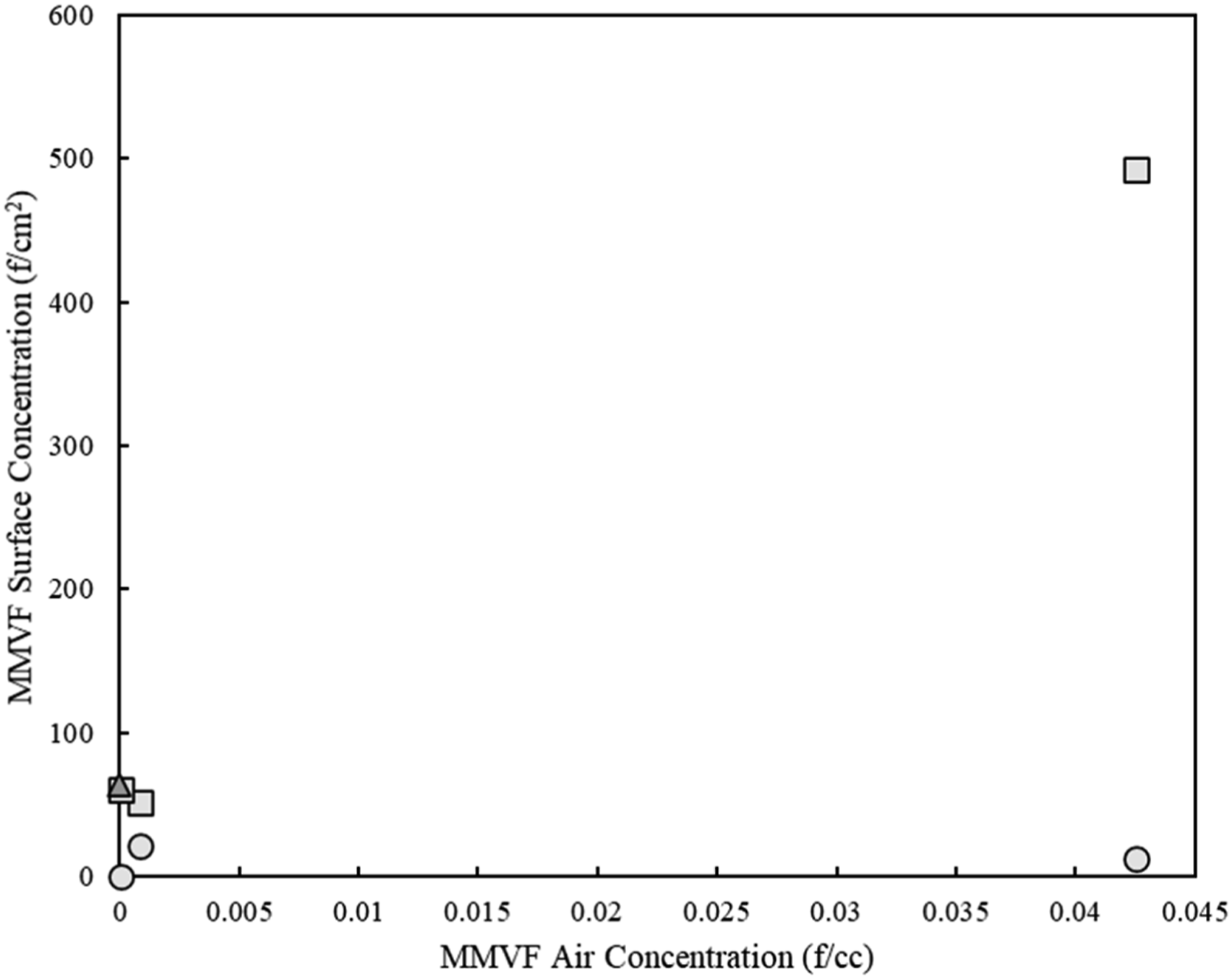
Discussion
In the present review, we synthesized peer-reviewed evidence regarding MMVF exposures in ambient indoor environments with specific focus on insulation wool exposures, as glass, rock, and slag wools are commonly used in thermal and acoustical insulation materials. We identified 16 relevant studies, including studies published prior to and since the Carter et al. (1999) publication compiled evidence on this topic over 20 years ago. The original studies considered in our review were conducted in a variety of settings including commercial and residential buildings as well as schools. Since most of the studies reviewed did not differentiate fiber type when performing exposure assessments, it was assumed that the reported air and surface concentrations of MMVF included glass, rock, and slag wools.
Among the studies considered in our review, comparison of ambient air concentrations of MMVF by analytical method (Figure 1) revealed differences in the magnitude and range of estimated MMVF concentrations dependent on methodology. Analysis of fiber count by PCOM allows for an understanding of the total number of fibers present in each air sample; however, this method does not allow for differentiation by fiber type and has been criticized for its poor precision (WHO, 1997). Some of the studies included in our review reported respirable MMVF concentrations following PCOM analysis, suggesting the authors assumed that fibers present in the samples were primarily MMVF rather than other organic or inorganic fiber types. The upper range of MMVF concentrations measured by PCOM (0.084 f/cc) was 12-fold greater than the upper range MMVF concentration for samples analyzed by SEM (0.007 f/cc). Of the 97 samples analyzed in Carter et al. (1999) by SEM, MMVF was detected in two samples, and both samples were reported to have inorganic fiber concentrations (including MMVF) below 0.0001 f/cc, more than 800-fold lower than the upper range reported from studies measuring MMVF concentrations by PCOM. This comparison demonstrates the importance of considering analytical method when interpreting MMVF concentrations, as MMVF likely comprises a small fraction of the total airborne fibers present in an indoor environment.
Analytical method selection is particularly important when considering the studies relied upon in the Agency for Toxic Substances and Disease Registry (ATSDR) profile for MMVF. The studies that are relied upon for estimation of ambient environmental MMVF concentrations primarily utilized PCOM for sample analysis (Gaudichet et al., 1989; Miller et al., 1995; Schneider et al., 1990). Notably, a 110-fold and 1.5-fold differential between concentrations measured by PCOM compared to those measured by TEM and SEM, respectively, was observed in studies considered in the ATSDR profile. While PCOM is a commonly utilized method for evaluating MMVF concentrations, interpretation of results should contextualize the lack of exclusivity in fiber type measured, which likely results in overestimation of MMVF concentrations when other fiber types are present.
Our assessment of air concentrations by building type (Figure 3) suggests that there may be appreciable differences between different categories of spaces. For example, a 210-fold difference between the maximum concentration measured in governmental and academic buildings versus the “mixed” building category. Studies reporting airborne fiber concentrations in academic environments (Rindel et al., 1989; Schneider, 1986) were both conducted at schools in the Copenhagen, Denmark area. Future research may look to characterize airborne MMVF concentrations in academic environments representing a broader geographical region. Though ATSDR has indicated that there are no unique exposure pathways for children and that it is likely that children exposed to MMVF will experience the same effects as adults (i.e., eye, skin, and upper respiratory tract irritation), children represent a potentially sensitive population (ATSDR, 2004). Understanding baseline concentrations in areas that sensitive populations frequent, such as schools, could allow for better evidence-based decisions to improve IEQ metrics in these spaces.
In alignment with previous literature, our review suggests that the frequency of cleaning and contact influences MMVF surface density (Schneider, 1986; Vallarino et al., 2003). ATSDR relied upon Vallarino et al. (2003) to conclude that only low levels of MMVF are expected to be present on common surfaces that are frequently contacted and cleaned (ATSDR, 2004). We observed a positive correlation between air and surface concentrations of MMVF in areas that were seldom cleaned, among studies that assessed both surface and air concentrations of MMVF, suggesting that surface MMVF measurements may provide insight into overall IEQ in seldom cleaned spaces. However, while the results of a high surface MMVF loading area can provide an indication of airborne MMVF levels, the exact relationship between surface MMVF loading and airborne MMVF available in the breathing zone has not yet been defined.
While occupational exposure limits (OELs) are not intended for application to the non-occupational environment, they can provide a metric for benchmarking of air concentrations in relation to potential for health effects. For respirable fibers, the National Institute for Occupational Safety and Health (NIOSH) recommended exposure limit (REL) for MMVF is 3 f/cc, while the United States Occupational Safety and Health Administration (OSHA) permissible exposure limit (PEL) for respirable MMVF, as well as all other unspecified respirable fibers, is 5 mg per cubic meter (mg/m3) (OSHA, 2022; NIOSH, 2019). Maximum ambient respirable MMVF concentrations reported (0.0002 f/cc to 0.03 f/cc) in the studies reviewed ranged from 100 to 15,000-fold lower than the NIOSH REL.
Our review suggests that typical air concentrations of MMVF found in ambient indoor environments are well below the recommended exposure limits set for occupational environments. In fact, many of the relevant studies reported air concentrations of MMVF below the limit of detection, precluding us from determining an accurate lower bound for estimated ambient airborne respirable MMVF concentrations. Although our comparisons of fiber concentrations by setting, sampling method, and fiber type were limited by the heterogeneity in the design of relevant studies, this updated review suggests that contemporary measurements of indoor MMVF air concentrations are consistent with the findings of Carter et al. (1999), and ultimately demonstrate that both air and surface concentrations of MMVF in ambient indoor settings are consistently much lower than exposure limits developed to prevent negative health outcomes in occupational settings.
Footnotes
Declaration of conflicting interests
All the authors are or were employed by Stantec, while conducting this study, a consulting firm that provides scientific advice to the government, corporations, law firms and various scientific/professional organizations. GMM is also Professor Emeritus of Biostatistics and Founding Director of the Center for Occupational Biostatistics and Epidemiology at the University of Pittsburgh Graduate School of Public Health. Financial support for the research described in the manuscript was provided by the North American Insulation Manufacturers Association (NAIMA). The funding association had no involvement or influence in the analysis, writing or conclusions of this review. This article was prepared and written exclusively by the authors without review or comment by any outside entity.
Funding
The author(s) disclosed receipt of the following financial support for the research, authorship, and/or publication of this article: This work was supported by the North American Insulation Manufacturers Association
