




Abstract
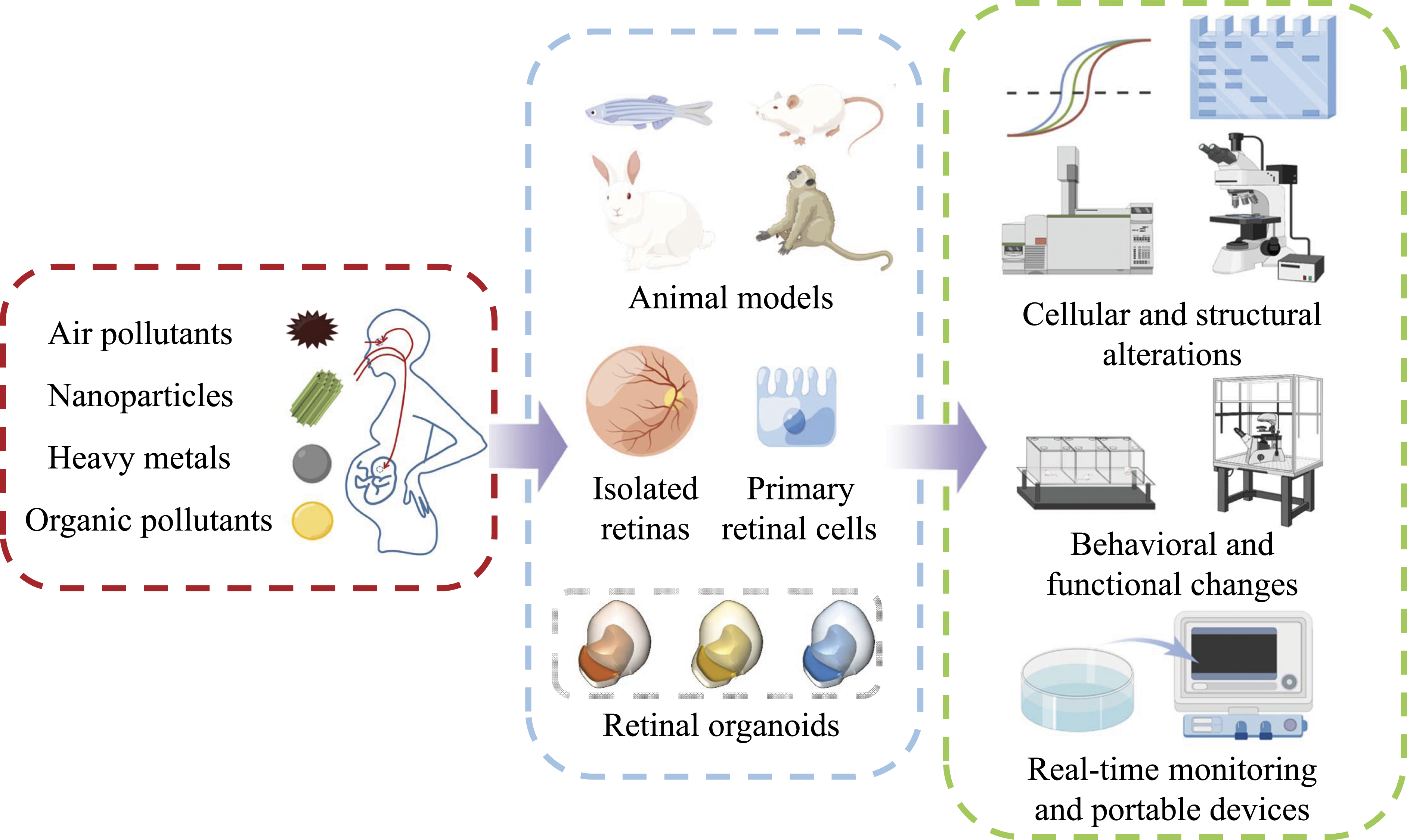
In our daily life, we are exposed to numerous industrial chemicals that may be harmful to the retina, which is a delicate and sensitive part of our eyes. This could lead to irreversible changes and cause retinal diseases or blindness. Current retinal environmental health studies primarily utilize animal models, isolated mammalian retinas, animal- or human-derived retinal cells, and retinal organoids, to address both pre- and postnatal exposure. However, as there is limited toxicological information available for specific populations, human induced pluripotent stem cell (hiPSC)-induced models could be effective tools to supplement such data. In order to obtain more comprehensive and reliable toxicological information, we need more appropriate models, novel evaluation methods, and computational technologies to develop portable equipment. This review mainly focused on current toxicology models with particular emphasis on retinal organoids, and it looks forward to future models, analytical methods, and equipment that can efficiently and accurately evaluate retinal toxicity.
Get full access to this article
View all access options for this article.
References
Supplementary Material
Please find the following supplemental material available below.
For Open Access articles published under a Creative Commons License, all supplemental material carries the same license as the article it is associated with.
For non-Open Access articles published, all supplemental material carries a non-exclusive license, and permission requests for re-use of supplemental material or any part of supplemental material shall be sent directly to the copyright owner as specified in the copyright notice associated with the article.
